Working From Home With Kids: 15 Practical Strategies for Remote Parents

 Discover a Free Education Video App for Kids
Pastory uses AI to personalize educational video content based on your child’s interests and personality. Safe, engaging, and built for curious young minds. Sign up now to stay updated and enjoy early access with a free trial

Managing professional responsibilities while caring for children in the same space can create significant logistical and emotional challenges. Many working parents navigate frequent interruptions, important video calls, and limited time to focus, which can lead to guilt, stress, and blurred work-life boundaries. The shift to working from home – accelerated by the COVID-19 pandemic – showed that trying to work full-time without dedicated childcare can contribute to parental burnout.
This guide offers specific, actionable strategies tailored to a child’s age, schedule type, and family setup. By implementing structured routines and realistic boundaries, remote workers can maintain professional output while preserving family life.
Key Takeaways
- Flexible Structure: Successfully working from home with kids requires visual cues, flexible work blocks, and repeatable family routines.
- Developmental Alignment: Parents should match their daily work schedule to factors such as a child’s age, sleep patterns, school schedule, and screen time needs.
- Proactive Communication: Clear communication about availability with coworkers, managers, partners, and children can reduce workplace friction.
- Task Segmentation: High-focus deep work should happen during protected, quiet windows, while lighter administrative duties fit into noisier, interrupted periods.
- Strategic Compassion: Protecting parents’ well-being through realistic daily goals is just as important for long-term productivity as any time-management framework.
Best Quick Wins
- The Independent Snack Station: Pre-portion snacks into specific bins before the workday starts so your toddler or school-aged child can access them more independently.
- The Visual Status Light: Place a small lamp or a red-and-green sign on your home office desk or door; red means you are unavailable, while green means your child can come in.
- The Meeting-Only Quiet Box: Assemble a storage bin filled with new, engaging toys, such as sensory items or age-appropriate puzzles, that your child can access only during important video calls.
- The 10-Minute Pre-Meeting Check-In: Spend 10 minutes reading or playing with your child before a scheduled meeting to help meet their need for attention.
- The Hard Digital Shutdown: Close your work laptop and place it inside a desk drawer at the same time each day to visually signal that work mode has ended.
Biggest Challenges
- The High Cost of Task-Switching: Even a small interruption can make it difficult to regain focus, especially during complex work.
- The Myth of Simultaneous Multitasking: Trying to focus on work while supervising younger children can reduce professional accuracy and increase parental irritability.
- The Erosion of Boundaries: When the home office is in the living room, parents may struggle to mentally switch off, allowing work duties to bleed into family life.
- The Multi-Child Challenge: Juggling work becomes much more complex when managing an infant’s nap time alongside an older child’s online learning schedule.
Parent Mindset

An effective work-from-home strategy does not require a flawless, highly rigid schedule. Instead, working parents need repeatable systems, honest communication with employers, and permission to let nonessential household chores go.
Accepting that a remote workday with kids around looks different from a traditional office day is the first step toward reducing stress and achieving a functional work-life balance.
Pros and Cons of Working From Home With Kids
Interruptions
Children naturally interrupt work because of developmental needs such as sudden hunger, boredom, or sibling conflict. Because younger children do not naturally understand abstract boundaries, they need clear visual cues and brief, predictable check-ins to feel secure.
Recognizing that many interruptions stem from normal developmental and emotional needs helps parents move from frustration to proactive schedule planning.
Concentration
Maintaining concentration is exceptionally difficult when a home with kids produces unpredictable noise levels. Constant noise can trigger a stress response, which may impair deep work tasks such as writing, coding, or data analysis.
To counteract this, parents should deliberately separate complex, high-focus projects from routine administrative tasks that can be performed during noisier hours.
Switching Off
The absence of a commute removes the natural buffer between work life and home life. Without a dedicated work area or a clear end-of-day routine, remote workers may experience chronic fatigue from feeling perpetually on call for both roles.
Establishing clear environmental resets helps the brain transition from work mode to family mode.
Less Wasted Time
On the positive side, eliminating a 45-minute commute each way can return up to 7.5 hours of discretionary time per week to a working parent. This recovered time can be reinvested into flexible morning routines, efficient school pickups, or focused work blocks.
It also allows parents to use small, 15-minute pockets of time for household prep or brief work check-ins that would otherwise be lost.
More Chances to Help Kids
Working remotely can give parents more opportunities to offer timely emotional support, prepare fresh lunches, and notice small developmental milestones. While it is important not to romanticize this arrangement, being physically present allows for spontaneous quality time that strengthens the parent-child bond.
The key is structuring the day so these interactions provide genuine connection rather than frantic multitasking.
| Dimension | Pros | Cons |
| Time Management | Eliminates commute time; adds 5–8 hours of weekly flexibility. | Fragmented work hours; frequent task-switching. |
| Family Dynamics | Increases presence for milestones and school pickups. | Blurred boundaries; frequent child interruptions during critical tasks. |
| Psychological Impact | Lowers commuting stress; increases autonomy. | Higher risk of burnout; guilt about both roles. |
| Financial Factors | Reduces professional wardrobe and fuel costs. | Potential need for part-time childcare, babysitters, or a nanny. |
1. Build a Flexible Family Schedule
Build Work Blocks Around Sleep, School, and Meals
A functional remote work schedule should be built around your children’s daily needs rather than standard office hours. Parents should map high-priority, high-focus tasks to predictable quiet windows such as early mornings, afternoon nap time, or post-bedtime hours.
Conversely, lower-cognitive-load tasks like email management or calendar sorting should be scheduled during hours when kids are awake and active.
Create a Routine Kids Can See
Children thrive on predictability, which can reduce anxiety and attention-seeking behavior. Parents can construct a highly visible, color-coded daily timeline using whiteboards or simple picture cards for younger children who cannot yet read.
This visual reference allows a child to identify when the parent is in “working mode” versus “family time.”
Backup Plan for Hard Days
When illness, teething, or sudden behavioral regressions disrupt the plan for the day, a pre-established fallback plan helps keep things manageable.
The emergency backup plan might include asking to extend non-urgent deadlines, shifting complex writing to the evening, using targeted educational screen time, or arranging a pre-planned childcare swap with a neighbor.
2. Set Up a Dedicated Home Office or Quiet Corner

Work Zone With Visual Cue
Establishing a distinct, bounded work environment is important for setting behavioral expectations with children. If a separate room with a door that closes is unavailable, parents can define a specific “quiet corner” using a room divider or a designated desk lamp.
Turning on this lamp gives older children a clear visual signal that the parent is focusing on work.
Private Space for Calls
Participating in an important conference call requires an environment with minimal background noise and visual distractions. Remote workers can make use of secondary spaces, such as a quiet bedroom corner or even a walk-in closet, with good lighting and noise-canceling headphones.
Pre-scheduling important calls during a child’s predictable nap or school window also reduces the risk of sudden interruptions.
Reset Workspace After Work
The physical act of packing away professional tools is a vital psychological cue for remote working parents. At the end of designated work hours, parents should close their laptop, turn off the desk lamp, and clear the work area of papers.
This simple routine resets the room back into a family environment, allowing the parent to engage in family life without digital distraction.
3. Reduce Interruptions With Clear Boundaries
Visual Signals Kids Recognize
To protect your work time, use a simple visual signaling system that matches your child’s age. For children aged 3 to 6, a red piece of construction paper taped to a door or desk can indicate focus time, while green can indicate that the parent is available for interaction.
This simple system creates clear boundaries and helps young children practice self-regulation.
Door Locks and Safe Rules
Using a door lock during a critical video call is acceptable only when children are old enough to be safe alone or are supervised by another adult.
For solo parents working from home with a toddler, an open-door policy paired with a physical safety gate across the home office doorway is usually safer. This setup allows the parent to maintain visual supervision while preventing the child from entering the video call frame.
Boundaries With Partner, Relatives, and Caregivers
Achieving a balanced work environment requires explicit, daily coordination between all adults in the home. Partners can use a shared digital calendar to log critical meeting windows and prevent overlapping high-priority commitments.
Establish a clear hand-off schedule in which one adult has full childcare responsibility while the other has dedicated work time.
4. Stop Multitasking During Focus Work
Focus Trick for Deep Work
Research on task-switching suggests that frequent switching between tasks can reduce productivity and mental efficiency. To reduce this efficiency loss, parents can use targeted 25-minute sprints focused on a single complex task while closing background messaging apps.
Protecting one short window of deep work usually produces better results than trying to work through three hours of constant distraction.
Easy Tasks for Supervision Time
Reserve low-energy administrative tasks for parts of the day when younger children are playing nearby. Activities such as cleaning out an email inbox, updating simple spreadsheets, or organizing files can be stopped and restarted without a major cognitive penalty.
This strategic alignment ensures that quiet windows are reserved for work that truly requires focus.
Priority List Before Kids Wake Up
Before the household transitions into morning chaos, remote workers should identify one to three critical professional objectives for the day. Writing this targeted list down early prevents decision fatigue when quiet time suddenly opens up later.
Knowing exactly what to do when nap time begins helps you make the most of rare focus windows.
5. Plan Meals and Snacks Before Workday
Meal and Snack Schedule
Unplanned food preparation is a common cause of interruptions that break concentration throughout the remote workday. By establishing a predictable meal and snack schedule that mirrors a school or daycare routine, parents can reduce continuous requests for food.
Offering meals and snacks at consistent times each day helps stabilize a child’s blood sugar and energy levels.
Independent Snack Station
For parents working from home with a toddler or preschooler, creating a self-serve snack station can be an effective way to encourage independence.
Place a sturdy, low-profile basket on the bottom shelf of the refrigerator or pantry filled with pre-washed fruit, cheese sticks, whole-grain crackers, and water bottles. This setup allows a child to get a simple snack independently without interrupting a parent during a call.
| Daily Independent Snack Station | Morning Focus Bin | Afternoon Call Bin |
| Best for | Children aged 3–8 who can safely access approved snacks | Children aged 3–8 who need a predictable snack option during meetings |
| Example items | Sliced apple, cheese stick, sealed water bottle | Whole-grain crackers, applesauce pouch, small fruit portion |
| Parent prep | Portion snacks before work starts | Place the bin on a low, accessible shelf |
| Safety note | Use age-appropriate foods only | Avoid choking hazards and check allergies |
Food Prep for Meeting Windows
Dedicating 15 minutes of food preparation time before a critical conference call can prevent mid-meeting household emergencies. Setting out an appealing snack that takes time to eat – such as a small plate of frozen berries or a small container of hummus with vegetables – keeps little hands busy.
This tactic helps the child stay occupied with a safe activity when the parent needs to focus on work.
6. Use Quiet Time, Naps, and Bedtime for Deep Work
Nap Time Work Blocks for Babies and Toddlers
When working from home with a baby or young toddler, the daily afternoon nap window may be your best opportunity for focused work. Parents should protect this 90-minute-to-two-hour window for complex analytical tasks, writing, or important strategic work.
Avoid the common temptation to use this quiet period for household laundry or casual social media browsing.
Quiet Time Rules for Young Children
For older kids who have aged out of regular afternoon naps, establishing a mandatory 60-minute quiet time routine helps maintain day-to-day predictability. Provide the child with a specialized quiet box containing low-noise, independent activities such as audiobooks, complex coloring pages, or wooden building blocks.
Clear rules should explain that the child stays in their quiet space until the timer goes off.
Early Morning or Evening Work Slots
Using early morning windows or late evening sessions can provide reliable, distraction-free professional time. However, chronically sacrificing sleep to maintain work hours can quickly accelerate burnout.
Parents should limit extended off-hour work blocks to heavy deadline weeks rather than adopting them as a permanent routine.
7. Match Strategy to Child Age
Babies
Caring for an infant while working remotely often means keeping the baby close while preserving some mobility. Using an ergonomic baby wrap can allow an infant to sleep securely against the parent’s chest while the parent works at a standing desk.
Because infants have unpredictable sleep and feeding patterns, parents should accept that crying may happen and communicate this transparently to coworkers before important calls.
Toddlers
Toddlers have short attention spans, high physical energy, and a strong desire to stay close to their parents, which can make remote work especially challenging. Parents can rotate short sensory play activities, such as kinetic sand or water play, near the work area.
Spending 15 minutes of uninterrupted quality time reading with a toddler before a work block can help them play independently for longer afterward.
Early School-Aged Kids
Children aged 4 to 6 often respond well to structured visual routines, simple physical countdown timers, and clear behavioral incentive systems.
Parents can establish a system where completing a 30-minute block of independent drawing earns a small token toward a shared outdoor activity later. Providing clear “when/then” statements, such as “When I finish this document, then we’ll ride bikes,” helps manage their expectations.
Elementary Schoolers
Children aged 7 to 10 are usually capable of navigating clear checklists that combine academic work, reading goals, minor household chores, and creative projects.
Parents can structure an independent “workday” for the child that runs parallel to their own home office hours. At this developmental stage, children can usually focus for longer stretches, provided they have a pre-approved list of activities to consult when they feel bored.
Middle Schoolers
Pre-teens are often mature enough to manage more independent schedules, online learning platforms, and structured household responsibilities.
Parents should conduct a brief morning check-in to align schedules, review deadlines, and set explicit communication expectations. This collaborative approach fosters growing independence while helping keep the home environment quiet during important work calls.
Teenagers
While teenagers require minimal physical supervision, they have distinct needs regarding shared workspace etiquette, internet bandwidth, and household noise management.
Clear boundaries should be set around noise levels during important calls and the fair distribution of daily household chores. Avoid the common pitfall of giving older kids too much responsibility for toddler care, which can create resentment between siblings.
8. Encourage Independent Play Without Guilt
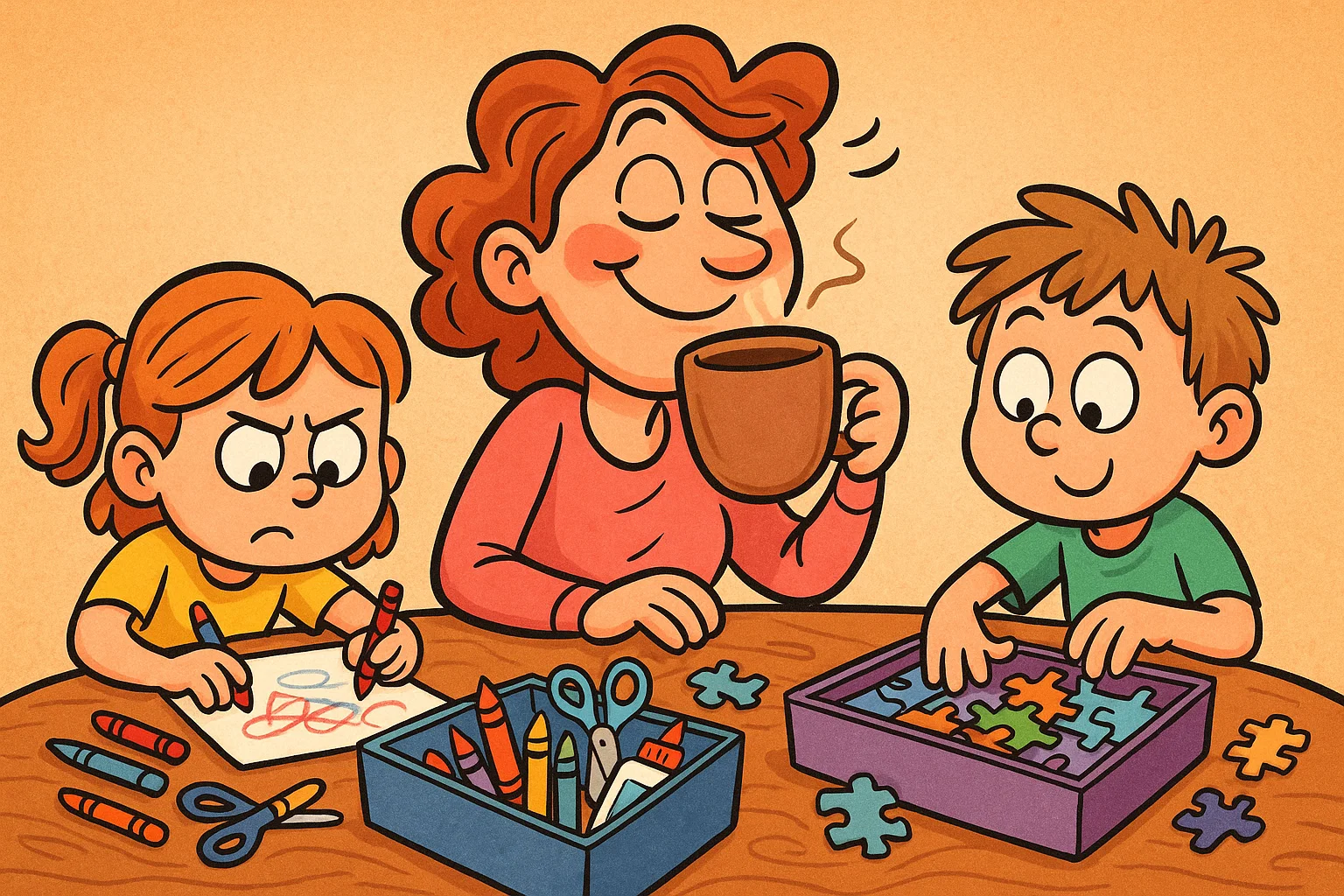
Activity Rotation
Repetition can reduce a child’s interest in independent play, leading to more attention-seeking interruptions. To counteract this pattern, implement a toy rotation system by dividing playthings into three distinct bins.
Offering only one bin per week keeps the toys feeling new and can extend a child’s independent play time.
To-Do Lists for Kids
Constructing a simplified, highly visual checklist empowers a child to self-direct their activities without constantly seeking adult direction. For younger children, use clear drawings or icons representing a puzzle piece, a book, and a box of crayons.
When the child feels bored, they can consult their personalized chart to determine their next activity independently.
Choice-Based Play
Giving a child unrestricted access to too many toys can feel overwhelming, which often leads to “I have nothing to do.”
Instead, parents should offer a structured choice between two distinct, pre-approved options, such as “Would you like to build with blocks or paint with watercolors?” This focused framework provides a sense of autonomy while maintaining clear structure.
Virtual Playdates
Arranging a structured video call with a grandparent, relative, or school peer can serve as a helpful tool for social connection and parent focus time.
Setting up a laptop on the kitchen table allows an older child to play a board game or read a story alongside a digital companion. This setup can create a 30-to-45-minute window of protected time for a parent to focus on work.
9. Save Screen Time for Important Work Moments
Screen Time as Meeting Tool
Digital media should be used as a tactical tool rather than as unrestricted background noise throughout the remote workday. For children, screen time works best when it is paired with high-quality content, clear limits, and thoughtful timing.
By saving preferred shows or apps for important meeting windows, parents can increase the chances that children stay engaged when quiet matters most.
Movie Time for Longer Blocks
When a remote worker faces a rare, high-stakes 90-minute presentation, using a full-length, age-appropriate film can be a practical option.
To make this strategy more effective, choose an engaging film the child has not seen before. This intentional use helps prevent screen time from becoming a baseline habit while still protecting essential work windows.
Balance Screens With Outdoor Play
To reduce the restlessness that can follow extended screen time, parents should pair digital activities with physical, offline activities.
When possible, follow screen time with outdoor play, movement games, or creative projects. This intentional pairing helps children release pent-up energy and stay more regulated throughout the rest of the workday.
| Phase | Child Activity | Parent Activity | Goal |
| Parent Focus | Strategic media or educational app | Critical video call or deep work | Protect an important work window |
| Family Reset | Outdoor play, movement game, or creative offline activity | Movement break or family check-in | Help the child release energy and reset |
| Return to Routine | Quiet play, reading, or snack | Low-cognitive-load work | Ease back into the next part of the day |
10. Communicate Clearly With Boss and Coworkers

Start- and End-of-Day Updates
Clear communication is essential when working hours are fragmented by childcare responsibilities. Sending brief, structured status updates at the beginning and end of the workday gives managers concrete visibility into your progress.
These communications reinforce professional accountability and show that you can remain productive despite a non-traditional schedule.
Upfront Message About Childcare Constraints
Communicating your daily availability in advance helps prevent misunderstandings and builds trust with remote coworkers. Parents should state their core working blocks, expected response times, and preferred methods of emergency contact in their internal status or team communication tools.
Providing this context allows coworkers to align expectations without interpreting a delayed email reply as professional disengagement.
Example Status Update:
“Remote Work Status: Focusing on deep work from 1:00 PM to 3:00 PM during child nap time. For urgent matters during this window, please reach out by phone.”
Response-Time Expectations
Establishing clear response-time expectations for tools like Slack or email can reduce the anxiety associated with asynchronous remote work.
Working parents should clarify with their immediate supervisor when non-urgent inquiries can typically expect a response. This boundary protects focus blocks from constant digital distraction.
11. Share Load With Partner or Support Network
Divide and Conquer Schedule
For co-parenting households operating under a remote or hybrid work model, success requires treating the day as a structured team operation.
Partners should hold a short daily morning check-in to review work calendars and divide the day into alternating childcare shifts. This system helps both partners get dedicated, uninterrupted blocks of time for high-priority work.
One-to-One Kid Time
Dedicating 20 minutes of focused, interactive attention to a child before a major work block can reduce attention-seeking behavior.
When a child feels emotionally secure and connected, their need to interrupt a parent during a call often drops. This small upfront investment of time can make independent play last longer later in the day.
Ask for Help Without Apology
Remote workers should actively resist the perfectionist isolation that can lead to parental burnout. Using local babysitting networks, coordinating shared school runs, or hiring a part-time nanny are practical steps for sustaining professional performance.
Seeking structured external assistance is a valid strategy for protecting both career progression and family stability.
12. Get Kids Moving Before Focus Blocks
Outdoor Breaks
Exposing children to natural light and open physical spaces early in the morning can help regulate their sleep-wake cycles and lower stress levels.
Spending 30 minutes at a local park or in the backyard before a key focus block allows children to burn off physical energy. This active routine transitions kids into a calmer state, making them more receptive to quiet play.
Energy-Burning Activities
When bad weather prevents outdoor play, parents can create structured, high-energy indoor movement alternatives at home.
Setting up a safe living room obstacle course, starting a 10-minute dance session, or organizing a scavenger hunt are effective options for burning physical energy. These movement blocks help prevent the restlessness that can lead to desk interruptions.
Stay Warm During Outside Time
During cold weather, outdoor activity requires a little preparation to keep children comfortable.
Parents can dress children in layers, use warm water-resistant gear, and limit outdoor sessions to brisk 20-minute increments. Returning indoors to a warm drink provides a cozy transition that signals the start of the next quiet work block.
13. Handle Multiple Children With Age-Based Roles
Older Kids Taking Charge
In multi-child households, older children can develop valuable leadership skills by taking on structured, safe responsibilities.
A middle schooler can read a story to a younger sibling or set up a block tower game during a parent’s 30-minute conference call. Parents should clearly define these expectations and reward assistance with appropriate privileges or allowances.
Separate Needs by Age
A significant mistake when managing multiple kids is trying to enforce one uniform activity across different developmental stages.
An infant needs a safe, quiet space for motor development, a toddler needs hands-on sensory play, and a school-aged child needs structured cognitive tasks. Creating individual zones near the home office helps each child stay engaged according to their age and developmental stage.
Personal Assistant Tasks for Pre-Teens
Pre-teens can feel more included when they are given simple responsibilities that support the household routine.
Tasks such as organizing office supplies, updating the family’s physical whiteboard calendar, or prepping snack trays foster a sense of responsibility. These small duties reduce the parent’s logistical load while teaching pre-teens practical organization skills.
14. Protect Parent Well-Being
Self-Care Without Overplanning
Sustaining professional output while parenting requires consistent, low-friction self-care habits integrated into the remote workday.
Simple actions – such as drinking enough water, doing basic stretches between calls, and taking brief breaks outside – can be highly effective. Avoid turning self-care into another demanding checklist item, which can increase baseline stress.
Meditation and Reset Breaks
Taking brief, two-minute mindfulness or deep-breathing pauses between work tasks and family responsibilities can help reset the nervous system.
Taking a moment to breathe deeply before stepping out of your home office corner prevents professional frustration from spilling over into interactions with your children. These quick mental resets are important for maintaining a patient, empathetic parenting tone.
Mental Health Day Signals
Remote working parents should pay attention to chronic physiological and psychological warning signs that may indicate burnout.
Indicators such as persistent sleep disturbances, elevated irritability, difficulty focusing, and ongoing emotional exhaustion signal a need for rest. Recognizing these symptoms early allows parents to request a personal day before burnout worsens.
Go Easy on Yourself
It is important to acknowledge that working from home with children present is a complex arrangement, not a standard office environment.
Parents should reject perfectionist standards around spotless homes or flawless productivity. Shifting your goals toward realistic, sustainable progress protects long-term mental health and supports a more harmonious family life.
15. Know Your Flexible Work Options and Parent Support Resources
Flexible Work Options
Many workplaces offer alternative scheduling options designed to support working parents.
Remote workers can ask about options such as compressed workweeks, hybrid schedules, or meeting-free focus blocks. These flexible arrangements can help parents align work duties with their family’s daily rhythm.
Rights and Support for Working Parents
Parents should review their employee handbook, local labor regulations, and HR policies to identify available parental benefits.
Many organizations offer access to employee assistance programs, subsidized backup childcare services, or parental support networks. Understanding your employment rights helps you advocate for yourself and identify potential discrimination concerns early.
Schedule Change Conversation
When preparing a formal proposal for an alternative work schedule, remote workers should present a structured, business-focused plan.
The proposal should clearly show how core responsibilities will be covered, specify availability windows, and outline backup communication plans. Framing the adjustment as a way to maintain consistent output can make the conversation with management more constructive.
Common Mistakes While Working From Home With Kids
Trying to Work Like Kids Are Not Home
A common mistake made by remote workers is attempting to maintain a rigid, traditional 9-to-5 office structure while supervising young children.
Forcing a toddler to adapt to a static, uninterrupted desk routine goes against normal child development and often leads to frustration for both parent and child. Success often requires replacing rigid office routines with flexible work blocks that adjust to your family’s needs.
Saving Hard Tasks for Chaotic Hours
Scheduling complex, high-cognition projects during a child’s peak energy, transition, or mealtime hours is a recipe for professional errors and parental frustration.
Trying to write a complex analytical report while a toddler is actively seeking attention can reduce the quality of both your work and your parenting. High-focus projects should be protected and reserved for the quietest windows of the day.
Letting Work Fill Every Evening
Regularly extending professional tasks late into the night to compensate for daytime interruptions creates a serious risk of chronic sleep deprivation.
While an occasional evening catch-up session is sometimes necessary, adopting this approach as a baseline routine can quickly lead to burnout. Establishing a firm evening cutoff time is essential for cognitive recovery and protecting family life.
Sample Day Plans by Parent Situation

Baby at Home
- 06:00 AM – 08:00 AM: Infant feeding window, sensory floor play, and basic parental morning routine.
- 08:00 AM – 09:30 AM: Work Block 1: High-focus work during the infant’s first nap window; focus on deep writing or analysis.
- 09:30 AM – 11:00 AM: Babywearing walk outdoors, followed by low-stress administrative tasks and email management via mobile device.
- 11:00 AM – 01:00 PM: Midday feeding, interactive floor play, and family lunch break.
- 01:00 PM – 03:00 PM: Work Block 2: Afternoon nap window; dedicated time for important video calls.
- 03:00 PM – 05:00 PM: Safe independent play in a nearby playpen while parent finishes routine administrative work.
- 05:00 PM: Hard digital shutdown; transition to evening family time.
Toddlers at Home
- 06:30 AM – 08:30 AM: Family breakfast, getting dressed, and 20 minutes of focused reading time together.
- 08:30 AM – 10:00 AM: Work Block 1: Medium-focus work while toddler engages with an independent sensory tray nearby.
- 10:00 AM – 11:00 AM: Active outdoor movement block at a local park to burn off physical energy.
- 11:00 AM – 12:30 PM: Snack followed by independent puzzle play; parent handles short team check-ins.
- 12:30 PM – 02:30 PM: Work Block 2: Toddler afternoon nap or structured quiet time box; parent tackles deep work.
- 02:30 PM – 04:00 PM: Guided arts and crafts followed by a brief walk outdoors.
- 04:00 PM – 05:00 PM: Work Block 3: Preferred educational screen time during final calls.
- 05:00 PM: Close laptop; transition to evening domestic routine.
School-Aged Kids at Home
- 07:00 AM – 08:30 AM: Morning exercise, independent breakfast prep, and review of the child’s daily checklist.
- 08:30 AM – 11:30 AM: Parallel Work Window: Child completes worksheets and independent reading while parent focuses on core work.
- 11:30 AM – 01:00 PM: Shared lunch preparation, kitchen cleanup chore, and active backyard movement time.
- 01:00 PM – 03:00 PM: Deep Focus Block: Child works on an independent creative project or building set while parent conducts key conference calls.
- 03:00 PM – 04:30 PM: Academic review session, light afternoon snack, and outdoor bike ride break.
- 04:30 PM – 05:30 PM: Low-cognitive-load administrative wrap-up for parent while child enjoys approved educational screen time.
- 05:30 PM: End of remote workday; transition to family dinner.
Hybrid Workday
- 06:00 AM – 07:30 AM: Early home office focus block to address critical emails before family wakes up.
- 07:30 AM – 08:30 AM: School prep, breakfast routine, and commute to the office.
- 08:30 AM – 03:00 PM: In-Office Window: Prioritize face-to-face meetings, collaborative sessions, and complex deep work.
- 03:00 PM – 04:00 PM: Leave the office, handle school pickup, and transition back home.
- 04:00 PM – 05:30 PM: Remote Wrap-Up: Manage afternoon administrative tasks from your home office corner while your child completes homework.
- 05:30 PM: Clear desk workspace; transition to evening family mode.
FAQ About Working From Home With Kids
What Are the Best Tips for Working From Home When Kids Are Around?
The best tips for working from home when kids are around start with realistic planning. Instead of expecting a perfect, uninterrupted work day, build your schedule around your child’s natural rhythm, school routine, meals, and rest periods. Many parents find it helpful to separate the day into focus blocks, supervision blocks, and family reset moments. Use quiet windows for deep work, save lighter tasks for noisier parts of the day, and give your child clear signals so they know when you are available and when they should avoid interrupting your work.
How Can Parents Get Work Done Without Ignoring Their Kids?
Parents can get work done without ignoring their kids by creating predictable moments of connection throughout the day. A little one often interrupts because they need reassurance, attention, food, movement, or help transitioning to the next activity. Try spending 10 to 15 minutes together before a focused work block. Read a short book, play a quick game, or set up an activity together. When kids know they will get your full attention soon, they are often more willing to play independently for a short period.
Why Is Work and Childcare So Hard to Balance?
Work and childcare are hard to balance because both require attention, patience, and emotional energy. Kids may need help at the exact moment a parent has a call, deadline, or task that requires focus. This does not mean the parent is doing anything wrong. Working from home with kids is challenging because the same space must support two very different needs: professional focus and family care. A realistic plan should make room for both instead of expecting one to disappear.

Take a short quiz to find out what your everyday choices say about your parenting style
When your child is curious about something new, what’s your instinct?
Take a short quiz to find out what your everyday choices say about your parenting style
“Can I download this app?” What happens next?
Take a short quiz to find out what your everyday choices say about your parenting style
When it comes to rules at home, which sounds most like you?
Take a short quiz to find out what your everyday choices say about your parenting style
If you could give your child one life skill today, what would you pick?
Take a short quiz to find out what your everyday choices say about your parenting style
Your child gets to choose what to watch. What would your ideal setup look like?
Take a short quiz to find out what your everyday choices say about your parenting style
Pick your parenting superpower ✨