40 Best Indoor Games for Kids for Fun, Learning, Active Play, and Creativity

 Discover a Free Education Video App for Kids
Pastory uses AI to personalize educational video content based on your child’s interests and personality. Safe, engaging, and built for curious young minds. Sign up now to stay updated and enjoy early access with a free trial
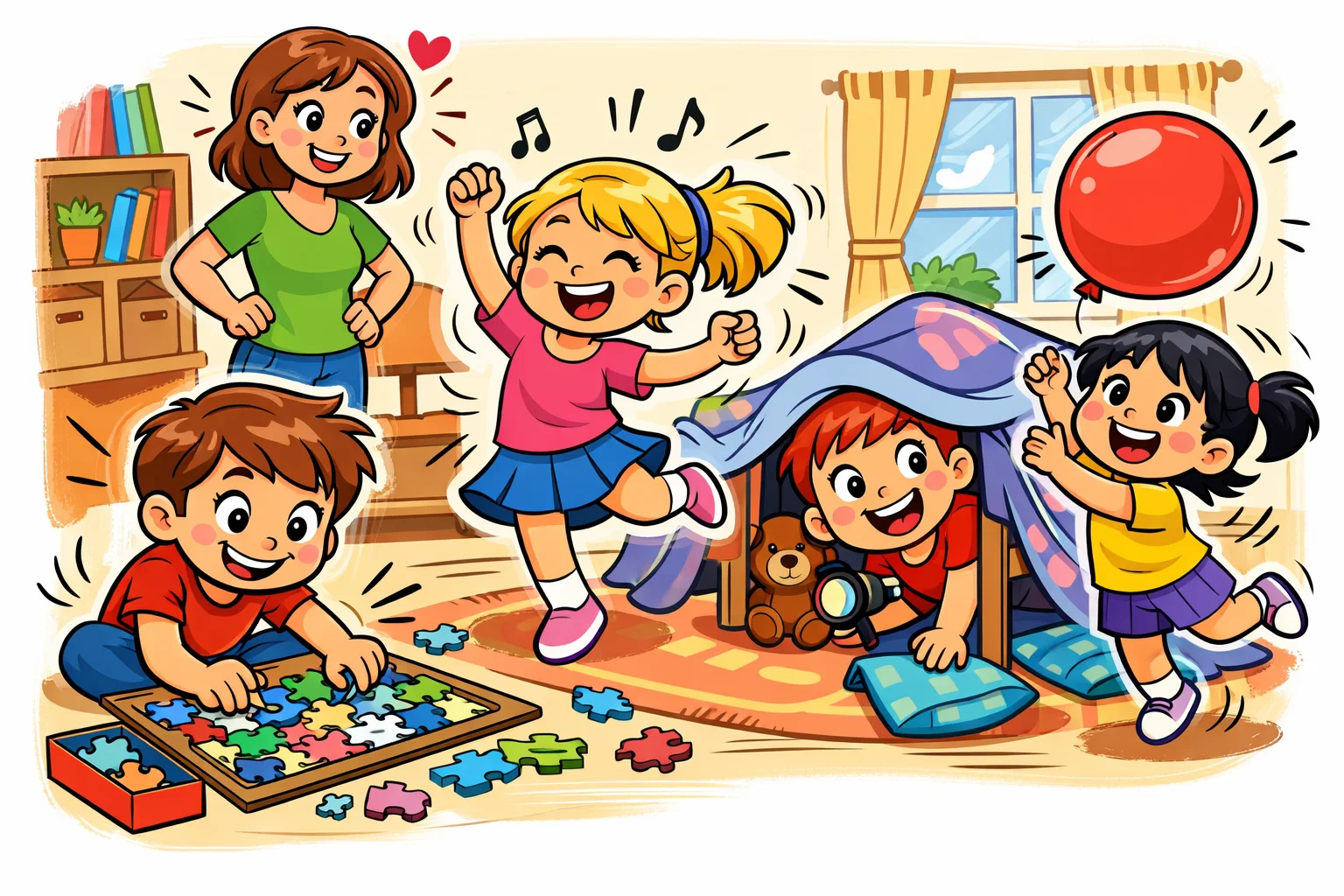
Keeping children engaged and entertained at home takes more than a box of toys; it requires a thoughtful mix of play that balances physical activity with cognitive growth. Indoor activities help parents channel their children’s energy, reduce screen time, and support key developmental milestones. Whether you’re dealing with a rainy day, a cold winter afternoon, or simply looking for ways to brighten an ordinary weekend, purposeful indoor play can turn the living room into a hub of discovery.
Best Skill-Building Indoor Games for Kids
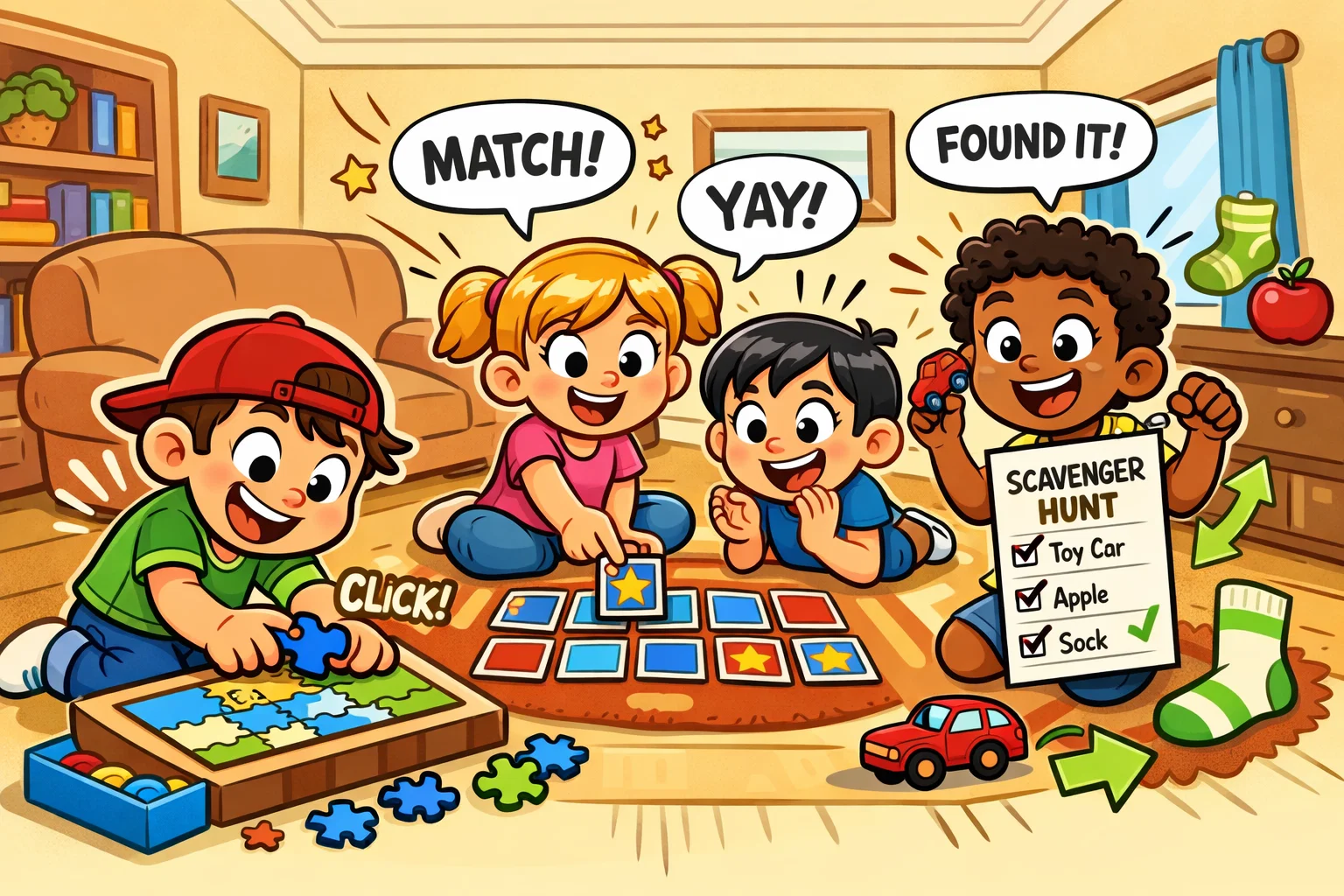
Skill-building indoor games are specifically designed to target executive functions such as memory, attention, and logical reasoning. According to Montessori-inspired educational approaches, children learn best when they can interact with their environment through hands-on sensory experiences. These simple activities help kids follow instructions and process information in a playful setting, making indoor play an important part of early childhood learning.
1. Scavenger Hunt
A scavenger hunt is a versatile indoor activity where one player or a group searches for specific items around the room. To maximize the educational value, parents can ask kids to find objects by colour, texture, or function, such as “something soft” or “something blue.”
- Toddlers: Focus on basic colors and large items found in a cupboard.
- Preschoolers: Use rhyming clues to help kids identify objects.
- Older Kids: Incorporate riddles or map-reading to locate “hidden treasures.”
This activity enhances word recognition and spatial awareness by encouraging children to navigate their environment with a specific goal in mind.
2. What’s Missing? (Memory Tray Game)
This memory tray game involves placing several items (such as a spoon, a bowl, or a toy block) on a tray and giving the child 30 seconds to study them. After the child looks away, cover the tray with a cloth, remove one item, and ask them to identify what is missing.
- Memory Retention: Visual memory games can help strengthen short-term recall and attention in school-aged children.
- Focus: This game requires high levels of concentration, helping little ones develop the ability to filter out distractions.
3. Bring Me Objects
In this fast-paced game, an adult acts as the “caller” and asks the child to “Bring me something…” followed by an attribute like “round,” “wooden,” or “metallic.” This simple indoor game reinforces listening skills and categorization skills. By asking for items from a specific shelf or cabinet, you also encourage children to tidy up and organize their belongings.
4. Guess with Your Hands
‘Guess with Your Hands’ is a sensory-focused indoor activity in which objects are placed inside a pillowcase or an opaque bowl. Children must use their sense of touch to identify the item without looking.
Tip: Sensory play without visual cues can support descriptive language and abstract thinking.
5. Jenga Tower
Jenga is an all-time favorite that helps build fine motor skills and patience. Players must take turns removing wooden blocks from a tower and placing them on top without the structure falling. To add an educational twist, you can write questions or math problems on each block that the child must solve before placing the piece.
6. Paper Plate Tic-Tac-Toe
Transform the classic game into a large-scale version using paper plates and masking tape on the floor. Use tape to make a 3×3 grid, and mark the plates with “X” and “O.” This kid-friendly indoor game teaches strategy and turn-taking while adding more movement than the traditional pen-and-paper version.
7. Puzzle Relay
A Puzzle Relay combines logic with physical activity. Place the puzzle pieces at one end of the room and the game board at the other. Players must run back and forth, bringing only one piece at a time to complete the puzzle. This format develops teamwork, coordination, and visual-spatial processing in a fun, competitive setting.
8. Simon Says
Simon Says is a foundational game for teaching children to follow instructions and exercise self-control. The leader gives commands, but players should act only when the instruction begins with the phrase ‘Simon says.’ If the leader says ‘Jump’ and a child jumps without the prompt, they are out or must do a quick forfeit, such as five jumping jacks.
Best Active Indoor Games for Kids
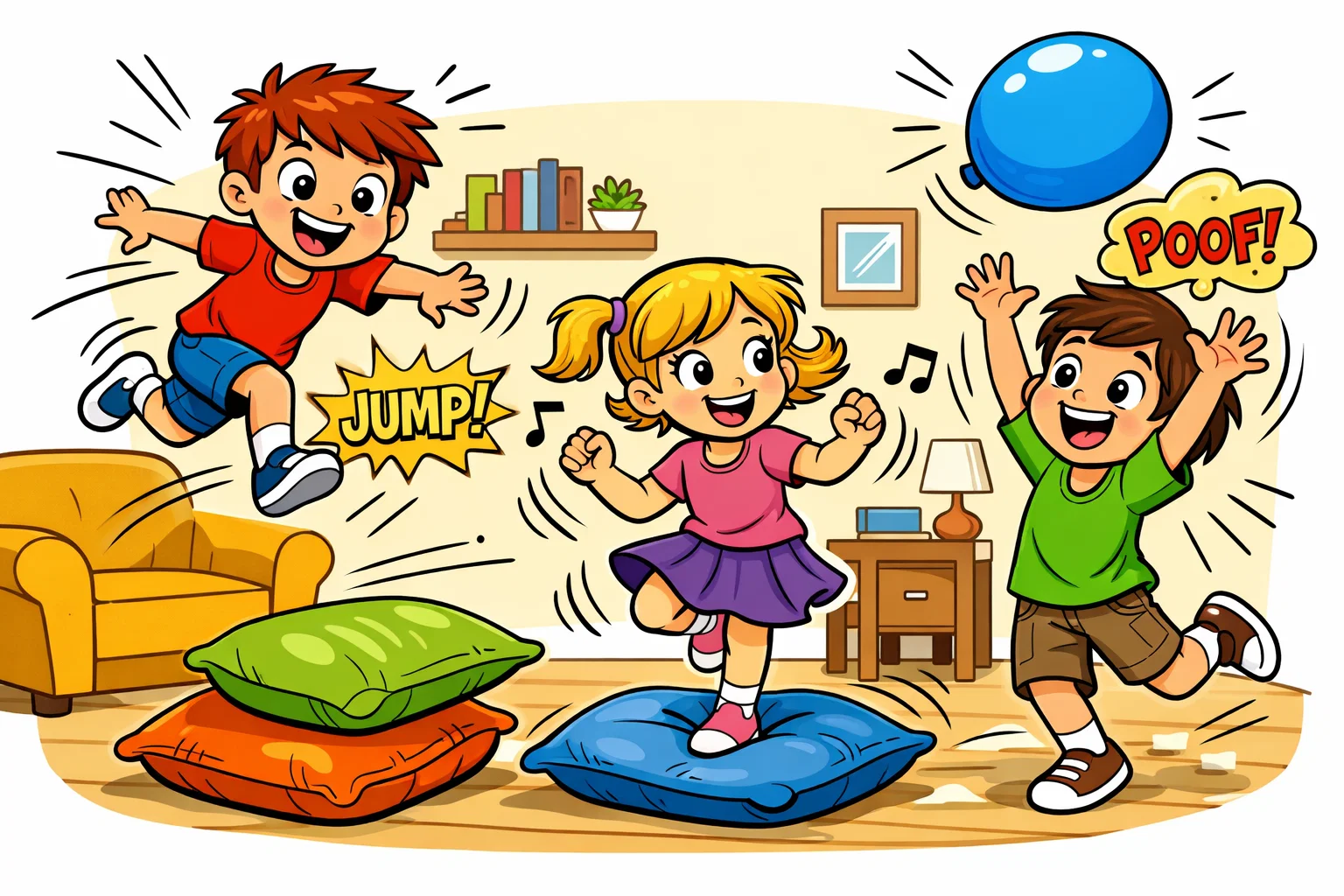
When stuck indoors, children often have pent-up energy that can lead to restlessness. Active indoor games provide a reliable outlet for physical activity, supporting gross motor skills, balance, and cardiovascular health. Public health guidance generally recommends that children get at least 60 minutes of moderate to vigorous physical activity each day; these games can help them stay active indoors.
9. Obstacle Course
An obstacle course is the ultimate way to keep kids active. Use household items to create a path: crawl under a table, hop over pillows, and zigzag through water bottles.
- Safety First: Ensure all rugs are secured with masking tape to prevent slipping.
- Clear Markers: Use tape to make a start and finish line.
- Timed Challenges: Use a stopwatch to encourage kids to beat their own records, fostering a sense of achievement.
10. Hopscotch
You can play indoor hopscotch by using masking tape to create the numbered grid on a carpet or hard floor. Instead of a rock, use a foam ball or a beanbag. This game is excellent for developing one-foot balance and counting skills. Jumping and hopping activities can help improve coordination and support bone strength in growing children.
11. Balloon Volleyball
Balloon Volleyball is a great party game that is safe for small spaces. Tie a piece of string between two chairs to act as a net. Kids love the slow-motion flight of the balloon, which helps them develop hand-eye coordination without the risk of breaking household items.
12. Indoor Bowling
Create a bowling alley in a hallway using empty plastic cups or water bottles as pins and a small foam ball. To make it more challenging, fill the bottles with a little bit of sand or water. This activity teaches children about force, trajectory, and basic math as they keep track of their scores.
13. Dance Party
A dance party is a high-energy indoor activity that never fails to entertain. Turn on a playlist and encourage animal-inspired movements, such as slithering like a snake or hopping like a frog.
- Freeze Game: Periodically stop the music; everyone must freeze in their current position.
- Prop Usage: Give children a scarf or a ribbon to enhance their movement and creativity.
14. Floor Is Lava
In this playful game, the floor is “lava,” and kids must move across the room using “safe zones” like pillows, rugs, and low stools. This encourages imaginative play and problem-solving as children figure out the best way to keep their feet off the ground.
15. Animal Walks
Animal walks require no props and provide a full-body workout. Instruct kids to move like a:
- Bear: Crawl on hands and feet with hips high.
- Crab: Sit on the floor, lift hips, and walk on hands and feet.
- Frog: Squat low and jump forward.
This activity builds core strength and can also support body awareness and coordination.
16. Red Light, Green Light
This game helps children practice following instructions and impulse control. On “Green Light,” children move toward the finish line; on “Red Light,” they must stop instantly. You can add a “Yellow Light” where they must slither slowly like a worm. It is an excellent game for groups because it creates friendly competition with minimal physical contact.
Best Indoor Party Games for Kids
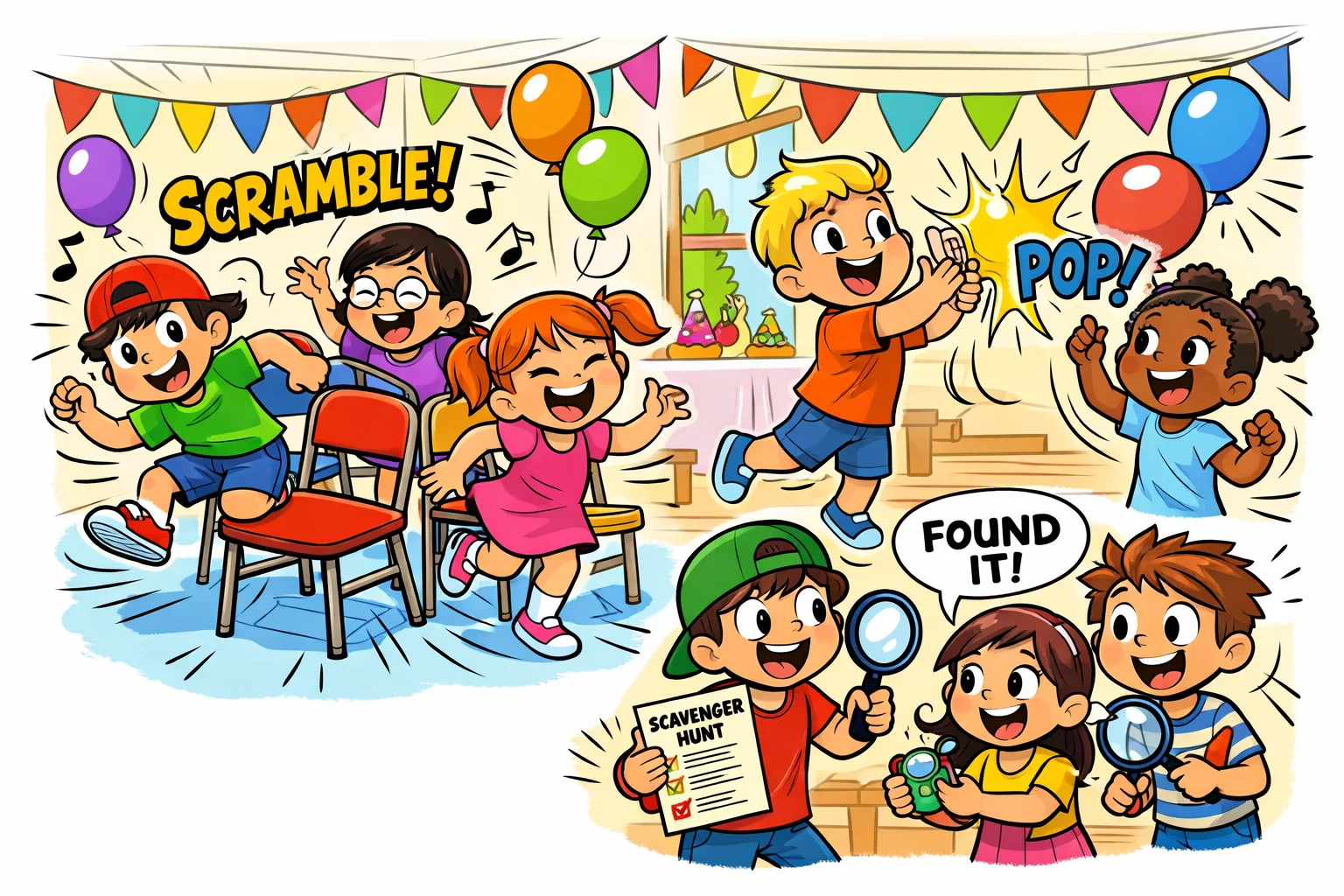
Hosting a great indoor party calls for games that are easy to organize and fun for multiple players. These activities are designed to keep your kids and their friends engaged and entertained through structured social interaction.
17. Musical Chairs
A staple of any indoor children’s event, Musical Chairs involves placing chairs in a circle (one fewer than the number of players). When the music stops, everyone must find a seat. To make it non-elimination for younger kids, simply remove a chair but keep all the children in the game, challenging them to fit onto the remaining seats.
18. Hot Potato
In Hot Potato, children sit in a circle and pass a pillow or a small foam ball while music plays. The last person holding the object when the music stops is “out” or must perform a fun task, like reciting a poem. This game is perfect for teaching quick reactions and taking turns.
19. Pin-the-Tail Challenge
Update the classic ‘Pin the Tail on the Donkey’ with a themed version, such as ‘Pin the Star on the Rocket.’ Use masking tape on the back of the “tail” and a blindfold. This game develops spatial awareness and allows for imaginative play based on the party’s theme.
20. Grandmother’s Footsteps
One child (the Grandmother) stands at the end of the room with their back turned. Other players must sneak up on them. If Grandmother turns around, everyone must freeze. Anyone caught moving must go back to the start. This game builds patience and stealth.
21. Stand Up If…
This is an excellent icebreaker for an indoor party. The leader says, “Stand up if you like the colour blue,” or “Stand up if you have a pet.” It helps kids find common interests and promotes social bonding in a low-pressure environment.
22. Hide and Seek
Hide-and-seek is a universal favorite that can be played in almost any indoor environment. For a twist, try “Sardines,” where only one person hides and everyone else searches. When a seeker finds the hider, they join them in the hiding spot until everyone is packed in like sardines.
23. Follow the Tape
Use masking tape to create intricate paths, loops, and zigzags around the room. Children must walk precisely on the tape. You can add “missions” along the way, such as “Do 10 jumping jacks when you reach the blue circle.” This is one of the best indoor options for developing balance and focus.
24. Target Cups
Stack plastic cups into a pyramid at the end of a hallway. Give kids a small foam ball or a paper airplane to knock them down. This friendly competition is great for parties and helps build aiming and coordination skills.
Best DIY Indoor Games for Kids
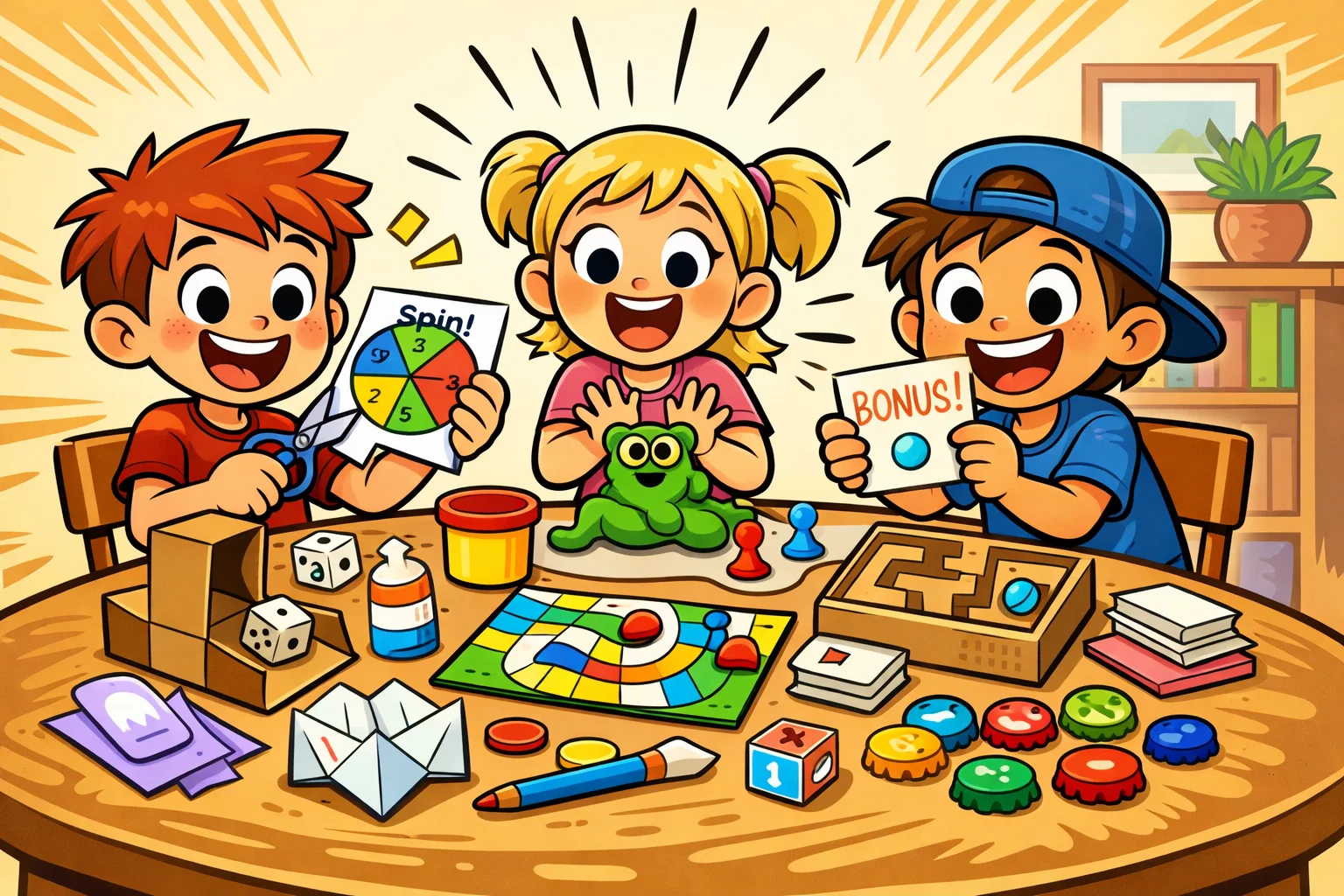
DIY games focus as much on the process of creation as on the final result. These creative indoor activities include making crafts, turning everyday household items into props or instruments, and mixing simple ingredients for hands-on play. According to educational research, DIY projects enhance fine motor skills and provide a sense of autonomy.
25. Make Your Own Playdough
Creating homemade playdough is a science experiment and a craft in one. Using flour, salt, water, and food colour, children can mix their own tactile material.
- Learning Value: Measuring ingredients introduces basic math concepts and simple science.
- Play Potential: Once made, use it for imaginative play like a “pretend bakery.”
26. Puppet Theatre
Use a large cardboard box from a cupboard to create a stage. Kids can use paper, fabric, and simple craft supplies to make puppets and props. This activity significantly boosts storytelling and verbal communication skills as children perform for their family.
27. Paper Airplane Challenge
Teaching kids to make paper airplanes involves lessons in aerodynamics and geometry.
| Challenge Type | Goal | Skill Developed |
| Distance | Longest flight path | Force application |
| Accuracy | Land in a bowl | Precision |
| Stunt | Loop-the-loops | Structural design |
28. DIY Ring Toss
Create rings by cutting the centers out of paper plates and decorating them with glitter and paint. Use a heavy water bottle or a vertical stick as the target. This indoor play setup is low-cost and provides hours of friendly competition.
29. Potato Stamps Art Game
Cut a potato in half and carve simple shapes like stars or hearts. Dip them in paint to make prints and create unique artwork. This creative indoor activity helps children understand patterns and color mixing while producing unique art.
30. Salt Dough Creations
Salt dough is a durable medium for making paperweights, ornaments, or ‘fossils.’ After baking, kids love to paint their creations. This longer project teaches patience and the value of multi-step creative work.
31. Homemade Musical Instruments
Turn a pot into a drum and fill plastic cups with beans to make shakers. A music-and-movement session with homemade instruments helps children explore rhythm and sound and can foster an early appreciation for the arts.
32. Papier-Mâché Project Game
Using old newspapers and a flour-water paste, children can build 3D models. Whether it’s a mask, an animal, or another 3D creation, this project requires patience and precision, making it a great way to keep older children engaged for several days.
Best Creative Indoor Games for Kids
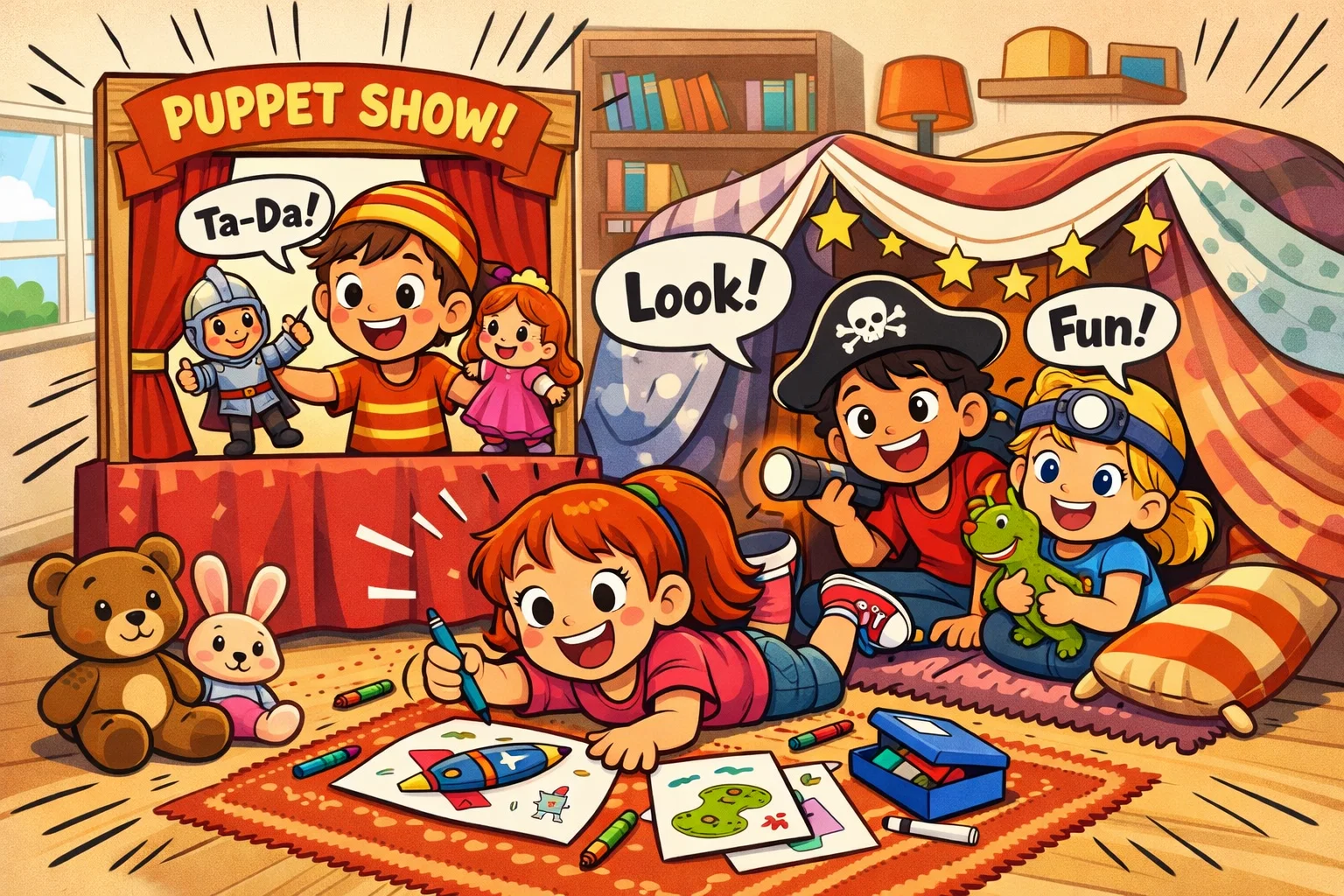
Creativity is the ability to see the world in new ways and solve problems through imaginative play. These games emphasize storytelling, role-playing, and open-ended exploration, all of which support emotional development.
33. Let’s Pretend
“Let’s Pretend” involves assigning roles – such as doctor, astronaut, or shopkeeper – and using household props to act out scenarios. This indoor activity helps children process social interactions and develop empathy by seeing the world through another’s perspective.
34. Put On a Play
Encourage your child to write a script and put on a play. This involves selecting props and costumes, memorizing lines, and performing. This is a great indoor activity for building confidence and public speaking skills.
35. Make a Movie at Home
In the digital age, using a tablet or phone to record a short film is a great indoor project. Kids can act, direct, and even try simple editing. This supports digital literacy and creates a lasting memory of time spent indoors.
36. Fort Building
A fort made of pillows, blankets, and chairs is a sanctuary for imaginative play. Whether it’s a “reading fort” or a “pirate ship,” this indoor activity creates a cozy private space for reading, quiet play, and imaginative exploration.
37. Rock Painting Game
If you have collected smooth rocks, use them for a painting game. Once dry, hide them around the room for a mini-scavenger hunt. This combines art with physical movement, providing a multi-sensory experience.
38. Indoor Camping Trip
Set up a tent or a blanket canopy and go indoor camping. Use a flashlight as a ‘campfire,’ tell stories, and enjoy camp-style snacks. This activity mimics the thrill of the outdoors while staying weatherproof and safe.
39. Action Storytime
Turn a standard reading session into an action storytime. Every time a specific word is mentioned, the child must perform an action (e.g., “jump” or “clap”). This keeps kids engaged and ensures they are listening closely to the narrative.
40. Origami Challenge
For older children, an origami challenge is a perfect way to keep them focused. Using paper to create intricate cranes or frogs improves dexterity and spatial reasoning. It requires patience but results in a tangible sense of accomplishment.
Indoor Games by Age
Selecting the best indoor activity requires matching the game to the child’s developmental stage. Games that are too hard cause frustration, while those that are too easy lead to boredom.
Best Indoor Games for Toddlers
Toddlers (ages 1–3) have short attention spans and are developing basic motor skills.
- Balloon Volleyball: Soft and safe for curious hands.
- Animal Walks: Simple imitation that burns energy.
- Bowl and Spoon “Music”: Sensory exploration of sound.
Best Indoor Games for Preschoolers
Preschoolers (ages 3–5) are expanding their language and social skills.
- Simon Says: Teaches listening and following directions.
- Scavenger Hunt: Simple color-based or object-based searches.
- Dress-up: Encourages imaginative play and storytelling.
Best Indoor Games for Kids Ages 5–7
Children in this bracket enjoy friendly competition and structured rules.
- Obstacle Course: Challenging enough to be rewarding.
- Indoor Bowling: Helps with basic counting and coordination.
- Memory Tray Game: Sharpens focus and supports school readiness.
Best Indoor Games for Kids Ages 8–10
Older children look for complexity, strategy, and DIY projects.
- Origami Challenge: Requires precision and focus.
- Make Movie at Home: Incorporates technology and creativity.
- Paper Airplane Competition: Involves physics and experimentation.
Indoor Games for Small Spaces
You do not need a large house to provide great indoor fun. Many easy activities are designed for apartments or small rooms where running is not feasible.
Best Indoor Games for Apartments
Quiet games that minimize impact on floors are essential for apartment living.
- Target Cups: Precision-based rather than speed-based.
- Tic-Tac-Toe: Can be played on a table or small floor area.
- Puzzles: A quiet, stationary activity that can last for hours.
Best Indoor Games with No Equipment
These “zero-prep” games rely on imagination and voice.
- Hide and Seek: Uses the existing layout of the home.
- Simon Says: Only requires a leader and a listener.
- I Spy: A classic way to keep kids focused on their surroundings.
Benefits of Indoor Games for Kids
Indoor activities are not just a solution for a rainy day; they are fundamental to a child’s holistic growth. Engaging in structured indoor play provides clear benefits across three key areas.
Physical Benefits
Indoor games like hopscotch and animal walks improve balance, coordination, and gross motor skills. Even in a small space, children can stay active in ways that strengthen muscles and improve cardiovascular health, helping counter sedentary habits.
Cognitive Benefits
Games such as the Memory Tray game or a scavenger hunt directly support cognitive development. They improve:
- Memory Retention: The ability to store and recall information.
- Problem-Solving: Figuring out the best path through an obstacle course.
- Attention to Detail: Finding hidden objects or following complex instructions in Simon Says.
Social & Creative Benefits
Taking turns in a game of Jenga or collaborating on a play teaches children social skills and self-control. Furthermore, imaginative play allows children to explore different identities and scenarios, which supports emotional intelligence and creativity.
How to Choose the Best Indoor Games for Kids
To keep kids engaged, parents must consider four main factors before starting an activity.
- Choose by Age: Ensure the rules are simple enough for the child to understand but complex enough to provide a challenge.
- Choose by Space: If you have a small living room, opt for Target Cups or memory games rather than a full-scale dance party.
- Choose by Goal: If the goal is to calm down before bed, choose origami or storytime. If the goal is to burn energy, choose an obstacle course.
- Choose by Setup Time: Have a list of “No-Prep” games for busy days and “DIY Projects” for long weekends.
FAQ
What are the best indoor games for kids at home?
The best indoor games at home include Scavenger Hunt, Obstacle Course, Hide and Seek, Simon Says, and Balloon Volleyball. These games cover a mix of physical, cognitive, and social skills.
Which indoor games work best for small spaces?
For apartments or small rooms, focus on “quiet” and stationary games like Memory Palace, Jenga, Tic-Tac-Toe, and Target Cups (using soft foam balls).
Which indoor games need no equipment?
Games that require no equipment include hide-and-seek, Simon Says, animal walks, Red Light, Green Light, and I Spy.
Which indoor games help kids burn energy?
To help kids burn energy, set up an obstacle course, host a dance party, play Floor Is Lava, or engage in Animal Walks. These require significant movement and use of gross motor skills.
Which indoor games help with learning?
Games that support learning include Scavenger Hunt (vocabulary), Memory Palace (concentration), Puzzle Relay (logic), and Origami (geometry and patience).
Take a short quiz to find out what your everyday choices say about your parenting style
When your child is curious about something new, what’s your instinct?
Take a short quiz to find out what your everyday choices say about your parenting style
“Can I download this app?” What happens next?
Take a short quiz to find out what your everyday choices say about your parenting style
When it comes to rules at home, which sounds most like you?
Take a short quiz to find out what your everyday choices say about your parenting style
If you could give your child one life skill today, what would you pick?
Take a short quiz to find out what your everyday choices say about your parenting style
Your child gets to choose what to watch. What would your ideal setup look like?
Take a short quiz to find out what your everyday choices say about your parenting style
Pick your parenting superpower ✨