
Returning to Work After Parental Leave: Rights, Planning Tips, and Checklists for Parents and Employers

 Discover a Free Education Video App for Kids
Pastory uses AI to personalize educational video content based on your child’s interests and personality. Safe, engaging, and built for curious young minds. Sign up now to stay updated and enjoy early access with a free trial

Returning to work after parental leave is a major milestone that involves emotional adjustment, legal rights, childcare logistics, and workplace planning. Whether an employee is returning from maternity, paternity, adoption, shared parental leave, or unpaid parental leave, the process requires clear communication and structured preparation by both the employee and the employer.
For a new parent, balancing work and family life means adjusting to a new routine while navigating employment rights, childcare arrangements, and workplace expectations. This guide focuses mainly on employment rights in Great Britain – England, Scotland and Wales – with notes where UK-wide rules may apply. Rules differ in Northern Ireland and outside the UK, so employees and employers should always check the rules that apply in their location. This guide provides practical strategies, legal basics, and structured checklists to support a successful return to work.
Key Takeaways
- Know your rights: In the UK, employees usually have the right to return to the same job after shorter periods of maternity or adoption leave. After longer leave, a suitable alternative role may be allowed only where returning to the original role is not reasonably practicable.
- Request flexibility early: Formal flexible working requests for adjusted hours, hybrid working, or part-time schedules should be submitted well before the official return date.
- Secure dependable childcare: Choosing a childcare provider and planning a settling-in period can reduce the logistical stress of returning to work.
- Plan a phased return: Using accrued annual leave, Keeping in Touch (KIT) days, or Shared Parental Leave in Touch (SPLIT) days can help a working parent ease back into professional duties.
- Prioritise open communication: Starting an early conversation with a line manager about workload expectations, physical recovery, and the need to express milk can help prevent workplace misunderstandings.
Core Points for Returning Parents

A working parent may need to manage several areas at once to make the return from maternity, adoption, shared parental, paternity, or unpaid parental leave smoother. Understanding statutory employment rights supports job security, while setting a clear return date helps everyone plan ahead.
Discussing flexible working options, such as a phased return, adjusted hours, or a hybrid working arrangement, can help balance work responsibilities with new family routines. Securing reliable childcare well in advance reduces pressure on the morning routine, while discussing physical needs, such as a private space to express milk, helps ensure a safer return to the workplace.
Managing mental health challenges, acknowledging feelings of being overwhelmed, and rebuilding professional confidence are also important parts of the emotional transition back to work.
Core Points for Employers
Employers can support a smoother transition by maintaining clear, agreed communication before, during, and after an employee’s parental leave. Offering a phased return or approving flexible working arrangements can preserve valuable institutional knowledge and reduce employee turnover costs.
Where required, managers must arrange an individual risk assessment for employees who have given birth in the last six months or are breastfeeding. Employers should also provide a suitable, hygienic, and private area for expressing milk, arrange refresher training where needed, and help returning parents get back up to speed.
A supportive culture that respects parental boundaries and avoids reducing responsibilities without discussion can improve long-term employee retention and strengthen the employer brand.
Quick Return Checklist
- Confirm the return date: Confirm your planned return date with HR and your line manager. If you want to return earlier or later than planned, give written notice within the required timeframe.
- Discuss role expectations: Schedule a pre-return meeting to review current projects, organisational changes, and initial objectives.
- Arrange childcare logistics: Finalise arrangements with your childcare provider and complete several short trial sessions.
- Submit flexibility requests: Formalise any requests for flexible working arrangements, compressed hours, or a work-from-home setup.
- Plan a professional handover: Coordinate with cover staff to review outstanding tasks and transition ongoing project workflows.
- Schedule review meetings: Block out regular check-ins during the first few weeks back to review workload, expectations, and support needs.
Parental Leave Recap
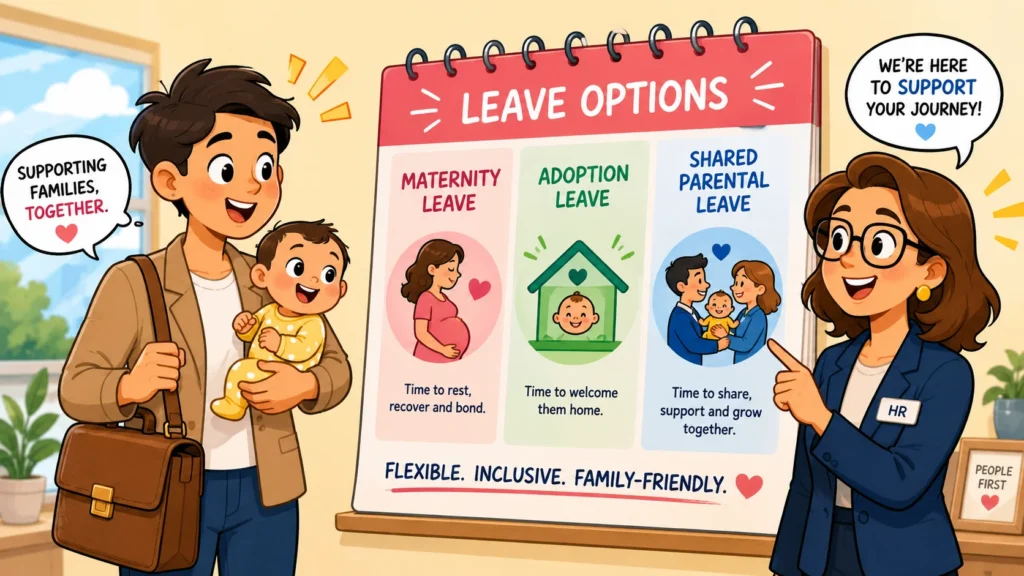
Understanding the main categories of statutory leave is essential for accurate operational and financial planning before employees return to work.
Maternity Leave
Statutory maternity leave gives birth mothers time off for physical recovery and early bonding with their baby. In the UK, statutory maternity leave can last up to 52 weeks and is divided into Ordinary Maternity Leave and Additional Maternity Leave.
Planning the return to work after maternity leave should begin well before the leave end date so that workplace arrangements, childcare, and personal needs are aligned.
Paternity Leave
Paternity leave allows eligible fathers, partners of birth parents, co-adopters, partners of adopters, and intended parents in surrogacy arrangements to take time off to care for the child and support the family. In Great Britain, paternity leave is now a day-one right for eligible employees, although eligibility for statutory paternity pay still depends on separate service and earnings rules.
Employees can take up to two weeks of paternity leave, either together or separately in one-week blocks. The leave must usually be taken within the first 52 weeks after the birth, adoption placement, or the child’s arrival in England, Scotland or Wales for overseas adoptions. Employees should give the correct notice and check the rules that apply to their situation, especially where adoption, surrogacy, or Northern Ireland rules are involved.
Adoption Leave
Adoption leave gives the primary adopter the statutory right to take time away from work when a child is placed with their family for adoption. This leave type broadly mirrors statutory maternity leave in duration and structural importance, reflecting the need for family bonding and routine-building.
Adoptive parents often face similar return-to-work challenges, particularly around childcare schedules and the emotional adjustment of returning to the workplace.
Shared Parental Leave
Shared Parental Leave enables eligible parents to share up to 50 weeks of leave and up to 37 weeks of statutory pay during the child’s first year or the first year after adoption placement.
This framework allows eligible parents to alternate periods of work and leave, creating more tailored family routines. Effective planning for a return from shared parental leave may require coordination between two employers, especially where parents are managing staggered return dates and alternating childcare responsibilities.
Unpaid Parental Leave and Time Off for Dependants
Parents and carers may have statutory entitlements to time off long after a child’s birth or placement. Eligible employees can usually take up to 18 weeks of unpaid parental leave per child, up to the child’s 18th birthday.
Employees may also take reasonable unpaid time off for dependants to deal with emergencies, such as sudden childcare breakdowns or a child’s unexpected illness. This is designed for unexpected situations rather than planned childcare arrangements.
Employee Rights After Parental Leave
Employment law protects employees from being disadvantaged because they take statutory family-related leave, including in relation to their role, pay, and contract terms.
Right to Return to Work
The right to return to work protects employees from job loss or unfair treatment because they have taken family-related leave. In many cases, the employee must be allowed to return on terms that are no less favourable than before their leave.
Employers should respect these rights and ensure returning parents are brought back into their role fairly and without assumptions about their commitment, availability, or ambition.
Returning to the Same Job
When an employee returns after 26 weeks or less of maternity or adoption leave, they usually have the right to return to the same job. The employer should return the employee to the same role, with the same or no less favourable pay, seniority, location, and core responsibilities.
If tools, processes, or systems have changed during the leave period, the employer should provide appropriate updates or training rather than reducing the employee’s role or responsibilities.
Returning After a Longer Leave Period
If an employee takes more than 26 weeks of maternity or adoption leave, returning to the same job remains the starting point. However, if there is a genuine reason why this is not possible, the employer may offer a suitable alternative role.
To be legally compliant, any alternative role must be suitable and appropriate, with terms and conditions that are not worse than the previous role, including pay, benefits, location, and seniority.
Holiday Entitlement
Annual leave continues to accrue during maternity and adoption leave. Employees should also check how statutory and contractual holiday entitlement applies to other types of family-related leave.
Employees may be able to add accrued holiday to the beginning or end of their leave period, which can create a useful buffer before returning to work. Using accrued annual leave can also be a practical way to create a phased return, for example by working shorter weeks during the first few weeks back.
Pay, Benefits, and Contract Terms
On return from leave, salary and contractual benefits should reflect the employee’s current contract and any applicable pay rises or contractual changes made during their absence.
Any general pay rises or cost-of-living adjustments implemented across the company during the employee’s absence should be applied fairly to the returning employee where they are eligible. Employees should review their employment contract and internal HR policies to understand how bonus schemes, enhanced family leave pay, pension contributions, and other benefits apply.
Protection from Redundancy
Returning parents may have special protection in redundancy situations, and employers must not select employees for redundancy because of pregnancy, maternity leave, or family-related leave.
Redundancy During Parental Leave
If a business carries out restructuring or redundancy consultation while an employee is on parental leave, the affected employee must be included in the consultation process. Employers must not select an individual for redundancy because they are taking leave or have made a statutory flexible working request to care for their child.
Failure to consult an employee who is on leave can make a redundancy process unfair and may support a claim for unfair dismissal.
Suitable Alternative Role
When a redundancy situation arises, employers must offer a protected employee any suitable alternative vacancy ahead of other employees if such a vacancy exists.
Protected employees may include employees who are pregnant, on maternity leave, on adoption leave, on shared parental leave, on neonatal care leave, or on bereaved partner’s paternity leave. This extra priority protection does not usually apply to ordinary paternity leave. The exact protection period depends on the type of leave and the employee’s circumstances.
| Criteria | Requirements for Suitability |
| Remuneration | Salary, allowances, and pension terms should be no less favourable than the previous role. |
| Status and hierarchy | The new position should maintain equivalent seniority, job grading, and reporting lines. |
| Location | The workplace location or hybrid arrangement should not create an unreasonable change in commuting requirements. |
| Hours and patterns | Core working hours should align reasonably with the employee’s existing contractual terms. |
Warning Signs of Unfair Treatment
- Unjustified reallocation: Core responsibilities are permanently assigned to cover staff without organisational necessity.
- Communication exclusion: The employee is systematically omitted from critical team updates, structural announcements, or professional development opportunities.
- Indirect pressure: Line managers directly or indirectly pressure the employee to resign or accept a lower-paid position.
- Unsupported refusals: Formal flexible working requests or health-related accommodations are rejected immediately without proper consideration.
Steps if Redundancy Feels Unfair
If an employee suspects that redundancy selection or workplace treatment is linked to parental leave, they should take documented action.
First, request a written explanation from the employer outlining the objective criteria used for the selection process. At the same time, compile a chronological record of communications, emails, meetings, and decisions relating to the redundancy.
If internal grievance procedures do not resolve the issue, the employee should seek advice from Acas, a trade union representative, or an employment law specialist.
Changing the Return Date
Managing a change to an officially scheduled return date requires clear communication and attention to the required notice periods.
Returning Earlier Than Planned
An employee who wants to return to work earlier than the originally agreed date must usually give formal written notice to their employer. Under UK maternity leave rules, this notice must usually be given at least eight weeks before the new proposed return date.
This gives the employer time to manage temporary cover, arrange a handover, and prepare for the employee’s return.
Returning Later Than Planned
If a parent needs to postpone their return to work after maternity leave or another form of parental leave, they should follow the relevant notification rules.
A later return may be arranged by requesting accrued annual leave, unpaid parental leave, or another agreed form of leave in good time. If a medical complication or postnatal health issue prevents a safe return, the employee may move onto sick leave, provided they give the employer appropriate medical evidence, such as a fit note.
Extending Time Off After Parental Leave
Extending time away from work beyond the statutory leave entitlement usually requires early discussion and formal employer approval.
Parents may seek extra time off because of unexpected childcare problems, family health issues, or emotional difficulty returning to work. Starting these conversations early allows the employee to propose a structured career break, extended unpaid leave, or another agreed arrangement without creating unnecessary pressure for either side.
Confirming the Return Date in Writing
Example Email
Subject: Formal Confirmation of Return to Work Date — [Your Name]
Dear [Manager Name / HR Team],
I am writing to confirm my return date following my parental leave. As discussed, my official return date will be Tuesday, 1 September 2026.
Ahead of this date, I would like to schedule a short pre-return meeting during the week of 24 August to discuss the handover plan, initial objectives, and any recent team changes.
Please let me know your availability for a call or video meeting.
Kind regards,
[Your Name]
[Job Title]
Options for More Time Off
When a new parent feels overwhelmed or decides that a direct return is not feasible, several practical options may be available.
Annual Leave After Parental Leave
Using accrued annual leave immediately after parental leave can provide a useful buffer for returning parents. This approach allows an employee to remain on paid leave while gradually testing and adjusting their new family schedule.
For example, an employee might request to take every Friday or Monday as annual leave during the first two months back, creating a four-day working week while the family adjusts to the new routine.
Unpaid Parental Leave
Eligible employees can request blocks of unpaid parental leave to manage childcare gaps or support a child during transition periods, such as settling into a new nursery.
This statutory option generally requires giving the employer 21 days’ written notice before the intended start date. Although it can create financial pressure because it is unpaid, it is a job-protected form of leave and helps preserve employment rights during the leave period.
Sick Leave or Medical Support
Postnatal depression, physical complications after birth, and severe sleep deprivation can significantly affect a new mother’s ability to return to work safely.
If a returning parent is experiencing persistent physical or mental health challenges, they should seek medical advice from a qualified healthcare professional. A fit note may allow the employee to take sick leave and return only when they are physically and psychologically ready.
Career Break or Extended Unpaid Leave
A career break or extended unpaid leave agreement can be a longer-term option for parents who choose to pause work to focus on family life.
This arrangement depends on company policy and employer agreement, as there is usually no automatic statutory right to demand an extended career break. While it can preserve a link with the employer, it may also involve a long pay gap, a pause in pension contributions, and potential effects on long-term development opportunities.
Flexible Working After Parental Leave
Flexible working arrangements are important tools for balancing modern work and family life. They can help returning parents remain productive while meeting childcare responsibilities.
Flexible Working Request
A formal flexible working request allows employees to ask for permanent or temporary changes to how, when, or where they work.
In Great Britain, employees can make a statutory flexible working request from their first day of employment and can usually make two statutory applications in any 12-month period. The written request should state that it is a statutory flexible working request, explain the requested working pattern, and say when the employee wants it to start.
Employers must handle requests reasonably and make a decision within the required timeframe, unless an extension is agreed with the employee.
Part-Time Return
Transitioning to a part-time schedule is a common choice for working parents who want to balance professional obligations with home responsibilities.
Reducing weekly working hours can lower childcare costs and give parents dedicated days at home with their child. However, this adjustment usually results in a pro-rata reduction in salary, may affect pension contributions, and requires a realistic review of workload expectations by the line manager.
Hybrid or Remote Work
A formal work-from-home or hybrid working agreement can reduce commuting time and make childcare logistics easier.
This arrangement can make it easier to maintain breastfeeding routines or manage local childcare pickups. To make remote working sustainable, parents should establish clear boundaries between working hours and family life and ensure that childcare is in place during core working hours.
Compressed Hours or Adjusted Schedule
Compressed hours allow an employee to work their total contractual hours over fewer days, such as completing a standard 35-hour week across four longer days instead of five.
Adjusted hours allow parents to shift daily start and finish times to align with nursery opening hours or school runs. This type of scheduling can reduce the need for extended childcare while allowing the employee to fulfil their contractual hours.
Trial Period for a New Working Pattern
Proposing a trial period for a new working pattern can help address an employer’s operational concerns.
A structured trial period, often lasting three to six months, allows the line manager and employee to assess the impact on productivity, communication, and workload. At the end of the trial, a formal review meeting can be held to confirm the arrangement, adjust it, or agree a different approach.
Health and Safety

Employers have a duty to provide a safe working environment and, where required, to assess and address risks affecting pregnant workers, new mothers, and breastfeeding employees.
Return-to-Work Risk Assessment
When an employee has informed the employer in writing that they have given birth within the last six months or are breastfeeding, the employer must carry out an individual workplace risk assessment.
This assessment should identify potential workplace hazards, such as heavy lifting, prolonged standing, exposure to harmful substances, or excessively long working hours. If the assessment identifies a risk, the employer should take appropriate action, such as adjusting working conditions or offering suitable alternative duties.
Physical Recovery Needs
Physical recovery after childbirth, particularly after a caesarean section, may require a gradual return to physically demanding work.
Returning parents may experience fatigue, muscle strain, and severe sleep deprivation during the first few weeks back. Line managers should take these realities into account by avoiding immediate demands for overtime, allowing appropriate breaks, and discussing any temporary adjustments that may be needed.
Mental Health Support
Returning to work can trigger mental health challenges, including separation anxiety, parental guilt, and a temporary loss of professional confidence.
Postnatal depression affects more than one in ten women within a year of giving birth and can affect concentration, confidence, and day-to-day functioning. Managers can help by encouraging open communication, signposting Employee Assistance Programmes, and maintaining a supportive tone during regular check-ins.
Supportive Adjustments
- Adjusted scheduling: Flexible start and finish times to accommodate sleep disruption, medical appointments, or childcare arrangements.
- Ergonomic modifications: Seating support or adjusted workstations to assist physical recovery.
- Workload modulation: Temporary adjustment of output targets or reassignment of high-pressure projects during the initial transition period.
- Dedicated breaks: Agreed rest or expressing breaks during the working day to manage fatigue, feeding, or medical needs.
Breastfeeding and Expressing Milk
Supporting an employee who continues breastfeeding after returning to work requires early communication and access to a suitable, hygienic, and private space.
Breastfeeding at Work
Employees who intend to continue breastfeeding or expressing milk after returning to work should notify their line manager in writing before their official return date.
This early notification gives the organisation time to make practical and scheduling arrangements before the first day back. Clear communication about these needs can prevent workplace awkwardness and support compliance with health and safety guidance.
Expressing Milk During the Workday
To maintain milk supply and reduce the risk of discomfort or conditions such as mastitis, employees who express milk may need breaks every three to four hours.
Each expressing session, including equipment setup and cleaning, may take around 20 to 30 minutes. Employers should agree how these breaks fit into the employee’s working day and ensure that breastfeeding or expressing needs are not treated negatively in performance discussions.
Safe and Private Facilities
A suitable area for expressing milk should be hygienic, private, and protected from interruption or public view.
- Workplace facility standards: A toilet is not a suitable place for expressing or storing breast milk because it is not hygienic.
- Good practice: A suitable space should include a comfortable chair, access to an electrical outlet, handwashing facilities, and a clean fridge or other suitable storage for expressed milk.
Manager Conversation About Feeding Needs
“I want to let you know that I am continuing to breastfeed and will need to express milk during the working day. To manage this safely, I will need access to a private, hygienic space with an electrical outlet for around 30 minutes, twice per day. I will also need access to a clean fridge to store the milk. I will try to schedule these breaks around core team meetings to minimise disruption.”
Choosing Childcare
Securing dependable, high-quality childcare is a key part of a successful return to work. It directly affects parental peace of mind, daily logistics, and professional focus.
Nursery, Childminder, Nanny, or Family Care
Choosing the right childcare option depends on cost, opening hours, reliability, and the child’s needs.
| Childcare Option | Core Characteristics and Flexibility | Primary Advantage |
| Day nursery | Structured, regulated environment with fixed opening hours, such as 8:00 am to 6:00 pm. | High reliability, with cover available if one staff member is off sick. |
| Registered childminder | Home-based care with smaller group settings and more adaptable scheduling. | Strong individual attention within a family-style environment. |
| Private nanny | Dedicated, personalised care delivered in the family home. | Maximum logistical flexibility and no morning drop-off commute. |
| Family care | Informal care provided by grandparents or close relatives. | Often cost-effective, with a strong existing bond and emotional trust. |
Settling-In Period Before Return
A settling-in period is an important step for both the child and the parent when adjusting to a new childcare environment.
Ideally, this process should begin two to three weeks before the official return date, starting with brief one-hour sessions where the parent remains nearby. Gradually increasing the duration to half-days and full days allows the child to build trust with caregivers and gives the parent time to practise the morning routine before work resumes.
Backup Childcare Plan
Every childcare strategy needs a backup plan for unavoidable disruptions, such as a childminder becoming ill or a nursery closing unexpectedly.
Parents should create an emergency contact list that includes local backup childcare agencies, trusted family members, or arrangements with a partner. Establishing these contingency plans in advance can reduce stress if a child cannot attend childcare because of illness.
Childcare Costs and Work Schedule
Childcare costs often influence a family’s long-term work decisions and contracted hours.
In many cases, a move to part-time work or compressed hours is driven by the need to reduce weekly nursery fees. Parents should compare net take-home pay against daily childcare expenses to decide whether a full-time return or a flexible working arrangement offers the best financial stability for the household.
Common Challenges of Returning After Parental Leave
Acknowledging the practical and emotional challenges of returning to work helps parents navigate the transition with realistic expectations.
Changing Priorities
Becoming a parent can change a person’s priorities, identity, and emotional energy.
Professional goals that once took priority may now sit alongside the responsibility of caring for a child. This shift is normal and can lead people to redefine professional success without questioning their skills or ambition.
Finding the Right Balance
Achieving a sustainable balance between work and family life requires clear boundaries and letting go of the unrealistic idea of being a perfect parent or employee.
Working parents may need to negotiate the division of domestic labour with partners, establish clear log-off times, and protect evening routines dedicated to family life. Open communication and time management can help prevent chronic exhaustion and protect both professional performance and family wellbeing.
Confidence After Time Away
Spending months or a full year away from a fast-paced professional environment can lead to temporary self-doubt or imposter syndrome on return.
Employees may feel that their technical skills are rusty or that they have fallen out of touch with industry changes. Rebuilding confidence is a gradual process that requires self-compassion, constructive feedback, and recognition that core professional capabilities remain intact.
Workload and Role Changes
Returning parents may find that significant organisational changes have taken place during their absence, including team restructures, system updates, or new client portfolios.
Cover staff may have changed established workflows, or important context about ongoing projects may have been lost. Navigating these changes requires a structured handover period and clear alignment with line managers on short-term priorities.
Guilt, Stress, and Emotional Transition
Leaving a young child with a childcare provider can trigger parental guilt and separation anxiety.
This emotional stress can be compounded by pressure to prove professional competence immediately after returning. Recognising that these feelings are common among new parents can help individuals process the transition without moving quickly into burnout.
Tips for Transitioning Back to Work After Parental Leave

Practical planning during the first few months back can reduce both logistical and emotional pressure.
1. Ask for a Phased Return
Requesting a phased return allows an employee to gradually increase working hours and workload during the first few weeks back.
This can be achieved by initially working a reduced three-day week or agreeing temporarily lighter project duties with your manager. A gradual return can prevent immediate exhaustion and allow the family’s home routine to stabilise.
2. Agree on a Back-to-Work Plan With a Handover
A back-to-work plan should be created with your line manager to outline the steps of your reintegration.
This plan should include a handover period with cover staff, training on updated systems, and a clear list of initial priorities. A structured plan helps prevent a returning employee from being overwhelmed by old emails, backlogged tasks, or unclear priorities.
3. Plan Regular Reviews With Your Line Manager
Schedule review meetings with your line manager at the end of your first week, first month, and first quarter back.
These check-ins provide a dedicated space to review workload, discuss whether flexible working arrangements are working, and request any necessary support. Regular communication helps identify friction points before they escalate into burnout.
4. Agree on an Objective-Setting Meeting Date
Avoid setting long-term performance objectives on the very first day back.
Instead, schedule a dedicated objective-setting meeting around four to six weeks after the official return date. This gives the returning employee time to get up to speed, understand the current state of the department, and set realistic, measurable goals that reflect current working hours.
5. Ask for Help
Being a working parent often requires a dependable support network and the willingness to ask for help.
This may involve coordinating pickups with a partner, asking HR about parental benefits, or communicating with colleagues when an emergency occurs. Asking for practical support is not a weakness; it is part of building a sustainable working routine.
6. Review Life and Career Goals After the First Months Back
Once the new routine has stabilised, often around the six-month mark, take time to review long-term life and career goals.
This is a useful moment to assess whether flexible working arrangements, role responsibilities, and work-life balance still align with family needs and professional ambitions. If the current path feels unsustainable, start a constructive conversation about alternative development opportunities within the organisation.
7. Prepare Your Home Routine Before the Return
A successful return to work depends heavily on preparing the home routine before the first official workday.
- Sleep planning: Gradually adjust bedtime and wake-up routines to fit the family’s new morning schedule.
- Meal preparation: Batch-cook and freeze weekday dinners to reduce evening stress after work.
- Morning rehearsals: Practise the full morning routine, including dressing the child, packing bags, and travelling to the childcare provider.
- Shared logistics: Create a shared calendar showing who handles morning drop-offs and afternoon pickups.
8. Rebuild Your Professional Network
Take proactive steps to reconnect with colleagues and professional contacts.
This could include scheduling informal coffees, attending team lunches, or messaging key clients. Re-establishing relationships helps you catch up on informal company updates and signals active re-engagement with the business.
Why Employers Should Support the Return-to-Work Transition
Investing in comprehensive, empathetic return-to-work programmes can deliver financial and cultural benefits for employers.
Retention and Loyalty
Practical support for returning parents helps reduce the risk of losing experienced employees after parental leave.
Employers that offer phased returns, flexible working, and practical support are more likely to retain experienced employees returning from parental leave. Retaining these employees preserves institutional knowledge and reduces the costs associated with recruiting and training replacements.
Productivity and a Smoother Handover
A well-planned transition process prevents confusion, duplicated work, and missed deadlines when an employee resumes their role.
By arranging a clear handover, employers ensure that client accounts and internal projects are transferred back systematically. This clarity helps the returning employee become productive more quickly and reduces disruption after an extended absence.
Inclusion and Employer Brand
A workplace culture that supports working parents strengthens an organisation’s wider employer brand.
Many professionals now consider diversity, equity, inclusion, and work-life balance when evaluating career opportunities. Demonstrating long-term support for parents signals that the company offers sustainable careers and helps attract strong candidates in competitive markets.
Legal and HR Risk Reduction
Clear, legally compliant processes for managing parental leave returns reduce the risk of employment disputes.
Mishandling flexible working requests or redundancy selection can lead to discrimination, unfair dismissal, or constructive dismissal claims. Training line managers on employee rights protects the business from reputational damage and supports fair, consistent decision-making.
Practical Tips for Supporting Returning Parents

Employers can turn policy into practice by giving line managers a clear framework for supporting returning employees.
Keep in Touch and Make a Return Plan
Managers can use optional Keeping in Touch (KIT) days, or SPLIT days for shared parental leave, to maintain a healthy connection during leave without applying pressure.
These days can be used for training, key meetings, handover discussions, or team events, if both the employee and employer agree. Before the official return date, the manager and employee should finalise a written return plan that outlines expectations, support needs, and any practical adjustments.
Offer Flexible Working
Approach formal and informal flexible working requests with an open mind and a willingness to explore practical solutions.
Rather than defaulting to a rigid rejection based on traditional office hours, employers should consider how hybrid schedules, job-sharing, compressed hours, or adjusted start and finish times might meet business needs. Flexible working can improve psychological safety, engagement, and long-term loyalty.
Review Supportive Adjustments
Regularly review workplace adjustments to address the changing physical and logistical needs of a returning parent.
This may involve checking that facilities for expressing milk remain safe and private, adjusting physical workloads to manage fatigue, or temporarily changing travel requirements. A proactive approach reduces stress and supports a healthier return to full capacity.
Offer Training
Provide refresher training to help returning employees catch up with technological or procedural changes made during their absence.
This might include updates to internal IT platforms, compliance requirements, project management tools, or client processes. Assigning a peer mentor or transition buddy gives the returning employee a reliable point of contact for everyday questions.
Create a Supportive Culture
The tone set by senior leaders and line managers plays a major role in whether returning parents feel valued or excluded.
Avoid making unverified assumptions about an employee’s ambition, availability, or interest in advancement because they have become a parent. Flexible working or leaving on time for childcare pickups should not be stigmatised or used as a reason to withhold development opportunities.
Schedule Structured Check-Ins
A formal check-in schedule helps managers track wellbeing and adjust workloads during the transition period.
| Timing | Focus |
| Month 1 | Weekly check-ins focused on physical adjustment, childcare stability, and handover clarity. |
| Month 2 | Fortnightly check-ins focused on workflow, technical training, and flexible working arrangements. |
| Month 3 | Monthly check-ins focused on long-term objectives, career goals, and professional development. |
Common Pitfalls to Avoid
Avoiding common management mistakes is essential for preserving trust, maintaining legal compliance, and supporting employee retention.
Assuming a Returner Can Restart at Full Speed
A damaging management mistake is expecting a returning parent to work at full capacity on their first day back.
Treating a returning employee as if they had never been away ignores the effects of sleep deprivation, physical recovery, and the time needed to learn updated systems. Immediate high-pressure targets can increase stress and contribute to preventable burnout.
Ignoring Flexible Working Requests
Dismissing flexible working requests quickly or without proper consideration damages trust and creates legal risk.
Blanket statements such as “our department does not allow remote work” may fail to meet the standard for handling a statutory request reasonably. Employers should review each request individually, explore compromises, and provide clear business reasons if a proposal cannot be supported.
Failing to Update the Employee on Workplace Changes
Leaving an employee unaware of major organisational changes, policy updates, or team departures can make them feel alienated when they return.
Returning to find that core tools or reporting lines have changed without warning can significantly increase anxiety. A clear pre-return update helps prevent confusion and supports a smoother first week back.
Reducing Responsibilities Without Discussion
A well-intentioned but misguided manager might remove high-profile clients or complex projects from a returning parent on the assumption that they are protecting them from stress.
Removing meaningful, career-building responsibilities without discussion can feel discriminatory and may damage the employee’s development. Any changes to workload should be agreed through transparent conversation.
Leaving Childcare and Feeding Needs Unplanned
Failing to plan for breastfeeding or expressing milk can create stressful disruption during the first week back.
Forcing an employee to search for a private space or justify their need to express milk can damage morale and create avoidable health risks. Managers should ensure that suitable facilities and scheduling arrangements are in place before the employee returns.
If a Parent Does Not Want to Return
When a parent decides that returning to their previous workplace no longer fits their family needs, they should plan the next step carefully and review contractual obligations.
Before Making a Final Decision
Before submitting a resignation, parents should review household finances, compare childcare options, and consider their long-term career goals.
It is useful to explore flexible working options, adjusted hours, or extended unpaid leave with HR before deciding to resign. In many situations, an open, honest conversation with a supportive line manager can reveal alternative working patterns that make staying with the company feasible.
Requesting a Different Working Pattern
If the main barrier to returning is a rigid existing schedule, the employee should consider submitting a statutory flexible working request before making a final decision.
A proposal for part-time hours, hybrid working, compressed hours, or adjusted start and finish times may resolve the logistical problems behind the decision to resign. This can allow the employee to maintain career momentum while gaining the flexibility needed for family life.
Resignation After Parental Leave
If resignation is the chosen path, the employee should submit a written resignation to HR and their line manager and follow the notice period in their employment contract.
- Check contractual repayment clauses: Review the company policy or employment contract to see whether enhanced maternity, adoption, or shared parental pay must be repaid if you do not return for a specified period.
- Check statutory pay rules: Statutory maternity pay (SMP) does not usually have to be repaid, even if you do not return to work.
- Keep records: Save copies of resignation letters, HR correspondence, and any discussions about repayment terms or final pay.
Career Change After Parental Leave
The personal changes that come with parenthood may lead some people to reconsider their career direction.
This stage may lead parents to consider freelance consulting, self-employment, or roles in organisations with stronger support for working parents. Redefining a career path can help individuals find a more sustainable balance between professional achievement and family life.
FAQ
How do I know when I am ready to go back to work after parental leave?
You may be ready to go back to work when childcare is in place, your return date is clear, and you have discussed your role, workload, and any support needs with your manager. It is normal to feel nervous, so the goal is not to feel completely confident before returning, but to have enough practical support to make the transition manageable.
What should I plan before going back to work after maternity leave?
Before going back to work after maternity leave, confirm your return date, arrange childcare, review your accrued annual leave, and schedule a handover meeting with your manager. If you are returning from maternity leave and need adjustments, such as breastfeeding breaks, lighter duties, or a phased return, raise these before your first day back.
Can I return to work from maternity leave gradually?
Yes. Many employees use annual leave, agreed reduced hours, or a temporary phased return to ease back into work after maternity leave. A gradual return can help you rebuild confidence, adjust to childcare routines, and avoid taking on a full workload before you are ready.
What should I check about maternity leave and pay before returning?
Before returning, check your maternity leave and pay records, accrued holiday entitlement, pension contributions, and any company policy on enhanced maternity pay. You should also review whether any pay rises, bonus rules, or benefit changes during your absence affect your pay and leave arrangements.

Take a short quiz to find out what your everyday choices say about your parenting style
When your child is curious about something new, what’s your instinct?
Take a short quiz to find out what your everyday choices say about your parenting style
“Can I download this app?” What happens next?
Take a short quiz to find out what your everyday choices say about your parenting style
When it comes to rules at home, which sounds most like you?
Take a short quiz to find out what your everyday choices say about your parenting style
If you could give your child one life skill today, what would you pick?
Take a short quiz to find out what your everyday choices say about your parenting style
Your child gets to choose what to watch. What would your ideal setup look like?
Take a short quiz to find out what your everyday choices say about your parenting style
Pick your parenting superpower ✨



