
Technology and Kids: Benefits, Risks, Screen Time, Safety, and Development

 Discover a Free Education Video App for Kids
Pastory uses AI to personalize educational video content based on your child’s interests and personality. Safe, engaging, and built for curious young minds. Sign up now to stay updated and enjoy early access with a free trial

Today, technology is a central part of family life, shaping how kids learn, play, and communicate. Digital technologies give kids and teens broad access to information, social connection, and creative tools. However, technology also introduces complex challenges, including overuse, online safety concerns, and potential effects on physical health and development.
The overall impact of technology on children is not uniform; it depends on a child’s age, the quality of the content, the amount and timing of screen use, and the level of parental involvement. For example, preschool-age kids benefit most from structured, interactive, adult-supported experiences, whereas older kids and adolescents must navigate social media, gaming, messaging, and educational platforms. This guide explains both the benefits and risks of media use and offers evidence-informed strategies for helping families build a healthy, balanced relationship with technology.
Key Takeaways
- Content and Context Shape Outcomes: The effects of digital platforms depend on whether young users use them for active learning, creativity, connection, or passive, unrestricted consumption.
- Age-Appropriate Boundaries Matter: Current guidance emphasizes quality, context, co-use, and making sure screens do not displace sleep, physical activity, learning, play, or family interaction.
- Active Parental Guidance Enhances Benefits: Parents and kids can work together to manage technology use by creating a structured family media plan and building safer online habits.
- Balance Protects Holistic Growth: Preventing technology from replacing essential offline experiences – such as unstructured play, face-to-face social interaction, physical activity, and high-quality sleep – helps reduce the negative impact of technology.
Balanced View on Technology and Kids

Digital technology is neither inherently beneficial nor inherently harmful; its effects depend largely on how, when, why, and with whom it is used. The relationship between children and technology is shaped by device type, timing of use, content quality, and adult guidance. When digital devices are used intentionally, they can complement traditional learning; when they are used mainly to keep kids occupied, they can displace experiences that support healthy development.
Main Benefits for Kids
- Cognitive Enrichment: Well-designed educational apps can provide personalized learning paths that adapt to a child’s pace.
- Creative Expression: Digital software allows young users to try tools for digital art, music composition, storytelling, and computer programming.
- Enhanced Global Connectivity: Communication platforms allow kids and young people to maintain consistent contact with geographically distant family members and peers.
- Technical Skill Development: Age-appropriate digital literacy can support problem-solving and help school-age students prepare for future academic and workplace demands.
Main Risks for Kids
- Developmental and Health Risks: Excessive recreational screen time is associated with lower physical activity and a higher risk of obesity.
- Sleep Disturbance: Evening screen use may disrupt sleep by delaying bedtime, increasing stimulation, and exposing young users to light that can affect melatonin.
- Behavioral Challenges: Unrestricted access to technology may expose young users to age-inappropriate material and may contribute to attention difficulties or emotional dysregulation in some cases.
- Privacy and Safety Risks: Minors may be exposed to risks such as data collection, commercial targeting, harmful content, and cyberbullying.
Parent Actions That Matter
Parents can increase the benefits of screen time by moving from passive monitoring to active guidance. Establishing clear, age-appropriate boundaries, choosing high-quality content, and co-viewing or co-playing can help reduce exposure to harmful online environments. By modeling balanced technology use, parents demonstrate how to use digital devices as productive tools rather than sources of constant distraction.
Technology and Kids Today
Digital devices have shifted from occasional household tools to everyday features of modern childhood. This widespread integration requires families, schools, and healthcare providers to keep evaluating how digital environments affect children’s development.
Early Examples of Children and Technology
Historically, children’s media use was mostly limited to stationary devices and linear programming, such as broadcast television, desktop computers, and early educational software. These traditional media lacked the portability and persuasive design features common in modern interfaces. The contemporary relationship between children and technology differs significantly because today’s platforms are mobile, interactive, algorithmic, and designed to deliver continuous, personalized content streams.
Digital Devices in Modern Childhood
Kids are surrounded by technology across multiple environments, encountering smartphones, tablets, laptops, gaming consoles, smart TVs, and voice assistants. Digital devices now appear across many parts of daily life, including homes, schools, public spaces, and social settings. This widespread availability means that young people may experience technology not only as a separate activity but also as a constant background presence that shapes daily interaction.
Technology Designed for Education and Entertainment
The commercial landscape of digital media includes educational technology platforms, interactive video games, and video-streaming applications. Many platforms use engagement features, such as infinite scroll, push notifications, and automated recommendations, to keep users active for longer periods. Understanding these underlying design mechanics helps parents differentiate between tools that foster genuine skill-building and those engineered primarily to keep kids occupied.
Changing Online Habits by Age
Digital behaviors shift markedly as young people mature. The table below outlines typical patterns of technology use across developmental stages.
| Age Group | Primary Device Types | Dominant Online Activities | Primary Social/Developmental Context |
| Toddlers under 2 years | Tablets, smartphones | Passive video viewing, interactive song apps, video chats with family | Heavily reliant on parental co-viewing and adult support |
| Preschool-age kids, 3–5 years | Tablets, smart TVs | Educational streaming, simple touch-screen games, interactive stories | Early learning support and guided exploration |
| School-age kids, 6–12 years | Laptops, consoles, tablets | Gaming, digital homework, structured research, educational apps | Peer collaboration, skill-building, and school participation |
| Adolescents, 13–18 years | Smartphones, laptops | Social media, video messaging, gaming, content creation, online learning | Identity formation, independence, peer connection, and networking |
Positive and Negative Effects of Technology on Children
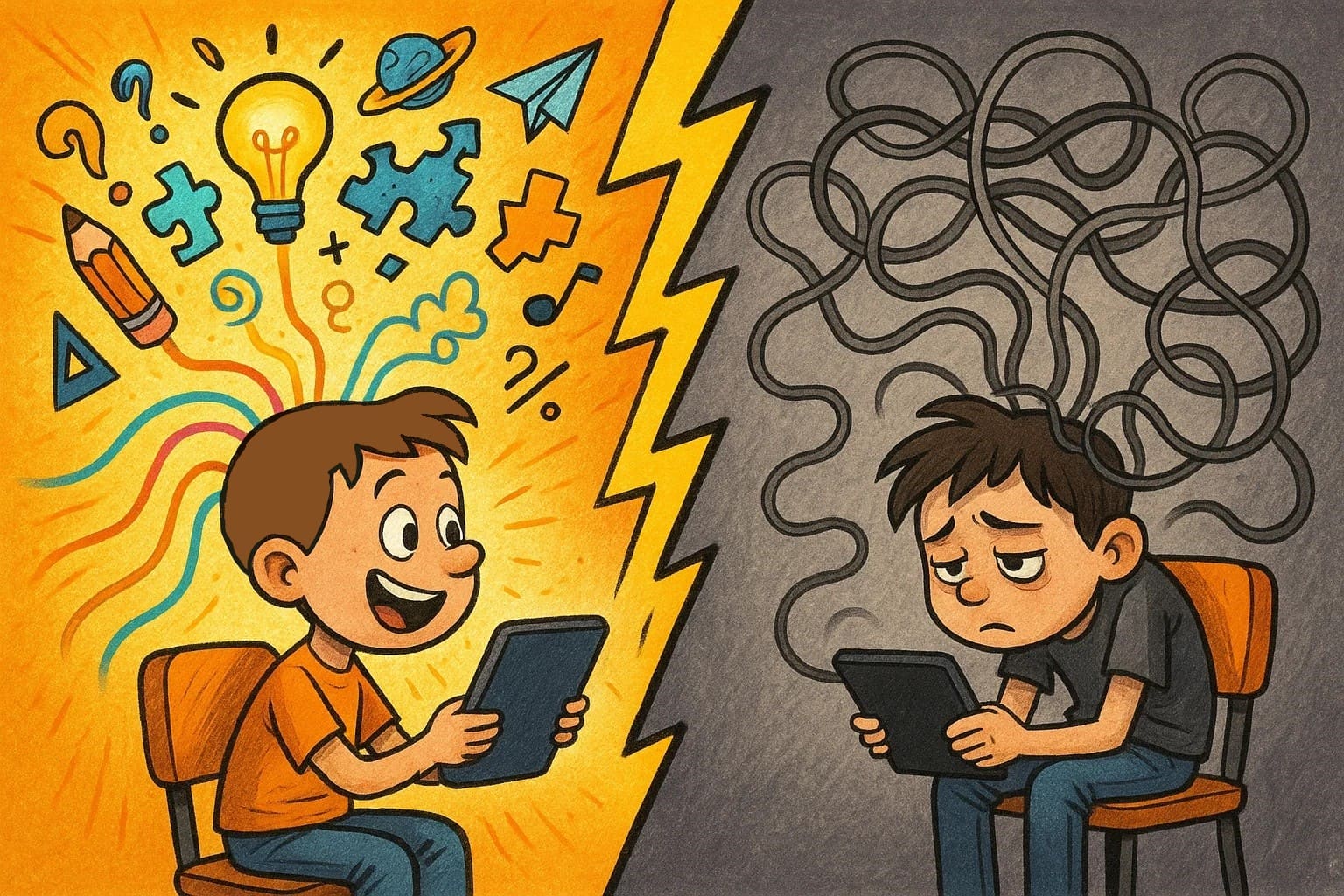
Evaluating the effects of technology on children requires looking at both its potential benefits and its documented risks.
Positive Effects of Technology on Kids
Digital tools offer substantial advantages when aligned with child development goals. Interactive platforms can give young learners opportunities for self-directed discovery, helping them explore STEM concepts through simulations and guided activities. Research suggests that structured educational software can support early literacy and numeracy skills, especially when it is age-appropriate, interactive, and supported by adults.
Furthermore, digital technologies can provide vital accessibility features, offering non-speaking children and learners with disabilities alternative communication tools and customized learning interfaces.
Negative Effects of Technology on Kids
Conversely, negative effects are more likely when digital media use displaces sleep, physical activity, learning, or face-to-face interaction. Technology overuse is often associated with sleep disruption, digital eye strain, musculoskeletal discomfort, and reduced daily physical activity. Some research and pediatric guidance suggest that heavy exposure to fast-paced, highly stimulating content may make sustained attention more difficult for some users.
Additionally, unfiltered access to social platforms can increase the risk of emotional stress, cyberbullying, and unhealthy social comparison among older kids and teens.
Factors That Shape Digital Impact
The impact is not determined by the device itself but by a combination of context, content, timing, and support. A child’s temperament, family rules, the time of day a device is used, and the total duration of screen use all shape the outcome. A well-designed game played for 30 minutes in the afternoon is likely to have a very different effect than the same game played without supervision for three hours right before bedtime.
Resources on Ways Technology Affects Children
To make informed decisions about kids’ technology use, parents can consult trusted review tools and professional guidance. Organizations such as Common Sense Media provide age-based reviews that assess factors such as educational value, age appropriateness, content concerns, and commercial features. Additionally, the American Academy of Pediatrics offers tools such as the Family Media Plan to help families create structured, balanced media routines.
Child Development and Technology
Digital media use during critical periods of growth can influence cognitive, social, emotional, and physical development.
Learning
When used deliberately, educational technology can support cognitive growth. High-quality interactive software can support foundational skills by using adaptive feedback that challenges learners without overwhelming them. Rather than encouraging passive scrolling, these platforms prompt users to solve puzzles, decode text, and apply critical thinking skills, turning screen time into a more active learning experience.
Neural Development and Early Brain Growth
During the first years of life, a child’s brain forms more than one million new neural connections per second. This rapid neurological growth is supported by rich sensory experiences, back-and-forth language interaction, and hands-on exploration of objects.
Because most screen experiences cannot fully replicate hands-on sensory-motor learning, they should not replace activities such as stacking blocks, outdoor play, or face-to-face interaction with caregivers. The World Health Organization emphasizes that screen-based sedentary time should be limited in early childhood and should not crowd out sleep, physical activity, or real-world interaction.
Attention Span and Focus
Modern digital platforms often feature rapid visual cuts, loud auditory shifts, and instant gratification mechanisms. Prolonged exposure to highly stimulating digital environments may make slower offline tasks feel less engaging for some users. When kids become accustomed to immediate feedback loops, they may struggle with offline tasks that require sustained, patient effort, such as reading physical books or completing structured schoolwork.
Language, Creativity, and Problem Solving
The type of media used can influence language acquisition and creative development. Passive viewing usually provides less interactive language input than conversation with caregivers and may do less to support vocabulary growth. In contrast, interactive digital tools – such as coding applications, music creation programs, and digital storytelling platforms – can foster creative problem-solving by requiring young users to build, test, and refine their own ideas.
Technology and Children Statistics
Data from public health, research, and media-use organizations show how young people’s online habits are changing.
Statistics on Children’s Online Activities
Pew Research Center reports that most U.S. teens have or have access to a smartphone at home, while YouTube remains the most widely used platform among teens. Among school-age kids, entertainment streaming and interactive gaming often account for a large share of daily recreational screen use.
Screen Time by Age Group
Recreational screen use among kids and teens often exceeds recommended levels, but the figures vary by age group and data source.
| Group | Reported Data Point |
| Children ages 8–12 | Average about 5 hours and 33 minutes per day of screen media, according to Common Sense Media’s 2021 report |
| Teens ages 13–18 | Average about 8 hours and 39 minutes per day of entertainment screen media, according to Common Sense Media’s 2021 report |
| U.S. teenagers ages 12–17 | CDC/NCHS data show that 50.4% reported 4 or more hours of daily screen time, excluding schoolwork |
Mental and Physical Health Correlations
Research has found associations between heavy screen use and several adverse health outcomes, although the strength and direction of these relationships vary by context. Reviews and observational studies link higher screen time with increased obesity risk, partly because it can displace physical activity and encourage eating while viewing. Longitudinal studies also suggest that adolescents who spend more than 3 hours a day on social media may be at higher risk for internalizing symptoms, such as anxiety or depression.
Trends in Tech Company Impact on Children
Digital platforms increasingly rely on sophisticated predictive algorithms to retain young users. Recommendation feeds are designed to deliver highly engaging, personalized content streams that may lead children toward repetitive, one-sided, or age-inappropriate material. This commercial focus on user retention has prompted regulators and child-safety advocates to scrutinize persuasive design, push notifications, targeted advertising, and in-app purchases aimed at young users.
Screen Time Management for Children
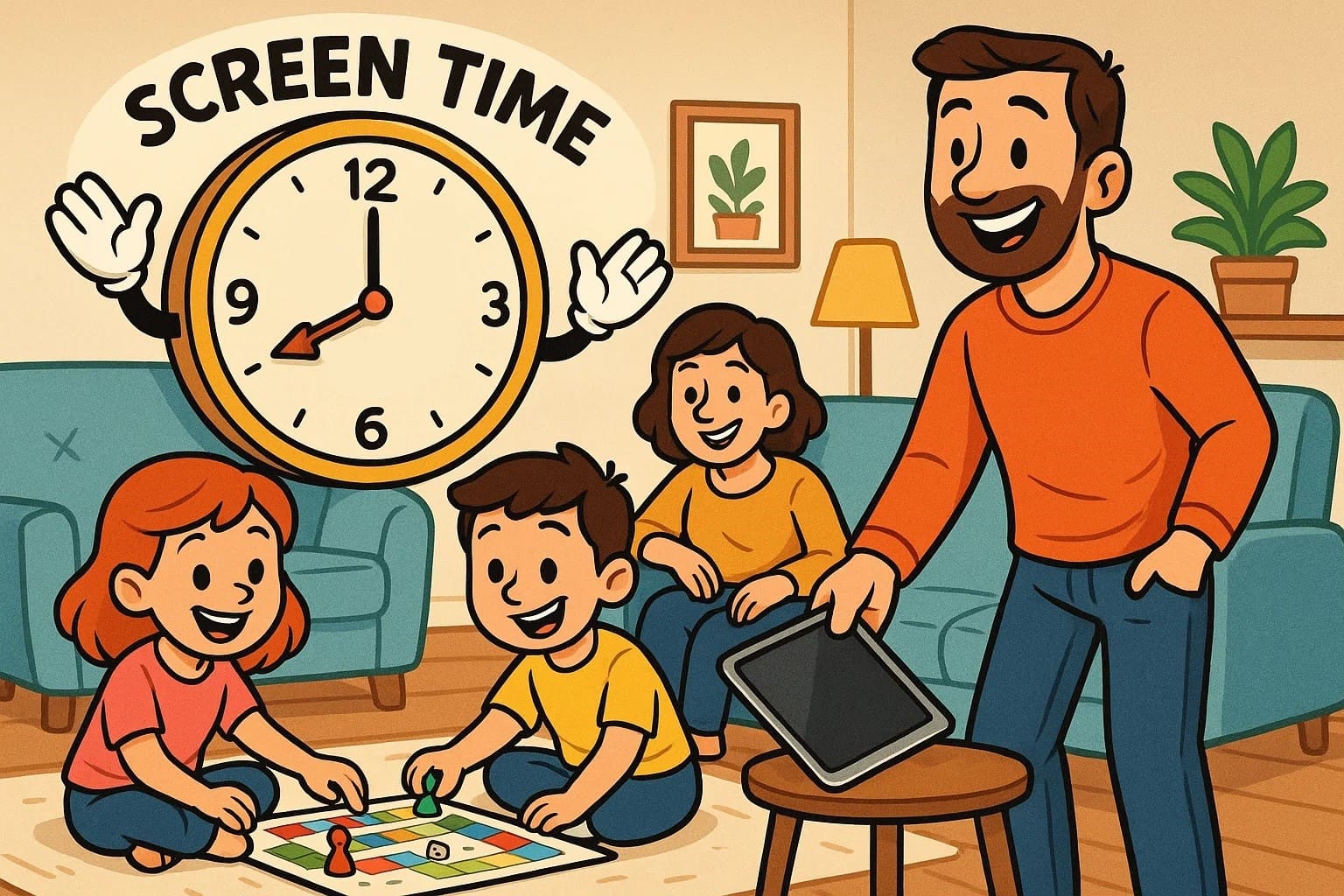
Managing a child’s digital habits requires structured routines that balance screen time with sleep, physical activity, schoolwork, play, and family interaction.
How Much Screen Time Is Too Much?
Screen time becomes excessive when it interferes with a child’s sleep, physical health, school responsibilities, mood, or relationships. Parents should distinguish between purposeful screen use – such as schoolwork, creative projects, or coding – and passive, unmonitored media use. Any pattern of digital use that contributes to chronic irritability, sleep problems, or declining school performance may signal a need for adjustment.
Finding the Right Amount of Time Online for Children
Healthy development depends on balancing digital access with offline experiences. Families should prioritize foundational health needs before assigning daily screen time allowances.
| Priority | Core Need | Practical Goal |
| 1 | Age-appropriate sleep duration | Protect bedtime routines and keep devices out of bedrooms when possible |
| 2 | Daily physical activity | Aim for regular movement, active play, sports, or outdoor time |
| 3 | Academic obligations and household tasks | Complete schoolwork, reading, chores, and family responsibilities first |
| 4 | Family time and face-to-face interaction | Preserve meals, conversations, and shared activities without device interruptions |
| 5 | Allocated screen time | Set limits based on age, maturity, content quality, and family routines |
Screen Time Rules by Age
To help parents set clear boundaries, pediatric and public health organizations offer age-specific guidance on media use.
| Age Group | Recommended Approach |
| Children under 18 months | Avoid most screen use, except for occasional video chats with family members under adult supervision |
| Children ages 18–24 months | Choose high-quality programming and watch with the child to help them understand what they see |
| Children ages 2–5 years | Keep screen use limited, high-quality, and adult-supported; many pediatric sources recommend about 1 hour per day of high-quality programming for this age group |
| School-age children and teens | Focus on consistent boundaries that protect sleep, physical activity, schoolwork, family time, and emotional well-being rather than relying only on strict minute-by-minute counting |
Work With Your Child to Manage Technology Use
For older children and adolescents, enforcing rules without explanation may lead to resistance and secrecy. Instead, parents should involve children in discussions about digital boundaries and explain why limits exist, such as protecting sleep, attention, and family time. Setting shared goals, using built-in device timers, and agreeing on device-free zones can help children build self-regulation skills.
Technology and Social Interaction in Children

Technology can change how children develop communication skills, build friendships, and interact within the family.
Parent-Child Interaction
When parents and children use digital devices together intentionally, technology can support family bonding. Co-viewing educational documentaries or playing cooperative video games can create opportunities for meaningful conversation and shared learning.
However, technology can also disrupt family connections through “technoference” – when a parent’s or child’s device interrupts face-to-face conversations, meals, or playtime and reduces the high-quality interaction that supports emotional security.
Negative Effects on Social Development
Relying too heavily on digital communication can make it harder for children to practice real-world social skills. Text-based messaging and social media feeds often lack interpersonal cues such as eye contact, body language, facial expression, and tone of voice. Without regular face-to-face interaction, children may struggle to read social cues, practice empathy, or resolve conflicts constructively with their peers.
Online Communication Skills
At the same time, digital networks can offer positive spaces for connection when they are age-appropriate and well managed. Multiplayer gaming platforms and moderated online communities give children a space to practice collaborative teamwork, shared strategic planning, and digital etiquette.
Teaching children to communicate respectfully online is a vital modern skill, and digital etiquette is best learned through explicit guidance, practice, and age-appropriate boundaries.
Free Play and Early Socialization
Unstructured free play, outdoor exploration, and imaginative games are essential for early social development. These real-world experiences help children learn how to negotiate rules, share resources, and navigate peer dynamics independently. While digital tools can supplement entertainment, they cannot replace the rich social learning that happens during spontaneous, physical play.
Health Effects of Technology on Children
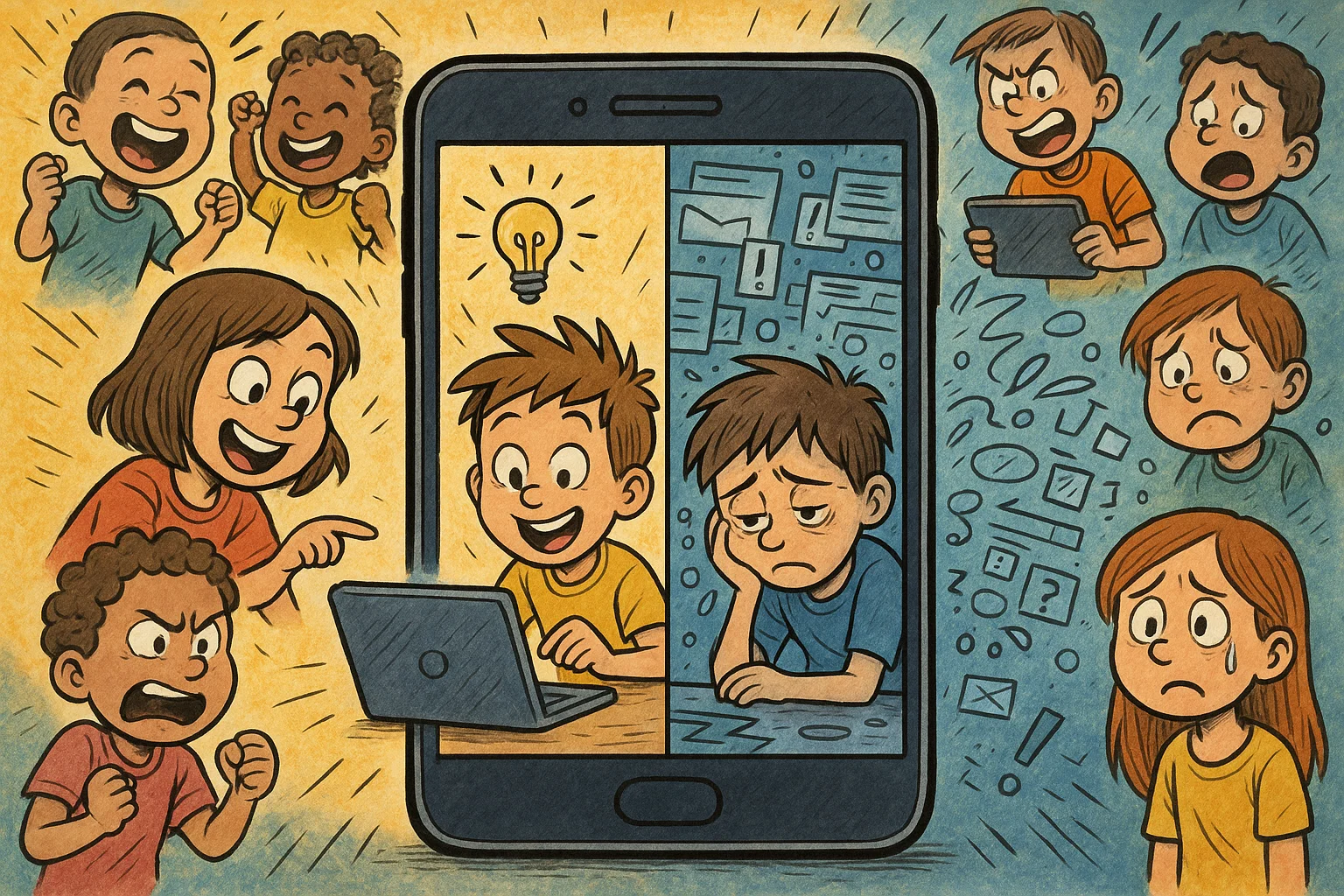
Children’s physical and mental health can be influenced by their daily technology habits, content choices, and total recreational screen time.
Well-Being
Heavy use of interactive technology platforms may affect a young person’s emotional stability and self-esteem. Constant exposure to curated social media feeds can contribute to unhealthy social comparison, feelings of being left out, and heightened anxiety. Keeping communication open helps parents spot signs of digital overload early and helps children process online experiences in a healthy way.
Sleep
Using screens late at night is a common contributor to pediatric sleep problems. Evening screen use can interfere with sleep by exposing children to light, delaying bedtime, and keeping them engaged with highly stimulating games or videos. To help children get the rest they need, families can set a screen curfew about 60 minutes before bedtime and charge devices outside the bedroom.
Vision and Hearing
Extended screen use can contribute to physical discomfort, including dry eyes, headaches, neck strain, and poor posture from slouching over devices. Parents can protect their child’s vision by teaching them the 20-20-20 rule: every 20 minutes, take a 20-second break to look at something at least 20 feet away. Additionally, volume caps should be enabled on headphones to help prevent noise-induced hearing damage from prolonged exposure to loud audio.
Childhood Obesity and Technology
Sedentary screen time can contribute to childhood obesity risk when it displaces active play, sleep, or other healthy routines. When children spend long hours sitting with devices, they may miss out on active play, and the pattern can be compounded by mindless snacking during screen use. Parents can counter this by pairing technology with movement – such as using active dance games, geocaching apps, or fitness trackers that turn outdoor play into an engaging challenge.
Safe and Nurturing Digital Environments for Children
Protecting children online requires combining strong technical safeguards with proactive guidance on digital safety.
Online Safety Basics
Building a safer digital environment starts with basic security measures. Parents can configure built-in parental controls on home internet routers, streaming platforms, app stores, and gaming consoles to reduce access to age-inappropriate content. Using strong passwords, activating safe search, and teaching children to download apps only from verified sources add essential layers of protection.
Privacy, Data, and Digital Footprints
Children often do not understand that what they post online creates a lasting digital footprint. Parents should explain why children need to protect personal information, such as full names, school names, locations, and phone numbers. Teaching children to check privacy settings and think twice before sharing photos or locations helps shield them from data tracking and commercial exploitation.
Cyberbullying and Harmful Content
Families need a clear plan for handling online risks, such as cyberbullying or exposure to disturbing content. Parents should watch for warning signs, such as sudden mood swings, social withdrawal, or a frantic need to hide device screens.
Recommended steps include:
- Stop the immediate interaction: Instruct the child not to respond or retaliate to harmful messages.
- Preserve evidence: Take screenshots of the harmful messages, interactions, or content.
- Use platform tools: Block the abusive account and report it through the platform’s official reporting system.
- Involve outside support: Report severe peer-to-peer harassment to school administrators or local authorities if a child’s safety is threatened.
Tech Companies’ Growing Impact on Children
As digital platforms face growing scrutiny over their effects on young users, laws and rules such as the Children’s Online Privacy Protection Act place requirements on operators of websites and online services directed to children under 13, as well as services that knowingly collect personal information from children under 13. Even with these legal protections, many platforms still use persuasive design features, advertising systems, and in-app purchases that can affect young users. Parents should stay informed about these tactics to help children navigate commercial digital spaces more safely.
Parents’ Role in Intentional and Active Digital Use
Rather than simply enforcing rules, parents are most effective when they act as active mentors in their child’s digital life.
Co-Viewing and Co-Playing
Using digital media together is one of the best ways to increase the benefits of technology. When parents join in on video games or watch educational videos with their children, they can turn entertainment into an interactive conversation. Asking open-ended questions such as “Why do you think that character made that choice?” or “How would you solve that problem?” can build critical thinking and help children connect digital concepts to the real world.
Family Media Plan
A successful family media plan provides clear, predictable rules for the entire household. Rather than setting arbitrary time limits, a comprehensive plan defines screen-free zones, such as bedrooms and dining areas, and sets explicit schedules for homework, chores, and family time. Writing these rules down and placing them somewhere visible can help reduce daily arguments and set clear expectations.
Modeling Healthy Tech Habits
Children naturally imitate the behavior of the adults around them. If parents constantly check their phones during conversations or meals, children may learn that devices deserve priority over face-to-face interaction. By practicing healthy tech habits – such as putting phones away during family activities, keeping conversations polite online, and taking regular screen breaks – parents model the balanced lifestyle they want their children to adopt.
When to Ask for Professional Support
Sometimes, digital habits can develop into problematic or compulsive use. Families should consider seeking advice from a child psychologist or pediatrician if a child shows persistent warning signs.
Warning signs may include:
- Violent outbursts or extreme anxiety when a device is removed.
- A noticeable, unexplained drop in school grades.
- Dropping out of sports, hobbies, or offline friendships.
- Sneaking devices to bed or hiding screen use.
- Losing interest in activities that used to be enjoyable.
- Continuing harmful technology use despite clear negative consequences.
Educational Technology for Children
When designed with child development principles in mind, educational technology can be a valuable tool for modern learning.
Digital Learning Tools
Many modern classrooms use digital tools to supplement traditional teaching methods. Tools such as adaptive math software, interactive reading applications, and digital science simulations can personalize learning by adjusting to a student’s strengths, needs, and pace. These resources can provide immediate, targeted feedback and help students practice complex concepts at their own pace.
Apps, Games, and Skill Building
High-quality educational games are designed to promote active thinking rather than passive consumption. Programs focused on coding basics, spatial puzzles, or historical strategy can encourage children to analyze information, plan ahead, and learn through trial and error. These interactive challenges build cognitive persistence and teach children to view mistakes as natural steps in the problem-solving process.
Classroom Technology and Homework
Learning Management Systems, digital textbooks, and online collaboration tools help students manage their school responsibilities efficiently. These platforms teach school-age children essential organizational habits, such as tracking deadlines, collaborating with peers remotely, and conducting reliable online research. Using these tools effectively can help students prepare for the academic expectations of later grades and higher education.
Limits of Educational Screen Time
While educational technology offers clear benefits, its value depends on balance and content quality. Excessively long study sessions on screens can still lead to mental fatigue, eye strain, and lower information retention. Educational software should never replace hands-on learning experiences, such as physical science experiments, handwriting practice, or face-to-face classroom discussions.
Practical Guide for Parents

This step-by-step framework offers practical strategies for families that want to build a healthy, balanced relationship with technology.
Age-Appropriate Device Rules
Rules should always match a child’s emotional maturity and sense of responsibility. For younger children, parents should maintain full control over device access, app installations, and viewing times. As children move into their preteen and teen years, parents can gradually grant more independence while maintaining regular check-ins about online safety and respectful digital communication.
Device-Free Routines
Setting clear boundaries around certain times of the day protects vital family connections and health routines. Families can protect these key moments of the day.
| Routine | Recommended Boundary | Purpose |
| Morning routines | Keep the first 30 minutes of the day screen-free | Help children prepare calmly for school or family activities |
| Family mealtimes | Keep dining tables device-free | Protect face-to-face conversation and connection |
| Pre-bedtime routine | Turn off screens about 1 hour before bedtime | Support healthy sleep and help children wind down |
Safer App and Platform Choices
When choosing digital platforms for children, parents can use a simple evaluation checklist. The table below outlines key features to review before downloading any new software.
| Content Element | Safer Attributes | Risk Attributes |
| Monetization | Transparent pricing, one-time purchase, no ads, no manipulative rewards | Heavy push for in-app purchases, loot boxes, or pressure-based upgrades |
| Social Features | Monitored chat, closed communities, single-player options, clear reporting tools | Unfiltered public chat, unmoderated direct messaging, weak reporting systems |
| Data Privacy | Data minimization, transparent policies, parental consent where required, no unnecessary location tracking | Excessive personal data collection, unnecessary location tracking, unclear privacy policies |
| Design Feedback | Clear stopping points, slow-paced progression, natural breaks | Infinite scroll, constant push notifications, autoplay, variable reward loops |
Warning Signs of Problematic Tech Use
Parents should regularly pay attention to how their child behaves around digital media. Spotting early signs of over-reliance – such as intense irritability when turning off a screen, neglecting face-to-face friendships, or constantly hiding device use – allows families to step in and adjust habits before these behaviors disrupt daily life.
FAQs About Technology and Children
How can children and parents use technology in a healthy way?
Children and parents can use technology in a healthy way by treating it as one part of daily life rather than the center of the routine. The best approach is to choose age-appropriate content, set clear limits, and make sure digital media does not replace sleep, physical activity, schoolwork, creative play, or face-to-face interaction.
When should parents allow children to use digital devices?
Parents can allow children to use digital devices when the content is age-appropriate, the purpose is clear, and an adult is available to guide the experience. For preschool-age children, screen use should be limited, high-quality, and supported by co-viewing. Older kids and teens can gradually gain more independence as they show responsibility and understand basic online safety rules.
How much does the time children spend on screens matter?
The time children spend on screens matters, but it should not be the only factor parents consider. Content quality, timing, context, and balance with offline activities are just as important. Children’s screen time becomes a concern when it interferes with sleep, learning, mood, physical activity, or relationships.
What are the main effects of technology use on development?
The effects of technology use can be positive or negative depending on how devices are used. Educational tools can support language, problem-solving, creativity, and digital literacy. However, excessive or unmonitored use may affect development and behavior by reducing sleep, active play, attention, or real-world social interaction.

Take a short quiz to find out what your everyday choices say about your parenting style
When your child is curious about something new, what’s your instinct?
Take a short quiz to find out what your everyday choices say about your parenting style
“Can I download this app?” What happens next?
Take a short quiz to find out what your everyday choices say about your parenting style
When it comes to rules at home, which sounds most like you?
Take a short quiz to find out what your everyday choices say about your parenting style
If you could give your child one life skill today, what would you pick?
Take a short quiz to find out what your everyday choices say about your parenting style
Your child gets to choose what to watch. What would your ideal setup look like?
Take a short quiz to find out what your everyday choices say about your parenting style
Pick your parenting superpower ✨



