How to Teach Children Respect and Discipline: 17 Practical Ways for Parents

 Discover a Free Education Video App for Kids
Pastory uses AI to personalize educational video content based on your child’s interests and personality. Safe, engaging, and built for curious young minds. Sign up now to stay updated and enjoy early access with a free trial
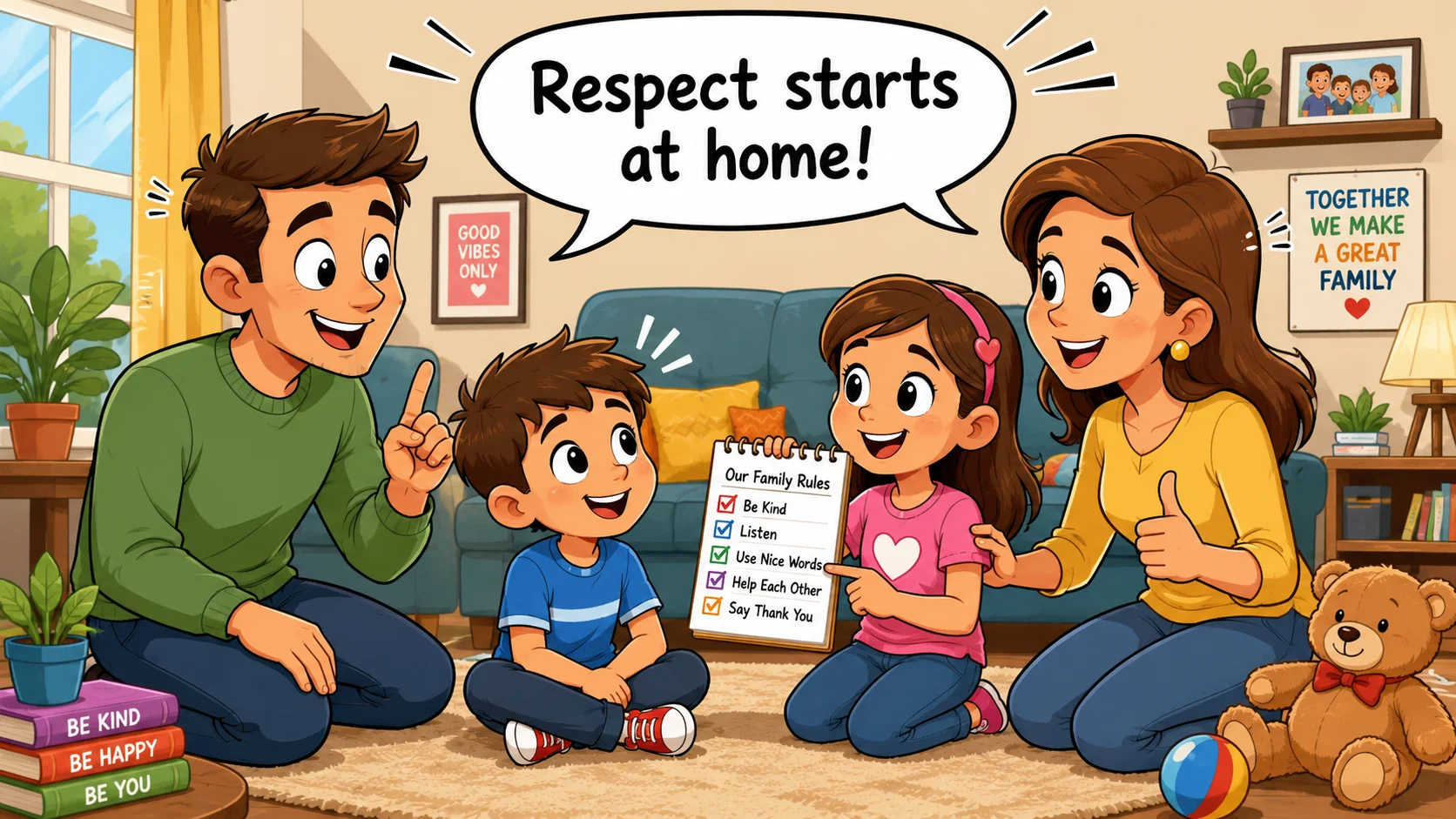
Parenting comes with many developmental challenges, including moments when kids argue, roll their eyes, ignore house rules, or use a rude tone of voice. When boundaries become unclear or inconsistent, parents may feel overwhelmed and unsure how to restore calm and authority.
The solution is to use practical steps that combine genuine respect for the child, clear discipline, calm correction, consistency, and relationship-building. Many parenting experts recommend positive discipline strategies that teach healthy relationship skills rather than relying only on punishment. Through intentional modeling, parents can help their kids develop life skills rooted in empathy, self-control, and mutual respect.
Key Takeaways
Before exploring the techniques, this summary gives parents a quick overview of the core principles involved in teaching a child respect.
| Core Principle | What Parents Can Do | Expected Behavioral Benefit |
| Parental Modeling | Demonstrate a respectful tone of voice and daily manners. | Kids often imitate the behavior they observe in daily interactions. |
| Clear Boundaries | Establish simple family rules during calm moments. | Clear rules can reduce power struggles and resistance. |
| Calm Correction | Address disrespectful words immediately without yelling. | Calm correction can lower anxiety and make it easier for kids to cooperate. |
| Genuine Respect | Prioritize long-term empathy over forced obedience. | Genuine respect supports self-regulation and healthy relationship skills. |
Respect Starts With the Parent’s Example
Kids learn how to interact with the world by observing their immediate environment, including the tone, body language, conflict habits, and manners they see at home. When parents treat their child and other adults with dignity, kids learn that respect is a non-negotiable standard.
Discipline Works Best With Clear Limits
Family rules should be simple, consistent, and discussed before conflict happens so kids do not feel surprised by consequences. Clear expectations provide kids with a sense of security and help them understand what behavior is acceptable.
Calm Correction Builds Better Behavior
Correcting a child’s behavior should teach better choices, not shame, intimidate, or scare kids into submission. Calm, assertive feedback can help kids stay more receptive to learning instead of becoming defensive.
Real Respect Beats Forced Obedience
There is an important difference between fear-based compliance and genuine respect expressed through words, actions, and empathy. True respect means the child chooses to honor boundaries because they value the relationship and understand how their actions affect others, not simply because they fear punishment.
1. Remember That Your Child Is Not Your Friend
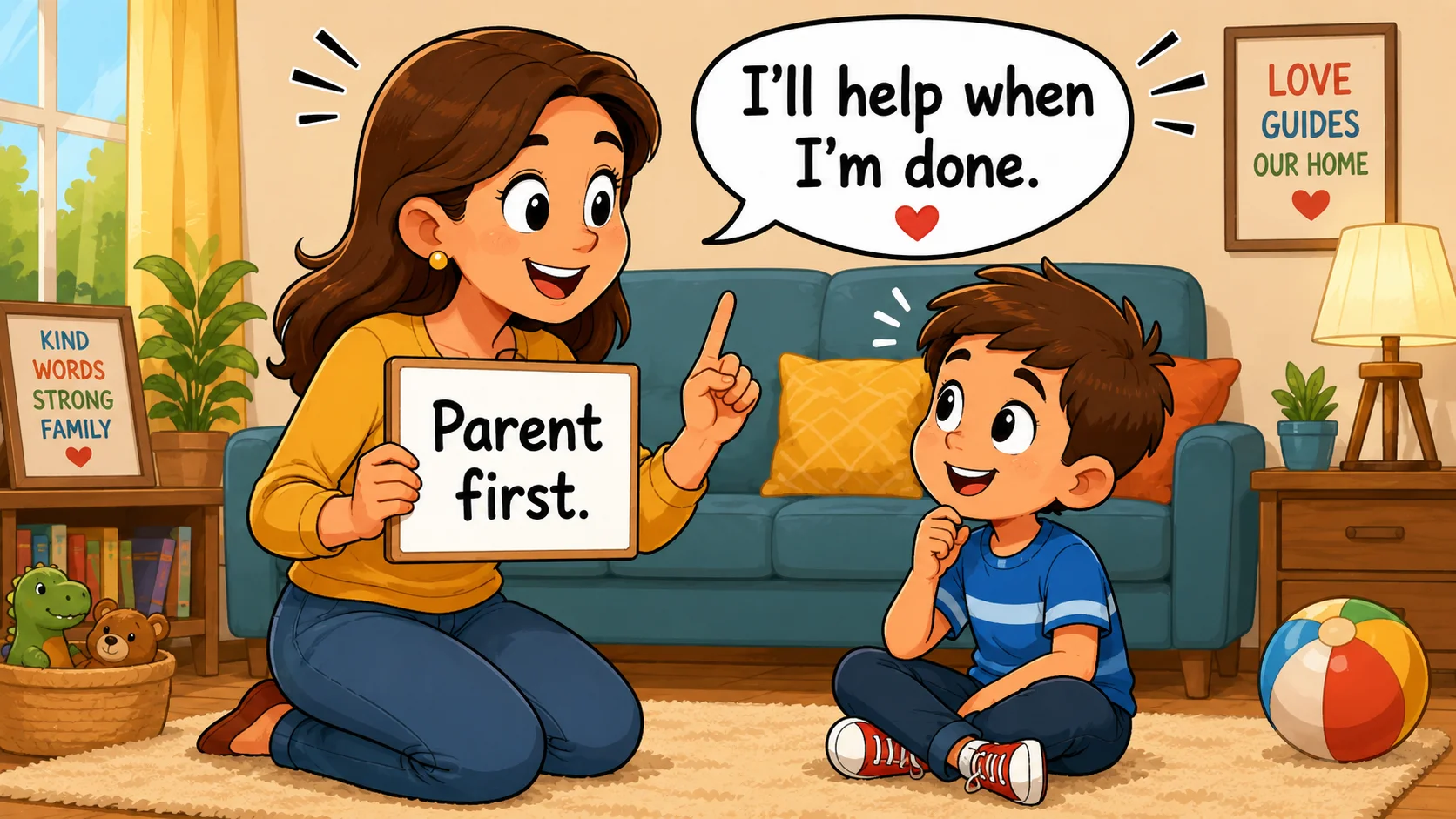
A common pitfall in modern parenting is trying to act like a peer instead of a parent, which can blur the lines of authority. Warm parenting still requires authority, boundaries, and leadership to help a child feel secure.
Parent Role Versus Friend Role
Kids need guidance, structure, and emotional safety more than they need parents to act like peers. When a parent tries to maintain a friend-like role, they may weaken their leadership role and leave the child without a reliable framework for learning self-regulation.
Warmth Without Weak Boundaries
Parents can be loving, kind, and empathetic while maintaining firm boundaries around disrespect. This balanced parenting style can support stronger emotional and social development in kids.
Why Over-Negotiating Causes Pushback
Constant bargaining, pleading, or over-negotiating weakens discipline and creates exhausting power struggles. Giving your child a chance to voice an opinion is healthy, but allowing constant debate over established rules can weaken parental authority.
2. Model Respect Yourself
One of the most powerful ways to teach kids respect is through observation. Kids learn by watching how parents speak to partners, relatives, teachers, service workers, and other kids. To teach kids to respect others, adults need to model respect in everyday interactions.
Respectful Tone During Stress
Maintaining a calm, controlled tone of voice during high-stress conflicts prevents escalation and gives kids a clear example of anger management. Parents can use simple phrases such as, “I feel frustrated right now, so I’m going to take a deep breath before we look for a solution.”
Manners Children Can Copy Daily
Making manners part of everyday household language creates a baseline of courtesy that kids of all ages can absorb naturally. Consistently using words like “please,” “thank you,” and “excuse me” helps good manners become everyday habits.
Repair After Parent Mistakes
When a parent loses their temper or speaks sharply, offering a sincere apology teaches humility, accountability, and emotional repair. Saying, “I’m sorry I raised my voice when I was stressed; that was not a respectful way to communicate,” shows that no one is perfect and models how to take responsibility for mistakes.
3. Confront Disrespect Early and Often
Small disrespectful habits should be corrected early before they become normal patterns of behavior. Parents may not realize that ignoring small acts of disrespect can make the behavior seem acceptable.
Early Signs of Disrespect
Disrespectful behavior often begins with small actions, such as eye-rolling, sarcasm, raised voices, name-calling, ignoring requests, or slamming doors. Noticing these early signs helps parents address the behavior before it grows into a bigger pattern.
Short Correction in the Moment
When a child breaks a behavioral boundary, use a brief, immediate verbal correction to interrupt the pattern. Parents can use simple scripts such as:
- “Try again with respectful words, please.”
- “I will listen to your ideas as soon as your tone of voice is calm.”
- “That wording is disrespectful; please rephrase your request respectfully.”
Consistency Across Repeated Behavior
A single correction is rarely enough to change a habit. Kids need repeated practice to build positive behavior. Responding consistently to disrespect helps kids understand that the boundary is firm.
4. Discipline When Disrespect Happens
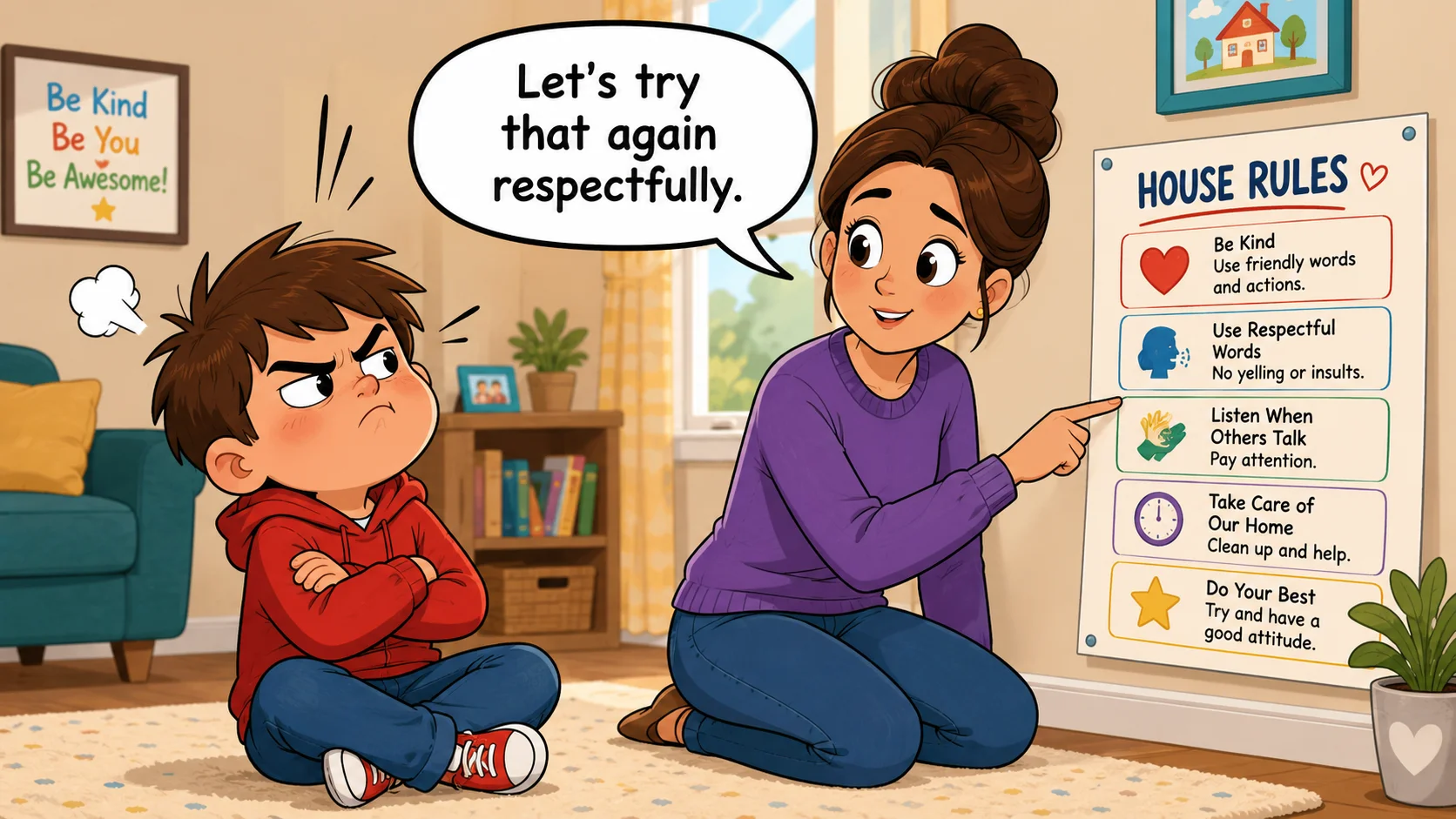
When disrespectful words or actions occur, respond with calm, predictable consequences rather than emotional outbursts. Effective discipline helps kids understand that their choices have consequences.
Consequences Connected to Behavior
To be effective, consequences should relate directly to the behavior. For instance, if a child slams a bedroom door in anger, an appropriate consequence might be having the child practice closing the door quietly several times.
Example:
- Disrespectful Action: A toy is thrown in anger.
- Logical Consequence: The toy is put away for the rest of the day.
- Teachable Moment: Discuss safe ways to express anger.
No Lectures During Meltdowns
Long explanations during an emotional meltdown rarely work because the child is less able to think clearly in that moment. Avoid trying to explain the rule while a child is screaming. Wait until the child is calm before discussing what happened.
Discipline Without Humiliation
Yelling, personal insults, empty threats, or public embarrassment damage parental trust and increase a child’s resentment. Research suggests that shaming tactics are unlikely to teach genuine respect. Instead, they may teach kids to hide their behavior to avoid getting caught.
5. Work as a Parenting Team
Co-parenting requires a united front, meaning that adult caregivers should use shared rules and consistent responses so kids do not receive mixed messages.
Keep Rules Consistent Between Parents
Kids quickly notice and test differences between caregivers when house rules are inconsistent. If one parent allows a disrespectful tone while the other gives a consequence for it, the child receives mixed messages and is more likely to test boundaries.
Private Parent Alignment
Any disagreements about discipline or behavioral expectations should be discussed privately, away from the kids. Debating parenting strategies in front of a child can undermine both adults’ authority and create confusion.
United Message for the Child
Give the child a clear, consistent message about the rule. Using clear joint phrases such as, “Mom and I both expect respectful speech in this house,” or “Your father and I agree that electronics stay off until homework is finished,” leaves less room for boundary testing.
6. Teach Basic Social Interaction Skills
Many kids behave rudely simply because they are still learning social skills. They need direct teaching, proactive coaching, and guided practice rather than purely reactive correction.
Greeting, Listening, and Replying
Teach kids the basics of polite interaction, including making appropriate eye contact, responding when spoken to, not interrupting, and waiting their turn in conversations. These small skills form the foundation for showing respect to others.
Respectful Disagreement
Kids need to learn that anger and disagreement are acceptable, as long as they express those feelings respectfully. Parents can offer simple sentence frames that help a child disagree respectfully:
“I understand your rule, but I feel frustrated because I wanted to finish my game. Can we talk about a compromise later?”
Practice Through Role-Play
Use brief, low-pressure role-play to prepare kids for interactions with teachers, relatives, coaches, and other trusted adults. Practicing these real-world scenarios builds conversational confidence and can reduce anxiety or confusion.
7. Enforce Good Manners
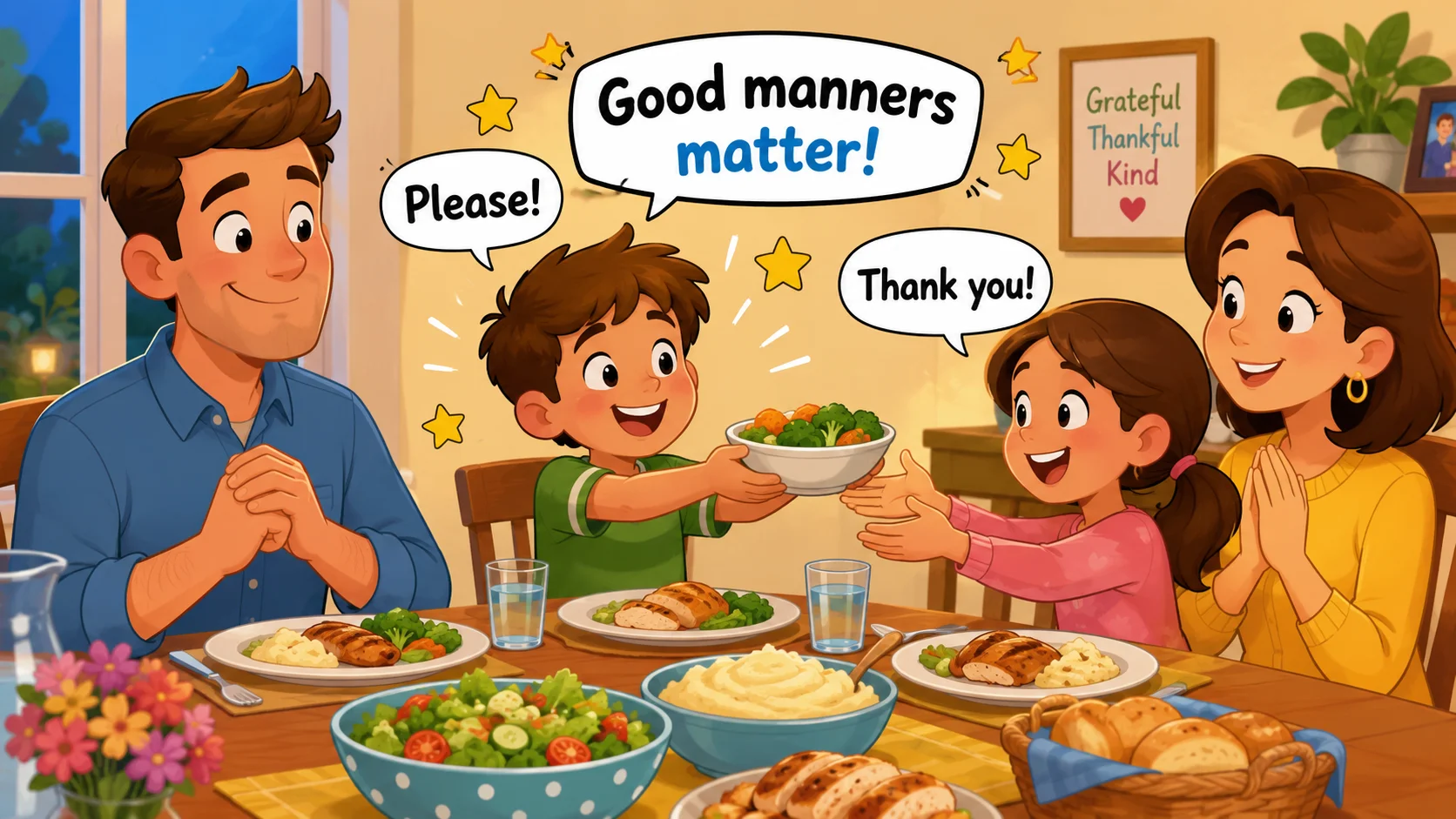
Practicing good manners is an effective daily way to build respect and turn abstract values into everyday habits. Manners should not be viewed as empty social pleasantries, but as everyday ways to show consideration for others.
Home Manners Before Public Manners
Respectful habits should start at home with siblings and parents before kids are expected to use them in public. A child who is allowed to speak rudely to a sibling is more likely to show similar disrespectful behavior with peers and teachers.
Table, Guest, and School Manners
Establish clear behavioral expectations for different social environments:
- Table Manners: Remaining seated until finished, using low voices, and asking for items to be passed.
- Guest Manners: Greeting hosts warmly, respecting household property, and clearing away one’s trash.
- School Manners: Listening attentively to the teacher, raising a hand before speaking, and respecting shared supplies.
Praise Specific Manners
Reinforce positive choices by naming exactly what the child did well rather than using generic praise. Saying, “Thank you for waiting patiently for your turn to speak while I was on the phone,” helps the child understand precisely what success looks like.
8. Reinforce Respectful Behavior
Effective discipline should include noticing progress, not just correcting mistakes. Kids are more likely to repeat positive choices when parents notice and reinforce them.
Catch Respect in Real Time
Actively look for moments when your child makes a positive choice under pressure. Acknowledge these moments immediately: “I noticed you used a calm voice even though you were frustrated that your tower fell over. That showed self-control.”
Reward Effort Without Bribery
It is important to distinguish between earned privileges and bribes offered during a conflict. Offering a child a toy to stop a public tantrum is a bribe that reinforces negative behavior. Granting extra park time because they followed instructions all morning is positive reinforcement.
Build Motivation From Progress
Kids are more likely to repeat behaviors that receive positive attention from parents. By intentionally noticing respectful behavior, parents can shift the household dynamic away from constant correction and toward encouragement.
9. Set Realistic Behavior Expectations
Parental expectations should align with a child’s age, developmental maturity, temperament, stress level, and current skills. Expecting adult-level emotional maturity from a young child leads to unnecessary parental frustration.
Age-Appropriate Respect
Respect looks different depending on a child’s developmental stage:
| Developmental Stage | Typical Respectful Behavior | Common Age-Appropriate Challenge |
| Toddler (Ages 2–4) | Following simple directions and using “please” with prompting. | Tantrums due to limited language skills. |
| School-Age (Ages 5–10) | Following classroom rules, taking turns, and sharing. | Occasional boundary-testing, whining, and frustration. |
| Tween/Teen (Ages 11+) | Understanding other perspectives and disagreeing politely. | Sarcasm, eye-rolling, and the need for autonomy. |
Clear Rules Children Can Follow
Keep house rules direct, actionable, and posted where kids can see them if necessary. Examples of clear rules include:
- “No name-calling or hurtful words.”
- “Use a calm indoor voice.”
- “Always ask before touching or taking someone else’s property.”
Progress Over Perfection
Behavioral development is rarely linear, and periodic setbacks are normal. Focus on tracking gradual long-term improvements over weeks and months rather than demanding instant, flawless maturity from a developing child.
10. Clarify Limits During Calm Moments
Teaching family rules works best during calm, low-stress moments rather than in the middle of an argument.
Family Rules Talk
Use calm settings, such as a weekend breakfast or a family meeting, to discuss behavior expectations. When kids are fed, rested, and calm, they are more able to listen, understand, and remember expectations.
Respectful Words List
Collaboratively create explicit examples of acceptable versus unacceptable phrasing within the home. This activity helps your child understand the difference between healthy self-expression and disrespectful communication.
Acceptable:
- “I disagree with that rule.”
- “I need a minute alone because I’m angry.”
Unacceptable:
- “You are ruining my life.”
- Slamming doors.
- Muttering insults under your breath.
Consequence Preview
Clearly outline the specific, predictable consequences of breaking rules before problems occur. When a child breaks a known boundary, they should already know the outcome, which reduces feelings of unfairness or surprise.
11. Discuss Disrespect After Calm Returns
True reflection and long-term learning are more likely after intense emotions settle and both parent and child can think clearly again.
Debrief Without Blame
Approach the post-conflict conversation with a non-accusatory, problem-solving mindset. Ask open-ended questions that help the child process what happened: “What caused that big wave of anger earlier, and how can we handle that feeling better next time?”
Teach Better Replacement Behavior
Simply telling a child “don’t be rude” does not show them what to do instead. Replace the negative command with a clear, healthy alternative: “Next time you feel overwhelmed by your chores, say, ‘I’m angry, and I need a one-minute break,’ instead of screaming at me.”
Repair Harm
Teach kids that their words and actions affect others and may require repair. Guide them through the process of repairing harm, whether that means offering a sincere apology, fixing something they broke, or doing something helpful.
12. Avoid Taking Behavior Personally
Parents should remember that a child’s disrespect is usually a sign of frustration, developmental immaturity, stress, or weak coping skills—not a calculated rejection of the parent.
Stay Calm Before Responding
When a child acts out, prioritize your own emotional self-control before addressing the behavior. Use basic de-escalation techniques: pause for five seconds, take a deep breath, lower your voice, or step away briefly if the situation allows.
Separate Child From Behavior
Make a clear distinction between the child’s worth and the child’s temporary behavior. Let your child know through your steady demeanor that you love them while remaining firm about not accepting rude behavior.
Stop Power Struggles
Avoid falling into the trap of arguing, defending your rules, or trying to “win” a verbal battle against your child. You do not need to join every argument your child starts. Maintain your leadership by staying calm, firm, and emotionally steady.
13. Move From Forced Respect to Real Respect
Outward compliance driven by fear can create temporary silence, but it does not build genuine respect.
Fake Respect Versus Real Respect
Forced obedience is situational. The child only behaves when an authority figure is watching in order to avoid punishment. Real respect is an internalized value shown through sincere cooperation, empathy for others, and self-control, even when no one is watching.
Why Fear-Based Discipline Fails
Intimidation, extreme shouting, and physical threats may stop unwanted behavior briefly, but harsh discipline can contribute to fear, resentment, and secrecy. Children may learn to avoid punishment rather than understand the value behind the rule.
Respect Built Through Trust
Long-lasting respect is built through fair rules, reliable follow-through, active listening, and calm leadership. When kids trust that their parents are fair and consistent, they are more likely to accept the family’s boundaries.
14. Focus on Roles, Not Personal Feelings
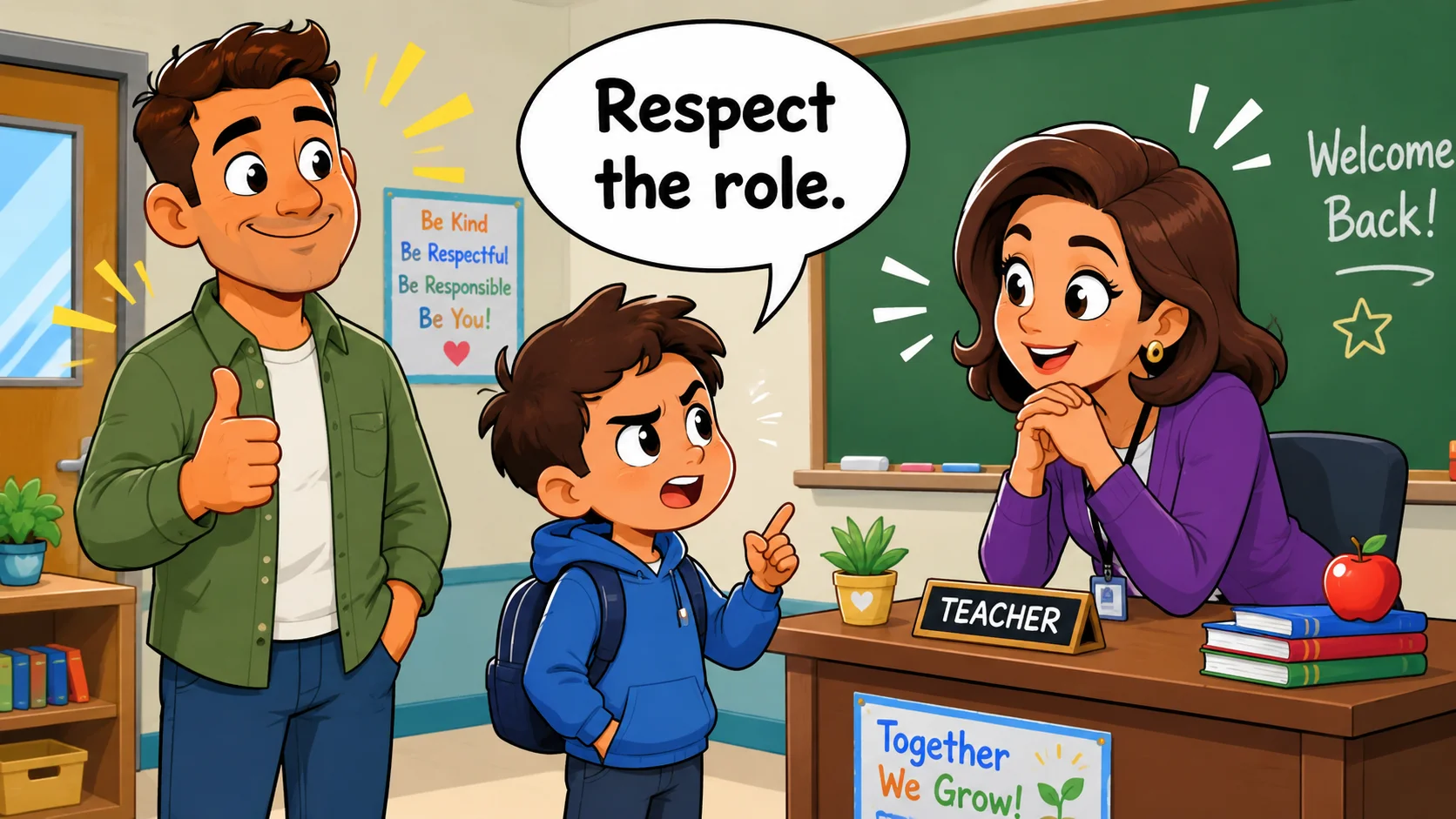
An important part of childhood development is learning to respect roles and rules, even when a child dislikes a specific rule or disagrees with the adult in charge.
Respect for Teachers, Coaches, and Elders
Explain to your child that showing respect for teachers, coaches, elders, and other trusted adults helps communities function well. This approach teaches community awareness without promoting unsafe blind obedience.
Polite Response to Unfair Rules
Provide kids with clear scripts for addressing rules they perceive as unfair without resorting to emotional defiance.
Example process:
- When a Rule Feels Unfair
- Wait for a calm, private moment.
- Suggest an alternative politely using “I” statements.
Safety Boundaries With Authority
While teaching ckids to respect authority, emphasize that personal safety boundaries are absolute. Make sure your child knows that if any adult, regardless of authority, asks them to do something unsafe, uncomfortable, or harmful, they can say no and tell a trusted parent immediately.
15. Use Day-to-Day Training for Respect
Genuine respect does not appear after a single conversation. It grows through small, predictable daily routines and repeated practice.
Morning and Evening Routines
Structured, predictable morning and evening routines reduce conflict, lower daily stress, and make cooperation easier. When a child knows exactly what tasks are expected each day, parents need fewer reminders, which can reduce opportunities for pushback.
Sibling Conflict Practice
Treat sibling arguments as real-life opportunities to practice emotional control. Actively coach kids on how to take turns, make calm requests, offer sincere apologies, and find collaborative compromises without escalating to physical or verbal aggression.
Small Daily Respect Challenges
Introduce simple, engaging tasks that help your child practice empathy every day:
- Greet a grocery store cashier or school bus driver kindly.
- Do one small helpful task around the house without being asked.
- Practice using a calm tone of voice during a frustrating moment.
16. Reflect on What Real Respect Means
Before parents can successfully teach respect, they need to clarify what respect means in their family and make sure their discipline methods reflect those values.
Family Definition of Respect
Work together to create a simple, memorable family definition of respect that everyone can understand and remember. A simple example is: “In this family, respect means using kind words, acting safely, listening honestly, and taking responsibility for our choices.”
Respect Is Mutual
Authoritative parenting honors the child’s dignity while maintaining the parent’s role as a leader. Treating a child with basic human decency does not weaken house rules. Instead, it shows the child what respect actually feels like.
Values Behind Discipline
Connect your daily discipline choices with long-term values such as empathy, responsibility, patience, honesty, and self-control. When discipline is driven by character-building rather than anger, kids understand that rules are designed to help them develop into healthy adults.
17. Use Faith-Based Respect Lessons When Relevant
For families whose daily life is guided by faith, connecting respect to spiritual values can provide an additional layer of moral grounding.
Respect Through Compassion
Introduce lessons centered on kindness, patience, forgiveness, perseverance, and service to others. Framing respect as a way to honor a higher moral calling can help kids see the value of courtesy beyond simple household rules.
Discipline With Love
Make sure behavioral correction reflects care, guidance, and character growth rather than punishment driven by anger. When kids see that discipline is rooted in love and concern for their long-term well-being, they are less likely to respond with resentment.
Family Values in Daily Choices
Show your child how your core beliefs shape daily communication, consequences, apologies, and forgiveness in your family. This helps turn abstract beliefs into practical daily choices.
Conclusion
Teaching a child respect and discipline requires an intentional blend of parental modeling, calm limit-setting, consistent consequences, and daily relationship-building. By rejecting reactive anger and embracing authoritative leadership, parents can guide their kids through behavioral challenges while maintaining an emotionally healthy home environment.
Main Takeaway for Parents
Your primary goal as a parent is to lead your household with steady firmness, emotional warmth, and consistency. This balanced approach supports parental authority while helping your child feel loved, safe, and emotionally supported.
A Simple Step for Today
To begin implementing this framework immediately, select one specific respect rule, such as using a calm tone of voice, and practice enforcing it with predictable consistency for the next seven days. Focus on reinforcing that single boundary until it becomes a basic household habit.
Final Encouragement
Keep in mind that genuine respect develops through hundreds of repeated daily interactions, not from a single conversation. Stay patient, remain consistent with your boundaries, and remember that each behavioral challenge can become a teachable moment for your child’s long-term emotional growth.
FAQ About Teaching Respect
What is the best way to teach your child respect?
The best way to teach your child respect is through modeling respectful behavior, setting limits, and helping your child learn what respect looks like in everyday situations. Children thrive when parents treat them with warmth while still holding clear and realistic expectations.
How can I teach kids to respect others?
Teaching kids respect starts with daily examples. Use simple moments to teach kids to respect others, such as saying “please,” “thank you,” and “excuse me,” listening without interrupting, and speaking in a respectful manner even when we disagree.
How do I discipline your kids without being too harsh?
When it comes to discipline, focus on calm correction rather than shame or fear. You can discipline your kids by using logical consequences, helping them talk about what happened, and guiding them to take responsibility for their actions.
How can I teach your child basic manners?
To teach your child basic manners, start with small habits at home. Younger children may need reminders to say things like “please” or “excuse me,” while older children can learn and practice more advanced social skills, such as showing respect for authority and handling emotions respectfully.
What should I do when my child is disrespectful?
Allow your child to express frustration, but make it clear that rude words or hurtful behavior are not acceptable. Nobody’s perfect, and that’s okay, but a key part of respect is learning how to repair mistakes, find solutions, and use respectful words next time.

Take a short quiz to find out what your everyday choices say about your parenting style
When your child is curious about something new, what’s your instinct?
Take a short quiz to find out what your everyday choices say about your parenting style
“Can I download this app?” What happens next?
Take a short quiz to find out what your everyday choices say about your parenting style
When it comes to rules at home, which sounds most like you?
Take a short quiz to find out what your everyday choices say about your parenting style
If you could give your child one life skill today, what would you pick?
Take a short quiz to find out what your everyday choices say about your parenting style
Your child gets to choose what to watch. What would your ideal setup look like?
Take a short quiz to find out what your everyday choices say about your parenting style
Pick your parenting superpower ✨