
How to Teach Kids to Be Grateful: 13 Ways Parents Can Build Gratitude Every Day

 Discover a Free Education Video App for Kids
Pastory uses AI to personalize educational video content based on your child’s interests and personality. Safe, engaging, and built for curious young minds. Sign up now to stay updated and enjoy early access with a free trial
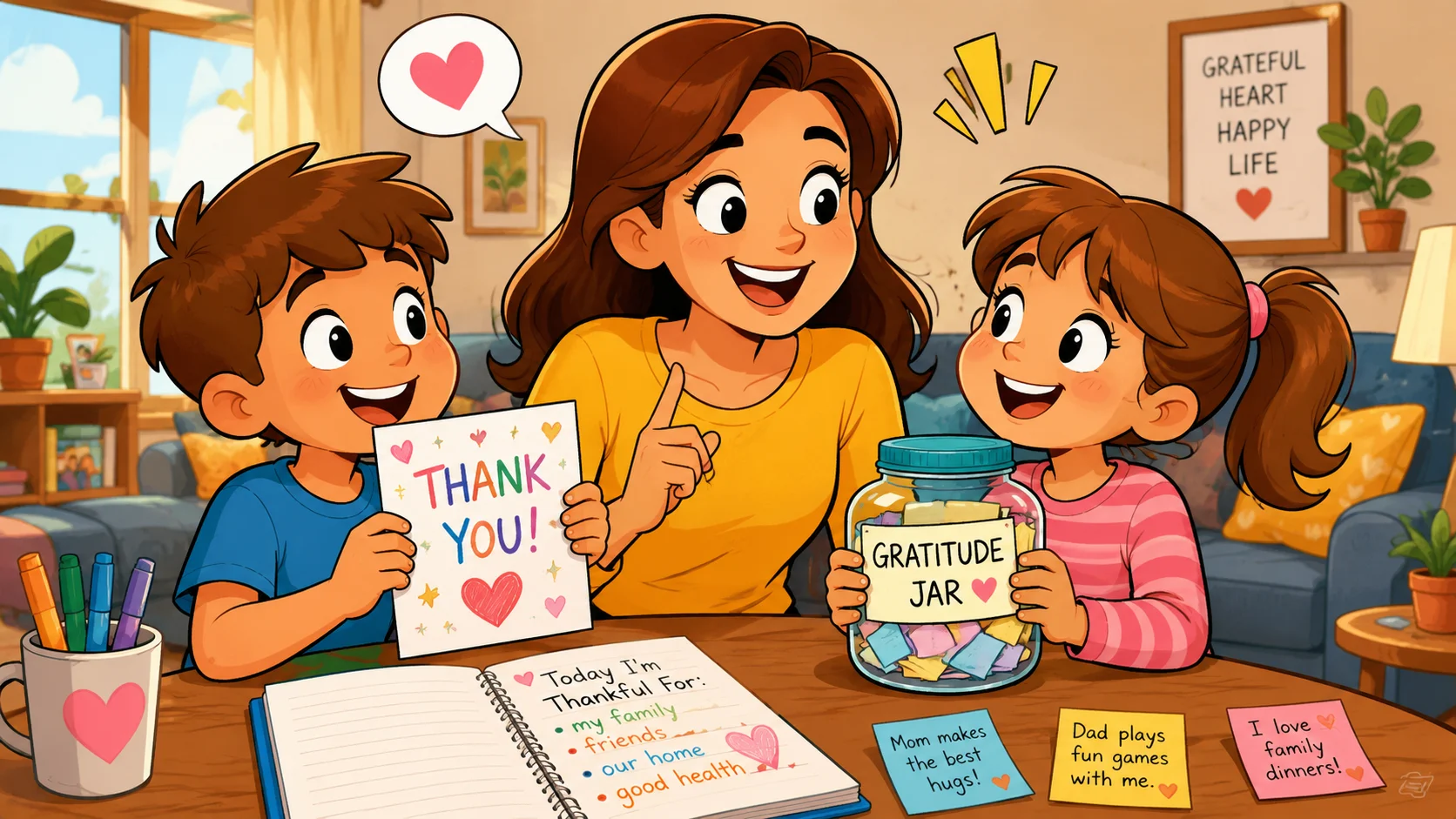
Helping kids notice kindness, value what they have, and express thanks requires intentional daily habits rather than forced phrases. Research from the Raising Grateful Children Project at UNC-Chapel Hill suggests that gratitude has four distinct parts: noticing what you have, thinking about why you received it, feeling grateful, and doing something to express gratitude.
Through age-appropriate gratitude activities, parents can help kids experience gratitude more naturally. This guide outlines practical ways to teach gratitude and help kids build appreciation through everyday family routines.
Key Takeaways
Raising grateful kids depends on small, consistent family habits rather than occasional big lessons. Understanding how gratitude develops in kids helps parents choose practices that fit their family.
Main Lessons
- Habit Building: Gratitude grows through small daily family habits rather than occasional lectures.
- Modeling: Children learn to express gratitude primarily by watching their parents practice it out loud.
- Active Engagement: Creative gratitude activities make abstract ideas more concrete for kids.
- Prosocial Growth: A consistent gratitude practice can support emotional intelligence, empathy, and healthier peer relationships.
- Intrinsic Motivation: Forced thank-yous can backfire, while genuine appreciation grows when kids understand the effort behind a kind act.
Parent Action Snapshot
- Daily Acknowledgment: Thank a cashier, a neighbor, or a family member out loud in front of your child today.
- Dinner Prompt: Ask your child one specific gratitude question during your evening meal, such as “Who made you smile today?”
- Nighttime Reflection: Invite your child to name three things they are grateful for before bedtime.
- Tangible Sharing: Help your child choose one gently used toy or piece of clothing to donate to a community organization.
Value of Gratitude for Kids

Before trying specific strategies, parents should understand why gratitude matters for a child’s emotional and social development. Research in child development suggests that practicing appreciation can support a child’s emotional, social, and cognitive growth.
Gratitude Enhances Empathy
Children who practice gratitude may become more likely to notice the effort, kindness, and help offered by other people. For example, when a child recognizes the effort a sibling made to share a toy or notices a grandparent’s care in preparing a meal, they practice perspective-taking.
This awareness helps kids understand that other people have feelings, intentions, and needs, which is a foundation for empathy and emotional intelligence.
Gratitude Can Support Emotional Well-Being
Gratitude routines may support children’s emotional well-being by helping them notice positive moments, feel more connected to others, and manage everyday stress. This kind of practice may help kids feel calmer and better able to handle everyday frustrations over time.
Gratitude Can Support Better Sleep Routines
A consistent evening gratitude routine can help kids shift their attention away from daytime worries, frustrations, or anxieties before bedtime. Asking kids to identify something they are grateful for before sleep can create a calmer bedtime transition.
| Age Group | Bedtime Gratitude Practice | Potential Benefit |
| Preschoolers (Ages 3–5) | Name one person who helped them today | Promotes calm transitions to sleep |
| School-Age Children (Ages 6–12) | Identify three things they are grateful for | May reduce bedtime anxiety |
| Adolescents (Ages 13+) | Write for two minutes in a gratitude journal | May support better sleep quality |
Gratitude Can Support Self-Esteem
Practicing gratitude can help kids notice their strengths, support systems, and progress rather than focusing only on what they lack. For instance, when a young athlete appreciates the effort they put into practice rather than focusing only on a lost game, they build resilience.
This shift in mindset can help kids avoid constant comparison with peers and support their developing self-esteem.
Gratitude Supports Mental Health
Studies on gratitude practices suggest that they may increase gratitude and support better mental health, including fewer symptoms of anxiety and depression. A daily gratitude habit can help kids notice positive moments while still leaving room for difficult feelings; it does not ask them to dismiss sadness, anger, or fear.
Instead, gratitude can help anchor a child so that difficult emotions do not completely take over.
Gratitude Can Strengthen Relationships
Expressing appreciation, noticing help, and giving back can strengthen a child’s relationships with parents, siblings, friends, teachers, and teammates. When kids practice thanking others genuinely, peers may see them as more cooperative, trustworthy, and approachable.
This positive feedback can help children build stronger friendships and feel more connected.
Gratitude Helps Kids After Hard Experiences
In times of family stress or hardship, gratitude can function as a supportive psychological tool rather than a form of emotional denial. Parents should first prioritize emotional safety, patience, and validation of difficult feelings.
Once the child feels safe, parents can gently help them notice one small, stable positive element, such as a supportive friend or a safe home environment.
Gratitude Is an Ongoing Process
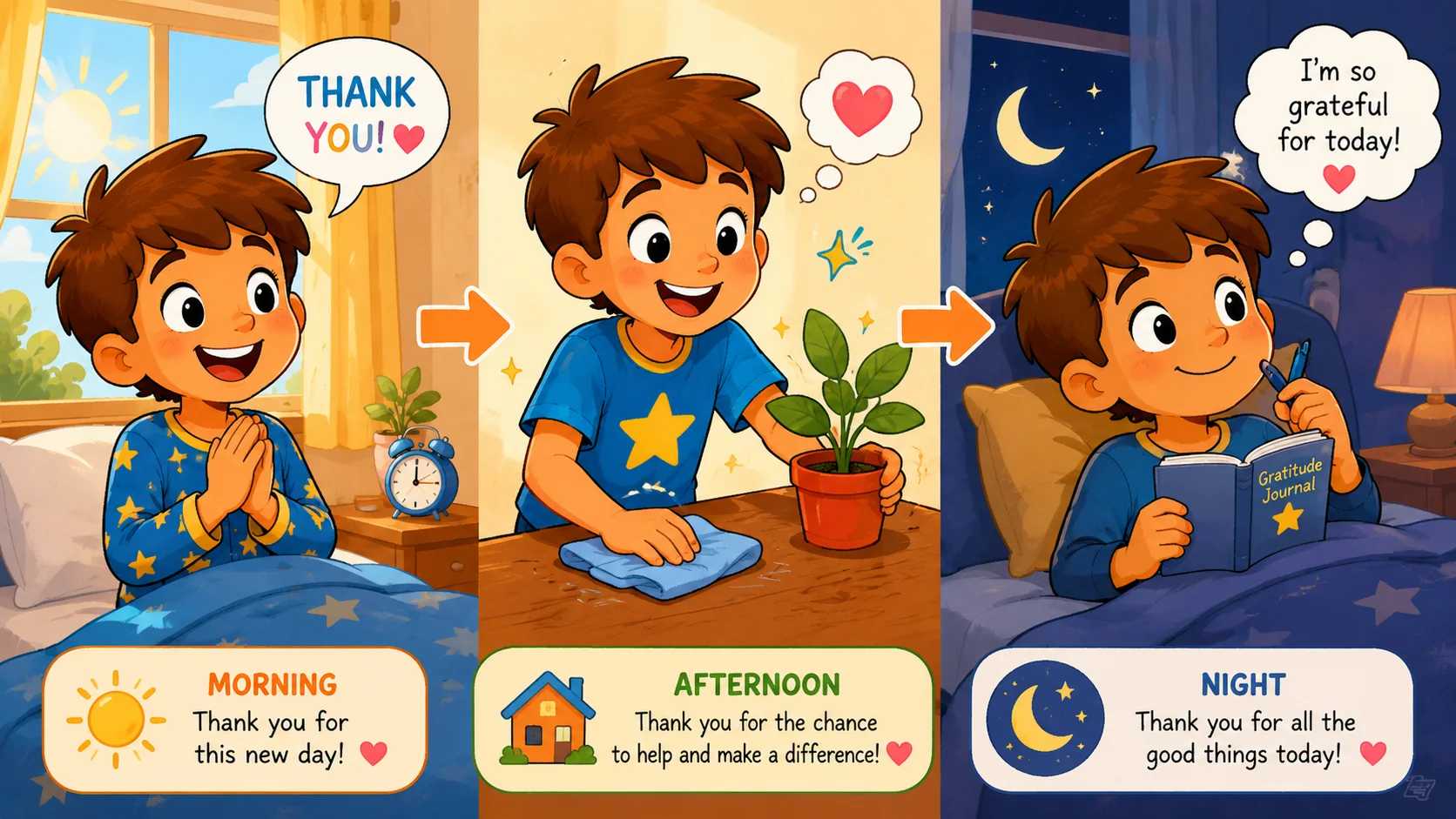
Helping a child develop gratitude takes time, repetition, and realistic expectations for their age. Parents wondering how to teach gratitude should remember that appreciation is a skill built over years, not a trait that appears overnight.
Why Gratitude Needs Repetition
Like other habits, gratitude becomes easier when kids practice it regularly through consistent routines. Regular routines, such as weekly community service, family thank-you notes, or a daily gratitude journal, keep the idea active in a child’s mind.
Without repetition, children may naturally focus more on unmet wants and immediate frustrations.
Why Pressure Backfires
Shaming or lecturing kids with phrases like “You should be grateful for this meal” can create guilt, resentment, and resistance. When a child feels forced to comply, they may see appreciation as a demand rather than an authentic feeling.
Parents should replace high-pressure demands with calm, curious prompts that encourage kids to discover their own reasons to feel grateful.
Progress by Age
Children understand gratitude in ways that match their age and developmental stage, so parents should adjust their expectations over time.
- Preschoolers (Ages 3–5): They focus on concrete, visible objects. They can name things they like, such as a favorite toy, a sweet snack, or time at the playground.
- School-Age Children (Ages 6–12): They can begin to understand the abstract concept of effort. They can thank people for their effort, such as a coach running practice or a parent doing the laundry.
- Teens (Ages 13–18): They can reflect on broader ideas such as privilege, relationships, community, and service.
How to Teach Gratitude
Before trying specific gratitude activities, parents should focus on modeling, thoughtful questions, and flexible expectations.
Model Gratitude
Children learn how to navigate the world largely by watching and copying their parents. Parents can help raise grateful kids by expressing their own gratitude out loud in daily life.
When your kids hear you sincerely thank a cashier, a teacher, your spouse, or them, they see how gratitude looks in real life.
Ask Questions
Open-ended questions help kids look beyond the surface of an event and notice the kindness behind it. Instead of demanding a standard “thank you,” ask your kids specific questions that encourage reflection and perspective-taking:
- “Who helped make your school day easier or more fun today?”
- “What is one small thing that happened today that made you feel happy?”
- “How did someone show kindness to you on the playground?”
Teach Perspective-Taking
Help your children notice the effort, time, and care behind everyday comforts like home-cooked meals, rides to practice, clean clothes, or holiday gifts.
For example, when a child receives a birthday present, help them think about the time the giver spent choosing, buying, and wrapping the item. This exercise helps children value the person giving the gift, not just the object itself.
Start Small
Avoid heavy lectures on privilege or morality, which can cause kids to shut down emotionally. One simple sentence of appreciation during a car ride or walk can be more effective than a thirty-minute lecture on being thankful.
Keep gratitude moments brief, light, and woven into ordinary family life.
Lower Expectations
Accept that children will sometimes forget their manners, complain about minor inconveniences, or compare what they have with what their friends own. When these moments occur, parents can treat them as natural teaching opportunities rather than proof that their gratitude practices are failing.
Progress is not linear, and kids need patience as they learn to regulate their impulses.
Be Flexible
Adapt your family’s gratitude habits to fit each child’s personality, temperament, and developmental needs. While one child may love sitting down to write in a structured gratitude journal, a highly active sibling might prefer drawing a picture, discussing ideas during a walk, or building something for a friend.
Flexibility helps the practice feel authentic and enjoyable rather than punitive.
13 Ways to Teach Kids to Be Grateful
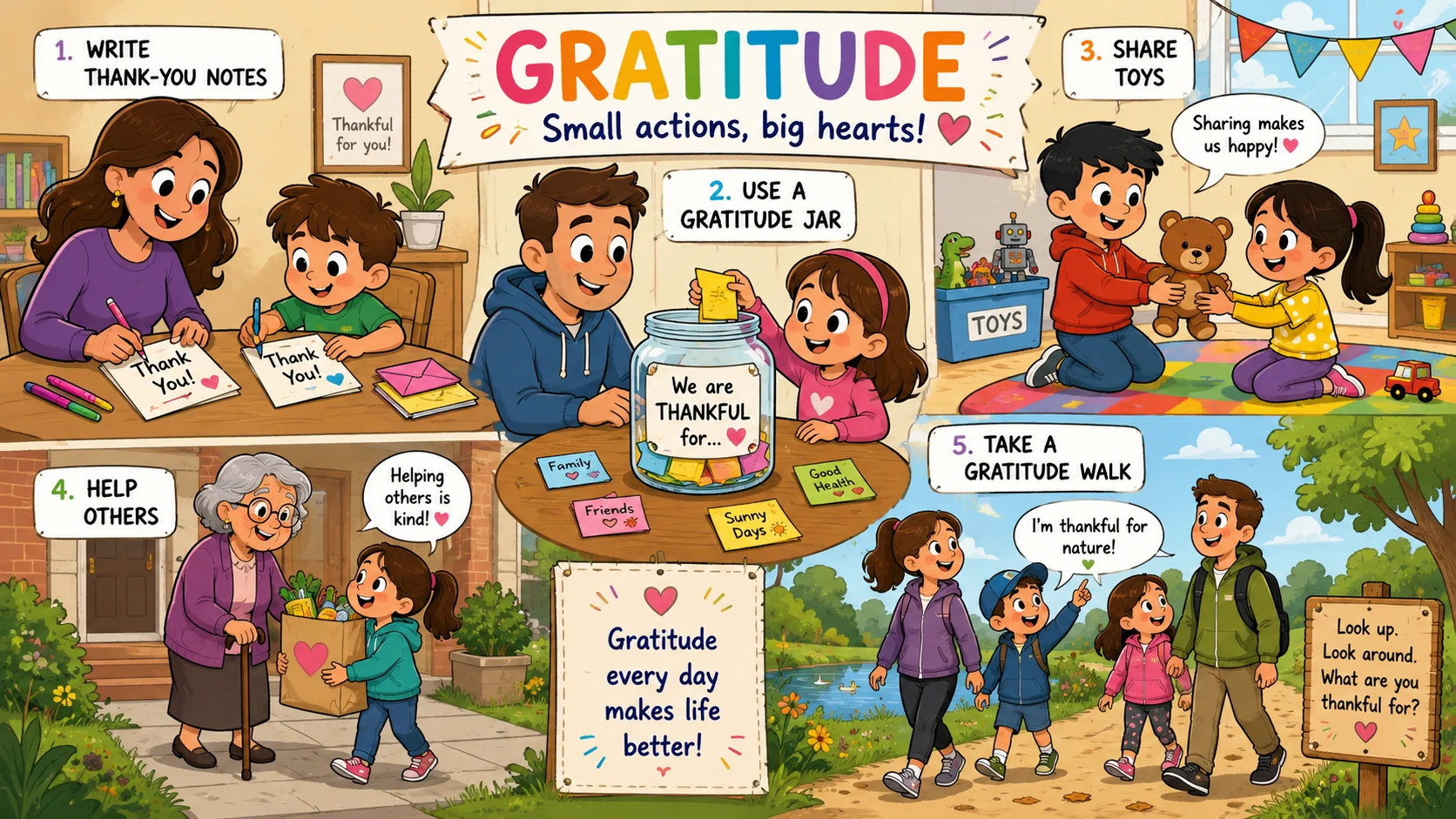
Structured, engaging gratitude activities can help families make appreciation part of daily life. The following 13 methods offer practical, age-appropriate ways to teach kids to be grateful.
1. Say Grace or Share Mealtime Thanks
A mealtime thank-you ritual can serve as a daily pause for busy families, whether the practice is faith-based or secular. Families can thank God, appreciate the person who cooked the meal, thank the farmers who grew the food, or simply have each person name one good part of the day.
This routine helps the family connect and express gratitude at least once a day.
2. Practice Daily Gratitude
Establish a quick three-part daily reflection routine that family members can share during transitions, such as the morning drive to school or dinner. Have each person identify:
- One specific item they received or experience they had that day.
- One person who helped them solve a problem or feel comfortable.
- One specific action they can take to give back or show kindness.
3. Create a Gratitude Jar
A gratitude jar gives kids a clear visual reminder of a family’s happy moments over time. To try this activity:
- Place an empty jar and a stack of small paper slips in a visible area of the home.
- Encourage family members to write or draw specific thankful moments on the slips whenever they experience them.
- Gather as a family once a month or around holidays to open the jar, pass around the notes, and read the collected memories aloud.
4. Build a Gratitude Tree
A gratitude tree works well as a visual project on a family wall, in a classroom, or as a seasonal decoration. Draw or cut out a large bare tree trunk from brown paper, tape it to a wall, and then cut out several colorful paper leaves.
Have your children regularly write things they are thankful for, names of loved ones, or kind acts on the leaves and tape them to the branches so they can watch the tree fill up over time.
5. Take a Gratitude Walk
Combine movement with mindfulness by taking your kids outside to look for small everyday things to appreciate. During a gratitude walk, encourage your kids to notice simple things: the warmth of the sun, beautiful trees, friendly neighborhood pets, safe sidewalks, or the time spent walking together.
This activity helps children find joy in simple, free experiences.
6. Write Letters
Encourage older kids and teenagers to write detailed handwritten appreciation letters to important people in their lives, such as teachers, coaches, grandparents, or community helpers.
Ask your child to focus on specific details rather than writing a generic “thank you for everything.” For instance, they might write: “Thank you for spending extra time with me after basketball practice on Tuesday to help me improve my free throws.”
7. Make Thank-You Cards
For toddlers and younger kids who cannot yet write long letters, making thank-you cards is a simple way to express gratitude creatively. Provide blank cardstock, markers, stamps, and stickers, and let your child draw a picture that represents their feelings.
Parents can write the child’s dictated message at the bottom, helping them connect their artwork with appreciation.
8. Create a Gratitude Collage
A gratitude collage is a helpful option for visual learners and children who enjoy hands-on creative projects. Provide your child with poster board, glue, scissors, old family photos, magazines, and word cutouts.
Have them cut out and arrange images of people, places, favorite foods, and activities they value, creating a personalized piece of art for their bedroom wall.
9. Play Alphabet Thanks
Turn appreciation into a game during long car rides, grocery store lines, or classroom transitions by playing an alphabet-based gratitude game. The first player names something they appreciate that starts with the letter “A,” the next player takes the letter “B,” and the game continues through the alphabet.
This playful format keeps children engaged while encouraging them to think creatively about things they enjoy.
10. Try Gratitude by Numbers
Use simple number-based prompts to help kids organize their thoughts when they feel overwhelmed, tired, or quiet at the end of a long day. Ask your child to name three simple categories:
- Three people who helped you today.
- Two things your body did today.
- One item you can share tomorrow.
This simple countdown makes the activity easier for younger children to follow.
11. Start a Gratitude Journal
A personal gratitude journal allows kids to process emotions privately and develop an independent reflection habit.
| Developmental Level | Journaling Format | Prompt / Style Example |
| Early Childhood (Ages 4–6) | Sketching / Guided Dictation | Draw a picture of the person who made you laugh today. |
| Middle Childhood (Ages 7–12) | Sentence Starters | “Today was a good day because…” or “I felt supported when…” |
| Adolescence (Ages 13+) | Freeform Reflection | Deeper reflection on personal growth, privilege, relationships, and mentorship. |
12. Make a Family Gratitude Book
Create a lasting record of your family’s positive experiences by turning a binder or blank scrapbook into an ongoing family gratitude book. Collect photographs, ticket stubs, handwritten notes, funny family quotes, and drawings from vacations or quiet weekends at home.
Update the book together at the end of each season or year, creating a keepsake that records years of appreciation.
13. Read Books About Gratitude
Add books about thankfulness, generosity, and community kindness to your child’s bedtime or daily reading routine. Reading stories about characters who face challenges, value their communities, and notice what matters helps children reflect on their own lives.
Ask questions about the characters to help your child connect the story to their own daily experiences.
Gratitude Through Service, Generosity, and Responsibility
Gratitude can move beyond polite words and craft projects when kids contribute to their communities, take responsibility, and practice generosity.
Help Kids Understand Different Realities
Help your children understand in an age-appropriate, respectful way that not every family has the same resources, health, or opportunities. Participate together in donation drives, support local food pantries, and speak respectfully about the important roles community helpers play.
These experiences can expand a child’s worldview and turn gratitude from an abstract idea into a more informed perspective.
Teach Kids to Serve Others
Engaging kids in acts of service can shift their focus from their own wants to the needs of other people. Examples of accessible service activities include:
- Helping an elderly neighbor rake autumn leaves or carry groceries.
- Creating colorful holiday cards for patients in a local children’s hospital.
- Packing shelf-stable food boxes at a local community distribution center.
- Assisting a younger sibling with a difficult homework assignment or chore.
Teach Kids Generosity
Generosity is gratitude in action: it helps children share something of value for someone else’s benefit. Encourage your child to share favorite toys with playmates, donate outgrown clothing to local shelters, or spend their own allowance to choose a thoughtful gift for a friend’s birthday.
This practice teaches children that their possessions have value and that using them to bring joy to others can be rewarding.
Teach Kids to Work Toward What They Want
When children receive every desired toy, gadget, or privilege immediately, they may struggle to understand its value. Create a system in which children complete age-appropriate chores, save allowance money, or work toward specific goals to earn nonessential items they really want.
Investing their own time and energy can help children feel pride and care for their belongings.
Avoid Spoiling
Parents often need to balance unconditional emotional love with firm, healthy behavioral limits. Giving a child an endless stream of gifts, treats, and upgrades can make it harder for them to appreciate what they receive.
Reserving material gifts for special occasions can help preserve their novelty and meaning.
Let Kids Hear “No” Sometimes
Experiencing minor disappointments and hearing the word “no” is an essential part of healthy child development. When a parent sets a boundary and says no to an extra toy or treat, the child learns to tolerate frustration and manage disappointment.
This boundary-based approach can help prevent entitlement and make gifts feel more meaningful when they do arrive.
Let Kids Take Responsibility
Rescuing your children from every forgotten school assignment, broken household rule, or missed practice can prevent them from developing personal responsibility. When parents step back and allow children to experience fair, natural consequences, children learn to value the support around them.
Experiencing limits can help children appreciate the time, effort, and patience their parents and teachers provide every day.
Simple Gratitude Rituals for Families
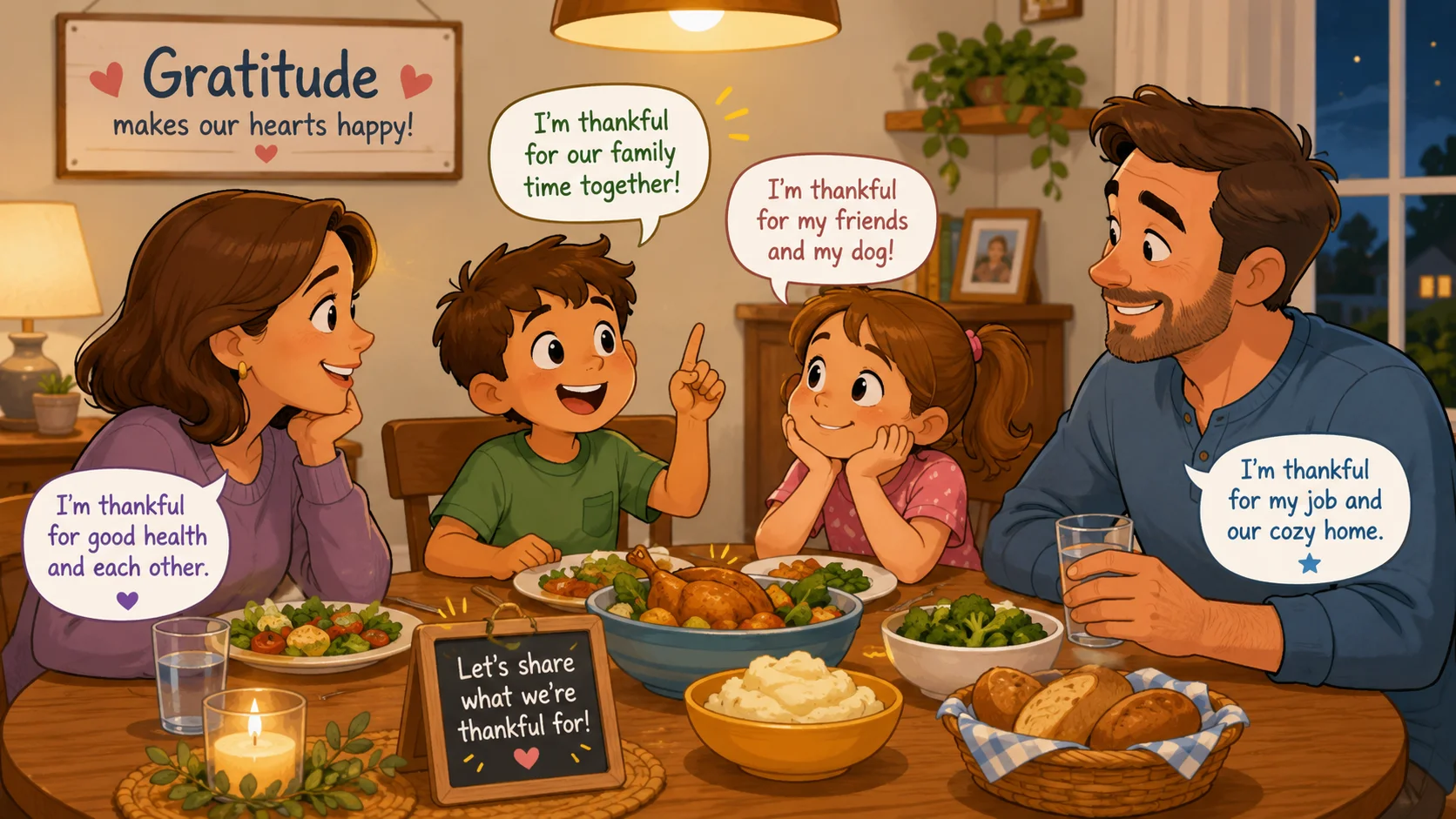
To make gratitude part of your family culture, build simple, repeatable rituals into your daily and weekly routines.
Mealtime Thanks
Dedicate the first two minutes of a family meal to a quick, low-pressure round of appreciation before anyone begins eating. Ask a simple question every day, such as “What is one thing you are looking forward to today?”
Keeping this ritual brief and predictable makes it easier to maintain, even on busy weeknights filled with homework and extracurricular activities.
Bedtime Reflection
End your child’s evening with a quiet, soothing conversation that helps settle their mind before sleep. Ask your child to share three specific elements from their day:
- One good moment that brought them joy or made them laugh.
- One kind person who helped them feel safe or happy.
- One event or activity they are looking forward to tomorrow.
Celebrate Small Achievements
Shift your family’s focus away from only celebrating major victories, perfect grades, or trophies, and also celebrate effort, progress, and support from others.
For example, if your child works hard to improve their math skills but falls short of an “A,” celebrate their dedication and the teacher who gave them extra help. This ritual teaches kids that effort and support matter more than the final score.
Practice Positive Self-Talk
Help your children appreciate their resilience, character strengths, and daily efforts through guided self-talk. Encourage them to say phrases like these out loud:
- “I kept trying to solve that puzzle even when it felt frustrating.”
- “I was brave enough to ask my teacher for help today when I got confused.”
- “I showed kindness by inviting the new student to sit with me at lunch.”
Include Faith-Based Thanks When Relevant
For religious families, prayer, scripture reading, worship, or expressions of thanks to God can provide a meaningful framework for gratitude. Parents can connect historical traditions and community values directly to the family’s daily gratitude practice.
For secular or interfaith households, this ritual can be adapted to focus on celebrating nature, honoring human kindness, or appreciating helpful people in the child’s life.
Mistakes Parents Should Avoid
When trying to raise a grateful child, certain well-intentioned parenting habits can accidentally get in the way. Recognizing and avoiding these common pitfalls helps keep the family environment supportive and warm.
Stop Demanding Gratitude
Commanding, critical language like “You need to be more grateful for what we give you” can sound like a personal attack and make a child defensive. Demanding gratitude through criticism can create resentment rather than authentic reflection.
Replace direct commands with consistent modeling, open-ended questions, and specific praise when you notice your child showing appreciation naturally.
Avoid Forced Thank-Yous
There is an important difference between teaching polite manners and nurturing a genuine sense of gratitude. While prompting a child to say “thank you” is good manners, parents should also help the child notice why the person’s action mattered.
Ask your child: “Did you see how happy Grandma looked when she brought you that book?” This connects the polite phrase with a real human feeling.
Limit Materialism
Constant exposure to targeted toy ads, peer comparisons, unfiltered digital content, and endless wish lists can create a persistent sense of lack in children. Parents can manage screen time and steer family priorities toward shared experiences, outdoor time, community service, and quality time together.
Shifting the focus away from constant buying helps children see that many of life’s most valuable parts cannot be bought.
Avoid Overdoing Gratitude Practice
Turning gratitude activities into rigid chores or high-pressure emotional assignments can cause children to resist the practice. If a child views gratitude journaling as another homework task, the activity loses its emotional value.
Keep family routines light, warm, age-appropriate, and brief so the experience feels natural rather than required.
Avoid Rescuing From Every Consequence
Consistently shielding your children from the natural results of their mistakes, such as dropping off a forgotten project at school every time or replacing a broken toy immediately, can prevent them from understanding value.
Experiencing real-world limits around time, money, and effort can teach children to respect and care for what they have. When children experience natural consequences, they may develop more appreciation for the care and support that keep their lives running smoothly.
FAQ
What is the best way to teach children gratitude?
The best way to teach kids gratitude is to make it part of everyday family life. Grateful parents show gratitude by thanking people sincerely, noticing small acts of kindness, and talking about the effort behind everyday help. Kids learn gratitude gradually, so small daily examples often work better than one big lesson.
How can I teach my child to be grateful without forcing it?
To help a child to be grateful, avoid using guilt, shame, or pressure. Instead, teach your kids to notice the effort behind gifts, meals, rides, clean clothes, or help from others. A gentle question such as “What is something you’re grateful for today?” can help your kids feel more grateful without making gratitude feel like an obligation.
How do I teach kids how to be grateful in a natural way?
To teach kids how to be grateful, focus on curiosity instead of correction. Ask simple questions, model appreciation out loud, and give kids chances to express their gratitude through words, drawings, cards, or helpful actions. Gratitude feels more natural when kids understand why someone’s kindness mattered.
What are some fun ways to practice gratitude with kids?
Fun ways to practice gratitude include making a gratitude jar, building a gratitude tree, playing alphabet thanks, creating a gratitude collage, or starting a family gratitude book. These activities help kids name things to be grateful for in a concrete, playful way.

Take a short quiz to find out what your everyday choices say about your parenting style
When your child is curious about something new, what’s your instinct?
Take a short quiz to find out what your everyday choices say about your parenting style
“Can I download this app?” What happens next?
Take a short quiz to find out what your everyday choices say about your parenting style
When it comes to rules at home, which sounds most like you?
Take a short quiz to find out what your everyday choices say about your parenting style
If you could give your child one life skill today, what would you pick?
Take a short quiz to find out what your everyday choices say about your parenting style
Your child gets to choose what to watch. What would your ideal setup look like?
Take a short quiz to find out what your everyday choices say about your parenting style
Pick your parenting superpower ✨



