30 Activities For 8 Year Old Girls: The Ultimate Guide to Fun and Development

 Discover a Free Education Video App for Kids
Pastory uses AI to personalize educational video content based on your child’s interests and personality. Safe, engaging, and built for curious young minds. Sign up now to stay updated and enjoy early access with a free trial
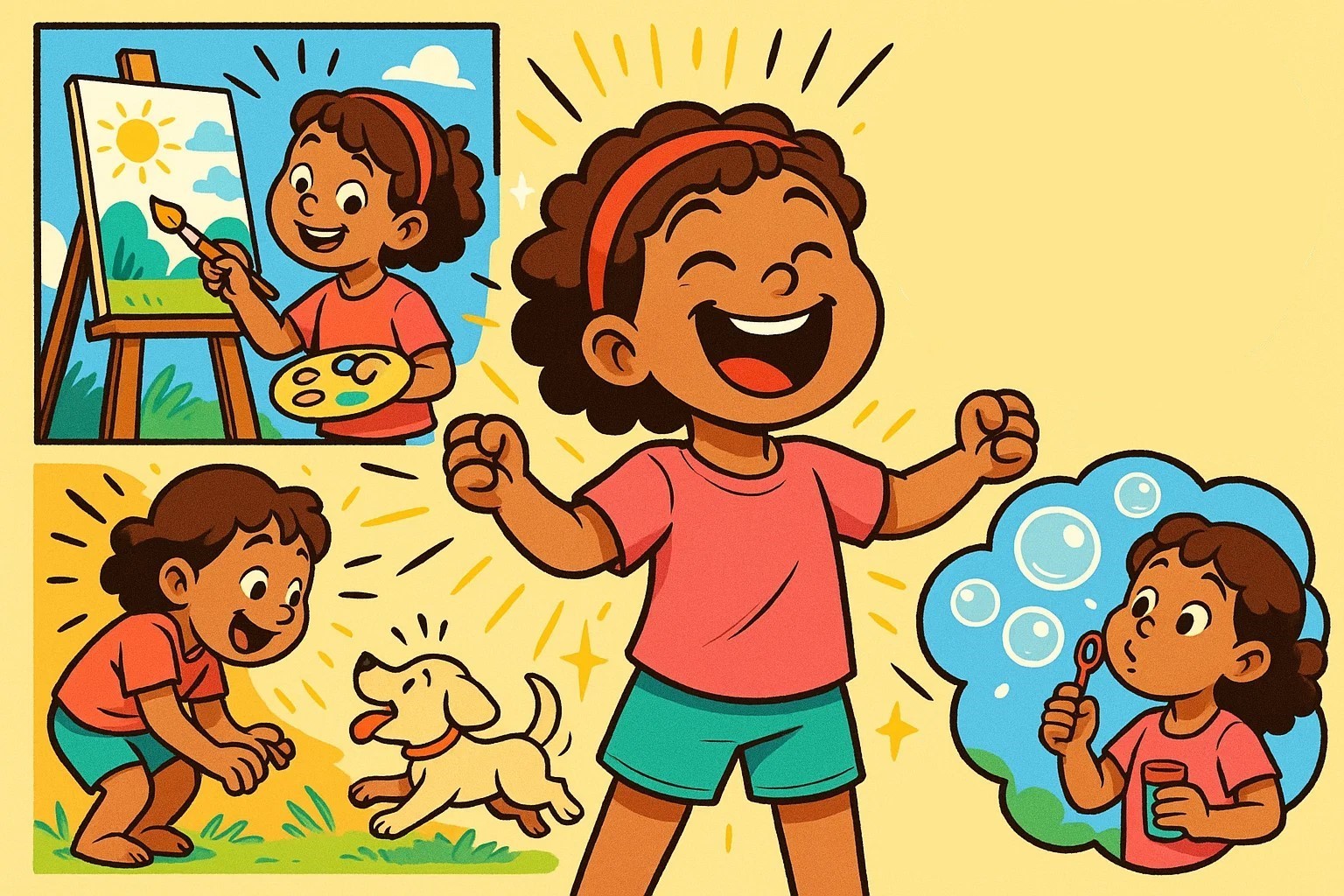
Eight is a transitional age at which children begin to seek more independence while still craving a deep connection with their parents. At this stage, girls are developing more sophisticated fine motor skills and a greater capacity for logical reasoning. Finding the right mix of activities for kids in this age group means balancing structured learning with open-ended play that supports creativity and emotional intelligence.
Whether you are looking for indoor activities for a rainy day or outdoor activities that help burn off energy, this guide provides 30 practical, development-friendly suggestions designed to keep 8-year-olds engaged, learning, and happy.
Key Takeaways
- Developmental Balance: The best activities for 8-year-old girls combine physical movement, creative expression, and social-emotional learning.
- Versatile Environments: Things to do at home can range from high-energy obstacle courses to quiet, independent reading sessions.
- Cognitive Growth: Incorporating science experiments and strategy-based board games helps boost critical thinking and life skills.
- Social Connection: Many activities focus on family bonding or connecting with a friend or family member through letter writing or shared play.
- Autonomy: Giving your child choices during play helps build confidence and decision-making skills.
1. Build a Fort
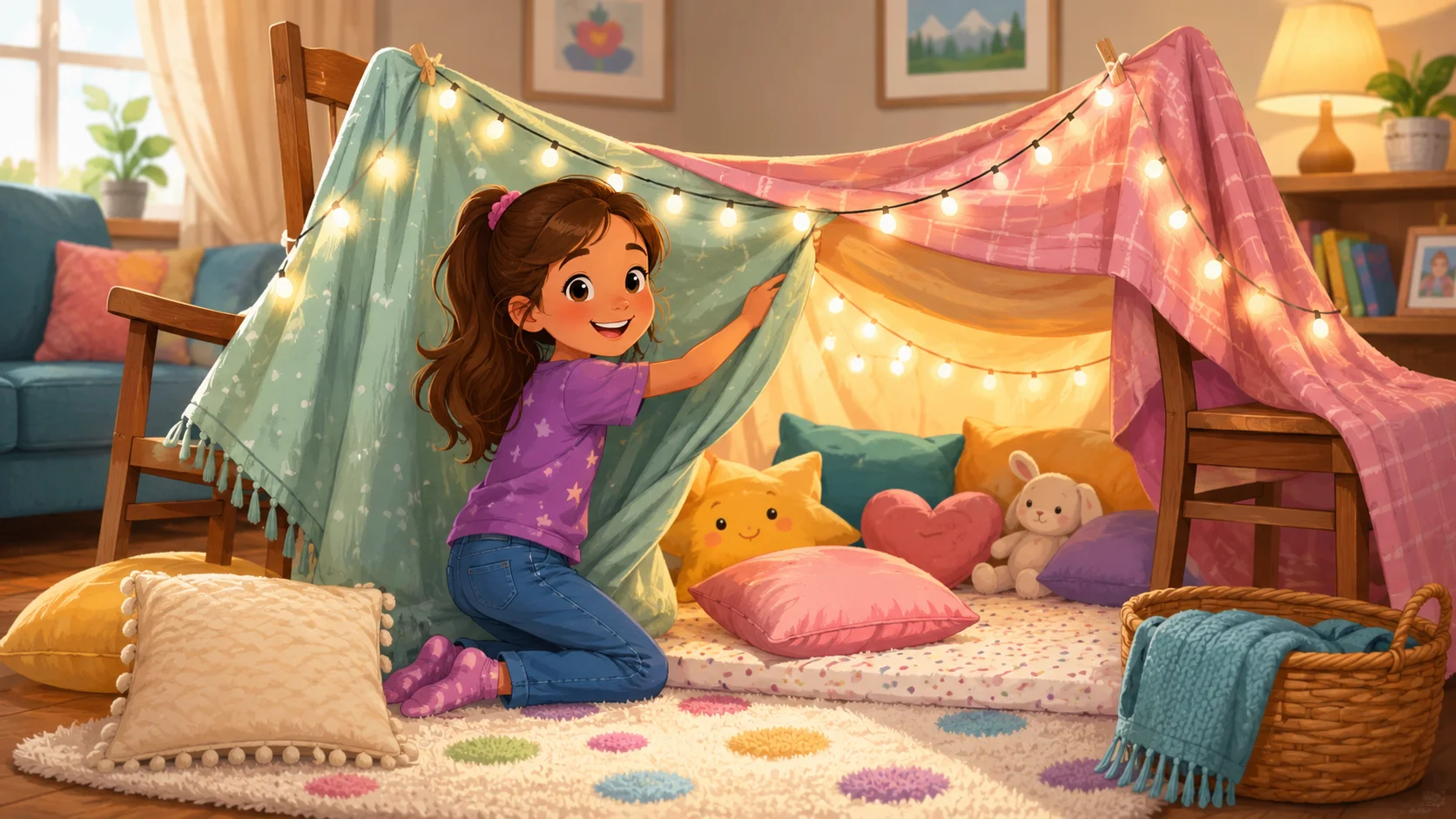
Building a fort is a classic activity that allows an 8-year-old to design a personal sanctuary of their own. Child development specialists often note that secret spaces can give children a sense of privacy and autonomy, which may support emotional development during the big-kid years.
Fort Setup Ideas
Many 8-year-olds have the motor skills to use more than just pillows; they can use cardboard boxes, blankets, chairs, and clothespins to create a multi-room structure. A cardboard box provides a sturdy foundation that can be transformed into a more durable clubhouse with heavy-duty tape, doorways, and windows.
Decoration Ideas
Encourage your child to personalize the space with signs, drawings, and paper chains. Adding battery-operated fairy lights or stickers can make the fort feel magical, while “members only” rules help them practice social boundaries and leadership.
Play Ideas Inside a Fort
The fort can serve as a hub for other fun activities, such as telling flashlight stories, eating snacks, or playing a board game. It is a great activity for a rainy day, providing a cozy environment for reading new books or writing secret notes to family members.
2. Create an Obstacle Course
Physical activity is essential for 8-year-olds; health guidelines generally recommend at least 60 minutes of moderate to vigorous physical activity daily for school-aged children. An obstacle course is a fun and easy way to work toward this recommendation while improving coordination.
Living Room Course
For an indoor course, use common household items like cushions to hop over, painter’s tape on the floor as a balance beam, and laundry baskets to crawl through. This simple activity helps children refine their gross motor skills, coordination, and spatial awareness while burning off energy.
Yard Course
An outdoor course allows for larger movements and can include cones, hula hoops, and chalk paths. Suggest tasks like skipping, hopping on one foot, or crawling under a string “laser” to keep the fun going and challenge their physical limits.
Challenge Variations
To make it even more fun, introduce themes like a spy mission or a gymnastics course. Use a stopwatch to see how long it takes to complete the course, encouraging children to beat their own time and build persistence.
3. Plan a Scavenger Hunt
Scavenger hunts can be highly effective learning activities because they encourage children to use observation skills, logic, and literacy. They can be adapted to almost any environment, making them perfect for play at home or neighborhood walks.
Indoor Scavenger Hunt
Write a list of items based on colors, textures, or shapes. For example, “find a toy that is fuzzy” or “collect things that are blue.” This keeps kids engaged and moving through different rooms of the house.
Neighborhood Scavenger Hunt
When you are outdoors, include items like specific birds, mailboxes, or garden decorations. This encourages children to pay attention to their surroundings and can be a great family activity that promotes neighborhood safety awareness.
Picture Clue Hunt
For an extra challenge, use a smartphone to take close-up photos of less obvious parts of the house. Let your child solve each location clue by matching the photo to the object, which adds a layer of mystery and problem-solving to the hunt.
4. Try Craft Crates
Subscription kits or DIY craft boxes provide structured arts-and-crafts time and help children learn new skills. These kits often include all the necessary materials, reducing “I’m bored” moments and keeping children engaged for longer stretches of time.
DIY Craft Box
You can create a free craft kit at home by filling a bin or box with supplies like pipe cleaners, beads, yarn, and recycled cardboard. Having a dedicated craft station allows children to start projects spontaneously without needing constant adult setup.
Skill-Based Craft Kit
At age 8, many children have the patience for beginner embroidery, weaving, or clay modeling. These tasks help improve hand-eye coordination and give children a tangible sense of accomplishment when the project is finished.
Parent-Free Craft Time
To encourage independence, set clear limits by using a tray or newspaper to protect surfaces. Choose supplies that 8-year-olds can use independently, such as washable markers and glue sticks, so they can create without constant supervision.
5. Make Friendship Bracelets
Making friendship bracelets is a classic hands-on activity for many 8-year-olds. This age group often begins to place a high value on peer relationships, and giving handmade items can help encourage generosity and social-emotional growth.
Easy Bracelet Patterns
Start with simple braids or twisted yarn patterns. Using pony beads or alphabet beads allows them to personalize the bracelets with names, which is a great way to practice spelling while working on fine motor skills.
Bracelet Gift Ideas
Encourage your child to make bracelets for a friend, a sibling, another family member, or even a donation drive. This reinforces the concept of kindness and helps them think about the preferences and happiness of others.
Color Theme Prompts
Suggest using specific color palettes like rainbow, school colors, or birthstones. This helps children understand color theory and makes the design process more intentional and creative.
6. Paint Nails or Create Cardboard Pictures
Creative expression does not always have to happen on paper. Painting provides a sensory experience that can be both calming and stimulating for 8-year-olds.
Nail Art Station
Set up a low-mess nail station with washable polish and stickers. This is a popular creative activity that allows for self-expression and helps children practice the steady-hand control involved in fine motor development.
Cardboard Canvas
Large pieces of cardboard from delivery boxes can become oversized canvases for castles, animals, or dollhouses. Painting on a large scale encourages bigger arm movements and helps children think about size, space, and composition.
Low-Mess Painting Tips
To keep the home clean, use a bucket of water for rinsing brushes and lay down an old sheet. Using washable paints ensures that any accidents are easily managed, making the experience stress-free for parents.
7. Do Open-Ended Art Projects
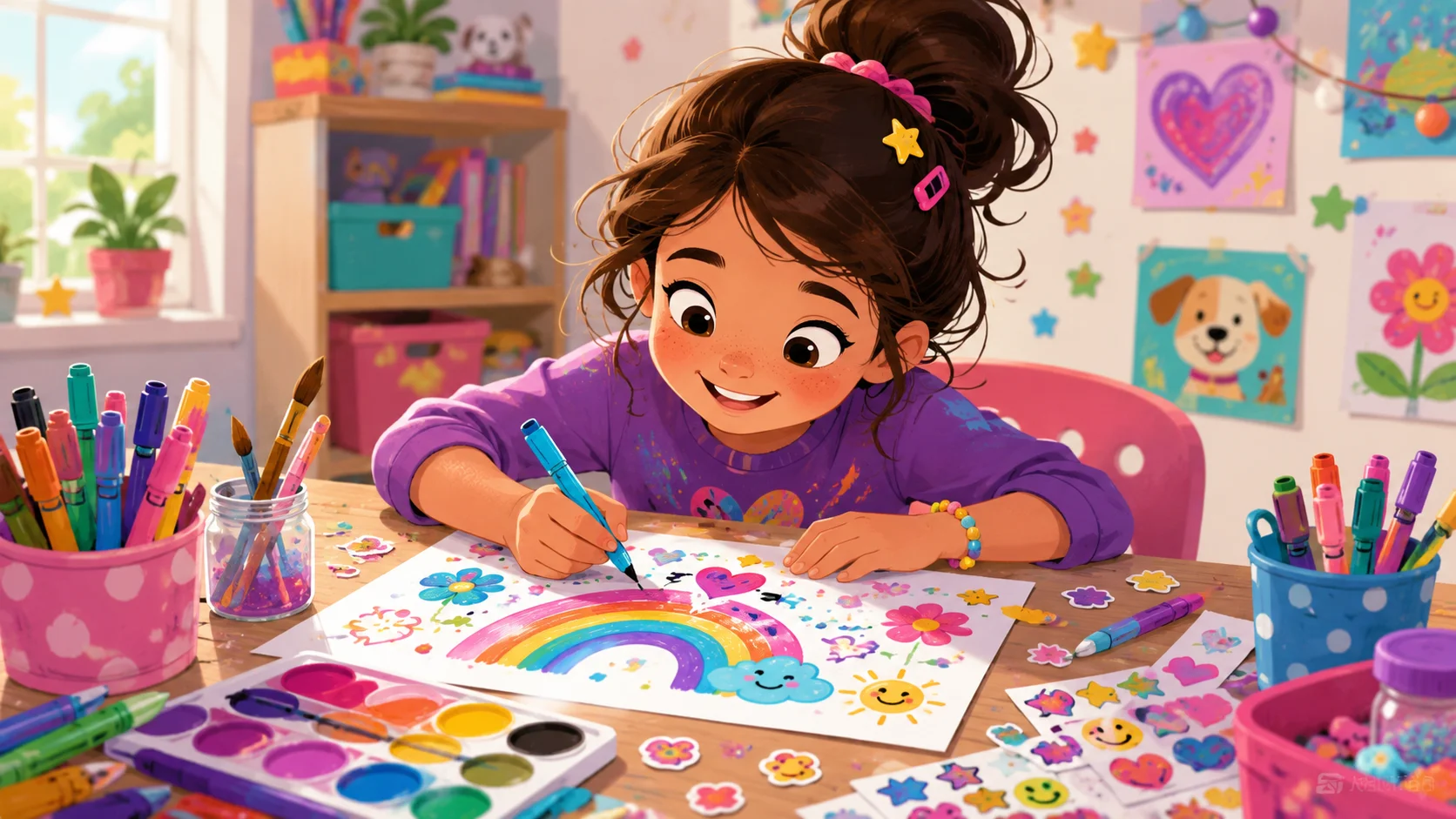
Open-ended art, often called process art, focuses on the act of creating rather than the final product. This type of play can help children develop critical thinking and problem-solving skills as they experiment with different materials.
Process Art Ideas
Try watercolor salt painting or shaving cream prints. These activities have no right or wrong outcome, allowing 8-year-olds to explore textures, patterns, and simple cause-and-effect reactions freely.
Recycled Art Supplies
Use recyclables like egg cartons, bottle caps, and fabric scraps to build 3D collages. This teaches kids about sustainability and shows them how to find creative potential in everyday objects.
Display Finished Work
Create a fridge gallery or use rotating frames to display their work. Acknowledging their effort helps children feel valued and encourages them to continue exploring their artistic interests.
8. Learn to Draw from Videos
While excessive screen time is often discouraged, using digital content for how-to tutorials can be a productive use of technology. It transforms the child from a passive consumer to an active creator.
Beginner Drawing Topics
Together, search for age-appropriate tutorials on drawing animals, unicorns, or outfits. Following step-by-step instructions helps children understand proportions and basic drawing techniques that they can later apply to their own original work.
Drawing Challenge Ideas
Keep things interesting with a 10-minute sketch challenge or by asking them to draw from memory. These prompts help boost cognitive recall and focus.
Screen Time Boundaries
Set a timer to help keep the focus on drawing rather than scrolling through suggested videos. Choosing the video together first helps ensure the content is age-appropriate and educational.
9. Create Sticker Art
Stickers are not just for toddlers; 8-year-olds can use them for detailed storytelling and more complex decorating projects. They are a fun, easy way to engage in art without a lot of cleanup.
Sticker Scene Pages
Give your child a blank notebook and a variety of stickers to create scenes like a zoo or a space station. This encourages narrative thinking as they decide where characters go and what they are doing.
Sticker Journaling
Children in this age group may enjoy decorating a gratitude journal or a reading log. Using stickers to mark milestones or feelings helps them engage with the habit of daily reflection.
Reusable Sticker Play
Window clings or reusable sticker books are great for travel or quiet time. They allow children to change their minds and redo scenes, which supports flexible thinking.
10. Make Flip Books
Flip books are a fantastic introduction to animation, motion, and visual sequencing. This activity combines drawing with an understanding of sequencing and timing.
Simple Animation Ideas
Start with a bouncing ball or a growing flower. These simple movements are easy for an 8-year-old to grasp and provide immediate visual satisfaction when the pages are flipped.
Supplies Needed
You only need a stack of sticky notes or index cards and a pencil. This makes it one of the most cost-effective activities to do at home when you need something quick.
Storytelling Extension
Once they master the basics, children can create mini-comics. This helps bridge the gap between drawing and writing, supporting literacy and narrative structure.
11. Make a Stop-Motion Movie
Stop-motion animation takes the concept of a flip book into the digital age. With a tablet and a simple app, 8-year-olds can bring LEGO bricks, dolls, or paper characters to life.
Storyboard First
Teach your child to plan a beginning, middle, and end. Storyboarding is a useful planning skill that helps with organization and logical thinking.
Props and Characters
Use action figures, clay, or paper cutouts as characters. Building a set out of blocks or cardboard adds a layer of engineering to the creative process.
Filming Tips
Explain the importance of keeping the camera steady and making tiny movements. This helps children practice patience and attention to detail, which can lead to a stronger final movie.
12. Build a Castle with LEGO Bricks or Blocks
Building with LEGO bricks is more than just fun; it can support STEM learning, especially spatial reasoning and early engineering skills. Block play can help children develop spatial reasoning and an early understanding of structure and balance.
Castle Challenge
Instead of following an instruction booklet, give them a prompt: “Build a castle with a secret passage and a royal garden.” This encourages imaginative play and original design.
Timed Building Challenge
To add excitement, try a timed challenge. See what they can build in 5 minutes using only 20 blocks. This helps children learn to work under pressure and prioritize their ideas.
Story Play After Building
The building is just the beginning. Once finished, encourage your child to use the castle for pretend play missions, which helps develop emotional intelligence through role-playing.
13. Build with Marshmallows and Toothpicks
This simple activity offers strong educational value. It allows kids to explore geometry and structural integrity in a delicious, hands-on way.
Shape Building
Have your child create 2D shapes, such as squares and triangles, and then turn them into 3D structures, such as cubes and pyramids. This is a visual way to teach basic geometry.
Engineering Challenge
Ask them to build the tallest tower or a bridge that can hold a toy. This forces them to think about the base of the structure and where the weight is distributed.
Snack Safety Notes
Always make sure hands are clean, and separate the marshmallows used for building from any marshmallows meant for eating.
14. Build a Marble Maze
Building a marble maze requires planning, testing, and adjusting—core parts of the engineering process. It’s an excellent way to keep children engaged while teaching them about gravity and momentum.
Cardboard Maze
Use a box lid and glue straws or craft sticks in place to create paths. The goal is to tilt the box to move the marble from the start to the finish without hitting dead ends.
Wall Ball Run
Tape paper towel tubes to a closed door or a large cardboard sheet to create a vertical ball run. This introduces the concepts of incline and velocity in a practical way.
Maze Testing
Encourage your child to test their maze often. If the marble gets stuck, they have to rebuild and problem-solve, which builds resilience and a growth mindset.
15. Run a Science Experiment

At-home science experiments can turn your kitchen into a mini lab. These learning activities satisfy a child’s natural curiosity about how the world works.
Make Volcanoes
The classic baking soda and vinegar volcano teaches kids about chemical reactions. Use food coloring to make the lava vibrant and a tray to contain the mess.
Try the Skittles Experiment
Place Skittles in a circle on a plate and add warm water. Watching the colors spread into separate bands before gradually blending is a mesmerizing way to observe dissolving, diffusion, and color mixing.
Explore Ice Excavating
Freeze small toys in a container of water. Give your child tools like warm-water droppers and salt to rescue the toys. This is a great sensory activity that demonstrates melting and the effect of salt on ice.
16. Make Slime or Play with Kinetic Sand
Sensory play is often associated with toddlers, but it can also benefit older kids as a stress-relief tool and a medium for creative exploration.
Slime Variations
Try adding glitter, beads, or scents to create different types of slime. Experimenting with ratios of glue and activator can become a simple chemistry lesson.
Kinetic Sand Play
Kinetic sand is excellent for building detailed molds and pretend bakeries. Its unique texture is calming and can help children focus after a high-energy day.
Cleanup Rules
To make cleanup easier, establish cleanup rules before starting. Use a dedicated tray and ensure the slime stays away from carpets and hair.
17. Play Board Games
Board games are useful for teaching social skills like taking turns, following rules, and being a good sport. They also provide a structured way for the family to bond.
Fast Family Games
Look for quick games, such as UNO or memory-matching games. These can help prevent frustration and keep the energy high.
Strategy Games
Many 8-year-olds are ready for basic strategy games like checkers or Connect Four. These games build planning and logic skills as they try to anticipate their opponent’s next move.
Game Night Routine
Make it a family activity by adding snacks and music. Rotating who gets to choose the game gives your child a sense of leadership and importance.
18. Learn a New Card Game
Card games are highly portable and can help improve math skills and memory. They are one of the best activities for kids to do while traveling or waiting at a restaurant.
Beginner Card Games
Teach classics like Go Fish, War, or Crazy Eights. These games are easy to learn but provide hours of entertainment and help children recognize patterns.
Math Card Games
Use a deck of cards to practice addition or multiplication. For example, in Addition War, the player who adds the values of their cards the fastest wins the round.
Social Skills Practice
Card games are a safe space to practice winning kindly and losing calmly. These emotional regulation skills can support success in school and friendships.
19. Play Would You Rather
This conversation-based game requires no supplies. It’s perfect for car rides or bedtime, helping you learn more about your child’s thoughts and preferences.
Funny Questions
Ask silly questions like, “Would you rather have a dragon for a pet or a unicorn?” These prompts spark imagination and laughter.
Friendship Questions
Use questions that touch on values, such as “Would you rather be the funniest person in the room or the kindest?” This helps you gauge their developing moral compass.
Travel and Dinner Use
This game is a great way to pass the time during long waits without turning to a screen. It keeps the family talking and engaged with one another.
20. Play Charades or Heads Up
Active group games like charades can help children overcome shyness and develop nonverbal communication skills.
Animal Charades
Acting out animals is an easy entry point. It requires the child to think about the attributes of the animal—how it moves and what it looks like.
Movie and Book Charades
For older children, use favorite characters from books or movies. This tests their memory of stories they have read or watched and their ability to convey ideas through movement.
Team Play Tips
Keep rounds short with a timer and cheer for every effort so everyone feels included. This builds a supportive family environment where children feel safe to be silly.
21. Play Hide-and-Seek
Hide-and-seek is a timeless game that helps children develop spatial awareness and practice quiet, careful movement.
Classic Hide-and-Seek
Establish clear boundaries, especially for indoor play. This ensures safety while allowing the child to explore the house in a new way.
Flashlight Hide-and-Seek
A dimly lit version with flashlights adds excitement and a sense of adventure to a familiar game.
Toy Hide-and-Seek
If you don’t have enough people to play, hide stuffed animals or dolls and let your child find them. This is a fun, easy way to keep them active during solo play.
22. Play I Spy
I Spy is a classic screen-free activity that can be played anywhere, from the living room to the grocery store.
Color Version
Use colors for simple play, which helps younger siblings join in if you have a mixed-age group.
Letter Version
For 8-year-olds, use initial letters or rhyming clues to make it more challenging and support literacy skills.
Outdoor Version
Use I Spy on walks to point out nature features like clouds, rocks, or specific trees. This encourages children to pay closer attention to nature.
23. Read Together
Even as children become independent readers, shared reading remains a powerful tool for bonding and vocabulary building.
Cozy Reading Time
Create a reading cave with blankets and soft music. Making reading a cozy experience helps children associate books with comfort and safety.
Read-Aloud Choices
Choose funny chapter books or mystery series. Reading a book that is slightly above their current independent reading level exposes them to more complex language and themes.
Reading Response Ideas
After reading, suggest drawing a favorite scene or writing an alternate ending. This helps with comprehension and critical thinking.
24. Start a Book Club or Host Poetry Tea Time
Discussing books and poems helps children connect with peers and family members on a deeper level.
Family Book Club
Choose a short book for the whole family to read and discuss over snacks. This shows your child that reading is valued by the whole family.
Friend Book Club
Invite a few friends over to talk about a book they all enjoyed. This provides a social reason to read and helps develop speaking and discussion skills.
Poetry Tea Time
Combine tea time with juice or cocoa and reading silly poems. This makes poetry feel accessible and fun rather than like boring schoolwork.
25. Listen to an Audiobook
Audiobooks are a great way to reduce screen time while still providing high-quality entertainment.
Audiobook Pairing Ideas
Audiobooks are perfect for listening during hands-on activities. Your child can listen while coloring, building with LEGO bricks, or helping with simple chores like folding laundry.
Best Genres
Mystery and fantasy stories can be particularly engaging in audio format because voice acting can bring the characters to life in a way silent reading might not.
Follow-Up Activities
Ask your child to draw the character based on the narrator’s description. This reinforces listening comprehension and visualization skills.
26. Write Letters and Mail Them
In a digital world, receiving a physical letter can feel special. Letter writing teaches 8-year-olds patience and real-world communication skills.
Letter Ideas
Write to grandparents, a pen pal, or even their future self. This helps children practice handwriting and express their feelings in a structured way.
Envelope Decoration
Let them use stickers, rubber stamps, and doodles to decorate the envelope. This makes the more routine parts of mailing a letter fun and allows for extra artistic expression.
Thank-You Notes
Teaching your child to write short thank-you notes after receiving gifts is a useful life skill that encourages gratitude and social etiquette.
27. Practice Phone and Video-Call Skills
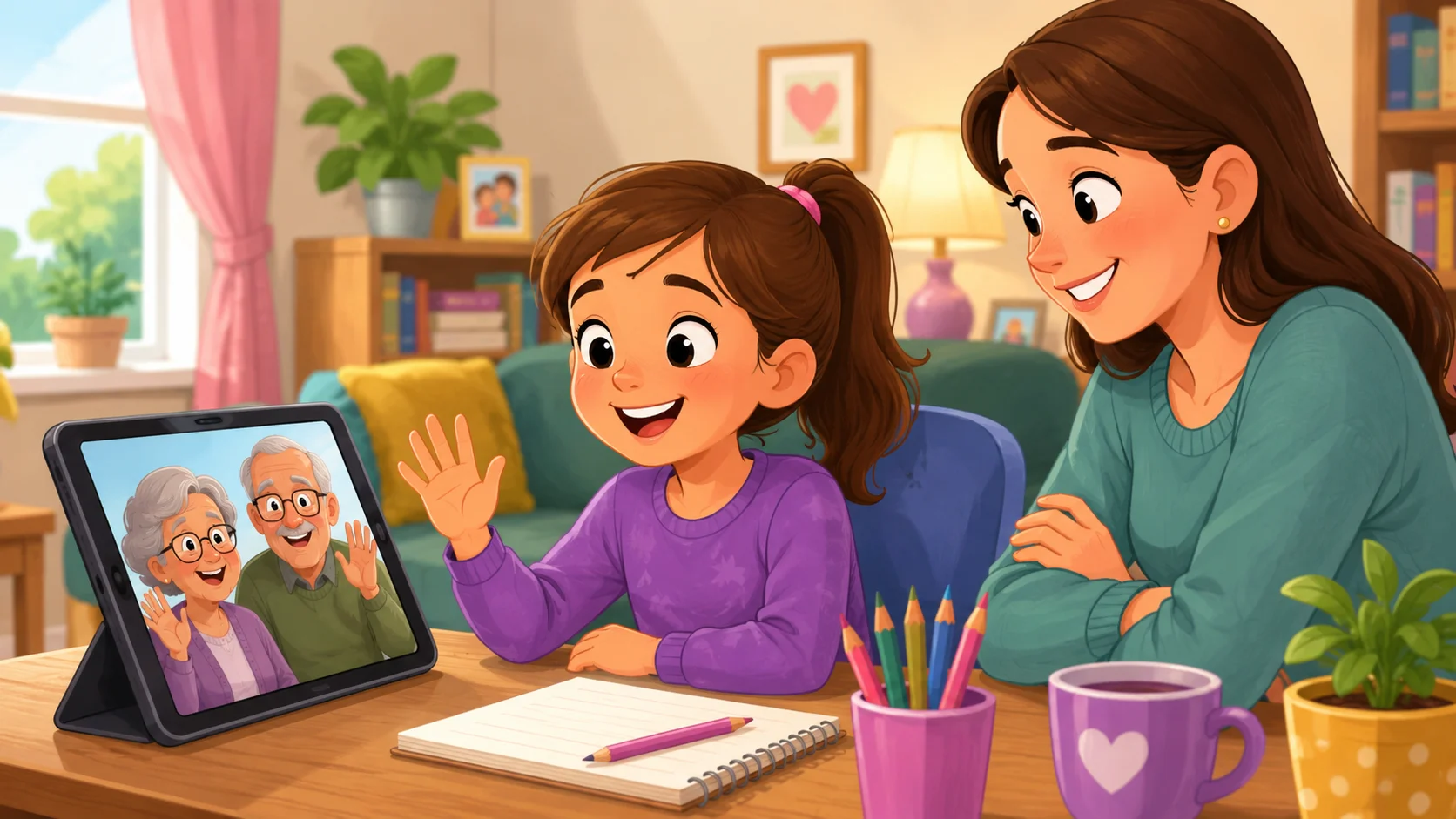
As children get older, learning how to communicate effectively by phone or video call supports both safety and social confidence.
Practice Calling Family
Short calls to relatives provide a low-stakes environment for practicing polite greetings and conversation starters.
Conversation Starters
Give your child a few prompts like “Tell Grandma about your new hobby” to prevent awkward silences and help them feel more in control of the conversation.
Safety and Manners
Cover the basics: asking permission before calling, using a polite voice, and ending a call politely.
28. Look Through Old Photos and Videos
Reviewing family history helps children feel a sense of belonging and identity.
Family Album Night
Looking at baby pictures or vacation albums is a fun, engaging way to share family stories and traditions.
Life Timeline Project
Create a timeline from birth to age eight using photos and drawings. This helps children understand the concept of time and their own personal growth.
Story Sharing Prompts
Prompt your child to ask questions such as, “What was my favorite toy when I was three?” These questions spark storytelling from parents, which children find fascinating.
29. Make a Time Capsule
A time capsule is a project for the future. It helps children think about their current favorites and how they might change as they grow.
Time Capsule Items
Include a handprint, a list of current favorite songs, and a small drawing. These snapshots of who they are now will be precious to find later.
Future Letter
Guide your child to write a letter to their future self, asking questions or making predictions about what they might be like at age 13.
Opening Date
Choose a significant future date, like a 10th birthday or graduation, to open the capsule. This helps children practice delayed gratification and anticipation.
30. Work on a Puzzle
Puzzles are a classic brain-building activity. They require visual-spatial reasoning and patience.
Puzzle Size Guide
For an 8-year-old, a 100- to 300-piece puzzle is usually the sweet spot between challenging and achievable.
Puzzle Race
Make it competitive by seeing who can find all the edge pieces first. This adds a game element to a typically quiet activity.
Puzzle Display
If they are particularly proud of a puzzle, consider gluing and framing it. This turns a temporary activity into a permanent piece of bedroom decor.
Summary
By offering a variety of these 30 activities, you give your 8-year-old opportunities to grow cognitively, physically, and emotionally. Whether it is a high-energy obstacle course or a quiet afternoon with an audiobook, the goal is to balance fun with development while helping her stay curious and connected throughout the big-kid years.

Take a short quiz to find out what your everyday choices say about your parenting style
When your child is curious about something new, what’s your instinct?
Take a short quiz to find out what your everyday choices say about your parenting style
“Can I download this app?” What happens next?
Take a short quiz to find out what your everyday choices say about your parenting style
When it comes to rules at home, which sounds most like you?
Take a short quiz to find out what your everyday choices say about your parenting style
If you could give your child one life skill today, what would you pick?
Take a short quiz to find out what your everyday choices say about your parenting style
Your child gets to choose what to watch. What would your ideal setup look like?
Take a short quiz to find out what your everyday choices say about your parenting style
Pick your parenting superpower ✨