
Summer Activities for Boys Aged 7–9: 40 Fun Ideas for the School Holidays

 Discover a Free Education Video App for Kids
Pastory uses AI to personalize educational video content based on your child’s interests and personality. Safe, engaging, and built for curious young minds. Sign up now to stay updated and enjoy early access with a free trial

The school holidays can be a brilliant time for children to learn, play, and grow, but a long summer break can also leave parents searching for fresh ways to keep them entertained. Between the ages of 7 and 9, many boys go through noticeable cognitive, emotional, and physical changes. During middle childhood, children benefit from a mix of active play, hands-on tasks, problem-solving, and time outdoors.
A balanced mix of structured and unstructured activities can help channel their energy in a positive way. This list brings together 40 practical, budget-friendly ideas to make summer holiday planning easier.
Key Takeaways
- Developmental Target: Boys aged 7 to 9 often thrive on movement, clear rules, hands-on building, and nature-based exploration.
- Budget Balance: Combining free summer activities with low-cost resources helps reduce financial pressure during the long summer break.
- Strategic Planning: A flexible weekly rotation helps maintain predictable daily routines while reducing parental decision fatigue.
- Screen-Time Alternative: Active, hands-on tasks can support focus, planning, and self-regulation more effectively than unrestricted passive screen time.
Best Mix for Boys Ages 7–9
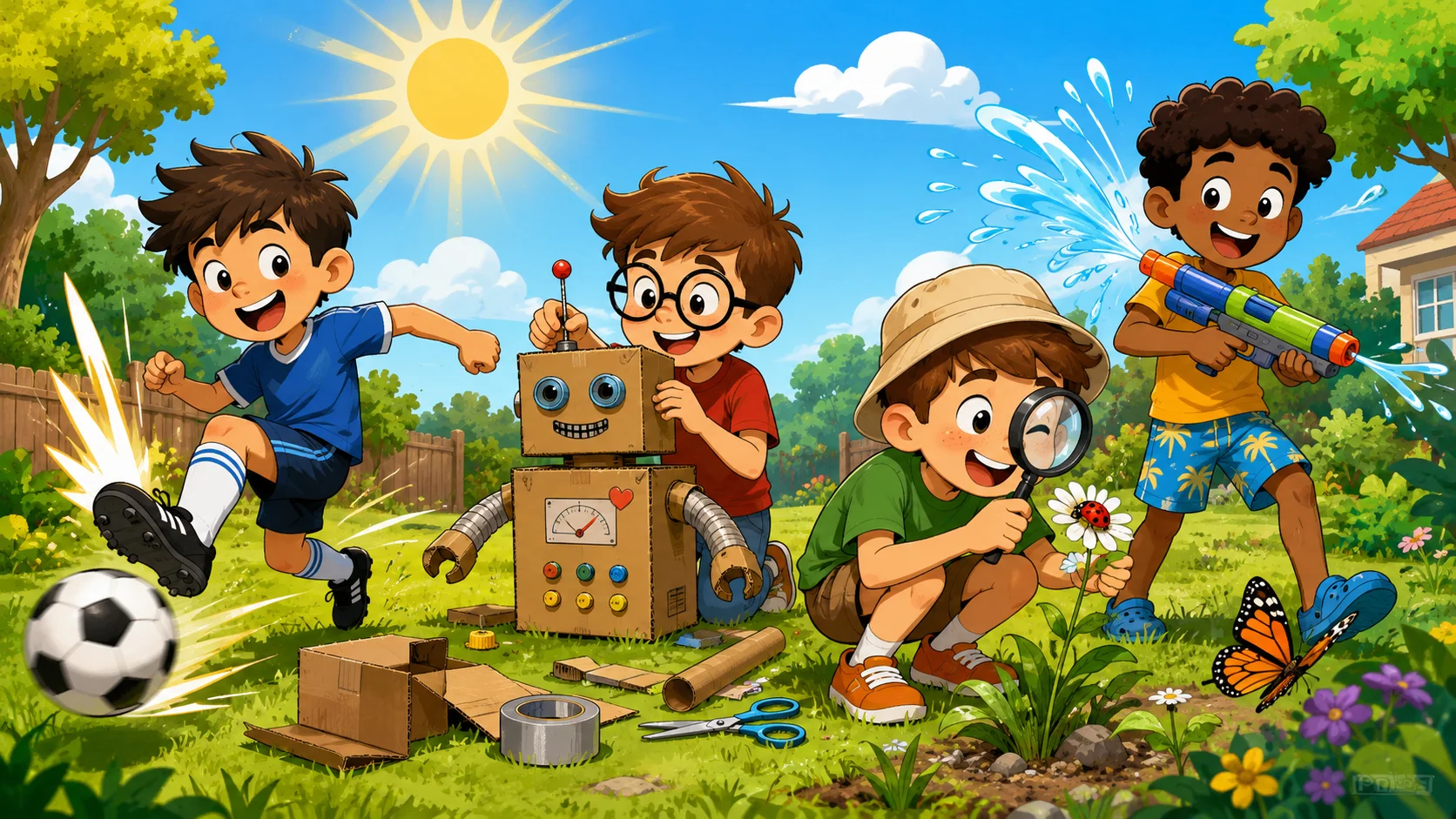
A recognised paediatric body, such as the American Academy of Pediatrics (AAP) recommends that children aged 6 and older get 60 minutes of moderate-to-vigorous physical activity on most days of the week. At this age, many boys enjoy more independence, clear rules, teamwork, and games with friends. They often gravitate towards physical movement, friendly competition, building projects, collecting natural objects, and open-ended water play.
| Developmental Focus | Applicable Activity Type |
| Gross Motor Skills | Obstacle courses, playground challenges, bike trails |
| Fine Motor / Building | Cereal box building projects, nature art, shelter building |
| Cognitive / Logic | Geocaching, science experiments, time capsules |
| Social-Emotional | Home Olympics, restaurant role play, library clubs |
Cheap Summer Activity Strategy
An affordable summer holiday plan starts with making the most of local, community-based resources. Local parks, municipal libraries, and regional nature trails often offer free events and educational activities. Using everyday household items—such as pavement chalk, cardboard boxes, and a garden hose—can provide hours of entertainment without a high price tag. Parents can reduce summer spending by shifting the focus from expensive theme parks to structured garden play, local outings, and low-cost community activities.
Easy Weekly Planning Method
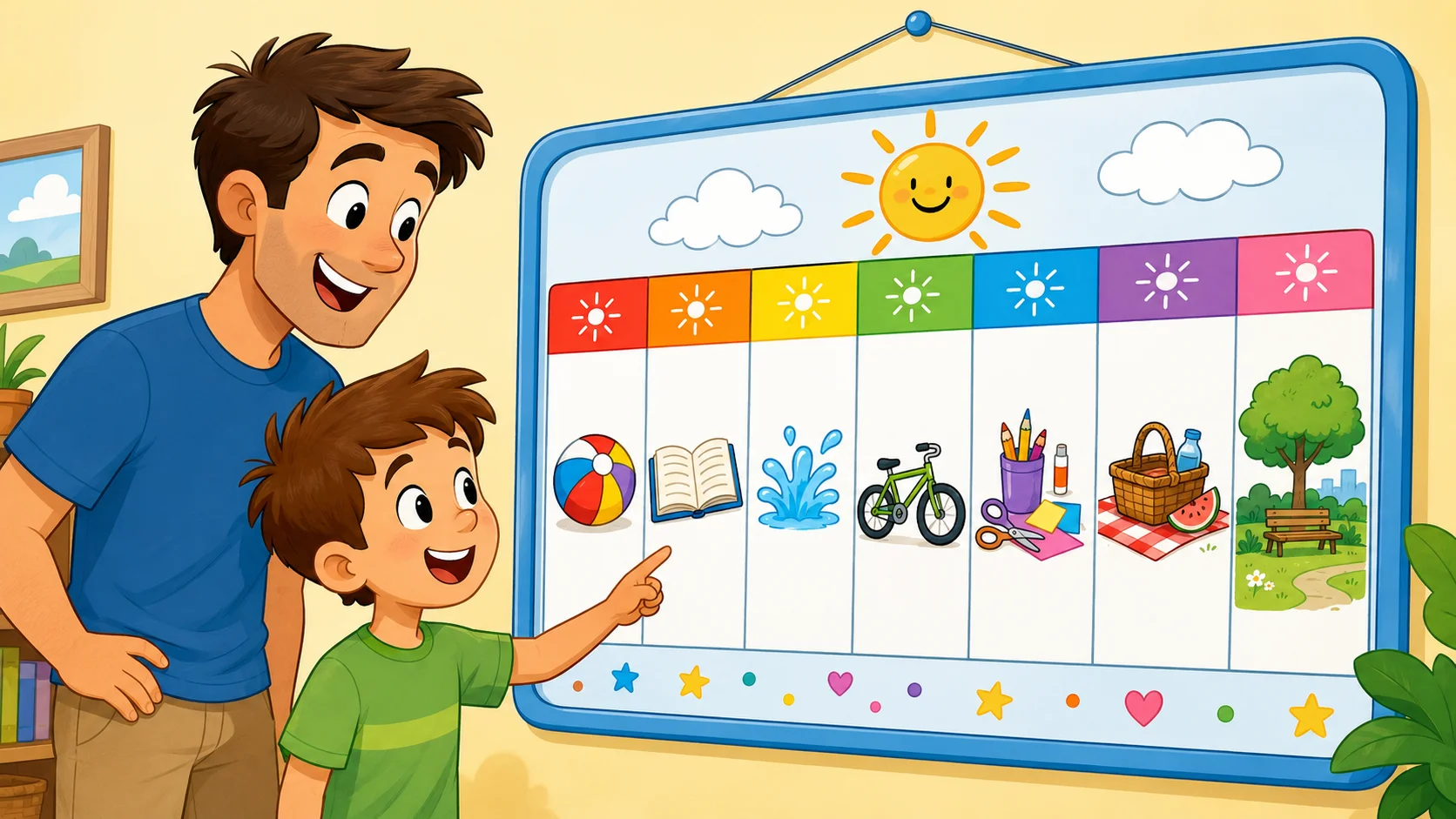
Managing a long summer break is easier with a repeatable structure. A balanced weekly rotation helps ensure that children get cognitive stimulation, physical activity, and restorative downtime.
- Monday (Outdoor Exploration): Focus on local parks, geocaching, or nature trails.
- Tuesday (Creative & Cognitive): Dedicate the day to craft projects or library visits.
- Wednesday (Water & High Energy): Use water play or garden sports to cool down.
- Thursday (Community & Outings): Explore local community centres, leisure centres, or car boot sales.
- Friday (Family & Teamwork): Organise home Olympics or themed family activities.
1. Garden Water Play
Garden water play is a practical way to keep children cool on hot summer days while supporting gross motor skills. This kind of active play helps children burn energy while introducing simple ideas about water flow and movement.
| Water Station Type | Equipment Required | Development Value |
| Sprinkler Target Run | Oscillating sprinkler, target mats | Cardiovascular endurance, agility |
| Bucket Relay | Two buckets, large sponges | Team cooperation, gross motor control |
| Splash Track | PVC pipes, plastic cups, plastic boats or bath toys | Simple engineering, logical thinking |
Water Challenge Ideas
- Fill-the-Bucket Race: The participant dips a sponge into a bucket of water, runs 15 metres, and squeezes the water into a marked container. The first person to fill their container to the marked line wins.
- Water Target Practice: Attach numbered plastic plates to a garden fence at varying heights. Participants use spray bottles or wet sponges to hit the targets, earning points based on difficulty.
- Timed Sprinkler Obstacle: Set an oscillating sprinkler to a fixed pattern. The participant has to cross the lawn, retrieve an object, and return without being hit by the sprinkler stream.
Safety and Setup Tips
- Surface Check: Always position water play areas on flat grass. Avoid concrete patios or wooden decking to reduce the risk of slips and falls.
- Water Breaks: Offer regular water breaks during active outdoor play, especially in hot weather.
- Sun Protection: Apply broad-spectrum SPF 30+ sunscreen before outdoor play, and reapply every two hours or after swimming or sweating.
2. Nature Scavenger Hunt
A nature scavenger hunt turns an ordinary walk into an active learning mission. Structured outdoor exploration can help school-aged children practise observation, classification, and spatial awareness.
| Hunt Type | Key Focus Items | Cognitive Skill Target |
| Garden Nature Hunt | Leaf shapes, small insects, soil textures | Biological categorisation |
| Park Texture Hunt | Textures, stones, bark, paths | Sensory discrimination |
| Neighbourhood Photo Trail | Local landmarks, street signs, building details | Spatial mapping, visual memory |
Garden Hunt List
- Find three different leaf varieties, such as serrated, smooth, or lobed leaves.
- Collect two different bark textures using a paper and crayon rubbing technique.
- Look for up to three small insects or minibeasts under rocks or logs that are safe for an adult to lift, then put everything back as it was.
- Identify four different natural colour groups using a colour wheel card.
Park Hunt Missions
Make a trip to the local park more engaging by adding clue cards and simple team roles. Assign one child as the “navigator” responsible for reading maps, and another as the “biologist” tasked with cataloguing finds. Introduce a timed photo challenge where children photograph signs of animal habitats, such as nests or burrow entrances, from a safe distance within 30 minutes. Offer a small non-monetary reward, such as choosing the evening family film, to motivate children to complete the challenge.
3. Build a Garden Den
Building a garden den is a great way to encourage engineering thinking, spatial problem-solving, and imaginative play. For boys aged 7 to 9, it can become a spy base, a wilderness shelter, or an explorer camp.
| Structural Item | Safe Material Options | Engineering Purpose |
| Framework Anchors | Sturdy garden chairs, low branches used with adult supervision | Provides primary support |
| Wall Coverings | Old bedsheets, lightweight tarpaulins | Provides shade and a sense of privacy |
| Fasteners | Plastic spring clips, soft ties, or rope used only under adult supervision | Secures joints against wind movement |
Den Materials
- Four to six stable garden chairs, or low branches used only with adult supervision.
- Three single lightweight bedsheets or canvas dust sheets.
- One pack of heavy-duty plastic spring clips or large wooden clothes pegs.
- Assorted cardboard panels from shipping boxes to serve as simple flooring.
Den Game Extensions
Once the den is built, encourage the children to turn it into an active base for play. Add walkie-talkies to help them communicate across the garden, and ask them to write a custom set of secret entrance codes. Provide a clipboard with graph paper so they can draw a treasure map of the garden. This space can also work as a shaded reading zone during hot afternoon hours.
4. Climb, Swing, and Slide
Playground play supports gross motor skills, body awareness, balance, and coordination. Using local playground equipment lets children test their physical abilities while building confidence and risk awareness.
| Equipment Piece | Physical Attribute Targeted | Developmental Benefit |
| Monkey Bars | Upper-body grip strength, core control | Builds grip strength, coordination, and upper-body control |
| Climbing Frame | Bilateral coordination, spatial planning | Improves multi-limb movement sequencing |
| Swings | Balance, rhythm, core timing | Supports balance, rhythm, and body awareness |
Playground Challenge Course
Transform standard public play equipment into a structured, timed obstacle course. Set a clear route: climb the wall, cross the monkey bars, go over the bridge, and finish on the slide. Use a stopwatch to track times, focusing on beating personal records rather than ranking children against each other. Build in varied movements, such as crawling, climbing, balancing, and swinging.
Skill Goals
- Grip Endurance: Hang on the monkey bars for 20 seconds.
- Bilateral Coordination: Use smooth hand-and-foot sequencing on climbing nets.
- Dynamic Balance: Walk along low balance beams or uneven log paths without stepping off.
- Resilience: Reset after a minor slip and try the movement sequence again.
5. Teddy Bear Picnic
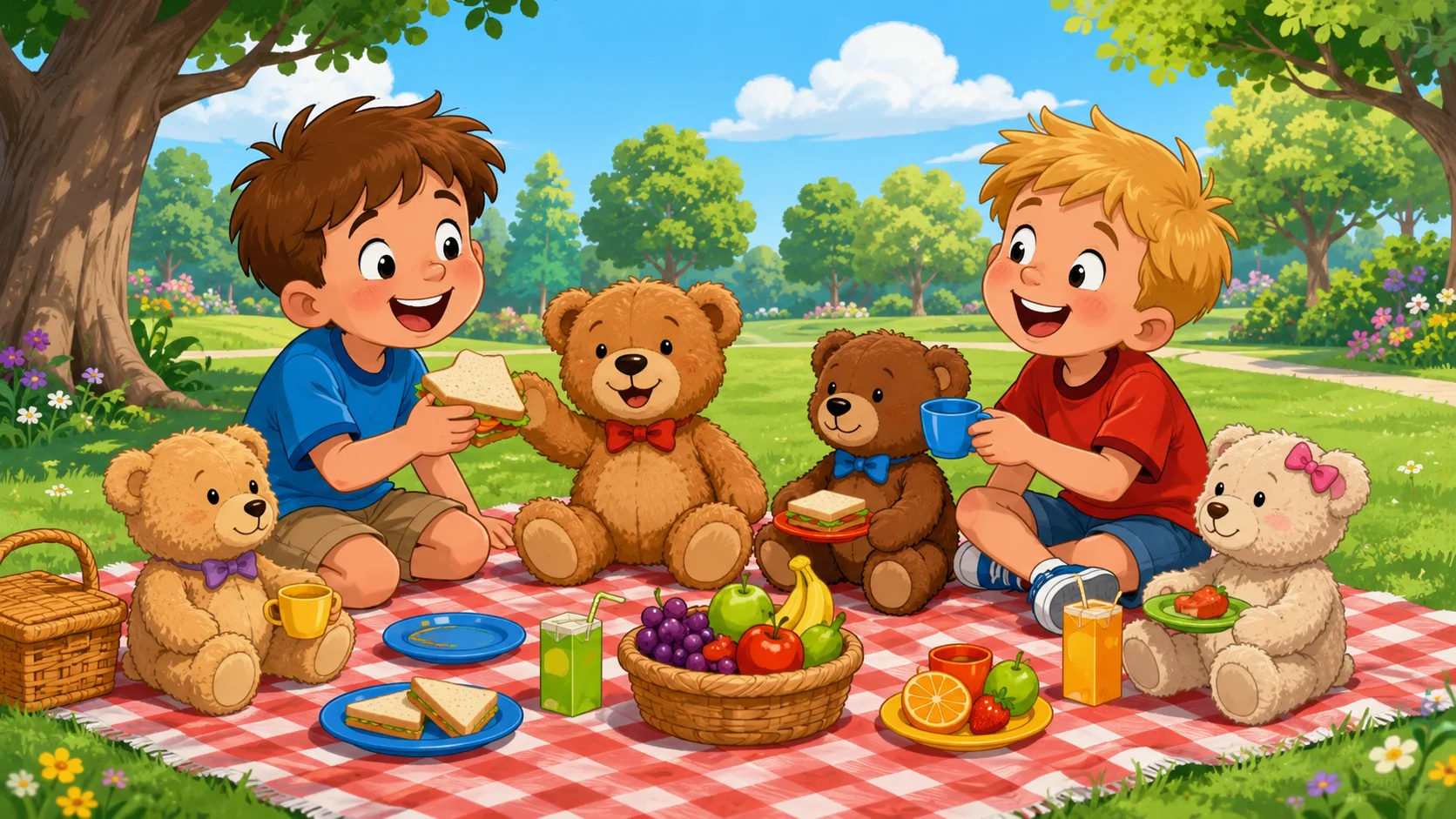
While traditional picnics may appeal more to younger children, boys aged 7 to 9 may enjoy them more when they are reframed as an explorer lunch, a comic-book picnic, or an outdoor adventure meal.
| Picnic Theme | Core Visual Focus | Associated Child Activity |
| Wilderness Explorer | Maps, compasses, canteens | Route mapping, compass navigation |
| Comic-Book Base | Graphic novels, sketchpads | Storyboarding, character design |
| Sports Strategy Lunch | Simple play cards, cones, whistle | Football drill planning, score review |
Picnic Theme Ideas
- Wilderness Explorer: Use canteens, compasses, and pocket field guides to create a basecamp feel.
- Comic-Book Base: Gather graphic novels and sketchpads for an outdoor drawing session.
- Sports Strategy: Bring simple play cards, marker cones, and a whistle to map out football drills.
- Pirate Voyage: Use a striped blanket as a ship deck and look for local landmarks using a cardboard telescope.
Simple Food Tasks
Involving children in meal preparation builds practical life skills and supports planning. Ask the children to slice soft fruit with a child-safe nylon knife and make fruit skewers. Let them measure ingredients for a custom trail mix containing oats, seeds, and dried fruit. They can also assemble their own wraps or use a manual citrus juicer to make fresh lemonade for the family.
6. Summer Olympics at Home
Hosting a garden Summer Olympics provides a fun structure for family play, physical activity, and good sportsmanship. Many school-aged boys enjoy competitive games with clear rules, simple scoring, and safe boundaries.
| Olympic Event | Equipment Setup Required | Main Movement Skill |
| Sack Race | Heavy-duty sacks or pillowcases | Leg strength and balance, balance |
| Beanbag Target | Hula hoops set at varying distances | Hand-eye coordination, depth perception |
| Scooter Slalom | Six cones spaced one metre apart | Agility, quick directional changes |
Event Ideas
- Sack Race: Participants jump inside a pillowcase along a straight 20-metre grass track.
- Beanbag Target Throw: Toss three weighted bags into hula hoops placed at three, five, and seven metres.
- Standing Long Jump: Measure the distance from a fixed two-foot launch point on flat grass.
- Obstacle Dash: Create a sprint that involves climbing over garden chairs and crawling under a low tarpaulin.
Scoreboard and Medals
Make a large cardboard scoreboard and place it in the main garden area. Assign clear point values to first, second, and third place to practise basic addition. Set aside a morning craft session for making paper or metallic cardboard medals attached to ribbons. End the day with a closing ceremony that celebrates effort, perseverance, and good sportsmanship.
7. Ride-On Adventures
Wheeled activities—including bicycles, scooters, and skateboards—are useful tools for physical conditioning. These activities build fitness, leg strength, balance, and quick reactions.
| Wheeled Activity | Best Route Type | Equipment Safety Check |
| Bicycle | Paved park loops, dedicated cycle paths | Tyre pressure, brake alignment |
| Stunt Scooter | Smooth concrete areas, school tracks | Handlebar clamp tightness, wheel bearings |
| Skateboard | Flat, low-traffic neighbourhood courts | Grip tape condition, tight truck bolts |
Local Route Ideas
Look for flat, multi-use paths separated from traffic, such as riverside greenways or loops at your local park. Plan routes with clear midpoints, such as a playground or a shaded picnic table, to break up the effort. For boys aged 7 to 9, turning a neighbourhood journey into a “reconnaissance mission” can keep engagement high. Ask them to spot specific signs, house colours, or landmarks along the way to sharpen observation skills.
Road Safety Basics
- Helmet Safety: Make helmets non-negotiable; they should sit low on the forehead, about two finger-widths above the eyebrows.
- Visibility: Wear bright clothing or reflective vests, even in daylight.
- Intersection Rules: Use a stop-and-dismount rule at every pedestrian crossing and driveway intersection.
8. Visit the Local Library
Your local library is a valuable free resource for reducing the risk of the “summer slide”—the learning slowdown or skill loss that some children may experience during a long summer break. The key to engaging boys aged 7 to 9 is to move away from forced reading and towards visual, adventure-led formats.
| Literary Format | Focus Content Type | Cognitive / Academic Value |
| Graphic Novels | High-action historical adventures | Builds visual literacy and context clues |
| Non-Fiction Field Guides | Deep-dive science and palaeontology | Builds subject-specific vocabulary |
| Interactive Mystery Books | Branching story paths | Exercises logic and sequencing |
Books Boys May Enjoy
- Highly illustrated graphic novels focusing on mythology, adventure, or history.
- Technical books about space exploration, rocketry, or robotics.
- Fact-dense palaeontology guides with dinosaur diagrams.
- Interactive books that require solving puzzles to move through the story.
Library Summer Challenges
Most local libraries run structured summer reading programmes with free incentives, stamps, and certificates. Beyond books, check the library calendar for free events such as weekly LEGO engineering clubs, beginner Scratch coding workshops, or hands-on craft sessions. These programmes help balance high-energy outdoor play with calm, air-conditioned cognitive focus.
9. Host a Garden Disco
A garden disco combines music, movement, rhythm, and active play in a simple outdoor format. This activity gives children an outlet for self-expression, creative movement, and active play.
| Dance Game Variant | Core Rule | Physical / Social Benefit |
| Audio Freeze Battle | Freeze instantly when the music stops | Self-control and quick reactions, impulse control |
| Mirror Copycat | Copy the leader’s movements | Imitation, body awareness, focus |
| Silly Move Elimination | Invent unique gestures | Creative expression, social confidence |
Dance Battle Games
- Freeze Dance: Stop the music at unpredictable intervals. Players must freeze instantly or step out for one turn to practise impulse control.
- Superhero Dance-Off: Participants choreograph a four-beat movement that represents a chosen hero’s superpower.
- The Copycat Circuit: One person leads a movement, and everyone else tries to copy it as closely as possible.
Garden Party Setup
Use a battery-powered outdoor speaker on a stable, dry, raised surface. Add low-cost extras such as a bubble machine or multi-coloured glow sticks to make the space feel special. Create a shaded area using garden chairs and a canopy so children have a hydration station stocked with water and fresh fruit slices.
10. Try a DIY Splash Park
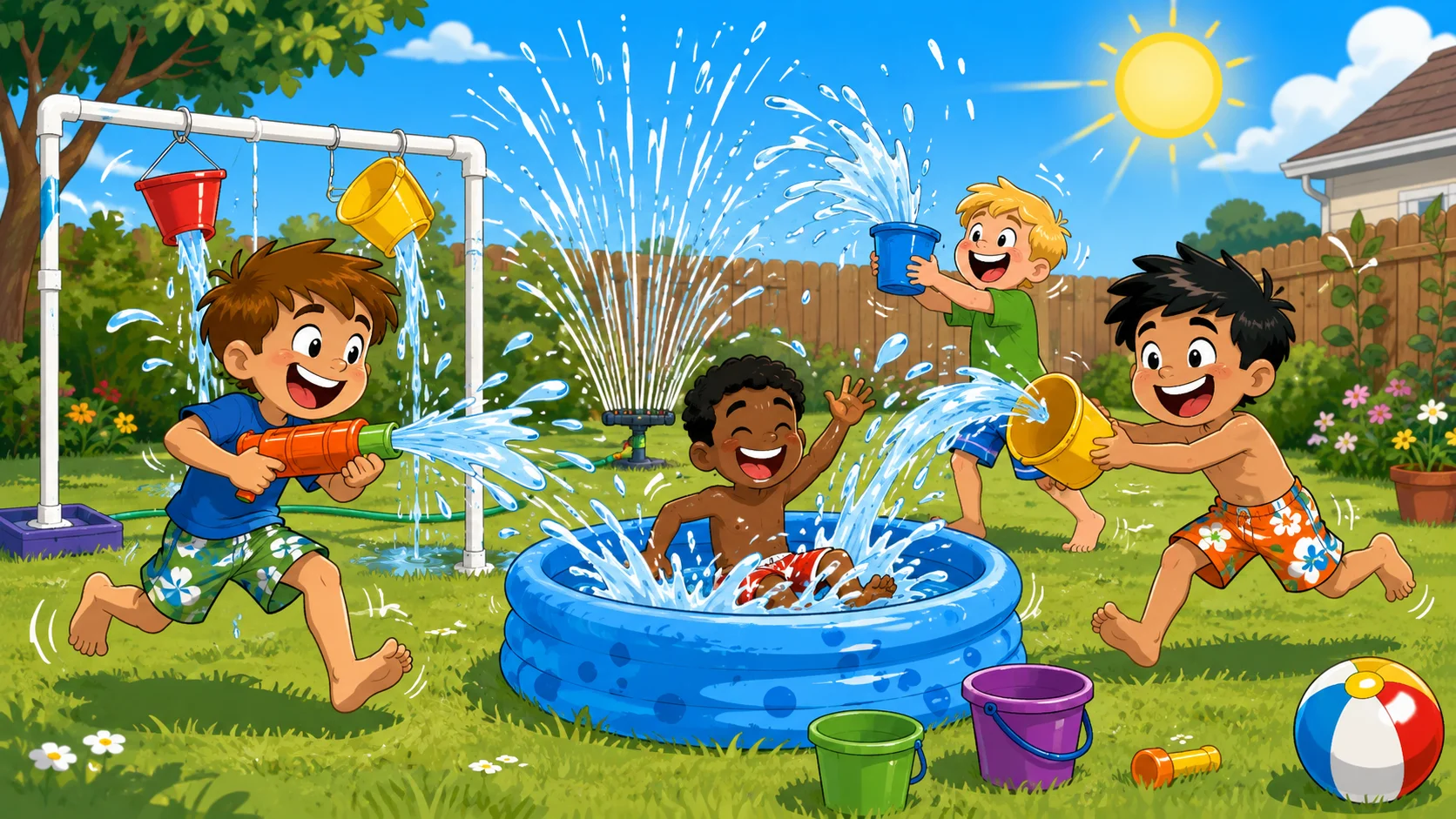
A DIY splash park offers a budget-friendly alternative to commercial water parks on very hot summer days. Creating custom cooling zones in the garden keeps children entertained while helping them stay cool.
| DIY Station Type | Materials Needed | Physical Benefit |
| Sprinkler Tunnel | PVC pipe, garden hose attachment | Agility, cooling down, agility |
| Sponge Toss Zone | Large buckets, car sponges | Arm strength |
| Spray Bottle Target | Spray bottles, plastic cups | Fine motor control, finger strength |
Splash Station Ideas
- The PVC Sprinkler Tunnel: Ask an adult to make small holes along a three-metre length of flexible PVC pipe, loop it over the grass, and connect it to a garden hose.
- Sponge Toss Wall: Stack plastic cups on an outdoor table and let children knock them down with soaked car sponges from four metres away.
- Trigger Spray Slalom: Fill heavy-duty spray bottles with water and have the children move lightweight table-tennis balls down a sloped plastic track.
Hot Day Routine
On very hot days, use a simple rotation: 30 minutes of water play followed by 15 minutes in the shade. Keep insulated water flasks nearby so the whole family stays hydrated. Avoid the hottest part of the day when heat or UV levels are high.
11. Cereal Box Crafts
Cardboard box projects using household recycling can build spatial reasoning, fine motor skills, and basic design thinking. School-aged boys often enjoy projects that turn simple packaging into functional toys.
| Craft Type | Required Components | Cognitive Development Focus |
| Multi-Tier Marble Run | Four cereal boxes, cardboard tubes | Gravity, structure, logical design |
| Robot Helmet | Two large boxes, foil, bottle caps | 3D scaling, creative design |
| Toy Garage Complex | Flat box base, split-level ramps | Scale matching, architectural planning |
Build Vehicles and Robots
- Cardboard Rocket Cruisers: Use cereal boxes as the main body and kitchen roll tubes as rocket boosters.
- Articulated Robot Armour: Cut boxes into flat panels and overlap them with paper fasteners to build movable arm or leg guards.
- Dual-Lane Marble Runs: Cut internal tracks inside a vertical box to experiment with speed, gravity, and different drops.
Craft Challenge Rules
To keep children in this age group engaged, introduce a simple engineering challenge with clear constraints. Set a timer for 25 minutes and provide a limited inventory of materials, such as two boxes, one roll of masking tape, and three bottle caps. Challenge them to build the tallest stable tower or a bridge that can support a heavy toy car.
12. Explore a New Local Park
Visiting unfamiliar local parks introduces new sensory environments and physical layouts, helping children build spatial adaptability and community awareness.
| Park Feature Target | Tracking Metric | Developmental Assessment |
| Climbing Structure | Height, entry points, challenge level | Builds upper-body confidence |
| Open Green Space | Space for football, running, or games | Supports aerobic activity |
| Native Wildlife Zone | Birds, pond insects, plants | Supports scientific observation |
Park Rating Game
Turn park exploration into a fun review activity by giving your children a clipboard and a simple rating system. Ask them to score new playgrounds from 1 to 5 based on slide speed, climbing frame difficulty, open green space, and wildlife visibility. This develops critical thinking and gives children ownership over future family outings.
New Park Checklist
- Check for working public toilets within 100 metres of the main play area.
- Check whether there are shaded spaces, such as trees, shelters, or picnic areas.
- Check whether there is somewhere to refill water bottles.
- Look for safe parking or walking access away from busy roads.
13. Build a Time Capsule
Creating a time capsule combines reflective writing, memories, and future planning in a memorable family activity. This exercise helps boys think about current milestones and imagine what life may look like in the future.
| Capsule Medium | Ideal Storage Location | Suggested Retrieval Date |
| Watertight Plastic Box | Dry indoor storage cupboard | Five-year milestone |
| Stainless Steel Tube | Indoor attic shelving | End-of-secondary-school milestone |
| Glass Mason Jar | Sealed dark storage chest | Three-year check-in |
Capsule Item Ideas
- A tracing of the child’s hand showing current growth.
- A written list of their favourite things, such as foods, sports, current songs, and closest friends.
- A trading card or small toy that represents their current interests.
- A short diary entry where the child predicts what they might be doing in the future or what technology might look like.
Opening Date Plan
Choose a meaningful future milestone for the opening date, such as the child’s 13th birthday or their transition to secondary school. Wrap the container securely with heavy-duty packing tape and label it with clear permanent marker instructions. Store it in a high, dry place, such as an attic or cupboard shelf, to prevent moisture damage or early opening.
14. Set Up a Mini Car Wash
A mini car wash combines real responsibility, sensory water play, and fine motor practice. Scaling down real-world maintenance tasks gives 7- to 9-year-olds a chance to take on meaningful responsibilities.
| Wash Lane Setup | Tools Required | Physical Target |
| Toy Fleet Lane | Plastic tubs, washing-up liquid, toothbrushes | Fine-finger dexterity, detail focus |
| Scooter Wash Bay | Large car sponges, microfibre towels | Upper-body movement, core control |
| Bicycle Detail Bay | Degreaser wipes, soft brushes, tyre pump | Mechanical awareness, safety checks |
Toy Car Wash Station
Set up three plastic basins on an outdoor bench to create a simple washing line. Use Station 1 for the soapy wash, Station 2 for rinsing, and Station 3 for towel drying. Provide old toothbrushes so children can clean tight crevices, wheel wells, and toy gears. You can also include handmade paper tickets so they can practise basic transactions as they check in their toy fleets.
Bike and Scooter Clean-Up
Move from toys to real-world gear by washing bikes, skateboards, or scooters. Guide your child through wiping down frame rails, cleaning brake components, and checking tyre treads for debris. Use this time to teach basic mechanical safety checks, such as checking tyre pressure and handlebar alignment, before a short ride around the neighbourhood.
15. Cook Together
Kitchen work offers practical applications for maths, chemistry, and reading comprehension. Following recipes step by step builds planning and sequencing skills, while working with different textures can support sensory confidence.
| Recipe Project | Core Mathematical Concept | Fine Motor Skill Focus |
| Custom Pizza Dough | Liquid measurement, ratios | Dough kneading, palm pressure |
| Fruit Skewer Geometry | Pattern sequencing, division | Careful piercing, uniform slicing |
| Smoothie Ratios | Measuring liquids, comparing portions, adult safety rules | Pouring accuracy, safe kitchen habits |
Easy Recipes for Boys Ages 7–9
- Hand-Stretched Flatbread Pizzas: Children can measure flour and yeast, then add their own toppings.
- Layered Tortilla Wraps: Focus on layout, folding patterns, and ingredient distribution.
- Fresh Fruit Ice Lollies: Explore liquid volume, freezing, and flavour combinations.
- Build-Your-Own Taco Station: Sort ingredients into different food groups and let children assemble their own plates.
Kitchen Skills
With direct adult supervision, children in this age group can practise essential kitchen skills safely. Use measuring cups and kitchen scales to teach real-world fractions and weight. Show them how to use a stable claw-grip technique with a nylon knife to slice soft vegetables. Make checking instructions and cleaning the workspace part of the cooking process.
16. Go Wildlife Spotting
Wildlife spotting connects biological science with active outdoor recreation. Tracking and identifying local animal species develops patience, quiet focus, and visual observation skills.
| Regional Habitat | Target Species Focus | Field Observation Clue |
| Deciduous Woodland | Woodland birds, grey squirrels | Foraging debris, broken nut shells |
| Freshwater Pond Edge | Damselflies, pond skaters, frogs | Water ripples, egg clusters |
| Suburban Open Park | Pollinating bees, garden butterflies | Flower preferences, flight paths |
Wildlife Spotting List
- Look for three different bird species, noting beak shape and colouring.
- Observe pollination behaviours in insects such as honeybees or butterflies.
- Look for small creatures such as earthworms, centipedes, or beetles in healthy soil.
- Identify animal tracks, scratching marks on bark, or nesting structures in trees.
Mini Explorer Notebook
Give each child a pocket-sized notebook to use as a field journal. Encourage them to sketch their finds, write down locations, and log weather conditions. They can use tally marks to count different species and compare which habitats have the most wildlife.
17. Set Up a Sand Play Zone
Sand play provides a tactile sensory experience that can scale up for older children. For boys aged 7 to 9, sand can become a space for architectural design and physical science experiments.
| Sand Project Model | Required Tools | Scientific Concept Tested |
| Construction Site | Toy excavators, grading tools | Slope stability, load limits |
| Hydro-Dike Network | Water jugs, plastic sheeting | Soil erosion, water diversion |
| Underground Dig | Hidden plastic artefacts, brushes | Layering, archaeological discovery |
Construction Site Play
Move beyond simple sandcastles by adding toy dump trucks, excavators, and graders. Challenge your children to build roadways, tunnels, and bridges that span gaps. This hands-on play lets them test slope stability and load distribution by seeing how much their structures can hold.
Sand Science Ideas
- Moisture Ratios: Add different amounts of water to dry sand to find the best mix for building.
- Erosion Testing: Build a sand mound, pour water over the top, and watch how different flow rates carve paths through the slope.
- Retaining Walls: Use flat stones or lolly sticks to test which materials stop sand walls from collapsing.
18. Try a Nature Art Session
A nature art session combines gathering natural materials with fine motor creativity. This activity encourages children to observe shapes, colours, textures, and patterns in the world around them.
| Art Project Format | Primary Natural Medium | Artistic Composition Focus |
| Mandala Mosaics | Multi-coloured petals, uniform stones | Radial symmetry, geometric spacing |
| Textured Rubbings | Coarse tree bark, veined leaves | Texture transfer, pattern replication |
| Sculptural Frames | Straight twigs, dried vines | Joining, border definition |
Leaf and Stone Art
Take a walk to gather materials such as fallen leaves, smooth stones from your own garden, seed pods, and pine needles. Back home, arrange these pieces into mosaics that resemble animals, geometric shapes, or abstract patterns. Painting smooth stones can be a fun way to create garden markers or story stones, but avoid leaving painted stones in wild areas.
Outdoor Gallery
Set up a temporary art gallery along your garden fence or patio. Presenting their creations on flat surfaces gives children a sense of pride and accomplishment. Take photographs of their temporary artwork to create a digital summer portfolio before returning the materials to nature.
19. Play Tourist in Your Local Area
Exploring your hometown in a new way builds community connection and map-reading skills. It encourages children to notice local history, architecture, and civic spaces.
| Local Destination Target | Primary Investigation Focus | Educational Discovery Objective |
| Historical Monument | Inscription dates, materials used | Understanding local civic history |
| Regional Museum | Artefact displays, historical tools | Comparing how people lived in the past and how they live today |
| Local River or Canal | Bridge designs, boats, towpaths, local transport links | Learning about transport infrastructure |
Local Landmark Hunt
Map out a route that includes historic town squares, old bridges, outdoor art, or interesting architecture. Treat the walk as a historical mystery tour, encouraging children to look for dates on old buildings and plaques. This helps them understand the timeline of their local community.
Photo Mission List
- Capture a close-up photograph of the largest historic doorway on the street.
- Photograph a structure that uses triangular support shapes.
- Take a creative family photo reflected in a shop window, puddle, or public sculpture.
- Take a picture of a local street sign named after a historical figure or geographic landmark.
20. Cycle or Scoot to Lunch
Combining physical travel with a destination meal turns a simple lunch into a high-reward journey. It rewards physical effort while reinforcing real-world route-planning skills.
| Route Variable | Risk Mitigation Plan | Gear Packing Protocol |
| Traffic Exposure | Choose dedicated cycle paths | High-visibility vests, safety flags |
| Mechanical Failure | Perform pre-ride inspections | Multi-tool, compact tyre pump, puncture repair kit |
| Physical Fatigue | Schedule rest breaks every 20 minutes | Insulated water bottles, energy snacks |
Picnic Route Plan
Map out a route using designated cycle paths or quiet neighbourhood streets, minimising contact with busy roads. Pick a clear destination with open grass or picnic tables, and make sure there are shaded rest stops along the way. Always have a backup plan, such as a shorter alternative path, in case energy levels dip on the return journey.
Packing List
- Certified multi-sport safety helmets for every rider.
- Heavy-duty combination cable locks to secure bikes during lunch.
- Insulated water bottles filled with cold water.
- Compact first-aid kit with antiseptic wipes and assorted plasters.
- High-protection sunscreen and travel packs of wet wipes.
21. Turn a Trampoline Into a Reading Nook
Transforming a trampoline into a cosy reading nook is a brilliant way to balance physical play with quiet time. This simple change turns a high-energy zone into an inviting space for reading and recovery.
| Nook Setup Element | Material Setup | Comfort Strategy |
| Soft Foundation Base | Heavy quilts, indoor cushions | Protects against mesh seams |
| Overhead Shade Canopy | UV-blocking tarps, light sheets | Reduces glare on book pages |
| Literary Selection Cache | Plastic storage box with a lid | Protects reading materials from moisture |
Reading Nook Setup
Layer the trampoline surface with thick quilts and oversized floor pillows to create a soft base. Drape a light bedsheet or UV-resistant canopy over the safety netting to block direct sunlight and glare. Keep a plastic storage box nearby stocked with high-interest graphic novels, adventure books, and refreshing drinks.
Bounce and Read Routine
To balance physical energy and focus, use a simple 10-and-10 system. Allow 10 minutes of active jumping followed by 10 minutes of quiet reading. This predictable pattern can help children move from active play into quieter reading time.
22. Create a Fairy Garden or Mini World
Building small-scale fantasy worlds helps children practise spatial scaling, fine details, and imaginative storytelling. Many boys enjoy tailoring these miniature landscapes into dinosaur habitats, space bases, or adventure outposts.
| World Theme | Primary Figure Elements | Raw Landscape Materials |
| Prehistoric Mesozoic Zone | Dinosaur figures, fern sprigs | Coarse gravel, sand, soil, moss patches |
| Lunar Outpost | Toy rovers, foil structures | Grey sand, white quartz pebbles |
| Medieval Castle Ground | Plastic knights, stone fort walls | Flat slate pieces, thick twigs |
Mini World Themes
- Dinosaur Valley: Create volcanic terrain using dark soil, moss patches, and small fern leaves.
- Space Base: Lay down a grey sand foundation dotted with quartz stones to mimic a lunar surface.
- Knight’s Outpost: Build defensive castle walls using flat pieces of slate and small twigs.
- Jungle Camp: Use leafy cuttings and a shallow tray of water to create a jungle scene.
Materials to Use
Look for natural elements around the garden, such as smooth stones, sturdy twigs, moss, bark, and shells. Combine these with recycled household items such as plastic bottle caps, small cardboard tubes, and aluminium foil. This mix allows children to build detailed miniature environments for their favourite toy figures.
23. Go Geocaching
Geocaching turns the real world into an active treasure hunt using GPS coordinates. This outdoor adventure sharpens navigation skills, map reading, and community exploration.
| Container Type | Target Visual Profile | Navigation Strategy |
| Micro-Cache | Magnetic film canisters, bolt caps | Close inspection of metal structures |
| Regular Cache | Clip-lock plastic boxes | Searching hollow logs or tree bases |
| Trail Sign Cache | Laminated labels behind trail signs | Scanning flat vertical surfaces |
Beginner Geocaching Steps
Download a geocaching app and choose a beginner-friendly cache with a low difficulty rating. Follow the map to get within five metres of the location, then look carefully for the hidden container. Bring small toys or trinkets to swap if the cache allows it, and always log your success in the physical logbook inside.
Treasure Hunt Alternative
If you prefer to avoid screens, you can easily map out a custom garden treasure hunt. Draw a simple handmade map of the garden using landmarks such as the big tree, shed, or patio corner. Write clue cards with basic maths or logic puzzles to guide children from one hidden location to the next.
24. Invent Your Own Game
Designing a game from scratch helps build critical thinking, logical reasoning, and cooperation. School-aged boys often enjoy inventing rules, scoring systems, and strategic challenges.
| Game Design Step | Action Required | Development Value |
| Boundary & Rule Definition | Establish clear lines and goals | Spatial awareness, logical constraints |
| Play Testing | Adjust rules that feel unfair | Problem-solving, negotiation |
| Formal Naming | Create a clear title and theme | Language processing, ownership |
Game Design Prompts
Challenge your children to create a new game using three random items, such as a football, two hula hoops, and four marker cones. Ask them to write out the core mechanics: How do players score points? What are the boundaries? How do team power-ups work? Putting these rules on paper helps them think structurally and logically.
Test and Improve
Gather the family to run a live playtest of the new game. If a rule causes confusion or makes scoring too easy, pause the game and discuss how to adjust it fairly. This iterative testing process teaches design thinking, compromise, and collaboration.
25. Chalk Up the Pavement
Pavement chalk is a versatile, low-cost tool that turns a patio, path, or driveway into a space for agility games and creative art projects.
| Chalk Project Type | Setup Mechanics | Motor Skill Target |
| Agility Trail | Draw winding tracks, hop markers | Balance, directional change |
| Giant Board Game | 20-square grid with action squares | Counting, rule following |
| Scale Sports Pitch | Mini-football court with goal boxes | Visual tracking, team coordination |
Chalk Game Ideas
- The Ultimate Agility Trail: Draw long, looping paths with action prompts such as “hop on one foot,” “spin twice,” or “walk backwards.”
- Target Circles: Draw concentric rings on the driveway, assign point values, and toss wet sponges onto the target.
- Driveway Board Game: Build a giant walkable path where each square has a fun instruction, such as “do five jumping jacks.”
Chalk Art Challenges
Encourage children to take on larger art projects, such as drawing a large chalk plan of a rocket ship or mapping a mini city grid for toy cars. They can draw superhero logos or create dinosaur tracks to practise scaling up images. Using chalk on large horizontal surfaces also encourages big arm movements and coordination.
26. Play Restaurant
Playing restaurant combines creative role play with practical maths, polite social skills, and simple organisation. It turns snack time into a structured, fun learning experience.
| Role Assignment | Core Duty | Applied Skill Focus |
| Head Server | Takes orders, writes down menu items | Literacy, active listening |
| Culinary Assistant | Prepares food plating, pours drinks | Fine motor control, portioning |
| Front Desk Cashier | Calculates totals, handles change | Addition, subtraction, money skills |
Menu and Money Play
Ask the children to design physical menus showing real snack options and clear prices. Provide play money or simple paper tokens so family members can place orders and pay for their snacks. This role play naturally builds in maths practice as children add up bills, calculate totals, and count out change.
Real Snack Service
Let the children prepare and plate simple, safe foods such as crackers with cheese slices or fresh fruit bowls. They can practise balance and coordination by serving snacks to family members on small trays. This structured play rewards focus, builds confidence, and reinforces helpful social manners.
27. Go on a Colour Hunt
A structured colour hunt sharpens attention to detail, visual scanning, and classification skills. It encourages children to slow down and observe subtle differences in their everyday surroundings.
| Hunt Environment | Target Colour Profiles | Observation Focus |
| Indoor Living Space | Primary colours and everyday household colours | Categorising everyday objects |
| Outdoor Garden Path | Natural greens, earth tones, petals | Recognising natural shade variety |
| Community Walk | High-vis signs, car colours, front doors, shop signs | Spatial scanning, environmental awareness |
Indoor Colour Hunt
Give children a list of colour targets, challenge them to collect matching household items within 10 minutes, and ask them to sort their finds into a rainbow display on the floor.
Outdoor Colour Hunt
Take the hunt outside to search for natural shades, such as leaf greens, stone greys, and bright flower colours. You can also look for colours on passing cars, trail signs, or neighbours’ front doors. This active scanning keeps children engaged and observant during routine family walks.
28. Make an Obstacle Course
Constructing a garden obstacle course is an excellent way to challenge gross motor skills, motor planning, and physical endurance. School-aged boys often enjoy timed athletic challenges that encourage them to move through space in different ways.
| Course Element | Household Material Used | Physical Movement Profile |
| Balance Beam Line | Straight garden hose or flat plank | Core stability, foot placement |
| Low Crawl Tunnel | Blanket draped over garden chairs | Crawling coordination, upper-body strength |
| Agility Jump Ring | Hula hoops in a zigzag | Jumping strength, foot-eye coordination |
Garden Course Setup
- Place a flat wooden plank or a straight garden hose on the lawn to test balance.
- Set up a low tunnel using blankets draped over garden chairs for crawling.
- Arrange hula hoops or chalk rings for fast-paced jumping drills.
- Use cones or plastic buckets to mark sharp turns.
Timed Challenge Variations
Use a digital timer to track performance and encourage children to improve their personal best. Add variations such as a parent-vs-child challenge or sibling relay races to build teamwork. You can also run the course in reverse or add a balance challenge, such as carrying a tennis ball on a spoon.
29. Try a Park-Based Sport
Introducing new park-based sports builds coordination, fitness, and teamwork. Keeping the focus on low-pressure skill games allows children to build confidence without the stress of intense competition.
| Sport Type | Fundamental Drills | Target Skill Improvement |
| Football | Cone dribbling, accurate passing | Foot-eye coordination, agility |
| Kwik Cricket or Rounders | Soft-ball batting, target catching | Hand-eye tracking, shoulder rotation |
| Flying Disc Golf | Target throwing towards cones or hoops | Throwing control, distance control |
Sport Ideas for Beginners
- Football: Set up basic cone drills to practise ball control and passing accuracy.
- Cricket / Rounders: Use lightweight plastic bats and large foam balls to build batting confidence.
- Flying Disc Golf: Set safe targets such as cones, hoops, or open patches of grass to practise distance throwing.
- Basketball: Focus on simple chest passes and dribbling control on smooth outdoor courts.
Low-Pressure Skill Games
Keep frustration low by replacing traditional scoring with personal skill milestones. Play games such as “consecutive passes,” where players try to beat their highest number of completed throws without dropping the ball. This approach values effort and motor skill development over winning or losing.
30. Have a Themed Dress-Up Day
Themed dress-up days give school-aged boys a creative outlet for storytelling, role play, and emotional expression. Grounding these themes in adventure concepts keeps the day exciting and engaging.
| Adventure Theme | Costume Elements | Complementary Mission Task |
| Polar Ice Explorer | Winter coats, backpacks, goggles | Mapping safe pathways through the garden |
| Deep Space Astronaut | Cardboard helmets, foil gadgets | Setting up a solar system model |
| Secret Field Detective | Lightweight coats or detective props, magnifying glasses | Deciphering codes and footprint trails |
Theme Ideas
- Polar Explorer: On a cool or rainy day, use lightweight explorer props for a simulated Arctic trek indoors or in the garden.
- Deep Space Crew: Build cardboard helmets and foil tools to prepare for a lunar voyage.
- Secret Detective: Wear coats and use magnifying glasses to crack a neighbourhood case.
- Jungle Safari: Pack binoculars and sun hats to map out local wildlife tracks.
Matching Activity Plan
Tie the chosen theme directly to games, crafts, and snacks throughout the day. For example, a Space Day could include homemade rocket crafts, a walking tour of the solar system, and freeze-dried fruit snacks. This structure keeps the theme immersive and engaging for hours.
31. Sign Up for Free Coaching Sessions
Many local communities offer free coaching programmes and holiday clubs during the school holidays. These sessions provide opportunities for structured exercise, social development, and trying new hobbies.
| Programme Resource | Common Offerings Available | Primary Child Benefit |
| Council Leisure Centre | Free swim days, indoor sports | Physical agility, water confidence |
| Regional Sports Club | Intro football, tennis, cricket clinics | Foundational sports techniques, teamwork |
| Local Library / Council | Coding clubs, theatre workshops | Logic, creative communication |
Where to Look
Check local council websites, neighbourhood community centres, and regional sports clubs for summer calendars. Local libraries, councils, schools, and sports clubs may host free holiday workshops or activity sessions funded by community grants. Signing up early helps your child secure a place in popular local programmes.
Good Options for Boys Ages 7–9
Look for introductory sessions in swimming, tag rugby, football, or basic martial arts to build confidence and coordination. If your child prefers indoor activities, look for free coding clubs, introductory drama sessions, or outdoor-skills workshops. These programmes offer useful structure while keeping the summer budget manageable.
32. Try At-Home Science Experiments
At-home science experiments turn your kitchen into a simple learning lab, sparking curiosity and critical thinking. Testing simple reactions hands-on helps children understand prediction, observation, and basic scientific thinking.
| Experiment Model | Kitchen Materials Needed | Scientific Concept Demonstrated |
| Classic Bicarbonate of Soda Volcano | Vinegar, bicarbonate of soda, food colouring | Acid-base reaction, gas expansion |
| Liquid Density Tower | Honey, water, cooking oil | Density differences |
| Solar Shadow Tracker | Paper plate, upright pencil, modelling clay | Earth’s rotation, solar geometry |
Safe Science Ideas
- Bicarbonate of Soda Volcano: Mix vinegar and bicarbonate of soda to observe a classic acid-base reaction.
- Density Column: Layer honey, water, and vegetable oil in a glass to observe density differences.
- Ice Melting Races: Place ice cubes on different surfaces, such as foil, wood, or plastic, to test thermal conductivity.
- Shadow Tracking: Stand a pencil or stick upright in modelling clay on a paper plate, then trace how the shadow moves throughout the day.
Science Challenge Format
Encourage a scientific mindset by asking children to make predictions before starting each test. Have them record observations in a notebook and discuss why the results happened. This structure turns a simple activity into an exercise in logical thinking and observation.
33. Visit a Local Leisure Centre
Local leisure centres are excellent places for active family fun, especially on rainy days or during extreme summer heat.
| Facility Feature | Access Profile | Benefit |
| Municipal Swimming Pool | Public swimming sessions, family sessions | Full-body activity, water safety |
| Indoor Climbing Wall | Instructor-led climbing sessions | Core strength, spatial problem-solving |
| Multi-Sport Courts | Hourly open court bookings | Agility, stamina and agility |
Activity Options
Many modern leisure centres have indoor swimming pools, climbing walls, and multi-sport courts for activities such as basketball or badminton. Many sites run affordable holiday clubs and open sports sessions designed for school-aged children during the long break. These activities keep children moving consistently, regardless of the weather outside.
Budget Tips
- Look for off-peak morning entry times when prices are lower.
- Ask about multi-child family passes or weekly activity bundles.
- Check for council-funded free swimming days or local resident discounts.
- Book court times in advance online to secure the best rates and avoid queues.
34. Visit a Car Boot Sale
Visiting a local car boot sale is an engaging way to build real-world money skills and decision-making. It turns shopping into a budget-conscious treasure hunt.
| Budget Category | Target Items Allowed | Practical Maths Task |
| £3.00 Fixed Cash Wallet | Used books, comics, action figures | Calculating change, valuing items |
| £5.00 Sports Budget | Board games, footballs, sports gear | Comparing value, polite negotiating |
Treasure Hunt Budget
Give each child a small, fixed cash budget, such as £3.00, and challenge them to find one high-value book, toy, or piece of sports gear. This boundary encourages careful browsing and helps them evaluate the value of items before buying. It turns an ordinary outing into a strategic search for hidden treasures.
Money Skills
Guide children through practical financial transactions during the sale. Ask them to compare prices across stalls, calculate change, and speak politely with sellers. These real-world interactions build financial confidence and mental maths skills.
35. Explore a Local Community Centre
Local community centres are great places to find affordable neighbourhood summer activities. They offer structured social environments where children can play and learn alongside local peers.
| Programme Type | Typical Activities Included | Social-Developmental Focus |
| Craft Mornings | Pottery, painting, group murals | Fine motor skills, shared projects |
| Board Game Afternoons | Strategy games, chess | Logical thinking, turn-taking |
| Children’s Workshops | First-aid basics, outdoor skills | Independence, practical safety awareness |
Summer Programme Options
Check local bulletin boards or community social pages for craft mornings, board game sessions, and children’s workshops. These programmes provide an affordable way to vary your summer routine with enriching indoor activities. They add useful variety and help children keep learning and socialising throughout the break.
Parent Planning Tips
- Verify age brackets to ensure the programme suits your child.
- Check whether advance registration is required or whether you can drop in.
- Confirm whether sessions require parental supervision or offer drop-off options.
- Keep a digital calendar updated with local session times to map out balanced weekly schedules.
36. Create a Fun Things Jar
A “Fun Things Jar” is a practical way to reduce morning indecision and manage mid-summer boredom. It gives children a voice in planning their days and keeps routine friction low.
| Colour-Coded Category | Activity Sample | Ideal Weather / Setting |
| Green Strips | Garden obstacle course, water play | Clear skies, outdoor space |
| Blue Strips | Cardboard crafts, baking science | Rainy days, indoor settings |
| Yellow Strips | Library visit, local park walk | Moderate weather, community outings |
Jar Activity Categories
Use a clear jar filled with colour-coded paper strips divided into different activity types. Green strips can represent high-energy outdoor sports, blue can stand for quiet indoor crafts, and yellow can signal community outings. This simple system helps maintain a balanced mix of activities throughout the summer.
How to Use the Jar
When children run out of ideas, have them draw one slip from the jar and agree to follow that activity. Let them regularly contribute new ideas to build ownership and excitement. This simple tool turns daily planning into a fun, unpredictable family game.
37. Build an Indoor Den or Secret Base
Building an indoor den is a classic activity for rainy days or quiet afternoons. Creating a cosy enclosed space gives children a sense of privacy, comfort, and independence.
| Anchor Base | Securing Materials | Interior Comfort Items |
| Sturdy dining table frame | Large bag clips, heavy books | Floor pillows, fleece blankets |
| High sofa arms | Blanket clips, cushions, heavy books | Battery lanterns, comic books |
Secret Base Setup
Use a heavy dining table or high sofa arms to create a stable frame. Drape dark bedsheets or blankets over the top, securing the edges with heavy books or spring clips. Line the floor with soft pillows, and hand out battery-powered lanterns or flashlights to light up the secret fort.
Mission-Based Play
Encourage children to treat the fort as a spy base or exploration outpost. Give them clipboards, code-breaking puzzles, or graphic novels to focus their attention indoors. This quiet enclosed space can help children wind down after high-energy outdoor activities.
38. Catch a Film on the Big Screen
A trip to the cinema is a classic, relaxing option for extreme summer heat or rainy holiday afternoons.
| Cinema Programme Option | Cost Profile | Ideal Audience Timing |
| Morning Kids’ Club | Discounted single tickets | Early morning, lower crowd levels |
| Independent Cinema Days | Affordable family tickets | Mid-week matinees |
Budget Cinema Ideas
Take advantage of discounted morning kids’ screenings hosted by major cinema chains during the school holidays. Local independent cinemas and community centres may also offer affordable family tickets for matinee screenings of classic children’s films. These options let you enjoy a big-screen experience without breaking the bank.
Film Day Add-Ons
Keep the creative momentum going after the credits roll by turning the film into a learning activity. Ask children to sketch their favourite scene, write a short review, or act out the funniest moments for the family. This extension turns passive screen time into an active exercise in storytelling and expression.
39. Leaf, Crayon, and Chalk Rubbings
Crayon and chalk rubbings are low-cost outdoor crafts that combine sensory exploration with fine motor control. This simple activity helps children explore different textures and patterns found in nature.
| Material Surface Source | Textural Surface Profile | Recommended Medium |
| Oak or Pine Tree Bark | Deep ridges, coarse grain | Heavy-duty beeswax crayons |
| Fallen Oak or Maple Leaves | Raised veins, clear leaf outlines | Soft artist pastels or pavement chalk |
| Weathered Garden Fence | Linear wood grain, rough grooves | Broad-edge graphite sticks |
Texture Hunt
Take a slow walk through the garden or a local park to find interesting textures such as ridged tree bark, veined leaves, flat stones, or wooden fences. Press a sheet of paper firmly against the surface and use the flat side of a crayon or chalk to rub over it, capturing the pattern underneath.
Nature Poster
Gather the texture rubbings and help children organise them into a labelled nature poster or summer journal. Ask them to research and write down the names of the trees and plants they discovered. This turns an art activity into a simple lesson in botany and classification.
40. Build a Shelter
Building outdoor shelters gives children a chance to practise hands-on engineering, problem-solving, and teamwork. Working together on a stable fort can build confidence and spatial awareness.
| Shelter Challenge | Target Goal | Key Design Concept Tested |
| High-Sun Shade Pavilion | Blocks direct overhead sunlight | Angle of light, airflow |
| Wind-Resistant Outpost | Stands firm in a light breeze | Anchoring, bracing |
| Small Rain Shelter | Keeps light rain off the inside area | Overlapping layers, water runoff |
Shelter Challenge
Challenge children to build a functional shelter using simple household materials such as tarpaulins, sturdy sticks, garden furniture, and secure ties. Set a clear goal: build a shade canopy that blocks the midday sun, or a windbreak that stands steady on a breezy day. This structural challenge encourages creative thinking and introduces basic principles of physics and architecture.
Teamwork Skills
Assign clear roles so every child feels involved during construction. One child can be the planner, another the materials gatherer, and another the decorator. Working through design challenges together teaches children how to communicate clearly, solve problems as a team, and celebrate shared success.
Summer Planning Tips for Parents
Plan Around Weather
Keep three activity lists ready so you can adapt smoothly to changing weather: high-energy outdoor activities for clear days, cooling water play for hot afternoons, and engaging indoor projects for rainy days. Having these options planned ahead of time makes it easier to adjust without losing momentum.
Keep Supplies Ready
Gather core summer supplies into one accessible storage bin. Keep it stocked with pavement chalk, assorted balls, bubble mixture, sturdy tape, sunscreen, and refillable water bottles. Having your gear organised and ready makes it easier to head out quickly.
Mix Free and Paid Activities
Balance your summer budget by alternating low-cost home activities with occasional paid outings or holiday clubs. Pairing a simple park picnic with a trip to a local pool or science museum keeps the break exciting while managing costs. This balance helps create an enriching, fun summer break for the whole family.
Frequently Asked Questions
What Are the Best Summer Activities for Kids Ages 7–9?
The best summer activities for kids aged 7 to 9 usually combine movement, creativity, and a little independence. Garden obstacle courses, geocaching, pavement chalk games, simple science experiments, and den building all work well because they keep kids moving while giving them space to solve problems and get creative.
Which Summer Holiday Activities for Kids Are Easy to Set Up?
Easy summer ideas include garden water play, a nature walk, cardboard crafts, indoor dens, and a Fun Things Jar. These simple summer activities use items many families already have at home, making them practical choices when you need to keep the kids entertained without planning a full day out.
How Can I Keep Kids Entertained During a Long Summer Break?
A flexible weekly rhythm is one of the easiest ways to keep kids entertained during the school holidays. Mix outdoor fun, quiet reading, summer craft projects, local outings, and family-friendly games so children do not get bored with the same routine. A prepared list of summer activities also makes it easier to choose something quickly when plans change.

Take a short quiz to find out what your everyday choices say about your parenting style
When your child is curious about something new, what’s your instinct?
Take a short quiz to find out what your everyday choices say about your parenting style
“Can I download this app?” What happens next?
Take a short quiz to find out what your everyday choices say about your parenting style
When it comes to rules at home, which sounds most like you?
Take a short quiz to find out what your everyday choices say about your parenting style
If you could give your child one life skill today, what would you pick?
Take a short quiz to find out what your everyday choices say about your parenting style
Your child gets to choose what to watch. What would your ideal setup look like?
Take a short quiz to find out what your everyday choices say about your parenting style
Pick your parenting superpower ✨



