60+ Fun Things to Do with Kids at Home

 Discover a Free Education Video App for Kids
Pastory uses AI to personalize educational video content based on your child’s interests and personality. Safe, engaging, and built for curious young minds. Sign up now to stay updated and enjoy early access with a free trial
Finding ways to keep kids entertained when you are stuck indoors can be a daunting challenge for parents. Whether it’s a rainy day, a school break, or a stretch of working from home, having a curated list of indoor, screen-free, and low-screen activities can help maintain a peaceful and productive household.
These activity ideas are designed to be low-cost, easy to set up, and engaging for children ages 4 to 14, with simple adaptations for toddlers and younger children.
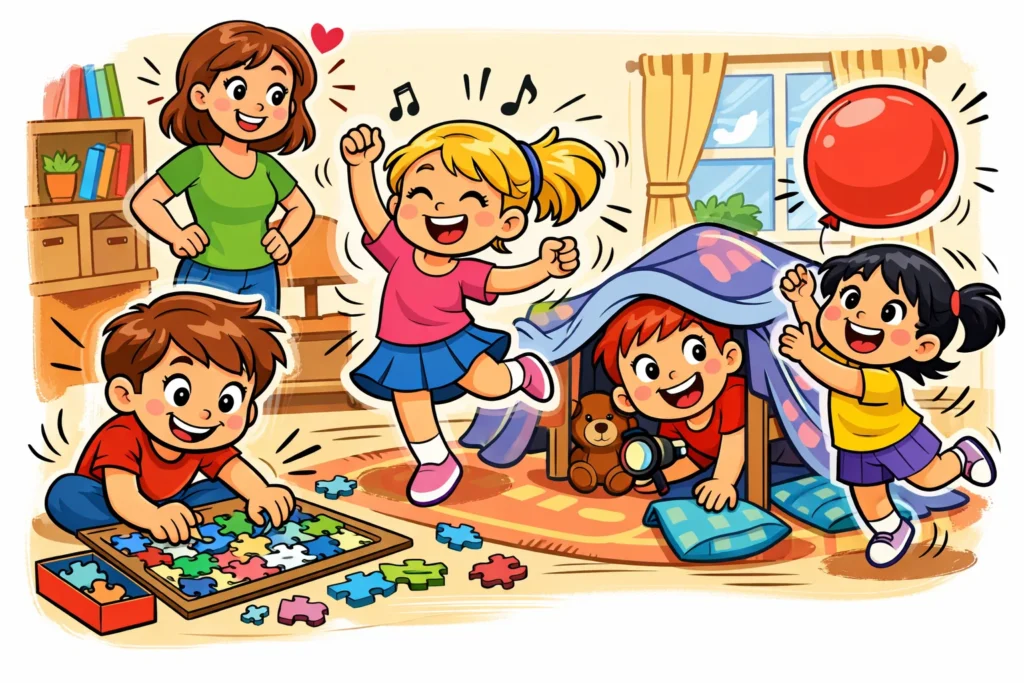
From high-energy indoor play, such as obstacle courses, to quiet arts-and-crafts projects, these activities use common household items, including cardboard boxes, cushions, and laundry baskets. By providing a mix of imaginative play, science experiments, and family activities, you can help your children build new skills while encouraging creativity, problem-solving, and confidence.
Key Takeaways
- Versatility: Most activities use recycled materials or basic household items.
- Developmental Focus: Activities support motor skills, creativity, and cognitive development.
- Screen-Free Balance: Many ideas prioritize physical movement and hands-on engagement.
- Age Adaptability: Simple tweaks allow toddlers and older kids to participate together.
Best Ideas at a Glance
- Active Games: Indoor obstacle courses and balloon ball for energy release.
- Creative Projects: Art projects, comic book making, and stop-motion animation.
- Life Skills: Interactive cooking, laundry sorting races, and plant care.
- Toddler Essentials: Sensory play bins and cardboard box transformations.
Activity Mix for Every Mood
A successful day at home with the family often requires a balance of energy levels. This guide categorizes fun activities into calm, creative, active, and educational options to match a child’s age and current mood.
When energy is high, an indoor play circuit works well. If the mood is quieter, a scavenger hunt or jigsaw puzzle can provide the focus children need.
Quick Setup Tips
You do not need expensive craft kits to have fun. Most activities to try rely on:
- Physical Props: Cushions, blankets, hula hoops, and laundry baskets.
- Art Supplies: Craft sticks, pipe cleaners, and plastic bottles.
- Kitchen Staples: Dish soap, flour, and food coloring for a lava lamp or baking.
Quick Navigation
Active Kids
For high-energy children at home, focus on indoor sports, dancing, and structured obstacle courses. These activities help prevent cabin fever by providing a designated outlet for physical activity.
Creative Kids
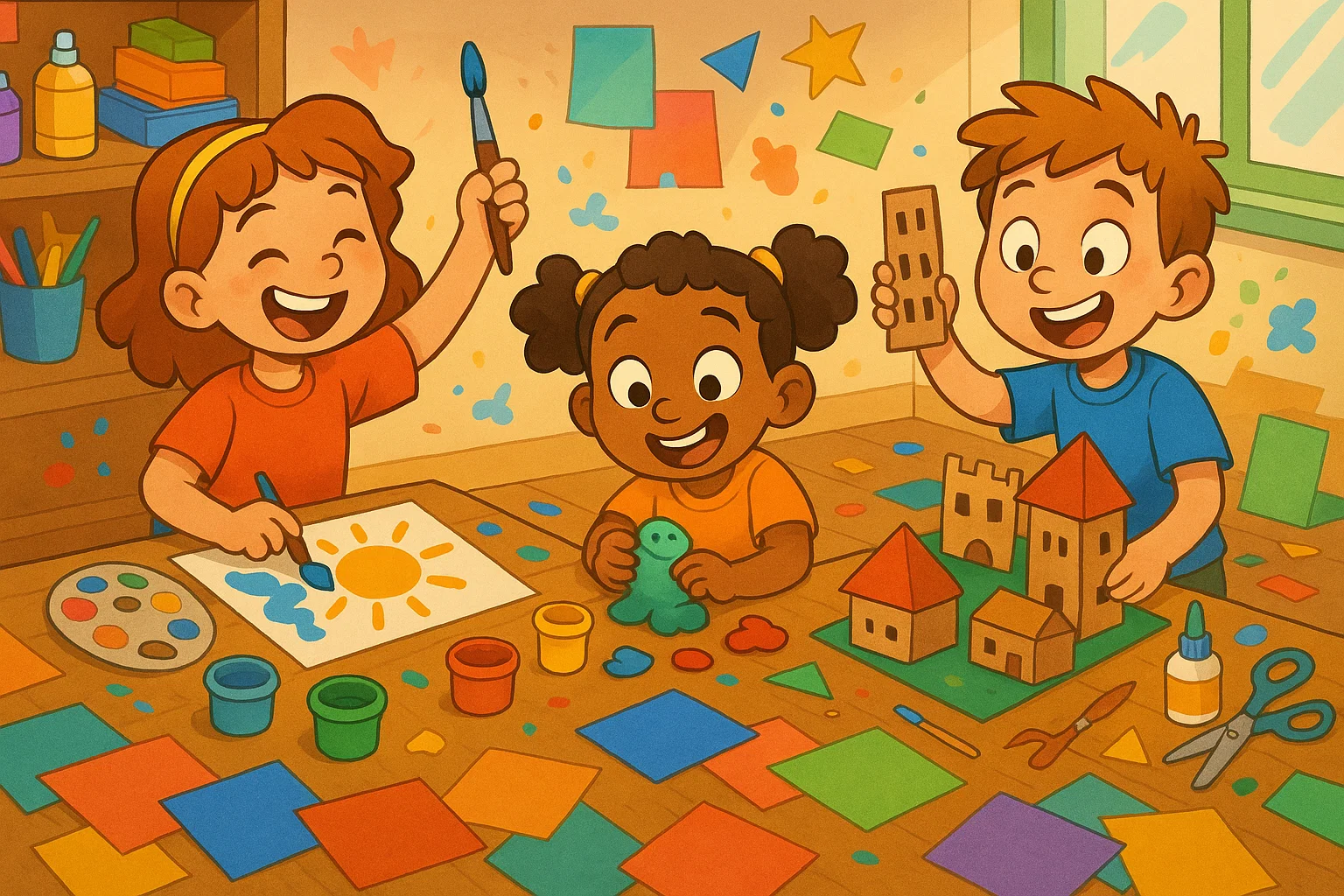
Get creative with arts and crafts, filmmaking, and music. These art projects allow kids to express themselves and develop fine motor skills through coloring pages and DIY projects.
Calm Kids
Lower-energy options include storytelling, audiobooks, and building cozy forts. These screen-free or low-screen choices are ideal for winding down before bed or during quiet time while parents are working from home.
Toddlers
Younger kids and little ones benefit from sensory play and simple sorting games. These toddler activities are designed with safety, tactile materials, and short attention spans in mind.
Seasonal Ideas
Find seasonal inspiration for school breaks, rainy days, and holidays to keep the at-home experience fresh throughout the year.
A Few Reminders Before Starting
Match the Activity to the Age
Developmental stages affect how a child interacts with an activity. Children ages 4 to 14 have very different cognitive abilities, and toddlers need even simpler adaptations.
While a toddler may enjoy the tactile feel of dish-soap bubbles, an older child can explore the science of surface tension behind them. Always adapt activities by increasing the complexity of the instructions for older siblings.
Keep Safety Simple
Prioritize a safe environment by clearing floors of tripping hazards before starting an obstacle course. For younger children, closely supervise play with small objects, such as pipe cleaners or craft sticks, and avoid anything that could pose a choking hazard.
Ensure all indoor activities involving movement take place away from sharp furniture corners and breakable items.
Rotate Activities
To keep children engaged, use a station-style approach. A healthy day at home should balance sedentary play with physical activity.
Try switching from a high-energy tag game to a calm coloring session every 30 to 45 minutes, or whenever children seem overstimulated or bored.
Let Kids Help Choose
Autonomy increases engagement. Providing two or three activity ideas allows children to feel more in control of their day. This simple choice structure can reduce resistance and help them stay focused on the activity for longer.
Physical Activities for Kids
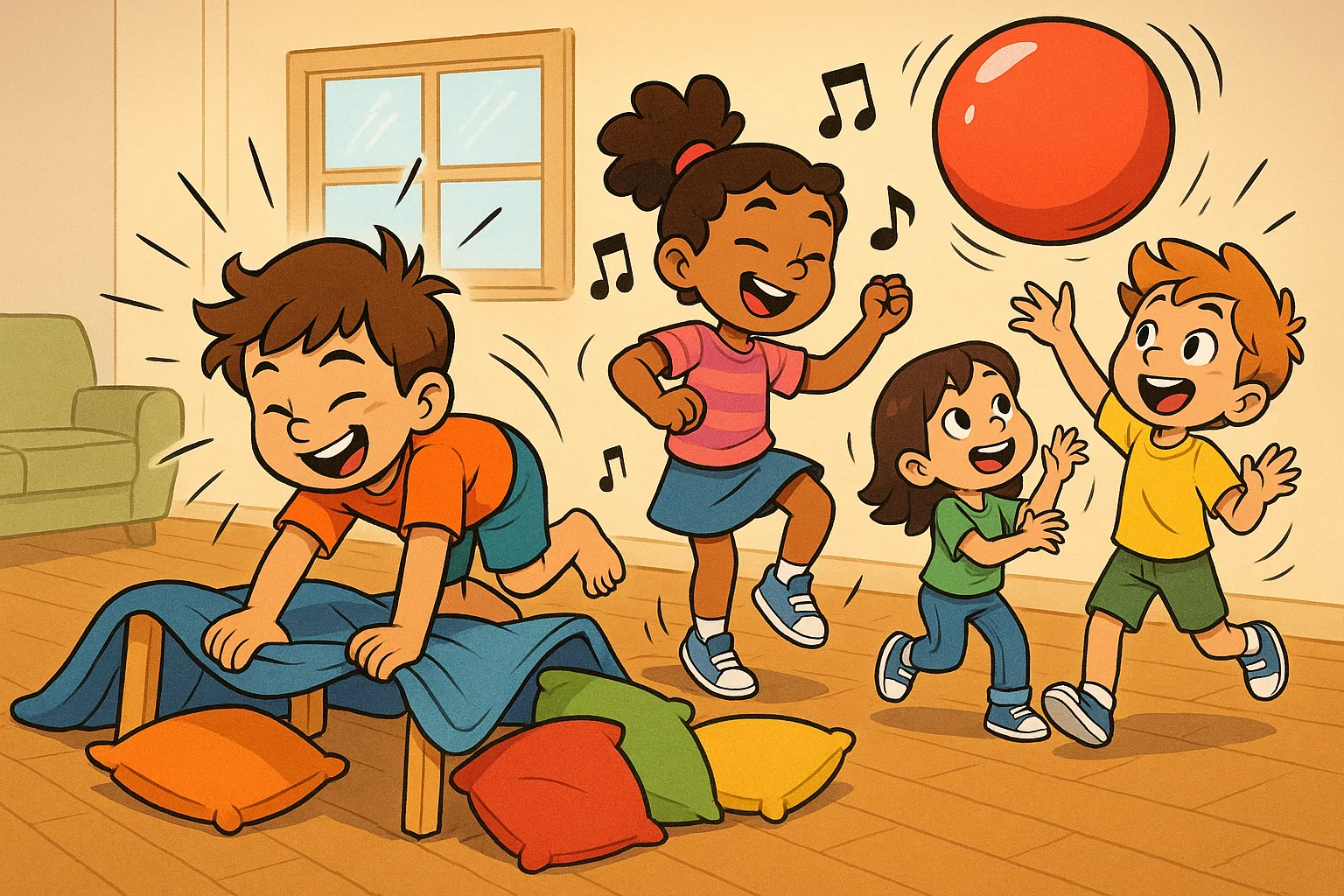
At-Home Workout for Kids
A structured at-home workout can provide 15 to 20 minutes of moderate-to-vigorous physical activity. Incorporate jumping jacks, bear crawls, and star jumps into a timed circuit.
Benefit: At-home workouts support cardiovascular health, movement, mood, and focus.
Example: Perform each exercise for 30 seconds, followed by 15 seconds of rest.
Active Videos to Follow Along With
Digital platforms offer dance-alongs and kids’ yoga videos for different age groups.
Benefit: Yoga and movement videos can help children stretch, move mindfully, and calm down.
Tip: Join the kids for the first 10 minutes to model participation and boost motivation.
Balloon Ball
Balloon ball is a safer indoor alternative to traditional sports. It minimizes the risk of breaking household items while developing hand-eye coordination.
Benefit: Balloon volleyball supports gross motor skill development with a lower risk of property damage.
Obstacle Courses
Transform your living room into an obstacle course using cushions, laundry baskets, and cardboard boxes.
- Crawl under a row of chairs.
- Jump over a line of cushions.
- Balance on a tape line on the floor.
- Toss a soft ball into a laundry basket.
Trampolining
If you have a backyard trampoline, it can provide an outlet for energy, but it should be used with caution and close supervision.
Benefit: Trampolining can help children practice balance and coordination.
Safety Rule: Only one child should jump at a time to help prevent collisions. Avoid flips and risky tricks, and always follow the manufacturer’s safety guidance.
Dancing
Host a family dance-off or play “Freeze Dance” to improve cardiovascular health, rhythm, and mood.
Benefit: Dancing supports coordination, movement, and self-expression.
Animal Impressions
Encourage younger kids to move like animals. This builds core strength and imaginative thinking.
- Crab walk: Move sideways on hands and feet.
- Frog hop: Do deep squats with small jumps.
- Snake slither: Crawl along the floor on your tummy.
Tag
Adapt tag for indoor spaces by using “Slow-Motion Tag” or “Sock Tag,” where players try to gently grab a sock tucked into a waistband. This reduces the speed of play while maintaining the competitive fun.
Jump Rope
Jump rope is a high-intensity outdoor activity that can be moved to a garage or large hallway if there is enough safe, open space.
Benefit: Jump rope supports coordination, stamina, and balance.
Tennis with a Soft Ball
Use paper plates as rackets and a balloon or foam ball as the “tennis ball.” This setup allows for indoor play without the risk of damaging walls or windows.
Frisbee with a Soft Disc
Soft fabric discs or even flexible plastic lids can be used for target practice. Aim at laundry-basket goals to turn a simple throw into a skill-based game.
Higher-Energy At-Home Activities
| Activity | Benefit | Equipment Needed |
| Hallway Bowling | Coordination | Water bottles and a tennis ball |
| Pillow Jumps | Power | Bed pillows |
| Sock Basketball | Accuracy | Rolled-up socks and a basket |
| Relay Races | Speed | Open hallway |
Indoor Activities for Kids
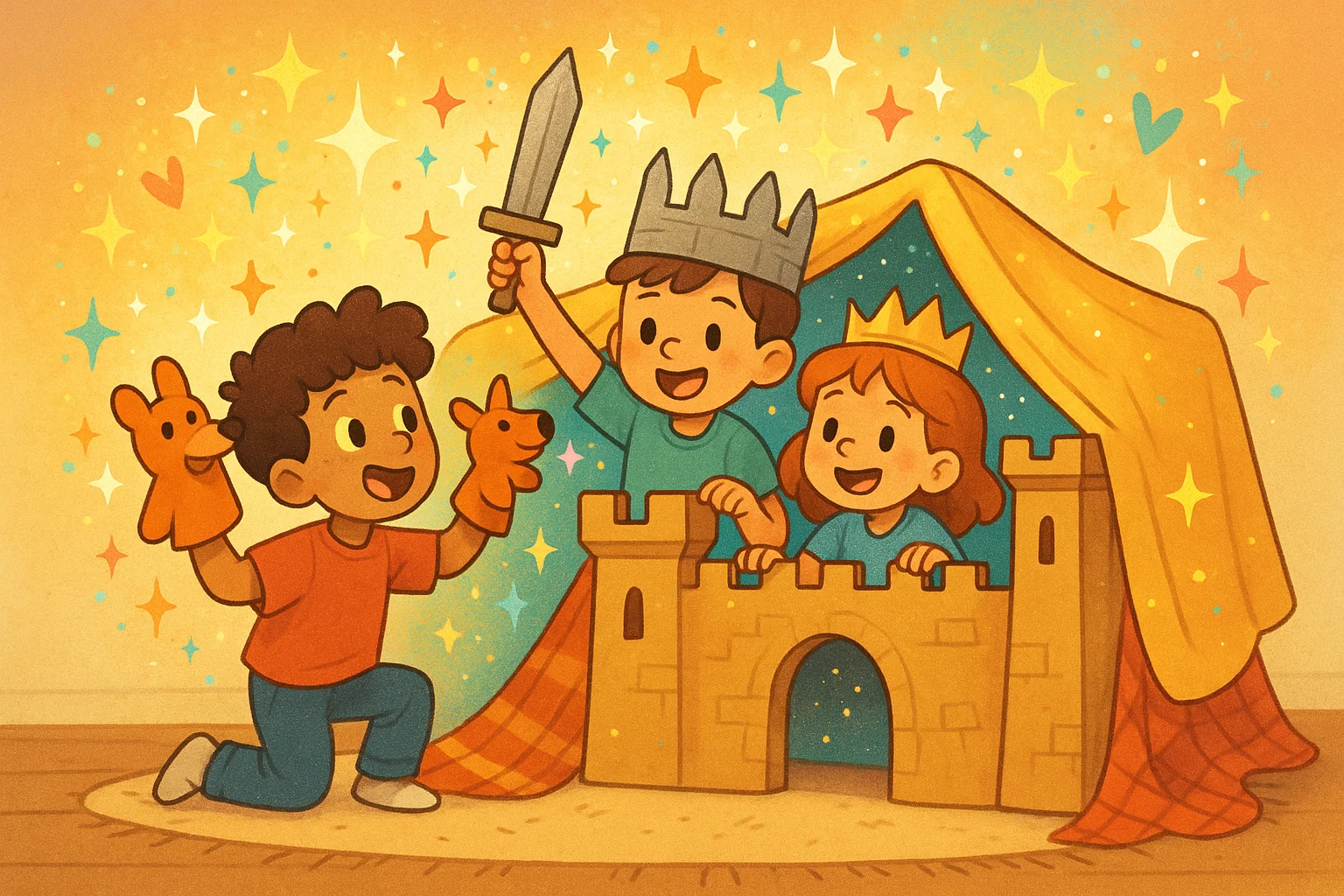
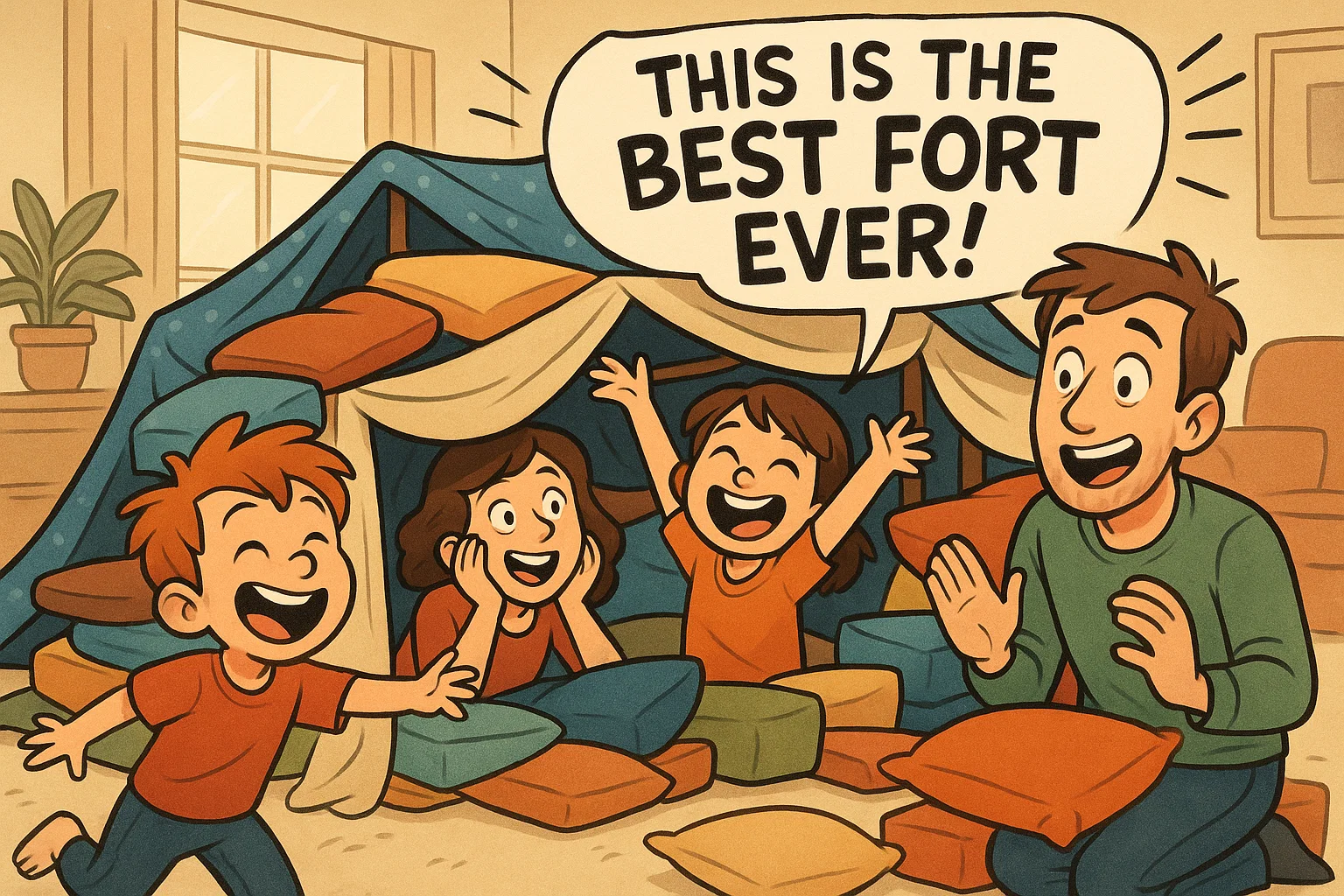
Make a Secret Fort
Building a secret fort using blankets and cardboard boxes encourages imaginative play. It creates a cozy space where children can retreat for quiet reading or role-play.
Benefit: Blanket forts support spatial awareness, creativity, and a sense of comfort.
Jigsaw Puzzles
Jigsaw puzzles are excellent for cognitive development, patience, and focus.
Benefit: Puzzles support problem-solving practice and short-term memory.
Tip: Choose a 50-piece puzzle for younger kids and a 500-piece puzzle or larger for older kids.
Board Games
Classic board games teach turn-taking and strategic thinking.
Benefit: Board games support social-emotional learning and logical reasoning skills.
Tip: For kids who struggle with losing, try cooperative games where the family works toward a common goal.
Treasure Hunt
A scavenger hunt can be adapted for almost any child’s age.
- Color Hunt: Find five red items.
- Alphabet Hunt: Find items starting with letters A through Z.
- Clue Hunt: Solve riddles to find a hidden “treasure.”
Podcasts and Audiobooks
When parents are working from home, audiobooks provide an immersive experience that does not require a screen.
Benefit: Audiobooks support vocabulary expansion and listening comprehension.
Storytelling
Use story dice or simple prompts to start a family story circle. This builds narrative skills and emotional intelligence.
Benefit: Storytelling supports verbal fluency, creativity, and empathy.
Lower-Energy At-Home Activities
Calm activities can help children slow down and reset.
- Sticker books
- Sorting toys by size or color
- Mindfulness games, such as “I Spy” with breathing
Sensory-Friendly Games
For children with sensory or communication needs, use visual cards to explain the activity ideas. Sensory play bins with predictable textures can help reduce anxiety and provide a soothing experience.
Creative Activities
Arts and Crafts
Arts-and-crafts sessions help children express ideas and emotions. Use toilet paper rolls, pipe cleaners, and craft sticks to create recycled masterpieces.
Benefit: Art projects support self-expression and fine motor control.
Create Your Own Comic Book
Drawing a comic book allows older kids to practice literacy and sequencing.
Benefit: Comic creation supports narrative sequencing and visual literacy.
Bubble Geometry Experiment
This science experiment involves mixing dish soap and water to create bubbles. Use pipe cleaners to make square or triangular wands.
Benefit: Bubble science helps children visualize geometry and observe surface tension.
Write a Song
Writing lyrics about a family movie or a pet helps children understand rhythm and rhyme.
Benefit: Songwriting supports phonological awareness and auditory processing skills.
Write and Perform Your Own Rap
Rapping builds confidence and helps with wordplay. It is a great activity for energetic kids who love music and language.
Easy Stop-Motion Animation
Using a tablet and a few toys, kids can create a short film.
- Set the scene with cardboard boxes.
- Move the object slightly.
- Take a photo.
- Repeat 10 to 20 times for a short clip.
Take Portrait Photos at Home
A photography challenge encourages kids to look at their environment differently. Suggest a “Shadow Photo” or “Pet Portrait” theme.
Filmmaking at Home
Help your kids write a short script and use a smartphone to record a “news report” or mini-drama. This integrates writing, acting, and technical skills.
Music Games
Create a family band using homemade instruments, such as rice in a plastic bottle or pots and pans.
Coding with a micro:bit
For older kids, simple coding projects introduce STEM concepts in a hands-on way.
Benefit: Coding with a micro:bit supports computational thinking and logic-based problem-solving.
Cooking and Baking
Cooking and Baking
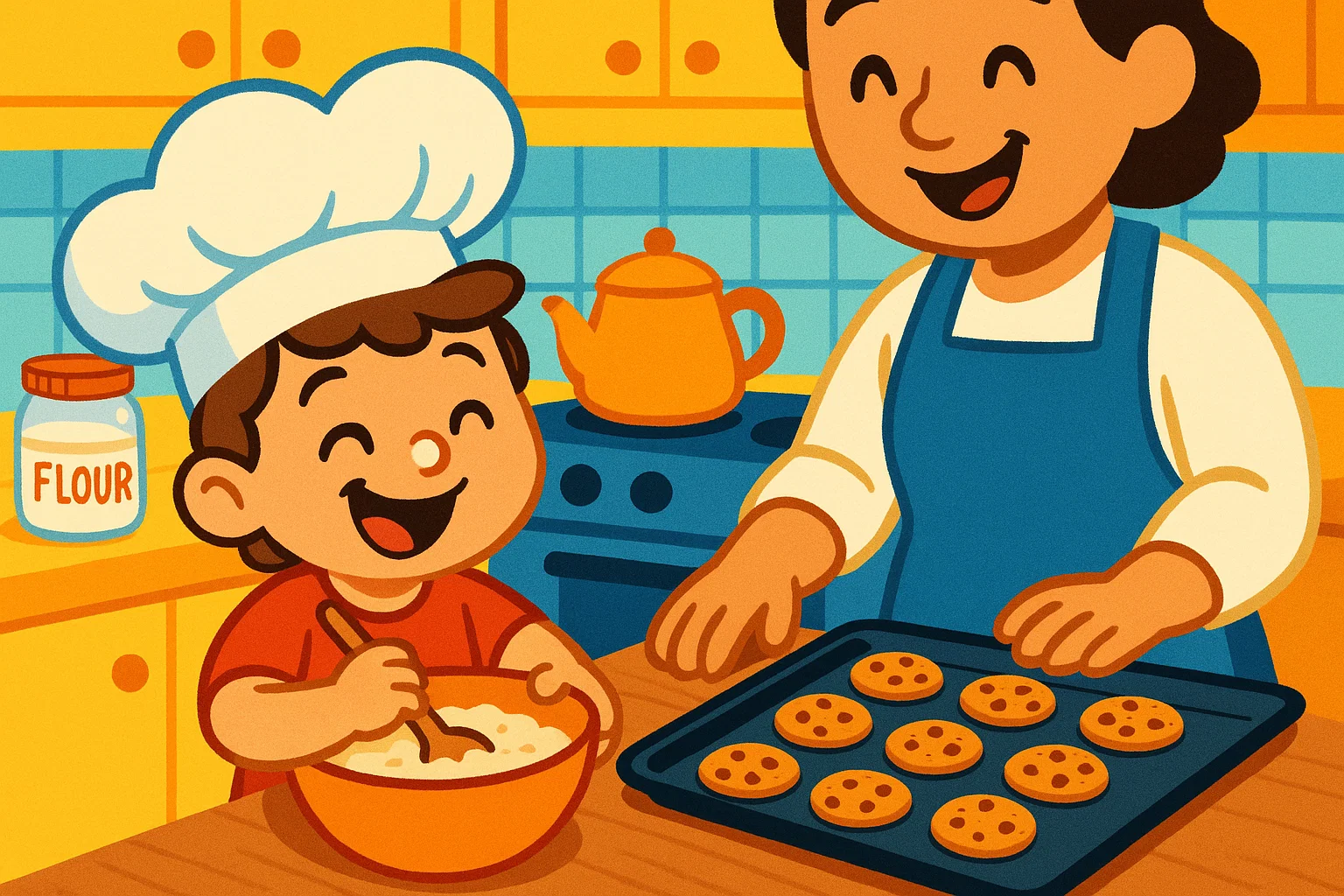
Involving kids in the kitchen teaches basic chemistry and math through measuring, mixing, and observing changes.
Benefit: Baking supports practical math skills, sequencing, and sensory exploration.
No-Bake Treats
For toddlers, no-bake recipes are often safer and provide quicker results.
- Cereal bars
- Fruit yogurt cups
- Chocolate-dipped fruit
Family Recipe Book
Create a physical or digital book where kids can rate meals and add their own drawings as illustrations.
Taste Test Game
Blindfold the participant and ask them to describe a food using words such as sweet, sour, crunchy, or smooth. This expands sensory vocabulary.
Safe Kitchen Jobs by Age
| Age Group | Tasks |
| Toddler | Washing fruit, stirring cold batter |
| Preschool | Mashing bananas, tearing herbs |
| School Age | Cracking eggs, measuring dry ingredients |
| Tweens | Reading recipes, using a toaster with supervision |
Screen-Free and Low-Screen Activities for Kids
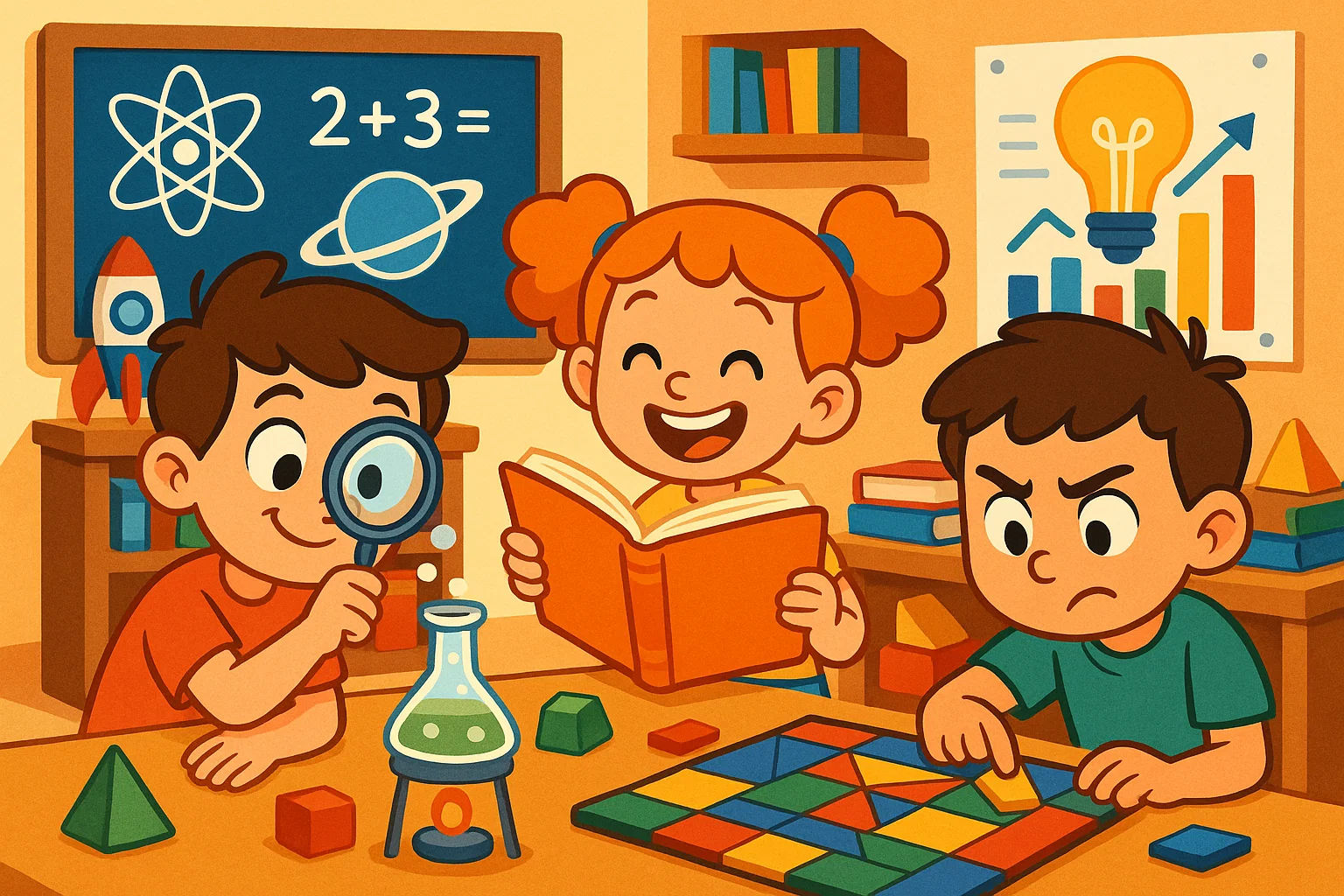
Ultimate Screen-Free Activity List
- Building forts
- Completing jigsaw puzzles
- Indoor play with hula hoops
- Reading physical books
- Listening to audiobooks
- Art projects using recycled materials
Imagination Games
Encourage “world building” by setting up a pretend vet clinic or a space station in the living room. This supports social-emotional development and complex thinking.
Building Challenges
Use LEGO, cardboard boxes, or even dry spaghetti and marshmallows to build the tallest tower.
Benefit: Building challenges introduce basic engineering principles while encouraging patience and persistence.
Quiet Boxes
Prepare “quiet boxes” for times when you are working from home. Fill them with stickers, coloring pages, and small puzzles that a child can explore independently.
Family Challenges
Set a timer for five minutes and see who can make the best paper airplane or find the most blue items in the house.
Outdoor Activities at Home
Spring Outdoor Ideas
When the weather clears, move activities for kids to the yard. Planting seeds or looking for bugs provides an immediate connection to nature.
Benefit: Gardening encourages environmental awareness, patience, and responsibility.
Yard Obstacle Course
Use hula hoops, cones, and yard chairs to create a circuit. This is one of the best outdoor activities for burning off energy before a family movie.
Backyard Treasure Hunt
A nature-themed scavenger hunt, such as finding a flat stone, a yellow flower, or a dry leaf, keeps children busy while exploring their local environment.
Chalk Games
Sidewalk chalk is a versatile tool for outdoor art murals, hopscotch, and “chalk roads” for toy cars.
Water Play
On warm days, use a plastic bottle with holes as a sprinkler or set up a “toy car wash” station using dish soap and a bucket.
Fresh-Air Family Games
Traditional games like hide-and-seek, tag, and yard bowling remain popular because they require little setup and provide high engagement.
Activities That Double as Chores
Power Up Life Skills
Involving children in age-appropriate chores can help build a sense of belonging and responsibility.
Benefit: Household chores support planning, follow-through, and self-confidence.
Laundry Sorting Race
Turn the mundane task of sorting laundry into a game. Have kids race to find matching socks or sort clothes by color.
Toy Rescue Cleanup
Frame tidying up as a “rescue mission” where toys need to be “saved” from the floor and returned to their “homes,” such as storage bins.
Mini Chef Helper
Assign kids the role of “sous-chef” to help with setting the table or wiping down counters. This connects the chore to the shared experience of the meal.
Plant Care Routine
Provide a small watering can and let the child be responsible for one indoor plant. Tracking its growth with a chart adds an educational element.
Pet Care Tasks
Brushing a pet or filling a water bowl under supervision teaches empathy and the importance of caring for others.
Bonus: Fun Activities for Toddlers at Home
Sensory Bins
Sensory play can be valuable for toddlers. Fill a bin with dry pasta, rice, or pom-poms.
Benefit: Sensory bins provide tactile stimulation and fine motor exploration.
Safety: Always supervise toddlers to prevent them from swallowing small parts.
Sticker Play
Stickers are a great low-mess activity for developing the pincer grasp. Let toddlers decorate a large cardboard box or a sheet of paper.
Simple Sorting Games
Have your toddler sort toy cars by color or stuffed animals by size. This introduces basic categorization skills.
Cardboard Box Play
A large cardboard box can be a rocket ship, a house, or a tunnel. Toddlers love the simplicity of imaginative play with large objects.
Nursery Rhyme Actions
Singing songs like “The Wheels on the Bus” with physical actions helps with language development and rhythm.
Toddler Treasure Basket
Fill a basket with safe, everyday household items, such as a wooden spoon, a clean sponge, and a soft scarf. The variety of textures provides a rich learning experience for little ones.
Seasonal Activity Inspiration
Holiday-Themed Activity Inspiration
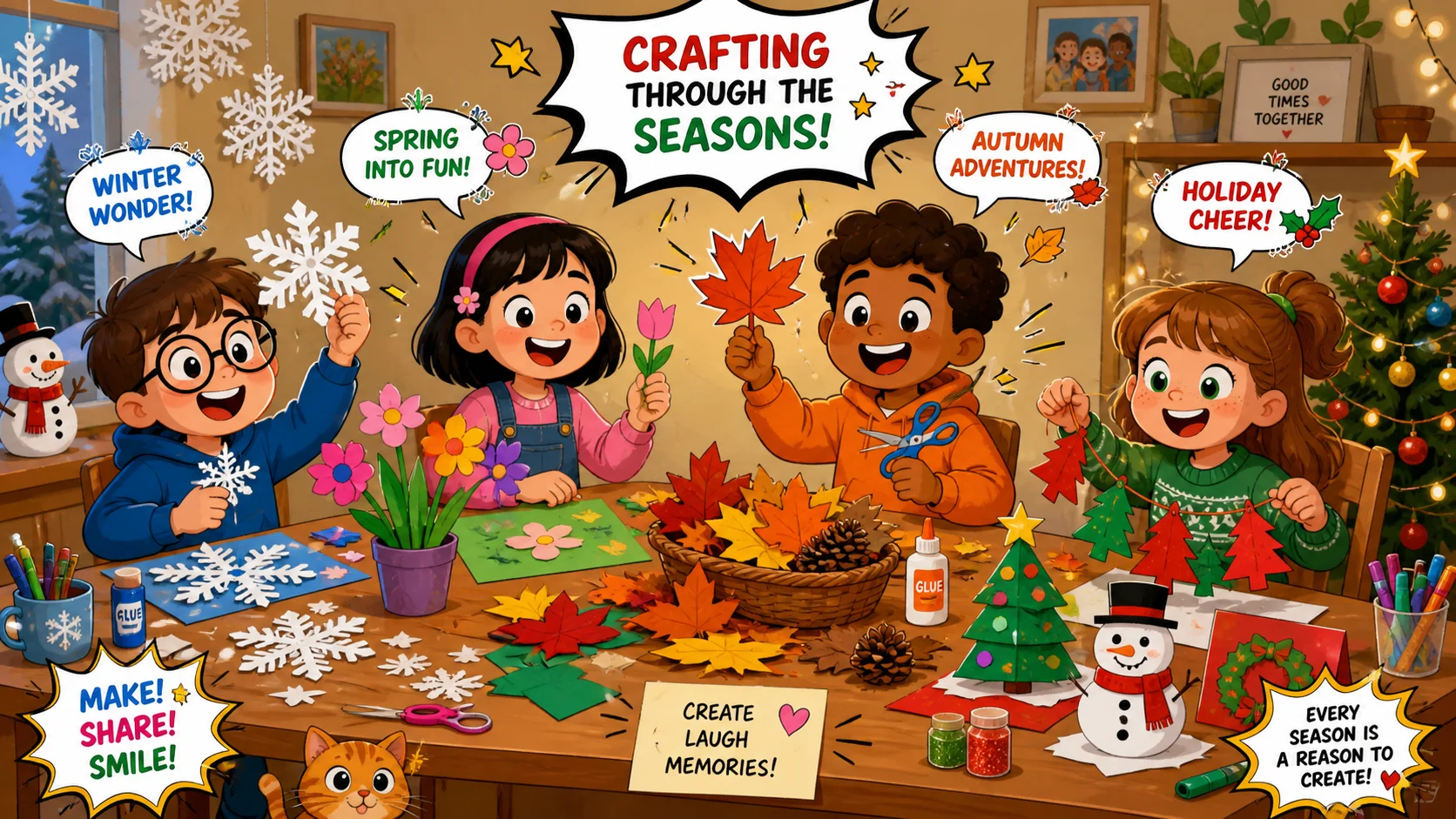
Adapt your arts-and-crafts projects for the season. Make handprint turkeys for Thanksgiving, paper snowflakes for winter, or dyed eggs for Easter.
Rainy-Day Activities
When you are stuck indoors, prioritize building a secret fort or starting a family movie night. When you are stuck indoors, prioritize building a secret fort, starting a puzzle, or planning a family movie night as an occasional low-screen treat.
School-Break Fun at Home
Create a “school-break calendar” with one major activity each morning, such as a science experiment or a trip to a nearby park.
Easy Free or Cheap Activity Ideas
Focus on recycled materials. A plastic bottle can become a lava lamp, and a laundry basket can become a pirate ship. The only limit is your imagination.
Things to Print Out
Use free online resources for coloring pages, bingo cards, and scavenger hunt templates. Having these ready to go can save the day when you need a quick solution to keep kids entertained.
Summary of Engagement Strategies
Providing a variety of indoor and screen-free activities helps children at home remain mentally engaged and physically active. By balancing arts and crafts, physical play, and life skills, parents can transform a routine day into a period of growth and bonding.
Remember that the best activities for kids are often those that involve meaningful interaction and simple materials. Use the household items you already have to encourage creativity, and always prioritize safety and age-appropriateness in every project.

Take a short quiz to find out what your everyday choices say about your parenting style
When your child is curious about something new, what’s your instinct?
Take a short quiz to find out what your everyday choices say about your parenting style
“Can I download this app?” What happens next?
Take a short quiz to find out what your everyday choices say about your parenting style
When it comes to rules at home, which sounds most like you?
Take a short quiz to find out what your everyday choices say about your parenting style
If you could give your child one life skill today, what would you pick?
Take a short quiz to find out what your everyday choices say about your parenting style
Your child gets to choose what to watch. What would your ideal setup look like?
Take a short quiz to find out what your everyday choices say about your parenting style
Pick your parenting superpower ✨