50+ Activities for Kids After School at Home

 Discover a Free Education Video App for Kids
Pastory uses AI to personalize educational video content based on your child’s interests and personality. Safe, engaging, and built for curious young minds. Sign up now to stay updated and enjoy early access with a free trial
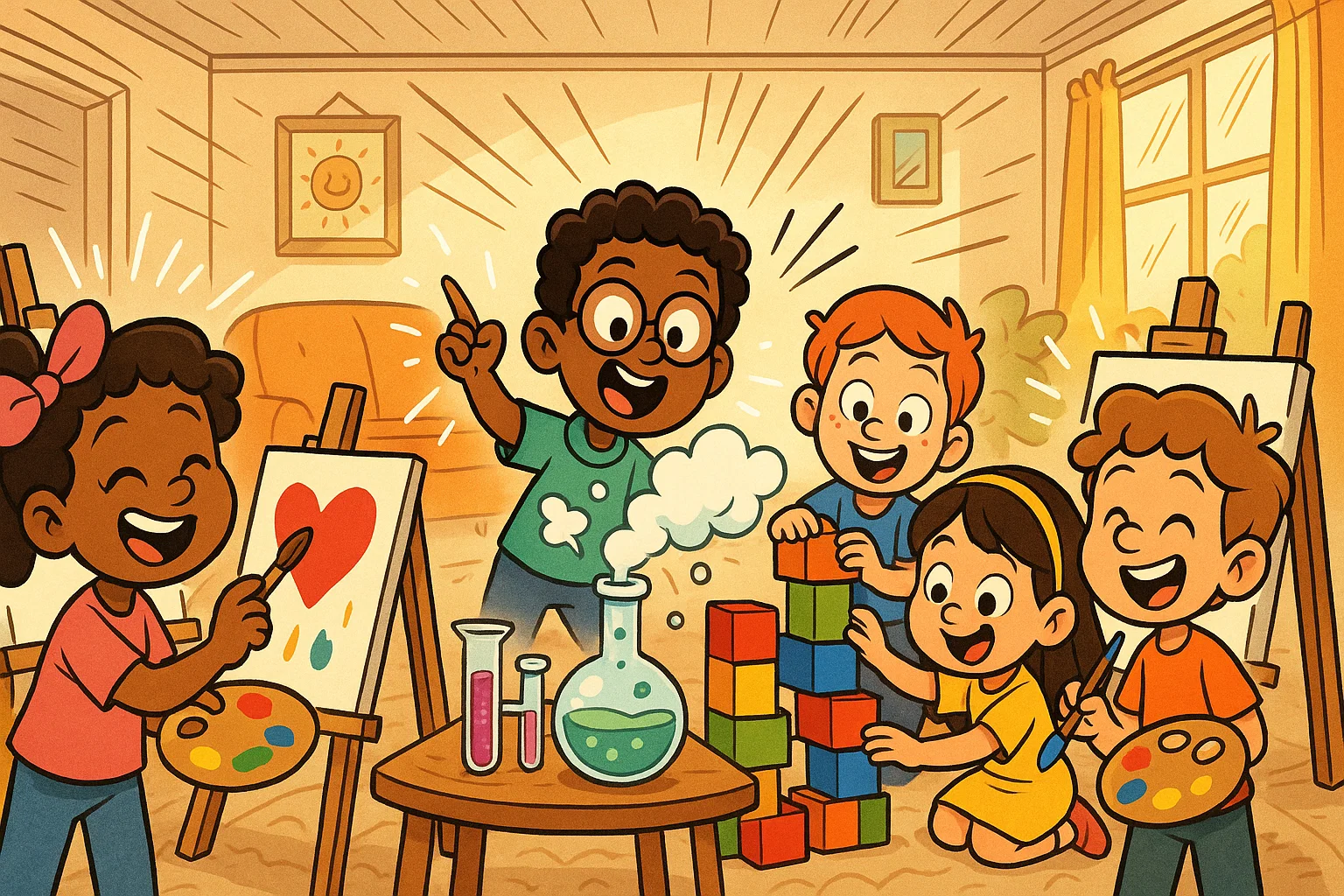
When the school bell rings, children often come home with plenty of physical energy but limited mental energy. For parents, the hours between school pickup and dinner can be challenging: how do you help children transition smoothly without falling back on unrestricted screen time?
The shift from school to home usually goes more smoothly when activities match a child’s mood, age, and energy level. This guide offers more than 50 low-prep, screen-free activities for indoor and outdoor play, independent fun, physical movement, creative projects, learning games, and calm wind-down time.
Key takeaways
Families can improve the after-school routine by matching activities to a child’s mood, age, energy level, available time, and supplies they already have at home.
Quick picks by mood
Children come home with different energy levels after a structured school day: tired kids may need puzzles, audiobooks, or drawing, while energetic kids may do better with dancing, balloon ball, or obstacle courses. Offering choices that match a child’s current energy level can support self-regulation and reduce after-school meltdowns.
Focus on screen-free home activities
Choosing screen-free activities at home can reduce reliance on passive entertainment and encourage active imagination. Using basic household items like cardboard boxes, pillows, and straws helps children practice resourcefulness and independent problem-solving.
A simple after-school rhythm
A predictable after-school rhythm helps children move from school mode to home mode more easily. A simple sequence might include a healthy snack, some movement, a focused activity, and a calm wind-down before dinner.
- Choose high-energy, quiet, creative, or learning activities based on the child’s immediate mood.
- Keep setup simple by using materials and supplies you already have at home.
- Mix movement, creativity, chores, and calm play strategically throughout the school week.
- Use short, 10–30 minute activities on standard school days to avoid over-scheduling.
- Save longer, multi-step projects for Fridays, weekends, or rainy days when time is abundant.
Physical activities for kids
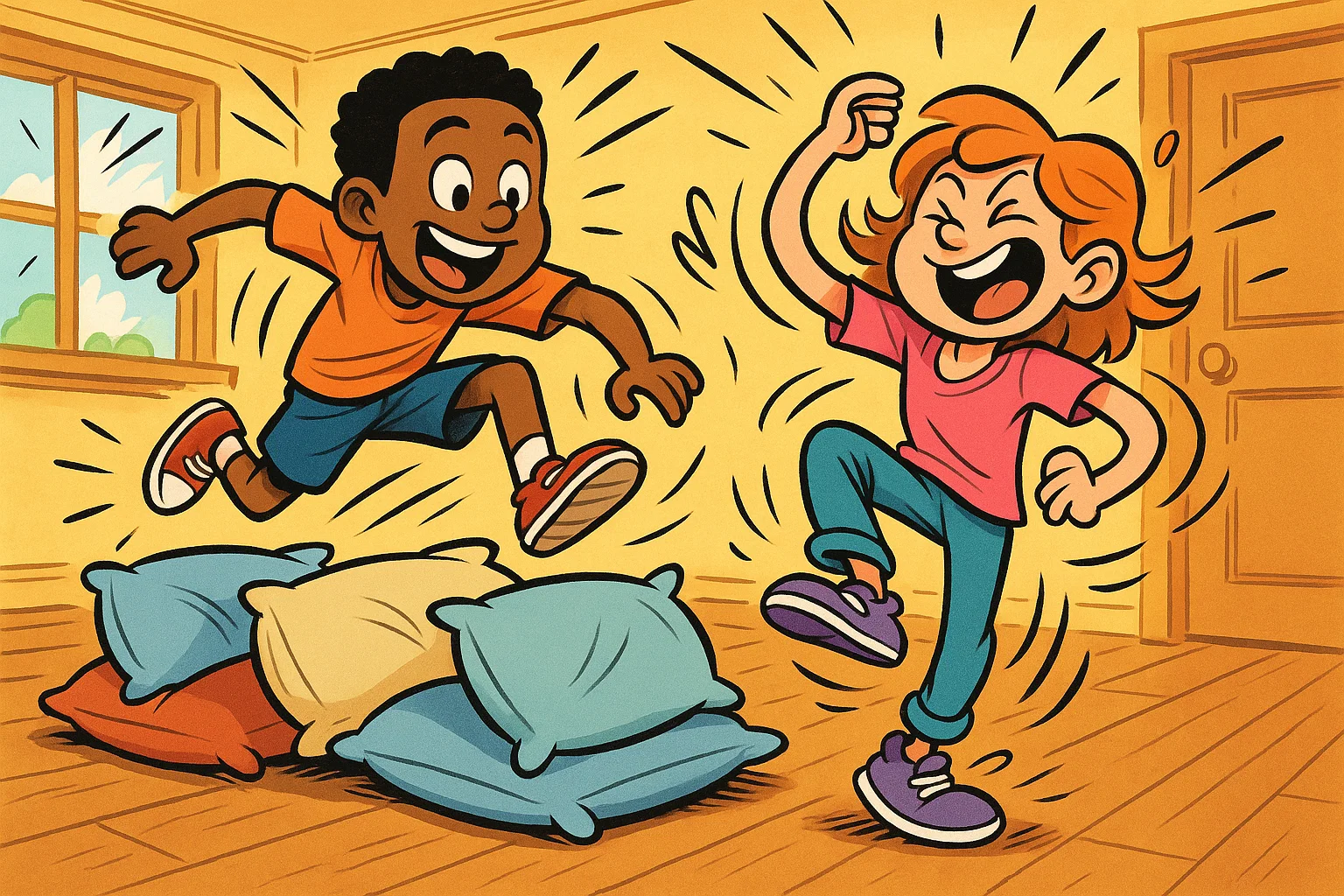
Active after-school ideas help children burn off pent-up energy, practice gross motor skills, and stay active indoors or in small outdoor spaces.
1. At-home workout for kids
An at-home workout provides structured movement using simple bodyweight exercises like jumping jacks, squats, stretches, bear crawls, and short circuits. According to the World Health Organization (WHO), children aged 5 to 17 should get at least 60 minutes of moderate-to-vigorous physical activity each day.
For safer indoor play, parents should clear enough floor space and remove sharp objects, unstable furniture, and tripping hazards before the activity begins.
2. Balloon ball
Balloon ball uses a single inflated balloon as a soft, safe ball for indoor volleyball, keep-the-balloon-up challenges, target practice, or hallway games. This low-impact game keeps kids entertained while protecting household furniture from damage.
Because balloons move slowly, they give children extra time to practice visual tracking and hand-eye coordination.
3. Indoor obstacle course
An indoor obstacle course turns pillows, chairs, tape lines, cushions, and cardboard boxes into a safe path for crawling, jumping, balancing, and timed challenges.
- Clear the perimeter: 5 minutes.
Remove breakable objects and create a clear path through the living room or hallway. - Position the obstacles: 10 minutes.
Place cushions for jumping, chairs for crawling underneath, and painter’s tape lines on the floor for balancing. - Demonstrate the path: 2 minutes.
Walk through the course to show the safest way to navigate each station. - Time the trials: 15 minutes.
Use a stopwatch to let kids complete the course, tracking their times to encourage personal improvement.
4. Trampoline jumping
Trampoline jumping can involve a mini indoor trampoline or a fenced backyard trampoline, but it should be included only with clear age limits, one jumper at a time, and close adult supervision. The American Academy of Orthopaedic Surgeons recommends clear safety rules for trampoline use, including allowing only one child on the trampoline at a time and ensuring close adult supervision.
A short supervised jumping session may help some children meet their need for movement after hours of sitting in a classroom.
5. Dancing
Dancing after school lets children shake off stress by moving to a high-energy playlist, playing freeze dance, or joining copy-the-leader games. Movement to music can lift children’s mood while giving them a fun way to use their whole body.
Parents can create a shared family playlist where each family member contributes two favorite upbeat songs to increase engagement.
6. Animal walks and impressions
Animal walks and impressions turn movement into imaginative pretend play by challenging children to try frog jumps, crab walks, penguin waddles, lion crawls, and flamingo balances. This activity builds core strength, balance, and flexibility without feeling like a structured exercise routine.
Gamified movement can make balance, coordination, and motor-planning practice feel more like play.
7. Tag
Tag can be adapted for limited indoor spaces with modified rules such as slow-motion tag, sock tag, shadow tag, or backyard tag. In sock tag, each participant tucks a clean tube sock into their waistband, and other players try to grab the sock without touching anyone.
This rule variation reduces the risk of collisions, trips, and falls in small living rooms or apartments.
8. Jump rope
Jump rope offers solo and sibling-friendly variations, such as counting consecutive jumps, chanting jump-rope rhymes, or holding speed rounds on the driveway. Jumping rope supports timing, coordination, and active movement in school-aged children.
For solo jumping, parents can check the rope size by having the child stand on the center of the rope and making sure the handles reach the child’s armpits.
9. Balloon tennis
Indoor tennis can be made safer with balloon tennis rackets made from paper plates and wooden spoons, or with a soft-ball version of wall tennis in an open hallway. This activity provides the developmental benefits of racket-style play, such as spatial awareness and grip strength, without the risk of breaking windows.
Players take turns hitting the balloon across a tape line on the floor.
10. Soft flying disc games
Soft flying disc games at home can be played with fabric flying discs aimed at laundry baskets or used for backyard throwing challenges. Throwing a disc requires release control and finger dexterity, which supports the development of fine and gross motor skills.
Children can see how many consecutive points they can score by landing the disc inside a basket placed 10 feet away.
11. Dance-off
A family dance-off adds a structured but lighthearted element to movement with dance rounds, silly themes, and family cheering. Children can dress up using old costumes or funny hats to enhance the performance aspect of the activity.
This social game builds confidence, expressiveness, and emotional bonding among siblings and parents alike.
Indoor activities for kids
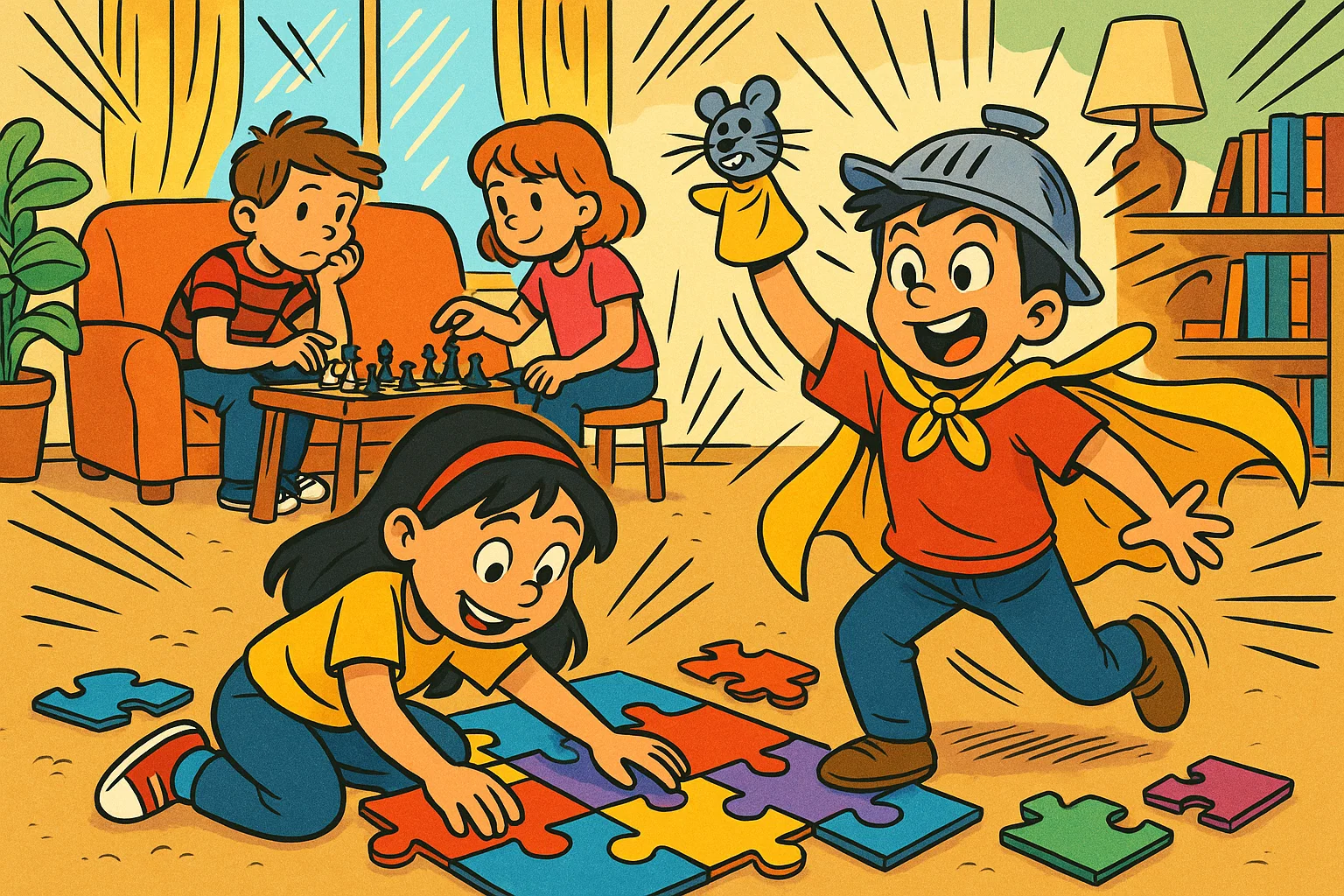
Low-prep home activities provide engaging options for rainy days, winter evenings, apartments, or small rooms where space is limited.
12. Indoor mini golf
Indoor mini golf lets children build a putting course using plastic cups turned on their sides, cardboard ramps, books, and toy balls. Designing the course encourages spatial reasoning as children experiment with angles, ramps, and obstacles.
Kids can customize each hole with unique obstacles like toy vehicles or rolled-up socks to vary the difficulty level.
13. Scavenger hunt
A scavenger hunt keeps kids busy by asking them to find items based on specific categories, such as color hunts, letter hunts, texture hunts, or toy hunts. For example, a color hunt might require a three-year-old child to find five items that match a blue piece of construction paper.
This structured exploration keeps kids active and sharpens observational skills.
14. Treasure hunt
A treasure hunt involves an adult hiding a small prize or afternoon snack and creating a chain of written clues or picture maps around the home. Solving the clues encourages critical thinking, literacy practice, and cooperative teamwork among siblings.
Parents can use simple riddles like, “I am cold and hold your milk,” to direct children to the next clue hidden in or near the refrigerator.
15. Make a secret den
Making a secret den allows children to create a cozy fort using blankets, chairs, couch cushions, clothespins, and large cardboard boxes. Many children find small, enclosed spaces comforting after a busy school day.
Once built, the den can become a cozy space for quiet time, flashlight reading, or independent play.
16. Jigsaw puzzles
Jigsaw puzzles offer a flexible cognitive challenge that can be adjusted by age and ability, creating opportunities for independent focus or family teamwork. Working on puzzles can be calming and can support visual-spatial reasoning as children rotate, compare, and match pieces.
Selecting the appropriate puzzle difficulty ensures engagement without causing frustration.
| Age group | Recommended piece count | Primary developmental benefit |
| Toddlers, ages 2–3 | 4 to 12 chunky pieces | Shape recognition and fine motor grip |
| Preschoolers, ages 4–5 | 24 to 48 pieces | Spatial problem-solving and patience |
| Early elementary, ages 6–8 | 100 to 200 pieces | Task persistence and collaborative teamwork |
| Older kids, ages 9–12 | 300 to 500+ pieces | Cognitive endurance and visual analysis |
17. Board games
Board games provide structured interaction on school nights through quick-play options, while longer strategic games can be saved for weekend family evenings. Playing board games teaches children essential social-emotional skills, including following rules, waiting for turns, and managing the emotional outcomes of winning or losing.
Simple card games like Go Fish or Uno are effective for reinforcing number and color identification in younger children.
18. Host a private gallery showing
A private gallery empowers children to organize and display their drawings, clay crafts, building blocks, or school artwork along a hallway or table. Children take on the role of an artist or curator, presenting each piece to a family member or visiting friend.
This activity encourages public speaking skills, self-reflection, and pride in creative output.
19. Create a home library corner
A home library corner turns an ordinary room into a reading nook with a themed book basket, homemade reading tickets, and a quiet family reading hour. Providing a curated selection of books helps children explore literature outside of their academic curriculum.
Research summarized by the National Endowment for the Arts links voluntary reading with stronger reading and writing skills and higher academic achievement.
Creative arts and crafts
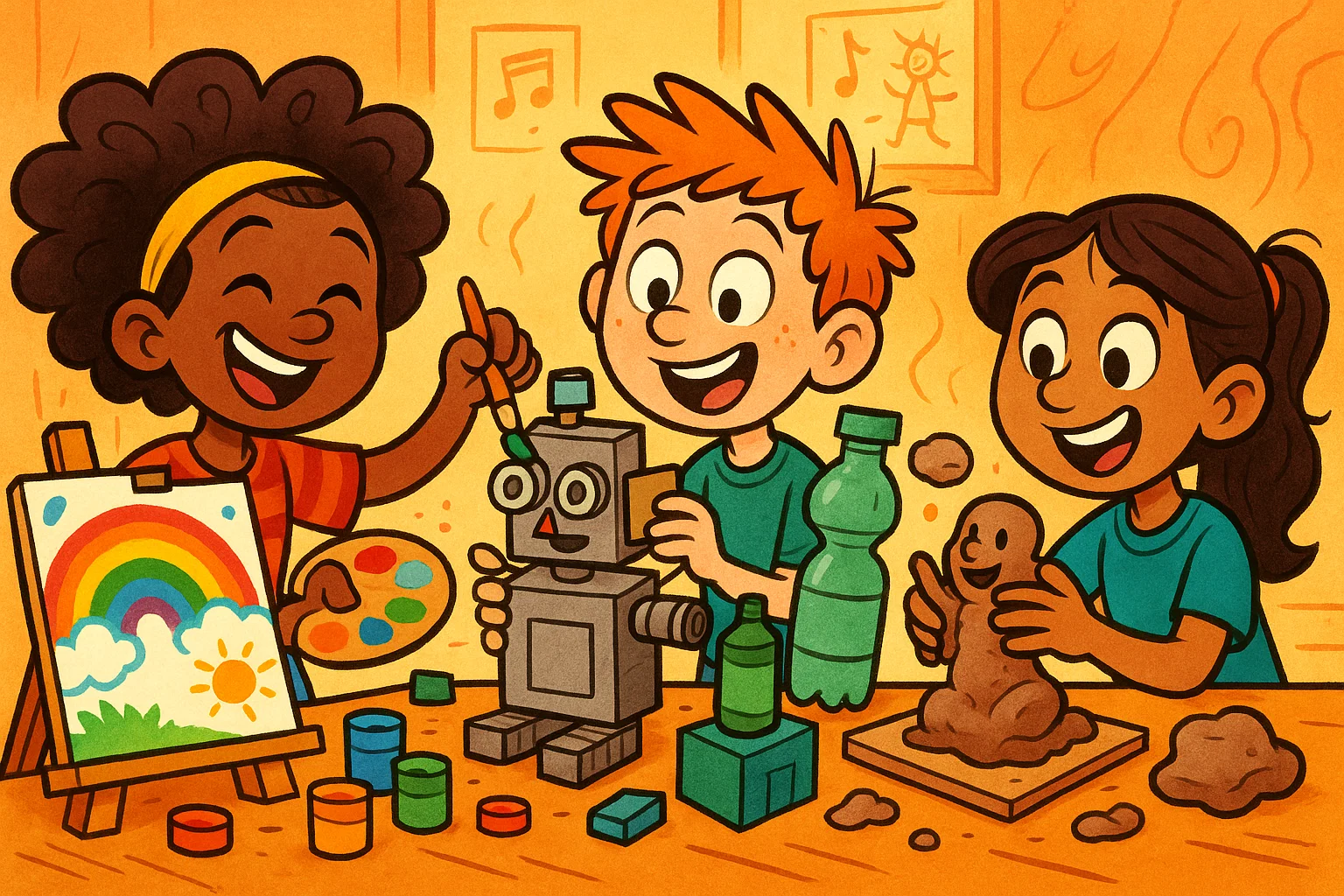
Hands-on craft projects support fine motor skills, creativity, spatial thinking, and independent screen-free play.
20. Blow painting with straws
Blow painting with straws involves placing droplets of watered-down liquid paint onto thick paper and using a drinking straw to blow air across the paint, creating abstract, branch-like patterns. This artistic technique helps children experiment with movement, color mixing, and cause and effect.
Parents should remind children to blow outward through the straw rather than suck inward.
21. Salt dough creations
Salt dough creations start with a simple recipe: 2 cups of all-purpose flour, 1 cup of table salt, and 1 cup of water mixed into a moldable dough. Children can shape ornaments, handprints, or small figures, which an adult can bake at 250°F (120°C) for about two hours or leave to air-dry before decorating.
Kneading and shaping the dough gives small finger muscles useful practice and supports fine motor skills.
22. Arts and crafts
An arts and crafts session can be set up with a plastic tray, colored paper, stickers, recycled materials, craft foam, and child-safe scissors. Providing an open-ended assortment of materials allows children to lead their own creative projects rather than following a rigid set of instructions.
This open-ended process builds creative independence and confidence.
23. Cardboard creations
Cardboard creations use clean shipping boxes, paper plates, and cardboard tubes to build houses, cars, robots, marble runs, or doll furniture. Working with 3D structures helps children explore spatial depth, balance, and basic engineering ideas.
Children can join boxes together using masking tape, which is easy for young fingers to tear and manipulate independently.
24. Drawing challenge
A drawing challenge provides specific prompts that encourage children to get creative, such as “draw your dream bedroom,” “invent an entirely new planet,” or “design a superhero uniform.” These structured prompts help overcome the intimidation of a blank white page, focusing the child’s mind on imaginative details.
Children can use colored pencils, crayons, or markers to bring their ideas to life.
25. Craft gallery labels
Craft gallery labels require children to practice writing by creating a small index card for each piece of artwork, detailing the title, artist name, and materials used. This task incorporates literacy practice into an art session without feeling like homework.
It also encourages children to analyze their own artistic choices and express their thoughts clearly.
26. Seasonal craft table
A seasonal craft table can include nature-inspired projects like tracing autumn leaves, cutting paper snowflakes, painting spring flowers, or making paper pumpkins. Using natural elements collected during a walk around the block connects children to seasonal changes in their local environment.
Cooking and baking
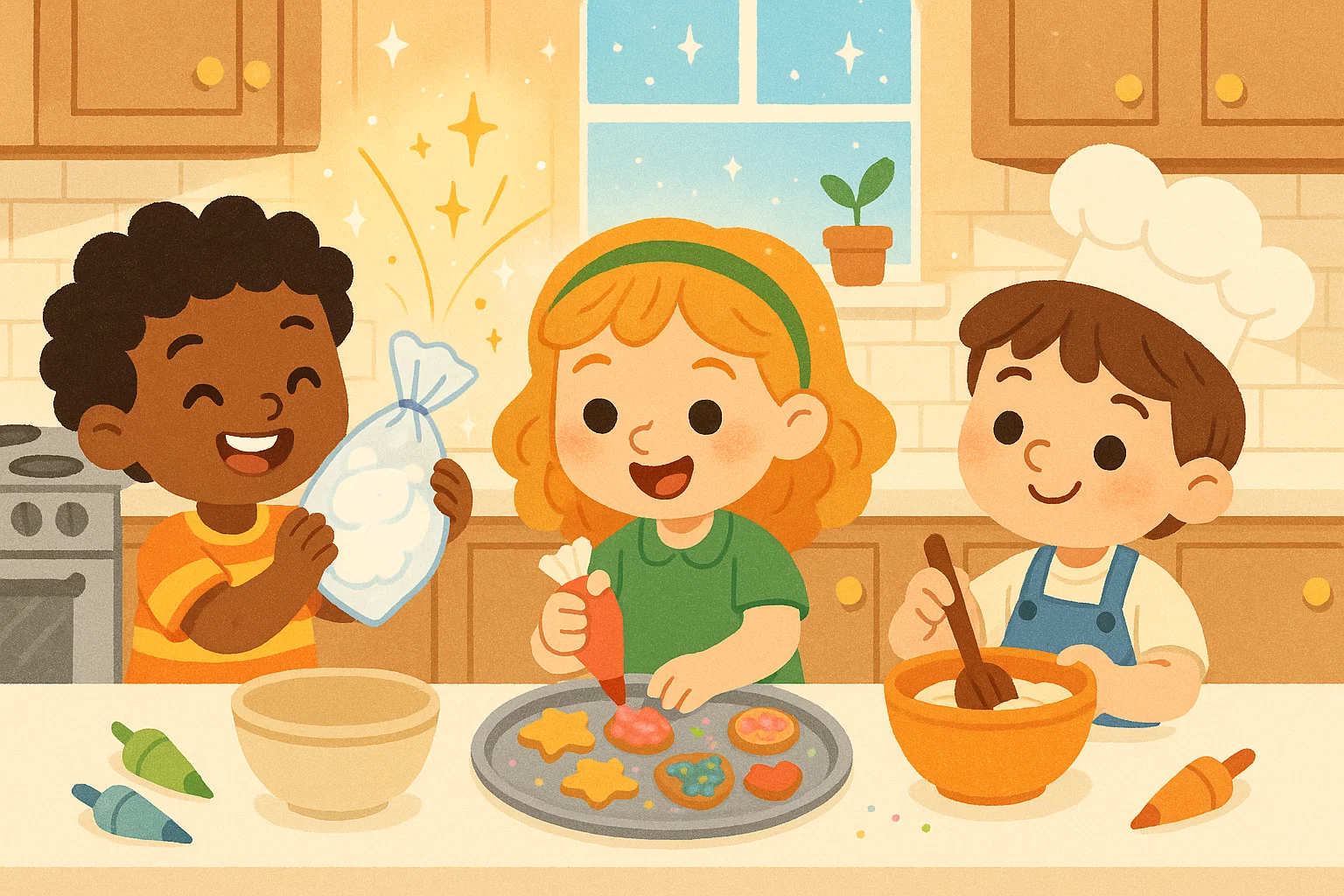
Supervised kitchen tasks combine practical life skills, sensory exploration, and the immediate reward of a homemade snack.
27. Homemade chips
Making homemade chips involves thinly slicing potatoes, sweet potatoes, or pita bread, tossing them with olive oil and a sprinkle of salt, and baking them until crisp under adult supervision. This cooking activity introduces children to food preparation and temperature safety.
Children can watch through the oven door to see how heat changes the texture of food from soft to crispy.
28. Simple cooking and baking
Cooking and baking simple recipes like berry muffins, fruit skewers, or smoothies teaches children basic kitchen chemistry and fractions through measuring ingredients. Following a multi-step recipe helps train working memory and executive functioning skills.
Eating the finished snack helps children see the reward of patience and effort.
29. Snack board challenge
The snack board challenge asks children to build a balanced, visually appealing plate using fruit slices, crackers, cheese cubes, vegetables, and dips. Parents can establish nutrition criteria, such as requiring at least three different natural colors on the board to encourage variety.
This activity encourages healthy food habits by giving children autonomy over how their food is presented.
30. Family recipe card
A family recipe card activity asks children to write down the ingredients of a meal they made, draw the step-by-step preparation process, and rate the taste out of five stars. These personalized cards can be stored in a family recipe binder as a lasting record of their kitchen progress.
This combines writing practice, creative drawing, and self-evaluation into a single meaningful keepsake.
Music, audio, and storytelling
Calm, auditory, and performance-based activities work especially well after homework sessions or during low-energy evenings.
31. Make music at home
Music activities can include making homemade shakers from rice-filled plastic eggs, playing rhythm clapping games, or singing along to age-appropriate songs. Engaging with rhythm and pitch can support listening skills, sound awareness, and language development.
Children can practice copying a rhythm that a parent or sibling taps out on a table surface.
32. Podcasts and audiobooks
Podcasts and audiobooks provide a calm sensory experience, allowing children to listen to rich stories while relaxing on a floor cushion or working on a quiet coloring page. Audiobooks can support comprehension, vocabulary exposure, and listening fluency, especially when children hear expressive reading.
This format offers a gentle screen-free option for children who are too tired for physical play but still need something engaging.
33. Storytelling
Storytelling can be structured through playful verbal games like story dice, family story circles, or a “finish my sentence” game where each person adds five words to an ongoing narrative. These interactive language games expand vocabulary, improve sequencing abilities, and encourage imaginative thinking.
A parent can start with a simple prompt: “Deep inside the old willow tree, a tiny door creaked open…”
34. Family performance
A family performance encourages children to plan, rehearse, and present a short concert, puppet show, magic trick, or comedy act using a blanket hung as a stage curtain. Putting together a performance gives children a chance to plan, remember lines or steps, and express themselves creatively.
The positive reinforcement from an audience of family members builds self-esteem and public speaking confidence.
Independent activities children can do at home
These independent options allow children to play constructively with minimal adult help while parents focus on work or household chores.
35. Quiet solo challenges
Quiet solo challenges use index cards with simple independent tasks, such as “sort your building blocks by color” or “create a paper chain with ten links.” Providing clear boundaries and a defined goal helps keep children focused on completing a task independently.
These short challenges build personal accountability and problem-solving skills.
36. Reading challenges
Reading challenges add playful goals to independent reading time, such as reading a chapter book under a blanket fort with a flashlight or reading a picture book aloud to a favorite stuffed animal. These novelty elements make independent reading feel like an adventure rather than an extension of the school day.
Parents can use a simple progress tracker where children earn stickers for every fifteen minutes spent reading independently.
37. Puzzle rotation
A puzzle rotation system involves keeping only two or three jigsaw puzzles, tangrams, or brain teasers available at a time while storing the rest out of sight. Regularly swapping out available toys prevents choice fatigue and renews interest in familiar materials.
This structured setup encourages deep focus as children spend time mastering a single puzzle before moving on to a new challenge.
38. Toy setup invitations
A toy setup invitation means arranging building blocks, action figures, or craft items into an inviting, open-ended scene before children come home. Arriving home to an open-ended setup inspires immediate, independent play without the need for adult direction.
For example, arranging a wooden train track with three cars on it invites a child to step in and continue building the route.
39. Calm corner activities
A calm corner provides a quiet space equipped with coloring pages, sensory bottles, soft plush toys, and deep-breathing guide cards to help children manage big emotions. This dedicated area allows children to practice emotional self-regulation when they feel overwhelmed by school day fatigue.
The space should be completely separate from active play zones to ensure it remains peaceful.
Learning activities to try after school at home
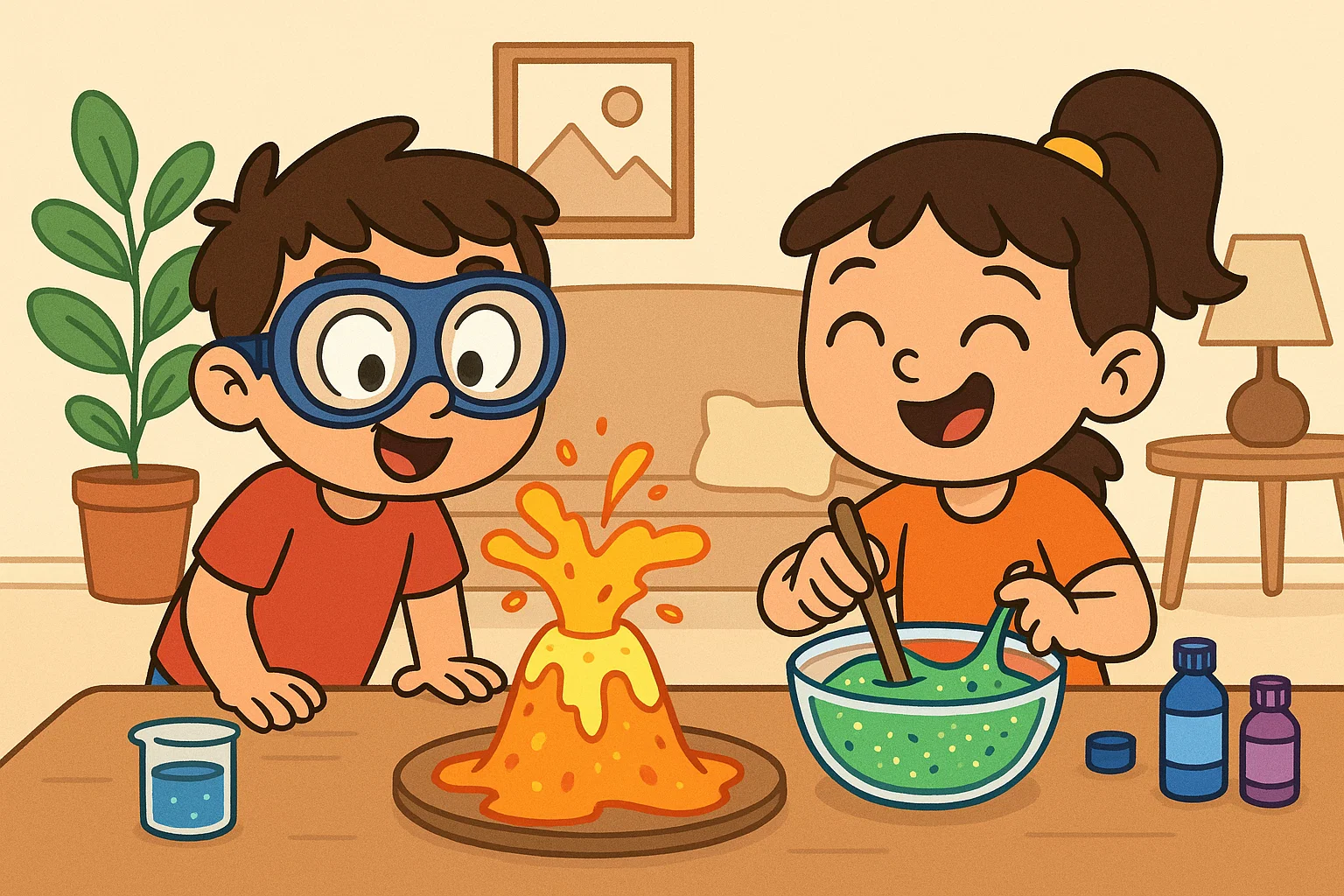
Playful learning games provide educational practice and build academic confidence without feeling like a repeat of classroom work.
40. Playful learning games
Parents can reinforce learning through math card games, spelling races, simple kitchen science experiments, geography puzzles, or map games. Infusing play into academic subjects keeps learning fun and reduces school-related anxiety.
For example, using a tape measure to measure the height of different household objects combines active movement with practical measurement skills.
41. School readiness practice
School readiness practice focuses on core developmental skills for children aged 3 to 5, including counting physical objects, matching rhyming sounds, and practicing scissor skills with colored paper. Early childhood educators often emphasize fine motor control and active listening as important foundations for early school success.
Simple activities like sorting large buttons by shape reinforce these foundational cognitive concepts.
42. Kindergarten skill practice
Kindergarten skill practice helps children work on everyday tasks like writing their first name, buttoning coats, zipping backpacks, and developing a comfortable pencil grip through fun drawing games. Practicing these self-care skills builds independence and confidence in a school setting.
Parents can turn shoe-tying into a low-pressure game by practicing on a large adult shoe placed on the table surface.
43. Executive function games
Executive function games strengthen working memory, mental flexibility, and impulse control through traditional games like Simon Says, Red Light, Green Light, or timed sorting races. The Center on the Developing Child at Harvard University describes executive function and self-regulation as skills that help children manage information, make decisions, and plan ahead.
These games challenge children to pause and think before they move.
44. Build on student strengths
A strengths-based approach encourages children to choose an afternoon activity that matches their interests and talents, whether that means building with blocks, writing short stories, or leading physical games. Focusing on natural strengths can build motivation and help children see what they are good at.
Parents can provide open-ended resources that allow these specific talents to flourish.
Life skills and chores
Reframing household chores as engaging games teaches children life skills, responsibility, and helpful daily routines.
45. Activities that double as chores
Chores can be reframed as fun, game-like challenges such as matching clean socks by pattern, wiping down tables with a spray bottle of water, or sorting plastic containers by size. Turning tasks into a game helps children view household contributions positively rather than as a punishment.
This involvement builds a supportive sense of family teamwork and community responsibility.
46. Build life skills
Building life skills involves teaching children practical routines like packing their own school bags, organizing their desks, or preparing a simple afternoon checklist. Learning to manage personal belongings improves organizational skills and reduces morning stress for the entire family.
Children can draw small checkboxes next to tasks like “put water bottle in bag” to track their progress.
47. Laundry sorting game
The laundry sorting game challenges younger children to sort a basket of clean clothes into piles by color, size, or family member. This task reinforces early math concepts like sorting, categorizing, and matching attributes.
Parents can set a visual timer to see if the family can sort the entire basket before the music playlist ends.
48. Dinner helper challenge
The dinner helper challenge invites children into the kitchen to wash fresh vegetables, set the table correctly, mix batter, or read recipe steps aloud. Giving children clear responsibilities in the kitchen can build confidence and may make them more willing to try new foods.
Parents can provide child-safe serrated nylon knives to allow older children to chop soft items like cucumbers safely.
49. Room rescue timer
The room rescue timer turns tidying up into a fast-paced, 5-minute challenge with upbeat music as children race to put away toys by category. Breaking cleanup down into a short, timed sprint prevents the task from feeling overwhelming.
Taking a quick “before and after” photo provides immediate visual feedback and a sense of accomplishment.
Screen-free seasonal ideas
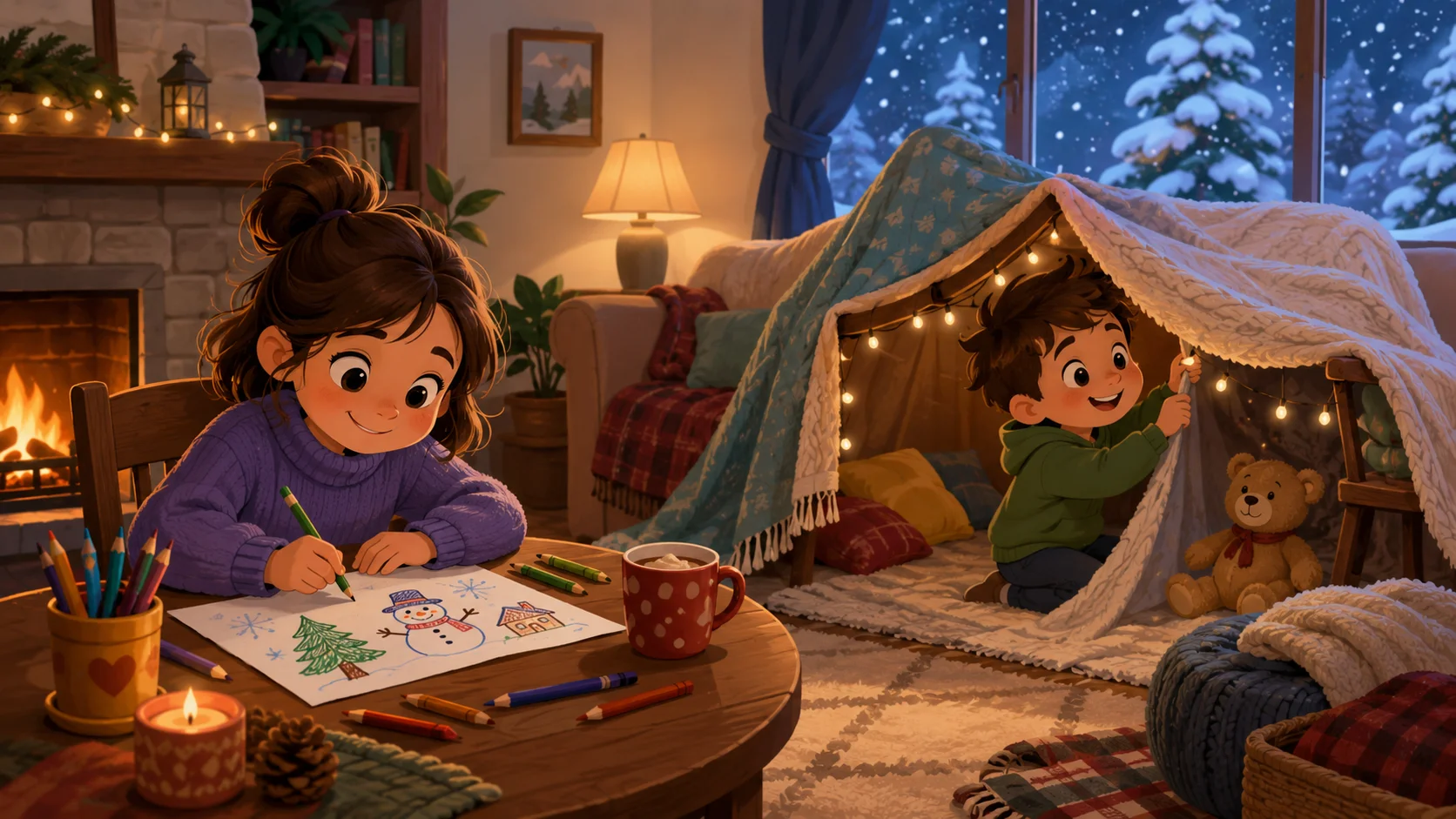
Adapting activities to changing weather patterns and daylight conditions helps maintain a consistent screen-free routine year-round.
50. Screen-free activities for winter afternoons
Winter afternoons call for cozy indoor options like baking warm snacks, building large blanket forts, listening to audiobooks, or working on complex jigsaw puzzles. Providing engaging indoor options helps offset winter cabin fever when outdoor play is limited by weather.
Adding a warm beverage like herbal tea makes quiet reading hours feel extra comforting.
51. What to do with kids when it is dark and cold
When early darkness and cold temperatures limit outdoor options, parents can introduce shadow puppet theaters, indoor flashlight scavenger hunts, or family board game tournaments. Shifting focus to cozy, light-filled indoor games helps keep spirits high during long winter evenings.
Using a simple desk lamp aimed at a bare wall creates an easy stage for hand shadow puppets.
52. Higher-energy at-home activities
When children come home with a lot of physical energy, parents can guide them toward structured movement choices like dance challenges, obstacle courses, balloon keep-it-up, or hallway animal races. Directing this energy into intentional physical challenges prevents disruptive behavior indoors.
These high-energy options are best scheduled immediately after snack time to burn off pent-up physical tension.
53. Lower-energy at-home activities
For lower-energy afternoons, parents can introduce calm options like modeling salt dough, listening to kid-friendly podcasts, coloring complex patterns, or playing simple card games. These quiet activities provide a gentle transition that helps children unwind from a hectic school day.
Lower-energy play can help children settle before dinner and the evening bedtime routine.
Outdoor-inspired activities at home
Parents can recreate the excitement of outdoor trips and community outings right at home using everyday household items.
54. Activities to get outside
When families have safe access to a backyard, patio, balcony, or driveway, they can engage in chalk drawing, container gardening, or cloud watching. Time in natural light can help support a child’s circadian rhythm and healthier sleep-wake cycles.
Even fifteen minutes of fresh air may help improve mood and attention.
55. Recreate free outings at home
Families can recreate free community outings at home by turning a room into a local library with book checkout cards, a nature museum with collected rocks and twigs, or a sports hall with indoor tape lines. This imaginative play expands a child’s understanding of community roles and public spaces.
Children can take turns acting as the librarian or museum tour guide for family members.
56. Recreate paid outings at home
Parents can save money by recreating mini versions of paid outings, such as a cushion obstacle course, a home art studio, or a miniature golf course built from cardboard. This approach provides the fun of a special outing without the financial cost or travel time.
Kids can design paper entry tickets to hand out to family members before the activity begins.
57. Backyard or balcony mission
A backyard or balcony mission turns outdoor spaces into structured exploration zones using nature bingo cards, bird spotting checklists, or simple weather tracking journals. Giving children a specific focus helps them observe local ecosystems more closely.
For example, a checklist might challenge them to find three distinct bird species or identify two different cloud formations.
Activity picker by available time
This time-based guide helps parents choose activities that fit tight weekday schedules or open weekend blocks.
5-minute activities
- Balloon toss: Keep a single balloon in the air without letting it touch the floor.
- Quick drawing prompt: Challenge your child to draw a funny monster using only triangles.
- Simon Says: Play a quick round of Simon Says to practice focused listening and movement.
- Tidy race: Set a timer for 60 seconds to see how many toys can be returned to their bins.
15-minute activities
- Scavenger hunt: Give children a quick written list of five household items to locate.
- Audiobook chapter: Listen to a single chapter of an engaging story while resting on a floor cushion.
- Mini circuit workout: Complete three rounds of jumping jacks, bear crawls, and wall stretches.
- Handmade postcard: Draw a picture on cardstock to mail to a grandparent or friend.
30-minute activities
- Salt dough sculpting: Mix, shape, and prepare small dough figures for drying.
- Baking muffins: Measure ingredients, mix batter, and fill muffin tins for the oven.
- Blanket fort construction: Assemble a cozy reading den using chairs, clothespins, and blankets.
- Indoor mini golf: Build and play a three-hole putting course using cups and cardboard ramps.
Weekend extensions
Simple after-school ideas can be expanded into deeper projects on weekends, such as turning a cardboard box robot into a multi-day painting project or expanding a backyard nature mission into a full-day camping simulation. These longer projects build task endurance and project management skills in older children.
FAQ
What are the best activities for children at home after school?
The best activities for children at home are simple, low-prep options that match a child’s energy level after school. For high-energy afternoons, try dance games, hula hoops, balloon games, or a few laps around the hallway or backyard. For quieter days, puzzles, playdough, drawing prompts, audiobooks, or a cozy reading corner can help children stay calm and engaged.
What are some easy things to do with kids when you’re working?
When you’re working, choose activities to keep kids busy that have clear instructions and safe materials. A free printable worksheet, a puzzle rotation, a playdough tray, or a simple “build with blocks” challenge can give kids at home something focused to do with little work from adults. For younger children, set up the activity nearby so you can supervise while still having time to work.
How can I keep kids entertained after school without screens?
One of the best ways to keep kids entertained after school is to offer a small menu of choices instead of one fixed activity. Let the kids take turns to pick between movement, crafts, reading, chores, or pretend play. Kids love having some control, and simple activity ideas like creating a fort, making a paper airplane, or building with cardboard boxes can feel exciting without requiring screens.
How can I get kids to learn something after school without making it feel like homework?
To get kids to learn after school, keep the activity playful and hands-on. Measuring ingredients while baking, building a bridge from recycled objects, making a marshmallow-and-toothpick structure, or following a simple drawing tutorial can all introduce a new skill without feeling academic. The goal is to help them get curious, not to recreate the classroom at home.
What are some crafty after-school ideas for creative kids?
Creative kids often enjoy open-ended projects using craft supplies they can explore freely. They can get crafty with washable paint, paper scraps, cardboard tubes, stickers, playdough, or recycled boxes. You can add a little structure with prompts like “design a robot,” “make a tiny museum,” or “use three objects to create an imaginary animal.”

Take a short quiz to find out what your everyday choices say about your parenting style
When your child is curious about something new, what’s your instinct?
Take a short quiz to find out what your everyday choices say about your parenting style
“Can I download this app?” What happens next?
Take a short quiz to find out what your everyday choices say about your parenting style
When it comes to rules at home, which sounds most like you?
Take a short quiz to find out what your everyday choices say about your parenting style
If you could give your child one life skill today, what would you pick?
Take a short quiz to find out what your everyday choices say about your parenting style
Your child gets to choose what to watch. What would your ideal setup look like?
Take a short quiz to find out what your everyday choices say about your parenting style
Pick your parenting superpower ✨