77 Fun Facts for Kids Age 9

 Discover a Free Education Video App for Kids
Pastory uses AI to personalize educational video content based on your child’s interests and personality. Safe, engaging, and built for curious young minds. Sign up now to stay updated and enjoy early access with a free trial
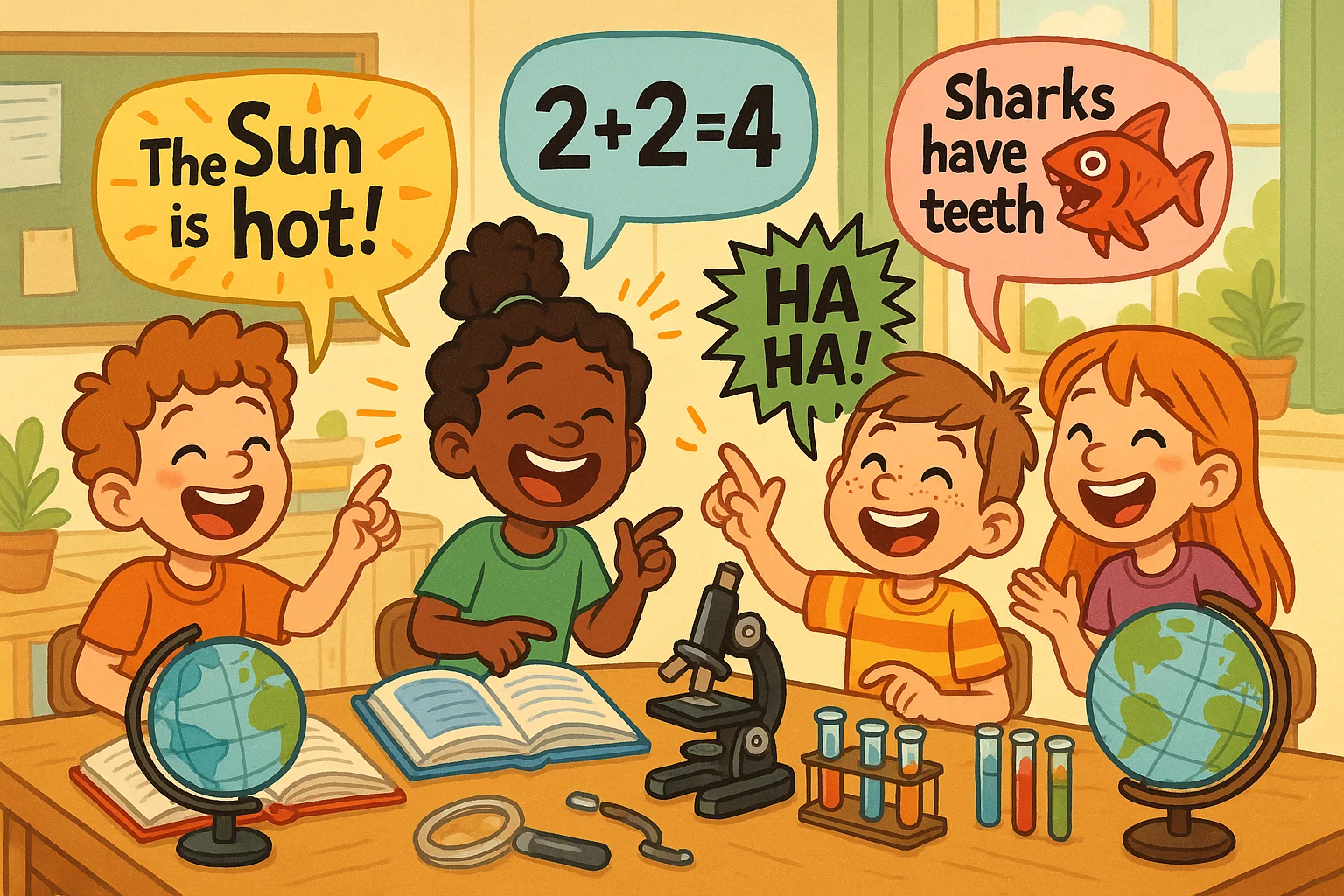
Curiosity serves as the primary engine of childhood development. For a nine-year-old, the world is expanding beyond their immediate surroundings into the realms of complex science, ancient history, and the vastness of the solar system. Providing a comprehensive list of fun facts is more than just entertainment; it is a vital tool for cognitive growth and social bonding. This collection of more than 75 fun facts for kids is designed to spark their curiosity and encourage a lifelong love of learning.
Key Takeaways
- Educational Breadth: Covers animal facts for kids, science facts, and history fun facts for kids.
- Cognitive Support: Designed to enhance memory retention and critical thinking.
- Interactive Design: Features trivia for kids suitable for the dinner table or classroom.
- Fact-Checked Content: Key facts have been checked against reputable educational and scientific sources where possible.
The Best Facts for Curious 9-Year-Olds
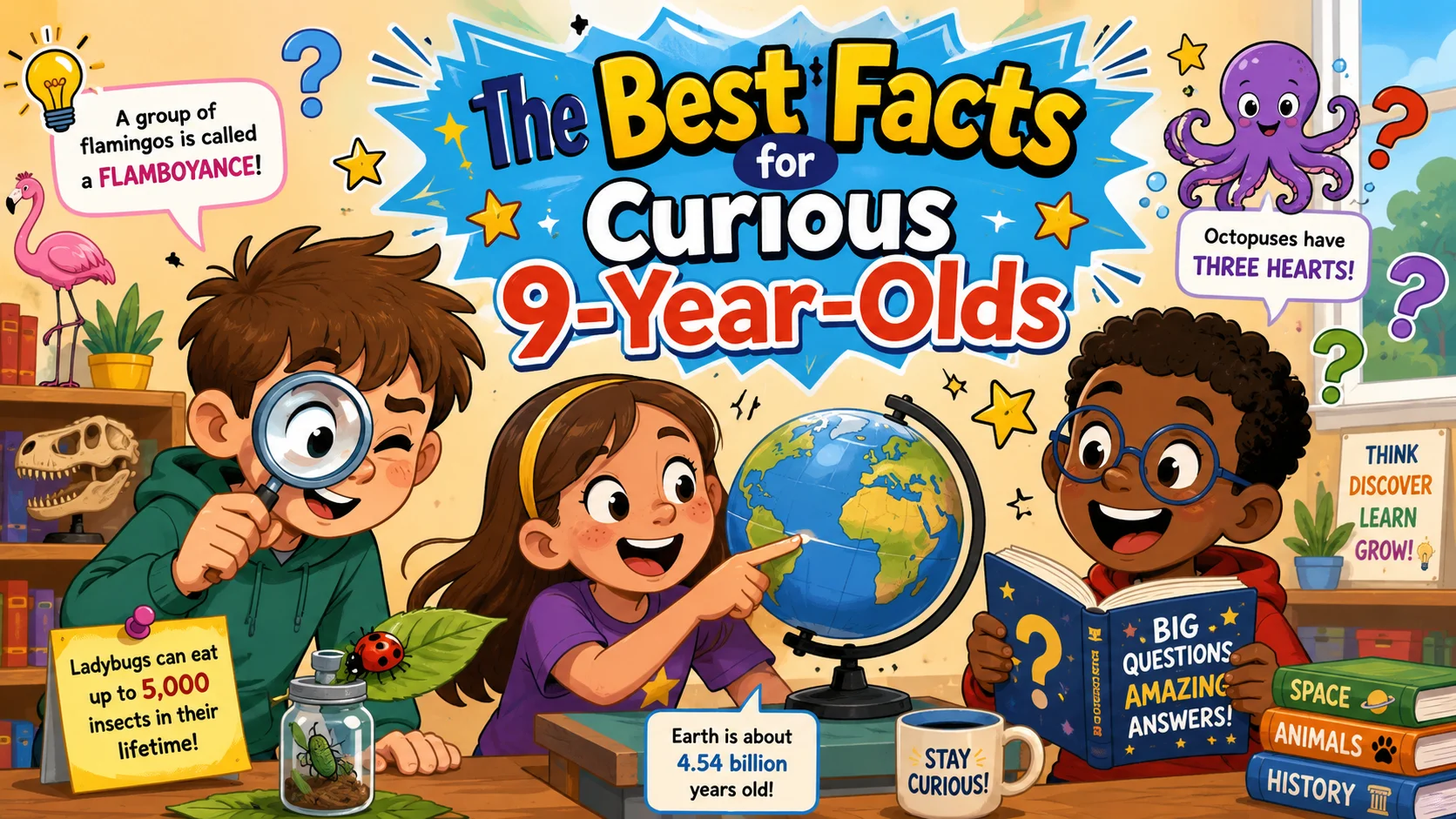
Around age nine, many children are in what psychologist Jean Piaget called the concrete operational stage of development. This means they can process logical information, but they still love weird, concrete details that make ordinary things feel extraordinary. The most effective facts for this age group are surprising, easy to retell, and appropriate for school settings.
Main Topics Covered in This List
To ensure a well-rounded educational experience, this guide organizes random facts into several high-interest categories:
- Nature & Biology: From marine animals like dolphins to land-based predators like sharks.
- Science & Space: Simple explanations of gravity, Earth’s atmosphere, and other kid-friendly science facts.
- History & Culture: Exploring the genius of Leonardo da Vinci and ancient civilizations.
- Human Body: Examining the incredible biological mechanics of our own systems.
How Kids Can Use These Facts
These random fun facts for kids are versatile tools for engagement. Kids of all ages can use them to:
- Socialize: Share a “Did you know?” fact to help break the ice with new friends or classmates.
- Gamify Learning: Host trivia nights for kids using the provided trivia questions to challenge family members.
- Academic Hooks: Use amazing facts to start a school presentation, a science project, or a creative essay.
Quick Overview: Amazing Facts for Kids
This guide is specifically tailored for nine-year-old readers, focusing on vocabulary levels and conceptual complexity that match their fourth- or fifth-grade stage of development.
How This Listicle Works
The content is organized by theme, making it easy for readers to jump to their favorite topics. Each paragraph focuses on a single sub-intent, ensuring that the information is both fun and educational without feeling like a textbook.
Best Way to Read These Facts
You can read the facts in order, but it is often more fun to start with the category that interests you most. Whether it’s space facts or food facts for kids, each section is designed to be a standalone journey of discovery.
Parent and Teacher Note
The following entries are designed to be simple and engaging. They work as bite-sized learning moments that feel fun rather than like chores, encouraging children to explore subjects they already enjoy.
Why Trivia Questions Help 9-Year-Olds
Engaging with trivia questions is more than just a game; it is a cognitive exercise that strengthens neural pathways.
Trivia Builds Curiosity
When a child learns an amazing detail—like the fact that Mars has lower gravity than Earth—it naturally leads to “why” questions. This inquiry-based approach is fundamental to scientific literacy and critical thinking.
Trivia Supports Memory Skills
Short, punchy snippets of info are easy for the human brain to store and retrieve. By recalling these interesting facts, children practice active retrieval, which is a key component of long-term academic success.
Trivia Makes Learning Social
Fun facts can act as “social currency.” Being able to share a surprising sports, animal, or space fact can help kids connect with classmates over shared interests.
Random Interesting Facts for 9-Year-Olds
Let’s start with some random facts for kids that provide an immediate “wow” factor for any audience.
Silly Facts Kids Can Repeat
- The Ice Pop Origin: An 11-year-old boy accidentally invented the ice pop in 1905 when he left a sugary drink outside overnight with a stirring stick in it.
- Wombat Poop: Wombats are famous for producing cube-shaped droppings, which may help the droppings stay in place when wombats use them to mark territory.
- The Tallest Structure: A stack of about 40 billion standard LEGO bricks would reach the Moon, based on the Moon’s average distance from Earth.
- Blue Whale Tongues: A blue whale’s tongue can weigh as much as an elephant.
Weird Facts That Sound Fake
- The Expensive Notebook: One of the most expensive manuscripts ever sold is Leonardo da Vinci’s Codex Leicester, which Bill Gates bought for $30.8 million in 1994.
- Viking Hygiene: Despite their rough reputation, Vikings were very clean and often used combs, razors, and ear spoons to stay tidy.
- Cloud Weight: An average cumulus cloud can contain water droplets weighing about 1.1 million pounds—roughly the weight of 100 elephants.
- Tree Communication: Trees can “talk” to each other through an underground network of fungi, sharing nutrients and warning each other about pests.
Quick Facts for Trivia Games
| Entity | Attribute | Value |
| Mount Everest | Height Change | Still rising slowly |
| Cheetah | Acceleration | 0 to 60 miles per hour in 3 seconds |
| Blue Whale | Heart Size | 5 feet long, about the size of a bumper car |
Science Facts for Kids

General science facts for kids help explain the hidden laws governing our physical universe.
Everyday Science Facts
- Diamond Rain: On Uranus and Neptune, scientists think extreme temperature and pressure may crush carbon atoms into diamonds in the planets’ atmospheres.
- Banana Radiation: Bananas contain potassium, which makes them slightly radioactive, though you would need to eat millions in one sitting for it to be dangerous.
- Sound in Space: Space is a complete vacuum, meaning there is no air for sound to travel through; even a giant explosion would be completely silent.
- Water Density: Water is one of the few substances we commonly see on Earth in all three states: solid, liquid, and gas.
Surprising Nature Science Facts
- Oldest Living Things: Some Mediterranean seagrass meadows may be tens of thousands of years old, and one meadow near Formentera has been estimated at up to 200,000 years old.
- The Speed of Glass: Glass is an amorphous solid, not a slow-moving liquid, and its atoms move far too slowly for old windowpanes to “flow” in any visible way.
- Lightning Heat: Lightning can heat the air around it to about 50,000°F, which is roughly five times hotter than the Sun’s surface.
Science Facts Kids Can Test
- Static Magic: Rub a balloon on your hair and see if it can “bend” a thin stream of water from a faucet using static electricity.
- Sinking or Floating: Test whether a regular soda and a diet soda float in water; the sugar in regular soda makes it denser, causing it to sink.
Space Facts for 9-Year-Olds

The solar system is full of extremes that fascinate young minds and spark a sense of wonder.
Planet Facts
- Weight on Mars: Because Mars has lower gravity than Earth, a person who weighs 200 pounds on Earth would weigh about 76 pounds on Mars.
- Venus’s Day: A day on Venus is longer than its year! It rotates very slowly but orbits the Sun relatively quickly.
- Saturn’s Density: Saturn is so light for its size that if you had a bathtub big enough, the entire planet would float on the water.
- Neptune’s Winds: The winds on Neptune are the fastest in the solar system, reaching speeds of over 1,200 miles per hour.
Moon Facts
- Moon Golf: Astronaut Alan Shepard hit a golf ball on the Moon, and it flew much farther than it would on Earth because of the Moon’s lower gravity.
- Footprints: Because there is no wind or flowing water on the Moon, the footprints left by Apollo astronauts may remain there for a very long time.
- Lunar Distance: At the Moon’s farthest point from Earth, the other planets would just about fit between Earth and the Moon if lined up by diameter.
Ocean Facts for 9-Year-Olds
The ocean covers about 71% of Earth’s surface, and much of it remains unexplored by humans.
Deep Sea Facts
- The Oarfish: The giant oarfish is the longest known living bony fish, reaching more than 50 feet, and it may have inspired old “sea serpent” legends.
- Dark Zones: Below about 3,300 feet, sunlight fades away, and many deep-sea creatures create their own light through bioluminescence.
- Mariana Trench: The deepest known part of the ocean, Challenger Deep in the Mariana Trench, is about 7 miles deep. If you dropped Mount Everest into it, the peak would still be over a mile underwater.
Ocean Animals
- Dolphin Names: Dolphins are highly social marine animals that live in groups called pods and use unique signature whistles as “names” for each other.
- Shark Teeth: Some sharks can go through more than 30,000 teeth in a lifetime because their teeth constantly fall out and are replaced by new rows.
- Octopus Hearts: An octopus has three hearts and blue blood. Two hearts pump blood to the gills, while the third pumps it to the rest of the body.
Animal Facts for 9-Year-Olds
From the smallest insects to the largest mammals, animal facts for kids highlight nature’s incredible diversity.
Amazing Animal Abilities
- Axolotl Regrowth: The axolotl can regrow its limbs, heart, spinal cord, and even parts of its brain if they are injured.
- Super Senses: A bloodhound’s sense of smell is so strong that scent-trailing evidence from trained bloodhounds has been admitted in some courts.
- Cow Friendships: Studies show that cows have “best friends” and get stressed when they are separated from their favorite companions.
Animal Record Breakers
- Fastest Bird: The peregrine falcon can dive at over 200 miles per hour, making it the fastest animal on the planet.
- Loudest Animal: The blue whale’s call is louder than a jet engine and can be heard by other whales hundreds of miles away.
- Strongest Creature: Relative to its size, the dung beetle is one of the strongest animals, capable of pulling more than 1,000 times its own body weight.
Cat and Lion Facts for 9-Year-Olds
Cat Body Facts
- Whiskers: A cat’s whiskers are generally about the width of its body, acting as sensitive sensors that help the cat judge whether it can fit through a tight gap.
- Right-Pawed vs. Left-Pawed: Studies suggest that female cats are more likely to favor their right paw, while male cats are more likely to favor their left paw.
- Vocal Range: Cats are often said to have a wider range of vocalizations than dogs, with some sources estimating more than 100 cat sounds.
Lion Pride Facts
- Social Cats: Lions are the only big cats that live in social groups called prides, and lionesses do much of the hunting.
- The Roar: A lion’s roar can be heard from up to 5 miles away, allowing lions to communicate across vast distances in the savanna.
Dinosaur Facts for 9-Year-Olds
Dinosaur Size Facts
- The Smallest: Microraptor was about the size of a crow and had feathers on both its arms and legs, giving it four wings.
- The Largest: Argentinosaurus may have been about as long as three school buses and weighed roughly as much as 10 to 15 elephants, depending on the estimate.
- Fastest Runner: Struthiomimus may have been able to run close to 50 miles per hour, making it one of the faster dinosaurs.
Fossil Facts
- Fossilization: Only a tiny fraction of all living things ever become fossils, making every discovery a rare and precious piece of history.
- Dino Names: The word “dinosaur” comes from Greek roots often translated as “terrible lizard,” though many dinosaurs were more closely related to birds than to modern lizards.
Human Body Facts for Kids
Human body facts for kids reveal that everyone carries a biological masterpiece with them every day.
Brain and Senses Facts
- Memory Storage: Some estimates compare the human brain’s memory capacity to about 2.5 million gigabytes—enough to store hundreds of years of video.
- Taste Buds: People have thousands of taste buds, and taste-bud cells are regularly renewed, often over a period of about one to two weeks.
- Blinking: The average person blinks about 15 to 20 times per minute, which adds up to over 10,000 blinks a day.
Gross Body Facts Kids Love
- Shedding Skin: Humans shed many skin cells every day, and those flakes can become one part of household dust.
- Belly Button Bacteria: A scientific study found that the average belly button contains dozens of different species of bacteria, many of which are unique to that person.
- Stomach Acid: Stomach acid is strong enough to break down some metal in controlled experiments, but swallowing sharp objects is extremely dangerous.
Food Facts for Kids
Fruits and Vegetables
- Strawberries: Strawberries are famous for having tiny “seeds” on the outside, but botanically those tiny dots are actually fruits called achenes.
- Apples: Apples are about 25% air, which is why they float in water and make a “crunch” sound when you bite them.
- Potatoes in Space: Potatoes were among the first vegetables grown in space, in experiments connected with the Space Shuttle Columbia in 1995.
Snacks and Candies
- Cotton Candy: This sugary snack was co-invented by a dentist! He called it “Fairy Floss.”
- Honey: Properly sealed pure honey can last for an extremely long time without spoiling.
- Chocolate Money: The Maya and Aztecs used cacao beans as a form of currency to buy goods such as food and clothing.
Royal and History Fun Facts for Kids
Weird History Facts
- Ancient Ketchup: In the 1830s, ketchup was sold as medicine to treat diarrhea and indigestion before it became a popular topping.
- Shortest War: The Anglo-Zanzibar War of 1896 is often described as the shortest war in recorded history, lasting no more than about 40 minutes.
- Pyramid Builders: Archaeological evidence suggests that the Great Pyramids were built by skilled laborers rather than enslaved workers.
Royal Facts
- Tower of London: For centuries, the Tower of London housed a royal menagerie that included animals such as lions, a polar bear, and an elephant.
- Birthday Records: Queen Elizabeth II celebrated two birthdays each year: her actual birthday on April 21 and an official birthday, usually marked in June.
Geography and Place Facts for 9-Year-Olds

Countries
- The Longest Border: The United States and Canada share the world’s longest international boundary, stretching 5,525 miles.
- Smallest Country: Vatican City is the smallest fully independent country in the world, covering about 0.17 square miles.
- Lake Superior: Lake Superior contains enough water to cover the entire North and South American continents in one foot of water.
Earth Surface
- Glaciers: About 10% of Earth’s land is covered by glaciers and ice caps, which store roughly three-quarters of the planet’s freshwater.
- Dead Sea: The Dead Sea is so salty that you can float on the surface without even trying to swim.
Math Facts for 9-Year-Olds
- Number Zero: Many ancient number systems did not use zero as a number, and the idea of zero as a placeholder and number developed over time.
- Palindromes: Numbers like 121 or 4554 are called palindromes because they read the same forward and backward.
- The Penny: In recent years, it has cost more than one cent to make and distribute a U.S. penny.
Sports Facts for 9-Year-Olds

- Olympic Gold: Olympic gold medals are not solid gold; they are made mostly of silver and must contain at least 6 grams of gold.
- Babe Ruth: According to a popular baseball story, Babe Ruth kept a chilled cabbage leaf under his cap to stay cool during hot games.
- Golf on the Moon: Golf has even reached the Moon: Alan Shepard hit two golf balls during Apollo 14.
Fresh Ideas for Using Interesting Facts
Turn Facts into Quiz Night
Create a “True or False” quiz for a family evening. Use questions like “Do sharks have bones?” The answer is false—sharks have cartilage instead.
Use Facts for School Projects
Pick one subject, such as the oarfish or Leonardo da Vinci, and create a mini-poster. Use clear details, such as size, age, speed, or location, to explain why your subject is unique.
FAQs
What Are the Best Interesting Facts for 9-Year-Olds?
The best pieces of information involve “superlatives”—the shortest, tallest, or fastest things in the world. Topics about the human body or animal record breakers are usually the most engaging for this age group.
How Many Facts Should Kids Read at Once?
Reading 10–15 items at a time is ideal for memory retention. It allows the child to process the details without becoming overwhelmed by the volume of information.
Which Fact Topics Do 9-Year-Olds Like Most?
Typically, kids love space, dinosaurs, “gross” science, and animals. These themes align with both the school curriculum and common personal interests.
Can These Facts Help With School?
Absolutely. General knowledge enhances vocabulary and provides a broader context for science and history lessons, making it easier to grasp complex academic concepts.
How Can Parents Check Fact Accuracy?
Use reputable sources such as National Geographic Kids, NASA, the Smithsonian, NOAA, USGS, or Britannica to verify facts before sharing them.

Take a short quiz to find out what your everyday choices say about your parenting style
When your child is curious about something new, what’s your instinct?
Take a short quiz to find out what your everyday choices say about your parenting style
“Can I download this app?” What happens next?
Take a short quiz to find out what your everyday choices say about your parenting style
When it comes to rules at home, which sounds most like you?
Take a short quiz to find out what your everyday choices say about your parenting style
If you could give your child one life skill today, what would you pick?
Take a short quiz to find out what your everyday choices say about your parenting style
Your child gets to choose what to watch. What would your ideal setup look like?
Take a short quiz to find out what your everyday choices say about your parenting style
Pick your parenting superpower ✨