
Fun Facts for Your 8-Year-Old: Cool, Weird, and Random Facts Kids Love

 Discover a Free Education Video App for Kids
Pastory uses AI to personalize educational video content based on your child’s interests and personality. Safe, engaging, and built for curious young minds. Sign up now to stay updated and enjoy early access with a free trial

Welcome to a kid-friendly list of age-appropriate facts designed especially for third graders. Around age eight, children often go through important changes in how they think, reason, and learn. They begin to use logic in more advanced ways, notice patterns, sort information into categories, and ask bigger “why” questions about the world.
This curated list gives kids short, surprising, and safe facts they can repeat, discuss, and use in trivia games. Although many parents search for 100 fun facts for kids, this guide goes further with a broad, topic-based collection of kid-friendly facts. Whether your child loves deep-sea creatures, outer space, ancient history, food facts, or quirky science experiments, these bite-sized facts are written for their growing vocabulary and reading level.
Key Takeaways
- Targeted Cognitive Development: Eight-year-olds often benefit from structured, categorized information that supports memory, comparison, and logical sorting skills.
- Curated vs. Open Digital Feeds: Using verified, structured fact lists can help reduce overload and offer a safer alternative to unrestricted algorithmic video feeds.
- Multi-Subject Engagement: The list spans more than a dozen categories, including animals, space, human biology, geography, food, technology, and sports, to appeal to different interests.
- Interactive Application: These facts work well for family trivia games, literacy-building writing prompts, classroom warm-ups, and active dinner table discussions.
- Curiosity Boost: Amazing facts help spark questions, encourage conversation, and turn ordinary moments into learning opportunities.
Kid-Friendly Facts Grouped by Topic
To make this comprehensive guide easy to navigate, the facts are organized into clear, predictable categories. This structure helps parents, educators, and children quickly find favorite themes or move to a new topic when a child’s interest shifts. This kind of categorization also supports the sorting and comparison skills children practice in elementary school.
A categorized list is especially useful because kids often enjoy fun facts more when they can choose the subject that interests them first. Some children jump straight to fun facts about animals, while others prefer random fun facts for kids, space discoveries, or weird but true fun facts that sound almost impossible.
Best Facts for Curious 8-Year-Olds
The entries in this list were chosen because they are surprising, short, safe, and simple enough for many third graders to read independently. Many children at this age love learning new things but can lose focus when sentences are too dense or abstract.
These interesting facts focus on concrete, easy-to-picture details — such as an animal’s size or a planet’s temperature — which fit well with the way many eight-year-olds learn. The best facts for this age group surprise children without confusing them and give them enough information to ask follow-up questions.
Quick Ideas for Using Facts
This collection works best when it is woven into daily routines rather than read all at once. Parents can make everyday moments more interesting by sharing facts during car rides, at the dinner table, during classroom warm-ups, or as part of a bedtime routine. By embedding educational content into relaxed environments, you foster a natural love of learning and help children view information gathering as an exciting, everyday activity.
These entries also work well as kids’ trivia questions, writing prompts, classroom warm-ups, and quick conversation starters. Kids of all ages can enjoy them, but the vocabulary and explanations are especially suited to eight-year-old readers.
Fun Facts for 8-Year-Olds: Quick Overview

This list format offers high-interest, bite-sized facts that eight-year-olds can repeat to friends, ask questions about, or use in trivia games. Each section is designed to stand on its own, so readers can enjoy any topic without reading the entire list first.
What Makes a Fact Fun for 8-Year-Olds
Eight-year-olds are often drawn to information that feels weird, funny, visual, slightly gross, or surprising. Facts that challenge what children expect — such as how an animal eats or how a piece of technology works — can make the information more memorable and easier to talk about.
Kids often love weird details because unusual information feels exciting and easy to share. Weird fun facts also help children practice comparing what they expected with what is actually true.
How Many Facts to Share at Once
A practical approach is to share about 5 to 10 facts during a single interaction. Pacing the delivery helps children stay interested and leaves room for follow-up questions, guesses, and discussion.
Best Topics for 8-Year-Old Curiosity
The categories below reflect topics that commonly interest children this age, such as animals, space, the human body, history, food, and sports. These subjects provide concrete visual details that kids can easily picture in their minds.
How to Use This List With Your 8-Year-Old
Transforming static information into an interactive learning experience can help children think more deeply about what they read. Unrestricted digital consumption can leave children passive, while adult-guided activities can make learning more active and conversational.
Turn Facts Into Trivia Questions
Parents can turn many of these facts into simple quizzes by using an “ask, guess, reveal, and explain” sequence. For example, instead of stating a fact directly, ask your child: “How many hearts do you think an octopus has?” Let them guess, reveal the answer, and then talk about the reason behind it.
Use Facts for School Projects
These facts can be useful starting points for elementary school writing prompts, weekly science starters, creative posters, or classroom show-and-tell presentations. When an eight-year-old chooses a fact that sparks their curiosity, they can use it as the starting point for a mini-research project.
Start a Family Fact Challenge
Starting a weekly family fact challenge at the dinner table creates an environment where curiosity is celebrated. Each family member brings one random fun fact to share, and the group votes on which entry is the funniest, weirdest, or most surprising. This routine shows children that learning can be fun, social, and lifelong.
Random Fun Facts for 8-Year-Olds
This section provides a broad assortment of silly, surprising, and highly shareable facts. Random facts can capture the attention of reluctant readers because they are entertaining and do not require much background knowledge.
Silly Facts Kids Can Repeat
- Wombat scat is shaped like perfect cubes. The Australian wombat produces cube-shaped droppings, which may help them stay in place and mark territory on rocks and logs.
- One early mechanical calculator, invented by Blaise Pascal in 1642, was known as Pascal’s calculator or the Pascaline. This mechanical device used gear wheels to add and subtract numbers before digital microchips existed.
- The word “astronaut” comes from Greek words meaning “star” and “sailor.” The name describes travelers who voyage through space.
- In parts of Colombia, especially around Bogotá and the Andean region, hot chocolate is traditionally served with cheese that melts inside the mug. The salty cheese melts in the sweet, warm drink, creating a flavor combination many people in Colombia enjoy.
- One of the world’s oldest recorded jokes dates back to around 1900 BC in ancient Sumer. The joke was written on a clay tablet and includes a silly piece of toilet humor about household behavior.
Weird Facts That Sound Fake
- Clouds look light and fluffy, but the water droplets in an average cumulus cloud can weigh about 1.1 million pounds altogether. This weight is roughly equal to 100 adult elephants floating above your head, held up by rising warm air beneath the cloud.
- The first toy ever advertised on television was Mr. Potato Head in 1952. Originally, the toy box did not include a plastic body; parents had to provide a real potato from the kitchen so kids could poke the plastic face pieces into it.
- Bananas are botanically classified as berries, but strawberries are not. In botanical terms, a true berry must have seeds on the inside of a fleshy fruit, which means watermelons, pumpkins, and bananas fit the definition.
- Some sloths can hold their breath underwater for a surprisingly long time — up to about 40 minutes. That can be longer than many dolphins can stay underwater on a single breath.
- Lightning can heat the air around it to about 50,000°F, which is roughly five times hotter than the surface of the Sun.
Quick Facts for Trivia Games
- The heart of a blue whale is about the size of a small car.
- A honeybee must visit about two million flowers to produce just one pound of honey.
- The game of Monopoly was originally created to teach players about the dangers of monopolies.
- Apples float in water because about 25% of their total volume is made up of trapped air.
- A sneeze can send air and droplets out very quickly, though exact speeds vary widely.
Human Body Fun Facts for 8-Year-Olds
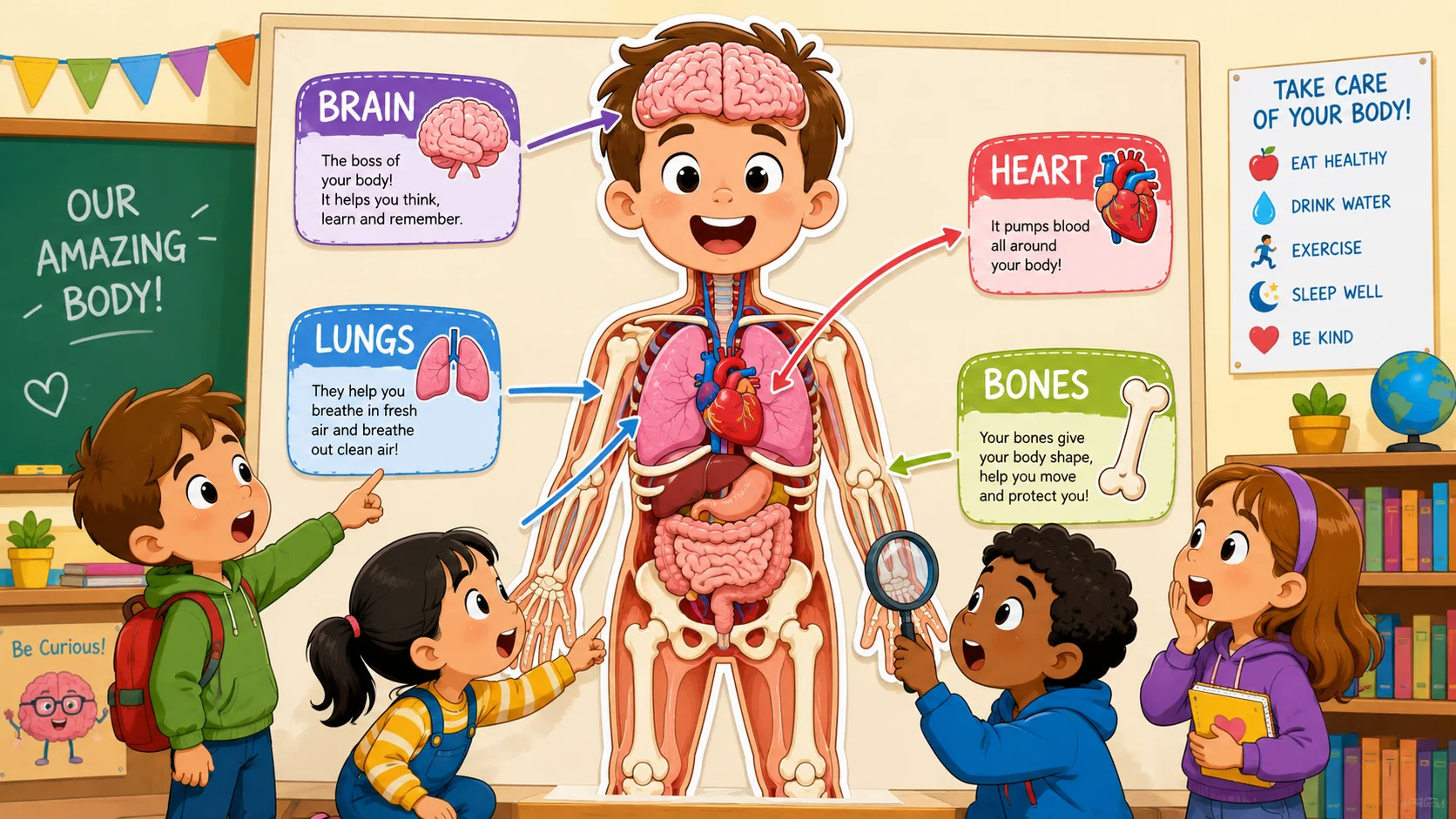
Learning about the human body helps children understand how their bodies work and why healthy habits matter. The human body provides endless fascination because it offers a direct, personal link to science. These human body facts for kids are concrete, surprising, and easy to connect to daily life.
Brain and Senses Facts
- Your brain uses electrical signals, and its overall power use is often compared to that of a low-wattage light bulb. The billions of neurons inside the human brain constantly send signals to one another.
- Taste bud cells are constantly replaced, with many lasting roughly 10 to 14 days. The sensory receptors on your tongue renew themselves regularly, helping your sense of taste continue working throughout your life.
- The human brain stops growing in physical size around age 18, but it continues to develop its wiring until around age 25. This long development cycle helps explain why teenagers and young adults continue to change the way they make decisions.
- Your eyes grow a lot during early childhood and then change much more slowly, while your nose and ears can keep changing in appearance throughout life.
- The human brain uses about 20% of the body’s total energy, even though it only makes up about 2% of total body weight. This high energy use is one reason your brain needs a steady supply of nutrients from food.
Bones, Teeth, and Muscles Facts
- Human babies are born with approximately 300 bones, but adults have only 206 bones. As a child grows, many smaller bones fuse together — especially in the skull, spine, and hands — to create a stronger, solid skeletal system.
- Tooth enamel is the hardest substance in the human body. This protective outer layer consists of highly mineralized calcium phosphate, making your teeth stronger than your skeletal bones.
- One of the strongest muscles in the human body, relative to its size, is the masseter muscle in the jaw. This muscle helps you bite and chew food.
- More than half of your total body bones are located in your hands, wrists, feet, and ankles. Out of the 206 bones in an adult, 106 are packed into these four areas to allow for complex movement and balance.
- Your bones are living tissues that replace themselves over time. Special cells continuously break down old bone material and rebuild it with fresh minerals.
Heart, Skin, and Digestion Facts
- Over an average lifetime, the human heart pumps an enormous amount of blood — enough to fill multiple large ships. Beating roughly 100,000 times per day, this muscular organ works continuously, with brief pauses between beats.
- A person sheds many dead skin cells every year, adding up to several pounds over time. The epidermis, or outer skin layer, regularly renews itself, and some household dust contains discarded skin cells.
- Your stomach lining creates a new layer of protective mucus every few days. The stomach produces highly acidic digestive juice to break down food, and this protective lining helps keep the organ safe.
Food Fun Facts for 8-Year-Olds
Exploring food science helps eight-year-olds connect what they eat with geography, biology, and history, making family meals more interesting. These food facts combine familiar snacks with surprising details.
| Food Category | Entity | Specific Attribute | Quantifiable Value |
| Fruit | Strawberry | Location of seeds | About 200 seeds on exterior |
| Snack | White Chocolate | Cocoa content | Contains cocoa butter, but no cocoa solids |
| History | Ice Pop | Inventor age | 11 years old in 1905 |
Fruit and Vegetable Facts
- An average strawberry has about 200 tiny seeds dotting its outer skin. Unlike most fruits that hide their seeds inside the core, strawberries are unusual because their tiny seed-like structures appear on the outside.
- Cranberries bounce on hard surfaces like rubber balls when they are fresh. Processors can bounce cranberries over boards or barriers to help sort firm berries from softer ones.
- Lemons can contain natural sugars, but their strong citric acid makes them taste much sourer than strawberries.
Snack and Dessert Facts
- White chocolate does not contain cocoa solids, which makes it different from milk or dark chocolate. It uses cocoa butter mixed with sugar, milk products, and vanilla flavoring.
- One popular story about the invention of potato chips dates back to 1853. Chef George Crum is often credited with creating this crunchy snack in New York after a restaurant customer complained that his fried potatoes were cut too thick and soggy.
- The Guinness-recognized heaviest scoop of ice cream weighed 3,010 pounds and was created in Wisconsin. This giant dessert stood over 5 feet tall and required thousands of pounds of real cream and sugar to break the world record.
Weird Food History Facts
- In the 1830s, some tomato-based products, including ketchup-like preparations and tomato pills, were promoted as medicine in the United States. A doctor named John Cook Bennett claimed that tomatoes could help with indigestion before tomato ketchup became a popular condiment for french fries.
- An 11-year-old boy named Frank Epperson accidentally invented the ice pop in 1905. He left a cup of powdered soda mix, water, and a stirring stick out on his porch during a freezing night, creating an early frozen pop.
- Early cultivated carrots came in colors such as purple, yellow, white, and red, while orange carrots became common later through selective breeding. Dutch growers helped popularize orange carrots, although the exact cultural and political reasons are often debated.
Science and Nature Facts for 8-Year-Olds

At age eight, science learning often works best when children can connect big ideas to things they can see, touch, or imagine. These science facts explain natural phenomena in a concrete, kid-friendly way.
Earth Science Facts
- Some volcanic rocks, including Hawaiian basalt, contain green olivine crystals. In Hawaii, olivine can weather out of volcanic rock and help create rare green-sand beaches.
- Earth experiences about 100 lightning flashes per second around the world. That adds up to millions of lightning flashes each day.
- Fossils of ancient sea creatures have been discovered at the very top of Mount Everest. Because tectonic plates collided millions of years ago, the limestone rock that forms parts of the mountain was pushed up from the ancient ocean floor.
Plant and Ocean Facts
- Trees can be connected through underground networks of fungi, which may help them exchange nutrients and chemical signals. Some scientists call this network the “Wood Wide Web.”
- At least half of Earth’s oxygen production comes from the ocean, mostly from photosynthesizing plankton. While rainforests are vital, these tiny drifting sea organisms generate a large share of the air humans breathe.
- Some bamboo species are among the fastest-growing plants on Earth and can grow up to about 36 inches in 24 hours under ideal conditions. A person can sometimes watch certain species grow with the naked eye.
Everyday Science Facts
- Sound travels through water roughly four times faster than it travels through air. Because water molecules are packed more tightly together than air molecules, they pass sound vibrations along more efficiently.
- In many places outside the tropics, shadows are often longer in winter than in summer. This happens because the sun sits lower in the winter sky, causing light rays to hit objects at a sharper angle.
- Your reflection in a standard mirror is not truly flipped left to right; it is reversed front to back. The mirror bounces light rays directly back along the path they arrived.
Space Fun Facts for 8-Year-Olds
Astronomy can spark a child’s curiosity by showing just how vast the universe is. Space fun facts focus on the extreme conditions found beyond Earth’s atmosphere.
Planet Facts
- One rotation on Venus takes longer than one Venus year. Venus spins on its axis incredibly slowly, taking 243 Earth days to complete one rotation, but it takes only 225 Earth days to complete its full orbit around the sun.
- Saturn has an average density lower than water, so in a simplified thought experiment, it could float if there were a bathtub large enough. Despite its immense size, Saturn consists mostly of hydrogen and helium gas.
- Mars is home to Olympus Mons, the largest known volcano in our solar system. This giant shield volcano rises about 16 miles above the surrounding plains, and NASA describes it as more than 25 miles tall from base to summit, with a base about the size of Arizona.
Moon and Astronaut Facts
- Footprints left by Apollo astronauts on the Moon will remain visible for a very long time. Because the Moon has no atmosphere, wind, or water, there is no natural weather to erode or wash the footprints away.
- Astronauts can temporarily grow taller in microgravity while living aboard the International Space Station. Without the usual downward pull of Earth’s gravity, the spine can stretch slightly in microgravity.
- Liquid water exposed to open space would boil rapidly because of the low pressure and then freeze into ice crystals as it loses heat.
Star and Galaxy Facts
- The Sun is so massive that approximately 1.3 million Earths could fit inside it. Representing 99.8% of the total mass of our solar system, this star holds all eight major planets in their steady orbits through gravity.
- A black hole is not an empty hole; it is a place where matter is packed incredibly tight. Because a massive amount of material is squeezed into a tiny area, the gravity becomes so strong that even light cannot escape its pull.
- Our solar system moves around the center of the Milky Way at about 514,000 miles per hour. Even at this incredible speed, it takes about 230 million years to complete one full journey around the center of the galaxy.
Animal Fun Facts for 8-Year-Olds

The animal kingdom is full of surprising details children can easily picture and remember. Animal facts for kids foster empathy, environmental awareness, and a foundational understanding of biological adaptations. These fun facts about animals are especially memorable because children can picture the creatures clearly.
Mammal Facts
- Elephants cannot jump because of their enormous weight and body structure. Their skeletal design requires all four feet to remain close to the ground to support their massive weight, which can exceed 12,000 pounds.
- A small bat can catch and eat hundreds of tiny insects in a single hour. Using echolocation to find prey in the dark, these flying mammals help control insect populations.
- A polar bear’s fur is not white; it is clear and hollow. Each hair strand reflects visible sunlight, making the bear look white against the snow, while its hidden skin underneath is black and helps absorb heat from the sun.
Bird and Insect Facts
- Honeybees communicate the location of food to their hive by performing a specific “waggle dance.” By walking in patterns and shaking their abdomens, bees tell their companions the direction and distance of flower patches relative to the sun.
- Fleas can jump up to 200 times their own body height. This athletic feat would be like a human child jumping over a skyscraper in a single leap.
- Many hummingbirds beat their wings dozens of times per second, and some reach around 50 to 80 beats per second. This rapid movement allows them to hover in mid-air, fly backward, and even fly upside down while gathering flower nectar.
Ocean Animal Facts
- An octopus has three hearts and blue blood. Two of the hearts pump blood to the gills, while the third heart circulates oxygenated blood to the rest of the body.
- Dolphins can rest one half of their brain at a time, often keeping one eye open while they sleep. This adaptation allows them to surface for air and watch for predators while resting.
- Sea turtles return to the same beach where they hatched decades earlier to lay their own eggs. Scientists believe these reptiles use the Earth’s magnetic fields to navigate thousands of miles across open ocean water.
Cat Facts for 8-Year-Olds
Cats may live in our homes, but they still have many wild instincts. These cat facts help kids understand how household pets interact with the world around them.
Cat Body Facts
- A domestic cat can jump up to six times its total body length in one bound. Powerful muscles in the hind legs, combined with a flexible spine, allow cats to leap onto high countertops and doors.
- Cats have collarbones that are not attached to other bones in the same way human collarbones are. This structure helps them squeeze their shoulders through narrow openings that are wide enough for their head and whiskers.
- A cat’s whiskers are highly sensitive touch sensors, and their span is often about as wide as the cat’s body. These hairs detect faint air currents and help the animal judge whether a tight space is safe to climb into.
Cat Behavior Facts
- Cats spend roughly two-thirds of their lives asleep. An average eight-year-old cat has been awake for only about two and a half years of its life, conserving physical energy for short bursts of hunting play.
- A cat’s purr falls within a frequency range that some studies have linked to tissue and bone-healing effects, although scientists still study exactly how this works.
- When a cat rubs its face against furniture or your legs, it is marking territory with scent glands. Located on their cheeks and chin, these glands leave invisible pheromones that make the cat feel safe in its home environment.
Famous Cat Facts
- Ancient Egyptians considered cats special animals and often connected them with protection and good fortune. Some ancient Egyptians honored cats with jewelry, artwork, and mummification.
- A cat named Stubbs served as the honorary mayor of an Alaskan town for 20 years. From 1997 to 2017, this feline citizen held office in Talkeetna, drawing thousands of tourists to the area every year.
Lion Facts for 8-Year-Olds
Lions are powerful predators of the African plains, and their social groups show how teamwork helps them survive.
Lion Family Facts
- Lions are the only wild cats that live in large, organized social groups called prides. A lion pride often includes related females, their cubs, and one or more adult males.
- In many lion prides, lionesses do much of the hunting. While larger male lions often guard the pride’s home territory from rivals, the females work as a team to capture food.
- A lion cub is born with dark spots on its fur that fade as it grows older. These spots act as natural camouflage, helping hide tiny cubs in tall grass from predators like hyenas.
Lion Hunting Facts
- An adult lion’s roar can be heard from up to about five miles away. This vocalization helps lions communicate their location and warn intruders away from their territory.
- Lions possess a layer of cells in their eyes that reflects moonlight, giving them night vision far better than a human’s. This biological advantage allows them to hunt successfully in very low light.
Lion Habitat Facts
- Lions do not actually live in thick jungles, despite being called the “King of the Jungle.” They thrive mostly in open African savannas, dry grasslands, and scrub forests where they have space to hunt.
- Wild lions spend up to 20 hours a day resting or sleeping to save energy. Living in hot climates, they often remain inactive during the midday heat and become more active when the sun goes down.
Shark Facts for 8-Year-Olds
Sharks are often misunderstood as ocean animals. These non-scary facts emphasize their essential role as keepers of a balanced ocean ecosystem.
Shark Teeth Facts
- Sharks do not have any bones in their body; their skeleton is made entirely of cartilage. This light, flexible tissue — the same material found in human noses — allows sharks to swim quickly and turn tightly without cracking bones.
- Some shark species can go through more than 30,000 teeth over a lifetime. Their teeth are arranged in multiple rows like conveyor belts; when a front tooth falls out, a new one slides forward to replace it.
Shark Senses Facts
- Sharks can detect extremely small amounts of scent in water, which helps them find food in the ocean. Their strong sense of smell allows them to track scent trails through open water.
- Sharks have special sense organs that detect tiny electrical signals from other animals. Tiny pores on their snout, called the Ampullae of Lorenzini, detect faint signals generated by the movement and heartbeats of nearby prey.
Shark Species Facts
- The whale shark is the largest fish in the world, growing up to about 40 feet long, but it eats tiny plankton. This gentle giant filter-feeds by swimming with its massive mouth open and straining small organisms from the water.
- The dwarf lanternshark is one of the smallest known sharks, growing to about 6 to 8 inches long. This tiny deep-sea creature fits easily inside an adult human’s hand and can glow in the dark to confuse predators.
Dinosaur Facts for 8-Year-Olds
Paleontology combines history and biology, helping children imagine prehistoric worlds from clues found in rocks.
Dinosaur Size Facts
- The Argentinosaurus was one of the heaviest land animals to ever exist, weighing as much as 15 African elephants. This massive long-necked herbivore reached lengths of more than 100 feet, requiring vast amounts of ancient plants to sustain its body weight.
- Some of the smallest known non-bird dinosaurs were close in size to modern birds. Microraptor, for example, was about the size of a crow and had real feathers on both its arms and legs, allowing it to glide between prehistoric tree branches.
Fossil Facts
- The word “fossil” comes from the Latin word fossilis, which means “dug up.” It describes preserved remains or traces of ancient life that have been mineralized into rock over millions of years.
- Paleontologists can determine what a dinosaur ate by studying fossilized dung, which is scientifically called a coprolite. These stones can reveal fragments of ancient bones, seeds, and plant matter.
Dinosaur Name Facts
- The name Tyrannosaurus rex translates directly to “Tyrant Lizard King.” Scientists chose this name because of the creature’s massive jaws, long teeth, and role as an apex predator of the Cretaceous period.
- The name Velociraptor means “swift thief.” While movies often depict Velociraptors as large creatures, real fossils show they were about the size of a turkey and were covered in downy feathers.
Geography Facts for 8-Year-Olds
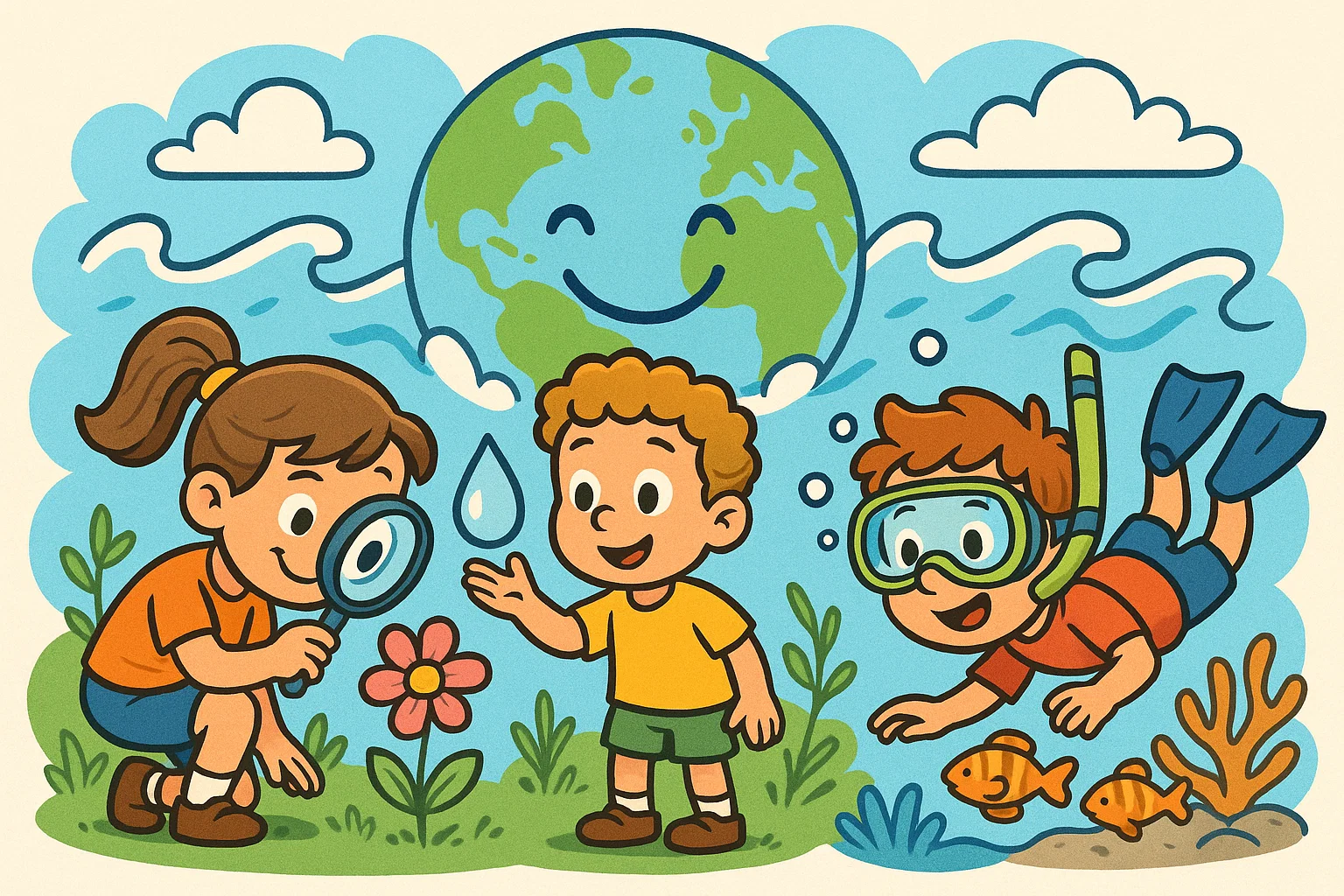
Geography helps children build mental maps and understand how diverse the world is. These interesting facts for kids make countries, oceans, islands, and maps easier to picture.
Country and Continent Facts
- Vatican City is the smallest country in the world, measuring about 0.17 square miles, or 0.44 square kilometers, in total area. Located entirely inside the city of Rome, Italy, this independent nation has its own post office, flag, and military guard.
- Russia is so vast that it contains 11 different time zones. When a child on one side of Russia is eating breakfast, another child living on the opposite coastline may be getting ready for bed.
Ocean and Island Facts
- Greenland is the largest island in the world, and about 80% of its surface is buried under a giant ice sheet. Despite its green name, it is one of the coldest, most glaciated landmasses on Earth.
- The Mariana Trench in the Pacific Ocean is the deepest place on Earth, dropping down nearly 7 miles. If you placed Mount Everest inside this trench, the peak would still be covered by more than a mile of ocean water.
Map Facts Kids Can Picture
- The city of Istanbul, Turkey, spans two continents: Europe and Asia. Several bridges and transport links cross the Bosporus, allowing people to travel between the European and Asian sides of Istanbul.
- The “Four Corners” is the only spot in the United States where you can stand in four states at once. By placing your hands and feet in specific quadrants, you can occupy Arizona, Colorado, New Mexico, and Utah simultaneously.
History Fun Facts for 8-Year-Olds

History shows children that people in the past were creative, curious, and sometimes wonderfully strange. These history fun facts for kids make the past feel vivid, unusual, and memorable.
Ancient History Facts
- In ancient Rome, oil and sweat scraped from athletes’ bodies were sometimes collected and sold for cosmetic or medicinal uses. People believed the sweat of famous athletes had special properties that could improve skin health or beauty.
- Ancient Egyptians played bowling-like games more than 5,000 years ago. Archaeologists have discovered ancient play areas containing stone balls and tracks where players may have aimed to roll balls toward a target.
Invention Facts
- Play-Doh was originally invented in the 1930s as a commercial cleaning product to wipe soot off wallpaper. When houses switched from coal heating to cleaner gas heat, the company repurposed the soft dough into a colorful toy.
- One early American mechanical alarm clock could only ring at one specific time: 4:00 AM. Levi Hutchins invented this device in 1787 for himself so he would never oversleep his morning work shift.
Famous People Facts
- Evidence suggests Leonardo da Vinci was ambidextrous and could write and paint with both hands. This rare ability helped make him one of the most productive artists and inventors of the Italian Renaissance.
- Baseball legend Babe Ruth used to keep a wet leaf of cabbage underneath his baseball cap during games. He did this to keep his head cool in hot weather, replacing the cabbage leaf with a fresh, cold one every few innings.
Royal Facts for 8-Year-Olds
Royal history is full of unusual traditions, castles, and quirky rules that children often enjoy learning about.
Queen and King Facts
- King Louis XIV of France helped make elaborate wigs fashionable at court. He began wearing wigs as a young man and started a major fashion trend across European royal courts.
- The British Crown has the right to claim ownership of unmarked mute swans in open waters in the United Kingdom. This royal rule dates back centuries, when the birds were considered a luxury food reserved for royal banquets.
Castle Facts
- Many medieval castle staircases were designed to spiral clockwise as you walked up. This layout could give defending knights an advantage because most were right-handed, leaving their sword arms freer to swing downward at attackers.
- Castle moats were rarely filled with clear, clean water. Instead, they often functioned as part of the castle’s waste system and could include sharp wooden stakes to make crossing highly dangerous for invading armies.
Royal Tradition Facts
- Some British ceremonial guards wear tall bearskin caps. These hats stand about 18 inches high and were designed in the 1800s to make soldiers look taller and more intimidating to approaching enemies.
Sports and Football Facts for 8-Year-Olds
Sports trivia combines fun numbers with stories about teamwork, competition, and history.
Football Facts
- Early footballs were often made with inflated animal bladders. These materials were tough, naturally roundish, and easy to inflate, which is one reason people still refer to a modern leather football as a “pigskin.”
- A classic soccer ball traditionally consists of 32 individual panels stitched together. This design features 20 regular hexagons and 12 regular pentagons, creating a geometric sphere when inflated.
Olympic Facts
- From 1912 to 1948, the Olympic Games awarded medals for arts categories such as painting, architecture, literature, music, and sculpture. The founder of the modern games believed a true champion should master both physical and creative skills.
- Tug-of-war was an official Olympic sport for 20 years. Teams competed on grass surfaces, and nations like Great Britain and the United States won multiple gold medals before the event was dropped in 1920.
Weird Sports Facts
- According to some early hockey stories, frozen cow droppings may have been used as makeshift pucks before rubber pucks became common. These frozen discs could slide across outdoor ice before manufactured pucks were widely used.
Weather and Tornado Facts for 8-Year-Olds
Weather facts show the power of Earth’s atmosphere and help kids understand why storm safety matters.
Tornado Facts
- The most violent tornadoes can produce winds around 300 miles per hour. These extreme weather events form inside giant rotating thunderstorms called supercells, where warm, moist air collides with cold, dry air currents.
- The center of a tornado is a low-pressure zone, but most tornado damage comes from extremely powerful rotating winds that lift and throw debris. As the vortex moves across land, these winds can lift soil, tree branches, and even vehicles.
Cloud and Rain Facts
- Raindrops are not actually shaped like teardrops; they look more like tiny hamburger buns as they fall. As a drop falls through the atmosphere, air pressure pushes up against the bottom, causing it to flatten before splitting apart.
- Rare lightning “megaflashes” can stretch 60 miles or more across the sky, although most lightning flashes are much shorter. These flashes can link different storm clouds together and release immense amounts of energy.
Wind and Lightning Facts
- The sound of thunder is caused by lightning heating the surrounding air to about 50,000°F in a microsecond. This rapid heating causes the air to expand quickly, creating the sound wave we hear as thunder.
Left-Handed Facts for 8-Year-Olds
Learning about left-handedness helps children understand that people’s bodies and brains can work in different ways.
Left-Handed People Facts
- Approximately 10% of the global human population is left-handed. This percentage appears fairly consistent across many populations, though exact numbers can vary.
- Some famous creative thinkers were left-handed or ambidextrous. Leonardo da Vinci, for example, is believed to have written and painted with both hands. Their stories can help children see that people think, write, and solve problems in different ways.
Brain and Hand Preference Facts
- The right side of the human brain controls the muscles on the left side of the body. This cross-wired nervous system means the right side of the brain helps control movement on the left side of the body.
Left-Handed Daily Life Facts
- Standard scissors are designed primarily for right-handed people, forcing the blades together to cut. When a left-handed child uses them, the blades can naturally pull apart, causing the paper to fold instead of slice cleanly.
Safety and Technology Facts for 8-Year-Olds
Introducing digital citizenship early helps third graders learn how to use modern devices responsibly.
Internet Safety Facts
- A strong password should be hard to guess and should not be a simple word, name, or birthday. Using a longer password or passphrase with a mix of characters can make it much harder for others to guess.
- Much of the internet relies on a massive web of physical cables, including undersea fiber-optic cables that connect continents. When you click a link, data can travel through fiber-optic cables extremely quickly to bring information to your device.
Robot and Gadget Facts
- The first computer mouse was carved out of a solid block of wood in 1964. Invented by Douglas Engelbart, this prototype used two metal wheels to track movement across a desk before laser sensors were developed.
Everyday Technology Facts
- The Global Positioning System (GPS) helps your device calculate its location using signals from satellites orbiting Earth.
- Many modern touchscreens detect tiny changes in electrical charge when a finger touches the screen.
- Some traffic light systems use sensors in or near the road to detect when cars are waiting at an intersection.
Math and Number Facts for 8-Year-Olds
Number sense can grow when children notice the strange patterns hidden inside math.
Number Pattern Facts
- The number four is the only number in the English language that has the same number of letters as its numerical value.
- A palindrome number reads exactly the same backward as it does forward, like 121 or 7447.
- Rolling two standard dice gives you a total of seven more often than any other total.
Money Facts
- An American dollar bill can be folded back and forth roughly 4,000 times before it finally tears apart.
- The largest bill ever printed by the US Treasury was the $100,000 gold certificate, which was used only between banks.
- In some ancient societies, salt was valuable enough to be used in trade or as a form of payment.
Measurement Facts
- There are 31,536,000 seconds in a common year with 365 days.
- An object that weighs 60 pounds on Earth would weigh about 10 pounds on the Moon because the Moon’s gravity is much weaker.
- The Burj Khalifa tower in Dubai stands about 2,717 feet tall and is currently recognized as the world’s tallest building.
Fun Facts FAQ
What Are Some Facts for 8-Year-Olds?
Good facts for eight-year-olds are usually short, concrete, safe, and surprising. Avoid overly abstract concepts; instead, focus on measurable details, strange animal adaptations, weird but true fun facts, and unusual historical stories that children can easily recall and share with peers.
Which Fun Facts Do Kids Like Most?
Kids often respond especially well to animal facts, space facts, gross human body facts, and weird food trivia. These topics provide direct connections to things they can observe in the physical world around them.
How Can Parents Teach With Fun Facts?
Parents can teach with fun facts by turning simple entries into guessing games, morning reading prompts, or interactive family trivia challenges. This keeps the learning experience conversational and collaborative while building lifelong critical thinking habits.
Why Do Kids Love Fun Facts?
Kids love fun facts because they are short, surprising, and easy to share. A good fact gives children a quick moment of discovery and can encourage them to ask bigger questions about science, animals, food, geography, or history.
Are Amazing Fun Facts for Kids Useful in Classrooms?
Yes, amazing fun facts for kids can be useful in classrooms when they are grouped by topic and connected to discussion, writing, or research. Teachers can use them as warm-ups, trivia questions, or short prompts that encourage students to explain what makes each fact surprising.

Take a short quiz to find out what your everyday choices say about your parenting style
When your child is curious about something new, what’s your instinct?
Take a short quiz to find out what your everyday choices say about your parenting style
“Can I download this app?” What happens next?
Take a short quiz to find out what your everyday choices say about your parenting style
When it comes to rules at home, which sounds most like you?
Take a short quiz to find out what your everyday choices say about your parenting style
If you could give your child one life skill today, what would you pick?
Take a short quiz to find out what your everyday choices say about your parenting style
Your child gets to choose what to watch. What would your ideal setup look like?
Take a short quiz to find out what your everyday choices say about your parenting style
Pick your parenting superpower ✨



