Fun Facts for Kids: 104 Cool, Weird, and Random Facts Kids Love

 Discover a Free Education Video App for Kids
Pastory uses AI to personalize educational video content based on your child’s interests and personality. Safe, engaging, and built for curious young minds. Sign up now to stay updated and enjoy early access with a free trial
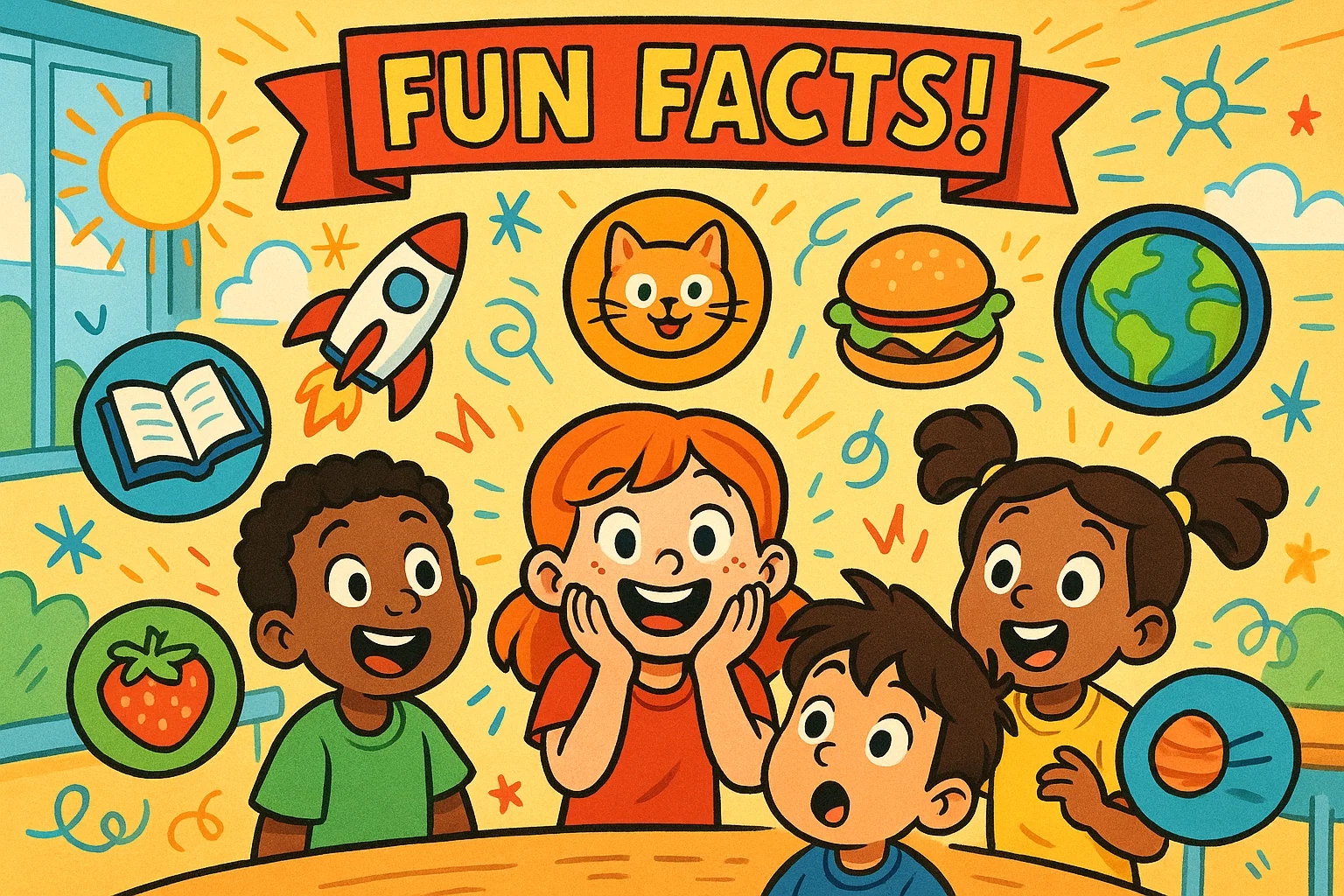
Seven-year-olds are at a unique developmental stage, with growing reasoning skills, stronger communication, and a rapidly expanding vocabulary. At this age, kids often love facts that are surprising, silly, or just a little weird. A good list of fun facts can help support their natural curiosity about the world around them.
At this age, many children are developing stronger cognitive and communication skills, more independence, and a better understanding of rules and relationships. Curated educational content, such as age-appropriate fun facts, can support this stage better than unrestricted screen time. Unrestricted screen time may feel overstimulating for some children, while structured information can make learning feel more focused and manageable. Parents can use this list during car rides, bedtime chats, family games, classroom trivia, or reading practice.
Key Takeaways
- Targeted Organization: These fun facts are grouped by topic so kids can jump to favorite sections easily.
- Retell Value: Each fact is short, surprising, and easy for a 7-year-old to retell to friends and family.
- Balanced Learning: This guide mixes silly facts with educational facts to keep reading fun and engaging.
- Interactive Prompts: Parent prompts are placed after some facts to spark curiosity and encourage deeper conversation.
- Age-Appropriate Content: The list features safe, age-appropriate topics that many 7-year-olds enjoy, including animals, space, the human body, food, science, weather, geography, math, sports, and history.
Best Fact Categories for 7-Year-Olds
Seven-year-olds experience a surge in curiosity, making certain topics especially engaging for their age. The best categories for this age group include animals, space, the human body, food, science, sports, geography, history, and weather. These subjects work well for many second-grade learners because they connect new ideas to things children can see, touch, imagine, or talk about.
Quick Ways Parents Can Use These Facts
Parents can easily fit these facts into daily routines without adding academic stress. The dinner table is an ideal place to share animal facts or trivia questions that spark conversation. Other useful moments include breakfast chats, school runs, bedtime wind-downs, homework breaks, road trips, and family quiz nights.
Learning Benefits from Fun Facts
Sharing a curated list of fun facts can support children’s vocabulary, memory, curiosity, and confidence in conversation. Short informational texts can help early readers build vocabulary, remember new ideas, and feel more confident about reading. Learning random facts can also nurture a lifelong love of learning and improve conversation skills through social sharing.
Quick Overview of Fun Facts for Kids
A good fact for a 7-year-old should be simple, clear, and surprising. High-quality facts avoid complex jargon, create a clear mental image, and cover safe topics that are unlikely to cause anxiety or fear. To help children remember the facts, parents can add a simple follow-up question.
What Makes a Fact Fun for 7-Year-Olds
The most successful facts for young minds are short, highly visual, memorable, and often a little silly. Kids love weird facts that make them rethink how the world works. When a fact creates a funny or surprising mental picture, children are more likely to remember it.
How Many Facts to Read at Once
To maintain engagement and avoid cognitive fatigue, it is best to read 5 to 10 facts per sitting. A 7-year-old’s attention span can vary widely, so fact-reading sessions should stay short and playful. Reading the facts slowly helps children enjoy each one without feeling overwhelmed.
How to Turn Facts Into a Mini Quiz
Parents can transform reading sessions into an interactive game by adapting facts into simple trivia for kids. You can ask “true or false” questions, prompt them to “guess the answer” from multiple choices, or ask an open-ended “tell me why” question. This approach turns passive listening into active learning and makes the facts more memorable.
Random, Silly, and Surprising Facts for Kids
This playful section of random fun facts introduces surprising details about everyday life. These interesting facts are designed to challenge common assumptions and spark quick laughs.
Square Watermelons in Japan
Some farmers in Japan grow watermelons inside cube-shaped molds so the fruit takes on a square shape. Japanese growers developed this method partly because square watermelons are easier to stack and can fit more neatly into small refrigerators. Kids find this amusing because it turns a familiar round fruit into a geometric box.
The Letter Q Is Missing from US State Names
The official names of all 50 states in the United States use 25 letters of the alphabet and completely leave out the letter “Q.” A standard US map shows that letters like “Z” appear in Arizona and “X” appears in Texas, but “Q” does not appear in any state name. Parents can turn this into a mini challenge by asking children to scan a map for any hidden “Q” states.
Opposite Dice Sides Add Up to Seven
A standard six-sided die has a specific mathematical design: the dots on opposite sides always add up to seven. If the top side shows a six, the bottom side will show a one. Children can easily test this at home with a die from a board game.
No Number Before 1,000 Uses the Letter A
In standard American English, when you write out numbers without using “and,” the letter “A” does not appear until “one thousand.” Numbers like “one hundred ninety-nine” contain no letter “A,” making “one thousand” the first number word to include it. Parents can invite kids to spell out random numbers to check this pattern.
Octothorpe Means Hashtag Symbol
The common hashtag symbol (#) seen on phones and computer keyboards has an official technical name: “octothorpe.” The “octo-” part refers to the symbol’s eight points, while the origin of “-thorpe” is uncertain; one story links it to athlete Jim Thorpe. Kids may enjoy using this funny official word the next time they see a phone keypad.
Play-Doh Started as Wallpaper Cleaner
Play-Doh, the popular non-toxic modeling compound, was originally made in the 1930s as a wallpaper cleaner for removing coal residue. When vinyl wallpaper became popular and coal heating declined, the company repurposed the soft substance into an educational art toy. This historical shift shows children how creative thinking can turn an old cleaning product into a fun toy.
Human Body Fun Facts for Kids
The human body provides an excellent framework for safe, kid-friendly biological exploration. These human body facts avoid complex medical terminology while highlighting how the body works.
Babies Have More Bones Than Adults
Human infants are born with approximately 300 bones, which is more than the 206 bones found in a fully grown adult skeleton. As children grow, some softer cartilage gradually hardens or joins together to form stronger bones.
Parent Prompt: Can you feel your wrist? Those bones are still growing and changing as your body develops!
The Brain Cannot Feel Pain
The brain is the body’s control center, but brain tissue itself does not have pain receptors. While the brain processes pain signals sent from other parts of the body, it cannot feel physical pain on its own surface. Headache pain often comes from pain-sensitive tissues around the brain, such as nerves, blood vessels, and muscles.
Skin Is the Biggest Body Organ
The skin is the largest organ of the human body, accounting for roughly 16% of a person’s total body weight. This protective layer acts as a barrier against germs, helps the body feel touch, and helps regulate temperature through sweating. Children can think of their skin as a built-in protective suit.
The Human Nose Can Detect Many Smells
The human nose contains millions of olfactory receptor cells that help people detect many different scents. The human olfactory system works continuously to help people recognize food, flowers, smoke, and familiar places. This sense connects directly to the brain’s memory center, which helps explain why certain smells can trigger vivid memories.
The Heart Beats Thousands of Times Daily
The human heart works as a muscular pump that beats approximately 100,000 times every day to circulate blood through the body. This continuous movement delivers oxygen and nutrients to cells while carrying away waste products. Parents can lead a safe physical test by having their child jump in place for 30 seconds and then feel their quickened pulse.
Tongue Prints Are Unique
Every human being has a unique pattern of bumps and ridges on the tongue, meaning no two tongue prints are exactly alike. Much like fingerprints, these oral textures appear to vary from person to person, even among identical twins. This shows children that every body is unique in surprising ways.
Humans Cannot Hum While Holding Their Nose
To produce a humming sound, air must pass continuously through the vocal cords and exit freely through the nasal passages. When a person pinches their nostrils shut and closes their mouth, the airflow stops, making it physically impossible to sustain a hum. Children can safely test this funny body fact at home in just a few seconds.
Food Fun Facts for Kids
Food facts introduce botanical science, history, and agricultural oddities using items found right in the kitchen. These food facts can make family mealtimes more fun and educational.
Strawberries Have Seeds on the Outside
The strawberry is an unusual fruit because it carries its seeds on the outside of its skin, averaging roughly 200 seeds per berry. Botanically speaking, each yellow speck is actually a separate tiny fruit called an achene, which protects the true seed inside.
| Fruit Type | Seed Location | Average Seed Count |
| Strawberry | Outside skin | 200 |
| Apple | Inside core | 5–10 |
| Blueberry | Inside flesh | 10–50 |
Bananas Can Look Blue Under Black Light
When a yellow banana ripens, the organic compounds in its skin break down and glow with an intense blue color under an ultraviolet black light. This process creates a visible ring of fluorescence around the dark spots on the peel. This glow may help some animals that can see ultraviolet light spot ripe fruit in nature.
Tomatoes and Avocados Are Fruits
In botanical science, any food item that develops from the flower of a plant and contains seeds is classified as a fruit. Under this scientific definition, both tomatoes and avocados are fruits, even though people often prepare them like vegetables in the kitchen. This distinction helps children understand that scientific grouping can differ from everyday language.
Peanuts Are Legumes
Despite having the word “nut” in their name, peanuts are actually legumes, placing them in the same plant family as peas and lentils. Many foods we call tree nuts, such as walnuts and almonds, grow on trees, whereas peanuts develop in pods underground. Parents can use this fact to highlight plant biology while keeping allergy safety in mind.
Cranberries Can Bounce
A fresh, ripe cranberry can bounce because it has tiny pockets of air inside. These air pockets act like miniature cushions, giving the berry a springy feel when dropped. Farmers use special bounce boards or machines to separate firm cranberries from soft ones.
French Fries Started in Belgium
Despite their popular American name, one popular origin story traces thin, deep-fried potato strips back to Belgium. According to one popular story, villagers fried potatoes when rivers froze over, and American soldiers later called them “French fries” because they heard French being spoken in Belgium. This origin story teaches children that food names can be surprising.
Blue Cheese Has Edible Mold
The distinct blue veins inside blue cheese are created by adding a specific, safe type of microscopic mold called Penicillium roqueforti. Cheesemakers carefully control this aging process so the cheese is safe to eat when it is made and stored properly. Parents should gently explain that while this specific culinary mold is safe, children should never eat old or moldy food from the fridge without asking an adult.
Animal Fun Facts for Kids
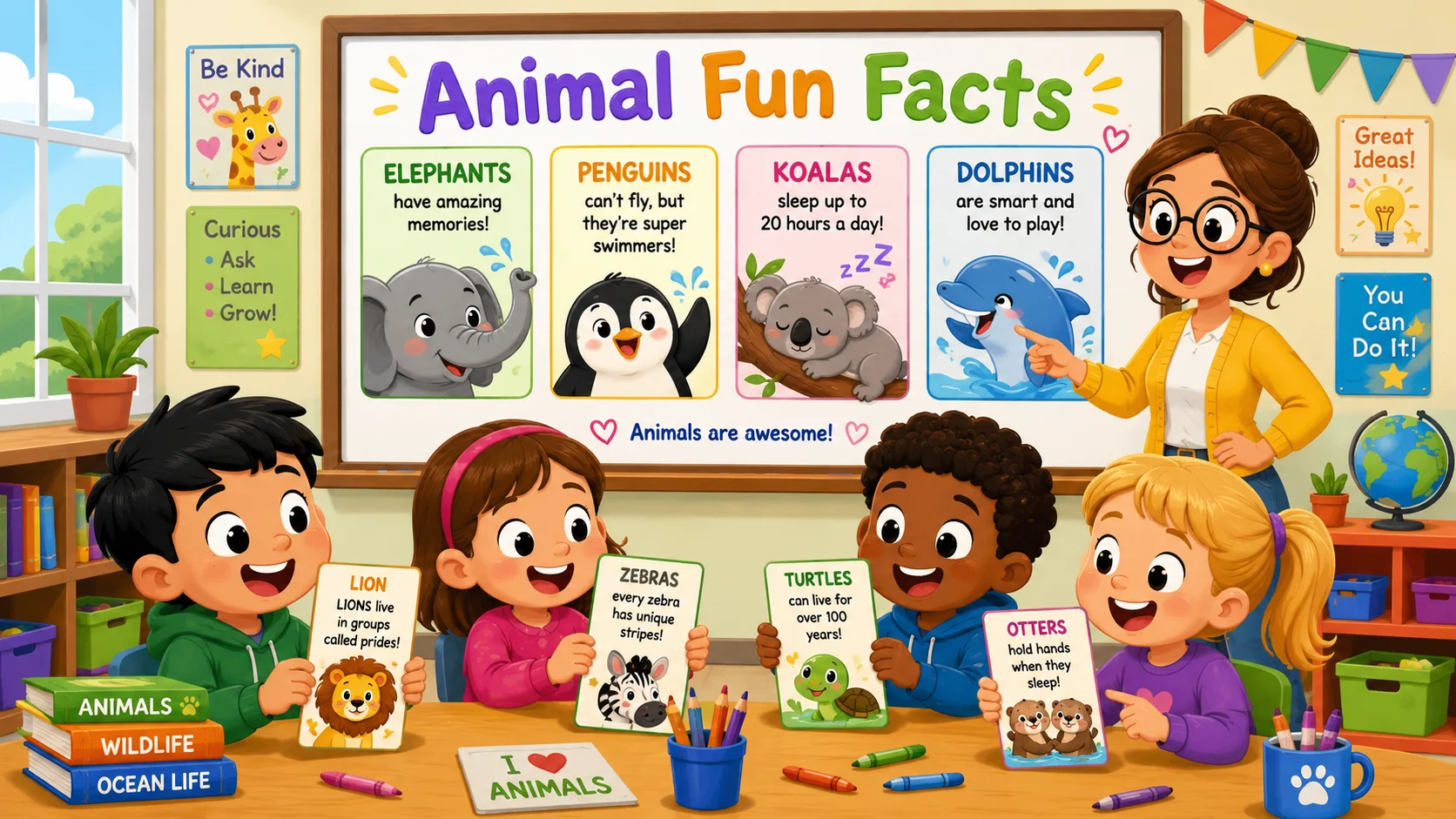
Kids love fun facts about the animal kingdom, especially when they highlight incredible abilities. These animal facts show the huge diversity of life across mammals, birds, reptiles, and fish.
Octopuses Have Three Hearts
An octopus has a complex circulatory system with three hearts working together to pump blue, copper-based blood through its body. Two hearts push blood through the gills, while a larger central heart pumps blood to the rest of the organs. This setup helps octopuses move blood through their bodies efficiently, even in cold ocean water.
Elephants Can Hear with Their Feet
Elephants use their large feet to detect low-frequency vibrations that travel through the ground from far away. Research in animal behavior shows that these large mammals have specialized nerve endings in their footpads that capture seismic rumblings made by other elephant herds.
Parent Prompt: Imagine if you could listen to a conversation just by standing on the floor!
Penguins Cannot Fly but Can Swim Fast
Penguins are flightless birds whose wings have evolved into stiff, flat flippers that help them swim quickly. While these birds cannot launch themselves into the air, their streamlined bodies allow them to swim through ocean water at impressive speeds. This adaptation helps them catch fish and escape fast marine predators like seals.
Giraffes Have Long Necks and Few Neck Bones
A mature giraffe can grow a neck measuring over six feet in length, yet it has exactly seven cervical neck vertebrae. This is the same number of neck bones found in humans and even tiny mice. The difference lies in size, since a single giraffe neck bone can measure over 10 inches long.
Some Animals Sleep Standing Up
Large herbivores like horses, zebras, and flamingos have special body structures that help them rest while standing. In animals like horses, a mechanism called a “stay apparatus” helps lock the leg joints securely into place. This survival tactic allows some animals to rest while staying ready to move if a predator approaches.
Frogs Drink Through Their Skin
Frogs do not drink water through their mouths like humans do. Instead, they absorb moisture through a permeable area on their bellies known as a “drinking patch.” Because their skin is so sensitive, keeping local freshwater habitats clean is important for their survival.
Cat Facts for Kids
Domestic cats have remarkable senses and behaviors that intrigue children who share their homes with these furry pets. These pet-friendly facts explain how cats interact with the world.
Cats Use Whiskers for Measuring Spaces
A cat’s whiskers are highly sensitive hairs that are often about as wide as the cat’s body. Cats use these facial tools like a sensory measuring tape to judge whether an opening is large enough to crawl through safely. If the whiskers bend against the sides of a gap, the cat may decide the space is too tight.
Cats Can Make Many Sounds
While many people think cats mostly meow, cats can actually make many different sounds. These sounds include purrs, chirps, trills, growls, and hisses. Cats use these varied noises to communicate their moods to other cats and to human companions.
Cats Sleep Many Hours Daily
Domestic cats sleep for approximately 12 to 16 hours every day to conserve energy for hunting-style activities. This behavior is inherited from wild felines that needed long rest periods between bursts of high-energy hunting. Even indoor house cats maintain this biological clock by napping throughout the day.
Cat Nose Prints Are Unique
The soft leather-like skin on a cat’s nose has a specific arrangement of tiny ridges and bumps that creates a unique nose print. Much like a human fingerprint, no two cats appear to have the exact same nasal pattern. This distinct feature could theoretically help identify a specific pet.
Lion Facts for Kids
Lions capture the imagination with their power, social structures, and wild habitats. These facts provide an educational look at the behavior of the world’s most famous big cats.
Lions Live in Groups Called Prides
Unlike most solitary wild cats, lions are highly social animals that live in organized family groups called prides. A standard pride often includes related females, their cubs, and a small coalition of protective males. Living in a group allows lions to work together to hunt large prey and defend their territory.
Lion Roars Travel Far
A mature male lion has a specialized larynx that helps its deep roar travel across long distances. Wildlife biologists have measured that a full-volume lion roar can be heard up to 5 miles away in open territory. This vocal power helps a lion warn rival lions to stay away from its pride’s territory.
Lion Cubs Learn Through Play
Lion cubs spend hours wrestling, chasing, and pouncing on each other to build strength and coordination. This playful behavior serves an educational purpose by helping young cats practice the hunting and stalking skills they will need as adults.
| Activity | Skill Developed |
| Wrestling | Muscle strength and balance |
| Chasing | Running speed and endurance |
| Pouncing | Accurate hunting strikes |
Male Lions Often Have Manes
Mature male lions develop a thick fringe of long hair around their heads and necks known as a mane. This feature helps protect the neck during territory fights and makes the lion look larger and more intimidating to rivals. Wildlife data suggests that darker, thicker manes can signal a healthier, stronger lion.
Shark Facts for Kids
Sharks are a favorite topic for young learners. These shark facts present these marine animals as amazing, important parts of the ocean ecosystem rather than scary movie monsters.
Sharks Have Many Rows of Teeth
A shark does not have a single permanent set of teeth. Instead, its jaws contain multiple rows of teeth arranged like a conveyor belt. When a front tooth breaks or falls out while hunting, a replacement tooth moves forward from the rear row within a few days. Over its lifetime, a single shark can grow and shed more than 30,000 teeth.
Some Sharks Are Tiny
While many children assume every shark is a giant predator, the ocean is home to several incredibly small shark species. The dwarf lanternshark, for example, measures only about 6 to 8 inches long when fully grown, making it smaller than a standard human hand. This tiny deep-sea fish even has light-emitting organs that help it glow in the dark.
Whale Sharks Eat Tiny Ocean Creatures
The whale shark is the largest fish in the world, growing up to about 40 feet long, yet it eats tiny marine life. These gentle giants are filter feeders that consume plankton, tiny krill, and small fish by swimming with their massive mouths wide open. Whale sharks are not aggressive predators of humans, though swimmers should still keep a respectful distance from them.
Sharks Help Keep Oceans Healthy
Sharks function as apex predators at the top of the marine food chain, which means they play an important environmental role. By hunting sick, weak, or old fish, sharks help prevent marine populations from becoming unbalanced. Their presence supports a healthier, more diverse ocean ecosystem.
Ocean Facts for Kids
The world’s oceans are filled with amazing facts that help children understand geography, marine biology, and earth science.
Oceans Cover Most of Earth
The global ocean system covers approximately 71% of Earth’s surface, leaving less than 30% for dry land and continents. Because this huge body of salt water reflects sunlight across the globe, Earth appears as a blue marble when viewed by astronauts from outer space. The ocean also contains more than 97% of all the water on Earth.
The Deep Ocean Has Strange Creatures
The deep ocean floor is cold and pitch-black because sunlight cannot reach it, yet it is home to strange and fascinating creatures. Marine biologists exploring these depths have discovered animals like the anglerfish, which uses a glowing lure to attract prey. Other deep-sea creatures have clear skin, giant eyes, or glowing body parts to help them survive in darkness.
Coral Reefs Are Animal Homes
A coral reef works like a busy underwater neighborhood built by tiny marine organisms called coral polyps. Although reefs cover less than 1% of the ocean floor, they provide shelter, food, and breeding grounds for many marine animals. This makes coral reefs some of the most diverse ecosystems on the planet.
Ocean Plants Help Make Oxygen
Tiny ocean plants known as phytoplankton drift near the sunlit surface of the water and perform photosynthesis, much like plants on land. Scientists estimate that these tiny marine organisms produce a large share of the oxygen in Earth’s atmosphere. This means ocean life plays a major role in helping humans breathe.
Insect Facts for Kids
Bugs and insects are easy for children to observe, making them excellent subjects for backyard nature exploration.
Most Known Animal Species Are Insects
Insects represent the largest group of known animal species on Earth, making up a huge share of the animal species scientists have identified. Scientists have described over 1 million insect species, ranging from shiny beetles to colorful butterflies, with many more still waiting to be discovered. This means insects are one of the most successful animal groups on the planet.
Bees Tell Directions Through Dance
Honeybees have an advanced communication system known as the “waggle dance” to share information with their hive mates. When a scout bee finds a rich patch of flowers, it returns to the hive and moves in a figure-eight pattern while shaking its body. The angle and duration of the dance tell other bees the direction and distance to the food source.
Butterflies Taste with Their Feet
A butterfly has special chemical receptors located on its feet rather than inside its mouth. When a butterfly lands on a leaf or flower, these foot sensors taste the plant to decide whether it is useful for food or egg-laying. This helps butterflies identify food sources simply by landing on them.
Ants Work as Teams
Ants live in highly organized colonies where thousands of insects work together to survive. Many ants have specific roles, such as building tunnels, gathering food, defending the nest, or caring for eggs. By working together and communicating through scent trails, ants can accomplish tasks that would be impossible for one ant alone.
Space Facts for Kids
The solar system provides an exciting backdrop for introducing physics, astronomy, and planetary science without overwhelming young minds.
Moon Footprints Can Last a Very Long Time
Because the Moon has no atmosphere, it has no wind, rain, or running water to erode its surface. The historic footprints left behind in the Moon’s dusty soil by Apollo astronauts may remain visible for a very long time because there is no wind or rain to erase them. These marks could be disturbed by micrometeorites, moonquakes, or future lunar missions.
Neptune Days Last About 16 Hours
The distant blue planet Neptune spins on its axis very quickly, completing one full rotation in about 16 Earth hours. This means a single day on Neptune is much shorter than a standard 24-hour day on Earth. However, because Neptune is so far from the Sun, a year on Neptune lasts about 165 Earth years.
Saturn Seasons Last Many Earth Years
Saturn takes approximately 29 Earth years to complete one full orbit around the Sun, which makes its seasons very long. A single season on Saturn, such as summer or winter, lasts for more than seven Earth years. This slow orbit means a child born on Saturn would have to wait nearly three decades to celebrate their first local birthday.
Venus Spins in the Opposite Direction
Venus is unusual because it rotates in the opposite direction from Earth and most other planets in the solar system. If you could stand safely on the extremely hot surface of Venus, you would watch the Sun rise in the west and set in the east. Scientists believe a giant space collision long ago may have affected the planet’s rotation.
Gravity Feels Weaker on the Moon
The Moon is much smaller than Earth, which means it has a much weaker gravitational pull. The Moon’s gravity is only about one-sixth as strong as Earth’s gravity, allowing astronauts to bounce much higher with every step.
Parent Prompt: If you can jump one foot high in your living room, you could jump about six feet high on the Moon!
Stars Are Giant Balls of Hot Gas
Every twinkling star visible in the night sky is a huge, glowing ball of hot gas located very far away. Stars make heat and light through a process called nuclear fusion, which happens deep inside them. Our Sun is simply the closest star to Earth, which is why it looks so large and bright.
Earth Science Fun Facts for Kids
Earth science facts help children learn about rocks, clouds, wind, volcanoes, and other parts of our planet.
Chalk Comes from Tiny Fossils
Natural chalk rock formed over millions of years from the compacted remains of microscopic sea creatures called coccolithophores. When these tiny organisms died long ago, their calcium-rich shells sank to the ancient ocean floor, creating thick white layers that eventually hardened into soft limestone. This means natural chalk rock is made from ancient microscopic fossils, although many modern classroom chalks are made from other materials.
Clouds Can Weigh More Than Cars
Although a white cloud appears to float through the sky as light as a feather, a standard cumulus cloud can weigh over 1 million pounds. This heavy mass occurs because a cloud is made of billions of tiny water droplets spread across a large area of sky. Clouds stay in the sky because tiny water droplets are spread out over a large area and are supported by moving air.
Wind Itself Is Silent
Wind is moving air, and most wind sounds happen when that air moves around objects like trees, windows, leaves, or buildings. The rushing or howling noises associated with a windy day occur when moving air creates vibrations around those objects. Our ears interpret those vibrations as sound.
Volcanoes Can Be Active for a Long Time
A volcano is an opening in Earth’s crust that allows hot molten rock, ash, and gases to escape from deep underground. Some volcanoes can remain active for very long periods, with eruptions happening repeatedly over time. Italy’s Stromboli volcano is famous for frequent activity and has been erupting on and off for more than 2,000 years.
Lightning Can Strike the Same Place More Than Once
The old saying that lightning never strikes the same place twice is not true; lightning can strike the same spot more than once. Tall, conductive objects like skyscrapers are often struck by lightning repeatedly. This happens because electricity tends to follow the easiest path to the ground.
Weather Facts for Kids
Weather phenomena provide a daily opportunity for children to observe atmospheric science right outside their bedroom window.
Rainbows Need Sunlight and Water Drops
To form a rainbow in the sky, two ingredients must be present at the same time: bright sunlight and airborne water droplets. When sunlight enters a falling raindrop, the water acts like a tiny prism, bending the white light and separating it into the colors of the rainbow. To see a rainbow, the Sun must usually be behind you while the rain is in front of you.
Snowflakes Can Have Many Shapes
A snowflake begins as a tiny particle floating in a cold cloud, where water vapor freezes into a six-sided ice crystal. As the snowflake falls through different layers of cold air, changes in temperature and humidity cause it to grow unique, intricate arms. While every snowflake follows a hexagonal pattern, scientists suggest it is extremely unlikely for two complex snowflakes to be exactly identical.
Clouds Have Different Names
Meteorologists categorize clouds into types using Latin names based on their appearance and height in the sky. Fluffy, cotton-like clouds are called cumulus, flat gray sheets that cover the sky are called stratus, and thin, wispy clouds made of ice are called cirrus. Learning these names can help children describe weather changes simply by looking upward.
Thunder Comes from Lightning
Thunder is the sound made when lightning heats the air very quickly. A single bolt of lightning can heat the surrounding air to an extremely high temperature. This sudden heat causes the air to expand rapidly, creating a loud shockwave that we hear as thunder.
Tornado Facts for Kids
Tornadoes are powerful weather phenomena that should be explained calmly and educationally to minimize fear while emphasizing safety.
Tornadoes Are Spinning Columns of Air
A tornado is a violently rotating column of air that extends from a thunderstorm cloud down to the ground. These twisters can form during severe thunderstorms when unstable air and changing wind speeds help create rotation in the atmosphere. The strongest tornadoes can produce winds faster than 300 miles per hour.
Some Tornadoes Look Like Funnels
Many tornadoes are visible because they take on a distinct funnel shape, like a spinning cloud tube stretching down from the sky. The funnel becomes visible when water droplets form in the spinning air and dust or debris gets pulled up from the ground. This shape can make tornadoes easier for trained spotters to identify.
Tornado Safety Means Going Low and Inside
When a tornado warning is issued, meteorologists and safety experts advise families to follow a simple safety rule: go to the lowest level possible, such as a basement, or find an interior room like a bathroom or closet away from windows. Staying inside a sturdy building with an adult helps protect everyone from flying debris until the storm passes.
Tornado Scientists Study Storm Clues
Specialized weather scientists known as meteorologists use tools like Doppler radar, weather balloons, and satellite imagery to study storm clues before a tornado forms. By tracking changes in storms, these experts can issue warnings that give families more time to move to safety. This is why paying attention to weather alerts is important.
Geography Facts for Kids
Geography facts introduce children to maps, global borders, and the amazing physical layout of our continents.
Vatican City Is the Smallest Country
Vatican City holds the official record as the smallest independent country in the world, measuring about 0.2 square miles in total area. This tiny European nation is entirely surrounded by Rome, Italy, making it smaller than many town parks or golf courses. It has its own post office, phone system, and flag, despite having a population of fewer than 1,000 residents.
Greenland Is the Biggest Island
Greenland is recognized as the largest non-continental island on Earth, covering more than 800,000 square miles. On a standard flat map, Greenland can look as large as Africa because of map distortion, though it is much smaller in reality. Approximately 80% of the island is covered by a thick, permanent sheet of ice.
Antarctica Is the Biggest Desert
In geography, a desert is defined as a region that receives very little precipitation, regardless of its temperature. Under this definition, the icy continent of Antarctica is the largest desert in the world because it receives very little precipitation. The existing snow on the ground has accumulated over long periods because the cold climate keeps much of it from melting.
Istanbul Sits on Two Continents
The historic city of Istanbul, in Türkiye, is famous for spanning two continents: Europe and Asia. A narrow body of water called the Bosphorus Strait splits the city, connecting the European side with the Asian side. Residents can cross bridges, tunnels, or ferries to travel between the two sides of the city.
Russia Is Very Close to Alaska
While many flat maps make Russia and the United States look like they are on opposite sides of the world, a globe shows that they are very close in one place. In the Bering Strait, the Russian island of Big Diomede sits just about 2.4 miles away from the American island of Little Diomede. In winter, sea ice can form between the Diomede Islands, but crossing between them is not legal without permission.
Water Covers Most of Earth
Planet Earth is often called the “Water Planet” because oceans, lakes, glaciers, and rivers cover more than 70% of its surface. This abundance of surface water makes Earth unusual among the rocky planets in our solar system. Liquid water is one of the main reasons life can thrive across our planet.
Place Facts for Kids
This section highlights famous global landmarks, national parks, and unusual geographical points of interest.
The Eiffel Tower Can Grow in Heat
The famous Eiffel Tower in Paris, France, is constructed from iron, a metal that naturally expands when it gets hot. During warm summer months, sunlight heats the metal structure, causing the tower to grow up to 6 inches taller. When cold winter weather returns, the iron contracts back toward its usual size.
The Dead Sea Is a Very Low Place
The Dead Sea is an unusual saltwater lake in the Middle East, and its shores are the lowest exposed land area on Earth. Its shores sit more than 1,400 feet below sea level, and the water is extremely salty. This saltiness makes the water dense, allowing swimmers to float more easily on the surface.
Four Corners Lets Visitors Touch Four States
The Four Corners Monument in the American Southwest is the only geographical point in the United States where the boundaries of four states meet in one spot. By placing your hands and feet on the marker, a visitor can touch Utah, Colorado, Arizona, and New Mexico at the same time.
Parent Prompt: Can you crawl across the marker and visit four different states in four seconds?
Yosemite Is a Huge National Park
Yosemite National Park in California is a large protected wilderness area spanning nearly 1,200 square miles of land. The park is famous around the world for its granite cliffs, ancient giant sequoia trees, and waterfalls like Yosemite Falls. It is roughly the size of Rhode Island.
History Fun Facts for Kids
History facts for kids should be light, memorable, and focused on inventions, old traditions, and unusual daily customs.
The Ice Pop Was Invented by a Kid
In 1905, an 11-year-old boy named Frank Epperson accidentally invented the ice pop when he left a cup of powdered soda mix and water outside overnight with a stirring stick inside. The temperature dropped below freezing, and the next morning he discovered a delicious frozen treat. He later patented the creation, which we now know as the Popsicle.
Tug-of-War Was an Olympic Sport
From 1900 to 1920, tug-of-war was an Olympic event at the Summer Games. Teams of strong athletes would pull a thick rope, and the country that dragged the other team across the line won. The event was eventually removed as Olympic rules changed over time.
Old Photos Used Different Poses
When looking at historical photographs from the 1800s, many people look serious and rarely smile for the camera. This happened partly because early cameras were slow, requiring people to sit very still for a long time. Holding a smile for that long was difficult, so many people chose a serious expression instead.
Early Alarm Helpers Knocked on Windows
Before mechanical alarm clocks became affordable and common, some workers in England paid human alarm helpers called “knocker-uppers” to wake them up for work. These helpers walked through town streets early in the morning and used long poles or pea-shooters to tap on bedroom windows. They would not leave until the resident woke up and responded.
Ancient People Had Strange Toothache Ideas
Thousands of years ago, some ancient civilizations believed that painful toothaches were caused by tiny “tooth worms” drilling holes inside teeth. To treat the pain, they used herbal remedies and magical explanations rather than modern dental care. Today, we know that many toothaches are caused by problems like cavities, germs, or tooth damage, which is why brushing and dental checkups are important.
Royal Facts for Kids
Royal traditions, castles, and crowns give children a fun glimpse into historic customs that still exist today.
Some Royals Have More Than One Birthday Celebration
In some monarchies, including the United Kingdom, the monarch may have two birthday celebrations: their real birthday and an official public birthday. In the United Kingdom, the monarch’s official birthday is usually marked in June, when outdoor parades are more likely to have better weather. This custom helps the public celebrate together in better weather.
Castles Had Clever Defense Features
Medieval castles were designed as military fortresses with clever features to protect royal families and residents from enemy attacks. Architects built wide water-filled ditches called moats, thick stone walls, high lookout towers, and heavy wooden drawbridges that could be pulled up quickly. These features made castles much harder to enter.
Crowns Can Be Very Heavy
Official royal crowns are often crafted from gold or silver and decorated with precious jewels like diamonds, rubies, and emeralds. Because precious metals and gemstones are dense, some ceremonial crowns can weigh several pounds, which can make them uncomfortable to wear for long periods. Monarchs typically wear them only during special ceremonies.
Royal Traditions Can Be Very Old
Many royal ceremonies, clothing styles, and official titles used by modern kings and queens have remained mostly unchanged for hundreds of years. For example, the chair used during British coronation ceremonies was constructed in the year 1300 and is still used today. These lasting customs help countries preserve parts of their history across centuries.
Sports Facts for Kids
Sports facts present unusual competitions, historic equipment changes, and athletic traditions from around the world.
Toe Wrestling Is a Real Sport
Toe wrestling is an unusual competitive sport from the United Kingdom in which two players lock big toes and try to pin the other player’s foot down. The game follows official rules, includes a referee, and holds championship events. This unusual game shows that almost any activity can become a sport when it has structured rules.
Art Used to Win Olympic Medals
During the early modern Olympic Games from 1912 to 1948, the international competition awarded medals for fine arts alongside traditional running and jumping events. Competitors could win medals for creating sports-themed paintings, sculptures, architecture, music, and literature. The art competitions were eventually replaced by cultural programs, and Olympic medals are now awarded for athletic events rather than judged art competitions.
First Golf Balls Used Feathers
Long ago in Scotland, early golf balls were handmade from leather pouches tightly stuffed with goose feathers. These “featherie” balls were used for hundreds of years until manufacturers developed more durable rubber materials in the mid-1800s. The modern dimpled golf ball is designed to fly farther and more predictably than the old feather balls.
Robot Soccer Tournaments Exist
In the modern world, computer scientists and engineers hold an international competition called RoboCup, where teams of autonomous robots play soccer against each other. One long-term RoboCup goal is to develop a robot soccer team that can beat the human world champion team. This event connects athletic games with advanced technology.
Football Facts for Kids
This section includes facts about both soccer and American football, with a focus on rules, field markings, and teamwork.
Soccer Is Played Around the World
The sport known as soccer in the United States is called “football” in many other countries around the world. This popular international game is played by two teams of 11 players who try to kick a round ball into the opponent’s net without using their arms. It is one of the most watched and widely played sports in the world.
Goalkeepers Can Use Their Hands
Under the official rules of soccer, the goalkeeper is the only player on the field who is allowed to use their hands and arms to touch the ball. However, this special privilege only applies while the goalkeeper is inside their own penalty area. If they step outside that area, they must use their feet just like everyone else.
Football Fields Have Special Lines
A standard football field features white lines painted onto the grass to help players, coaches, and referees track the game accurately. In soccer, these markings show boundaries, corner spots, and the center circle where the game starts. In American football, yard lines are marked every 5 yards to measure how far the offense must move to score.
Teamwork Matters More Than Tricks
While flashy foot tricks or long passes can look exciting, strong teamwork is often what helps teams win games. Successful teams focus on passing accurately, communicating clearly, and supporting teammates during a play. Practicing these cooperative skills builds confidence and athletic success over time.
Math Facts for Kids
Math facts use number trivia, language patterns, and simple visual puzzles to make arithmetic more accessible and less intimidating.
Four Has Four Letters
The number 4 holds a unique language record in English because it is the only number whose value matches the number of letters in its name. The word “four” contains exactly four letters, a pattern that does not apply to any other English number word. This trivia point is a fun pattern for seven-year-olds to check.
A Dollar Can Be Changed Many Ways
One dollar can be made in 293 different ways using pennies, nickels, dimes, quarters, and half-dollars. For example, you can use 100 pennies, 20 nickels, 4 quarters, or many mixed combinations to reach the same value. This coin fact helps children practice basic addition and money skills.
Dice Sides Hide a Number Pattern
As explored earlier, the opposite sides of a standard die always add up to seven, creating a reliable mathematical pattern that children can use for quick addition practice. By learning this rule, a child can often figure out the hidden bottom number on a die without turning it over. This simple visual puzzle is a fun introduction to number patterns.
Some People Feel Nervous Around Numbers
Some children and adults feel anxious or nervous when they face difficult math problems; this is often called math anxiety. Number games, puzzles, and playful trivia can help make math feel less scary. Approaching numbers as a game helps build confidence and learning success over time.
Science Facts for Kids
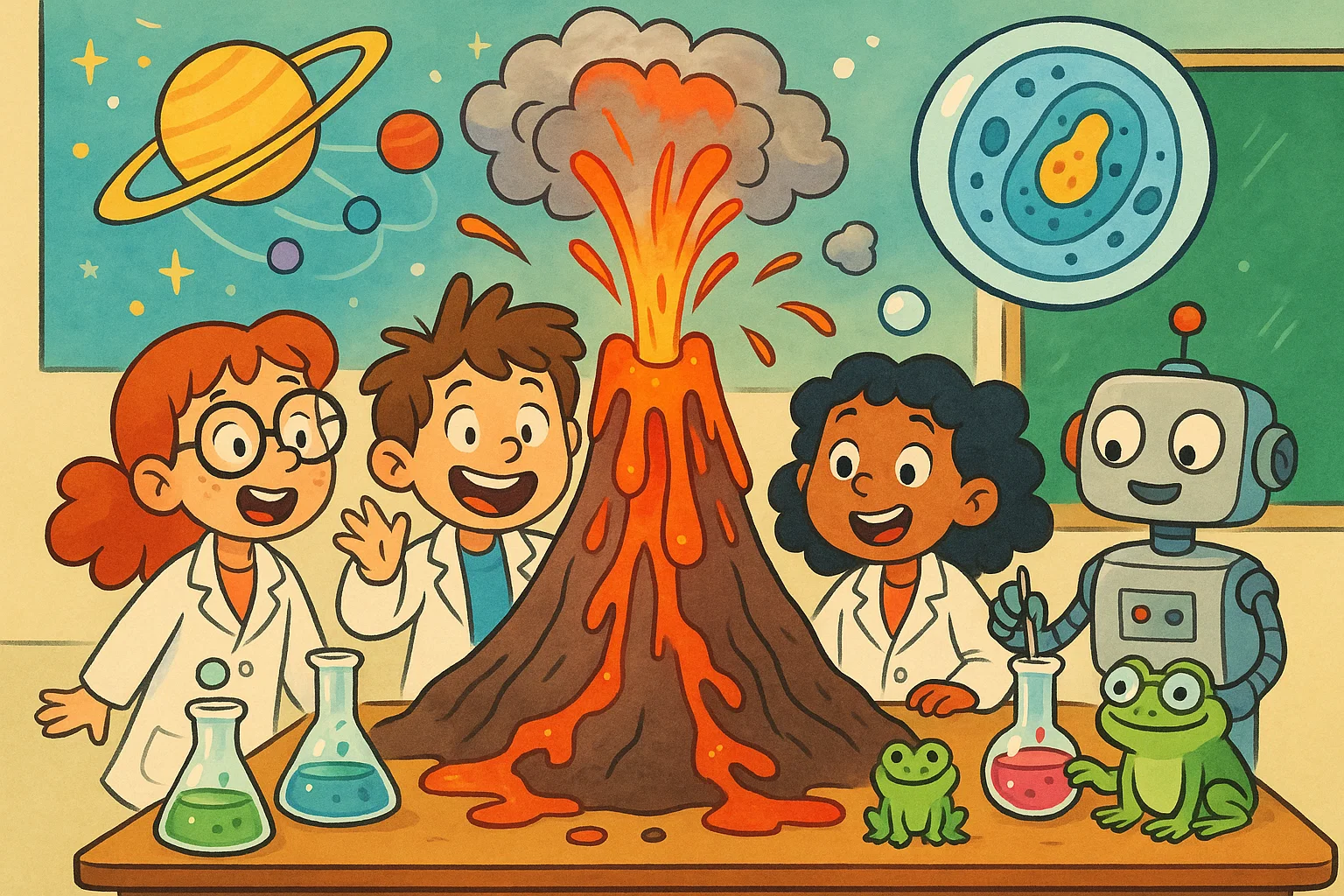
Science facts cover physics, chemistry, and biology through simple, observable everyday examples.
Heat Can Make Metal Expand
When metal gets hot, its tiny particles move more and spread out slightly, causing the metal to expand. As seen with the Eiffel Tower growing in summer, this physical law also affects bridges, railroad tracks, and metal tools. Engineers build special gaps into sidewalks and bridges so structures do not crack when they expand in heat.
Stomach Acid Is Strong
The human stomach produces a powerful acidic liquid called hydrochloric acid to help break down and digest food safely. This liquid is very strong, but a special protective lining helps keep it from hurting your stomach. Parents can use this fact to explain digestion while reminding children not to try dangerous experiments with chemicals.
White Light Holds Many Colors
The bright white light that comes from the Sun or a household light bulb is actually a mixture of many colors. When this light passes through a prism or a raindrop, it bends and separates into rainbow colors. This is why rainbows can appear after sunlight passes through falling drops of rain.
Gravity Pulls Objects Down
Gravity is an invisible pulling force that every massive object, including Earth, exerts on things around it. This natural force keeps your feet on the ground and causes a dropped ball to fall downward instead of floating into the sky. Because the Moon has less mass than Earth, its gravitational pull is weaker, which explains why astronauts can bounce higher there.
Left-Handed Facts for Kids
This inclusive section highlights handedness and provides positive, practical insights for left-handed children.
Some Kids Write with Their Left Hand
Approximately 10% of the global human population is naturally left-handed, meaning they prefer to use their left hand for writing, drawing, or eating. Hand preference is a normal neurological trait influenced by genetics and brain development. Both left-handedness and right-handedness are natural ways for the body to function.
Left-Handed Tools Can Help
Because most people are right-handed, many daily items like scissors, school desks, and sports gloves are designed for right-handed use. However, left-handed tools can help left-handed children work more comfortably and safely. Using left-handed scissors allows a left-handed child to cut paper more accurately.
Left-Handed Athletes Can Surprise Opponents
In many popular sports like baseball, tennis, and boxing, being a left-handed athlete can provide a competitive advantage. Because left-handed players move from a different angle, right-handed opponents may find it harder to predict their actions. Famous athletes, including Babe Ruth, show that being left-handed can be an advantage in some sports.
Famous People Were Left-Handed
Throughout history, many great thinkers, artists, and leaders have been naturally left-handed. One famous example is Leonardo da Vinci, the artist who painted the Mona Lisa and drew early plans for flying machines. This shows children that handedness does not limit creativity or intelligence.
Fun Facts for Kids FAQ
What Are the Best Fun Facts for 7-Year-Olds?
The best fun facts for seven-year-olds are short, surprising, highly visual, and easy to explain. Facts with a silly twist or a connection to everyday life are especially good at catching their attention. The best topics are safe, age-appropriate, and unlikely to cause worry.
How Can Parents Teach Facts Without Making It Feel Like Homework?
Parents can share these facts naturally by turning them into games, guessing activities, or quick daily chats. Try sharing trivia during breakfast, school runs, or dinner instead of asking children to memorize a list. You can also invite your child to draw a picture or act out a funny animal fact to make learning active.
Are Random Facts Good for Kids?
Yes, random facts can be helpful for children because they may build vocabulary, support memory, and spark curiosity. Learning unique information teaches kids to think critically about how the world works. When children share facts with others, they can also build conversation skills and confidence.
How Many Facts Should 7-Year-Old Kids Learn Daily?
Child development experts often recommend keeping learning sessions short and flexible. For many children, 3 to 10 facts per day is a comfortable range, depending on mood, attention span, and interest. Always stop if your child loses focus or seems tired.
Which Topics Do 7-Year-Old Kids Like Most?
Seven-year-old children are often drawn to topics involving animals, outer space, food, wild weather, the human body, sports, dinosaurs, and unusual history facts. They especially enjoy weird or silly facts that challenge what they think is normal. Choosing high-interest subjects is an excellent way to nurture curiosity and a lifelong love of learning.
Can Fun Facts Help with School?
Yes, exploring fun facts can support elementary school subjects like science, reading, social studies, and math. When a child learns interesting trivia at home, they can bring that background knowledge into classroom discussions. This extra context can improve reading comprehension, build confidence during lessons, and make school topics feel more familiar and exciting.
What are the best random fun facts for kids?
The best random fun facts for kids are short, surprising, and easy to retell. A “100 fun facts for kids” list can include animals, space, food, science, sports, and history to spark their curiosity.
Why do kids love animal facts for kids?
Animal facts for kids are easy to picture and fun to share. Fun facts about animals, such as octopuses having three hearts or frogs drinking through their skin, can feel mind-blowing to young readers.
Can human body facts for kids and food facts for kids help with learning?
Yes. Human body facts for kids and food facts for kids help children learn science through everyday examples, from how the heart works to why strawberries have seeds on the outside.
Take a short quiz to find out what your everyday choices say about your parenting style
When your child is curious about something new, what’s your instinct?
Take a short quiz to find out what your everyday choices say about your parenting style
“Can I download this app?” What happens next?
Take a short quiz to find out what your everyday choices say about your parenting style
When it comes to rules at home, which sounds most like you?
Take a short quiz to find out what your everyday choices say about your parenting style
If you could give your child one life skill today, what would you pick?
Take a short quiz to find out what your everyday choices say about your parenting style
Your child gets to choose what to watch. What would your ideal setup look like?
Take a short quiz to find out what your everyday choices say about your parenting style
Pick your parenting superpower ✨