30+ Fun Learning Activities for Children: Fun and Educational Games for 8-Year-Olds

 Discover a Free Education Video App for Kids
Pastory uses AI to personalize educational video content based on your child’s interests and personality. Safe, engaging, and built for curious young minds. Sign up now to stay updated and enjoy early access with a free trial
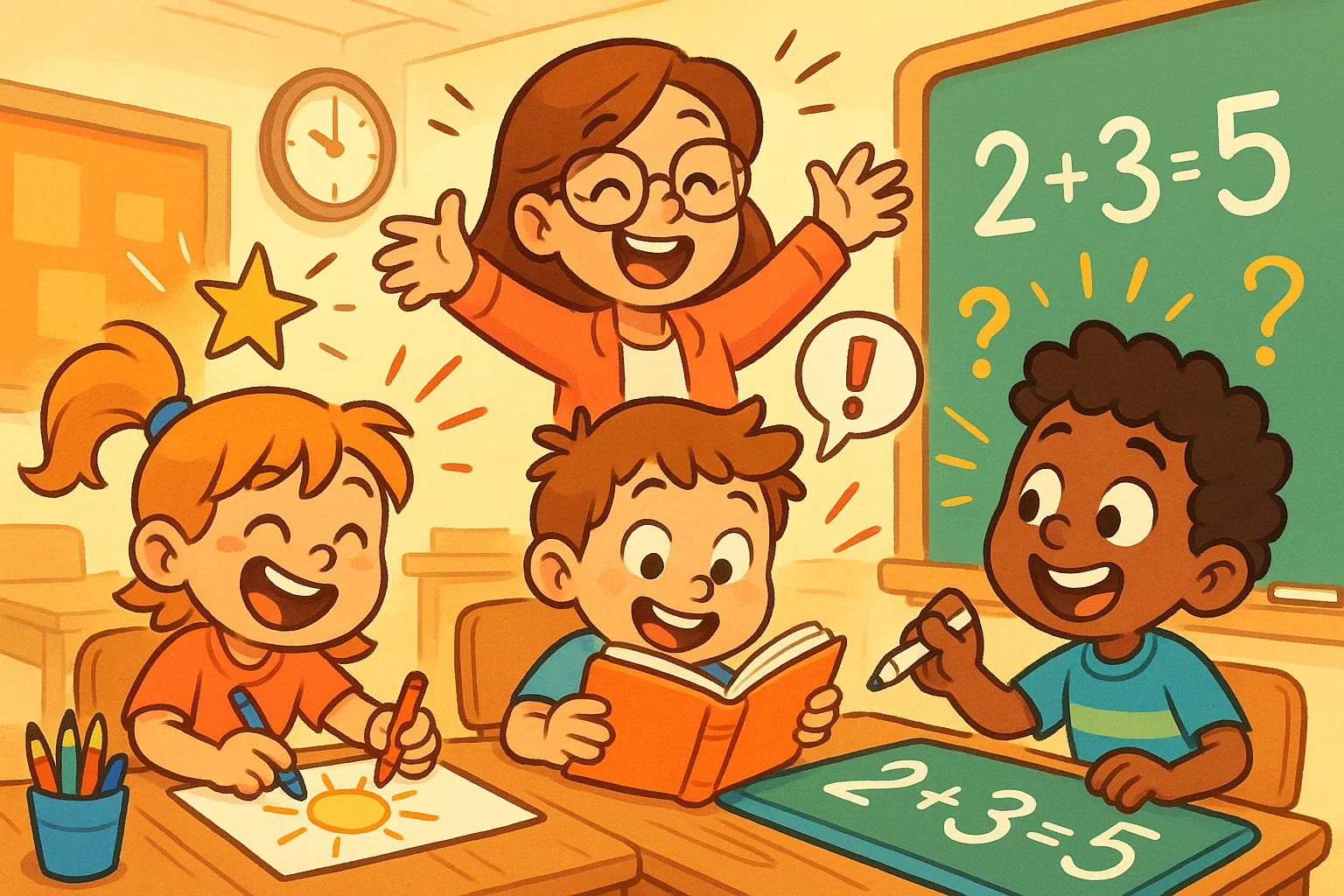
At age eight, many children are at a wonderful stage of development. They have enough independence to tackle projects on their own but still crave family connection and collaborative play. This guide offers 50 fun learning activities designed to bridge the gap between classroom learning and at-home play, helping your child stay engaged and inspired.
Key Takeaways
- Balanced Approach: Effective learning activities should mix structured academic skills, such as maths and phonics, with creative and physical play.
- Skill Integration: Fun, educational tasks can support fine motor skills, communication, and wellbeing.
- Simple Resources: Most activities require only household items, such as cardboard boxes, sheets of paper, or playing cards.
- Independence vs. Connection: A mix of independent activities and family games fosters both confidence and security.
Best Activity Mix for 8-Year-Olds
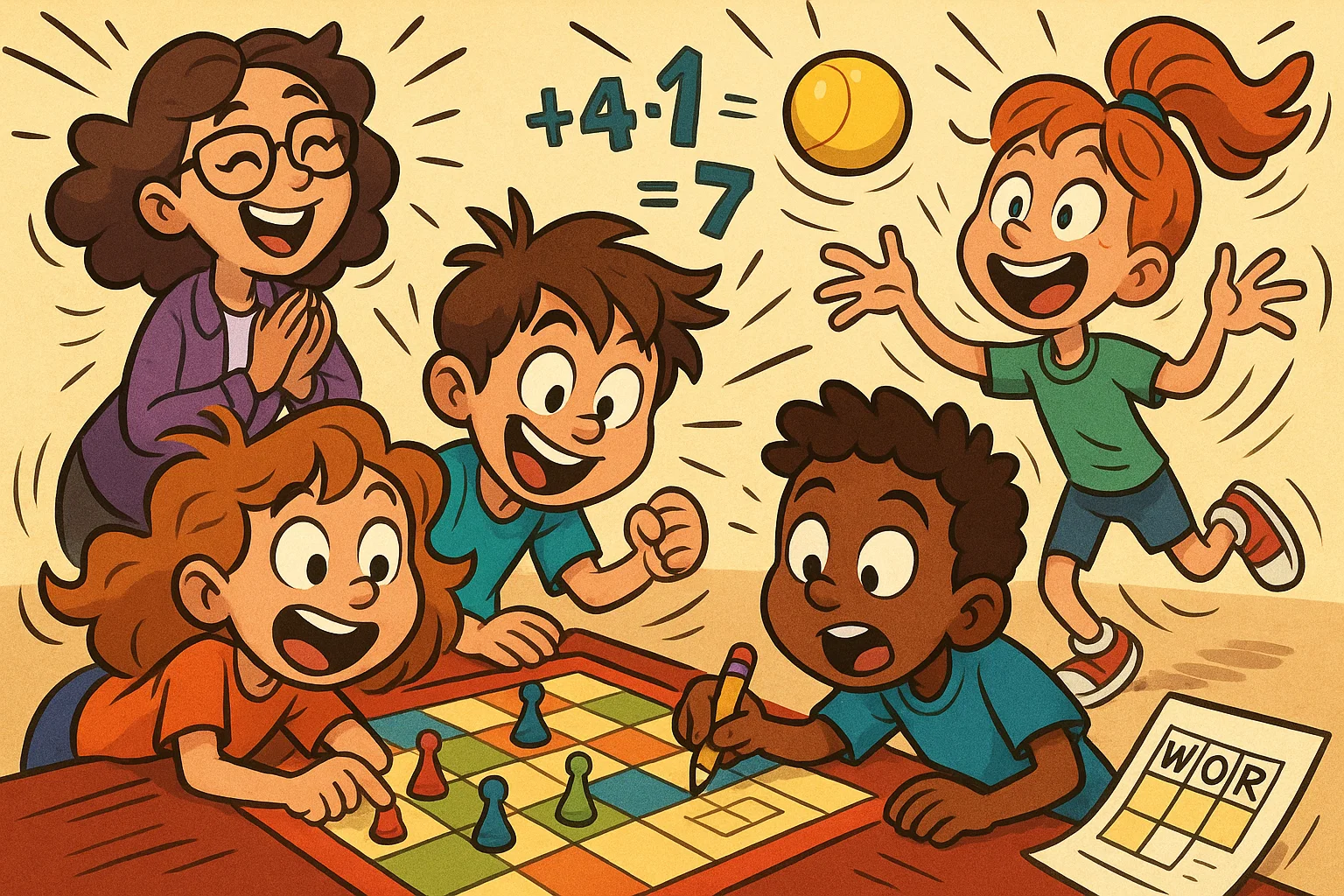
An ideal weekly plan for an eight-year-old includes a variety of games, projects, and active play to support different skills. Guidance from the National Association for the Education of Young Children (NAEYC) supports a strengths-based, play-based approach to joyful, engaged learning. As a practical weekly guideline, you might balance maths and literacy games, creative arts and sensory play, and plenty of active outdoor play or building projects. This variety prevents burnout and ensures subjects like science and history are explored through curiosity rather than rote memorisation.
Skills Kids Can Build Through Play
Playing games is a powerful way to support children’s learning because it lowers the pressure around making mistakes. Through board games and card games, school-aged children develop logical thinking and patience. Physical activities, such as a scavenger hunt, improve gross motor skills, while detailed collage work or using craft tools refines fine-motor skills. Group activities also teach essential social skills, including negotiation, empathy, and respectful communication.
Easy Setup Ideas for Parents
You do not need expensive kits to help your child excel; the best at-home tools are often recycled. Educational author and parent Isabel Thomas shares activity ideas that use simple games and everyday materials, which is a useful model for at-home learning. Keep a “Creation Station” stocked with:
- Stationery: Sheets of paper, markers, and sticky notes.
- Recyclables: Cardboard boxes, plastic bottles, and egg cartons.
- Kitchen Staples: Flour, salt, food colouring, and measuring cups.
- Nature Finds: Stones, leaves, and sticks for sensory play.
Games and Activities for Kids
Games like charades or bingo are more than just entertainment; they are cognitive workouts. By age eight, many children can stay engaged in interactive games for longer stretches, often around 30 to 45 minutes when the activity is varied and enjoyable. Playing games as a family helps reinforce school concepts in a low-pressure environment while strengthening the parent-child bond and building confidence.
Word Games
Boost literacy and phonics with quick-fire verbal challenges. Try a “Spelling Race” in which you call out a word and your child has to spell it while jumping in place. “Word Ladders” are also excellent: change one letter of a word to make a new one, such as cat → bat → bit. These fun learning activities help children recognise patterns in language and expand their vocabulary without making learning feel like a worksheet.
Board Games
Board games are a classic way to support their learning in maths skills and strategy. Games that require children to count spaces or manage “play money” teach addition and subtraction naturally. Look for games that involve reading instructions, which builds comprehension and the ability to follow multi-step processes.
Screen Games
While “screen time” is often debated, educational apps can provide targeted practice in subjects such as geography or coding. The American Academy of Pediatrics (AAP) emphasises quality, context, and family media habits rather than one universal screen-time rule. Choose apps that offer maths practice, typing activities, or coding puzzles in short, purposeful sessions. This keeps the experience fun and educational without leading to overstimulation.
Make a Game of It
Turn everyday household routines into riddles or challenges. Set a “Tidy-Up Timer” to see how many toys your child can put away in two minutes. You can also support maths skills by turning a scavenger hunt into a “Number Hunt,” where your child has to find objects in sets of three or five. Turning chores into fun games reduces resistance and builds a sense of contribution.
Activities for 8-Year-Olds
At eight, schoolchildren are beginning to move towards more complex abstract thinking. They are ready for age-appropriate challenges that require planning and persistence.
Short Activities for Busy Days
When time is tight, try these fun 10-minute “Brain Breaks.” Use sheets of paper to write down quick riddles or mental maths challenges. Ask your child to see how many words they can rhyme with “blue” in 60 seconds; it is an excellent way to practise language skills on the go.
Longer Projects for Weekends
Weekends allow for deep-dive hands-on learning. Using craft supplies and cardboard boxes, get your child to build a “Future City.” This encourages spatial reasoning and engineering concepts. Educational author and parent Isabel Thomas shares activity ideas that show how long-term projects, like keeping a seed diary, can teach children about the passage of time and biological growth.
Independent Activities Children Can Do at Home
Fostering independence is key for eight-year-olds in primary school. Provide a jigsaw puzzle or a set of LEGO building prompts that they can complete solo. Journaling or “Secret Note Writing” is another way to support their learning in writing while giving them a private space for emotional expression.
Reading and Comprehension Activities
Reading comprehension is the ability to process a text and understand its meaning. For an eight-year-old, this involves moving beyond decoding words to analysing the plot and understanding characters’ motives.
Comprehension with Adventure Books
Use humorous adventure stories to challenge your child. After a chapter, ask them to predict what the villain might do next. Encourage your child to draw a “Map of the Adventure,” which helps them visualise settings and track the sequence of events.
Read Together
Shared reading remains vital even for fluent readers. Take it in turns to read pages of a book, using different voices for characters. This helps develop listening skills and gives you chances to pause and discuss complex vocabulary or tricky themes, supporting your child’s overall wellbeing.
Comic Books and Graphic Stories
Don’t dismiss comics; they can be a gateway for reluctant readers. The combination of visual clues and text bubbles helps children recognise tone and pacing. Show your child how to create their own comic strip using sheets of paper, which combines writing practice with art.
| Book Category | Skill Focus | Recommended for |
| Funny Adventures | Tone/Humour | Reluctant readers |
| Mystery Novels | Logic/Inference | Critical thinkers |
| Fact Books | Information retrieval | Science lovers |
| Poetry | Rhythm/Phonics | Creative souls |
Writing, Punctuation and Handwriting Activities
Writing should feel like a creative outlet, not a chore. By focusing on fun activities, you can improve handwriting and punctuation without making practice feel boring.
Punctuation with Inverted Commas
Teach the use of inverted commas, or speech marks, by asking your child to write a script for a “Toy Interview.” They can use dolls or action figures and write down what each character says. This makes the concept of dialogue punctuation concrete and interactive.
Handwriting Practice for Ages 7–8
Fine-motor skills are essential for neat handwriting. Instead of repetitive lines, ask your child to write the “Daily Menu” or “House Rules.” Writing joke books or “secret codes” for a friend or family member gives children a meaningful reason to practise legible handwriting.
Story Starters
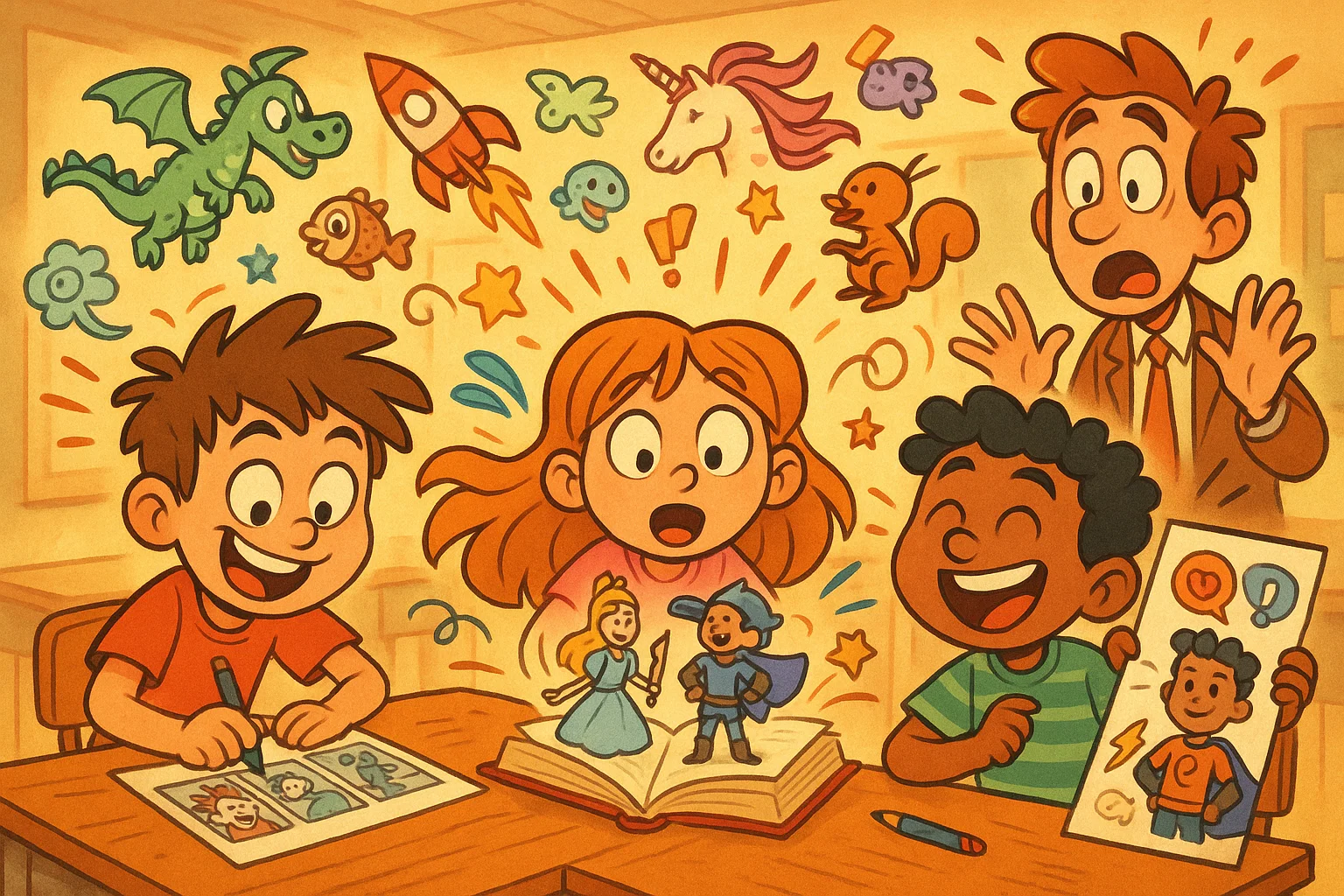
If your child has “writer’s block,” offer a wacky prompt. “A spy pigeon has lost its map…” or “The fridge has started talking…” These prompts let children’s imaginations run wild and make writing feel like an adventure.
Maths and Brain-Training Activities
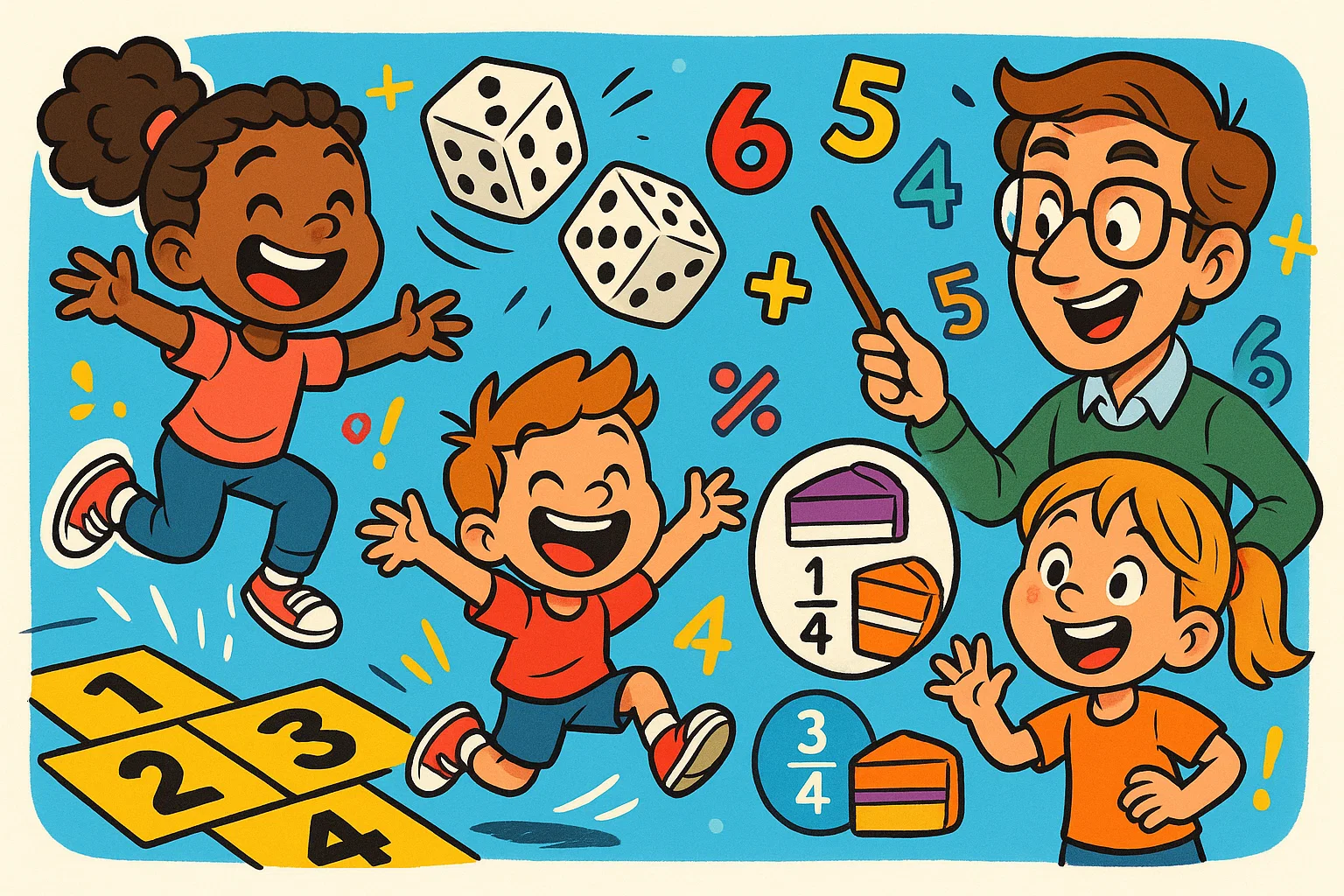
Math skills are best reinforced through repetition and real-world practice. Moving away from worksheets and towards maths games can make numeracy practice more engaging.
Times Tables for Ages 7–8
In many primary-school curricula, children practise their 2, 5, 10, 3, 4, and 8 times tables around this age. Use a deck of cards to play “Multiplication War”: each player flips a card, and the first to shout the product wins the round. This helps reinforce recall through fast-paced fun.
Brain-Training Challenges
Logic riddles and Sudoku for kids are excellent for brain training. These activities for kids require pattern spotting and deductive reasoning. You can also organise a “Code-Breaking” game in which numbers represent letters and reveal a hidden message.
Maths in Everyday Life
The kitchen is a maths lab. Ask your child to measure ingredients or double a recipe using multiplication. When shopping, ask your child to compare prices or calculate change. This teaches children that maths is a practical tool, not just a school subject.
Science Experiments and Discovery Play
Science experiments at home can follow the “Question, Guess, Test, Record” model to build a scientific mindset.
Kitchen Science Experiments
- Baking Soda Volcano: This demonstrates a simple chemical reaction.
- Density Jar: Layer honey, water, and oil to see how liquids separate by density.
- Floating Eggs: Add salt to water to explore buoyancy.
- Homemade Slime: This is a great way to discuss non-Newtonian fluids while engaging in sensory play.
Plant and Nature Experiments
Help your child explore biology by growing beans in a glass jar lined with damp paper towels. This allows them to see the roots grow. Encourage them to keep a nature journal to record daily changes, which supports observation skills and patience.
Weather and Space Activities
Create a “shadow clock” in the garden to track the Sun’s movement across the sky. On clear nights, use a stargazing app to find constellations. These activities keep children looking skyward and foster a sense of wonder about the universe.
Art, Drawing, Painting and Open-Ended Projects
Art for eight-year-olds should be about the process, not just the final product. Open-ended projects allow them to express their unique identity.
Drawing and Painting
Challenge them to create a “Self-Portrait in Five Styles,” such as cartoon, realistic, and dot art. This encourages them to experiment with different techniques and fine-motor skills. Redesigning a book cover for their favourite story is another great way to combine reading with art.
Open-Ended Art Projects
Provide a “Mystery Box” of recycled materials and ask your child to create their own creature. Using craft items such as pipe cleaners, collage materials, and cardboard boxes encourages 3D thinking. There are no wrong answers in open-ended art, which builds confidence.
Art Gallery at Home
Once a week, organise an “Art Gallery.” Let your child display their work, write captions for each piece, and give a short “artist talk.” This teaches children how to present their ideas and take pride in their learning.
Building, Blocks, Jigsaws and Cardboard-Box Ideas
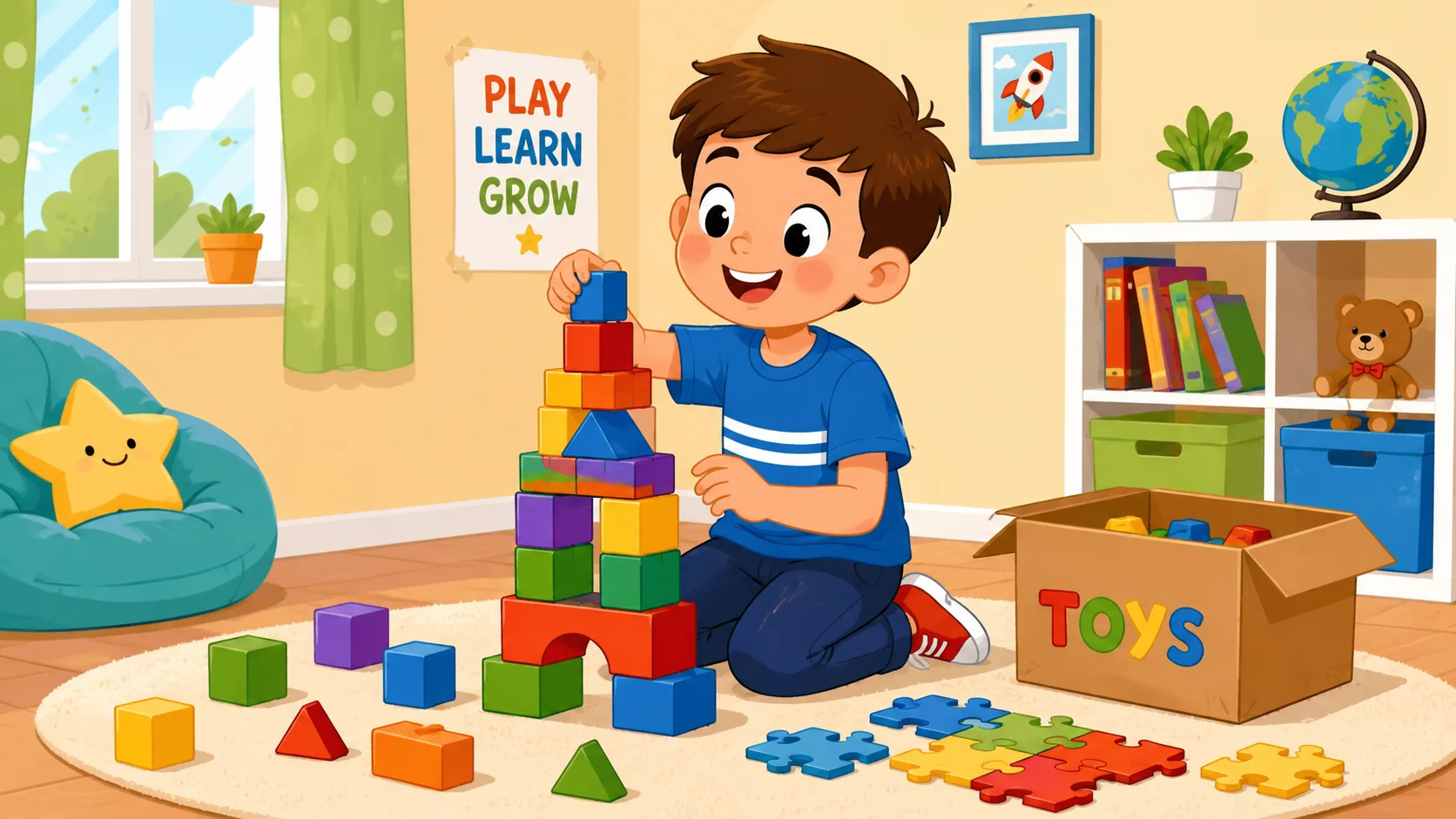
Spatial reasoning is linked to later success in STEM subjects. Building activities provide the foundation for this skill.
Blocks and Building Challenges
Set a “Strength Challenge”: build a bridge using only sheets of paper and tape that can hold a toy car. Using LEGO or wooden blocks to create a “Marble Run” requires problem-solving and an understanding of gravity and momentum.
Jigsaws and Shape Puzzles
A 100- to 200-piece jigsaw puzzle can be a good challenge for an eight-year-old. It requires visual memory and persistence. Working on a puzzle with a friend or family member promotes communication and teamwork.
Cardboard-Box Projects
A large cardboard box is the ultimate toy. It can become a reading den, a puppet theatre, or a spaceship. This type of imaginative play allows children to build their own “worlds,” complete with their own rules and logic.
Outdoor and Nature Play
Physical development is just as important as cognitive growth. Outdoor play provides the space for big movements and fresh air, which is vital for wellbeing.
Get Outside
Scavenger hunts in the park are an easy way to support active learning. Ask your child to find something “rough,” something “green,” and something “older than they are.” Chalk mazes on the driveway are also fun learning activities that incorporate movement and planning.
Nature Play
Bring biology to life by identifying birds or trees in your local area. Collecting leaves to create nature mandalas or “Leaf Rubbings” connects art with the natural world. This helps children develop respect for the environment.
Running, Jumping, Climbing
Never underestimate the power of “free play.” Running, jumping, and climbing trees help develop coordination and risk judgement. According to the World Health Organization (WHO), children and adolescents aged 5–17 should do at least 60 minutes of moderate- to vigorous-intensity physical activity daily.
Water, Sand, Play Dough and Sensory Activities
Sensory play is not just for toddlers. For older children, it becomes a tool for experimentation and stress relief.
Sand and Water Play
Use sand to build “engineered castles” with moats and bridges to test structural integrity. In water play, help children learn about volume by using different-sized containers to see how many “cups” fill a “litre.”
Play Dough Projects
Ask your child to create a 3D model of a fraction, such as a pizza cut into eighths. Making models of planets or story characters out of play dough helps children visualise abstract concepts, making them easier to remember.
Music, Dance, Singing and Performance
Music and movement are excellent for memory and emotional intelligence.
Music and Dance
Try “Rhythm Copying”: you clap a pattern, and they repeat it. Dancing challenges, such as “Freeze Dance,” can improve listening skills and self-regulation. Creating homemade instruments from kitchen items is a fun, educational way to explore sound, rhythm, and pitch.
Mini Show at Home
Encourage your child to put on a “Mini Show.” They can write a script, design a poster, and perform a dance or a magic trick. This builds public speaking skills and creative confidence in a safe, supportive environment.
Role Play, Dress-Up and Character Play
Imaginative play helps children process social situations and practise empathy.
Dress-Up and Role Play
At age eight, many children enjoy more complex role play, such as pretending to be a scientist, a news reporter, or a chef. This allows them to use specialised vocabulary and think from a different perspective. Setting up a shop with play money is also a fantastic way to practise maths in a real-life context.
Social Skills Through Play
Through doll and character play, children can act out difficult scenarios, like resolving a playground argument. This helps them learn about negotiation, boundaries, and kindness. This kind of play provides a “safe rehearsal” for real-life social interactions.
Cooking and Practical Life Activities
Involving children in household tasks builds responsibility and independence.
Cooking Together
Cooking brings several subjects together. Reading the recipe is literacy; measuring flour is maths; seeing the cake rise is science. Let your child be the “Head Chef” for a simple meal to boost their confidence.
Everyday Contributions
Tasks such as sorting laundry, matching socks, or setting the table are meaningful activities for children. These tasks teach children that their help is valued, which supports their wellbeing and sense of belonging.
Facts, Trivia, Conversation and Family Connection
Conversational learning is often the most memorable.
Family Quiz Night
Organise a weekly “Quiz Night” in which your child writes some of the questions. Use categories like “Space,” “Animals,” or “Family History.” This makes learning feel like a special event rather than a task.
Conversation Starters
Use “Would You Rather” questions to spark debate. “Would you rather have a dragon as a pet or a flying car?” These prompts encourage critical thinking and help you understand your child’s developing personality and values.
Reading Lists and Next Steps
To keep the momentum going, look for resources that adapt as your child grows.
Books for 8-Year-Olds
- Humour: The 13-Storey Treehouse series.
- Adventure: The Famous Five or more modern equivalents.
- Science: The Magic School Bus or DK Eyewitness books.
- Graphic Novels: Dog Man or Bunny vs Monkey.
Next-Year Readiness and Summer Learning
To help prevent summer learning loss, keep maths and reading active through fun games. Use printable resources, such as reading logs or scavenger-hunt lists, to keep things structured but light. Focus on independence, handwriting, and problem-solving to ensure children feel prepared for the next school year.
FAQ
What Are the Best Fun Learning Activities for 8-Year-Olds?
The best activities are those that combine your child’s interests with the right level of challenge. Board games, science experiments, cooking, and outdoor scavenger hunts are top choices because they are interactive and involve the whole family.
How Can I Help an 8-Year-Old Learn Through Play?
Ask open-ended questions like “What do you think will happen if…?” or “How could we fix this?” Adding maths skills, such as counting and measuring, or literacy skills, such as writing signs and reading instructions, to their favourite games naturally embeds learning.
What Can an 8-Year-Old Do Independently at Home?
They can enjoy LEGO builds, jigsaw puzzles, reading, journaling, and simple art projects. Providing a “choice board” of these independent activities can help children manage their own time safely.
How Long Should a Learning Activity Last?
For focused tasks like maths drills, 15 to 20 minutes is ideal. For creative projects or outdoor play, children can often stay engaged for 45 to 60 minutes. Always follow your child’s lead — if they are tired, it is okay to stop.
Which Activities Help with Reading and Maths?
Card games and dice games are excellent for maths practice. For reading, try comic books, shared reading, and word games such as “Word Guess” or “Scrabble.” Cooking and following recipes also integrate both skills seamlessly.
Which Learning Games Help Build Key Maths Skills?
Learning games with dice, cards, puzzles, and pretend shops help kids practise counting, addition, subtraction, and problem-solving. Using games in short, playful sessions helps to reinforce key maths skills without making practice feel like homework.
What Educational Activities Can I Use on Quiet Days?
Simple educational activities, such as drawing, journaling, reading, or building with pieces of paper and cardboard, are great activities to keep kids engaged without too much noise or setup. They also support your child’s learning while giving them space to work independently.
Take a short quiz to find out what your everyday choices say about your parenting style
When your child is curious about something new, what’s your instinct?
Take a short quiz to find out what your everyday choices say about your parenting style
“Can I download this app?” What happens next?
Take a short quiz to find out what your everyday choices say about your parenting style
When it comes to rules at home, which sounds most like you?
Take a short quiz to find out what your everyday choices say about your parenting style
If you could give your child one life skill today, what would you pick?
Take a short quiz to find out what your everyday choices say about your parenting style
Your child gets to choose what to watch. What would your ideal setup look like?
Take a short quiz to find out what your everyday choices say about your parenting style
Pick your parenting superpower ✨