
Educational Activities for 9 Year-Olds: 49 Fun Learning Activities to Keep Kids Engaged

 Discover a Free Education Video App for Kids
Pastory uses AI to personalize educational video content based on your child’s interests and personality. Safe, engaging, and built for curious young minds. Sign up now to stay updated and enjoy early access with a free trial
Finding the right balance between learning and leisure is a common challenge for parents of 9-year-olds who are moving from early childhood into the preteen years. At age 9, children often want more independence and intellectual stimulation, making this a great time to introduce educational activities that feel less like schoolwork and more like family fun. By weaving maths, reading, and science into fun activities, you can help your child build numeracy, literacy, and problem-solving skills.
This guide explores learning activities—from a garden scavenger hunt to baking bread—that support your child’s development while keeping learning enjoyable.
Key Takeaways
- Diverse Mix: The most effective routines combine physical movement, quiet reading, and hands-on STEAM projects.
- Challenge Level: Activities should be age-appropriate, offering enough challenge to engage a 9-year-old’s developing reasoning skills without causing frustration.
- Autonomy: Balance parent-led instructions with tasks your child can complete independently to build confidence.
- School Alignment: Many interactive games and activities support primary school milestones, such as multiplication facts up to 12 × 12, reading comprehension, and inference skills.
- Engagement: Incorporating humour, real-world rewards, and family fun helps children associate learning with positive experiences.
Best Activity Mix for 9-Year-Olds
A well-rounded plan for 9-year-olds should include literacy, numeracy, physical activity, creativity, and wellbeing. The American Academy of Pediatrics (AAP) notes that developmentally appropriate play can support executive function, self-regulation, language, and social-emotional skills. By alternating between a high-energy maths scavenger hunt and quieter activities such as mindfulness, reading, or art, you can support different needs throughout the week.
Parent-Led and Independent Options
When choosing educational activities, consider your child’s current energy level, attention span, and your own availability. Some learning activities, such as bicarbonate of soda volcanoes or complex card games, require adult supervision for safety and instruction. By contrast, tasks such as finger knitting, jigsaw puzzles, or a reading challenge allow 9-year-olds to work independently, building confidence and problem-solving skills.
Skills Covered in This Guide
This comprehensive resource targets a wide range of subjects to ensure a holistic approach to growth. You will find activities that sharpen reading skills, boost maths skills, and improve listening skills. The guide also prioritises skills such as communication, kindness, and critical thinking, which become increasingly important as children navigate more complex social situations at school and beyond.
Games and Activities
Integrating games and activities into a child’s daily routine is an excellent way to reinforce classroom concepts without the pressure of a formal environment. At age 9, many children respond well to game-based learning because clear goals, feedback, and achievable challenges can make practice feel more motivating.
1. Action Games
Movement-based activities can improve physical coordination and support focus. A “Spelling Relay” asks children to read a word, run to a station, and find or arrange the correct letter cards. Maths hopscotch is another great option: children jump on the correct answer to a mental arithmetic problem, putting their skills to the test while burning off energy.
2. Maths Games
Maths does not have to be limited to printable worksheets. Using card games such as “War”, where the highest product of two cards wins, or dice games to practise multiplication can turn drills into a friendly competition. These interactive games and activities help children see numbers as tools for winning rather than obstacles to overcome.
3. Educational Board Games
Strategic board games are a staple for family fun that builds logic and spatial reasoning. Geography games such as Ticket to Ride and word-building games such as Scrabble provide hours of fun while teaching 9-year-olds how to plan several steps ahead. When you organise a weekly game night, you are subtly boosting their observation skills and patience.
4. Interactive Puzzles and Games
Interactive learning resources such as crosswords, Sudoku, and logic grids are fantastic for developing problem-solving stamina. For a modern twist, many online resources offer virtual “escape rooms” where children solve riddles or maths problems to move to the next stage. These activities are ideal for keeping children engaged on rainy days or during quiet afternoons.
Activities for 9-Year-Olds
Nine-year-olds are at a stage where they are beginning to understand abstract concepts but still enjoy tangible results. They often enjoy fun activities that give them a taste of “grown-up” responsibility.
5. Supermarket Budget Challenge
Turn a trip to the supermarket into a maths and observation skills challenge. Give your child a pretend budget and ask them to find the best value for a specific item, such as by comparing the price per gram. This activity encourages children to use real-world subtraction and multiplication while learning about value for money.
6. Time to Talk
Building speaking, listening, and reasoning skills is important at this age. Use a list of “Would You Rather?” questions to spark discussion. This teaches children to express their thoughts, respect different opinions, and give reasons for their views—important skills for social and emotional development.
7. My Community
Learning outside the classroom can involve exploring your local area. Ask your child to see how many local landmarks they can identify on a map. You could also go for a walk and ask a friend, neighbour, or family member about their job, helping your child connect learning with the wider world around them.
8. Acts of Kindness
Wellbeing is just as important as academics. Create a “Kindness Bucket List” where the goal is to complete small tasks, such as writing a thank-you note to a teacher or helping a neighbour. This fosters empathy and shows children how their actions can affect others.
9. Being a Good Listener
To help develop active listening, play “Partner Drawing”. One person describes a complex shape or scene, and the other must draw it based solely on the verbal instructions. This activity helps children focus on details and ask clarifying questions, improving overall communication.
Reading Activities for 9-Year-Olds
By age 9, many children are moving from “learning to read” towards “reading to learn”. However, maintaining a love of playing with words is essential for long-term literacy.
10. Keep Reading Together
Even if your child is a fluent reader, shared reading remains beneficial. It allows you to explore more complex themes through books such as historical fiction, mysteries, or realistic stories. Alternating chapters or listening to an audiobook together provides a platform to discuss character choices and predict plot twists.
11. Reading Challenge
Boost motivation with a reading challenge. Use a printable genre bingo card with prompts such as “read a mystery” or “read a biography”. Platforms such as Oxford Owl offer a wide range of subjects and levels that can help children find their next favourite series without the pressure of a graded test.
12. Books for 9-Year-Olds
At this age, children often gravitate toward graphic novels, humorous series such as Diary of a Wimpy Kid, and fantasy adventures. Providing a variety of age-appropriate materials increases the chances that every child will find something that captures their imagination and inspires them to read more.
13. Electrigirl
Using a specific book such as Electrigirl can spark creative follow-up activities. After reading, suggest your child design their own superhero badge or write a comic strip featuring the characters. This bridges the gap between reading skills and creative writing.
14. Roald Dahl: Guess the Meaning
Roald Dahl’s books are famous for “Gobblefunk”, or invented words. Challenge your child to guess the meaning of his invented words and explain what clues helped them work it out. This teaches children about context clues and encourages them to be playful with their own language.
15. Reading Comprehension Workbook 8–9 Years
While fun learning is the goal, some structured practice can be helpful. A targeted workbook can help a child practise inference—reading “between the lines”. Keep these sessions short, around 15 minutes, so they remain positive and manageable.
16. Get Kids Reading
The best way to encourage your child to read is to lead by example and provide access. Visit your local library regularly and let your child choose books based on their interests, whether that is science mysteries, sport, comics, or art.
Writing, Grammar, Punctuation and Spelling Activities
Writing can sometimes feel like a chore for 9-year-olds. The key is to make it interactive and purposeful.
17. Grammar, Punctuation and Spelling Age 8–9
Instead of standard drills, try a “Punctuation Hunt” in a favourite magazine, book extract, or child-friendly article. Ask your child to find as many exclamation marks or adverbs as possible. This makes learning activities feel like a detective mission.
18. Story Builder Challenge
Use craft materials or “story dice” to provide prompts. For example, if your child rolls “moon” and “racing car”, they have to write a one-paragraph story connecting the two. This builds problem-solving skills and helps children understand narrative structure.
19. Comic Strip Writing
Comics are an excellent way to practise dialogue and concise writing. Because the space is limited, children must think carefully about which words are most impactful. It’s a great way to spend an afternoon being both an author and an artist.
20. Word Origin Detective
Building on the Dahl theme, have your child investigate the history of common words. Using an online resource, they can find out why “alphabet” comes from Greek or why “shampoo” comes from Hindi. This expands their global perspective and vocabulary.
Maths Activities and Number Puzzles
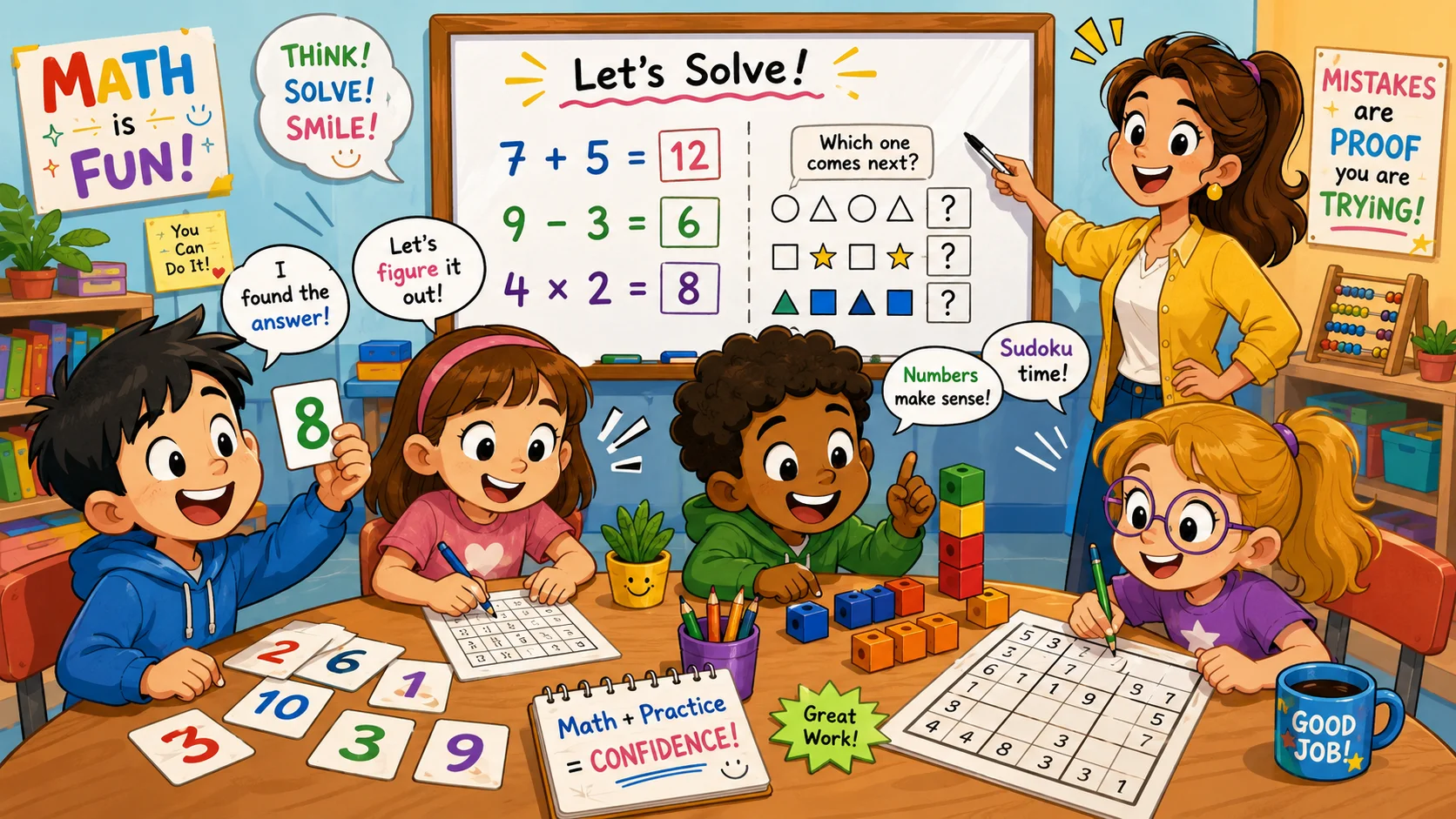
At age 9, number fluency and multiplication facts up to 12 × 12 are key focus areas in the English primary curriculum.
21. Multiplication Speed Race
While you can use a Twinkl or printable worksheet, try turning the practice into a game. Set a timer, see how many answers your child can get right in 60 seconds, and then try to beat that score the next day. Adding a “speed” element makes it one of the more fun activities for competitive children.
22. Number Puzzles
Logic puzzles like magic squares or code-breaking tasks require children to use addition and subtraction repeatedly to solve a larger mystery. These educational activities build the “maths muscle” children will need for later algebra.
23. Cooking Together
Baking bread or making lemonade can become a hidden maths lesson. Scaling a recipe for more people involves multiplication and fractions. Using a funnel, measuring liquids, and timing the oven are all ways to bring maths skills to life in the kitchen.
24. Budget Challenge
Give your child a pretend budget of £20, or the equivalent in your local currency, to plan a dream family day out or picnic. They must research costs, add totals, and make choices based on their limits. This activity encourages financial literacy and decision-making.
Maths Skills and Corresponding Home Activities
| Maths Skill | Activity | Tools Needed |
| Fractions | Baking bread or cooking | Measuring cups, recipe |
| Multiplication | Multiplication speed race | Timer, flashcards |
| Budgeting | Supermarket Budget Challenge | Shopping list, calculator |
| Geometry | Origami or art | Paper, ruler |
Science and STEAM Projects

Science, Technology, Engineering, Art, and Mathematics (STEAM) projects encourage curiosity and introduce children to the scientific method.
25. DIY Science Experiments
Create a fizzy reaction using bicarbonate of soda and vinegar to model a volcanic eruption. Experiments like this can teach children about chemical reactions using simple household items.
26. STEAM Projects You Can Do Today
Building a “paper bridge” that can hold 50 marshmallows is a fantastic engineering challenge. These fun ten-minute tasks teach physics concepts such as tension and compression through trial and error.
27. STEAM Projects Delivered to Your Door
For parents short on time, subscription boxes offer curated learning activities. These kits usually include the necessary craft materials and a YouTube video link or visual guide, making the activity easier to set up.
28. STEAM Subscriptions for Monthly Enrichment
Consistent exposure to science can help children develop curiosity, persistence, and a growth mindset. Monthly kits provide hours of fun and allow children to tackle increasingly complex projects, from building robots to exploring mystery science kits.
29. Outdoor Brain Training: Climb Trees Safely
Physical play is a form of engineering too. Climbing trees safely or navigating an outdoor obstacle course requires spatial awareness, planning, and problem-solving. It is a whole-body activity that builds confidence, coordination, and resilience.
Outdoor and Nature Activities
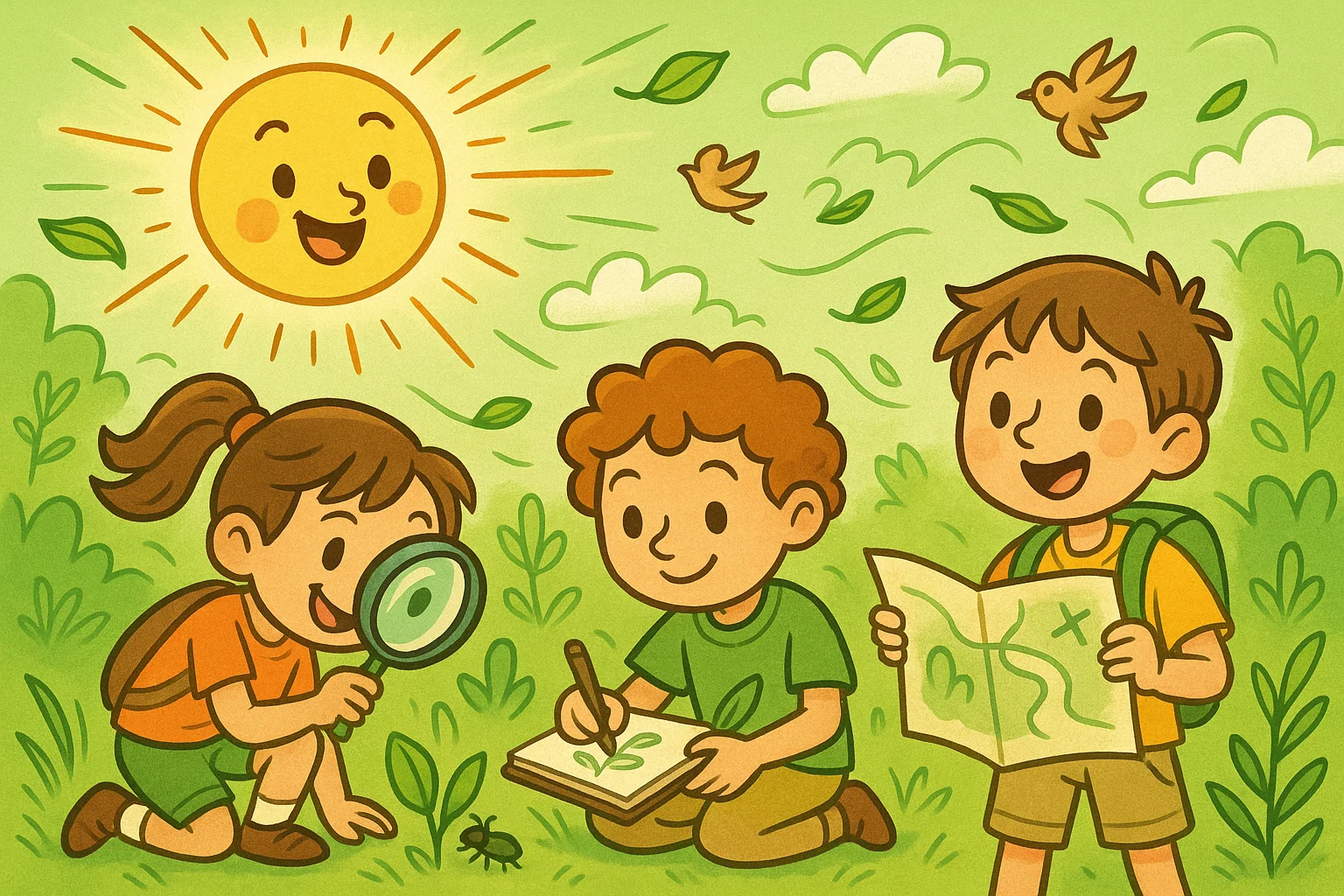
Learning outside the classroom is vital for physical health and environmental awareness.
30. Nature Scavenger Hunt
Create a list of things for your child to find or notice: a yellow petal, a smooth stone, or a particular bird song. This scavenger hunt boosts observation skills and connects them with the natural world.
31. Gardening
Planting seeds and recording their growth in a “Science Log” teaches the life cycle of plants. It requires patience and regular care, which are important life skills for 9-year-olds.
32. Interactive Holiday Activities
During the summer holidays, keep a travel journal. Map out your route, collect brochures, and write a “postcard” to a friend or family member. It keeps letter-writing and map-reading skills sharp.
33. Museum and Historical Site Visits
To make a visit more interactive, give your child a “mission”. For example, “Find three items made of gold” or “Sketch a Roman helmet”. Many museums across the UK offer printable trails for children aged 7–11.
Creative Activities for 9-Year-Olds

Creativity supports wellbeing and allows children to express themselves in non-verbal ways.
34. Art and Craft Projects
Using craft materials to create a 3D model of a local landmark combines history and art. Whether it is painting, collage, or finger knitting, these creative activities help develop fine motor skills and patience.
35. Music and Dance
Encourage your child to create a playlist for different moods or choreograph a dance to their favourite song. Music can support maths thinking because rhythm, timing, and patterns are closely connected.
36. Design Challenge
Ask your child to “redesign” their bedroom on paper or create a brand-new board game. They must consider the layout, the rules, and the “user experience”, which introduces them to design thinking.
37. Get Inspired
Use a “Boredom Jar” filled with activity ideas like “make a paper aeroplane” or “draw a comic”. This provides a quick way to get inspired when screen time is over.
Interactive Learning Resources
While this guide emphasises low-screen activities, purposeful digital tools can also be effective.
38. Interactive Online Learning
Platforms such as Twinkl and Mystery Science provide educational videos and interactive learning resources. The key is to choose content that requires the child to do something, rather than just watch.
39. Interactive Learning Resources for 7- to 11-Year-Olds
Websites such as Oxford Owl offer free e-books and maths games tailored to the primary school curriculum. These are useful for targeted practice in a way that feels accessible and low-pressure.
40. Engage Children with Digital Learning
Use the internet for research. If your child is interested in a local landmark, help them find a YouTube video, museum page, or virtual tour. This teaches them how to use digital tools responsibly for information gathering.
41. More Fun Educational Activities for Your Child
Always look for ways to bridge different subjects. A maths scavenger hunt can lead to a creative writing prompt, which then leads to a science experiment. This kind of connection reflects how children often learn in the real world.
Home Learning Activities for 7- to 9-Year-Olds
Creating a supportive environment at home is the foundation for school success.
42. What Your Child Can Do Independently or With You
Label your activity ideas by “level of support”.
Solo:
- Reading
- Jigsaw puzzles
- Finger knitting
With a parent:
- Baking bread
- Complex science experiments
- Card games
43. Primary School Learning Milestones
By age 9, many children are strengthening multiplication fluency, developing a clear handwriting style, and learning to navigate more complex social cues. Educational activities should support these goals without feeling repetitive.
44. Tips for Learning at Home
- Short Bursts: 20–30 minutes of focused activity is usually better than two hours of struggling.
- Choice: Let your child pick between two fun learning options to give them a sense of control.
- Environment: A quiet, well-lit space for at-home tasks helps focus.
45. Weekly Activity Plan
A simple rhythm helps:
- Monday: Maths game.
- Tuesday: Reading challenge, 20 minutes.
- Wednesday: STEAM project.
- Thursday: Arts and crafts.
- Friday: Family fun board game.
How to Choose the Best Fun Educational Activities for 9-Year-Olds
The “best” activity is the one your child actually wants to do.
46. Match Activity to Child Interests
If they love sport, use football statistics for maths practice. If they love animals, have them write a fact file about a tiger. Connecting learning activities to hobbies can make children more motivated and engaged.
47. Keep Challenge Level Right
Psychologists call this the “Zone of Proximal Development”. A task should be slightly challenging but achievable with the right amount of support. If it is too easy, children may get bored; if it is too hard, they may give up.
48. Mix Screen-Free and Digital Activities
Balance is key to wellbeing. Aim for a healthy balance by making sure digital learning does not crowd out sleep, physical activity, family time, outdoor play, or hobbies.
49. Make Activities Social
Whenever possible, involve a friend or family member. Learning is often a social process, and explaining a concept to someone else, such as a younger sibling, can help children consolidate their understanding.
FAQ
What Are the Best Educational Fun Activities for Kids?
The most effective activities include maths games, DIY science experiments such as bicarbonate of soda volcanoes, and reading challenges. Activities that involve real-life skills, such as baking bread or budgeting, often work particularly well.
How Can I Make Learning Fun for a 9-Year-Old?
Incorporate choice, movement, and humour. Turn drills into a scavenger hunt and use family fun nights to play board games that build logic and maths skills.
What Can a 9-Year-Old Do Independently at Home?
Nine-year-olds can enjoy finger knitting, solving jigsaw puzzles, completing printable crosswords, and engaging in silent reading or creative art activities.
What Educational Games Help 9-Year-Olds?
Strategy board games, multiplication card games, and interactive online learning resources from sites such as Twinkl or Oxford Owl can work well for this age group.
How Long Should an Educational Activity Take?
Ideally, between 15 and 45 minutes. Shorter, high-energy activities often lead to better engagement than long, drawn-out sessions.
Which Activities Help 9 Year Olds with Maths?
Cooking, supermarket budget challenges, dice games, and multiplication races are engaging ways to build numeracy at home. Cooking supports fractions, budgeting supports arithmetic, and number games help children practise multiplication facts.
Which Activities Help 9 Year Olds with Maths?
Cooking, supermarket budget challenges, dice games, and multiplication races are engaging ways to build numeracy at home. Cooking supports fractions, budgeting supports arithmetic, and number games help children practise multiplication facts.
Can Younger School Children Try These Fun Activities Too?
Many activities for 7- to 9-year-olds can be adapted for younger school children or older tweens. You can customise the rules, time limit, and level of adult support so each child has what they need to complete the task confidently.
How Can Cooking and Science Support a Child’s Learning?
Cooking and simple experiments are lots of fun because children learn through real-world problem-solving. Ask your child to find a recipe, measure ingredients, or try a baking soda experiment with adult supervision to connect maths, science, and everyday life.

Take a short quiz to find out what your everyday choices say about your parenting style
When your child is curious about something new, what’s your instinct?
Take a short quiz to find out what your everyday choices say about your parenting style
“Can I download this app?” What happens next?
Take a short quiz to find out what your everyday choices say about your parenting style
When it comes to rules at home, which sounds most like you?
Take a short quiz to find out what your everyday choices say about your parenting style
If you could give your child one life skill today, what would you pick?
Take a short quiz to find out what your everyday choices say about your parenting style
Your child gets to choose what to watch. What would your ideal setup look like?
Take a short quiz to find out what your everyday choices say about your parenting style
Pick your parenting superpower ✨



