Tips for New Moms: 10 Practical Baby Care Tips for the First Year

 Discover a Free Education Video App for Kids
Pastory uses AI to personalize educational video content based on your child’s interests and personality. Safe, engaging, and built for curious young minds. Sign up now to stay updated and enjoy early access with a free trial

Transitioning into motherhood is a transformative journey that combines profound joy with significant physical and emotional challenges. For a new mom, the first year involves navigating newborn care, mastering feeding techniques, and managing personal recovery. This guide provides practical, evidence-based advice to help new moms feel more confident while prioritizing their baby’s health and their own well-being.
This article is for informational purposes only and does not replace medical advice. Always contact your pediatrician or healthcare provider with questions about your baby’s health or your postpartum recovery.
Key Takeaways
- Prioritize Safety: Follow American Academy of Pediatrics (AAP) guidance on safe sleep and car seat use to reduce the risk of sleep-related infant death and injury.
- Feeding Flexibility: Whether you breastfeed, formula-feed, or combination-feed, the primary goal is to make sure your baby is fed, growing, and supported by appropriate medical guidance.
- Mental Health Awareness: Postpartum baby blues are common, but persistent sadness, anxiety, rage, hopelessness, or intrusive thoughts may indicate postpartum depression requiring professional support.
- Accept Support: New mothers often cope better when they receive help with household tasks, giving them more time to rest, recover, and bond with their baby.
- Trust Your Instincts: You know your baby best; contact your child’s doctor if something feels wrong or you notice symptoms such as fever, poor feeding, unusual sleepiness, or breathing changes.
New Mom Basics at a Glance

The transition to motherhood does not require perfection; it calls for presence, safety, support, and self-compassion. A new parent provides the best care when they are supported, rested, and connected to their newborn. Focus on your baby’s basic needs — warmth, nutrition, safety, and responsive care — while letting go of the pressure to maintain a “perfect” home or schedule.
Main Newborn Care Priorities
In the early weeks, the most useful parenting tips focus on safety, feeding, hygiene, and knowing when to seek medical help.
- Feeding: Establish a feeding rhythm — breast, bottle, or both — while monitoring wet diapers, weight gain, and your pediatrician’s guidance.
- Safety: Always place your baby on their back for every sleep, on a firm, flat, separate sleep surface, to reduce the risk of sleep-related infant death. Use a rear-facing car seat according to the manufacturer’s instructions and local safety laws.
- Hygiene: Maintain umbilical cord cleanliness and monitor for diaper rash.
- Monitoring: Track wet diapers and know how to take your baby’s temperature so you can spot possible signs of illness early.
Support Matters Early
Accepting help is an essential skill in newborn care, not a sign of weakness. Strong social support is associated with better postpartum adjustment and can make it easier to ask for help with feeding, recovery, and rest. Don’t be afraid to reach out to family, friends, your healthcare provider, or a lactation consultant to navigate the steep learning curve of the first year.
10 Practical Tips for New Moms

1. Trust Your Instincts
A mother’s instinct can be a valuable tool for noticing subtle changes in a newborn’s behavior. You may notice that your baby is feeding less vigorously, crying differently, or acting unusually sleepy before other symptoms become obvious. If your gut tells you something is “off” — especially if your baby has a fever, poor feeding, unusual lethargy, or breathing changes — contact your pediatrician promptly. Pediatricians value parental observations and can help you decide whether your baby needs urgent care.
2. Let Go of Perfect
Social media often portrays motherhood as a curated experience of clean nurseries and “bouncing back” after giving birth. In reality, the postpartum period is messy and unpredictable. Focus on the healthy development of your child rather than the state of your laundry. It’s okay if your baby does not sleep through the night by three months; infant sleep develops gradually, and “normal” varies widely.
3. Accept Help Early and Often
When friends ask how they can help, give them specific tasks so you can rest, recover, or focus on the baby.
- Meal Trains: Ask for nutrient-dense, one-handed snacks and freezer meals.
- Household Chores: Let visitors run a load of laundry, prepare food, or help clean bottles and pump parts according to safe hygiene guidance.
- Childcare: Have a trusted friend hold the fussy baby while you take a 20-minute nap or a hot shower.
4. Aim for Connection, Not Control
Newborns do not follow predictable adult schedules; they respond to hunger, comfort, sleep, and closeness. Instead of trying to control every sleep pattern, focus on bonding with your baby through skin-to-skin contact and responsive care. Skin-to-skin contact can help stabilize a newborn’s temperature and support bonding and breastfeeding.
5. Rest Whenever Possible
Although “sleep when the baby sleeps” can feel unrealistic, prioritizing rest whenever possible is still important. If your baby gives you a 30-minute window, consider choosing a nap, a shower, or a quiet meal over scrolling through your phone. If you have a partner or support person, consider splitting night care so each caregiver can get at least one longer block of uninterrupted sleep.
6. Avoid Comparisons
Every little one develops at a unique pace. Comparing your baby with a friend’s baby on weight gain, milestones, sleep, or feeding patterns can create unnecessary stress. Use developmental milestones as a general guide, and ask your pediatrician if you have concerns. Remember that “normal” is a wide spectrum.
7. Take Care of Yourself Physically, Mentally, and Emotionally
Your body needs enough food, fluids, and rest to recover after giving birth, especially if you are breastfeeding. Monitor your mood closely; while baby blues usually fade within two weeks, persistent feelings of hopelessness, anxiety, rage, or disconnection may require medical support. Self-care is not a luxury; it is part of safe, sustainable caregiving.
8. Communicate With Your Partner or Support Person
Resentment often builds in the postpartum period due to unspoken expectations. Clearly define roles, such as who handles the 2 a.m. diaper change, who washes bottles, or who schedules pediatrician visits. Regular check-ins about sleep, workload, and emotional health can reduce resentment and help a new mom feel less alone.
9. Find Your People
Isolation is the enemy of postpartum recovery. Seek out breastfeeding support groups, local parent-and-baby classes, postpartum groups, or moderated online communities. Connecting with others who are also dealing with a fussy child, sleep deprivation, or lactation struggles provides necessary validation.
10. Remember This Season Gets Easier
The “fourth trimester” is an intense period of adjustment. As your baby grows, they may begin sleeping for longer stretches, and your confidence will grow too. The days can feel long, but the most intense newborn stage is temporary. You are doing a hard job, and you are getting better at it every day.
Getting to Know Your New Baby
Understanding your newborn starts with observing their nonverbal cues. Babies communicate many needs through body language long before they can speak.
Newborn Cues New Moms Should Watch
Babies often show “pre-cry” cues before they become fully upset. Learning these can help you respond earlier and reduce fussiness.
- Hunger: Rooting, turning their head toward touch, sucking on hands, or smacking lips.
- Tiredness: Rubbing eyes, pulling ears, yawning, or looking away.
- Overstimulation: Arching the back, stiffening the body, turning away, or becoming harder to soothe.
Bonding Through Everyday Care
Every interaction is an opportunity to help your baby develop. Holding your baby during a bottle feed, making eye contact during diaper changes, and narrating your day while you care for them can help build secure attachment. These repetitive acts of care signal to the infant that the world is a safe place.
Skin-to-Skin, Voice, and Eye Contact
Kangaroo care, or skin-to-skin contact, can help stabilize a newborn’s body temperature and support breastfeeding, especially in the early days. Your baby has heard your voice before birth, so speaking or singing to them can feel comforting and support early connection.
Feeding Your New Baby Without Pressure
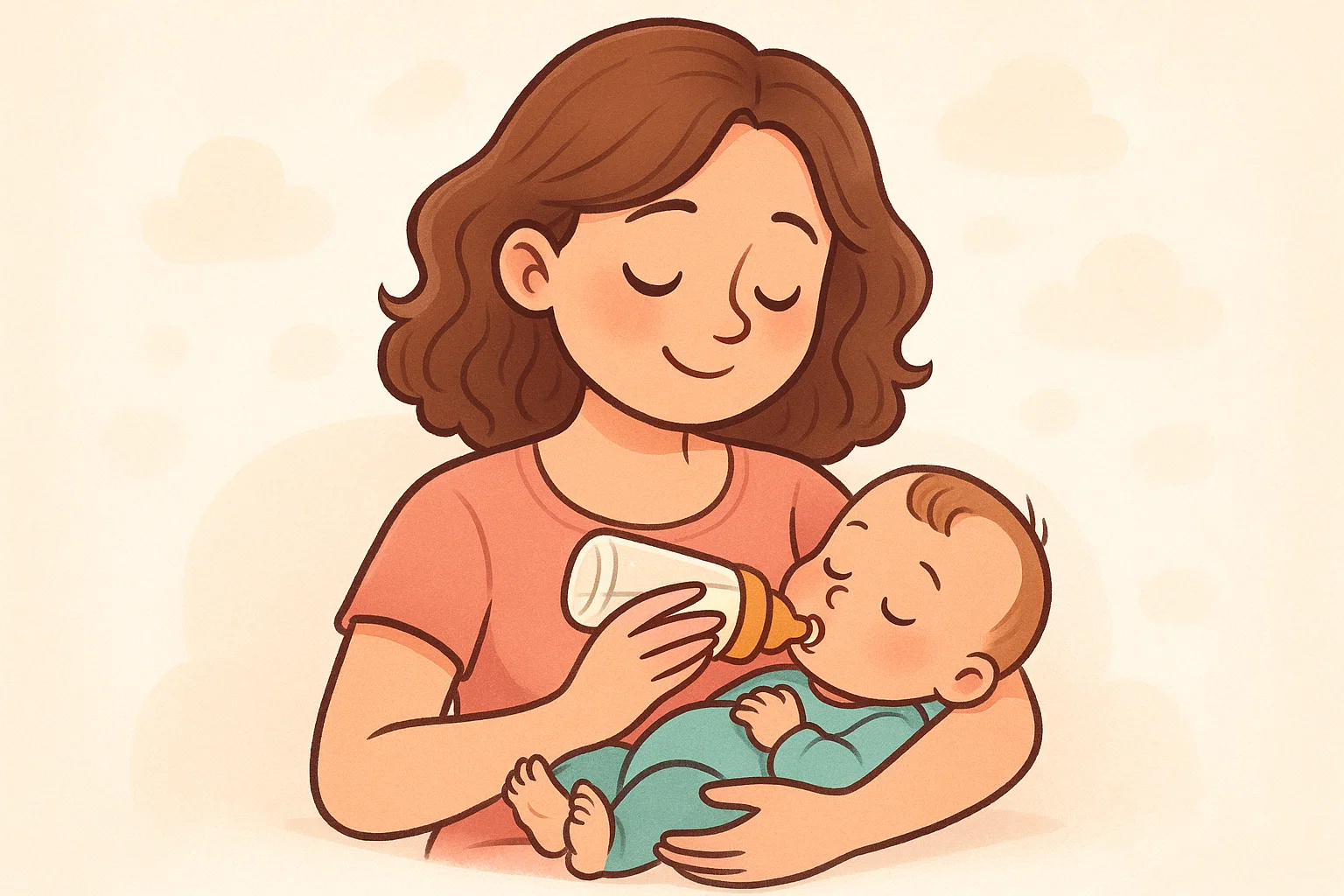
Whether you breastfeed, formula-feed, or do both, the goal is a healthy, well-fed baby and a supported parent. Feeding is a skill that both you and your baby learn together.
Breastfeeding Your New Baby
For many new moms, breastfeeding is not easy at first. In the first few days, your body produces colostrum, a nutrient-dense early milk often called “liquid gold.” As your milk comes in, your baby may cluster-feed, meaning they may want to nurse very frequently for a period of time to help stimulate supply.
Challenges With Breastfeeding
Common hurdles include latch issues, sore nipples, or concerns about supply. If you experience sharp or persistent pain, it may signal a latch problem, nipple trauma, or a possible tongue-tie. Do not suffer in silence; a lactation consultant can provide hands-on help with positioning, latch, milk transfer, and a realistic feeding plan.
Formula Feeding and Combination Feeding
Infant formula is a complete nutritional option when breastfeeding is not used or is combined with bottle-feeding.
| Feature | Formula Feeding | Breastfeeding |
| Digestion | Slower for some babies, which may mean longer stretches between feeds | Often faster, which may mean more frequent feeds |
| Convenience | Others can feed the baby | No formula preparation needed |
| Vitamin D | Often included, but intake depends on formula volume | Breastfed and partially breastfed babies usually need vitamin D drops unless a clinician advises otherwise |
Feeding Journey Is Yours
The “best” feeding plan is the one that keeps your baby growing well and supports the parent’s physical and mental health. A feeding plan should support both your baby’s growth and your well-being; ask your pediatrician about weight gain, vitamin D, and any feeding concerns. If your feeding plan changes, it is not a failure; it is an adaptation.
Helping Baby Sleep Safely

Safe sleep practices are among the most important ways to reduce the risk of SIDS and other sleep-related infant deaths. Creating a safe sleep space is an essential part of newborn care.
Safe Sleep Setup
The American Academy of Pediatrics recommends the following for every sleep, including naps:
- Back to Sleep: Always place the infant on their back.
- Firm Surface: Use a firm, flat, non-inclined sleep surface with a fitted sheet in a safety-approved crib, bassinet, or play yard.
- Clear Space: Keep pillows, blankets, loose bedding, toys, and bumper pads out of the sleep area.
- No Gadgets: Avoid sleep positioners, inclined sleepers, and any product that does not meet safe infant sleep standards.
Newborn Sleep Patterns
Newborns have short, immature sleep cycles and often need frequent feeds around the clock. Because their circadian rhythm is still developing, newborns may mix up days and nights. Daytime light, normal household noise, and a calm nighttime routine may gradually help your baby learn the difference between day and night.
Sleep Deprivation Is Real
Chronic exhaustion can affect mood, patience, decision-making, and confidence. To cope:
- Take a deep breath and acknowledge that this is a physical endurance test.
- Split Shifts: If possible, have a partner or support person take one stretch of baby care so you can sleep.
- Lower Expectations: A clean kitchen is secondary to a rested parent.
Mental Health Matters for New Moms

The postpartum period involves major hormonal, physical, and emotional changes. Many new mothers experience the “baby blues,” which usually begin within a few days after birth and can last up to two weeks; symptoms that are intense, persistent, or worsening may suggest postpartum depression.
Hard Feelings Can Happen
If you feel intense anger, cannot bond with your baby, or have intrusive or frightening thoughts, you are not alone — and you deserve help right away. Postpartum depression is a medical condition, not a character flaw. Reaching out to your OB-GYN, midwife, primary care clinician, pediatrician, or a mental health professional is a strong and protective step for your family.
Quick Stress Relief Tips
When your baby cries and you feel your heart rate rising:
- The 5-4-3-2-1 Technique: Name 5 things you see, 4 you feel, 3 you hear, 2 you smell, and 1 you taste.
- Step Away: Place the baby in a safe place, such as their crib, walk into another room, and breathe for 60 seconds.
- Hydrate: Sometimes drinking water and taking a slow breath can help interrupt the stress response.
Get Outside for Five Minutes
A change of scenery can be a powerful mood reset. The combination of fresh air and sunlight may help regulate your routine and provide a mental break from the four walls of the nursery. Even a short walk with the stroller can ease stress and help you feel more grounded.
5-5-5 Rule for New Moms
The 5-5-5 rule is a popular, non-medical framework that encourages new mothers to slow down and prioritize recovery during the first 15 days. Every postpartum recovery is different, so adjust this approach based on your birth experience, symptoms, and healthcare provider’s advice.
- 5 Days in Bed: Rest as much as possible, feed your baby, do skin-to-skin if it feels right, and follow your clinician’s guidance on gentle movement. Let others handle as many household tasks as possible.
- 5 Days on the Bed: Sit up, move gently around your room or home as tolerated, and avoid overexertion.
- 5 Days near the Bed: Begin taking short walks as tolerated, and avoid heavy lifting or stairs if your clinician has advised you to limit them.
Advice for New Moms FAQs
What Are Some Things Nobody Tells New Moms?
Many people do not mention how much your identity can shift after having a baby. You may mourn your old life while loving your new baby. Physical recovery can also take longer than the traditional six-week checkup may suggest, which is why ongoing postpartum care matters.
How Can New Moms Care for Their Mental Health?
Prioritize sleep, even if it means the house is a mess. Be honest with your partner and healthcare provider about intrusive thoughts, anxiety, sadness, rage, or hopelessness, and keep your postpartum appointments. Social connection is a protective factor against depression.
How Do I Balance Self-Care With Caring for My Baby?
Think of self-care as “micro-moments.” It may be the three minutes you spend putting on moisturizer or the five minutes you spend drinking coffee while your baby is in a safe place. These small acts of “being you” add up.
How Can I Strengthen My Support System as a New Mother?
Be specific. Instead of saying “I need help,” say “Can you bring over a lasagna on Tuesday?” or “Can you watch the baby for an hour so I can nap?” People often want to help but may not know what would actually be useful unless you give them clear direction.
What Should First-Time Moms Know About Feeding Their Newborn?
For a first-time mom, feeding your newborn can feel overwhelming, especially because breastfeeding isn’t always easy in the beginning. Whether your baby gets breast milk, formula, or both, the goal is a healthy start, steady growth, and enough wet diapers. Try to build a flexible nursing routine, but remember that your baby may not feed the same way at every feeding. If you need nursing support, a lactation consultant or pediatrician can give you practical guidance and peace of mind.
How Can I Help Prevent Sudden Infant Death Syndrome?
Many parents ask how to prevent sudden infant death syndrome, but the safest wording is that safe sleep habits help reduce the risk of sudden infant death rather than eliminate it completely. Experts at the American Academy of Pediatrics recommend placing babies on their backs for every sleep, using a firm, flat sleep surface, and keeping pillows, blankets, bumpers, and toys out of the crib. If you swaddle, make sure your baby is always placed on their back and stop swaddling once they show signs of trying to roll. Even if newborn babies don’t sleep well in the first 6 months, a safe sleep space should stay consistent.

Take a short quiz to find out what your everyday choices say about your parenting style
When your child is curious about something new, what’s your instinct?
Take a short quiz to find out what your everyday choices say about your parenting style
“Can I download this app?” What happens next?
Take a short quiz to find out what your everyday choices say about your parenting style
When it comes to rules at home, which sounds most like you?
Take a short quiz to find out what your everyday choices say about your parenting style
If you could give your child one life skill today, what would you pick?
Take a short quiz to find out what your everyday choices say about your parenting style
Your child gets to choose what to watch. What would your ideal setup look like?
Take a short quiz to find out what your everyday choices say about your parenting style
Pick your parenting superpower ✨