25+ Thanksgiving Classroom Ideas for Fun Holiday Learning

 Discover a Free Education Video App for Kids
Pastory uses AI to personalize educational video content based on your child’s interests and personality. Safe, engaging, and built for curious young minds. Sign up now to stay updated and enjoy early access with a free trial
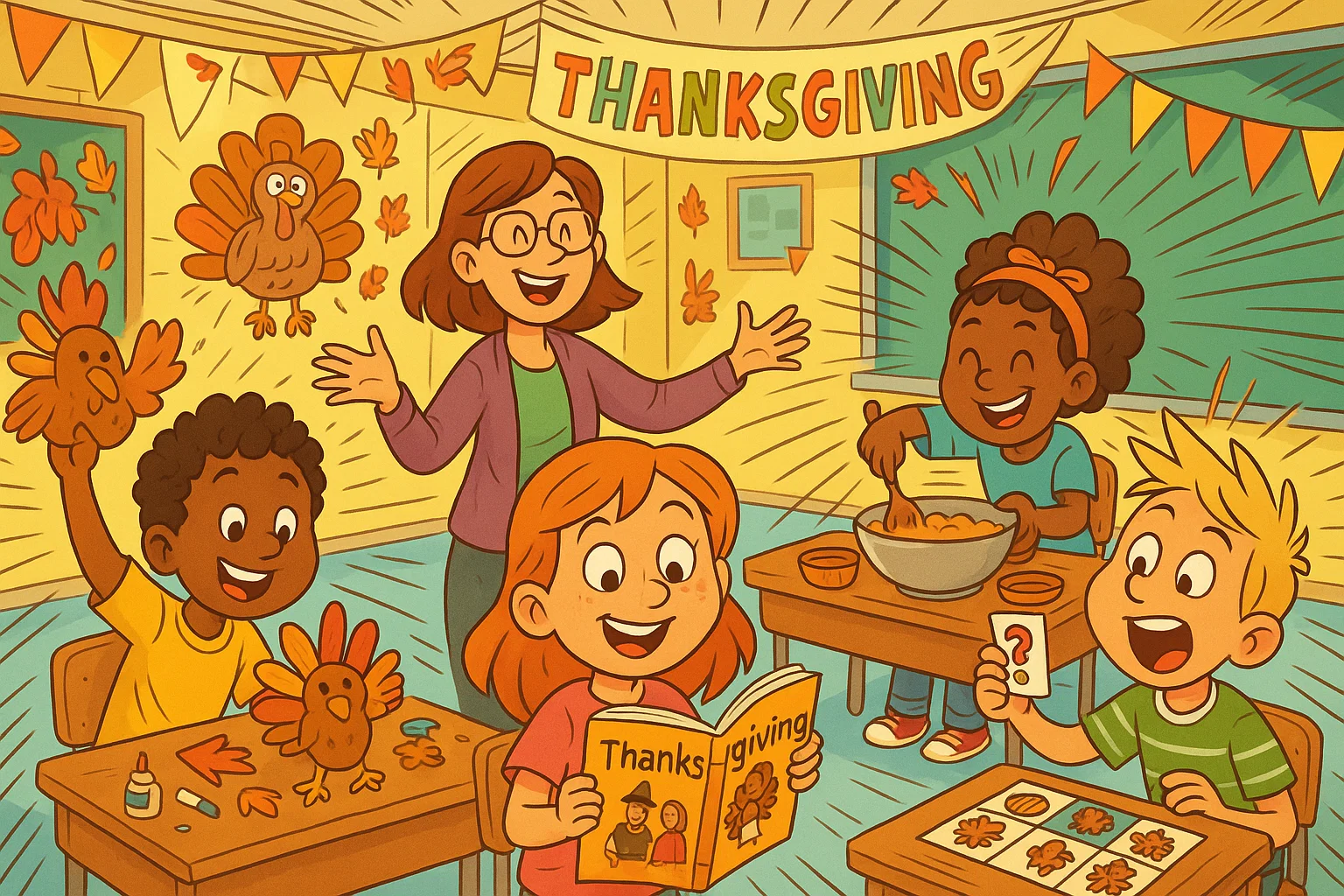
Educators often search for high-quality, low-prep Thanksgiving classroom ideas to keep students engaged during the final days of November. This comprehensive guide provides more than twenty-five practical activities designed to integrate core academic subjects with the festive spirit of the Thanksgiving season. Whether you are looking for fun Thanksgiving activities for elementary students, flexible lesson plans, or ideas for middle school students, this list balances Thanksgiving math, literacy, crafts, food projects, STEM challenges, and gratitude-based learning.
By combining turkey-themed activities, writing practice, and classroom community-building, teachers can create a classroom environment that respects the history and traditions of the American holiday. The following ideas and activities are designed to support cognitive development, fine motor practice, collaboration, and cultural awareness in elementary and middle school classrooms.
Key Takeaways
Planning for the Thanksgiving holiday requires a strategic mix of academic rigor and seasonal fun. Teachers should prioritize activities that promote gratitude, collaboration, creativity, thankfulness, and meaningful learning.
Best Classroom Activity Mix
A successful Thanksgiving lesson incorporates a variety of learning modalities to keep students motivated. Integrating Thanksgiving craft projects with math and literacy activities, science tasks, writing prompts, and collaborative teaching ideas helps instructional time remain productive. A strong mix includes:
- Hands-on projects for sensory and science learning.
- Writing activities to boost fluency and self-reflection.
- Math task cards for movement-based review.
- Inclusive resources that reflect diverse family traditions.
- History and culture lessons that include Indigenous perspectives.
- A simple Thanksgiving choice board for early finishers or independent work.
Quick Planning Tips
To manage the high energy leading up to Thanksgiving break, consider these logistics:
- Prep Time: Aim for print-and-go Thanksgiving resources or simple material lists.
- Grade Level: Differentiate Thanksgiving activities for students based on reading levels, motor skills, and background knowledge.
- Materials: Stock up on construction paper, glue, feathers, printable templates, craft sticks, and other basic supplies early.
- Management: Use clear timers, station rotations, and simple expectations to prevent classroom chaos.
- Safety: Check allergy information, dietary restrictions, and school food policies before planning any edible activities.
- Take-Home Options: Prepare a simple take home reflection page or gratitude card so students can continue the conversation with their families.
Main Student Benefits
Engaging in these fun ideas provides meaningful developmental and academic benefits:
- Fine Motor Practice: Students strengthen hand muscles by cutting, gluing, drawing, tracing, and building.
- Social-Emotional Learning: Gratitude reflections help students build empathy, appreciation, thankfulness, and self-awareness.
- Academic Fluency: Students apply math, reading, writing, and science skills in a thematic, real-world context.
- Cultural Competence: Students explore the history of Thanksgiving through multiple perspectives.
- Collaboration: Partner work, stations, and STEM challenges encourage teamwork and communication.
1. Turkey Day Stations

Station rotation is an effective classroom management strategy that allows students to move, collaborate, and engage with different activities in small groups. Thanksgiving stations are especially useful during the days before break because they keep students active while still supporting academic goals.
Teachers can use these stations as stand-alone centers, part of full Thanksgiving lesson plans, or a rotating choice board that allows students to select the tasks that best match their interests.
Turkey ABC Order
The Turkey ABC Order station asks children to organize thematic vocabulary words, such as cornucopia, harvest, gratitude, feast, and turkey, in alphabetical order. For younger learners, teachers can provide printable cards with pictures to support visual discrimination and vocabulary development. Upper elementary groups can work with a longer list of more complex words related to harvest traditions, gratitude, and early American history.
Thankful Turkey
At the Thankful Turkey station, students reflect on what they appreciate and write their ideas on individual paper feathers. Once completed, the turkey craft is assembled and displayed on a bulletin board. This activity fosters gratitude and provides a visual representation of the classroom’s shared values.
Turkey Roll and Cover
Turkey Roll and Cover is a dice-based Thanksgiving math game that builds math fact fluency. Players roll two dice, calculate the sum or product, and use a counter or token to cover the corresponding number on a turkey mat. This game provides a low-stress environment for practicing mental math strategies.
Turkey Life Cycle
The Turkey Life Cycle station connects Thanksgiving classroom activities to life science standards. Children use sequencing cards to order the stages from egg to adult turkey, then label the parts of the bird. This hands-on project helps students understand biological growth, sequencing, and science vocabulary.
Turkey Word Search
A Turkey Word Search serves as an excellent tool for vocabulary reinforcement and spelling practice. These printable puzzles are ideal for early finishers or as a calm morning-work option. Advanced learners can be tasked with finding hidden words that relate to Thanksgiving traditions, early American history, or specific Thanksgiving foods.
Design a Thanksgiving Menu
In the Design a Thanksgiving Menu station, students use writing skills to categorize foods into groups and describe dishes with persuasive adjectives. This activity can also be adapted for math by assigning a budget for Thanksgiving dinner. Each group selects items and calculates the total cost, making sure the menu stays within budget.
Build a Turkey House
This STEM activity challenges teams to design and construct a shelter for a turkey using classroom materials such as craft sticks, tape, paper, cardboard, and pipe cleaners. The Build a Turkey House project encourages critical thinking because each design must be stable and large enough to fit a small toy bird.
Turkey Addition and Subtraction Solve the Room
The Turkey Addition and Subtraction Solve the Room activity involves placing task cards around the classroom to get students moving. Each card features an addition or subtraction problem. Students travel from card to card, record their answers on a response sheet, and check their work at the end. This movement-based review is highly effective for maintaining focus before Thanksgiving break.
2. Thanksgiving Food Projects
Food projects in the classroom offer a unique opportunity to teach measurement, sequencing, nutrition, and science while students enjoy a favorite Thanksgiving treat. Before planning edible activities, always review allergy information, dietary restrictions, and school food policies. Provide non-food alternatives when needed so every student can participate safely.
These food-based teaching ideas can also become part of writing, science, or math and literacy activities. For example, students can write recipes, measure ingredients, compare quantities, or describe textures and flavors.
Pumpkin Pie Cups
Pumpkin Pie Cups are a no-bake alternative to traditional pumpkin pie. Kids layer crushed graham crackers, pumpkin pudding, and whipped topping in clear cups. This project is often paired with a procedural writing activity in which young writers draft a how-to guide for making the snack.
Fruit Cornucopia Cones
Using waffle cones as “cornucopias,” children fill them with assorted fruit to symbolize a bountiful harvest. This activity teaches nutrition, sorting, and categorization while students learn about harvest traditions.
Stone Soup Vegetable Soup
Inspired by the classic read-aloud Stone Soup, this project emphasizes community and sharing. Each child can bring a vegetable to contribute to a large pot, if school food policies allow it. While the soup simmers, the class discusses the importance of community, sharing, and gratitude.
Caramel Apple Slices
A safer classroom version of caramel apples involves dipping apple slices into caramel and adding toppings. This project allows for descriptive Thanksgiving writing as children document the textures, flavors, and steps involved. Always check for allergies, dietary restrictions, and school food policies before introducing this treat to the classroom.
Homemade Butter Churning
Homemade Butter Churning is a classic hands-on project in which learners shake heavy cream in a jar until butter forms. This experiment demonstrates changes in matter and provides a historical connection to traditional food preparation methods.
Dancing Corn Experiment
The Dancing Corn Experiment is a science-based Thanksgiving activity using corn kernels, baking soda, and vinegar. Students observe an acid-base reaction that creates carbon dioxide bubbles, causing the corn to “dance.” This helps students practice making predictions, recording observations, and explaining scientific results.
| Feature | Pumpkin Pie Cups | Butter Churning | Dancing Corn |
| Primary Subject | Procedural Writing | Physical Science | Chemical Reactions |
| Materials | Food/Cups | Cream/Jar | Vinegar/Baking Soda |
| Difficulty | Low | Medium | Low |
3. Turkey Crafts

Crafting is a staple of classroom Thanksgiving celebrations, giving children a creative outlet while supporting fine motor development. These turkey activities can be used during art time, morning work, centers, or as part of a larger Thanksgiving unit.
Handprint Hat
Kids trace their hands on colored paper to create feathers for a wearable hat, perfect for a Thanksgiving parade in the hallway.
Pine Cone Turkey
Using natural materials, students add googly eyes and felt feathers to pine cones while discussing textures and the fall season.
Turkey Hand Drawing
This classic Thanksgiving craft turns the thumb into the turkey’s head and the fingers into feathers. Encourage students to write one thing they are grateful for on each “feather.”
Paper Roll Turkey Craft
To promote recycling, young artists transform empty cardboard tubes into 3D turkey bodies. They can decorate them with paper feathers, markers, buttons, or yarn.
Tissue Paper Turkey
Children crumple small squares of tissue paper to add texture and color to their art while strengthening hand muscles.
Zentangle Turkey
For older students, a Zentangle-inspired project involves filling turkey silhouettes with intricate, repeating patterns to promote mindfulness and focus.
Tactile Turkey
This inclusive activity uses felt, buttons, yarn, feathers, and textured paper to support sensory exploration and make the craft more accessible for learners with visual impairments.
4. Gratitude Writing Activities
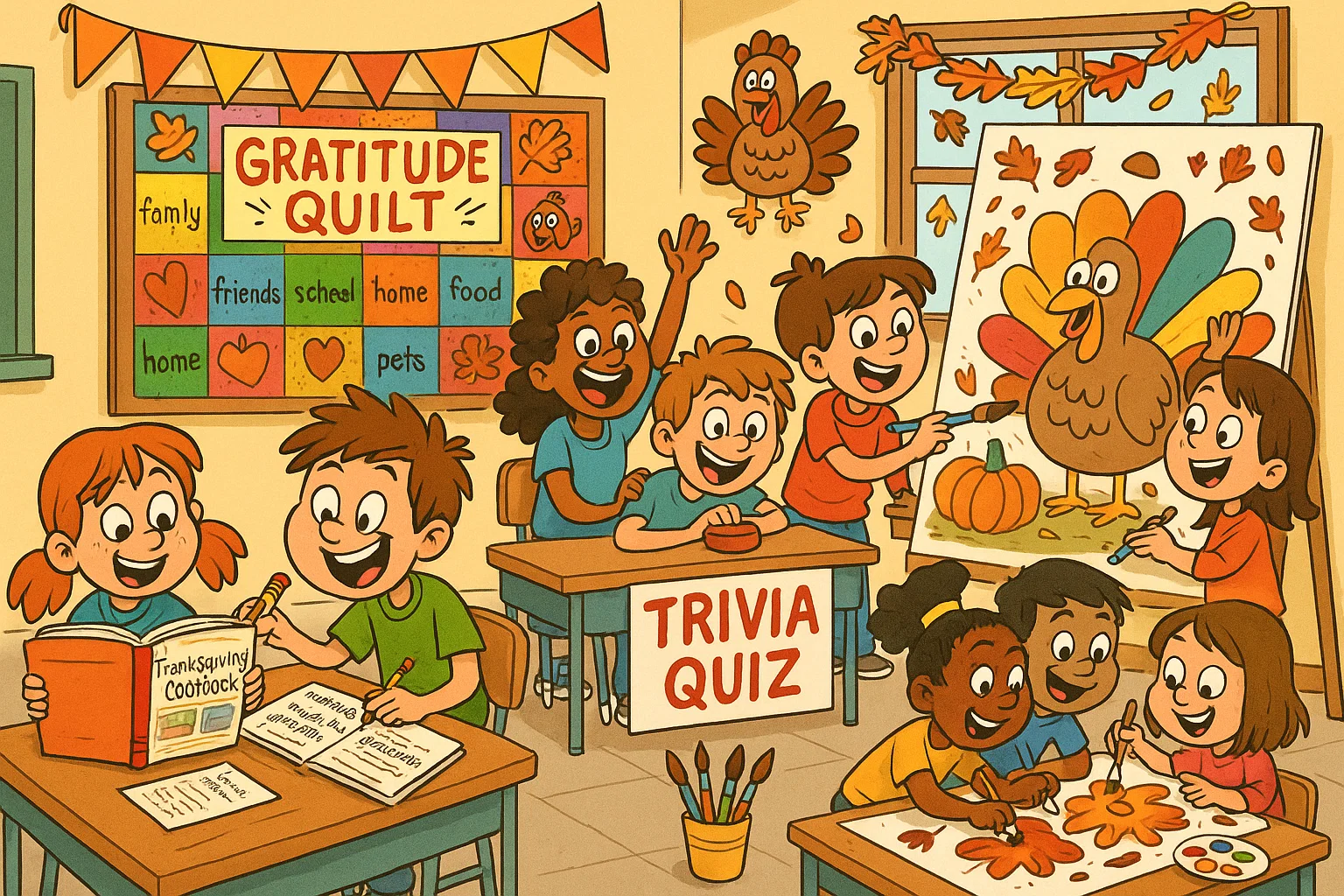
The Thanksgiving holiday offers an opportunity to pause, slow down, and take time to reflect on personal growth, community, and gratitude. Writing activities focused on gratitude support social-emotional learning and help students express appreciation in meaningful ways.
These activities also help students celebrate the spirit of Thanksgiving through reflection, kindness, and connection rather than focusing only on food or decorations.
Classroom Thankful Tree
A Classroom Thankful Tree is a collaborative display where students add paper leaves containing gratitude statements. This can become a daily routine throughout November, reinforcing a positive classroom culture.
Gratitude Poster
Children create a Gratitude Poster featuring a collage of people, places, and experiences they value. This visual project allows learners to share with their families what they have learned about appreciation during the unit.
Thankful Acrostic Poems
Using words such as THANKS, GRATITUDE, FAMILY, or HARVEST, students write acrostic poems. This helps develop writing skills while encouraging students to think deeply about gratitude and the meaning of the holiday.
What Are You Thankful For? Prompts
Providing specific writing prompts helps young writers overcome writer’s block. These prompts are excellent for morning journals, writing centers, or pre-writing exercises for longer essays.
Useful prompts include:
- Who is a person at school you appreciate?
- What is something small that made you happy this week?
- What is one family tradition you enjoy?
- What is something in nature you are grateful for?
- How can you show gratitude to a friend, teacher, or family member?
Take Home Gratitude Reflection
A take home gratitude reflection gives students a chance to continue the Thanksgiving conversation outside the classroom. Students can write or draw something they are thankful for, then invite a family member to add their own response.
5. Thanksgiving Literacy Ideas
Integrating Thanksgiving books and wordplay into the curriculum helps holiday celebrations remain academically focused. Literacy-based Thanksgiving activities can support vocabulary development, fluency, comprehension, sequencing, and creative writing.
Turkey Trouble Read-Aloud
The book Turkey Trouble is a popular choice for teaching character traits, sequencing, problem-solving, and prediction. After reading “Turkey Trouble,” students can complete a Disguise a Turkey activity in which they help the character avoid becoming Thanksgiving dinner.
Thanksgiving Poems
Seasonal poems are useful for choral reading and fluency practice. Learners can memorize short stanzas and perform them for their peers, improving public speaking skills and rhythm.
Class Cookbook Writing
Students contribute “recipes” to a class cookbook. For younger children, these are often humorous pretend recipes, while older learners can write real family recipes with ingredients, steps, and measurements. This activity connects writing, sequencing, family traditions, and procedural text.
Thanksgiving Choice Board
A Thanksgiving choice board gives students several literacy options, such as writing a poem, designing a book cover, creating vocabulary cards, completing a reading response, or drafting a thank-you letter. Choice boards are useful because they give students ownership while still supporting academic goals.
6. Thanksgiving Math Activities
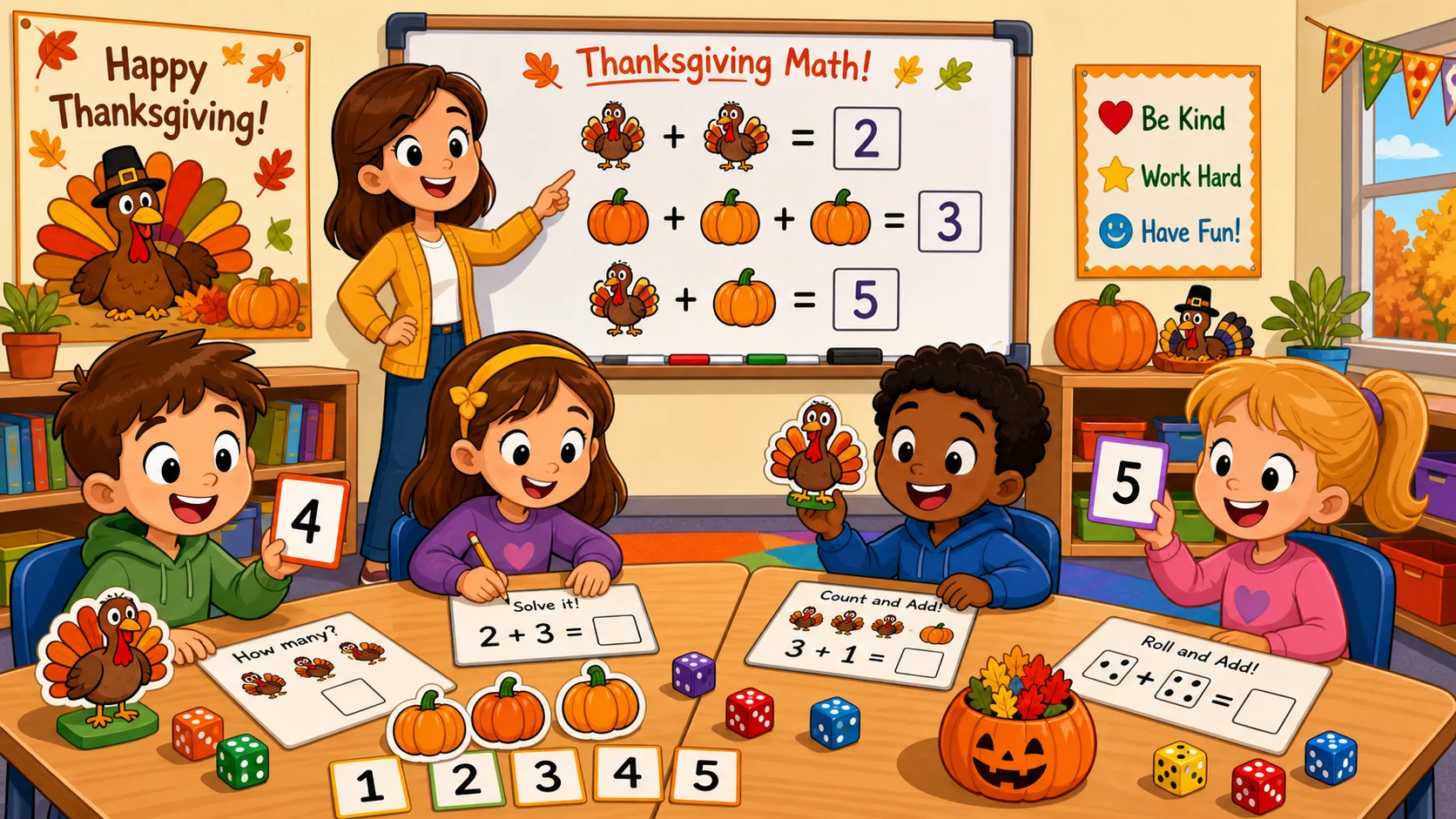
Standards-based Thanksgiving math activities keep students focused on curriculum goals while they enjoy a seasonal theme. These activities can be used in centers, small groups, partner work, or whole-class review.
Fruit Pie Fractions
Using pumpkin pie or apple pie graphics, students visualize fractions such as halves, fourths, and eighths. This visual activity makes abstract concepts more concrete for elementary students.
Menu Budget Challenge
The Menu Budget Challenge asks groups to plan a meal for a specific number of guests. They use addition and subtraction to stay within a $50 or $100 budget, building real-world financial literacy.
Solve the Room Task Cards
By placing math task cards with holiday word problems around the room, teachers encourage movement. Partners work together to solve the room, promoting collaboration, peer teaching, and active review.
Thanksgiving Math and Literacy Choice Board
For a flexible review day, create a Thanksgiving choice board with math and literacy activities. Students might solve word problems, read a short passage, write a gratitude paragraph, complete a vocabulary puzzle, or design a menu with prices. This option is especially helpful when students finish work at different times.
7. Digital Thanksgiving Activities

In today’s classroom, digital tools offer interactive ways to celebrate Thanksgiving. These activities work well for technology centers, remote learning, early finishers, or whole-class review.
Turkey Trouble Escape Room
Students solve digital math and reading clues to help a turkey “escape” from the farm. This activity can combine problem-solving, reading comprehension, number sense, and teamwork.
Google Slides Thankful Turkey
Learners build a digital turkey and type their gratitude reflections using drag-and-drop tools. This is a strong option for students who benefit from typing rather than handwriting.
Disguise-a-Turkey Slides
Children use digital drawing tools to create a costume for a turkey and write a persuasive paragraph explaining the disguise. This combines creativity, digital literacy, and opinion writing.
Digital Thanksgiving Trivia
Using platforms such as Kahoot or Quizizz, teams compete to review facts about the history of Thanksgiving, harvest traditions, vocabulary, and classroom learning.
8. Thanksgiving History and Culture Lessons
Teaching about Thanksgiving requires a balanced and accurate view of the holiday’s history, moving beyond simplified myths and including Indigenous perspectives. Thoughtful history and culture lessons help students build empathy, ask better questions, and understand that holidays can carry different meanings for different communities.
Explore Native Lands
Teachers can use interactive maps to help students identify the Indigenous peoples whose homelands include the area where their school stands. This promotes cultural awareness and a deeper, more accurate understanding of the American holiday.
Thanksgiving Traditions
Comparing how different cultures celebrate harvest festivals helps children recognize shared themes of gratitude, food, family, and community. Learners can discuss different harvest and gratitude traditions from around the world.
Corn Harvest Lesson
A lesson on corn, or maize, connects agriculture, science, and Indigenous knowledge. Students learn about pollination and the nutritional importance of this staple crop in Indigenous communities, early American history, and the modern world.
Discussing Colonial Times Carefully
When discussing colonial times, teachers should avoid presenting a one-sided or overly simplified story. Instead, students can compare primary sources, age-appropriate nonfiction texts, maps, and Indigenous perspectives to better understand the complexity of early American history.
9. Thanksgiving STEM Challenges
STEM challenges provide high engagement through engineering, design thinking, and scientific inquiry. These projects are especially helpful before Thanksgiving break because they allow students to move, build, test, revise, and collaborate.
Thanksgiving Day Parade Balloon Design
Inspired by the Macy’s Thanksgiving Day Parade, students design a prototype of a parade balloon. This Macy’s parade activity encourages students to think about size, movement, balance, and design. They can consider buoyancy when discussing real balloons or structural integrity when building paper-and-stick models, then explain how their design would move.
Butter Science Lab
During the butter-making process, young scientists record observations as liquid cream separates into butter and buttermilk. This lab provides a clear example of how energy from shaking can affect matter.
Turkey Trap Engineering
In this “reverse” STEM challenge, teams design either a harmless turkey trap or a turkey escape route. They draw a blueprint and build a model using recycled materials, explaining the design choices or simple machines used in their solution.
10. Classroom Planning Tips

To ensure a smooth Thanksgiving season, use these practical classroom management tips. A little planning can make holiday activities easier to manage and more meaningful for students.
Station Rotation Setup
- Timing: Keep rotations between 12 and 15 minutes.
- Grouping: Mix students with different ability levels to encourage peer support.
- Transitions: Use a specific sound, such as a turkey gobble, to signal when it is time to move.
- Directions: Post simple written instructions at each station.
- Materials: Prepare bins or folders for each activity before students arrive.
- Choice: Offer a Thanksgiving choice board when students need flexible, independent options.
Allergy and Safety Notes
Always verify allergy information, dietary restrictions, and school food policies before any Thanksgiving food projects. Provide non-food alternatives for students who cannot participate in edible activities so the classroom remains inclusive.
Inclusion Tips
To make Thanksgiving activities more inclusive:
- Incorporate Indigenous perspectives.
- Avoid presenting simplified or one-sided historical narratives.
- Celebrate a variety of family traditions.
- Offer food-free alternatives.
- Provide tactile materials for students with sensory needs.
- Allow students to opt out of personal sharing if they feel uncomfortable.
- Use flexible writing, drawing, speaking, and digital-response options.
Easy Take Home Extensions
Simple take home extensions allow students to continue learning after class. Teachers can send home a gratitude card, a family interview sheet, a Thanksgiving vocabulary list, or a short reflection prompt. These activities help families participate without requiring expensive materials or extensive preparation.
FAQ
What are the best Thanksgiving classroom ideas for elementary students?
The best Thanksgiving classroom ideas combine movement and academics. Top choices include turkey stations, gratitude writing, no-bake food projects, Thanksgiving math games, literacy centers, and STEM challenges such as designing parade balloons or building turkey houses.
How can teachers make Thanksgiving activities educational?
Teachers can make Thanksgiving activities educational by aligning each activity with relevant learning standards. For example, turkey crafts can build fine motor skills, menu planning can support math practice, and history lessons can strengthen social studies and critical thinking.
What can students do during Thanksgiving classroom stations?
Common Thanksgiving station tasks include Turkey ABC Order, math task cards, menu design, gratitude feathers, word searches, turkey life cycle sequencing, disguise a turkey writing, and simple STEM building challenges.
How can Thanksgiving lessons be more inclusive?
Thanksgiving lessons can be more inclusive by incorporating Indigenous perspectives, using tactile materials for children with sensory needs, offering non-food options, and celebrating a variety of family traditions beyond the traditional Thanksgiving dinner.
What Thanksgiving activities work with limited prep?
Printable word searches, roll-and-cover math games, read-aloud discussion prompts, gratitude cards, digital slides, choice boards, and simple craft templates are excellent low-prep options for busy teachers.
How can teachers celebrate the spirit of Thanksgiving without losing instructional time?
Teachers can celebrate the spirit of Thanksgiving by using activities that connect directly to academic goals. Gratitude writing, math and literacy activities, science experiments, and thoughtful history lessons allow students to enjoy the season while continuing meaningful learning.
Take a short quiz to find out what your everyday choices say about your parenting style
When your child is curious about something new, what’s your instinct?
Take a short quiz to find out what your everyday choices say about your parenting style
“Can I download this app?” What happens next?
Take a short quiz to find out what your everyday choices say about your parenting style
When it comes to rules at home, which sounds most like you?
Take a short quiz to find out what your everyday choices say about your parenting style
If you could give your child one life skill today, what would you pick?
Take a short quiz to find out what your everyday choices say about your parenting style
Your child gets to choose what to watch. What would your ideal setup look like?
Take a short quiz to find out what your everyday choices say about your parenting style
Pick your parenting superpower ✨