42 St. Patrick’s Day Activities for Kids: Crafts, Games, Science, and Traditions

 Discover a Free Education Video App for Kids
Pastory uses AI to personalize educational video content based on your child’s interests and personality. Safe, engaging, and built for curious young minds. Sign up now to stay updated and enjoy early access with a free trial

Looking for easy St. Patrick’s Day activities for kids? This guide gives parents, teachers, and caregivers simple ideas for toddlers, preschoolers, and elementary-aged children, from shamrock crafts and sensory bins to leprechaun games, rainbow science experiments, and age-appropriate lessons about Ireland. Use these activities at home, in a classroom, or at a community gathering to build creativity, fine motor skills, early math, problem-solving, and cultural awareness.
Key Takeaways
- Holistic development: The best St. Patrick’s Day activities combine crafts, movement games, STEM experiments, simple math practice, and cultural learning.
- Early childhood focus: Toddlers and preschoolers usually enjoy tactile activities such as sensory bins, green slime, simple shamrock crafts, and visual scavenger hunts.
- School-aged extensions: Older children can build literacy, problem-solving, and analytical skills through word searches, limerick writing, virtual field trips, and engineering challenges.
- Accessible materials: Most projects use everyday supplies such as construction paper, plastic coins, food coloring, cereal, and recycled cardboard.
- Flexible use: These activities can be adapted for one child, siblings of different ages, classroom groups, or community events.
Best Activity Types for Kids
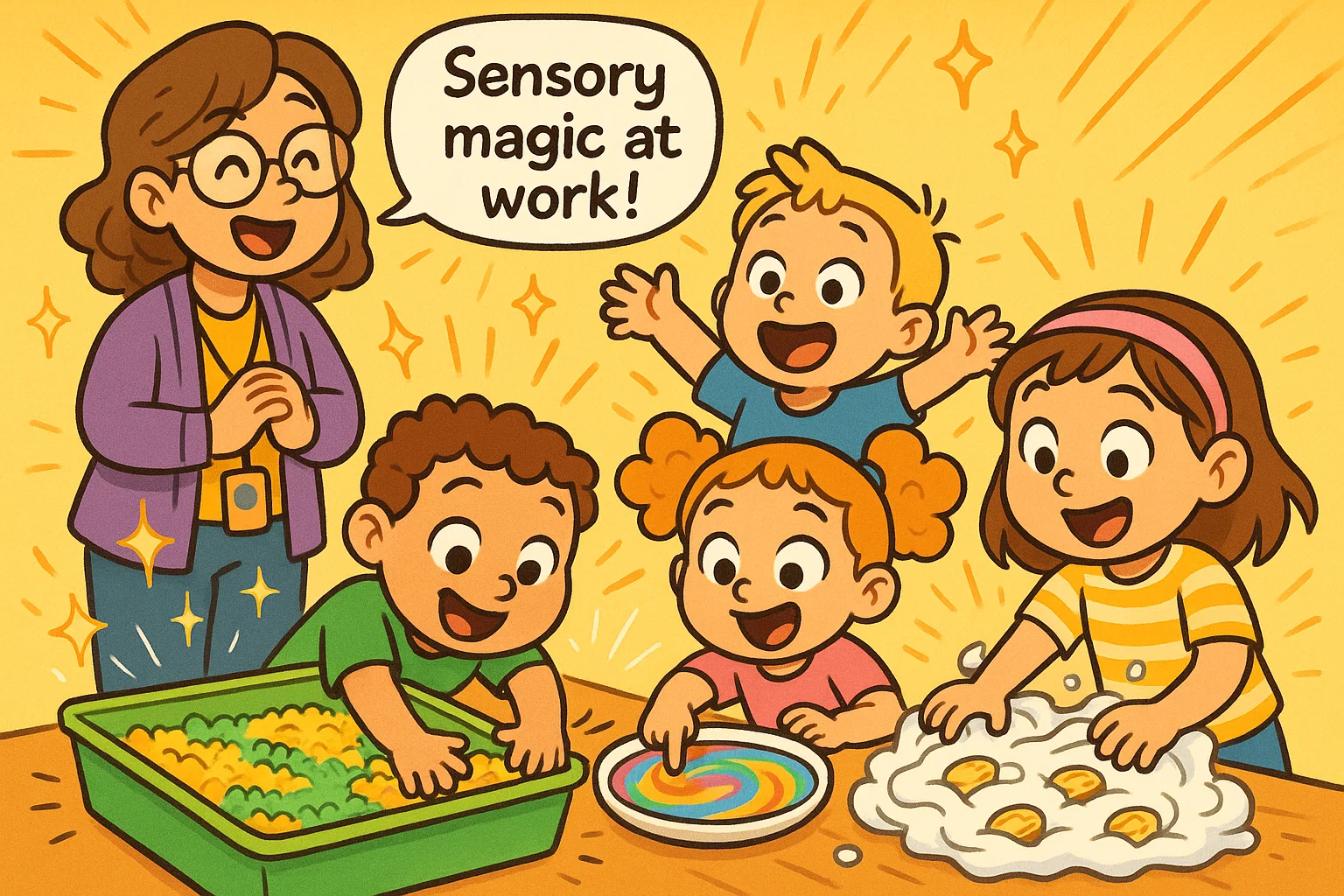
To make planning easier, the activities are grouped by skill area and activity type. Crafts and sensory play help children practice fine motor control and hand coordination. Rainbow science experiments and themed math games support STEM learning by showing simple cause-and-effect relationships. Treasure hunts, music activities, and Irish folklore read-alouds round out the list and give children different ways to participate.
Easy Supplies to Prepare
| Supply Category | Specific Inventory Items | Developmental Purpose |
| Craft Basics | Green construction paper, washable paint, glue sticks, safety scissors, pipe cleaners, cotton balls | Fine motor skills, planning, hand coordination |
| Thematic Elements | Plastic gold coins, marshmallow cereal, printable shamrock templates, green glitter | Sorting, visual tracking, counting practice |
| Science & Sensory | Green food coloring, shaving cream, clear plastic bottles, contact lens solution, baking soda | Observation, sensory play, simple science exploration |
| Kitchen Supplies | Granulated sugar, cookie cutters, all-purpose flour, buttermilk, fresh spinach, mint extract | Measuring, following directions, exploring flavors |
Age-Friendly Planning Tips
A developmentally appropriate approach means matching activities to children’s ages, abilities, and interests so they stay engaged without becoming frustrated. Toddlers and young preschoolers often do best with short, open-ended activities where the tactile experience matters more than the finished product. School-aged children can usually handle longer, goal-directed tasks with several steps. For these older groups, introduce multi-step instructions, independent problem-solving, or collaborative group goals.
Easy St. Patrick’s Day Crafts for Kids
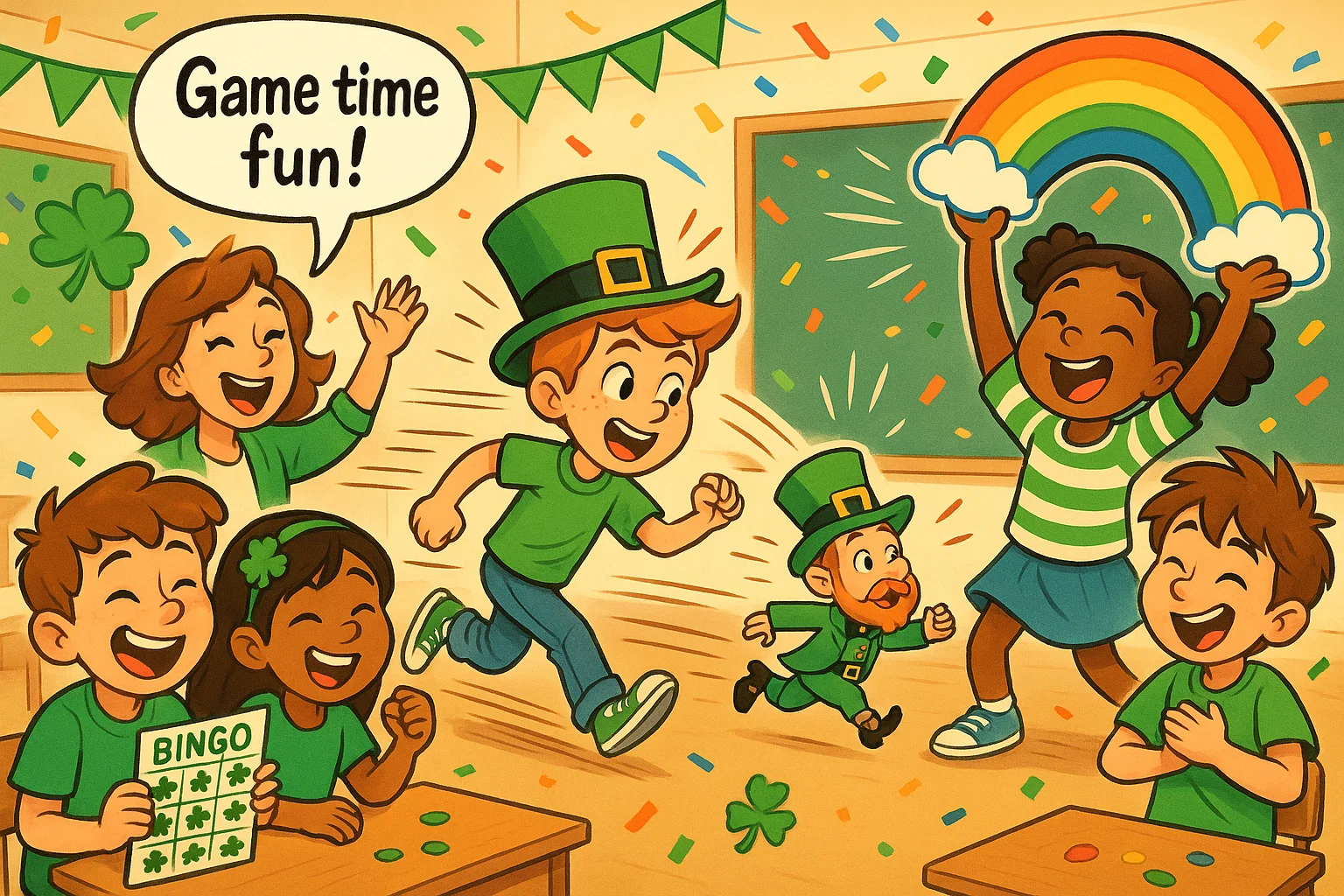
Hands-on crafts give children a simple way to express creativity while practicing fine motor skills. Activities that involve cutting, tearing, placing, and squeezing can strengthen hand muscles and support the hand-eye coordination children need for early writing.
1. Make Shamrock Crafts
A classic shamrock craft is a simple way for children to practice symmetry and shape recognition. Children can fold green construction paper in half to cut out uniform heart shapes, which form the leaves of the clover when joined at the base.
Decorating the paper shamrock with green glitter, metallic stickers, or markers lets children personalize their designs. For toddlers, adults can offer pre-cut foam or felt shapes that are easier to handle.
2. Create Tissue Paper Shamrocks
This tissue paper shamrock activity helps young children practice their pincer grasp. Children can tear green tissue paper into small pieces, crumple them into balls, and glue them onto a pre-drawn shamrock outline.
Once the glue dries, place the tissue paper shamrock on a sunny window. Light shines through the layers of tissue paper to create a stained-glass effect.
3. Try Shamrock Stamping with Bell Peppers
Bell pepper stamping shows children how a real vegetable can become a simple printing tool. An adult cuts a green bell pepper crosswise through the middle to reveal a natural three- or four-lobed clover shape.
Children can hold the base of the pepper, dip the cut side into washable green tempera paint, and gently press it onto cardstock. This creates clear shamrock prints without requiring advanced drawing skills.
4. Make a Mosaic Clover Activity
A mosaic clover activity helps children practice spatial awareness as they fill the shape with small pieces. Educators can provide a basic clover outline alongside trays of small green paper squares, buttons, plastic sequins, or dried split peas.
Children place the pieces side by side until they fill the inside of the clover shape. In a group setting, displaying the finished mosaics together shows how each child interpreted the same theme differently.
5. Create Irish-Themed Art
This broader art session encourages students to explore iconic cultural images, such as medieval castles, Celtic harps, and rolling green hills. Children can use media such as charcoal, oil pastels, and metallic gel pens to create layered visual scenes.
Introducing the meaning of the Irish flag’s green, white, and orange stripes can connect the art project to a simple social studies lesson. This turns a simple drawing activity into a lesson that also includes history and social studies.
6. Paint a Rainbow Watercolor Pot of Gold
This watercolor project provides a clear visual demonstration of color blending. Children brush clean water across heavy mixed-media paper, then paint rainbow arcs with bright watercolor paints and watch the colors blend.
Once the background dries, children can glue a black construction-paper pot at the end of the rainbow. Filling the pot with metallic gold foil stickers creates an eye-catching contrast against the colorful backdrop.
7. Make St. Patrick’s Day Decorations
Making holiday decorations helps children feel proud of contributing to their home or classroom. Students can use strips of green and white paper to assemble interlocking chains, or string painted cardstock clovers along twine to build festive room garlands.
Hanging the finished decorations on doors or along walls creates a festive classroom or home environment. Seeing their own handmade decorations on display can boost children’s confidence and sense of ownership.
8. Set Up a St. Patrick’s Day Craft Station
An organized, independent craft station promotes self-directed learning and autonomy. Teachers can set out shallow trays with pipe cleaners, pom-poms, recycled cardboard tubes, safety scissors, and glue sticks.
Allowing children to choose their own materials and decide what to make encourages independence and creative thinking. This child-led approach shifts the focus from copying a model to creative problem-solving.
Leprechaun Activities and Magical Traditions
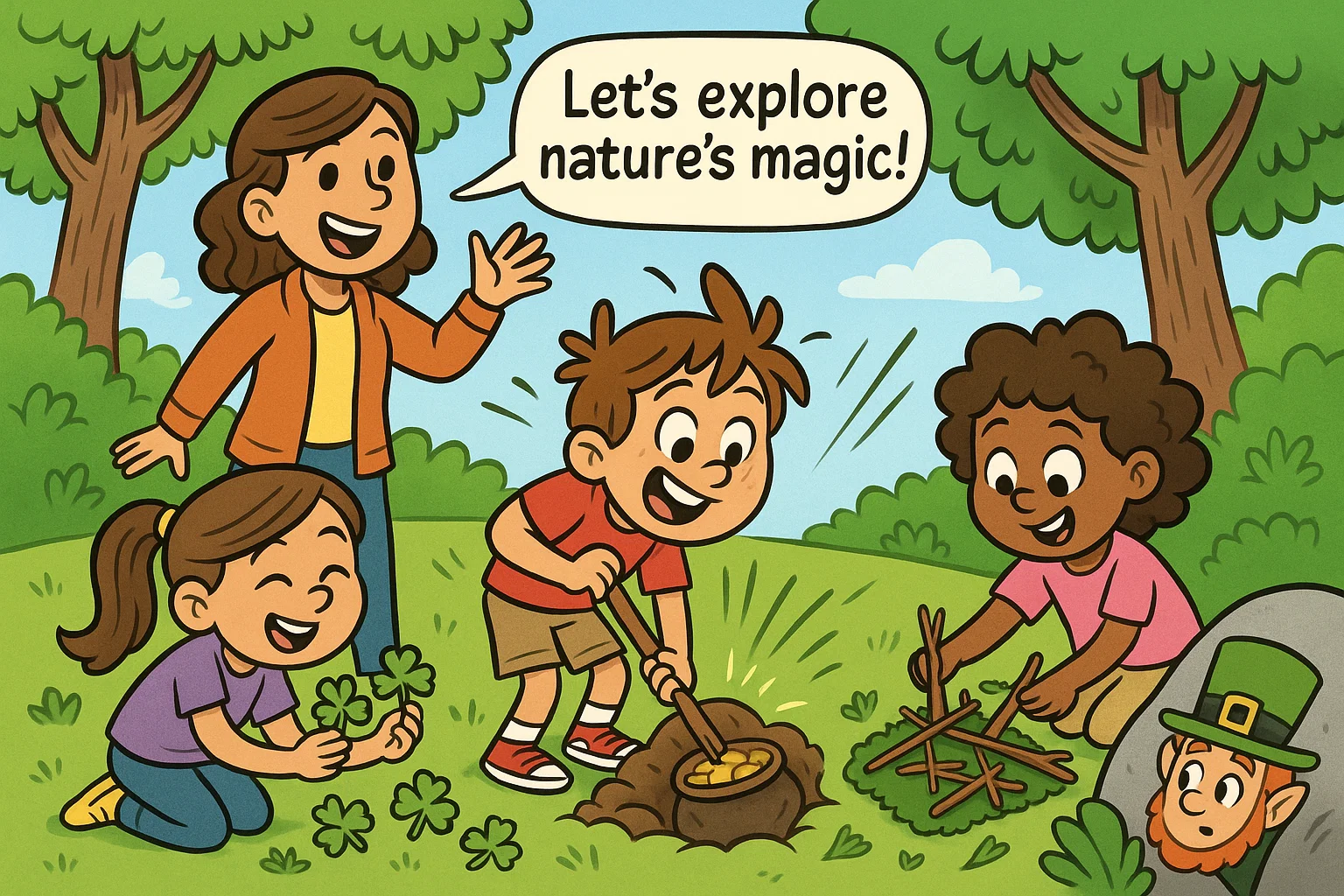
Imaginative play during holiday celebrations supports healthy emotional development and creative thinking. Incorporating whimsical folklore elements can spark curiosity, inspire storytelling, and encourage cooperative problem-solving among peers.
9. Make a Leprechaun Trap
Building a leprechaun trap is an excellent engineering challenge that blends imaginative play with practical STEM principles. Children can look at an empty shoe box or oatmeal container and brainstorm playful ways to catch a pretend leprechaun using paper ladders, trap doors, and fake bait.
Testing the trap with a small plastic toy encourages children to troubleshoot and improve their design when it does not work as planned. This process builds valuable resilience and analytical thinking skills.
10. Set Up an Indoor Gold Coin Hunt
A gold coin treasure hunt is an active way to practice basic math skills such as sorting and counting. Caregivers can hide chocolate coins or plastic coins around the living room or classroom.
Children gather the hidden tokens in small baskets, then sort them by size, pattern, or material. This activity turns a basic counting lesson into an exciting hands-on game.
11. Make Leprechaun Footprints
Creating mysterious footprints around the room overnight adds an element of wonder that sparks creative writing and storytelling. Adults can dip the outer edge of their hand and fingertips into washable green paint to stamp tiny, realistic-looking footprints onto surfaces.
Following the footprints past windowsills, up table legs, or toward the leprechaun trap they built encourages children to look closely at their environment. This investigative play can serve as a fun prompt for imaginative journaling or story writing.
12. Create St. Patrick’s Day Mischief
Harmless, silly “leprechaun mischief” can make the morning feel exciting and magical. Parents can turn a few lightweight chairs upside down, swap the positions of wall frames, or hide a green note inside a favorite book.
Discovering these silly, out-of-place changes can help children build observational skills and a playful sense of humor. Keeping the pranks simple and completely mess-free prevents unnecessary cleanup stress for parents and teachers.
13. Make a St. Patrick’s Day Surprise Basket
A small surprise basket on the morning of March 17 can set a warm, cheerful tone for the holiday. Caregivers can assemble a neat display with a themed library book, a green shirt, and a simple holiday worksheet.
This simple morning surprise can help children ease into a day of holiday activities. Including a book or creative activity helps make learning part of the celebration from the start.
14. Tell Kids Why You Feel Lucky to Know Them
Using the theme of “luck” to share positive affirmations is a wonderful way to support emotional growth and self-esteem. Educators and parents can write personalized notes on paper clovers that name a specific trait, effort, or act of kindness they appreciate in each child.
Reading these meaningful messages during a morning meeting or family dinner helps build strong emotional bonds and encourages a positive, supportive group culture. This practice helps shift the focus of the holiday toward gratitude and kindness.
Sensory St. Patrick’s Day Activities for Toddlers and Preschoolers
Sensory play gives young children valuable opportunities to explore the world through touch, sight, and sound. Structured sensory play can support exploration, language development, and self-regulation, especially when activities are calm and age-appropriate.
15. Green and Gold Sensory Bin
A green and gold sensory bin offers an engaging, open-ended way for toddlers to practice foundational math and motor skills. Caregivers can fill a wide, shallow plastic container with dyed green rice or pasta, then add scoops, cups, and plastic gold coins.
As children measure, scoop, and pour the rice, they build hand strength and learn basic concepts of volume. This calming, independent play keeps children focused while encouraging self-directed exploration.
16. St. Patrick’s Day Sensory Play
Beyond standard sensory bins, offering different textures gives young children a wider range of sensory experiences. Adults can set up shallow trays with shaving cream, green playdough, or water tinted with green food coloring.
Adding items like plastic clovers or smooth stones allows children to create detailed landscapes and patterns. This open-ended play keeps young learners engaged while building fine motor control.
17. Shaving Cream Coin Hunt
The shaving cream coin hunt is an exciting tactile game that challenges visual tracking and fine motor sorting. Adults can fill a rimmed baking sheet with shaving cream and hide bright plastic coins beneath the surface.
Swirling their hands through the fluffy cream to find the hidden coins offers a rich sensory experience. Providing a simple bowl of warm water next to the tray makes cleanup fast and easy.
18. St. Patrick’s Day Sensory Bottle
Sensory bottles offer a tidy, mess-free option for visual sensory play. Caregivers can fill a sturdy clear plastic bottle with water, clear school glue, green glitter, shamrock sequins, and metallic gold beads; an adult should seal the lid securely with hot glue.
Watching the glitter and sequins slowly swirl and settle helps children calm down and refocus. These durable, portable bottles are great for quiet corners, car rides, or classroom calm-down spaces.
19. Make Green Slime
Making homemade green slime is a popular activity that doubles as an introductory chemistry lesson. Adults can mix washable PVA school glue with food coloring, then slowly stir in baking soda and contact lens solution to activate the slime.
Kneading and stretching the glossy slime gives children a fun, hands-on look at a stretchy polymer material. This project should always be done under direct adult supervision to ensure safety.
20. DIY Rainbow Shamrock Slime
This colorful variation expands on the classic recipe by letting children experiment with color mixing. Kids can make separate batches of red, yellow, and blue slime, add green shamrock sequins, and gently twist the colors together.
Watching the primary colors combine into new shades right in their hands makes color theory tangible and memorable. The added sequins provide an interesting texture contrast that keeps children engaged in the experiment.
Rainbow Science and STEM Activities
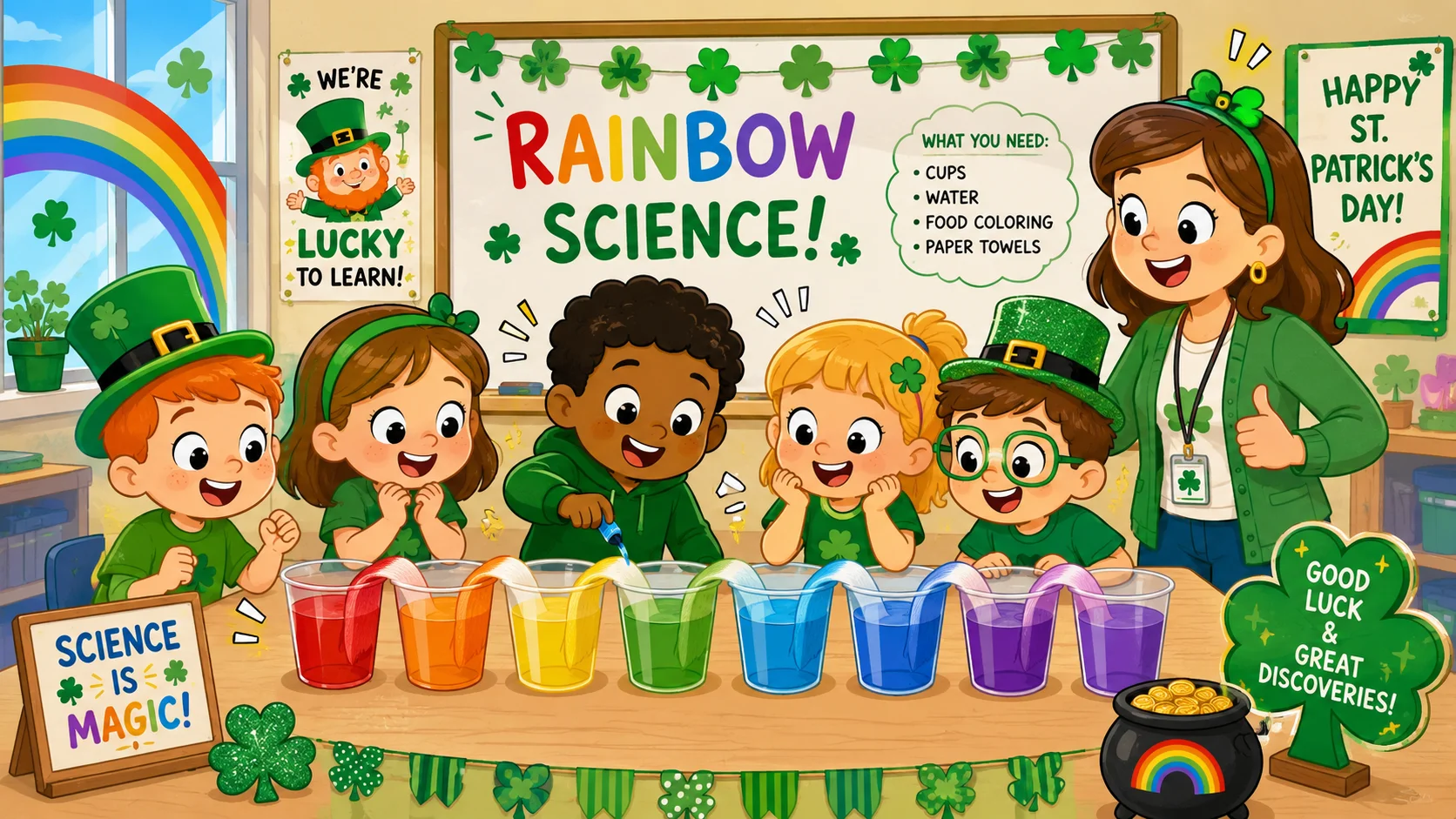
Integrating holiday themes into STEM projects is an effective way to spark curiosity and build problem-solving skills. Hands-on experiments can introduce children to simple scientific habits, such as making predictions, observing results, and talking about what happened.
21. Create a Rainbow Science Experiment
The popular candy rainbow experiment is a visually striking way to show children how colors dissolve and spread through water. Children arrange brightly colored candies in a circle around the rim of a white plate, and an adult gently pours warm water into the center.
Watching the bright bands of color move inward before they mix gives children something clear and exciting to observe. This simple experiment encourages children to ask questions about how colors and dissolved sugar move through water.
22. Make Walking Rainbow Water
The classic walking water experiment provides a clear, memorable demonstration of capillary action. Educators can line up jars of water tinted with primary food coloring, connecting each jar to the next with folded strips of paper towel.
Over the course of a few hours, children watch the colored water travel across the paper bridges and mix in the empty jars between them. This longer observation project is a good way to practice patience and record simple observations.
23. Paint Rainbows with Gold Coins
This creative STEM activity uses the ridged edges of plastic gold coins to explore texture and pattern making. Children hold the coins by their flat faces, dip the textured edge into paint, and roll or stamp them across paper to form a curved rainbow.
This project helps children practice fine motor control while learning the order of rainbow colors. The finished artwork combines creative expression with color sequencing and pattern practice.
24. Try St. Patrick’s Day Math Activities
Using holiday items as counting tools is a fantastic way to make abstract math concepts tangible and fun for young learners. Children can sort, count, and graph the different marshmallow shapes found in a bowl of marshmallow cereal.
Older students can practice more advanced skills by using plastic gold coins for multiplication arrays or measuring paper shamrocks with a ruler. These seasonal twists turn routine math drills into an engaging game.
25. Build a Pot of Gold STEM Challenge
This engineering challenge asks students to build a structure with limited materials that can support a heavy load. Kids can use wooden craft sticks, paper cups, and aluminum foil to build a platform that can hold a cup of coins.
Students can test their structures by counting how many coins each platform holds before bending or breaking. This hands-on problem-solving activity gives children a practical look at gravity, balance, and engineering design.
St. Patrick’s Day Treasure Hunts and Movement Games
Active games give children a fun way to move their bodies while building coordination and spatial awareness. Adding movement challenges to holiday celebrations gives children a chance to practice coordination, cooperation, and teamwork.
26. Plan a Scavenger Hunt
A structured scavenger hunt around the house keeps children active while challenging their reading and problem-solving skills. Parents can hide written, rhyming clues in successive rooms, with each note pointing the way to the next location.
Tailoring the clues to a child’s reading level helps keep the game fun and engaging without making it frustrating. Reaching the final hidden surprise provides a rewarding conclusion to the hunt.
27. Organize a Gold Coin Treasure Hunt
This fast-paced treasure hunt challenges children’s visual scanning skills and teamwork. An adult can hide bright plastic gold coins around a yard, playground, or large indoor space for teams of children to find.
Adding special rules, such as making certain coin designs worth bonus points, encourages basic math practice during the game. Working in pairs to fill a shared basket also helps children practice cooperation.
28. Try a Green Hunt
A green hunt is an easy, adaptable game that helps younger children practice color recognition and sorting. Caregivers can challenge toddlers or preschoolers to find and collect ten green objects from around the room within a set time limit.
Sorting the items by shade, shape, or material after the hunt keeps the learning going. This simple, high-energy activity requires no prep and can be played almost anywhere.
29. Host a Mini Parade at Home
Hosting a mini parade is a fantastic way to combine physical movement, creative expression, and rhythm practice. Children can dress in green, grab homemade shakers or drums, and march down the hallway or across the backyard to lively Irish music.
Letting children take turns leading the parade line helps build early leadership skills and confidence. This active group game brings a joyful, community feel to home or classroom celebrations.
30. Hold a Costume Contest
A creative costume contest encourages self-expression and imaginative dress-up play. Children can pull together outfits using green clothing, paper leprechaun hats, rainbow socks, and handmade shamrock pins.
Awarding lighthearted superlatives like “Most Creative Use of Green” or “Most Colorful Outfit” helps every child feel included and celebrated. This inclusive structure builds confidence and a supportive group dynamic.
31. Go on a Family Walk
A neighborhood walk can easily double as an engaging, active holiday game. Family members can walk together through a local park or neighborhood with the goal of spotting signs of spring, finding clover patches, or counting green front doors.
Bringing along a few handmade holiday cards to leave on neighbors’ doorsteps adds a thoughtful element of community kindness to the outing. This relaxed activity provides a great balance of fresh air, light exercise, and family connection.
Irish Culture and Learning Activities
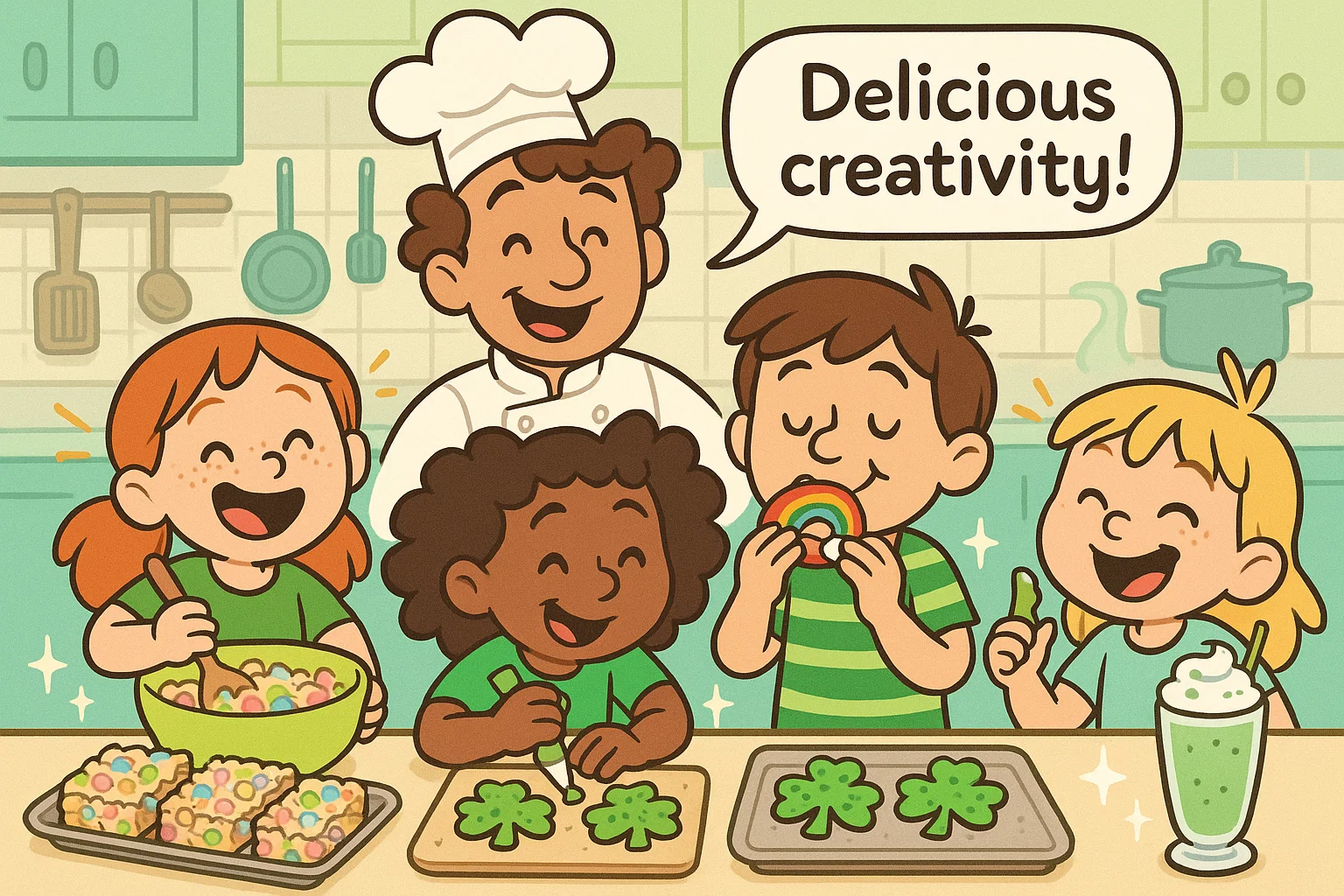
Connecting holiday celebrations with history and cultural traditions helps children build global awareness. Incorporating literacy, geography, and social studies into seasonal activities helps build empathy and deepens children’s understanding of the world.
32. What Is St. Patrick’s Day?
Introducing the core facts of the holiday using clear, child-friendly language provides a solid foundation for cultural learning. Educators can explain that St. Patrick’s Day is celebrated every year on March 17 in honor of St. Patrick, the patron saint of Ireland, and that it has evolved into a global celebration of Irish culture.
Discussing how symbols such as the three-leaf shamrock are often said to have been used to explain complex ideas makes the history more accessible to children. This context helps the crafts and games feel more meaningful.
33. Learn the History of St. Patrick’s Day
A deeper look at the history reveals how a modest cultural feast day evolved into today’s vibrant modern celebrations. Some of the best-known Irish American St. Patrick’s Day parade traditions date to the 18th century; the Library of Congress notes that New York’s parade officially dates to 1766, with an unofficial march recorded in 1762. Researchers have also identified an earlier St. Patrick’s Day celebration in St. Augustine, Florida, in 1600 and a procession in 1601.
Explaining how communities preserved their heritage through music, storytelling, and traditional dress helps children understand immigration and cultural preservation. This historical perspective helps children see the holiday as more than a day for dressing in green.
34. Take a Virtual Field Trip to Ireland
A digital field trip uses technology to bring Irish geography and historic landmarks into the classroom. Using curated video tours or interactive satellite maps, students can explore historic castles, the busy streets of Dublin, and the dramatic Cliffs of Moher.
Seeing Ireland’s green landscapes can help children understand why the country is nicknamed the “Emerald Isle.” This immersive visual experience deepens spatial awareness and offers a fresh perspective on global geography.
35. Learn About Ireland
A structured study of modern Ireland introduces children to the country’s symbols, wildlife, and daily life. Students can study the colors of the Irish flag, identify surrounding bodies of water on a map, and learn about native wildlife such as red deer.
Listening to traditional instruments such as the uilleann pipes or the bodhrán adds a rich musical element to the lesson. This multisensory approach keeps children engaged while broadening their appreciation of Irish culture.
36. Read St. Patrick’s Day Stories
Reading high-quality picture books and traditional folk tales together is an excellent way to build vocabulary and early literacy skills. Educators can select engaging stories that highlight themes of generosity, cleverness, and Irish folklore.
Pausing to discuss unfamiliar terms or predict what characters will do next keeps young readers actively thinking. This shared reading time builds comprehension skills while connecting students to traditional storytelling styles.
37. Try St. Patrick’s Day Reading Comprehension
A reading comprehension worksheet can help older elementary students practice literacy and critical-thinking skills. Students can read a short, factual passage about Irish traditions, then answer questions that require them to find details or define vocabulary words from the text.
Answering questions about sequence, details, and the main idea helps students practice key reading strategies in a seasonal way. This independent exercise fits well into a structured language arts block.
38. Create a St. Patrick’s Day Word Search
A themed word search puzzle offers a fun, focused way for students to practice spelling and letter recognition. The puzzle grid can hide seasonal vocabulary words such as leprechaun, clover, rainbow, tradition, and parade.
Finding the hidden words helps reinforce correct spelling and builds familiarity with holiday vocabulary. These printable worksheets make an excellent option for quiet, independent desk work or early finishers.
39. Write Pot of Gold Poetry
Using creative writing prompts encourages children to explore self-reflection and poetic structure. Students can write acrostic poems using the word “LUCK,” or compose short essays based on the prompt, “I am lucky because…”
This creative writing exercise encourages students to think about people, experiences, and qualities they appreciate rather than literal pots of gold. The finished poems can be displayed on a classroom bulletin board to celebrate the group’s shared ideas.
40. Use a St. Patrick’s Day Metaphor Worksheet
An advanced language arts worksheet helps middle and upper-elementary students learn to identify and write figurative language. Students practice completing sentences that use festive images as metaphors, such as comparing a bright rainbow to hope or a pot of gold to a treasured friendship.
Learning to tell the difference between literal descriptions and figurative language can help students make their writing more vivid. This practice sheet helps students build critical-thinking skills and expand their creative vocabulary.
41. Plan a Limerick Lesson
Teaching the rhythm and structure of a limerick makes for a lively, engaging creative writing lesson. Educators can break down the classic five-line poem structure, showing students how lines 1, 2, and 5 rhyme with each other, while lines 3 and 4 share a separate rhyme.
There once was a leprechaun bold, (A)
Who guarded a bright pot of gold. (A)
He hid by a tree, (B)
As quiet as could be, (B)
And laughed when his secret was told. (A)
Guiding children to clap along with the rhythm helps them understand meter and syllable counting in poetry. Writing their own funny verses is a wonderful way to connect seasonal learning with creative expression.
42. Recite an Irish Blessing
Sharing a traditional, child-friendly Irish blessing during morning meetings or family dinners is a beautiful way to encourage positive public speaking and reflection. Students can practice reading a child-friendly Irish blessing aloud to the group.
Discussing the meaning behind the blessing can help build empathy and a supportive group culture. This calming ritual provides a thoughtful, reflective conclusion to a day of festive holiday learning.
Tips for Planning St. Patrick’s Day Activities
Careful planning and preparation are key to hosting a memorable, stress-free holiday celebration. Balancing different types of activities and organizing your space in advance keeps children engaged and helps everything run more smoothly.
Choose a Mix of Crafts, Games, Food, and Learning Activities
A well-rounded celebration keeps children engaged by varying the types of activities throughout the day. Combining an artistic craft with an active movement game, a themed snack, and a short cultural reading lesson prevents boredom and accommodates different interests.
This variety keeps the day interesting without asking children to sit still or focus on one type of task for too long. A balanced schedule makes the day feel full of fun and learning from start to finish.
Keep Supplies Simple
You do not need expensive specialty-store items to create a memorable holiday celebration. Many engaging children’s projects can be made with everyday household items such as paper plates, cereal, markers, and cardboard boxes.
Using everyday items shows children that creativity is about imagination rather than expensive materials. This practical approach makes it easy for parents and teachers to set up fun activities at a moment’s notice.
Prepare Messy Activities First
Taking a few simple steps before messy projects such as slime making or painting can make cleanup quicker and easier. Covering work surfaces with plastic trays or old newspapers, putting on aprons, and keeping wet wipes close at hand keeps messes contained.
Setting up your space in advance allows you to focus on guiding the activity rather than worrying about spills. This organized preparation makes messy, sensory-rich projects much more enjoyable for everyone involved.
Adapt Activities for Group Size
Modifying activities to fit your specific group size helps every child participate more fully. For large classrooms, setting up independent learning stations allows small groups of children to rotate through crafts and games smoothly without crowding.
For single-child homes or small sibling groups, you can easily expand projects into collaborative family activities. Tailoring the setup to match your space and group size helps create a more focused, successful experience for everyone.
Add Safety Notes
Keeping safety in mind helps create a secure environment for holiday activities. Adults should closely supervise children when they use scissors, handle small coins that could be choking hazards, or mix slime ingredients.
Reviewing food allergen labels before serving themed snacks or using cereal for crafts helps protect children with allergies or sensitivities. Prioritizing these simple precautions helps create a fun, positive experience for every young learner.
Frequently Asked Questions About St. Patrick’s Day Activities for Kids
What are some fun and easy St. Patrick’s Day ideas for kids?
Fun and easy St. Patrick’s Day ideas include making paper shamrocks, setting up a gold coin hunt, creating rainbow-colored art, or trying a simple walking water experiment. These easy ideas work well at home or in the classroom because they use common supplies and can be adapted for kids of all ages.
How can children celebrate the holiday in a fun and educational way?
Children can celebrate the holiday with activities that combine crafts, movement, science, and cultural learning. A fun and educational St. Patrick’s Day activity might include reading a short story about Ireland, making a shamrock craft, counting plastic gold coins, or learning a few fun facts about Irish symbols and traditions.
Why do people wear green on St. Patrick’s Day?
Wearing green on St. Patrick’s Day is one of the most familiar holiday traditions. For children, it can become a simple color-recognition activity: kids can look for green clothing, sort green objects, or talk about how green is connected to shamrocks, spring, and Ireland’s landscape.
What are good rainbow activities for St. Patrick’s Day?
Good rainbow activities include painting a pot of gold at the end of a rainbow, sorting objects by the color of the rainbow, or making a rainbow-colored sensory bottle. These activities help children practice color order, fine motor control, and observation skills while keeping the theme playful.

Take a short quiz to find out what your everyday choices say about your parenting style
When your child is curious about something new, what’s your instinct?
Take a short quiz to find out what your everyday choices say about your parenting style
“Can I download this app?” What happens next?
Take a short quiz to find out what your everyday choices say about your parenting style
When it comes to rules at home, which sounds most like you?
Take a short quiz to find out what your everyday choices say about your parenting style
If you could give your child one life skill today, what would you pick?
Take a short quiz to find out what your everyday choices say about your parenting style
Your child gets to choose what to watch. What would your ideal setup look like?
Take a short quiz to find out what your everyday choices say about your parenting style
Pick your parenting superpower ✨