Learning Activities for 4-Year-Olds: 30 Fun Ideas for Home, Preschool, and Online Play

 Discover a Free Education Video App for Kids
Pastory uses AI to personalize educational video content based on your child’s interests and personality. Safe, engaging, and built for curious young minds. Sign up now to stay updated and enjoy early access with a free trial
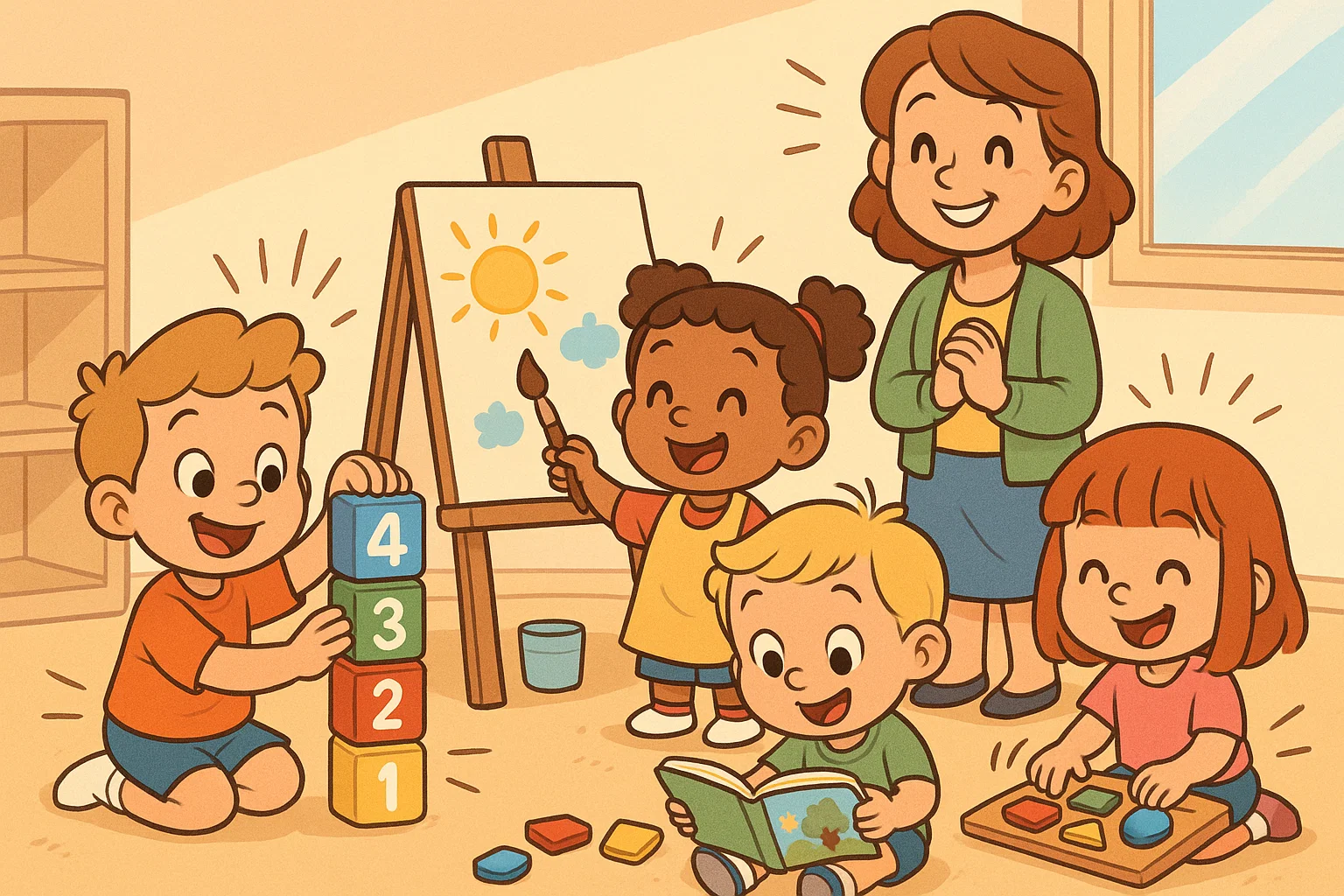
Parents and educators often look for simple, safe, and effective activities and games that support early childhood education, playful learning, and overall development. For a 4-year-old child, the world can feel like a laboratory, and play is one of the main ways they explore, test ideas, and learn.
Whether you need games for kids for a rainy afternoon of indoor play at home, structured activities for children in preschool, or high-quality online activities, the goal is the same: to help kids build cognitive, language, social-emotional, and motor skills while having fun.
Key Takeaways
A broad range of games for movement, creativity, language, and logic can support well-rounded development in 4-year-olds. Guidance from organizations such as the American Academy of Pediatrics highlights the importance of play for children’s learning, development, social-emotional health, and well-being.
- Skill Integration: Activities can support phonics, early math, cooperation, and self-regulation.
- Format Variety: A healthy week includes physical play, creative tasks, fun activities, hands-on learning, and carefully chosen screen-based activities.
- Adult Role: Success depends on adult engagement, gentle guidance, and clear, simple boundaries.
Quick Skill Snapshot
| Skill Category | Key Focus Areas |
| Cognitive | Logic, memory, attention, problem-solving, and listening skills. |
| Physical | Fine motor skills, gross motor skills, and hand-eye coordination. |
| Social-Emotional | Taking turns, empathy, cooperation, and emotional regulation. |
| Early Academic | Phonics awareness, counting to 10, number recognition, and shape recognition. |
Best Mix of Activities
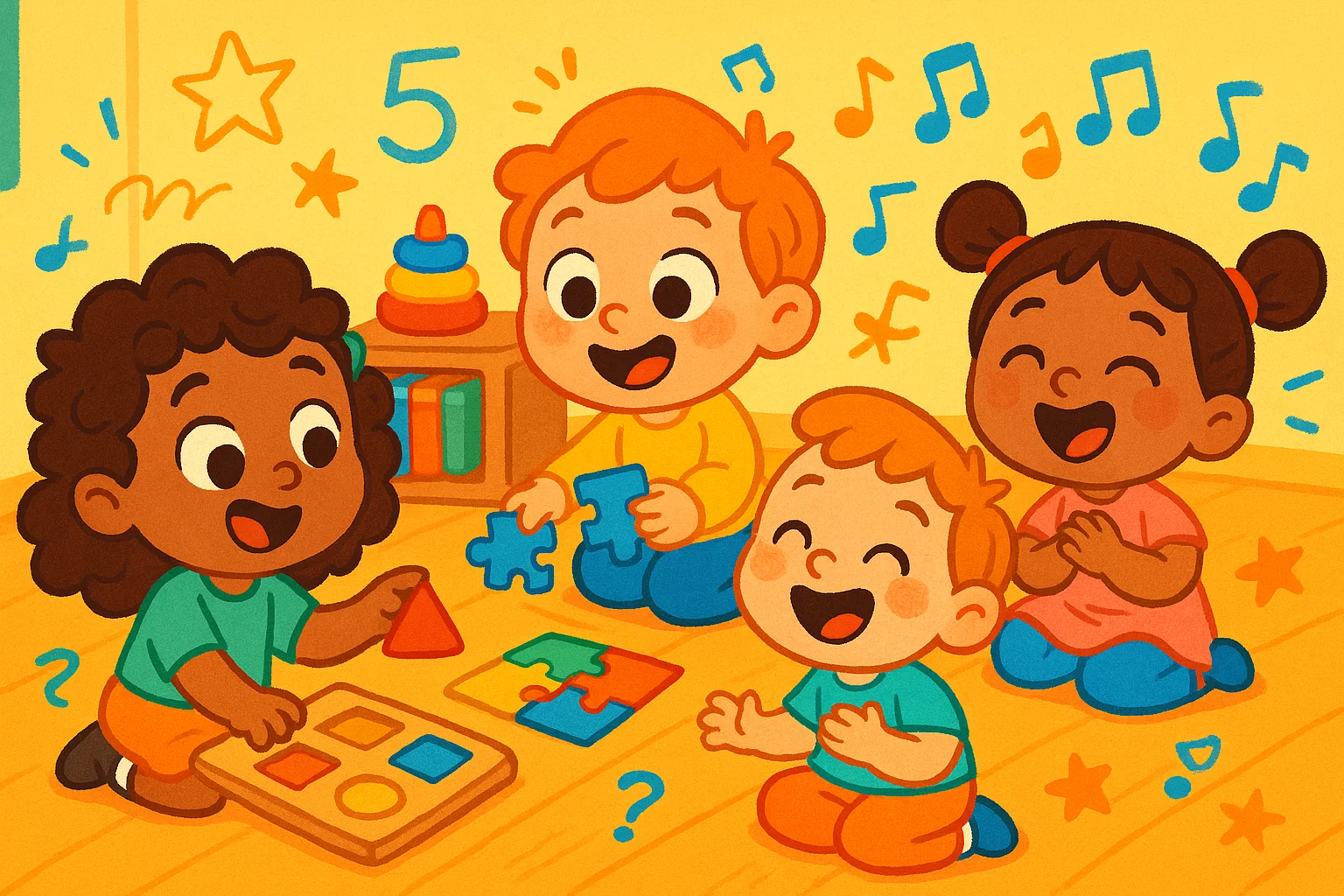
Finding the best mix of activities means choosing a routine that can blend fun with real learning: physical play, creative activities such as crafts or music, interactive learning through reading or board games, and a limited amount of carefully selected online content.
This mix works well for indoor and outdoor play because it helps keep children engaged without overwhelming them.
Parent Action Steps
To keep learning enjoyable, keep most activities short, usually around 10 to 20 minutes, and turn simple daily activities into small learning moments. Encourage your child by praising effort, curiosity, and persistence rather than only the result.
Choose games that create everyday moments of connection, and remember that for a 4-year-old, you are often their favorite learning partner.
Why Learning Games Help 4-Year-Olds Grow
At age 4, the brain is still developing rapidly, and children learn especially well through repetition, hands-on exploration, and enjoyable practice. Learning games give children a low-pressure way to explore ideas such as cause and effect, patterns, rules, and problem-solving, helping kids learn through practice rather than pressure.
Play-Based Development
Play-based learning allows children to develop early academic foundations naturally. For example, an interactive game that involves sorting colored blocks can introduce early math and reasoning in a hands-on way, without relying on a worksheet.
According to UNICEF, play is not simply “time off” from learning; it is one of the most important ways young children gain knowledge and skills.
Confidence, Curiosity, and Creativity
When children engage in fun learning activities, they build confidence in their own abilities, especially when adults choose activities that foster curiosity, independence, and problem-solving. Completing a game or building challenge helps children see that they can solve problems.
This builds the curiosity that can encourage kids to explore more complex ideas as they grow.
Social-Emotional Growth
Cooperative play is a key part of early childhood development. Games that require children to take turns or work toward a shared goal can teach children patience, cooperation, and conflict resolution.
Help your child understand emotions by naming them during an activity: “It feels frustrating when the tower falls, doesn’t it?”
Developmental Skills for 4-Year-Olds and Older Preschoolers
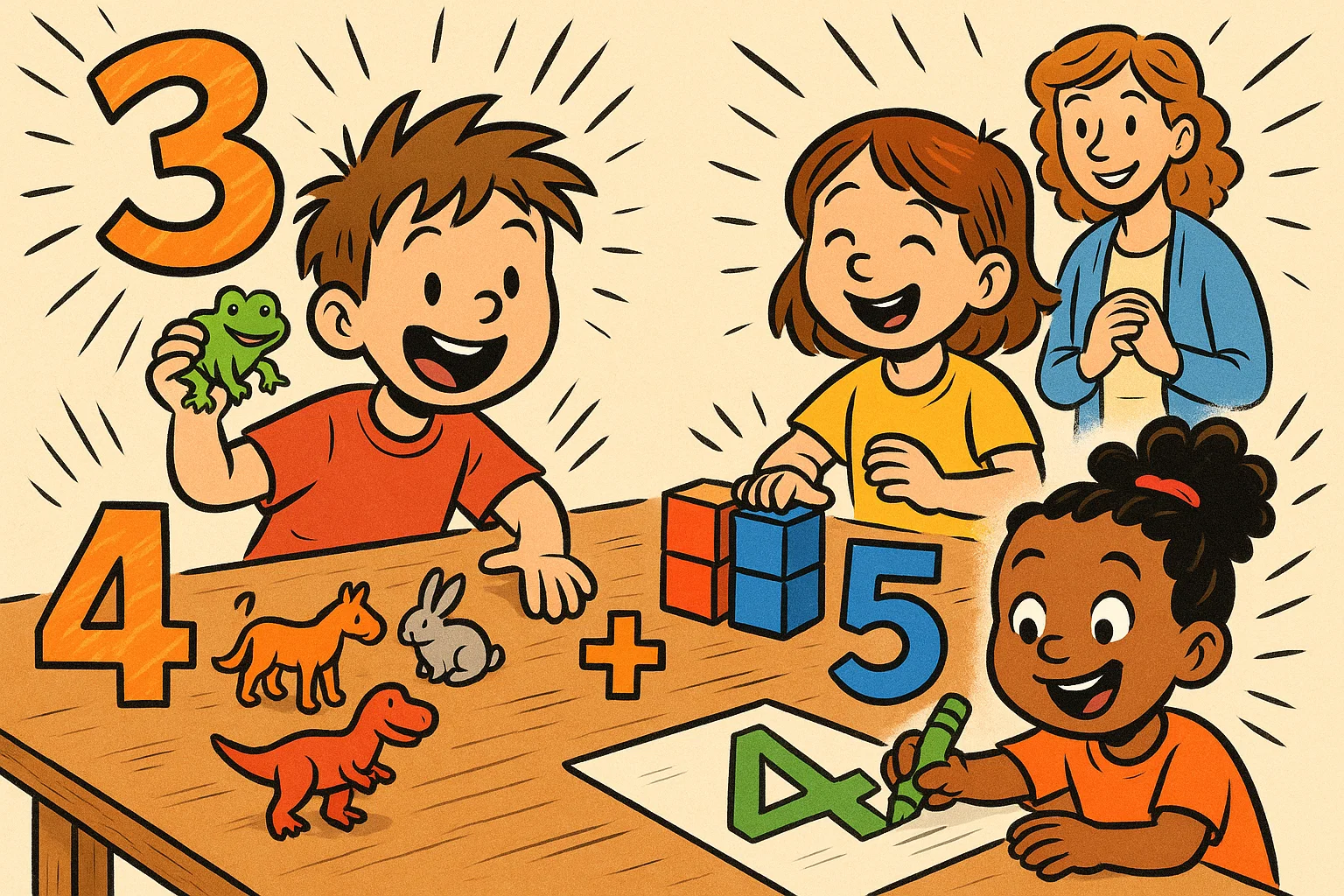
Understanding common developmental milestones helps adults choose different games that match a child’s current abilities, interests, and learning styles. Children who are still developing language, motor, and social skills benefit from simple activities that are flexible, playful, and easy to repeat.
Core Abilities
By age 4, many children can follow multi-step instructions and sort objects by simple attributes, such as size, color, or shape.
Learning activities can strengthen memory and listening skills while helping children prepare for kindergarten or school routines.
Gross Motor Skills
Movement is essential for educational growth. Activities such as hopscotch, jumping, climbing, and obstacle courses help children improve balance, coordination, and spatial awareness.
The World Health Organization recommends that children ages 3–4 get at least 180 minutes of physical activity per day, including at least 60 minutes of moderate- to vigorous-intensity physical activity.
Fine Motor Skills
To build hand strength and control, many children love tasks that involve precision, especially when those tasks feel like play rather than practice. Using safety scissors, threading beads, or working with playdough strengthens the small muscles in the hands.
These hands-on activities help prepare children for writing.
Language and Communication Skills
Speaking and listening are essential foundations for early learning. Four-year-olds are rapidly expanding their vocabulary.
Learning activities for 4-year-olds can include storytelling, rhyming, and simple phonics games to help them connect sounds, words, and letters.
Early Math and Logic Skills
At this stage, math and logic are mostly about patterns, quantity, sorting, and comparison. Help your child practice by counting everyday objects, such as buttons on a shirt, steps on the stairs, or pieces of fruit at snack time.
Recognizing numbers 0–10 and understanding “more,” “less,” and “same” are key early math milestones.
Social-Emotional Skills
Developing social skills often involves moving from parallel play toward more cooperative games. Activities that encourage children to share, take turns, and notice others’ feelings support long-term social-emotional development.
How to Pick Safe, Fun Games for Preschoolers
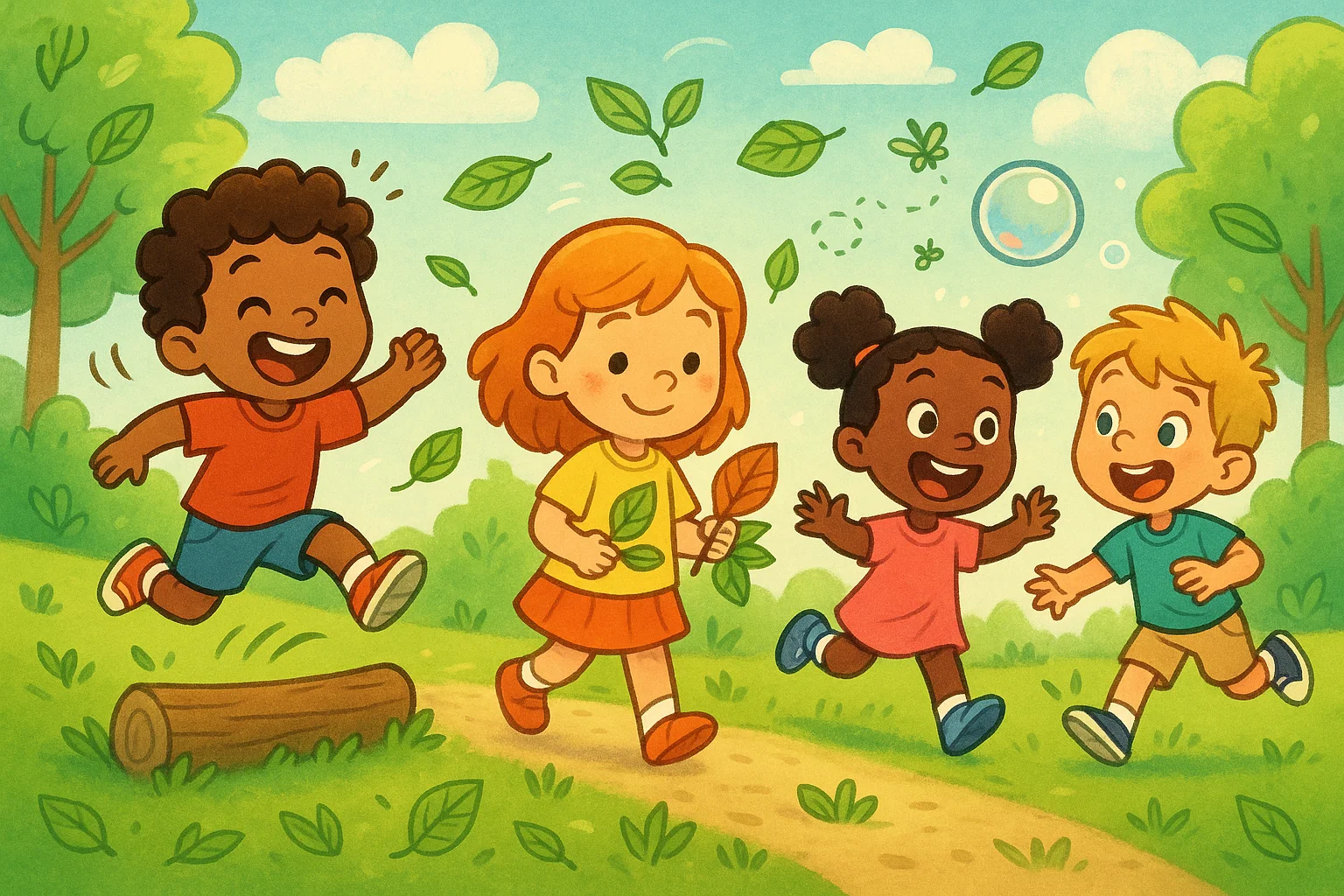
Finding the best activities means balancing safety, engagement, and educational value while choosing materials that feel safe and fun.
Age Fit and Simple Rules
A game for children aged 4 usually works best when it starts with two or three simple rules. As children continue to develop, they may need adult support with more complex games and may quickly lose interest if the rules are unclear.
Make sure all materials are non-toxic, age-appropriate, and large enough to reduce choking risks.
Ad-Free Options and Privacy Checks
When choosing online activities, prioritize ad-free options. Advertisements can distract young children, encourage accidental clicks, and make it harder for them to stay focused on the activity.
Check the privacy policy and choose platforms that limit data collection and avoid behavioral advertising to young children.
Offline, Online, and Hybrid Balance
Digital games should supplement—not replace—hands-on play, outdoor play, and face-to-face interaction.
A hybrid approach—such as watching a short cook-along video and then making a simple snack together—can connect screen time with real-world practice.
30 Learning Games and Activities for 4-Year-Olds
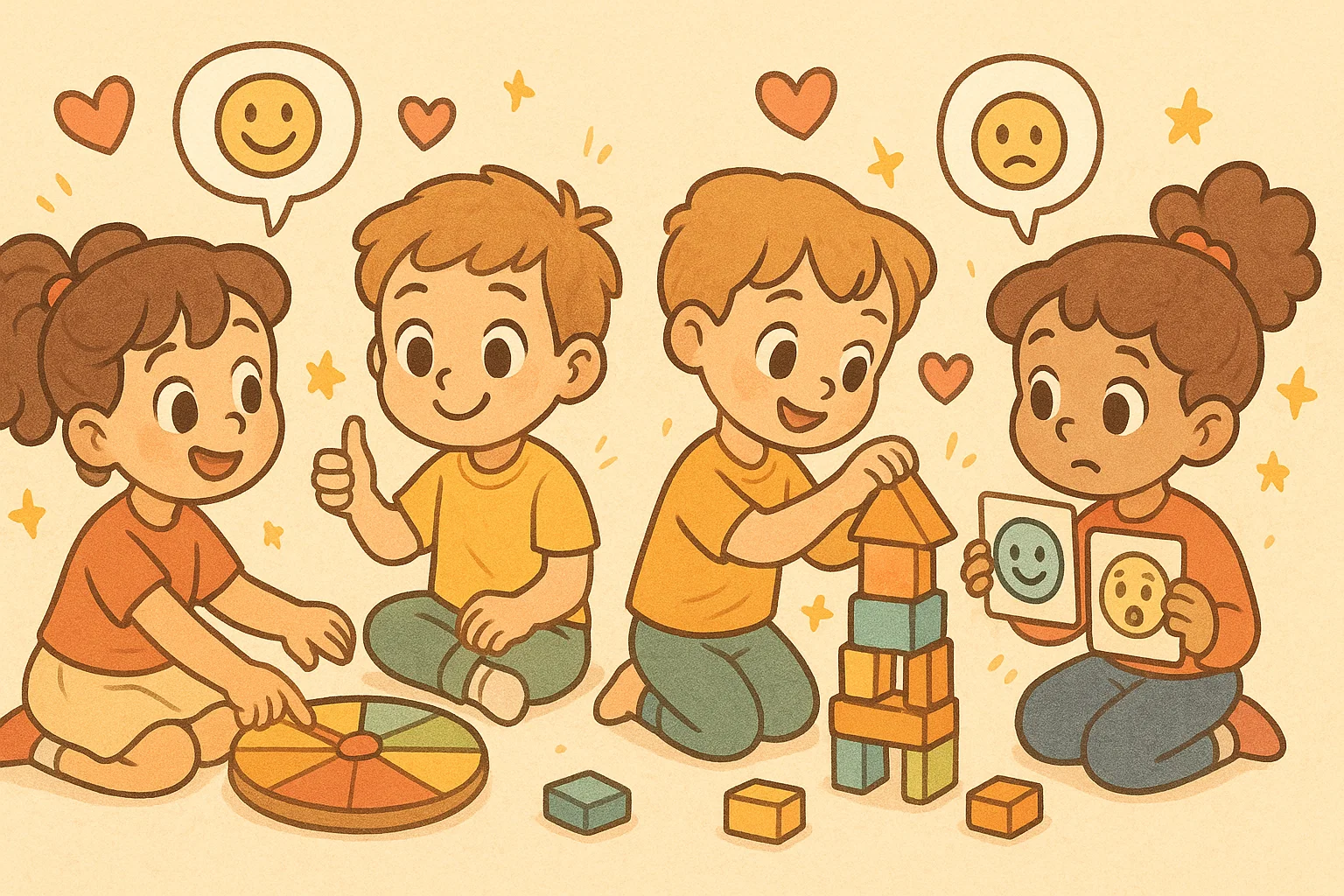
These games for 4-year-olds include indoor, outdoor, creative, and screen-supported ideas, so you can choose the best fit for your child, classroom, or family routine.
1. Read Books Together
- Goal: Build language skills and phonics awareness.
- Materials: Picture books.
- How to play: Read aloud and ask, “What do you think happens next?”
- Focus: Literacy and listening skills.
- Variation: Ask the child to find all the “S” sounds on a page.
2. Visit the Library
- Goal: Foster a love of books, stories, and shared reading.
- Materials: Library card.
- How to play: Let the child choose three books based on the covers.
- Focus: Autonomy and curiosity.
3. Sing Counting Songs
- Goal: Teach early math through rhythm.
- Materials: None.
- How to play: Sing “Five Little Ducks” and use fingers to count down.
- Focus: Number sense and hand-eye coordination.
4. Cut-and-Paste Craft Box
- Goal: Improve fine motor skills.
- Materials: Safety scissors, glue, old magazines.
- How to play: Create a collage of things that are the color blue.
- Focus: Fine motor skills and classification.
5. Dress-Up Role Play
- Goal: Develop social skills and imagination.
- Materials: Old clothes, hats, props.
- How to play: Act out a scene like “The Grocery Store.”
- Focus: Speaking and listening.
6. Shape Match Game
- Goal: Recognize geometric properties.
- Materials: Paper cutouts of shapes.
- How to play: “Find something in the kitchen that is a circle.”
- Focus: Cognitive skills and geometry.
7. What’s-Inside Mystery Bag
- Goal: Support sensory processing and descriptive language.
- Materials: Opaque bag, household items such as a spoon, ball, or brush.
- How to play: The child reaches into the bag and guesses the item by touch.
- Focus: Descriptive language skills.
8. Numbers 0–10 Hunt
- Goal: Practice number recognition.
- Materials: Sticky notes with numbers.
- How to play: Hide numbers around the room; the child must find them in order.
- Focus: Problem-solving and numeracy.
9. Addition Snack Game
- Goal: Introduce addition with real objects.
- Materials: Quartered grapes, soft fruit pieces, or crackers.
- How to play: “You have two pieces of fruit. If I give you one more, how many do you have altogether?”
- Focus: Early math.
10. Addition and Subtraction Story Game
- Goal: Build conceptual math skills.
- Materials: Small toys.
- How to play: Tell a story: “Three cars were in the garage, and one drove away.”
- Focus: Logic and listening skills.
11. Coloring a Favorite Character Page
- Goal: Support fine motor skills and focus.
- Materials: Printed coloring page, crayons.
- How to play: Encourage the child to color slowly and try staying inside the lines.
- Focus: Concentration and hand-eye coordination.
12. Color Mixing Sensory Bag
- Goal: Encourage science exploration.
- Materials: A resealable plastic bag, red paint, and yellow paint.
- How to play: Squish the bag to see the colors turn orange.
- Focus: Creativity and cause and effect.
13. Constructive Building Challenge
- Goal: Introduce engineering basics.
- Materials: LEGO or wooden blocks.
- How to play: “Can you build a bridge for this toy car?”
- Focus: Problem-solving and spatial logic.
14. Shared Story Map
- Goal: Build narrative structure.
- Materials: Large paper, markers.
- How to play: Draw a path showing where a character goes in a story.
- Focus: Memory and language skills.
15. Exploratory Nature Tray
- Goal: Support science and observation.
- Materials: Leaves, stones, pinecones.
- How to play: Sort items from smallest to largest.
- Focus: Cognitive skills and biology basics.
16. Physical Play Obstacle Path
- Goal: Develop gross motor skills.
- Materials: Pillows and painter’s tape.
- How to play: Crawl under the “bridge” and jump over the “lava.”
- Focus: Balance and coordination.
17. Hopscotch Counting Game
- Goal: Combine physical play with counting practice.
- Materials: Chalk or tape.
- How to play: Number the squares 1–10 and hop through them.
- Focus: Gross motor skills and numeracy.
18. Fruit Salad Movement Game
- Goal: Improve reaction time.
- Materials: A small group of children and clearly marked sitting spots.
- How to play: Give each child a fruit name; when you call “Apples!”, the children with that name switch places.
- Focus: Social skills and listening.
19. Circle Time Guessing Game
- Goal: Encourage descriptive speech.
- Materials: None.
- How to play: “I’m thinking of an animal that is big and gray…”
- Focus: Communication and logic.
20. Musical Freeze Game
- Goal: Practice self-regulation.
- Materials: Music player.
- How to play: Play music, dance while it plays, and freeze when it stops.
- Focus: Listening skills and body control.
21. Bear Hunt Pretend Play
- Goal: Support narrative movement.
- Materials: None.
- How to play: Act out a simple bear-hunt rhyme or movement story.
- Focus: Physical activity and imagination.
22. Circle Time Color Hunt
- Goal: Build visual discrimination.
- Materials: None.
- How to play: “Everyone find something yellow and bring it to the circle.”
- Focus: Group cooperation and color naming.
23. Simon Says Listening Game
- Goal: Build listening and auditory-processing skills.
- Materials: None.
- How to play: Play “Simon Says” with simple instructions, such as “Touch your toes” or “Clap two times.”
- Focus: Listening skills, self-control, and body awareness.
24. Pack Your Bag Memory Game
- Goal: Strengthen sequential memory.
- Materials: None.
- How to play: Say, “I’m going on a trip, and I’m bringing a hat.” The next person repeats the sentence and adds one more item.
- Focus: Cognitive skills.
25. Indoor Recess Group Game
- Goal: Encourage cooperative play.
- Materials: Soft ball.
- How to play: Sit in a circle and roll the ball to a friend after saying their name.
- Focus: Social skills.
- Variation: Turn it into an indoor game by adding a simple rule, such as naming a color, animal, or number before rolling the ball.
26. Visual Rules Story
- Goal: Support behavior regulation and classroom routines.
- Materials: Drawings of rules.
- How to play: Review the “How We Play” cards before starting the game.
- Focus: Social-emotional intelligence.
27. Listening Cooperation Challenge
- Goal: Practice teamwork.
- Materials: Blocks.
- How to play: Two children build one tower together, taking turns.
- Focus: Social skills.
28. Music, Songs, and Dance Activity
- Goal: Build rhythm and joy.
- Materials: Percussion toys.
- How to play: Follow the beat—slow for turtles, fast for bunnies.
- Focus: Gross motor skills.
29. Banana Raisin Bread Recipe
- Goal: Build practical life skills.
- Materials: Bananas, raisins, flour, a bowl, measuring cups, and adult supervision.
- How to play: Let the child mash the bananas and count the raisins.
- Focus: Fine motor skills and math.
30. Cook-Along Video Prompt
- Goal: Practice following simple instructions.
- Materials: A tablet or phone.
- How to play: Watch a 1-minute clip of a simple snack preparation, then make the snack together.
- Focus: Following instructions and real-world application.
Parent Tips to Make Learning Fun
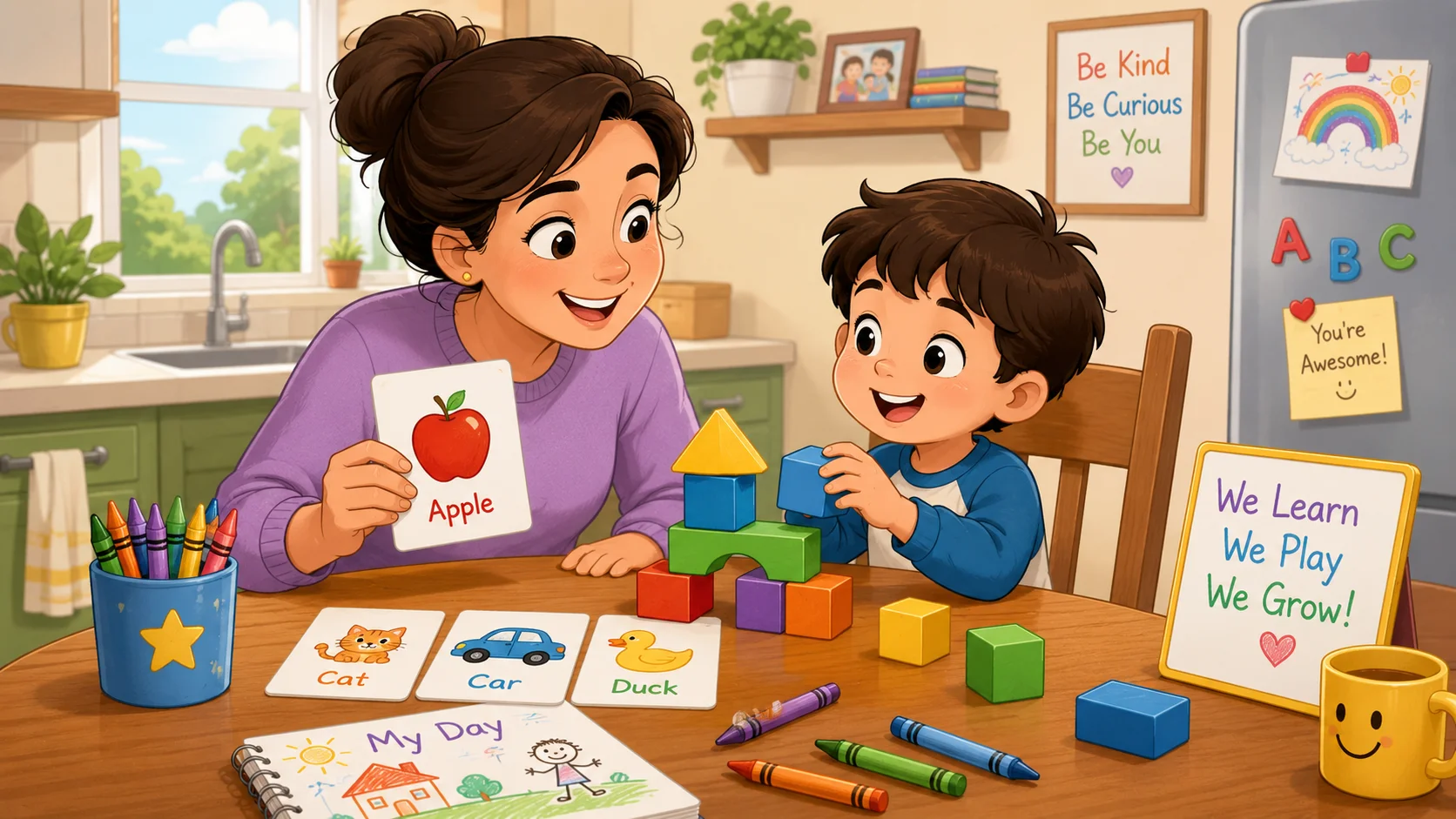
Creating an environment that supports learning takes more than a list of kids’ games; it takes a simple, flexible strategy.
Balanced Activity Schedule
A predictable daily rhythm helps keep children engaged and creates more natural learning opportunities throughout the day.
Morning works well for high-energy physical play or outdoor time. Midday can include learning games, pretend play, or creative activities. Evening is a good time to read books together and help your child wind down.
Encourage Independence
Help your child by offering limited choices. Instead of asking the open-ended question “What do you want to do?”, ask, “Do you want to try the Shape Match Game or a movement activity?”
This gives the child a sense of control while keeping the routine manageable.
Monitor Progress and Give Support
Notice which activities your 4-year-old naturally gravitates toward. If they find fine motor tasks difficult, offer more low-pressure hands-on activities such as playdough, tearing paper, sorting large beads, using child-safe tweezers, or simple cut-and-paste crafts.
Dedicated Learning Space
Having a small learning corner at home can signal to your child that it is time to focus. A low shelf with games for 4-year-olds, a small table for creative activities, baskets for books and puzzles, and a clear spot for building or pretend play can make the space inviting without making it feel formal.
Adapt Games for Different Needs
Every child learns differently, so the same activity can be adapted for different learning styles, energy levels, and confidence levels. If a child has lots of energy, turn the Numbers Hunt into a movement challenge; getting children moving can make learning feel more natural. If a child is shy, start with quiet games like the Mystery Bag to build confidence. If a child gets frustrated easily, shorten the activity and praise effort. If a child needs more challenge, add one extra rule or a simple memory element.
FAQ
What Makes a Game Suitable for 4-Year-Olds?
A suitable game for children aged 4 has simple rules, takes less than 15 minutes, uses materials that are safe and fun, and leaves room for adult guidance and encouragement. It should match the child’s current developmental skills, such as basic counting, turn-taking, or following simple instructions.
How Long Should 4-Year-Olds Play Online Games?
According to WHO guidance for children under 5, sedentary screen time for 4-year-olds should be no more than one hour per day; less is better. Online sessions should be short, ideally around 15–20 minutes, and should be balanced with physical, creative, and social play.
Can Online Games Replace Traditional Play?
No. Screen-based activities cannot replace the sensory feedback of hands-on play, the movement benefits of physical play, the social learning that happens during face-to-face games, or the creativity of pretend play and open-ended activities. Online games should be used as a supplement, not the main form of play.
Are Free Educational Games Available?
Yes. Many libraries offer digital resources, and platforms such as PBS Kids provide free learning games for young children. Printable activities, library books, recycled craft supplies, nature-based play, and homemade sorting, counting, and matching games are also cost-effective options.
Are Ad-Free Options Worth Choosing?
Yes. Ad-free options reduce interruptions and help protect young children from persuasive marketing that they may not yet understand. They also make it easier for children to stay focused, avoid accidental clicks, complete the activity, and engage with the learning goal.
How Do Educational Games Build Emotional Skills?
Educational games can help children practice taking turns, handling disappointment, cooperating with others, following simple rules, naming feelings, and trying again after a mistake. These games give children safe practice with real-world social challenges.
How Do Online Games Support Preschool Learning at Home?
When chosen carefully and used with adult support, online activities can offer short, repeatable practice in phonics, early math, problem-solving, memory, listening skills, and visual recognition. They work best when they are part of a balanced routine that also includes hands-on play, reading, movement, and social interaction.

Take a short quiz to find out what your everyday choices say about your parenting style
When your child is curious about something new, what’s your instinct?
Take a short quiz to find out what your everyday choices say about your parenting style
“Can I download this app?” What happens next?
Take a short quiz to find out what your everyday choices say about your parenting style
When it comes to rules at home, which sounds most like you?
Take a short quiz to find out what your everyday choices say about your parenting style
If you could give your child one life skill today, what would you pick?
Take a short quiz to find out what your everyday choices say about your parenting style
Your child gets to choose what to watch. What would your ideal setup look like?
Take a short quiz to find out what your everyday choices say about your parenting style
Pick your parenting superpower ✨