40 Social Skills Games for Preschoolers: Research-Informed Activities for Home and Classroom

 Discover a Free Education Video App for Kids
Pastory uses AI to personalize educational video content based on your child’s interests and personality. Safe, engaging, and built for curious young minds. Sign up now to stay updated and enjoy early access with a free trial
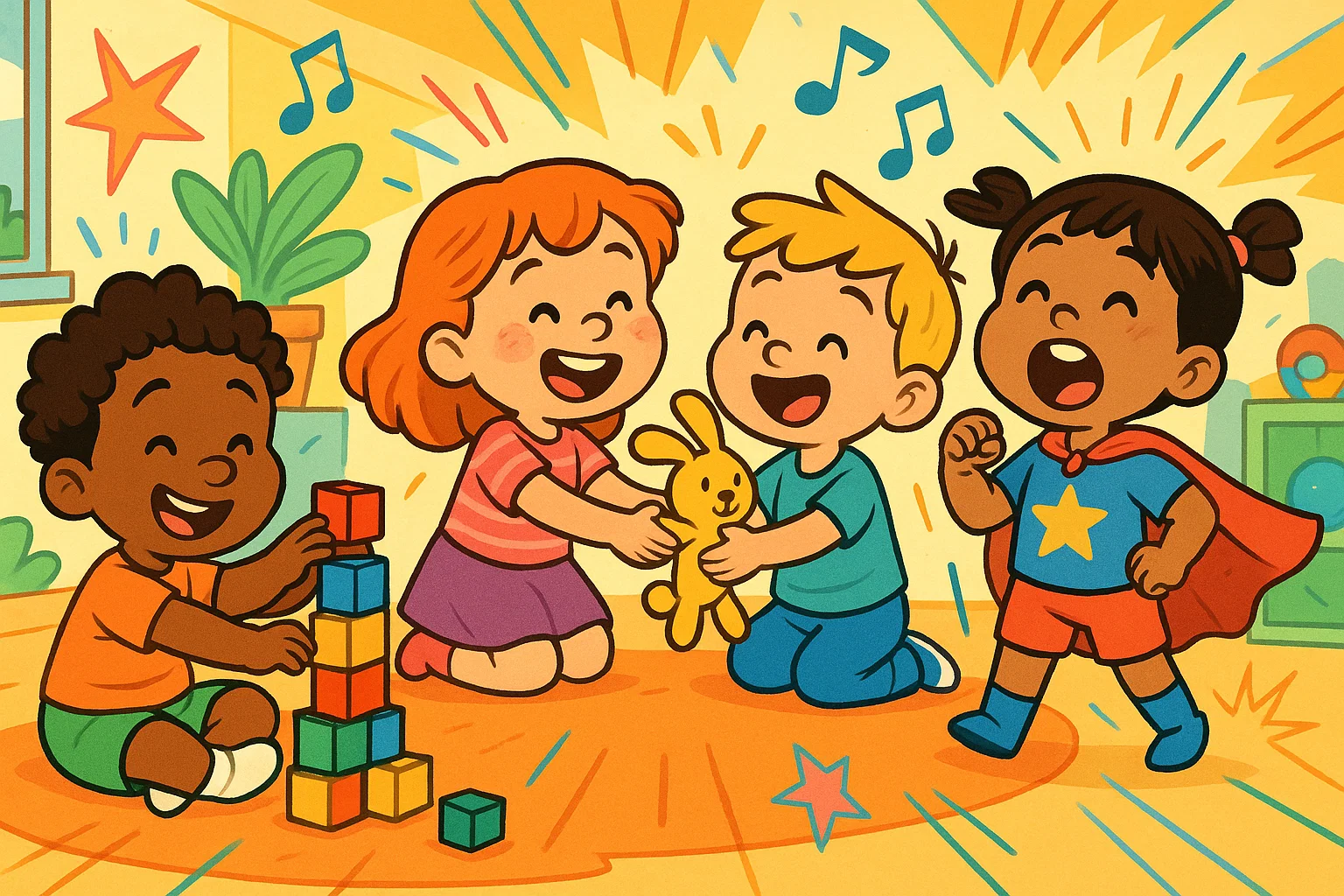
Helping preschoolers develop strong social skills is one of the most meaningful ways parents and educators can support early development. Between the ages of 3 and 5, children are rapidly developing the brain systems that support emotion regulation, empathy, cooperation, and impulse control. This guide provides 40 practical, low-prep, research-informed social skills activities designed to help kids navigate social situations with confidence. Whether used during classroom circle time or a home playdate, these activities turn complex social lessons into engaging play.
Key Takeaways
- Play-Based Learning: Preschoolers often learn social skills best when they are woven into games rather than taught through lectures.
- Consistency: Regular repetition of preschool social skills activities helps reinforce positive social behavior.
- Adult Modeling: Help your child by demonstrating the behaviors you want them to mimic, such as active listening and turn-taking.
- Research-Informed: Activities like Simon Says, emotion games, and turn-taking routines can support executive function, cooperation, and self-control.
Quick Overview
- Developmental Window: Ages 3–5 are an important period for developing social skills such as sharing, turn-taking, and emotion regulation.
- Repetition Is Key: Preschool social skills develop through repeated practice in everyday activities.
- Adult Guidance: Use prompts and modeling to help kids learn, offering more support at first and gradually letting them take the lead.
- Environment Matters: Healthy social skills flourish in safe, predictable environments where mistakes are viewed as learning opportunities.
Core Skills Targeted
The following key skills are the primary focus of this guide:
- Turn-taking and patience
- Active listening and communication skills
- Empathy and emotional recognition
- Cooperation and teamwork
- Conflict resolution and problem-solving skills
Where to Use These Games
These social skills games are highly adaptable for various settings:
- Circle Time: Perfect for preschoolers to practice group awareness.
- Playdates: Ideal for one-on-one interactions with peers.
- Home Routines: Use simple card games or board games during family time.
- Small Groups: Targeted social skills groups can help support shy or hesitant kids.
Quick Summary: 40 Preschool Social Skills Games
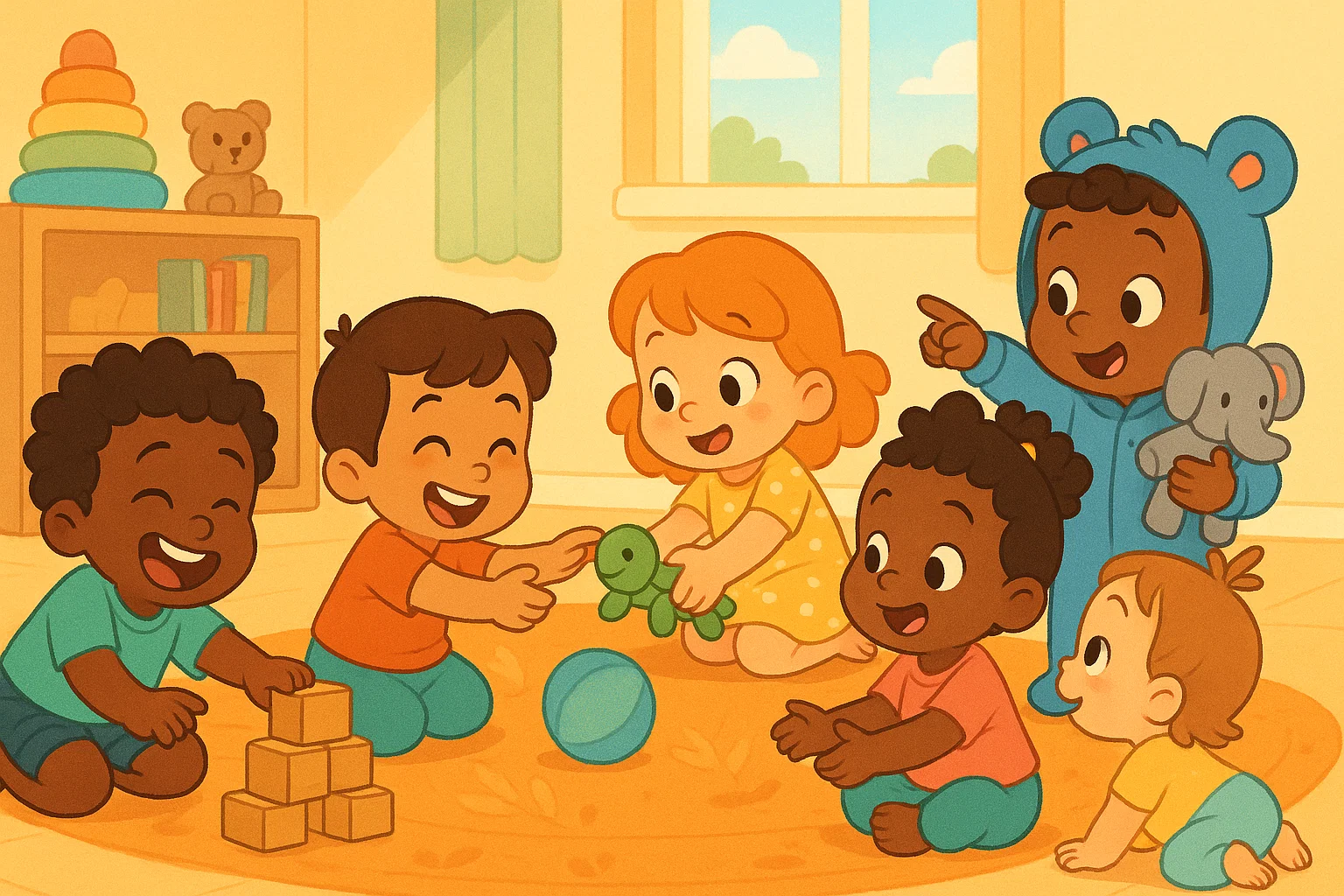
Before diving into detailed instructions, use this categorized list to find the right activities and games for your specific needs. The best choices are easy to repeat because familiar games help children practice without feeling tested.
Communication Picks
Help preschoolers practice conversation and listening with:
- Roll Ball and Name Game
- Telephone Game and Conversation Ball Pass
- Sharing Circle and Active Listening Practice
Emotion and Empathy Picks
Help kids recognize, name, and respect feelings using:
- Emotion Charades and Expression Mimicking
- Feelings Chart and Puppet Shows
- Kindness Catch and Gratitude Circles
Teamwork Picks
Build cooperation through shared goals:
- Building Games and Cooperative Drawing
- Scavenger Hunts and Community Gardening
- Islands and Jigsaw Puzzles
Self-Control Picks
Support impulse control and positive behavior with:
- Simon Says and Freeze Dance
- Token Stack and Slow Steady Races
- Board Games and Classroom Jobs
Problem-Solving and Conflict-Resolution Picks
Help kids practice fairness, negotiation, and problem-solving:
- Puppet Shows and Story Emotion Talk
- Building Game and Jigsaw Puzzle
- Islands and Taking Turns Tower
Social Skills for Preschoolers: Meaning and Benefits
Social Skills Meaning
In early childhood, social skills are the behaviors that help kids interact positively with others. These basic social competencies include reading social cues, waiting for a turn, asking for a toy, and using a kind voice. In simple terms, social skills help kids navigate everyday social situations more effectively.
Why Social Skills Are Important in Early Childhood
The American Academy of Pediatrics (AAP) notes a strong link between social-emotional development and later school and life success. Well-developed social-emotional skills can support classroom participation, peer relationships, and later learning. They are also associated with stronger self-regulation, communication, and conflict-resolution skills.
Types of Social Skills for Preschoolers
Preschool social skills are generally categorized into four domains:
- Communication: Verbal and nonverbal communication skills.
- Empathy: The ability to notice social cues and understand how others may feel.
- Cooperation: Skills such as taking turns and working toward a shared goal.
- Self-Regulation: Managing emotions, impulses, and behavior in a group setting.
Signs a Preschooler Is Building Social Skills
Parents and teachers can observe social competence through several key markers:
- Initiating Play: The child asks, “Can I play?”
- Turn-Taking: The child begins to wait for a turn with increasing patience.
- Conflict Resolution: The child uses words to solve a problem instead of grabbing, hitting, or pushing.
- Empathy: The child notices when a friend is sad and offers a toy or a hug.
How Parents and Teachers Support Growth
Model Desired Behavior
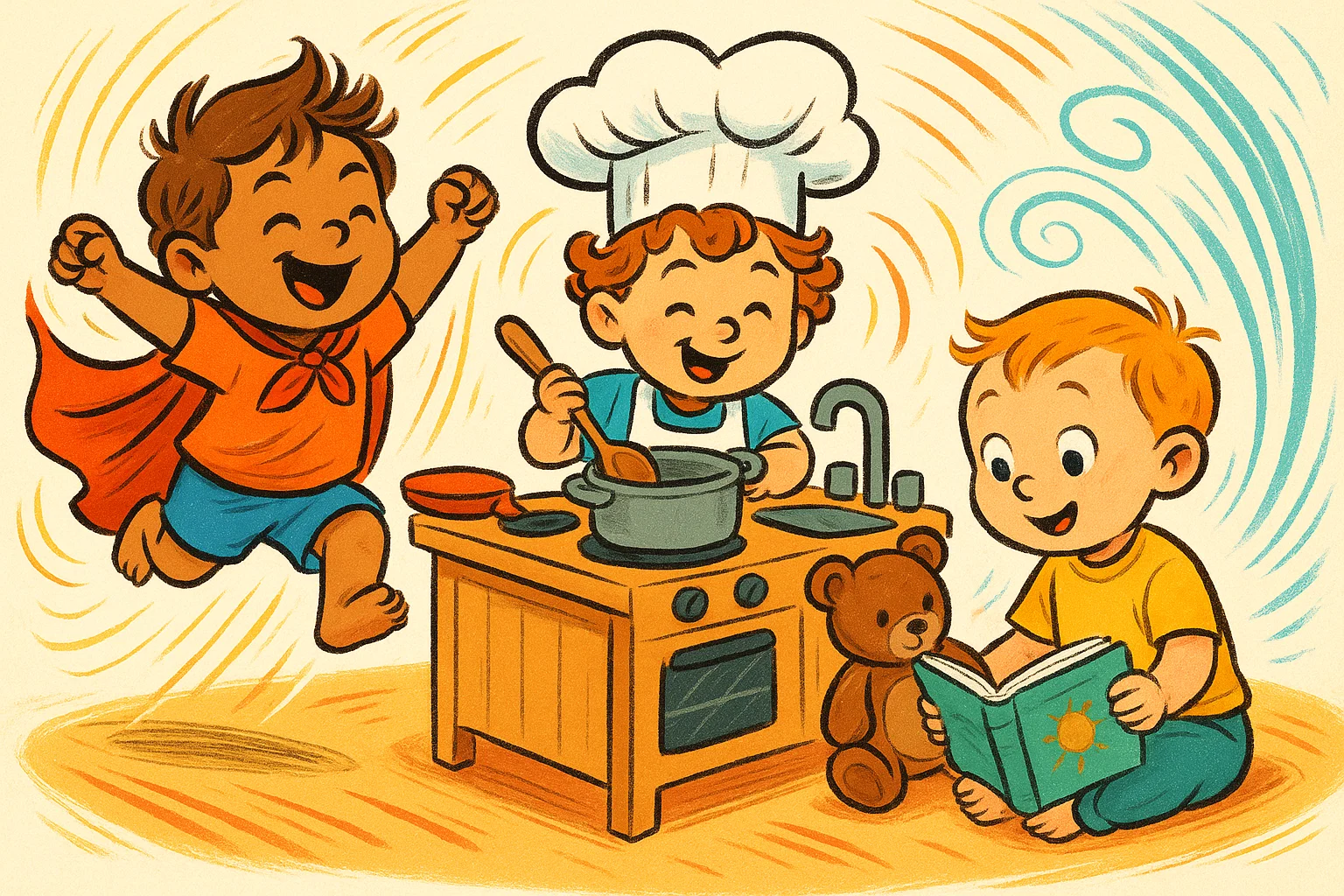
Adults support social skill development most powerfully when they model the behaviors they want kids to practice. Children are strongly influenced by how adults handle frustration, greet others, and apologize for mistakes. When a teacher uses a calm voice during a difficult moment, preschoolers are more likely to practice the same strategy.
Use Positive Reinforcement
Positive social behavior is most helpful when it is acknowledged promptly and specifically. Using specific feedback – “I noticed how you waited for Sarah to finish with the truck” – is more effective than general praise. Help children see the effect of their choices by pointing out the positive outcome, such as a friend feeling included.
Create Consistent Routines
Preschoolers thrive when peer interactions are predictable. Establishing a morning sharing circle or a clean-up song creates a predictable structure where preschoolers can practice social skills. Predictable routines can reduce anxiety and make kids more comfortable with classroom expectations.
Support Shy or Hesitant Children
Social skills activities for kids should be inclusive. For a shy child, new social situations can feel overwhelming. Provide low-stakes entry points, such as being the equipment manager during a building game, so the child can participate without being the center of attention.
Handle Separation Anxiety and Peer Conflict
Conflicts are not failures; they are valuable teaching moments. When peer conflicts arise, use a simple script to build conflict-resolution skills. Help children understand the other person’s perspective by asking, “How do you think your friend felt when the tower fell?”
How to Choose Social Skills Games for Preschoolers
Match Game to Goal
Before selecting a game, identify the specific social skill you want to target. If a group struggles with interruptions, choose a communication game like the Telephone Game. If the issue is physical space, choose Islands to build social awareness.
Keep Sessions Short
Social skills activities for preschoolers should be short, flexible, and adjusted to the group’s attention level. Many preschool activities work best in 10- to 15-minute sessions. Stopping while the activity is still enjoyable makes kids more likely to want to play again next time.
Use Simple Materials
The best social skills activities require minimal setup. Simple materials can make learning feel playful and accessible. Use everyday items like:
- Balls for turn-taking
- Puppets for social cues
- Blocks for cooperation skills
- Crayons for social and emotional learning through art
Adapt for Group Size
Most social skills games for preschoolers can be scaled. The Name Game works in a class of 20 or a family of three. For larger groups, split into partner pods to ensure every child gets a turn to practice social skills frequently.
Toddler to Preschool Progression
As children grow, social skills activities can move from basic social tasks, such as parallel play, to more complex interactions, such as collaborative play. For younger children, focus on learning to take turns; for older preschoolers, focus on negotiation and leadership.
Communication Games for Preschoolers
1. Roll Ball
In this game, kids sit in a circle. One child rolls a ball to another and says the recipient’s name. This builds social cues and peer awareness.
2. Name Game
Children take turns saying their name and one favorite thing, such as “I’m Leo, and I like lions.” The group claps out the syllables in each name. This builds communication skills and a sense of belonging.
3. Conversation Ball Pass
Pass a talking stick or ball. Only the person holding the ball can speak. Use prompts such as “What is your favorite snack?” to help children practice staying on topic.
4. Topic Game
Show kids a picture of a park. Help children take turns naming one thing they see or one thing they could do there. This teaches kids to maintain a conversation thread across multiple turns.
5. Telephone Game
Whisper a simple two-word phrase like “blue cat” into a child’s ear. They pass it on. It is a playful way to show kids why careful listening matters.
6. Sharing Circle
This daily five-minute routine invites preschoolers to share one happy moment from their day. This fosters emotional bonding and active listening.
7. Icebreaker Questions
Use a question jar with prompts like “If you were an animal, what would you be?” These activities make peer interactions feel easier and less intimidating.
8. Active Listening Practice
Play “Repeat After Me.” One child makes a sound or says a short sentence, and the partner must repeat it exactly. This builds focus, listening, and turn-taking.
9. Communication Styles
Role-play using a “lion voice” that is too loud, a “mouse voice” that is too quiet, and a “just-right voice.” This helps children practice voice volume in different social settings.
10. Virtual Playtime
For remote learners, use supervised show-and-tell during video calls. Supervised video calls can help preschoolers practice listening, waiting, and speaking to others when in-person play is not possible.
Emotion and Empathy Games for Preschoolers
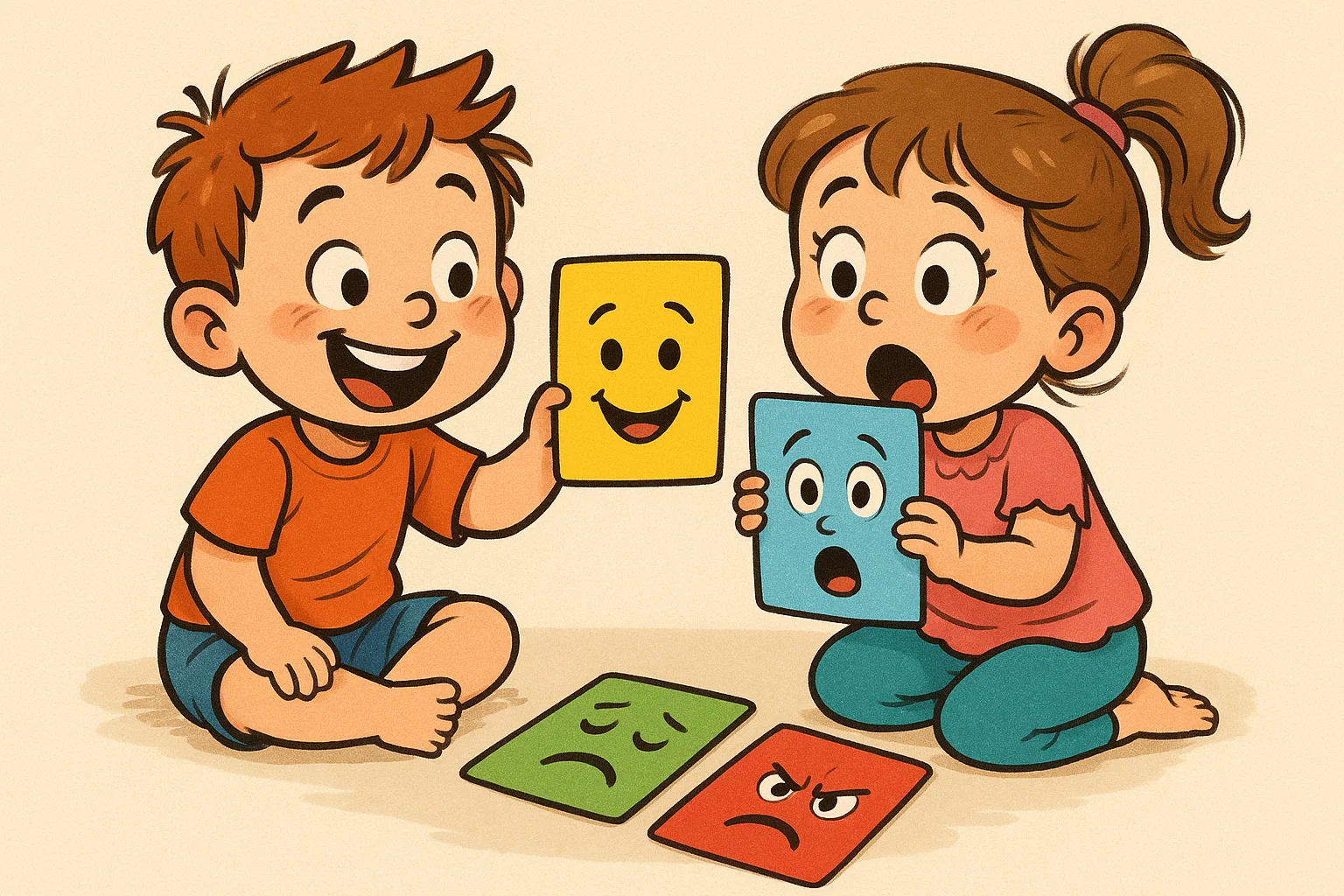
11. Emotion Charades
One child acts out an emotion, such as sad, happy, or angry, using only their face and body. Classmates guess the feeling. This is a core social-emotional learning tool.
12. Expression Mimicking
Pair kids to play “Mirror.” One makes a face, and the other copies it. This helps children build an understanding of nonverbal communication.
13. Facial Expression Match
Provide cards showing different facial expressions. Ask kids to match the sad face to a picture of a broken toy.
14. Feelings Chart
Use a visual chart where children move their name tag to show how they feel each morning. This normalizes emotional skills and self-awareness.
15. Follow the Leader: Feelings Edition
The leader walks like they are excited or tired. The group follows. This introduces emotional awareness through physical movement.
16. Puppet Show
Use puppets to act out a conflict, such as two friends wanting the same swing. Ask preschoolers to help the puppets find a fair solution.
17. Story Emotion Talk
While reading, pause and ask, “How does the bear feel now?” This builds awareness and perspective-taking through literature.
18. Gratitude Circle
At the end of the day, invite each child to name one person who helped them. This reinforces positive behavior and kindness.
19. Thank You Circle
In this structured game, children pass a “thank you” around the circle: “Thank you, Sam, for building with me.”
20. Kindness Catch
Toss a soft toy gently around the circle. When a child catches it, they say something nice about the person who threw it. This builds strong social skills.
21. Musical Compliments
Like musical chairs, this game asks kids to give a compliment to the person standing nearest to them when the music stops.
Turn-Taking and Self-Control Games for Preschoolers
| Game | Skill Targeted | Materials Needed |
| Simon Says | Impulse control | None |
| Taking Turns Tower | Patience | Blocks |
| Board Games | Rule following | Candy Land or Chutes and Ladders |
| Freeze Dance | Listening skills | Music player |
22. Simon Says
This game is a classic for a reason. It helps preschoolers practice stopping their bodies and listening for specific cues.
23. Staring Contest
This is a lighthearted way to practice eye contact and focus. Keep it brief and silly, and never force eye contact if a child seems uncomfortable.
24. Taking Turns Tower
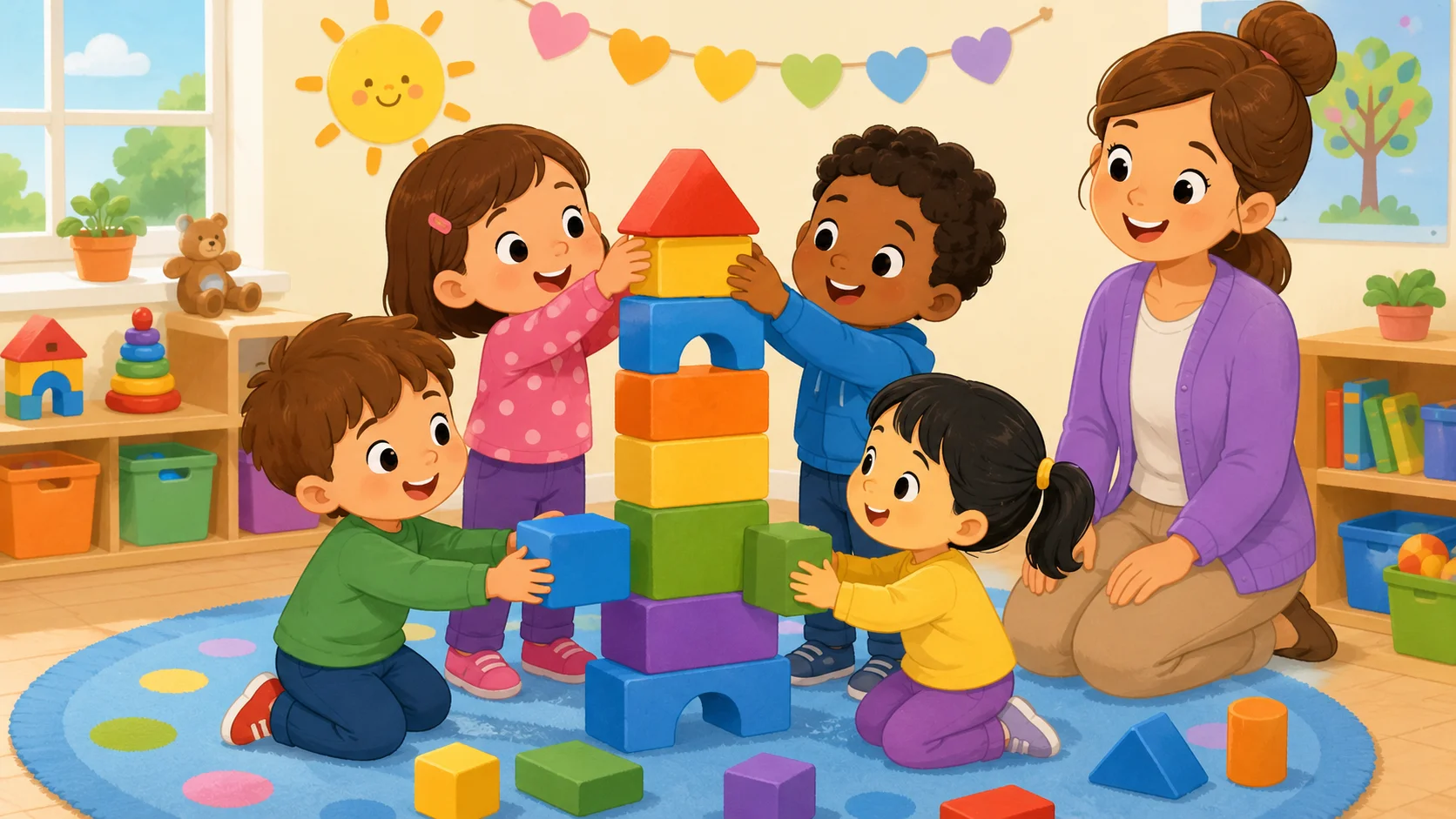
Children take turns adding one block at a time to a single tower. If it falls, they work together to restart. This builds cooperation skills.
25. Token Stack
During a group conversation, give each child three tokens. Children spend one token each time they speak, which helps them notice and practice turn-taking.
26. Board Games
Simple board games such as Hi Ho! Cherry-O teach kids how to follow rules, wait, and handle winning or losing.
27. Simple Card Games
Games such as Go Fish or Memory help children practice waiting and focusing.
28. Slow Steady Races
Instead of running, kids walk as slowly as possible to the finish line. This builds self-regulation and body control.
29. Preschool Self-Control Games
Play Red Light, Green Light to help children practice impulse control in a high-energy group setting.
30. Classroom Jobs Game
Assigning roles such as door holder or line leader gives children a sense of responsibility and belonging.
Teamwork and Cooperation Games for Preschoolers
31. Cooperative Drawing
Two children share one large sheet of paper. They decide together what to draw and which colors to use.
32. Building Game
Give a small group a bin of blocks and a shared goal: “Build a house for this dinosaur.” This requires negotiation and teamwork.
33. Tower Cups
Building towers with plastic cups requires steady hands, patience, and cooperation. If one child moves too quickly, the tower may fall, creating a natural opportunity to practice patience.
34. Jigsaw Puzzle
Working on one shared puzzle encourages preschoolers to ask, “Do you have the blue piece?” and offer help to others.
35. Friendship Puzzle
Each child decorates a large cardboard puzzle piece. When the pieces are joined, the puzzle shows that every child is an important part of the classroom community.
36. Friendship Bracelets
Making something for another person encourages empathy, generosity, and care.
37. Cooking Together
Simple tasks such as stirring or pouring ingredients help preschoolers follow a sequence and wait for their turn.
38. Scavenger Hunt
Pair one child as the leader and another as the searcher. They stay together to find items, which builds cooperation and shared attention.
39. Community Gardening
Caring for a plant teaches responsibility and the value of working toward a shared long-term goal.
40. Islands
Place carpet squares, mats, or paper circles on the floor as islands. When the music stops, children work together to find space on fewer islands, practicing cooperation, balance, and respectful body awareness.
Final Thoughts on Social Skills Games for Preschoolers
Practice Makes Progress
Building social skills in preschoolers takes time. Development happens in small increments. Do not expect perfect group behavior immediately; instead, celebrate small wins, such as a child waiting a few seconds longer for a toy than they did yesterday.
Best Next Steps for Parents
Start with one simple activity each week. Practice social skills during everyday routines, such as grocery trips: “Let’s find a kind way to ask that person to move their cart.”
Best Next Steps for Teachers
Integrate short practice activities into daily lesson plans. Focused small-group practice can provide extra support for children who struggle with complex social cues.
Preschool Social Skills FAQ
How long should social skills games last?
For many 3-year-olds, 5–10 minutes is enough. For many 5-year-olds, activities can last up to 20 minutes if engagement remains high.
How often should preschoolers play these games?
Many kids benefit from short structured games several times a week, along with daily opportunities for unstructured peer interaction.
Which games work best for shy children?
Puppet shows, expression mimicking, and cooperative drawing are excellent choices because they allow for nonverbal participation and low-pressure engagement.
Which games support communication fastest?
Roll Ball, the Name Game, and sharing circles provide direct practice with verbal communication.
Can virtual playtime help?
Yes. When supervised, video calls can help children practice listening, looking toward the camera, and taking turns during show-and-tell.
Why do social skills matter in early childhood?
Social skills matter in early childhood because preschoolers learn how to communicate, share space, manage emotions, and build friendships through daily interaction. These early experiences help children develop social confidence and reduce social problems later in group settings.
What important social skills should preschoolers learn first?
Important social skills include skills like taking turns, listening, sharing, asking for help, picking up on social cues, and using words during conflict. These essential social skills support a child’s social development at home, in playgroups, and in preschool.
How do social skills activities and games help kids learn?
Social skills activities and games give children a playful way to make learning feel natural. Fun activities, simple role-play, and repeated chances to play games can help kids practice appropriate social behavior, conflict resolution skills, and cooperation without feeling pressured.
Are these evidence-based social skills activities?
These activities are research-informed and built around evidence-based principles such as modeling, repetition, guided play, and positive reinforcement. They are designed as practical social skills activities to help preschoolers practice communication, cooperation, and self-control.
Take a short quiz to find out what your everyday choices say about your parenting style
When your child is curious about something new, what’s your instinct?
Take a short quiz to find out what your everyday choices say about your parenting style
“Can I download this app?” What happens next?
Take a short quiz to find out what your everyday choices say about your parenting style
When it comes to rules at home, which sounds most like you?
Take a short quiz to find out what your everyday choices say about your parenting style
If you could give your child one life skill today, what would you pick?
Take a short quiz to find out what your everyday choices say about your parenting style
Your child gets to choose what to watch. What would your ideal setup look like?
Take a short quiz to find out what your everyday choices say about your parenting style
Pick your parenting superpower ✨