100+ Best Riddles for Kids [With Answers] by Age and Topic

 Discover a Free Education Video App for Kids
Pastory uses AI to personalize educational video content based on your child’s interests and personality. Safe, engaging, and built for curious young minds. Sign up now to stay updated and enjoy early access with a free trial
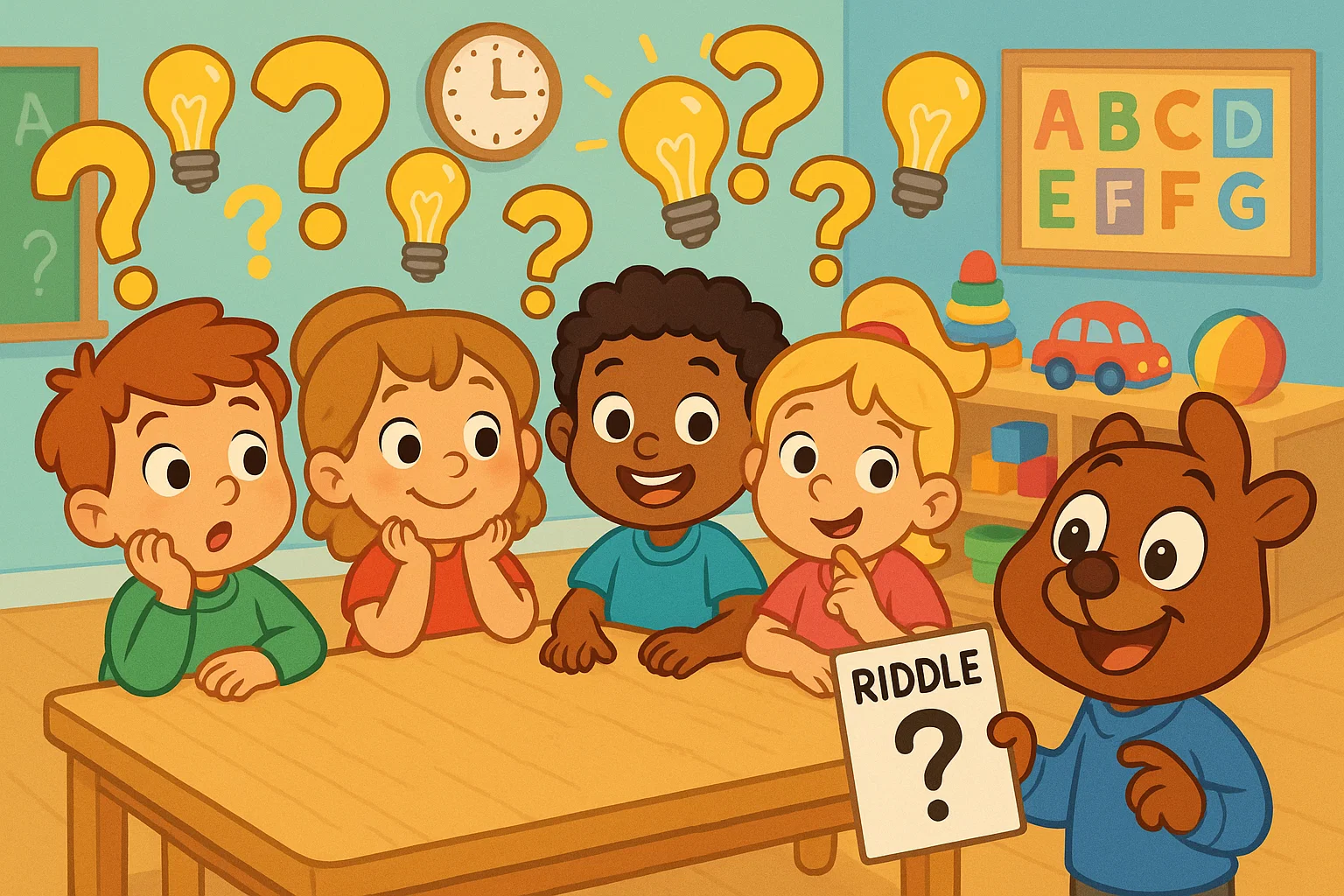
Word puzzles are a great way to engage children’s minds, combining entertainment with cognitive practice. Whether you are a parent looking to liven up road trips, a teacher seeking a fun way to start the day, or a family stuck inside on a rainy afternoon, this collection of fun riddles for kids is designed to challenge and delight.
In this guide, you will find a curated selection of 100+ puzzles categorized by difficulty, age group, and subject matter. Every entry includes an answer, so no one has to pause the fun to hunt for the solution. From animal riddles for kids to tricky riddles that encourage children to think outside the box, there is something here for preschoolers, kindergarteners, and elementary school students.
By incorporating these brain teasers into your daily routine, you help children think critically and improve their problem-solving skills. These activities are not just about finding the punchline; they help foster a love of language, build descriptive vocabulary, and encourage kids to think in playful, creative ways.
Key Takeaways
- Total Content: 100+ riddles for kids with answers provided.
- Age Range: Tailored sections for preschool, kindergarten, and elementary school students.
- Topics Covered: Includes animals, food, math, science, geography, and seasonal holidays.
- Educational Value: Focuses on problem-solving, vocabulary growth, and lateral thinking.
- Usage: Perfect for road trips, rainy days, classroom icebreakers, and family game nights.
Quick-Play Picks
If you are short on time, start with our “Quick Play” selection of easy and funny riddles that work well for mixed-age groups. These are designed to be solved in under 30 seconds to keep the energy high during transitions or short breaks.
Age-Friendly Groups
To help you choose the right level of challenge, we have grouped many of the riddles by age and grade level. This helps younger children avoid questions that feel too difficult while giving older students clues that are still engaging.
Answers Are Included for Every Riddle
For busy parents and educators, convenience matters. Every section pairs each clue with its answer, making the riddles easy to use during kids’ activities.
What Is a Riddle?
A riddle is a verbal puzzle, often phrased as a question, that requires clever thinking to solve. For children, these word games can act as playful brain teasers that introduce nuances of language, such as metaphors, clues, and double meanings.
Simple Definition for Kids
For a child, a riddle is a word game where someone gives you clues about a secret object or idea, and you have to guess what it is. It is like being a detective: the clues are hidden in the words.
How Riddles Work
Most riddles rely on descriptive language or double meanings to lead the listener toward a specific conclusion. They often use a “What am I?” format or a “Why” question that ends with a humorous or unexpected answer.
Why Kids Enjoy Riddles
Children enjoy the sense of mastery that comes from solving a puzzle. Playful, game-based learning can make new ideas feel more engaging and memorable, turning practice into something that feels more like a reward than a chore.
Riddle Me This, Riddle Me That
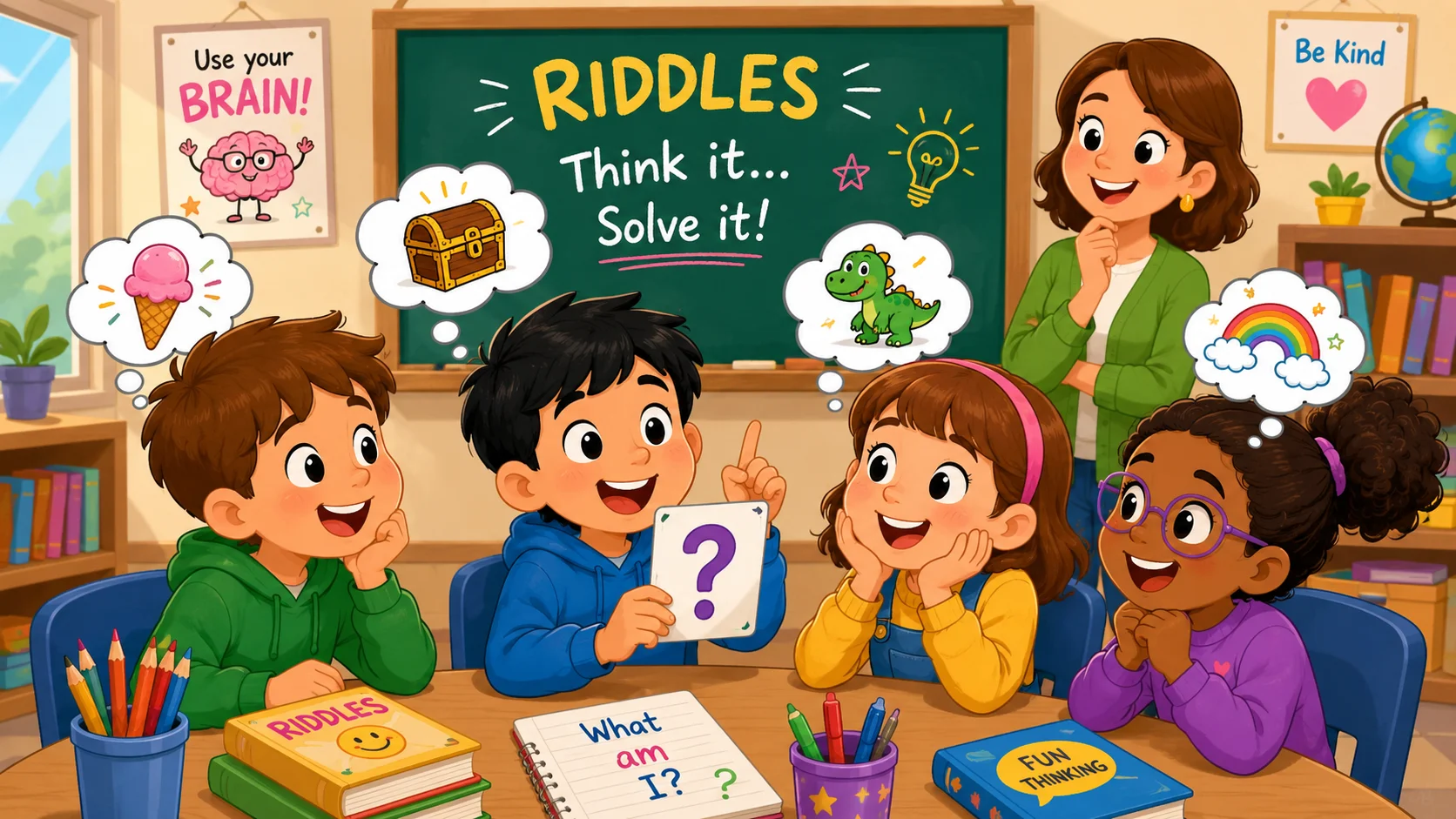
Before we dive into the lists, let’s set the stage for a successful game. This format works best when it feels like a conversation rather than a test.
How to Use This List
Read each question slowly and emphasize the descriptive words. If the child is struggling, offer a small hint or repeat the key clue. Wait 10–15 seconds before revealing the answer to give children time to think through the clues.
Best Moments for Puzzle Games
- Road Trips: Transform long drives into a mental adventure.
- Rainy Days: Provide an indoor fun activity that doesn’t involve a screen.
- Dinner Table: Use food riddles for kids to spark conversation during meals.
- Classroom Breaks: Help students transition between subjects with a quick brain teaser.
Quick Rules for Fair Play
- No Blurting Out: In a group, ask kids to raise their hands so everyone has time to think.
- Celebrate Silly Answers: Even if they are wrong, encourage the logic behind their guess.
- Explain Why It Works: If a child doesn’t get the answer, explain the clue or double meaning so they can learn from it.
100+ Fun Riddles for Kids [With Answers]
Quick Easy Riddles for Kids
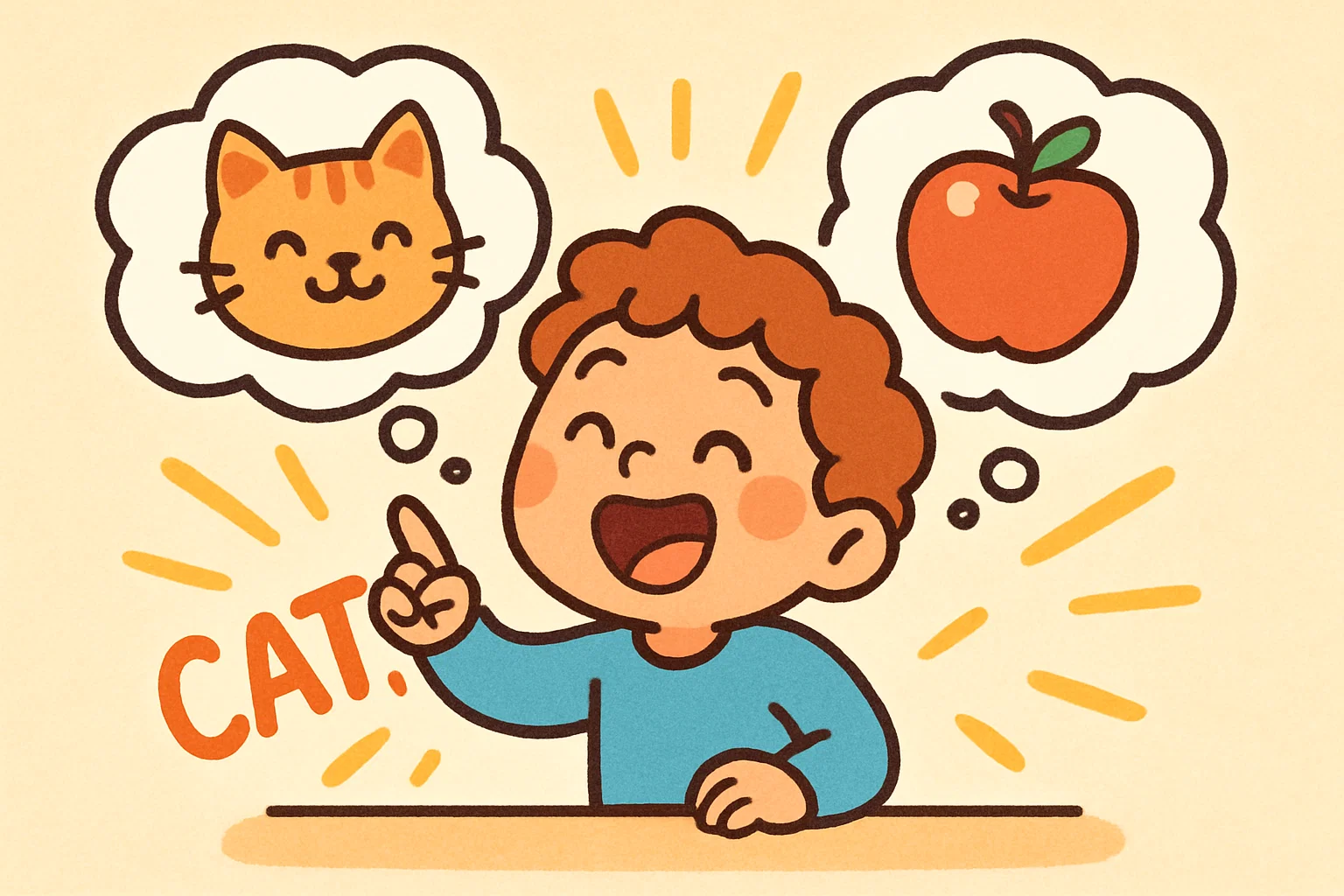
These beginner questions are perfect for younger children who are just starting to explore word games.
- What has to be broken before you can use it? (An egg)
- I’m tall when I’m young, and I’m short when I’m old. What am I? (A candle)
- What month of the year has 28 days? (All of them)
- What is full of holes but still holds water? (A sponge)
Quick Funny Riddles for Kids
Humor is a great way to keep children engaged with language.
- What goes up but never comes down? (Your age)
- What has a thumb and four fingers, but is not a hand? (A glove)
- Why did the teacher wear sunglasses to school? (Because her students were so bright!)
- What has a neck but no head? (A bottle)
Quick Hard Riddles for Kids
These hard riddles require more focus and stronger logical thinking.
- What has cities, but no houses; mountains, but no trees; and water, but no fish? (A map)
- I follow you all day long, but when the sun goes down, I am gone. What am I? (Your shadow)
- The more of this there is, the less you see. What is it? (Darkness)
- What has many keys but can’t open any doors? (A piano)
Quick Tricky Riddles for Kids
Use these tricky riddles for kids to encourage them to think outside the box.
- What can you catch, but not throw? (A cold)
- What is so fragile that saying its name breaks it? (Silence)
- What has one eye but can’t see? (A needle)
- If you drop me, I’m sure to crack, but give me a smile and I’ll always smile back. What am I? (A mirror)
Easy Riddles for Kids
Beginner clues use familiar objects and direct comparisons to build confidence in young learners.
Easy Riddles for Preschoolers
| Clue | Riddle | Answer |
| Sunny Clue | I am in the sky and very hot. | The sun |
| Bouncy Toy | You throw me, catch me, and bounce me. | A ball |
| Cat Clue | I say “meow” and have whiskers. | A cat |
| Footwear | You put me on before your shoes. | Socks |
Easy Riddles for Early Readers
For early readers, these clues use simple sentence structures to support reading comprehension.
- I am white, and many people drink me for strong bones. What am I? (Milk)
- I have a tail and I bark. What am I? (A dog)
- I have pages, but I am not a tree. What am I? (A book)
Easy Questions with One-Word Answers
- What has a face and two hands, but no arms or legs? (A clock)
- What gets wetter as it dries? (A towel)
- What has teeth but cannot bite? (A comb)
Funny Riddles for Kids
Joke-style questions use punchlines to make the experience memorable and social.
Laugh-Out-Loud Questions
- What animal is best at hitting a baseball? (A bat)
- Why do cows wear bells? (Because their horns don’t work!)
- What building has the most stories? (A library)
Silly Questions for Young Children
- What do you call a bear with no teeth? (A gummy bear)
- What falls in winter but never gets hurt? (Snow)
- What did the zero say to the eight? (Nice belt!)
Family-Friendly Joke Questions
- What kind of tree can you carry in your hand? (A palm tree)
- Which fruit is always sad? (A blueberry)
- Why can’t Elsa have a balloon? (Because she would let it go!)
Challenging Riddles for Kids
As children grow, they enjoy brain teasers that challenge their logic and attention to detail.
Brain Teasers for Kids
- A girl fell off a 20-foot ladder, but she didn’t get hurt. Why? (She fell off the bottom step)
- What starts with “p,” ends with “e,” and has thousands of letters? (A post office)
- What word is spelled incorrectly in every dictionary? (Incorrectly)
Clever Questions with Answers
- What belongs to you, but everyone else uses it more than you do? (Your name)
- I have branches, but no fruit, trunk, or leaves. What am I? (A bank)
- What can you hear but not see or touch, even though you control it? (Your voice)
Hard Riddles for Kids
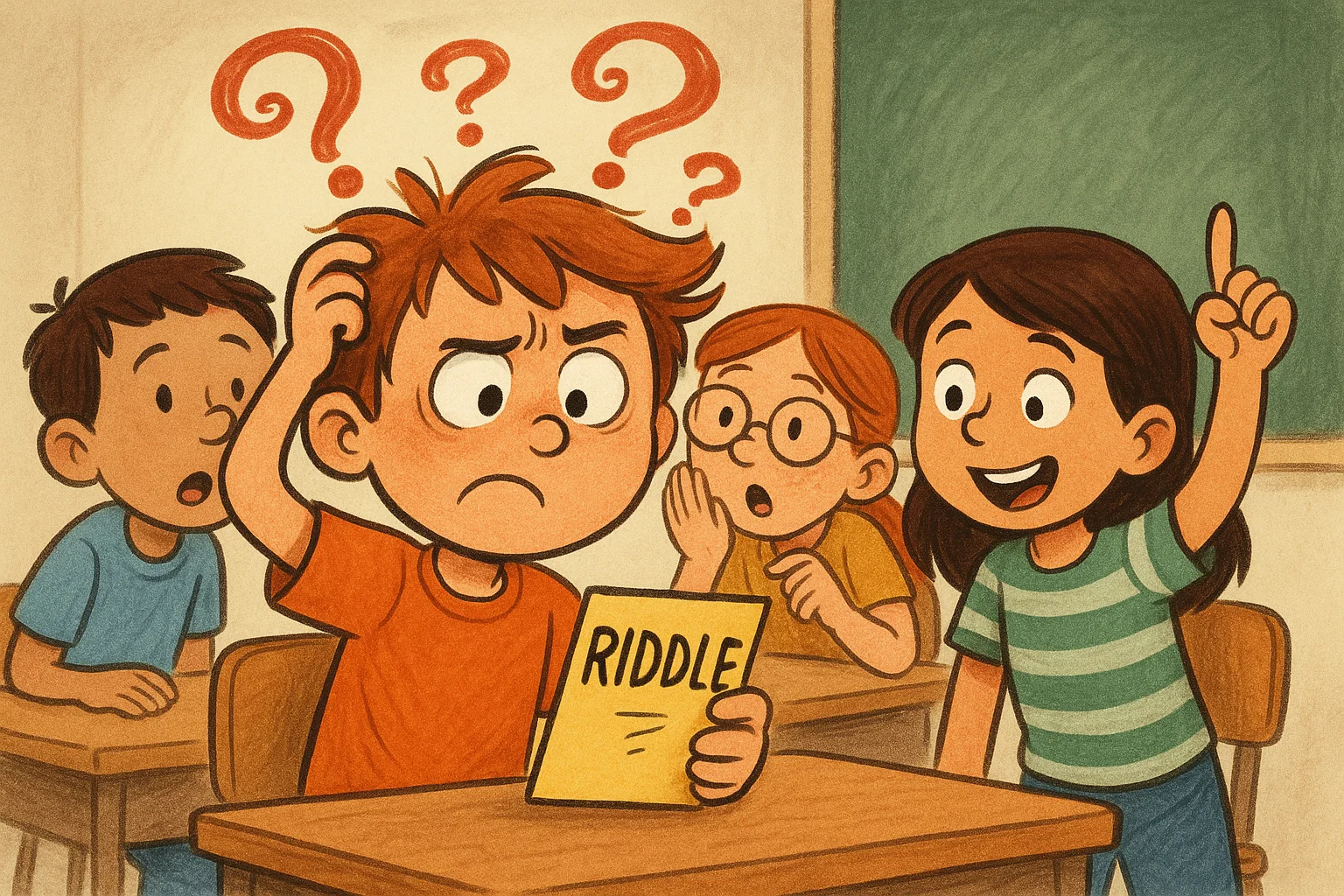
Hard questions are designed to challenge students with more complex clues and wordplay.
Hard Logic Questions
- Three brothers share one face. One can point horizontally, one vertically, and one diagonally. What are they? (The hands of a clock)
- You see a boat filled with people. It has not sunk, but when you look again, you don’t see a single person on the boat. Why? (All the people were married)
Hard Wordplay Questions
- What word contains all five vowels in order? (Abstemious or facetious)
- I am an odd number. Take away one letter, and I become even. What number am I? (Seven — remove the “s,” and it becomes “even”)
Tricky Riddles for Kids
Trick questions often lead children toward an obvious but incorrect answer.
Tricky Questions for Clever Kids
- If an electric train is traveling south, which way is the smoke blowing? (There is no smoke because it’s an electric train)
- What has four legs but cannot walk? (A table)
Trick Questions with Answers
- Which is heavier: a pound of bricks or a pound of feathers? (They weigh the same: one pound)
- A man dies of old age on his 25th birthday. How is this possible? (He was born on February 29, Leap Day)
Math Riddles for Kids
Math-based puzzles support numeracy and problem-solving skills by turning numbers into a game.
Easy Math Questions
- When I was 6 years old, my sister was half my age. Now I am 70. How old is my sister? (67)
- If you have three apples and take away two, how many apples do you have? (Two)
Number Questions with Answers
- I am a three-digit number. My tens digit is 5 more than my ones digit. My hundreds digit is 8 less than my tens digit. What number am I? (194)
- I am an even number word. Take away one letter, and I become an odd number. What number am I? (Six — remove the “s,” and it becomes “IX,” the Roman numeral for 9)
Animal Riddles for Kids
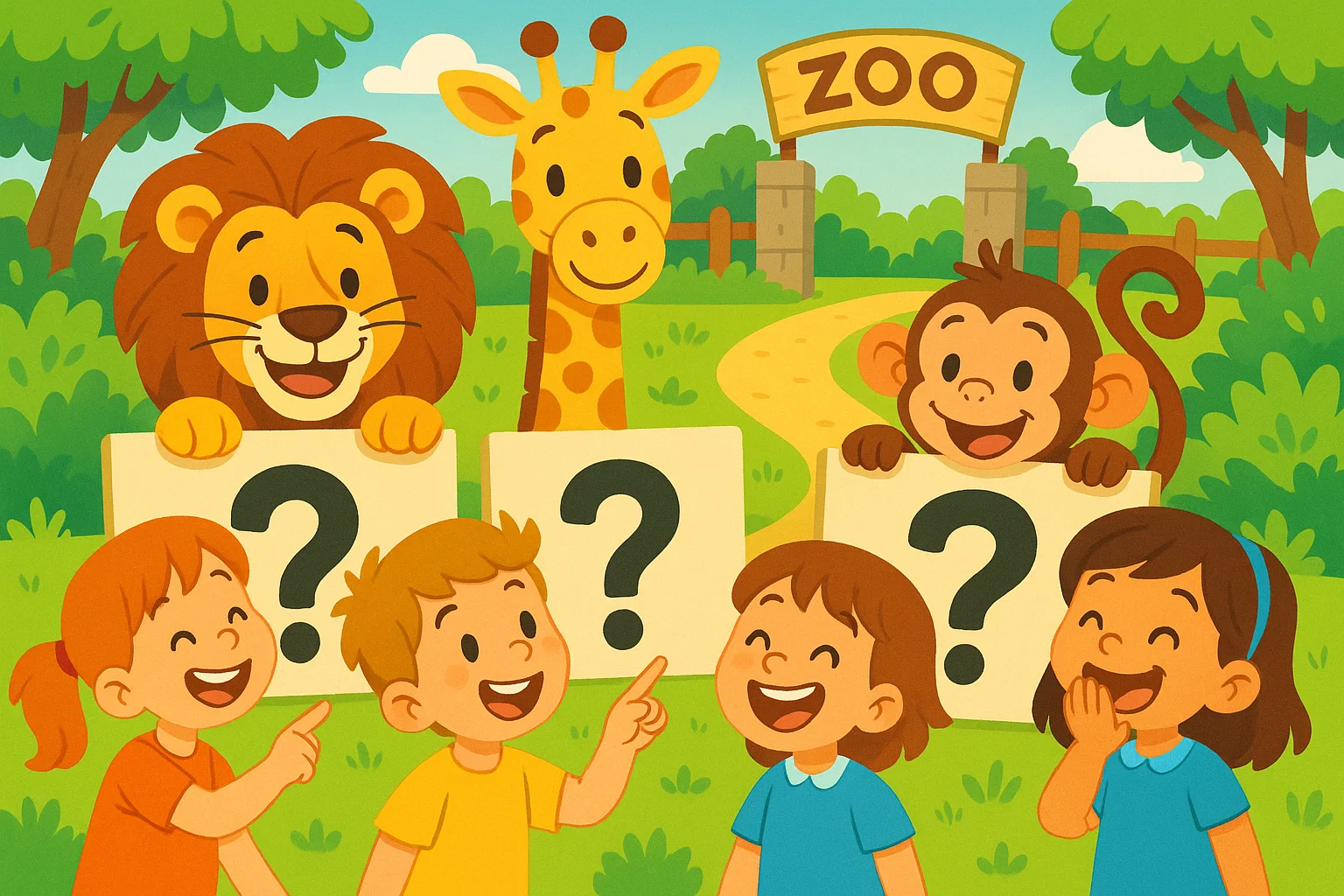
Animal riddles for kids are popular because they rely on vivid imagery and familiar animal traits.
Farm Animal Questions
- I give milk and say “moo.” What am I? (A cow)
- I have a pink snout and a curly tail. What am I? (A pig)
Wild Animal Questions
- I am known as the king of the jungle. What am I? (A lion)
- I have a long neck that helps me reach leaves high in the trees. What am I? (A giraffe)
Pet Questions for Kids
- I live in a bowl and swim all day. What am I? (A goldfish)
- I love to chase mice and sleep in the sun. What am I? (A cat)
Food Riddles for Kids
Food riddles for kids are excellent for sensory learning and vocabulary building.
Fruit Questions
- I am red, crunchy, and grow on trees. What am I? (An apple)
- You have to peel my yellow skin to eat me. What am I? (A banana)
Vegetable Questions
- I am orange, and rabbits love me. What am I? (A carrot)
- I have many eyes but cannot see. What am I? (A potato)
Science Riddles for Kids
These simple STEM-style riddles can reinforce ideas children may already be learning in class.
Body Science Questions
- I beat all day, but I never get tired. What am I? (Your heart)
- We are two windows that let you see the world. What are we? (Your eyes)
Weather Science Questions
- I appear after the rain and have seven colors. What am I? (A rainbow)
- I have no mouth, but I can whistle. I have no hands, but I can push. What am I? (The wind)
Space Brain Teasers
Space-themed brain teasers are a fun way to introduce children to the solar system.
Solar System Riddles
- I am at the center of the solar system and very hot. What am I? (The Sun)
- I am the only planet where people live. What am I? (Earth)
Planet Riddles with Answers
- I am known as the “Red Planet.” What am I? (Mars)
- I have large, beautiful rings around me. What am I? (Saturn)
Nature Riddles for Kids
Tree and Plant Questions
- I start as a seed and grow very tall with leaves. What am I? (A tree)
- I am pretty and smell nice, but watch out for my thorns! What am I? (A rose)
Outdoor Questions
- I flow down the mountain but have no legs. What am I? (A river)
- I am made of rock and earth, and I can be very high. What am I? (A mountain)
Geography Riddles for Kids
Map Riddles
- I show you where places are, and I can be made of paper. What am I? (A map)
- I have a North Pole and a South Pole but no fur. What am I? (Earth)
World Geography Riddles
- I am the largest ocean on Earth. What am I? (The Pacific Ocean)
- I am the world’s largest hot desert, with dunes, rocks, and lots of sand. What am I? (The Sahara)
English Riddles for Kids
Using word games for English language practice helps children understand double meanings and phonics.
Vocabulary Questions
- What has a head and a tail but no body? (A coin)
- What is always coming but never arrives? (Tomorrow)
Rhyming Questions
- I sit on your head and can be round or flat. What am I? (A hat)
- I rhyme with “cat,” I sleep on a mat, and I chase mice. What am I? (A cat)
Letter Questions
- What comes once in a minute, twice in a moment, but never in a thousand years? (The letter “m”)
- What letter sounds like a question? (The letter “y”)
General Riddles for Kids
Everyday Object Questions
- What has two legs but cannot walk? (A pair of pants)
- What has a handle and can hold your tea? (A cup)
School Object Questions
- I hold your books and ride on your back. What am I? (A backpack)
- I get shorter as you use me to write. What am I? (A pencil)
“What Am I?” Riddles for Kids
Animal “What Am I?” Questions
- I have a long trunk and big ears. I am gray. What am I? (An elephant)
- I can hop and carry my baby in a pouch. What am I? (A kangaroo)
Object “What Am I?” Questions
- I have keys but no locks. I have a space but no room. You can press Enter, but you cannot walk in. What am I? (A keyboard)
- I have a screen, apps, and games to play. What am I? (A tablet)
Back-to-School Brain Teasers
Classroom Questions
- I am white, and a teacher writes on me with a marker. What am I? (A whiteboard)
- I am a tool used to measure length. What am I? (A ruler)
Summer Riddles
Beach Questions
- I am often yellow or golden, and you can find me on the beach. What am I? (Sand)
- You wear me on your face to protect your eyes from the sun. What am I? (Sunglasses)
Holiday Riddles for Kids

Christmas Questions
- I have a red nose and lead Santa’s sleigh. Who am I? (Rudolph)
- I am green, have lights, and often have gifts under me. What am I? (A Christmas tree)
Halloween Questions for Kids
- I am orange, carved with a face, and sometimes have a candle inside. What am I? (A jack-o’-lantern)
- I say “Boo!” and can fly through walls. What am I? (A ghost)
Riddles by Grade Level
Riddles for Kindergarten Students
Focus on shapes, colors, and animals.
- I am a shape with three sides. What am I? (A triangle)
- I am the color of grass. What am I? (Green)
Riddles for 1st Grade Students
Use simple clues and familiar everyday objects.
- I help you see in the dark, but I am not the sun. What am I? (A flashlight)
- I open and close, and I help you enter a room. What am I? (A door)
Riddles for 2nd Grade Students
Introduce more logic and reading practice.
- I have numbers on my face and hands that move, but I cannot see or clap. What am I? (A clock)
- I can be full, half full, or empty, but I am not a stomach. What am I? (A glass)
Riddles for 3rd Grade Students
Add more descriptive clues and simple wordplay.
- I fly without wings and cry without eyes. What am I? (A cloud)
- The more you take away from me, the bigger I become. What am I? (A hole)
Riddles for 4th Grade Students
Use stronger logic and multi-step thinking.
- I have a bed but never sleep. I have a mouth but never eat. What am I? (A river)
- I can travel around the world while staying in one corner. What am I? (A stamp)
Riddles for 5th Grade Students
Use advanced logic questions and harder wordplay clues.
- What has many words but never speaks? (A book)
- What can fill a room but takes up no space? (Light)
Benefits of Riddles for Kids
Play-based learning is widely recognized as an important part of children’s development. Riddles are a simple form of cognitive play that encourages children to listen, infer, and test ideas.
Builds Problem-Solving Skills
Each riddle asks children to analyze clues and combine them into a single answer. This process mirrors the scientific habit of forming and testing hypotheses.
Supports Vocabulary Growth
By encountering new words in a puzzle context, children learn definitions through association. For example, a riddle about a “shadow,” “globe,” or “post office” teaches meaning through context.
Encourages Creative Thinking
These clues force the brain to move away from literal interpretations. This kind of lateral thinking can support creativity and flexible problem-solving.
How to Help Your Child Create Their Own Riddles
- Start with the Answer: Choose a simple object, like a “toaster.”
- Brainstorm Clues: What does it do? It toasts bread. What does it look like? A silver box.
- Think Like Your Answer: “I am silver, and I make your bread pop up.”
- Write Your Question: Use the “What am I?” format.
FAQ
What are the best riddles for kids?
The best riddles for kids are age-appropriate, have a clear answer, and use objects or ideas the child already knows.
Why are riddles good for kids?
They improve problem-solving skills, expand vocabulary, and provide a fun activity that encourages social interaction and critical thinking.
What age can kids start solving riddles?
Simple riddles for kids can be introduced as early as age 3 or 4, especially when they focus on basic animal sounds, colors, and familiar objects. The complexity can increase as children enter first grade and beyond.
Take a short quiz to find out what your everyday choices say about your parenting style
When your child is curious about something new, what’s your instinct?
Take a short quiz to find out what your everyday choices say about your parenting style
“Can I download this app?” What happens next?
Take a short quiz to find out what your everyday choices say about your parenting style
When it comes to rules at home, which sounds most like you?
Take a short quiz to find out what your everyday choices say about your parenting style
If you could give your child one life skill today, what would you pick?
Take a short quiz to find out what your everyday choices say about your parenting style
Your child gets to choose what to watch. What would your ideal setup look like?
Take a short quiz to find out what your everyday choices say about your parenting style
Pick your parenting superpower ✨