Fun Riddles for Kids with Answers: 100+ Easy, Funny, Animal, Food, Color, and Number Riddles

 Discover a Free Education Video App for Kids
Pastory uses AI to personalize educational video content based on your child’s interests and personality. Safe, engaging, and built for curious young minds. Sign up now to stay updated and enjoy early access with a free trial
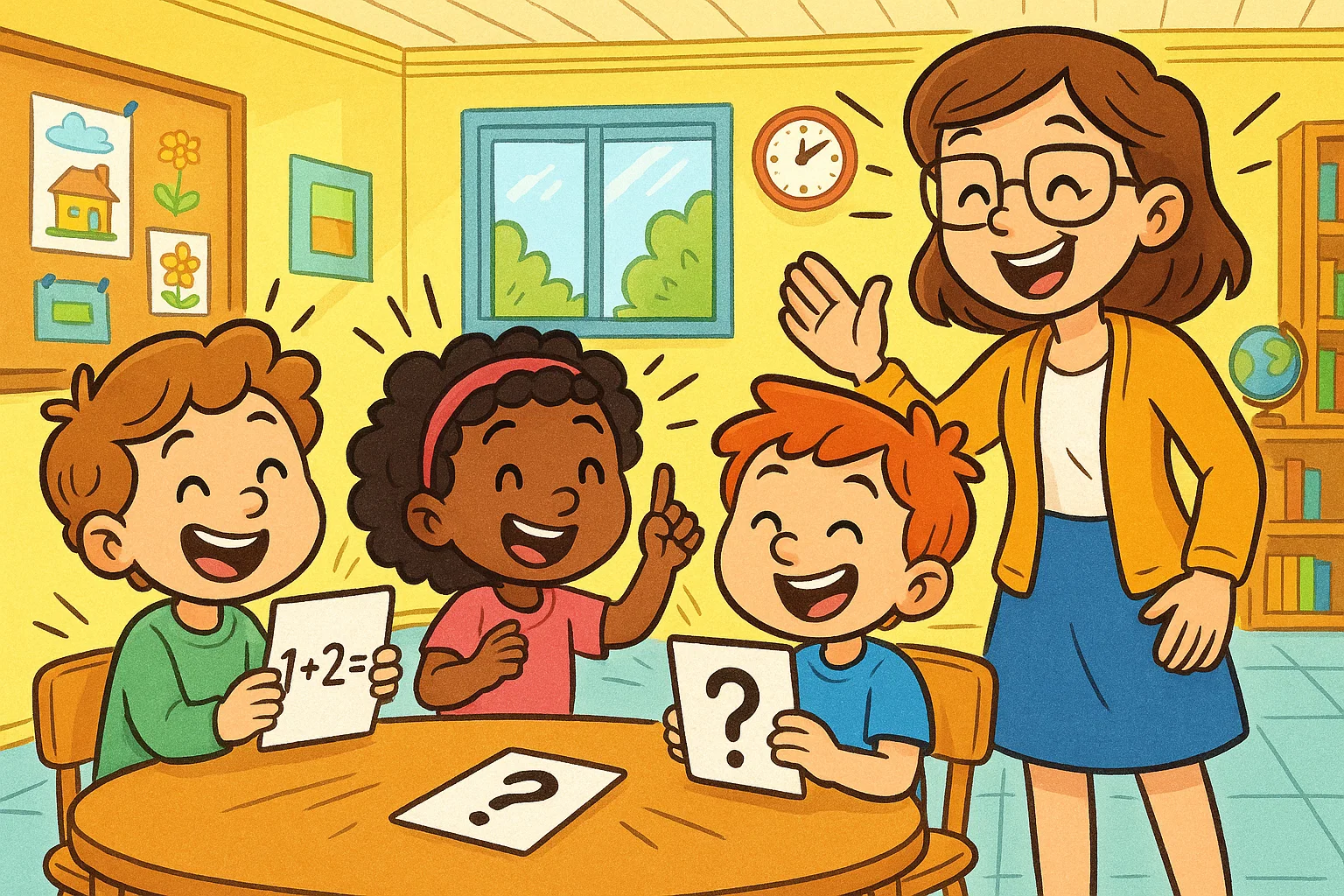
This ultimate guide to riddles for 4-year-olds is curated for curious, giggly preschoolers whose minds are developing rapidly. At this age, children are moving from simple recognition to early problem-solving, while their attention spans remain short and sweet. These riddles for kids with answers are short, simple, and delightfully silly—just right for preschoolers. When children guess clues, they build logical thinking, confidence, and a lifelong love of learning.
Key Takeaways
- Cognitive Growth: Riddles boost thinking skills and encourage children to use descriptive language.
- Vocabulary Building: Word games help children expand their vocabulary and understand simple hidden meanings in a playful context.
- Bonding Activity: Short brain teasers give kids and adults a fun activity to enjoy together.
- Preschool Ready: These riddles are designed to be age-appropriate, familiar, and confidence-building for preschoolers.
Best Riddle Types for Age 4
Four-year-olds are often “concrete thinkers,” meaning they understand the world through what they can see, touch, hear, and do. The best riddles for kids in this age group focus on familiar topics such as animals, food, colors, body parts, toys, and daily routines. Using familiar, tangible categories helps each puzzle feel achievable, which supports children’s confidence and problem-solving skills.
Answer Format for Easy Reading
To make this easy for parents and teachers, every riddle includes the answer immediately after the question in parentheses. This lets you keep the flow going without scrolling to a separate answer key. The format works well for quick verbal play during car rides, bedtime, circle time, or a short classroom break.
Parent Tips for Riddle Time
To make learning fun, try adding multisensory cues. When you present easy riddles for kids, use expressive gestures, funny voices, or simple sounds to keep children engaged. If a child struggles, offer a small hint about the object’s color, sound, or location so they can reach the answer without feeling frustrated.
Jump To
| Category | What You’ll Find |
| Easy Riddles | Quick and simple starters |
| Topic-Based Riddles | Animals, food, colors, numbers, and nature |
| Parent Help | Benefits, tips, and how-to guides |
| FAQs | Common questions about preschool riddle games |
Riddle Meaning for Preschoolers
For a four-year-old, a riddle is like a game of hide-and-seek, but with words. It is a verbal puzzle where one person describes something without naming it, and the other person guesses what it is. It is one of the earliest playful ways children practice logical thinking.
Simple Riddle Definition
A simple way to explain a riddle to a child is: “I am going to tell you a secret about something, but I won’t tell you its name. I will give you clues, and you use your thinking cap to guess what I am!”
For example: “I am round, you can bounce me, and you can play with me at the park. What am I? (a ball)”
Why Riddles Work for 4-Year-Olds
Brain teasers for kids work well at age four because children are developing symbolic thought. A child listens to several clues, holds them in memory, and connects them with one familiar answer. This strengthens thinking skills, listening, and early reasoning in a playful way.
Difference Between a Joke and a Riddle
A joke is mainly designed to create laughter through a punchline or silly situation. A riddle is more of a problem-solving task. It can be funny, but its main goal is to invite the child to solve a tiny mystery. In simple terms, jokes focus on the “haha!” moment, while riddles focus on the “aha!” moment.
100+ Fun Riddles for 4-Year-Olds
The following collection features short, preschool-friendly questions that are easy to ask out loud and fun for children to solve.
Easy Riddles for 4-Year-Olds
- I am round and yellow. I stay up in the sky and keep you warm. What am I? (the sun)
- I have four legs and I say “Woof!” I love to wag my tail. What am I? (a dog)
- You wear us on your feet when you go outside to play. What are we? (shoes)
- I can be full of water, and you use me to take a drink. What am I? (a cup)
- I have a soft pillow and blankets. You sleep in me at night. What am I? (a bed)
- I am round and you can kick me or throw me. What am I? (a ball)
- I have pages and pictures, and a grown-up may read me to you at bedtime. What am I? (a book)
- I fall from the sky and make the ground wet. You need an umbrella for me. What am I? (rain)
- I have teeth but I don’t bite. I help make your hair look neat. What am I? (a comb)
- I am cold and sweet, and I come on a stick or in a cone. What am I? (ice cream)
Funny Riddles for Young Children
- What has a thumb and four fingers but is not alive? (a glove)
- What has to be broken before you can eat it? (an egg)
- I have a face but no eyes. I have hands but no arms. What am I? (a clock)
- What builds up when you don’t clean but goes away when you sweep? (dust)
- I have a neck but no head, and I wear a cap but no hat. What am I? (a bottle)
One-Word Answer Riddles
- I twinkle at night in the sky. What am I? (star)
- I am green and grow on the ground. What am I? (grass)
- I make a “meow” sound. What am I? (cat)
- I blow in the trees and move the leaves. What am I? (wind)
- You use me to eat soup. What am I? (a spoon)
Riddles with Longer Answers
- I have four wheels and a steering wheel. A grown-up drives me to the store. What am I? (a car)
- I am big and yellow, and I pick up children to take them to school. What am I? (a school bus)
- I am soft, fuzzy, and you hug me when you go to sleep. What am I? (a teddy bear)
- I have a long trunk and big ears. I live in the zoo. What am I? (an elephant)
- I have a slide, swings, and a sandbox for you to play in. What am I? (a playground)
Animal Riddles for Kids
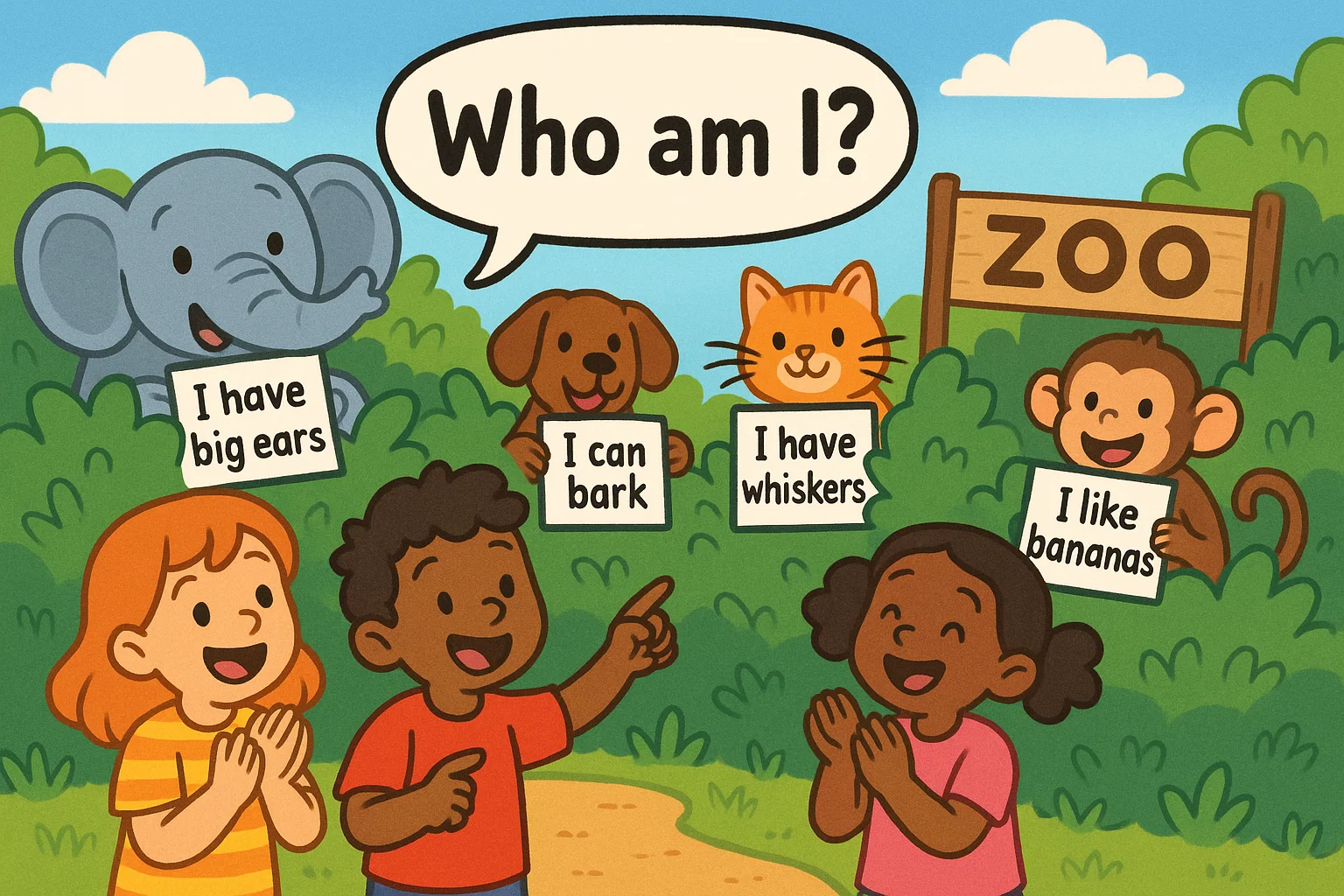
Animal riddles are a staple of early childhood learning because they use sounds, movements, and physical traits that children often recognize early on.
Farm Animal Riddles
- I am big and white with black spots. I give you milk and say “Moo!” What am I? (a cow)
- I am pink, I have a curly tail, and I love to roll in the mud. What am I? (a pig)
- I have feathers and I lay eggs. I say “Cluck, cluck!” What am I? (a chicken)
- I have a fluffy wool coat. People use my wool to make sweaters. What am I? (a sheep)
- I am very tall, I have a mane, and you can ride on my back. What am I? (a horse)
Pet Riddles
- I live in a bowl and I swim all day. I don’t make any noise. What am I? (a fish)
- I have long ears and a little fluffy tail. I love to hop and eat carrots. What am I? (a rabbit)
- I live in a cage, I am small, and I love to run on a wheel. What am I? (a hamster)
- I have colorful feathers and I can fly. Sometimes I can even talk! What am I? (a bird)
- I am small, I have whiskers, and I love to chase mice. What am I? (a cat)
Wild Animal Riddles
- I have a big mane and a loud roar. What am I? (a lion)
- I have a very, very long neck so I can eat leaves from the tops of trees. What am I? (a giraffe)
- I look like a horse but I have black and white stripes all over. What am I? (a zebra)
- I love to climb and swing in trees, and I like bananas. What am I? (a monkey)
- I am a big cat with orange fur and black stripes. What am I? (a tiger)
Roaring Fun Animal Riddles
Using rhymes, animal sounds, or expressive acting makes this category even better. Try growling while asking: “I am big, brown, and I sleep all winter in a cave. What am I? (a bear)”
Food Riddles for Kids
Food riddles work well because they connect to tastes, smells, colors, and everyday meals.
Fruit Riddles for Little Kids
- I am red, crunchy, and very sweet. I grow on trees. What am I? (an apple)
- I am long, yellow, and you have to peel me to eat me. What am I? (a banana)
- I am round and orange. You can squeeze me to make juice. What am I? (an orange)
- We are small, round, and purple or green. We grow in bunches. What are we? (grapes)
- I am green on the outside and red on the inside with little black seeds. What am I? (a watermelon)
Vegetable Riddles for Little Chefs
- I am long and orange. Bunnies love to eat me. What am I? (a carrot)
- I am yellow and I grow on a cob. You eat me at a barbecue. What am I? (corn)
- I look like a little green tree, and I am a healthy food. What am I? (broccoli)
- I am round and red. You find me in a salad or on a burger. What am I? (a tomato)
- I grow under the ground and you use me to make french fries. What am I? (a potato)
Snack Riddles
- I am round and crunchy, and I have chocolate chips inside me. What am I? (a cookie)
- I am cold and white. You pour me over your cereal. What am I? (milk)
- I am made with two pieces of bread and peanut butter and jelly in the middle. What am I? (a sandwich)
Color Riddles for Preschoolers
Color recognition is an important preschool and kindergarten readiness skill. These riddles for preschoolers focus on visual identification and familiar objects.
Guess the Color
- I am the color of a strawberry and a fire truck. What color am I? (red)
- I am the color of the sky and the ocean. What color am I? (blue)
- I am the color of a lemon and the sun. What color am I? (yellow)
- I am the color of grass and leaves on a tree. What color am I? (green)
- I am the color of a pumpkin and a carrot. What color am I? (orange)
Color and Object Clues
- I am yellow, I am in the sky, and I shine during the day. What am I? (the sun)
- I am white, I am cold, and I fall from the sky in winter. What am I? (snow)
Rainbow Riddle
- I have many colors like red, orange, and blue. I appear in the sky after it rains. What am I? (a rainbow)
Shape and Number Riddles
Shape Riddles for 4-Year-Olds
- I am round like a ball or a cookie. I have no corners. What am I? (a circle)
- I have four equal sides, like a square cracker or a window. What am I? (a square)
- I have three sides and look like a slice of pizza. What am I? (a triangle)
Counting Riddles
- I am the number of hands you have. What number am I? (two)
- I am the number of legs on a dog or a cat. What number am I? (four)
Body Parts Riddles
- I am in the middle of your face. You use me to smell flowers. What am I? (your nose)
- You have two of us. You use us to hear music and sounds. What are we? (your ears)
- We are at the end of your arms. You use us to clap and wave. What are we? (your hands)
- We are at the bottom of your legs. You use us to walk and run. What are we? (your feet)
Nature and Outdoor Riddles
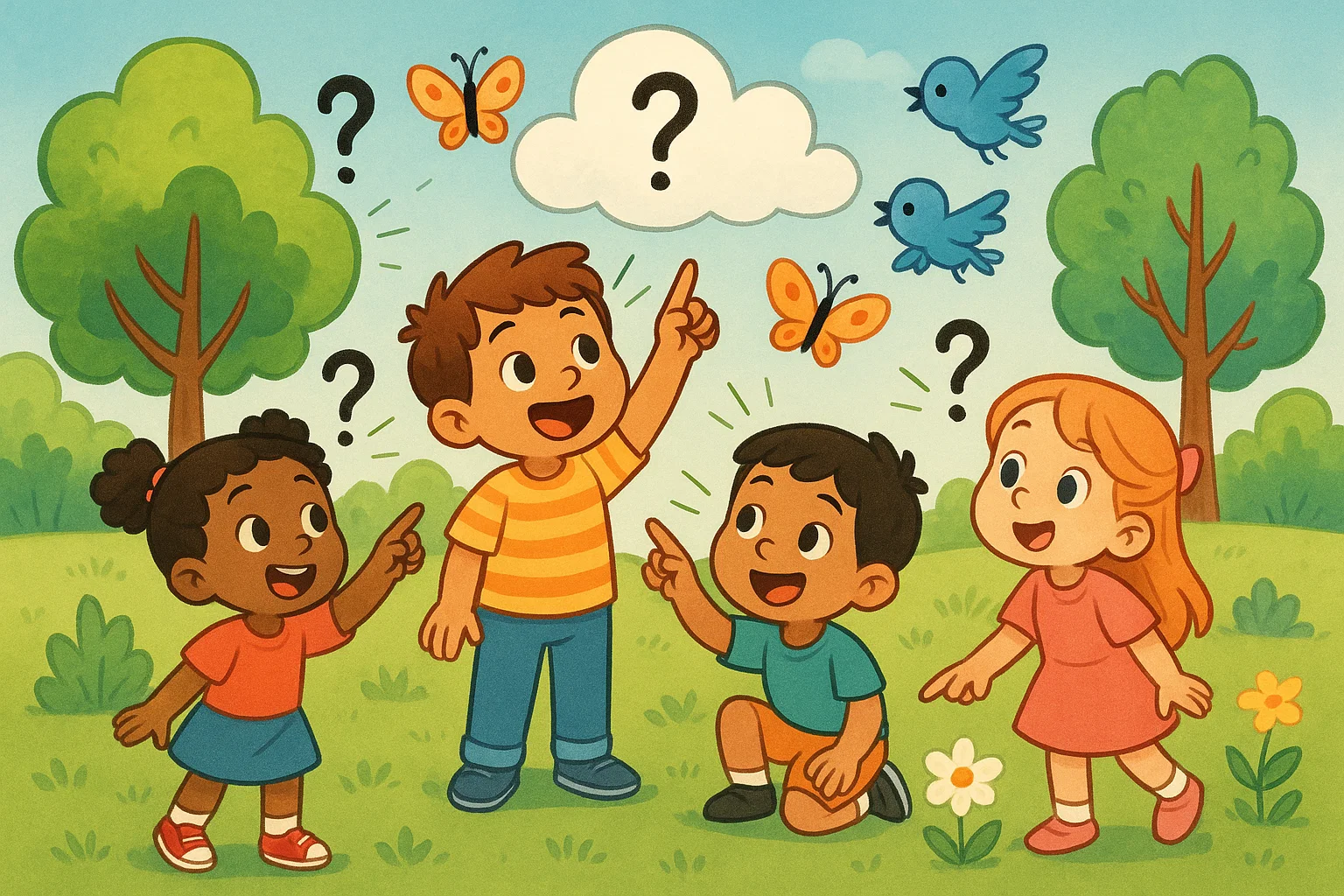
- I am green, I have branches, and birds build nests in me. What am I? (a tree)
- I am beautiful, I have colorful petals, and I grow in the garden. What am I? (a flower)
- I move through the sky, I am white and fluffy, and I look like cotton candy. What am I? (a cloud)
School and Classroom Riddles
- We are colorful, and you use us to draw pictures on paper. What are we? (crayons)
- You carry me on your back to take your lunch and books to school. What am I? (a backpack)
- I am the person who helps you learn and read in your classroom. Who am I? (your teacher)
Time and Calendar Riddles
- I shine in the night sky and sometimes look round. What am I? (the moon)
- I am the special day when you have cake, balloons, and presents. What am I? (your birthday)
- I am the time when it gets dark and you put on your pajamas. What am I? (nighttime)
- I tell you when it’s time to wake up or when to go to bed. I go tick-tock. What am I? (a clock)
Music and Sound Riddles
Instrument Riddles
- You hit me with sticks to make a loud “Boom! Boom!” sound. What am I? (a drum)
- I have many white and black keys. You press them to play a song. What am I? (a piano)
- I have strings and you can strum me to make music. What am I? (a guitar)
Animal Sound Clues
- I say “Moo” and give you milk. What am I? (a cow)
- I say “Quack” and love to swim in the pond. What am I? (a duck)
- I say “Baa” and have thick, fluffy wool. What am I? (a sheep)
Loud and Quiet Clues
- When you speak very softly so almost no one can hear, you are speaking in a… (whisper)
- When you hit your hands together after a show, you make a sound called a… (clap)
Picture Riddles and Brain Teasers
Picture Riddles for 4-Year-Olds
Text-based riddles for kids are useful, but picture-based clue games add a visual layer to problem-solving. You can show a child a picture of an object hidden behind a piece of paper, revealing it slowly as they guess. This visual puzzle format reinforces the connection between clues and conclusions. Simple emoji-style hints like 🍎, 🐱, or ☀️ can also help children connect words with images.
Brain Teasers for Kids 4–5 Years Old
A brain teaser for this age might involve simple patterns: “I have a red block, then a blue block, then a red block. What comes next? (a blue block)” These activities help children move from simple guessing to early mathematical and logical thinking.
Visual Clues and Props
Real-world objects make riddle time more hands-on. Hold up a toy car, a piece of fruit, or a stuffed animal as a final hint or reward. This multisensory approach can increase engagement and help young learners remember new words.
Hard Riddles for 4-Year-Olds
Even though this page focuses on easy riddles for kids, some children enjoy a challenge. For preschoolers, “hard” should simply mean slightly more abstract or require one extra clue, not feel confusing or unfair.
Slightly Tricky Riddles
- I follow you wherever you go, but you can never catch me. What am I? (your shadow)
- I get wetter the more I dry you. What am I? (a towel)
- I have two sides called heads and tails, but I have no body. What am I? (a coin)
Clue-by-Clue Riddles
For these, give one clue at a time.
- I am cold and white.
- You can build me in the yard.
- I have a carrot for a nose.
- What am I? (a snowman)
Challenge Riddles with Simple Answers
- I stick to the corner of an envelope and help a letter travel. What am I? (a stamp)
- I have a neck but no head. What am I? (a bottle)
Seasonal and Holiday Riddles
Fresh Fun December Riddles
- I am cold, I have a carrot nose, and I wear a hat. What am I? (a snowman)
- You wear us on your hands to keep your fingers warm in the snow. What are we? (mittens)
- I am brown, I have antlers, and I help pull Santa’s sleigh. What am I? (a reindeer)
Summer Clues
- You wear me on your face to keep the bright sun out of your eyes. What am I? (sunglasses)
- I am made of sand and you build me at the beach with a bucket. What am I? (a sandcastle)
Halloween Clues
- I am orange, round, and have a silly face carved into me. What am I? (a jack-o’-lantern)
- I fly at night, I am black, and I sleep upside down. What am I? (a bat)
Holiday Clues for Kids
- I am a big bird that people often eat for a special holiday dinner. What am I? (a turkey)
- I am a bunny who hides colorful eggs in the grass. Who am I? (the Easter Bunny)
Riddles by Age and Grade Fit
Riddles for Preschoolers
For ages 3–4, the clues should be concrete. Focus on color, sound, size, movement, and objects from the child’s daily life.
Riddles for Kindergarten Students
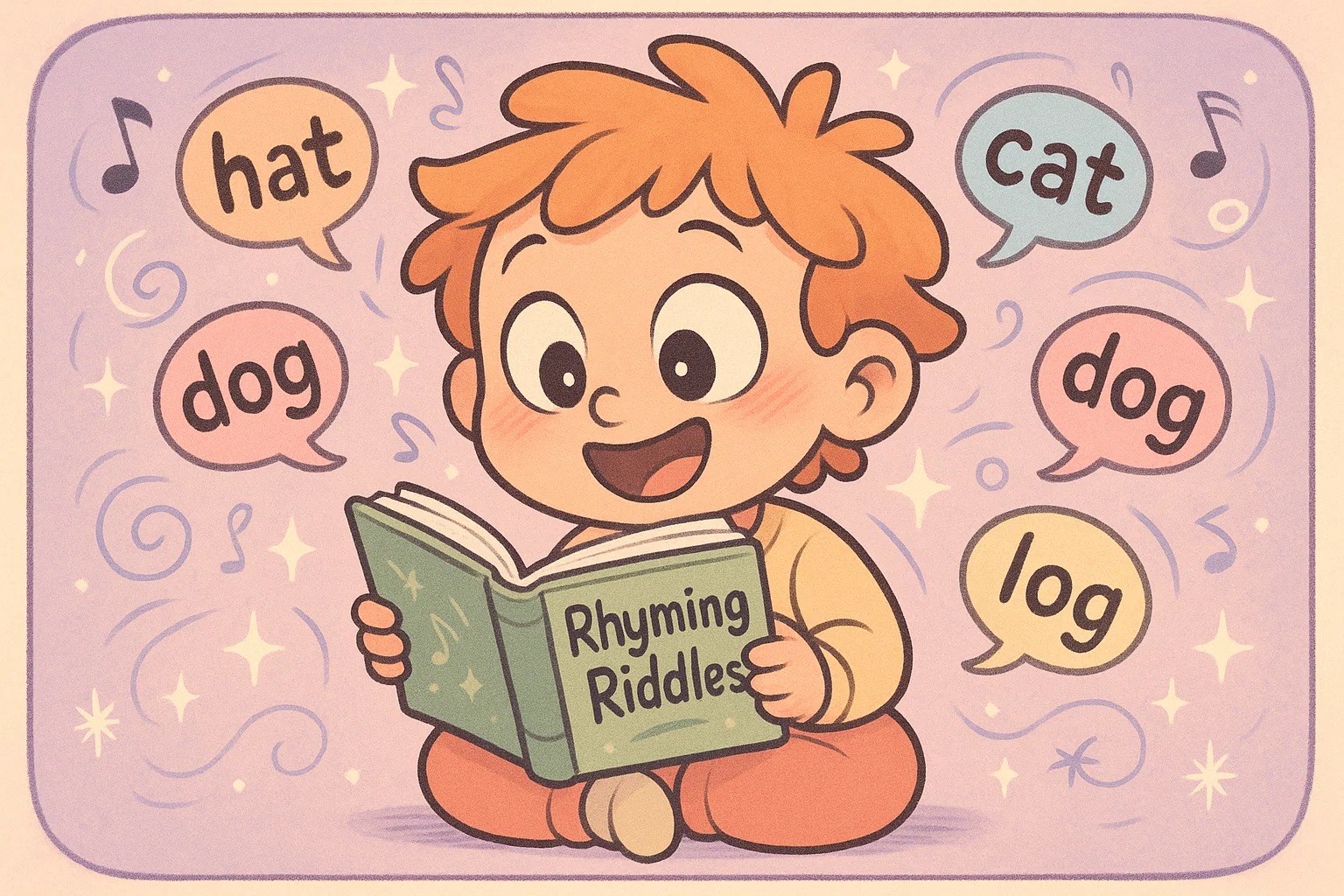
At age 5, you can start including simple phonics clues. For example: “I am an animal that rhymes with ‘hat’.” This supports early literacy and sound awareness.
Riddles for 1st Grade Students
For 1st-grade students, clue games can include simple logic and gentle double meanings. Children at this stage can handle more word riddles that ask them to think about how words can sound alike or have more than one meaning.
Riddles for Older Kids
Older children, usually ages 7 and up, are ready for math-based puzzles, science questions about the planets, and more complex logic games for kids that require several steps.
Benefits of Riddles for Kids
Vocabulary and Language Growth
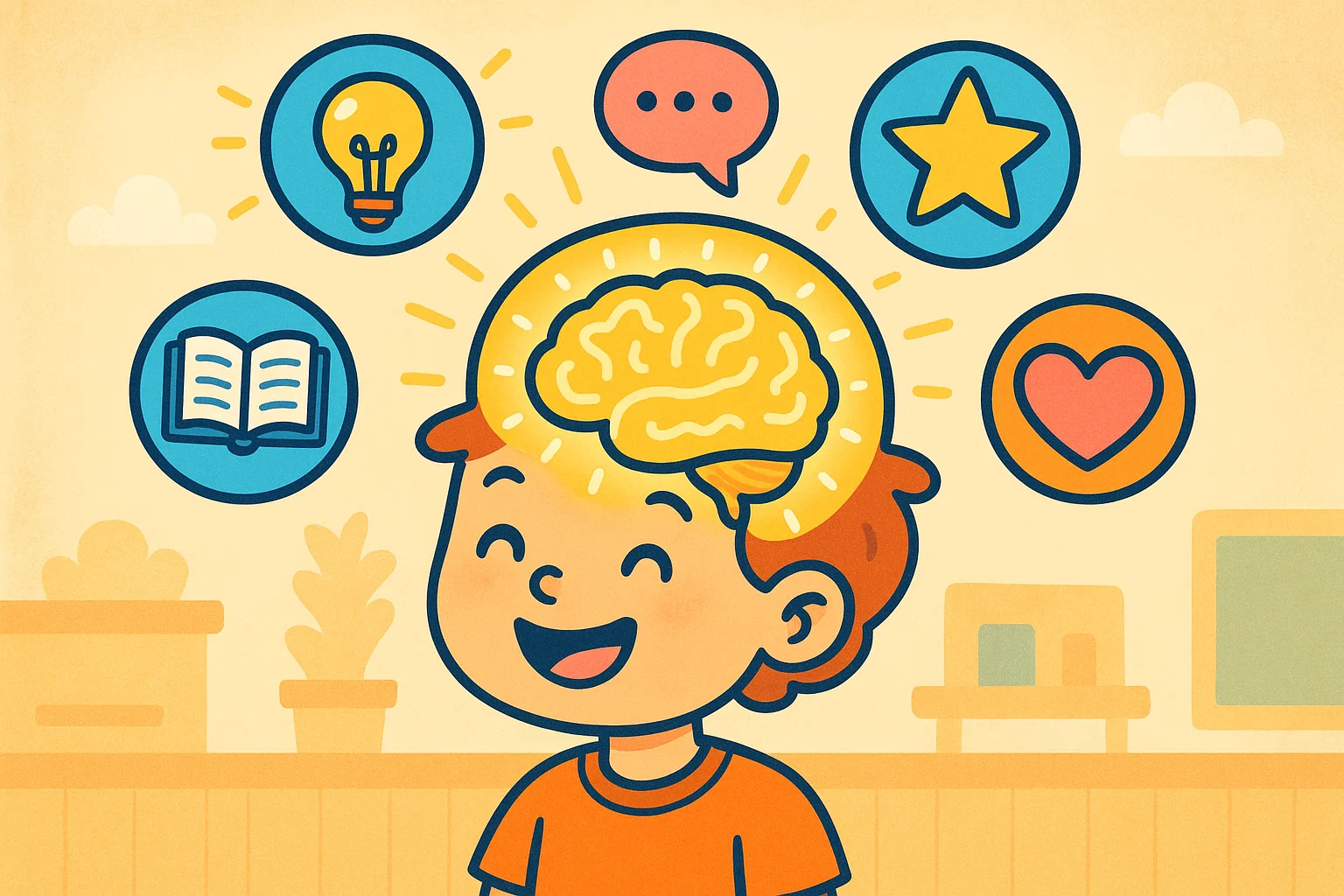
Riddles provide a rich environment for children to learn new words. By using descriptive language like “crunchy,” “fluffy,” “striped,” or “shiny,” these questions expand a child’s vocabulary in context. Playful language interaction also encourages children to listen carefully and connect words with real objects.
Problem-Solving Practice
Solving riddles is an exercise in critical thinking. The child must:
- Listen to the clues.
- Focus on the important details.
- Match the attributes to a familiar answer.
This process is simple, but it helps preschoolers practice reasoning in a low-pressure way.
Creativity and Imagination
A riddle asks a child to picture something that is not directly in front of them. This kind of mental image-building supports imagination, storytelling, reading comprehension, and creative thinking.
Confidence and Social Skills
Guessing the answer gives children a meaningful confidence boost. It encourages them to speak up, take turns, join group activities, and enjoy shared laughter with adults or other children.
How to Make Riddle Time Exciting for Preschoolers
Use Props and Visual Clues
Hold up a physical object after children guess correctly. If the answer is “apple,” have a real apple ready to show them. This connects the verbal puzzle to the real world.
Turn Riddles into a Fun Game
Transform riddle time into a simple guessing game. You can award a sticker for every three correct answers or let the child “win” by guessing a super mystery question at the end of the day.
Act Out Answers
Encourage the child to become the answer. If the answer is “a monkey,” let children jump around and make monkey sounds. Physical engagement helps active learners process the information more deeply.
Reward Participation
Focus on effort, not just the correct answer. Praise their “smart thinking” even if the guess is off. This builds a positive association with problem-solving.
Tips for Engaging Preschoolers with Riddles
- Keep Riddles Short: One to three clues is the sweet spot.
- Give Helpful Hints: If they are stuck, offer a first-letter, sound, or color hint.
- Repeat Favorites: Preschoolers love the comfort of knowing the answer.
- Stop Before Kids Get Tired: End on a high note while they are still having fun.
How to Help Kids Create Their Own Riddles
Start with the Answer
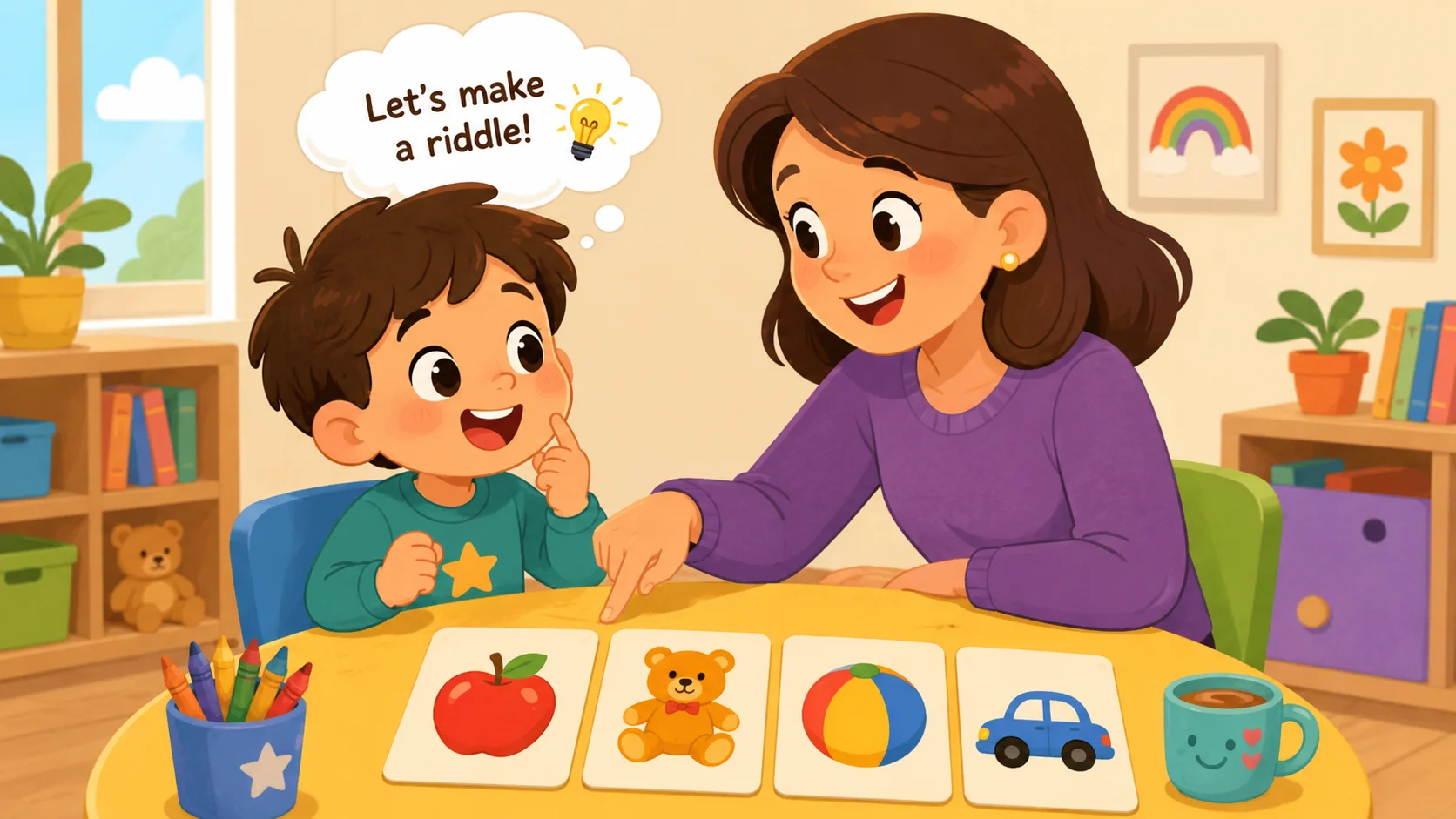
Ask the child to pick an object they can see right now, like a shoe, a cup, or a cat.
Brainstorm Clues
Ask prompting questions: “What color is it? What does it do? Where do we see it?”
Think Like the Answer
Encourage them to speak as the object: “I live on the floor. You put your foot in me. What am I?”
Write the Riddle
Use the simple template: “I am [color]. I can [action]. What am I?”
Share and Guess
Let them ask their new riddle to a sibling, teacher, or grandparent. The pride they feel when someone has to think before guessing can motivate them to keep building their thinking skills.
Fun English Games and More Activities
Riddle Games for Home
- Guessing Baskets: Put 5 items in a basket and give clues for each one.
- Bedtime Riddles: A calm way to wind down the day.
- Car Ride Riddles: The perfect boredom buster for long trips.
Classroom Clue Activities
- Circle Time: Use a Mystery Box with a clue on the outside.
- Theme Days: If it is Animal Day, use only animal riddles for kids.
More Fun Games for Kids
Add other simple games, such as “I Spy,” “Simon Says,” and rhyming games. These games support many of the same listening, language, and reasoning skills as solving riddles.
Make Learning Fun with Riddles
Riddles prove that education does not have to feel dry. With short clues, familiar objects, and playful guessing, children learn that problem-solving can be joyful and rewarding.
Riddles for 4-Year-Olds FAQs
What riddles are best for 4-year-olds?
The best riddles are short, concrete, and based on things children see every day, such as animals, food, toys, colors, and body parts.
How many riddles should 4-year-olds try at once?
Usually, 5 to 10 questions at a time is enough to keep them engaged without causing mental fatigue.
Should answers be shown right away?
For adults reading the list, yes. For the child, pause and give them 10–15 seconds to think before offering a hint.
Are tricky riddles good for preschoolers?
Yes, as long as the answer is a familiar object. “Tricky” should mean “requires one more clue,” not “requires knowledge they do not have.”
Can riddles help with speech and vocabulary?
Absolutely. They encourage listening, following directions, and using descriptive adjectives.
How can parents make riddles easier?
Use sound effects, gestures, props, or point to the object if it is in the room.
Take a short quiz to find out what your everyday choices say about your parenting style
When your child is curious about something new, what’s your instinct?
Take a short quiz to find out what your everyday choices say about your parenting style
“Can I download this app?” What happens next?
Take a short quiz to find out what your everyday choices say about your parenting style
When it comes to rules at home, which sounds most like you?
Take a short quiz to find out what your everyday choices say about your parenting style
If you could give your child one life skill today, what would you pick?
Take a short quiz to find out what your everyday choices say about your parenting style
Your child gets to choose what to watch. What would your ideal setup look like?
Take a short quiz to find out what your everyday choices say about your parenting style
Pick your parenting superpower ✨