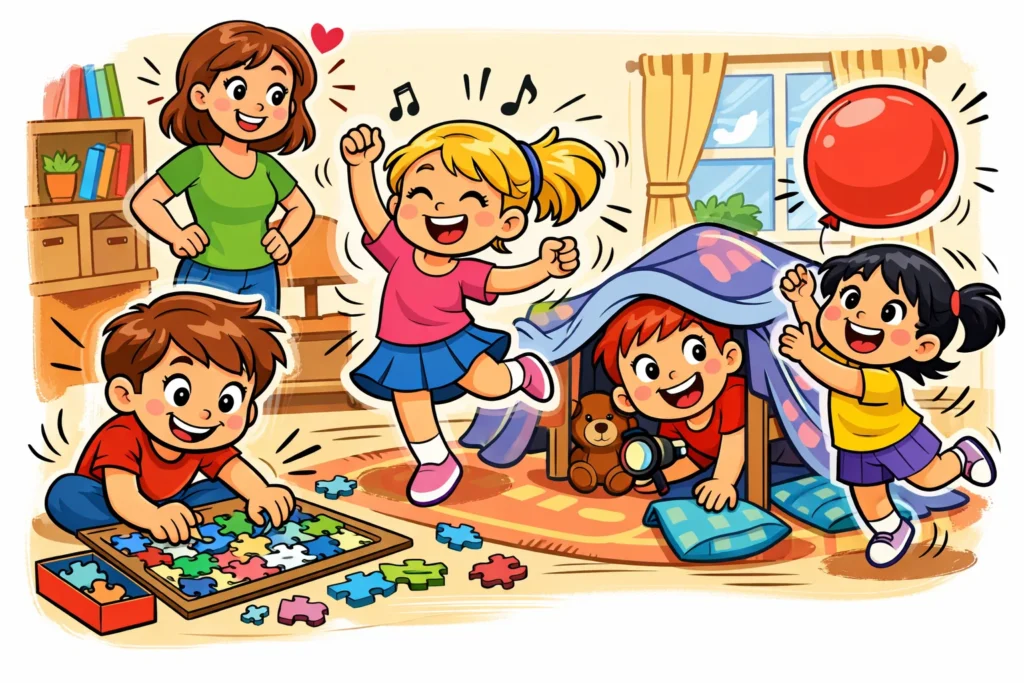
How to Get a Toddler to Listen Without Yelling: 10 Calm Steps

 Discover a Free Education Video App for Kids
Pastory uses AI to personalize educational video content based on your child’s interests and personality. Safe, engaging, and built for curious young minds. Sign up now to stay updated and enjoy early access with a free trial
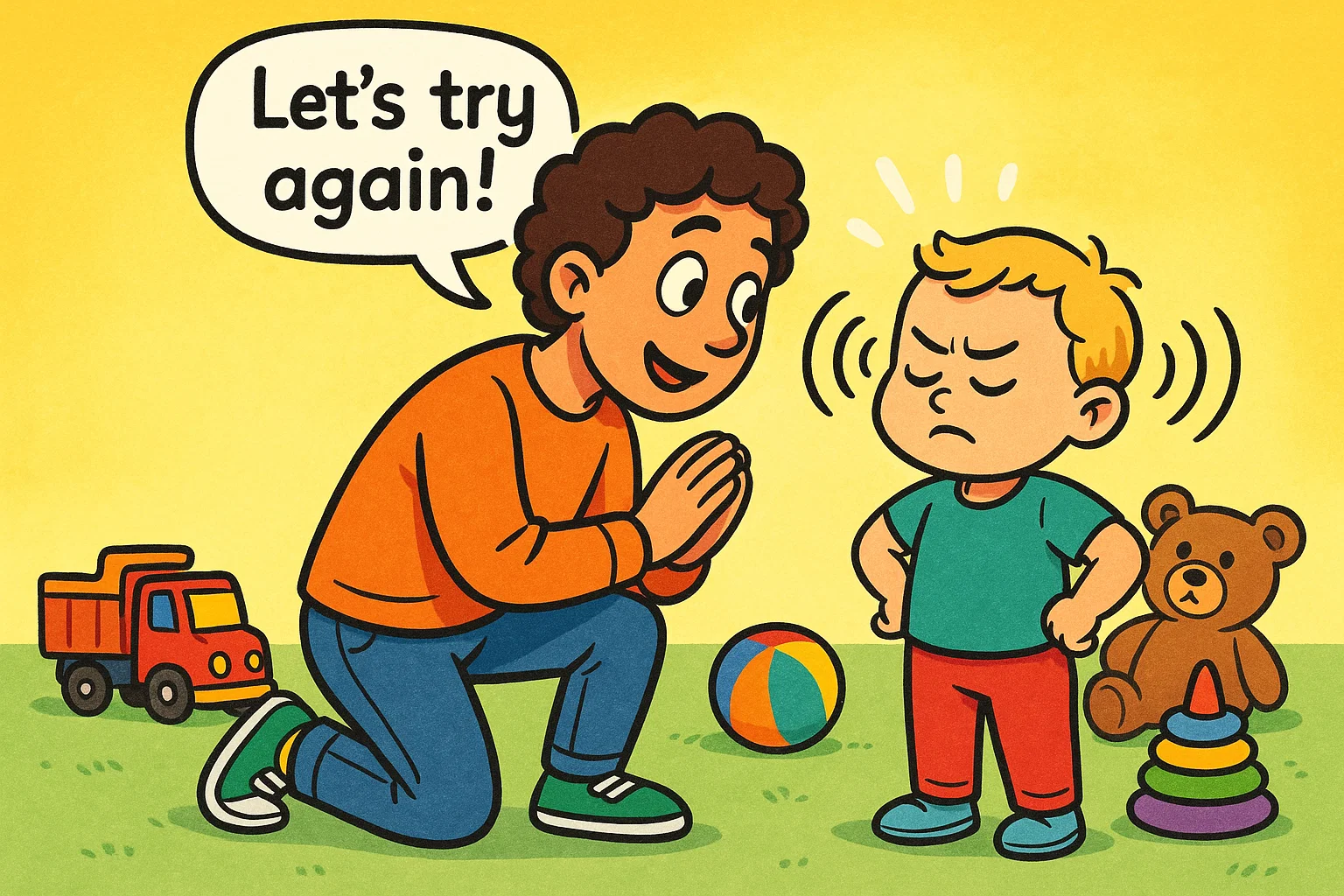
Learning how to get a toddler to listen is one of the most common challenges parents face, and it can easily lead to frustration and raised voices. However, toddlers are more likely to listen when parents focus on calm connection, use simple words, give clear signals, and follow through consistently. When you understand that toddlers have a strong developmental drive for independence, you can shift from demanding compliance to encouraging cooperation.
Effective communication with a toddler is less about the volume of your voice and more about the clarity of your message. When you help your child understand expectations through predictable routines and physical proximity, they become much more inclined to listen. This guide provides research-informed strategies to help your child listen, using techniques that support their developmental needs while keeping the atmosphere calmer at home.
Key Takeaways
The journey to better listening begins with a shift in adult behavior. Before a child appears not to listen, there is often a breakdown in how the instruction is delivered.
- Get close first: Move to your child’s eye level before speaking.
- Use fewer words: Long explanations overload a toddler’s limited processing capacity.
- Give one direction at a time: Avoid multi-step commands that can lead to confusion.
- Allow processing time: Wait at least 10 seconds for the brain to register the request.
- Make requests playful: Use a silly voice or a song to increase engagement.
- Follow through calmly: If your child does not move, gently guide them to the task without anger.
Best First Steps
To help your toddler listen today, start by lowering your voice to a whisper or using a very calm tone. Approach your child, say their name once to get their attention, and deliver a single, clear request like, “Time to put the blocks in the bin.” Instead of repeating yourself immediately, wait 5–10 seconds; if they do not respond, walk over and gently help them start the task by guiding their hands or walking with them to the next step.
Why Toddlers Do Not Listen
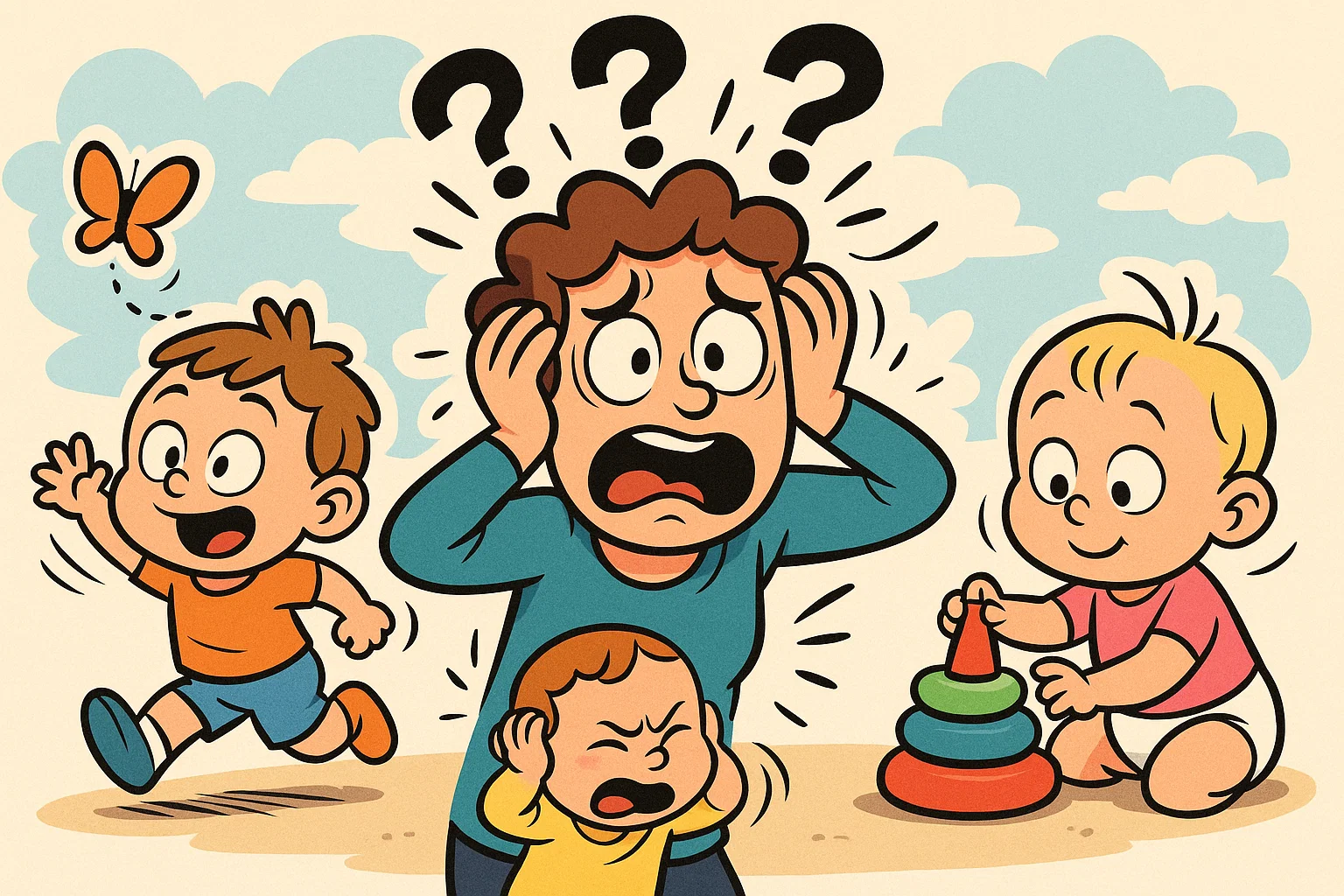
Understanding why a toddler won’t listen is the first step toward reducing parental frustration. Guidance from the American Academy of Pediatrics (AAP) supports using calm, positive discipline and age-appropriate expectations rather than treating every refusal as deliberate disobedience.
Busy Brain, Big Feelings
A toddler is often so deeply and happily involved in play that they may not fully register external commands. Their brains are driven by curiosity and immediate needs, so a request to go to the store may be competing with the absorbing work of building a tower or exploring a sensory bin.
Too Many Words
When parents use long explanations, toddlers may stop processing the message and tune out the “noise.” For example, saying, “It’s cold outside so we need your jacket because I don’t want you to get a cold,” is less effective than simply saying, “Coat on.” Short directions reduce the cognitive load on a developing brain.
Need for Control
Between ages 2 and 4, children become increasingly independent, so refusal can be one way they test limits and assert themselves. When a toddler doesn’t comply, they are often testing the boundaries of their influence. Providing limited choices, such as “Do you want to wear the red shirt or the blue shirt?”, satisfies this need for control.
Hearing, Hunger, and Tiredness
Physical factors can play a major role in whether a child is able to listen and cooperate. When a child is overtired, hungry, or overstimulated, it is much harder for them to pay attention, regulate emotions, and cooperate. Additionally, if a toddler consistently does not respond to their name or simple directions, it is important to discuss hearing concerns with a pediatrician or audiologist.
What Parents Often Do That Makes Listening Harder
Many common parenting habits inadvertently teach children to listen only after the situation has escalated. Recognizing these patterns helps in transitioning to more effective methods.
Repeating Commands
Repeating the instruction five or six times effectively teaches your child that the first four times don’t count. When you repeat yourself many times, you may signal that the request is not serious until you sound frustrated. This conditions the child to wait for your “final” warning before acting.
Raising Your Voice
While yelling may get short-term results, it can increase stress and make cooperation harder. Over time, children may start responding only when your voice gets louder. Yelling can also undermine the trust and connection that support long-term cooperation.
Vague Directions
Phrases like “be good” or “settle down” are too abstract for a toddler. A toddler may not know exactly what “be good” looks like in a grocery store. Instead, use specific, actionable phrases like “keep your feet on the floor” or “keep your hands in the cart” to provide a clear roadmap for behavior.
Moving Too Fast
Adults often expect toddlers to switch immediately from play to chores. However, toddlers have a slower processing speed than adults; jumping in too quickly to repeat a command prevents the child from choosing to cooperate on their own. Give your toddler a chance to process the sound of your voice before intervening.
Step 1: Get Close Before Giving Direction
Proximity is one of the most powerful tools for communicating with your child. It bridges the gap between their world of play and what needs to happen next.
Use Eye-Level Connection
Before you ask your child to do something, walk over and crouch down to their eye level. Eye contact, or at least being at eye level, helps ensure that you have entered their field of vision and are not just a voice calling from the kitchen. This physical presence makes it easier for them to notice and respond to the request.
Say Your Child’s Name Once
Using your child’s name can serve as a reset button for their attention. Instead of shouting “Put that down!” across the room, walk over, say “Leo,” and wait for him to look up. Starting with their name helps them understand that the message is meant for them, making them more likely to listen.
Pause Before Speaking
Once you have made eye contact, pause for a second. This brief pause gives your toddler a moment to shift attention from what they were doing to what you are saying. This small window of time makes them feel respected and more ready to receive your instruction.
Check Hearing and Attention
Before assuming a toddler won’t listen, verify they actually heard you. You can get their attention by gently placing a hand on their shoulder. If they are looking at you and have paused their activity, you can give the instruction.
Step 2: Keep Commands Simple
The more complex a sentence is, the harder it can be for a toddler to follow. Give your child instructions that are bite-sized and actionable.
Use One Clear Direction
To help your toddler succeed, give only one task at a time. For instance, instead of “Go upstairs, brush your teeth, and put on your pajamas,” simply start with “Time to brush teeth.” Once that task is completed, move to the next. This prevents the “lost in translation” effect that happens with multi-step commands.
Say One Word When Possible
Sometimes, less is more. If the routine is already familiar, a single word like “Shoes” or “Coat” can act as a clear prompt without the weight of a full sentence. This technique can reduce the feeling of nagging and keep the focus on the task.
Break Tasks Into Steps
If you want your toddler to put their toys away, break it down. Instead of “clean the room,” say “Let’s put the cup on the table” or “Put the cars in this box.” Using specific nouns and locations helps the toddler visualize the completed action.
| Goal | Complex Command (Avoid) | Simple Step (Use) |
| Hand Washing | “Go wash your hands for dinner now.” | “Hands in the sink.” |
| Departure | “Get your stuff, we have to go to Grandma’s.” | “Get in your car seat.” |
| Tidying | “This room is a mess, pick it all up.” | “Blocks in the bin.” |
Step 3: Send Clear Signals
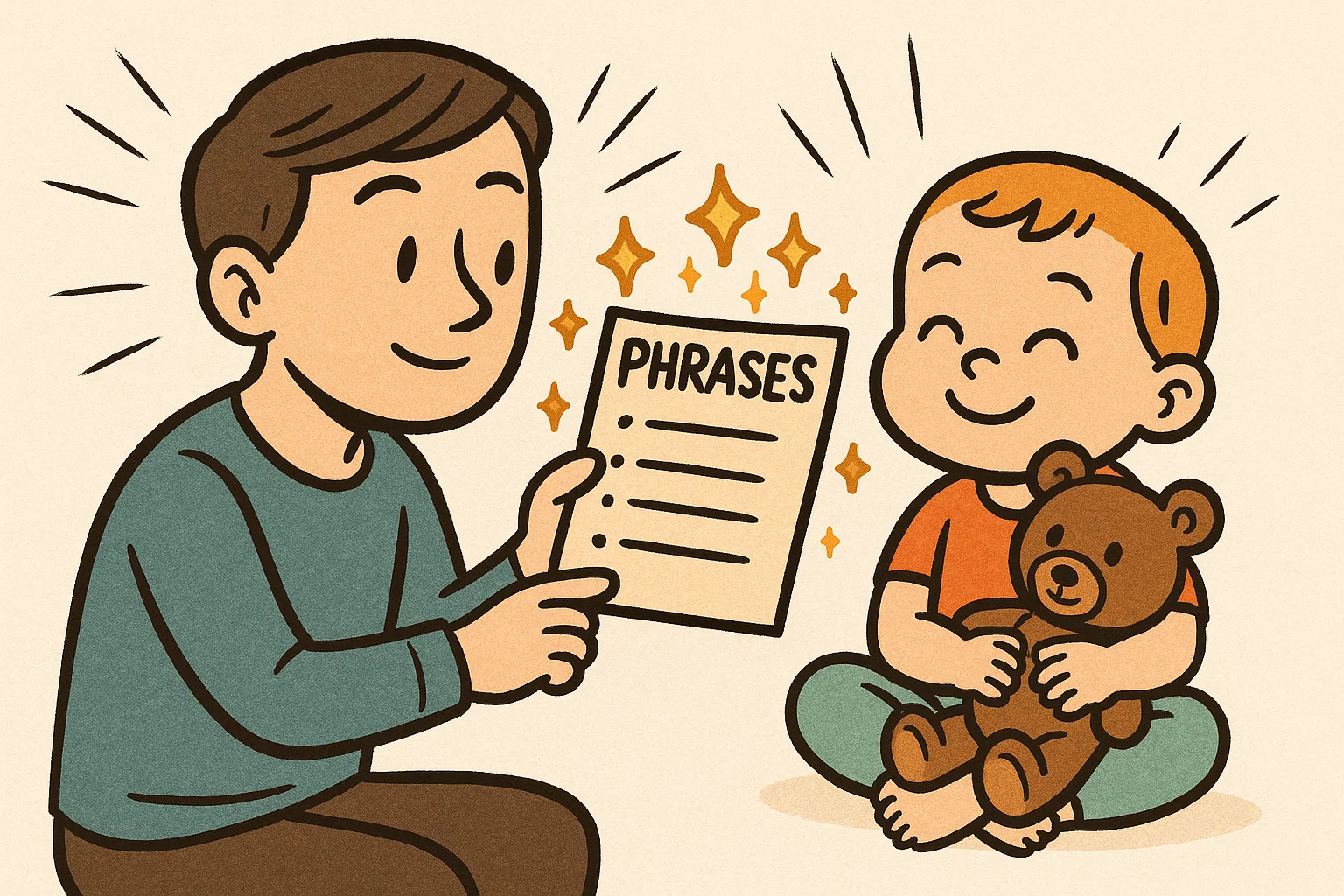
Using a simple “traffic light” system can help a toddler feel more secure because expectations become more predictable.
Green Signals for Free Play
During “green” times, your toddler has more freedom to choose what they want to do. Use phrases like, “You have time to play with whatever you like.” This builds trust and lets them know that you are not always there to give orders, which makes them more willing to listen during “red” times.
Yellow Signals for Warnings
Transitioning is hard for a toddler. Give your child a chance to prepare by providing advance notice. “Two more minutes of play, then time for bed” acts as a yellow light. Using a visual timer or a song to deliver your message can make these transitions smoother.
Red Signals for Safety
When safety is at stake, your voice should be firm, low, and immediate. “Stop. Road.” or “Hot. Stove.” are red signals. Because you do not yell for routine things, this change in tone signals a high-priority situation in which your child needs to act immediately.
Consistent Signal Words
Using the same trigger words daily creates a mental map for the child. If you always use the phrase “First [task], then [next activity],” such as “First brush your teeth, then we read a book,” the child learns the pattern of cooperation and is less likely to fight the transition.
Step 4: Show, Don’t Just Tell
Toddlers are visual learners. Teaching your child to listen often involves demonstrating the behavior you want to see rather than just describing it.
Model the Action First
If you want your child to use “gentle hands” with a pet, show them exactly what that looks like. Model the action first by stroking the pet yourself while narrating: “Soft, gentle hands.” Your toddler is more likely to copy your physical movements than to understand a vague command like “be nice.”
Point, Gesture, and Demonstrate
Pairing your words with physical cues can make your instructions easier for your child to follow. If you say, “Put your shoes by the door,” point to the shoes and then to the door. This multi-sensory approach can help ensure that even if they miss the verbal cue, the visual cue guides them.
Use Notes or Picture Cues
For recurring routines like the morning routine, use a simple chart with pictures of a toothbrush, a bowl, and a backpack. Pointing to the picture for the “brush your teeth” step allows the child to “read” the instructions themselves, which fosters independence and reduces power struggles.
Practice During Calm Moments
Do not try to teach your child a new skill in the heat of a tantrum. Instead, play “listening games” during calm times. Games like “Simon Says” or “Red Light, Green Light” are excellent ways to build listening skills in a low-stakes, fun environment.
Step 5: A Simple Trick to Help Your Toddler Stop and Listen
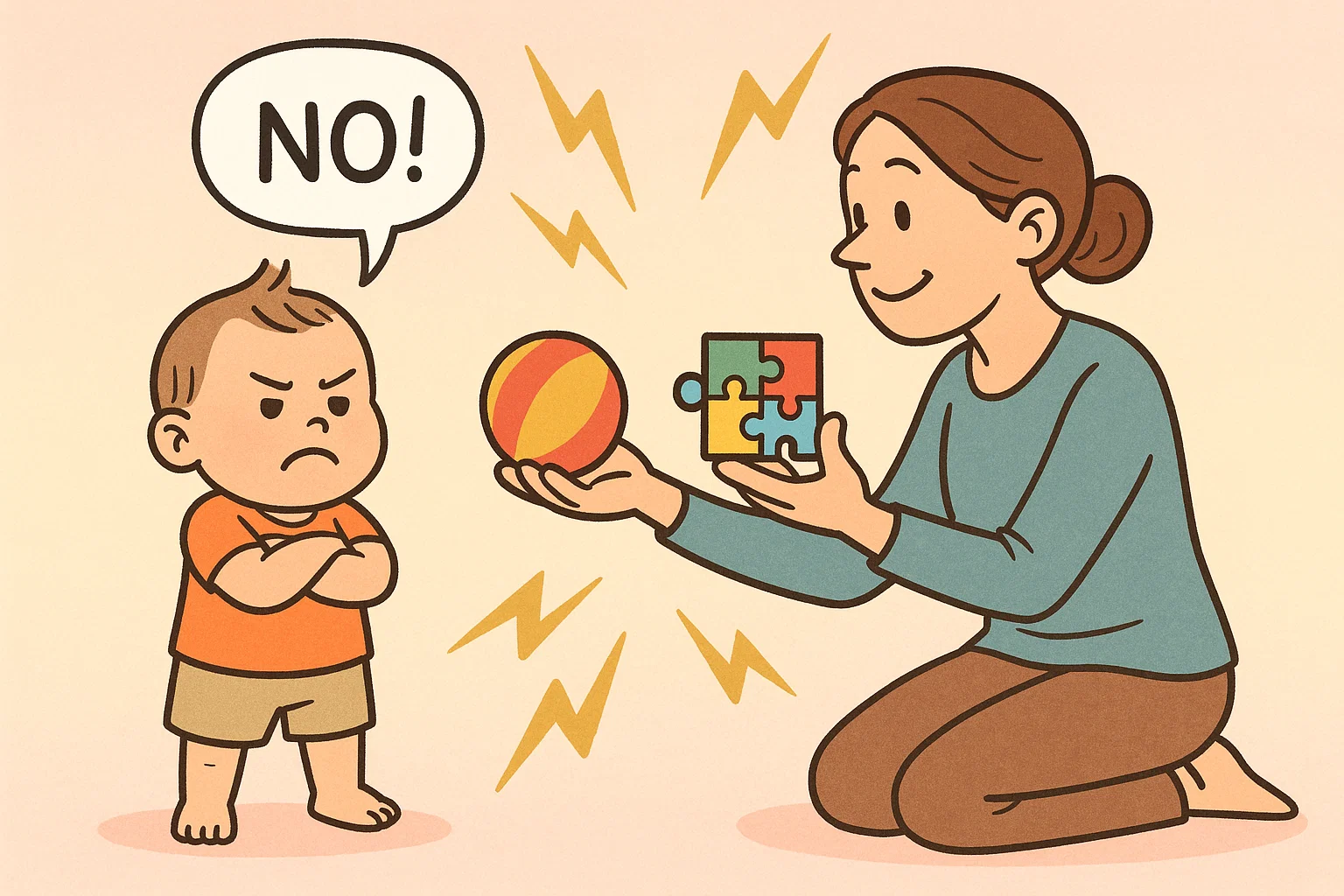
When a toddler is not listening, a pattern interrupt can shift their attention from resistance to engagement.
Magic Trick: Repeat-Back Test
One helpful way to get your toddler to engage is the “repeat-back” method. After giving a very short instruction, ask, “What did I say?” or “What are we doing next?” This encourages the child to process the information and say it out loud, which can help the instruction stick.
Why This Trick Works
This works because it turns a passive command into an active interaction. It confirms that the toddler has heard and understood the message. It also prevents you from having to repeat the instruction yourself; instead, the child repeats it, which reinforces their own understanding of the task.
Make the Trick More Fun
You can occasionally use a silly voice when asking them to repeat the instruction. “Can you tell me in a mouse voice what we do with our shoes?” or “Tell the teddy bear where we are going.” Making it a secret mission or a game helps the child feel like a teammate rather than someone being ordered around.
Parent Scripts to Try
- “I’m going to whisper a secret. [Whisper: Put your cup on the table.] What was the secret?”
- “We are going to the car. What do we need to put on our feet? That’s right, shoes!”
- “First we wash hands, then we eat. What’s first?”
Step 6: Make Listening Fun
Toddlers learn and connect through play. If you can bridge the gap between “work” and “play,” your toddler may become much more willing to listen.
Use a Silly Voice
Humor is a fantastic tool for communicating with your child. A silly voice or song can help lower a child’s resistance. Try using a robot voice to ask them to pick up toys, or a squeaky mouse voice to remind them to stay quiet in the library. It can turn a chore into a playful shared moment.
Turn Cleanup Into a Game
Instead of a command, create a challenge. “Can you get the toys in the bin before the timer beeps?” or “I bet you can’t find all the red blocks before I count to ten.” When you help your toddler see tasks as games, resistance often decreases.
Offer Playful Choices
Give choices that lead to the same result. “Do you want to get in your car seat like a kangaroo or like a tiger?” This gives your child a sense of autonomy while still helping you get the job done. It shifts the focus from “Do I have to go?” to “How will I go?”
Praise Quick Cooperation
When your child follows through, offer immediate, specific praise. “Wow, you put your cup on the table the very first time I asked! That was so helpful.” This reinforces the behavior and helps your toddler feel proud of contributing to the family.
Step 7: Work With Your Toddler, Not Against Them
Collaboration reduces conflict. When you help your child feel like a partner, they are less likely to see your requests as an attack on their freedom.
Invite Help
Toddlers love to be helpers. Instead of telling them to stay out of the way while you are cooking dinner, give them a job. “Can you help me put these plastic spoons in the drawer?” This keeps them happily involved and reduces the likelihood of them acting out to get attention.
Give Limited Choices
When possible, offer two acceptable options. “It’s time for bed. Do you want the blue pajamas or the yellow ones?” This limited choice gives your toddler some control while still moving toward the end goal, such as getting dressed for bed. Avoid open-ended questions like “What do you want to do?” which can make your toddler feel overwhelmed.
Use Team Language
Phrases like “We need to get ready” or “Let’s work together to tidy these blocks” foster a sense of belonging. It positions you and your toddler as a team. This reduces the “me vs. you” dynamic that often leads to a situation where a toddler refuses to listen.
Avoid Power Battles
If your toddler does not want to do something, resist the urge to argue. State the limit calmly: “I see you aren’t ready to walk. I will help you.” Then, if needed, gently pick up your child or guide them to the next step. By staying calm and avoiding a verbal debate, you mean what you say without creating a scene.
Step 8: Stay Calm Without Yelling
Yelling is often a sign that a parent is overwhelmed. By managing your own emotional state, you can teach your child that communication happens through words, not volume.
Lower Your Voice
Counterintuitively, lowering your voice often gets a child to listen better than raising it. When you speak softly, the child has to stop and focus to hear you. This calm tone is often more effective for getting their attention than a loud, angry tone.
Breathe Before Repeating
When you feel the urge to yell, take a parent time-out. Inhale for four seconds, hold for four, and exhale for four. This brief pause gives you a moment to respond more calmly, helping your toddler feel safe rather than scared.
Name the Limit Clearly
Be direct about what is happening. “I won’t let you hit. I am moving the toy away to keep us safe.” This states the limit clearly without turning it into a personal attack. It makes it clear that you mean what you say without aggression or threats.
Repair After Hard Moments
If you do lose your cool, use it as a teaching moment. “I’m sorry I yelled. I was feeling frustrated. Let’s try again.” This models emotional regulation and helps rebuild trust, showing your toddler how to handle mistakes with honesty.
Step 9: Handle No, Ignoring, and Running Away
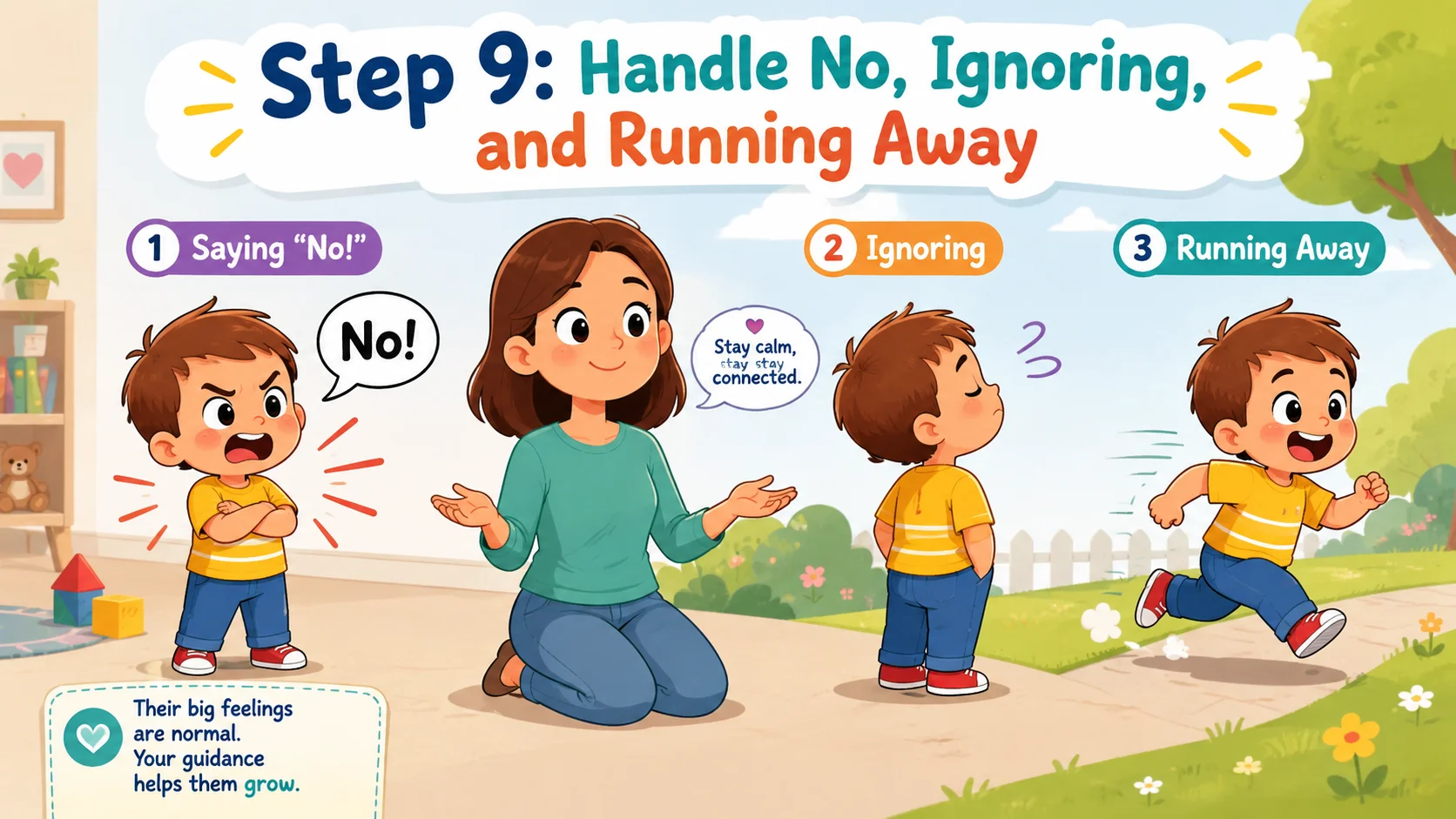
Specific behaviors require specific responses. Here is how to handle the most common “non-listening” scenarios.
For Refusing Shoes
If your toddler doesn’t want to put on shoes, offer a choice: “Do you want to put them on yourself, or do you want me to help you?” If they still refuse, calmly say, “I will help you,” and put the shoes on. Keep it calm and practical.
For Not Coming When Called
If you are about to go to the store and they run away, do not chase them, because that can turn into a game. Instead, walk to them, get down low, and say, “It is time to go. You can walk or I can carry you.” If they do not choose, gently pick up your child and take them to the car.
For Hitting or Throwing
Immediately stop the action. “I cannot let you throw the cup.” Remove the object or move your child away from the situation. Once they are calm, you can teach your child what to do instead: “If you are finished, you can say ‘all done’ or use your sign.”
For Bedtime and Transitions
Use a “First/Then” approach. “First brush your teeth, then we get a story.” If they stall, remind them once: “The faster we brush, the more time we have for the book.” This links their cooperation directly to a positive outcome they value.
Step 10: Teach Listening the First Time
The goal is to help your child respond to the first request. This skill is built through consistent daily practice.
Practice Small Requests
Throughout the day, give low-stakes directions that are easy to follow. “Can you bring me that spoon?” or “Touch your nose!” When they do it, celebrate. This builds the muscle memory of good listening and makes them more likely to follow high-stakes directions later.
Use Follow-Through
If you ask once and they do not move, you must follow through. After about 10 seconds of waiting, go to them and physically guide them to the task. This teaches your child that your words are followed by action, so they are more likely to listen the first time.
Reward Effort, Not Perfection
Acknowledge the effort. “I saw you started putting the blocks away even though you wanted to keep playing. That shows great listening skills!” Focusing on the effort makes the toddler feel capable and motivated to repeat the behavior.
Repeat the Routine Daily
Consistency is one of the best tools for helping a toddler listen. When the morning routine, toothbrushing, and bedtime usually happen in the same order, your child often resists the steps less because they are predictable. This reduces the number of times you have to give your toddler a new instruction.
Toddler Listening Checklist
Use this checklist to ensure you are setting your toddler up for success every time you speak.
Before Giving Direction
- Am I within arm’s reach of my child?
- Have I crouched down or lowered myself to their eye level?
- Did I say their name and wait for them to look at me?
- Is the TV or loud music turned off?
During Direction
- Did I use 5 words or fewer? For example, “Brush your teeth now.”
- Is my tone calm and confident?
- Am I telling them what to do, rather than what not to do?
- Did I pair the words with a gesture?
After My Toddler Responds
- Did I wait about 10 seconds for them to process?
- If they followed through, did I give specific praise?
- If they did not follow through, did I gently guide them to the task?
- Did I avoid yelling at my child?
When Your Toddler Still Does Not Listen
Sometimes, despite your best efforts, your toddler still may not listen. In these cases, it is important to look deeper into the “why.”
Check Sleep, Food, and Overload
If your child is having a “bad listening day,” check the basics. Are they coming down with a cold? Did they skip their nap? Are they overstimulated from a birthday party? Often, “not listening” is really “not able to cope” because of physical or emotional exhaustion.
Review Speech or Hearing Concerns
If your child often does not respond to their name or seems to ignore you even when you are close, talk with a pediatrician and consider a hearing or speech-language evaluation. The American Speech-Language-Hearing Association (ASHA) lists not responding to a name, not following simple directions, and speech-language delays as possible signs of hearing concerns.
Seek Support When Needed
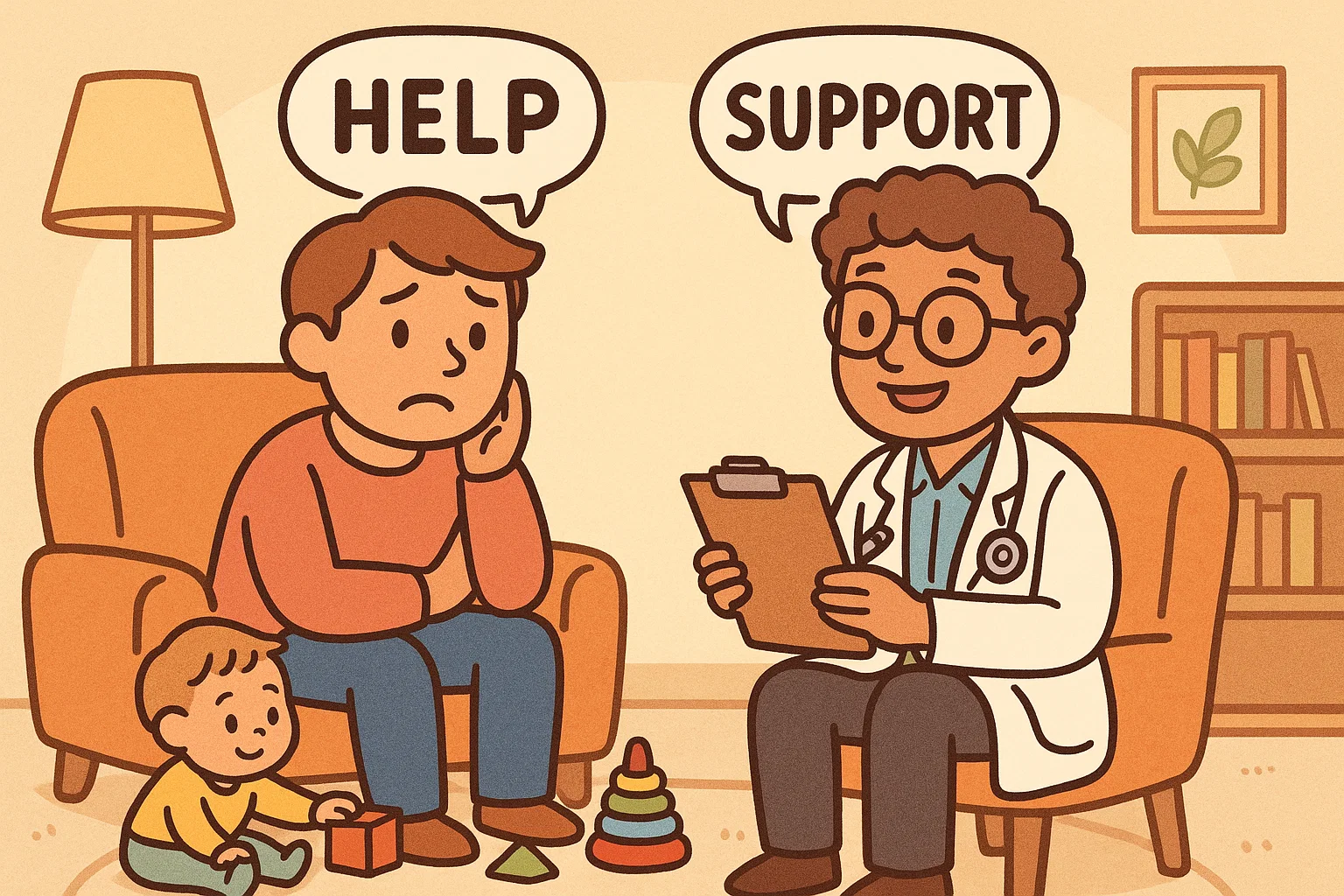
If your child’s refusal to listen is accompanied by extreme aggression, intense daily meltdowns, or situations where you feel unable to stay safe or calm, reach out for professional support. A child psychologist or early childhood specialist can provide tailored strategies to help your child thrive and bring more calm into your home.
FAQ: How to Get a Toddler to Listen
How Do I Get My Toddler to Listen Without Yelling?
Connect with your child physically by getting down to their level, using a calm tone, and giving one short, clear direction. Wait for them to process the request, and if they do not move, gently guide them to the task while remaining calm.
Why Does My Toddler Ignore Me?
Toddlers may seem to ignore adults because they are deeply focused on play, overwhelmed by too many words, or asserting their independence. It can also be a sign of tiredness, hunger, overstimulation, or not understanding the instruction.
How Many Times Should I Repeat a Direction?
Give the request once, wait about 10 seconds, then repeat it once more while offering a choice or gentle physical help. Avoid repeating it three or four times, as this teaches the child they can ignore the initial request.
What Should I Do When My Toddler Says No?
Stay calm and offer a limited choice: “You can walk to the car, or I can carry you.” If they still say no, follow through with the action you stated. Validating their feelings, such as “I know you want to stay,” while holding the limit helps your toddler feel understood.
How Can I Help My Toddler Listen in Public?
Prepare them before you go in: “In the store, we stay in the cart.” Keep instructions very simple and use positive reinforcement. If they cannot follow safety rules, be prepared to step out briefly and reset.
Can Screen Time Affect Listening?
Yes, highly stimulating screen content can make it harder for some children to transition back to non-screen activities. Use a “yellow light” warning, such as a timer or 5-minute notice, and have a clear, consistent “First/Then” routine for when the screen turns off.

Take a short quiz to find out what your everyday choices say about your parenting style
When your child is curious about something new, what’s your instinct?
Take a short quiz to find out what your everyday choices say about your parenting style
“Can I download this app?” What happens next?
Take a short quiz to find out what your everyday choices say about your parenting style
When it comes to rules at home, which sounds most like you?
Take a short quiz to find out what your everyday choices say about your parenting style
If you could give your child one life skill today, what would you pick?
Take a short quiz to find out what your everyday choices say about your parenting style
Your child gets to choose what to watch. What would your ideal setup look like?
Take a short quiz to find out what your everyday choices say about your parenting style
Pick your parenting superpower ✨