Bible Activities for Kids: Lessons, Games, and Crafts

 Discover a Free Education Video App for Kids
Pastory uses AI to personalize educational video content based on your child’s interests and personality. Safe, engaging, and built for curious young minds. Sign up now to stay updated and enjoy early access with a free trial
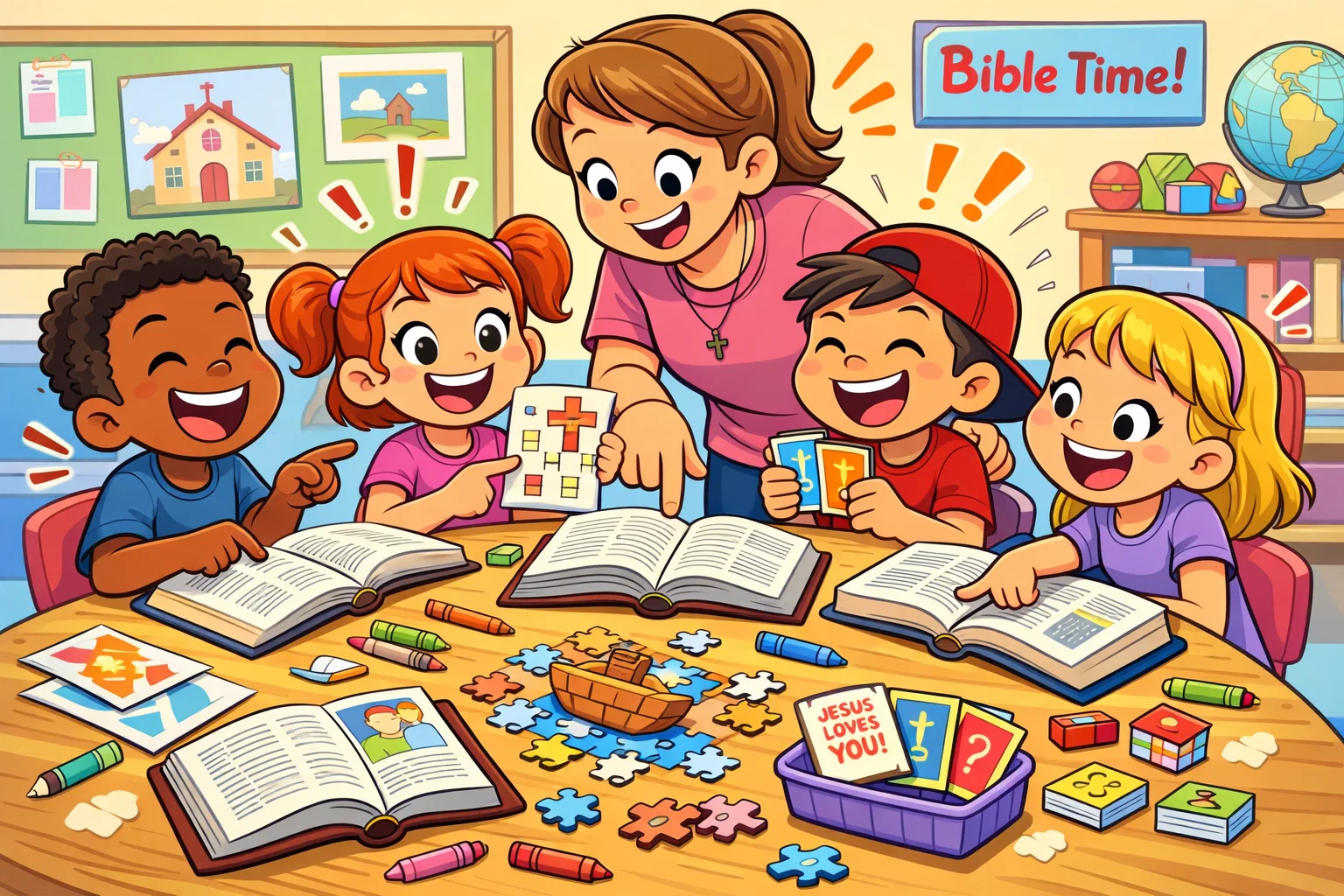
Parents, Sunday school teachers, homeschool families, and children’s ministry leaders will find simple, age-appropriate Bible activities for kids in this comprehensive guide. Faith-based learning works best when children can engage with a mix of printable resources, hands-on lessons, interactive games, crafts, coloring pages, puzzles, memory verse activities, and Bible story ideas.
This guide offers structured, practical ideas to help children learn the Word of God while developing cognitive, social, and emotional skills.
Key Takeaways
- Versatile Application: Bible activities for kids can support Sunday school, homeschool, family devotion, children’s church, Vacation Bible School, and quiet time.
- Diverse Formats: The best activity types include coloring pages, crafts, puzzles, word games, Bible trivia, memory verse games, and printable worksheets.
- Strategic Selection: Activities should match the children’s ages, the lesson goal, the Bible passage, the group size, and the available prep time.
- Life Application: Hands-on Bible activities help kids connect Bible stories with daily choices, prayer, kindness, faith, forgiveness, and service.
Best Activity Types for Quick Use
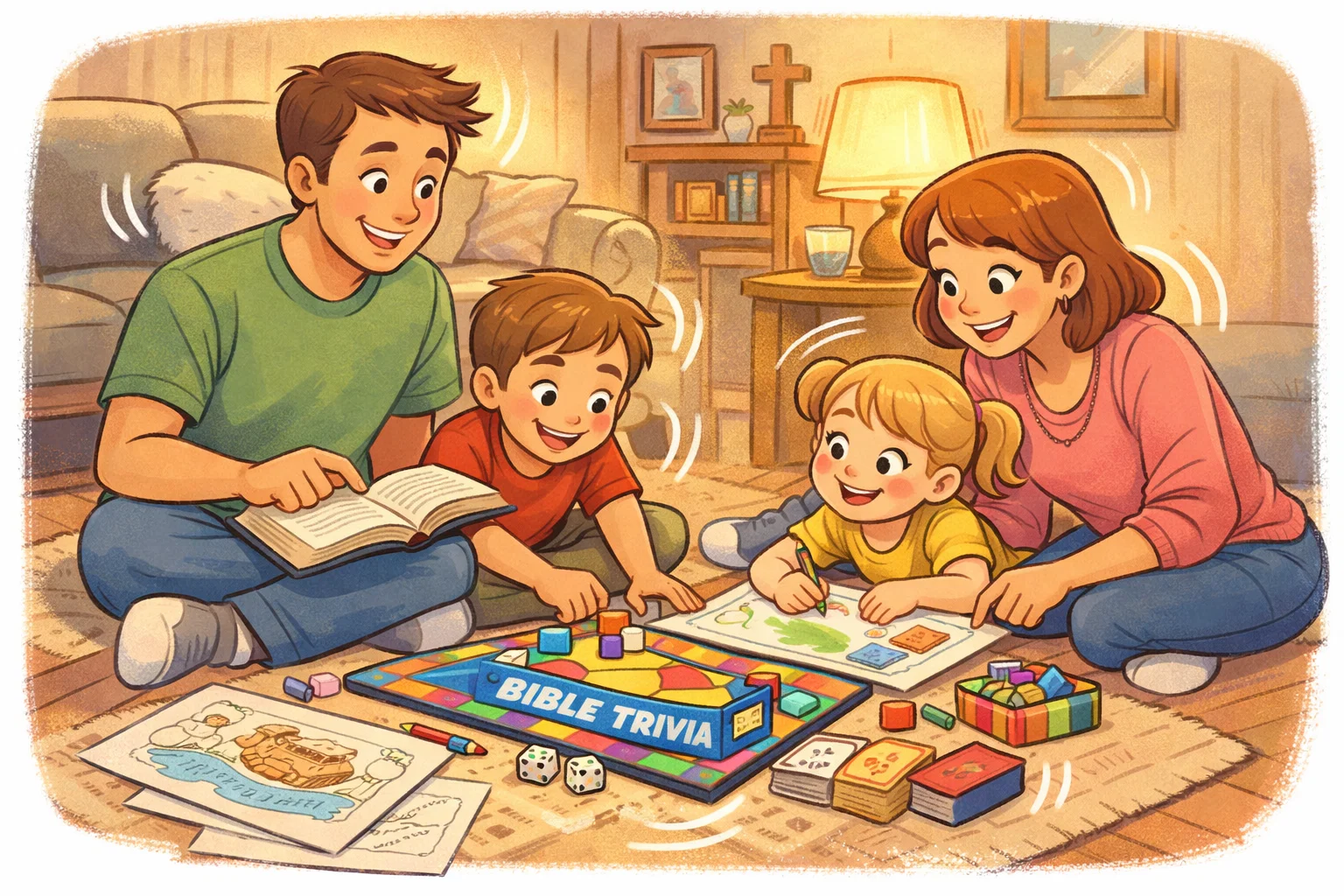
Low-prep activities help parents and teachers make the most of lesson time with minimal setup. The most efficient resource types include printable coloring pages, Scripture bookmarks, simple cut-and-paste crafts, matching games, memory verse cards, and word searches.
Using a printable Bible activity pack provides a structured, ready-to-use solution for emergency substitutions or sudden transitions in a kids’ church setting.
Best Settings for Bible Activities
Faith-based learning can happen in many settings, and each one calls for a slightly different approach. Structured Sunday school lessons and children’s ministry classes benefit from collaborative group games, while homeschool and family Bible time allow for deeper, more personalized discussions and longer-term craft projects.
High-energy environments such as Vacation Bible School require active, large-group games, while preschool groups and elementary classrooms need targeted, sensory-rich experiences tailored to specific developmental stages.
The Best Way to Choose a Bible Activity
Choosing an effective Bible activity requires a simple review of the children’s ages, learning goals, setting, and developmental needs. Leaders should choose each Bible activity based on the children’s ages, the main Bible story, the weekly lesson theme, the available time, and the supplies on hand.
Instructors should also consider the group’s energy level and balance quiet printable activities with movement-based games so the format supports the lesson goal.
Free Bible Activities for Kids
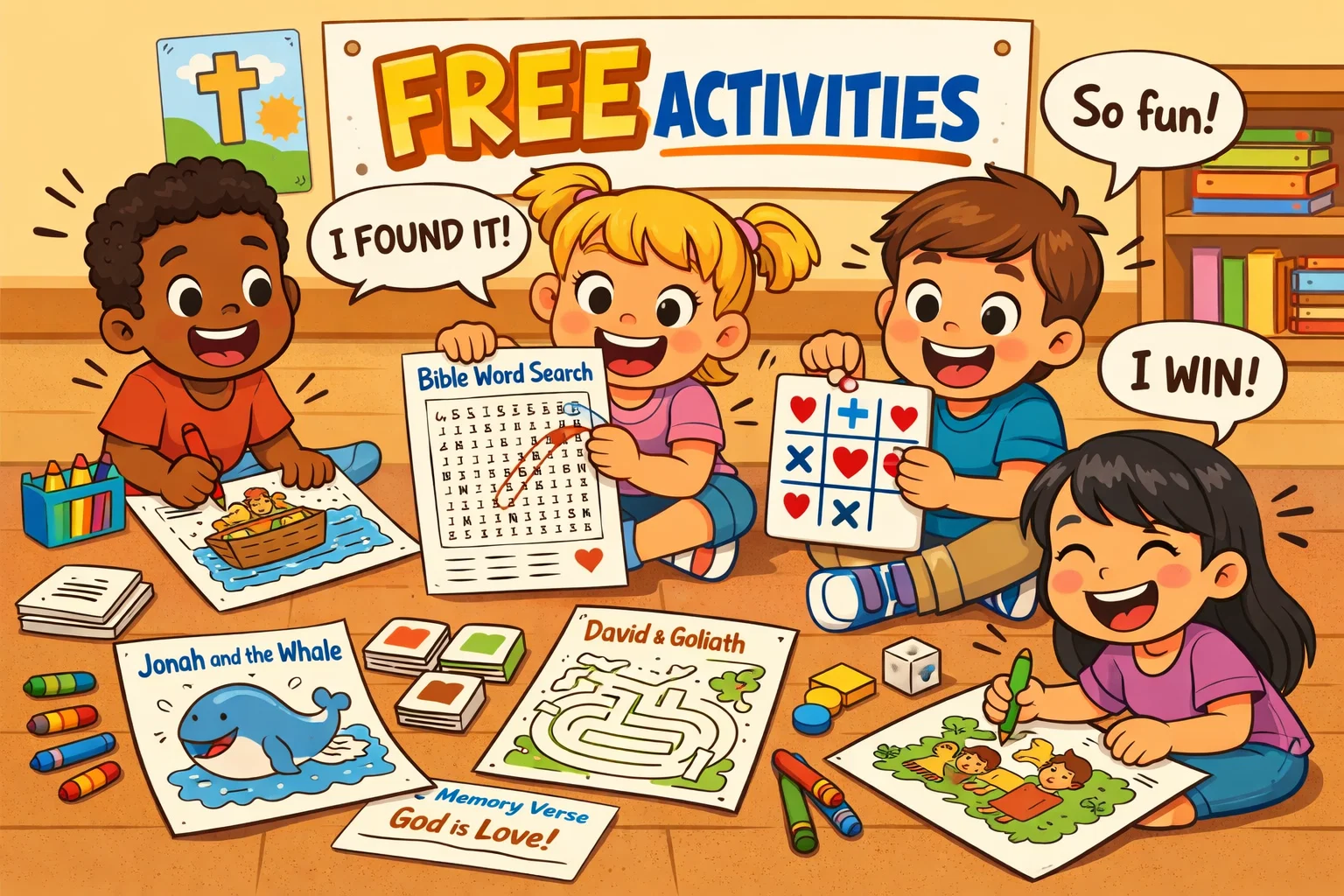
This curated collection gathers free and easy Bible activity ideas for kids in multiple formats to support different learning styles. The categories below include options for tactile object lessons, high-energy group games, quiet individual reflection, and collaborative tasks.
Hands-On Bible Activities for Kids
Tactile learning experiences engage children’s senses and help make abstract theological ideas more concrete. Hands-on Bible activities can include movement, block building, drawing scenes, cutting, object sorting, role-play, and simple science experiments tied directly to specific Bible stories.
Multisensory and movement-based activities can support engagement and help children understand complex concepts such as faith, grace, and service.
Easy Bible Activities for Kids at Home
Family-centered faith formation works best through simple daily routines rather than complex, time-consuming curricula. Parents can introduce short Bible activities during breakfast, family devotion time, bedtime Bible reading, or weekend projects to encourage screen-free, faith-based connection.
Curated, intentional home activities encourage kids to build critical thinking habits while offering a screen-free alternative to fast-paced digital content.
Bible Crafts for Kids
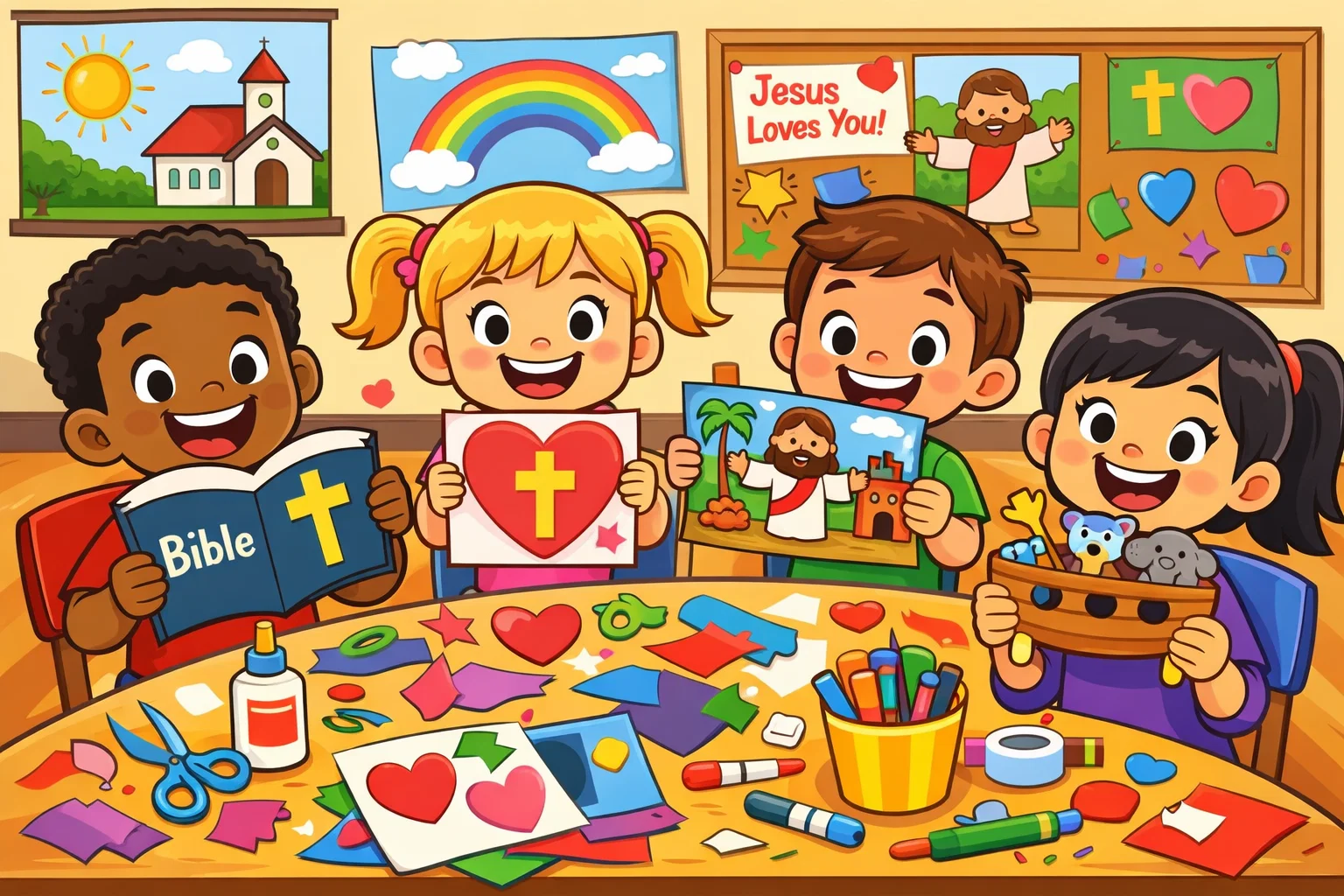
Creative crafts create a natural bridge between Bible stories and artistic expression using affordable, everyday materials. Each craft project reinforces a specific Bible theme, biblical character, or moral lesson so the creative activity also supports learning.
Story Crafts
Targeted crafts help children remember key details from Bible stories across the Old and New Testaments. Children can construct a paper plate ark for Noah, design a multicolored coat for Joseph using fabric scraps, build cardboard wall segments for Nehemiah, or assemble a spinning creation wheel.
These hands-on projects help kids explore biblical settings while developing spatial awareness and fine motor skills.
Holiday Crafts
Seasonal celebrations give teachers and parents natural opportunities to explore key theological themes through art.
- Christmas: Miniature wooden stick stable scenes, paper angel tree toppers, and printable nativity sets focus on the birth of Jesus.
- Easter: Empty tomb paper plate displays, countdown calendars, and mosaic tissue-paper crosses illustrate the resurrection.
- Other Holidays: Valentine’s Day heart crafts can celebrate God’s Word about love, while Thanksgiving crafts can emphasize gratitude and service.
No-Prep and Low-Prep Bible Crafts
When instructional preparation time is limited, low-prep crafts maintain high engagement with minimal supply demands. Teachers can use paper plates, folded paper scenes, printable cutouts, verse cards, wooden craft sticks, paper bags, cotton balls, balloons, and crayons to create interactive projects.
These accessible resources allow a Bible teacher to start an impromptu craft session in just a few minutes, keeping the focus on Scripture rather than complicated assembly instructions.
Bible Word Activities for Kids
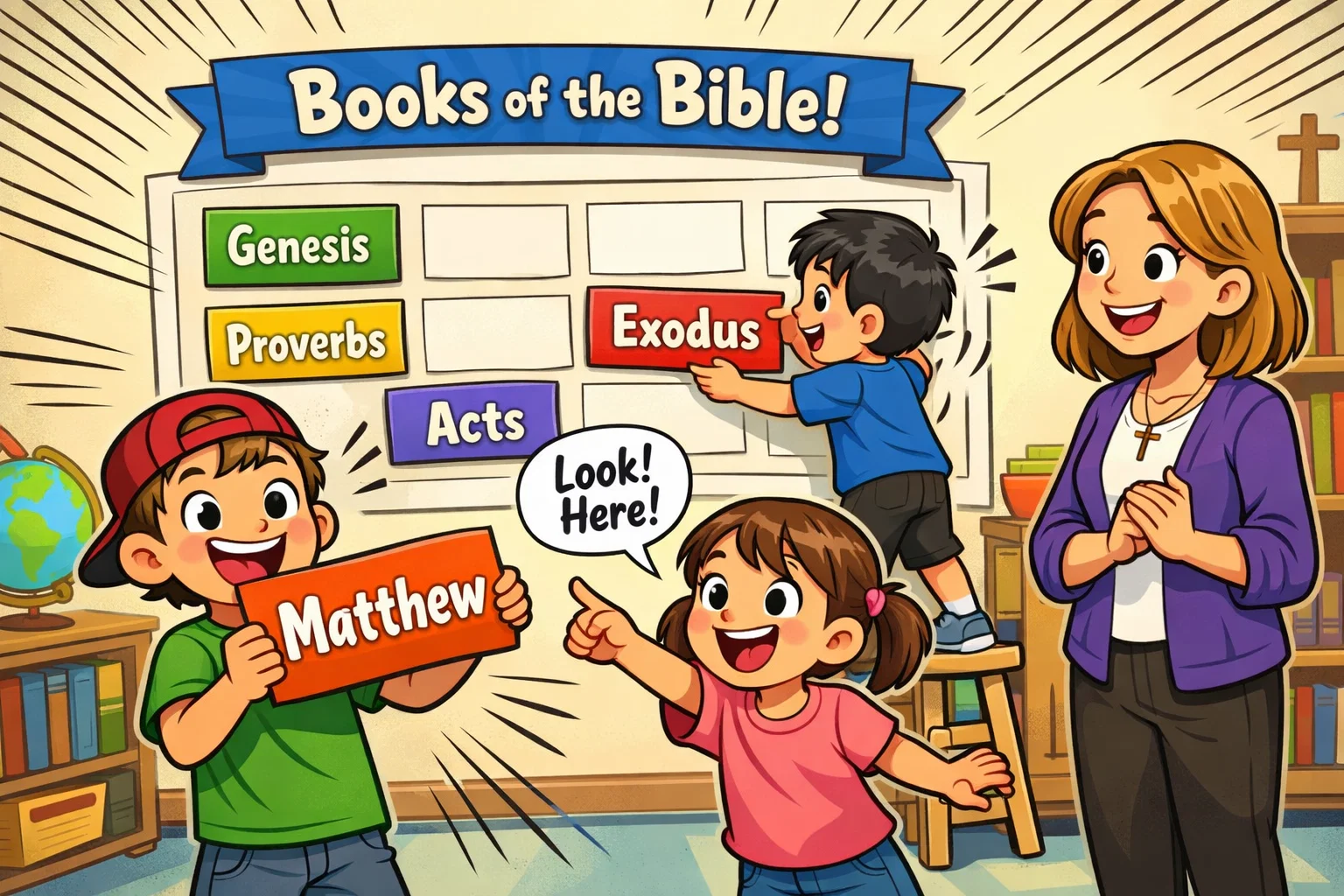
Language-based activities strengthen literacy skills while introducing children to biblical vocabulary, Scripture phrases, names, and key lesson terms.
Bible Vocabulary Activities
Introducing theological vocabulary helps children learn important concepts such as faith, grace, mercy, prayer, wisdom, courage, forgiveness, obedience, kindness, worship, and service. Instructors can use flashcards, definition-matching games, and contextual storytelling to explain these terms accurately.
Clear, concrete definitions help young learners see that biblical language connects to everyday life.
Scripture Fill-In Activities
Printable worksheets with fill-in-the-blank Scripture passages reinforce memory and reading comprehension. Instructors should adjust the length of the selected verse to match the developmental capabilities of the target group, using short Bible verses for early writers and complete paragraphs for older students.
This structured format encourages kids to pay close attention to individual words in the text, promoting deeper engagement with the Word of God.
Bible Alphabet Activities
Early childhood lessons work well when basic literacy practice is paired with simple spiritual themes.
- A-to-Z Bible Words: Children pair letters with terms like A for Altar, B for Bible, and C for Covenant.
- Bible Character Alphabet: Tracing sheets feature prominent figures such as Abraham, David, Esther, and Moses.
- Virtue Alphabet: Writing exercises focus on developmental traits like kindness, patience, and respect.
Bible Memory Verse Activities for Kids
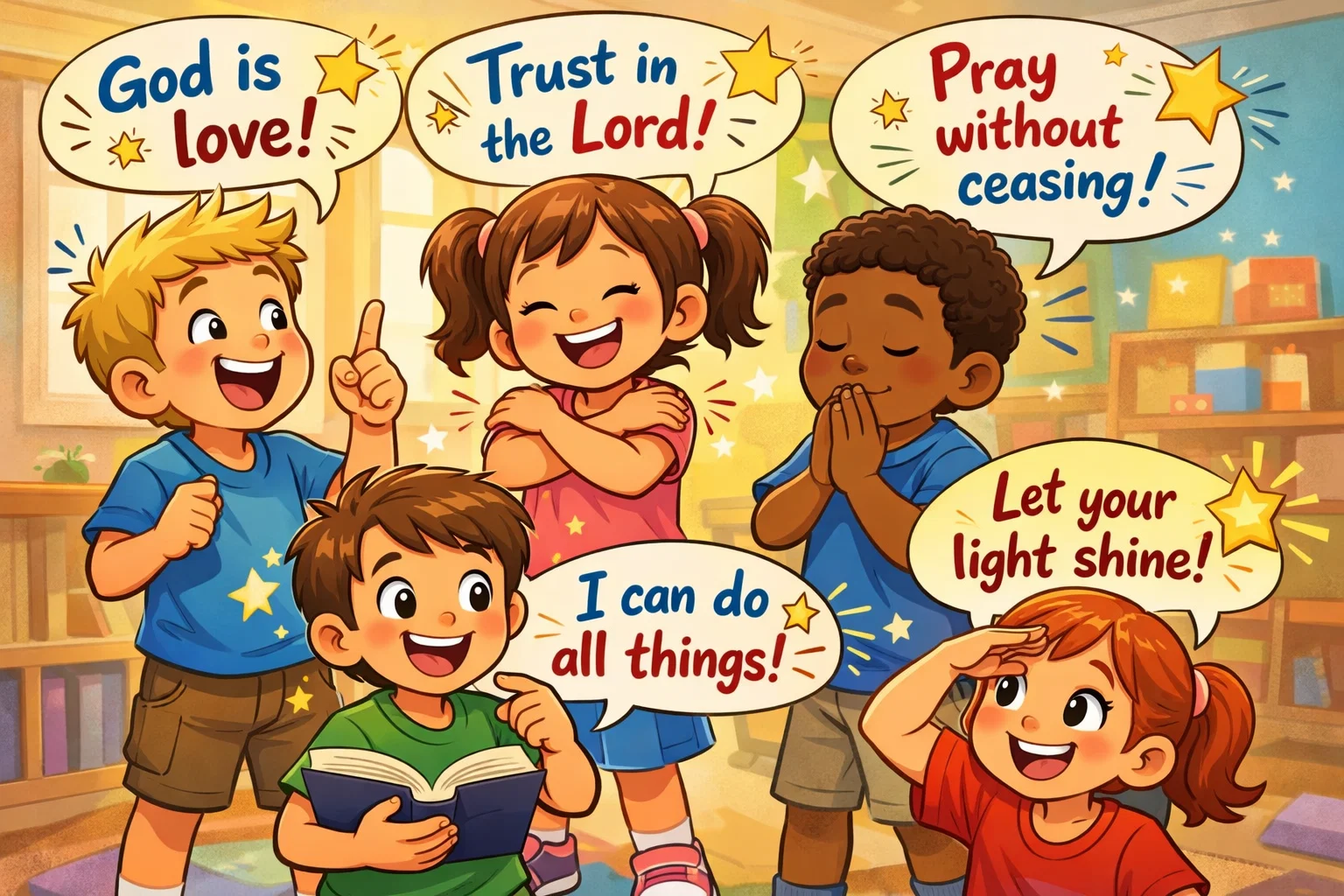
Active, repeatable Scripture games help children memorize Bible verses without the fatigue often associated with traditional rote drills.
Interactive Bible Verse Memory Games
Interactive memory challenges use vocal variation, rhythm, and physical movement to support Scripture retention. Methods such as verse scrambles, missing word races, clap-and-repeat rhythms, echo reading, partner practice, and verse relay races turn memory tasks into collaborative challenges.
Research suggests that combining rhythm, movement, and repetition can support memory and engagement, especially when activities are age-appropriate and repeated consistently.
Ten Commandments Hot Potato
The Ten Commandments Hot Potato game turns sequential memorization into a structured, group-based activity. Players sit in a circle and pass a soft object, such as a beanbag or small ball, while music plays or the group chants.
When the movement cue stops, the child holding the object must recite the next commandment or match a simplified commandment card to its correct number. The goal is to maintain a supportive, low-pressure environment.
Bible Verse Relay Game
The Bible Verse Relay Game combines physical movement with text recognition by requiring teams to assemble a fragmented Scripture passage. Teams race to a designated station to find index cards with individual words from a specific verse, then return to arrange them in the correct order.
Instructors should use short verses in large print for younger children and longer, more complex passages for older students.
Sunday School Games and Bible Activities for Kids
Game-based activities can make children’s church, Sunday school, and youth ministry sessions more dynamic, social, and engaging.
Free Bible Game Ideas for Children’s Ministry
| Game Category | Primary Goal | Ideal Group Size |
| Review Games | Assess comprehension of the Bible lesson | 5 to 20 children |
| Movement Games | Release physical energy while reinforcing themes | 10 to 40 children |
| Quiet Games | Transition students into prayer or reflection | 2 to 15 children |
| Team Challenges | Foster collaborative problem-solving and communication | 6 to 30 children |
Using a variety of game types helps a Sunday school teacher manage transitions smoothly based on the group’s energy level. Review games, movement games, quiet games, team challenges, object lessons, and story recap games provide structured frameworks that keep kids focused on the central lesson theme.
Classic Sunday School Group Games
Familiar playground and classic group games can be adapted with faith-based prompts to reduce the time spent explaining rules. Instructors can play musical chairs with worship songs, use tic-tac-toe for lesson review questions, organize Bible bingo, act out character charades, create Scripture-based scavenger hunts, and lead freeze dance activities with songs about joy or peace.
Adapting familiar play formats reduces confusion and immediately engages children in targeted lesson content.
High-Energy Sunday School Games
Large ministry groups require structured outlets for physical energy that reinforce positive teamwork and character development. High-energy activities include indoor balloon bop, plastic-cup tower challenges, team sorting races, and modified Red Light, Green Light games focused on obedience.
These games balance quieter instruction and help children practice self-control and cooperation in a supervised setting.
Outdoor Bible Activities and VBS Games
Outdoor spaces give children more room to move and help leaders connect nature, teamwork, courage, trust, and service with biblical themes.
Vacation Bible School Outdoor Games
Vacation Bible School programs often rely on large-group outdoor games to build community and keep children engaged across different age groups. Effective outdoor structures include themed obstacle courses simulating biblical journeys, water balloon tosses, large-scale scavenger hunts, relay races, and structured station rotations.
These activities encourage kids to practice collaborative communication while building positive social connections with their peers.
Bible Scavenger Hunt
An indoor or outdoor scavenger hunt uses directional clues to connect physical exploration with scriptural discovery. Children receive a list of clues tied to specific Bible stories, verses, colors, objects, or biblical symbols hidden within a clearly defined area.
For example, finding a paper olive leaf can prompt a discussion about Noah’s ark, while locating five smooth stones can reinforce the story of David and Goliath.
Group Water Events for Kids
Summer ministry programs can use collaborative water games to illustrate biblical ideas such as service, refreshment, and spiritual renewal. Using simple tools such as plastic cups, sponges, and buckets, teams work together to transfer water between stations in a race against the clock.
Leaders can easily connect these playful activities to themes like “living water,” acts of kindness, and the joy of working together as a community.
Bible Activities for Preschoolers and Toddlers
Early childhood faith development works best with simple, short, sensory-rich, and repetitive activities that focus on foundational biblical truths.
Toddler Bible Story Activities
Toddler-specific instruction should focus on simple, highly visual stories such as creation, Noah’s ark, baby Moses, David and Goliath, and Jesus welcoming children. Lessons should avoid abstract concepts and focus instead on physical movement, simple songs, and bright picture books.
Using simple language helps toddlers feel safe and supported as they begin to explore basic spiritual concepts.
Preschool Bible Crafts and Coloring
Preschool-targeted art activities prioritize fine motor development and tactile exploration over rigid aesthetic outcomes.
- Chunky Crayons & Markers: Promote proper grip development during open-ended coloring on themed sheets.
- Stickers & Tape: Build finger dexterity through placement on simple biblical landscapes.
- Texture Media: Tissue paper, finger paint, cotton balls, and simple cut-and-paste templates engage multiple senses.
Learning Games to Follow Bible Stories for Toddlers
Physical movement prompts help toddlers internalize story elements by acting them out with their bodies. Children can stomp like animals entering the ark, march like the Israelites around Jericho, pretend to build together, or practice gentle rocking motions to mimic Jesus calming the storm.
These simple physical actions help young children connect spoken stories with their own real-world movements.
Bible Lessons for Kids by Age Group
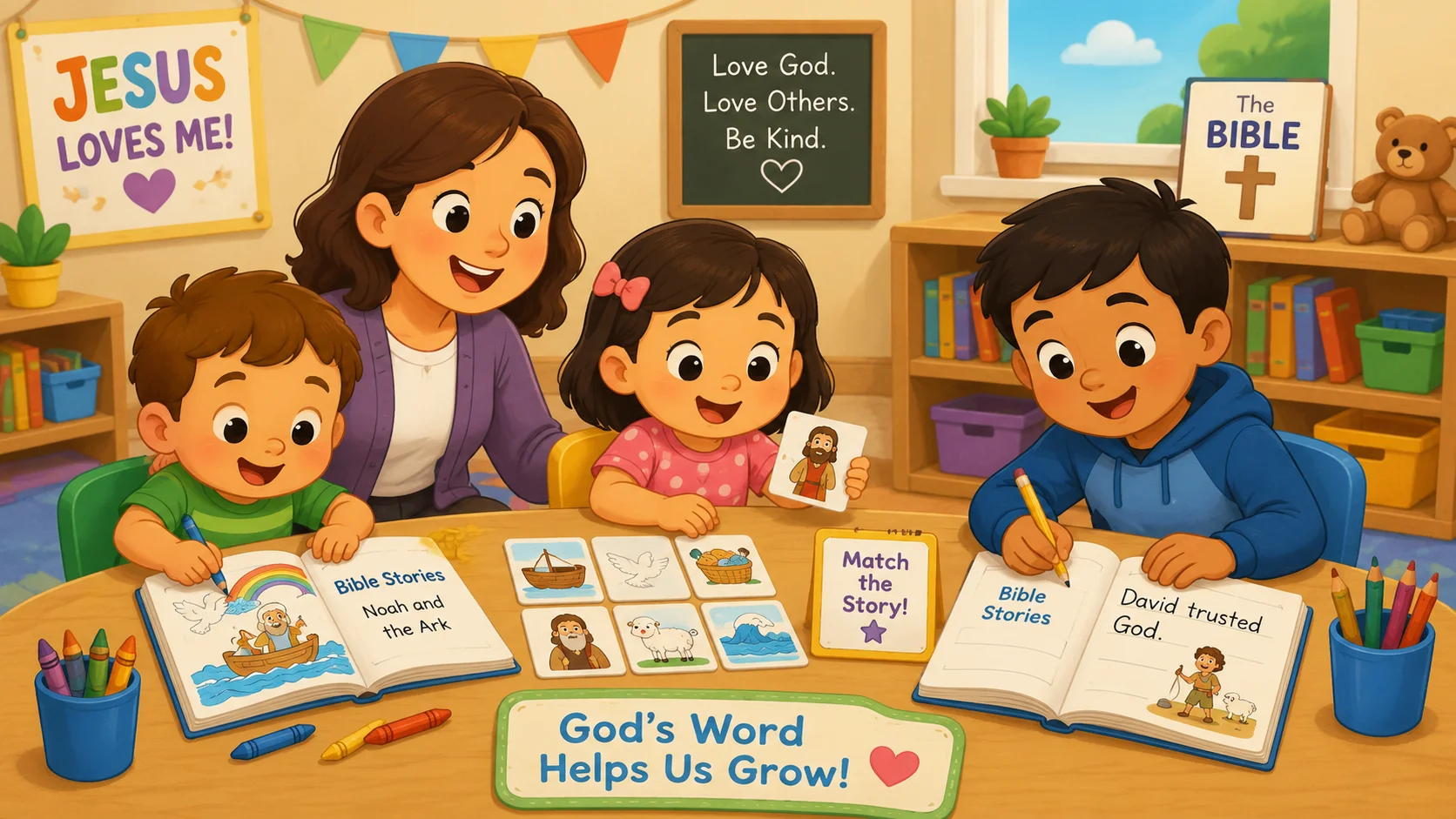
To optimize learning, educational activities must adapt to match the changing cognitive capacities and developmental milestones of children as they grow.
Nursery and Toddler Bible Activities
Nursery care and toddler environments require gentle sensory exposure and predictable, repetitive routines. Activities focus on rhythmic music, brief prayers, colorful sensory bins, simple picture cards, and short phrases like “God made you.”
This approach helps infants and toddlers associate faith-based environments with safety, emotional comfort, and consistent care.
Preschool Bible Activities
Preschoolers thrive with a mix of structured storytelling, basic crafts, active movement games, matching cards, short memory verses, and simple role-play scenarios. Activity segments should change every 10 to 15 minutes to better match preschoolers’ natural attention spans.
This structured variety keeps young learners engaged without overwhelming their developing cognitive abilities.
Elementary Bible Activities
Elementary-age students are ready for deeper critical thinking, text verification, and collaborative team challenges. Lessons for this age group should incorporate structured worksheets, team trivia, Bible sword drills, detailed object lessons, personal journaling, and open-ended discussion prompts.
These activities encourage older kids to examine Scripture directly, build independent study habits, and apply biblical wisdom to their daily choices.
Bible Lessons for Seasons and Holidays
Seasonal events give teachers predictable, high-interest opportunities to connect Bible stories with annual family celebrations.
Christmas Bible Activities for Kids
Christmas programming focuses on the birth of Jesus Christ through historical exploration and creative expression. Activities include assembling detailed nativity scenes, studying Bethlehem maps, making angel crafts, role-playing shepherds, and reviewing Advent Scripture cards.
These projects provide a meaningful alternative to purely consumer-driven holiday trends, helping children focus on the spiritual significance of the season.
Easter Bible Activities for Kids
Easter activities help children explore the themes of sacrifice, resurrection, and hope through clear, age-appropriate lessons. Instructors can use resurrection egg activities with symbolic items, build empty tomb crafts, design cross mosaics, and lead age-appropriate lessons on Jesus’ victory over death.
These hands-on resources help children understand complex theological concepts in a concrete and approachable way.
Mother’s Day, Father’s Day, and Valentine’s Day Activities
Family-centered holidays offer a meaningful opportunity to explore biblical teaching about honor, family relationships, and community care. Activities include crafting encouragement cards, playing gratitude games, and planning small service projects for family members or neighbors.
These exercises help children turn abstract concepts like love and honor into everyday actions of kindness and respect.
Bible Lessons for Topics Kids Face
Targeted lessons help children connect biblical principles with everyday social and emotional challenges.
Prayer Activities for Kids
Prayer activities introduce children to simple, conversational communication with God. Teachers can use simple, hands-on tools such as:
- Prayer Jars: Store specific requests on colored paper strips to track answered prayers over time.
- Prayer Hands Craft: Use each finger to represent a different prayer focus, such as family, teachers, leaders, people who are sick, and yourself.
- Family Prayer Walks: Walk through neighborhoods while praying quietly for the families in each home.
Forgiveness and Kindness Activities
Social-emotional development benefits from interactive role-play scenarios focused on apologizing, practicing patience, and offering forgiveness. Activities like creating “kindness coins” or tracking a classroom “kindness chain” provide visible reminders of positive behavior.
These exercises give children a safe space to practice resolving conflicts and displaying empathy before facing real-world disagreements.
Courage, Peer Pressure, and Grief Activities
Age-sensitive lessons can address difficult emotional topics by highlighting biblical examples of resilience and faith under pressure. Studying the accounts of David facing Goliath, Daniel in the lions’ den, Esther’s bravery, or Jesus calming the storm helps children explore themes of courage and trust.
These timeless stories assure kids that they can find comfort and strength in God’s presence during anxious or challenging times.
Bible Activities Based on Bible Passages
Organizing lessons around specific Scripture passages helps children see the larger timeline and continuity of the Bible.
Creation, Adam and Eve, and Noah
Lessons from early Genesis focus on God’s foundational role as Creator and the importance of His promises. Activities include making day-by-day creation wheels, animal matching games, garden dioramas, and rainbow crafts illustrating God’s covenant with Noah.
These visual, hands-on projects help young learners connect early biblical history with the natural world around them.
Abraham, Sarah, Isaac, Joseph, and Moses
The narratives of the Patriarchs and the Exodus highlight themes of patience, guidance, and trusting God through changing circumstances. Children can count star cutouts to remember God’s promise to Abraham, map out Joseph’s journey to Egypt, create burning bush crafts, or play games that simulate crossing the Red Sea.
These interactive experiences show kids how faith and perseverance appear in the lives of biblical figures.
David, Goliath, Daniel, Jonah, and Esther
Stories of leaders, prophets, and heroes show how faith can guide people through danger, pressure, and uncertainty.
- David & Goliath: Collect smooth stones to discuss inner strength, courage, and reliance on God.
- Daniel: Craft paper bag lion masks to explore integrity and prayer under pressure.
- Jonah: Create articulated big-fish models to look at obedience and second chances.
- Esther: Design royal crowns to discuss standing up for others and trusting God’s timing.
Bible Activities About Jesus
New Testament instruction focuses directly on the life, miracles, parables, and core teachings of Jesus Christ.
Birth of Jesus Activities
Lessons on Nativity help children explore the details of Jesus’ arrival and the fulfillment of prophecy. Activities include setting up wooden stable scenes, locating historical cities on biblical maps, crafting paper tube shepherds, and reading Christmas Scripture cards.
These focused studies help children understand the biblical account of Christ’s birth.
Miracles of Jesus Activities
Studying Jesus’ miracles helps children see His compassion and His power over creation. Hands-on projects can illustrate turning water into wine, feeding the five thousand with a basket of felt loaves and fish, or Peter walking on the water.
For instance, a storm-in-a-bottle experiment can help kids visualize the story of Jesus calming the wind and waves while reinforcing the idea of peace during anxious moments.
Parables of Jesus Activities
The parables of Jesus use everyday examples to explain deep spiritual truths. Teachers can use interactive object lessons to bring stories like the Prodigal Son, the Good Samaritan, and the Lost Sheep to life.
Useful activity ideas include:
- The Sower: Compare different soil types to discuss attentiveness, growth, and the condition of the heart.
- The Lost Sheep: Use a search-and-find game to teach individual worth and God’s care.
- The Two Builders: Test toy houses on rock and sand to discuss wise choices and strong foundations.
For example, testing toy houses on bases of solid rock and loose sand helps children visually grasp the practical value of building their lives on wise choices.
Hands-On Bible Activities for Growing Faith
Personalized learning activities help children apply biblical wisdom to their everyday routines and habits.
Celebrating How God Created Each Child
Identity-focused activities help children build healthy self-esteem by reminding them of God’s unique design. Using self-portrait crafts, “God made me special” printable worksheets, and personal gratitude journals, kids discover their intrinsic worth.
This intentional focus can provide a healthy counterbalance to the comparison pressure and unrealistic standards children may encounter in digital media.
Teaching About the Spiritual Family of God
Lessons on the church community emphasize the value of mutual support, collaborative service, and caring for one another. Children can build a church family tree display, write encouragement cards for homebound members, or take part in group prayer times.
These shared experiences help children see themselves as active, valued participants within a larger, supportive spiritual family.
Living With Wisdom, Patience, Forgiveness, and Integrity
Character-building exercises help children practice applying core biblical values to everyday social situations. Through guided role-play, decision-sorting games, and weekly kindness challenges, kids learn how to handle real-life dilemmas with honesty and respect.
These practical projects turn abstract virtues into clear, actionable habits that guide their daily interactions with others.
Bible Object Lessons for Kids
Object lessons use familiar everyday items to explain abstract spiritual concepts, making them especially memorable for visual and tactile learners.
Faith Object Lessons
Simple household items can illustrate faith, trust, and prayer in everyday life. Instructors can use seeds to talk about growth, flashlights to explain guidance, rocks to represent stability, and clear water to show renewal.
For example, showing how a bridge supports weight demonstrates the concept of trust in a clear, physical way that children can easily understand.
Fruit of the Spirit Object Lessons
The Fruit of the Spirit represents visible, positive changes in a child’s character and behavior. Teachers can use a basket of real fruit to explain how good character grows naturally when we stay connected to God.
Additional activity ideas include:
- Fruit Basket Analogy: Use different fruits to represent love, joy, peace, patience, kindness, goodness, faithfulness, gentleness, and self-control.
- Kindness Chain Tracker: Add a paper link each time a child practices kindness.
- Self-Control Timer Game: Practice waiting, listening, and pausing before reacting.
Supplementing the lesson with kindness chains, patience timers, and self-control games helps children understand how to practice love, joy, and peace in their daily lives.
Armor of God Object Lessons
The Armor of God gives kids a visual way to think about everyday peer pressure and moral challenges. Using printable armor templates, shield crafts, and truth-belt worksheets, children learn how values like truth, peace, and faith protect their hearts and minds.
This concrete analogy helps children build spiritual resilience and stand firm in their convictions.
How to Use Bible Activities for Kids in a Lesson Plan
An effective lesson plan balances energy levels and activity types to keep children engaged from start to finish.
15-Minute Bible Activity Plan
- Short Story (5 Minutes): Read a selected Bible story passage directly from an illustrated children’s Bible.
- Targeted Activity (5 Minutes): Complete a preprinted Bible worksheet or themed coloring page.
- Memory Verse (3 Minutes): Practice a short Scripture verse using a simple clap-and-repeat rhythm.
- Closing Prayer (2 Minutes): Lead a brief prayer focusing on the main lesson theme.
30-Minute Sunday School Plan
- Welcome & Greeting (5 Minutes): Welcome students and introduce the main topic with an interactive question.
- Bible Lesson (10 Minutes): Share the Bible story using flannelgraph boards, props, or costumes.
- Group Game (5 Minutes): Play a low-prep review game to check for comprehension.
- Thematic Craft (7 Minutes): Assemble a simple craft that reinforces the story’s main point.
- Prayer & Wrap-Up (3 Minutes): Distribute a take-home printable and close the session with prayer.
60-Minute Children’s Ministry Plan
- Opening Game (10 Minutes): Run a high-energy group game to welcome kids and build community.
- Worship & Singing (10 Minutes): Sing energetic, themed songs with clear physical motions.
- Core Bible Lesson (15 Minutes): Present the Bible lesson using an engaging object lesson.
- Small-Group Craft (15 Minutes): Complete a creative craft project and discuss application questions.
- Snack & Review (7 Minutes): Let children enjoy a light snack while answering interactive review questions.
- Closing Prayer (3 Minutes): Gather the group for a final prayer and say goodbye to parents.
FAQ
What are the best Bible activities for kids?
The best Bible activities for kids include Bible coloring pages, memory verse games, hands-on crafts, story review activities, printable worksheets, and simple object lessons. A strong mix of Bible crafts and activities helps kids learn through seeing, hearing, moving, creating, and discussing.
How can I teach children the Bible in a simple way?
To teach children the Bible in a simple way, focus on one clear Bible story, one main idea, and one practical takeaway. Short readings, visual aids, simple Bible questions, and age-appropriate activities can help children connect stories in the Bible with everyday choices, prayer, kindness, and faith.
What Bible lessons for children work best in Sunday school?
The most effective Bible lessons for children usually combine reading the Bible, a short explanation, a craft and activity, a group discussion, and a review game. Free Sunday school lessons can also work well when they include clear teaching notes, printable PDF worksheets, Bible games for children, and simple take-home resources for families.
How do Bible games help kids learn?
Bible games help kids learn by turning review, memorization, and discussion into active participation. Games for kids such as Bible trivia, relay races, matching cards, and books of the Bible games can help kids memorize key facts, understand Bible concepts, and stay engaged during Sunday school or kids’ church.

Take a short quiz to find out what your everyday choices say about your parenting style
When your child is curious about something new, what’s your instinct?
Take a short quiz to find out what your everyday choices say about your parenting style
“Can I download this app?” What happens next?
Take a short quiz to find out what your everyday choices say about your parenting style
When it comes to rules at home, which sounds most like you?
Take a short quiz to find out what your everyday choices say about your parenting style
If you could give your child one life skill today, what would you pick?
Take a short quiz to find out what your everyday choices say about your parenting style
Your child gets to choose what to watch. What would your ideal setup look like?
Take a short quiz to find out what your everyday choices say about your parenting style
Pick your parenting superpower ✨