35+ Educational Activities for Kids: Fun Learning Ideas for Home, School, and Outdoors

 Discover a Free Education Video App for Kids
Pastory uses AI to personalize educational video content based on your child’s interests and personality. Safe, engaging, and built for curious young minds. Sign up now to stay updated and enjoy early access with a free trial
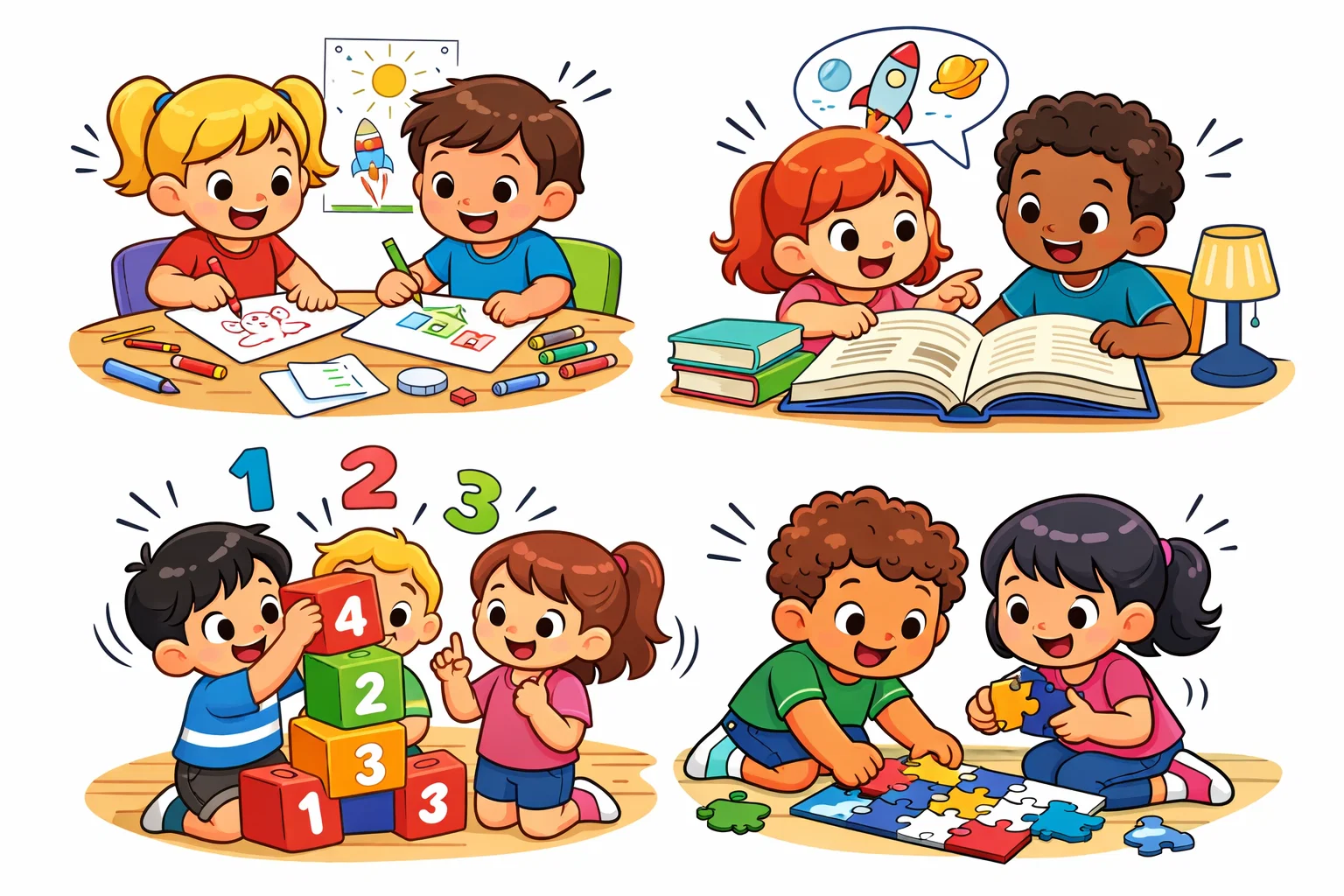
Providing high-quality educational experiences beyond the classroom can help children aged 3–10 and beyond develop important cognitive, academic, and social skills. Engaging children in hands-on learning activities allows parents, teachers, home educators, and after-school programme leaders to reinforce foundational concepts using simple, everyday household materials.
This comprehensive guide outlines 35+ engaging activities for kids that combine structured learning with interactive play, covering core subjects such as maths, reading, science, and the arts.
Key Takeaways
- The best educational activities combine play, movement, creativity, and real-life tasks.
- Kids often learn more effectively when activities feel like games, challenges, or projects.
- This list includes indoor and outdoor activities, messy and quiet options, and group games.
- Activities can be adapted to different ages, skill levels, seasons, and available materials.
- Many of these ideas support reading, phonics, maths, science, problem-solving, and confidence-building.
Activities by Age
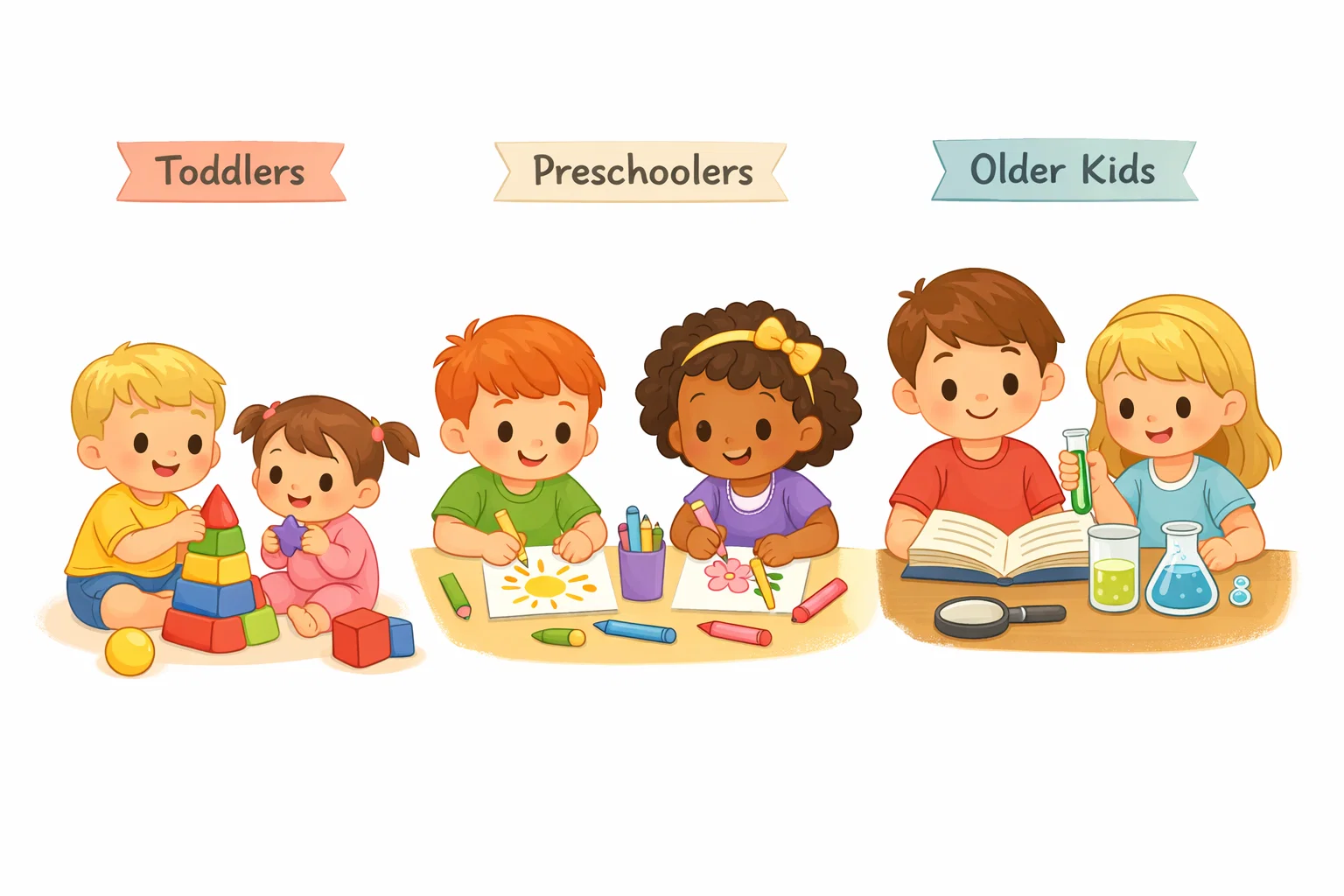
Selecting appropriate learning activities for kids means matching each task to the child’s developmental stage, attention span, and fine motor skills. Developmental guidance shows that children’s attention, learning, movement, and information-processing skills change as they grow.
The sections below group activities by age so parents and teachers can choose tasks that better match each child’s stage of development.
Educational Activities for Ages 3–5
Preschool development relies heavily on sensory engagement, short learning blocks, and playful tasks that build foundational motor control. As a practical rule of thumb, many preschool activities work best in short 10–15-minute blocks, especially when they include movement, sensory play, or hands-on materials.
Parents and teachers can introduce sorting tasks by colour, size, or sound, along with simple crafts, music, matching games, and pretend play to support language development and fine motor skills naturally.
Educational Activities for Ages 6–8
Children aged 6–8 can usually handle more structured games and activities as their reasoning, memory, and attention skills develop. During this stage, educational activities for kids often focus on early reading, phonics, counting games, nature walks, and simple household science experiments.
Introducing collaborative board games during these years helps children practise turn-taking while building memory, foundational maths skills, and strategic thinking.
Educational Activities for Ages 9–10+
Older children benefit from more complex, multi-step learning experiences that encourage independent problem-solving and critical thinking. Activities for children aged 9–10+ can include independent research projects, creating a 3D diorama, monitoring a mini ecosystem, coding-style logic puzzles, and, for older KS2 pupils, gentle SATs-style practice.
These more advanced challenges can help pupils develop research skills, logical thinking, and study habits that support the transition to secondary education.
Popular Educational Activities for Kids
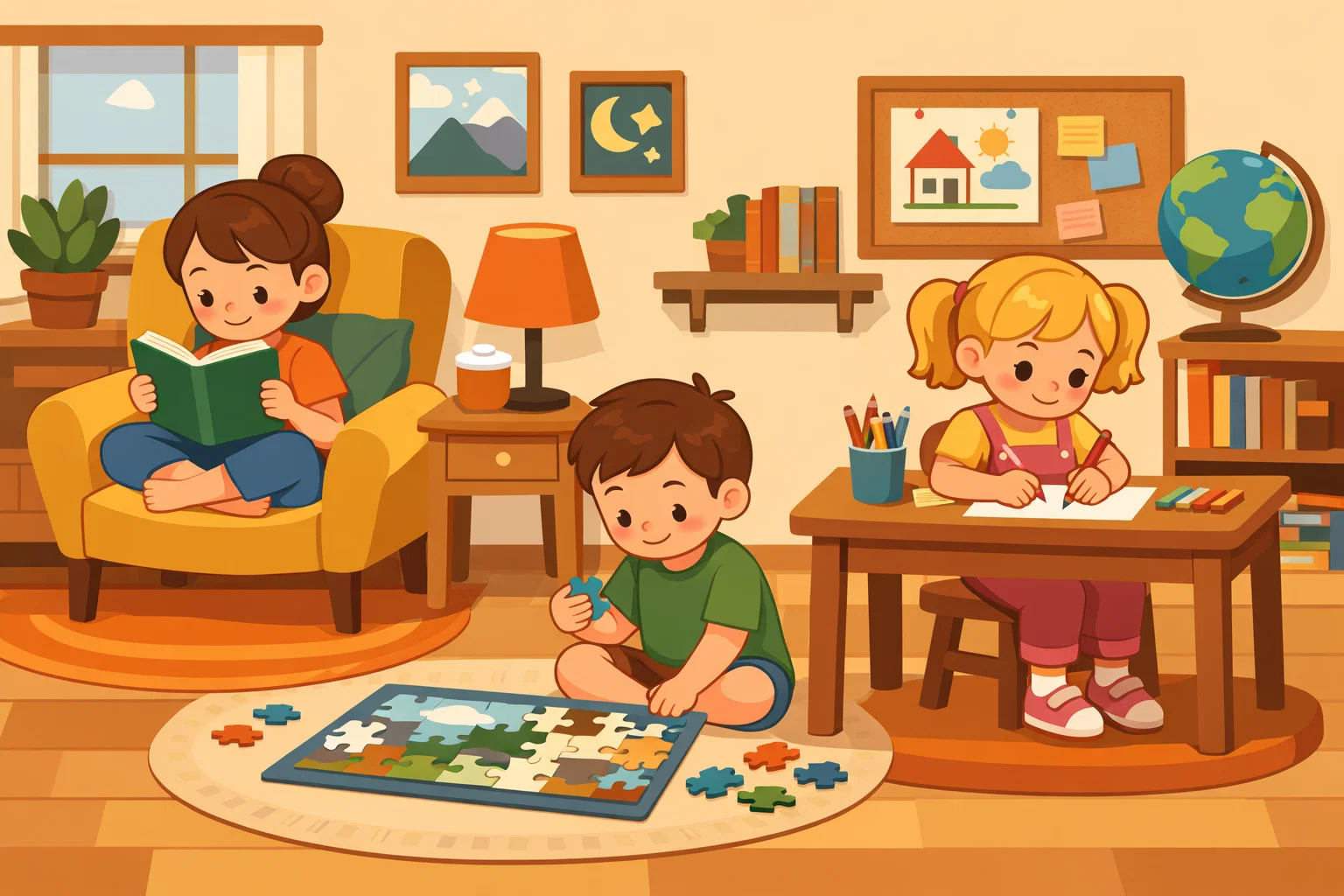
The following collection highlights popular educational activities that can support learning across several age groups.
Reading Challenge
A reading challenge establishes consistent literacy habits by tracking book completion through structured reward charts and visual reading milestones. Setting achievable reading goals and rotating genres can keep children engaged while expanding their background knowledge and vocabulary.
Parents can maximise retention by asking direct comprehension questions after each book, focusing on character motives and narrative turning points.
Nature Scavenger Hunt
A nature scavenger hunt turns outdoor movement into a simple biology lesson by asking kids to find specific natural objects. Children can search for different leaf shapes, rock textures, signs of local insects, and seasonal plant changes within a chosen outdoor area.
This hands-on activity builds observation skills, sparks natural curiosity, and introduces children to environmental science in a low-pressure setting.
DIY Science Experiments
Conducting simple science experiments using safe, common household ingredients allows children to observe chemical reactions and physical laws first-hand. Classic demonstrations, such as baking-soda-and-vinegar reactions, sink-or-float tests, and shadow mapping, teach children how to form and test hypotheses.
These interactive challenges teach the fundamental steps of the scientific method while providing memorable visual demonstrations of natural forces.
Cooking Together
Cooking with children serves as an integrated, practical application of maths, science, reading, and fine motor coordination. Measuring ingredients teaches fractions, weight, and volume, while following a recipe step by step reinforces sequencing and reading comprehension.
Observing ingredients change state when heated also introduces basic chemistry concepts while building real-world safety habits and patience.
Art and Craft Projects
Engaging in structured art and craft projects encourages self-expression while systematically refining hand strength and spatial planning skills. Activities such as drawing, painting, cutting, stamping, and building with recycled items require planning, patience, and fine motor control.
These creative exercises help children visualise ideas and build confidence as they see a project through from start to finish.
Reading, Phonics, and Writing Activities
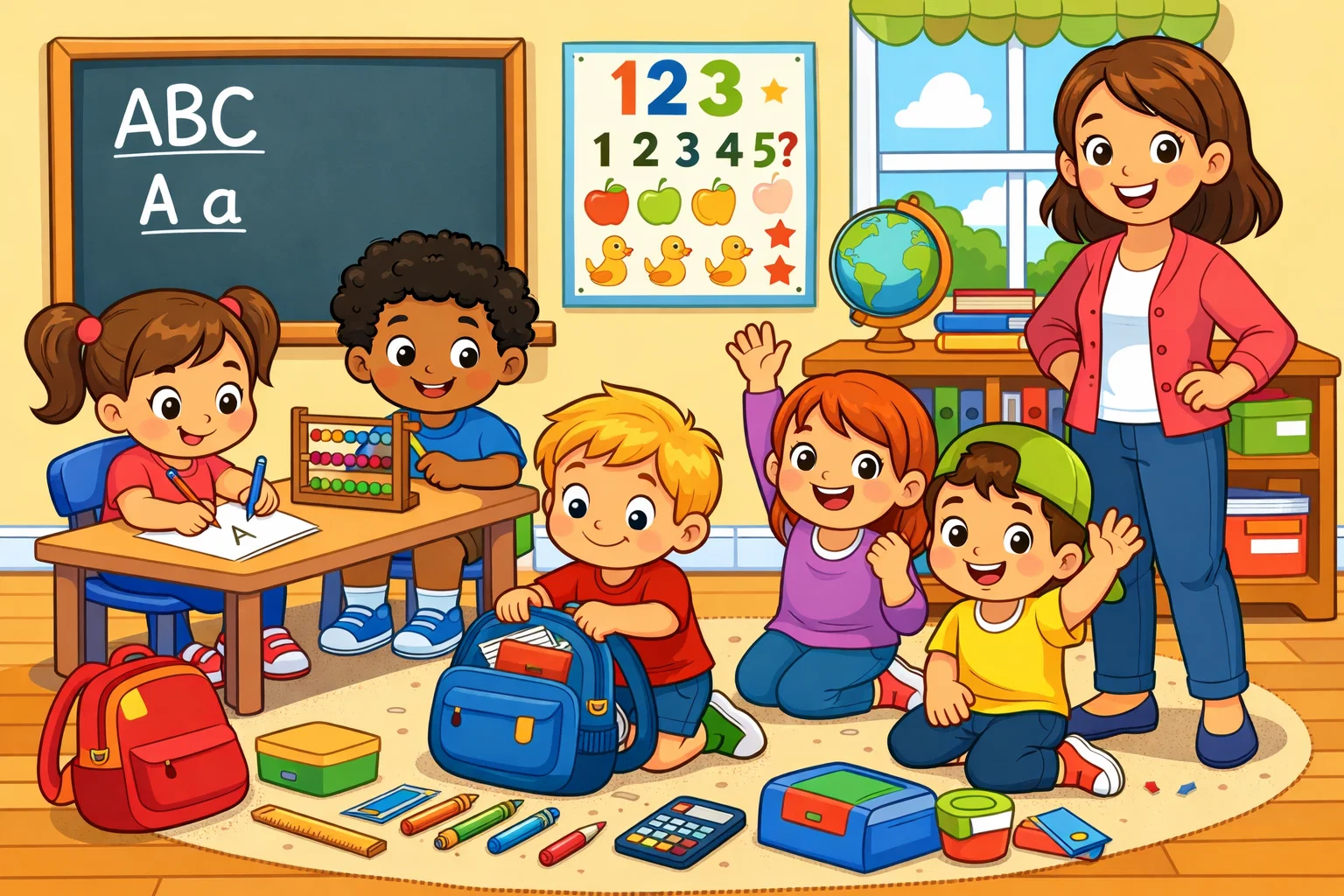
Strengthening language skills in early childhood requires a balanced combination of phonemic awareness, vocabulary expansion, and structured narrative creation.
Phonics Play
Phonics play involves interactive language games in which children match letter sounds, blend sounds, and spot familiar words in their environment. Educators frequently use syllable clapping games to help children break complex words down into rhythmic, identifiable components.
These playful phonics activities build decoding skills that support long-term reading fluency and independent spelling.
How Many Sounds?
The “How Many Sounds?” game requires children to listen closely to a spoken word and count the individual phonemes, or distinct units of sound, it contains. Children isolate beginning, middle, and ending sounds, then compare how many sounds they hear in similar or rhyming words.
This auditory exercise helps children understand word composition, which can support reading and spelling accuracy.
Story Cubes
Story cubes use dice with simple icons to give children random prompts for creating stories on the spot. Players must weave the images they roll into a logical sequence with characters, settings, conflicts, and resolutions.
This improvisational game stretches creative thinking skills, reinforces story structure, and expands descriptive vocabulary in a group setting.
Create Your Own Villain Description Sheet
Designing a villain description sheet encourages children to analyse character development by detailing an antagonist’s appearance, traits, and background. Children write specific descriptions detailing the character’s motivations, unique powers, core weaknesses, and psychological drivers.
This analytical writing exercise teaches children how motivations shape a plot, deepening their understanding of stories and books.
Rubber Stamp Storytelling
Rubber stamp storytelling allows younger children to stamp icons, animals, or items onto paper and write corresponding sentences beneath them. This visual strategy assists emerging writers with sequencing events, establishing settings, and maintaining narrative continuity across multiple pages.
Combining graphic stamps with early writing practice bridges the gap between abstract thoughts and written composition.
Hangman
A word-guessing game, such as Hangman or a child-friendly alternative, can be an effective tool for targeted spelling practice, vocabulary revision, and letter pattern recognition. Parents and teachers can easily adjust the difficulty level by using vocabulary from recent school topics or science units.
Playing this word game prompts children to think critically about letter frequencies, word lengths, and spelling rules.
Pictionary
Pictionary pairs drawing with quick word recall, encouraging children to turn vocabulary words into recognisable pictures. This fast-paced game enhances visual communication, strengthens memory associations, and encourages quick, lateral problem-solving.
Educators can use this game to reinforce vocabulary across history, science, and literature topics.
Storytelling Videos
Using short, narrated storytelling videos provides a focused multimedia prompt that teachers can pause to ask for predictions or alternative endings. Children listen to the spoken narrative and then write a new resolution or analyse the characters’ choices.
This approach uses limited screen time to build active listening habits, narrative comprehension, and critical analysis.
Fun Maths Activities
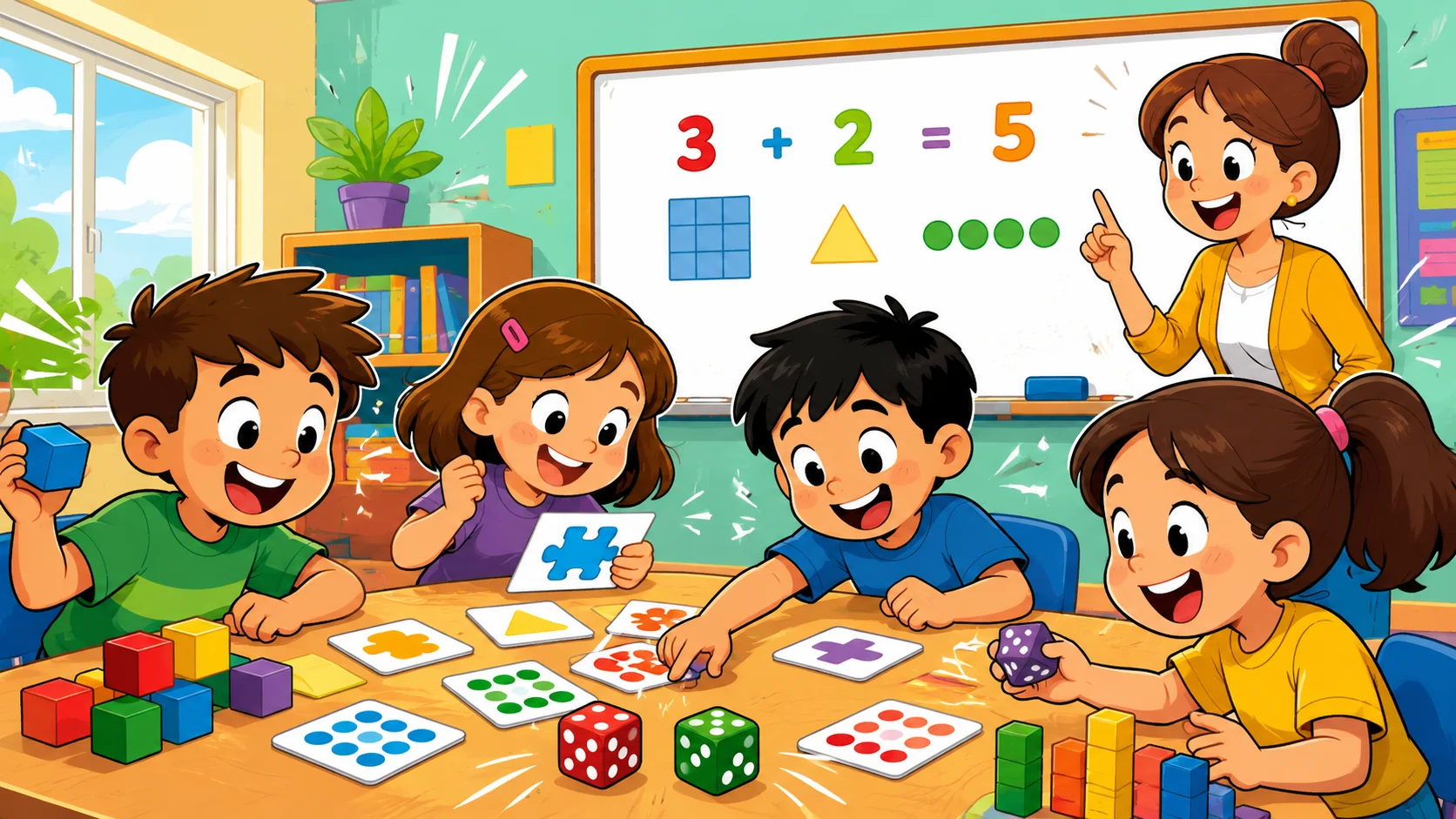
Turning abstract maths concepts into physical games can reduce maths anxiety and help children build a stronger understanding of numbers.
Play Maths Games
Card games, board games, and dice races turn numerical practice into an enjoyable group challenge rather than a stressful worksheet drill. Adding gentle competition can shift a child’s focus from calculation anxiety to strategic play, making repetitive maths practice more engaging.
These playful maths games can help children build numerical confidence and view problem-solving as an enjoyable challenge.
Times Tables
Mastering multiplication tables can be accelerated by pairing oral recitation with physical movement challenges, rhythmic songs, and timed flashcard drills. Connecting multiplication facts to real-world examples, such as calculating the total number of wheels on several cars, helps make multiplication more concrete.
These active practice sessions build rapid computational recall, which is essential for handling advanced mental maths.
Dice Game
Using several dice allows parents to teach addition, subtraction, multiplication, and basic probability through quick mental calculations. Children roll the dice and must quickly combine the numbers using a designated mathematical operation to earn points.
This low-preparation maths game sharpens mental maths agility, number pattern identification, and strategic risk assessment.
Board Race
Board Race is a high-energy classroom game where teams solve maths or spelling questions to move their game pieces across a giant tracking board. Children work through consecutive problems under mild time pressure, which helps build academic stamina and calculation speed.
This interactive setup transforms routine review sessions into an exciting, collaborative team challenge.
Fraction War
Fraction War adapts the traditional card game by requiring players to draw two cards to form a fraction and compare its value against their opponent’s fraction. Children use visual fraction sheets to compare halves, thirds, and quarters, building a strong mental map of numerical proportions.
This hands-on card game helps demystify fractions, making it easier for pupils to compare and order fraction values.
Missing Cards
The Missing Cards game challenges children to identify missing numbers within an incomplete card sequence, helping them recognise patterns and numerical order. Players analyse the surrounding cards to determine the mathematical rule governing the sequence, whether counting by twos, fives, or tens.
This deductive game sharpens logical thinking, improves concentration, and builds foundational algebraic reasoning.
Sudoku Challenge
Solving age-appropriate Sudoku puzzles helps children develop logic, focus, and systematic pattern recognition without relying on verbal prompts. Players use deductive reasoning to place numbers 1 to 9 into rows, columns, and boxes without repetition, testing their working memory.
Regularly working on these puzzles builds spatial discipline, attention to detail, and independent problem-solving skills.
Make Your Own Clock
Building a physical clock from a paper plate and movable cardboard hands provides a hands-on way to practise telling the time on an analogue clock. Children label the hours and minute intervals, then move the clock hands to match familiar times from their daily routines.
This craft project helps clarify time intervals, making abstract schedules tangible and easier to understand.
Science and STEM Activities
STEM activities allow children to investigate physical laws and environmental systems through direct, hands-on experimentation.
| STEM Activity | Core Materials Required | Primary Scientific Concepts Covered |
| Solar Oven Cooking | Cardboard box, aluminium foil, cling film | Thermal energy, reflection, greenhouse effect |
| DIY Rain Gauge | Plastic bottle, permanent marker, ruler | Data collection, meteorology, fluid measurement |
| Bottle Rocket Launch | Plastic bottle, water, bicycle pump | Newton’s Third Law, air pressure, aerodynamics |
| Homemade Sundial | Paper plate, straight stick, marker | Earth’s rotation, shadow patterns, solar tracking |
| Build Mini Ecosystem | Glass jar, gravel, soil, small moss plants | Water cycle, photosynthesis, closed ecosystems |
| DIY Pinhole Camera | Shoebox, tracing paper, aluminium foil | Straight-line travel of light, optics, inverted image projection |
DIY Science Experiments
Safe, kitchen-based science experiments let children observe chemical reactions and physical changes using accessible everyday items. Mixing baking soda and vinegar introduces acid-base reactions, while testing magnets against household items illustrates magnetic fields.
These simple experiments teach children how to document observations, track changing variables, and draw conclusions based on physical evidence.
Solar Oven Cooking
Building a functional solar oven from a cardboard box, aluminium foil, and cling film demonstrates how solar energy can be captured and used. Children angle the foil panels to reflect sunlight into the box, trapping heat to warm a small snack safely under adult supervision.
This outdoor STEM project offers a clear, practical look at radiant heat, insulation, and renewable energy.
DIY Rain Gauge
Constructing a homemade rain gauge out of a recycled plastic bottle creates a practical tool for monitoring local weather patterns. Children mark measurement increments along the side of the bottle, place it outside, and log daily rainfall data over several weeks.
This ongoing project teaches children how to collect data, read measurements accurately, and notice seasonal weather trends.
Bottle Rocket Launch
Launching a water-powered bottle rocket provides a memorable demonstration of air pressure, force, and Newton’s Third Law of Motion. Using a bicycle pump to force air into a partially filled plastic bottle increases the pressure until the seal releases and launches the rocket upwards.
This exciting experiment encourages children to test different water levels and design variables to see how they affect flight height.
Homemade Sundial
Placing a straight stick through the centre of a labelled paper plate creates a simple working sundial for tracking the Sun’s position. Children mark the position of the stick’s shadow at each hour of the day, creating a historical tool for telling time.
This outdoor activity provides a clear illustration of the Earth’s daily rotation and solar alignment.
Build Mini Ecosystem
Assembling a closed mini ecosystem inside a glass jar allows children to observe the water cycle and plant life cycles up close. Layers of pebbles, activated charcoal, soil, and small plants can create a closed environment where moisture cycles through the jar.
Keeping a weekly observation log helps children understand how plants, soil, and water interact to support life.
DIY Pinhole Camera
Constructing a simple pinhole camera out of a shoebox and wax paper reveals the basic optics of how light travels and forms an image. Light passing through a tiny pinhole projects an inverted image of the outside world onto the internal wax paper screen.
This classic build gives children a clear, hands-on look at light paths, image formation, and early photographic history.
Paper Aeroplane Competition
A paper aeroplane competition turns folding paper into a practical study of aerodynamics, flight design, and distance measurement. Children test different wing shapes and folds, measuring and comparing how far each aeroplane travels.
This playful challenge teaches kids to systematically isolate variables, analyse test flights, and refine their designs based on performance.
Outdoor Learning Activities
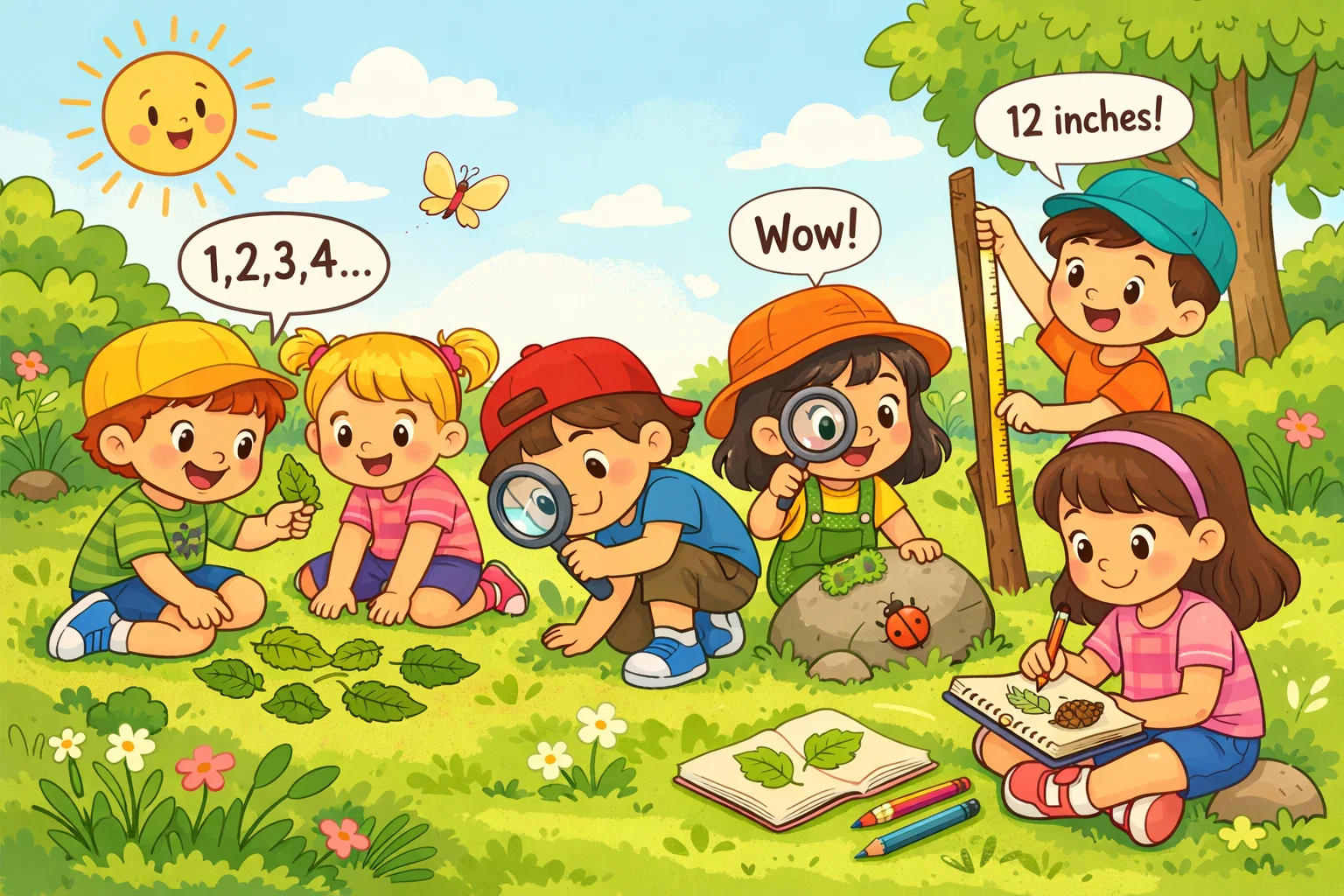
Taking educational activities outside the classroom encourages physical movement while opening up new ways to study geography, biology, and history.
Backyard Treasure Hunt
A backyard treasure hunt challenges children to solve riddles and decode maps to locate hidden items across an outdoor space. Players must interpret spatial clues and directional terms to navigate the area, keeping them physically active while exercising their problem-solving skills.
This strategic game builds problem-solving skills, directional awareness, and a positive attitude towards collaborative challenges.
Geocaching
Geocaching turns outdoor exploration into a real-world treasure hunt by using GPS coordinates on a smartphone to locate hidden containers. Children practise reading maps, following coordinates, and working as a team to find caches tucked away in public parks.
This popular outdoor activity blends digital technology with navigation, teaching route-planning and environmental awareness.
Nature Photography Scavenger Hunt
A nature photography scavenger hunt asks children to find and photograph specific colours, textures, and patterns found in local wildlife. With a basic camera, kids look for geometric patterns in leaves, unusual bark textures, and changing seasonal colours.
This digital scavenger hunt sharpens observation skills, builds appreciation for natural patterns, and introduces basic photography concepts.
Edible Plant Identification
Studying local plants can teach children observation and classification skills, but any edible plant identification should happen only under direct expert adult supervision. Using local field guides, children can look for leaf patterns and flower structures, but they should observe and record plants rather than taste or collect them for eating.
This activity should emphasise foraging safety: children should never taste or ingest any wild plant without professional verification and direct adult supervision.
Backyard Archaeology
Setting up a mock excavation site using a shallow sandbox allows children to practise the careful methods of backyard archaeology. Young researchers use soft brushes, grid maps, and labels to uncover, record, and categorise buried replica artefacts.
This historical simulation teaches children how to map coordinates, build simple timelines, and piece together clues about past cultures.
Gardening
Planting a small garden teaches children about plant life cycles, soil nutrition, and environmental responsibility over a full growing season. Tasks like planting seeds, measuring stem growth, and watering regularly give children first-hand experience with what plants need to thrive.
This ongoing project builds patience, teaches responsibility, and provides a clear look at where our food comes from.
Outdoor Fun
Simple backyard activities like obstacle courses, chalk maths grids, shadow tracing, and leaf rubbings bring core academic concepts into the fresh air. Children can solve multiplication problems on a chalk grid or trace shifting shadows to explore the Sun’s daily path.
These active, low-preparation ideas combine physical movement with academic practice, making learning feel natural and engaging.
Creative Art and Craft Activities
Artistic activities give children a structured outlet for creative expression while systematically building fine motor control and spatial planning.
Art and Craft Activities
Regular arts and crafts practice plays an important role in developing fine motor skills, bilateral coordination, and creative problem-solving. Working with scissors, glue, and different textures requires careful planning and steady hand control, with adult supervision when needed.
These artistic projects teach children to break big ideas down into smaller steps, building confidence as they create something tangible.
Painting Party
A themed painting party allows children to experiment with colour mixing, geometric shapes, and expressing emotions through visual art. Working alongside peers on large sheets of paper helps children learn to share space, collaborate on designs, and talk about their artistic choices.
This group activity encourages creative experimentation while helping children feel part of a supportive group.
Crafting With Origami
Folding traditional origami shapes provides a hands-on way to explore geometric principles, symmetry, and spatial relationships. Children must follow precise, step-by-step instructions, using patience and steady hand control to create accurate paper sculptures.
This focused art form sharpens concentration, refines fine motor skills, and makes abstract maths concepts concrete.
Celebration Bunting
Designing and cutting custom celebration bunting allows children to practise pattern sequencing, letter alignment, and decorative design. Children work together to decorate individual triangular flags with repeating patterns or letters that spell out a festive message.
Hanging the finished bunting in the classroom provides a proud visual reminder of what teamwork can accomplish.
Colouring In
Colouring complex patterns and storybook illustrations provides a calm, focused activity that builds hand strength and pencil control. Choosing balanced colour palettes and staying inside detailed lines helps children develop concentration and spatial awareness.
These quiet sessions offer an accessible, low-stress way to wind down while practising precision and fine motor coordination.
Colouring In: How Bear Lost His Tail
Pairing a colouring page with a traditional folk tale, such as “How Bear Lost His Tail,” blends reading comprehension with artistic expression. As children colour scenes from the story, parents can talk about the characters’ choices, the order of events, and the lesson of the tale.
This integrated approach deepens reading comprehension by connecting the storyline with a memorable creative activity.
Music, Dance, and Performance Activities
Performance-based activities use rhythm and movement to strengthen auditory working memory, physical coordination, and social confidence.
Music and Dance
Incorporating music and dance into learning routines helps children develop rhythm, auditory memory, physical coordination, and active listening skills. Matching body movements to a steady musical beat strengthens a child’s spatial awareness and motor planning.
Educational songs use rhythm and rhyme to make memorising facts, historical dates, and language rules natural and enjoyable.
Make Your Own Crazy Song
Writing a silly song encourages children to experiment with rhyming words, rhythm patterns, and descriptive vocabulary. Children collaborate to arrange silly phrases into structured verses and catchy choruses, boosting their linguistic confidence.
Performing their custom song for a small audience builds public speaking skills and encourages shared creative expression.
Compose a Family Song
Composing a custom family song allows children to turn shared memories, daily routines, and family traditions into rhyming lyrics. Families can choose a familiar melody together and write verses that celebrate their unique history and favourite places.
This collaborative project builds language skills while creating a meaningful keepsake that reinforces family bonds.
Karaoke at School
Using educational karaoke sessions in the classroom helps children practise reading fluency, pronunciation, and vocal projection in a supportive setting. Following scrolling lyrics in real time requires quick text tracking, which can support reading speed and sight-word recognition.
This shared musical activity builds group confidence and strengthens the classroom community.
Dance Battle
Organising a friendly dance battle encourages children to count musical beats, improvise movements, and express themselves physically. Group choreography requires teamwork, spatial awareness, and non-verbal communication as children sync their movements with one another.
This high-energy activity provides a healthy, creative outlet for movement during the school day.
Charades
Playing a game of classic Charades builds non-verbal communication, descriptive memory, and social confidence as children act out specific words or concepts. Players must use clear gestures and body language to communicate complex ideas without speaking, which sharpens lateral thinking skills.
This adaptable group game encourages quick thinking and creative interpretation for players of all ages.
Cooking and Food-Based Learning Activities
Kitchen-based learning provides an excellent opportunity to practise real-world maths, chemistry, and healthy life skills through practical daily tasks.
Cooking Together
Cooking alongside a child offers a practical, everyday application of fractions, reading comprehension, and fine motor control. Measuring out dry ingredients teaches fractions and volume, while following a recipe step by step reinforces sequencing and safety habits.
This shared routine encourages patience, builds kitchen confidence, and helps children develop a healthy relationship with food.
Cooking Class
Structured mini cooking lessons can teach children how to prepare simple breakfasts, healthy snacks, and fresh salads while building good clean-up habits. Instructors focus on kitchen tool safety, balanced food groups, and hygienic food handling practices.
These guided lessons build practical independence and help children make informed choices about nutrition.
Recipe: Gingerbread Man
Baking classic gingerbread men combines reading a traditional story with kitchen chemistry, measuring, and hands-on fine motor practice. Children read the classic tale, measure the ingredients, roll the dough, and decorate the biscuits with icing and simple patterns.
This multi-sensory project connects literary themes with tangible maths and fine motor practice.
Solar Oven Cooking
Building a functional solar oven brings science concepts to life through a practical cooking project. Children use sunlight, foil, and a cardboard box to heat food, observing the direct effects of solar energy and insulation.
This experiment provides an ideal blend of environmental science and real-world kitchen safety.
Get Cooking
Parents can introduce young chefs to the kitchen with simple, kid-friendly recipes like fruit skewers, custom sandwiches, berry smoothies, and no-bake oat snacks. These straightforward recipes allow children to practise slicing soft ingredients, spreading toppings, and layering textures safely without using a hot hob or oven.
Managing these tasks independently builds a child’s confidence and pride in creating their own meals.
History, Culture, and Family Learning Activities
Connecting children with historical sites, ancestral stories, and reflective media helps build historical awareness and a deeper sense of cultural identity.
Visit Museums and Historical Sites
Taking family trips to local museums and historical sites sparks natural curiosity, expands vocabulary, and builds foundational historical knowledge. Walking through curated exhibits encourages children to observe artefacts closely, ask insightful questions, and think critically about how people lived in the past.
These educational outings turn abstract historical timelines into memorable, real-world learning experiences.
Create a Family Tree
Researching and building a family tree helps children explore geography and history through the personal stories of their own relatives. Children can practise interviewing grandparents, organising family photos, and mapping out where different relatives lived over time.
This historical project builds research skills while helping children feel more connected to their family heritage.
Make a Time Capsule
Creating a custom time capsule allows children to document current history by gathering personal drawings, letters, and contemporary objects to open in the future. Children write letters to their future selves, choose meaningful items, and seal everything inside a durable container.
This reflective activity teaches children about memory, historical preservation, and the passage of time.
Movie Day
Turning a family movie day into an educational experience is easy when parents use targeted discussion questions, character analysis, and vocabulary reviews. Pausing the film to predict what will happen next or summarising the main conflict afterwards helps build critical thinking and active listening habits.
This simple strategy transforms casual screen time into an active lesson in media literacy and storytelling.
Interactive Online Learning
Using safe, interactive online learning tools allows children to explore geography, history, and science through guided digital apps and virtual tours. Parents can use built-in parental controls to keep screen time focused on age-appropriate, ad-free educational platforms.
These digital tools offer an engaging way to explore global museums and historical landmarks from home.
Board Games, Memory Games, and Group Challenges
Low-preparation educational board games and group challenges teach critical thinking, strategy, and social turn-taking skills through interactive play.
Educational Board Games
Playing classic board games provides a simple way to teach counting, planning ahead, and good sportsmanship within a structured activity. Navigating game boards requires children to read cards, count spaces, and adjust their strategies based on what other players do.
These low-preparation games make learning essential social and academic skills an engaging family experience.
Memory Game
The classic memory game uses face-down matching cards to help children improve visual recall, concentration, and focus. Teachers can easily adapt the game to reinforce vocabulary pairs, maths facts, or animal classifications by customising the card faces.
This flexible game sharpens short-term memory and detail recognition in an accessible format.
Board Race
Bringing the high-energy Board Race game into group study sessions turns routine test reviews into a fun, collaborative team challenge. Teams race to answer flashcards, spell challenging vocabulary words, or solve science questions to advance across the board.
This active structure builds team spirit and helps pupils review key concepts before exams.
Scavenger Hunt
An indoor scavenger hunt keeps children active on rainy days by sending them to find objects that match specific letters, numbers, or colours around the house. Parents can write riddle-based clues that challenge children to solve word puzzles before searching for the hidden items.
This low-preparation game develops logical deduction and spatial reasoning within a familiar environment.
Pictionary
Using Pictionary as a group revision tool challenges pupils to quickly illustrate complex historical events, scientific terms, or book characters. Players must focus on the most important details of a concept to help their teammates guess the correct word before time runs out.
This fast-paced game makes reviewing school subjects an enjoyable, social activity.
Charades
Adapting Charades for group play involves setting specific themes like native animals, professional careers, favourite book characters, or historical figures. Acting out these concepts without speaking requires children to think creatively and communicate clearly through body movement.
This active game builds vocabulary recognition and social confidence across different age groups.
Messy Educational Activities to Do at Home
Sensory-rich, messy activities give children a hands-on way to explore physical science and art while practising practical clean-up routines.
Painting Party
Hosting a sensory-focused painting party with washable paints and large rolls of paper gives children a safe space to explore textures and colour mixing. Using finger-painting techniques, sponges, and stamping tools helps build hand strength and fine motor coordination.
Setting a clear, consistent clean-up routine teaches children responsibility for their creative space.
DIY Science Experiments
Conducting fizzy chemical experiments, such as making baking-soda volcanoes or mixing child-safe slime, provides an exciting hands-on chemistry lesson. Watching bubbling reactions first-hand helps children understand gas release, state changes, and physical interactions.
Performing these messy experiments inside a shallow tray makes clean-up easier while keeping the learning experience focused and fun.
Gardening
Digging in garden soil gives children a safe, hands-on way to examine earthworms, compost layers, and root systems up close. Getting their hands messy helps children build an appreciation for natural ecosystems and the biological cycles that support plant growth.
This outdoor activity connects physical play with environmental science, making biological concepts easy to understand.
Cooking Together
Kneading bread dough and measuring out flour gives children a physical, sensory-rich look at the science of baking and food preparation. Handling sticky dough and watching it rise as it rests demonstrates how yeast works in a practical way.
This kitchen activity combines maths measurements with tactile play, building confidence and real-world baking skills.
Build a Mini Ecosystem
Assembling a terrarium with soil, charcoal, and pebbles lets children manage a controlled mess while building a simple science model. Placing each layer carefully into a glass jar teaches children about filtration, water storage, and plant environments.
This hands-on project keeps kids focused, refines motor skills, and results in a living ecosystem to observe.
Digital and Interactive Online Learning Activities
Using digital educational tools thoughtfully allows children to explore maths, science, and literacy through safe, interactive media.
Interactive Online Learning
When choosing online learning tools, look for ad-free platforms that offer age-appropriate puzzles, adaptive maths levels, and guided reading activities. High-quality educational apps can adjust their difficulty based on a child’s progress, helping lessons remain challenging without becoming frustrating.
Setting clear parental boundaries helps keep digital time safe, productive, and educational.
Free Open-Access Digital Tools for Online Learning
Free open-access educational platforms offer a wealth of learning resources, including virtual museum tours, library e-books, and instructional videos. Children can explore the deep sea or tour historical sites online, broadening their horizons from home.
These free digital resources make high-quality education accessible to families and teachers everywhere.
Storytelling Videos
Watching high-quality storytelling videos can help children build active listening skills, expand their vocabulary, and practise narrative retelling. Educators can pause the videos at key moments to ask children what might happen next, sparking creative writing and predictions.
This strategic use of video turns passive screen time into an active, thought-provoking language lesson.
Online Maths Games
Playing online maths games provides a fast-paced, interactive way to practise times tables, mental maths, fractions, and logic puzzles. These games use instant feedback and progressive levels to keep children motivated as they sharpen their calculation speed.
Short digital sessions can be a useful supplement to traditional worksheets, helping children build overall maths confidence and fluency.
Screen Time Tips for Learning Activities
To get the most out of educational screen time, keep sessions short, guide children through the apps, and follow up with offline activities. Talking about what they saw on screen helps children connect digital concepts with the real world, reinforcing what they learned.
This balanced approach helps technology serve as a useful tool for healthy child development.
How to Choose the Best Educational Activities for Kids
To choose the right educational activity, consider the child’s individual needs, the materials available, and your specific learning goals.
Match Activity to Age and Skill Level
Always adjust an activity’s difficulty to match a child’s current fine motor skills, attention span, and reading confidence. If a maths game or puzzle feels too hard, simplify the rules to keep it encouraging; if it feels too easy, add a timer or an extra challenge.
Matching the task to the child’s skill level keeps them focused, confident, and eager to learn.
Pick Activities Based on Learning Goal
Start by identifying which skill you want to focus on, whether it is literacy, fractions, scientific observation, motor skills, or teamwork. Choosing activities with a clear goal ensures that playtime remains purposeful and directly supports what children are learning in school.
This intentional approach helps parents and teachers make better use of everyday learning opportunities.
Use Materials Already at Home
You do not need expensive store-bought kits to create meaningful learning experiences; everyday items like dice, playing cards, cardboard boxes, and jars work beautifully. Using household items teaches children to think creatively and see learning opportunities in the world around them.
This practical approach keeps educational activities affordable, low-preparation, and accessible.
Keep Activities Short and Flexible
Keeping learning sessions to focused 10–30-minute blocks usually works better than forcing long, rigid lessons. Short, engaging activities match a child’s natural attention span, keeping frustration low and enjoyment high.
Remaining flexible allows you to follow a child’s curiosity, making the experience more memorable and rewarding.
Add Reflection After Each Activity
Taking a few minutes to talk about an activity afterwards helps children process what they have learned and think about the experience more clearly. Simple questions like “What was the most fun part?”, “What did you find tricky?”, or “What should we try next time?” build self-awareness and language skills.
This reflective habit turns any simple game into a deeper, more lasting educational experience.
FAQs
What Are the Best Educational Activities for Kids?
The most effective educational activities combine active play, movement, and hands-on problem-solving using everyday materials. A balanced mix can include reading challenges, outdoor nature scavenger hunts, simple science experiments, cooking, board games, and creative arts and crafts.
What Are Some Fun Learning Activities for Primary School Kids?
Primary school kids benefit from interactive STEM experiments, outdoor geocaching, story cubes, fraction card games, and printable worksheets. These activities can turn abstract school subjects into concrete, enjoyable challenges that help keep young learners motivated.
How Can Parents Make Learning Enjoyable?
Parents can make learning fun by offering choices, turning practice into friendly games, using real-world tasks like cooking, and providing encouraging praise. Keeping learning blocks short and interactive can reduce stress and build a positive attitude towards school skills.
Which Educational Activities Work at Home?
Great at-home activities include baking together, family reading challenges, low-preparation maths dice games, making time capsules, and creating family trees. These ideas use simple household items to reinforce literacy, maths, and history in a comfortable setting.
Which Outdoor Activities Help Kids Learn?
Outdoor learning includes planting a garden, using a homemade rain gauge or sundial, geocaching, and going on photography scavenger hunts. Being outside encourages healthy movement while offering a natural setting for studying biology and earth sciences.
How Do Fun Activities Support Pupil Progress?
Playful, engaging activities improve a child’s learning motivation, memory retention, focus, and communication skills. Regular practice through games can build academic confidence and help pupils strengthen core school skills more consistently.
What Role Do Teachers Play in Fun Learning Activities?
Teachers set clear guidelines, organise group teamwork, adjust task difficulty for different learners, and guide thoughtful reflection sessions. Their guidance ensures that classroom games remain purposeful, supportive, and aligned with important educational goals.
Take a short quiz to find out what your everyday choices say about your parenting style
When your child is curious about something new, what’s your instinct?
Take a short quiz to find out what your everyday choices say about your parenting style
“Can I download this app?” What happens next?
Take a short quiz to find out what your everyday choices say about your parenting style
When it comes to rules at home, which sounds most like you?
Take a short quiz to find out what your everyday choices say about your parenting style
If you could give your child one life skill today, what would you pick?
Take a short quiz to find out what your everyday choices say about your parenting style
Your child gets to choose what to watch. What would your ideal setup look like?
Take a short quiz to find out what your everyday choices say about your parenting style
Pick your parenting superpower ✨