Internet and Children: Risks, Benefits, and What Parents Can Do

 Discover a Free Education Video App for Kids
Pastory uses AI to personalize educational video content based on your child’s interests and personality. Safe, engaging, and built for curious young minds. Sign up now to stay updated and enjoy early access with a free trial
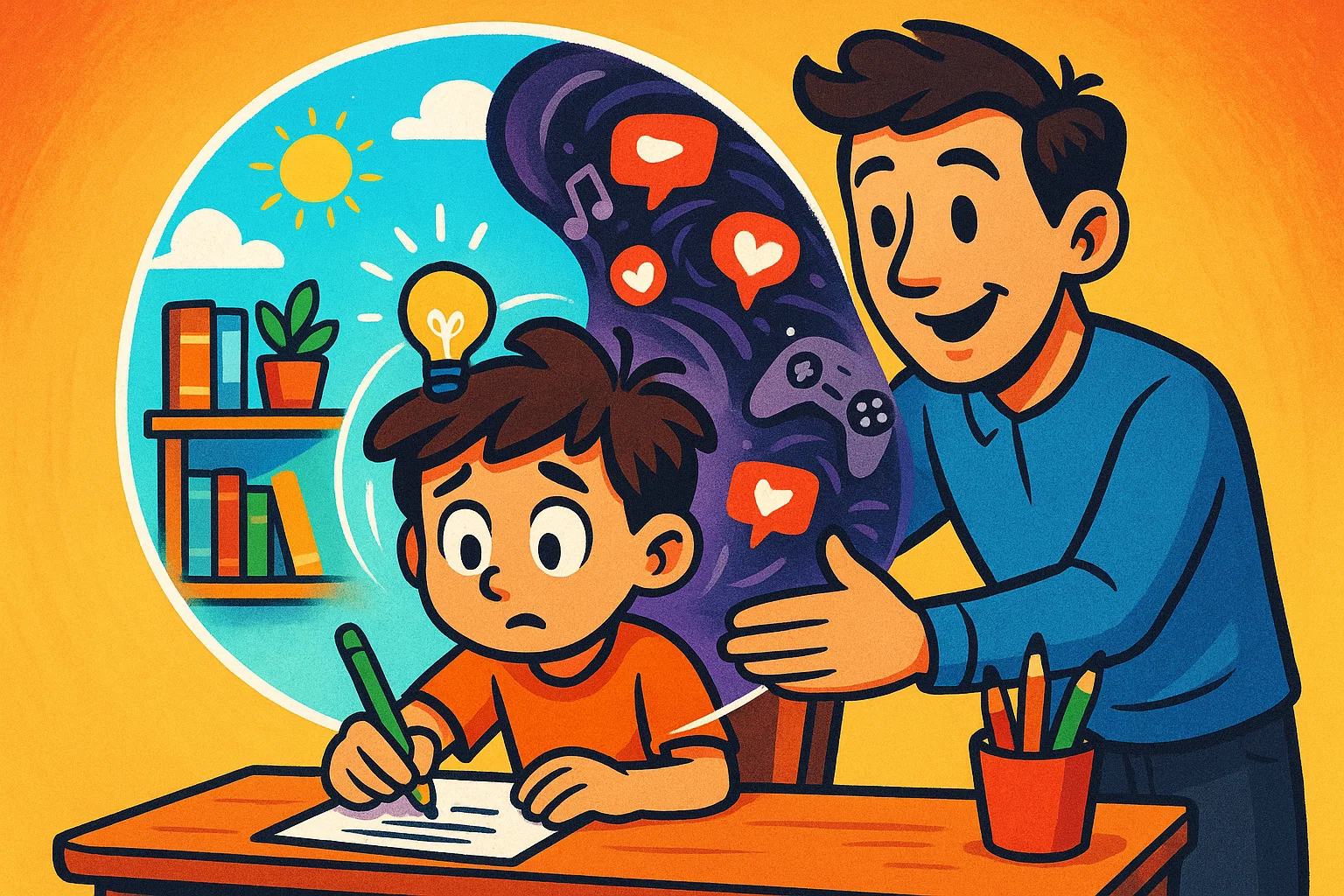
The internet can be good for kids when it supports learning, creativity, and connection — but those benefits depend on content quality, screen time limits, and adult guidance. Excessive, unsupervised, or age-inappropriate use raises real concerns across mental health, sleep, social development, school performance, and online safety.
This article covers the full picture: why internet access can benefit children, what the risks look like in practice, and what parents and schools can do to protect kids while keeping the positive opportunities open.
Key Takeaways
- The internet offers real benefits for kids, including educational content, creative outlets, and social support, when use is guided and age-appropriate.
- Excessive or unsupervised internet use is linked to mental health risks, sleep problems, reduced physical activity, and social skill delays.
- Social media carries specific dangers for children, including cyberbullying, online predators, and addictive scrolling patterns.
- Parents can reduce harm through device-free routines, parental controls, open conversations, and modeling healthy internet habits.
- Schools play an important role through digital well-being lessons, cyberbullying policies, and student support resources.
Main Risks for Children
Digital technology can introduce specific challenges to child development. The core risks identified by pediatricians and researchers include:
- poor sleep quality;
- diminished attention spans;
- cyberbullying;
- online grooming by predators;
- unrealistic body image expectations;
- increased obesity risk due to sedentary habits;
- social isolation;
- inadvertent exposure to age-inappropriate or violent content.
These risks do not mean that all technology use is harmful. Instead, the effects of technology on children depend on how they use devices, how often they go online, and whether internet use replaces sleep, movement, learning, or real-world social activities.
Screen Time Matters
The impact of digital media depends on the context of use, not just the amount of time spent online. The total amount of daily screen time, the timing of use, content quality, and parental involvement all help determine whether internet use remains beneficial or becomes harmful.
For example, an educational video watched with a parent has a different effect from unsupervised short-form video scrolling at midnight. A balanced day should leave children enough time for:
- sleep;
- schoolwork;
- physical activity;
- family meals;
- offline hobbies;
- social activities;
- limited and intentional entertainment screen time.
Parents Can Reduce Harm
Parents and caregivers can reduce digital risks by setting proactive boundaries. Parents can reduce these risks by:
- using a structured family media plan;
- designating device-free zones;
- configuring strong privacy settings;
- participating in co-viewing;
- maintaining open lines of communication;
- encouraging consistent offline routines.
Parents also need to understand how online habits can affect their child over time. A child may not immediately show signs of harm, but persistent mood changes, secrecy, poor sleep, or withdrawal from friends can suggest that digital media has started to interfere with daily well-being.
Warning Signs Need Action
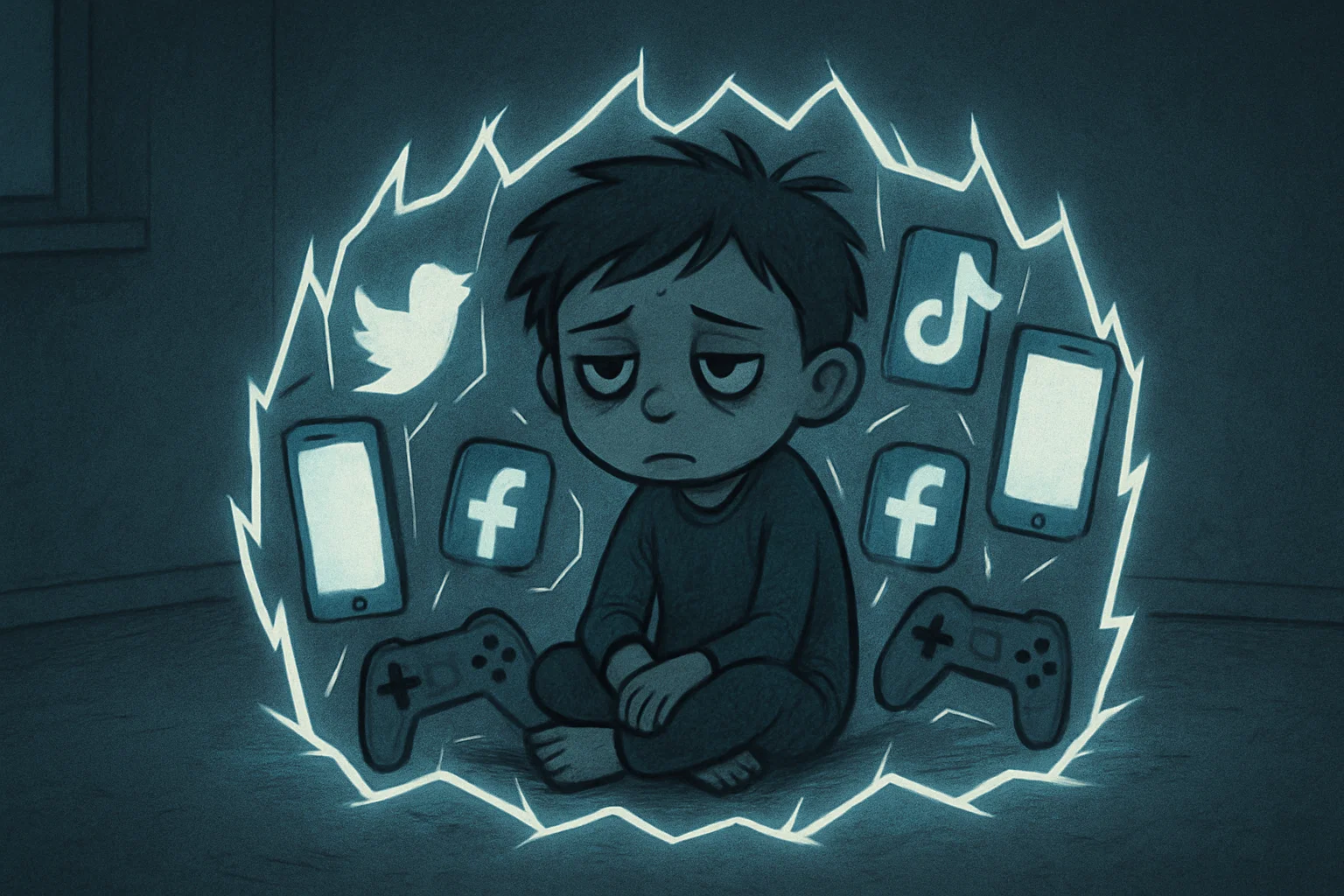
Recognizing early signs of technology overuse can help parents intervene before unhealthy patterns become harder to change. Parents should monitor for distinct warning signs, including:
- sudden mood changes;
- heightened secrecy regarding devices;
- declining academic grades;
- chronic sleep loss;
- withdrawal from offline friendships;
- acute irritability when asked to stop using a device;
- compulsive scrolling.
These signs may point to problematic internet use, especially when a child repeatedly chooses screens over school responsibilities, family life, hobbies, and healthy routines.
Internet Impact on Children
Digital media can reshape the daily routines of modern childhood, influencing how children spend time, process information, and interact with the world around them. The impact of internet access is especially significant because children now use the internet not only for entertainment but also for schoolwork, communication, gaming, shopping, identity exploration, and emotional support.
Constant Connection and Daily Life
Smartphones, tablets, video streaming platforms, online games, messaging apps, and social media networks maintain a continuous infrastructure that draws children online throughout the day. This constant connectivity can interrupt important daily routines, including family meals, focused homework time, sleep, family time, and unstructured physical play.
According to The Common Sense Census: Media Use by Tweens and Teens, 2021, children ages 8 to 12 average about 5.5 hours per day of entertainment screen media, while teenagers ages 13 to 18 average about 8.5 hours per day. This level of screen use can displace essential non-digital experiences, especially when it replaces sleep, physical activity, schoolwork, or face-to-face time.
Children who spend many hours online each day may have fewer opportunities for outdoor play, face-to-face interaction, physical exercise, and quiet rest. Over time, this pattern can influence the health of children and adolescents, especially when digital entertainment becomes the default activity after school and before bedtime.
Internet Use by Age
The nature of digital engagement and its developmental risks change as children move from early childhood into adolescence.
| Developmental Stage | Typical Digital Activities | Primary Risks Identified |
| Preschool-Age Children (Ages 2–5) | Educational apps, animated videos, interactive digital games | Delayed language acquisition, overstimulation, sleep disruption, tantrums during transitions |
| School-Age Children (Ages 6–12) | Online gaming platforms, video streaming, early educational research | Early exposure to inappropriate content, early experiences with cyberbullying, displacement of physical activity |
| Adolescents and Teens (Ages 13–18) | Social media networks, instant messaging, forums, immersive gaming | Social comparison, sleep deprivation, online grooming, severe cyberbullying, data privacy risks |
Young children are especially sensitive to fast-paced content, overstimulation, and disrupted routines. Older children and teens face more complex risks related to social pressure, identity formation, privacy, and negative interactions on social media.
Why Children Spend More Time Online
The modern digital ecosystem is designed to maximize user engagement, making children and teens highly susceptible to prolonged use. Young people turn to digital spaces seeking:
- entertainment;
- immersive video games;
- educational research tools;
- peer-to-peer communication;
- relief from routine boredom;
- social validation;
- creative expression.
Social pressure to stay available to peers can also combine with algorithm-driven recommendations that are designed to keep users engaged. These systems deliver continuous streams of tailored content, which can make it harder for children and teens, whose impulse-control skills are still developing, to self-regulate and disconnect.
Children use online platforms for many understandable reasons: they want to talk with friends, learn new skills, play games, watch videos, and feel included. Problems can begin when technology use becomes excessive, secretive, or emotionally difficult to control.
Risk Depends on Content, Context, and Control
The developmental outcome of digital use is not uniform; it varies based on the specific conditions of the interaction. Educational internet use with active parental involvement carries a very different risk profile from unmonitored late-night scrolling, violent content, cyberbullying, or compulsive gaming patterns.
When digital media serves a clear, interactive, and age-appropriate educational or creative purpose, it can support learning and skill development. Conversely, when digital use lacks structured boundaries, adult supervision, or age-appropriate content filters, the probability of experiencing negative psychological and physical outcomes increases.
That is why parents should evaluate both the benefits and risks of internet use rather than focusing only on the number of minutes spent online.
Main Negative Effects of the Internet on Children
Prolonged, unstructured digital use can create challenges for a child’s health, behavior, and psychological well-being. The following effects are most likely to appear when online access is excessive, unsupervised, or emotionally intense.
Mental Health and Well-Being Risks
Excessive engagement with social media platforms and unmonitored online forums has been associated with higher levels of anxiety, depressive symptoms, stress, and loneliness in children and young people. A longitudinal study cited by the U.S. Surgeon General found that adolescents who spent more than 3 hours per day on social media faced double the risk of poor mental health outcomes, including symptoms of depression and anxiety.
Constant exposure to idealized peer profiles, negative comments, online conflicts, and frequent notifications can contribute to chronic digital stress. This environment can undermine a child’s emotional stability, leaving them vulnerable to feelings of inadequacy and persistent social exclusion.
Increased social media exposure may be especially risky when a child already struggles with anxiety, low self-esteem, peer rejection, or poor sleep. In these cases, internet use may intensify existing vulnerabilities rather than create entirely new ones.
Attention Span and Focus Problems
The structural pacing of modern online media can alter how children process information and sustain cognitive focus. Rapidly edited short-form videos, constant task-switching, push notifications, and digital multitasking can make children more accustomed to immediate stimulation.
This expectation can make it harder for children to stay focused on slower offline tasks, such as reading books, completing longer homework assignments, or listening to classroom lessons. This constant fragmentation of attention can strain working memory and make deep, analytical engagement with learning materials more difficult.
Children who use multiple apps while doing homework may appear busy, but their attention is often divided between messages, videos, notifications, and academic tasks. This can make schoolwork take longer, feel more stressful, and become less effective.
Sleep Problems From Late-Night Screen Use
The American Academy of Pediatrics notes that screen use can affect sleep, especially when devices are used close to bedtime or kept in the bedroom overnight.
Late-Night Screen Use ──> Light Exposure & Mental Stimulation ──> Delayed Melatonin Release ──> Later Bedtime & Poorer Sleep
Light from smartphone and tablet screens can suppress melatonin, a hormone that helps regulate sleep-wake cycles. When combined with the psychological stimulation of nighttime messaging, competitive gaming, or algorithmic feeds, screen use can delay bedtime, increase nighttime awakenings, and reduce overall sleep quality.
Chronic sleep loss can harm children’s and adolescents’ health and may contribute to:
- daytime irritability;
- memory deficits;
- diminished emotional regulation;
- lower school performance;
- weaker attention during lessons;
- increased family conflict.
Physical Inactivity and Obesity Risk
When children spend large parts of the day sitting in front of digital devices, they may replace essential physical activities such as outdoor play, organized sports, walking, and active hobbies. This shift toward sedentary habits may be compounded by snacking while using screens, especially when children are exposed to food marketing or eat mindlessly.
High sedentary screen time can contribute to lower physical activity, which is associated with a higher risk of overweight and obesity; families should protect daily time for movement and active play.
For school-age children and adolescents, a healthy routine should include at least 60 minutes of moderate-to-vigorous physical activity each day, not just occasional exercise on weekends. Physical play supports sleep, mood, attention, muscle development, and social confidence.
Eye Strain and Blue Light Concerns
Prolonged screen use can contribute to digital eye strain in children, which may include symptoms such as:
- persistent headaches;
- dry eyes;
- blurry vision;
- physical eye fatigue;
- difficulty refocusing after long screen sessions.
These symptoms can be related to reduced blinking, prolonged near focus, glare, poor posture, and long periods without visual breaks. Poor posture while using devices, such as slouching or bending the neck forward, can also contribute to strain in the neck, shoulders, and upper back.
Behavior Changes and Irritability
Technology overuse can show up as irritability, emotional outbursts, and conflict at home. Children who show signs of problematic internet use may have intense emotional outbursts, become defiant, or throw tantrums when caregivers set screen limits or remove devices.
This pattern may reflect difficulty transitioning away from digital stimulation, especially when a child has become used to constant online rewards. Over time, this pattern can lead to:
- secretive device use;
- sudden impatience during offline family interactions;
- impulsive decision-making;
- escalating conflict regarding screen boundaries;
- lying about screen time;
- refusal to stop gaming or scrolling.
While not every child who resists screen limits has technology addiction, repeated loss of control, secrecy, and distress around devices should be taken seriously.
Social Development Risks
As digital screens increasingly replace in-person interaction, children may have fewer opportunities to practice interpersonal communication. Healthy social skills develop through repeated real-world experiences, including conversation, cooperation, disagreement, empathy, and shared play.
Reduced Face-to-Face Communication
Healthy social development requires repeated real-world practice with the subtle cues of in-person communication. Excessive online communication can reduce opportunities to practice:
- face-to-face conversation;
- active listening;
- cognitive empathy;
- reading facial expressions;
- interpreting body language;
- maintaining appropriate eye contact;
- resolving interpersonal conflicts.
When children rely mainly on text-based or emoji-driven communication, they may miss real-time social cues, which can make in-person interactions feel more awkward or stressful.
The issue is not simply that children use messaging apps. The concern is that excessive digital communication can replace essential social activities where children practice patience, negotiation, teamwork, and emotional awareness.
Social Comparison and Body Image Concerns
Social media platforms frequently expose children and teens to curated, digitally altered photographs, artificial filters, and unrealistic portrayals of lifestyle and beauty standards. This exposure can encourage upward social comparison, where young people compare their own lives and bodies with idealized digital images.
Research from the Pew Research Center indicates that about four in ten teens say social media makes them feel overwhelmed by drama, while smaller shares report feeling excluded, pressured to post popular content, or worse about their own lives. This constant exposure can erode self-esteem, increase body dissatisfaction, and contribute to the development of unhealthy eating habits or body-image concerns.
People on social media often present carefully edited versions of their lives, bodies, homes, friendships, and routines. Children may not yet have the maturity to understand that these images are selective, filtered, commercialized, or staged.
Isolation, Loneliness, and Mood Changes
One paradox of modern digital life is that a child can stay constantly connected online while feeling isolated offline. Spending hours behind a screen can cause children to gradually withdraw from:
- real-world family interactions;
- neighborhood friendships;
- school clubs;
- physical hobbies;
- sports;
- shared play;
- community activities.
This isolation can amplify loneliness and low mood because digital interactions may not provide the same emotional depth, physical presence, or sense of security as offline relationships.
Social and Emotional Skill Delays
Digital communication can remove many of the voice, facial, and timing cues that shape in-person conversation. Online interactions allow children to delay responses, use avatars, or leave uncomfortable conversations instantly.
This artificial control prevents them from practicing:
- emotional regulation;
- situational patience;
- distress tolerance;
- real-time empathy;
- compromise;
- conflict repair;
- impulse control in group settings.
As a result, children who rely too heavily on digital communication may find complex real-world social situations more difficult and may show lower frustration tolerance in group settings.
Social Media Dangers for Children
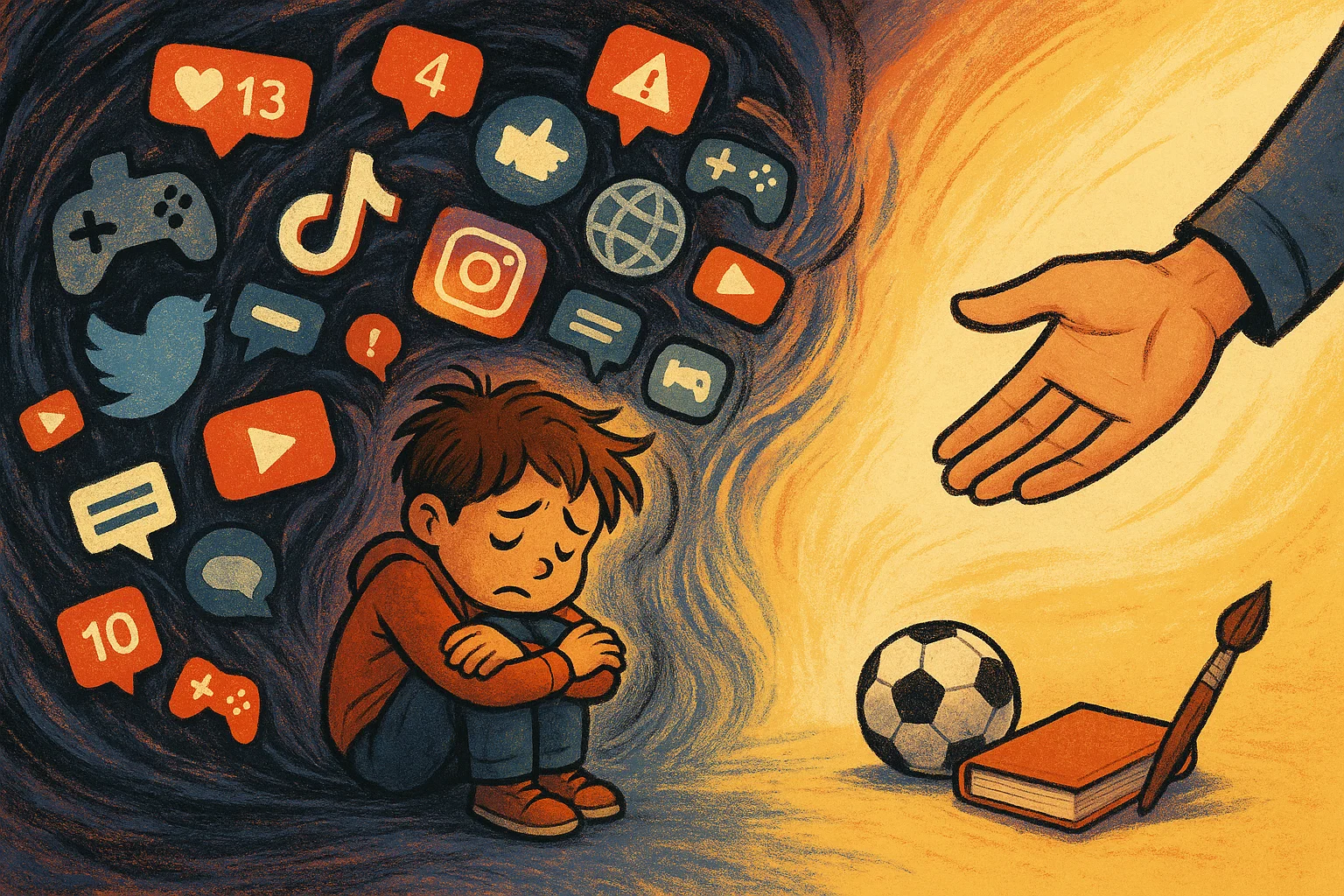
Social media platforms create interactive environments that can expose children and adolescents to social and safety risks. The negative effects of social media are especially concerning when young users have unrestricted access, public profiles, weak privacy settings, or little adult guidance.
Cyberbullying and Online Harassment
Digital platforms can allow harassment to follow a child home, leaving them with little sense of escape. Cyberbullying includes:
- deliberate sharing of insults or humiliating comments;
- targeted rumors;
- systematic social exclusion;
- public shaming within community spaces;
- harassment via group chats;
- creation of fake profiles meant to damage a victim’s reputation.
Unlike traditional school bullying, cyberbullying can be amplified by anonymity, a large digital audience, and the permanence of online content. The targeted child may experience ongoing psychological distress, which can contribute to school refusal, severe anxiety, and a higher risk of self-harm thoughts.
Online Predators and Grooming Risks
Direct messaging and unmonitored chat features on gaming and social platforms can expose children and teens to grooming by online predators. These individuals may hide their true identities by posing as peers and using shared gaming interests or popular trends to build trust with a child.
Once a connection is made, predators may try to move communication to private messaging channels and gradually introduce:
- requests for private or explicit photos;
- manipulation tactics;
- strict rules of secrecy;
- emotional pressure;
- attempts to move conversations to private apps;
- attempts to coordinate physical meetings.
This is why clear family safety rules and proactive parental guidance are essential. Parents should discuss private messages, secrecy, location sharing, and suspicious requests before a child is ready to use social platforms independently.
Dangerous Viral Trends and Risky Challenges
The pursuit of online validation, peer acceptance, and digital engagement metrics can drive children and adolescents to participate in hazardous viral challenges distributed via video-sharing apps. Because adolescents are more prone to sensation-seeking and peer influence, they may underestimate the physical risks of dangerous stunts in exchange for likes, comments, and visibility.
Documented cases of severe injury, poisoning, and accidental asphyxiation show that viral challenges can create real-world danger, especially when peer pressure overrides a child’s sense of risk.
Addictive Scrolling and Doomscrolling Patterns
Popular social platforms use variable rewards, autoplay, endless feeds, and push notifications that can encourage compulsive checking.
Children may get caught in extended loops of doomscrolling, consuming distressing, sensational, or negative content. This pattern can increase anxiety and make it harder for children to close the app and transition to necessary routines like schoolwork or sleep.
A healthy social media routine should include:
- clear time limits;
- private accounts;
- intentional content choices;
- no devices in the bedroom at night;
- regular breaks from algorithmic feeds;
- open conversations with parents about online experiences.
Tics, Stress Reactions, and Daily Behavior Changes
Medical researchers have described cases in which vulnerable adolescents developed functional tic-like behaviors after exposure to certain tic-related social media content, although stress, anxiety, and other factors also appear to play a role.
These cases suggest that immersive online environments may influence behavior and stress responses in some vulnerable young people.
Learning and School Performance Effects
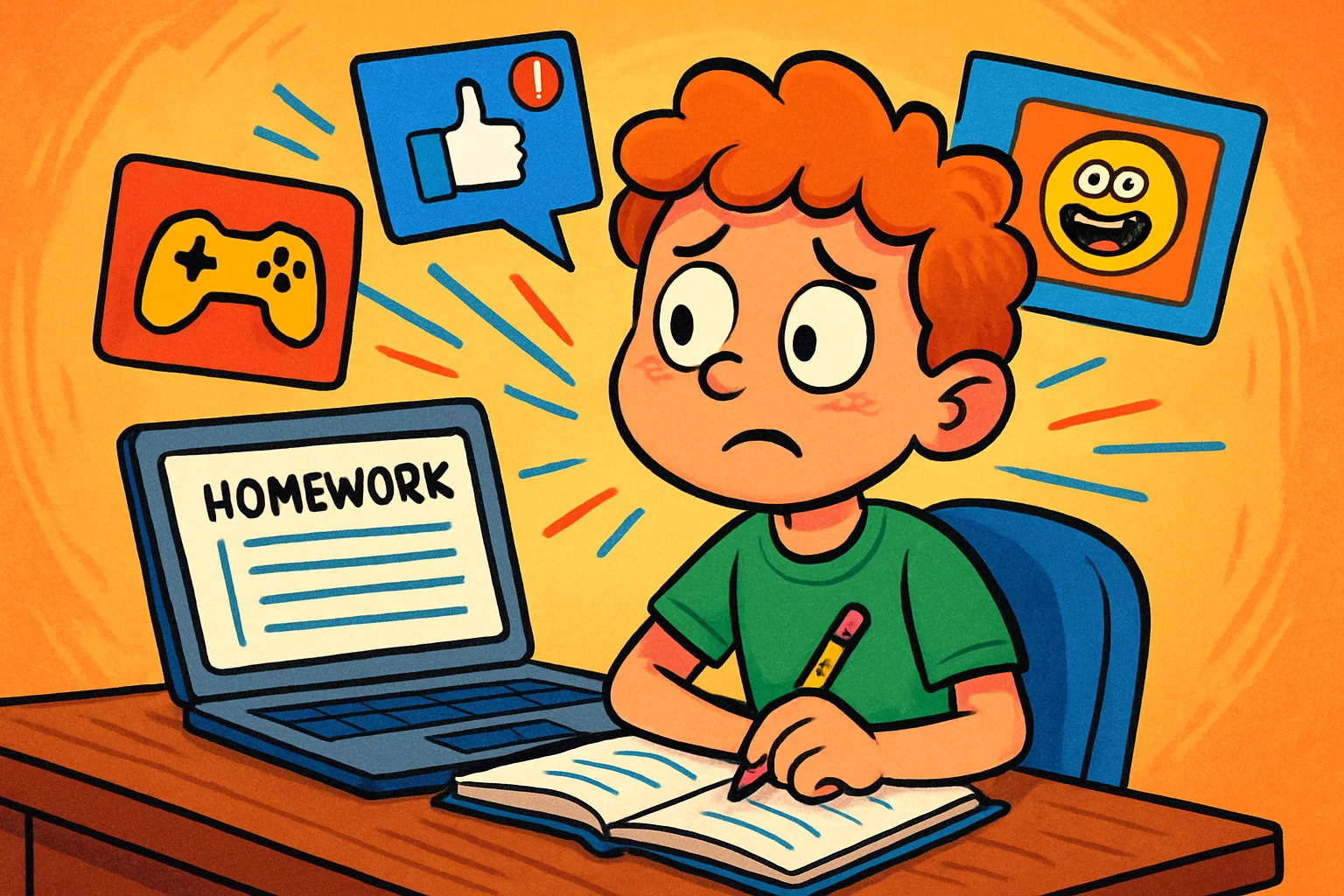
While the internet can be a valuable educational resource, unstructured use during study time can create obstacles to academic achievement.
Homework Distraction and Multitasking
Study Session ──> Push Notification ──> App Switching ──> Cognitive Refocus Cost
Many children try to complete school assignments while also managing active messaging threads, streaming videos in the background, or playing video games. This form of digital multitasking fragments working memory and increases the cognitive load on the brain.
Research suggests that switching between academic work and digital notifications can increase the time needed to complete assignments and may lead to more mistakes because the brain needs time to refocus after each interruption.
Common homework distractions include:
- push notifications;
- group chats;
- background videos;
- gaming alerts;
- social media feeds;
- switching between homework tabs and entertainment tabs.
Short-Form Content and Memory
Regular exposure to short, fast-paced digital media may make sustained reading, complex problem-solving, and memorization feel more difficult for some children.
When children become used to receiving information in short, visually stimulating fragments, deep reading, complex problem-solving, and memorization can feel more frustrating.
This shift can appear as:
- reduced patience for analyzing long literary texts;
- challenges in tracking multi-step scientific concepts;
- difficulties retaining abstract educational information;
- frustration with slower classroom tasks;
- weaker persistence during demanding assignments.
Misinformation and Poor Research Habits
Unrestricted internet access can expose children to unverified information, sponsored content, deepfakes, and intentional misinformation. Students often lack the media literacy skills needed to assess source credibility, recognize bias, and compare claims across reliable sources.
As a result, children may develop weak research habits, such as:
- accepting the top search result as absolute truth;
- using sponsored content without recognizing advertising;
- copying unreliable or plagiarized text into assignments;
- failing to compare multiple sources;
- struggling to identify deepfakes or manipulated images;
- relying on short summaries instead of deeper reading.
Declining Grades and Motivation
Classroom inattention, homework distractions, chronic sleep loss, and digital procrastination can all contribute to a decline in academic performance.
Because digital platforms often provide immediate rewards, traditional learning tasks that require sustained effort can feel less motivating by comparison. This imbalance may lead to:
- missed assignment deadlines;
- poor exam performance;
- lower classroom engagement;
- reduced academic curiosity;
- weaker self-efficacy;
- increased conflict around homework.
Screen Time Limits for Children
Establishing structured, age-appropriate parameters around digital technology use helps ensure that connectivity does not displace the essential foundations of healthy child development.
How Much Screen Time Is Too Much?
Setting appropriate digital boundaries means looking beyond hours and evaluating how media use affects children’s everyday lives. Screen time becomes excessive when it begins to crowd out foundational health requirements, such as achieving age-recommended sleep duration, participating in daily physical activity, completing school obligations, and engaging in face-to-face family interactions.
The primary goal for families should be to create a healthy balance in which digital tools support, rather than replace, physical activity, social connection, sleep, and learning.
There is no single perfect number of hours per day for children of all ages. Instead, parents should ask whether screen time is interfering with:
- sleep;
- learning;
- physical movement;
- emotional well-being;
- family connection;
- offline friendships;
- hobbies and play.
Warning Signs of Excessive Use
| Physical Indicators | Behavioral Indicators | Academic & Social Indicators |
| Persistent morning fatigue | Acute anger or defiance when disconnected | Measurable drop in report card grades |
| Frequent tension headaches | Lying about actual hours spent online | Abandonment of long-term sports or hobbies |
| Chronic dry or bloodshot eyes | Skipping scheduled meals to stay online | Withdrawal from real-world peer interactions |
These warning signs may suggest that digital media is no longer a balanced part of a child’s life. When several signs appear together, parents should consider reducing access, improving routines, and consulting a pediatrician or mental health professional.
Age-Based Media Rules
To support healthy development, parental guidance should adapt to a child’s changing maturity and independence. The American Academy of Pediatrics recommends age-aware, family-specific media rules rather than one universal screen-time limit for all children and teens:
- Children Under 18 Months: Avoid all screen media exposure, with the exception of interactive video chatting with family members under close adult guidance.
- Children Aged 18 to 24 Months: Introduce high-quality, curated educational programming selectively. Parents should co-view this content alongside their child to help them process the information and build language skills.
- Preschool-Age Children Ages 2–5: Limit total entertainment screen time to a maximum of 1 hour per day. Prioritize interactive, educational media and continue co-viewing to help connect digital concepts to the real world.
- Children and Teens Ages 6–18: Set consistent, customized boundaries that protect sleep, physical activity, schoolwork, family time, and offline relationships.
Before giving a child independent access to a smartphone, messaging app, or social platform, parents should consider whether the child is ready to follow safety rules, manage privacy, handle peer pressure, and ask for help when something feels wrong.
Balanced Daily Routine
A healthy daily routine requires that internet use fits around, rather than replaces, essential non-digital responsibilities. A typical day for school-age children should prioritize:
- age-appropriate sleep;
- daily physical activity;
- dedicated focus blocks for schoolwork;
- structured family meals;
- hands-on offline household chores;
- creative projects;
- outdoor play;
- limited entertainment screen time after core responsibilities are completed.
Recreational screen time should come after core needs such as sleep, schoolwork, physical activity, and family routines, helping children see technology as a balanced part of life rather than a default activity.
Risks and Benefits of Internet Use by Children

Achieving digital well-being involves understanding both the inherent vulnerabilities and the practical educational advantages offered by modern technology. The goal is not to deny that the internet can help children, but to manage its risks through structure, supervision, and age-appropriate expectations.
Positive and Negative Effects Worth Noting
When used deliberately and in moderation, the internet can be a valuable resource for children and young people. It can provide access to:
- specialized educational materials;
- platforms for creative expression;
- tools for cross-cultural communication;
- language-learning apps;
- early technical skill development;
- supportive online communities for youth navigating unique personal challenges.
These examples show that digital technology is not inherently harmful; its effects depend largely on the content children use, the habits they develop, and the support they receive from adults. The same device can support homework, creativity, and friendship, or it can expose a child to harmful content, compulsive scrolling, and emotional stress.
Educational Content and Skill Growth
Guided, purposeful internet use can support a child’s cognitive development and problem-solving abilities. Curated educational platforms provide:
- interactive science tutorials;
- step-by-step coding lessons;
- digital art tools;
- historical archives;
- self-paced academic instruction;
- language-learning tools;
- research databases.
When children use these resources with adult guidance, they can develop digital literacy, learn stronger research habits, and build practical skills for school and future work.
Social Support and Creative Expression
For many children and teens, monitored online spaces offer unique avenues for personal growth and identity validation. Safe, moderated online communities allow young people to:
- share creative writing;
- display digital artwork;
- connect with peers who share niche interests;
- find emotional affirmation;
- explore educational interests;
- build confidence through constructive feedback.
These connections can build confidence and foster a sense of belonging, particularly for neurodivergent youth or children managing medical, social, or identity-related challenges.
Risk-Benefit Balance for Families
The goal for parents and educators is not to eliminate digital devices, but to help children build a balanced relationship with technology. Families can maximize the educational value of the internet while minimizing its risks by:
- maintaining open dialogue;
- setting clear boundaries;
- using content filters;
- prioritizing offline life;
- modeling healthy internet habits;
- teaching children how to evaluate online content;
- reviewing privacy settings regularly.
This balanced approach helps children develop self-regulation skills and learn to navigate a connected world safely and responsibly.
Family Media Use Plan
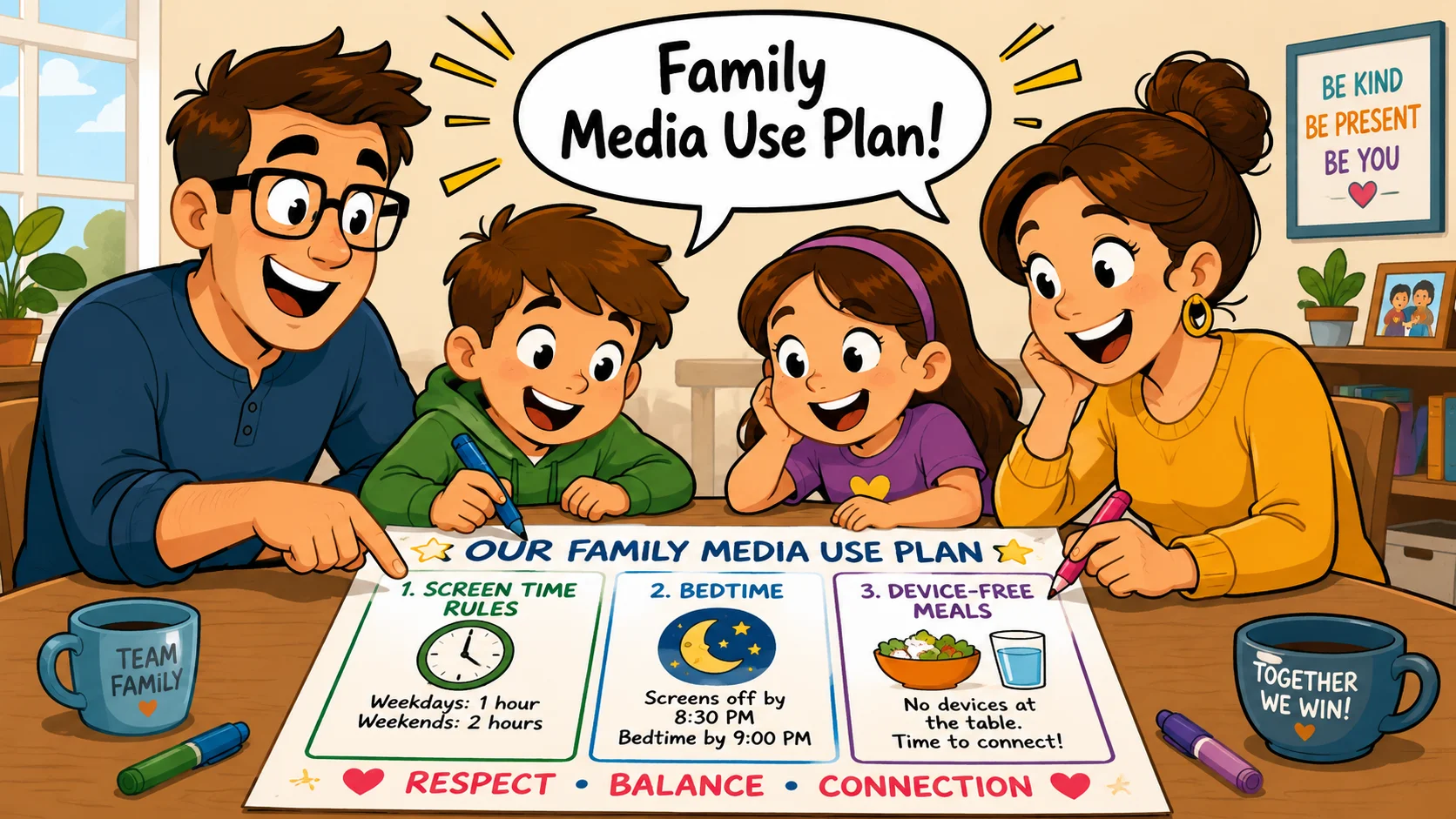
Turning protective advice into a daily routine starts with a clear family media plan.
Work With Children to Manage Internet Use
Household media rules work best when children and teens have a voice in the process, rather than simply receiving top-down restrictions. Parents should sit down with their children to discuss the health and safety reasons for screen boundaries, inviting young people to share their perspectives and help propose balanced time limits.
This collaborative approach builds mutual trust and encourages personal responsibility, making children more likely to respect established boundaries because they understand the reasoning behind them.
A family media plan should clearly define:
- when children use devices;
- where they may use them;
- which apps are allowed;
- what content is off-limits;
- what privacy settings are required;
- what steps children should take if they encounter something frightening, confusing, or unsafe.
Device-Free Zones and Routines
Creating device-free spaces and times at home helps protect essential family routines from digital interruptions. Families should establish clear rules against device use during:
- shared meals;
- focused homework blocks;
- dedicated family activities;
- bedtime routines;
- in-person conversations;
- outdoor play.
Ideally, smartphones, tablets, and gaming systems should stay out of children’s bedrooms at night and be placed in a shared charging area 30 to 60 minutes before bedtime. This boundary prevents late-night scrolling and helps protect the child’s sleep quality.
Parental Controls and Privacy Settings
Home Router/Devices ──> Enable SafeSearch ──> Restrict App Downloads ──> Set Daily Screen-Time Limits
Digital boundaries should be supported by technical safeguards across household devices. Parents should use:
- router-level content filters;
- SafeSearch settings across search engines;
- private account status on social media apps;
- strict application download permissions;
- screen time limits;
- location-sharing restrictions;
- app store approval settings.
These tools provide a baseline layer of protection against explicit content and security risks, but they should supplement, not replace, parental guidance and open communication.
Co-Viewing, Conversation, and Trust-Building
Active parental mediation means exploring digital spaces with your child, not just monitoring them from a distance. Parents can sit with their children to:
- watch popular videos;
- play favorite video games together;
- discuss online advertising tricks;
- talk about influencers and unrealistic images;
- review privacy settings;
- discuss comments, group chats, and social pressure.
This nonjudgmental approach shows children that their interests are respected, reduces fear of criticism, and makes them more likely to approach a parent when they encounter confusing or inappropriate content online.
What Parents Can Do
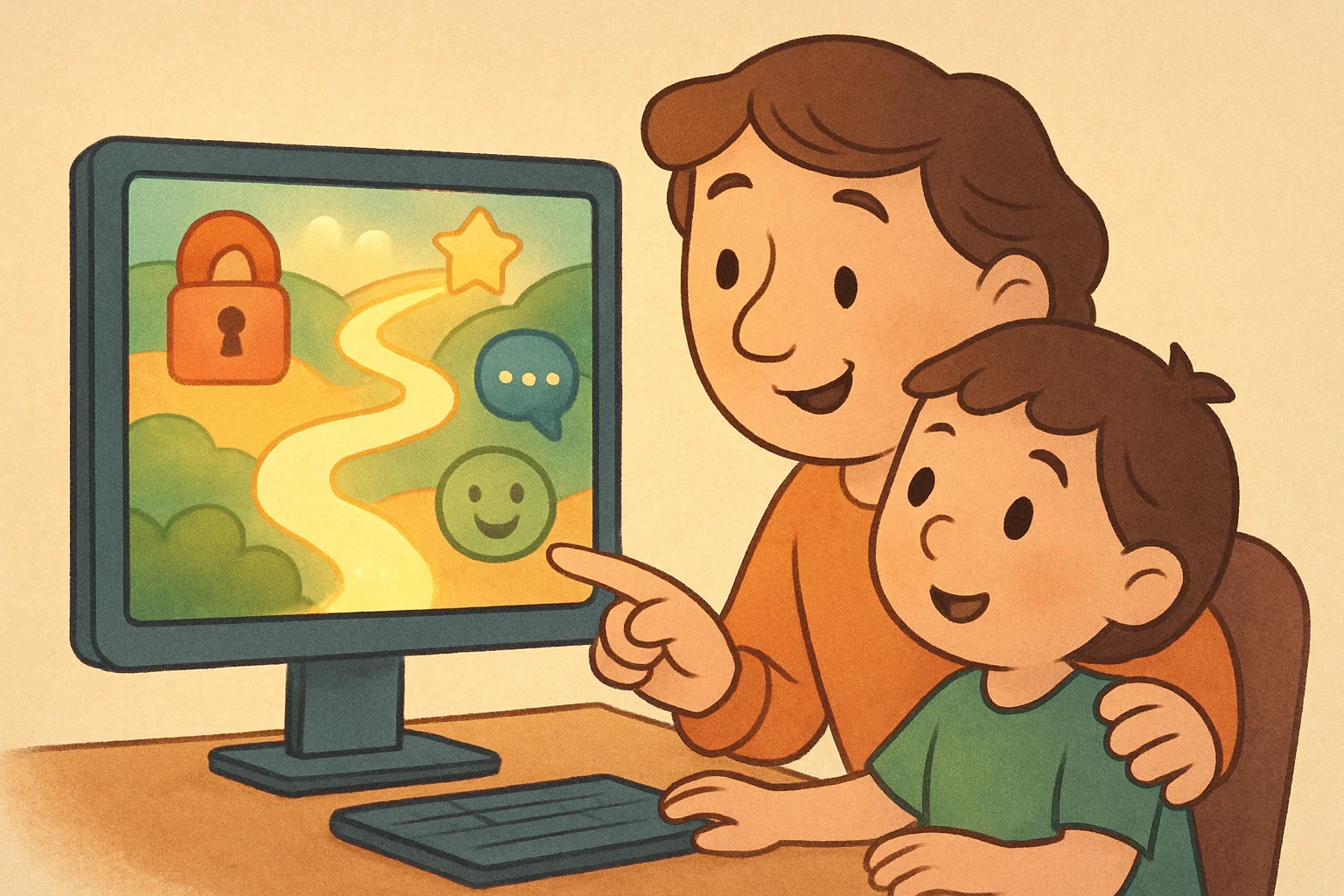
Practical daily actions by parents and caregivers can help protect children from the negative effects of technology overuse.
Model Healthy Internet Habits
Children naturally observe and copy the behavior of adults in their household. Parents should actively practice digital self-regulation by:
- avoiding constant phone checking;
- refraining from scrolling during face-to-face conversations;
- keeping screens away from the dinner table;
- powering down devices before bed;
- using social media intentionally;
- taking regular offline breaks.
When caregivers model a balanced relationship with technology, they demonstrate healthy boundaries and reinforce the value of being present offline.
Talk About Cyberbullying and Online Predators
Open, proactive conversations help equip children with the strategies they need to handle complex situations online. Parents can use practical conversation starters to prepare children for online risks:
“If someone online ever asks you to send a private photo or tells you to keep a conversation secret from me, that is a major warning sign. Please come tell me right away, and I promise you won’t be in trouble.”
“If anyone in a group chat starts sending mean messages, spreading rumors, or making you feel unsafe, you don’t have to reply. Block them immediately, take a screenshot, and let me help you handle it.”
These conversations should happen before problems arise. Clear, calm guidance can help children recognize unsafe behavior and respond quickly.
Encourage Offline Hobbies, Sleep, and Movement
One of the most effective ways to reduce excessive screen time is to make a child’s offline life engaging and fulfilling. Caregivers can support participation in:
- organized sports;
- learning a musical instrument;
- hands-on arts and crafts;
- regular library visits;
- outdoor hiking;
- structured family board game nights;
- volunteering;
- cooking;
- gardening;
- in-person clubs.
By offering real-world opportunities for socialization, physical activity, and creative expression, parents can make it easier for children to disconnect from digital feeds and enjoy offline life.
Know When to Seek Professional Help
When a child’s relationship with the internet begins to seriously interfere with daily functioning, specialized intervention may be necessary. Caregivers should consult a pediatrician, child psychologist, school counselor, or licensed mental health professional if they observe persistent signs of distress, such as:
- severe technology-related anxiety;
- lasting depressive symptoms;
- references to self-harm;
- severe sleep deprivation;
- school refusal linked to online distress;
- inability to stop using devices despite consequences;
- intense panic or aggression when internet access is removed.
Early professional support can help identify underlying challenges and guide families toward healthier routines.
What Schools Can Do
Schools play an important role in digital well-being by setting clear policies and teaching media literacy.
Digital Well-Being Lessons
Schools can integrate structured digital citizenship curricula into their standard academic programming to teach students how to navigate online spaces safely. These lessons should focus on:
- identifying online misinformation;
- protecting personal data privacy;
- understanding the persuasive design of social media algorithms;
- practicing respectful peer communication;
- recognizing the emotional impact of technology use;
- understanding cyberbullying;
- developing healthy social media habits.
By building these critical analysis skills early, schools help prepare students to make informed, responsible choices in their digital lives.
Cyberbullying Policies and Reporting
Schools should maintain clear, accessible reporting systems that allow students to report digital harassment and cyberbullying safely and without fear of retaliation.
These policies should outline:
- clear disciplinary actions for online bullying;
- emotional support for affected students;
- confidential reporting pathways;
- parent communication procedures;
- follow-up support after incidents;
- prevention education for the broader student body.
When schools take an active, visible stance against cyberbullying, they help extend a safe learning environment into online spaces.
Responsible Mobile Phone Use
Implementing clear, campus-wide guidelines for mobile device use helps minimize classroom distractions and supports real-world social interaction during the school day. Some schools have adopted policies requiring students to store smartphones in lockers or designated pouches during the school day.
Phone-Free School Policy ──> Reduced Classroom Distractions ──> Increased In-Person Play & Socialization
Removing smartphones from classrooms and lunchrooms can reduce digital distractions, improve engagement with schoolwork, and encourage face-to-face communication during the school day.
Online Stress Support Resources
School counseling departments should provide accessible support resources for students dealing with digital stress, cyberbullying, or online peer exclusion.
Schools can offer:
- confidential counseling services;
- digital safety workshops;
- peer support groups;
- classroom lessons on online pressure;
- referral pathways to mental health specialists;
- parent education sessions.
Providing these support systems at school helps vulnerable students receive timely, practical guidance on social media stress, online harassment, and digital pressure.
FAQ
What Are the Negative Effects of the Internet on Children?
The primary negative effects of excessive or unmonitored internet use include psychological challenges such as anxiety and low mood, physical issues such as sleep loss and eye strain, behavioral changes such as irritability, and safety risks such as cyberbullying and exposure to inappropriate content.
Can Internet Use Affect Children’s Mental Health?
Yes, prolonged or unstructured internet use, particularly on social media platforms, can affect a child’s mental health. Continuous exposure to idealized peer profiles, social comparison, cyberbullying, and negative comments can contribute to social isolation, lower self-esteem, and increased anxiety.
How Does Internet Use Affect Your Child?
Internet use can affect your child in both helpful and harmful ways. It can support learning, creativity, and communication when used with guidance, but excessive or unsupervised use may disrupt sleep, attention, emotional regulation, physical activity, and offline relationships.
Can Internet Use Contribute to Attention Problems in Children?
Excessive multitasking, rapid content switching, and frequent notifications can fragment a child’s focus and make it harder to sustain attention on slower offline tasks. However, attention problems are complex and can stem from a variety of genetic and environmental factors.
Is Social Media Harmful for Children?
Social media is not inherently harmful, but its impact depends on how it is used. It can become problematic when a child’s use is excessive, unsupervised, or replaces essential health routines like sleep and exercise, or when it exposes them to cyberbullying, unrealistic beauty standards, and online grooming.
What Are the Positive and Negative Effects of the Internet on Children?
The positive effects include access to educational resources, creative tools, communication, skill development, and supportive communities. The negative effects may include sleep disruption, anxiety, cyberbullying, social comparison, misinformation, reduced physical activity, and problematic online habits.
How Can Parents Reduce Internet Harm?
Parents can lower digital risks by establishing a collaborative family media plan, setting up device-free zones during meals and in bedrooms at night, configuring privacy settings, co-viewing media with younger children, modeling balanced tech habits, and encouraging varied offline activities.
Are Video Games Bad for Children?
Video games can have both benefits and risks, depending on the game, the child’s age, the amount of play, and whether gaming interferes with sleep, school, exercise, or relationships. Many games support cognitive skills, spatial awareness, teamwork, and social skills, but excessive gaming can contribute to sedentary habits, disrupted sleep, falling academic grades, and irritability when access is restricted.
Should Children Take a Social Media Break?
A structured break from social media can be helpful when a child shows signs of digital overload. Pausing social media use can help reduce anxiety, curb compulsive scrolling habits, improve sleep quality, and provide relief from online drama or constant social comparison.
What Is Healthy Social Media Use for Children?
Healthy social media use includes private accounts, age-appropriate platforms, reasonable time limits, no late-night scrolling, respectful communication, strong privacy settings, and regular offline breaks. Parents should also discuss what to do if a child experiences bullying, pressure, or unsafe messages online.

Take a short quiz to find out what your everyday choices say about your parenting style
When your child is curious about something new, what’s your instinct?
Take a short quiz to find out what your everyday choices say about your parenting style
“Can I download this app?” What happens next?
Take a short quiz to find out what your everyday choices say about your parenting style
When it comes to rules at home, which sounds most like you?
Take a short quiz to find out what your everyday choices say about your parenting style
If you could give your child one life skill today, what would you pick?
Take a short quiz to find out what your everyday choices say about your parenting style
Your child gets to choose what to watch. What would your ideal setup look like?
Take a short quiz to find out what your everyday choices say about your parenting style
Pick your parenting superpower ✨