How to Teach Kids to Memorize Things Fast: 13 Memory Techniques for Parents and Teachers

 Discover a Free Education Video App for Kids
Pastory uses AI to personalize educational video content based on your child’s interests and personality. Safe, engaging, and built for curious young minds. Sign up now to stay updated and enjoy early access with a free trial
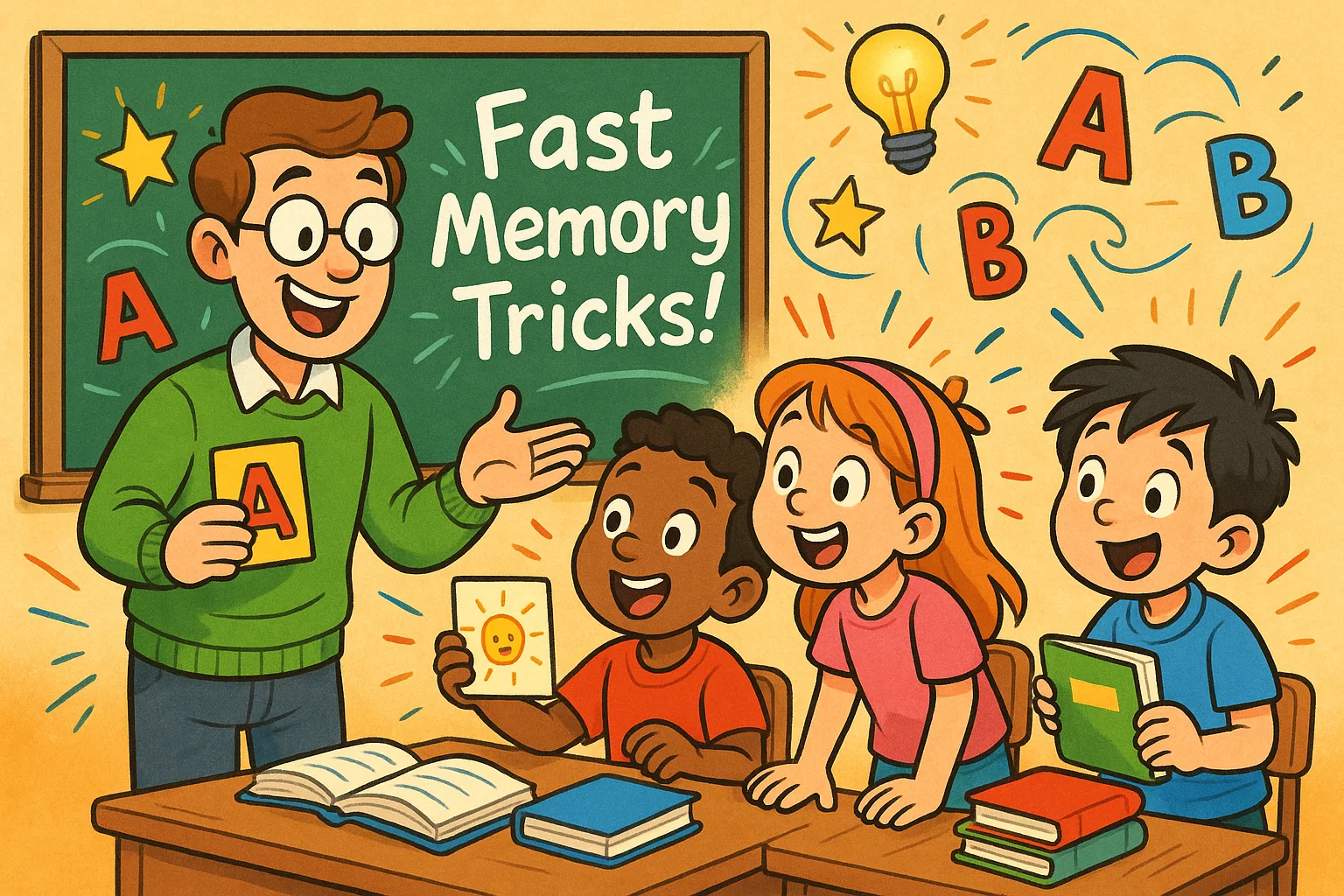
Helping a child memorize school lessons can often feel like a race against the clock, especially when they need to memorize something fast for a test, presentation, or classroom activity. Whether the task is a spelling list, the planets in our solar system, multiplication facts, a poem, or a history timeline, the goal is the same: support the process of transferring information from short-term use into long term memory.
Fast memorization works best when different pieces of information are broken into small parts, linked to vivid images, reviewed on an evidence-based schedule, and supported by essentials such as sleep, movement, food, water, and emotional calm.
Key Takeaways
- Chunking helps prevent cognitive overload.
- Active recall, or self-testing, is usually more effective than rereading.
- Mnemonics, such as acronyms, acrostics, rhymes, and songs, give kids “mental hooks” for facts.
- Spaced repetition helps information stay available in long-term memory.
- Meaning comes first: children memorize more effectively when they understand what they are trying to remember.
Best Memory Methods for Kids
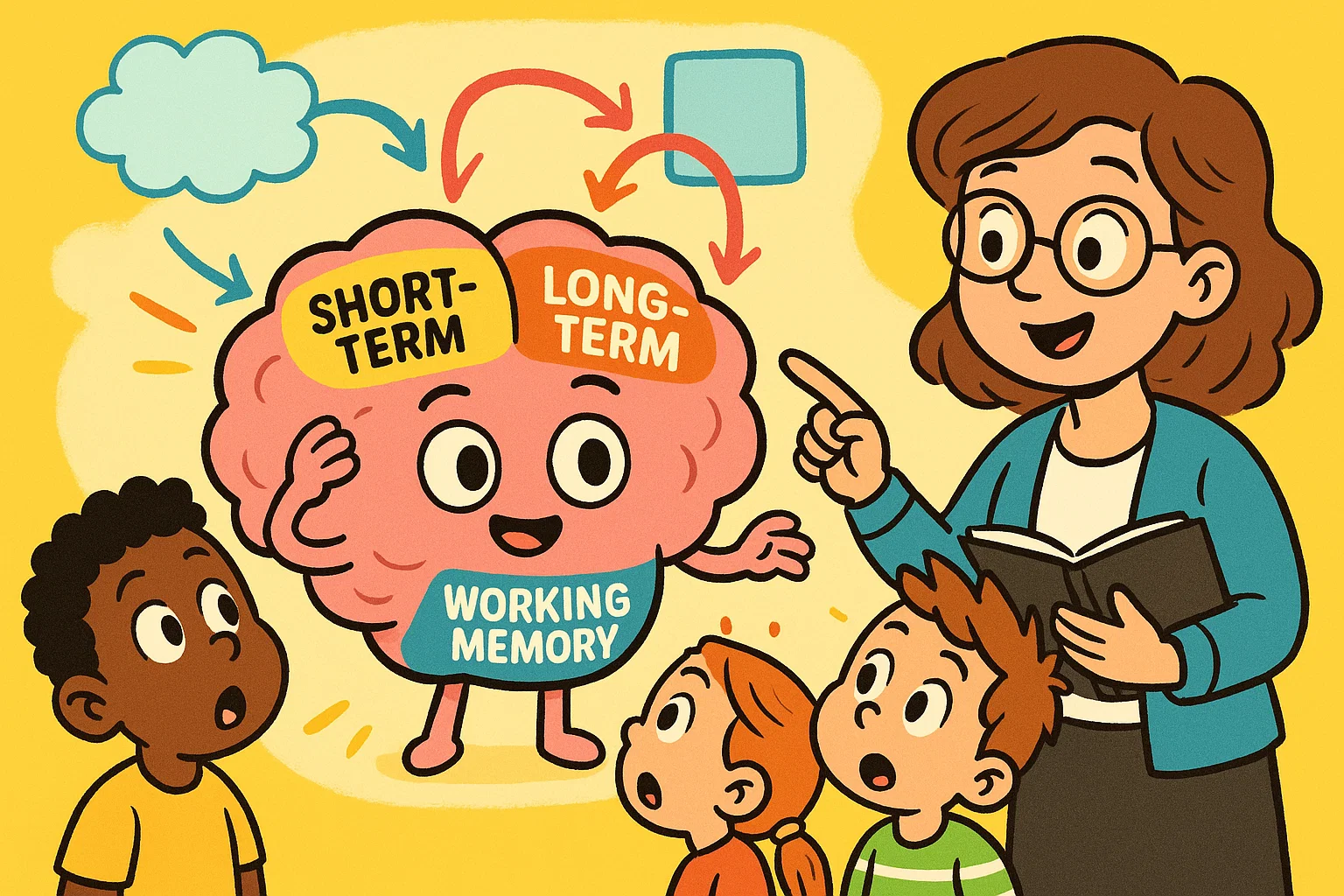
The most successful memory techniques for kids build on their natural creativity, curiosity, and energy. Parents and teachers can start with these core methods:
- Chunking: Grouping information into small, manageable sets.
- Mnemonics: Using acronyms, acrostics, or first-letter codes.
- Rhymes and songs: Using rhythm and melody to support memory.
- Flashcards: Building recall through self-testing.
- Memory Palace: Using familiar places to remember details.
- Spaced repetition: Reviewing facts at increasing intervals.
- Teaching someone else: Strengthening understanding by explaining the material aloud.
Fastest Way to Help Kids Remember Lessons
A quick way to help a child memorize new material involves five steps:
- Simplify the material. Remove unnecessary details and focus on the core facts.
- Create a visual connection. Link the material to a picture, silly image, or short story.
- Practice active recall. Ask the child to remember the information without looking at their notes.
- Review later the same day. A short review a few hours later is often more useful than one long session.
- Do a bedtime check. A gentle five-minute review before bed can support memory consolidation.
Common Mistakes Parents Should Avoid
One common mistake is encouraging passive learning, such as rereading the same textbook page again and again. Rereading can create a false sense of mastery, especially when it is not paired with self-testing or recall practice.
Studying while a child is overtired, hungry, stressed, or distracted can also reduce attention and make recall harder. Asking a child to memorize a speech before they understand the vocabulary is usually ineffective because unfamiliar words are harder to encode and retrieve.
Another mistake is trying to force too much information at once. A child who is given 30 vocabulary words in one sitting may feel overwhelmed before real learning begins. Smaller sets, short practice blocks, and frequent recall checks usually work better.
When Memory Problems Need Extra Support
Many children remember better once they are given the right tools. However, some children face persistent memory challenges that may need professional support.
If a child consistently forgets instructions within seconds, becomes extremely stressed around homework, or cannot remember basic concepts despite repeated practice, it may be worth speaking with a pediatrician, educational psychologist, or learning specialist. These professionals can check for factors such as ADHD, language difficulties, anxiety, or working-memory challenges and recommend tailored support.
What Memory for Learning Means for Kids
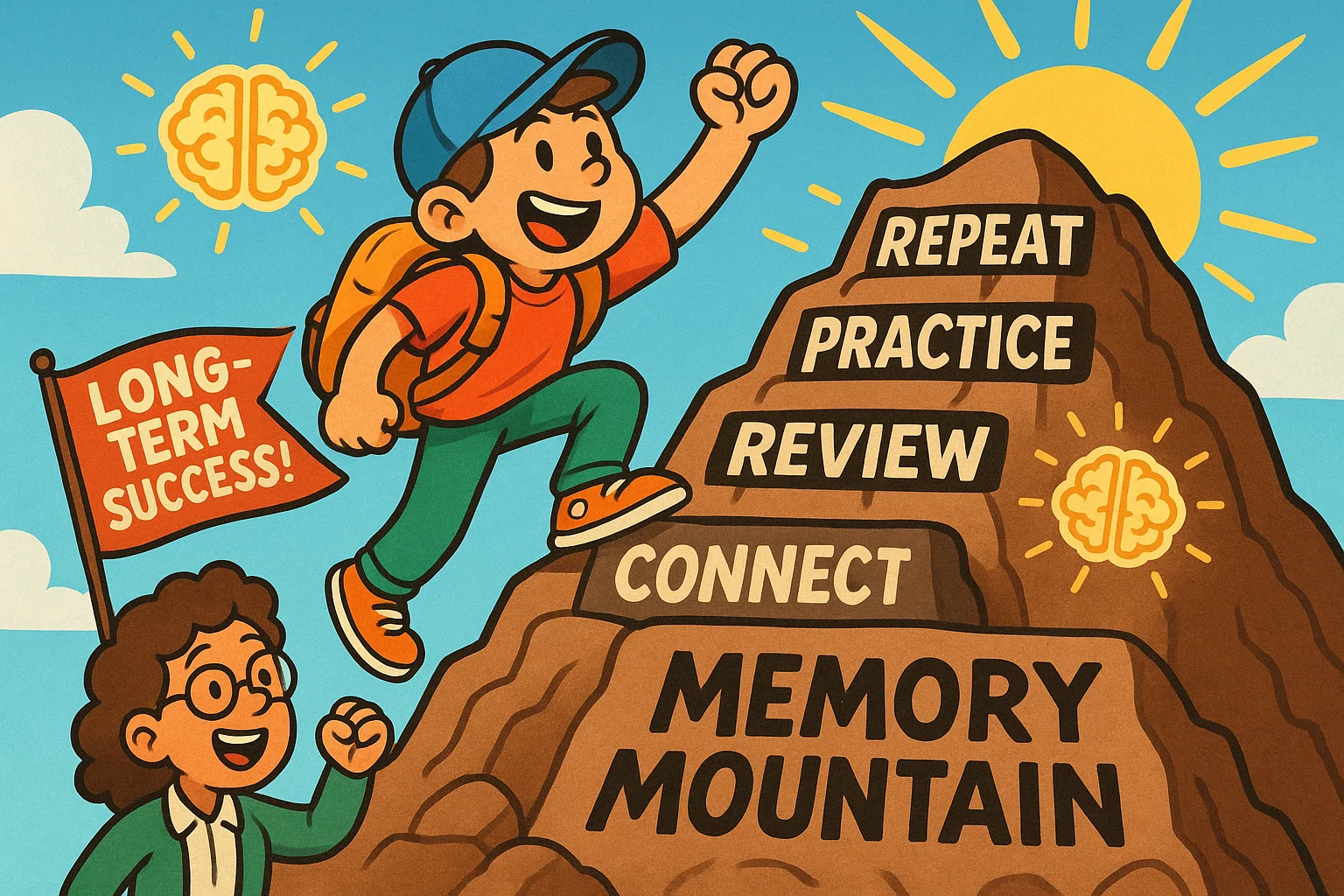
Child builds long term memory skills through practice and repetition in cartoon style.
Memory for learning is the process of encoding information, storing it, and retrieving it later to solve problems, answer questions, or use knowledge in real life.
For a child, this means hearing or reading a new idea, holding it briefly in working memory, and gradually strengthening it so it can be retrieved later for a test, class discussion, or everyday task.
How Kids Store New Information
Children retain information better when new facts are connected to existing knowledge. The human brain is associative, so children remember facts more easily when they can link them to something familiar.
For example, a child learning about fossil formation may remember the idea better if they connect it to a rock collection, a museum visit, or a dinosaur movie they enjoyed. Emotion, movement, novelty, and humor can also make learning more memorable.
Short-Term Memory vs. Long-Term Memory
Short-term memory and working memory are closely related, and working memory acts like a small mental scratchpad. It helps children hold information in mind while they use it.
Long-term memory is more like a durable storage system. The challenge in school is that working memory can become overloaded. Without useful memory strategies, information may fade before it becomes stable enough to retrieve later.
Why Fast Memorization Needs Recall Practice
Recall is the act of pulling information out of memory. Simply looking at vocabulary words is input, but memorization is an output skill.
Every time a child tries to remember information without looking at the answer, the pathway to that information becomes stronger. This is known as the testing effect. Retrieval practice often improves long-term retention more than simply spending more time rereading.
Memory Skills Kids Use in School
Throughout a typical school day, a child’s memory is used in many ways:
- Spelling: Remembering the order of letters within each word.
- Math: Recalling multiplication facts and the order of operations, such as PEMDAS.
- History and science: Remembering historical dates, scientific terms, or the order of the planets in the solar system.
- Languages: Learning new vocabulary in small, meaningful groups.
- Reading: Remembering characters, plot events, and key ideas.
- Classroom routines: Following directions, bringing materials, and completing multi-step tasks.
Why Some Kids Struggle to Remember Lessons
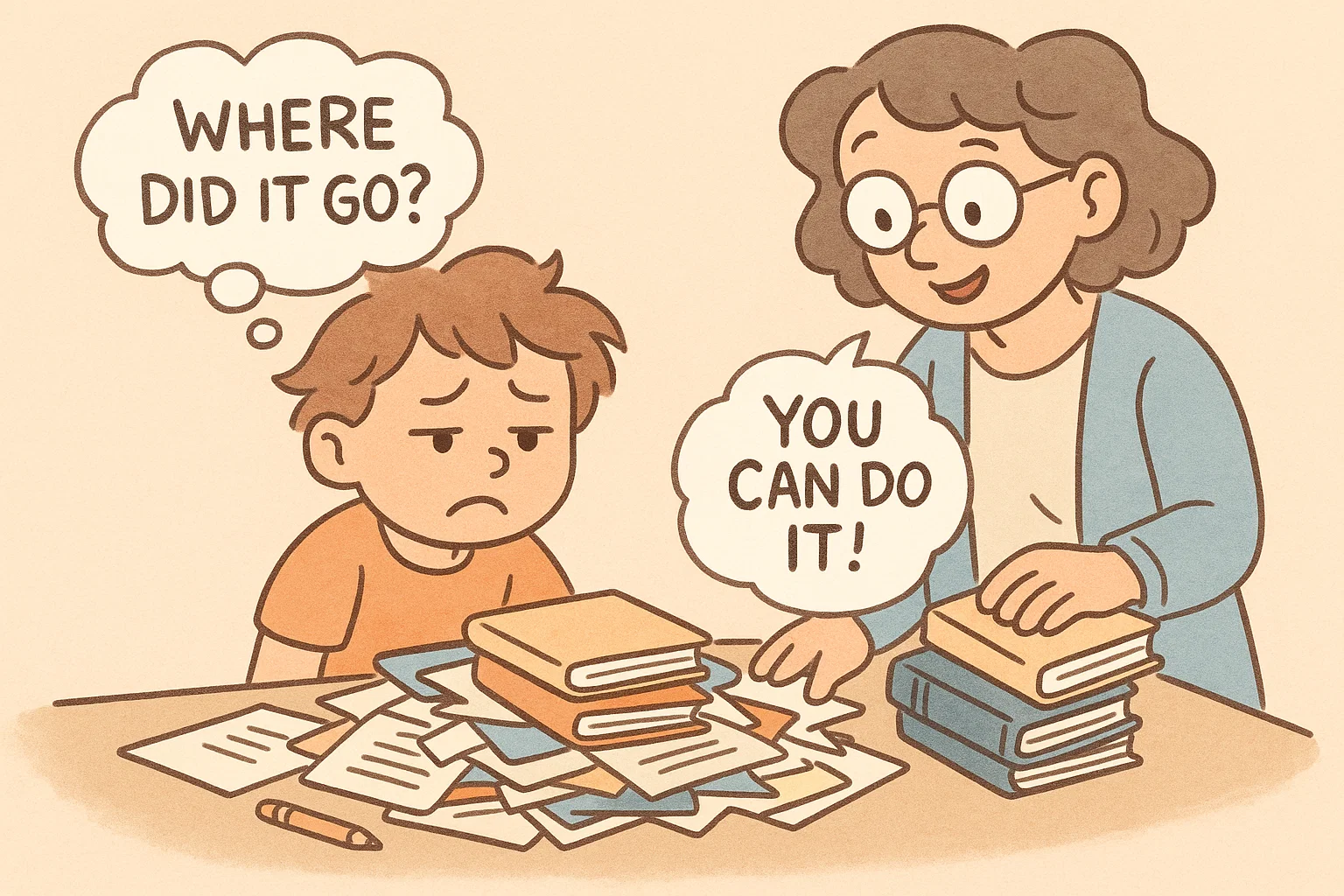
truggles with learning and memory are rarely about intelligence. More often, they happen because the child’s cognitive “bandwidth” has been exceeded, the material is not meaningful yet, or the practice method does not support recall.
Working Memory Limits in Children
Children have smaller working-memory capacities than adults. Depending on age and task difficulty, a 6-year-old may only be able to hold a few instructions in mind at once.
When a teacher gives a four-step direction, a child may forget the last two steps not because they were ignoring the teacher, but because their mental scratchpad became full.
Too Much Information at Once
Giving a child a list of 30 vocabulary words and expecting fast memorization often leads to interference. This happens when new information overlaps with previous facts and makes them harder to separate.
To help a child, present one chunk at a time. For example, focus on five words until the child can recall them before moving to the next set.
Low Attention During Practice
Attention is the gatekeeper of memory. If a child is distracted by a screen, hungry, worried, or tired, the gate is partly closed.
Stress can also make learning harder. Stress hormones affect the brain systems involved in learning and retrieval, which can make it more difficult for a child to access information they actually studied.
Weak Connections Between New and Known Facts
If a child is trying to memorize something that feels random, their brain has no clear place to connect it.
For example, names of obscure chemical elements may feel meaningless unless they are linked to a story, image, experiment, object, or familiar category. Without a connection to an existing idea, the information is more likely to feel random and be forgotten quickly.
Signs a Child May Need Memory Help
Identifying when a child is struggling beyond typical childhood forgetfulness allows parents and teachers to offer support earlier.
| Sign | Observation | Potential Need |
| Rapid forgetting | The child knows facts at 6 p.m. but forgets them by 8 a.m. | Spaced repetition or deeper encoding |
| Direction failure | The child forgets the middle steps of a 3-step task. | Working-memory support |
| Subject stall | The child persistently struggles to learn basic math facts or spelling patterns. | A different memory strategy or learning assessment |
| Avoidance | The child has meltdowns specifically when asked to study. | Support for anxiety, overload, or ineffective practice methods |
Frequent Forgetting After Short Practice
It is normal to forget some details after a single study session. However, if a child can recall a group of words perfectly during practice but remembers none of them two hours later, the information may not have been encoded deeply enough.
This often suggests that the child is relying on rote repetition rather than deeper encoding.
Trouble Following Multi-Step Directions
A classic sign of working-memory difficulty is the “room-wandering” moment.
You ask a child to “Go upstairs, put on your shoes, and grab your blue jacket.” The child goes upstairs but is found playing with a toy five minutes later. They may not be disobeying; they may simply have lost the sequence in working memory.
Difficulty Remembering Spelling, Math Facts, or Vocabulary
School subjects require different kinds of recall. Spelling is visual and sequential. Math facts are abstract and pattern-based. Vocabulary often depends on meaning and context.
If a child does well in one area but consistently struggles in another, they may need a different memorization strategy.
Grasp Meaning Before Memorizing
The golden rule of learning and memory is this: understand first, memorize second.
The brain is designed to remember patterns, meanings, stories, and relationships. Random strings of information are much harder to store and retrieve.
Explain the Lesson in Simple Words
Before a child starts memorizing, ask them to summarize the main idea in their own words.
If they cannot explain what a “noun” is, asking them to memorize a list of 20 nouns will not help much. Making memorization easier starts with comprehension.
Connect New Facts to Everyday Life
To help kids learn and retain information, link the school topic to something tangible.
Examples:
- Fractions: Use pizza slices, apple pieces, or chocolate bars.
- Gravity: Drop a ball or talk about what happens when a child jumps on a trampoline.
- Adjectives: Describe a favorite stuffed animal.
- Evaporation: Notice steam rising from soup or a hot drink.
- Money math: Use coins, receipts, or pretend shopping games.
Use Questions Before Drills
Instead of starting with flashcards, ask “why” and “how” questions.
For a history lesson on the Vikings, ask, “Why did they need strong boats?” This creates a narrative structure, making specific dates and names easier to remember because they now fit into a logical story.
1. Break Lessons Into Chunks
Chunking is the process of grouping long strings of information into smaller, more manageable chunks. This is why phone numbers are formatted as 555-0199 instead of 5550199.
Group Information Into Small Sets
If a child needs to memorize 20 vocabulary words, do not present the whole list at once. Split it into four groups of five.
Children usually process information more comfortably when they can focus on one small chunk at a time. This also reduces the perceived difficulty of the task, which helps motivation.
Teach One Chunk Before the Next Chunk
Mastery should be sequential. Make sure the child can recall the first set before introducing the next one.
Successful recall builds confidence, and confidence makes the next round of practice feel easier.
Use Color Codes for Each Chunk
Visual distinction helps the brain categorize information.
For example, in a science lesson, color-code “mammals” in blue, “reptiles” in green, and “birds” in yellow. This uses visual processing to strengthen the memory trace.
2. Use Acronyms and Acrostics
Acronyms and acrostics are mnemonic devices that use the first letter of each word to create a cue. They are among the best memory methods for kids because they are simple, playful, and easy to personalize.
Make First-Letter Memory Codes
An acronym is a word formed from the first letters of items in a list.
For example, to remember the names of the Great Lakes, kids can use HOMES:
- Huron
- Ontario
- Michigan
- Erie
- Superior
This turns five pieces of information into one word.
Create Funny Sentences From Letters
An acrostic is a sentence where the first letter of each word corresponds to the information being memorized.
For example, to remember the planets in order, children can use:
My Very Educated Mother Just Served Us Noodles
This stands for:
- Mercury
- Venus
- Earth
- Mars
- Jupiter
- Saturn
- Uranus
- Neptune
Let Kids Invent Their Own Codes
The more personal a mnemonic is, the better it often works. If a child creates a silly sentence that makes them laugh, they are more likely to remember the information connected to it.
Personal involvement increases attention, and attention supports memory.
3. Use Music Mnemonics
Children often remember rhythm and melody especially well. This is why they may remember a song they have not heard in years but forget a worksheet they studied yesterday.
Turn Facts Into Simple Songs
You do not need to be a composer to help a child memorize. Set multiplication facts, spelling rules, or planet names to a familiar tune such as “Twinkle, Twinkle, Little Star” or “Old MacDonald.”
The melody gives the facts a structure.
Use Rhythm for Hard Lists
If a song feels like too much, use a simple beat. Clapping, tapping, or stepping while reciting words can help children use body memory.
This is especially helpful for children who focus better when movement is involved.
Repeat Songs During Daily Routines
Build the learning song into everyday life. Sing it during car rides, while brushing teeth, or during a short breakfast review.
This creates low-pressure repetition that does not feel like formal study.
4. Use Rhyming Mnemonics
Rhymes are powerful because they create predictable sounds. A rhyme gives the child a clue about what word or idea comes next.
Create Rhymes for Rules
A classic example is the spelling rule:
I before E, except after C.
A rhyme turns the rule into a ready-to-use memory tool. Parents and teachers can create similar rhymes for grammar, math, or classroom routines.
Use Funny Rhymes for Boring Facts
If a history date is hard to remember, make it silly.
For example:
In fourteen hundred ninety-two, Columbus sailed the ocean blue.
The rhyme and rhythm make the fact easier to retrieve.
Pair Rhymes With Gestures
Adding movement to a rhyme involves more than one memory pathway.
For example, when teaching a rhyme about the solar system, have the child make a big circle with their arms for the sun. This multisensory approach makes the memory more likely to stick.
5. Create a Memory Palace
The Memory Palace technique, also known as the method of loci, is one of the oldest known memory methods. It uses spatial memory to store information that is not spatial.
Choose a Familiar Place
Have the child visualize a place they know well, such as their home, classroom, bedroom, or playground.
This place becomes the “palace” where they will store facts.
Place Facts in Specific Spots
If a child needs to memorize a list of European countries, they might imagine:
- France on their bed
- Germany on their desk
- Italy in their toy box
- Spain by the door
By mentally walking through the room, they can “pick up” each fact in order.
Make Images Silly and Oversized
To remember details in the palace, the images should be vivid.
Instead of simply imagining “France” on the bed, the child might imagine a giant baguette sleeping under the covers. Novelty and humor make the image easier to remember.
6. Use Visual Connections
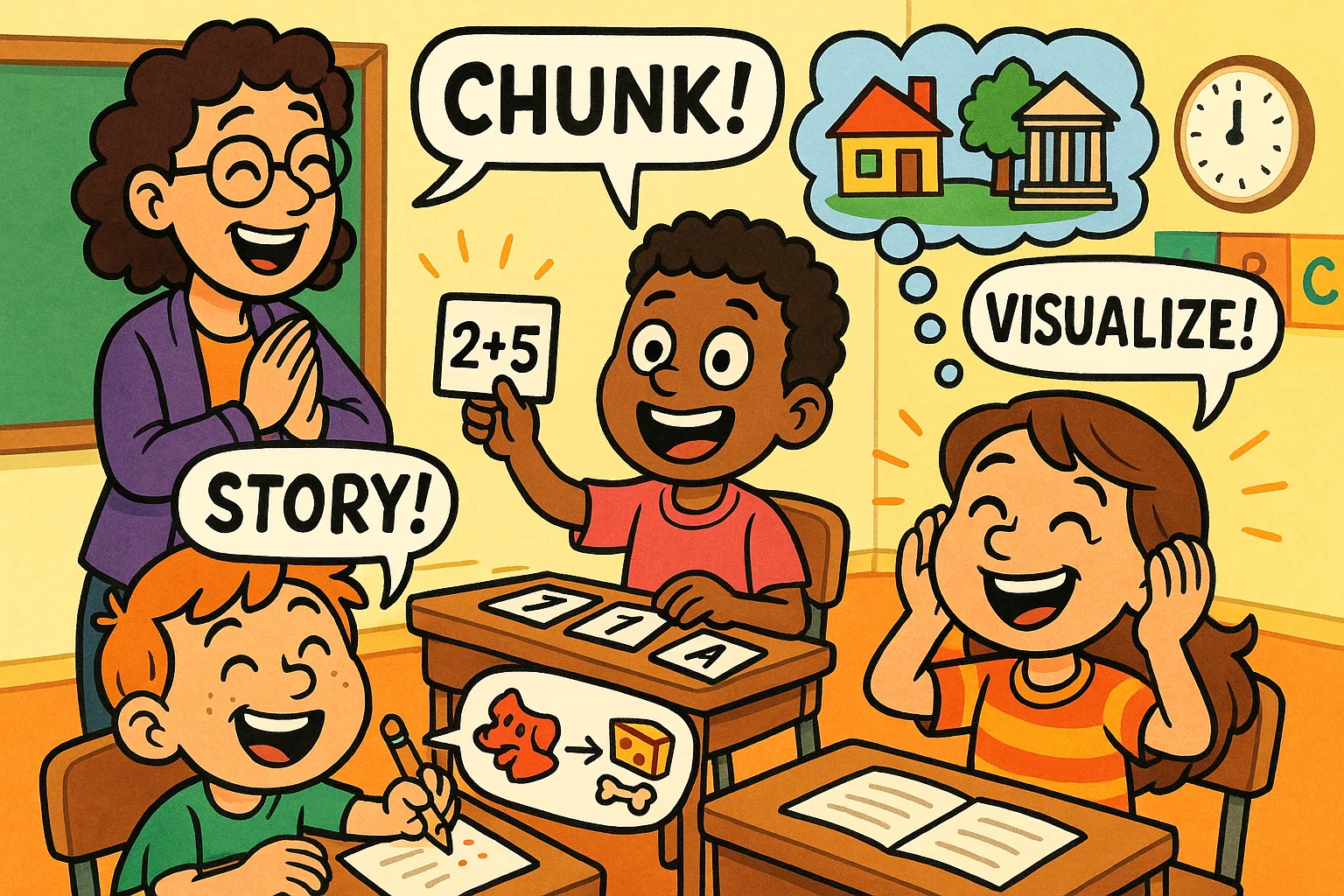
Because visual information is powerful for memory, “seeing” information can be more effective than only hearing it.
Turn Words Into Pictures
For vocabulary words, ask the child to draw a small icon next to the definition.
For example, if the word is loquacious, meaning talkative, the child might draw a mouth with many speech bubbles. This creates a visual anchor for the word.
Build Mind Maps for Lessons
A mind map starts with a central topic, such as “The Water Cycle,” and branches out into subtopics.
For example:
- Evaporation
- Condensation
- Precipitation
- Collection
This memory technique helps children see how ideas are connected instead of treating them as a random list.
Link Facts With a Story Chain
The link method involves creating a mini-story where each item leads to the next.
If a child needs to remember a list such as cat, umbrella, and apple, they can tell a story:
A cat opened an umbrella to stay dry while eating an apple.
The story connects the items into one memorable sequence.
7. Write It Down
Writing by hand engages motor, visual, and language processes in a different way from typing or simply reading. However, it works best when the child writes with attention and purpose.
Copy Key Points by Hand
When a child writes something down, they process it more than once: first when they read it, and again when they form the letters by hand.
This can support encoding, especially when the child is writing key words, definitions, or short summaries.
Rewrite From Memory
Instead of copying mindlessly, ask the child to read a paragraph, close the book, and then write down what they remember.
This forces active recall, which is the mental work that strengthens memory.
Use Short Notes Instead of Long Pages
Teach kids to use keyword notes.
Instead of copying a full paragraph, they can write:
- 1–2 key words
- a short phrase
- a small sketch
- one example
This prevents working memory from becoming overloaded by unnecessary words.
8. Use Flashcards Correctly
Flashcards are popular for a reason, but they are often used incorrectly. The key is to focus on active recall and the forgetting curve.
Put One Question on Each Card
Overloading a card with too much information makes recall harder.
Each flashcard should have one clear question and one clear answer. This allows the child to practice precise retrieval.
Say the Answer Before Flipping the Card
The most important part of flashcard practice happens before the child flips the card.
The child should say the answer aloud or write it down before checking. If they flip the card too early, they are practicing recognition, not recall.
Sort Cards by Difficulty
Use a simple version of the Leitner System:
- Hard pile: Review every day.
- Medium pile: Review every three days.
- Easy pile: Review once a week.
This helps the child spend more time on the facts they have not mastered yet.
9. Use Spaced Repetition
Spaced repetition is an evidence-based memory technique that involves reviewing information at increasing intervals to work against the forgetting curve.
Review Before the Child Forgets Everything
The child should have to work a little to remember, but not so much that the information feels completely lost.
If a child learns something at 4 p.m., a quick five-minute review at 8 p.m. can be more useful than waiting until the next day for a long review session.
Follow a Simple Review Schedule
A typical spaced repetition schedule for a school test might look like this:
- Initial study session
- Review two hours later
- Review the next morning
- Review three days later
- Final review one week later
The exact timing can change, but the principle is the same: review before the material disappears.
Keep Sessions Short
For many children, 10 minutes of focused memorization is better than 40 minutes of distracted practice.
Short sessions prevent mental fatigue and help the child stay motivated.
10. Teach Someone Else
Often called the protégé effect, teaching someone else is a strong test of whether a child truly understands the material.
Ask the Child to Explain the Lesson Aloud
When a child explains a concept, they have to organize the information logically.
If they reach a gap where they cannot explain a step, you have found exactly what they need to review or understand better.
Use a Stuffed Toy or Sibling as the Student
For younger children, turn it into a game.
Let them put on “teacher glasses” and explain the solar system to a teddy bear, sibling, parent, or even a pet. This lowers pressure and makes memorization feel like play.
End With a Quick Recap
After the teaching session, ask the child to summarize the main points in three sentences.
This final recall step reinforces the most important details before they finish the study session.
11. Use Whole-Part Practice for Poems, Speeches, and Passages
When a child needs to memorize a speech, poem, or long passage, whole-part practice can work better than memorizing isolated lines with no sense of the full piece.
Read the Full Passage First
By reading the entire piece first, the child understands the arc of the story, the rhythm of the poem, or the structure of the speech.
This gives them big-picture context, which makes individual lines easier to remember.
Practice Larger Sections
Instead of repeating the first line twenty times, have the child practice larger sections and gradually work toward reciting the whole piece.
This helps them learn transitions, not just isolated lines.
Mark Tricky Spots
Identify the specific transitions where the child consistently forgets what comes next.
These “hinge points” are good places to add a mnemonic, gesture, visual image, or keyword cue.
12. Take Regular Breaks
A child’s ability to stay focused often drops after a period of intense concentration. Breaks are not wasted time; they help the brain reset.
Use Short Study Blocks
Use a child-friendly version of the Pomodoro Technique:
- Ages 5–8: 10 minutes of study / 5 minutes of break
- Ages 9–12: 20 minutes of study / 5 minutes of break
- Teens: 25–30 minutes of study / 5 minutes of break
The exact timing can be adjusted based on the child’s attention span and the difficulty of the material.
Add Movement During Breaks
Physical movement can help reset attention.
Try:
- five jumping jacks
- a quick dance break
- stretching
- walking across the room
- tossing a soft ball
A short movement break can make the child more ready for the next round of memorization.
Avoid Screens During Short Breaks
Scrolling on a phone or watching a video during a short break can add competing stimulation and make it harder to return to the lesson.
Instead, keep breaks simple, physical, and low-stimulation.
13. Support Memory With Sleep, Movement, and Care
Healthy routines are the foundation for effective memorization. A rested, nourished, calm child is more ready to learn.
Make Sleep Part of the Memorization Plan
Sleep supports memory consolidation. During sleep, the brain helps strengthen and reorganize new learning so it becomes easier to retrieve later.
A sleep-deprived child may have a much harder time encoding and recalling new information.
Review Before Bedtime
A gentle five-minute review before bed can be helpful for vocabulary words, spelling patterns, poems, or short facts.
The review should be calm, brief, and low-pressure. Bedtime is not the right moment for frustration, drilling, or criticism.
Add Food, Water, and a Calm Routine
Hunger and dehydration can reduce attention and make memory strategies less effective.
Before study time, make sure the child has:
- water
- a healthy snack if needed
- a quiet place to work
- clear instructions
- a predictable routine
A calm child is more ready to learn than a child stuck in fight-or-flight mode.
Bonus: Offload Facts Kids Do Not Need to Memorize
Not every fact needs to take up space in a child’s long-term memory. Part of being a strong learner is knowing what to memorize and what to look up.
Use Checklists for Routine Tasks
A child should not have to memorize every step of their morning routine or backpack list.
Use a visual checklist taped to the door, desk, or backpack area. This saves cognitive energy for more important learning tasks.
Keep Reference Sheets for Low-Value Facts
If the goal of a math lesson is to learn how to solve a complex problem, give the child a reference sheet for multiplication facts they have not mastered yet.
Do not let weak recall of small facts block the learning of bigger concepts.
Save Memory Effort for Important Material
Focus memorization effort on foundational facts that children will need again and again, such as:
- basic addition and subtraction
- multiplication facts
- spelling patterns
- safety rules
- key vocabulary
- classroom routines
For less important facts, teach children how to use a dictionary, glossary, textbook index, calculator, or search engine appropriately.
Common Memory Tips That Do Not Work Well for Kids
Many traditional study habits create an illusion of competence. They make a child feel as if they are learning, but the learning does not last.
- Rereading: This is often passive and works best only when paired with self-testing or note-free recall.
- Cramming: One long session is usually less effective for long-term retention than several shorter sessions spread across the week.
- Highlighting everything: If the whole page is yellow, nothing stands out.
- Mindless copying: Writing a word 50 times can become automatic, with the hand moving while the child pays little attention to meaning or spelling.
5 Principles of Memorization for Kids
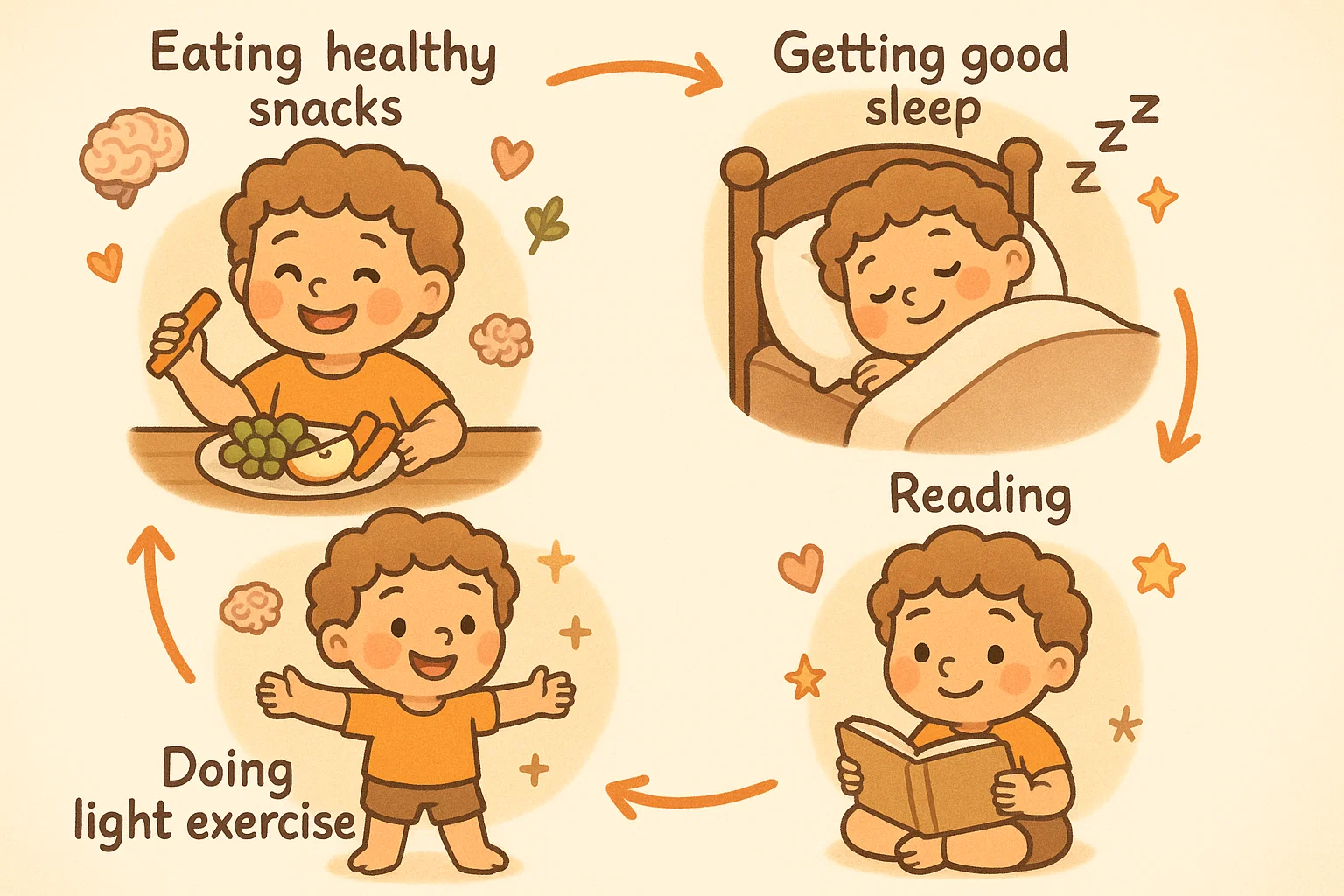
Regardless of which memory technique you use, these five principles apply to most learning and memory tasks:
- Meaningfulness: If the material does not make sense, it is harder to remember.
- Organization: Chunks and categories help the brain file information.
- Association: Link new information to something the child already knows.
- Visualization: Images can make abstract ideas easier to remember.
- Attention: Children cannot remember information they never truly attended to.
Best Memorization Plan by Age
| Age Group | Focus Technique | Typical Duration |
| Ages 4–6 | Songs, rhymes, movement, pictures | 5–10 minutes |
| Ages 7–9 | Chunking, flashcards, drawings, simple stories | 15–20 minutes |
| Ages 10–12 | Memory Palace, spaced repetition, mind maps | 20–30 minutes |
| Teens | Self-testing, study schedules, mind maps, teaching others | 30–50 minutes |
These time ranges are only general guidelines. Some children need shorter sessions, especially when the material is difficult or the child is tired.
Subject-Specific Memory Techniques
How to Memorize Spelling Words Fast
Use the Look-Say-Cover-Write-Check method:
- Look at the word.
- Say it aloud.
- Cover it with your hand.
- Write it from memory.
- Check the spelling.
Highlight the tricky part of the word in a bright color. For example, in the word separate, highlight the first a, which many children confuse with e.
How to Memorize Multiplication Facts Fast
Focus on patterns first.
Teach that:
- 5 × 2 is the same as 2 × 5.
- Multiplying by 10 adds a zero in whole-number facts.
- Multiplying by 5 often ends in 0 or 5.
Use rhymes for harder facts, such as:
6 and 8 went to dinner, ate 48.
Practice with flashcards for five minutes a day rather than one long session once a week.
How to Memorize Science or History Facts Fast
Use a story chain.
If a child needs to remember the water cycle, tell a story about “Willie the Water Droplet” traveling through evaporation, condensation, precipitation, and collection.
The narrative structure makes the sequence easier to remember.
Parent and Teacher Pitfalls in Memory Practice
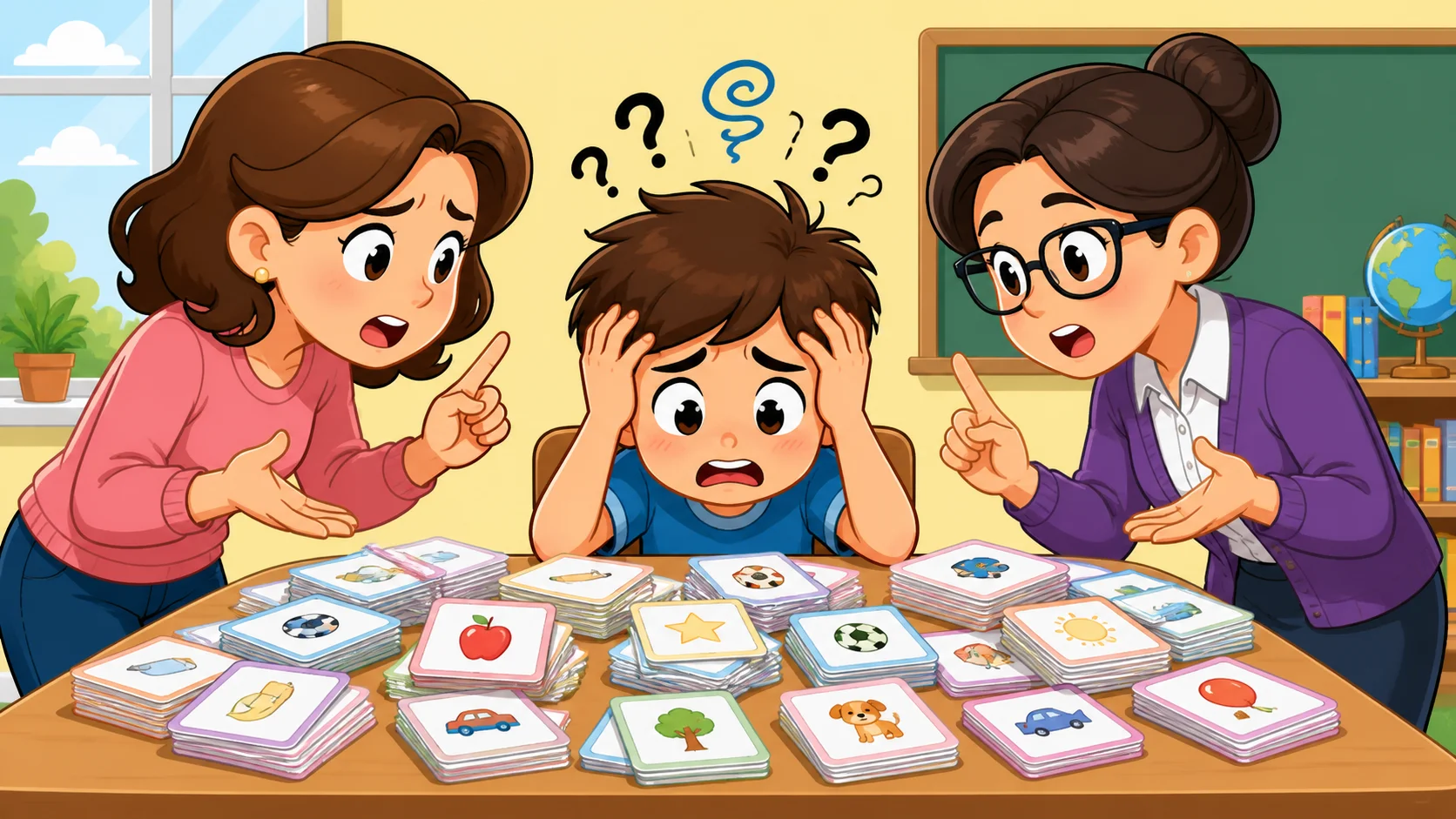
Avoid the pressure trap. When an adult becomes frustrated and says, “You just knew this a minute ago,” the child may become anxious. Anxiety can make recall harder, even when the information is still partly stored.
Instead, use leveled cues.
For example, if the child forgets a word:
- Give the first sound.
- Give the first letter.
- Give a clue about meaning.
- Ask them to try again.
- Only then give the full answer if needed.
This still allows the child to practice partial recall.
Memory Practice Routine for Fast Results
Use this five-step daily routine for any new school lesson:
- Pick a small goal. Choose just 3–5 items to memorize.
- Choose a technique. Use an acronym, song, drawing, story, flashcard, or Memory Palace.
- Practice active recall. Test the child immediately without looking.
- Review on a schedule. Do a five-minute check before bed and again the next morning.
- Celebrate progress. Use a progress chart, sticker, checkmark, or short praise.
Seeing progress helps children feel capable, and that confidence makes them more willing to keep practicing.
FAQs About Teaching Kids to Memorize Fast
How Can I Help My Child Memorize Faster?
The fastest practical approach is to combine chunking with visual memory. Break the material into small sets, then connect each set to a silly image, short story, song, rhyme, or mnemonic.
What Is the Fastest Memorization Technique for Kids?
Active recall combined with spaced repetition is one of the most reliable ways to build long-term retention. Testing themselves helps children strengthen retrieval pathways, while spaced review keeps the information from fading.
Are Mnemonics Good for Children?
Yes. Mnemonics such as acronyms, acrostics, rhymes, songs, and visual images are excellent for children because they reduce cognitive load and make complex information easier to manage.
Why Does My Child Forget After Studying?
Most often, this happens because the child studied passively, practiced only once, or did not understand the material deeply enough.
If the child does not revisit the fact later, the memory trace may weaken and become harder to retrieve. Short reviews, active recall, and meaningful connections usually help.
Do Brain Training Games Help Kids Memorize Lessons?
Some games may support attention or motivation, but the best way to memorize a speech, spelling list, math fact, or science term is to practice that specific material with active recall.
Take a short quiz to find out what your everyday choices say about your parenting style
When your child is curious about something new, what’s your instinct?
Take a short quiz to find out what your everyday choices say about your parenting style
“Can I download this app?” What happens next?
Take a short quiz to find out what your everyday choices say about your parenting style
When it comes to rules at home, which sounds most like you?
Take a short quiz to find out what your everyday choices say about your parenting style
If you could give your child one life skill today, what would you pick?
Take a short quiz to find out what your everyday choices say about your parenting style
Your child gets to choose what to watch. What would your ideal setup look like?
Take a short quiz to find out what your everyday choices say about your parenting style
Pick your parenting superpower ✨