
20 Girls’ Birthday Party Game Ideas Everyone Will Love

 Discover a Free Education Video App for Kids
Pastory uses AI to personalize educational video content based on your child’s interests and personality. Safe, engaging, and built for curious young minds. Sign up now to stay updated and enjoy early access with a free trial
Planning a child’s birthday party means balancing fun, age-appropriate activities, and a relaxed atmosphere. The best birthday party games for kids are simple to explain, easy to manage, and flexible enough for different ages. Whether you are hosting an indoor party at home, an outdoor backyard party, a fairy-themed celebration, or a poolside summer gathering, a clear list of games helps the birthday bash stay organized. This guide covers 20 birthday party game ideas for girls ages 4 to 12, balancing high-energy games with calmer, more structured activities.
Key Takeaways
- Activity Balance: The best girls’ birthday party games mix active, creative, silly, and calm activities.
- Indoor Versatility: Indoor party games work well for home parties, sleepovers, tea parties, spa parties, princess parties, and rainy days.
- Outdoor Energy: Outdoor party games help kids burn energy and work well for backyard, park, pool, picnic, and summer birthdays.
- Modern Classics: Classic games like Musical Chairs, Pin the Tail on the Donkey, Pass the Parcel, and treasure hunts still work when updated with fun themes.
- Optimized Flow: A smooth party flow can include a welcome game, an active game, a food break, a creative activity, and a final prize game.
Best Game Mix for a Girls’ Birthday Party
A smooth party works best with a simple activity flow that keeps children engaged without overwhelming them. Structured games can help reduce friction because children know what to do, when to take turns, and how to participate. A varied mix of games – active, creative, silly, and calm – helps children with different energy levels and personalities feel included.
Moving from high-energy games to quieter activities helps prevent meltdowns and keeps the party feeling fun from start to finish. For example, you might start with a welcome game, move into an active group activity, pause for food or cake, add a creative challenge, and finish with a calm prize game.
Quick Setup Tips for Parents
The easiest parties are planned before the first guest walks through the door. Preparing supplies, prizes, music, and backup plans in advance can make hosting feel much less stressful. Parents should gather all necessary supplies, pre-wrap prizes, make team lists, prepare a music playlist, and have an indoor backup plan for outdoor party games.
| Preparation Task | What to Prepare | Why It Helps |
| Prize Wrapping | 1 individual layer or prize per child | Helps every child feel included |
| Audio Playlist | 45 minutes of continuous tracks | Keeps the party moving |
| Material Stations | 1 bin per scheduled activity | Speeds up transitions between games |
Age-Appropriate Party Planning
Successful birthday party games work best when the rules match the children’s ages and attention spans. For children ages 4 to 5, keep instructions simple, avoid harsh elimination rules, and choose games that involve movement, turn-taking, and easy choices. Older kids ages 9 to 12 often enjoy more strategic challenges, team play, and chances to collaborate with friends.
Adjusting the rules based on age keeps younger kids from getting frustrated while keeping older girls fully engaged. A game can be made easier by removing elimination, shortening the rounds, or pairing children into teams. For older kids, add time limits, scorecards, clues, or themed challenges.
1. Indoor Treasure Hunt
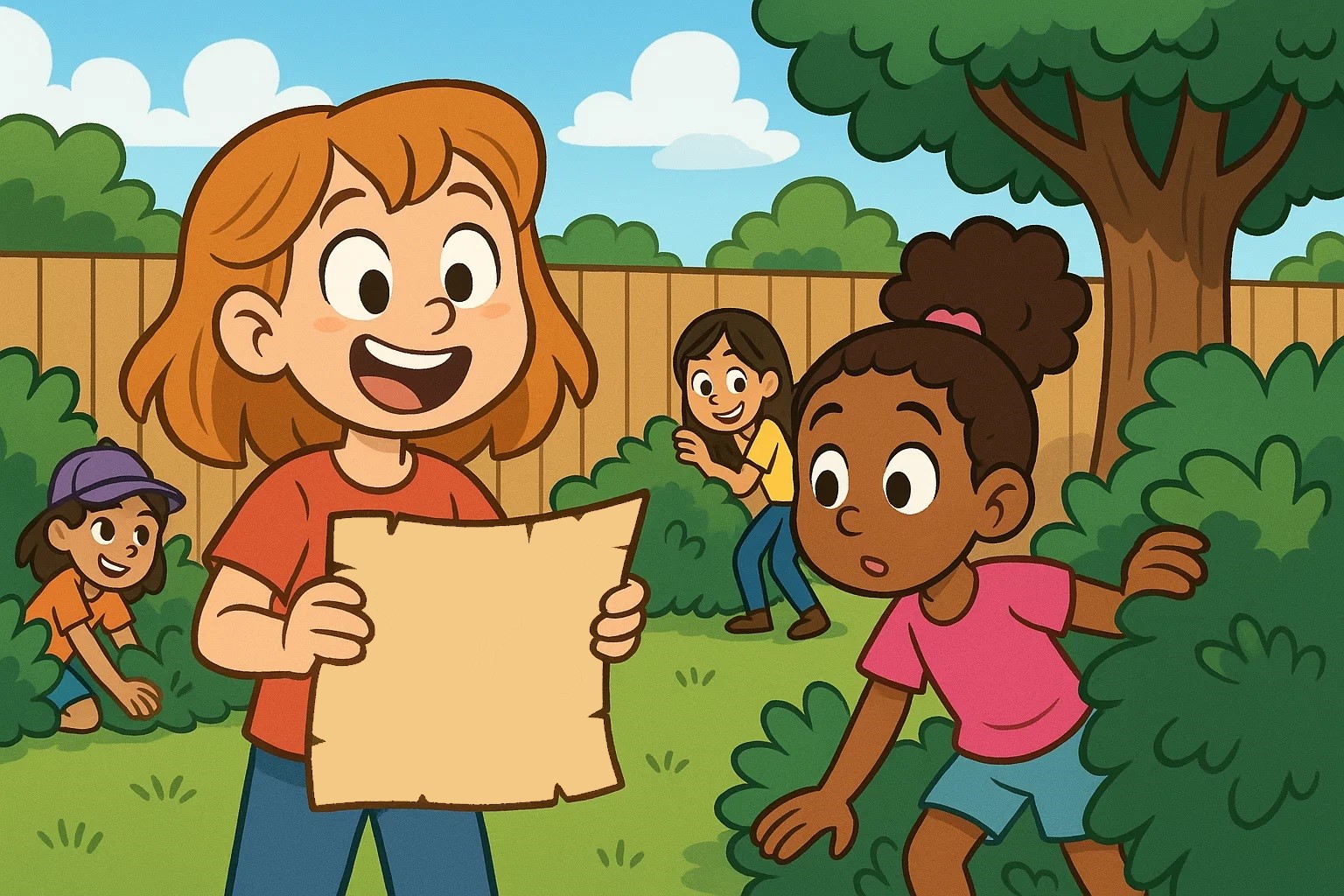
An indoor treasure hunt is a clue-based game that gets children moving, thinking, and working together. This scavenger hunt works in a living room, throughout the house, or in a designated party room, keeping children engaged with a sequence of fun clues.
Treasure Hunt Setup
Set up 6 to 10 clue cards and hide them in safe, easy-to-reach places around the house. The host divides the guests into balanced teams of 3 to 4 children to encourage teamwork. Each team receives an initial clue that leads to a hidden location, where the next clue is waiting, ending at a final treasure zone.
Girls’ Birthday Theme Ideas
A themed party can make the treasure hunt feel more magical. A princess party can use hidden royal jewels, a mermaid party can include lost ocean pearls, and a fairy party can feature trails of faux fairy dust. For older kids, a pop star party theme can include hidden VIP backstage passes, while a rainbow party can involve collecting multi-colored tokens.
Prize and Safety Tips
At the final stop, place one shared treasure box with the same party favor for every child. Set clear physical boundaries and keep off-limits areas, such as bedrooms, staircases, or storage rooms, out of the game. Choose allergy-safe treats or non-food favors, such as friendship bracelets, to help every child participate safely.
2. Photo Scavenger Hunt
A photo scavenger hunt uses photos to encourage teamwork and creativity during the party. For this modern party game, children use an adult’s smartphone, a tablet, or an instant camera to photograph specific items or prompts within the party area.
Photo Challenge List
The photo challenge list can include 10 specific prompts that teams must complete within a set time limit. Sample prompts include finding a “pink object,” capturing a teammate’s “silly face,” or creating a fun “birthday girl pose.” Teams can also search for a “sparkly item” or coordinate a group “team heart pose” to earn bonus points.
Indoor and Outdoor Versions
The living room version can focus on household items, furniture, decorations, or party details. For an outdoor party at a park or in a spacious backyard, the list can include natural elements like specific leaves, smooth stones, flowers, or playground equipment. A sleepover setting allows for specialized prompts, such as matching pajama patterns or cozy blanket forts.
Memory Keepsake Idea
The photos double as both a party activity and a keepsake from the birthday celebration. Hosts can print the photos using an instant printer, allowing the girls to create their own mini scrapbook. Alternatively, parents can compile the digital files into a thank-you card collage or a digital slideshow at the end of the birthday bash.
3. Pass the Parcel
Pass the Parcel is a classic circle game where children pass a wrapped gift while music plays. This traditional party game uses music to tell players when to pass and when to stop, making it easy for the group to follow.
How Pass the Parcel Works
The host wraps a main prize in 10 to 15 layers of different wrapping paper, placing a small treat or favor between some of the layers. The children sit in a circle and pass the parcel while the music plays. When the host stops the music randomly, the child holding the package unwraps exactly one layer of paper.
Fun Filler Ideas
Good small fillers include colorful stickers, hair clips, temporary tattoos, friendship beads, and personalized mini notes. Selecting a mix of non-food items and small treats gives children variety and helps reduce the amount of candy at the party.
No-Elimination Variation
Traditional elimination games can cause distress, especially for younger children. A no-elimination version keeps everyone included. The host times the music so that every child gets a turn to unwrap one layer and receive a small prize. This adjustment removes pressure and makes sure no guest leaves the circle empty-handed.
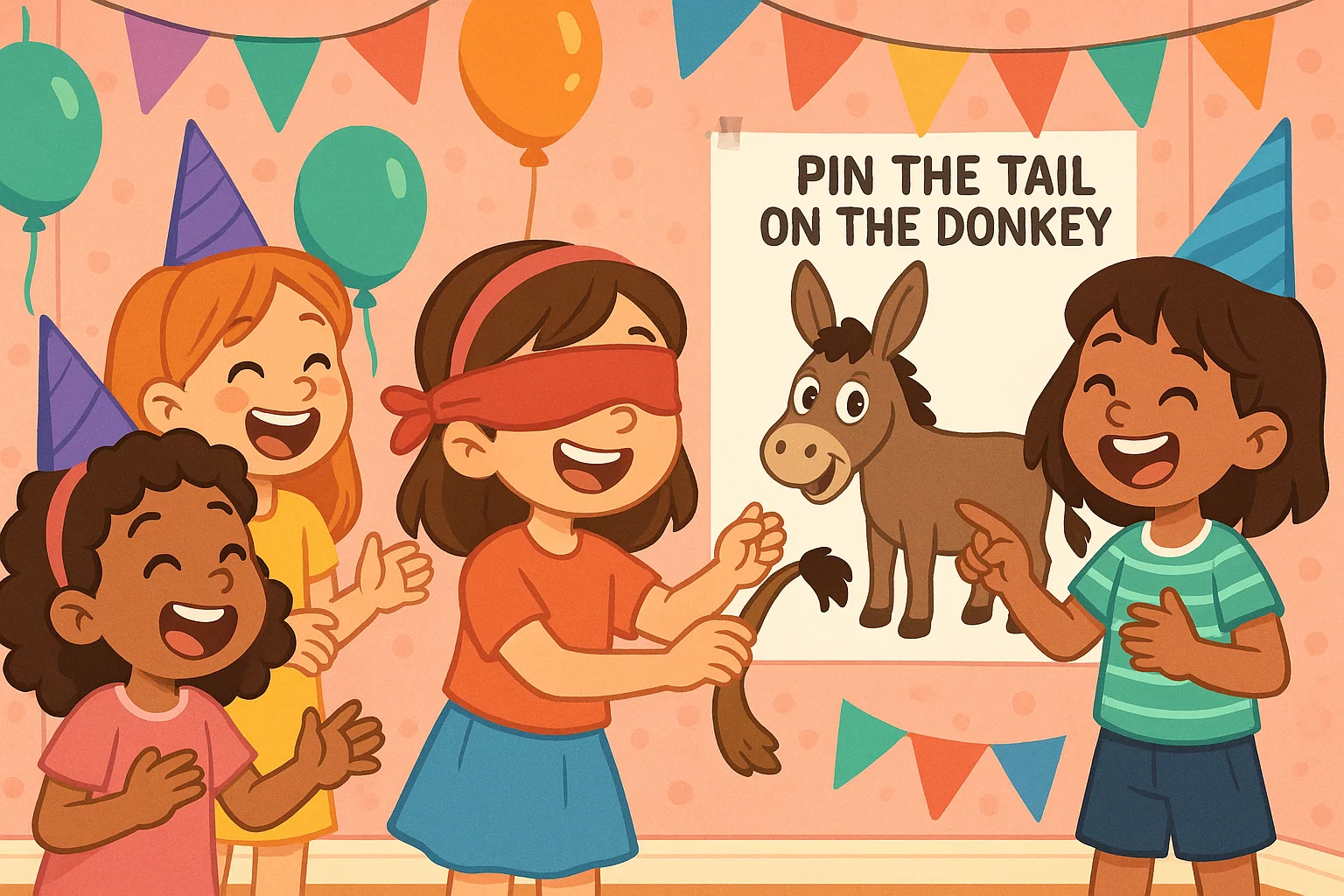
4. Pin the Tail on the Donkey
Pin the Tail on the Donkey remains a classic party game because it is simple, silly, and easy to adapt to any theme. This blindfold party poster game can be customized to match almost any modern birthday celebration.
Classic Game Rules
For the classic version, hang a large poster at the children’s eye level. The host blindfolds the player, spins them gently twice, and hands them a paper tail with double-sided tape. The player walks toward the poster and places the tail; the child who gets closest to the target wins.
Cute Theme Swaps
Modifying the visual elements transforms this traditional game into a perfect match for a themed birthday celebration. Parents can swap the donkey poster for a unicorn to play Pin the Horn on the Unicorn or use a princess silhouette for a Pin the Crown on the Princess game. Additional options include placing a bow on a kitten, a star on a fairy wand, or a tail on a mermaid.
DIY Printable Option
A DIY printable version lets hosts customize the game affordably with simple supplies. Parents can download high-resolution templates, print the main poster across multiple standard pages, and cut out individual pieces for the guests. Write each child’s name on their cutout so it is easy to compare placements at the end.
5. Piñata
A piñata can be an exciting party highlight, combining movement with a fun shower of treats and small prizes. This activity works well as a transition from structured games into cake-cutting or snack time.
Piñata Safety Rules
Safety management is essential when children take turns swinging at a piñata. The host should mark a clear safety line at least 10 feet away and make sure all waiting children stay behind it. An adult should control the rope and use a lightweight plastic or foam-covered bat to reduce the risk of injury.
Filler Ideas
A modern piñata can hold more than candy. Hosts can fill the interior with colorful paper confetti, individual sticker sheets, mini plastic toys, woven bracelets, and fun erasers. Mixing wrapped candy with non-food prizes ensures that children with dietary restrictions can still participate in the rewards.
Theme Matching Tips
Choose a piñata that matches the party decorations to create a cohesive look for the party space. A unicorn or glittery crown shape fits princess or Barbie-style gatherings, while a pastel seashell complements a mermaid party. For a nature-focused or whimsical outdoor party, a butterfly, rainbow, or flower design works beautifully.
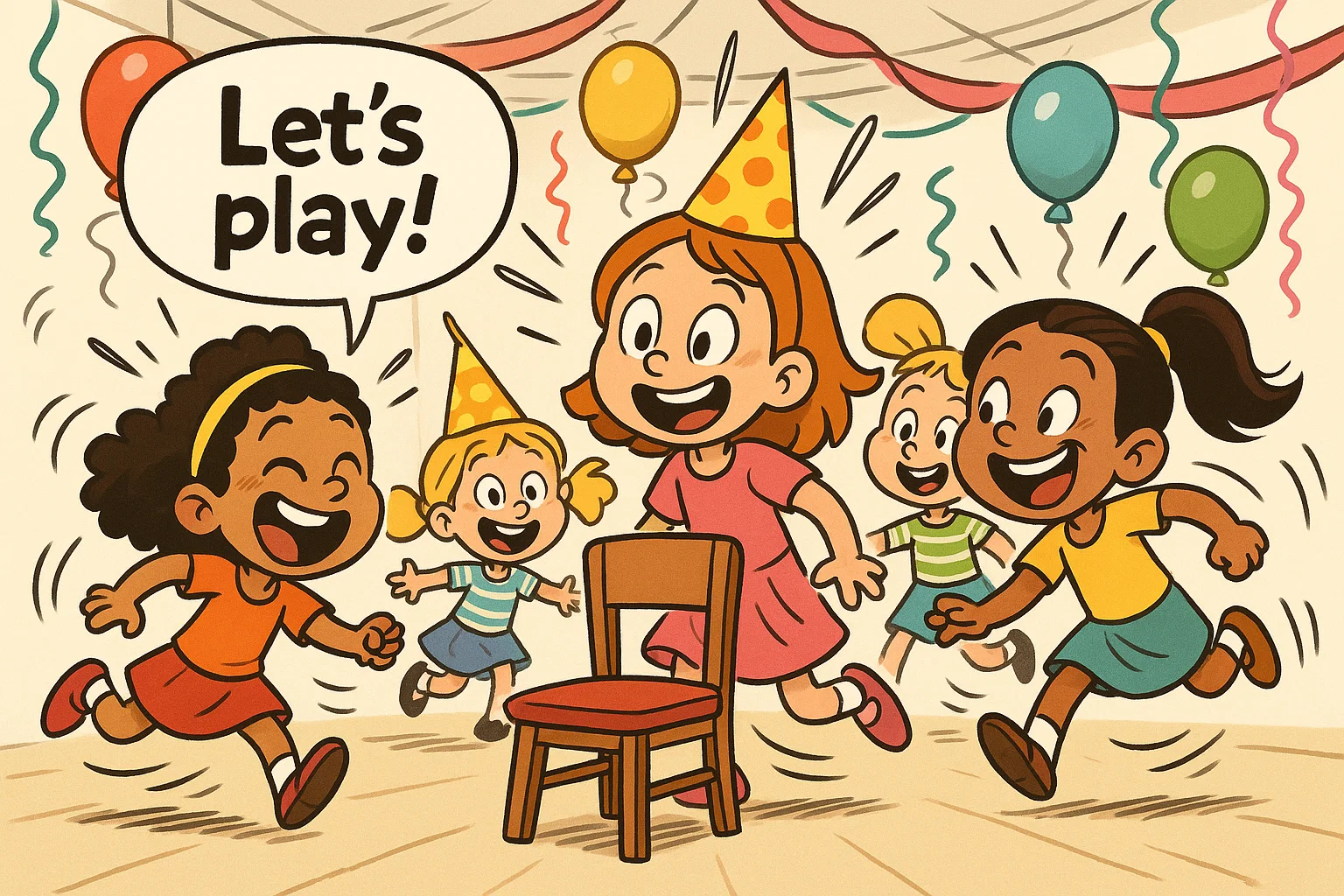
6. Musical Chairs
Musical Chairs is a simple way to add movement, music, and excitement to a child’s birthday party. This game relies on music and quick reactions, making it a great energy burner for active groups.
Standard Musical Chairs Rules
For the standard version, place chairs back-to-back in the center of the room, using one fewer chair than the number of players. While the music plays, the children walk in a circle around the chairs. When the music stops, every player must sit on an available seat. The player left standing is out, one chair is removed, and the cycle repeats.
Friendly No-Elimination Version
To prevent tears and keep everyone included, use a no-elimination version focused on teamwork instead of knocking players out. Instead of leaving the game, children can share the remaining seats by sitting close together or finding creative ways to fit as a group. Alternatively, players can complete a silly dance move or earn team points when the music cuts out, keeping everyone playing until the final round.
Music Playlist Ideas
The energy of the game depends heavily on the chosen soundtrack. The playlist should feature upbeat, clean songs, including the birthday girl’s favorite tracks, well-known Disney anthems, and modern pop hits. A high-energy list transforms the activity into an interactive dance party that keeps engagement high.
7. Musical Statues / Freeze Dance
Musical Statues tests balance and self-control while letting children dance freely. This simple game requires no extra props, making it an excellent option for unexpected transitions or sudden weather changes.
Musical Statues / Freeze Dance Rules
In Freeze Dance, players dance around the room while the music plays. The moment the host pauses the audio track, every participant must freeze in their current position. Players try to stay still for 5 to 10 seconds until the music starts again.
Pose Challenge Ideas
Adding specific pose challenges introduces a fun, creative element to each round. The host can call out a pose just before turning off the music, such as a “princess pose,” a “superhero pose,” or a “ballerina pose.” Other fun variations include asking for a funny “animal pose” or a dramatic “pop star pose” on the runway.
Twist for Shy Guests
Traditional elimination styles can make introverted or self-conscious children feel uncomfortable. To support these guests, the host can use partner freezes, team shapes, or a “best pose wins” format. This structure rewards creativity and effort rather than penalizing small movements, keeping the atmosphere relaxed and fun.
8. Musical Hats
Musical Hats introduces an entertaining dress-up element into traditional music-based games. This activity encourages self-expression in a low-pressure group setting.
Hat Passing Rules
The children sit in a circle and pass one silly or fancy hat around while the music plays. When the music stops, the participant wearing the hat draws a challenge card from a central container. Once they complete the quick challenge, the music starts again, and the hat continues around the circle.
Challenge Card Ideas
The challenge cards should feature simple, positive tasks that take less than 30 seconds to complete. Prompts might include singing one line of a favorite song, showing a dance move, or giving a friend a kind compliment. Other options include striking a runway pose or naming a favorite treat out loud.
Costume Box Upgrade
Upgrading the game with a full costume box increases the fun and visual appeal of the activity. Hosts can add colorful scarves, glittering crowns, oversized sunglasses, feather boas, and fun hair clips to the passing rotation. This setup allows the children to gradually build a complete, hilarious outfit as the game progresses.
9. Pass the Crown
Pass the Crown adapts classic circle game mechanics into a royal theme, making it a perfect fit for princess-themed birthday parties. This version focuses on building confidence and encouraging positive peer interactions.
Crown Circle Rules
Children sit in a circle and pass a velvet or gold plastic crown while themed music plays. The player holding the crown when the music stops places it on their head and answers a prompt or completes a simple challenge. This version keeps the suspense of a passing game while giving each child a fun moment in the spotlight.
Princess Party Variation
Incorporating specific royal elements deepens the imaginative play for younger children. The host can introduce royal commands, such as asking the group to perform a coordinated court dance or bow to the current crown wearer. Adding quick castle clues or “Queen Says” commands keeps the activity aligned with the princess theme.
Confidence-Building Prompts
The prompt cards can build confidence and reinforce positive social skills among the children. Players might answer prompts like “Say something kind about the person next to you,” “Describe your dream party,” or “Show us your favorite royal pose.” These prompts encourage public speaking in a supportive, warm environment.
10. Simon Says
Simon Says is a fantastic game for developing listening skills, focus, and motor control in young children. It requires no advance preparation and can be easily adapted to match any party theme.
Simple Command List
For younger groups, the commands should focus on clear physical movements. Excellent options include jumping in place, clapping hands, twirling around, touching their noses, or making heart shapes with their hands. Incorporating imaginative actions, like waving like a princess or roaring like a lion, keeps the energy high.
Theme Command Ideas
Modifying the key phrase allows the game to blend seamlessly with the chosen party theme. Parents can use “Fairy Says,” “Queen Says,” “Unicorn Says,” or “Mermaid Says,” depending on the theme. Using “The Birthday Girl Says” is another great way to make the guest of honor feel extra special.
Mixed-Age Adjustment
When hosting a party with a mix of ages, the host should adjust the speed and complexity of the commands. Keep instructions clear and simple for preschoolers, while introducing a faster pace and trickier multi-step commands for older girls. This approach keeps the game challenging for older kids without leaving younger children behind.
11. Sleeping Lions
Sleeping Lions is a classic calming game designed to lower the room’s energy and help children settle down. It is a highly effective tool for managing transitions during a busy party.
Calm Party Reset
This activity serves as an excellent reset after high-energy moments like cake cutting, active outdoor games, or piñata breaking. It helps children settle down, making it easier to wind down the party or get ready for pickup.
Funny Wake-Up Tricks
The participants lie down on the floor, close their eyes, and try to remain completely still like sleeping lions. The host walks around the room and uses gentle, non-contact tricks to make the “lions” move or laugh. Effective tricks include making silly faces, whispering quiet jokes, pretending to meow like a cat, or telling a lighthearted story.
Fair Winner Format
To maintain a supportive atmosphere, the game can reward multiple styles of participation rather than using a single elimination system. The host can hand out small tokens or stickers for the “quietest lion,” the “funniest lion,” and the “best acting lion.” This approach ensures that several children are recognized for their creativity and focus.
12. Kim’s Game
Kim’s Game is a simple memory challenge that helps children practice visual recall and focus. It provides a wonderful, quiet alternative that works beautifully during tea parties or sleepovers.
Memory Tray Setup
The host places 10 to 20 small themed items on a tray and sets it in the middle of the group. The players have 60 seconds to study the objects before the host covers the tray with a cloth. The participants then work individually or in teams to write down or recall as many items as they can.
Girls’ Party Item Ideas
Selecting objects that match the interests of the guests makes the memory challenge even more engaging. Excellent items for the tray include colorful lip balms, shiny ribbons, beaded bracelets, fun cupcake toppers, mini dolls, stickers, hair bows, unique keychains, and glitter pens.
Team Memory Variation
Pairing younger children together or forming small teams helps reduce individual pressure and encourages collaboration. Teams work together to compile a single master list of the hidden items they remember. This cooperative approach turns a memory challenge into a fun team-building activity.
13. Chocolate Game
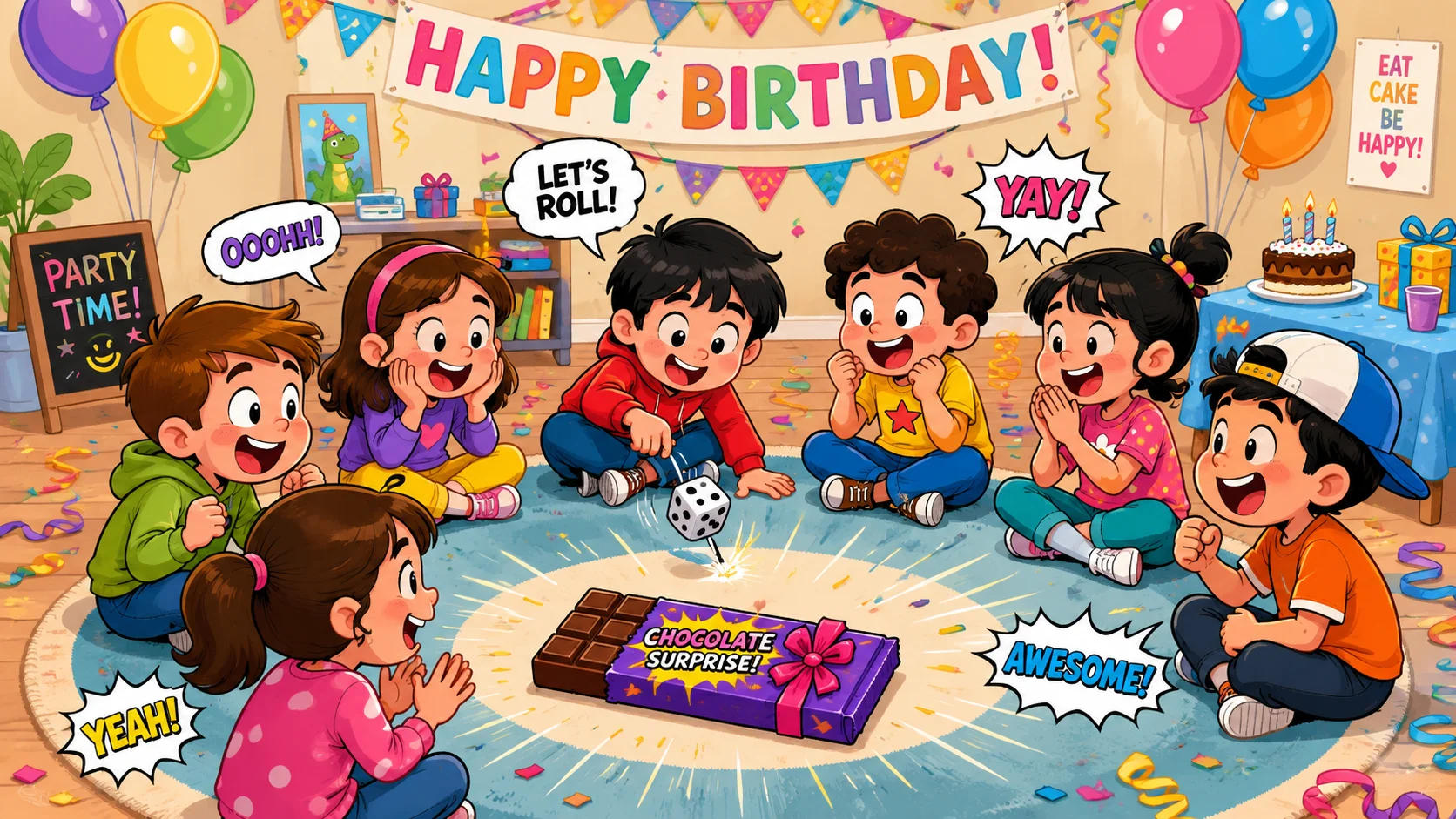
The Chocolate Game is a high-energy classic that combines rolling a die with a funny race to unwrap a treat. It adds a spark of excitement to any indoor party.
Chocolate Game Rules
The children sit in a circle around a tray with a fully wrapped chocolate bar, child-safe cutlery, and dress-up items such as a hat, scarf, and gloves. Players take turns rolling a standard die, trying to land on the number six. When a player rolls a six, they put on the dress-up items and try to unwrap the chocolate with child-safe cutlery, taking only one small piece before the next player rolls a six.
Candy Bar Game Variation
For a quicker, individual spin, the candy bar variation uses a variety of wrapped treats and fast dice rotations. This setup keeps the game moving quickly and gives every child multiple chances to roll and participate.
Allergy-Friendly Swaps
When hosting guests with food allergies or dietary restrictions, the chocolate bar can be swapped for safe alternatives. Good choices include allergy-safe cookies, wrapped fruit snacks, or a prize box filled with small non-food items. These swaps ensure that every guest can join in the fun safely.
14. Doughnut Challenge
The Doughnut Challenge is a classic, hilarious game that creates memorable moments at a party. It challenges coordination and balance in a fun, lighthearted way.
String Setup
The host hangs doughnuts from a sturdy horizontal string or individual lines, keeping them at a comfortable height for each player. Participants stand in front of their doughnut with their hands behind their backs. Players try to take bites without using their hands, and the host can give small prizes for effort, funniest attempt, or best balance instead of rewarding speed-eating.
Mess Control Tips
While this game is fun, it can get messy, so a few simple precautions help make cleanup easier. Set up the activity outdoors, use aprons, and keep wet wipes handy to make cleanup simple. For younger children, using smaller doughnut holes instead of full-sized doughnuts makes the game more manageable.
Cute Theme Ideas
Matching the treats to the party’s color scheme adds a wonderful touch to the overall decorations. Hosts can use pink glazed doughnuts, rainbow sprinkles, or custom unicorn-themed treats. For a neater variation, use mini doughnuts or doughnut holes instead of full-sized doughnuts.
15. Cookie Face
Cookie Face is a funny challenge that tests coordination and patience. It is an excellent addition to a lineup of short, high-energy games.
Cookie Face Rules
Each participant leans back, tilts their head, and places a cookie in the center of their forehead. Using only facial movements – and keeping their hands behind their backs – players try to move the cookie down to their mouth. If the cookie falls off their face, the player returns it to their forehead and tries again.
Best Cookie Choices
Choosing a cookie that is relatively flat and has a bit of texture helps it grip the skin slightly, making the game fairer. It is essential to choose allergy-safe options, such as gluten-free or nut-free varieties, to protect all guests. Having extra cookies on hand is also smart in case any break when they drop.
Funny Photo Moment
The funny facial expressions children make while trying to move the cookie create wonderful, authentic photo opportunities. Parents can capture these hilarious candid moments, which make fantastic additions to a post-party album or a thank-you note collage.
16. Minute-to-Win-It Games
Minute-to-Win-It games are short, 60-second challenges that use common household items. They are fantastic for older kids who enjoy friendly competition and testing their skills.
Easy One-Minute Challenges
These quick challenges are easy to set up and can use a wide variety of household supplies. Fun options include stacking plastic cups into pyramids, scooping cotton balls with a spoon while blindfolded, or keeping a balloon in the air using only their breath. Other engaging tasks include straw races, sorting colored candies into matching cups, or threading beads onto a pipe cleaner.
Team Station Setup
To keep a large group organized, hosts can set up distinct stations around the room and have small teams rotate through them. Each team carries a scorecard to track their successful attempts at each station. This layout keeps everyone moving and actively engaged without long wait times between turns.
Prize System
A points-based reward system keeps the focus on fun and participation rather than intense competition. Teams earn colorful stickers or ribbons at each station, culminating in lighthearted titles like “Champion of Silliness” or “Master of Balance.” This approach keeps the atmosphere celebratory and positive for everyone.
17. Balloon Keep-Up
Balloon Keep-Up is a fun way to get kids moving while building spatial awareness and teamwork. With enough open space, it can be a safe indoor game that keeps everyone active and involved.
Basic Balloon Rules
The core goal of the game is simple: players must work together to keep a floating balloon in the air without letting it touch the ground. Participants can use their hands, elbows, knees, or gentle head taps to keep the balloon afloat. This simple setup creates an inclusive game that children of many ages can enjoy.
Team Challenge Mode
To add a bit of structure for older kids, hosts can introduce specific team challenges. These include splitting the group into pairs, standing in a large circle, or assigning color-coded balloons to different teams. Adding a countdown timer introduces a fun element of cooperative challenge.
Indoor Safety Tips
Balloons are ideal for indoor play because they are soft and lightweight, but preparing the room helps create a safer environment. Clear out an open space away from sharp corners, fragile decorations, or tripping hazards. Use latex-free balloons if any guests have latex allergies, and keep uninflated or broken balloons away from children under 8.
18. Balloon Relay Races
Balloon relay races are perfect for outdoor parties where teams can enjoy a bit of friendly, high-energy competition. They require minimal equipment and can be customized with all sorts of funny movements.
Relay Setup
The host sets up a clear running track with a distinct start line and a turnaround marker for each team. The guests split into equal teams and line up behind the start line, ready to pass the balloon to the next teammate. Ensuring the running surface is flat and free of debris keeps the race safer and more fun.
Funny Relay Variations
Adding funny movement challenges makes the race more entertaining for both the runners and the onlookers. Variations include squeezing the balloon between the knees, waddling back-to-back with a partner, balancing the balloon on a large spoon, or popping the balloon at the finish line before the next teammate can start.
Outdoor Party Fit
These races are an excellent fit for a backyard, park, or summer pool party where children have plenty of space to run freely. The extra space allows multiple teams to compete side by side, making the race a high-energy highlight of an outdoor celebration.
19. Glow Balloon Tag
A glow balloon game can be a high-energy option for evening parties, backyard gatherings, or sleepovers. It combines glowing visual elements with an exciting, fast-paced challenge.
Glow Setup
For a safer version, use LED balloons or glow-in-the-dark balloons instead of placing glow sticks inside balloons. The host turns down the lights in a spacious room that is completely clear of obstacles, creating an exciting neon play zone. Upbeat music sets the perfect tempo for the activity.
Stomp Game Rules
Each participant has a glowing balloon carefully secured to their ankle with a piece of soft yarn. The goal is to tap or tag other players’ balloons while protecting their own, with adults supervising closely and keeping the play area clear. The last player left with an intact glowing balloon wins the round.
Gentler Version
For younger children or more sensitive groups, a gentler version removes competitive chasing while keeping the glowing fun. Players can work together in teams to collect specific balloon colors or join in a glowing dance party where the goal is simply to keep the balloons moving to the music.
20. Water Balloon Games
Water balloon games are a classic way to cool off and add a splash of excitement to hot summer birthdays and pool parties. They provide fantastic, refreshing fun for outdoor celebrations.
Water Balloon Toss
In the classic water balloon toss, players pair up and stand facing each other a short distance apart. With each successful catch, both partners take one step backward, increasing the distance and the challenge. The game continues until only one pair remains with an unpopped water balloon.
Water Balloon Pop
For a fast, high-energy option, the host can set up target-popping stations or timed challenges. This can include stepping on balloons in a designated zone or throwing them at specific targets on a board. These variations add a fun variety of play options to the party.
Cleanup and Safety
To reduce waste, hosts should pick up every balloon fragment immediately after the game and avoid balloon pieces being left in the yard, park, or water. Setting up a clear towel station and having dry clothes ready ensures a comfortable transition when the game is over. Adults must supervise the games closely to make sure balloons are thrown safely below the shoulders.
FAQ About Girls’ Birthday Party Game Ideas
What are the best party games for kids at a girls’ birthday party?
The best party games for kids are easy to explain, simple to set up, and flexible enough for different ages. Treasure hunts, Musical Chairs, Pass the Parcel, Balloon Keep-Up, Minute-to-Win-It games, and Photo Scavenger Hunts all work well because they can be adjusted for kids of all ages.
What is a fun party game for a small indoor birthday?
A fun party game for a small indoor birthday is Pass the Parcel because it needs very little space and keeps every child involved. Musical Hats, Cookie Face, Kim’s Game, and Sleeping Lions are also great choices for a child’s party when the weather keeps everyone inside.
Which classic birthday party game still works best today?
A classic birthday party game like Pin the Tail on the Donkey still works because it is simple, silly, and easy to match to almost any theme. For example, it can become Pin the Crown on the Princess, Pin the Horn on the Unicorn, or Pin the Tail on the Mermaid for a more creative birthday party.
What is the perfect party game for mixed ages?
The perfect party game for mixed ages is usually one with simple rules and no harsh elimination. Balloon Keep-Up is a great option because younger children can simply try to keep the balloon in the air, while older kids can play team challenges, timed rounds, or color-coded versions.

Take a short quiz to find out what your everyday choices say about your parenting style
When your child is curious about something new, what’s your instinct?
Take a short quiz to find out what your everyday choices say about your parenting style
“Can I download this app?” What happens next?
Take a short quiz to find out what your everyday choices say about your parenting style
When it comes to rules at home, which sounds most like you?
Take a short quiz to find out what your everyday choices say about your parenting style
If you could give your child one life skill today, what would you pick?
Take a short quiz to find out what your everyday choices say about your parenting style
Your child gets to choose what to watch. What would your ideal setup look like?
Take a short quiz to find out what your everyday choices say about your parenting style
Pick your parenting superpower ✨



