
Fun Facts for Kids Age 12: 150 Random Facts Kids Love

 Discover a Free Education Video App for Kids
Pastory uses AI to personalize educational video content based on your child’s interests and personality. Safe, engaging, and built for curious young minds. Sign up now to stay updated and enjoy early access with a free trial

Welcome to the ultimate collection of 150 interesting facts designed specifically for the curious minds of 12-year-olds. At this age, you are moving beyond simple trivia and into the territory of the weird, the wonderful, and the “Wait, is that actually true?” This article gathers the funniest, strangest, and most educational facts from across the globe—and beyond it. Whether you are looking for a conversation starter for the dinner table, a cool tidbit for friends and family, or a unique topic for a school project, these facts are guaranteed to amaze and inspire.
Key Takeaways
- Diverse Topics: This list covers science, space, animals, the human body, history, geography, food, and more.
- Curiosity Driven: We focus on facts that are challenging enough for 12-year-olds while still being fun.
- Practical Use: Use these entries for trivia nights, middle school projects, future high school preparation, or just to impress your friends.
- Educational Value: Every fact is rooted in reality, helping you dive deeper into how the world works.
- Engaging Format: From animal facts for kids to weird history, the content is structured for quick reading and maximum “wow” factor.
Best Facts for Curious 12-Year-Olds
Twelve is a major milestone in learning. At this age, many kids begin developing stronger critical thinking skills: they are not just interested in what happened, but also why it happened. You are ready for the “grown-up” version of science and history. This collection moves past basic “the sky is blue” trivia and explores ancient mysteries, record-breaking animal behavior, and the physics that shapes our planet.
Topics Covered in This List
To help you find exactly what you need, we have organized these amazing facts into several popular categories:
- The Natural World: Animals, sharks, cats, lions, insects, oceans, and dinosaurs.
- Physical Science: Space, planets, math, and physics.
- Humanity: The human body, ancient history, and famous people.
- Lifestyle: Food, geography, and random trivia.
Ways to Use These Facts
These fun facts for kids are not just for reading; they are tools for engagement.
- School Presentations: Use a “hook” fact to start your next science or geography report.
- Social Spark: Be the person with the best random facts during lunch or at sports practice.
- Family Interaction: Challenge your parents to a trivia night or share a fact during a holiday like Christmas.
- Creative Writing: Use a weird historical event or an amazing animal feature as a prompt for a story.
Fun Facts for Kids
General fun facts are the perfect fuel for curiosity. These are the cool snippets of information that do not always fit into a single box but are always a hit when shared.
Cool Facts Kids Can Share With Friends
- The Eiffel Tower changes size slightly with temperature, and its top can shift by about 15 centimeters on a sunny day. This happens because the iron in the structure expands when it gets hot, a process called thermal expansion.
- Wombat poop is shaped like a cube. This unique feature prevents the droppings from rolling away, allowing the animal to mark its territory effectively on flat rocks.
- One of the first practical videotape recorders was about the size of a piano. Introduced in 1956, this record-breaking piece of broadcast technology shows how much engineering has shrunk video equipment over the years.
Funny Facts That Make Kids Laugh
- Turkeys can blush when they are scared or excited. Much like a human, the skin on their necks turns bright red, making them look like they are embarrassed.
- A single strand of spaghetti is technically called “spaghetto” in Italian. That is because “spaghetti” is plural in Italian, while “spaghetto” is singular.
- Cows can form close social bonds and may become stressed when separated from familiar companions. This social behavior shows that animals have complex emotional lives just like us.
Smart Facts That Teach Something New
- Honey never spoils because it has low moisture and high acidity. Archaeologists have found pots of honey in ancient Egyptian tombs that are over 3,000 years old and still edible.
- The shortest war in history lasted only 38 minutes. It occurred between Britain and Zanzibar in 1896; Britain won before the average person could finish their lunch.
- A bolt of lightning is five times hotter than the surface of the Sun. The surface of the Sun is about 10,000°F, while lightning can heat the air around it to about 50,000°F in a fraction of a second.
Random Facts for 12-Year-Olds
Random facts are perfect for those moments when you just want to enjoy the oddities of Earth.
Weird Everyday Facts
- A falling vending machine can be surprisingly dangerous. In some places, more people have been injured by vending machines tipping over than by shark attacks.
- The dot over the letter “i” has a specific name: it is called a “tittle.” This tiny feature of the alphabet dates back centuries to ancient scribes.
- Until U.S. circulating penny production ended in 2025, pennies cost more than one cent to make and distribute. In fiscal year 2024, the U.S. Mint spent 3.69 cents to make and distribute each penny.
Strange But True Facts
- The Scots language has 421 recorded words and expressions related to snow. Researchers catalogued terms for many kinds of snowy weather, from light snow to large snowflakes.
- Oxford University is older than the Aztec Empire. Teaching at Oxford began in 1096, while the Aztec civilization in Mexico did not start until around 1325.
- A cloud can weigh more than a million pounds. Even though clouds look fluffy and light, the water droplets inside a large cumulus cloud add up to a massive weight.
Surprising Number Facts
- A billion seconds is about 31.7 years. This helps kids picture the difference between a million seconds, which is about 11.5 days, and a billion seconds.
- The number four is the only number in the English language that has the same number of letters as its value. This is a fun piece of math trivia to test on your friends and family.
- On a standard six-sided die, opposite sides always add up to seven. If you look at the 1, the 6 will be on the opposite side; 2 is opposite 5, and 3 is opposite 4.
Science Facts for 12-Year-Olds
Science is a way to study how the world works. These facts use STEM principles to explain the invisible forces that govern our lives.
Physics Facts Kids Can Picture
- Sound travels about four times faster in water than in air. This is one reason sound behaves differently underwater and can be harder for humans to locate accurately.
- If you could fold a piece of paper 42 times, it would reach the Moon. While this is physically impossible with standard paper, the math behind exponential growth is amazing.
- Glass is an amorphous solid. It is not a liquid, but its atoms are not perfectly arranged like a crystal, which is why it can be transparent.
Chemistry Facts Around Us
- The human body contains enough iron to make a small nail about 3 inches long. Iron is essential for helping your blood carry oxygen.
- Table salt is made of two dangerous elements. Sodium can react violently with water, and chlorine is a poisonous gas, but together they form sodium chloride: the table salt we eat every day.
- Diamonds and graphite, the material used in pencil “lead,” are made of the same element: carbon. The only difference is how the atoms are arranged under high pressure.
Earth Science Facts
- Earth is not a perfect sphere. Because Earth spins at about 1,000 miles per hour at the equator, the middle bulges out slightly, making it an oblate spheroid.
- Antarctica is the largest desert on Earth. Even though it is covered in ice, it receives so little rain or snow that it fits the scientific definition of a desert.
- Trees can be connected by underground fungal networks, and scientists are still studying how much these networks help trees exchange signals or nutrients. Some people call this the “Wood Wide Web.”
Space Facts for 12-Year-Olds

The universe is the ultimate frontier. These facts about planets and stars will spark your imagination.
Moon and Astronaut Facts
- Footprints on the Moon could last for a very long time, possibly millions of years, but they will not last forever. Because there is no wind or rain to wash them away, the marks left by Apollo astronauts can remain for an extremely long time.
- Astronauts can grow up to 2 inches taller in space. Without Earth’s gravity compressing their spines, astronauts can grow taller temporarily, but they return to their normal height after coming back to Earth.
- The “Man in the Moon” pattern is actually formed by dark basaltic plains. These were created by ancient volcanic eruptions and are called “maria,” which is Latin for “seas.”
Planet Facts
- Venus is the hottest planet in our solar system, even though Mercury is closer to the Sun. Its thick atmosphere traps heat, reaching a temperature of about 864°F.
- One day on Venus is longer than one year on Venus. It takes Venus longer to rotate once on its axis than it does to orbit the Sun.
- Saturn’s rings are mostly made of chunks of ice and rock. Some pieces are as small as a grain of sand, while others are as large as a house.
Star and Galaxy Facts
- The Milky Way galaxy is about 100,000 light-years across. If you traveled at the speed of light, it would still take you about 100,000 years to get from one side to the other.
- Neutron stars are so dense that a single teaspoon of their material could weigh billions of tons on Earth. That is far more than the combined mass of all humans on Earth.
- Black holes are not actually “holes.” They are massive amounts of matter packed into a very small area, creating a gravitational pull so strong that even light cannot escape.
Human Body Facts for 12-Year-Olds
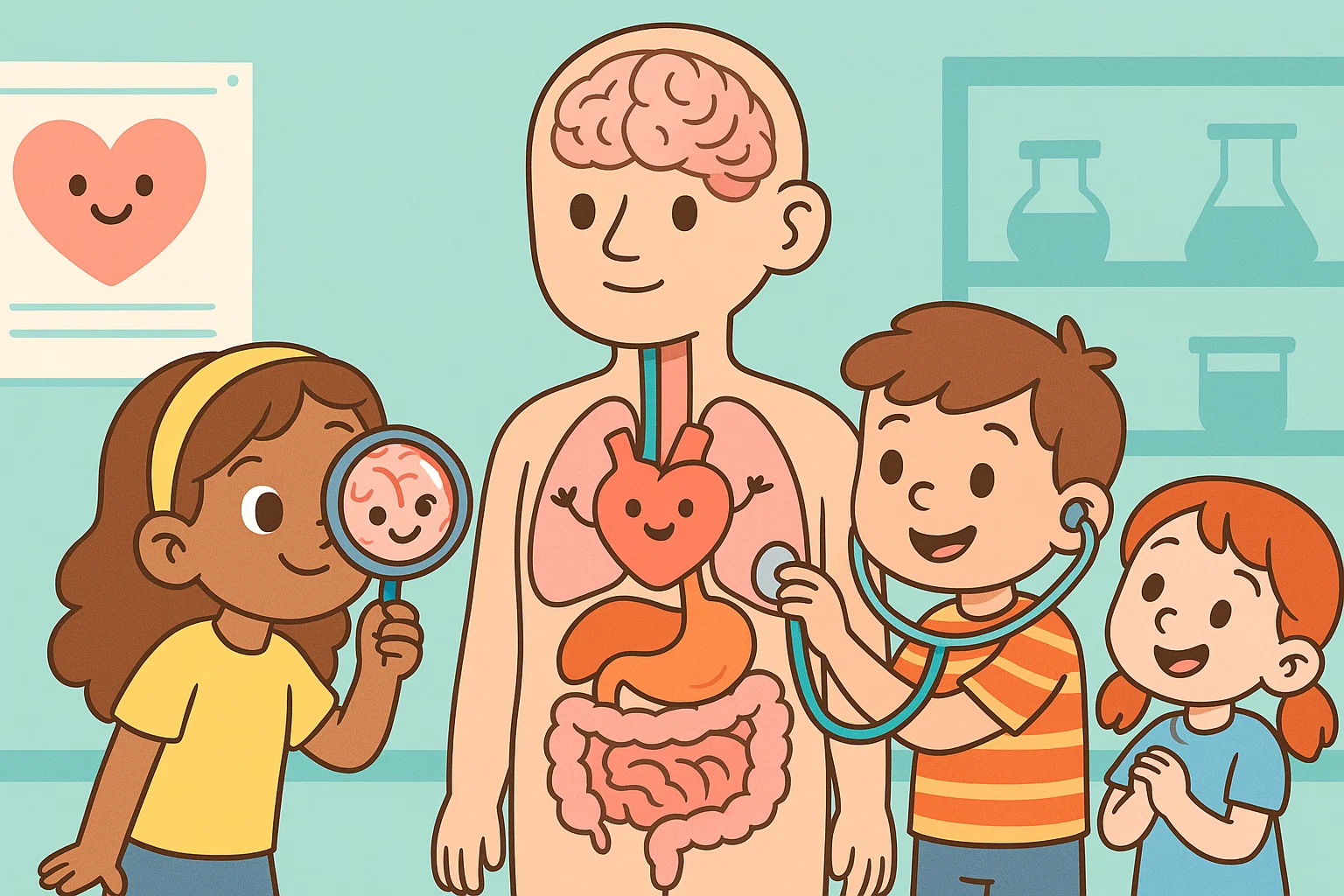
Your body is a biological machine. Learning about your brain and senses can help you understand your own development.
Brain, Bones, and Heart Facts
- Your brain generates enough electricity to power a small light bulb. This energy comes from the billions of neurons firing signals to help you think and move.
- Humans are born with about 275 to 300 bones, but most adults have 206. This happens because many bones, like those in the skull, fuse together as we grow older.
- The heart beats about 100,000 times a day. Over an average lifetime, it pumps enough blood to fill dozens of Olympic-sized swimming pools.
Senses, Taste, and Smell Facts
- Scientists estimate that humans can distinguish at least 1 trillion different odor mixtures. Smell is closely linked to memory, which is why a certain scent can suddenly remind you of being a little kid.
- Taste buds are replaced about every two weeks. As you get older, some of these buds do not grow back, which is why adults often like spicy or bitter foods that kids do not.
- The human eye can distinguish about 10 million different colors. However, the brain is what actually “sees” the image; the eyes just collect the light.
Gross Body Facts Kids Love
- An average person may produce tens of thousands of liters of saliva over a lifetime—enough to fill many bathtubs, but not two Olympic-sized swimming pools. Saliva helps start digestion and makes it easier to chew and swallow food.
- Dead skin cells can make up part of the dust in your house. Every minute, you shed between 30,000 and 40,000 skin cells.
- A sneeze can create a fast-moving cloud of air and droplets. This is a defense mechanism the human body uses to clear irritants from the nose as quickly as possible.
Animal Facts for Kids
The animal kingdom is full of amazing survivors and smart creatures.
Smart Animal Facts
- Crows can recognize human faces. Research shows that these birds can remember a specific person for years and even warn other crows about who to avoid.
- Dolphins have “names” for each other. They use unique signature whistles to identify themselves and call out to specific friends and family members in their pod.
- Octopuses have one central brain and clusters of neurons in each of their eight arms. This allows their arms to act with surprising independence.
Fast, Strong, and Tiny Animal Facts
- The blue whale is the largest animal ever known to have lived. Its heart is the size of a bumper car, and its tongue alone can weigh as much as an entire elephant.
- A peregrine falcon can dive at over 200 miles per hour. This makes it the fastest animal on the planet during a hunting dive.
- Ants can lift objects 50 times their own body weight. If a 12-year-old were that strong for their size, they could lift a large car over their head.
Animal Survival Facts
- Wood frogs in Alaska can freeze solid during the winter. Their hearts stop beating and they stop breathing, but they thaw out and hop away in the spring.
- Some land snails can enter hibernation or estivation for up to three years. This survival state helps them live through periods of extreme drought or cold.
- Axolotls can regrow their limbs, spinal cords, and even parts of their brains. This makes them a major topic of study for medical science.
Cat Facts for 12-Year-Olds
Cats have been our companions for thousands of years. Here is what makes them so fascinating.
Cat Senses Facts
- Cats can rotate their ears 180°. They have 32 muscles in each ear, allowing them to pinpoint the exact location of a tiny sound, like a mouse in the grass.
- A cat’s whiskers are roughly the width of its body. Cats use these highly sensitive hairs to determine whether they can fit through a narrow opening.
- Cats have a third eyelid called a “haw.” It is usually visible only when a cat is sick, sleepy, or very relaxed, and it helps protect and moisten the eye.
Cat Behavior Facts
- Purring does not always mean a cat is happy. Some researchers have suggested that purring frequencies, often between 25 and 150 hertz, may be linked to healing-related effects such as improved bone density.
- Cats sleep for an average of 12 to 16 hours a day. This means a 10-year-old cat has only been awake for about three years of its life.
- A slow blink can be a sign of trust. If a cat looks at you and slowly closes its eyes, it may be giving you a cat “kiss.”
Cat History Facts
- Ancient Egyptians shaved off their eyebrows when their cats died. This was a sign of mourning for the beloved animal that was considered sacred in their culture.
- The first cat in space was a French cat named Félicette in 1963. She successfully returned to Earth after her brief flight.
- A cat named Stubbs was the honorary mayor of Talkeetna, Alaska, for about 20 years. Stubbs “served” as the town’s famous honorary mayor until he passed away at age 20.
Lion Facts for 12-Year-Olds
Lions are often called the “king of the jungle,” even though they mostly live in grasslands and savannas.
Lion Pride Facts
- Female lions often do most of the hunting. While male lions often help defend the territory, females often work together to bring down large prey.
- Lions are the most social of all big cats. They live in groups called prides, which can include up to 40 individuals.
- Lions are very affectionate with their pride. They often rub heads and groom each other to strengthen their social bonds.
Lion Strength Facts
- A lion’s roar can be heard from 5 miles away. This powerful sound is used to communicate with other lions and warn rivals to stay away.
- Lions can jump as far as 36 feet. This incredible athletic ability helps them pounce on prey from a distance.
- Lion cubs are born with spots. These spots act as camouflage in the long grass, helping them hide from other predators while they are young.
Lion Habitat Facts
- Most wild lions live in Africa, but there is a small population of Asiatic lions in the Gir Forest of India.
- Lions spend about 20 hours a day resting or sleeping. They save their energy for the short bursts of speed needed for hunting.
- The habitat of lions is shrinking. Today, lions occupy only a small fraction of their historical range, making conservation efforts very important.
Shark Facts for 12-Year-Olds
Sharks are often misunderstood. These facts show why they are vital to the ocean.
Shark Teeth Facts
- Sharks can have up to 30,000 teeth in a lifetime. They do not have roots, so their teeth fall out easily and are replaced by a new row of teeth, like a conveyor belt.
- Megalodon was an ancient shark that grew up to about 50 feet long. Its teeth were over 6 inches long—about the size of a standard smartphone.
- Shark skin feels like sandpaper. It is covered in tiny tooth-like scales called dermal denticles that reduce friction and help sharks swim faster.
Shark Senses Facts
- Sharks have an excellent sense of smell, but the “single drop of blood in an Olympic-sized pool” claim is exaggerated. They can detect tiny traces of substances in water, but they are not magical blood detectors.
- Sharks have a “sixth sense.” They have special organs called ampullae of Lorenzini that allow them to feel the electrical fields given off by living creatures.
- Great white sharks can see well in the dark. They have a reflective layer behind their retina that helps them hunt in low-light conditions.
Shark Myths and Real Facts
- Sharks do not have bones. Their skeletons are made entirely of cartilage—the same flexible stuff that makes up your nose and ears.
- Most shark species are not considered dangerous to humans. Out of over 500 species, only a tiny handful are involved in incidents with people.
- Sharks are essential for a healthy ocean. As apex predators, many sharks help keep marine ecosystems in balance.
Ocean Facts for 12-Year-Olds
The ocean covers most of our planet, yet much of the seafloor remains poorly mapped. As of 2026, only about 28.7% had been mapped to modern standards.
Deep Sea Facts
- The Mariana Trench is the deepest part of the ocean. It goes down nearly 7 miles. If you dropped Mount Everest into it, the peak would still be over a mile underwater.
- Giant squid have enormous eyes, often compared to dinner plates. This helps them see in the pitch-black depths of the sea.
- The pressure at the bottom of the ocean is like having an elephant stand on your thumb. Only very specialized creatures can survive there.
Coral Reef Facts
- The Great Barrier Reef is the largest coral reef system on Earth. It is so large that parts of it can be photographed from space.
- Coral is actually an animal, not a plant. Corals are tiny animals called polyps that build hard calcium carbonate skeletons.
- Reefs are the “rainforests of the sea.” They cover less than 1% of the ocean floor but are home to about 25% of all marine life.
Ocean Oxygen Facts
- Scientists estimate that roughly half of Earth’s oxygen production comes from the ocean. Tiny marine plants called phytoplankton produce oxygen through photosynthesis, just like trees on land.
- Seaweed can grow incredibly fast. Giant kelp can grow up to 2 feet in a single day under the right conditions.
- The ocean acts as a giant sponge for heat. It has absorbed more than 90% of the excess heat trapped in Earth’s system by human-caused global warming.
Insect Facts for 12-Year-Olds
Insects are the most diverse group of animals on Earth, with over a million species discovered.
Ant, Bee, and Butterfly Facts
- Ants do not have lungs. They breathe through tiny holes in their sides called spiracles.
- Honeybees perform a “waggle dance.” This movement tells other bees in the hive exactly where to find the best flowers for nectar.
- Monarch butterflies migrate up to 3,000 miles. They travel from Canada to Mexico every year, a journey that takes multiple generations to complete.
Bug Superpower Facts
- Fleas can jump 100 times their own height. If a human could do that, they could jump over the Statue of Liberty.
- Dragonflies are among the world’s most successful predators. They catch about 95% of the prey they chase, compared to lions, which succeed much less often.
- Fireflies produce “cold light.” Their glow is a chemical reaction that is almost 100% efficient, meaning very little energy is wasted as heat.
Insect World Records
- The goliath beetle can weigh up to 3.5 ounces, making it one of the heaviest insects in the world.
- Chan’s megastick is one of the longest known insects, measuring over 22 inches with its legs fully extended.
- African cicadas are among the loudest insects. Their buzz can reach around 107 decibels, which is about as loud as a power saw.
Dinosaur Facts for 12-Year-Olds
Dinosaurs ruled Earth for over 160 million years, and we are still uncovering their secrets.
Fossil Facts
- Fossils take millions of years to form. They are created when minerals replace the organic material in bones, essentially turning the bone into stone.
- The first dinosaur fossil was named Megalosaurus in 1824. At the time, people did not know what a dinosaur was; they thought it was a giant lizard.
- Coprolites are fossilized dinosaur poop. Scientists study them to find out what different animals ate millions of years ago.
Famous Dinosaur Facts
- T. rex had a bite force of about 12,000 pounds. That is enough power to crush a car or bite through the bones of its prey.
- Stegosaurus had a very small brain for its body size, often compared to the size of a lime. Despite being the size of a bus, its intelligence was likely very limited.
- Spinosaurus was one of the largest carnivorous dinosaurs, even bigger than T. rex. It had a large sail on its back and likely spent a lot of time in the water.
Dinosaur Extinction Facts
- Most scientists believe a massive asteroid hit Earth 66 million years ago. This caused an impact winter that blocked sunlight and helped drive many species, including non-avian dinosaurs, to extinction.
- Birds are technically living dinosaurs. Modern science shows that birds evolved from small, feathered theropods.
- Not everything died during the extinction. Small mammals, crocodiles, and turtles survived, eventually leading to the world we see today.
Food Facts for 12-Year-Olds

Food is full of amazing chemistry and weird history.
Fruit and Vegetable Facts
- Botanically, strawberries are not true berries, but bananas are. Botanically, a berry develops from a single flower with one ovary and usually has seeds inside the fleshy fruit.
- Apples float in water because they are about 25% air. This is why bobbing for apples is a popular game at Halloween.
- Many early cultivated carrots were purple or yellow. Through selective breeding, Dutch growers helped popularize the orange carrots we eat today.
Snack and Candy Facts
- The ice pop was invented by an 11-year-old boy in 1905. Frank Epperson left a cup of soda with a stirring stick outside on a cold night in California, and the “Popsicle” was born.
- White chocolate is not technically chocolate in the same way dark or milk chocolate is. It contains cocoa butter but none of the cocoa solids that give regular chocolate its flavor and color.
- Ferrero, the company behind Nutella, buys about a quarter of the world’s hazelnut supply each year. That is a huge number of hazelnuts for one company.
Food History Facts
- In the 1830s, tomato-based medicines, including tomato extract pills linked to ketchup-style remedies, were sold as treatments for digestive problems.
- A popular legend says potato chips were invented by accident. According to the legend, a chef named George Crum sliced potatoes extra thin after a customer complained that his fried potatoes were too thick.
- Some sources point to evidence of soup-like dishes from around 6000 BCE, with unusual ingredients such as hippopotamus and sparrow meat.
Geography Facts for 12-Year-Olds
Our planet is full of extreme locations and amazing records.
Country and City Facts
- Pluto has slightly more surface area than Russia. Although Pluto is a dwarf planet, its surface area is slightly larger than Russia’s.
- Vatican City is the smallest country in the world. It is less than half a square mile in size and is located entirely within the city of Rome.
- Istanbul is one of the world’s most famous transcontinental cities, with parts in both Europe and Asia.
Map Facts That Feel Weird
- Alaska is the most northern, western, and eastern state in the United States. Because some of its Aleutian Islands cross the 180th meridian, Alaska technically stretches into the Eastern Hemisphere.
- Maine is the closest U.S. state to Africa. Looking at a map, it does not seem possible, but the curve of Earth makes it true.
- Detroit is actually north of parts of Canada. Because of the way the border curves, you have to drive south to get from Detroit to Windsor, Ontario.
Earth Surface Facts
- Mount Everest is the highest point above sea level, but Mount Chimborazo in Ecuador is the point on Earth’s surface farthest from Earth’s center. This is because Earth bulges at the equator.
- The Sahara Desert was once much greener, with vegetation, wetlands, and large lakes in some areas. Changes in Earth’s orbit helped end the African Humid Period roughly 5,000 years ago, turning much of the region back into desert.
- About 97% of Earth’s water is salty. Only about 3% is fresh water, and most of that is locked up in ice caps and glaciers.
History Facts for 12-Year-Olds

History is not just about dates; it is about the weird things people used to do.
Ancient History Facts
- Ancient Egyptians used headrests made from materials such as wood and stone. These helped keep the head elevated and may also have protected fancy hairstyles.
- Ancient Roman dental care could include strange abrasive ingredients, including animal bones, shells, urine-based whitening methods, and, according to some accounts, mouse-derived ingredients. The abrasive ingredients were meant to scrub the teeth, although many ancient dental remedies would sound bizarre today.
- Ancient Greeks used to exercise in the nude. The word “gymnasium” actually comes from the Greek word “gymnos,” which means “naked.”
Inventor and Invention Facts
- The first telephone call was made by Alexander Graham Bell to his assistant. He said, “Mr. Watson, come here, I want to see you.”
- Play-Doh was originally meant to be a wallpaper cleaner. When people stopped using coal to heat their homes, the company marketed it as a toy for kids instead.
- Thomas Edison did not actually invent the light bulb; he made it practical and long-lasting enough for everyday use.
Famous Person Facts
- Cleopatra lived closer to the invention of the iPhone than to the building of the Great Pyramid. This shows how incredibly long ancient Egyptian history lasted.
- Abraham Lincoln was recognized by the National Wrestling Hall of Fame. Before he became president, he was known as a skilled wrestler, although the claim that he had only one loss in about 300 matches is more legend than verified record.
- Beethoven would count out exactly 60 beans for his morning cup of coffee. He was very particular about his daily routine.
Bonus Interesting Facts for 12-Year-Olds
Here are 15 extra facts to bring the full list to 150.
Weather and Nature Facts
- Snowflakes usually have six sides. This happens because water molecules arrange themselves in hexagonal patterns when they freeze.
- Raindrops are not shaped like teardrops as they fall. Small raindrops are almost round, while larger ones can look more like hamburger buns.
- Hurricanes spin in different directions depending on the hemisphere. In the Northern Hemisphere, they usually rotate counterclockwise; in the Southern Hemisphere, they usually rotate clockwise.
- A tornado is a rapidly spinning column of air that reaches from a thunderstorm to the ground. Strong wind changes inside storms can help create the spin.
- Earth experiences many lightning flashes every second. Most of them happen inside clouds or between clouds, not just from clouds to the ground.
Sports and Record Facts
- Olympic gold medals are not made of solid gold. They are mostly silver with a thin layer of gold on the outside.
- A standard basketball hoop is 10 feet high. That height has been used since the early days of basketball.
- Tennis balls were not always bright yellow. Yellow balls became popular because they were easier to see on color television.
- A marathon is 26.2 miles, or 42.195 kilometers. The distance became standardized after the 1908 London Olympics.
- In soccer, goalkeepers are the only players who can use their hands during regular play, but only inside their own penalty area.
Culture and Language Facts
- King Tut became pharaoh when he was only about 9 years old. That means he ruled ancient Egypt while he was still a child.
- Queen Elizabeth II sent an early email in 1976. This made her one of the first world leaders to use electronic mail.
- The Rosetta Stone helped scholars decode Egyptian hieroglyphs. It had the same message written in three different scripts.
- The word “alphabet” comes from the first two letters of the Greek alphabet: alpha and beta.
- Some crowns used in royal ceremonies are so heavy that they are worn only for short periods. They may look beautiful, but they are not always comfortable.
Trivia Questions for 12-Year-Olds
Test your knowledge with these trivia questions based on the facts above.
Easy Trivia Questions
| Question | Answer |
| What is the largest animal on Earth? | Blue whale |
| Which planet is the hottest in our solar system? | Venus |
| How many bones does an adult human usually have? | 206 |
| What is the name of the tiny dot on an “i”? | A tittle |
Hard Trivia Questions
| Question | Answer |
| Which has more surface area: Russia or Pluto? | Pluto |
| How many years is a billion seconds? | About 31.7 years |
| What metal is found in your blood in enough quantity to make a small nail? | Iron |
| What can a sneeze create? | A fast-moving cloud of air and droplets |
Funny Trivia Questions
| Question | Answer |
| What animal has cube-shaped poop? | Wombat |
| What was one of the first practical videotape recorders about the size of? | A piano |
| What colors were many early cultivated carrots? | Purple or yellow |
Interesting Facts for 12-Year-Olds FAQ
What Are the Best Interesting Facts for 12-Year-Olds?
The best facts are those that challenge common assumptions. For this age, topics like space, record-breaking animal behavior, weird historical traditions, and surprising science are highly engaging because they offer a more complex view of the world.
How Many Facts Should 12-Year-Olds Read at Once?
Reading 10–20 facts in one sitting is ideal for retention. Focusing on a specific topic, like science or sharks, allows the brain to build connections between the pieces of information.
Are These Facts Good for School Projects?
Yes! These facts are excellent for “Did You Know?” sections in presentations, posters, or essays. They help provide a hook to keep your audience interested in your main subject.
Which Facts Are Most Fun for Trivia Games?
Random facts and gross body facts tend to be the most popular for trivia nights. Anything that sounds impossible but is actually true usually gets the best reaction from friends and family.
Who Is the Most Decorated Olympian?
The record for the most Olympic medals belongs to Michael Phelps. As a legendary swimmer, he earned 28 Olympic medals, including 23 gold medals, showing how far talent, practice, and dedication can take an athlete.
Which Animals Have the Most Unusual Features?
Many kids love learning about unusual animal features, from detachable tails to strange defensive tricks. For example, some lizards can drop their tails to distract predators, which is a fascinating survival adaptation.
Can You Find Interesting Facts About Famous People?
Absolutely! You might find facts about famous athletes, inventors, and historical figures, such as stories about Shaquille O’Neal’s huge shoe size or Frank Epperson inventing the ice pop as a kid. These stories can inspire kids and make facts about famous people feel more memorable.
Can Fun Facts Help Kids With Writing Tasks?
Yes. A fun fact can make a school task easier because it gives students a clear starting point. For example, a short post about the Romans, a lucky symbol, or the length of a dinosaur can help kids build a paragraph that is both educational and easy to read.
Are These Facts Good for Parties or Family Entertainment?
Absolutely. These facts can entertain kids during birthday parties, road trips, or an annual family trivia night. You can even make a trivia menu with categories like animals, space, history, sports, and geography, then let each player pull a question from a cup or pocket.
What Are Some Fun Fact Topics Kids Might Not Expect?
Kids often enjoy surprising topics, such as why people say “good luck,” what happens on New Year’s Eve, why some historical rulers chose to marry for power, or how tall a famous basketball player is. You could also include facts about Arizona, ancient Romans, or even a quick note that “Mar” is a common abbreviation for March.

Take a short quiz to find out what your everyday choices say about your parenting style
When your child is curious about something new, what’s your instinct?
Take a short quiz to find out what your everyday choices say about your parenting style
“Can I download this app?” What happens next?
Take a short quiz to find out what your everyday choices say about your parenting style
When it comes to rules at home, which sounds most like you?
Take a short quiz to find out what your everyday choices say about your parenting style
If you could give your child one life skill today, what would you pick?
Take a short quiz to find out what your everyday choices say about your parenting style
Your child gets to choose what to watch. What would your ideal setup look like?
Take a short quiz to find out what your everyday choices say about your parenting style
Pick your parenting superpower ✨



