25 Eid Celebration Ideas for Kids: Crafts, Games, and Classroom Activities

 Discover a Free Education Video App for Kids
Pastory uses AI to personalize educational video content based on your child’s interests and personality. Safe, engaging, and built for curious young minds. Sign up now to stay updated and enjoy early access with a free trial
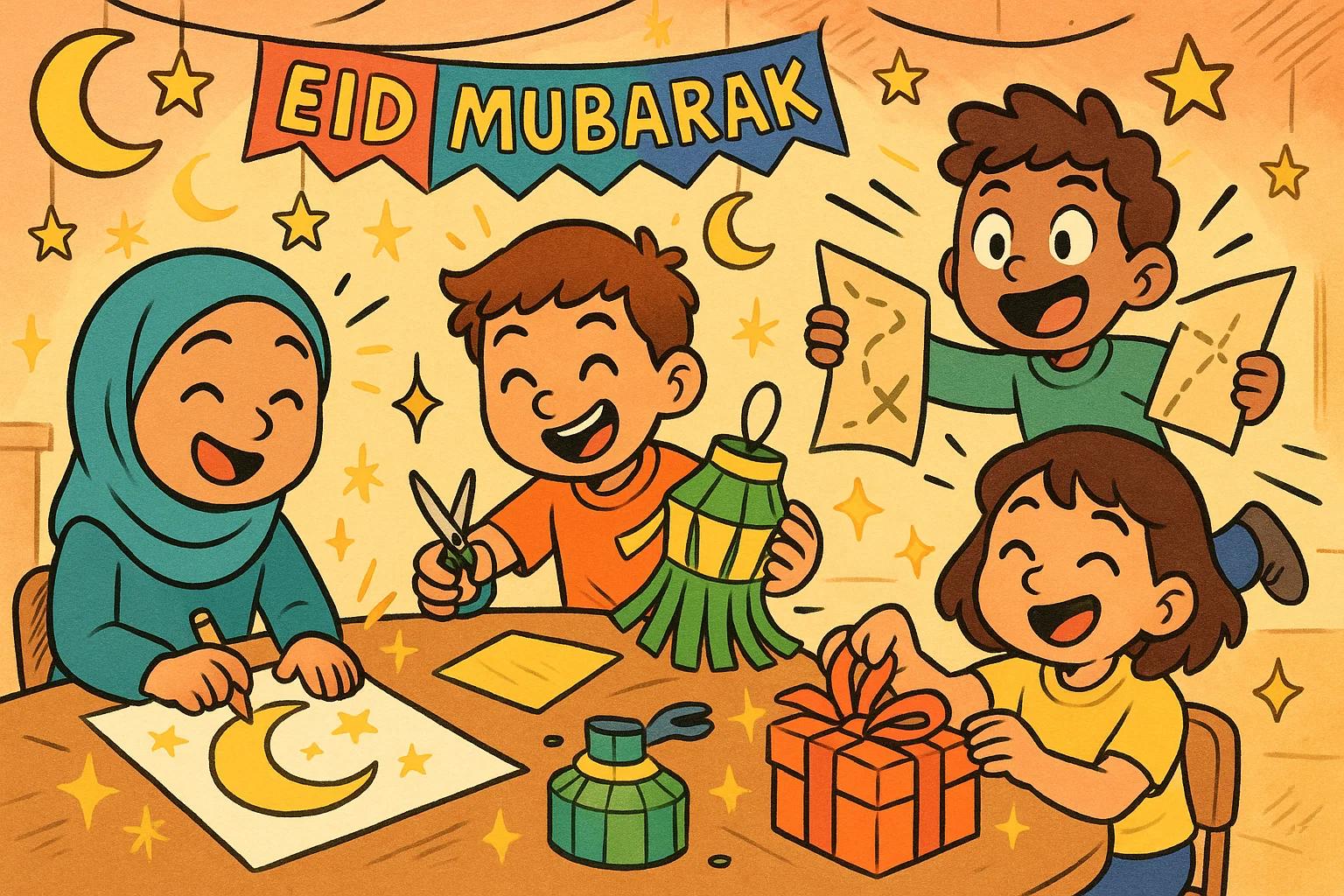
Finding meaningful Eid celebration ideas for kids is easier with a practical, ready-to-use collection. This guide brings together 25 activities for Eid al-Fitr and Eid al-Adha, designed for parents, preschool teachers, KS1 classrooms, homeschoolers, and childcare providers. The ideas span crafts, sensory play, movement games, giving activities, and classroom-ready resources that keep prep time low.
Each activity helps young children explore Eid traditions while building motor and social skills. Whether you are celebrating at home, in a classroom, or in a community setting, you will find options that work across different ages, abilities, and family backgrounds.
Key Takeaways
- This guide covers 25 Eid celebration ideas for kids, including crafts, games, sensory play, and giving activities.
- Activities suit both Eid al-Fitr and Eid al-Adha and work at home, in classrooms, and in community settings.
- Sensory-friendly and inclusive options support children with different needs and participation styles.
- Ready-to-use resources such as worksheets, craft templates, and activity packs help reduce prep time.
- Gift ideas, memory keepsakes, and a five-day preschool or KS1 Eid week plan are also included.
What This Guide Covers
- Parents and educators can quickly choose activities based on children’s ages, learning goals, available supplies, and the setting.
- Kids can celebrate Eid through simple crafts such as moon decorations, Eid cards, lanterns, mosque crafts, and suncatchers.
- Parents and teachers can use these Eid activities at home, in preschool, in childcare settings, in KS1 classrooms, during homeschool lessons, and at Eid parties.
- Low-prep printable activities such as coloring pages, mazes, word searches, gift boxes, and Eidi envelopes work well for quiet time or learning centers.
- Sensory-friendly Eid activities help toddlers, preschoolers, and children with sensory needs join the celebration comfortably.
- Giving activities such as kindness chains, thank-you cards, charity jars, and donation projects connect Eid with generosity and gratitude.
- Eid books, story time, greeting practice, and family traditions help children learn about Eid in a respectful, age-appropriate way.
- A quick one-week Eid plan helps teachers organize crafts, literacy activities, sensory play, movement games, and a celebration review.
What Is Eid? Simple Meaning for Kids
Eid al-Fitr in Simple Words
Eid al-Fitr marks the end of Ramadan, the Islamic holy month of fasting. The term Eid al-Fitr means “Festival of Breaking the Fast,” and the holiday is a time when Muslims celebrate the end of Ramadan and express gratitude to Allah. For young children, it is helpful to explain Eid al-Fitr through familiar themes such as family, prayer, festive meals, gratitude, and gifts.
Eid al-Adha in Simple Words
Eid al-Fitr and Eid al-Adha are the two main festivals in the Islamic calendar. Known as the “Festival of Sacrifice,” Eid al-Adha commemorates Prophet Ibrahim’s devotion and trust in Allah and is often associated with sharing food and resources with those in need. When explaining this holiday to children, focus on kindness, sharing, and helping others so the ideas feel concrete and age-appropriate.
Why Moon Sighting Matters
The Islamic calendar is lunar, and many communities determine Eid by the sighting of the new crescent moon. Families around the world may take part in moon sighting, looking for the thin crescent that signals the beginning of a new Islamic month and the arrival of Eid. Connecting moon sighting to hands-on learning helps children link science with family and community traditions.
How Families Celebrate Eid Worldwide
A traditional Eid day can include different cultural customs alongside shared spiritual practices. Many families begin the morning by wearing new clothes, reciting the Eid takbeer, and gathering for Eid prayer. The day often continues with families exchanging Eid greetings or cards, sharing regional foods, giving Eidi to children, and gathering with friends and neighbors.
1. Decorate Your Home Together
Eid Display Corner
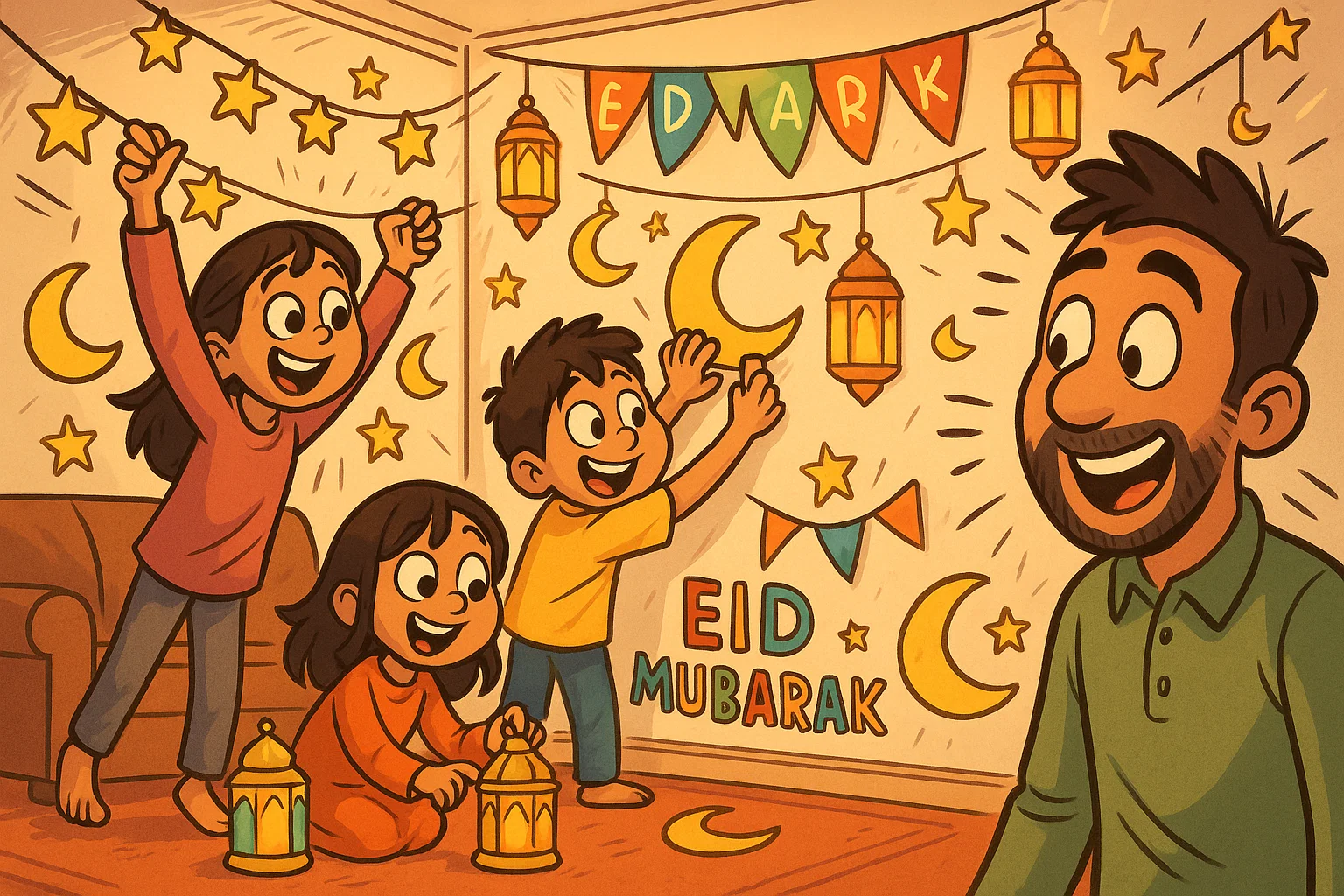
A dedicated Eid display area gives children a simple way to take part in preparing for the celebration. This space can include themed children’s books, handmade paper lanterns, crescent moon decorations, and family photographs. Displaying children’s work and family traditions can help create a sense of belonging and cultural pride.
Moon and Stars Wall Hanging
Fine motor precision improves when children engage in cutting, coloring, and threading decorative elements. This creative task invites children to cut out crescent moon and star shapes from heavy cardstock, decorate them with yellow and metallic paint, and thread them onto a piece of rustic twine. For younger toddlers, educators can provide pre-cut foam shapes to support safety while preserving the main goal of the activity.
Eid Banner or Bunting
Handmade bunting builds spatial awareness and patterning skills. Children can use a free Eid printable template to trace decorative triangles, color them with bright markers, and add Eid Mubarak letter stickers. Hanging the finished decoration on a living room or classroom wall helps children see their contribution to the Eid celebration.
Decorative Eid Jars
Repurposing glass or clear plastic containers is a simple way to create festive lighting while reusing materials. Children fill cleaned jars with battery-operated fairy lights, hand-cut translucent stars, and small rolls of colored paper containing family kindness notes. The finished jar can become a festive centerpiece for the family table.
2. Get Crafty with Eid Cards
Handmade Eid Mubarak Cards
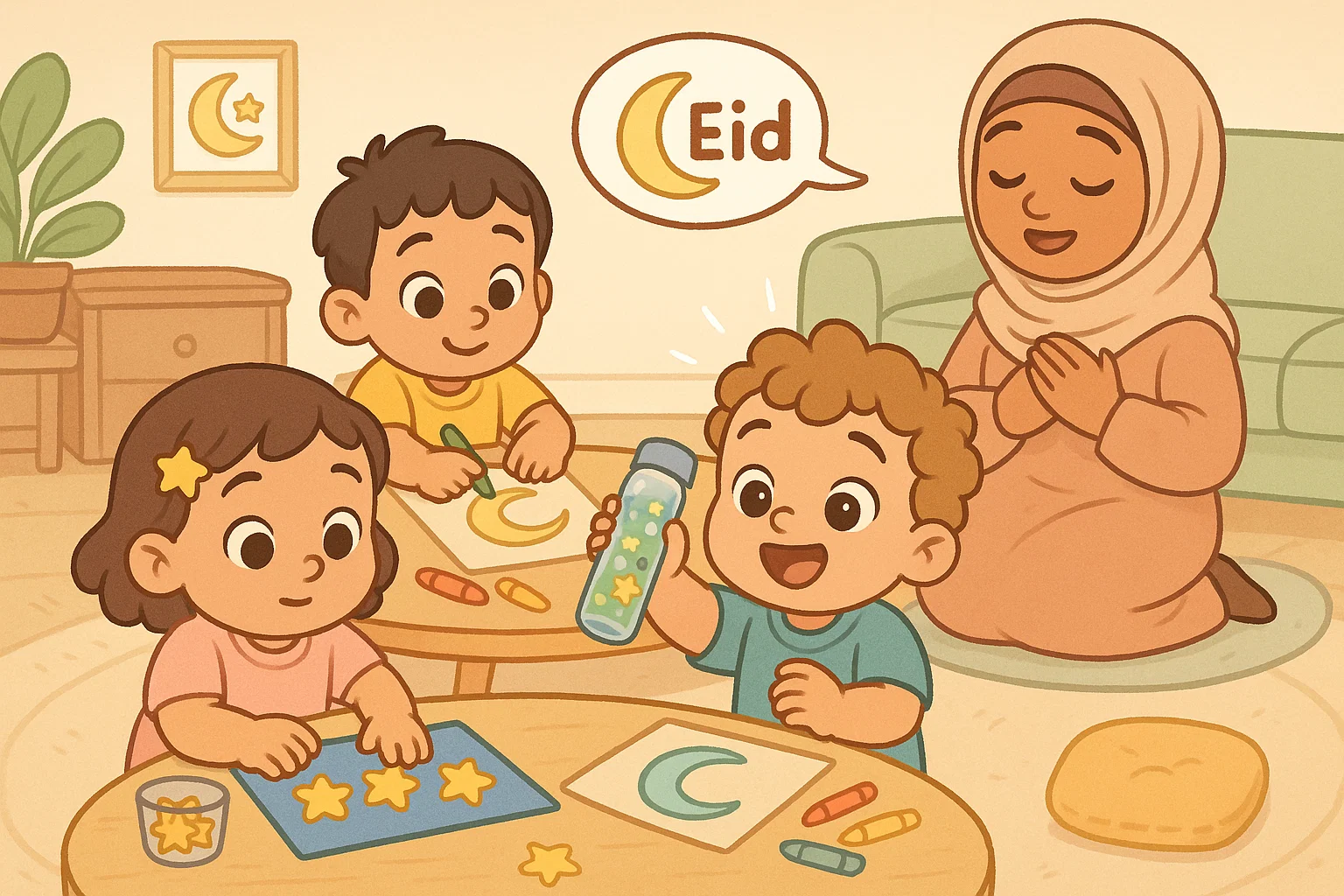
Designing custom greeting cards helps build early literacy and fine motor skills at the same time. Children can use folded cardstock to create layered scenes with metallic stickers, paper punches, and bright colorful materials. Writing the phrase Eid Mubarak gives children meaningful letter-formation practice in a real-world context.
Thank-You Cards for Family
Making cards for family members creates a natural opportunity for social-emotional learning. Children can write specific messages for parents, grandparents, or older siblings by completing prompts such as “Thank you for helping me learn…” This activity helps children understand gratitude and express their feelings in written words.
Community Helper Thank-You Cards
Sending festive greetings to community helpers helps children appreciate the people who support their neighborhood. Children can create cards for local firefighters, nurses, library staff, or mosque volunteers who support the community. Delivering these handmade cards reinforces civic engagement and empathy, which align closely with primary school citizenship curricula.
Crescent Mood Cards
Expressive arts can support emotional literacy and self-awareness in early childhood development. For this craft, children draw different facial expressions on pre-cut crescent shapes to explore their current emotional states during busy holiday periods. Educators can use these visual prompts to start conversations about managing excitement, practicing patience, and navigating changes in daily routines.
3. Make Moon and Star Crafts
Crescent Moon Mobile
Mobiles help children explore balance, gravity, and spatial arrangement. In this project, children cut out a large cardboard crescent, punch small holes along the bottom edge, and hang paper stars from yarn. Hang the finished mobile near a window or from a ceiling hook so gentle movement can catch a child’s eye.
New Moon Wall Hanging
Tracking changes in the lunar cycle provides a practical introduction to foundational earth science concepts. Children arrange dark and light paper circles in sequence to show the moon phases leading up to Eid. Labeling the crescent phase associated with Eid al-Fitr helps students connect lunar patterns with real-world observations.
| Moon Phase | Visual Appearance | Cultural Significance for Eid |
| Waning Crescent | Thin sliver closing the cycle | Final days of the month of Ramadan |
| New Moon | Completely dark sky | Astronomical new moon; preparation for crescent sighting |
| Waxing Crescent | Thin silver crescent visible | For Eid al-Fitr, the visible crescent may mark the beginning of Shawwal and the start of the celebration |
Moon and Stars Collage
Mixed-media collages stimulate tactile exploration through varied materials. Children arrange tissue paper scraps, textured aluminum foil, cotton balls, and metallic stickers on a heavy black paper base. This open-ended art style supports sensory exploration while allowing younger children to create independent art pieces without the pressure of strict templates.
Moon Sighting Craft
This craft recreates the family tradition of looking for the Eid crescent in the evening sky. Children paint a deep blue night sky using a watercolor resist technique, then overlay a bright yellow paper crescent attached to a sliding craft stick. Moving the stick allows kids to practice a simulated moon search, building anticipation for the actual night-sky announcement.
4. Build Mosque Crafts
Tissue Box Mosque Craft
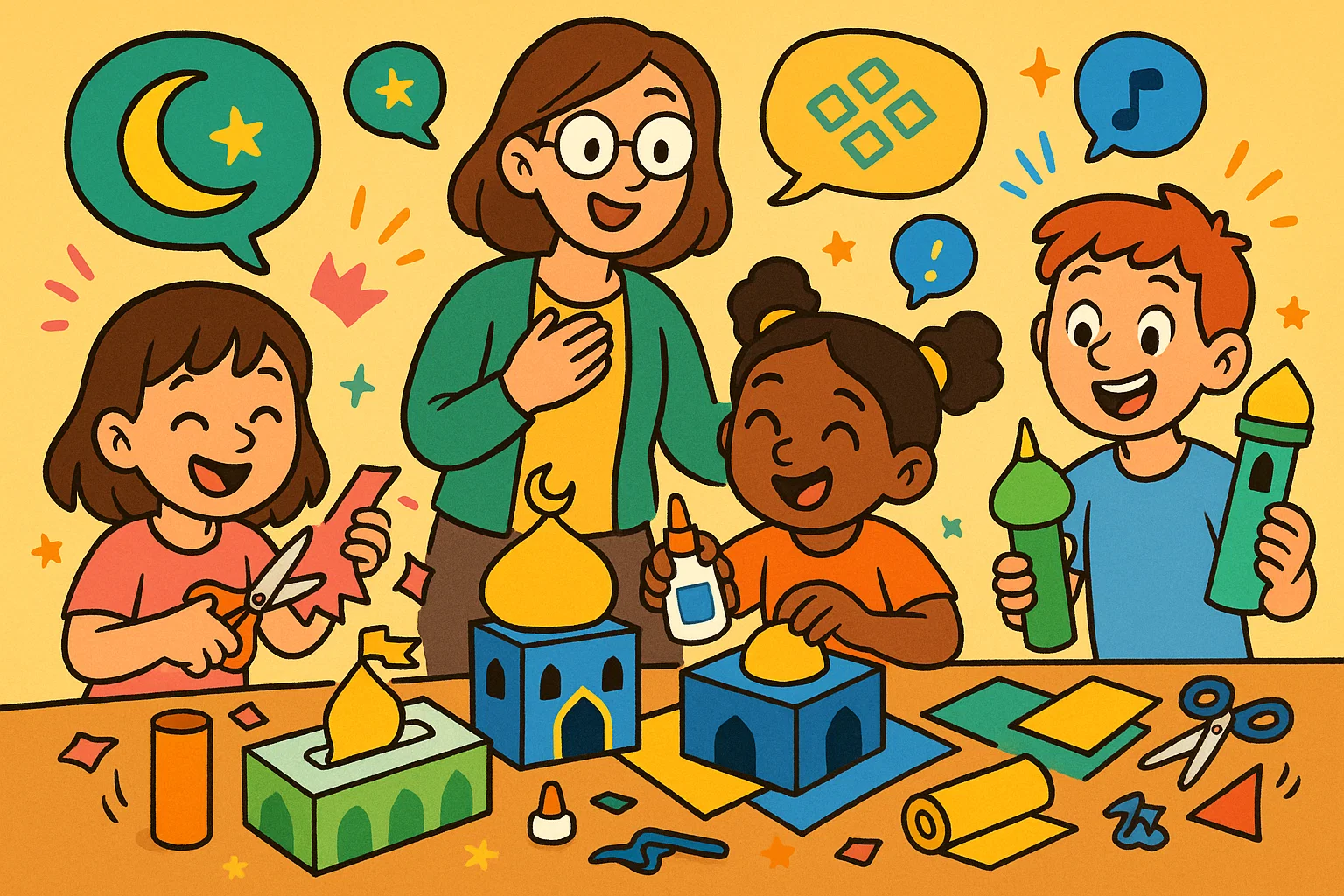
Upcycling common household objects teaches resourcefulness while building three-dimensional engineering skills. Children coat an empty rectangular tissue box with vibrant paint and attach cardboard tubes to represent mosque minarets. Adding a small dome made from a plastic ball or paper cup helps kids explore structural forms and balance.
Cereal Box Mosque Craft
Older children can tackle more advanced design challenges by using large, sturdy cereal boxes as structural bases. This project involves cutting arched windows, keeping the design symmetrical, and securing the pieces with masking tape. The engineering task sharpens spatial reasoning and fine motor coordination through focused model building.
Paper Bag Mosque Craft
A brown paper lunch bag craft is a low-prep option for large classroom groups. Children draw a rounded doorway and windows directly onto the flat bag surface, filling the interior with vibrant color using crayons or markers. Add a pre-cut paper crescent near the top to turn the bag into a festive puppet or gift holder.
Mosque Silhouette Art
Contrasting bright backgrounds with dark foregrounds introduces children to the artistic concept of high visual contrast. Students blend warm sunset hues of yellow, orange, and purple across a thick sheet of white art paper using sponges or brushes. Placing a crisp black paper mosque silhouette over the dry paint creates a beautiful piece for a seasonal bulletin board.
5. Make Eid Suncatchers
Crescent Moon Suncatcher
Translucent window crafts offer an interactive way for children to study light filtration and color blending. This activity involves placing small squares of colored tissue paper onto a clear sheet of sticky contact paper inside a dark crescent frame. Hanging the finished piece directly on a sunny window fills the room with colorful reflections.
Mosque Suncatcher Craft
This project uses a dark paper outline of a mosque with open window cutouts to explore architectural lines. Children layer overlapping pieces of bright cellophane over the openings to mimic stained-glass windows. This craft is a good opportunity to talk about symmetry and patterns in Islamic art.
Star Suncatcher Garland
Linking individual suncatcher pieces creates an eye-catching decoration that can hang across a window or classroom wall. Children build a series of small, matching star shapes using the translucent tissue-paper method. Stringing these components together across a sunny window creates a radiant garland that brightens up the room for an Eid party.
Toddler-Safe Suncatcher Version
Adapting the materials helps very young children join the project safely and comfortably. Educators use sturdy, pre-cut plastic plates as a solid base and provide large, non-sticky tissue paper shapes for easy handling. This setup allows toddlers to practice placement and explore sticky textures with close adult supervision.
6. Create Eid Lanterns
Paper Eid Lanterns
Folding and cutting paper helps young children develop hand-eye coordination and spatial awareness. Students fold a piece of sturdy colored cardstock in half, make straight parallel cuts along the folded edge, and roll the paper into a cylinder. Securing the edges with tape creates a traditional lantern that stands up on its own.
Recycled Bottle Lanterns
Using clean plastic bottles provides a durable option that works well for outdoor holiday decorations. Children wrap the outside of a clear bottle with tissue paper scraps and festive star stickers, applying kid-safe decoupage glue to seal it. Placing a battery-operated tea light inside creates a soft glow without an open flame.
Lantern Process Art
Process-oriented art focuses on the sensory experience of creating rather than following an exact design. Give preschoolers a tray with washable paint, glitter glue, metallic markers, and foam stamps so they can decorate a sheet of poster board. Once dry, an adult can fold the unique artwork into a lantern shape, celebrating each child’s individual creative expression.
Eid Table Lanterns
Coordinating handmade crafts into holiday table decor builds a child’s confidence and sense of belonging in family traditions. Children can design small cardstock lanterns with hole-punch patterns to place along the holiday table. Seeing their creations light up the family dinner celebration provides a meaningful boost to their confidence.
7. Use Eid Coloring Pages, Mazes, and Printables
Eid Coloring Pages
Fine motor precision and focus improve naturally when children color within structured boundaries. Printable pages can feature clear illustrations of lanterns, family gatherings, crescent moons, and Eid greeting cards. Choosing color palettes and filling in detailed scenes gives children a relaxing, quiet activity during a busy holiday week.
Eid Maze Activities
Pencil-control sheets offer an engaging way for young children to build cognitive problem-solving skills. Children guide a character through a printable maze, tracing a clear path from a home toward a holiday celebration or community festival. This playful task strengthens visual tracking and hand-eye coordination, which are foundational skills for early reading and writing.
Eid Word Search and Vocabulary
Word puzzles offer an excellent way for older children to expand their vocabulary and improve pattern recognition. A themed word search challenges students to find holiday words such as charity, crescent, mosque, Ramadan, and Mubarak. Educators can use these terms to prompt deeper discussions about the meaning of Eid and its cultural practices.
Printable Eid Activity Pack
A pre-assembled activity packet works well for independent learning centers or quiet-time activities. A free Eid activity booklet can include coloring pages, simple matching games, tracing patterns, and early counting tasks. This structured setup allows children to work at their own pace while reinforcing important early math and literacy concepts.
8. Make Eid Sensory Bottles
Moon and Stars Sensory Bottle
Sensory bottles provide a helpful tool for visual sensory exploration and emotional self-regulation in early childhood classrooms. To make one, fill a clear plastic bottle with water, clear glue, shiny metallic stars, and bright blue sequins. Shaking the bottle creates a swirling night-sky effect that can help focus a child’s attention.
Calm Eid Sensory Bottle
A slower-moving sensory bottle can help children calm down and relax during busy holiday celebrations. Increasing the ratio of vegetable oil or clear glycerin in the water slows down the falling glitter and beads. Watching slow, predictable movements may help children calm down when they feel overstimulated.
Eid Color Discovery Bottle
A themed discovery bottle offers a fun, interactive way to build descriptive vocabulary and early counting skills. Educators can fill a dry bottle with colored rice, star beads, and small crescent cutouts. Children roll the bottle in their hands to find the hidden objects, practicing counting and descriptive language as they spot each item.
Sensory Safety Tips
Prioritizing physical safety is essential when designing sensory tools for infant and toddler classrooms.
- Secure all bottle caps firmly with strong glue, and check that they cannot be opened by children.
- Check containers daily for fine cracks or weak spots that could break open.
- Use large sensory items inside the bottles to minimize choking hazards if a container accidentally breaks.
- Provide constant adult supervision for children who still like to put objects in their mouths.
9. Read Eid Books with Kids
Best Eid Picture Books for Toddlers
Early childhood literacy thrives on shared reading experiences that feature relatable characters and bright, high-contrast artwork. Sturdy board books about family celebrations can hold a toddler’s interest with simple text and familiar everyday scenes. Reading together supports language development and helps children connect books with warm family moments.
Eid Story Time for Preschool
Interactive group reading sessions help young children build comprehension and emotional intelligence. Educators can pause during a story to ask questions like, “How do you think they feel wearing their new clothes?” Pointing out holiday items in the illustrations helps kids connect the book to their own lives and reinforces new vocabulary words.
Eid Books for Primary Classrooms
Choosing books that show diverse Eid traditions helps primary students build global awareness and empathy. Stories that highlight cross-cultural traditions, acts of kindness, and community projects show children that people celebrate holidays in many beautiful ways. These stories also support inclusive social studies and citizenship learning in primary classrooms.
Story Time Plus Feelings Talk
Connecting literature to a child’s emotional world helps develop empathy and self-awareness. Discussing a character’s feelings, such as being patient during Ramadan or feeling excited for Eid morning, helps children understand their own emotions. This practice teaches young learners to recognize and respect feelings in themselves and others.
10. Sing Eid Takbeer and Celebration Songs
Family Takbeer Moment
Sharing sacred cultural traditions builds a strong sense of community connection and identity within the family. Many Muslim families recite the Eid takbir, also spelled takbeer, on their way to morning prayers or at home. Introducing these traditional rhythmic phrases with care allows children to participate comfortably at their own pace.
Eid Songs for Young Kids
Rhythmic music and movement play an important role in helping young children develop phonological awareness and coordination. Simple, upbeat songs about Eid help children learn festive greetings through catchy rhyming phrases and hand-clapping patterns. This active style of learning keeps children engaged while building memory and language skills.
Children’s Eid Show
Putting on a casual, low-pressure performance builds public speaking confidence and creative expression in young learners. Children can share short poems, festive songs, or simple holiday greetings with family members or classmates. This supportive experience teaches teamwork and presentation skills in a warm, encouraging setting.
Respectful Music Choices
Thoughtful planning helps keep classroom activities inclusive and respectful of each family’s values.
- Ask parents about their musical preferences before planning holiday lessons, as views on music vary.
- Offer alternative ways to participate, such as using simple rhythm sticks or hand clapping instead of recorded music.
- Focus on the natural rhythm of spoken poetry and traditional chants to keep things inclusive.
- Keep participation completely optional so every child feels comfortable and respected.
11. Bake and Share Eid Treats
Easy Eid Treats for Kids
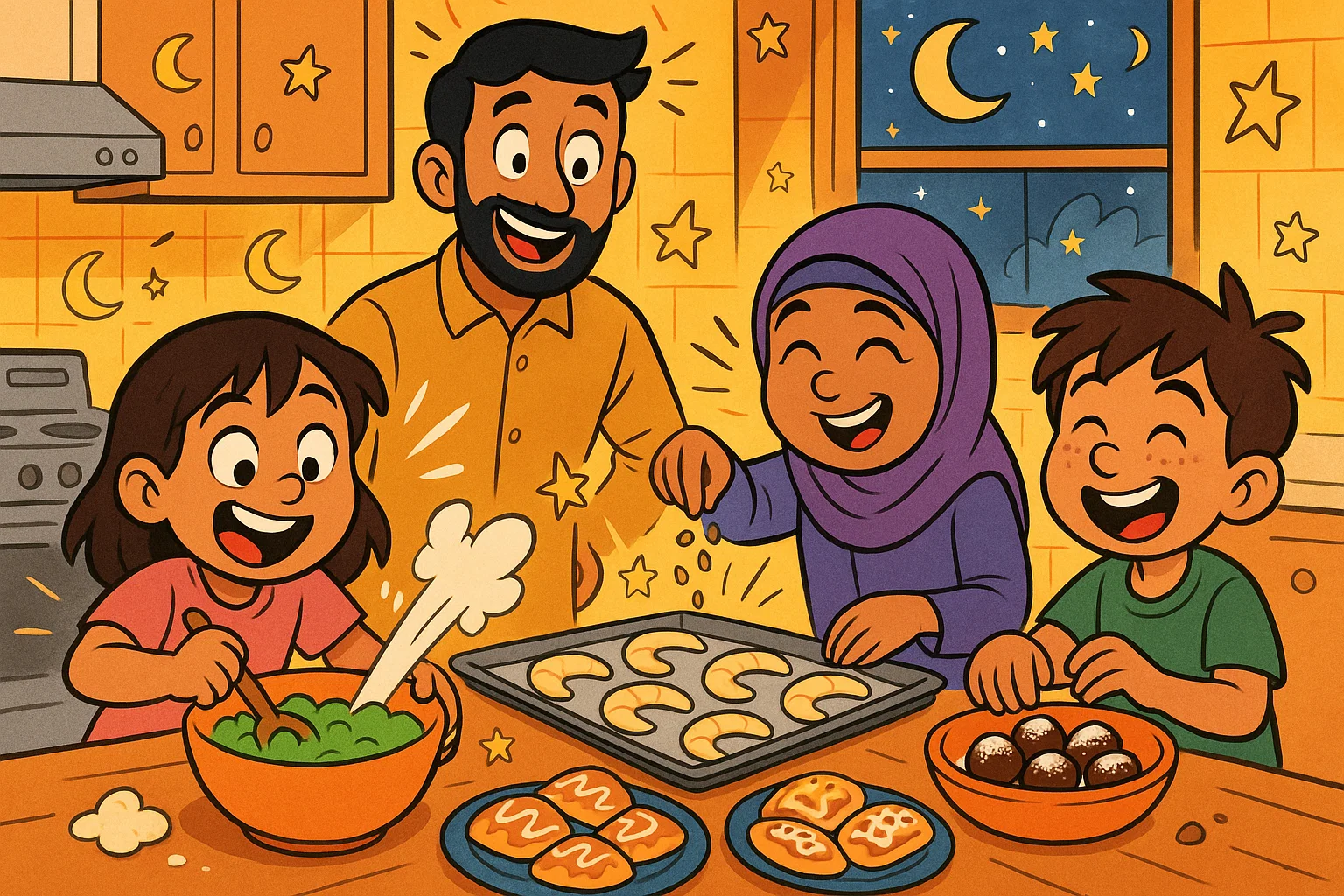
Baking together offers a practical, hands-on way for children to explore basic math concepts like measuring and counting. Kids can help mix no-bake date balls, cut out star-shaped sugar cookies, or decorate cupcakes with colorful sprinkles. These kitchen activities build fine motor coordination and introduce early science concepts like changing textures.
Bake and Share with Neighbors
Sharing homemade treats with the neighborhood teaches children the value of generosity and community connection. Kids can decorate small paper gift bags, write kind notes, and help deliver the treats with an adult. This tradition helps children experience holiday sharing in a simple, memorable way.
Food Allergy Checks
Careful safety measures keep holiday food sharing safe and enjoyable for everyone in the classroom.
- Check classroom allergies before planning any food activity.
- Read ingredient labels carefully.
- Avoid unsafe allergens and cross-contamination.
- Provide alternative snacks so every child can participate safely.
No-Food Eid Treat Ideas
Creative non-food alternatives help every child join the celebration, regardless of dietary restrictions. Kids can make hand-stamped bookmarks, paper flowers, or customized sticker sheets to share with their friends. These thoughtful, handmade gifts carry the same message of kindness without food allergy risks.
12. Plan Eid Meal Activities
Eid Meal Table Setting
Helping prepare the holiday table builds spatial reasoning skills and gives children a meaningful role in family gatherings. Kids can practice folding napkins into neat triangles, writing names on decorative place cards, and arranging bowls of dates. Taking responsibility for these small tasks boosts self-esteem and makes children feel like a valuable part of the celebration.
Talking About Family Recipes
Talking about traditional holiday foods encourages children to appreciate cultural diversity and practice descriptive language. Educators can invite students to share their favorite family dishes, highlighting how different cultures celebrate with unique flavors. This inclusive conversation encourages respect for different backgrounds and builds communication skills.
Pretend Eid Café
Setting up a dramatic play area helps children practice language skills and positive social interactions through role-play. Kids can take turns pretending to be servers or guests in an “Eid Café,” using menus, play food, and friendly greetings. This interactive play builds communication skills, early math skills through pretend transactions, and cooperative play.
Safe Food Handling for Kids
Teaching kitchen safety habits early helps children build lifelong health awareness and personal responsibility.
- Practice washing hands thoroughly with warm water and soap before touching any food or utensils.
- Keep preparation surfaces clean and sanitized before starting the cooking activity.
- Teach children to use kid-safe, blunt tools under close adult supervision.
- Explain the importance of separating raw and cooked ingredients to keep food safe.
13. Practice Giving and Sharing
Kindness Chain
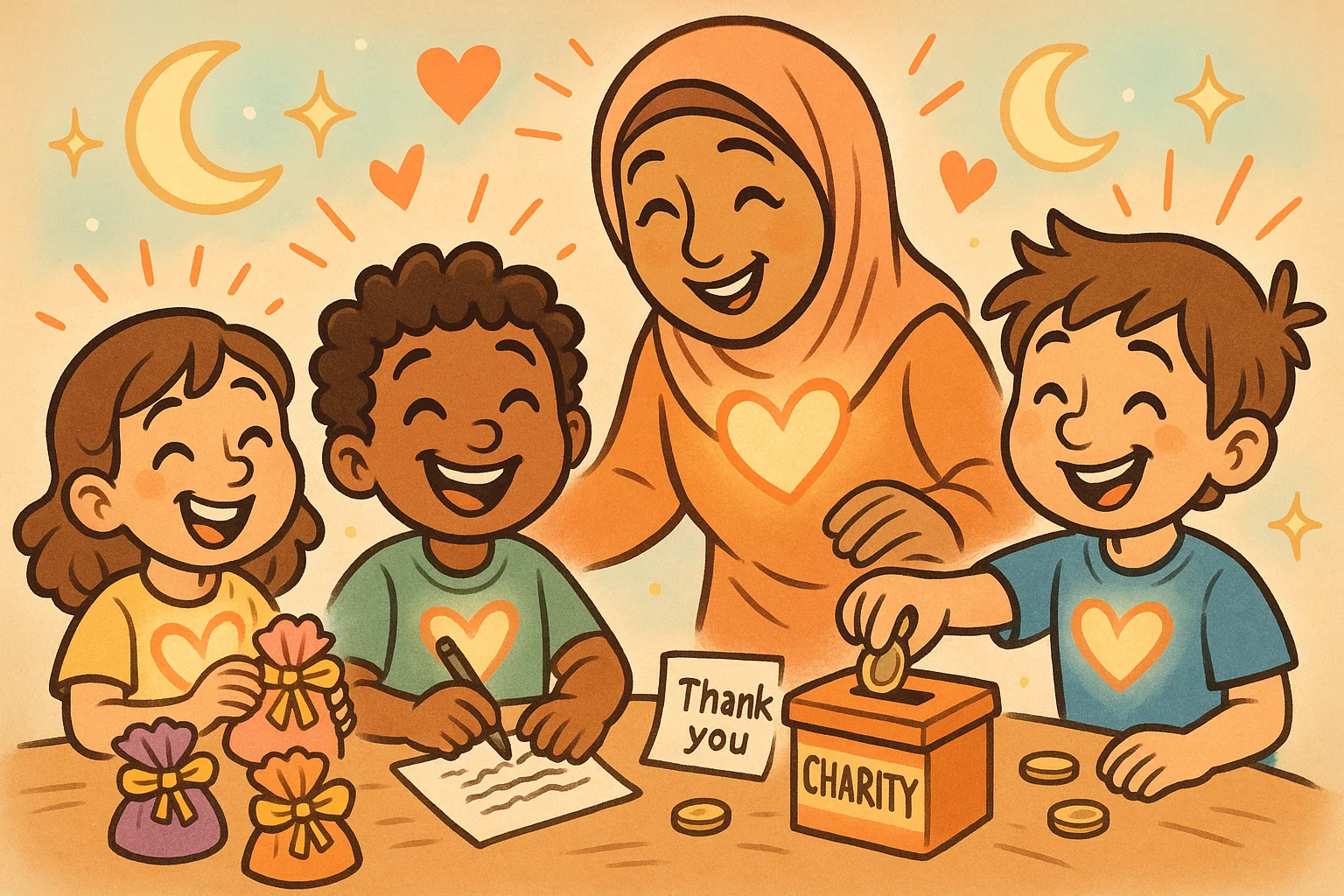
Visual trackers help children see the positive impact of their daily choices. Kids add a new paper loop to a hanging chain every time they share a toy, help a friend, or say a kind word. Watching the chain grow gives children a tangible reminder that small acts of kindness can help the community.
Helping Hands Mural
Collaborative art projects teach children how to work together toward a shared creative goal. Students trace their hands onto colorful paper, cut out the shapes, and write down one way they can help someone at home or school. Pasting the handprints together onto a large poster creates a beautiful mural that celebrates teamwork and helpfulness.
Charity Jar Activity
Introducing a family or classroom coin jar offers a practical way to teach children about early math and generosity. Kids can decorate a clear jar with festive stickers and drop in spare coins throughout the holiday season. Guided conversations with an adult help children understand how small donations can support families in need.
Toy or Book Donation Project
Organizing a donation drive helps children connect abstract ideas about charity to real, positive actions in their community. Kids can select gently used toys or books from their collection to give to a local family shelter or community center. This hands-on project helps children practice generosity and experience the joy of helping others.
14. Make Eidi Envelopes and Gift Boxes
Handmade Eidi Envelopes
Making custom gift envelopes offers a fun way for kids to practice folding paper and exploring geometric symmetry. Children use colorful paper, festive star stamps, and fine markers to design unique envelopes for family gifts. Writing the recipient’s name on the front adds a personal touch while practicing early writing skills.
Printable Eid Gift Boxes
Assembling 3D paper boxes from printable templates helps older children build spatial awareness and geometry skills. Kids can score the paper along the dotted lines, fold the edges carefully, and secure the tabs with glue to create small gift boxes. This activity combines careful measuring, folding, and creative design.
Gratitude Note Inside the Gift
Adding a small note of appreciation helps children focus on the emotional value of giving rather than just material items. Kids can slip a tiny drawing or a sweet “thank you” message inside their handmade gift boxes. This simple step encourages children to express gratitude and think about making the recipient happy.
Budget-Friendly Eid Gifts
Thoughtful low-cost gifts can feel meaningful without requiring a large budget.
- Handmade Bookmarks: Created using colorful cardstock, decorative leaf stamps, and smooth satin ribbons.
- Story Time Coupons: Hand-drawn slips promising a shared reading session or an outdoor play date.
- Beaded Friendship Bracelets: Made with bright plastic beads arranged in repeating color patterns.
- Custom Coloring Mats: Personalized line-art drawings tailored to a sibling’s favorite interests.
15. Play Eid Treasure Hunt and Party Games
Eid Day Treasure Hunt
A holiday treasure hunt offers a fantastic way for children to build critical thinking and problem-solving skills. Adults can hide simple clues written on star-shaped cards around the home or classroom, leading children on a fun search for a festive surprise. This active game encourages kids to work together, look for clues, and practice directional language.
Moon-and-Stars Movement Game
Active group games help young children develop gross motor skills, listening skills, and body control. In this game, kids leap across the room from star to star, tiptoe quietly when the moon is mentioned, and freeze in place when the music stops. These playful physical challenges help children burn energy while building coordination and focus.
Eid Party Games
Classic party games adapted for holiday themes offer a wonderful way to build social skills and teamwork. Children enjoy games like festive pass-the-parcel, memory matching pairs, charades, and holiday-themed bingo. These structured activities teach children how to take turns, celebrate others’ successes, and handle friendly competition in a positive way.
Quiet Games for Calm Moments
Providing peaceful, low-stimulation activities helps children rest and recharge during high-energy holiday events. A quiet corner stocked with themed puzzles, colorful matching printables, and a basket of picture books gives kids a cozy space to relax. These calm choices can help reduce sensory overload and keep the celebration pleasant for everyone.
16. Try a Moon Sighting Activity
Moon Observation Chart
Tracking the lunar cycle on a printable chart introduces children to systematic scientific observation. Each night leading up to the holiday, kids look out the window and sketch the moon’s shape on their charts. Comparing the drawings over several nights helps children notice the natural patterns of the moon’s phases.
Binocular-Free Night Sky Walk
A simple evening walk with an adult turns looking at the stars into an exciting science adventure. Children observe the night sky, notice how the moon changes position, and look for bright stars without needing any special equipment. Asking open-ended questions, such as “What shape do you see tonight?”, builds curiosity and observation skills.
Moon Phase Craft
Making a movable moon phase craft helps children understand the science behind the lunar calendar. Kids attach a dark paper circle over a bright yellow one using a small brass fastener, allowing them to turn the top layer to show the crescent shape. This hands-on tool helps children see and understand the moon’s changing shape.
Family Moon Sighting Story
Inviting family members to share their own holiday memories connects children to their cultural roots and oral histories. Grandparents or parents can tell stories about how they used to watch for the moon when they were young. These shared moments build a sense of family identity and help keep holiday traditions alive for the next generation.
17. Talk About Eid Prayer Respectfully
Eid Prayer in Child-Friendly Terms
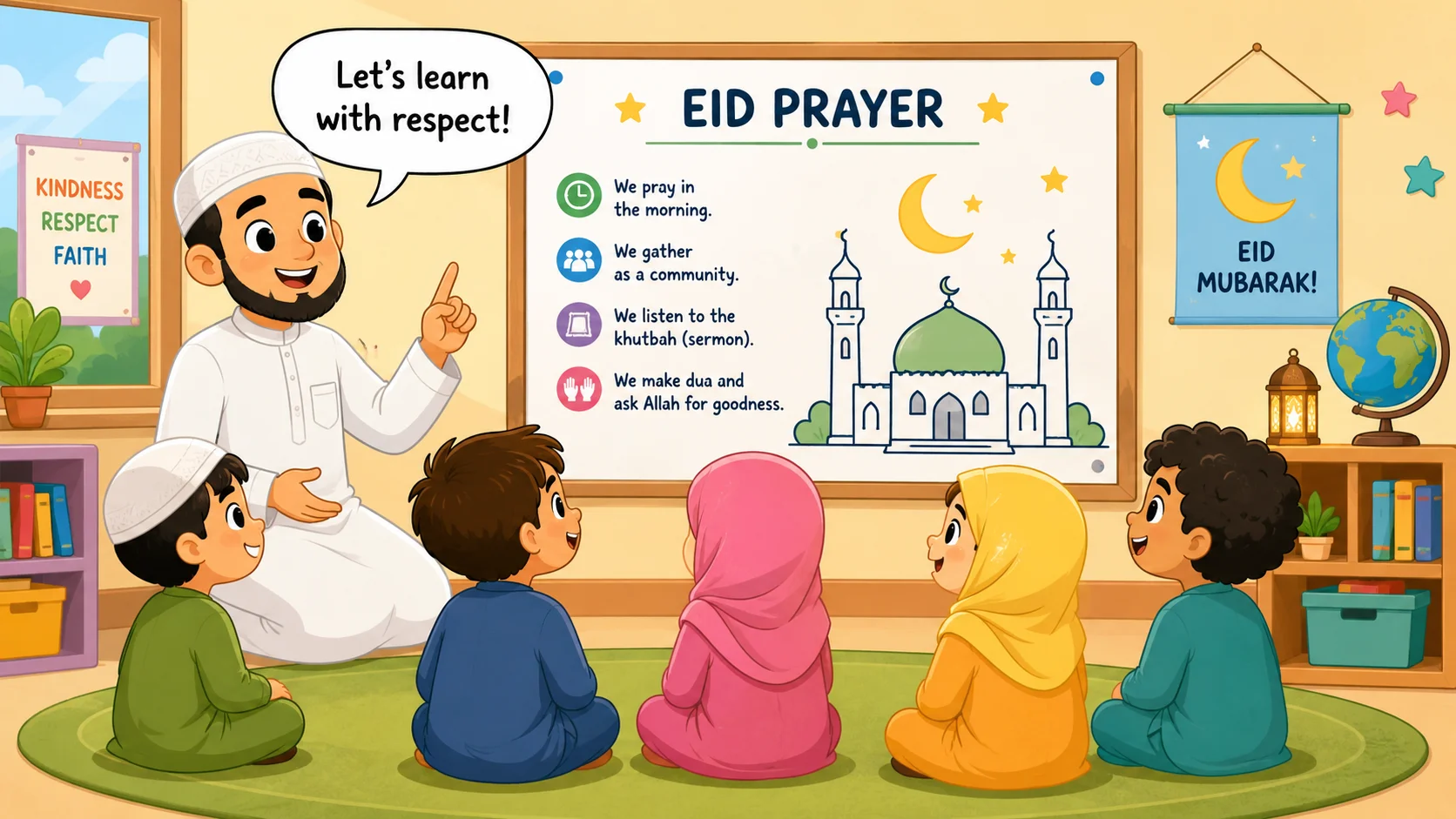
Explaining the morning prayer in simple, clear language helps children understand its communal purpose. Teachers can describe it as a special morning gathering where families come together to pray, give thanks, and wish one another peace. This simple explanation helps children appreciate the values of community and gratitude at the heart of the tradition.
Prayer Mat Craft
Designing paper prayer mats allows children to explore geometric patterns, borders, and symmetry in a creative way. Kids can use rectangular sheets of colored construction paper and add beautiful designs using stamps, stickers, and markers. This art project helps children learn about textile design and pattern repetition in a respectful classroom setting.
Greeting Practice After Prayer
Role-playing festive greetings helps children build confidence and positive social communication skills. Kids can practice smiling, offering a gentle handshake if appropriate, and saying greetings such as Eid Mubarak or As-salamu alaykum, which means “peace be upon you.” Learning these social customs helps children join community celebrations with ease and confidence.
Classroom Respect Notes
Thoughtful educational practices ensure that cultural learning activities remain respectful, safe, and inclusive for all students.
- Focus lessons on teaching about traditions rather than asking students to participate in religious practices.
- Use clear photo displays and engaging stories to share customs instead of staging simulated rituals.
- Give children the choice to observe or take part based on what feels comfortable for them and their family.
- Respect each family’s individual beliefs by keeping participation in holiday crafts optional.
18. Explore Islamic Art for Kids
Geometric Pattern Art
Exploring traditional geometric art offers a wonderful way for children to discover mathematical concepts like symmetry and reflection. Kids use simple shapes like triangles, squares, and hexagons to build intricate, repeating patterns on grid paper. This creative process sharpens spatial reasoning skills and shows how math and art can connect beautifully.
Mosque Tile Design
Collaborative art projects give every child a chance to contribute to a beautiful shared display. Each student colors a square paper tile with geometric lines and colors; the tiles are then arranged together on a large bulletin board. The finished display shows kids how individual efforts come together to make something beautiful.
Arabic Calligraphy-Inspired Art
Looking at Arabic calligraphy-inspired art introduces children to the beauty of written language, decorative lettering, and flowing lines. Students can explore printing techniques using elegant pre-printed greeting designs that say Eid Mubarak. This activity allows children to appreciate artistic writing styles without needing to copy unfamiliar scripts.
Pattern Hunt Activity
A pattern hunt encourages children to look closely at their environment and build visual recognition skills. Kids search through picture books, holiday cards, and decorations to spot repeating shapes like stars, triangles, and symmetrical patterns. This fun search sharpens visual awareness and helps kids recognize design patterns in the world around them.
19. Set Up Eid Classroom Centers
Art Center
A well-stocked art station gives children the freedom to choose their own creative projects and explore materials independently. The center can include cardstock templates, tissue paper scraps, non-toxic glue, star-shaped punches, and colorful markers. Giving kids open access to these supplies encourages independent design choices and strengthens fine motor skills.
Literacy Center
A dedicated reading and writing corner helps children build vocabulary and early literacy skills through holiday-themed activities. The station can feature seasonal picture books, matching word-and-picture cards, tracing sheets, and simple writing prompts. These resources allow children to practice reading and writing at a pace that feels right for them.
Sensory Center
A comforting sensory station offers a relaxing space for tactile exploration and emotional self-regulation. This area can include soothing sensory bottles, textured star shapes to sort, and soft fabrics to touch. These tactile materials are especially helpful for toddlers and neurodivergent children who may need a calm, quiet break during the day.
Dramatic Play Center
Setting up a pretend kitchen or living area encourages children to practice language and social skills through imaginative play. Kids can pretend to prepare a holiday meal, welcome guests, and exchange handmade gift boxes with friends. This cooperative play helps children practice friendly conversation and sharing in a fun, natural way.
| Learning Center | Materials Provided | Developmental Focus |
| Art Center | Card templates, tissue paper, star-shaped punches, non-toxic glue | Fine motor coordination and spatial design choices |
| Literacy Center | Themed picture books, vocabulary cards, tracing layouts | Vocabulary expansion and letter-formation practice |
| Sensory Center | Liquid sensory bottles, textured star cutouts, fabric swatches | Tactile exploration and emotional self-regulation |
| Dramatic Play | Play food items, empty gift boxes, traditional clothing pieces | Cooperative peer dialogue and social role-play |
20. Support Sensory Needs During Eid Activities
Low-Noise Eid Activity Options
Providing quiet, low-stimulation activities can help neurodivergent children enjoy holiday celebrations more comfortably. Setting up a peaceful table with coloring pages, puzzles, and sensory bottles gives kids a calm space to play. These gentle choices help prevent sensory overload while keeping children included in the festive spirit.
Visual Schedule for Eid Week
Using a clear visual schedule helps children feel secure by showing them what to expect throughout the day. Educators use simple picture cards to guide kids through each step, from story time and crafts to snacks and cleanup. Knowing the routine ahead of time eases transitions and helps reduce anxiety for young learners.
Choice-Based Participation
Giving children choices about how they participate respects their individual boundaries and comfort levels. Kids can choose to jump right into a craft, watch from a comfortable distance, or try a different quiet activity instead. This supportive approach can build trust and help children feel safe and included in the classroom.
Mess-Free Craft Swaps
Providing neat, alternative materials keeps art projects fun and accessible for children with tactile sensitivities.
- Use clear, pre-taped contact paper for collages to avoid the sticky feel of liquid glue.
- Choose colorful foam stickers and washable markers instead of messy paint and loose glitter.
- Place paint inside sealed plastic bags for a fun, mess-free squish-painting experience.
- Offer soft felt cutouts instead of crinkly or textured papers that might feel uncomfortable.
21. Keep Eid Classroom Activities Inclusive
Inclusive Language for All Families
Using thoughtful, open language creates a welcoming and respectful classroom environment for every student. Educators can use phrases like “Some families celebrate Eid by visiting relatives or sharing a special meal” to show that holiday traditions can vary. This careful approach avoids generalizations and helps every child feel that their own family’s customs are respected.
Family Input Before Celebration
Reaching out to parents before holiday lessons start ensures that classroom activities match each family’s real traditions. Teachers can invite families to share favorite book titles, simple recipes, or photos of their celebrations at home. This collaboration builds a stronger home-school connection and enriches the learning experience.
What Teachers Should Avoid
Thoughtful planning helps educators share cultural traditions accurately while avoiding common teaching mistakes.
- Skip dressing up in costumes or staging simulated religious rituals to keep learning respectful.
- Avoid presenting one culture as the only way people celebrate Eid around the world.
- Never put a student on the spot to speak as the sole expert for their entire cultural or religious background.
- Focus on sharing real, accurate facts instead of relying on simplified holiday stereotypes.
Respect for Different Eid Traditions
Showing how Eid celebrations vary around the world helps children build global awareness and empathy. Lessons can highlight how clothing, traditional sweets, and festive music can look different from one country to another. This inclusive view teaches children that diversity is a beautiful part of shared global celebrations.
22. Use Ready-to-Use Eid Resources
Eid Worksheets
Ready-to-use printables offer a quick and efficient way to reinforce early math and literacy concepts. Teachers can download sheets for counting star patterns, tracing letters, matching words, or guiding characters through simple mazes. These structured activities work well for independent learning time or quiet classroom centers.
Eid Display Resources
Bright classroom banners, visual posters, and clear word mats instantly create a welcoming, festive learning space. Displaying key vocabulary words alongside clear illustrations helps children recognize new terms and concepts throughout the week. These visual tools support language learning and make the classroom feel cheerful and engaging.
Eid Craft Templates
Pre-drawn outlines help save preparation time while giving children a solid starting point for their art projects. Teachers can print out neat shapes for lanterns, crescent moons, gift boxes, and card designs onto sturdy paper. Having these templates ready allows children to focus on decorating, coloring, and personalizing their work.
Eid Activity Pack Checklist
A well-rounded, easy-to-use resource pack includes all the essential elements needed for an engaging holiday lesson plan.
- Clear line-art coloring pages showing warm family celebrations.
- Easy-to-follow tracing paths and simple mazes to practice pencil control.
- Printable templates for folding custom gift envelopes and small boxes.
- Illustrated word cards to help build vocabulary in the literacy center.
- A simple, step-by-step guide to help educators set up activities quickly.
23. Plan Eid Week for Preschool or KS1
Day 1: Eid Story and Vocabulary
Start the week by introducing key Eid themes through an engaging group read-aloud. Educators share a colorful picture book and talk about the core values of the celebration, like family, kindness, and gratitude. Introducing simple words and phrases like crescent, mosque, and Eid Mubarak sets a helpful foundation for the week’s activities.
Day 2: Moon and Star Craft
Focus the second day on developing fine motor skills with a fun, hands-on celestial art project. Children can design shimmering moon mobiles, create colorful suncatchers, or work on layered night-sky collages. This creative work helps kids practice using scissors and glue while exploring the science of the moon’s shapes.
Day 3: Kindness and Giving
Dedicate the middle of the week to learning about generosity and community through a hands-on service project. Children can write sweet messages on a growing kindness chain, make thank-you cards for community helpers, or add coins to a charity jar. These meaningful activities turn abstract values into real, positive actions that kids can see.
Day 4: Eid Centers
Turn the classroom into an interactive learning space by setting up themed activity stations for the day. Students can rotate through a creative art table, a reading corner, a calming sensory center, and an imaginative play café. This setup gives children choices and lets them learn through different types of play.
Day 5: Eid Celebration Review
Finish the week by coming together to celebrate, share projects, and reflect on everything learned. Children can show their favorite crafts, practice friendly holiday greetings with peers, and play a relaxed matching game together. Sending handmade creations home helps families continue the conversation and celebrate what children have learned.
24. Choose Eid Gifts Kids Can Play with Together
Eid Gifts Beyond Toys
Choosing experiential gifts and creative kits helps children build lasting memories, teamwork skills, and shared joy. Gift ideas such as board games, cooperative science kits, or passes for a family day trip encourage children to play and explore together. These thoughtful options focus on connection and shared experiences rather than just collecting material toys.
Islamic Toys and Learning Gifts
Educational toys can help children learn about cultural traditions through everyday play. Gift ideas like wooden mosque building blocks, memory matching card games, and illustrated puzzle sets keep kids engaged and learning. These interactive tools bring cultural learning naturally into a child’s playtime.
Handmade Eid Gifts
Teaching children to make gifts for others builds empathy, creative pride, and a true spirit of generosity. Kids can enjoy decorating wooden picture frames, weaving colorful yarn bookmarks, or painting small keepsake boxes for loved ones. The time and care involved in making these gifts help children understand the thoughtfulness behind giving.
Sibling-Friendly Gift Ideas
Shared gifts encourage brothers and sisters to practice cooperation, communication, and friendly sharing during playtime.
- Family Board Games: Choose games that focus on teamwork and collective problem-solving rather than strict competition.
- Large Art Kits: Stock a big container with colorful paints, modeling clay, stamps, and paper for shared creative hours.
- Outdoor Play Equipment: Provide fun items like soft sports balls, sidewalk chalk sets, or throwing rings to get kids moving outside.
- Cooperative Building Sets: Offer large boxes of interlocking bricks or magnetic tiles that encourage kids to design and build together.
25. Build an Eid Memory Keepsake
Eid Photo Frame Craft
Making custom memory frames offers a wonderful way for children to practice sorting and designing patterns with small objects. Kids can decorate simple cardboard frames with shiny star stickers, colorful buttons, and hand-painted borders. Placing a festive family photo inside turns the craft into a holiday keepsake.
Eid Memory Page
A reflective drawing activity helps children practice expressive writing, memory recall, and storytelling skills. Kids can draw their favorite holiday moment, such as visiting cousins, sharing a special meal, or wearing a festive outfit. Adding a few short sentences under the drawing creates a wonderful snapshot of their happy holiday memories.
Family Interview Sheet
An interactive interview sheet offers an engaging way for older children to practice conversational skills and connect with family history. Kids can ask relatives fun questions about what their holiday celebrations looked like when they were little. Recording these answers helps children practice writing while discovering family stories and traditions.
Eid Scrapbook Page
Combining different holiday items onto a scrapbook page gives children a fun, creative way to look back on their celebrations. Kids can arrange festive greeting cards, favorite recipes, colorful drawings, and sweet captions on a large sheet of sturdy paper. This artistic project helps preserve special memories while celebrating a meaningful week of learning, sharing, and family connection.
FAQ: Eid Activities for Kids
What Are Some Simple Activities for Little Ones?
Simple activities for little ones include coloring crescent moons, sticking foam stars onto paper, playing with sensory bottles, reading board books, and making easy Eid-themed collages. These craft activities keep children involved without requiring complicated steps. Kids love activities that let them touch, move, sort, and decorate, especially when the results become part of Eid celebrations at home.
Why Is the Festival Called Eid al-Fitr?
The festival is called Eid al-Fitr because it marks the end of Ramadan, the holy month of Ramadan when Muslims fast from dawn until sunset. Eid al-Fitr is a time when Muslims break their fast, gather for prayer, share meals, give thanks, and spend quality time with family and friends. Eid al-Fitr is also a joyful reminder of patience, gratitude, and community.
How Are Eid and Ramadan Connected for Children?
Eid and Ramadan are closely connected because Eid al-Fitr comes after Ramadan. For children, this connection can be explained through simple ideas: families fast, pray, show kindness, and give to others during Ramadan, then celebrate the joy of Eid together. It is also helpful to explain that fasting in Ramadan is one of the Five Pillars of Islam, while Eid is a lovely celebration that follows this special month.
Take a short quiz to find out what your everyday choices say about your parenting style
When your child is curious about something new, what’s your instinct?
Take a short quiz to find out what your everyday choices say about your parenting style
“Can I download this app?” What happens next?
Take a short quiz to find out what your everyday choices say about your parenting style
When it comes to rules at home, which sounds most like you?
Take a short quiz to find out what your everyday choices say about your parenting style
If you could give your child one life skill today, what would you pick?
Take a short quiz to find out what your everyday choices say about your parenting style
Your child gets to choose what to watch. What would your ideal setup look like?
Take a short quiz to find out what your everyday choices say about your parenting style
Pick your parenting superpower ✨