
30 Educational Activities for Toddlers at Home, Outdoors, and in Everyday Play

 Discover a Free Education Video App for Kids
Pastory uses AI to personalize educational video content based on your child’s interests and personality. Safe, engaging, and built for curious young minds. Sign up now to stay updated and enjoy early access with a free trial
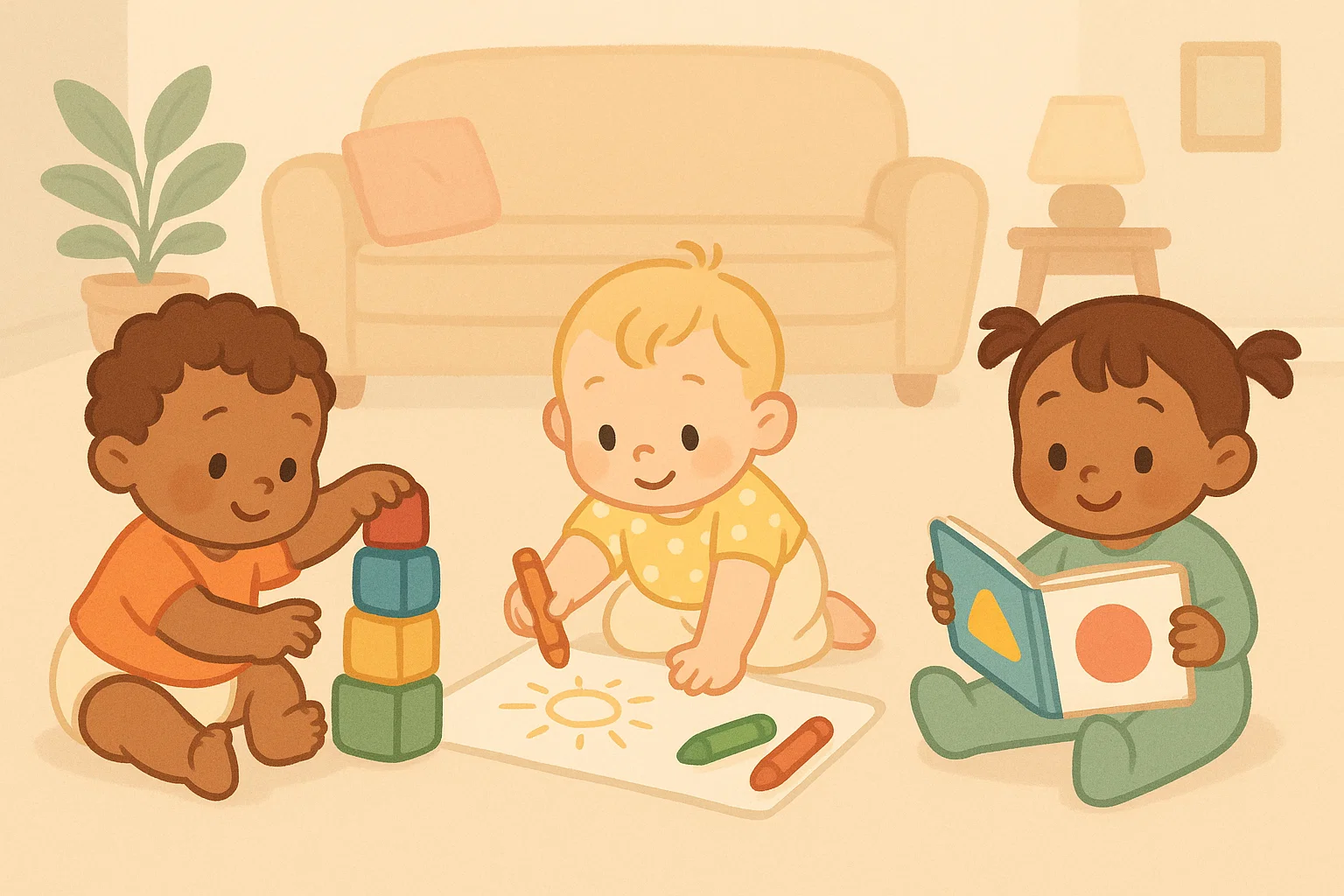
Engaging a toddler in purposeful play is one of the most effective ways to support early childhood development. This practical guide gives parents and early childhood educators 30 simple, low-prep educational activities for toddlers that support key areas of early learning.
These playful learning experiences help build language skills, fine motor control, gross motor skills, and early problem-solving abilities. Through these activities, toddlers can naturally explore cause and effect, learn new words, and build social-emotional skills through meaningful interactions with caregivers.
Key Takeaways
- Play-Based Learning: Toddlers learn best through active, hands-on play rather than rigid instruction.
- Low-Prep Materials: Household items like cardboard boxes, dried pasta, and pom-poms make excellent, budget-friendly learning tools.
- Holistic Development: A balanced mix of sensory play, fine motor activities, and gross motor activities supports cognitive, social-emotional, and physical development.
- Flexible Timing: Toddler learning activities should adapt to short attention spans and typically last between 5 and 15 minutes per session.
Play Helps Toddlers Build Skills
The American Academy of Pediatrics (AAP) emphasizes that play supports healthy development, including cognitive, physical, social, and emotional well-being. The Center on the Developing Child at Harvard University notes that, in the first few years of life, children form more than 1 million new neural connections every second, and responsive interactions with caregivers help support healthy brain development.
Repetition, movement, and responsive interactions with adults support this process, turning simple play ideas into valuable learning opportunities.
Simple Materials Work Best
Parents do not need expensive toys to create an engaging play opportunity. Common household items – such as dried pasta, building blocks, cardboard boxes, crayons, and kitchen tools – offer many options for playful learning.
These open-ended materials encourage toddlers to use their imagination and develop early problem-solving skills through experimentation.
Mix Indoor, Outdoor, Sensory, Motor, and Language Activities
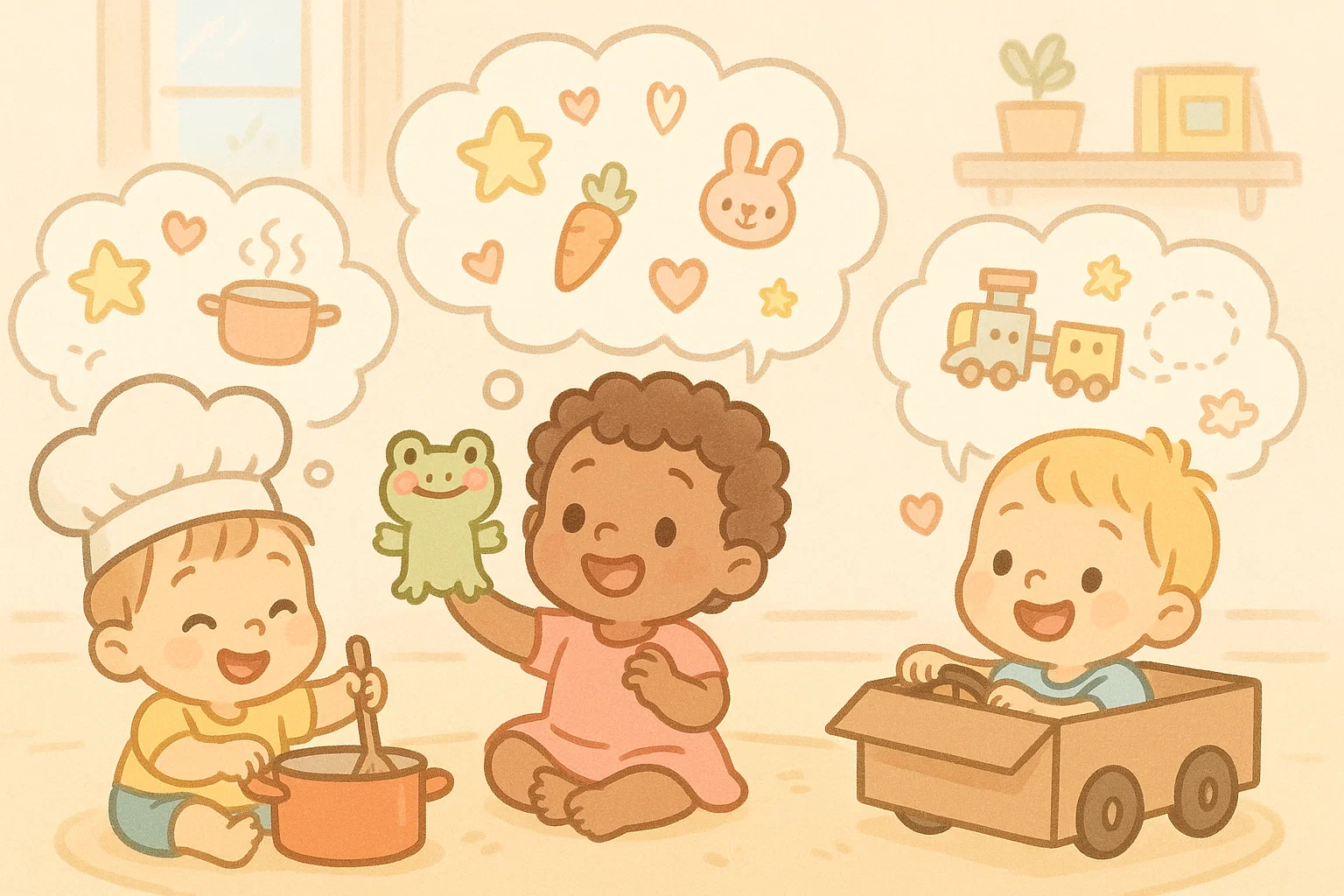
A well-rounded routine helps prevent boredom and supports balanced development. This guide brings together indoor activities, outdoor exploration, sensory bins, arts and crafts, and language games.
By offering different activities throughout the week, caregivers can keep toddlers engaged while responding to their changing developmental needs.
Play-Based Learning for Toddler Growth
Play-based learning provides a flexible framework in which children learn through self-directed discovery. WHO guidelines emphasize that young children need daily opportunities for physical activity in a variety of ways.
Because babies have short attention spans, activities should focus on exploration rather than a finished product.
Follow the Toddler’s Lead
Observing a child’s current interests allows parents to design highly engaging toddler activities. If a toddler is fascinated by toy cars, a caregiver can create a sorting game based on vehicle colors.
This responsive approach respects the child’s autonomy and can increase engagement while supporting early self-regulation.
Everyday Moments Build Relationships
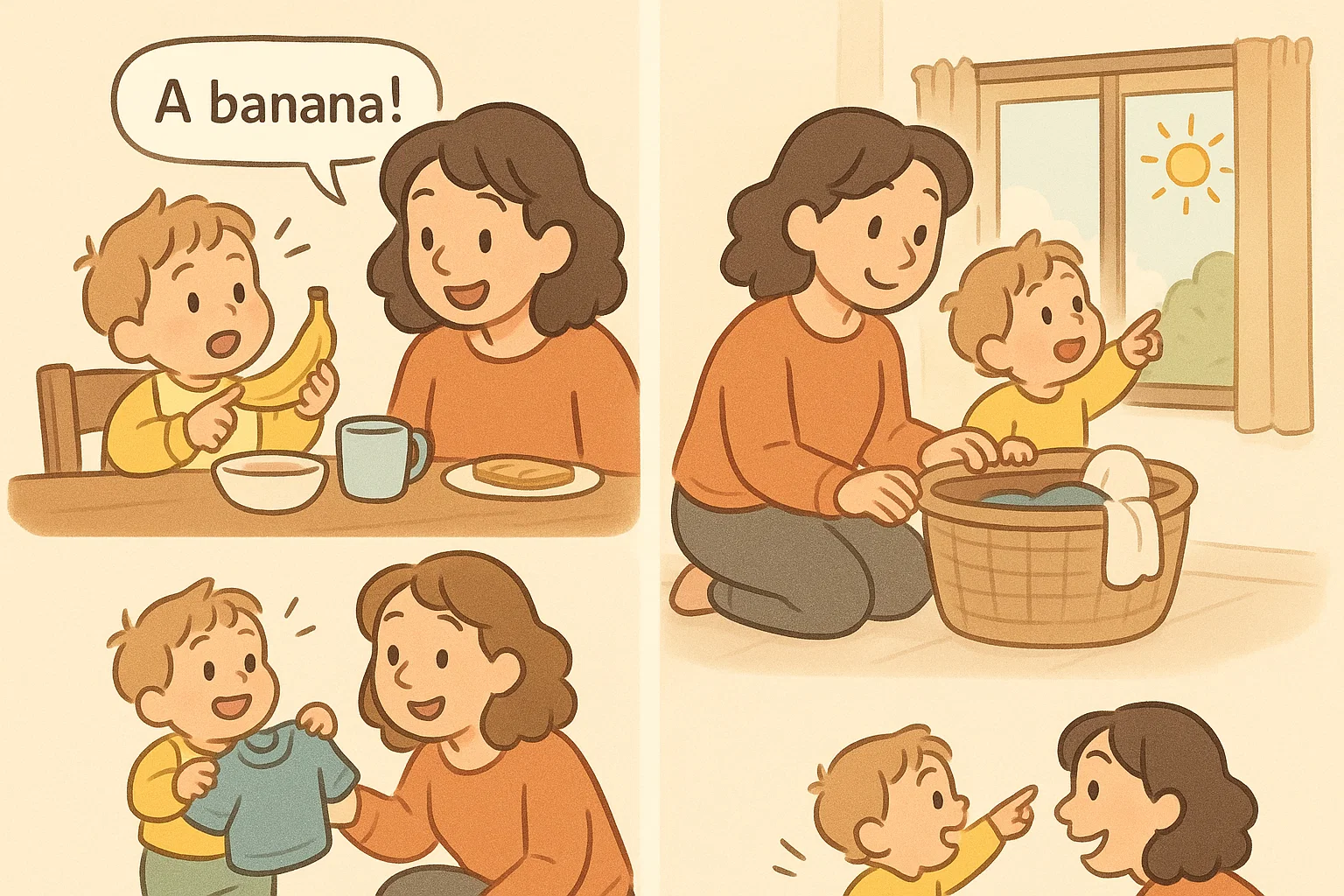
Daily routines like cooking, cleaning, and walking offer constant learning opportunities. Narrating actions during these moments helps toddlers learn new words and understand social contexts.
The Center on the Developing Child at Harvard University notes that serve-and-return interactions help shape brain architecture and support early language and social skills.
Short Activities Match Toddler Attention
A commonly cited rule of thumb is that a two-year-old may focus for about 4 to 6 minutes, although attention varies widely by child and activity.
Successful at-home learning activities focus on brief, high-quality interactions and allow your little ones to revisit favorite activities multiple times.
Sensory Play Activities for Toddlers
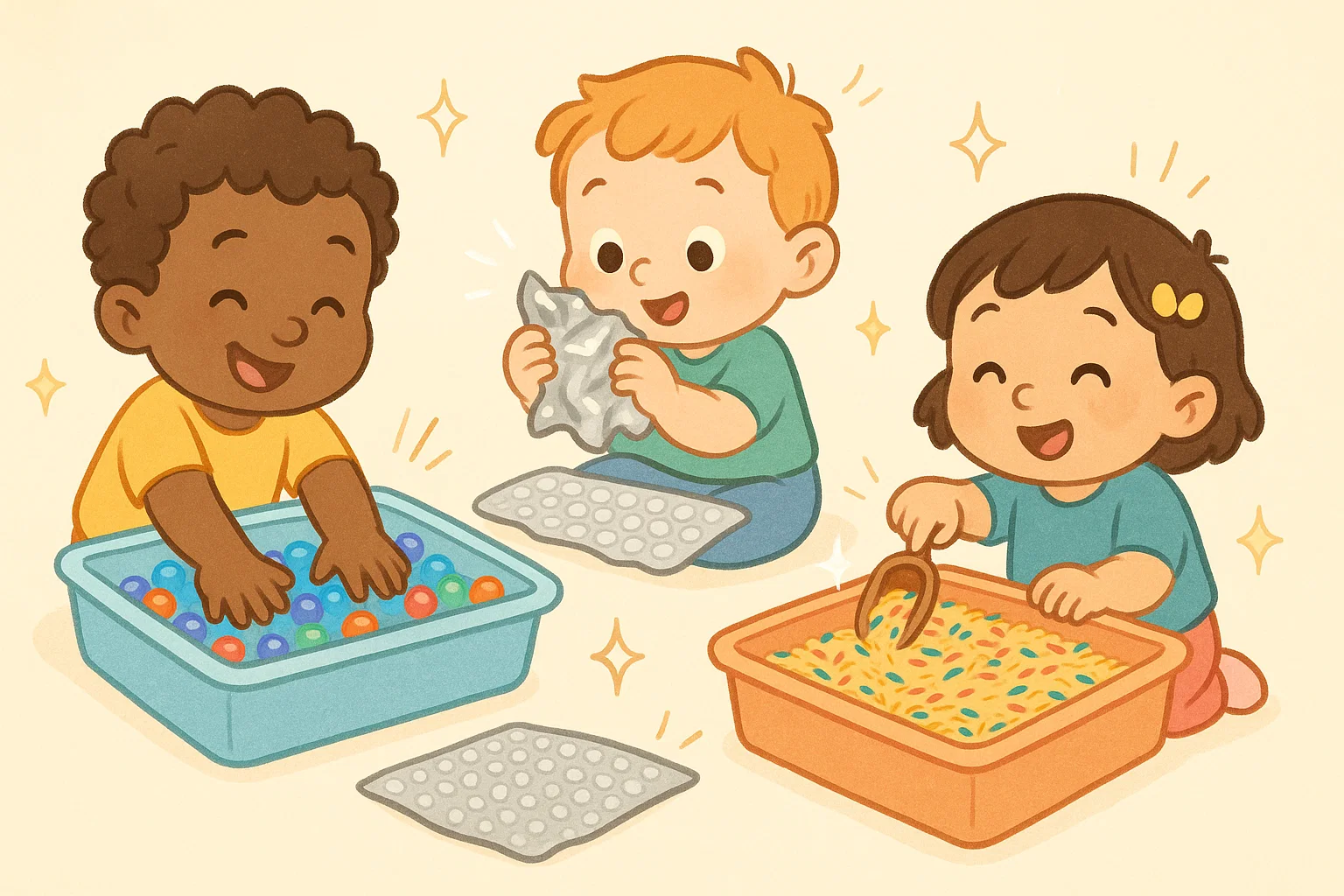
Sensory play activities allow toddlers to explore the world through touch, sight, sound, and smell. Tactile exploration can support sensory processing, spatial awareness, and fine motor development.
Safety Note: Sensory bins containing small objects, such as dried beans or pom-poms, require constant adult supervision because they can pose choking hazards.
Sensory Play with Everyday Items
Sensory play with everyday items uses basic household containers filled with wet or dry materials to create low-cost sensory stations. A simple plastic bin filled with safe materials allows toddlers to scoop, pour, and explore different textures.
| Sensory Base | Companion Tools | Primary Developmental Target |
| Dried beans | Scoops, cups, bowls | Fine motor control and hand-eye coordination |
| Water | Sponges, funnels | Understanding volume and strengthening grip |
| Pom-poms | Tongs, muffin tins | Pincer grasp and color sorting |
| Kinetic sand | Toy insects, small shovels | Spatial awareness and tactile exploration |
Colored Beans Sensory Bin
The Colored Beans Sensory Bin uses dried pinto or kidney beans dyed with food coloring to support color recognition and visual discrimination.
Toddlers use large spoons or measuring cups to scoop, transfer, and sort the beans into different containers. This activity strengthens hand-eye coordination and provides an opportunity for parents to introduce color names and descriptive vocabulary.
Dried Pasta Sensory Play
Dried pasta sensory play introduces babies to different shapes and textures, such as rotini, penne, and bowtie pasta.
Toddlers can shake handfuls of pasta to explore sound or pour the pieces through funnels to see how they fall. This simple activity introduces early concepts such as weight, volume, and cause and effect.
Pom-Pom Sensory Bin
The Pom-Pom Sensory Bin features soft, lightweight craft pom-poms placed inside a divided container or muffin tin.
Caregivers provide plastic tongs, encouraging toddlers to pinch, lift, and transfer individual pom-poms. This movement supports fine motor development by strengthening some of the small hand muscles children will later use for pencil grip.
Bugs in Kinetic Sand
Bugs in Kinetic Sand creates a miniature, texture-rich pretend play environment by hiding plastic insects inside moldable sand.
Toddlers use their fingers or small shovels to dig through the sand, uncover the hidden bugs, and brush them clean. This playful activity supports spatial awareness and encourages descriptive language as the child names each insect.
Water and Ice Activities for Toddlers
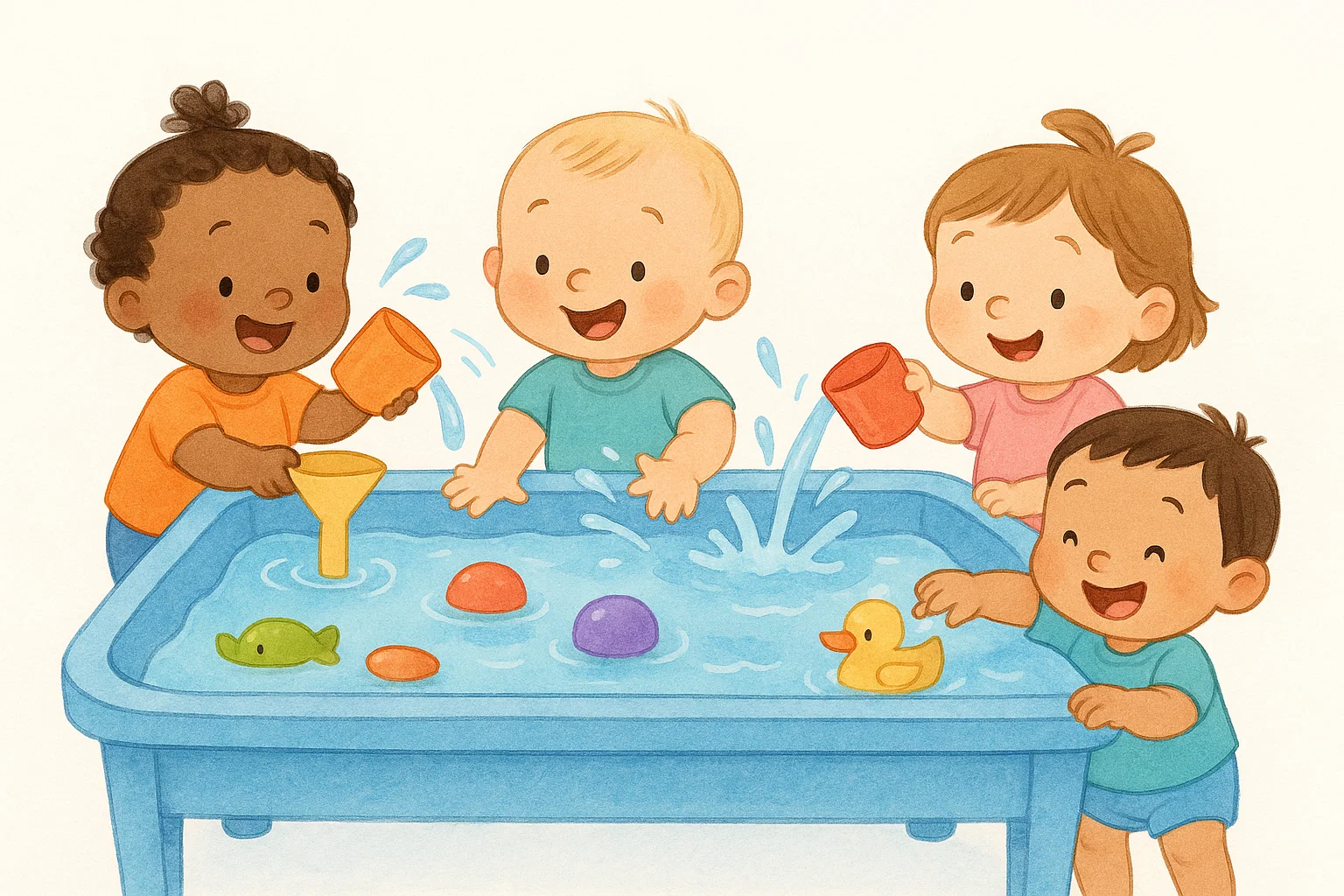
Water play offers an open-ended sensory experience and can introduce early science concepts. These activities are highly adaptable and work well either outdoors or indoors with a water table or a large shallow bin placed on towels.
Ice Cube Transfer
Ice Cube Transfer requires two large bowls – one filled with ice cubes and water, and one left empty.
Toddlers use a slotted spoon or kitchen tongs to scoop up and move the ice cubes from one bowl to the other. This task introduces temperature concepts like “cold” and “melting” while challenging physical coordination.
Dish Soap Water Table
The Dish Soap Water Table blends sensory play with early pretend play by adding a small drop of mild, child-safe soap to warm water.
Caregivers can add sponges, plastic cups, and plastic toy dishes, inviting the child to scrub the items clean. Squeezing wet sponges builds hand strength, while the activity imitates familiar daily routines.
Ice-and-Salt Painting
Ice-and-Salt Painting is a simple science experiment in which toddlers sprinkle table salt onto a large block of ice, then add liquid watercolors or food coloring on top.
Salt lowers the freezing point of ice, creating visible tunnels and crevices as the surface melts. Toddlers watch the colors run through these tiny paths, providing a clear visual demonstration of cause and effect.
Frozen Pom-Poms
Frozen Pom-Poms involves freezing colorful craft pom-poms inside ice cubes or a large ice block.
Toddlers use droppers of warm water, spray bottles, or small amounts of table salt to melt the ice and “rescue” the soft pom-poms. Once freed, squeezing the water out of the pom-poms provides additional fine motor practice.
Water Painting
Water Painting is a nearly mess-free creative option that works beautifully outdoors on brick walls, sidewalks, or large cardboard boxes.
Toddlers use real paintbrushes or rollers dipped in plain water to apply strokes to the surface. The water temporarily darkens the surface, allowing the child to practice large arm movements and mark-making without stains or major cleanup.
Creative Arts and Crafts Activities
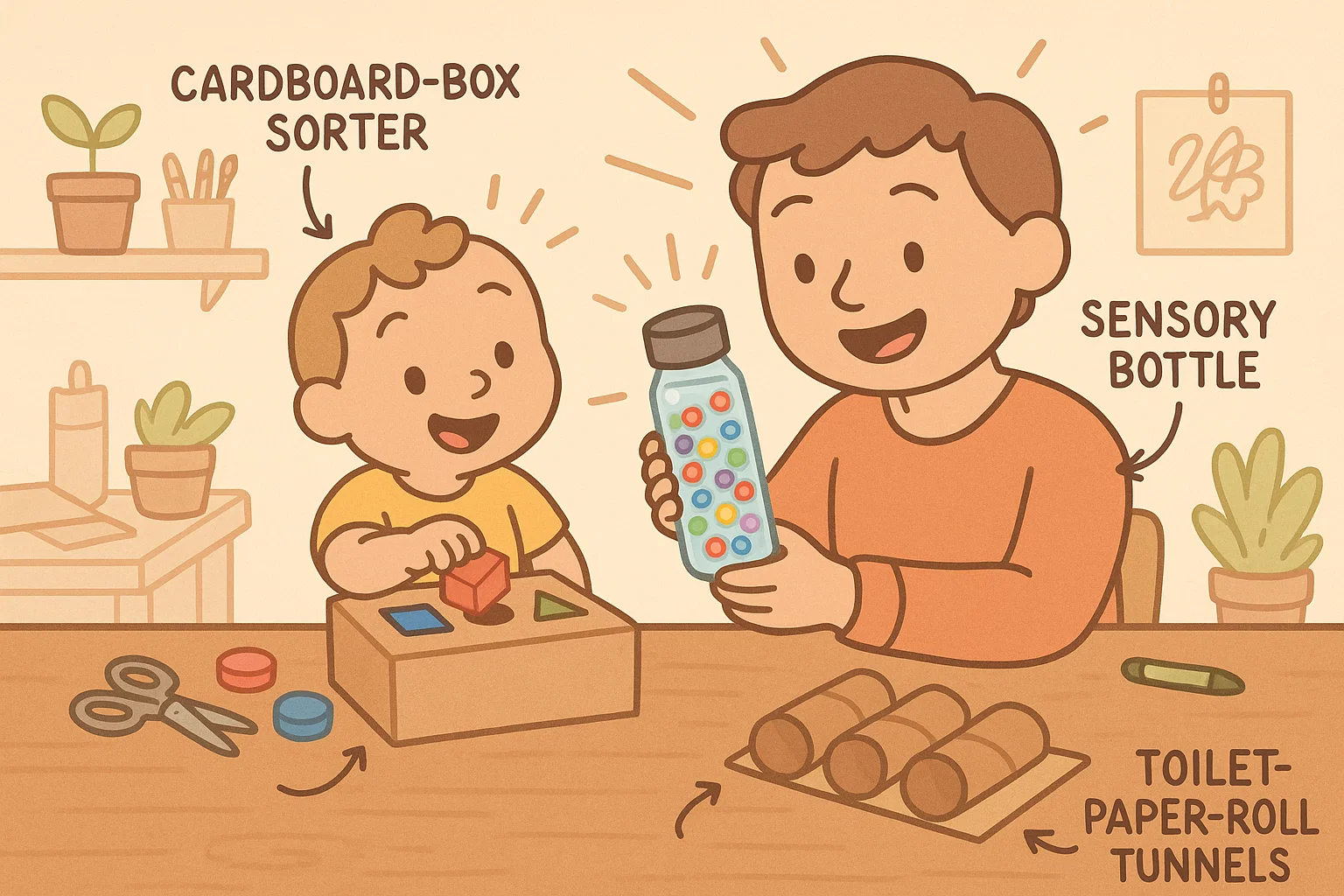
Arts and crafts support early writing readiness by strengthening grip control and promoting self-expression. Open-ended art focuses on the process of creating rather than on a specific finished product.
Crayons and Coloring Book
Using large triangular crayons with blank paper or a simple coloring book helps toddlers develop an early pincer grasp.
As toddlers make random marks and scribbles, they build the wrist stability necessary for future writing tasks. Parents can point to the markings, name the colors, and validate the child’s creative effort.
Markers in a Box
Markers in a Box involves seating a toddler inside or next to a very large empty cardboard box with a handful of washable markers.
The sides of the box help contain the mess while giving the toddler plenty of creative freedom. Drawing on vertical or angled walls inside the box can support shoulder and trunk stability, contributing to gross motor development.
Painting on Tin Foil
Painting on Tin Foil introduces a shiny surface that sounds and feels different from standard white paper.
Caregivers tape a sheet of aluminum foil onto a tray and provide washable paint. Toddlers can finger-paint or practice using a brush on the slippery surface while noticing reflections and how colors mix.
Bubble Wrap Sensory Paint
For Bubble Wrap Sensory Paint, caregivers tape a sheet of bubble wrap with washable paint onto a flat surface.
Toddlers press paper on top to make prints or gently press and pop the bubbles with their hands and feet. This activity connects tactile feedback with distinct popping sounds, helping toddlers explore cause and effect.
Colored Ice Painting
Colored Ice Painting blends temperature play with color recognition by freezing washable tempera paint or colored water into ice cube trays with popsicle sticks inserted as handles.
Toddlers hold the sticks and glide the melting paint cubes across thick paper. This creates vibrant, fluid designs while keeping paint off little hands.
Fine Motor Skill Activities
Fine motor activities target the small muscles of the hands, fingers, and wrists. Developing these skills is important for daily tasks such as buttoning shirts, using zippers, and manipulating eating utensils.
How to Set Up Fine Motor Activities
- Select an Appropriate Fine Motor Tool: Match the tool to the child’s current grasp ability.
Assess the toddler’s current motor development. Choose thicker items, such as pipe cleaners, play dough, or large popsicle sticks, for younger toddlers, and use tongs or smaller items for older toddlers. - Prepare a Contained Workspace: This helps prevent materials from scattering.
Set up the materials inside a shallow tray or a baking sheet. A clear physical boundary helps the toddler focus on the objects without becoming overwhelmed. - Demonstrate the Action Slowly: This models the hand movement without excessive verbal instruction.
Perform the task once or twice using deliberate movements. Show how to pick up a pom-pom with tongs or thread a single piece of pasta onto a string, giving the child time to watch the movement. - Allow for Unassisted Repetition: Repetition helps build coordination, confidence, and patience.
Step back and let the toddler attempt the activity independently. Avoid stepping in to correct minor errors immediately, as repetition and self-correction can help build hand-eye coordination.
Dried Pasta Threading
Dried Pasta Threading uses rigid pipe cleaners or thick shoelaces paired with hollow pasta shapes like rigatoni or penne.
Toddlers hold the string in one hand while using the other hand to slide the pasta onto it. This activity helps build bilateral coordination as children use both hands together.
Hair Ties on a Straw
Hair Ties on a Straw requires a heavy, stable base, such as a container with a sturdy straw or a vertical wooden dowel taped securely to it.
Toddlers stretch elastic hair ties or rubber bands and slide them onto the straw. This repetitive movement strengthens finger muscles and builds wrist control.
Popsicle Stick Drop
The Popsicle Stick Drop is an easy at-home learning activity created by cutting small slots into the plastic lid of an empty oatmeal container or coffee can.
Toddlers pick up colorful popsicle sticks and push them through the thin slots. This task supports spatial awareness because the stick must be aligned correctly to drop inside.
Pouch Lids in a Salad Spinner
Pouch Lids in a Salad Spinner introduces cause and effect through object manipulation.
Toddlers collect colorful plastic caps from baby food pouches, drop them into a salad spinner, and press or pump the handle to watch them whirl. After spinning, the child can open the lid and sort the caps by color into small cups.
Play Dough Tools and Textures
Manipulating play dough gives tiny hand muscles a useful workout.
Toddlers squeeze, poke, roll, and flatten the dough using child-safe rolling pins, cookie cutters, or plastic forks. Pressing textured objects, such as seashells or blocks, into the dough leaves clear imprints that can spark curiosity.
Gross Motor Activities for Toddlers
Gross motor activities focus on large muscle groups responsible for walking, running, jumping, and balance. The World Health Organization recommends that children aged 1 to 4 spend at least 180 minutes per day in a variety of physical activities, with additional intensity guidance for children aged 3 to 4.
Gross Motor Shape Jump
Gross Motor Shape Jump uses painter’s tape or colored construction paper taped securely to the floor to create geometric shapes.
Caregivers give simple instructions, such as “jump to the circle,” “crawl to the square,” or “hop to the triangle.” This active format connects physical movement with early shape and color recognition.
Play Silks and Dancing
Dancing with lightweight play silks or scarves to different styles of music encourages whole-body awareness.
Toddlers wave the silks high, twirl around, and freeze when the music stops, which builds rhythm and auditory processing skills.
Animal Imitation
Animal Imitation uses pretend play to prompt gross motor skill development.
Caregivers encourage toddlers to hop like frogs, waddle like penguins, crawl like bears, or stomp like heavy elephants. These movements engage many muscle groups and can improve core strength and balance.
Toddler Obstacle Course
Toddler Obstacle Course creates a safe, low-risk indoor path using couch cushions, rolled-up towels, and low cardboard boxes.
Toddlers navigate over, under, and around these obstacles, which can support spatial judgment, balance, and leg strength.
Go to the Park
Visiting a neighborhood park provides an ideal environment for complex gross motor movements.
Climbing ladders, riding swings, and balancing on low beams challenge the vestibular system, which supports balance and spatial orientation. Narrating these actions helps children connect movement and sensory experiences with descriptive words.
Language Development Activities
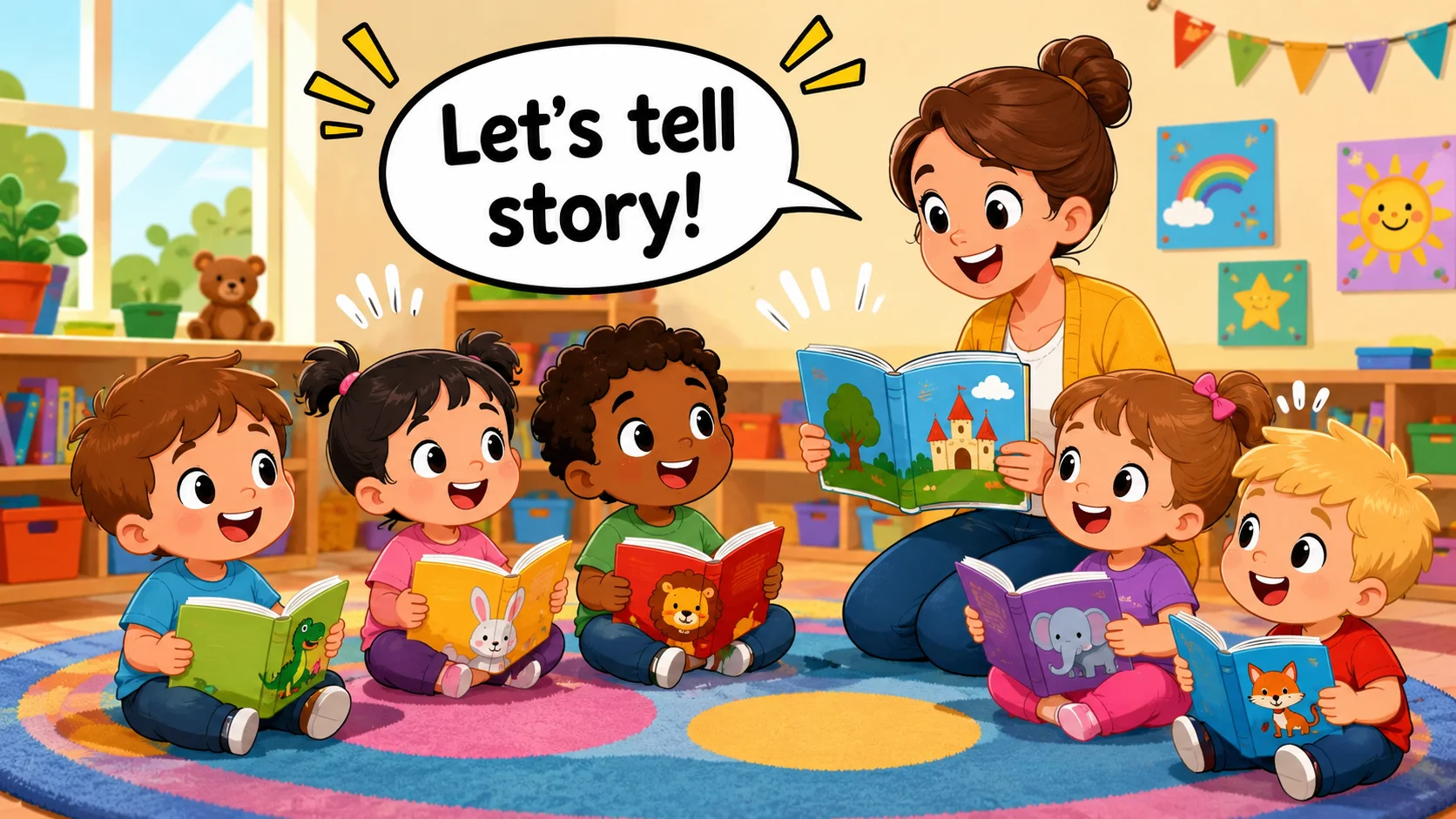
Language develops through regular, interactive communication. The activities below emphasize conversational turns, auditory processing, and vocabulary enrichment.
Storytime and Interactive Reading
Interactive reading transforms a passive listening experience into a dynamic conversation.
Instead of simply reading the text, caregivers point to illustrations and ask open-ended questions like, “What is the dog doing here?” This strategy encourages toddlers to connect words with images and practice expressive language.
Picture Books
Sturdy board books featuring clear images of familiar animals, vehicles, and everyday objects help toddlers categorize their world.
Pointing to clear images while pronouncing the object names helps build vocabulary associations. Books about routines or feelings help toddlers label their own daily experiences.
Nursery Rhymes
Nursery rhymes use rhythm, repetition, and hand gestures to make language predictable and memorable for young children.
Singing songs like “The Itsy Bitsy Spider” helps toddlers hear patterns in speech and match physical movements with verbal cues.
Mystery Bag
The Mystery Bag uses an opaque cloth bag containing four to five very familiar household items, such as a hairbrush, a toy car, or a spoon.
Toddlers reach inside without looking, touch an object, and try to describe how it feels before pulling it out. This game expands descriptive vocabulary while building tactile identification skills.
Story Cubes
Story Cubes uses lightweight blocks with simple illustrations attached to each side.
Toddlers roll the cubes and look at the face-up images, working with the caregiver to create a simple story. This collaborative activity supports creative thinking and introduces the basic idea of story structure.
Toddler Activity Needs by Age
A toddler’s play preferences and physical abilities change significantly between ages one and three. Tailoring activities to each stage can reduce frustration and make play more enjoyable.
Activities for 1-Year-Old Toddlers
One-year-old toddlers often explore through taste, touch, and direct physical manipulation.
Ideal activities include simple stacking blocks, sturdy board books, basic water play, and safe sensory exploration using large, taste-safe materials.
Activities for 2-Year-Old Toddlers
Two-year-old toddlers often experience rapid language growth and improved fine motor control.
At this stage, toddlers may enjoy simple color sorting, pretend play, basic arts and crafts, and jumping games that support active movement.
Activities for 3-Year-Old Toddlers
Three-year-old toddlers often show more advanced problem-solving skills and longer attention spans.
They may enjoy multi-step construction challenges, simple puzzles, outdoor nature hunts, and cooperative games that introduce sharing and turn-taking.
How Much Activity Toddlers Need
According to WHO guidelines, young children need a daily mix of structured and unstructured physical activity.
| Age Group | Recommended Active Play | Primary Activity Focus |
| 1-Year-Old | At least 180 minutes total daily | Sensory exploration and cruising |
| 2-Years-Old | At least 180 minutes total daily at any intensity, spread throughout the day | Fine motor tools and running |
| 3-Years-Old | At least 180 minutes total daily, including at least 60 minutes of moderate-to-vigorous activity | Balancing activities and simple group games |
Signs an Activity Fits Your Toddler
An activity is a good fit if the toddler stays engaged for at least a few minutes, smiles or focuses intently, and can participate with minimal assistance.
If a child begins throwing materials or crying, the activity may be too difficult, overstimulating, or no longer engaging, and it should be simplified or paused.
Safety Tips for Educational Toddler Activities
Prioritizing safety helps keep learning experiences positive and low-stress for everyone involved.
Supervise Small Materials
Items like pom-poms, dried beans, buttons, and pouch lids can be choking hazards for young children.
Caregivers must remain within arm’s reach during these sessions and store small materials safely out of reach when play concludes.
Choose Taste-Safe Options
Younger toddlers often explore new objects with their mouths.
For this stage, choose taste-safe alternatives, such as homemade play dough made with food-safe ingredients, or use large cooked pasta shapes instead of dry rice bins.
Keep Mess Contained
Minimize cleanup stress by using dedicated plastic trays, waterproof splat mats, or shallow storage tubs to contain messy materials.
Taking art or water activities outdoors on a pleasant day keeps cleanup fast and easy.
Adapt Activities for Toddler Stage
Every child develops at their own pace.
Caregivers should feel free to simplify any activity – for instance, switching from small tongs to using bare fingers – to match their child’s current motor skills and mood.
FAQ About Educational Activities for Toddlers
What Are Some Easy Activities for Toddlers at Home?
Easy activities for toddlers do not need special toys or complicated setup. Parents can use blocks to build a tower, roll playdough, sort pom-poms by color, or turn paper rolls into tunnels for toy cars. The best activity idea is usually simple, safe, and open-ended, giving the child several ways to play without needing step-by-step instructions.
What Sensory Activities for Toddlers Work Best?
Simple sensory activities for toddlers include water pouring, playdough exploration, pom-pom sorting, kinetic sand play, and textured art. These hands-on learning activities help develop fine motor control, early problem-solving skills, and sensory awareness while allowing toddlers to explore at their own pace.
How Can Parents Create an Invitation to Play?
An invitation to play is a simple setup that encourages a toddler to explore independently. For example, a caregiver might place blocks, animal figures, paper rolls, or pom-poms on a tray and let the child decide what to do with them. This approach keeps fun play child-led and gives the little one freedom to experiment, repeat actions, and create their own game.
Which Activities Encourage Pretend Play?
To encourage pretend play, offer familiar props such as toy dishes, scarves, blocks, dolls, animal figures, or cardboard boxes. Toddlers love copying everyday routines, so simple setups like a pretend kitchen, animal rescue game, or block city can support imaginative play and language development.

Take a short quiz to find out what your everyday choices say about your parenting style
When your child is curious about something new, what’s your instinct?
Take a short quiz to find out what your everyday choices say about your parenting style
“Can I download this app?” What happens next?
Take a short quiz to find out what your everyday choices say about your parenting style
When it comes to rules at home, which sounds most like you?
Take a short quiz to find out what your everyday choices say about your parenting style
If you could give your child one life skill today, what would you pick?
Take a short quiz to find out what your everyday choices say about your parenting style
Your child gets to choose what to watch. What would your ideal setup look like?
Take a short quiz to find out what your everyday choices say about your parenting style
Pick your parenting superpower ✨



