Educational Activities for Teens: 50+ Ideas to Build Learning, Creativity, Social Skills, and Future Readiness

 Discover a Free Education Video App for Kids
Pastory uses AI to personalize educational video content based on your child’s interests and personality. Safe, engaging, and built for curious young minds. Sign up now to stay updated and enjoy early access with a free trial
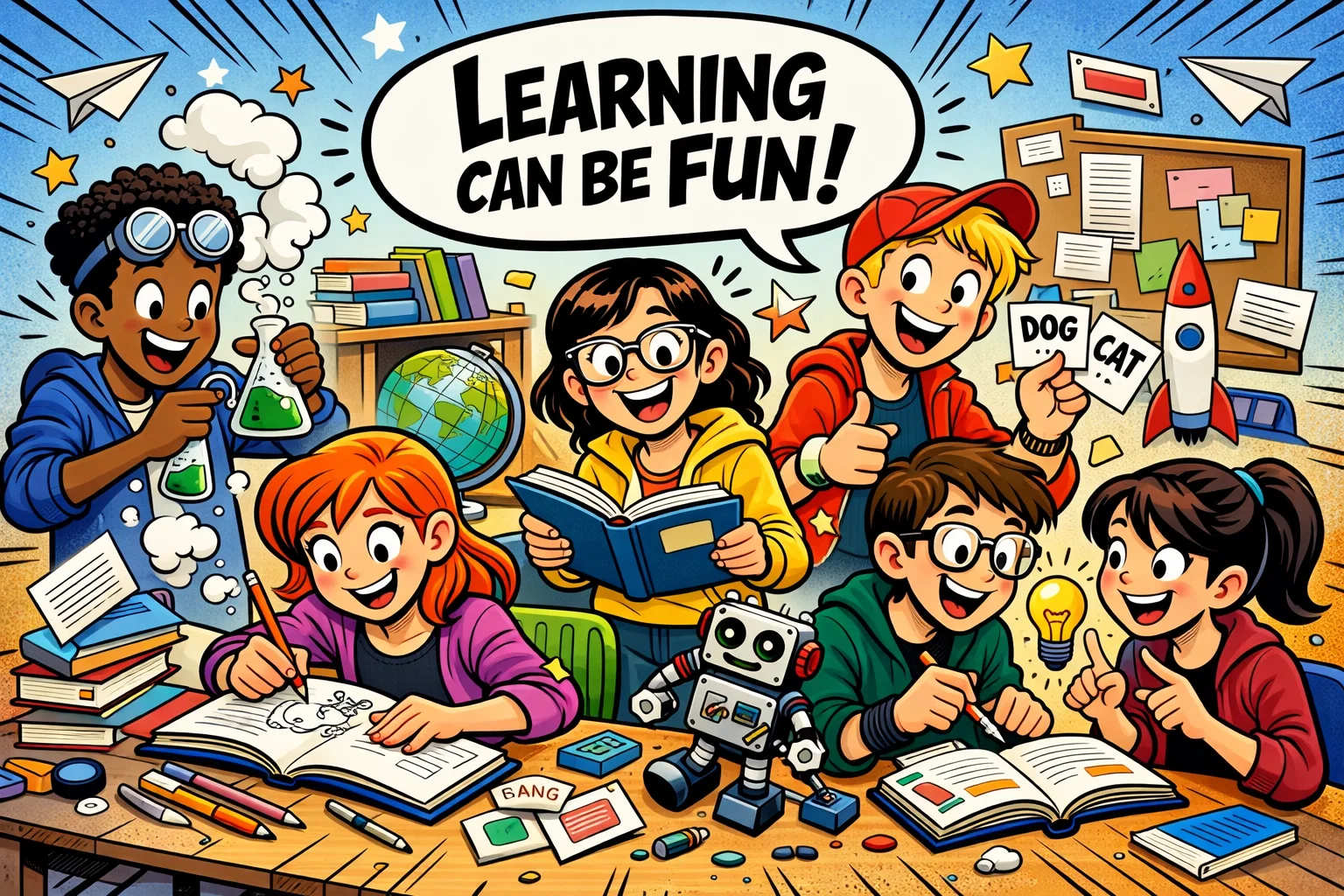
Finding the right activities for teens requires a balance between engagement and educational value. During adolescence, young people seek autonomy and social connection, which is why traditional “sit-and-listen” methods often fall short. To support teen development, activities need to be interactive, purposeful, and relevant to real-world interests.
This guide explores a range of educational activities for teens that build self-confidence, improve communication skills, and foster critical thinking. Whether you are looking for games and activities for an ESL classroom, group activities for a youth center, or something engaging to do at home, these 45 ideas offer a practical roadmap for meaningful growth during the teenage years.
Social Skills Activities for Teens
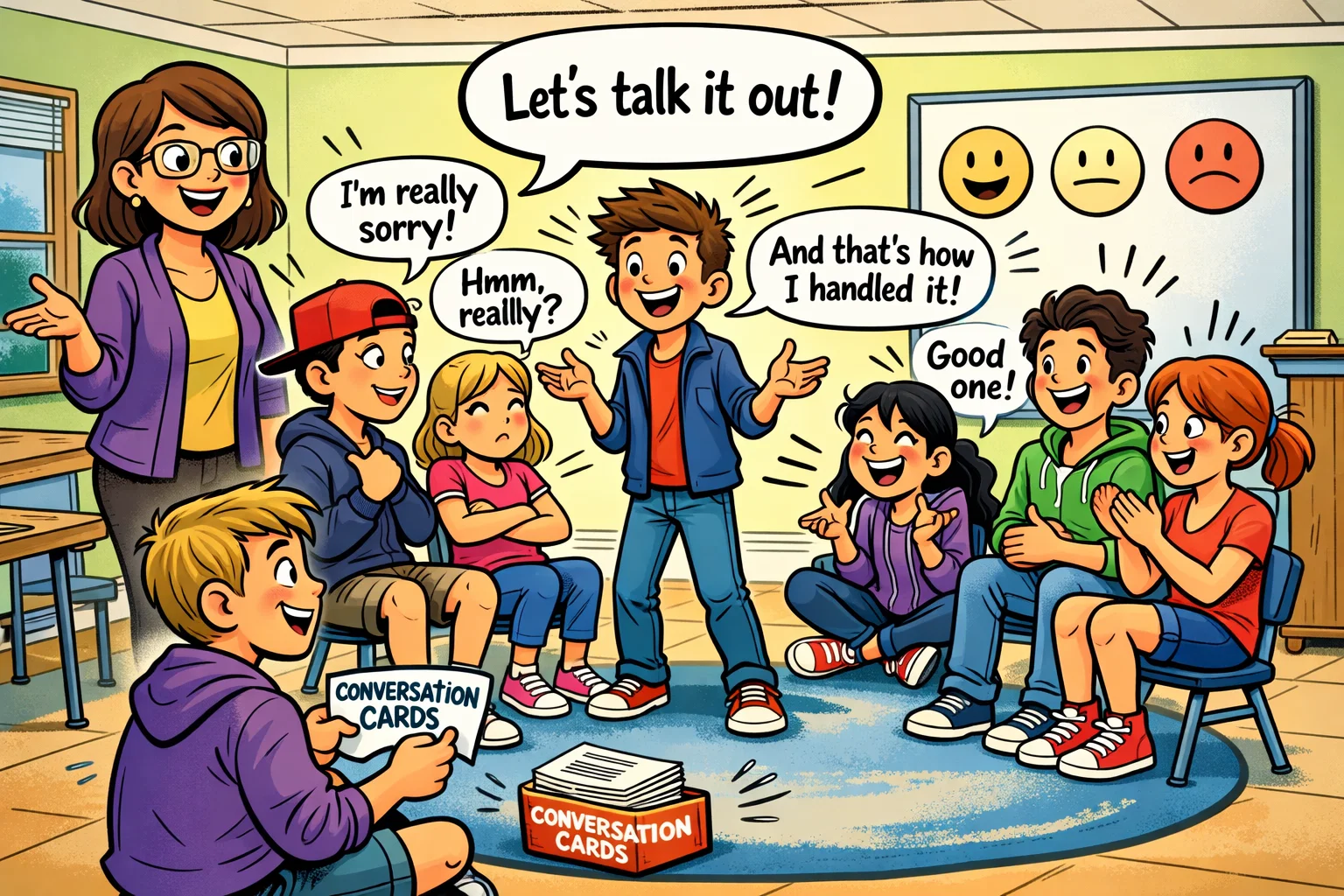
Building communication skills is a key goal for many educators and parents. These icebreaker and group-focused activities work well on the first day of class or in a new youth group.
Getting to Know You Bingo
Bingo is a classic ESL activity that helps students introduce themselves and start conversations. Students receive a grid with traits like “Has a pet” or “Speaks two languages” and must find peers who fit the description. This activity breaks the ice by encouraging movement and low-pressure conversation.
Two Truths and a Lie
This is a strong activity for building listening skills and memory. Each adolescent shares three statements about themselves, and the group must guess which is the lie. It encourages teens to pay attention to details and ask follow-up questions.
Find Someone Who
Similar to bingo, this activity focuses on specific language skills or interests. It is a highly interactive way to get students moving and talking. For example: “Find someone who has visited another center” or “Find someone who likes team sports.”
Would You Rather Debates
Debates are excellent for developing public speaking and critical-thinking skills. By choosing between two scenarios (for example, “Would you rather explore outer space or the deep ocean?”), teens practice justifying their opinions with logic while respecting different viewpoints.
Role Playing and Acting Workshop
A role-playing workshop allows teens to step into different roles and perspectives. This builds empathy and helps them practice responding to real-life social scenarios, such as peer pressure or job interviews, in a low-stakes environment.
Creative Educational Activities for Teens
Creative expression gives teens space to explore their identity. Creative writing projects or learning a musical instrument can provide a healthy outlet during the emotional intensity of the teenage years.
Creative Writing Workshops
Creative writing can help adolescents process their thoughts and experiences. Prompts can range from writing fanfiction to keeping a mindfulness journal. Setting a goal, such as a 500-word short story, provides a measurable sense of achievement.
Comic Creations and Storyboarding
Creating comics with basic graphic design principles helps teens understand narrative structure. This activity combines visual art with storytelling, making it a fun way to practice sequencing and concise communication.
Art Classes and Sketch Challenges
A “sketch-a-day” challenge encourages consistency and focus. Whether they use traditional pencils or digital tablets, these activities help teens develop an eye for detail and strengthen fine motor skills.
Photography and Short Film Projects
With a smartphone, teens can experiment with photography and filmmaking. Creating a three-minute documentary about a local recycling project or a scavenger hunt teaches planning, editing, and technical literacy.
Practical Educational Activities for Teens
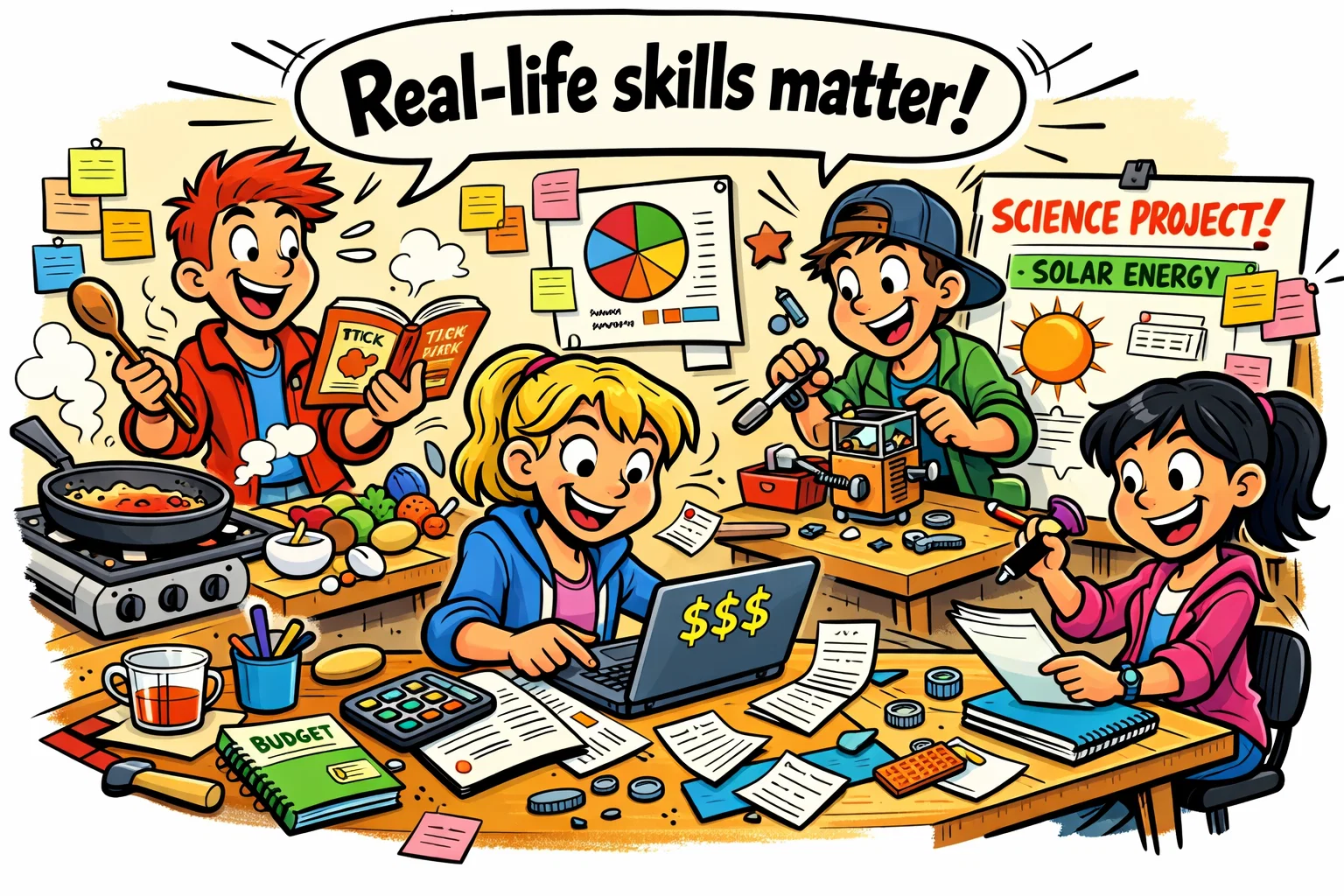
Practical skills help teens move from dependence toward greater self-sufficiency. These activities focus on life skills with immediate real-world applications.
Cooking Projects and Nutrition Challenges
Cooking is a multifaceted learning activity. It involves math (measuring ingredients), science (chemical reactions), and health. Hosting a “family dinner” challenge in which a teen plans and prepares a meal is a great way to build independence.
Budgeting and Money Skills Games
Teaching financial literacy through games and activities is essential. Creating a mock budget for a dream trip or a weekend at a music festival helps teens understand the value of money and the importance of planning.
Research and Presentation Projects
Ask a teen to research a favorite topic – such as the solar system or the history of musical instruments – and present their findings. This builds confidence in public speaking and teaches teens how to evaluate and organize information they find online.
STEM and Academic Enrichment Activities for Teens
STEM (science, technology, engineering, and math) activities can foster a growth mindset. These activities are designed to be engaging while still supporting academic learning.
Geometry Scavenger Hunt
A scavenger hunt for geometric shapes in the real world makes math feel more concrete. Teens use their phones to photograph examples of parallel lines, acute angles, or spheres in architecture or nature, then present their findings.
Science Experiments at Home
Simple experiments, like building a “baking soda volcano” or swabbing different household surfaces to compare microbial growth, can spark curiosity. Hands-on science can encourage critical thinking and inquiry-based learning.
CSI Fingerprint Investigation
Forensic science is a fun activity that teaches observation and logic. Teens can learn to “lift” fingerprints using cocoa powder and tape, then sort them into loops, whorls, and arches to simulate a basic forensic investigation.
Board Games for Logic and Strategy
Games like Jenga, chess, or complex strategy board games require players to anticipate their opponent’s moves. This helps develop problem-solving skills and patience.
Outdoor and Community Educational Activities for Teens
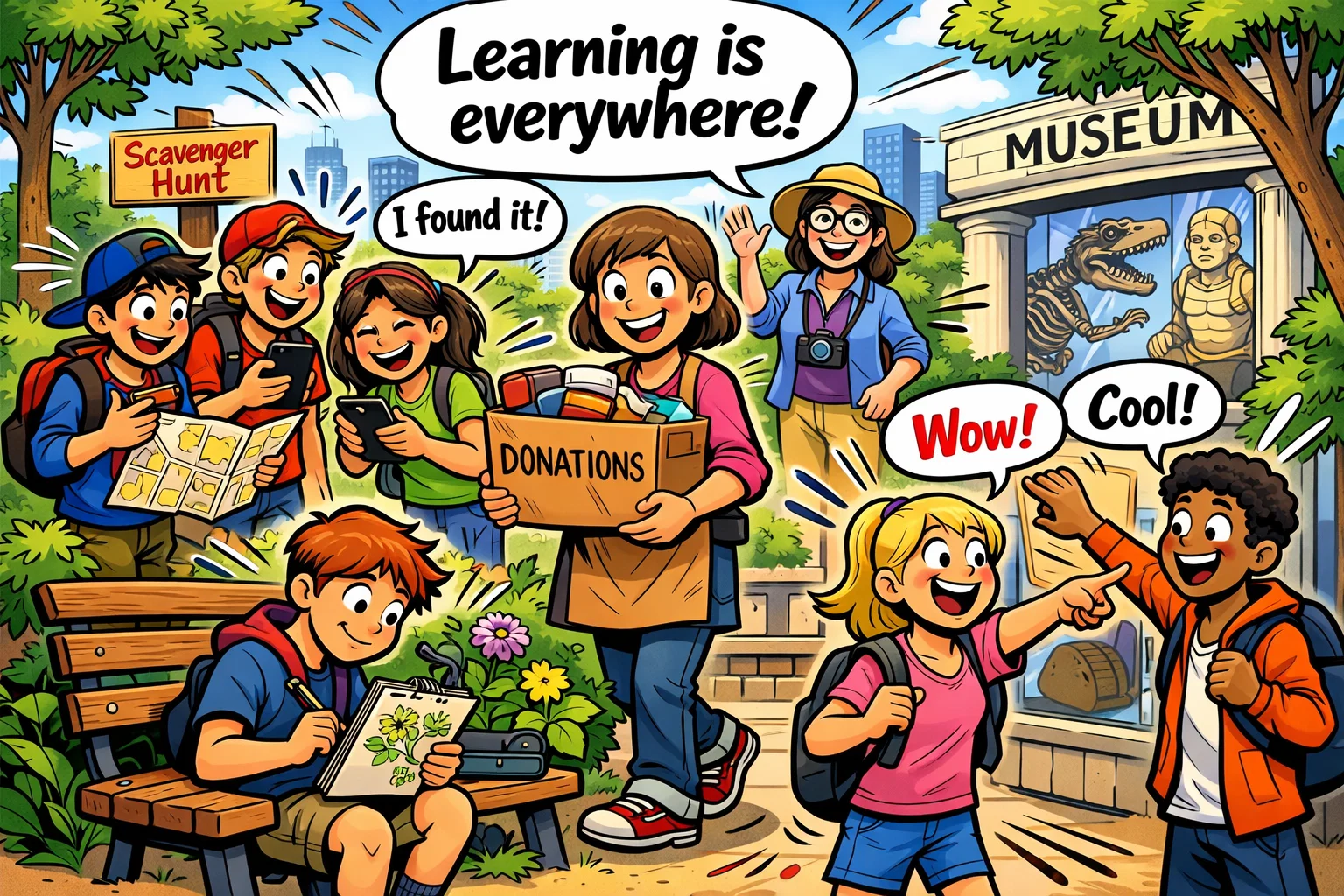
Spending time outdoors and connecting with the community can build social awareness and a sense of belonging.
Volunteer Work and Good Deeds
Volunteer work at a local animal shelter or food bank can be one of the most meaningful activities for teens. It provides a sense of passion and purpose while teaching responsibility and empathy. In some schools, volunteer hours may also count toward graduation or service requirements.
Educational Tours and Museum Visits
A trip to a gallery or science center should not be passive. Provide a scavenger list of items to find or questions to answer. This makes the educational trip more interactive and ensures the students learn during the visit.
Nature Journaling and Field Observation
Equip a teen with a notebook and head to a park. Recording observations about local wildlife, weather, or patterns in the neighborhood can encourage mindfulness and a deeper connection to the environment.
Educational Activities for Teens by Age
As teens grow, activities should become more complex to match their maturity level.
13–14 Year Olds
At this age, the focus should be on social skills and self-confidence. Games and activities like bingo or scavenger hunts work well because they provide structure while still allowing plenty of movement and energy.
15 Year Olds
Fifteen-year-olds often begin looking for a passion or a new hobby. Activities involving creative expression, such as graphic design or learning musical instruments, allow them to explore their identity.
16–17 Year Olds
Older teens benefit from future-readiness activities. Volunteer work, preparation classes for college, and career exploration help them transition into adulthood. At this stage, leadership skills should be the primary focus.
Why Educational Activities Matter During Teenage Years
Adolescence is a period of significant neurological and social transformation. Adolescence is marked by significant brain development, including changes in areas involved in executive function and decision-making. Structured educational activities can help bridge the gap between childhood play and adult responsibility.
Confidence, Motivation, and Independence
Participating in a meaningful activity that leads to a tangible result – whether a finished project or a mastered skill – can boost a teen’s sense of agency. When students take ownership of a hobby or a project, they transition from passive learners to active creators. This shift is essential for building long-term motivation and the self-confidence needed to navigate the challenges of early adulthood.
Critical Thinking, Creativity, and Problem Solving
Modern activities for children and teens should prioritize problem-solving over rote memorization. Challenging activities, such as scavenger hunts or physics experiments, require participants to analyze variables and test hypotheses. This process strengthens cognitive flexibility and helps adolescents approach complex issues with creativity and confidence.
Communication, Teamwork, and Social Growth
Group activities serve as a natural laboratory for developing social skills. Through team sports, debate rounds, and collaborative writing, teens learn the nuances of body language, rapport, and listening skills. Structured peer interaction can help teens practice communication, build confidence, and develop greater social awareness.
Academic Support Without Boring Routine
Turning a lesson into something interactive – such as using LEGO to explain engineering or Jenga for vocabulary – can make learning feel more engaging. Educational trips to a gallery or a local upcycling center can give classroom concepts more real-world context. This hands-on approach ensures that students learn more effectively by connecting abstract concepts to tangible experiences.
Key Skills Teens Can Build Through Educational Activities
To maximize the impact of any activity, it helps to identify the specific skills being targeted. The following table outlines the core competencies addressed by the activities in this guide.
| Skill Category | Target Attributes | Measurable Outcome |
| Social Skills | Empathy, Active Listening, Conflict Resolution | Improved peer cooperation and rapport |
| Leadership | Decision Making, Delegation, Public Speaking | Ability to lead group activities effectively |
| Creativity | Visual Design, Storytelling, Innovation | Production of original graphic design or media |
| Life Skills | Budgeting, Cooking, Time Management | Increased independence in daily tasks |
| Future Readiness | Digital Literacy, Portfolio Building, Resume Basics | Better preparation for jobs, college, or training programs |
Social Skills
Developing social skills involves more than just talking; it also requires reading body language and practicing respectful disagreement. Activities to help teens interact, such as role-playing, provide a safe space to practice these complex interactions.
Leadership Skills
Leadership skills develop when teens are given the chance to organize a scavenger hunt or manage a volunteer team. These roles teach them how to motivate others and take responsibility for a shared goal.
Creative Skills
Creative expression is not limited to “art.” It includes graphic design, musical instruments, and even upcycling old materials. These activities encourage teens to “get creative” and find unique solutions to visual or technical problems.
How to Choose the Right Educational Activities for Teens
Choosing the right learning activity depends on the teen’s personality, interests, and goals. Use the following criteria to evaluate an activity:
- Interest alignment: Does it match a favorite subject or a growing interest?
- Skill Growth: What specific communication skills or problem-solving abilities will be improved?
- Format Suitability: Is it better as a solo project or a group activity?
- Feasibility: Do you have the necessary resources, such as LEGO or art supplies, as well as enough space?
Tip: Avoid anything that feels overly childish, patronizing, or “cringe.” Teens respond best to activities that treat them with respect and offer a degree of real-world autonomy.
45 Best Educational Activities for Teens (Quick List)
- Two Truths and a Lie: Excellent icebreaker for communication skills.
- Getting to Know You Bingo: A classic ESL icebreaker.
- Would You Rather Debates: Enhances public speaking.
- Scavenger Hunts (City or Nature): Build problem-solving skills.
- Volunteer at a Shelter: Cultivates social awareness.
- Cooking a 3-Course Meal: Practical life skill.
- Graphic Design with Canva: Modern creative expression.
- Budgeting for a Trip: Financial literacy.
- Building a PC or electronic kit: Technical STEM skills.
- Photography Challenge: Visual storytelling.
- Podcast Recording: Verbal communication skills.
- Upcycling Old Clothes: Environmental awareness and creativity.
- Learning a New Language: Cognitive development.
- Documentary Film Review: Critical thinking.
- Yoga and Mindfulness: Mental wellbeing.
- Coding a Simple Game: Logic and math skills.
- CSI Fingerprint Lab: Forensic science.
- Geometry in Architecture Hunt: Real-world math application.
- Public Speaking Club: Leadership skills.
- Gardening or Hydroponics: Biology and patience.
- Mock Job Interviews: Future readiness.
- Creating a Personal Blog: Digital literacy.
- Musical Instrument Practice: Discipline and creative expression.
- Team Sports (Soccer/Basketball): Teamwork.
- Chess Tournament: Strategy and focus.
- Jenga with Questions: Interactive learning.
- Nature Journaling: Observation skills.
- Museum Photo Quest: Art appreciation.
- First Aid Certification: Vital life skill.
- Lego Engineering Challenge: Structural logic.
- Community Mapping: Geography and social studies.
- Poetry Slam: Emotional expression and creativity.
- Short Film Editing: Technology and pacing.
- Recycling Drive Organization: Leadership.
- Astronomy Night (Solar System): Science curiosity.
- DIY Room Redesign: Planning and aesthetics.
- Collaborative Story Writing: Cooperation.
- Logic Puzzle Race: Speed and logic.
- Historical Role-Play: Empathy and history.
- Career Interest Mapping: Future planning.
- Calligraphy Workshop: Fine motor skills.
- Board Game Design: Systems thinking.
- Trash-to-Art Project: Environmental creativity.
- Listening Games (Telephone): Active listening skills.
- Reflection Journaling: Mental wellbeing.
By offering a variety of activities, parents and educators can support a teen’s growth into a confident, capable adult. The key is to keep the experience interactive, respectful, and aligned with the teen’s interests and goals.
FAQ
What are the best educational activities for teens at home?
Cooking, coding, and creative writing are excellent activities to do at home. These activities often require only a few materials and allow teens to work at their own pace, which can help build independence.
How can I keep teens engaged in educational activities?
Engagement increases when teens have a choice in the activity and see a real-life use for the skill. Adding a friendly competitive element, such as a leaderboard or a final presentation, can also help maintain motivation.
What educational activities build social skills in teens?
Debates, team sports, and group activities like scavenger hunts are especially effective. These activities require active collaboration, negotiation, and attention to body language.
Are screen-based educational activities good for teens?
Yes, as long as they are active rather than passive. Graphic design, video editing, and coding are valuable digital activities that build practical skills and encourage creative expression instead of passive scrolling.

Take a short quiz to find out what your everyday choices say about your parenting style
When your child is curious about something new, what’s your instinct?
Take a short quiz to find out what your everyday choices say about your parenting style
“Can I download this app?” What happens next?
Take a short quiz to find out what your everyday choices say about your parenting style
When it comes to rules at home, which sounds most like you?
Take a short quiz to find out what your everyday choices say about your parenting style
If you could give your child one life skill today, what would you pick?
Take a short quiz to find out what your everyday choices say about your parenting style
Your child gets to choose what to watch. What would your ideal setup look like?
Take a short quiz to find out what your everyday choices say about your parenting style
Pick your parenting superpower ✨