25 Confidence and Self-Esteem Building Activities for Young Learners

 Discover a Free Education Video App for Kids
Pastory uses AI to personalize educational video content based on your child’s interests and personality. Safe, engaging, and built for curious young minds. Sign up now to stay updated and enjoy early access with a free trial

Confidence building is a developmental process, not a fixed personality trait. For young learners, confidence grows through repeated practice, supportive relationships, manageable challenges, meaningful responsibilities, and recognition of progress. When children work through manageable challenges, they begin to see themselves as capable and effective. This guide presents 25 practical activities for building confidence at home, in the classroom, outdoors, through creative work, and in social settings. The activities include age-appropriate options for preschoolers and early elementary kids and are designed to support self-esteem, independence, and emotional skills without adding pressure.
Key Takeaways
- Gradual Development: Confidence develops through repeated, successful interactions rather than through a single breakthrough.
- Developmental Alignment: Activities should be age-appropriate so that challenges feel manageable rather than overwhelming.
- Process Orientation: Focusing on effort and strategy rather than perfect results can protect motivation and reduce fear of failure.
- Autonomy Support: Meaningful, limited choices can strengthen a child’s sense of agency and self-confidence.
- Pressure Reduction: Excessive performance pressure can undermine progress and increase anxiety.
Confidence Develops Through Repeated Success
Small, achievable experiences can help children see themselves as capable. Completing manageable tasks gives kids concrete evidence that they can learn, contribute, and solve problems. Regular, predictable practice in a supportive environment is generally more useful than occasional pep talks or vague praise. Over time, these small successes can build self-esteem grounded in real experience.
Choice, Responsibility, and Support Build Confidence
Structured independence can support healthy self-esteem and confidence. Offering limited choices, meaningful jobs, and calm guidance lets kids practice independence within safe boundaries. This balance helps children learn new skills without feeling overwhelmed.
Specific Feedback Is More Helpful Than General Praise
Specific feedback about effort, strategy, courage, persistence, or improvement is usually more helpful than vague compliments. Generic praise such as “You’re so smart” can make some kids feel that they must keep proving themselves. By naming what the child did, adults show them which actions they can use again.
Low-Pressure Practice Protects Motivation
Shy, cautious, or hesitant kids often benefit from a slower pace and predictable support. Gradual participation, advance preparation, and permission to pause can make social situations feel more manageable. Reducing pressure can preserve a child’s willingness to try again.
Core Principles of Confidence Building
Healthy confidence often appears as a willingness to try, communicate, make choices, recover from mistakes, and cooperate with peers. It provides a behavioral foundation for exploration and learning.
| Concept | Definition | Behavioral indicator |
| Confidence | Belief that one can handle a particular task or new situation. | Willingly tries a new puzzle or joins a group game with peers. |
| Self-Esteem | An overall sense of self-worth and belonging. | Maintains a sense of self-worth while facing a difficult learning task. |
| Resilience | The capacity to recover from setbacks, mistakes, or stress. | Rebuilds a block tower after it falls, with support if needed. |
Why Confidence Matters in the Early Years

Confidence in the early years is associated with participation, independence, and positive social experiences. Children who feel more confident may be more willing to participate in class, form friendships, and manage daily routines independently. Confidence can also support emotional expression and problem-solving when kids face unfamiliar tasks.
Confidence Versus Self-Esteem Versus Resilience
Although they are related, confidence, self-esteem, and resilience describe different aspects of development. Confidence is the belief that a child can handle a task; self-esteem is a broader sense of self-worth; and resilience is the ability to recover after a setback. Many of the activities below can support all three through practice, reflection, and supportive feedback.
Healthy Confidence Versus Performance Pressure
A confident child does not have to be outspoken, highly social, competitive, or extroverted. An introverted child can be quietly confident, especially in familiar settings or independent work. Distinguishing encouragement from pressure helps adults respect a child’s natural temperament.
Signs Young Learners Need Confidence Support
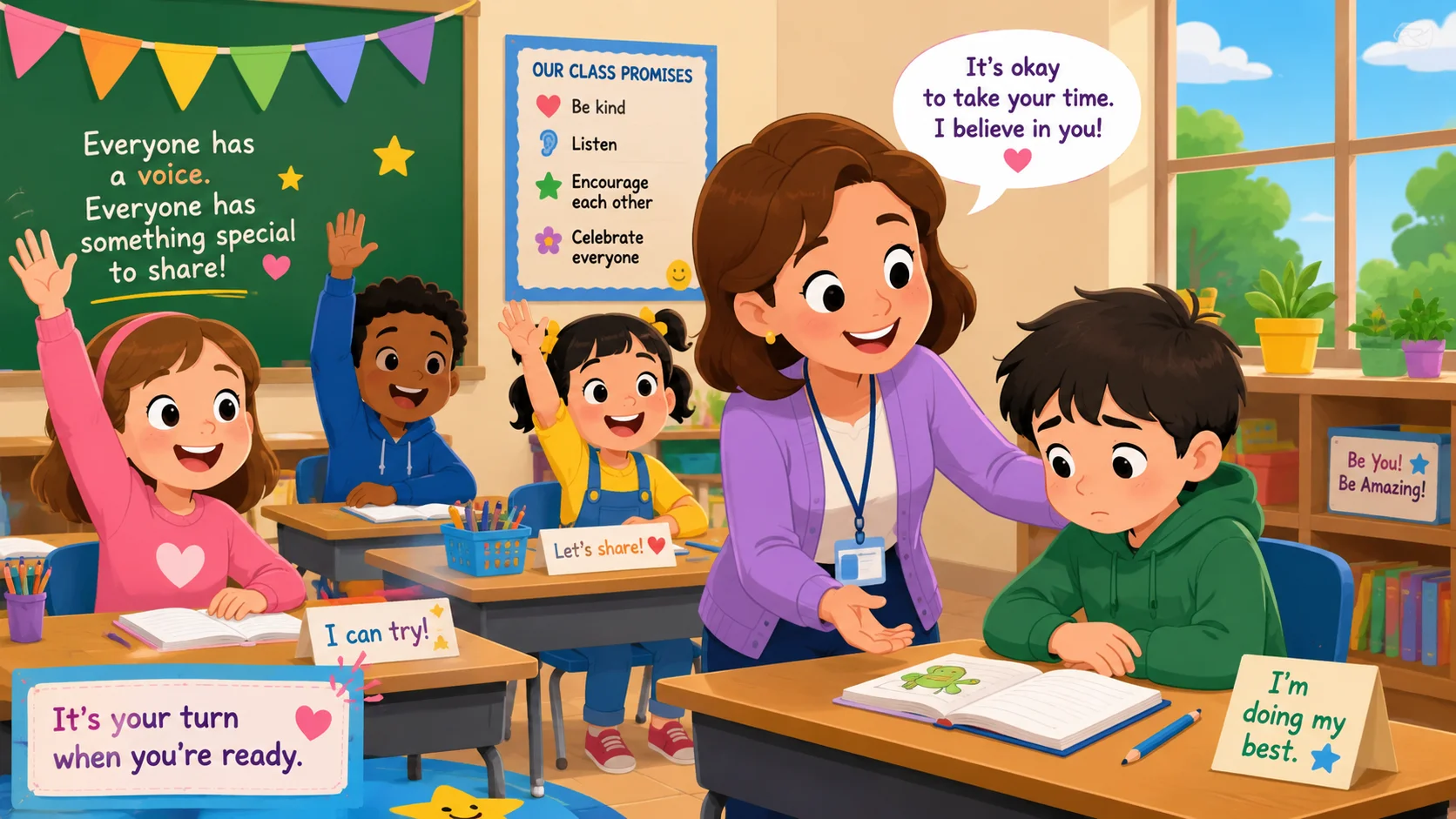
To decide whether a child may need extra support, look for persistent patterns across settings such as home, school, and recreational activities.
Avoidance, Negative Self-Talk, Fear of Mistakes
Children who lack confidence may avoid tasks they expect to be difficult or fear they may fail. Common behavioral indicators include:
- They may say, “I can’t do it” or “I’m bad at this,” before trying.
- They may refuse unfamiliar learning materials or new activities.
- They may give up quickly on tasks that require several attempts.
- They may hide incomplete work or become very upset about small mistakes.
Withdrawal During Group Activities
Low confidence can also appear during both structured and unstructured peer interactions. A child may rarely speak in class discussions, decline group games, or avoid collaborative projects. On the playground, the child may stay at the edge of a group and watch without attempting to join.
Perfectionism, Comparison, and Reassurance Seeking
Perfectionism can sometimes coexist with low confidence. Children may compare themselves frequently with peers and worry that their work is not good enough. Other signs may include frequent requests for adult approval, repeated reassurance seeking – for example, asking “Is this right?” at every step – or reluctance to finish work that does not meet a self-imposed standard.
When Extra Support May Help
Caregivers and educators should monitor the duration and intensity of these behaviors. If low confidence is accompanied by persistent distress, social isolation, school avoidance, or major changes in sleep or appetite, consider seeking professional guidance. A pediatrician, child psychologist, or school counselor can help identify contributing factors and appropriate support.
1. Role-Play New Situations
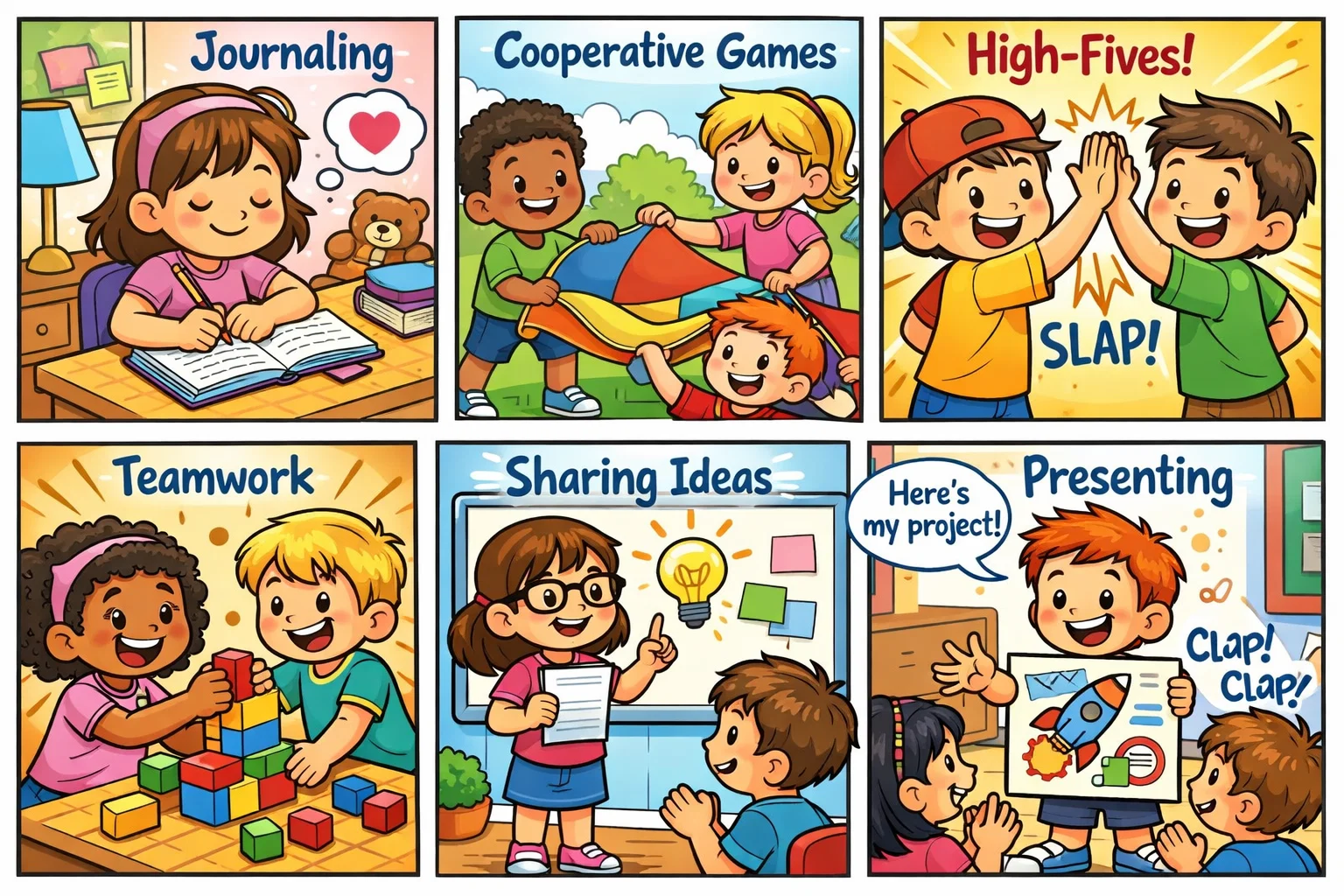
Role-play gives kids a low-pressure way to practice before an unfamiliar social or academic situation.
Practice Brave Responses Through Role-Play
Use a simple four-step sequence to make an upcoming event feel more familiar:
- Describe the Situation: Clearly outline the upcoming event, such as moving to a new area or starting a new school.
- Choose Roles: Let the child take their own role first while the adult acts as a peer or teacher.
- Rehearse Responses: Practice specific verbal responses and physical actions, such as asking for help or greeting a classmate.
- Switch Roles: Reverse the roles so the child can watch the adult model a calm, confident response in the same situation.
Gentle Progression From Practice to Real Life
Move from pretend play to real life in small steps. For example, a child practicing how to make a friend might first make eye contact and smile, then say hello on a later day. Avoid surprise performances or forced participation, because sudden pressure can increase avoidance.
2. Friendship Rehearsal Games
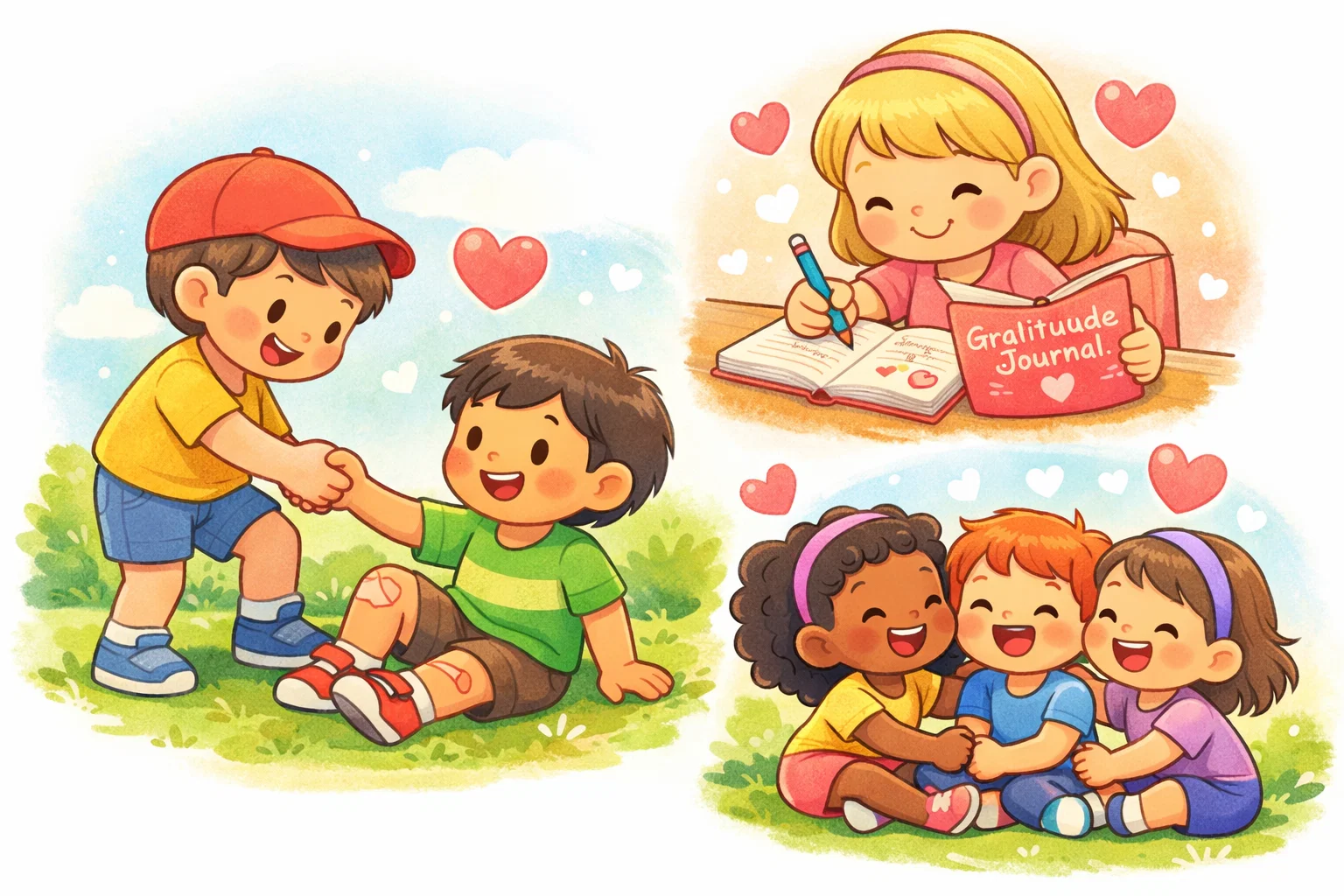
Friendship rehearsal games give kids simple language for starting, joining, and managing peer interactions.
Conversation Starters and Play Invitations
Some kids benefit from practicing specific phrases for approaching peers. Turning this practice into a game can make the phrases easier to remember and use. Useful scripts include:
- “Can I play this game with you?”
- “I like your drawing. Do you want to build a tower together?”
- “What is your favorite game to play during recess?”
Conflict Responses and Boundary Practice
Social confidence includes the capacity to assert personal boundaries calmly. Rehearsal games should include practice for handling minor disagreements and responding to rejection. Children can practice neutral phrases such as “I’m using this toy right now, but you can have it when I’m finished” or “It’s okay if you don’t want to play right now. I’ll go read my book.” Practice can help kids respond more calmly when an interaction does not go as hoped.
3. Child-Led Storytelling
In child-led storytelling, kids choose the characters, problems, and endings.
Brave Character Story Prompts
Adults can offer prompts that let kids explore confidence through a fictional character. Prompts should feature characters experiencing relatable emotional challenges:
- “Once upon a time, there was a little bear who felt very nervous about climbing the big hill because he thought he might make mistakes…”
- “A young wizard wanted to try a new skill, but every time she tried, her wand made a funny noise. Let’s tell the story of what she did next…”
Alternative Endings and Child Choices
Pause at important decision points and invite the child to suggest several possible responses. Asking, “What are two different things this character could do right now?” helps kids generate their own problem-solving ideas. Discussing each option reinforces the idea that a challenge can have more than one workable solution.
4. Positive Self-Talk Practice
Positive self-talk can help children respond to frustration or uncertainty more constructively.
Negative Thought Reframing
Cognitive reframing involves noticing all-or-nothing thoughts and replacing them with more realistic alternatives.
| Unhelpful thought | More realistic self-talk |
| “I am completely bad at math, and I will never finish this worksheet.” | “This math problem is difficult right now, but I can ask for help and try one small step.” |
Confidence Phrases for Difficult Moments
Adults can help children remember short, realistic phrases to use during stressful moments. The phrases should feel believable rather than overly optimistic:
- “It’s okay to ask for help when something feels hard.”
- “Mistakes help me learn what to try next.”
- “I can take a deep breath and try this one more time.”
5. Strength-Word Collage
A strength-word collage helps children notice and name positive qualities they have shown.
Strength Words Young Learners Can Use
Offer simple strength words that can be connected to specific, observable actions. Use concrete examples rather than abstract labels:
- Kind: Helping a peer who fell down.
- Brave: Trying a new food or speaking in front of a small group.
- Curious: Asking questions about how nature works.
- Determined: Continuing to practice tying their shoes after early difficulties.
Display, Reflection, Regular Updates
Once the collage is complete, display it in the child’s bedroom or a classroom calming corner. Keeping it visible creates regular opportunities for reflection. Refer to the collage from time to time and invite the child to add words or pictures after a meaningful experience.
6. “I Am” Strengths Activity
The “I Am” activity helps children describe themselves through strengths and actions rather than comparisons with others.
Strength Statements Based on Evidence
Connect each “I am” statement to a specific action so that it feels credible. This makes the statement more credible than generic praise:
- “I am helpful because I organized the classroom books yesterday.”
- “I am an observant learner because I noticed the different birds outside.”
Strengths Beyond Grades and Performance
Encourage children to notice strengths beyond grades and athletic results. Recognizing qualities such as humor, imagination, patience, honesty, attentive listening, and a willingness to practice helps children build a broader sense of self-worth.
7. “Dear Me” Letters
Writing or dictating “Dear Me” letters can support self-compassion, reflection, and goal setting.
Letters for Future Challenges
Children can write short, supportive messages to their future selves before a known transition, such as starting elementary school. A child might dictate: “Dear Me, when you start your new school, remember that you can build amazing block towers, and it is okay to ask the teacher for help if you feel lost.”
Letters Celebrating Personal Growth
Children can also write letters that look back on a challenge they have learned to manage. Comparing past struggles with current skills gives children concrete evidence of progress:
| Past challenge | Actions taken | Current progress |
| The child was afraid to put their face in the water during swimming lessons. | The child practiced blowing bubbles at home and worked with the instructor. | The child can now swim across the shallow end independently. |
8. Ways to Grow Reflection
A balanced “Ways to Grow” reflection moves children away from an all-or-nothing view of success and failure. It presents skills they have not yet mastered as areas for future practice.
Current Strengths and Next Steps
A simple two-column chart can help children see what they can do now and what they would like to practice next:
| What I can do now | What I want to practice next |
| I can write all the letters in my first name. | I want to practice writing the letters in my last name. |
| I can put on my shoes independently. | I want to practice tying my shoelaces. |
Growth Without Negative Labels
Avoid language that turns a child’s current difficulty into a negative label. Words such as “weak,” “bad,” or “behind” can create shame. Instead, focus on helpful strategies, available support, and specific opportunities to practice.
9. Coping Visualization
Coping visualization uses imagination to rehearse helpful responses before a challenging event.
Sensory Details for Clear Mental Practice
During a quiet moment, guide the child to close their eyes and imagine a challenging scenario, such as giving a short presentation or entering a busy birthday party. Invite the child to notice a few sensory details:
- What do you see when you open the classroom door?
- What sounds do you hear around you?
- What does it feel like when you take a deep breath and say your first line?
Realistic Success Rather Than Perfect Results
Avoid presenting an idealized, flawless performance, because it may increase pressure. Instead, frame success as an exercise in coping and resilience. Ask the child to imagine feeling nervous, pausing, using a self-talk phrase, asking for help, or continuing after a small mistake.
10. Daily or Weekly Success Reflection
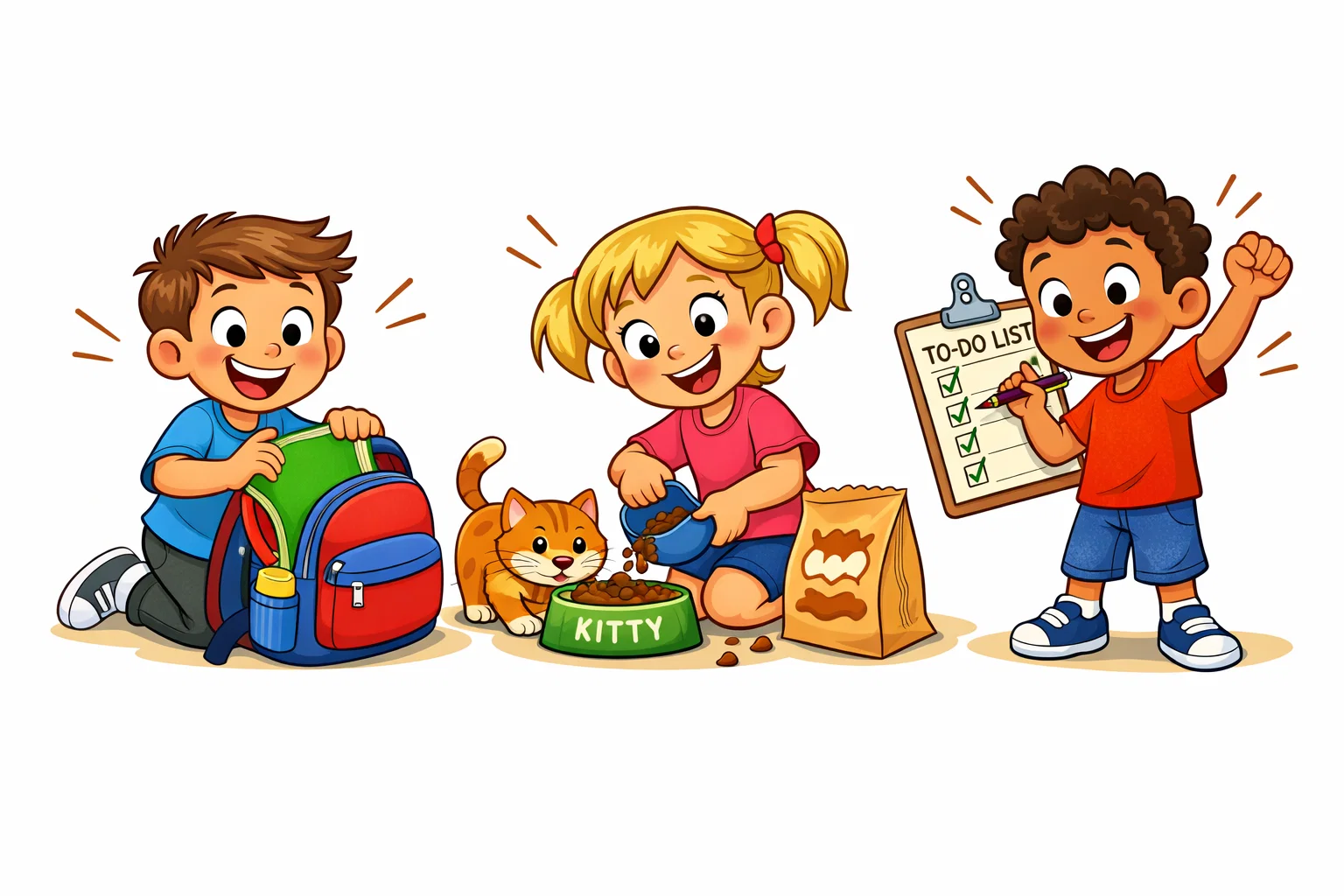
A daily or weekly success reflection creates a predictable moment to notice small signs of progress.
Specific Recognition for Effort and Strategy
At dinner or during a classroom closing circle, adults can highlight observable actions rather than outcomes. Instead of praising only a high score, name the strategy you noticed: “When the puzzle piece didn’t fit, you rotated it and tried another section instead of stopping.”
Small Wins Worth Celebrating
Adults can broaden the range of actions they recognize as achievements. Noticing subtle behaviors shows children that these efforts matter:
- A child quietly greets a new neighbor or classmate.
- A child packs school materials independently without a reminder.
- A child manages a moment of disappointment or shares a toy cooperatively.
11. Growth and Contribution Wall
A growth and contribution wall can display examples of effort, kindness, curiosity, and participation at home or in the classroom.
Achievement Categories Beyond Winning
To support a wide range of learners, include examples from several areas of development:
| Category | Example |
| Persistence | Drafts showing several attempts at a math problem. |
| Kindness | A photo of helping a peer clean up. |
| Curiosity | A list of questions about space. |
| Brave Attempts | A first attempt at a complex origami shape. |
Fair Recognition for Every Learner
Use rotating contributions and varied criteria to avoid turning the display into a competition. This approach gives children with different academic, athletic, artistic, social, and developmental strengths meaningful representation and supports a shared sense of belonging.
12. Progress Projects
Progress projects turn improvement into visible evidence that children can review.
Visible Evidence of Growth
One option is to save examples of a child’s work over several weeks or months. Useful projects include:
- Handwriting Portfolios: Compare a letter-tracing sheet from September with one from December.
- Audio Recordings: Record the child reading a short passage at intervals and listen for changes in fluency.
- Skill Charts: Track block-building heights or how long the child can balance over time.
Reflection Questions for Progress Reviews
When reviewing the collection with a child, use open-ended prompts to encourage reflection:
- “What was the hardest step when you first started doing this?”
- “What strategy do you use now that you did not use at first?”
- “Who did you ask for help, and how did that support make a difference?”
13. Small-Goal Challenges
Small-goal challenges make large skills feel manageable by breaking them into achievable steps.
Child-Friendly Goal Setting
When a child wants to learn a complex skill, such as riding a bicycle or reading a chapter book, work together to choose one immediate step. For a younger child, the goal should be concrete and close in time, such as “I will practice balancing on one foot for five seconds today.”
Progress Tracking Without Pressure
Visual tools such as checklists, sticker ladders, or simple journals can help children see their effort over time. These tools should encourage effort, not make children feel ashamed about slow progress. If a day is missed or a step is not completed, model flexible planning: “Let’s make the next step a little more manageable tomorrow.”
14. Helper Jobs at Home
Giving children real, age-appropriate household responsibilities shows that adults trust them and value their contribution.
Age-Appropriate Responsibilities
Tasks should match the child’s age, motor skills, and safety needs:
- Ages 3–4: Sorting clean laundry socks into pairs; setting napkins on the dining table; watering potted plants with a small pitcher.
- Ages 5–6: Feeding pets under supervision; organizing books on a shelf; packing their school bag independently.
Independence Before Perfection
Adults should allow for small imperfections when a child does these chores. If a child spills water while filling a pet bowl or folds a napkin unevenly, the adult should resist the urge to step in immediately and correct the work. Allowing the child to complete the task independently preserves their emerging sense of capability.
15. Classroom Responsibility Roles
Classroom responsibilities give every student a chance to contribute and build confidence in a visible role.
Useful Jobs That Matter
Classrooms can include practical roles that support daily routines:
- Welcome Buddy: Greets classmates as they enter.
- Materials Helper: Responsible for distributing or collecting learning supplies.
- Plant Helper or Equipment Checker: Waters classroom plants or checks that game sets have all their pieces.
Role Rotation and Inclusive Participation
Rotate these roles regularly among all students, regardless of academic performance or past behavior. This approach gives every child a visible opportunity to support the group.
16. Choice-Based Learning
Choice-based learning can build confidence by giving children a sense of ownership within safe boundaries.
Choices With Clear Boundaries
Rather than offering unlimited choices, provide two or three clear options:
- “Would you prefer to complete your spelling practice using markers or colored pencils?”
- “You can choose to read this story independently at your desk or with a partner in the reading corner.”
Decision Reflection
After the task, ask a brief, low-pressure question: “How did the colored pencils work for your spelling practice today? Would you choose them again or try something different?” This can strengthen decision-making and self-efficacy.
17. Ask for Advice and Opinions
Asking for a child’s ideas shows that their perspective matters and can strengthen communication confidence.
Questions That Invite Real Contribution
Ask genuine questions about everyday arrangements or creative projects:
- “We need to rearrange our classroom library baskets to make them easier to reach. Where do you think they should go?”
- “What do you think this character in our story should do next to solve their problem?”
Respectful Responses From Adults
When a child offers an opinion, listen without interrupting or dismissing it. Even if the suggestion is impractical, acknowledge the idea before explaining practical or safety limits: “That is a creative idea. Let’s look at the space together and see whether it fits our safety rules.”
18. Child-Led Play
In child-led play, the adult joins as a responsive participant rather than directing the activity.
Adult Participation Without Control
Within reasonable boundaries for safety and respectful behavior, follow the child’s lead, accept assigned roles, and avoid correcting minor imaginative details. If a child decides that a toy car can fly, accept the premise and let the child’s ideas guide the interaction.
Interests and Passions Through Play
Recurring themes in child-led play can reveal interests in building, animals, pretend play, or simple experiments. Supporting these interests creates authentic opportunities to build skills and confidence.
19. Focused Connection Time
Regular one-on-one attention can strengthen the emotional security that helps children take healthy learning risks.
Undivided Attention Routines
Set aside brief, regular periods that are free from phones and other distractions. Routines can include a ten-minute bedtime conversation, a shared afternoon walk, or a weekend drawing session. This predictable attention reassures the child that they matter.
Names, Eye Contact, and Personal Recognition
Use the child’s name warmly, get down to the child’s level, make eye contact when it feels comfortable for the child, and remember their interests. These small actions show that the child is seen, known, and valued.
20. Arts, Crafts, and Show-and-Tell
Creative activities provide a low-pressure setting for self-expression in which success comes from exploration rather than following one strict model.
Process-Focused Creative Projects
Choose open-ended art activities with no single correct result. Comment on the child’s choices and persistence: “I see how you mixed three shades of green to create the forest background.”
Gentle Sharing Opportunities
To build speaking confidence while keeping pressure low, offer several levels of participation:
| Level | Sharing option |
| 1. Private display | Show the work privately to one trusted adult. |
| 2. Partner share | Explain the creation to one trusted peer. |
| 3. Small-group presentation | Present the work to three or four classmates during circle time. |
21. Cooking Together
Cooking gives children opportunities to practice math, science, and fine motor skills while producing a tangible result they can often eat.
Tiny Tasks With Clear Results
Involve children by giving them age-appropriate tasks with visible results:
- Wash fresh produce in a bowl or sink.
- Measure and pour dry ingredients into a mixing bowl.
- Spread toppings on a pizza or set utensils on the table.
Mistakes as Part of Learning
Cooking mishaps, such as spilled flour or an unevenly shaped cookie, offer useful opportunities to model calm problem-solving. An adult can respond neutrally: “Spills happen to every chef. Let’s grab the broom and clean this up together before we add the next ingredient.” A calm response helps the child see mistakes as manageable.
22. Movement Games With Simple Rules
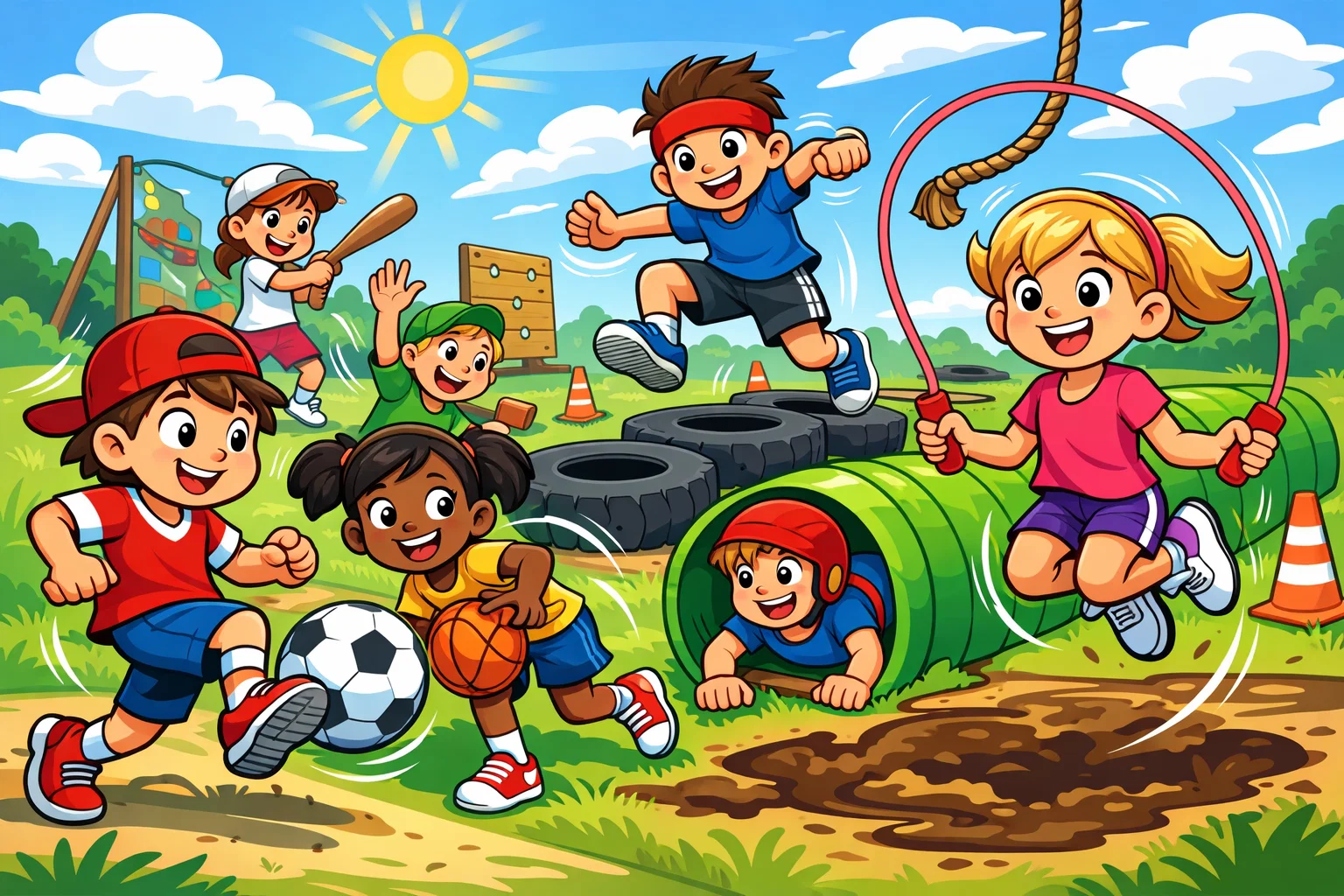
Structured physical activities can build body awareness, motor control, and confidence in a predictable setting.
Achievable Challenges for Different Abilities
Choose physical games that can be made easier or harder so that every child has a realistic chance to succeed. Activities can include balancing along a low garden border, imitating animal movements, throwing beanbags into targets of varying distances, or navigating simple backyard obstacle paths.
Cooperation Before Competition
Begin with cooperative games that emphasize shared goals, personal progress, and peer support before introducing strict win-or-lose formats or rankings. This approach can help children build physical confidence without fear of public comparison.
23. Confidence Scavenger Hunt
A confidence scavenger hunt invites children to notice their skills, helpful actions, and recent progress.
Indoor and Classroom Hunt Prompts
Give children a checklist of simple prompts to find or complete:
- “Find an item or drawing you created that makes you feel proud.”
- “Name one specific skill you practiced this week that used to feel hard.”
- “Do one helpful thing for a classmate or family member.”
- “Ask an adult a question about how something works.”
Reflection After the Hunt
After the hunt, talk briefly about the experience: “Which prompt felt easiest? Which one made you a little nervous, and what helped you finish it?”
24. Nature Play and Mini Challenges
Outdoor settings can give children low-pressure opportunities to test physical skills and make decisions.
Outdoor Tasks With Gradual Difficulty
Encourage children to try natural challenges that provide clear feedback:
- Follow a winding trail while watching for trail markers.
- Balance along a secure, low-lying fallen log.
- Build a simple outdoor shelter with loose branches, leaves, and stones where this is permitted and safe.
Safe Risk-Taking and Independent Decisions
Adults should check the area for hazards, set clear limits, and supervise closely without taking over the task. Let the child check their footing, test a structure, and ask for help when needed. This can strengthen self-reliance and judgment.
25. Performing Arts and Community Groups
Structured community groups can provide a predictable social routine and a sense of belonging.
Theater, Dance, Music, and Performance Practice
Performing arts introduce children to scripts, rhythm, movement, and ensemble routines. Rehearsal shows children that early awkwardness is normal and that skills can improve with practice. Over time, rehearsal can support voice projection, posture, memory, and social confidence.
Community Groups With Gentle Structure
When selecting extracurricular clubs, sports leagues, or arts programs, look for supportive instructors, clear routines, and flexible participation options. Programs that value personal progress over intense competition are generally more supportive for young learners.
Everyday Language That Builds Confidence
The language adults use in everyday interactions can shape how children talk to themselves. Shifting from evaluative language to descriptive feedback can help children develop a more stable sense of competence.
Praise Focused on Effort, Strategy, Courage
Vague, outcome-focused praise may be less helpful because it does not tell the child what they did well. Specific, process-focused feedback names actions the child can repeat.
| Vague, outcome-focused praise | Specific, process-focused feedback |
| “You are the smartest artist in the whole class!” | “I notice how you carefully drew all the small details on those tree leaves.” |
| “Good job winning that running game.” | “You kept running fast even when you lost your balance for a moment. That showed real determination.” |
| “You are so perfect at cleaning up your room.” | “Thank you for organizing your toys into the correct bins without needing a reminder.” |
Positive Words Children Can Overhear
Children may internalize positive comments they overhear adults making about them. If the comment is genuine and not staged, hearing a parent say, “Alex worked on a difficult puzzle for twenty minutes without giving up,” may help the child feel recognized for persistence.
Choices Versus Personal Identity
When correcting behavior, distinguish the child’s identity from the specific behavior. Avoid statements that label the child, because labels can damage self-worth:
Identity label to avoid: “Why are you being so bad and destructive today?”
Behavior-focused alternative: “Throwing that toy was a choice that could hurt someone. Let’s think of a safer way to express your frustration.”
Comparisons Without Competition
Avoid comparing a child’s development, behavior, or milestones with siblings, classmates, or arbitrary standards. Instead, compare the child with their own past progress: “Remember when writing your numbers felt difficult last year? Look how smoothly you can write them now after all your practice.”
Confidence Support Without Pressure
Supporting confidence means balancing encouragement with respect for a child’s temperament, sensory needs, and emotional boundaries.
Support for Shy or Cautious Learners
Shy or introverted children often benefit from predictable social situations. Adults can explain what to expect, keep routines consistent, and begin with one-on-one or small-group play before moving to larger groups. Recognize quiet forms of participation, such as attentive listening, as valid participation.
Responses When Children Refuse to Join
When a child refuses to participate, avoid pressure, shaming, or physical coercion, because these responses can increase avoidance. Instead, look for a possible reason:
- Physical needs: fatigue, hunger, or illness.
- Sensory overload: excessive noise or crowds.
- Emotional barriers: confusion or fear of failure.
Offer a smaller, low-pressure role and acknowledge the child’s feelings: “I see that you’re not ready to join the circle game. You can sit here and watch with me, and we can try again when you feel ready.”
Fear of Failure and New Skills
To reduce fear of mistakes, normalize the experience of being a beginner. Share brief, relatable stories about your own mistakes, awkward first attempts, and later improvement. Reduce pressure by framing the activity as practice rather than a final performance, and notice the courage it took to try regardless of the outcome.
Expressing Feelings Without Judgment
Healthy self-esteem is supported when emotions are acknowledged without judgment, even when certain behaviors need limits. Acknowledge feelings such as nervousness, disappointment, embarrassment, or frustration before moving to problem-solving: “It makes sense that you feel disappointed that your tower fell over. It is okay to feel upset. Let’s take a deep breath together and see how we can rebuild the base.”
Supportive Home and Classroom Environment
The physical layout and emotional climate of a home or classroom can reinforce a child’s sense of belonging and capability.
Artwork, Portraits, Personal Contributions
Displaying a child’s projects, drafts, photographs, and ideas at the child’s eye level shows that their contribution is valued. It also shows that their effort and individuality have a place in the shared space.
Warmth, Affection, Unconditional Support
Provide consistent affection, offer physical comfort when the child welcomes it, and reassure the child that your care does not depend on achievement or behavior. When children know that care and love do not depend on winning a game or earning a high grade, they have a more secure foundation for taking healthy learning risks.
Positive Peers and Role Models
Connect children with peers, mentors, teachers, relatives, and coaches who model respectful confidence and constructive problem-solving. Watching role models handle challenges calmly and treat others kindly gives children a useful example.
Predictable Routines and Emotional Safety
Maintain clear, consistent daily schedules and calm, predictable adult responses to reduce situational anxiety. When children generally know what to expect from their environment and the adults around them, they may feel safer trying new things and learning new skills.
Adult Confidence Modeling
Children learn by watching how adults talk about themselves, respond to mistakes, manage stress, and approach unfamiliar tasks.
Healthy Self-Talk From Adults
Adults can occasionally narrate realistic, constructive self-talk aloud so children can hear healthy coping strategies in action:
- “I can’t seem to find my car keys, but I’m going to take a deep breath and retrace my steps calmly.”
- “This new computer program is confusing, but I am going to read the guidebook and practice one step at a time.”
Calm Responses to Personal Mistakes
When you make a visible mistake – such as spilling a drink, dropping an item, or forgetting an appointment – model a calm, non-judgmental recovery. Acknowledge the mistake calmly: “I spilled the juice. That’s okay; mistakes happen. Let’s grab a cloth and wipe it up together.” This demonstrates that mistakes are manageable events rather than personal failures.
Adult Self-Care and Emotional Regulation
Prioritizing rest, maintaining healthy boundaries, managing stress, and developing emotional awareness are essential for providing steady support. An emotionally regulated adult is better able to offer patient, consistent guidance.
Conversations About Low Self-Esteem
When a child shows persistent self-criticism or avoids challenges, a calm conversation may help reveal what is contributing to the problem.
Conversation Starters Without Interrogation
Talk during a low-pressure, side-by-side activity, such as riding in the car or drawing together. Use gentle observations and open prompts rather than rapid or accusatory questioning:
- “I noticed that you felt really frustrated with your drawing earlier today, and I wanted to check in and see how you’re feeling about it now.”
- “Sometimes when we start a new school year, parts of the day can feel pretty heavy or difficult. What feels like the hardest part of your school day right now?”
Listening Before Offering Solutions
When the child speaks, resist the urge to interrupt, correct their perspective, or offer a quick solution. Pause, listen without interrupting, and reflect back what you heard: “It sounds as though you felt embarrassed when you forgot your line, and then you did not want to sing anymore. Is that right?”
Next Steps Created Together
Once the child feels heard, choose one manageable action together and identify the support they need: “Let’s think of one small step that could make soccer practice feel easier next week. Would you like to arrive five minutes early so we can pass the ball before practice?”
FAQs on Confidence-Building for Young Learners
What Is the Difference Between Confidence and Self-Esteem?
Confidence and self-esteem are closely related, but they are not the same. Confidence usually refers to a child’s belief that they can handle a particular task or situation. Self-esteem means having a broader sense of personal worth and belonging. A child may feel confident when solving puzzles but still struggle with self-esteem in social situations. Supporting both self-confidence and self-esteem means helping children recognize their strengths while also showing them that their value does not depend on performance.
How Can I Help My Child Feel More Confident About Trying Something New?
To help your child feel more comfortable, break the experience into small, manageable steps. Explain what will happen, give your child time to ask questions, and let your child observe before participating. For situations like starting a new school, joining a club, or making a new friend, role-play can be especially helpful. Practice simple phrases, discuss what the setting may look like, and ask them if they want to rehearse the situation again. Familiarity can help them feel less anxious and more prepared.
Should Adults Let Children Make Mistakes?
Yes. Children need safe opportunities to make mistakes, solve problems, and try again. Constantly correcting or rescuing a child may unintentionally diminish confidence by suggesting that they cannot manage challenges independently. Instead, encourage your child to pause and consider what they could try next. Questions like “What do you think might work?” or “Would you like a hint?” give children ownership of the problem-solving process while still providing help and support.
What Type of Praise Can Boost Confidence?
Specific praise that focuses on effort, strategy, persistence, or courage is usually more helpful than general compliments. Instead of saying, “You are amazing,” describe what the child actually did: “You kept working even when the puzzle was difficult.” When adults praise effort, children learn that progress comes through practice rather than fixed ability. This can help children feel capable and more willing to take on future challenges.
How Can Group Activities Help Children Gain Confidence?
Well-designed group activities can teach children to take turns, communicate their ideas, solve small disagreements, and feel part of a group. Cooperative games, shared art projects, classroom responsibilities, and simple team challenges are useful activities for children who are developing social confidence. The goal should not be to force participation. Begin with a role the child can manage, such as passing out materials or working with one partner. Small contributions can make a real difference to a child’s confidence and sense of belonging.

Take a short quiz to find out what your everyday choices say about your parenting style
When your child is curious about something new, what’s your instinct?
Take a short quiz to find out what your everyday choices say about your parenting style
“Can I download this app?” What happens next?
Take a short quiz to find out what your everyday choices say about your parenting style
When it comes to rules at home, which sounds most like you?
Take a short quiz to find out what your everyday choices say about your parenting style
If you could give your child one life skill today, what would you pick?
Take a short quiz to find out what your everyday choices say about your parenting style
Your child gets to choose what to watch. What would your ideal setup look like?
Take a short quiz to find out what your everyday choices say about your parenting style
Pick your parenting superpower ✨