150 Engaging Animal Trivia Questions for Kids with Answers

 Discover a Free Education Video App for Kids
Pastory uses AI to personalize educational video content based on your child’s interests and personality. Safe, engaging, and built for curious young minds. Sign up now to stay updated and enjoy early access with a free trial
Welcome to the ultimate collection of animal trivia questions designed for young explorers. Whether you’re a parent looking for a fun family activity, a teacher planning a classroom warm-up, or a curious student eager to explore the animal kingdom, this guide has something for you. Our list includes 150 carefully selected questions, ranging from easy animal trivia for beginners to challenging questions for true experts.
To help you navigate, we have organized the content by difficulty levels and specific biological categories like mammals, reptiles, and sea creatures. This structure allows you to jump straight to your favorite topic or gradually increase the challenge as you go. Animal trivia can help build curiosity, vocabulary, and confidence while making biology and conservation feel fun and approachable.
15 Best Animal Trivia Questions for Kids
This section features the most popular and engaging entries that cover a wide range of species. These “best-of” items are designed to hook young learners with surprising facts and recognizable creatures from the wild.
Popular Wildlife Trivia
- What is the largest land mammal in the world? (The African bush elephant)
- Which tall species has a purple tongue that can be up to 21 inches long? (The giraffe)
- What is a giant panda’s primary food source? (Bamboo)
- Which sea creature is known for being highly intelligent and communicating with clicks and whistles? (The dolphin)
- What is the only mammal that is capable of true flight? (The bat)
Funny Creature Facts
- Which species is known for holding hands while they sleep so they don’t drift apart? (Sea otters)
- What is a group of crows called? (A murder)
- Which inhabitant of the trees is said to smell like buttered popcorn? (Binturongs, also called bearcats)
- How many years can a snail sleep? (Up to three years)
- What is the first thing a caterpillar eats after it hatches? (Its own eggshell)
Wow Fact Nature Trivia
- Which bird is the largest bird in the world and cannot fly? (The Ostrich)
- What color is a polar bear’s skin under its white fur? (Black)
- Which sea creature has three hearts and blue blood? (The octopus)
- What is the smallest mammal in the world by length? (The Kitti’s hog-nosed bat)
- Which forest dweller has the strongest bite force relative to its body size? (The Tasmanian Devil)
15 Easy Trivia Questions
These easy animal trivia questions are perfect for grade 5 students and younger children. They focus on basic animal facts and familiar household or zoo favorites.
Names and Habitats
- Where does a lion live in the wild? (The savanna or grasslands)
- What do you call a baby kangaroo? (A joey)
- Which type of animal lives in a hive and makes honey? (Bees)
- Where do penguins live? (In the Southern Hemisphere, mostly along coasts and on islands)
- What do you call a baby cow? (A calf)
Colors, Sounds, and Body Parts
- How many legs does a spider have? (Eight)
- What sound does a donkey make? (Hee-haw)
- What is a rhino’s horn made of? (Keratin)
- What color are most flamingos? (Pink)
- Which majestic creature is referred to as the “King of the Jungle”? (The lion)
Pet and Zoo Favorites
- Which farm animal gives us wool? (Sheep)
- What is the fastest land species on Earth? (The Cheetah)
- Which furry pet has long ears and loves to eat carrots? (The rabbit)
- Which zoo resident has black and white stripes? (The Zebra)
- What is a female donkey called? (A jenny)
15 Medium Difficulty Questions
As children grow, their curiosity about the natural world deepens. These entries provide fun learning by exploring more complex behaviors and scientific classifications.
Food and Diet Facts
- What do you call a living thing that only eats plants? (A herbivore)
- How many compartments are in a cow’s stomach? (Four)
- What is the primary diet of a Great White shark? (Fish, seals, and sea lions)
- Which rodent is known for storing nuts for the winter? (The squirrel)
- Do owls swallow their prey whole? (Yes, they later cough up pellets of bone and fur)
Size, Speed, and Strength
- Which bird has the largest wingspan of any living species? (The Wandering Albatross)
- What is the heaviest species of snake found in the rainforest? (The Green Anaconda)
- How far can a kangaroo jump in a single leap? (Up to 30 feet)
- Which reptile has the strongest bite force in the world? (The saltwater crocodile)
- What is the longest migration journey taken by a bird? (The Arctic Tern)
Biological Science Trivia
- Is a platypus a mammal or a bird? (An egg-laying mammal)
- How do chameleons communicate with other chameleons? (They often use color changes)
- What organ do ants lack entirely? (Lungs)
- What is the difference between a venomous and a poisonous creature? (Venom is injected; poison is touched or eaten)
- Why do snakes flick their tongues? (To taste and smell the air)
15 Hard Trivia Questions
Get into beast mode to answer these challenging questions. This section is perfect for a game night where you want to test your knowledge against the toughest facts.
Rare Species Facts
- Which creature is known as the “Asian Unicorn” because it is so rare? (The Saola)
- What is the name of the world’s largest tarantula? (The Goliath bird-eating tarantula)
- Which furry mammal has the densest coat of any species? (The Sea Otter)
- What is a group of owls called? (A parliament)
- Which tiny bird can fly backward? (The hummingbird)
Extreme Records in Nature
- Which creature has the longest lifespan? (The Greenland Shark, living over 400 years)
- What is the loudest living thing on Earth? (The Sperm Whale)
- How many hearts does an earthworm have? (Five)
- Which sea creature has the largest eyes in the world? (The Colossal Squid)
- Which microscopic organism can survive in the vacuum of space? (The Tardigrade)
Tricky Body Mechanics
- Where is a shrimp’s heart located? (In its head)
- True or False: A shark has bones. (False, they are made of cartilage)
- How many major nerve centers does an octopus have? (One central brain and large nerve centers in each of its eight arms)
- What is the only mammal that cannot jump? (The elephant)
- Which aquatic species has teeth in its stomach? (The lobster)
15 Farm Life Trivia Questions
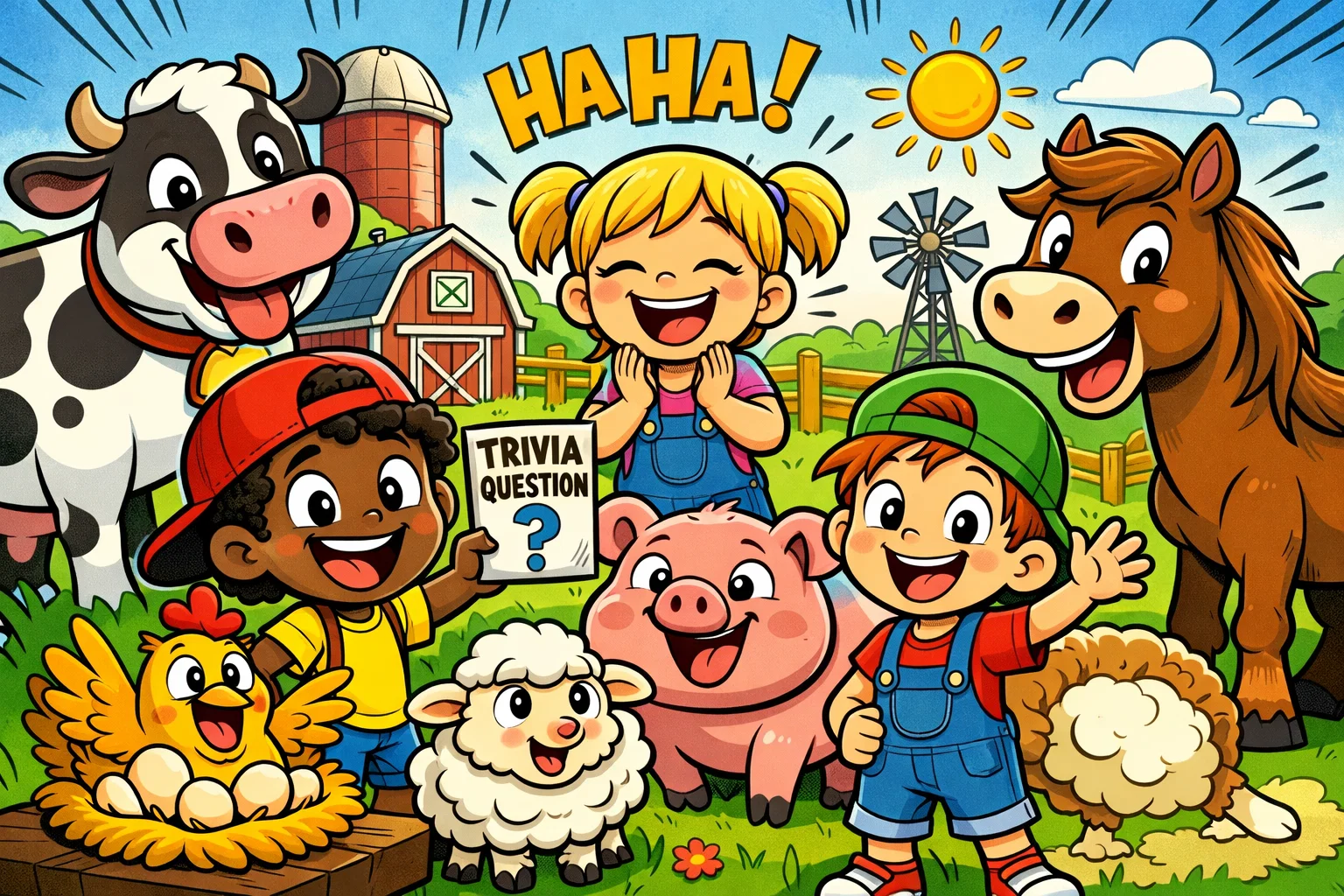
Farm animal trivia is a staple for fun learning. These questions explore the creatures we see in barns and pastures.
Barnyard Mammals
- How many specialized compartments are in a cow’s stomach? (Four)
- What is a group of sheep called? (A flock)
- Do pigs have sweat glands? (Very few, which is why they use mud to cool down)
- What is a male horse called? (A stallion)
- Which farm animal is often used to guard sheep from predators? (The llama or specific dog breeds)
Domestic Birds
- How many eggs can a high-producing hen lay in a year? (About 250 to 300)
- What is the fleshy red skin under a turkey’s chin called? (A wattle)
- Can all domestic ducks fly? (No, some are too heavy for flight)
- What is a female chicken called? (A hen)
- Which farm animal is known for its loud “honk”? (The goose)
Young Ones on the Farm
- What is a baby goat called? (A kid)
- What is a baby horse called? (A foal)
- What is a baby pig called? (A piglet)
- What is a baby goose called? (A gosling)
- What is a baby sheep called? (A lamb)
15 Mammal Trivia Questions
As a type of animal, mammals are defined by having hair or fur and producing milk for their young. They occupy almost every habitat on Earth.
Giants of the Mammal World
- How much does a blue whale’s heart weigh? (About 400 pounds)
- Which big mammal has skin that is nearly 1.5 inches thick? (The Rhinoceros)
- How many muscles are in an elephant’s trunk? (Approximately 40,000)
- Which large species spends up to 16 hours a day in water to stay cool? (The Hippopotamus)
- What is the tallest mammal in the world? (The giraffe)
Tiny and Nimble Species
- Which small mammal is the only one that can truly fly? (The bat)
- What is the name of the smallest mammal by weight? (The Etruscan shrew)
- Which rodent is famous for building dams across rivers? (The Beaver)
- What do you call a group of hedgehogs? (A prickle)
- Which small species is famous for “playing dead” when threatened? (The Opossum)
Unusual Mammalian Traits
- Which two species lay eggs instead of giving birth to live young? (The platypus and the echidna)
- Which forest inhabitant has a fingerprint almost identical to a human’s? (The Koala)
- What is the only mammal covered in hard scales? (The Pangolin)
- Which massive land dweller has the most powerful bite of all its kind? (The Hippopotamus)
- Name two mammals that cannot make their own vitamin C. (Humans and guinea pigs)
15 Bird Trivia Questions
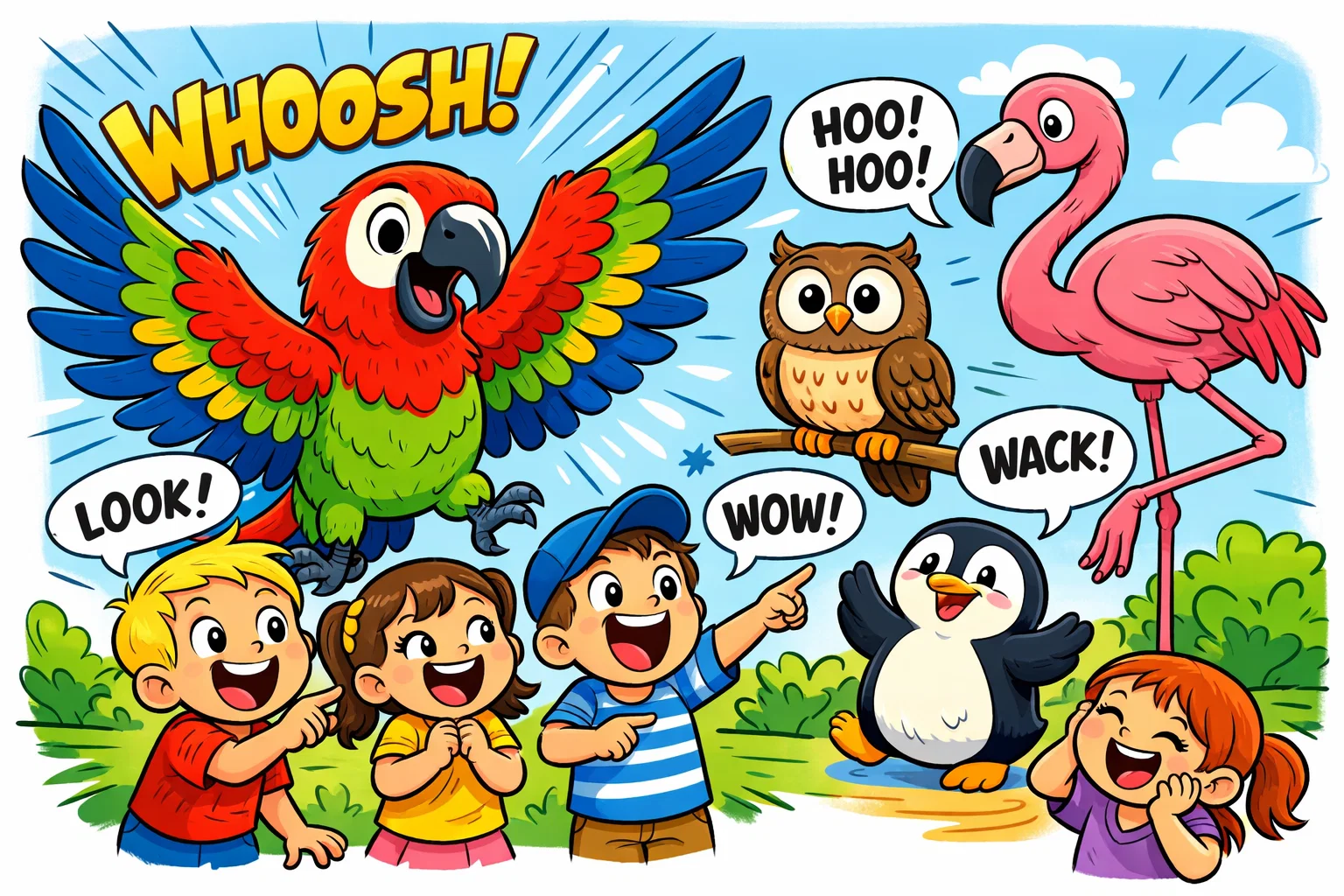
Birds are fascinating creatures with unique adaptations for flight, swimming, and survival.
Masters of the Sky
- Which bird can hover mid-air and fly backward? (The Hummingbird)
- Which bird of prey is known for its amazing night vision? (The owl)
- What is the fastest bird in a dive? (The Peregrine Falcon)
- Which bird has the largest eyes of any land inhabitant? (The Ostrich)
- Which feathered species is famous for mimicking human speech? (The Parrot)
Flightless Wonders
- Which flightless bird is the national symbol of New Zealand? (The Kiwi)
- Where do most penguin species live? (Antarctica and the Southern Hemisphere)
- Which flightless species can run up to 43 miles per hour? (The Ostrich)
- Which bird is the second largest in the world? (The Emu)
- Are penguins mammals or birds? (Birds)
Eggs Nests and Beaks
- Which bird lays the smallest egg in the world? (The Bee Hummingbird)
- What material makes up a bird’s beak? (Keratin)
- Which bird builds a nest called an “eyrie” high on cliffs? (The Eagle)
- Why do woodpeckers peck at trees? (To find food, build nests, or communicate)
- Which bird uses its beak like a pouch to catch fish? (The Pelican)
15 Reptile Trivia Questions
The world of reptiles and amphibians is full of fascinating cold-blooded creatures.
Snake Facts
- Which venomous snake is the longest in the world? (The King Cobra)
- Do snakes have eyelids? (No)
- What is the purpose of a rattlesnake’s rattle? (To warn predators to stay away)
- How do snakes breathe while eating large prey? (Through a small tube called a glottis)
- What is the term for a snake shedding its skin? (Molting or ecdysis)
Turtles and Crocodilians
- What is the top part of a turtle’s shell called? (The carapace)
- Can a turtle come out of its shell? (No, it is attached to its spine)
- What is the difference between an alligator and a crocodile’s snout? (Alligators have U-shaped snouts; crocodiles have V-shaped snouts)
- Where do sea turtles lay their eggs? (In the sand on beaches)
- Which reptile is known for having the strongest bite force? (The Saltwater Crocodile)
Lizard Trivia
- Which reptile is the largest lizard in the world? (The Komodo dragon)
- Why do some lizards drop their tails? (As a distraction to escape predators)
- Which lizard can change its color to express mood or camouflage? (The Chameleon)
- How do geckos walk on ceilings? (Tiny hairs on their feet create weak intermolecular forces that help them stick to surfaces)
- Are most lizards cold-blooded? (Yes)
15 Ocean Inhabitant Trivia Questions for Kids
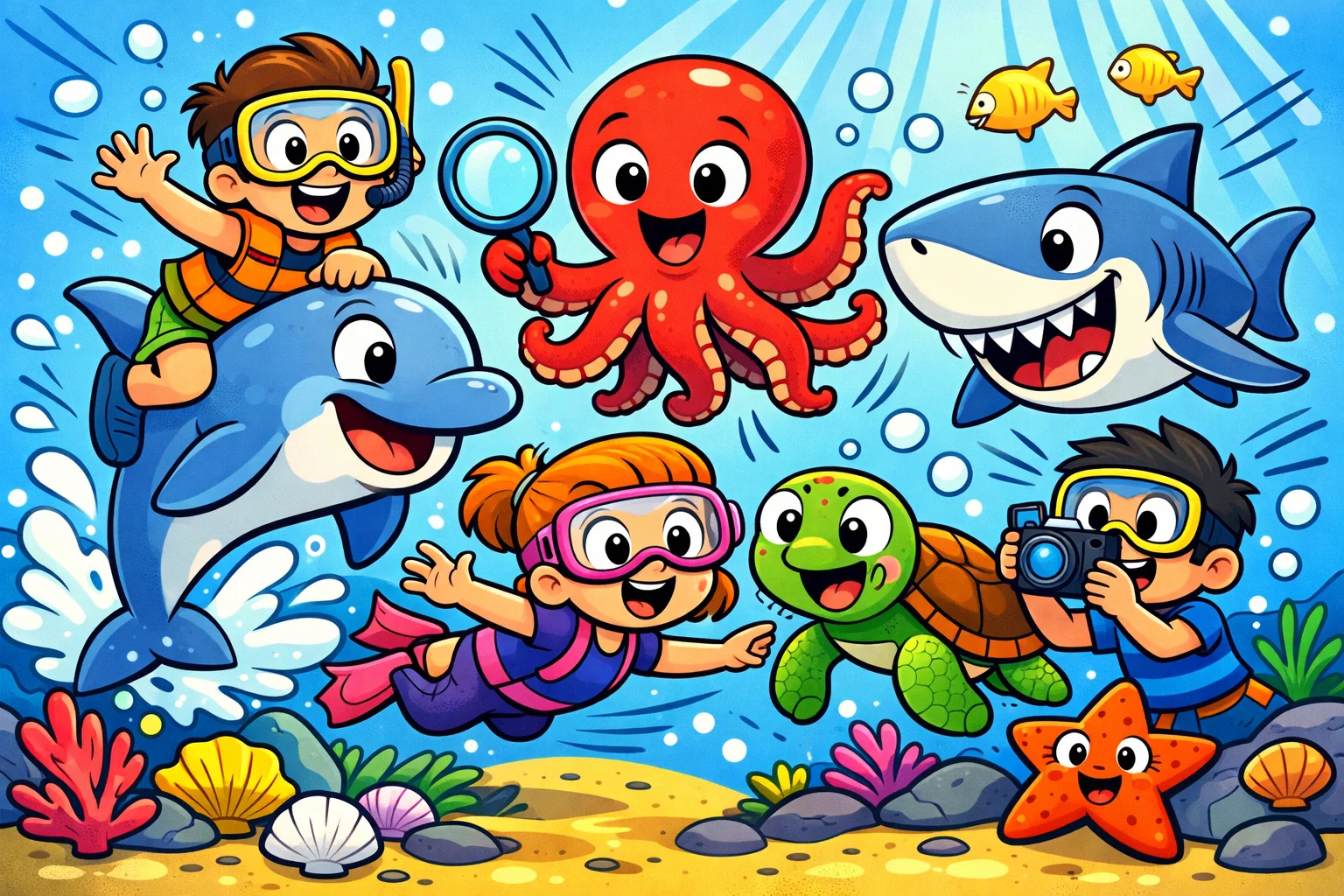
The ocean is home to some of the most mysterious and fun animal trivia subjects.
Marine Mammals
- Which ocean mammal is known to sing complex songs? (The Humpback Whale)
- How do dolphins sleep without drowning? (They shut down only half of their brain at a time)
- Which sea inhabitant is often called a “sea cow”? (The Manatee)
- Do whales breathe underwater? (No, they must surface for air)
- Which sea mammal has a long, spiral tusk? (The Narwhal)
Sharks Fish and Cephalopods
- How many teeth can a shark lose and regrow in its lifetime? (Over 30,000)
- What is the only fish that can swim upright? (The Seahorse)
- How many arms does an octopus have? (Eight)
- Which fish lives among stinging sea anemones? (The Clownfish)
- What defense does a pufferfish use when threatened? (It inflates into a spiky ball)
Deep Sea and Reef Wonders
- What is a “coral reef” made of? (Calcium carbonate skeletons of tiny polyps)
- Which deep-sea fish has a glowing lure on its head? (The Anglerfish)
- Can a starfish regrow its arms? (Yes)
- What is a group of jellyfish called? (A smack)
- Which sea creature has no brain, heart, or bones? (The Jellyfish)
15 Amphibian, Insect, and Unique Animal Trivia Questions
This final round covers the “creepy crawlies” and the outliers of the wild world.
Amphibian Facts
- What is the main difference between a frog and a toad? (Frogs have moist skin; toads have dry, warty skin)
- Where do amphibians usually lay their eggs? (In the water)
- What is the process of a tadpole turning into a frog called? (Metamorphosis)
- Which type of frog is known for its bright colors and toxicity? (The Poison Dart Frog)
- Do frogs drink water through their mouths? (No, they absorb it through their skin)
Insect Trivia
- How many legs does an insect have? (Six)
- Which insect is known for living in highly organized colonies? (Ants or Bees)
- What are the three main parts of an insect’s body? (Head, thorax, and abdomen)
- How many wings do most butterflies have? (Four)
- Which insect can lift 50 times its own body weight? (The Ant)
Unique Records and Random Facts
- How many legs does a centipede typically have? (Between 30 and 300)
- What do you call a group of lions? (A pride)
- Which reptile has a tail that can be three times its body length? (The Asian Grass Lizard)
- Which species is known to have the most legs? (The Millipede)
- Which bird is best known as a flightless swimmer? (The penguin)
Detailed Benefits of Nature Trivia for Kids
Animal trivia is more than just a pastime; it can support curiosity, vocabulary growth, and classroom engagement. Research does suggest benefits from gamified learning, but any specific statistic should be cited. By focusing on the inhabitants of our planet, children connect with the world around them in a meaningful way.
Memory, Vocabulary, and Reading Skills
The short format of these challenges encourages active recall, which strengthens the neural pathways associated with memory. Additionally, kids encounter new scientific terms like mammal, reptile, and amphibian, expanding their vocabulary. Reading these entries aloud also builds fluency and confidence in young readers, helping them master difficult pronunciations and complex sentence structures in an enjoyable setting.
Science Curiosity and Nature Interest
Learning interesting animal facts sparks a natural curiosity about the world. When a child learns that a snail can sleep for years or that otters hold hands, they often want to know “why” and “how.” This leads to a deeper interest in biology, diverse habitats, and environmental conservation. This early interest often translates into better performance in school science subjects and a more empathetic view of wildlife.
Family, Classroom, and Group Play Value
Trivia is a social activity that builds interpersonal skills. Whether it is a game night at home or a warm-up activity in a grade 5 classroom, it encourages healthy competition and teamwork. It provides a screen-free way for families to bond and for teachers to break up long lessons with fun learning breaks. Furthermore, it teaches children how to win and lose gracefully while working toward a common goal.
How to Use These Trivia Questions Effectively
To get the most out of these animal trivia questions, tailor how you present them to the setting and the age of the children. Proper implementation can turn a simple list into a memorable learning experience.
Classroom Quiz Ideas
Teachers can use these entries to facilitate interactive learning throughout the school day:
- Daily Bell Ringers: Start the morning with one “Wow Fact” to get students focused and curious.
- Team Challenges: Divide the class into groups and award points for correct answers, fostering cooperation.
- Science Review: Use specific categories like mammals or reptiles to review a biology unit before a test.
- Research Prompts: Ask students to find out “why” a certain fact is true, encouraging independent study.
Family Game Night Ideas
Parents can turn a standard evening into an exciting and educational event:
- The Buzzer Round: Use a bell or a squeaky toy as a “buzzer” for the first person to respond.
- Prize Tiers: Offer small rewards or privileges for reaching specific milestones (e.g., 20 correct answers).
- Category Pick: Let the child choose the category they feel most confident in to build their self-esteem and pride in their knowledge.
- Themed Snacks: Serve food that relates to the topic, like “ants on a log” or fish crackers.
Road Trip Party and Rainy Day Ideas
Nature-themed quizzes are highly portable and require no specialized equipment:
- Road Trip Marathon: Keep kids entertained in the car by going through different difficulty levels to pass the time.
- Birthday Parties: Use the “Farm Animal” or “Ocean” sections for themed birthday games with small prizes for winners.
- Rainy Day Activity: When outdoor play isn’t an option, a trivia contest gives kids something mentally engaging to do and helps prevent boredom.
- Waiting Room Distraction: Use a few quick items to keep a child occupied during doctor appointments or while waiting for food at a restaurant.
How Did You Do?
Score yourself based on how many of the 150 items you answered correctly to see where you stand in the animal kingdom!
0 to 50 Correct: Nature Explorer
You are just starting your journey into the wild world! This is a great score for younger kids or those just beginning to learn about biodiversity. We recommend revisiting the easy animal trivia and farm animal sections to build a strong foundation. Keep exploring, and you’ll be an expert in no time!
51 to 100 Correct: Wildlife Expert
Great job! You have a solid grasp of many animal facts and likely have a few favorite species you know everything about. You are ready to tackle the medium difficulty questions and specific rounds like ocean inhabitants to push your score even higher. Your knowledge of the natural world is truly impressive!
101 to 150 Correct: Zoology Master
Beast mode activated! You are a true expert on everything from the smallest mammal to the largest bird in the world. You have a deep understanding of biology and the unique traits that make each species special. You should try hosting your own game night or challenging your teachers to see if they know as much as you do!
Frequently Asked Questions
How can I make nature trivia more engaging for kids?
To increase engagement, incorporate visual aids whenever possible. For example, show a high-quality picture of the animal after revealing the answer. Using a timer can also add a “game show” feel that keeps children excited and focused on the challenge. You can also encourage them to act out the movements of the species in question.
How often should I add new trivia items to the mix?
Rotating your list weekly or monthly helps keep the material fresh and prevents kids from simply memorizing the answers. You might focus on a specific “Species of the Month” – such as the elephant or the shark – and find ten brand-new facts about that specific creature to keep the learning momentum going all year long.
Are these quizzes good for parties, school, and travel?
Absolutely. They are ideal because they are flexible and require no electricity or internet connection. The short format allows you to stop and start whenever needed, making it the perfect activity for any group of kids, whether they are sitting in a classroom, traveling across the country, or celebrating a friend’s birthday.
Take a short quiz to find out what your everyday choices say about your parenting style
When your child is curious about something new, what’s your instinct?
Take a short quiz to find out what your everyday choices say about your parenting style
“Can I download this app?” What happens next?
Take a short quiz to find out what your everyday choices say about your parenting style
When it comes to rules at home, which sounds most like you?
Take a short quiz to find out what your everyday choices say about your parenting style
If you could give your child one life skill today, what would you pick?
Take a short quiz to find out what your everyday choices say about your parenting style
Your child gets to choose what to watch. What would your ideal setup look like?
Take a short quiz to find out what your everyday choices say about your parenting style
Pick your parenting superpower ✨