50+ STEM Activities for Primary Classrooms

 Discover a Free Education Video App for Kids
Pastory uses AI to personalize educational video content based on your child’s interests and personality. Safe, engaging, and built for curious young minds. Sign up now to stay updated and enjoy early access with a free trial
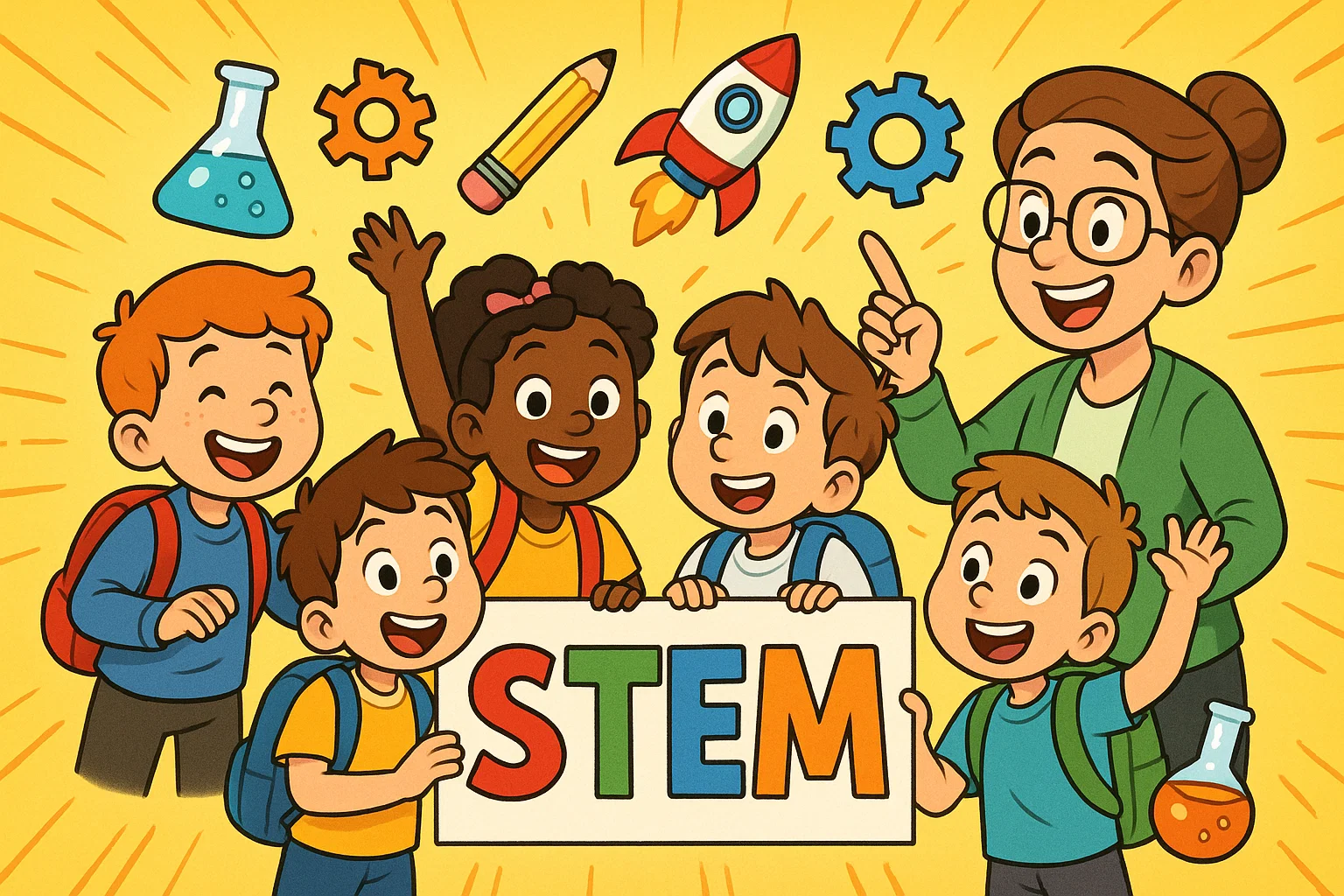
Primary school teachers need practical, curriculum-linked resources that engage young learners without requiring extensive preparation or expensive materials. This practical guide provides over 50 classroom-friendly STEM activities for different year groups, budgets, and ability levels. Whether used within the National Curriculum or as part of a dedicated school STEM day, these hands-on activities help pupils develop critical thinking, collaboration, and confidence with STEM concepts.
Key Takeaways
- Low-Prep Integration: Use simple household and classroom items such as paper, tape, and scissors to run effective science experiments and engineering challenges.
- Curriculum Alignment: Connect hands-on learning tasks with primary school maths, science, and computing objectives across KS1 and KS2.
- Inclusive Design: Adapt STEM teaching methods to support SEND and mixed-ability classes through flexible team roles and multi-sensory engagement.
- Career Links: Build early STEM career awareness by linking classroom tasks to real-world professions.
Why STEM Education Matters in the Primary Classroom
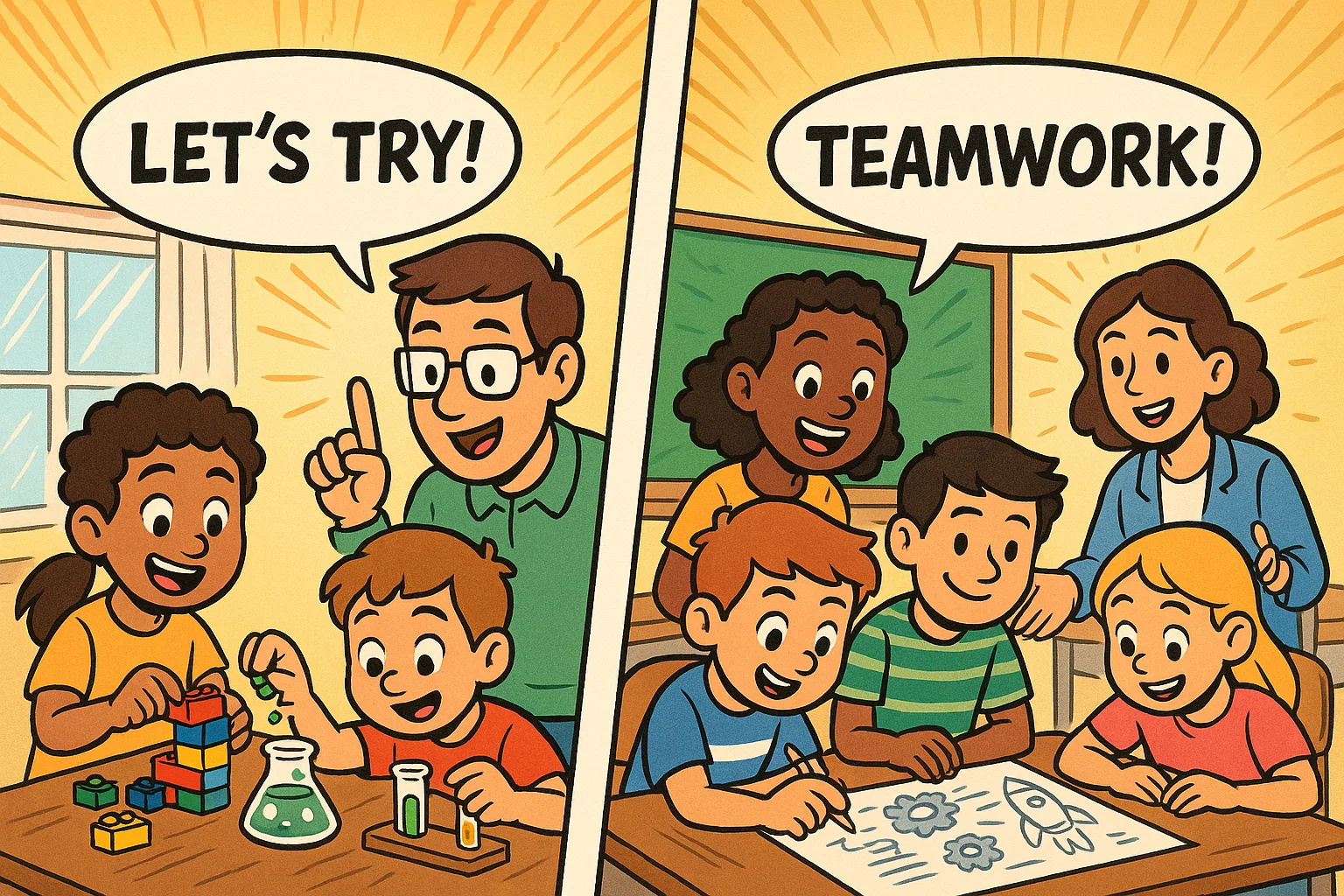
Primary school STEM initiatives can support children’s cognitive, social, and emotional development by encouraging problem-solving, collaboration, and reflection. The Education Endowment Foundation (EEF) highlights the value of explicitly teaching pupils to plan, monitor, and evaluate their learning, especially when these strategies are embedded in normal curriculum content. By introducing STEM subjects early, teachers can encourage active exploration, curiosity, and resilience.
Critical Thinking Through Hands-On Challenges
Hands-on activities encourage pupils to test variables, make predictions, and evaluate outcomes. When primary pupils take part in a hands-on STEM challenge, they gather evidence, test ideas, and observe results directly. This process helps children identify patterns, test variables, and make evidence-based decisions rather than relying on guesswork.
Resilience During Trial and Improvement
The iterative nature of engineering challenges helps young pupils build resilience and develop a more constructive response to setbacks. When a paper tower collapses or a prototype boat sinks, the result becomes useful feedback rather than a personal failure. This shift in perspective helps pupils approach challenges constructively by modifying, redesigning, and retesting their ideas.
Teamwork and Communication Skills
Collaborative classroom activities help pupils build social and communication skills as they work towards a shared practical goal. Working in small groups requires individuals to explain technical ideas, negotiate design choices, and share roles fairly. Pupils practise measuring, recording data, and presenting their results, which strengthens teamwork, accountability, and clear communication.
Early STEM Career Awareness
Integrating contextual career links into primary school lessons helps bridge the gap between classroom learning and future career possibilities. Research suggests that children’s career ideas and stereotypes can begin to form from around age seven, which makes early career exposure especially valuable. Connecting a simple classroom experiment to the work of an architect, ecologist, software developer, or civil engineer can broaden a child’s horizons and make STEM careers feel more familiar and accessible.
What Makes STEM Activities Engaging for Primary Pupils
Engaging STEM activities work best when they combine clear constraints with meaningful creative choice. Pupils stay engaged when they receive immediate feedback from the materials and can see their ideas taking shape. When pupils understand the rules and goal of a challenge, they are more likely to test ideas and explore creative solutions.
Wow Factor vs Traditional Worksheet-Based Learning
| Feature | Traditional Worksheet-Based Learning | Engaging Hands-On STEM |
| Student Role | Passive consumption of information | Active construction and physical testing |
| Cognitive Load | Memorisation and repetition | Synthesis, evaluation, and adaptation |
| Learning Impact | Limited practical application | Stronger practical understanding through experience |
| Material Use | Mostly text-based or screen-based materials | Multi-sensory physical objects |
Clear Challenge With a Visible Goal
Primary pupils are more likely to stay engaged when a challenge has clear, measurable success criteria. Prompts such as “construct a bridge spanning a 30 cm gap that supports a 500 g mass” establish clear boundaries for success. A visible goal reduces ambiguity, allowing pupils to self-assess their progress throughout the construction and testing phases.
Choice, Creativity, and Pupil Ownership
Open-ended classroom STEM tasks show pupils that there is more than one possible way to reach the goal. Allowing pupils to choose materials and construction methods gives them a stronger sense of ownership over the final prototype. This autonomy sparks creative design variations, turning the classroom into a lively space for unique, pupil-led solutions.
Active Exploration Instead of Passive Viewing
Hands-on discovery requires every child to interact directly with the materials, measuring tools, and design elements. While teacher-led demonstrations provide necessary safety guidance, deeper understanding often develops when young learners physically manipulate materials themselves. Active investigation helps pupils observe cause-and-effect relationships first-hand, strengthening their understanding of basic physics and maths concepts.
STEM Design Process for Primary Learners
The STEM design process gives young learners a structured way to solve problems systematically. This cycle mirrors the methodology used by professional engineers, simplified into classroom-friendly stages.
[Ask & Define] ➔ [Imagine & Plan] ➔ [Create & Test] ➔ [Improve & Share]
Ask and Define the Challenge
The teacher introduces the main problem and explains the success criteria, material limits, time limits, and safety rules. For example, the challenge might require building a structure using only ten paper cups and 30 cm of masking tape. Defining these parameters clearly helps pupils focus their problem-solving efforts within achievable structural boundaries.
Imagine and Plan Possible Solutions
Pupils work together to brainstorm structural ideas, sketch design layouts, and predict performance outcomes before handling any building materials. During this stage, teams assign specific roles, such as materials manager, lead builder, or data recorder, to support fair collaboration. Planning encourages pupils to think critically about resource limits and material properties before entering the assembly phase.
Create, Test, and Observe
Teams build their prototypes from their initial sketches and test them against the success criteria. Pupils use rulers, stopwatches, or standard weights to measure structural performance and record data precisely. This phase turns pupils’ ideas into physical models and helps them see what works well and what needs improving.
Improve and Share Results
After testing their initial models, pupils analyse what did not work, improve their designs, and present their findings to the class. Teachers can host a classroom gallery walk where teams explain their design adjustments and give constructive peer feedback. This final step reinforces learning by focusing on the journey of trial, improvement, and shared discovery.
50+ STEM Activities for Primary Classrooms

This practical list provides varied STEM ideas organised by duration and complexity, making them easy to use at school or at home.
Quick 10-Minute STEM Starters
- Tallest Pencil Tower: Pupils use pencils and erasers to build the tallest freestanding tower within a set time limit.
- Paper Cup Stack: Teams race to assemble a stable pyramid using exactly 21 paper cups, focusing on balance and base stabilisation.
- Shape Hunt: Pupils explore the classroom to find, identify, and record shapes used in strong or stable structures.
- Estimate and Measure: Pupils estimate the mass of common items and use digital kitchen scales to verify the actual values.
- Pattern Coding: Partners use coloured tokens to create simple repeating sequences that mirror basic algorithmic thinking.
- Sink-or-Float Prediction: Children drop everyday items into water, comparing their predictions with observed buoyancy properties.
- Magnet Test: Pupils use a simple magnet wand to test a selection of items, sorting them into magnetic and non-magnetic groups.
- Bridge Sketch Challenge: Pupils draw a bridge design using specific geometric shapes to improve stability.
- Coin Balance: Children explore centre of mass by balancing coins carefully on the rim of a plastic cup.
- Shadow Silhouette: Pupils use small torches and figurines to measure how changing the angle of light affects shadow length.
20-Minute Classroom Challenges
- Straw Bridge: Teams use plastic straws and tape to span a 20 cm gap, testing the bridge’s strength with standard coins.
- Paper Helicopter: Children cut and fold simple paper templates, adjusting blade length and paperclip weight to test changes in descent speed.
- Marble Maze: Using paper plates, straws, and glue, pupils design a physical labyrinth that guides a marble through a specific path.
- Foil Boat: Pupils shape a single sheet of aluminium foil into a hull and test its buoyancy by adding metal washers until it sinks.
- Parachute Drop: Pupils build a canopy using tissue paper or lightweight plastic and test how surface area affects falling speed.
- Paper Chain Race: Teams cut a single sheet of A4 paper to create the longest possible chain, thinking carefully about strip width and material use.
- Spaghetti Tower: Using dry spaghetti strands and mini marshmallows, pupils build a stable tower designed to withstand lateral forces.
- Cup Phone: Children connect two paper cups with taut string to explore how sound vibrations travel through different materials.
- Balloon Rocket: Pupils tape a balloon to a straw threaded onto a taut string and observe how escaping air pushes it forward.
- Index Card Tower: Pupils fold index cards into structural shapes to build a freestanding column without using tape or adhesives.
Full-Lesson STEM Projects
- Water Filter Build: Pupils layer sand, gravel, and charcoal inside a plastic bottle to remove some visible particles from dirty water, while learning that the filtered water is still not safe to drink.
- Egg Drop Container: Teams design a protective capsule using straws, cotton wool, and card to keep a raw egg intact when dropped.
- Mini Greenhouse: Children build a small plant incubator using clear plastic cups and damp paper towels to observe seed germination.
- Solar Oven: Using pizza boxes, foil, and black paper, pupils build a solar cooker to study thermal absorption and insulation.
- Coding Maze: Pupils write clear, step-by-step directional algorithms on grid paper to guide a classmate through an obstacle course.
- Recycled Vehicle: Teams build a functional model vehicle using plastic bottles, bottle-cap wheels, wooden skewers, and rubber-band propulsion.
- Wind Turbine Model: Pupils shape card blades and attach them to a central axle to test how blade surface area affects rotation speed.
- Habitat Diorama: Pupils design a miniature shoebox habitat, matching animal models with the conditions they need to survive.
- Robot Hand: Using thick card, drinking straws, and twine, pupils assemble a simple mechanical hand model to show how tendons help fingers move.
- Catapult Challenge: Children build a mini lever mechanism using craft sticks, rubber bands, and a plastic spoon to explore force and trajectory.
Extension Challenges for Fast Finishers
- Material Budgets: Assign a fictional currency cost to each building material, challenging pupils to build affordable, high-performing structures.
- Height Limits: Introduce a mandatory maximum or minimum height requirement to force a complete rethink of structural balance.
- Extra Weight Constraints: Add weights gradually to successful designs during testing to find when the structure fails.
- Timed Redesign Phases: Give teams a tight three-minute window to fix specific design flaws based on their initial testing observations.
- Data Graphing: Require fast finishers to convert their raw measurement numbers into clear bar graphs or line charts.
- Written Explanations: Ask pupils to write a short paragraph using key vocabulary to explain why their design worked well or what they would improve.
Science STEM Activities
Primary science experiments turn abstract scientific ideas into memorable, observable experiences. Linking these investigations to clear scientific concepts helps pupils build a stronger foundation across key curriculum topics.
Forces and Motion Activities
Air resistance, gravity, and friction become easier to understand when pupils explore them through practical activities. Building a balloon rocket or dropping a paper helicopter lets children see how opposing forces interact in real time. Teachers can set up multi-surface tracks using cardboard ramps covered in bubble wrap, sandpaper, or plastic wrap. Testing toy cars on these tracks gives pupils data on how surface texture affects friction and travel distance.
Materials and Properties Activities
Studying material properties helps children learn why certain items are selected for specific manufacturing tasks. A simple absorbency race challenges pupils to measure how much water different paper towels or fabrics can hold. Pupils can also test structural shapes by folding identical paper sheets into cylinders, triangular prisms, or square prisms. Placing heavy books on top reveals how geometric structure changes load-bearing strength, teaching core concepts such as tension and compression.
Plants, Habitats, and Environment Activities
[Seed + Moist Paper Towel] ➔ Clear Cup Container ➔ Daily Sunlight Exposure ➔ Measured Root Growth
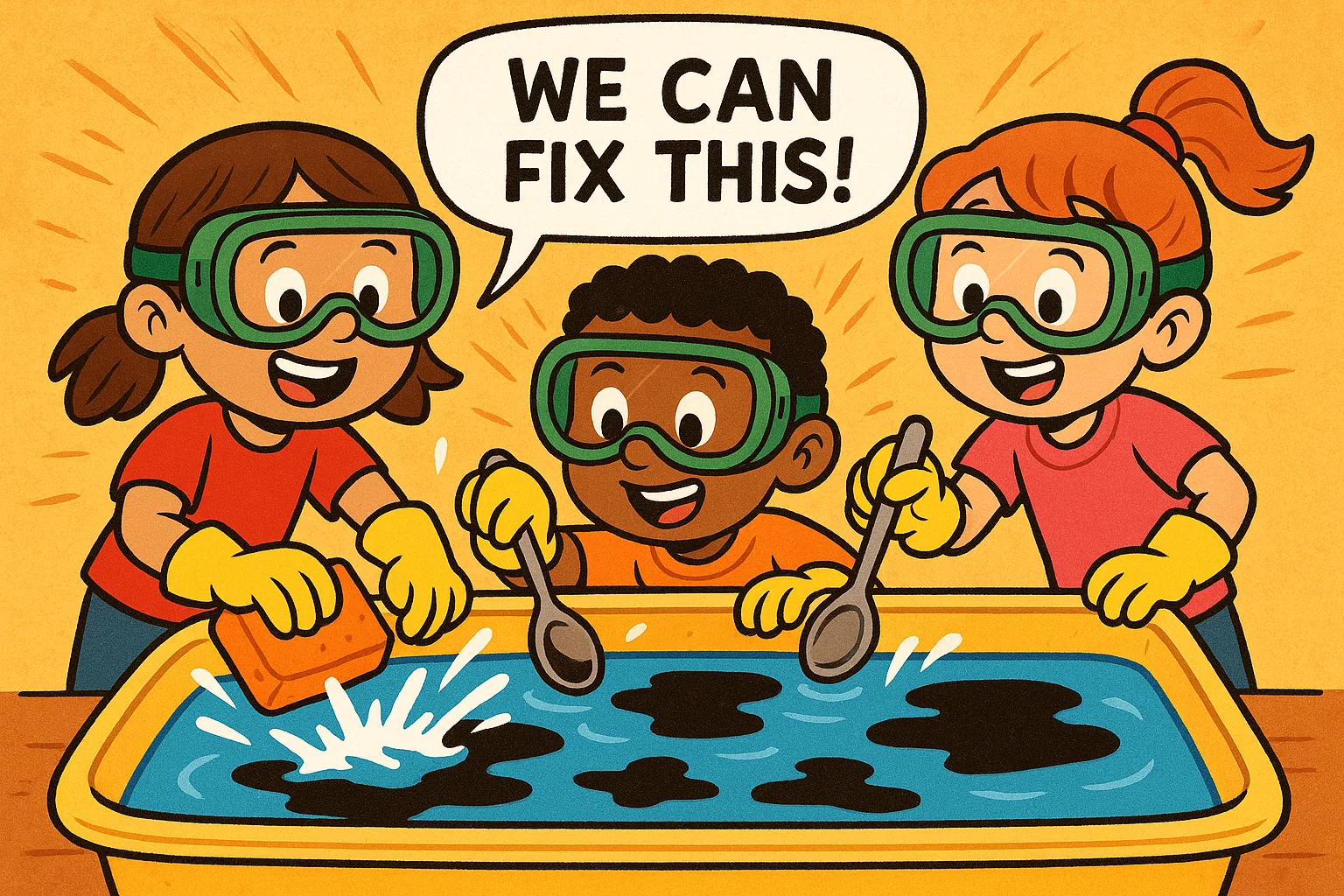
Constructing a mini greenhouse from clear plastic cups lets pupils observe germination and root development closely. Pupils can monitor plant growth over time, tracking root expansion and stem height on a simple data table. To explore environmental issues, teachers can set up an oil spill simulation using water, vegetable oil, and cocoa powder. Giving pupils cotton wool, spoons, and washing-up liquid to clean the mixture demonstrates some of the real-world challenges involved in environmental clean-up.
Light, Sound, and Electricity Activities
Building a basic circuit using a battery, wires, a switch, and a buzzer gives pupils hands-on experience with simple electrical circuits. Pupils can swap out different materials in the circuit loop to test whether they are electrical conductors or insulators. For sound investigations, stretching rubber bands over open plastic tubs allows children to explore how band thickness affects vibration and pitch.
Engineering STEM Challenges
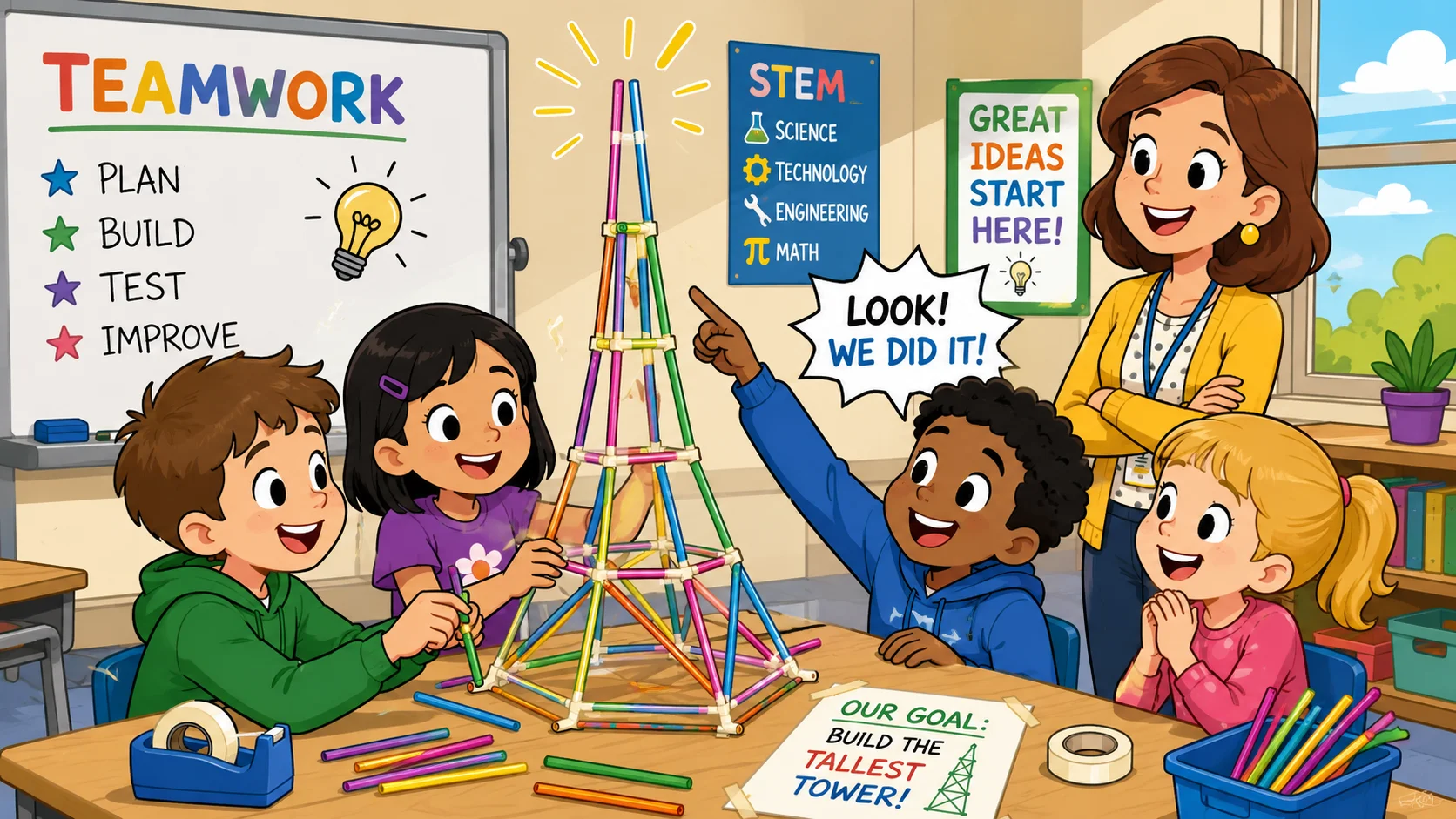
Engineering challenges encourage pupils to solve problems structurally while learning about stability, balance, and load distribution. These activities encourage children to think like engineers by working within practical design limits.
Tower Building Challenges
Building towers with dry spaghetti and marshmallows teaches pupils about structural load, balance, and centre of mass. Pupils quickly learn that wide, stable bases and triangular supports are usually stronger than tall, narrow structures with unsupported square frames. Introducing strict rules, such as requiring the tower to stand unassisted for 60 seconds, encourages teams to focus on structural integrity rather than just speed.
Bridge Design Challenges
[Corrugated Cardboard Base] ➔ [Triangular Truss Support] ➔ Distributed Load Testing (Coins/Washers)
Bridge challenges show pupils how structural design helps distribute weight across an open span. Giving teams a single sheet of A4 card and 30 cm of tape to span a gap encourages them to use folding techniques to make the material stronger. Pupils test their bridges by adding standard weights one by one until the structure bends, giving them clear data to compare different designs fairly.
Egg Drop and Crash Protection Tasks
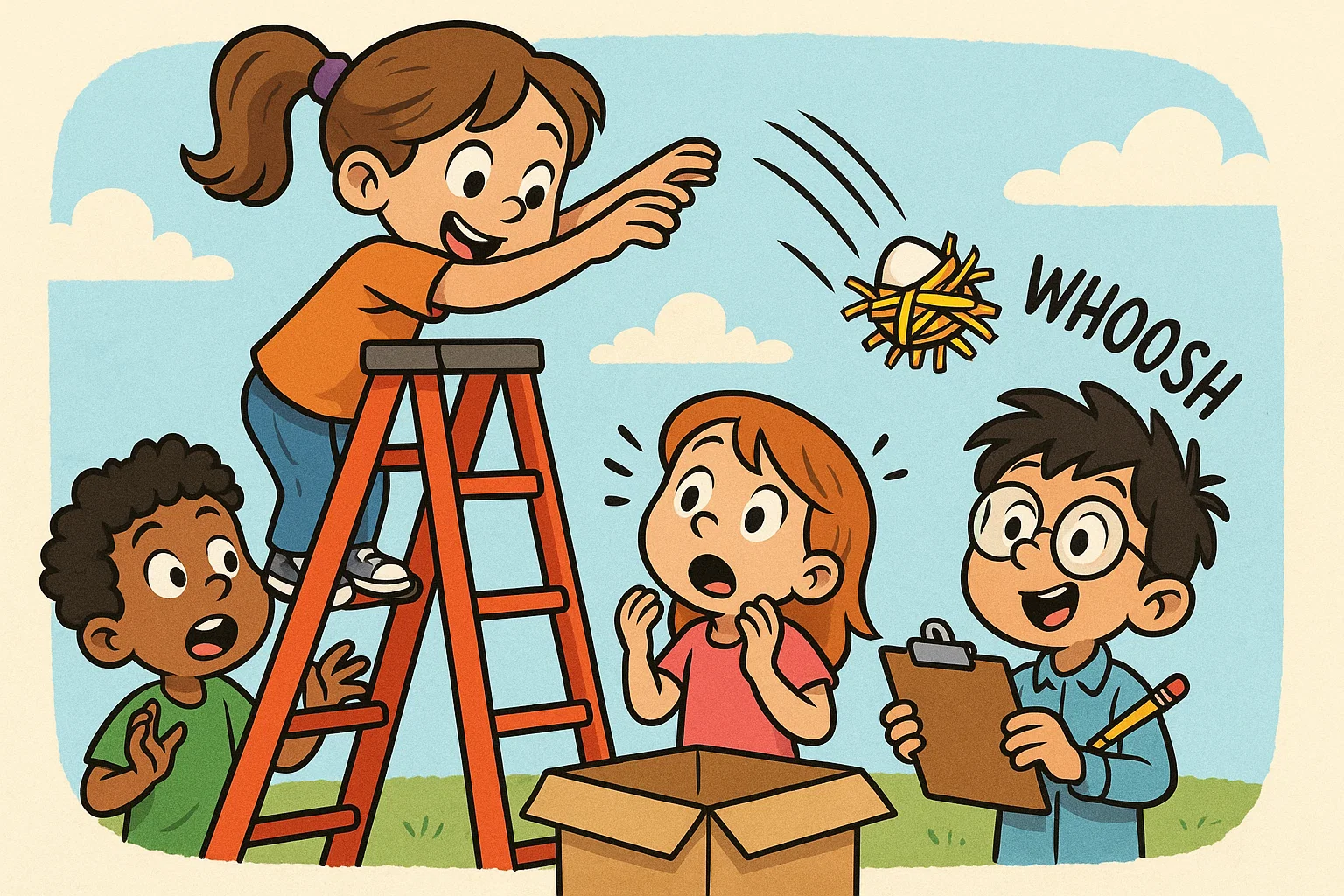
Designing an egg drop capsule teaches pupils about shock absorption, impact velocity, and pressure distribution. Pupils use materials like straws to build an external frame that absorbs energy, while soft cotton wool pads protect the egg inside. This challenge shows how spreading impact forces over a larger area can reduce the force transferred to the cargo, introducing the physics behind modern car safety cells.
Boat, Raft, and Floating Structure Builds
Using a single piece of kitchen foil to build a boat hull introduces the core concepts of density and buoyancy. Pupils learn that wider hulls displace more water, creating a higher upward buoyant force that supports more weight. Pupils add small metal washers to their boats one at a time, recording how much mass the boat can hold before it sinks or takes on water.
Technology and Coding STEM Activities
Primary technology activities can teach computational thinking and sequencing with or without screens. These tasks show pupils how to break complex workflows down into clear, orderly steps.
Unplugged Coding Games
Unplugged coding activities use physical movement to teach the core logic of computer algorithms without needing digital devices. In a human robot game, one pupil acts as the programmer while their partner plays the robot. The programmer writes a precise sequence of direction cards, such as “move forward two steps” or “turn 90 degrees to the right”, to guide their partner through a classroom obstacle course. If the robot hits a desk, pupils look back at their instructions to find and fix the error, learning the fundamentals of debugging.
Classroom Robotics Challenges
Using simple floor robots like Bee-Bots introduces pupils to basic control systems and spatial planning. Pupils enter a sequence of commands into the device to navigate a grid map, predicting where the robot will stop before pressing start. Adding obstacles to the grid requires pupils to rewrite their code paths, reinforcing their understanding of sequencing and spatial reasoning.
Digital Design and Data Tasks
[Raw Performance Data] ➔ Spreadsheet Input ➔ Automated Bar Chart Generation ➔ Trend Analysis
Pupils can use basic spreadsheet software to log and organise data from their science experiments, such as parachute drop times. Learning to input numbers into a digital table and turn them into automated charts teaches key data literacy skills. Pupils can then use these graphs to identify patterns and explain their findings to the class.
Safe VR and Immersive Tech Ideas
Virtual reality (VR) headsets and immersive video clips can help pupils explore environments that would otherwise be difficult or impossible to visit, such as the surface of Mars or deep ocean habitats. To keep these sessions safer and more comfortable for primary pupils, keep VR use short, follow the headset provider’s age and safety guidance, supervise pupils directly, and offer a non-headset alternative. Pupils who prefer not to use headsets can watch the same immersive scenes projected onto a flat screen or classroom wall, helping more pupils participate comfortably.
Maths STEM Activities
Integrating maths into practical STEM projects helps pupils see how numbers, measurements, and geometry apply to real-world situations. This hands-on approach turns abstract calculations into useful tools for solving physical problems.
Measurement and Estimation Challenges
When pupils measure how far a paper aeroplane flies or time how long a parachute takes to fall, maths becomes an active part of the project. Recording these numbers requires precise use of tape measures and stopwatches, reducing human error. Pupils calculate the average results across three separate tests, showing them how repetition can make scientific data more reliable.
Shape and Geometry Builds
Triangular frames are usually more rigid; square frames often need extra bracing to resist deformation under load.
Building 3D geometric shapes with toothpicks and clay spheres helps pupils see how different shapes handle physical forces. Pupils discover that triangular frames hold their shape well because their fixed side lengths make the structure more rigid. This hands-on discovery helps explain why triangular trusses are often used to support large bridges and crane booms.
Data Collection and Graphing Tasks
Gathering raw numbers from a rain gauge or a magnet strength test gives pupils a real-world dataset to analyse. Pupils take these numbers and draw clear, labelled bar charts or scatter plots on graph paper. Creating these charts helps pupils spot visual patterns, such as the relationship between a parachute’s surface area and its fall time.
Budget and Resource-Limit Challenges
Adding a financial budget to engineering tasks introduces basic economics and arithmetic to the building process. Teachers can give pupils a set amount of play money to buy building supplies, where paper costs £10, straws cost £5, and tape costs £2 per centimetre. This rule encourages pupils to add up costs, manage a budget, and balance material choices against structural performance.
No-Prep STEM Activities With Paper
Paper-based projects offer an affordable, low-prep way to teach structural physics and geometry using nothing more than standard paper sheets, tape, and scissors.
Can You Fit Through an Index Card Challenge
This classic brain teaser challenges pupils to cut a single index card in a way that creates a loop large enough to fit completely over their body. The solution uses a clever alternating cut pattern that expands the card’s perimeter while keeping the paper loop continuous. This activity often surprises pupils and sparks useful discussions about perimeter, surface area, and creative problem-solving.
Paper Chain STEM Challenge
[Standard A4 Paper Sheet] ➔ Optimised Strip Slicing ➔ Interlocking Chain Assembly ➔ Length Measurement
In this challenge, teams race to build the longest possible interlocking chain using only one sheet of A4 paper and 10 cm of sticky tape. Pupils must decide whether it is better to cut long, thin strips or short, wide rings to maximise the chain’s total reach. This task teaches children about material efficiency, measurement accuracy, and fair testing.
Paper Columns Strength Test
Pupils roll identical sheets of paper into different geometric columns: cylinders, triangular prisms, and square prisms, securing the edges with tape. Pupils then test each column by carefully stacking textbooks on top until the paper folds. This experiment shows that cylinders can support weight effectively because their curved walls distribute the load more evenly than shapes with corners.
Paper Helicopter Project
Using a simple paper template, pupils cut and fold a small two-bladed rotor craft to explore aerodynamics and air resistance. Pupils drop the helicopter from a set height and time how long it takes to reach the floor. By adding paperclips to the bottom or trimming the blades, pupils can test how weight and surface area change the descent speed.
Möbius Strip Challenge
Teachers introduce the concept of topology by having pupils twist a long strip of paper once before taping the ends together to form a loop. When children draw a continuous line down the centre of the paper, they are surprised to find it covers both sides without ever lifting the pencil. Cutting the strip down the middle reveals a single large loop rather than two separate ones, challenging pupils’ ideas about surfaces and space.
Build Paper Bridge Challenge
Giving pupils just one sheet of paper and two classroom books to act as support pillars creates a useful lesson in structural engineering. Pupils must fold, pleat, or roll the paper to create a deck that spans the gap and holds weight without collapsing. This challenge demonstrates how changing a material’s shape can dramatically increase its structural strength.
Themed Primary STEM Resources
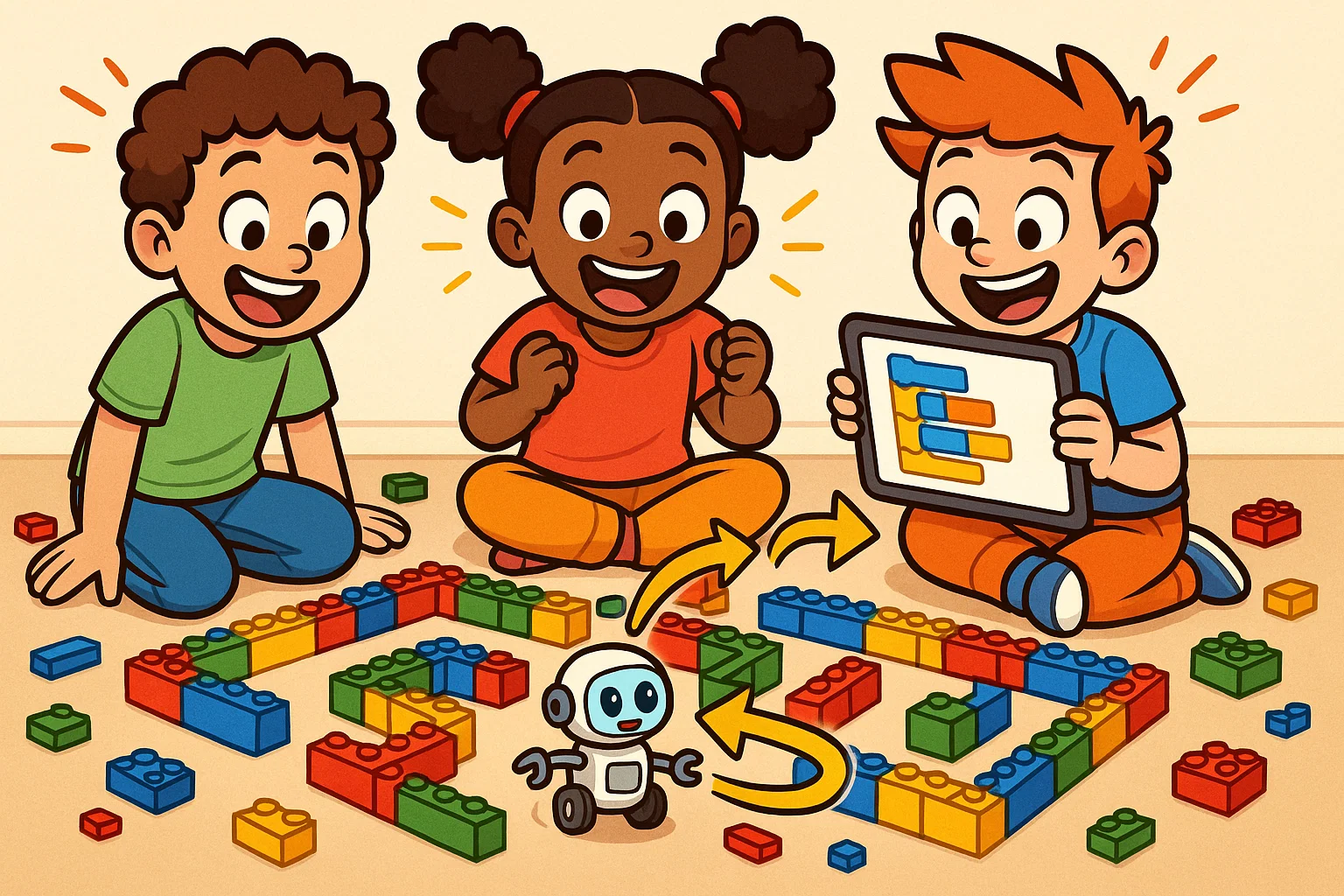
Themed activities keep learning fresh and exciting throughout the school year by linking STEM projects to popular topics, seasonal events, and classroom displays.
Space STEM Activities
Space-themed tasks capture pupils’ imaginations while introducing key ideas in physics and environmental design. A popular challenge is building a moon lander capsule with shock-absorbing legs made from folded paper and straws to protect a small cargo item. Pupils can also create scale models of the planets on long rolls of paper, helping them visualise the vast distances in our solar system.
Dinosaur and Earth Science Activities
[Bicarbonate of Soda + Washing-Up Liquid + Colouring] + Vinegar Input ➔ Chemical Reaction (CO₂ Gas Release)
Earth science becomes more memorable when pupils build a model volcano to observe a simple chemical reaction. Mixing bicarbonate of soda, washing-up liquid, and red food colouring inside a clay cone, then adding vinegar, triggers a release of carbon dioxide gas that makes the mixture bubble over the sides. Pupils can also make their own fossils using plaster of Paris pressed into clay shell prints, demonstrating how sedimentary rock preserves historical records.
Seasonal and Event-Based STEM Challenges
- National STEM Day: Host a whole-school challenge where every class builds a marble run using recycled packaging materials.
- Earth Day Clean-Up: Build mini water filtration systems or design sorting tools to separate plastic waste from organic matter.
- Winter Weather Builds: Challenge pupils to design an insulated shelter that keeps an ice cube from melting under a desk lamp.
- Summer Hydration Maths: Have pupils track, graph, and analyse their daily water intake over a week of warm weather.
Colouring, Posters, and Display Resources
Bright, clear posters hung around the classroom help reinforce important vocabulary and key steps in the engineering design process. Teachers can display key vocabulary such as force, speed, friction, and balance alongside clear illustrations. Adding blank design sheets and challenge cards to the wall allows pupils to sketch out ideas during free time, keeping the focus on STEM thinking.
Certificates and Celebration Materials
Giving out printable certificates is a positive way to celebrate learning behaviours such as teamwork, effort, and resilience. Handing out awards for “Most Creative Redesign” or “Best Team Collaboration” shifts the focus away from simply winning the challenge. Recognising pupils who learn from mistakes builds confidence and encourages a growth mindset across the whole class.
DIY STEM Experiment Videos and Demonstrations
Video prompts and live demonstrations can introduce new tasks, establish safety rules, and spark curiosity before pupils begin building independently.
Demonstration Before Independent Build
A brief, three-minute teacher demonstration is useful for showing how to use new materials safely without giving away the solution to the challenge. For example, showing how to cut a plastic bottle safely for a water filter helps pupils understand the safety rules. Leaving the actual assembly steps open encourages pupils to think creatively and invent their own designs.
Video Prompts for Home Learning
Simple STEM tasks can be shared through short video links for families to try at home using everyday household items. Projects like making oobleck with cornflour and water, or creating rain clouds in a jar with shaving foam and food colouring, are engaging and easy to supervise at home. These home activities extend learning beyond the classroom, allowing families to support hands-on discovery in their own homes.
Pupil-Created STEM Videos
Encouraging teams to film short summaries on school tablets can help build communication and digital skills. Pupils can film their final prototype in action, explain their design choices, and describe how they fixed any structural problems. Sharing these pupil-made videos with the class builds pride and reinforces learning through peer-to-peer teaching.
DIY Classroom Activities vs Professional STEM Workshops
Schools can enrich science and maths lessons by combining affordable classroom activities with specialist external workshops.
When to Choose DIY STEM
Everyday classroom STEM projects are ideal for delivering regular, low-cost lessons that weave directly into the weekly school curriculum. Because these activities use simple, low-cost materials, teachers can adapt the timing, extend the tasks, or repeat lessons to reinforce key concepts. DIY activities give pupils regular opportunities to practise hands-on problem-solving without straining the school budget.
Benefits of Professional STEM Workshops
External workshops can bring excitement and scale to a school by using specialist equipment and expert presenters. These sessions often feature high-tech tools such as advanced robotics, specialist coding equipment, or large-scale physics kits that schools may not have in stock. A professional workshop can increase pupil engagement and serve as an inspiring centrepiece for a school-wide science week.
Mobile Planetarium and Immersive Experience Options
| Feature | Mobile Planetarium Domes | Virtual Reality (VR) Sessions |
| Space Requirements | Large indoor hall with high ceiling | Standard classroom with clear floor space |
| Audience Capacity | Large groups, usually 30–60 pupils simultaneously | Individual or paired device sharing |
| Primary Topic Link | Astronomy, solar system, deep space | Underwater habitats, anatomy, history |
| Sensory Output | Shared 360-degree overhead projection | Individual head-mounted display |
Cost, Space, and Timetable Considerations
When planning an external workshop, coordinators need to review the school’s physical space, daily schedules, and total budget carefully. Large mobile domes or displays usually require a spacious school hall, reliable electrical access, and enough setup time before the school day starts. Organising smooth class rotations ensures that every year group gets equal time with the equipment without disrupting scheduled lunches or specialist lessons.
STEM Activities for SEND and Mixed-Ability Classes
Effective STEM teaching helps pupils of different academic and physical abilities take part in hands-on challenges in meaningful ways.
Multi-Sensory Engagement for All Abilities
Using a variety of textures, bright colours, and physical movements helps make abstract concepts more accessible to pupils. For instance, using bright food colouring to show water moving through a plant stem provides a clear visual cue for pupils with processing differences. Adding tactile materials like soft clay, textured foam, and clicking building blocks allows children to learn through touch and movement, which deepens engagement for everyone.
Simple Instructions and Visual Support
[Step 1: Cut Card] ➔ Visual Card ➔ [Step 2: Fold Edges] ➔ Visual Card ➔ [Step 3: Tape Base]
Breaking multi-step projects down into simple, picture-based instruction cards helps pupils work independently without feeling overwhelmed by text. Teachers can display clear success criteria, countdown timers, and simple sentence starters on the board. Providing pre-sorted material trays also keeps workspaces organised, letting pupils focus their energy directly on the building challenge.
Flexible Team Roles
Assigning specific, well-defined roles within teams helps every pupil make a valuable contribution to the project.
- The Lead Builder: Assembles the main parts of the model carefully.
- The Materials Manager: Collects, counts out, and looks after the team’s supply of building items.
- The Data Recorder: Measures distances, records times, and writes the results on the chart.
- The Chief Presenter: Explains the team’s design ideas and final results to the rest of the class.
Challenge Levels Without Stigma
Structuring projects with clear bronze, silver, and gold achievement tiers allows pupils to choose a comfortable starting point and progress at their own pace. A bronze task might require building a tower that stands on its own, silver adds a minimum height rule, and gold requires it to support a small weight. This tiered system keeps everyone working on the same core project, reducing stigma while keeping expectations high.
How to Plan a Successful STEM Day for a Primary School
A successful school-wide STEM day requires careful coordination, structured planning, and clear learning goals.
Choose a Theme and Learning Outcomes
Selecting a single, inspiring theme, such as “Sustainable Towns”, “Ocean Exploration”, or “Future Transport”, helps connect the day’s activities across year groups. Aligning this theme with the National Curriculum helps ensure the day supports ongoing classroom learning in science and maths. Setting clear goals from the start helps teachers measure pupil progress and keep the focus on core skills throughout the day.
Map Activities by Year Group
[EYFS/KS1]: Simple Balance Blocks ➔ [Lower KS2]: Paper Bridges ➔ [Upper KS2]: Truss Bridges + Budgets
To keep everyone engaged, the difficulty of the challenges must match the age and motor skills of the pupils. Younger pupils in KS1 thrive with simpler tasks like balancing wooden blocks or sorting materials by their physical properties. Older pupils in upper KS2 can take on more complex projects that involve managing budgets, measuring angles, and tracking data across several test runs.
Prepare Materials and Safety Notes
Gathering and organising resources into pre-labelled team trays ahead of time saves valuable classroom time and keeps the day running smoothly. Teachers should review safety rules, check that scissors are age-appropriate, and consider allergies if food or kitchen ingredients are used. Having a clear plan for cleanup at the end of each session keeps the classroom safe, organised, and ready for the next activity.
Organise Rotations and Timings
A well-structured day starts with an inspiring whole-school assembly to introduce the theme, followed by organised activity sessions in the classrooms. Using a rotation system allows classes to move smoothly between different challenges, the school hall, and outdoor testing zones. Keeping a clear master schedule helps ensure that transitions are calm, materials are reset between groups, and sessions finish on time.
Add Reflection and Celebration
Ending the STEM day with a shared celebration allows pupils to show their hard work, reflect on what they learned, and take pride in their achievements. Teachers can arrange a school-wide gallery walk where pupils display their final designs, test charts, and photos of their building process. Presenting participation certificates in a final assembly gives the day a positive sense of shared achievement.
Invite an Engineer or STEM Ambassador to School
Bringing local STEM professionals and ambassadors into the classroom is a useful way to connect school lessons with real-world careers and inspire young learners.
Choosing the Right Visitor
Schools can connect with local professionals through networks such as STEM Ambassadors to find visitors from fields including civil engineering, software development, and environmental science. Inviting a diverse group of experts helps challenge old stereotypes and shows pupils that technical careers are open to everyone. Inviting local university students or professionals from nearby businesses can make these career paths feel more achievable and relevant.
Questions Pupils Can Ask
Giving pupils a list of prepared questions can help spark meaningful conversations during the visitor’s presentation.
- “What specific tools or software programs do you use most often in your daily job?”
- “Can you describe a mistake you made during a project and explain how your team fixed it?”
- “Which subjects that you studied in primary school do you find most useful in your career today?”
- “What is the most exciting or unusual project you have ever designed or built?”
Classroom Challenge Linked to the Visitor’s Role
Pairing a guest speaker’s talk with a hands-on activity helps reinforce the real-world connection for pupils. For example, if a civil engineer visits the class, follow their presentation with a straw bridge building challenge. This combination allows pupils to apply the expert’s advice on structural stability and truss design directly to their own models, bringing the lesson to life.
Look at Me Now STEM Career Connections
Connecting everyday classroom activities to future careers helps pupils understand the value of what they are learning and see its real-world purpose.
Positive Women Role Models in STEM
Highlighting the achievements of women in fields such as aerospace engineering, medical research, and computer science helps challenge stereotypes early in a child’s development. Sharing stories of pioneering figures, such as astronaut Mae Jemison or mathematician and early computing pioneer Ada Lovelace, helps show that technical success is built on curiosity, skill, and determination. Displaying these role models prominently around the room inspires pupils to pursue their interests confidently.
Guess My Job Classroom Game
This interactive guessing game introduces pupils to different STEM careers in a fun, accessible way. The teacher shares a series of clues, such as common tools, daily workplace challenges, and required skills, and asks the class to guess the profession. For example, clues like “safety helmet, blueprint drawings, and bridge span calculations” point directly to a structural engineer, helping children link specific skills to actual jobs.
Career Link After Each Activity
[Completed Classroom Activity] ➔ Explicit Contextual Link ➔ Related Professional Job Title
Taking just two minutes at the end of a lesson to explicitly link the task to a real-world job helps pupils see the practical value of their work. After a water filtration experiment, for instance, the teacher can explain how water treatment engineers use similar principles to help make drinking water safe. This simple habit helps turn a fun classroom activity into a meaningful lesson on future career possibilities.
Assessment, Reflection, and Classroom Display Ideas
Documenting a pupil’s learning journey in STEM should focus on their problem-solving process and teamwork skills rather than relying only on traditional written tests.
Observation Checklist for Teachers
| Skill Category | Specific Observable Behaviour | Target Achievement Level |
| Collaborative Teamwork | Shares building materials fairly and listens to peer design ideas | Fully demonstrated across tasks |
| Data Literacy | Uses rulers and stopwatches accurately to record structural tests | Consistent measurement accuracy |
| Iterative Improvement | Modifies design based on failure points rather than giving up | High resilience and adaptation |
| Safety Compliance | Handles tools like scissors safely and keeps the workspace clean | Consistent safe practice |
Pupil Reflection Questions
Asking focused reflection questions at the end of a challenge helps pupils think critically about their own learning process and design choices.
- “What specific feature of your initial design worked exactly as your team planned during testing?”
- “What unexpected problem did you discover during the test, and how did you modify your structure to fix it?”
- “What clear evidence from your data table supports your choice of building materials?”
- “If you had access to double the amount of tape, how would you change your structural layout?”
STEM Display Wall
A dedicated classroom display wall is a useful way to showcase photos of prototypes in action, original design sketches, and pupil data charts. Highlighting the whole design journey, including early unsuccessful attempts alongside final models, shows pupils that mistakes are a natural part of learning. Adding key technical vocabulary and quotations from pupils creates a positive record of their hard work and discoveries.
Certificates and Pupil Awards
Handing out certificates that celebrate positive learning behaviours helps build a supportive classroom environment where effort and creativity are valued. Awards like “Best Structural Redesign”, “Most Accurate Data Recording”, or “Outstanding Team Leadership” keep the focus on valuable skills. This encouraging approach helps every pupil feel recognised for their contribution, not just the teams with the tallest or fastest models.
Low-Cost Follow-Up Activities After a STEM Event
Keeping the excitement alive after a big STEM day or workshop is easy with low-cost projects that reinforce learning and encourage continued discovery.
Classroom Redesign Challenge
Teachers can challenge pupils to revisit an earlier project and improve it under new, tighter constraints, such as using 30% fewer materials or aiming for a higher weight target. This task pushes pupils to apply what they learned from their first attempts to create a more efficient structure. Redesigning familiar models sharpens critical thinking skills and deepens their understanding of structural mechanics.
STEM Writing and Speaking Tasks
[Completed Prototype] ➔ Instruction Writing Using Imperative Verbs ➔ Peer Presentation Pitch
Integrating STEM projects into literacy lessons is a useful way to practise technical writing and speaking skills. Pupils can write clear, step-by-step instruction guides using precise verbs to explain exactly how to build their models. Teams can also prepare a short persuasive pitch to present to the class, explaining why their design offers the most efficient solution to the problem.
Home STEM Challenge
Sending home a simple challenge sheet encourages pupils to continue exploring scientific ideas with their families using everyday items from around the house. Tasks like building a card bridge between two chairs or testing which kitchen liquids are dense enough to float in layers are simple, low-prep, and easy to supervise. These home activities connect school and home learning, allowing families to share in hands-on discovery.
Mini Science Fair Showcase
Hosting a mini science fair in the classroom allows pupils to present their final models, data charts, and design journeys to other classes or visiting family members. Pupils take turns standing by their displays to explain their experiments, demonstrate their prototypes, and answer questions from visitors. This experience builds public speaking confidence and rounds off the project with a positive celebration of pupil learning.
Frequently Asked Questions
How Do I Choose the Best STEM Activities for a Specific Year Group?
To choose the best activity, match the physical and mathematical demands of the task with the motor skills and learning stages of your pupils. Younger children in KS1 thrive with large, easy-to-handle materials like paper cups and building blocks that focus on basic concepts of balance and shape. Older pupils in KS2 can take on more advanced challenges that require using precise measuring tools, managing imaginary budgets, and balancing multiple design variables at once.
Can STEM Activities Support Pupils with SEND or ASD?
Yes, hands-on activities can be effective for supporting pupils with SEND or ASD because they offer a structured, visual, and practical way to learn. Providing clear picture-by-picture instruction sheets and assigning explicit, manageable team roles helps reduce anxiety and keeps tasks organised. Open-ended projects allow pupils to interact with materials at their own pace, while quiet alternative spaces can help more pupils participate comfortably.
How Long Should a Primary STEM Activity Last?
STEM activities are flexible and can be adjusted to fit a variety of school schedules and lesson lengths. A simple warm-up starter can take just 10 minutes, while a focused classroom challenge usually fits into a 20-to-45-minute lesson. More complex engineering projects can be spread across a full afternoon or structured as a series of connected lessons over a dedicated school-wide STEM day.
How Do STEM Activities Link to the Primary Curriculum?
Hands-on projects naturally weave across multiple subjects in the primary curriculum, reinforcing learning in practical ways. Testing structures applies core physics concepts from the science curriculum, while measuring distances and graphing results requires active use of primary maths skills. Writing up instructions supports English literacy goals, and coding challenges fit directly into the computing curriculum, making STEM a useful tool for cross-curricular teaching.
Are VR Experiences Safe for Primary-Aged Children?
Virtual reality experiences can be used more safely with primary pupils when schools follow age guidance, keep sessions short, supervise pupils directly, monitor discomfort, and provide alternatives. Keeping headset use short and offering regular breaks can help reduce the risk of eye strain, motion sickness, or disorientation. Providing flat-screen projections as an alternative helps pupils access the immersive content, regardless of their comfort level with headsets.
What are the best STEM activities for elementary students?
The best activities are simple, hands-on tasks that support STEM learning through building, testing, and improving ideas. Paper bridges, cup STEM towers, and balloon rockets are fun STEM options kids will love.
How can teachers make STEM learning fun and exciting?
Use easy classroom challenges with clear goals, simple materials, and time to redesign. STEM activities and challenges help young students think like an engineer while practising science, engineering and maths.
Can easy STEM activities be done at home or in the classroom?
Yes. Many paper STEM tasks, simple cup builds, and experiments with warm water can be done at school or in the comfort of your home with basic materials.

Take a short quiz to find out what your everyday choices say about your parenting style
When your child is curious about something new, what’s your instinct?
Take a short quiz to find out what your everyday choices say about your parenting style
“Can I download this app?” What happens next?
Take a short quiz to find out what your everyday choices say about your parenting style
When it comes to rules at home, which sounds most like you?
Take a short quiz to find out what your everyday choices say about your parenting style
If you could give your child one life skill today, what would you pick?
Take a short quiz to find out what your everyday choices say about your parenting style
Your child gets to choose what to watch. What would your ideal setup look like?
Take a short quiz to find out what your everyday choices say about your parenting style
Pick your parenting superpower ✨