STEM Activities for 3-5 Year Olds: Easy Indoor, Outdoor, Home, Preschool Ideas

 Discover a Free Education Video App for Kids
Pastory uses AI to personalize educational video content based on your child’s interests and personality. Safe, engaging, and built for curious young minds. Sign up now to stay updated and enjoy early access with a free trial
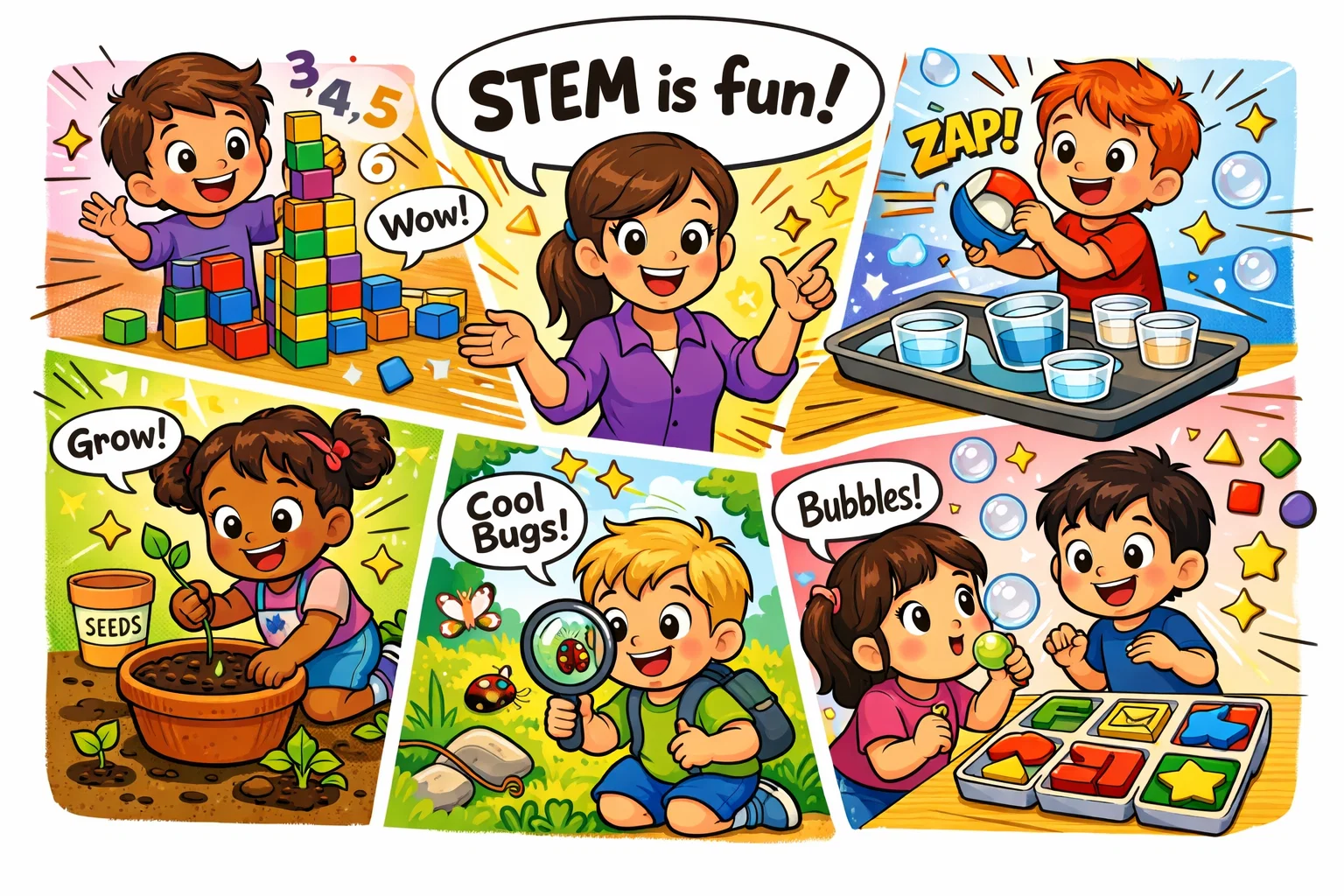
Engaging preschoolers in STEM (science, technology, engineering, and mathematics) does not require a laboratory or complex equipment. At ages 3 to 5, children are natural scientists who explore the world through touch, observation, and repetition. This guide provides low-prep, engaging STEM activities designed for both home and classroom settings, utilizing everyday materials to foster early learning and critical thinking.
By introducing hands-on STEM activities early, parents and educators can bridge the gap between simple play and foundational scientific concepts. Whether you are looking for a science experiment using baking soda or a math task involving sorting shapes, these ideas are developmentally appropriate and easy to implement.
What STEM Means for 3-5 Year Olds
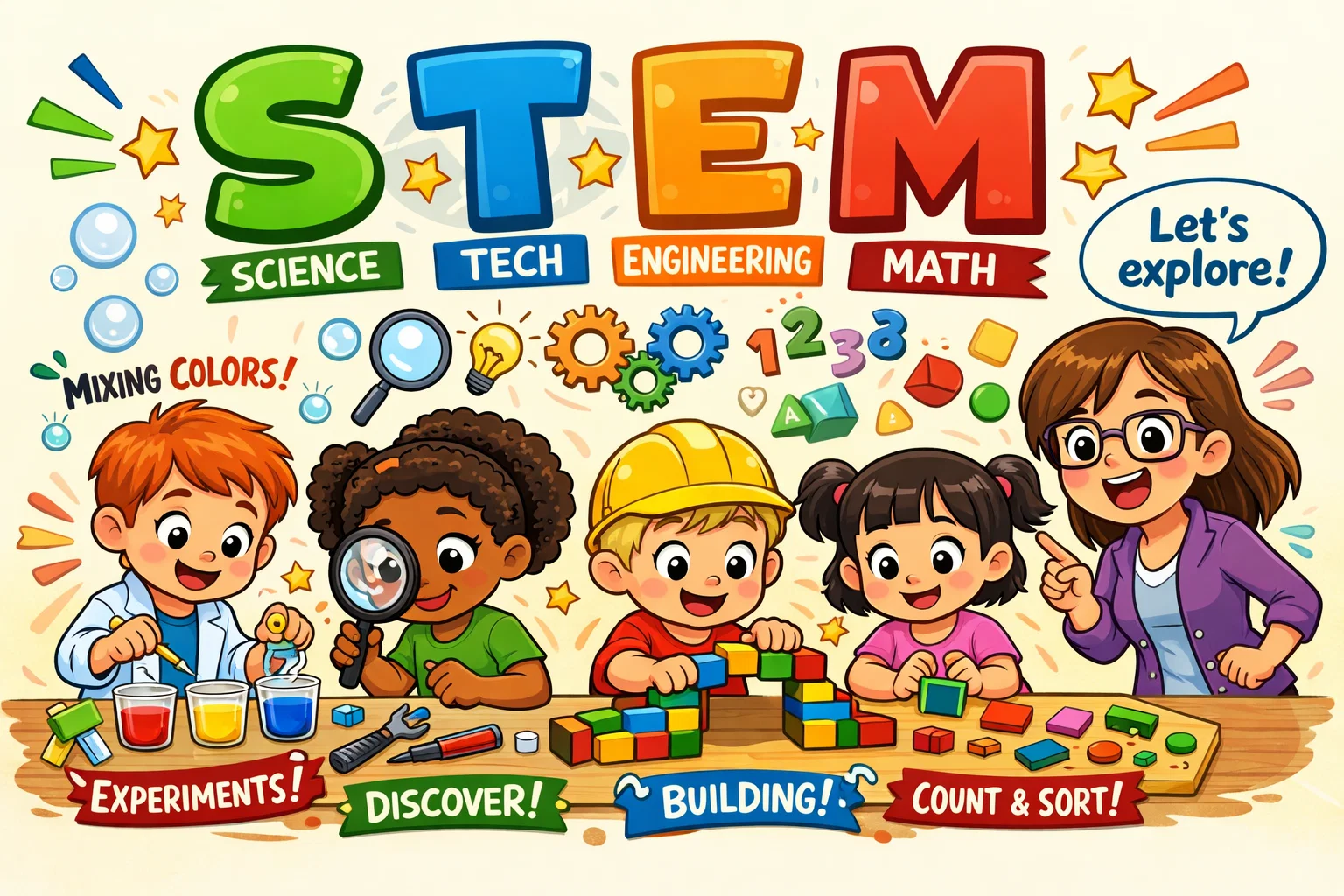
For a preschooler, STEM is less about memorizing facts and more about the process of discovery. It is an interdisciplinary approach to learning where children learn by doing. In the early years, STEM is synonymous with active exploration, where a toddler or young child uses their senses to understand how the world functions.
Science Through Play
Science for the 3-5 age group focuses on observing, comparing, and identifying changes in the environment. Preschool stem activities in this category often involve experimenting with water, ice, shadows, or plants to see what happens when variables change. By simply watching a seed sprout or seeing how food coloring moves through water, children begin to grasp the basics of biology and chemistry.
Technology Through Tools and Daily Routines
Technology in a preschool context extends far beyond digital screens or computers. It encompasses the use of simple tools that help humans solve problems or perform tasks, such as magnifying glasses, measuring cups, flashlights, or even plastic toothpicks. Introducing these tools during everyday activities helps children understand that technology is a functional part of everyday life.
Engineering Through Building and Testing
Engineering for young children is the act of designing, building, and testing structures to see if they work. When a child uses building blocks to create a tower or tries to build a bridge between two chairs using cardboard, they are engaging in the engineering design process. These STEM projects teach spatial awareness and the importance of persistence when structures fall.
Math Through Sorting, Shapes, Patterns, Measurement
Mathematics at this level is rooted in recognizing relationships between objects. This includes sorting items by color, identifying geometric shapes, and understanding the meaning of numeric values. Math and science often overlap when children use non-standard units, like blocks or handprints, to measure the length of a toy car or the height of a plant.
Why STEM Activities Help 3-5 Year Olds Learn
STEM education provides a framework for cognitive and social development that benefits children well beyond the activity. Early exposure to math and science concepts correlates with higher academic achievement in later schooling.
Curiosity and Questions
High-quality early stem experiences encourage children to move beyond passive observation and start asking “why” and “how.” Instead of just watching an adult perform a science experiment, engaging stem activities prompt the child to lead the inquiry. This curiosity-driven approach ensures that the learning experiences are meaningful and memorable.
Problem Solving and Cause and Effect
Participating in a stem challenge helps children develop robust problem-solving skills. For example, when an experiment involving a sink or float test yields an unexpected result, the child must reconcile their prediction with reality. This process strengthens their understanding of cause and effect, a cornerstone of logical reasoning.
Language, Observation, Fine Motor Skills
STEM learning is a powerful vehicle for language development as children learn to describe textures, weights, and reactions. Furthermore, many hands-on tasks—such as using pipe cleaners to thread beads or picking up small different objects with tweezers—directly improve fine motor skills. The act of recording observations, even through simple drawings, hones their ability to communicate complex ideas.
Confidence, Collaboration, Persistence
When a preschooler builds a structure that collapses, they learn that ‘failure’ is just a data point in the learning process. This builds emotional resilience and persistence. In a classroom setting, these activities often require collaboration, teaching children how to share materials like blocks and work together toward a common goal.
Core Principles for Effective STEM Activities
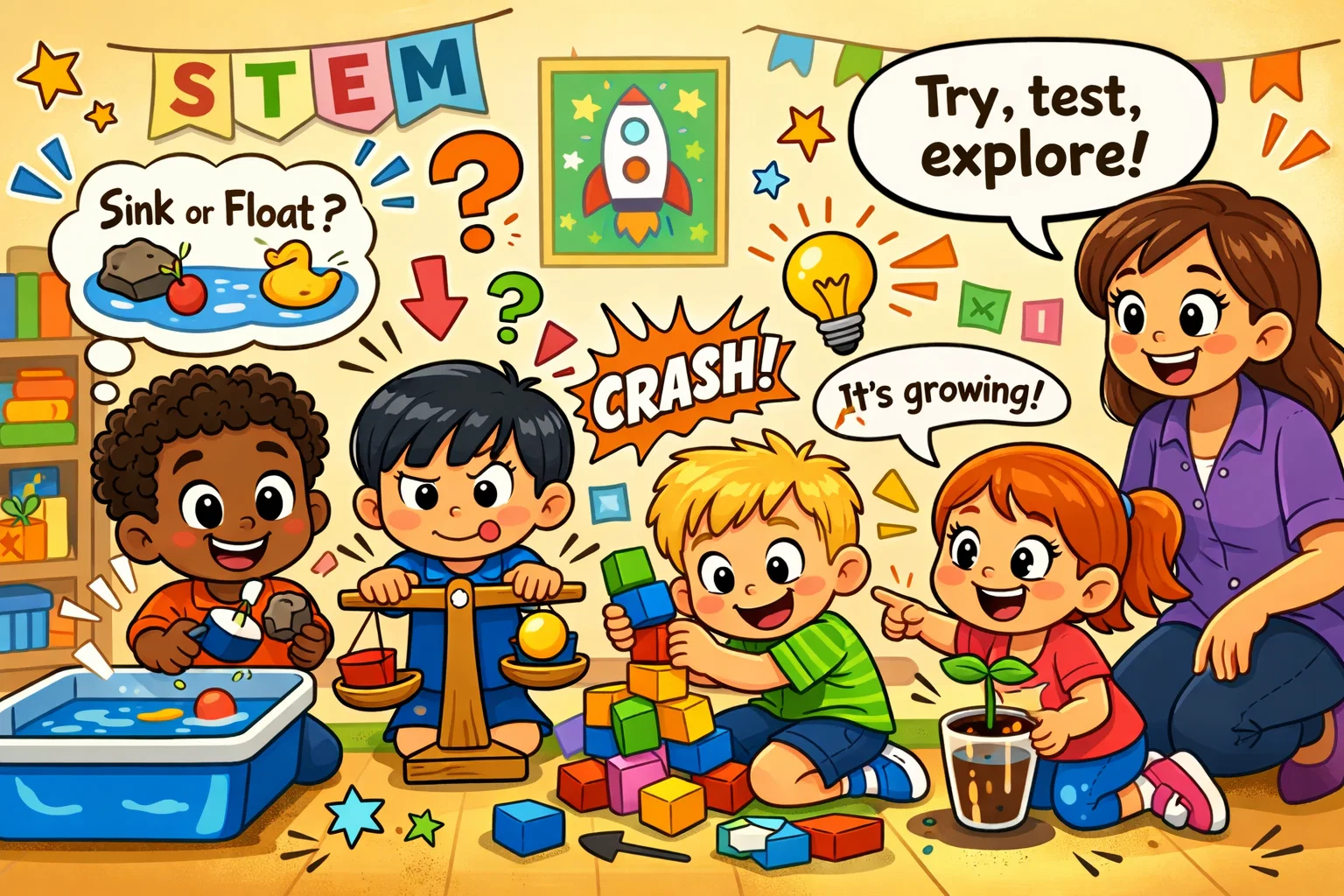
To make stem effective for 3-5 year olds, the focus must remain on the child’s experience rather than a specific academic outcome. The following principles ensure that preschool stem activities remain engaging and developmentally supportive.
Short Play-Based Sessions
The attention span of a preschooler typically ranges from 10 to 20 minutes. Therefore, simple stem activities should be designed for quick engagement. It is more effective to have frequent, short bursts of stem learning throughout the week than one long, complex session that may lead to frustration or loss of interest.
Open-Ended Questions and Predictions
A key component of introducing STEM concepts is using open-ended questions. Before starting an activity, ask your child for a prediction: “What do you think will happen when we add the water?” or “Which of these different objects will be the heaviest?” This shifts the focus from following instructions to active thinking.
Process Over Perfect Results
In early learning, the “correct” result is secondary to the exploration. If a slime mixture doesn’t congeal perfectly or a marshmallow tower leans to the side, it provides an opportunity to discuss why. Emphasizing the process helps instill a love of learning and reduces the pressure to perform.
Low-Prep Materials and Safe Setup
Effective easy stem activities utilize items already found in the home or classroom.
- Kitchen staples: Baking soda, vinegar, food coloring, and cornstarch.
- Recyclables: Plastic cups, cardboard tubes, and egg cartons.
- Nature items: Rocks, leaves, seeds, and water.
- Fasteners: Tape, toothpicks, and pipe cleaners.
Easy STEM Activities for 3-5 Year Olds
These easy stem ideas are “quick wins” that require minimal setup but provide high educational value. They are perfect for little ones who are just beginning to explore STEM.
Exploring Magnets
Give your child a magnet and a tray of various household items (metal spoons, plastic toys, wooden blocks, paperclips). Activity introduces the concept of magnetism as the child sorts the items into two piles: “magnetic” and “not magnetic.” You can extend this by asking them to find five magnetic things in the room.
Sink or Float
Fill a large plastic cup or tub with water and gather a variety of different objects. Have the child make a prediction for each item before dropping it in.
This simple stem task introduces density and buoyancy while encouraging the child to sort results into a table or chart.
Water Play with Measuring Cups
Using measuring cups of different sizes, allow the child to pour water from one container to another. This activity teaches volume and capacity. Phrases like “Which cup holds more?” or “Is this cup half-full or empty?” help understand the meaning of numeric relationships in a physical way.
Shape Sorting and Categorizing
Mathematics for preschoolers begins with categorization. Use a variety of snacks (like crackers and grapes) or buttons and ask the child to sort them by shape, color, or size. This builds the foundational math skills required for later geometry and data analysis.
Five Senses Exploration
Create a “mystery station” with jars containing different items to smell (cinnamon, lemon), touch (cotton balls, sandpaper), or hear (beans in a tin). This hands-on stem activity reinforces the science concepts of observation and sensory processing.
Bubble Science
Experimenting with bubbles allows kids to learn about surface tension and air. Provide different tools for blowing bubbles—like a slotted spoon or a pipe cleaner loop—and observe which ones create the biggest or longest-lasting bubbles.
Outdoor STEM Activities for 3-5 Year Olds
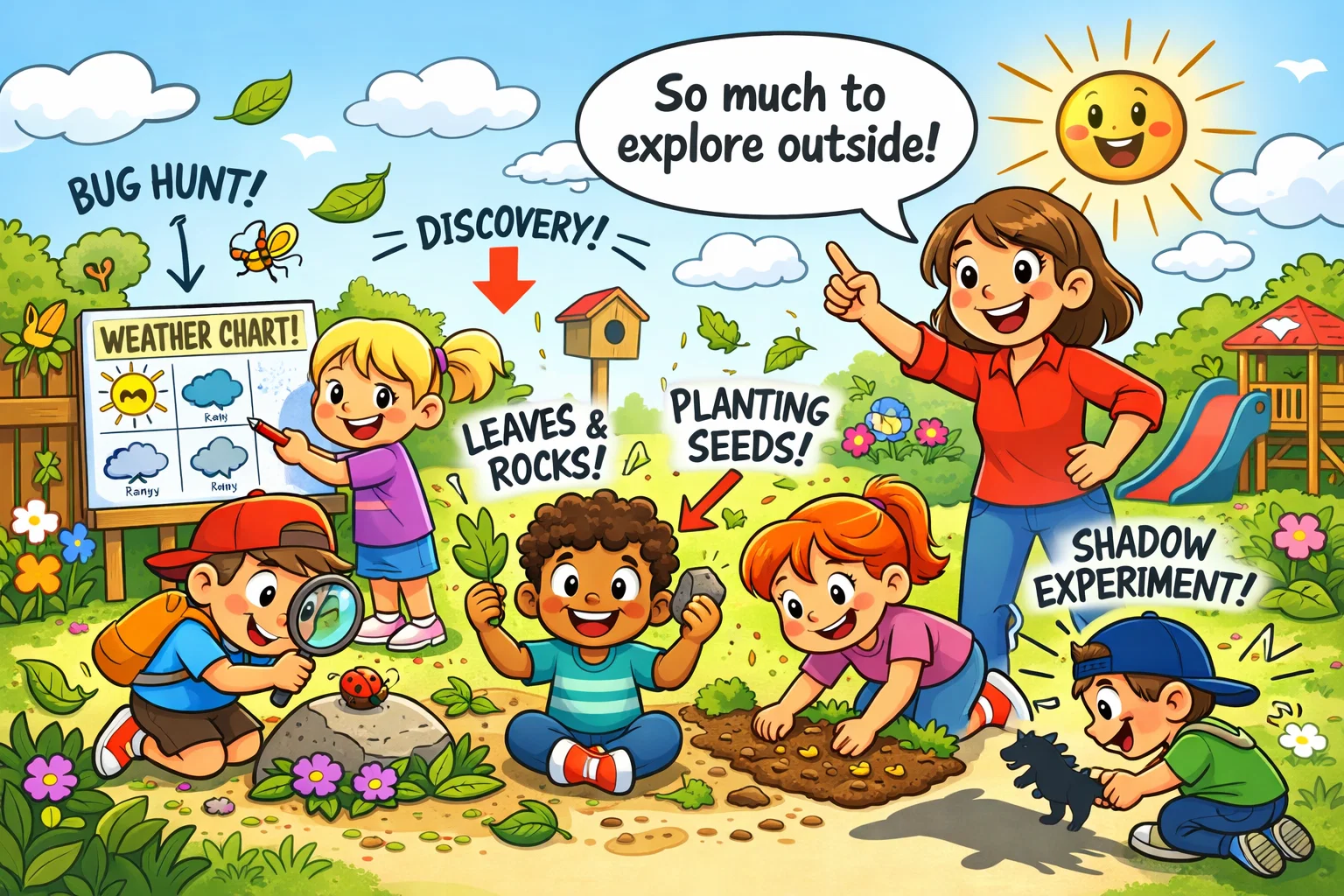
Taking stem activities for early childhood outdoors provides a larger canvas for exploration and introduces science concepts related to the natural world.
Nature Walks and Bug Hunts
A nature walk is a living laboratory. Encourage your child to look for patterns in leaves or track the movement of an ant. Use a magnifying glass to examine tree bark, fostering curiosity about textures and structures in the environment.
Nature Scavenger Hunt
Create a simple list of items for the child to find: something “bumpy,” something “green,” or “three round stones.” This task combines sorting skills with physical activity, making early stem both fun and educational.
Outdoor Shadow Play
On a sunny day, use chalk to trace the shadows of toy cars or the child’s own body on the sidewalk. Return a few hours later to see how the shadows have moved or changed size. This experiment with different times of day introduces basic astronomy and the earth’s rotation.
Weather Charting and Track Weather
Keep a simple weather chart where the child uses stickers or drawings to record if it is sunny, rainy, or windy. Over a week, look for a weather chart pattern. This activity introduces data collection and environmental studies.
Rain Gauge Activity
Create a simple rain gauge using a clear plastic bottle. Cut off the top (with adult help), turn it upside down to act as a funnel, and mark increments on the side with a ruler. This allows the child to measure rainfall, connecting mathematics to real-world events.
Planting Seeds and Grow Seeds
Watching a seed sprout is a foundational science experiment. Plant quick-growing seeds like beans in a plastic cup with moist paper towels. Children learn about life cycles and the requirements for growth (water, light, and soil).
Science Explorations for 3-5 Year Olds
These activities focus on “magic” moments—chemical reactions and physical changes—that captivate a child’s attention while teaching basic stem.
Ice Excavation and Dinosaur Dig
Freeze small plastic dinosaurs or toys inside a large block of ice. Provide the child with warm water, salt, and a spoon to “rescue” the toys. This activity teaches about states of matter (solid to liquid) and the effect of salt on melting points.
Cloud in Jar
By using warm water and hairspray (adult-led), you can create a visible “cloud” inside a jar. This science experiment helps preschoolers learn about condensation and how rain clouds form in the atmosphere.
Color Mixing and Moving Liquid Rainbow
Provide three plastic cups with water colored with primary food coloring (red, yellow, blue). Use paper towels to bridge the cups and watch as the colors “walk” and mix to create green, orange, and purple. This hands-on learning experience introduces the physics of light and color.
Lava Lamp and Melting Monster Science
Mixing oil, water, and food coloring in a bottle, then adding a fizzy tablet (like an antacid), creates a “lava lamp” effect. The resulting chemical reaction produces carbon dioxide bubbles, which children can observe as they move through the liquid.
Engineering Challenges for 3-5 Year Olds
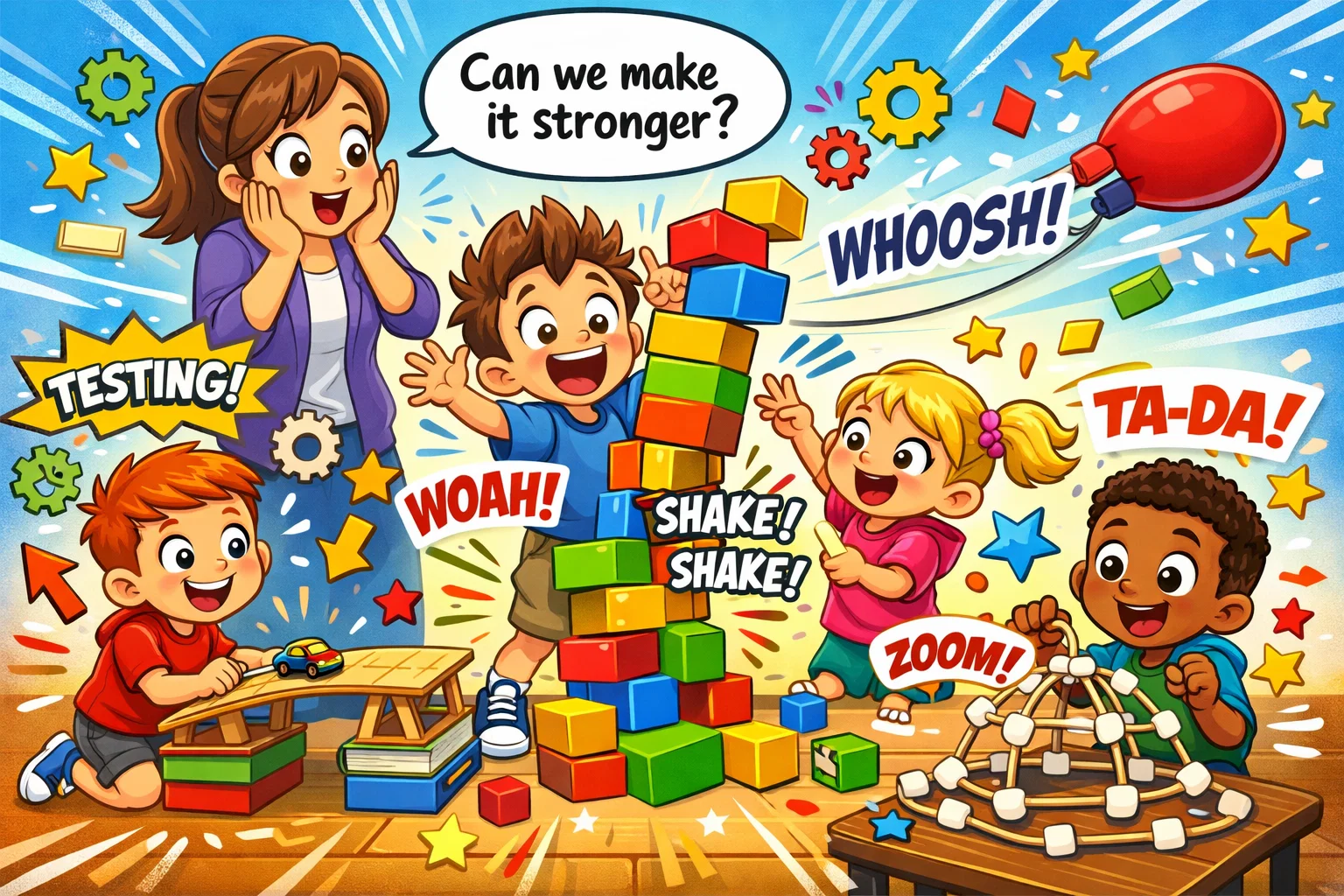
Engineering challenges encourage children to think like designers. These stem projects focus on stability, force, and structural integrity.
Building Structures with Blocks
Traditional building blocks are the ultimate engineering tool. Challenge the child to build the tallest tower possible or a house that can fit a specific toy. These hands-on STEM activities teach spatial awareness and balance skills.
Building Bridges
Ask your child to build a bridge between two stacks of books using only a single sheet of paper or a few toothpicks. Test the bridge’s strength by placing pennies or small toy cars on top.
This stem challenge introduces concepts of load-bearing and structural support.
Balloon Rocket and Rocket Car Activity
Tape a straw to a balloon and thread a string through the straw. When you let the air out, the “rocket” zooms across the room. This activity teaches about thrust and air pressure, providing a fun introduction to STEM careers, such as aerospace engineering.
Recycled Creations
Provide a “tinker box” filled with materials like cardboard tubes, bottle caps, and tape. Encourage the child to build a robot or a vehicle. This open-ended engineering task promotes creativity and critical thinking.
Math in Play for 3-5 Year Olds
Math should be integrated into play to help children understand the meaning of numeric values without the need for rote memorization.
Measuring Everything
Instead of a ruler, use “non-standard” units. Ask your child, “How many Lego bricks long is your foot?” or “How many toothpicks are in this book?” This helps preschoolers learn the concept of measurement and comparison.
Balancing Scale Comparisons
You can make a simple balance scale using a clothes hanger and two plastic cups. Have the child put different objects in the cups to see which is “heavier” or “lighter.” This activity introduces the concept of weight and equilibrium.
| Item A | Item B | Result |
| 5 Marbles | 1 Toy Car | Heavier / Lighter |
| 1 Apple | 5 Grapes | Heavier / Lighter |
| 10 Pennies | 1 Large Rock | Heavier / Lighter |
Cooking as STEM Adventure
The kitchen is a natural laboratory for hands-on STEM. Cooking involves chemistry (mixing ingredients), math (measuring), and physics (changing temperatures).
Mixing, Measuring, Comparing
When baking, involve the child in using measuring cups. They can observe how “dry” ingredients like flour behave differently than “wet” ingredients like milk. This activity teaches volume and the properties of different materials.
Dough, Texture, Changes
Making bread or playing dough is a lesson in states of matter. Watch how a liquid and a powder turn into a solid, stretchy dough. Discuss how the texture changes from “sticky” to “smooth” as you knead it.
How to Use STEM in Preschool Classroom and at Home
Integrating STEM learning into a daily routine ensures it becomes a natural part of a child’s development.
- STEM Bin and Science Shelf: Keep a dedicated box filled with magnets, measuring cups, pipe cleaners, and plastic cups that a child can access independently.
- Storybook STEM: Read a book like The Three Little Pigs and then challenge the child to build a house that can withstand a “big bad wolf” (a fan or hair dryer).
- Everyday Routines: During bath time, experiment with sink or float. In the garden, ask your child to find patterns in the veins of leaves.
Tips for Parents and Educators
- Age 3 Adaptation: Focus on sensory play and large items. Use food coloring in water or sorting large blocks.
- Age 4 Adaptation: Introduce predictions. Ask “What do you think will happen?” and record the results with simple drawings.
- Age 5 Adaptation: Increase the complexity of the stem challenge. Ask them to improve a design—for example, “How can we make this bridge hold two cars instead of one?”
- Safety First: Always supervise activities involving small parts, magnets, or baking soda and vinegar to prevent ingestion or injury.
Realistic Expectations
Not every science experiment will go as planned. If the slime is too sticky or the baking soda volcano doesn’t erupt, use it as a teaching moment. The goal is to foster curiosity and demonstrate that learning is a continuous journey of trial and error.
Take a short quiz to find out what your everyday choices say about your parenting style
When your child is curious about something new, what’s your instinct?
Take a short quiz to find out what your everyday choices say about your parenting style
“Can I download this app?” What happens next?
Take a short quiz to find out what your everyday choices say about your parenting style
When it comes to rules at home, which sounds most like you?
Take a short quiz to find out what your everyday choices say about your parenting style
If you could give your child one life skill today, what would you pick?
Take a short quiz to find out what your everyday choices say about your parenting style
Your child gets to choose what to watch. What would your ideal setup look like?
Take a short quiz to find out what your everyday choices say about your parenting style
Pick your parenting superpower ✨