20 Kindness Activities for Kids: The Ultimate List for Home, Classroom, School, and Community

 Discover a Free Education Video App for Kids
Pastory uses AI to personalize educational video content based on your child’s interests and personality. Safe, engaging, and built for curious young minds. Sign up now to stay updated and enjoy early access with a free trial
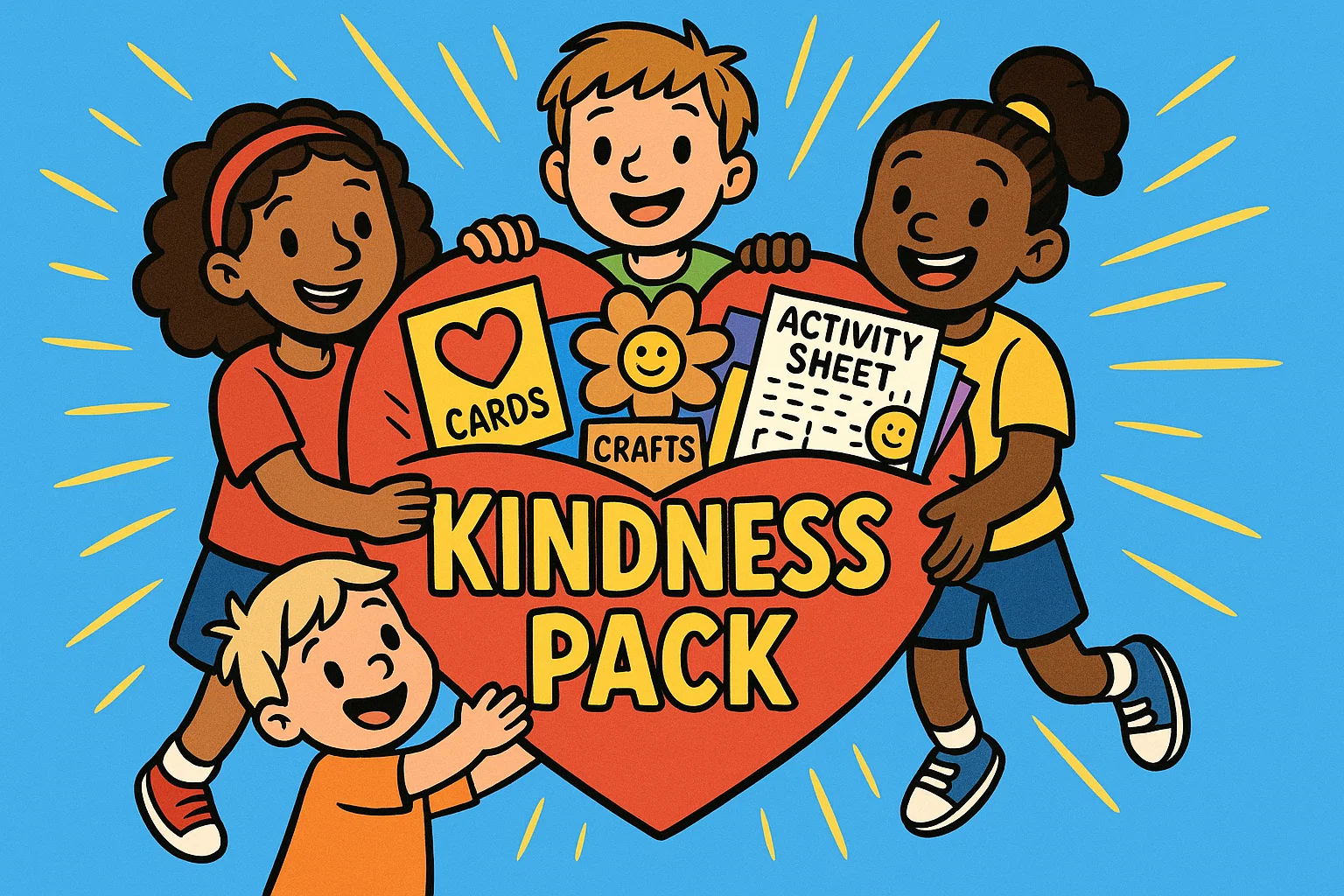
Parents, teachers, and caregivers can use this collection of kindness activities to help children practice empathy, gratitude, teamwork, inclusion, resilience, and everyday caring behaviors. Research suggests that prosocial behaviors such as kindness can be strengthened through repeated practice, adult modeling, and consistent support. Through structured activities, adults can help children turn abstract ideas about kindness into concrete daily habits.
Incorporating kindness activities into a child’s routine can support emotional intelligence, reflection, and social problem-solving. Research on school-based social-emotional learning (SEL) programs suggests that well-designed SEL instruction can improve students’ social, emotional, behavioral, and academic outcomes. This guide provides practical kindness ideas tailored to different age groups and settings, giving families and schools a clear roadmap for building kindness and compassion.
Key Takeaways
- Daily Practice: Kids learn kindness best through regular practice, not isolated one-time events.
- Versatile Settings: These activities can work across home, classroom, school, and community settings to build a shared culture of kindness.
- Micro-Actions Matter: Simple acts of kindness, such as sharing a smile or holding a door, can help children build empathy over time.
- Structured Reflection: Guided reflection and discussion help kindness lessons stick and deepen children’s understanding.
- Age-Appropriate Design: Choosing age-appropriate kindness activities helps keep children engaged and reduces frustration.
Activity Roadmap
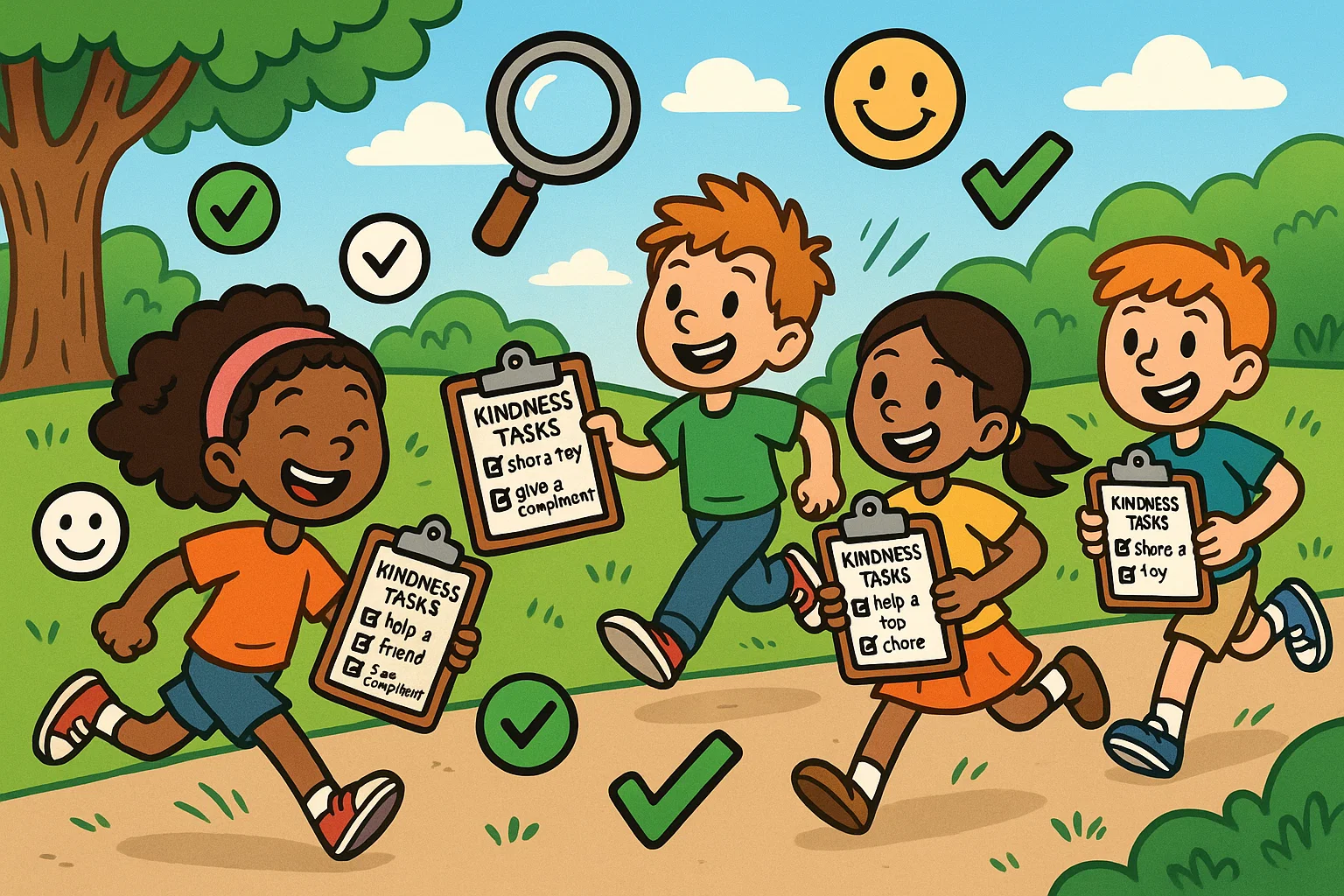
To help your child or students navigate these activities, the 20 ideas are organized into clear, practical categories. These include conversation activities, creative kindness craft projects, cooperative kindness games, service projects, school displays, and literacy-focused exercises like writing gratitude notes.
Adults can choose an activity from these categories for morning circles, family dinners, or dedicated well-being time.
Best Age Fit
Child development research suggests that kindness activities work best when they match children’s cognitive and emotional development. Toddlers need simple modeling and physical guidance, while preschoolers benefit from stories, role-play, and concrete visual tools like a kindness jar.
School-age children are often ready for more independent activities, such as service projects, kindness journals, peer support, conflict-resolution practice, and school-wide awareness campaigns.
Core Kindness Skills
Through these activities, children can build empathy, cooperation, gratitude, self-kindness, respectful communication, problem-solving skills, inclusion, helpfulness, and a sense of community responsibility. Together, these skills can support resilience and reduce behavior challenges in school and social settings.
Note Before Starting Kindness Activities
Adults should set clear behavior expectations before starting any kindness activity. Prosocial behavior should be practiced and encouraged consistently, but it should not be forced or tied too closely to material rewards, which can weaken children’s internal motivation to help.
To create a positive impact, activities should feel safe, voluntary, and age-appropriate. They should also be supported by adult modeling, repetition, and regular opportunities for reflection.
Kindness vs. Niceness
It is important to teach kids the difference between surface-level “niceness” and genuine kindness. Kindness involves thoughtful, proactive action rooted in empathy, while niceness can sometimes mean simply following polite social rules.
For example, a child sharing a toy because they notice a peer is lonely demonstrates kindness. A child sharing a toy only to avoid an adult’s reprimand or to receive praise may be showing compliance, but not necessarily genuine kindness.
T.H.I.N.K. Rule
The T.H.I.N.K. framework gives children a simple way to pause and think before they speak or post online. Teachers and caregivers can post this acronym in classrooms or at home to set a clear standard for respectful communication.
| Letter | Criteria | Example for Children |
| T | Is it True? | “Am I stating a known fact, or spreading an unverified rumor?” |
| H | Is it Helpful? | “Will my words help this person, or cause unnecessary confusion?” |
| I | Is it Inspiring? | “Does what I am saying build confidence, or discourage effort?” |
| N | Is it Necessary? | “Do I actually need to say this out loud right now?” |
| K | Is it Kind? | “Are these words spoken with genuine respect and care?” |
Kindness and Safety Boundaries
Teaching children to perform acts of kindness must always go together with teaching personal safety boundaries. Showing kindness toward others does not mean saying yes to every request, giving up personal boundaries, or tolerating disrespectful treatment.
Adults should explicitly teach children safe ways to help, how to say no firmly, when to seek help from school staff or another trusted adult, and how to stand up for themselves respectfully.
1. Match Kindness Activities by Age
To keep children engaged, educators and parents should choose activities that match a child’s current developmental stage. Activities that are too easy or too difficult can lead to disengagement or frustration.
For Toddlers Ages 1–3
Toddler activities should focus on simple physical actions and basic empathy modeling with direct adult guidance. Parents can encourage simple actions such as using gentle hands with peers or pets, helping clean up toys during transitions, and offering a comforting hug only when the other person clearly agrees.
Toddlers can also practice saying thank you to family members and feeding household pets with close adult supervision.
For Preschoolers Ages 3–5
Preschoolers often learn best through visual tools, stories, and interactive social play. For this age group, useful activities include story-based lessons, setting up a physical kindness jar, playing structured compliment games, and having children draw a picture to give to a friend or family member.
Simple puppet role-play can also help children ages 3 to 5 practice identifying facial expressions and sharing classroom materials fairly.
For School-Age Kids Ages 5 and Up
School-age children can often handle more reflective and collaborative kindness activities. Teachers and parents can introduce kindness journals, structured pen-pal programs, community service projects, and student-led campaigns on World Kindness Day or during Random Acts of Kindness Week.
These students can also analyze more complex empathy scenarios, practice peer conflict resolution, and take on leadership roles around the school.
2. Start a Kindness Chat
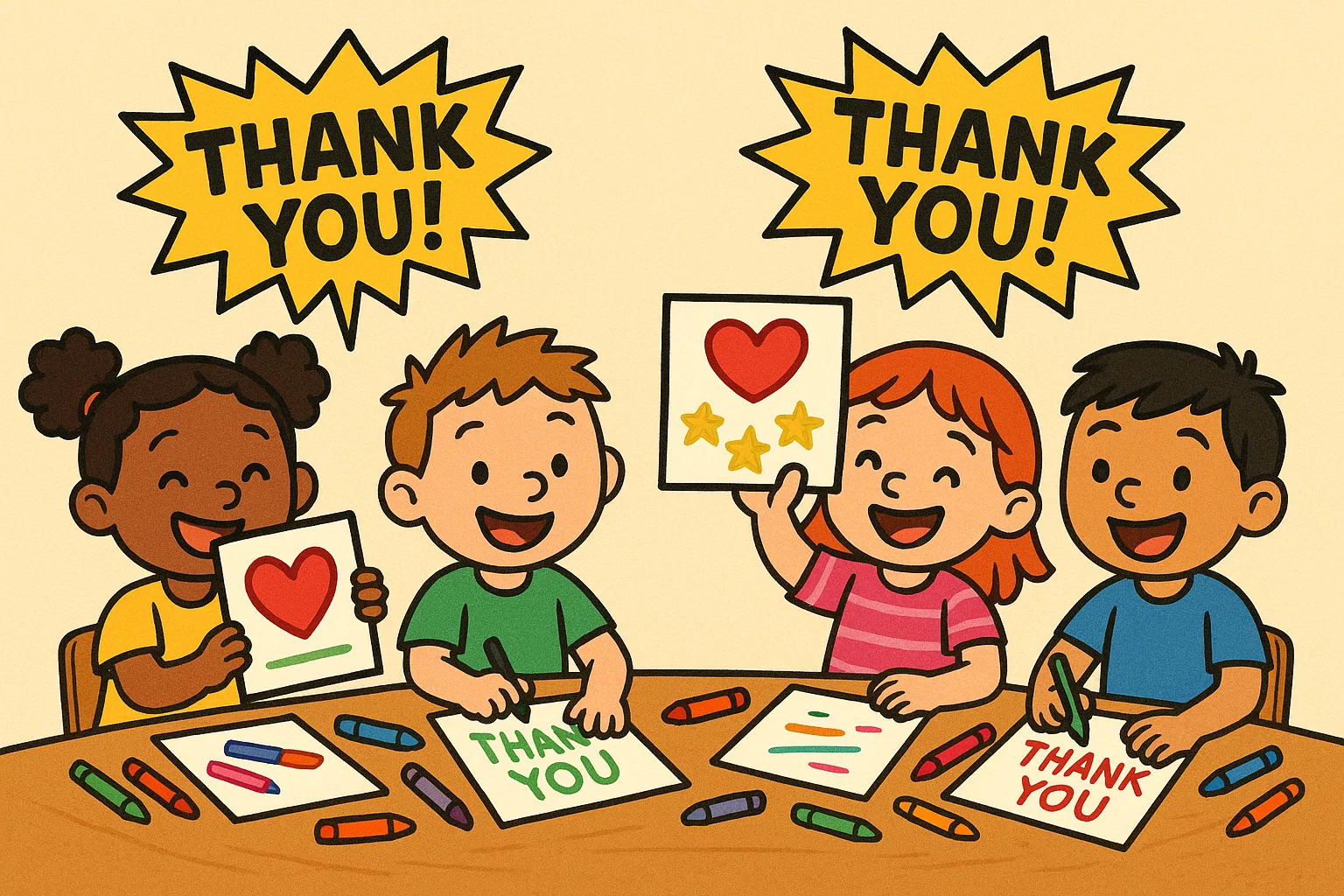
Turning kindness into a daily conversation keeps it from feeling like a one-time lesson or school assignment. Adding simple discussion prompts to everyday transitions helps children reflect on their social interactions.
Daily Prompt Ideas
Adults can facilitate a brief kindness chat during breakfast, classroom circle time, car rides, or bedtime routines. Using specific, open-ended questions helps children reflect on their daily choices.
Caregivers can use these four core questions regularly:
- “Who did you help today, and what specific action did you take?”
- “Who helped you today, and how did their support affect your day?”
- “What kind choice felt difficult to make today, and why was it hard?”
- “What is one random act of kindness you could try tomorrow?”
Real-Life Examples
To keep these chats relevant, adults should connect the prompts to a child’s real-life daily environments. Discussions can focus on specific moments from the school bus, sibling interactions at home, the playground, sports practice, or classroom routines.
This connection helps kids realize that their choices affect the people around them.
Follow-Up Questions
Deepen the conversation with reflective follow-up questions that encourage thinking without turning the moment into a lecture. When a child describes a social interaction, ask:
- “How do you think that person felt when that happened?”
- “What else could you do to support them next time?”
If a conflict occurred, gently ask:
- “What would you change about your response if you could repeat that moment?”
3. Write Gratitude Notes
Writing gratitude notes strengthens literacy skills while helping children notice positive qualities in others. This activity gives children a tangible way to express appreciation and strengthen social bonds.
Recipient List
Children should be encouraged to express gratitude beyond their close friends and include the wider school community. A structured recipient list might include:
- Parents
- Grandparents
- Classroom teachers
- Cafeteria workers
- School bus drivers
- Peers
- Siblings
- Next-door neighbors
- Sports coaches
- Administrative school staff
Thanking often-overlooked community helpers teaches children to appreciate the people who support their daily lives.
Message Templates
Providing fill-in-the-blank templates makes the activity easier for hesitant writers and helps keep the message specific. Children can use these three sentence frames:
- “Thank you for [specific action], because it made me feel [specific feeling].”
- “I noticed you [specific helpful behavior] today, and I appreciate your effort.”
- “You helped me directly when I was struggling to [task/situation], and it made a big difference.”
Delivery Ideas
The delivery of these notes can become an engaging routine that builds positive anticipation. Children can place their completed messages in recipients’ lunchboxes, leave them on classmates’ desks during recess, drop them into family mailboxes, pin them to a classroom bulletin board, or place them in a community thank-you basket in the school lobby.
4. Create a Kindness Chain
A kindness chain is a growing, visible representation of a group’s collective kind actions. This activity provides ongoing visual reinforcement that encourages students to keep noticing and repeating kind actions.
Paper Strip Setup
To start, cut colored construction paper into 1-by-8-inch strips. Keep a basket of strips next to a jar of writing utensils and tape.
Whenever a child performs or witnesses a kind act, they write a brief description on a strip, loop the paper into a circle, and link it securely to the previous loops.
Classroom Display Ideas
Hang the expanding paper chain across the classroom ceiling, down a school hallway, inside the school library, or along a high-traffic wall at home. This ongoing kindness display reminds children of their cumulative positive impact.
Seeing the chain grow over several weeks shows kids how small individual choices can add up to a broader culture of kindness.
Reflection Questions
When the chain reaches a major milestone or length, gather the children to discuss the links. Ask:
- “What patterns do you notice among the actions recorded on these slips?”
- “Which act of kindness felt most meaningful to do or receive, and what made it stand out?”
5. Fill a Kindness Bucket
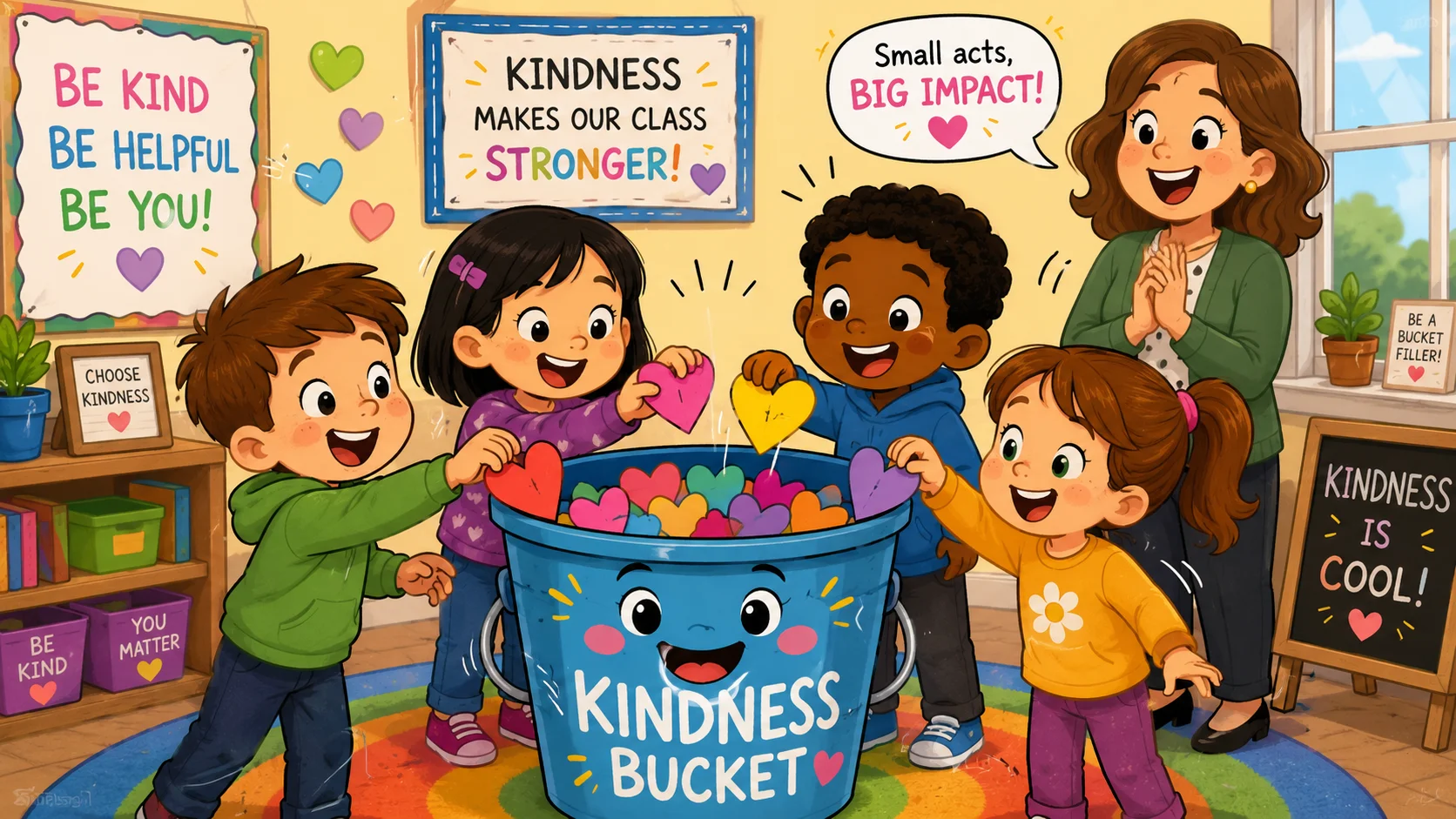
Based on the popular “bucket filling” metaphor found in children’s books such as Have You Filled a Bucket Today? by Carol McCloud and How Full Is Your Bucket? For Kids by Tom Rath and Mary Reckmeyer, this activity helps children understand how kind and unkind actions affect feelings.
In this metaphor, everyone has an invisible bucket that holds positive feelings. Kind actions fill the bucket, while hurtful actions dip into it.
Bucket Filler Examples
Adults can teach children that positive words and supportive actions help fill another person’s bucket. Clear examples of bucket-filling behaviors include:
- Inviting a lonely classmate to play at recess
- Saying specific kind words to a peer
- Helping clean up a messy classroom space
- Listening without interrupting
- Sharing limited art materials
- Intentionally including a new student in a group
Bucket Dipper Examples
It is important to explain hurtful behaviors gently but directly, labeling them as “bucket dipping” actions. Explain that bucket dipping includes:
- Teasing others
- Deliberately excluding a classmate from a game
- Grabbing items without asking
- Ignoring someone when they speak
- Using mean words during an argument
Clarify that bucket dipping can leave both the person who was hurt and the child who caused the hurt feeling bad.
Weekly Bucket Routine
Establish a weekly bucket routine every Friday afternoon at home or in the classroom. Set up a physical bucket where children can drop written slips naming specific bucket-filling moments they witnessed throughout the week.
Reading these observations aloud reinforces helpful behavior, helps children feel seen, and shows that positive actions are happening every day.
6. Try the Wrinkled Heart Activity
The wrinkled heart activity provides a powerful sensory lesson that illustrates how hurtful words can leave emotional marks that simple apologies cannot instantly erase. This hands-on exercise helps children understand the impact of careless speech.
Materials Needed
To run this activity, gather the following supplies:
- Large hearts cut out of red or pink construction paper, one per child
- Colored markers or pens
- Clear tape
- Pre-written scenario cards describing common peer conflicts
Activity Steps
- Hand each child a smooth paper heart representing a person’s emotional state.
- Read aloud a series of unkind phrases or exclusionary actions from the scenario cards.
- With each negative phrase, ask children to fold or wrinkle one section of their paper heart.
- Once the heart is balled up, read aloud positive repair phrases, such as a sincere apology or a supportive statement.
- Ask the kids to smooth the heart out gently.
Debrief Talking Points
Ask the children to look closely at the remaining creases on the paper. Explain that while saying sorry is an important step in repairing a relationship, the wrinkles remind us that thoughtless words can leave lasting impacts.
This visual lesson helps children understand why careful, respectful speech is better than trying to repair hurt later.
7. Build a Kindness Jar
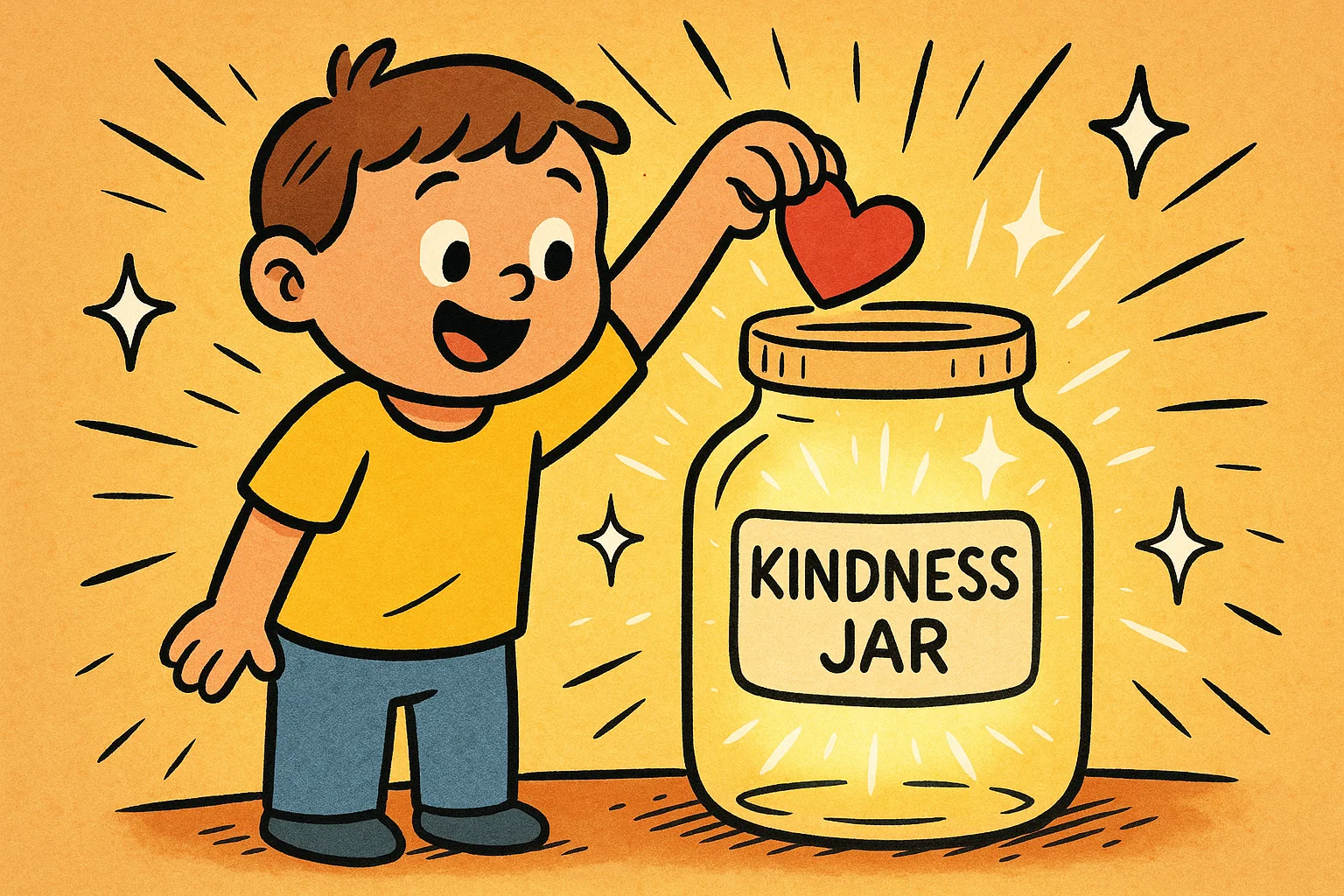
A kindness jar is an interactive activity that challenges a family or classroom to complete a list of simple random acts of kindness.
Random Act Ideas
Fill a clear glass or plastic jar with slips of paper containing specific, actionable, low-cost assignments. Include ideas such as:
- “Hold the door open for the next three people.”
- “Share your drawing supplies with a classmate.”
- “Thank a community helper today.”
- “Clean a shared space without being asked.”
- “Invite a peer who is sitting alone to join your lunch table.”
Family and Classroom Routine
Make the kindness jar part of a simple daily or weekly routine. Have a designated child pull one task card from the jar during a morning meeting or family dinner.
The group commits to completing that action before the end of the day, and the next session begins with a short discussion about how it went.
Kindness Jar Rewards
When the jar is filled with marbles, tokens, or completed slips showing finished tasks, celebrate the milestone with a non-material group reward. Recommended incentives include:
- An extra 15 minutes of story time
- A group game session
- A picnic lunch outdoors
- A classroom celebration
Avoiding toys or candy helps preserve the intrinsic value of the kindness practice.
8. Make a Compliment Board
A compliment board provides a dedicated space that helps children practice positive peer recognition. This activity shifts the focus away from superficial traits and encourages children to notice character, effort, and hard work.
Compliment Sentence Starters
To guide children toward meaningful feedback, post specific sentence starters alongside the board. These sentence starters help prevent repetitive or empty praise:
- “I really like how you persevered when you were trying to [task].”
- “You worked exceptionally hard on [project/skill] today.”
- “Thank you for showing kindness to me when you [action].”
Positive Peer Feedback
Educators should teach kids to compliment effort, intentional kindness, creativity, courage, teamwork, and helpful actions rather than physical appearance or clothing.
For instance, praising a peer’s determination to complete a difficult puzzle supports a growth mindset, while praising their shirt does less to reinforce kindness or effort.
Shout-Out Board Variation
Create a classroom “Shout-Out Board” where students can post sticky notes about kind actions they notice around the school.
This setup encourages students to be kind even when adults are not actively watching. It also turns children into active scouts looking for positive behavior throughout the school day.
9. Pass the Compliment
Pass the Compliment is a structured circle game designed to build direct verbal communication skills and confidence. This activity teaches children how to express praise clearly and accept positive feedback with grace.
Circle Game Rules
Have the children sit in a circle on the floor and introduce a small, soft object to pass around. Establish three clear rules for the game:
- Every player should look at the recipient and state their name before speaking.
- Compliments should be specific and focus on positive actions.
- Every player has the right to pass if they feel anxious, which helps keep the activity emotionally safe.
Shy Kid Alternatives
To support introverted or neurodivergent children who may experience anxiety during public verbal exchanges, offer accessible alternatives. These can include:
- Writing a compliment slip beforehand
- Sharing a compliment with one partner
- Using adult-supported sentence cards that the child can point to or read aloud
Respectful Compliment Tips
Pair the game with a mini-lesson on giving compliments without teasing, backhanded praise, sarcasm, or comments that make others uncomfortable.
Clarify that tone of voice matters just as much as word choice. Practice modeling a warm, sincere tone versus an insincere or sarcastic tone so children can hear the difference.
10. Create a Kindness Menu
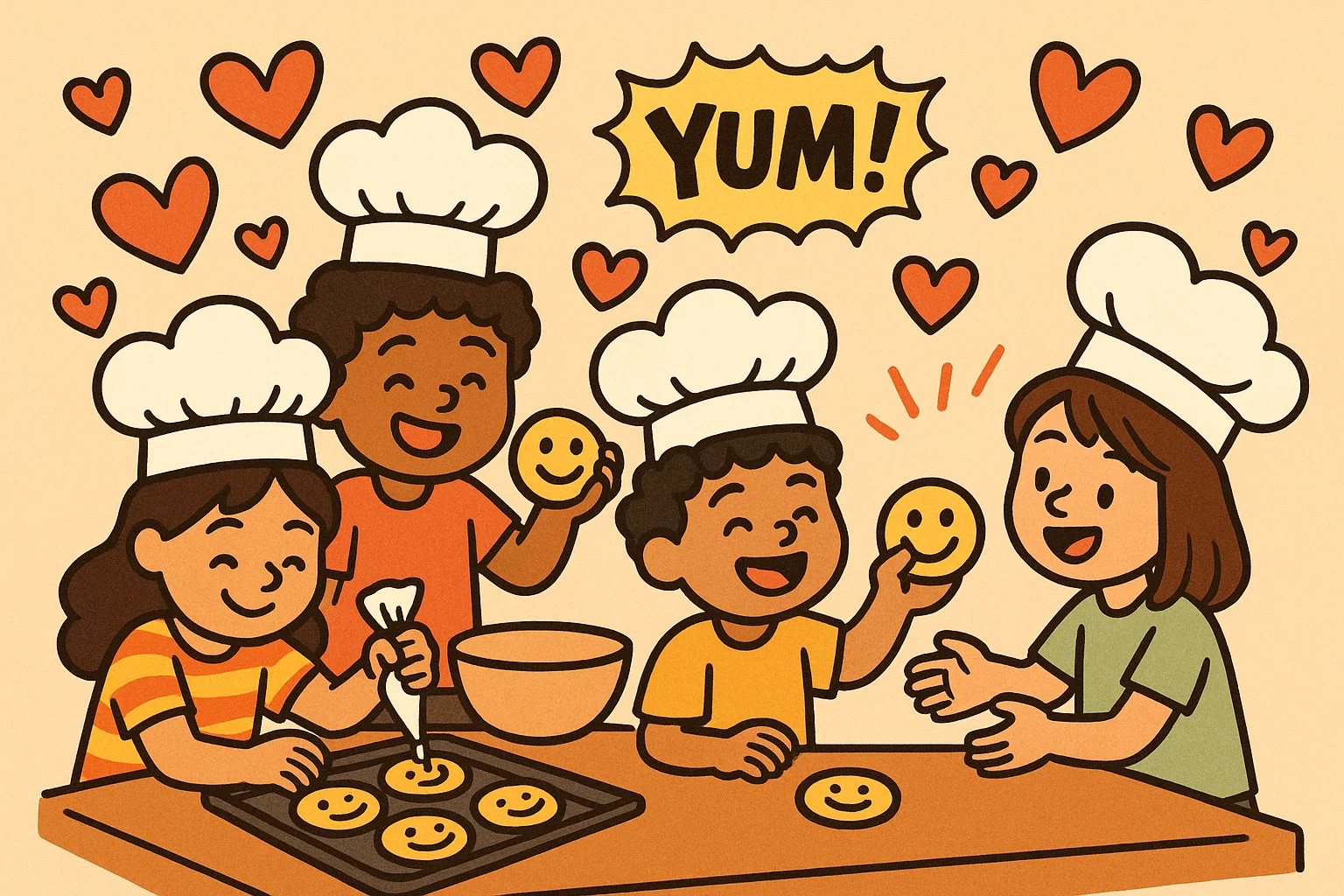
A kindness menu organizes prosocial actions into a restaurant-style format. This tool empowers children by giving them structured choices and letting them decide how they will practice kindness each day.
Menu Categories
Structure a laminated menu card into four effort-based categories:
- Appetizers: Quick, low-effort actions, such as giving a high-five, smiling at three people, or saying good morning.
- Main Acts: Helpful tasks requiring more time, such as organizing a messy bookshelf or helping a sibling tie their shoes.
- Desserts: Creative gifts or emotional lifts, such as drawing a custom picture or writing a specific compliment card.
- Daily Specials: Local community service actions, such as collecting litter or sorting canned goods for a drive.
Weekly Challenge Plan
Ask kids to select one item per day from the menu, or challenge them to complete one full menu progression—an appetizer, a main act, and a dessert—over the course of one week.
Track their choices on a visual checklist so they can see how many different kinds of helpful actions they have tried.
Home and School Versions
Parents can customize the home version to focus on household chores, sharing toys, and showing consistent sibling kindness.
Teachers can adapt the school version for peer tutoring, classroom jobs, helping school staff, and supporting inclusive play on the playground.
11. Decorate Kindness Posters
Creating and hanging kindness posters allows children to take ownership of their physical environment. This craft project reinforces kind language and keeps core community values visible throughout the day.
Poster Prompt Ideas
Provide students with clear, actionable slogans for their artwork instead of relying only on generic “be kind” phrases. Useful prompts include:
- “Kind words matter in this space.”
- “Look for the lonely and invite them in.”
- “Small acts count toward big changes.”
- “Choose helpful words when solving a problem.”
Hallway Display Tips
Once completed, mount the student-made artwork in high-traffic common areas throughout the school. Good locations include:
- Main entry hallways
- The school library
- The cafeteria
- Student bathrooms
- Playground entrances
- Classroom doors
This broad distribution encourages kind behavior beyond the classroom walls.
Campaign Poster Version
Turn art class into part of a school-wide kindness campaign by having students design their own slogans. Students can vote on their favorite entries, print duplicates, and distribute them as part of an official campaign during anti-bullying weeks or Random Acts of Kindness Week.
12. Launch a Kindness Campaign
A kindness campaign turns prosocial education from a single classroom activity into a structured project that can unite a grade level or an entire school community.
Campaign Theme Ideas
Align the campaign with established awareness days or weeks so you can use existing educational resources. Possible themes include:
- World Kindness Day
- Random Acts of Kindness Day
- A designated Kindness Week
- Anti-Bullying Awareness Month
- A gratitude challenge
- Community Helpers Appreciation Week
Student Leadership Roles
Give older students ownership by assigning clear leadership roles. Possible roles include:
- A poster design team to manage school visuals
- An announcement team to read daily kindness tips over the PA system
- Kindness reporters to document positive acts
- Classroom ambassadors to coordinate logistics
- Reflection leaders to guide peer discussions
Tracking Success
Avoid tracking individual performance, which can make kindness feel competitive. Instead, track total community participation.
Use large visual aids such as a wall-mounted kindness chain, a central token jar, a shared pledge board, or a school map that marks completed group challenges.
13. Paint Kindness Rocks
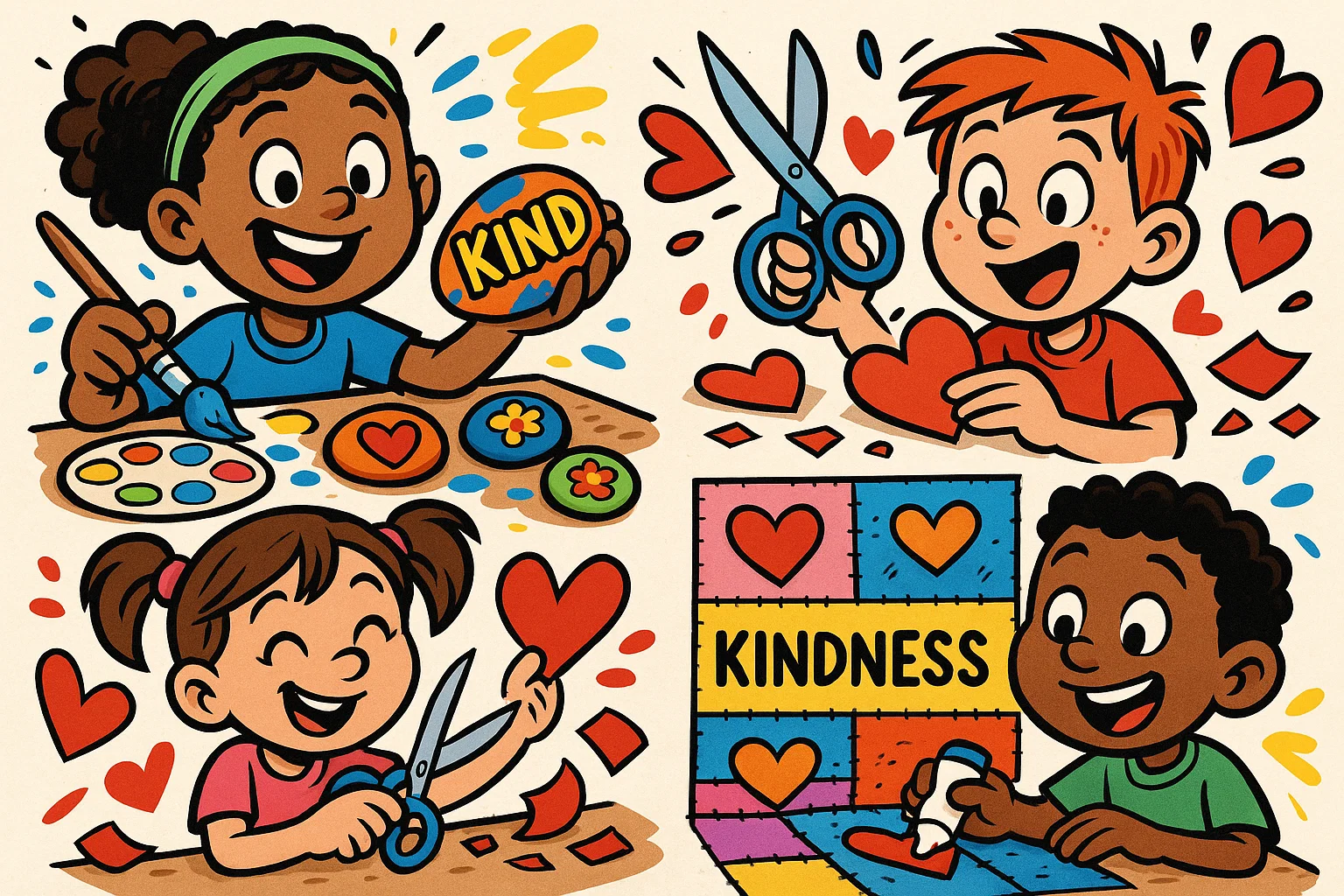
Painting kindness rocks combines hands-on art with community engagement, teaching children that small, anonymous messages of encouragement can brighten someone’s day.
Kindness Rock Message Ideas
Ask children to choose smooth river stones and paint them with bright, weather-safe acrylic paints. Once the rocks are dry, help them write short, clear, encouraging phrases using permanent markers.
Effective examples include:
- “You matter.”
- “Be brave today.”
- “Choose kind paths.”
- “Keep going.”
- “You belong here.”
Placement Safety Notes
Before distributing the rocks, discuss safety and responsibility. Children should get adult permission before placing rocks, choose safe public paths, avoid private property, make sure the rocks do not damage natural habitats, and use non-toxic, weather-safe sealants.
Growth Mindset Rocks
Add a growth mindset variation by having kids create rocks that focus on effort, resilience, learning from mistakes, and trying again. Phrases such as “Mistakes help you learn” or “Effort is your superpower” can serve as helpful desk reminders for students.
14. Plant Kindness Seeds
Planting kindness seeds creates a simple analogy between caring for a plant and caring for a friendship.
Garden Activity Steps
- Provide children with small biodegradable pots, organic soil, and fast-sprouting seeds such as marigolds or sunflowers.
- Guide the kids through planting the seeds together.
- Establish a shared watering schedule and assign clear daily caregiving roles.
- Place the pots in a visible location where children can measure and chart their growth over several weeks.
Caregiving Lessons
Use the plant’s growth to teach character lessons. Discuss how patience, daily responsibility, gentle handling, and consistent care are also important in friendships.
Explain that just as a plant withers without water, friendships need consistent care to stay healthy.
Kindness Seeds Craft
Extend the lesson with a kindness craft by having children make paper seed packets out of cardstock. Instead of physical seeds, ask kids to write five practical kindness ideas on small cards and place them inside the packet.
Children can then give the packet to a family member, neighbor, or friend.
15. Help the Planet
Eco-kindness activities help children understand that kindness can include caring for shared spaces, plants, animals, and the planet. Teaching environmental care can help children think beyond themselves and develop responsibility for the wider world.
Nature Walk Ideas
Take a structured nature walk around the school grounds or a local park. Ask children to observe and document:
- Healthy plants
- Local wildlife habitats
- Litter
- Sounds around them
- Places that need care or protection
Use this walk to point out concrete ways people can protect or harm outdoor spaces.
Cleanup Project Steps
Organize a litter pickup project using clear safety protocols. Provide children with protective puncture-resistant gloves and long-handled trash grabbers. Keep adult supervision constant, teach children to sort recyclable materials into designated bins, and conclude by weighing the total trash collected to celebrate their tangible community impact.
Spend Time in Nature
Regular quiet time in nature can help children feel calmer and more emotionally regulated. A calmer child is often better able to regulate emotions, show patience, display empathy, and make thoughtful prosocial choices in later peer interactions.
16. Volunteer Together
Participating in structured, age-appropriate volunteering projects translates abstract empathy into direct civic action. These activities expose children to diverse community needs in a supportive way.
Kid-Friendly Service Options
Choose volunteer opportunities with hands-on tasks that children can understand. Excellent options include:
- Organizing local food drives
- Running school-wide book drives
- Making holiday cards for senior care facilities
- Joining organized park cleanups
- Sorting blanket donations for an animal shelter
- Collecting school supplies for students who need them
Preparation Checklist
To keep the service project safe and effective, complete this five-point checklist before you begin:
- Secure all required institutional permissions, waivers, and parent release forms.
- Verify that the setting meets child safety and accessibility standards.
- Gather all necessary materials, safety gear, and cleanup supplies beforehand.
- Arrange reliable, supervised transportation to and from the service location.
- Confirm that the site’s age-limit rules accommodate your youngest participants.
Give Back Discussion
End every volunteer project with a short reflection session. Help children connect their efforts with real people and real needs.
Emphasize respectful, non-judgmental helping. Teach kids that volunteering is about community support, not pity.
17. Show Kindness to Workers
This activity helps children notice the everyday helpers who support their routines but often go unnoticed or unthanked.
Thank-You Card Ideas
Have children create thank-you cards for specific staff members or community helpers. These messages can go to:
- Classroom teachers
- School nurses
- Mail carriers
- Custodians
- Cafeteria staff
- Crossing guards
- Local shop workers
Ask children to name one specific action the worker performs that makes their day safer, easier, or better.
Small Service Gestures
Teach children that showing kindness toward others includes small, respectful everyday behaviors. Encourage them to:
- Say thank you clearly
- Clean up after themselves in public spaces
- Wait patiently in line
- Follow posted safety rules
- Acknowledge a worker’s effort during everyday interactions
Community Helper Talk
Hold a community-helper discussion to explain how neighborhoods and schools depend on many different workers. Discuss what daily life would look like if custodians, crossing guards, cafeteria staff, or bus drivers suddenly stopped doing their jobs.
This exercise helps children appreciate the work that keeps their school and community running.
18. Help Other Kids
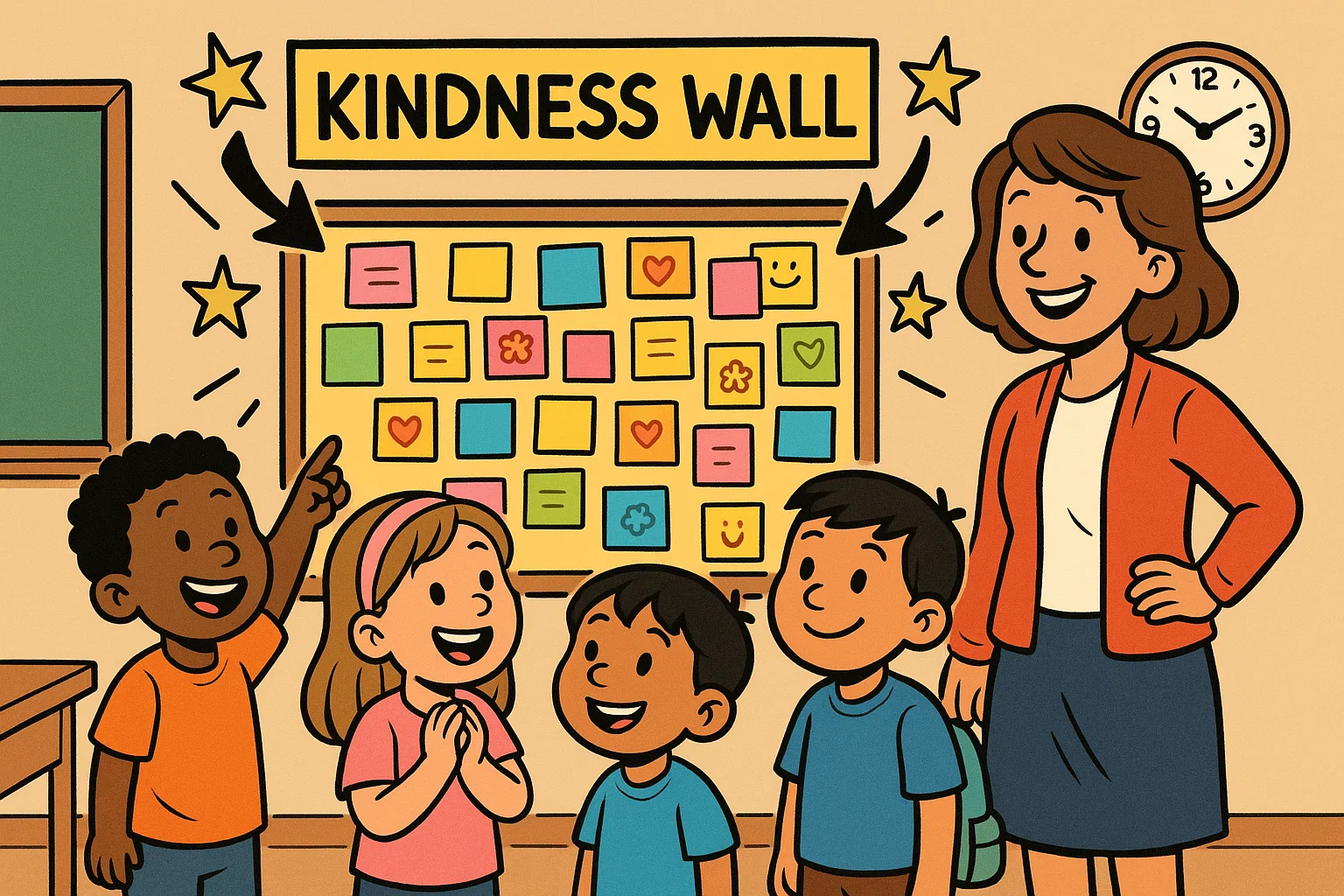
Peer-to-peer support can help create a more inclusive classroom or school community and reduce social isolation.
Buddy System Ideas
Create a formal buddy system that pairs older kids with younger students during high-stress transition times. Options include:
- Reading buddies
- Playground buddies
- Transition ambassadors
- New-student welcome partners
These roles help younger or new students feel supported during their first few weeks at a new school.
Playground Support Examples
Give children clear scripts and examples they can use during recess. Teach them how to:
- Invite an isolated peer to join a game
- Help a classmate who has fallen down
- Share limited playground equipment fairly
- Use positive language to stop exclusionary peer behavior
Classroom Helper Jobs
Create a rotating chart of classroom helper jobs that support student-to-student interaction. Useful roles include:
- A materials helper to pass out supplies
- A cleanup helper to support peers who need help
- A line buddy to keep the line organized
- A tech helper to troubleshoot devices
- A reading partner to support literacy tasks
19. Play Cooperative Games
Cooperative games reduce the pressure to win alone and channel children’s energy toward shared group goals, building teamwork and communication skills.
Teamwork Game Rules
When introducing cooperative games, establish clear rules that prioritize group outcomes over individual performance. Structure the game so that success requires:
- Turn-taking
- Encouraging teammates
- Listening to suggestions
- Solving problems together
If one player is left behind, the team pauses and helps them rejoin, reinforcing collective responsibility.
Building Together Variation
Engage children in a structured building challenge using wooden blocks, LEGO sets, plastic cups, or craft supplies. Give the group a specific objective, such as building the tallest stable tower or a bridge that spans a specific gap.
Use a limited pool of resources so children must coordinate, share materials, and solve problems together.
Cooperation Debrief
After the game, hold a short discussion about how the group worked together. Ask:
- “What communication strategies helped our group succeed?”
- “Who did you notice encouraging a teammate when something went wrong?”
- “How did the team resolve differences of opinion?”
20. Play Competitive Games Kindly
Competition is a natural part of childhood. Teaching children how to compete kindly helps them develop resilience, emotional regulation, and sportsmanship.
Winning with Kindness
Teach children how to behave when they win. Encourage them to congratulate their opponents, avoid bragging, and recognize specific efforts made by the other team during the game.
Emphasize that a kind winner preserves the dignity of all players.
Losing with Resilience
Give children simple scripts and ways to reframe disappointment after a loss without reacting with anger or shame. Teach them to use phrases such as:
- “Good game, thanks for playing.”
- “I will practice more and try again next time.”
- “What specific skill can I improve for our next match?”
Fair Play Rules
Set clear rules against cheating, rule-breaking, and unsportsmanlike behavior.
Establish a simple repair rule: if someone’s feelings are hurt during a game, play pauses until the issue is addressed respectfully. This teaches kids that relationships matter more than points.
Final Thoughts
Kindness is a muscle that grows stronger through daily practice, intentional modeling, consistent repetition, and guided reflection. Rather than treating character education as an occasional holiday event, parents, teachers, and school staff can start small and choose activities that fit the child’s age, setting, and needs.
Best Starting Point
If you are unsure where to begin, choose one or two simple activities from this guide and ease them into your routine. Excellent starting points include:
- Starting a daily morning kindness chat
- Writing two quick gratitude notes to school staff
- Setting up a classroom kindness jar
- Creating a compliment board
- Choosing an empathy-focused book for evening reading
Long-Term Kindness Habit
To build a sustainable culture of kindness, embed these activities into fixed weekly routines. Turning activities like a Friday bucket-filling share or Monday morning circle into regular traditions helps prosocial values become a natural part of family or classroom life.
Simple Next Step
Pick one activity from this list today, review the materials, introduce it to your children or students tomorrow morning, and spend five quiet minutes afterward reflecting on the experience together.
FAQ
How can I teach kindness to kids in a simple way?
The best way to teach kindness is to connect it to everyday moments children already understand. Start with simple examples, such as sharing materials, saying thank you, helping a sibling, or inviting someone to play. When children do something kind, name the behavior clearly: “That was kind because you noticed someone needed help.” Adults can also teach your child by modeling kindness consistently. Children learn a great deal by watching how parents, teachers, and caregivers speak to others, handle conflict, and show patience.
What are some easy activities for teaching kindness?
Easy activities for teaching kindness include gratitude notes, compliment boards, kindness jars, buddy systems, and cooperative games. These activities give children concrete ways to show kindness instead of only hearing adults talk about kindness. For younger children, drawing pictures, sharing toys, and helping clean up are good starting points. Older children can write acts of kindness they have seen, reflect on them in a kindness journal, or help organize a classroom kindness campaign.
What are some good random acts of kindness ideas for kids?
Good random acts of kindness ideas for kids should be simple, safe, and age-appropriate. Children can hold the door for someone, thank a community helper, help clean a shared space, include a classmate in a game, or write a kind note to a teacher or friend. The goal is not to make the act big or impressive. Even a small action can spread kindness and help children understand that their choices affect the people around them.
How can kids practice kindness and empathy at school?
Kids can practice kindness and empathy at school by noticing how others feel and responding in helpful ways. For example, they can invite a lonely classmate to join a game, help someone who dropped their supplies, or use kind words when a peer feels discouraged. Teachers can also ask students to discuss kindness during morning meetings. Questions like “What is one kind thing you noticed today?” or “How do you think that person felt?” help children connect kindness and caring with real situations around your school.

Take a short quiz to find out what your everyday choices say about your parenting style
When your child is curious about something new, what’s your instinct?
Take a short quiz to find out what your everyday choices say about your parenting style
“Can I download this app?” What happens next?
Take a short quiz to find out what your everyday choices say about your parenting style
When it comes to rules at home, which sounds most like you?
Take a short quiz to find out what your everyday choices say about your parenting style
If you could give your child one life skill today, what would you pick?
Take a short quiz to find out what your everyday choices say about your parenting style
Your child gets to choose what to watch. What would your ideal setup look like?
Take a short quiz to find out what your everyday choices say about your parenting style
Pick your parenting superpower ✨