How to Tell When Your Child Is Ready to Stop Using a Sippy Cup: Bottle to Cup Transition Guide

 Discover a Free Education Video App for Kids
Pastory uses AI to personalize educational video content based on your child’s interests and personality. Safe, engaging, and built for curious young minds. Sign up now to stay updated and enjoy early access with a free trial
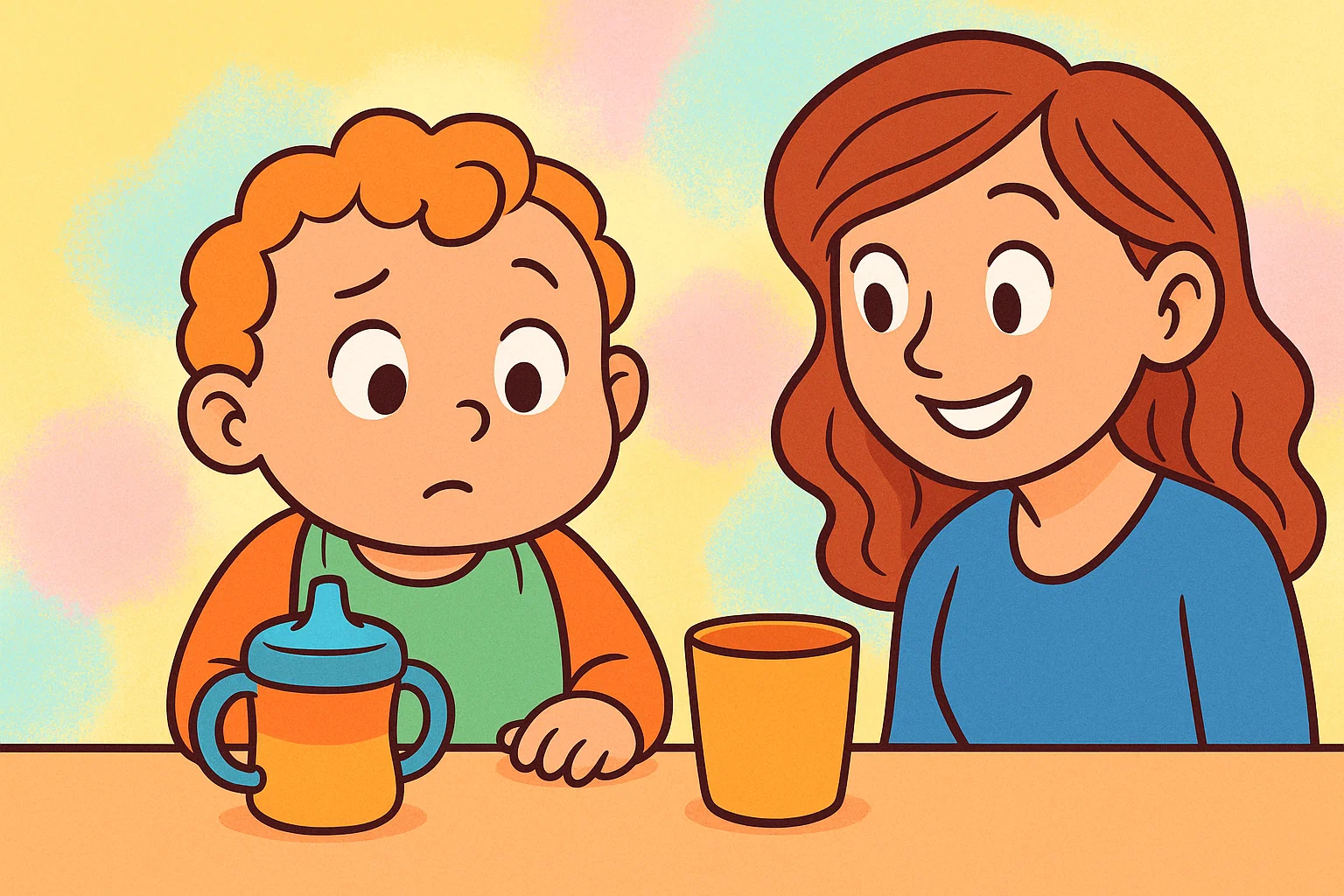
To transition your baby from a bottle to a cup, you need more than a new piece of drinkware. This move from a baby bottle to independent drinking is a developmental step that involves posture, hand control, oral motor skills, and daily routine. Many parents rely on bottles and sippy cups because they are convenient, but most children can begin learning with an open cup or straw cup around the time solids are introduced, often between 6 and 9 months of age.
A transition from bottle to cup does not mean every bottle disappears overnight. The goal is to introduce a cup for practice, reduce dependence on the baby bottle, and help your child gradually move toward drinking from an open vessel or regular drinkware at mealtimes.
Key Takeaways
- Readiness matters: A baby is developmentally ready when they can sit upright, show interest in adult drinkware, and handle small amounts of liquid safely.
- Timing is flexible: Many families start the transition around 6 to 9 months, then focus on bottle weaning between 12 and 18 months.
- Sippy options are temporary: Sippy cups should be used as short-term tools rather than permanent replacements for bottles.
- Open and straw options build skills: Learning to drink from open or straw drinkware supports more mature drinking patterns.
- Dental health matters: Constant sipping of milk or juice can increase the risk of tooth decay and affect baby teeth.
Main Readiness Signals
A child is often ready to transition when they can sit without support and show an active interest in what adults are drinking. Specific signs include a steady two-handed grip, the ability to bring a small drink to the mouth, and the capacity to take small sips without frequent coughing. If your child tries to grab your glass during meals, they may be ready to start the transition with supervised practice.
Helping your child learn this skill does not require perfection. Spills, dribbles, and brief refusal are normal. The early goal is to let your baby explore the motion of drinking, not to replace every bottle feeding on the first day.
Best Timing for Bottle Weaning

The transition from a bottle can begin around 6 months for practice, with the goal of gradually reducing bottles between 12 and 18 months. Some children are ready earlier, while others need more time because of motor delays, feeding challenges, or health needs. The months of age provide a general guideline, but your child’s readiness should guide the pace.
A transition from bottle is usually smoother when parents begin before the bottle becomes a strong comfort habit. Prolonged bottle use can increase the risk of cavities, poor eating patterns, and resistance to change. If your child is still using a bottle often after 18 months, it may be time to ask a pediatrician or dentist for guidance.
Smoothest First Step
The easiest first step is to offer a cup during scheduled meal or snack times when your child is seated upright. Start with a very small amount of water, breast milk, or formula. You can begin once a day and slowly build from there.
Using water during practice keeps cleanup simple and protects teeth better than letting a child sip sweet drinks throughout the day. Give your child time to touch, tilt, and explore the new item before expecting them to drink independently.
From Bottle or Breast to Independent Drinking
The journey from bottle feeding to independent drinking is part of a broader shift toward nutritional independence. For many families, moving from a bottle means introducing a straw design, trainer cup, or open vessel while continuing breastfeeding if desired. This progression gives the child practice with the tongue, lips, jaw, and hand-eye coordination needed for mature drinking skills.
If your child is still breastfeeding, you do not need to stop nursing in order to begin practice. The goal is not to force separation from the breast; it is to help the child gain another safe way to drink.
Why This Transition Matters
Moving away from prolonged bottle use helps protect baby teeth and may reduce the risk of tooth-alignment problems linked with extended bottle feeding. Prolonged bottle use can contribute to early childhood caries, sometimes called baby bottle tooth decay, when teeth are frequently exposed to milk, formula, juice, or other sugary liquids.
Learning to drink from an open cup also supports fine motor skills and hand-eye coordination. When babies learn to drink, they practice posture, timing, lip closure, and control over how much liquid enters the mouth.
Sippy Role During the Transition
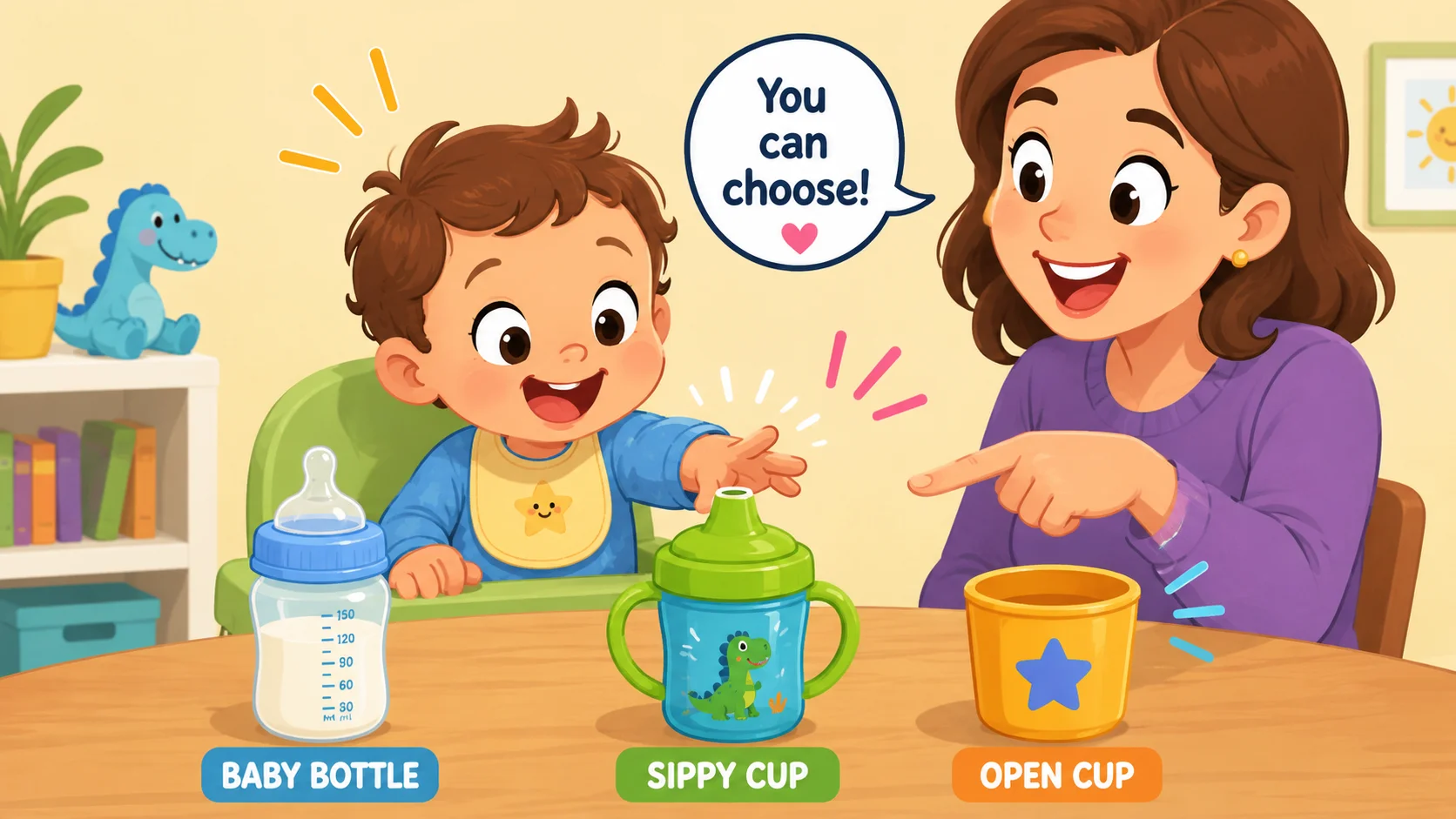
A sippy cup may be a helpful bridge for reducing spills, especially when you need a cup with a lid for travel, daycare, or the car. However, it is not a mandatory stage. Some parents move from a bottle to a sippy cup and then to open drinking, while others go straight from a bottle to a regular cup or straw design.
If you use a sippy cup, treat it as a short-term tool. A plastic sippy or trainer can be useful outside the home, but all-day use can reinforce bottle-like habits. The best approach is to use sippy cups selectively and keep open or straw practice as part of meals.
Difference Between Sippy, Straw, Training, and Open Options
Understanding the main drinking options helps parents choose the right cup for their child’s stage.
| Type | Primary Mechanism | Best Use Case |
| Sippy Cup | Spout-based design; valved no-spill versions often require sucking. | Short-term travel or mess prevention. |
| Straw Cup | Uses a straw to draw liquid upward. | Building lip seal and tongue control. |
| 360/Trainer | A rim-style or trainer design that allows sipping with less spilling. | Practicing table drinking with fewer messes. |
| Open Cup | A small child-size vessel with no lid. | Building independent drinking skills during meals. |
When a Child Should Move On
Knowing when to stop using a sippy cup is just as important as knowing when to start. Many children can move toward an open cup or regular cup during the second year of life, with the goal of drinking from regular drinkware by about age two. By this age, many children have enough motor control to handle small amounts of liquid under supervision.
This does not mean every child must stop on their second birthday. It means parents can begin moving away from the sippy stage before it becomes the only accepted way to drink.
Typical Age Window for Transition

Every child develops at their own pace, but the period between 12 and 24 months is a common window for moving away from bottles and sippy designs. Many children can drink from an open cup with minimal help by age two. If your child can sit upright, follow simple instructions, and manage small sips, they are likely ready for more practice.
When to Start Practice
You can introduce your baby to drinking from a small vessel as early as 6 months during solid food introduction. By offering an ounce or two of water, breast milk, or formula, you allow your child to explore the weight and feel of it. Daily practice, even for one minute, builds the muscle memory needed to eventually drink independently.
If your baby’s bottle routine depends heavily on comfort feeding, go slowly. Start by replacing one bottle at a calm daytime feeding rather than changing bedtime first.
When Sippy Use May Last Too Long
A lidded spout design can make it easy for children to keep sipping all day, reinforcing bottle-like habits. If your child refuses solid meals because they are constantly drinking from a lidded container, or if they require a lid for comfort at bedtime, it is likely time to start transitioning from a sippy cup.
Using a bottle or lidded spout design as a comfort object can interfere with healthy eating patterns. Drinks while walking, lying down, or falling asleep can make the habit harder to break.
Signs Your Child Is Ready to Move On
Parents should look for behavioral cues that show the child is ready for a big-kid drinking routine. These signs suggest that your child is developing the coordination needed to manage small amounts of liquid without relying on a valve or spout.
Steady Grip
Your child should be able to reach for and hold a small drink with both hands without dropping it right away. If they can lift it to their lips and tilt it with some control, they may be ready for a more advanced drinking option. A steady grip is a foundational motor skill that supports later table skills.
Safe Sipping Without Frequent Coughing
A major indicator of readiness is the ability to swallow liquid without choking. When babies learn to drink, they must coordinate breathing with swallowing. If your child can take small sips during a meal without frequent coughing or sputtering, their drinking coordination is improving.
Upright Sitting During Drinks
Safe drinking requires the child to be seated firmly and upright. If a child can maintain stable posture in a high chair or at a toddler table, they can practice more safely. Encourage drinks at the table rather than while lying down or walking around.
Interest in Grown-Up Drinkware
Toddlers are natural mimics. If your child constantly reaches for your glass or tries to copy an older sibling at the table, they may be showing social readiness to move on. Using this curiosity can make switching to a regular cup feel exciting instead of forced.
Better Spill Recovery
Readiness does not mean the child will never spill. It means they are becoming more aware of the liquid inside. A child who is ready to transition might look into the container to see how much is left or react when a small spill occurs. Open drinking involves learning how to manage the flow of liquid into the mouth.
Simple Instruction Following
If your child can follow basic directions like “sit down” or “two hands,” they can handle the rules of a big-kid drinking routine. It is easier to teach table rules when they can process simple verbal cues.
Why Sippy Cups Should Be Used With Care
While lidded drinkware is convenient for busy parents, it should be used with an understanding of its limitations. Over-reliance on these tools can lead to habits that are difficult to break later in childhood.
Tooth Decay Risk From Constant Sipping
When a child carries around milk or juice all day, their teeth may be exposed to sugar again and again. This repeated exposure can feed cavity-causing bacteria and increase the risk of tooth decay. To protect baby teeth, offer water between meals and serve milk with meals or snacks rather than letting your child sip it all day.
Oral Motor Habit Concerns
Traditional spouted designs require a suck-swallow pattern similar to using a bottle. Frequent use of valved spouts may reinforce sucking from a bottle rather than helping children practice more mature drinking skills. Transitioning from a valved design to a straw option, open option, or regular drinkware gives children more practice with lip closure, tongue movement, and controlled sipping.
Speech and Mouth Development Considerations
Drinking, chewing, and early speech all involve coordinated movement of the lips, tongue, and jaw. A child who spends much of the day sucking on a bottle or hard spout may get fewer opportunities to practice the mouth movements used for mature drinking. Persistent speech or feeding concerns should be discussed with a pediatrician or speech-language pathologist.
Independence and Mealtime Routine
Learning to drink from regular drinkware fosters a sense of accomplishment. It moves the child toward being a full participant in family meals. When you give your baby a small open drinking option, you are trusting them with a new responsibility, which builds confidence and social skills.
Choosing a Cup for the Next Stage
Choosing a cup is easier when you focus on your child’s current skill level and where the drinkware will be used. The right cup for home practice may be small and open, while the best travel choice may be a straw or spill-resistant design. The best option is the one that helps your child practice safely without turning drinking into an all-day habit.
Open Option
The open design is often considered the gold standard for oral development. It teaches the child to judge distance, control hand movements, and drink without relying on a spout or valve. A small, 2- to 4-ounce child-size vessel made of durable, BPA-free plastic or silicone is often easiest for small hands to grasp.
Straw Option
A straw design is an excellent middle ground. It is more portable than open drinkware but better for oral development than many hard-spout designs. Drinking from a straw helps build cheek strength and encourages a more mature tongue position for swallowing.
Training Option
A trainer can work well during the in-between stage, when a child has the grip but has not yet mastered the tilt-and-sip motion. Look for simple designs that are easy to clean and do not require intense sucking.
Options to Limit
Parents may want to limit the use of the following:
- Hard-spout sippy designs with no-spill valves that require sucking rather than sipping.
- Baby bottles used after 18 months of age.
- Any drinking item that the child uses as a security object for sleep.
Drinks for Toddlers After the Sippy Stage
As you make the transition, what goes inside the drinkware is just as important as the design itself. Establishing healthy hydration habits early sets the stage for a lifetime of wellness.
Water
Water is the best everyday drink for hydration. It contains no sugar, does not cause tooth decay, and makes cleanup easier when practice leads to the inevitable spill.
Milk
Once a child is 12 months old, many children can transition to plain cow’s milk, unless a pediatrician recommends otherwise. Milk is best served with meals or snacks rather than carried around all day.
Breast Milk or Formula During Transition
If your child is still bottle-feeding or breastfeeding, you can still introduce open or straw drinking. Many parents find success by replacing one bottle at a time with a small serving of expressed breast milk or formula during the day, while keeping the bedtime bottle as the last one to phase out.
Juice and Smoothies
For children ages 1 to 3, juice should be limited and served with a meal or snack, not sipped throughout the day. Because juice contains natural sugars, frequent or prolonged sipping can increase the risk of tooth decay.
How to Make the Transition Smooth
The transition from a bottle or sippy design does not have to happen overnight. A gradual, positive approach is often the most successful.
Introduce the New Habit Slowly
Start by offering a small drink once a day, perhaps during lunch or another calm meal. Do not worry if they only take one sip and then want their bottle; the goal is familiarity, not immediate mastery.
Let Your Baby Copy You
Toddlers love to do what adults do. Drink from your own glass and exaggerate the “ahhh” sound after a sip. This makes the new skill look fun and rewarding.
Replace One Bottle at a Time
Instead of going cold turkey, try replacing one bottle or one sippy session every few days. The midday feeding is often the easiest to change, while morning and bedtime bottles are often the most emotionally significant and may be addressed last.
Use Praise and Encouragement
Celebrate the small wins. If they hold a small drink correctly, say, “I love how you’re using two hands!” Positive reinforcement reduces the power struggle that can sometimes occur during bottle weaning.
Keep Bedtime Drinks Separate
To prevent tooth decay, move the final drink of the day away from the actual falling-asleep moment. Give your child milk before brushing their teeth, then continue with the rest of the bedtime routine. This helps break the association between sucking on a bottle and sleep.
Dos and Don’ts
| Do | Don’t |
| Do offer supervised practice during mealtimes. | Don’t let a child walk around with a lidded drink all day. |
| Do use very small amounts of liquid to limit messes. | Don’t put juice or soda in a bottle or spouted design for frequent sipping. |
| Do model how to drink from regular drinkware. | Don’t force the change if the child is sick or stressed. |
| Do consider a straw design for travel. | Don’t use drinkware as a pacifier or comfort object. |
Common Challenges and Solutions
Spills and Messes
Spills are a normal part of learning to drink. To manage the mess, use a splash mat under the high chair or practice with small amounts of water on an easy-to-clean surface. Using water ensures that the mess is not sticky.
Resistance to Change
If your child is ready to transition but resistant, let them choose a special mealtime design. A favorite color or pattern can make the change feel more exciting and less forced.
Difficulty With Grip
If regular drinkware is too heavy, look for a lightweight trainer with handles. This allows your child to focus on the tilting motion without struggling to hold the drink.
When to Ask a Pediatrician or Dentist

While most children make the transition smoothly, some may require professional guidance. If you have concerns about your child’s progress, do not hesitate to consult an expert.
Frequent Coughing or Choking
If your child consistently gags, coughs, or chokes when drinking from a lidded trainer, straw design, or open vessel, it may indicate a feeding or swallowing coordination issue. A pediatrician can check for underlying medical, developmental, or feeding-related concerns.
Dental Concerns

If you notice white or brown spots on your child’s baby teeth, or if your child has continued bottle use beyond the recommended weaning window, a pediatric dentist can evaluate their oral health and suggest a prevention plan.
FAQ
What Should Parents Know About Sippy Cups?
The main thing to know about sippy cups is that they are best used as temporary training tools. Different types of sippy cups work differently: hard spouts, soft spouts, straw designs, 360-style lids, and trainers all support different skills. If your child tends to drink from a sippy all day, it may be time to reduce access and return drinks to mealtimes.
Should Parents Move From a Bottle to a Sippy Cup or Straight to Open Drinking?
Either can work. Some families prefer a bottle to sippy cup because it reduces spills, while others skip that stage and move from bottle to a regular cup with supervision. If your child resists, one bottle at a time is usually easier than trying to move away from the bottle all at once.
Is It Better to Use a Sippy Cup or a Straw Cup?
A straw design is often a better everyday choice than a hard-spout design because it encourages lip closure and tongue control. You can still use a sippy cup occasionally for travel, but it should not replace regular mealtime practice.
Can a Child Drink From a Bottle and Still Practice With Other Drinkware?
Yes. A child may still drink from a bottle while learning new skills. The goal is gradual progress, not an instant switch. As confidence grows, you can reduce bottles and increase supervised practice.
Is a Sippy Cup Bad for Teeth?
A sippy cup can increase the risk of tooth decay if it is used for frequent sipping of milk, juice, or other sugary drinks. Occasional use for water is generally safe.
Can My Child Drink Milk From an Open Cup?
Yes. Once they have practiced with water, you can give your child small amounts of milk in an open cup during meals.
Take a short quiz to find out what your everyday choices say about your parenting style
When your child is curious about something new, what’s your instinct?
Take a short quiz to find out what your everyday choices say about your parenting style
“Can I download this app?” What happens next?
Take a short quiz to find out what your everyday choices say about your parenting style
When it comes to rules at home, which sounds most like you?
Take a short quiz to find out what your everyday choices say about your parenting style
If you could give your child one life skill today, what would you pick?
Take a short quiz to find out what your everyday choices say about your parenting style
Your child gets to choose what to watch. What would your ideal setup look like?
Take a short quiz to find out what your everyday choices say about your parenting style
Pick your parenting superpower ✨