Comparing Reading Eggs and Nessy: Which is Better for Your Child’s Literacy Journey

 Discover a Free Education Video App for Kids
Pastory uses AI to personalize educational video content based on your child’s interests and personality. Safe, engaging, and built for curious young minds. Sign up now to stay updated and enjoy early access with a free trial
Choosing the right digital educator is one of the most significant decisions you’ll make in your little one’s early education. With the rise of digital tools, two names consistently top the charts: Reading Eggs and Nessy. While both platforms aim to help children master letters and sounds, they cater to different educational needs. One is a broad, gamified universe designed to spark a lifelong love of books, while the other is a specialized, science of reading-based tool frequently recommended for kids with dyslexia.
In this guide, we will compare these two heavyweights to help you decide which literacy and spelling program is the right fit for your child. We’ll break down their methodologies, comprehension strategies, and pricing to ensure your learning journey starts on the right foot. We aim to provide a neutral, deep dive into how these platforms function in a real-world home or classroom setting, ensuring you have the data needed to teach your child to read effectively.
Overview of Reading Eggs and Nessy
What are Reading Eggs and Nessy?
Reading Eggs is one of the most comprehensive digital platforms available today, designed for a wide age range, typically from 2 to 13 years old. It is an all-in-one educational solution that employs a systematic and engaging approach. The reading eggs app is famous for its vibrant animations, “eggs” currency, and a vast library of digital stories that keep children learning through play. It covers everything from initial letter recognition to advanced text analysis.
Nessy, specifically Nessy Reading and Spelling, takes a more clinical yet playful approach. Developed by specialists at the Bristol Dyslexia Centre, it is a structured literacy platform based on synthetic phonics and the Orton-Gillingham manual. While it’s a fantastic way to teach any child to learn to decode, it is designed specifically for children who face learning difficulties, particularly those diagnosed with dyslexia. It moves away from flashy distractions and focuses on the core mechanics of how our brains process language.
| Feature | Reading Eggs | Nessy |
| Primary Focus | General literacy & fluency | Dyslexia & struggling reader support |
| Age Range | 2–13 years | 6–11 years (can be used by older) |
| Methodology | Systematic phonics + Sight words | Explicit phonics (Orton-Gillingham) |
| Engagement | High (Games, Avatars, Rewards) | Moderate (Game-based but structured) |
Key Features of Reading Eggs
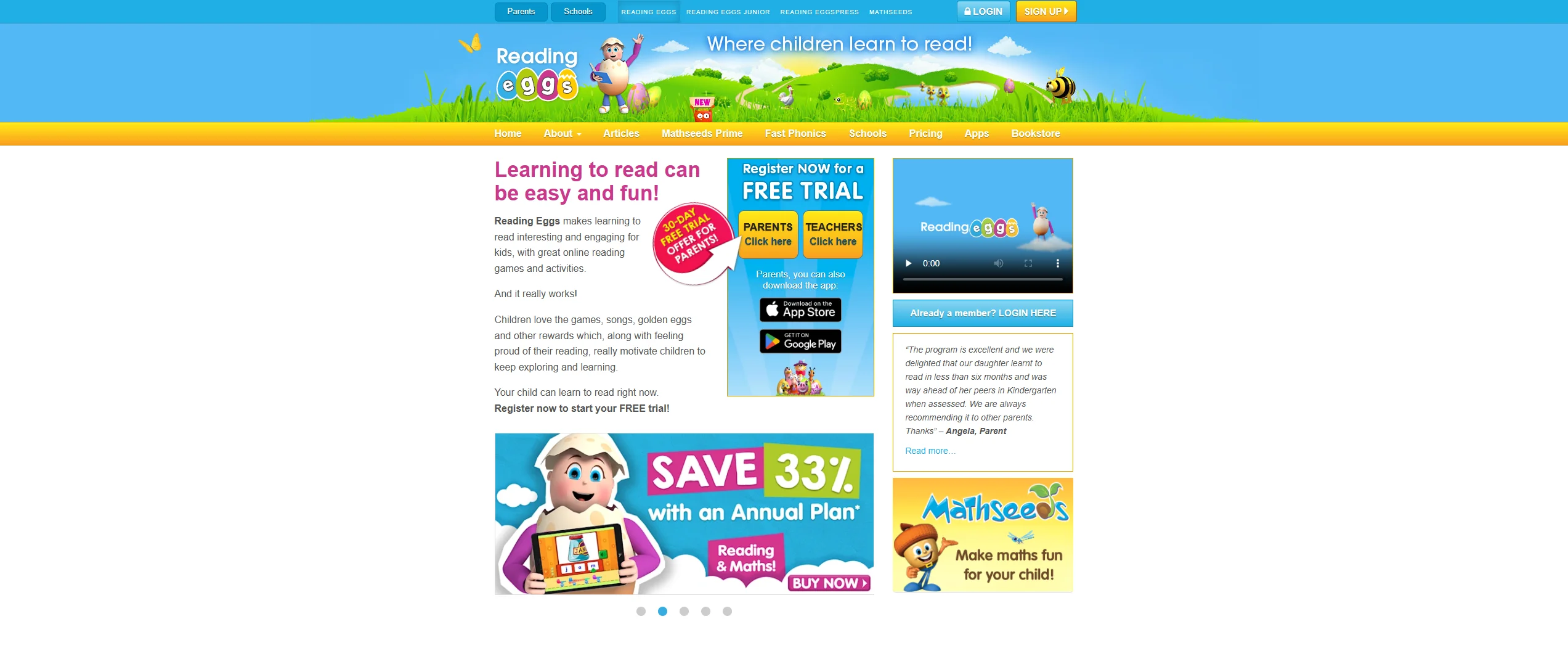
The program is designed for children who respond well to immediate positive reinforcement. Reading Eggs uses a map-based progression that makes every lesson feel like a level in a video game.
- Placement Test: To ensure effective learning, the app starts with a diagnostic test.
- Five Pillars of Literacy: It covers phonemic awareness, phonics, fluency, vocabulary, and comprehension.
- Fast Phonics: A specific section focused on synthetic phonics instruction, perfect for building early reading skills.
- Progress Tracking: Detailed reports show the child’s progress, highlighting specific phonics skills mastered.
- Library: Access to over 3,500 e-books, ensuring that as children learn, they always have fresh material.
- Variety of Interactive Tasks: From matching games to sentence building, the variety of interactive content prevents boredom.
Key Features of Nessy
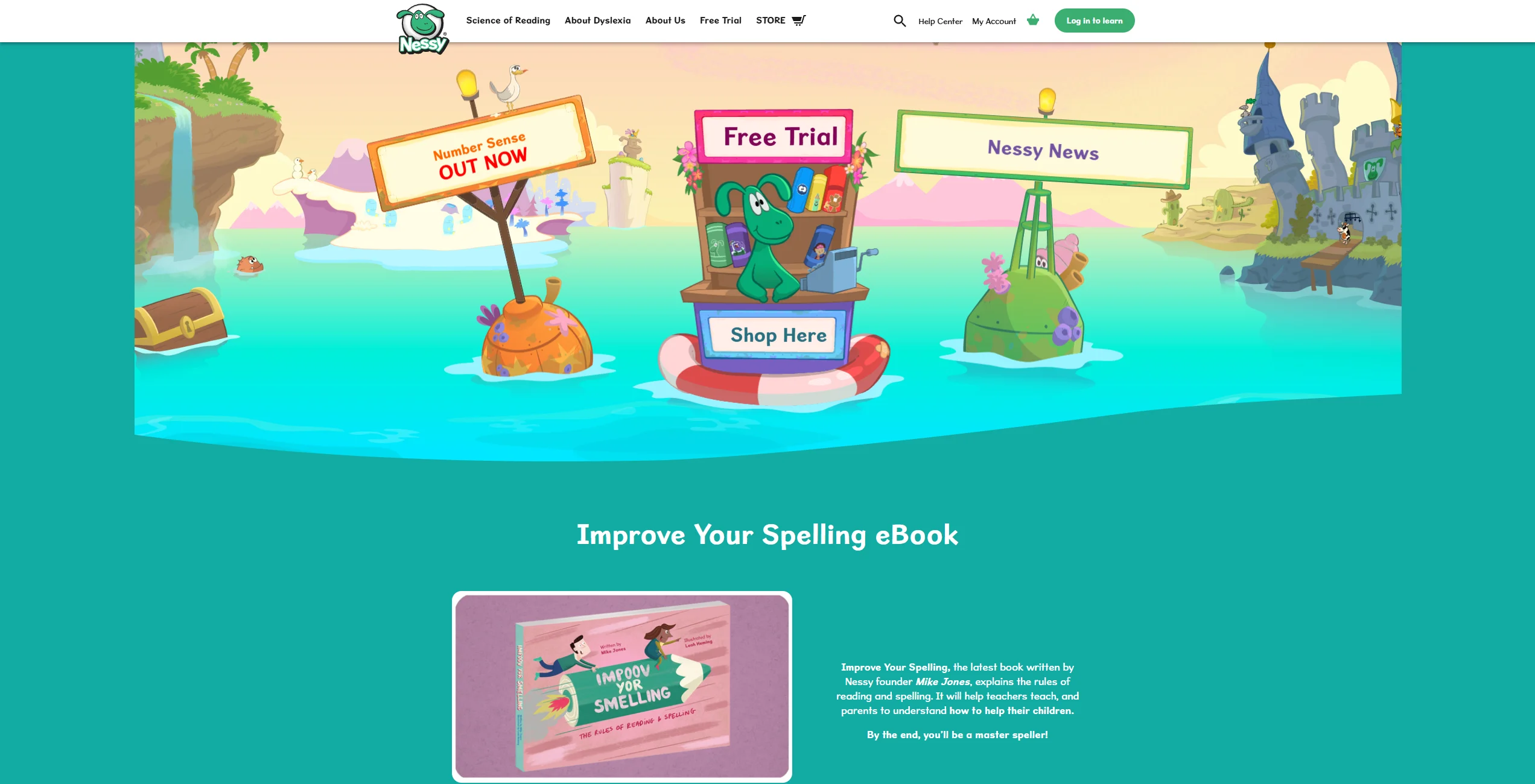
Nessy doesn’t just teach children to decode words; it teaches them the underlying principles of English. This reading and spelling program is a deeply based instructional tool that excels in phonics instruction.
- The Nessy Challenge: Instead of a standard test, kids take a “challenge” that identifies specific gaps in their knowledge of sounds and rules.
- Multisensory Approach: Nessy uses a combination of visual, auditory, and kinesthetic triggers.
- Nessy Nuggets: A reward system where kids collect nuggets to play mini-games.
- Printable Worksheets: Unlike many apps, Nessy provides thousands of printable worksheets to reinforce lessons off-screen.
- Explicit Phonics: The phonics curriculum is logically sequenced to ensure no child is left behind.
Age Appropriateness of Reading Eggs vs. Nessy
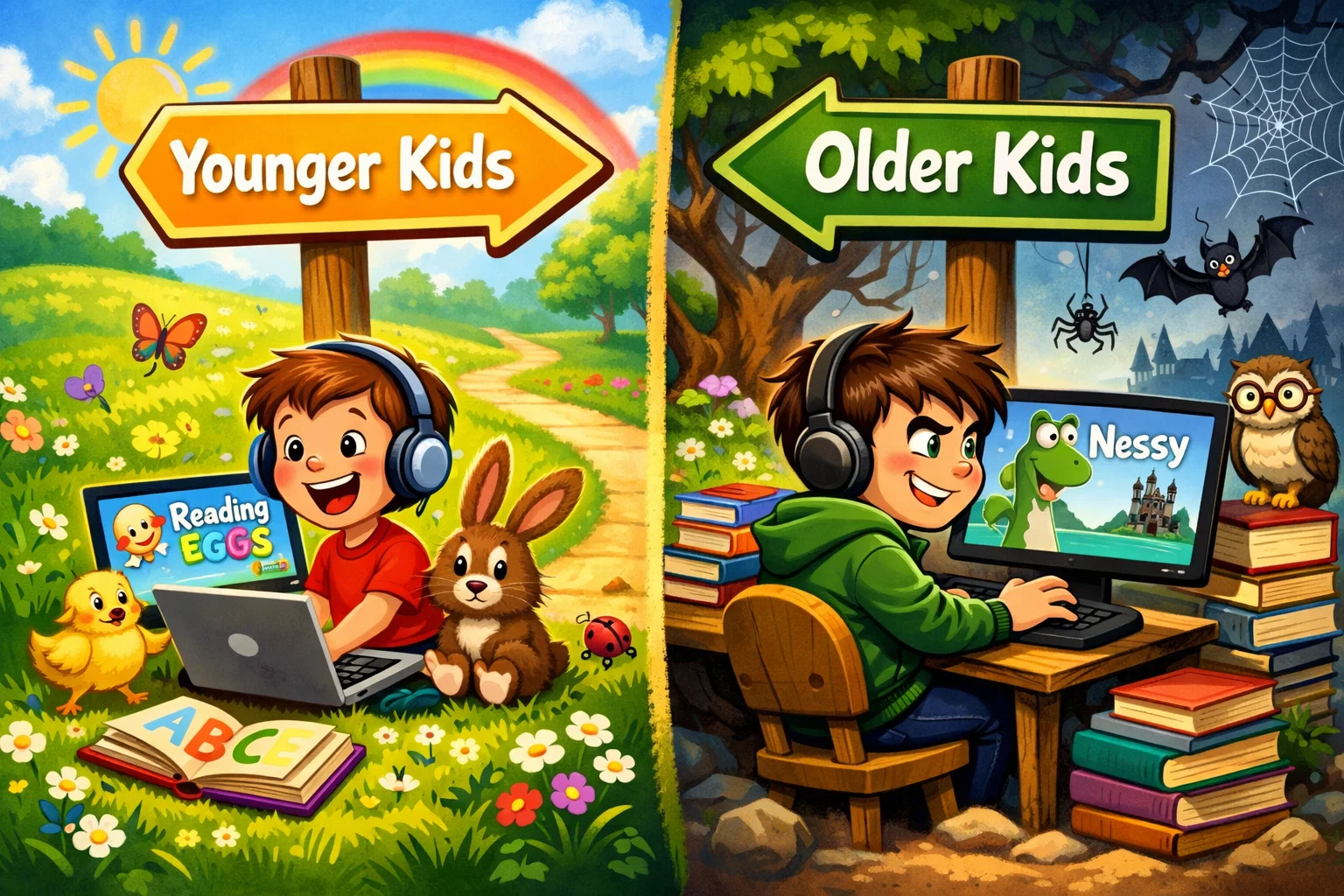
Best Age Range for Reading Eggs
The reading eggs app is the king of longevity. It is divided into three distinct stages to grow with the user, ensuring that the child will learn at a pace suited to their development:
- Junior (Ages 2–4): Focuses on early literacy and letter recognition for toddlers.
- Core (Ages 3–7): The main reading program covering basic sounds and sight words.
- Eggspress (Ages 7–13): Focuses on advanced comprehension and vocabulary for an older child.
Best Age Range for Nessy
Nessy Reading and Spelling is specifically designed for children aged 6 to 11. However, because its tone is slightly more “quirky” than “cute,” it is often a better choice for older students who are struggling. It avoids the “nursery rhyme” feel that can sometimes frustrate a 10-year-old who is still working on early skills.
Learning Approach and Methodologies
How Reading Eggs Supports Early Literacy
The reading eggs app uses a comprehensive approach, combining systematic phonics, sight word recognition, and additional strategies for text analysis, interactive games, and book engagement. It also includes Fast Phonics, a specific section dedicated to phonics. This helps a child learn to read quickly by giving them the tools to recognize high-frequency words. This ‘hybrid’ model makes reading accessible from the very first lesson, encouraging children to read more regularly.
How Nessy Supports Dyslexic Learners
Nessy follows the Science of Reading strictly. It utilizes explicit phonics, meaning nothing is left to chance. For kids with dyslexia, the phonemic awareness activities are broken down into the smallest possible units. This systematic approach ensures that the process of learning is cumulative and reduces the anxiety often felt by a struggling reader.
Comparing Pricing and Subscription Plans
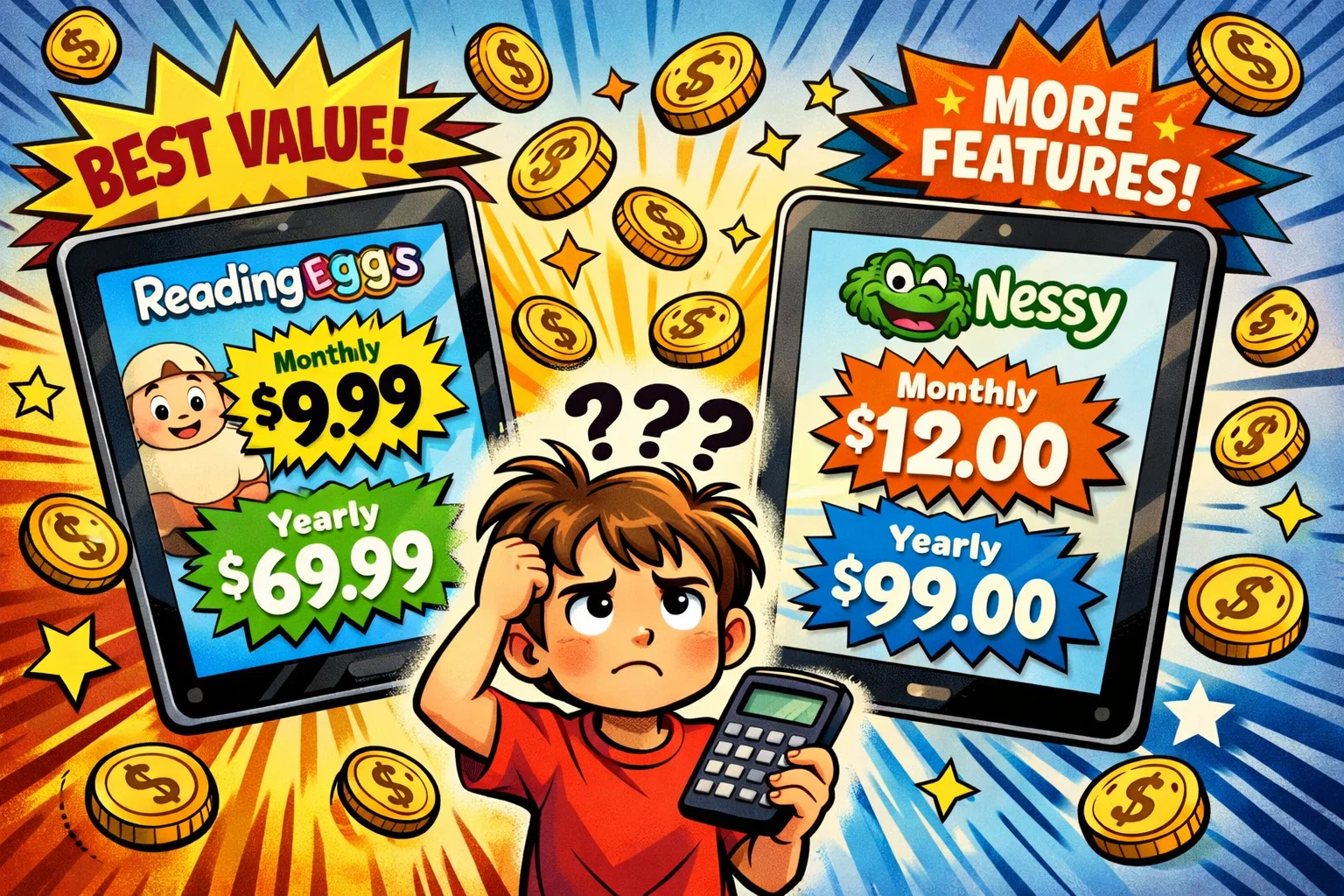
How Much Does Reading Eggs Cost?
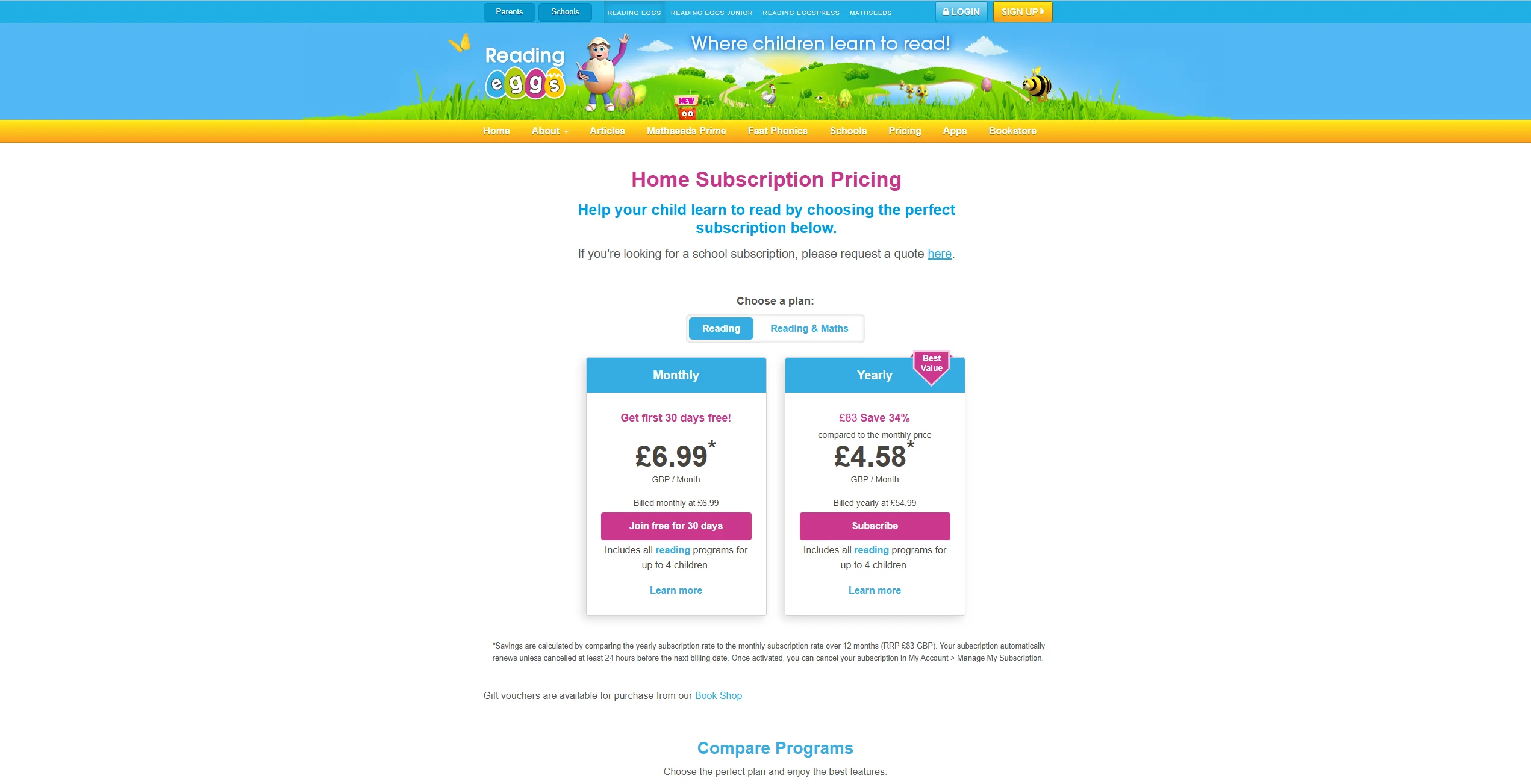
Reading Eggs is generally considered very affordable. They frequently offer a 30-day free trial or a free trial period to let you try the program before committing.
- Monthly Plan: Approximately $9.99 per month.
- Yearly Plan: Around $69.99.
- Family Value: Most plans allow for up to 4 children to use the account, making it great for parents and teachers with multiple students.
How Much Does Nessy Cost?
Nessy is typically more expensive because it is a specialized intervention tool.
- Individual Subscription: Nessy starts at $15.50/month, with an annual plan costing around $110–$126/year, which is cheaper per month.
- Free Trial: They typically offer a 7-day free trial, shorter than that of its competitor.
- Value for Money: While higher in cost, its focus on spelling skills and learning difficulties provides unique value.
Pros and Cons of Reading Eggs
Benefits of Using Reading Eggs
- Highly Engaging: The “gamification” is top-tier.
- Comprehensive: Covers everything from the alphabet to 6th-grade tasks.
- Mobile Friendly: The reading eggs app works seamlessly on tablets.
- Accessibility: It is easy for children to use independently with minimal supervision.
Limitations of Reading Eggs
- Pacing: Some children learn to click through the games to get rewards without absorbing the content.
- Less Specialized: Reading eggs doesn’t always offer the deep, multisensory intervention needed for severe dyslexic needs.
Pros and Cons of Nessy
Benefits of Using Nessy
- Research-Based: It is one of the most trusted names for children with learning differences.
- Focus on Spelling: Excellent for those who can decode but struggle to read and spell correctly.
- Humor: The videos are genuinely funny and help make learning less stressful.
Limitations of Nessy
- Interface: The interface can feel a bit dated.
- Cost: The higher price point may be a barrier for some.
- Specific Focus: The program is designed for a specific niche, which might not appeal to general learners.
User Feedback and Reviews
What Parents Like About Reading Eggs
Many parents report that Reading Eggs is the multi-award winning choice that finally got their child interested in their first books. Some parents report that their children experience significant improvement in reading levels after using Reading Eggs, with many expressing enthusiasm about the program’s effectiveness in fostering early literacy skills
Parents appreciate the printable worksheets that provide ‘quiet time’ away from the screen.
What Parents Like About Nessy
Parents of dyslexic children often call Nessy a lifesaver. Many parents of children with dyslexia have reported positive outcomes with Nessy, particularly in helping children understand that their learning difficulties are not a reflection of their abilities but rather a different learning style that can be addressed through targeted phonics instruction
Reviews often mention that the Nessy program provides the explicit phonics instruction that schools sometimes miss.
The Role of Parents and Teachers in Literacy
Choosing the best program is only the first step. For any online reading program to be effective, consistent use is key. Experts suggest that parents and teachers should:
- Set aside 15–20 minutes a day for the selected reading curriculum.
- Use the printable worksheets to bridge the gap between screen time and paper.
- Monitor the child’s learning through the provided dashboards to help your child learn where they struggle.
Teaching your child to read equips them with a lifelong tool. Whether you use the reading eggs online platform or the Nessy approach, the goal is to foster a love of reading that lasts a lifetime.
Alternatives to Reading Eggs and Nessy
Teach Your Monster to Read
This is a fantastic alternative that helps children to read through a series of magical quests. Teach Your Monster focuses heavily on the initial process of learning to decode and is incredibly fun and engaging.
Hooked on Phonics
A household name for decades, Hooked on Phonics now offers a digital platform that combines physical books with an app. It is a very systematic way to teach your child if you prefer a mix of digital and physical media.
Read with Phonics
Another great tool is Read with Phonics, which is designed to teach through simple digital games. It focuses on synthetic phonics and is a great supplement for early reading skills.
Frequently Asked Questions
Are Reading Eggs and Nessy suitable for preschoolers?
Reading Eggs is well-suited for preschoolers through its ‘Junior’ module. It is designed for children to start as early as age 2. Nessy is better suited for children who have already started school and need a more systematic phonics intervention.
Can these apps be used for children with Special Educational Needs (SEN)?
Yes, both are used by parents and teachers for SEN. However, Nessy is designed specifically for children with dyslexia. It provides the explicit phonics instruction that is crucial for those with learning difficulties.
How do these apps compare in terms of engagement?
Reading Eggs is the more “explosive” app with more rewards. Nessy is engaging through its humor and quirky characters. Both are a great way to teach, but the best fit for your child depends on their personality and whether they need a general literacy boost or specialized dyslexic support.
Take a short quiz to find out what your everyday choices say about your parenting style
When your child is curious about something new, what’s your instinct?
Take a short quiz to find out what your everyday choices say about your parenting style
“Can I download this app?” What happens next?
Take a short quiz to find out what your everyday choices say about your parenting style
When it comes to rules at home, which sounds most like you?
Take a short quiz to find out what your everyday choices say about your parenting style
If you could give your child one life skill today, what would you pick?
Take a short quiz to find out what your everyday choices say about your parenting style
Your child gets to choose what to watch. What would your ideal setup look like?
Take a short quiz to find out what your everyday choices say about your parenting style
Pick your parenting superpower ✨