Various Sensory Activities for Kids

 Discover a Free Education Video App for Kids
Pastory uses AI to personalize educational video content based on your child’s interests and personality. Safe, engaging, and built for curious young minds. Sign up now to stay updated and enjoy early access with a free trial
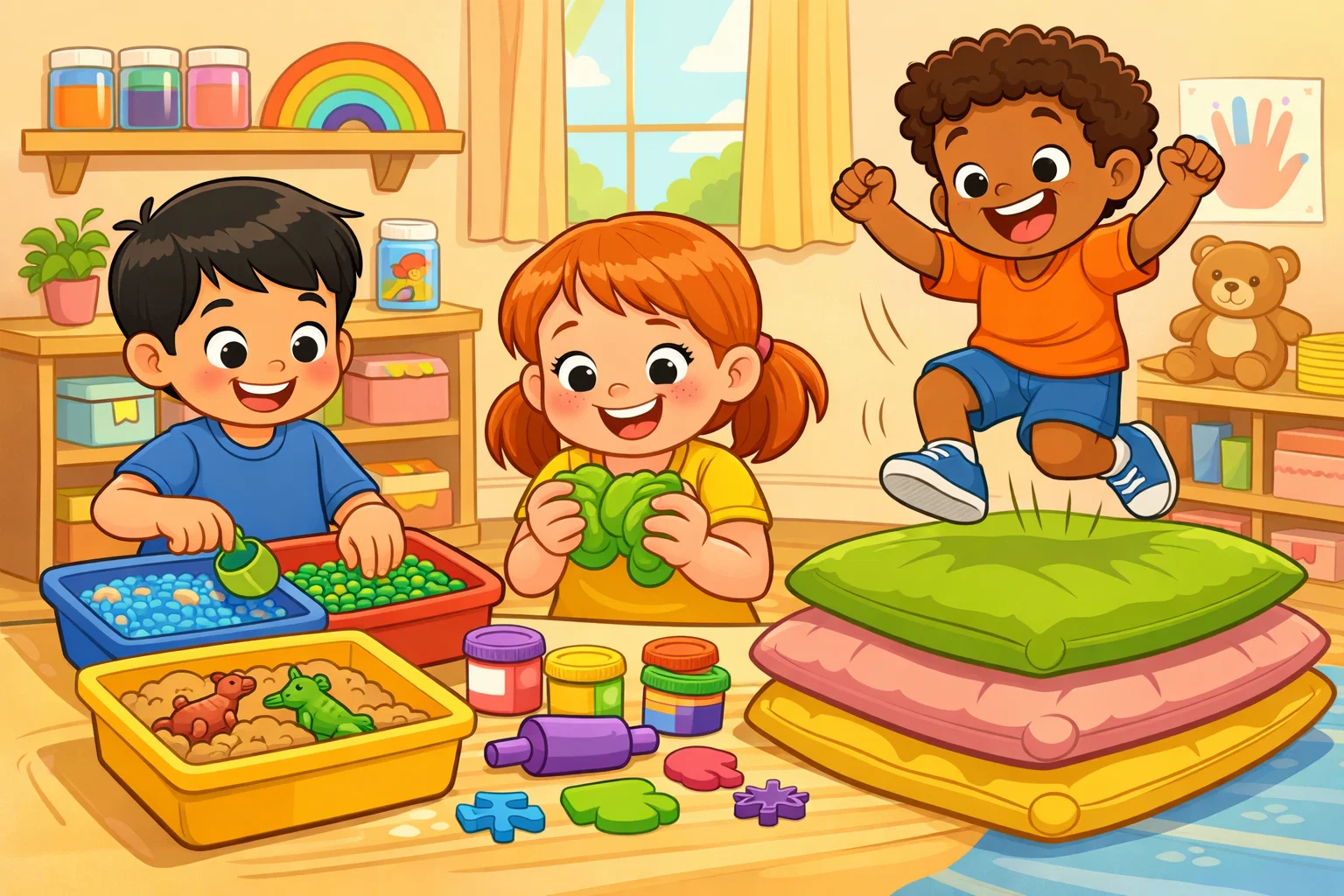
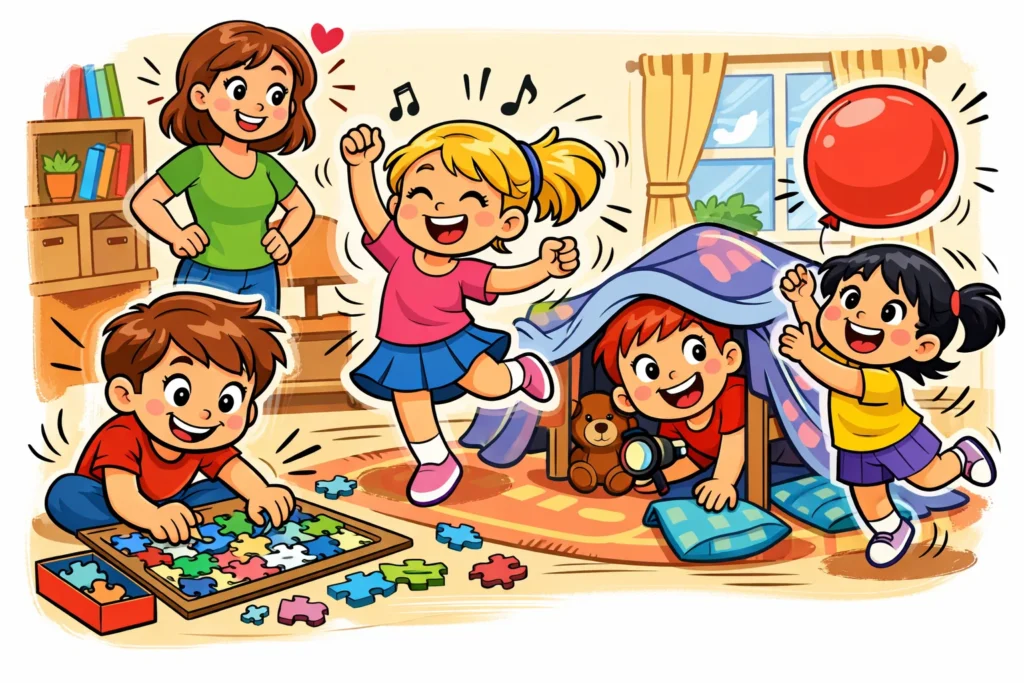
Sensory activities help children explore touch, sound, sight, movement, smell, taste, and body awareness through play. Activities that engage tactile, visual, auditory, olfactory, and movement-based sensory systems can support children’s early learning and development. This guide includes simple home ideas, classroom-friendly options, calming activities, messy play, edible activities, seasonal bins, DIY sensory toys, and safety tips for creating age-appropriate sensory experiences.
Key Takeaways
- Developmental Growth: Sensory play supports cognitive learning, fine and gross motor skills, emotional regulation, and social interaction.
- Versatile Environments: These ideas work in both home and classroom settings and use common sensory materials like rice, bubble wrap, and shaving cream.
- Safety First: Adult supervision and age-appropriate adjustments help keep sensory play safe and enjoyable for young children.
- Personalized Support: Adjusting sensory activities to a child’s preferences and needs can make play more comfortable, engaging, and beneficial.
Quick Skill Benefits
Fine motor skills can develop as young children grasp, squeeze, and manipulate safe, age-appropriate objects. Early brain connections strengthen through repeated use, and hands-on play can be one way children learn from their environment.
Some children may find it easier to focus after short, well-matched sensory activities that give their bodies the input they need. This type of focused play may help children settle into a more organized state, which can support problem-solving and creative play.
Children’s language skills can grow as they explore and describe different textures, sounds, smells, and other sensory properties. Introducing descriptive vocabulary during activities helps children link words to real-world physical sensations.
Emotional regulation can be supported by rhythmic, repetitive sensory activities, such as pouring water during play or molding play dough. These predictable patterns can provide calming feedback and may help some children feel more settled.
Best Sensory Activity Types
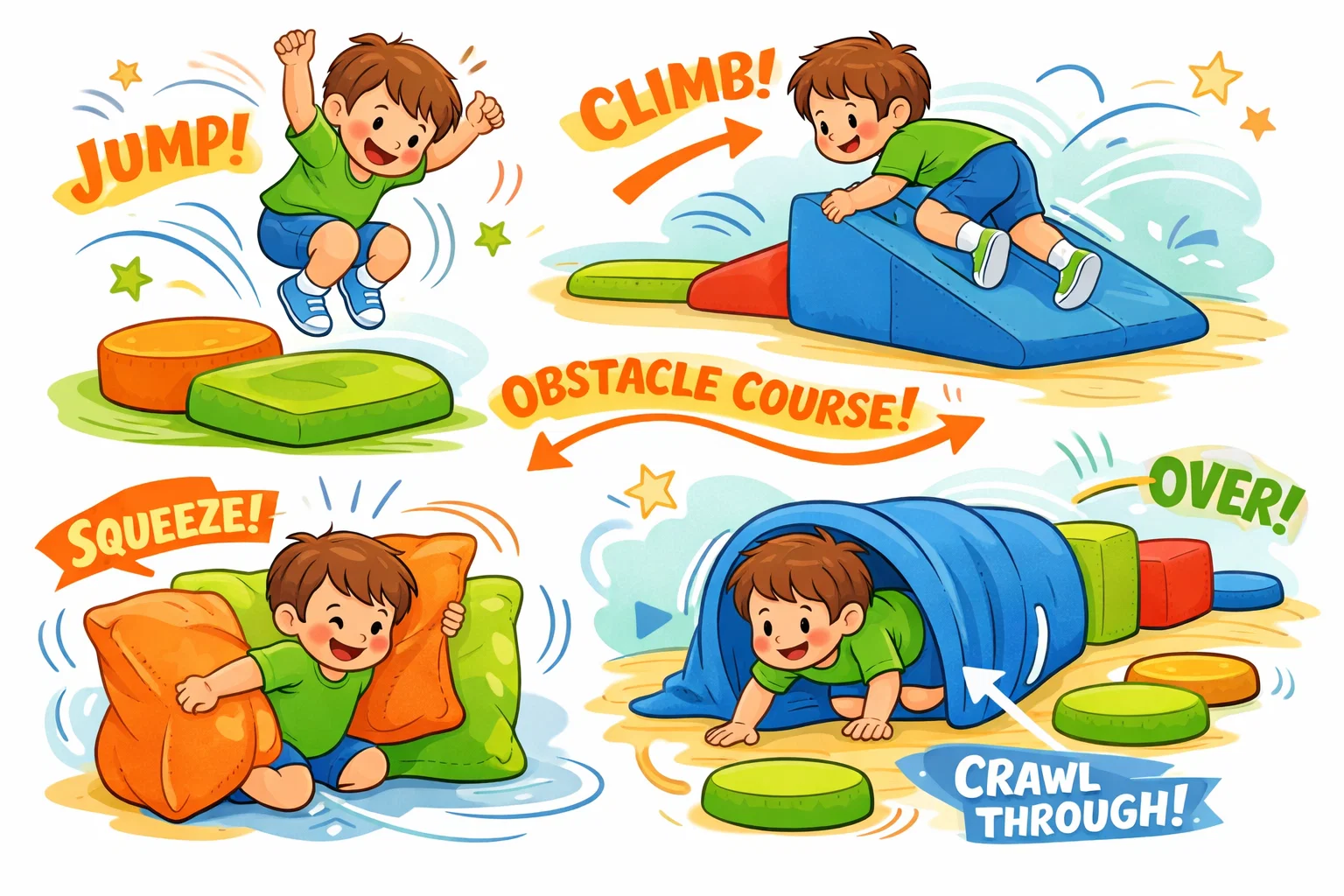
Tactile play focuses on touch and uses materials such as slime, play dough, sand, fabric, and water. This type of play helps children notice differences in temperature, texture, resistance, and consistency.
Sensory bins use a container filled with base materials such as rainbow rice, oats, pasta, or dried beans. A themed sensory bin creates a miniature world that encourages sorting, counting, and imaginative role-play.
Movement breaks and heavy-work activities can engage the vestibular and proprioceptive systems, helping children become more aware of their bodies in space. Activities like carrying weighted objects or crawling through obstacle courses deliver deep muscle feedback.
Auditory and nature-based play can include sound-matching games, simple musical instruments, and outdoor exploration to build listening and observation skills. Exploring sensory inputs in natural environments connects children to real-world ecosystems.
Simple Home Setup
Setting up sensory play at home does not have to be expensive, because many activities use everyday household items. Plastic storage containers, baking sheets, spoons, and cups work well for containing materials, scooping, pouring, and mixing.
Pantry staples like uncooked pasta, dry rice, flour, and oats provide affordable bases for a sensory table. Parents can add different textures by collecting clean recyclables or household items such as cardboard tubes, bubble wrap, and large plastic lids.
| Sensory Base | Common Household Tool | Primary Skill Targeted |
| Uncooked rice | Measuring cups | Pouring and volume concepts |
| Shaving cream | Plastic baking sheet | Finger strength and control |
| Warm water | Kitchen whisk | Bilateral coordination |
Safety First
Supervision remains the primary safety rule for all sensory play with kids, especially infants and toddlers who naturally explore objects orally. For children under three, avoid small parts that could fit entirely into a small-parts test cylinder; at home, a toilet paper roll can be used only as a rough safety check, not as an official test.
Check for allergies before using food-based materials such as peanut butter, wheat flour, dairy products, or any ingredient a child may touch or taste. For children who still explore with their mouths, non-toxic and taste-safe materials are usually the safest choice.
Basic safety precautions can help prevent slips, spills, and other accidents during messy or water-based sensory play. Placing large towels or plastic tarps beneath a sensory table catches spills and keeps floors from becoming dangerously slippery.
What Is Sensory Play?
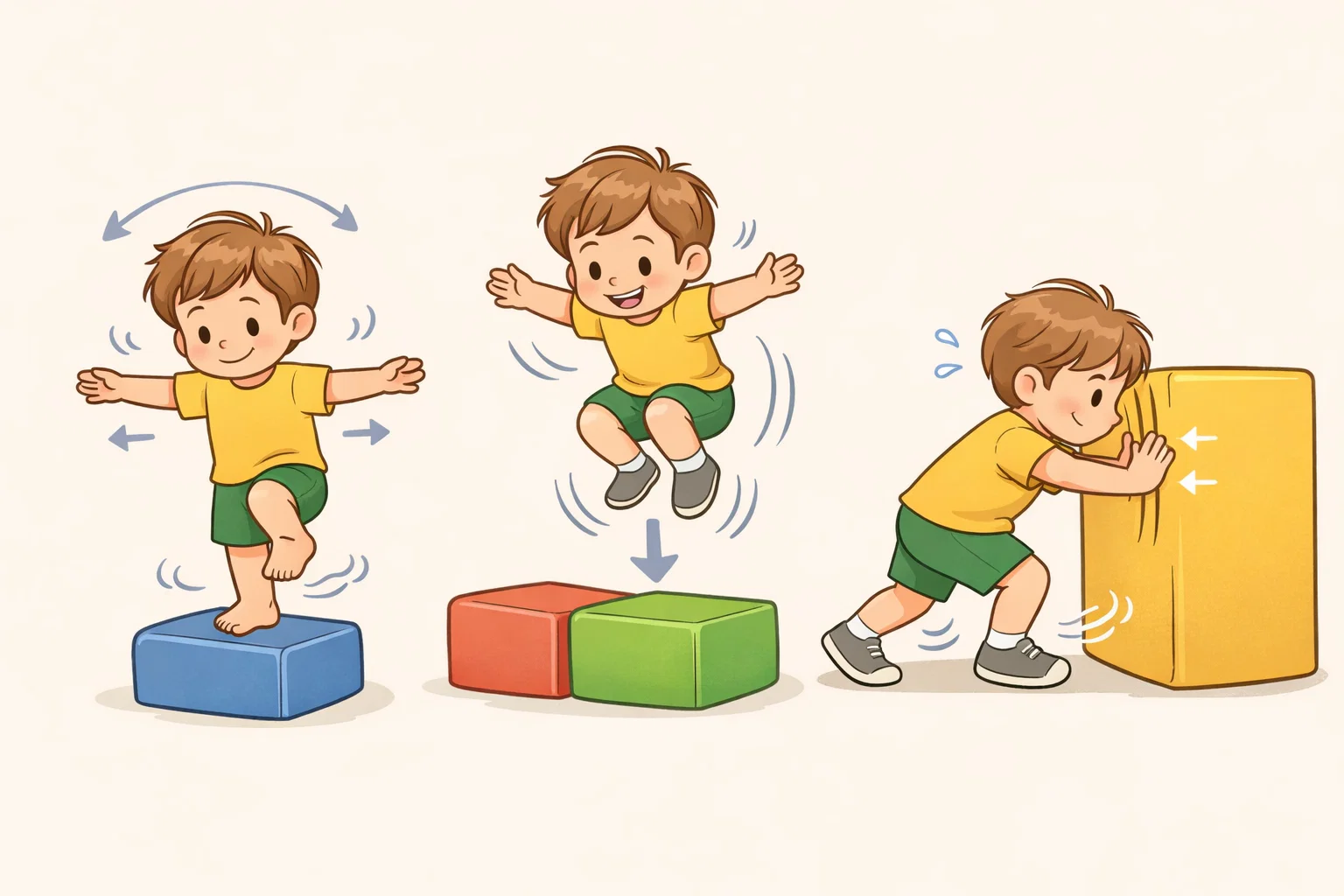
Sensory play is important for young children because it gives them hands-on ways to explore sights, sounds, textures, smells, movement, balance, and body awareness. By engaging the senses of sight, sound, smell, taste, touch, balance, and spatial orientation, these experiences actively help children learn about the physical world.
Sensory Play Definition
Sensory play usually refers to open-ended, child-led exploration that engages one or more sensory systems. Early childhood educators often describe this type of play as a hands-on process where exploration matters more than the final product.
Examples of sensory play include squeezing non-toxic slime, sorting colorful pom-poms into muffin tins, shaking homemade sound bottles, and feeling different textures like cold ice or warm sand. These basic actions support sensory processing and can build a foundation for more complex cognitive tasks later in life.
Sensory Activities vs. Sensory Play
Sensory play is typically unstructured, open-ended, and driven by the child’s spontaneous choices and interests. In contrast, sensory activities are often more structured and may be designed by adults to support specific learning, motor, or regulation goals.
| Feature | Sensory Play (Child-Led) | Sensory Activity (Adult-Led) |
| Primary objective | Exploration and discovery | Skill building and goal practice |
| Structure level | Unstructured and open-ended | Organized and goal-oriented |
| Adult involvement | Passive observer | Active facilitator |
| Outcome expectation | No specific goal required | Defined task completion |
Sensory Play All Day
Adding sensory experiences to everyday routines can support development without requiring a special setup every time. Bath time can be a natural opportunity for water play, allowing children to pour, splash, and watch floating toys move.
Meal preparation offers natural opportunities for sensory exploration, such as smelling spices, washing vegetables, kneading dough, and tasting safe ingredients. Outdoor walks turn into sensory experiences when children cross uneven terrain, touch rough tree bark, or listen to environmental sounds like birds and wind.
Why Sensory Play Matters
Sensory experiences do more than keep children entertained; they can support early learning as children repeatedly use and strengthen developing brain pathways. When children engage with sensory materials, they begin to explore early concepts such as cause and effect, volume, texture, weight, and spatial relationships through hands-on interaction.
Learning Development Links
Sensory exploration is linked to cognitive growth, memory, and spatial reasoning skills. Jean Piaget’s stages of child development emphasize that infants and toddlers learn about cause and effect largely through moving their bodies and handling physical objects.
Measuring cups and sensory bins introduce early mathematical concepts like volume, capacity, and weight comparison as children scoop and dump materials. Sorting items by color, size, or texture builds foundational categorization skills essential for early scientific observation and logical thinking.
Emotional Regulation Support
Calming sensory activities can help children regulate their central nervous system when they experience emotional overwhelm or environmental overstimulation. Proprioceptive input, such as deep pressure or heavy work, may have a calming effect for some children and can be useful when recommended as part of an individualized sensory plan.
A predictable sensory routine, such as watching a calm jar or squeezing play dough, can give children a familiar way to manage stress. This structured sensory input may help some children reset during challenging daily transitions or moments of emotional overwhelm.
Participation in Daily Routines
Regular, well-matched sensory experiences can help a child become more comfortable with the sensory demands of self-care tasks and classroom routines. For example, carefully introduced texture play may help some children become more comfortable with sensations involved in hand-washing, fingernail trimming, or hair brushing.
Fine motor sensory activities build the foundational hand strength and finger dexterity required for holding pencils and buttoning clothes. When children become more comfortable with everyday sensory experiences, they may gain confidence and participate more easily in self-care, classroom routines, and peer play.
Benefits of Sensory Activities for Kids
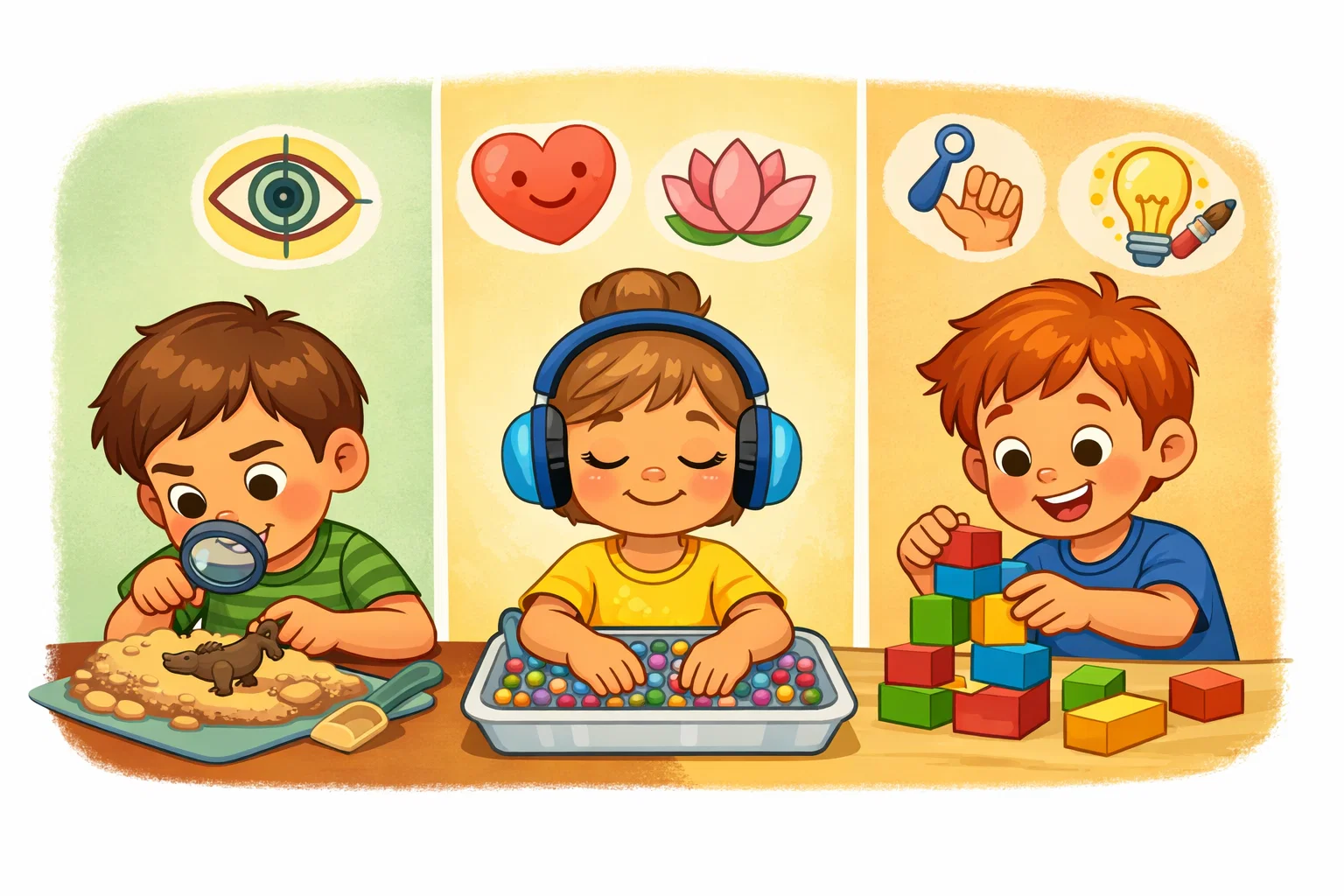
Focusing on targeted sensory activities helps children work toward important physical, linguistic, and social developmental milestones. Parents and teachers can select specific setups to reinforce the skills a child is practicing.
Fine Motor Skills
Fine motor skills involve the coordination of small muscles in the fingers, hands, and wrists. Squeezing firm play dough, peeling stickers, and threading large beads onto yarn can strengthen the small hand muscles used for handwriting and self-care tasks.
Using plastic tweezers or tongs to pick up pom-poms helps children practice the small finger movements used for grasping, drawing, and early writing. These repetitive finger movements improve manual dexterity and hand-eye coordination, laying the groundwork for self-feeding and dressing.
Language Communication
Sensory experiences can support language development by giving children real objects and sensations to describe. As children explore and play, parents can introduce descriptive words such as grainy, sticky, cold, brittle, smooth, or scented.
Using targeted prompts during play encourages descriptive communication and models proper sentence structures for young learners. Asking open-ended questions like “How does this wet sand feel compared to the dry sand?” helps children practice conversational turn-taking and expressive vocabulary.
Social Play
Group sensory experiences, such as sharing a large sensory table, encourage natural socialization, communication, and peer cooperation. Children learn to negotiate for shared tools, take turns dumping materials, and respect the physical play boundaries of their peers.
Collaborative sensory bins foster creative play and cooperative storytelling as children build imaginary worlds together using shared figurines. These shared tasks can build empathy, social problem-solving skills, and the ability to learn from peers.
Focus and Attention
Short, deliberate sensory breaks can help improve a child’s focus before structured tasks like homework, reading, or meals. Engaging in a brief sensory activity may help filter out distracting background noises and visual stimuli, organizing a child’s attention.
Some occupational therapy strategies use movement and sensory input to help children prepare for classroom tasks, but results vary by child and should not be presented as guaranteed. Providing appropriate tactile input allows children to satisfy some sensory needs safely, which may lead to calmer bodies and better engagement.
8 Sensory Systems Explained
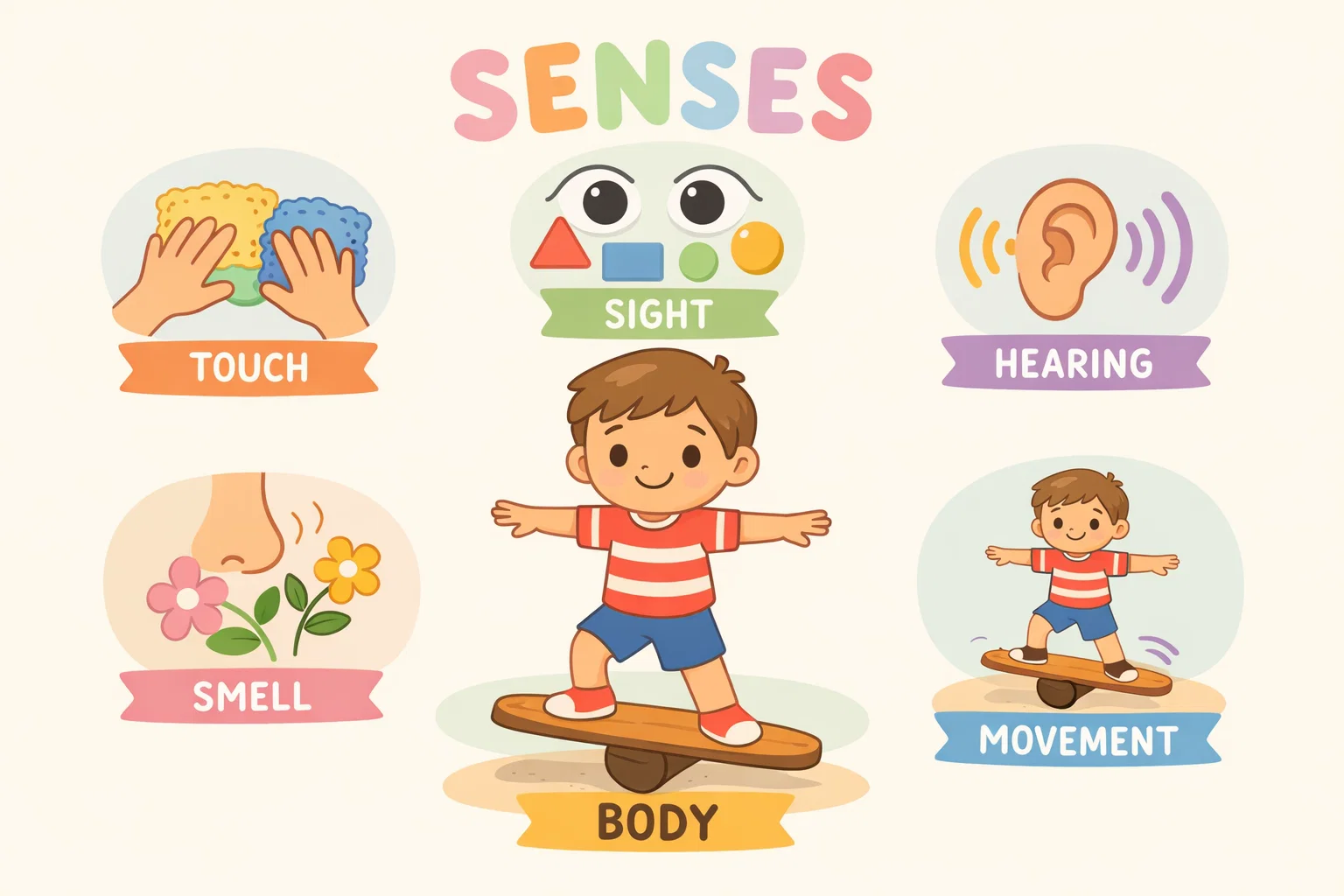
Understanding all eight sensory systems helps parents and educators look beyond the basic five senses. This comprehensive approach allows adults to support a child’s neurological development more effectively.
Visual System
The visual system processes light, colors, shapes, and movement through the eyes, serving as a primary pathway for environmental information. Visual tracking and discrimination skills form the biological foundation for reading text, writing legibly, and judging physical distances.
Visual play ideas include sorting objects by color, exploring light tables, watching objects move inside a sensory bottle, and playing with rainbow rice. These activities train the eye muscles to track smoothly and help the brain distinguish visual differences.
Auditory System
The auditory system detects and interprets sound, supporting speech development, listening skills, and awareness of the environment. Differentiating between loud and quiet sounds can help children practice listening skills and focus on a teacher’s voice.
Auditory play ideas include shaking homemade maracas, playing rhythm-matching games, and listening to descriptive sensory stories paired with acoustic sound effects. These activities strengthen auditory processing skills, improving a child’s ability to follow spoken directions.
Tactile System
The tactile system uses receptors embedded across the skin to identify touch, texture, temperature, pressure, and potential physical pain. This system acts as a protective boundary while gathering precise details about the physical traits of objects.
Tactile play involves handling different materials, such as shaving cream, non-toxic slime, wet sand, bubble wrap, and rough fabric scraps. Regular tactile exploration can help children build comfort with different textures and learn how various surfaces feel.
Vestibular System
The vestibular system regulates balance, motion, and spatial orientation through fluid-filled receptors located deep inside the inner ear. This system helps the brain understand where the body is in relation to gravity, supporting balance, posture, and movement.
Safe vestibular activities can include rocking, swinging, brief supervised spinning, balancing on low beams, and playing parachute games. Vestibular activities may support core stability and coordination skills used for running, jumping, and navigating uneven surfaces.
Proprioception
Proprioception is the body’s internal awareness of joint and muscle positioning, allowing people to move without looking directly at their limbs. It helps children understand how much force to use, such as how hard to push a crayon so the tip does not snap.
Proprioceptive activities often include “heavy work” tasks, such as pushing a loaded laundry basket, doing animal walks, or rolling up snugly in a blanket like a burrito. This deep pressure may provide calming feedback for some children, helping them feel more grounded and secure.
Olfactory System
The olfactory system processes scent molecules through nasal receptors, linking smell directly to the brain’s emotional and memory centers. Olfactory stimulation can trigger vivid memories or quickly shift a child’s emotional state.
Lavender-scented play dough may feel calming for some children, while citrus scents may feel bright and energizing. Spice jars, fresh herbs, and floral matching games encourage children to identify subtle scent profiles, expanding their sensory awareness.
Gustatory System
The gustatory system processes taste profiles—sweet, salty, sour, bitter, and umami—through taste buds situated on the tongue. This system works closely with the olfactory system to help children explore flavor, smell, and food preferences.
Taste-safe sensory play can include tasting familiar safe ingredients, exploring fruit purees, or comparing mild flavors with close adult supervision. Introducing varied tastes and textures through low-pressure play may reduce food neophobia, or fear of trying new foods, in some picky eaters.
Interoception
Interoception is the internal sensory system that reads signals from internal organs, helping individuals perceive internal bodily states. This system helps children notice internal signals such as hunger, thirst, a racing heartbeat, breathing changes, body temperature, and bladder fullness.
Adults can support interoceptive awareness by guiding children to name their internal physical sensations during different activities. For instance, pointing out a racing heartbeat after running or noticing a cool forehead after a rest helps children connect physical sensations to self-care needs.
How to Choose the Right Sensory Activities
Selecting the right sensory play ideas requires a thoughtful approach that balances a child’s developmental goals with their real-time emotional state. An activity that calms one child may overstimulate another, so careful observation is essential.
Match Activity to Goal
Adults should identify the desired behavioral or physical outcome before selecting a specific sensory activity. If a child seems very restless or physically active, proprioceptive heavy-work activities may help them use energy in an organized way and feel more settled.
Conversely, if the goal is to develop fine motor control before writing practice, a focused, seated task like sorting pom-poms with tweezers may be the ideal choice. Matching the activity’s sensory profile to the current goal keeps children engaged and helps prevent frustration.
Check Safety and Age Fit
Safety guidelines should be adjusted based on a child’s age, developmental stage, allergies, and medical needs. For infants and toddlers who put items in their mouths, all materials must be completely non-toxic and large enough to eliminate choking hazards.
| Developmental Age | Recommended Sensory Base | Key Safety Restriction |
| 0–12 months | Taste-safe materials, such as age-appropriate fruit purees | No small parts; use food-based materials only when developmentally appropriate |
| 1–3 years | Homemade play dough | Constant visual supervision |
| 4+ years | Kinetic sand or larger loose parts | Supervise closely and wash hands after use |
Watch Child Response
Monitoring a child’s body language and behavioral cues during play helps determine if the sensory input is beneficial or overwhelming. Signs of positive engagement include steady focus, relaxed shoulder muscles, slow breathing, and happy exploration.
If a child becomes unusually restless, irritable, distressed, or physically rough, the activity may be too intense or overwhelming. Adults should respect these boundaries, stop the activity immediately, and transition the child to a familiar, low-stimulus environment.
Sensory Regulation Activities
Sensory regulation activities help children maintain an optimal state of alertness, balancing energy levels for learning and rest. These strategies are especially helpful for children with sensory processing challenges or high emotional reactivity.
Heavy Work Activities
Heavy work includes any physical activity that pulls or pushes against the body’s muscles and joints, providing strong proprioceptive feedback. These tasks can help some children use extra energy in an organized way and return to a calmer, more focused state.
Practical home examples include pushing full laundry baskets, carrying stacks of books, pulling a loaded wagon, and animal walks such as bear walks or crab walks. These simple tasks provide deep pressure that may help some children feel more settled.
Movement Breaks
Structured movement breaks provide an active outlet for children who need high levels of vestibular stimulation throughout the day. Adding movement to a child’s schedule can reduce restlessness and support attention during seated tasks.
An effective movement break can include jumping on a mini-trampoline, marching firmly in place, dancing to rhythmic music, or doing chair push-ups. Keeping these breaks short, around 3 to 5 minutes, keeps children energized without making them overly hyperactive.
Calming Strategies
Calming strategies often reduce sensory input and give an overstimulated child a chance to settle. These approaches rely on slow rhythms, dim lighting, soft surfaces, and minimal noise to soothe an overactive nervous system.
Effective calming setups include blowing slow bubbles to encourage deep breathing, resting in a dim tent with soft pillows, or watching a slow-moving calm jar. Providing a quiet corner gives children a safe space to reset comfortably at their own pace.
Sensory Diets
A sensory diet is a customized routine of sensory activities designed to give a child specific types of input throughout the day. These personalized plans are typically designed with guidance from a pediatric occupational therapist.
The main goal of a sensory diet is to support a child’s regulation and participation in daily routines, often by combining calming, organizing, and alerting activities. Plans may combine alerting movement breaks in the morning with soothing tactile or deep-pressure activities before bedtime.
Sensory-Friendly Home and Classroom Strategies
Creating sensory-friendly environments can reduce sensory stress and support focus at home and in the classroom. Small changes to lighting, seating, and daily routines can make a big difference in how well a child focuses and participates.
Sensory-Friendly Classrooms
Sensory-friendly classrooms use design choices that reduce unnecessary sensory input and help students focus on lessons. Replacing bright fluorescent lighting with soft lamps or fabric filters can reduce visual strain and headaches.
Providing flexible seating options, like wiggle cushions, standing desks, or resistance bands on chair legs, helps active students move safely while working. Clear visual schedules and quiet sensory corners give children predictable routines and a place to rest when overwhelmed.
Home Ideas for Sensory Seekers
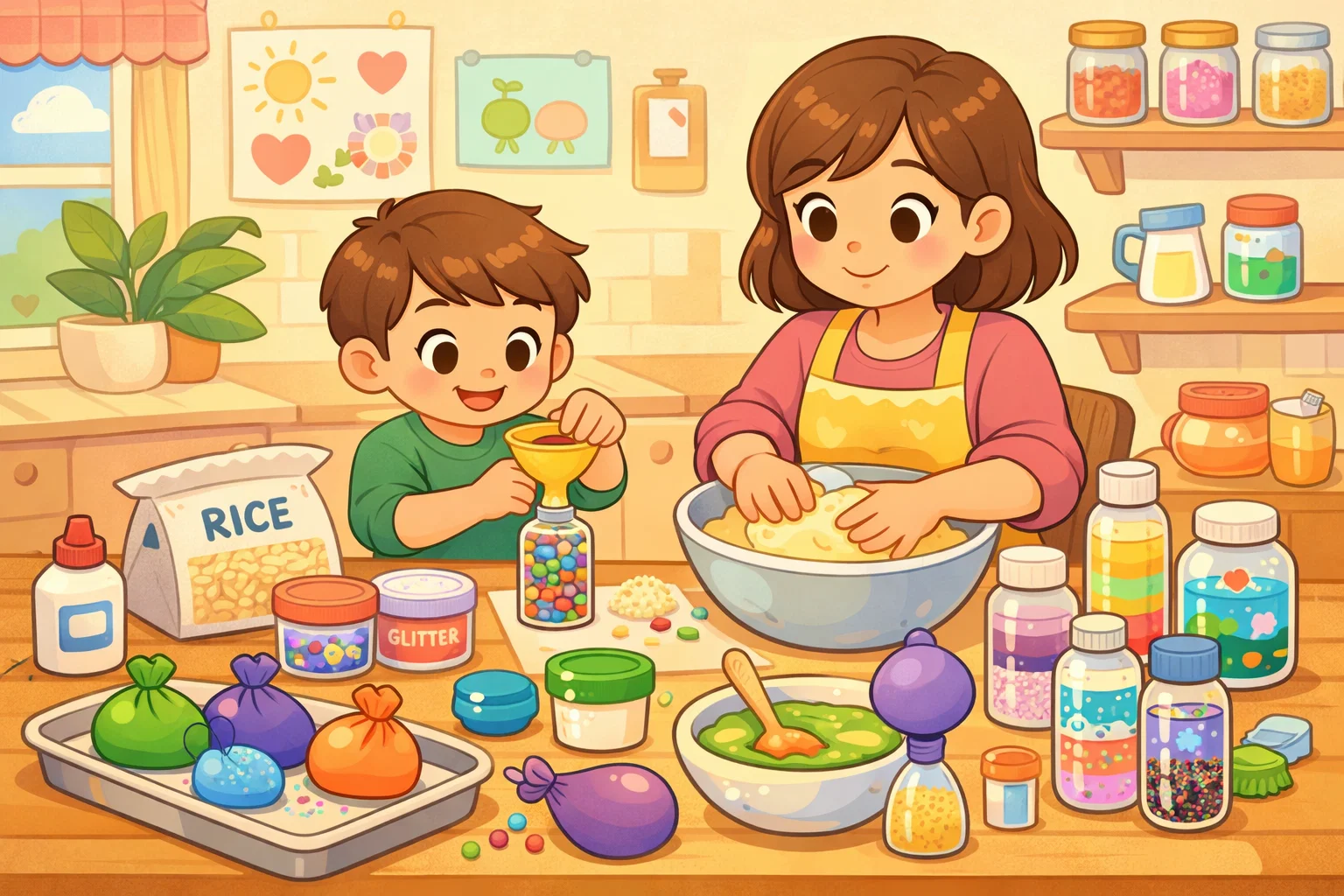
Some sensory-seeking children look for more touch, movement, pressure, or sound throughout the day. Parents can support these needs safely at home by setting up dedicated spaces for active, movement-rich play.
Creating a safe indoor crash pad out of large floor cushions and heavy blankets gives children a secure spot to jump and roll. Giving sensory seekers heavy-work chores, like carrying groceries or pushing a vacuum cleaner, can help meet some sensory needs while teaching helpful daily routines.
After-School Meltdown Support
Some children experience what is often called “after-school restraint collapse”: they manage their emotions and behavior at school, then release built-up stress once they get home. This response may be related to the sensory, emotional, and social demands of the school day.
Parents can support this transition by creating a low-demand routine right after school. Providing a healthy snack, dimming the lights, and avoiding immediate questions about their day gives children the quiet space they need to decompress comfortably.
Sitting Posture for School
Good sitting posture keeps a child comfortable and focused during tabletop learning tasks. When a child’s body is physically stable, their brain can focus on writing and reading rather than struggling to stay balanced in a chair.
The “90-90-90 rule” is a helpful guideline for seated posture: hips, knees, and ankles are ideally at about 90-degree angles, with feet supported on the floor or a footrest. If a chair is too tall, adding a footrest or using a firm booster seat can improve core stability and hand control.
Top 10 Sensory Play Ideas for Kids
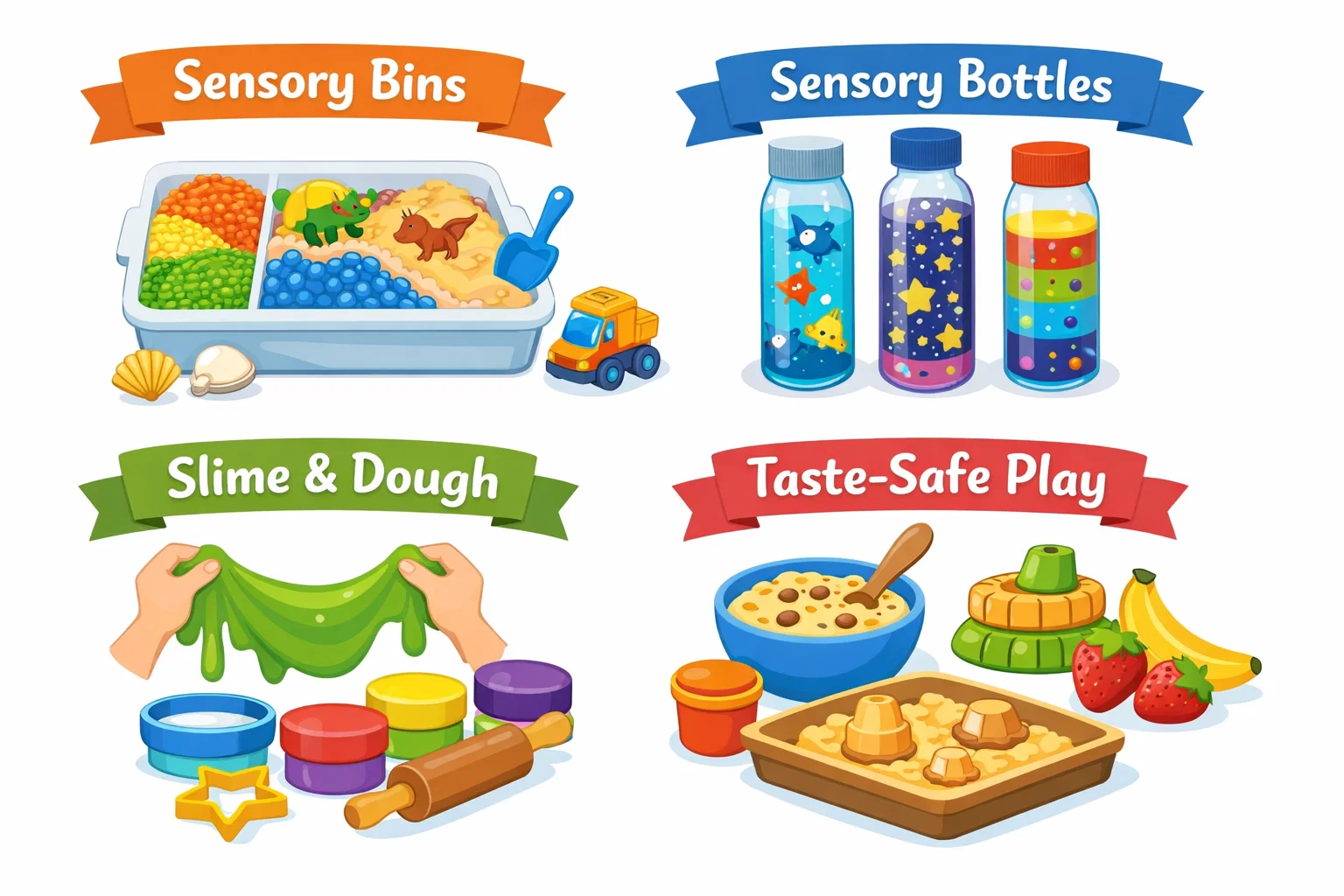
This list includes ten easy sensory activities that use affordable household items. These setups offer excellent tactile, visual, and fine motor experiences for children of various ages.
Colorful Spaghetti
Colorful spaghetti provides an engaging tactile experience that encourages fine motor practice and creative sorting games. The slippery texture of cooked pasta offers a unique tactile sensation that captures a child’s interest.
How to Dye Spaghetti
- Cook 1 box of standard spaghetti according to the package directions, then drain completely.
- Divide the cooked pasta into separate plastic bags, adding 10 drops of food coloring to each bag.
- Mix the pasta inside the closed bags until the color spreads evenly across the strands.
- Rinse each batch under cold water to remove excess dye, then spread the spaghetti out to dry.
Once dry, place the colorful strands into a low plastic container or bin. Children can practice using child-safe scissors to chop the noodles, pick them up with tongs, or sort them by color into bowls.
Blowing Bubbles
Blowing bubbles is a simple, budget-friendly activity that supports visual tracking, oral motor control, and emotional regulation. Watching bubbles float helps children practice focusing their eyes and tracking movement through space.
Taking deep, slow breaths to blow large bubbles mirrors common deep-breathing exercises used for relaxation. Chasing and popping bubbles also gives young children a fun way to practice gross motor skills like reaching, jumping, and clapping.
Pom-Pom Sorting
Pom-pom sorting uses soft, lightweight craft balls to build early math skills and hand strength. This clean, quiet activity is perfect for independent play at home or in a classroom setting.
Parents can place a mixed pile of pom-poms next to an empty muffin tin or ice cube tray. Children can then use plastic tweezers, kitchen tongs, or their fingers to sort the balls by color or size, strengthening their fine motor control.
Ice Block Treasure Hunt
An ice block treasure hunt introduces children to concepts of temperature change, melting points, and physical exploration. This activity is especially refreshing on hot summer days.
Freeze washable plastic toys that are large enough to avoid choking risks inside a container filled with water to create a solid block of ice. Give the child a tray, warm water, plastic droppers, and spoons, then let them experiment with melting the ice to rescue the hidden treasures.
Slime Play
Slime play provides an elastic, responsive tactile experience that helps build hand strength through stretching, kneading, and squeezing. Watching slime change shape provides fascinating visual and touch feedback that keeps kids engaged.
Basic Slime Recipe
- Mix 1/2 cup of washable school glue with 1/4 cup of water in a bowl.
- Add 2 drops of food coloring and optional add-ins, such as large foam beads, only for children old enough to use them safely.
- Stir in 1/4 cup of liquid starch slowly until the mixture pulls away from the sides.
- Knead the slime with your hands for 2 minutes until it becomes smooth and stretchy.
Store the finished slime in a sealed container after play to keep it fresh for future use. Always supervise younger children to make sure the slime stays out of their mouths.
Mud Kitchen
A mud kitchen brings sensory play outdoors, allowing kids to mix natural elements like soil, water, leaves, and sticks. This open-ended setup encourages pretend cooking, imaginative play, and scientific discovery.
Set up an outdoor station with old pots, pans, mixing spoons, and pie tins. Children can mix dirt and water to explore changes in texture, then scoop and pour their “mud pies” to build arm and hand strength.
Rainbow Rice
Rainbow rice is a versatile, long-lasting sensory bin base that works beautifully for scooping, pouring, and hiding objects. The smooth, pouring texture of dry rice creates a soothing sound when dropped into plastic containers.
To make it, mix 4 cups of dry white rice with several drops of food coloring and 1–2 tablespoons of white vinegar in a sealed container, then spread it out to dry completely before play. Place the dry rice into a large tub with cups, funnels, and hidden plastic letters to create an engaging literacy game.
Homemade Play Dough
Homemade play dough is a classic sensory activity because kneading firm dough helps strengthen the fingers and hands. Adding safe scents like vanilla or cinnamon engages a child’s sense of smell during play.
| Ingredient | Exact Measurement | Primary Purpose |
| All-purpose flour | 2 cups | Structural base medium |
| Warm water | 2 cups | Moisture and hydration |
| Table salt | 1 cup | Natural preservative |
| Cream of tartar | 2 tablespoons | Elasticity and smoothness |
| Vegetable oil | 2 tablespoons | Softness and flexibility |
Stir these ingredients over medium heat until a cohesive dough ball forms. Once the dough cools down, children can stamp, roll, and cut it to build fine motor control.
Homemade Maracas
Homemade maracas turn recycled containers into simple musical instruments that explore sound, rhythm, and volume. This activity blends creative crafting with auditory sensory stimulation.
Fill clean, empty plastic bottles or plastic eggs with dry materials such as rice or beans, then seal them securely with strong tape and supervise play closely. Children can shake their new maracas to match musical beats, helping them practice auditory discrimination and rhythm control.
Fake Snow
Fake snow brings the crisp, moldable feel of winter playtime indoors without the freezing temperatures. This soft, crumbly mixture is wonderful for winter-themed sensory bins and imaginative play.
To make it, mix 3 cups of baking soda with 1/2 cup of white hair conditioner in a large plastic storage bin, and remind children not to taste the mixture. The resulting mixture feels cool to the touch and holds its shape when squeezed, making it perfect for building miniature snowmen or molding snowballs.
Nature and Outdoor Sensory Activities
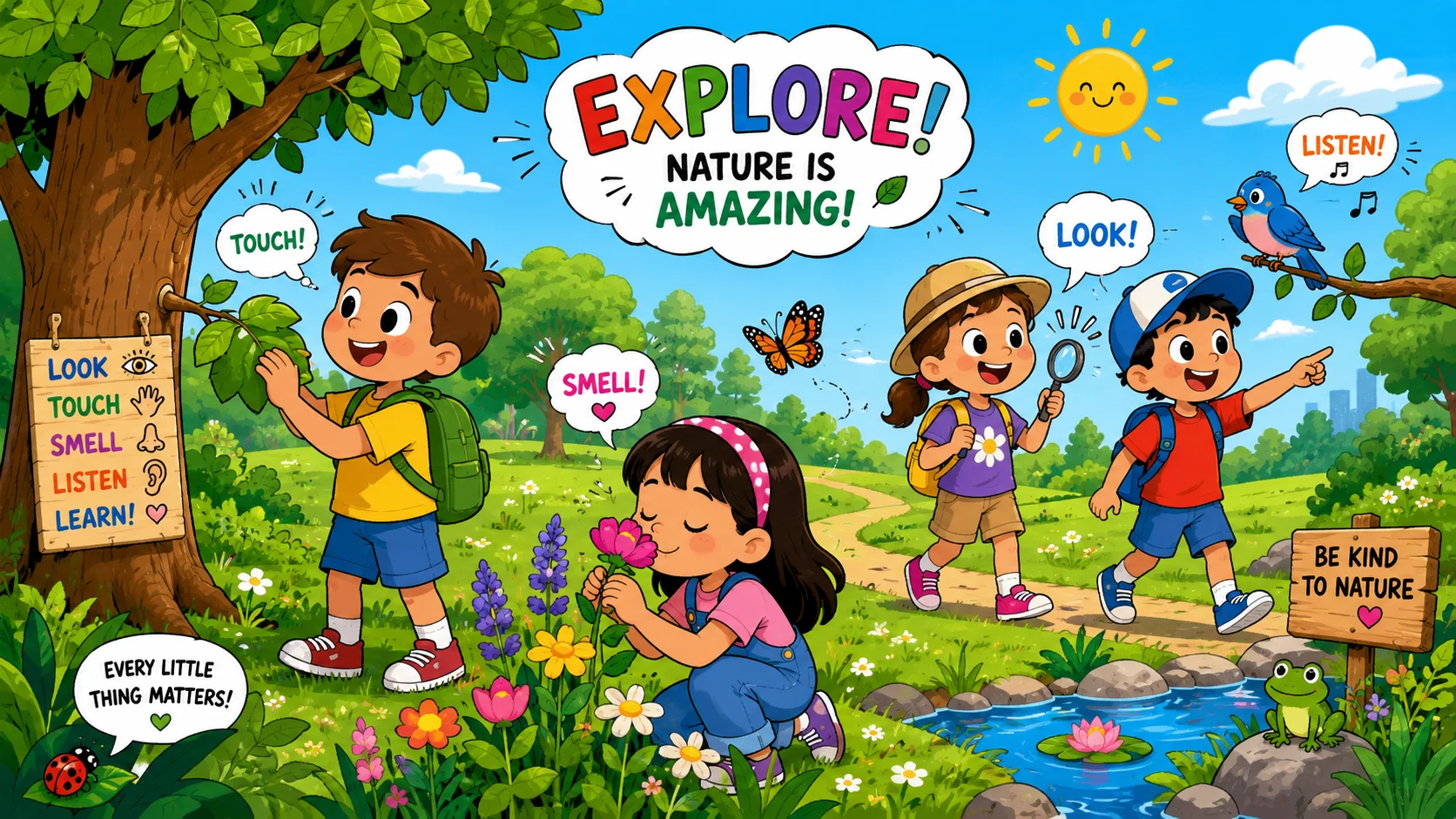
The outdoors offers an ever-changing sensory environment filled with diverse sounds, smells, and textures. Nature-based play ideas encourage children to explore their surroundings actively while enjoying the benefits of fresh air.
Sensory Nature Walks
A sensory nature walk turns a routine stroll into an active exploration of sights, sounds, and physical textures. This simple activity helps children build observational skills and connect with the natural world.
Encourage children to notice the environment by asking specific sensory questions as you walk along the path. Look for rough tree bark, listen for singing birds, smell fresh pine needles, and walk across different surfaces like crunchy leaves or soft soil.
Nature Paintbrushes
Nature paintbrushes encourage children to look closely at plant textures while creating unique, open-ended artwork. This outdoor art project blends tactile exploration with fine motor creativity.
How to Create Nature Paintbrushes
- Gather sturdy twigs from the ground to use as handles for the paintbrushes.
- Collect different natural tips, such as pine needles, large leaves, sturdy grasses, or ferns.
- Attach the natural tips tightly to the ends of the twigs using rubber bands or twine.
- Dip the nature brushes into washable paint and experiment with the different marks and textures they make on paper.
Hanging Nature Mobile
A hanging nature mobile blends an outdoor scavenger hunt with early lessons in weight, balance, and spatial design. This project helps children learn to compare the physical traits of different natural objects.
Have children gather interesting items like pinecones, feathers, dried leaves, and seed pods during a walk. Tie these treasures safely to a sturdy stick using colorful yarn, hanging the finished mobile near a window to watch how it sways in the breeze.
Scavenger Hunt
A sensory scavenger hunt focuses a child’s attention on specific physical traits, turning an outdoor walk into a fun matching game. Using clear descriptive criteria encourages children to evaluate their surroundings thoughtfully.
Provide a simple list of traits for children to find, such as “something rough,” “something smooth,” “a soft leaf,” or “a noisy twig.” This structured exploration builds problem-solving skills and teaches children to categorize objects by how they look and feel.
Bird Feeders
Making simple bird feeders combines fine motor practice with rewarding opportunities for outdoor wildlife observation. This tactile activity uses sticky textures to create something helpful for local birds.
Children can coat clean pinecones or cardboard tubes with a bird-safe binder such as suet or sunflower seed butter. Roll the sticky shapes in birdseed, press the seeds down firmly to secure them, and hang the finished feeder on a nearby branch to watch the birds visit.
Barefoot Outdoor Play
Walking barefoot on safe outdoor surfaces can provide sensory feedback that supports balance, foot strength, and body awareness. Direct contact with the ground helps strengthen foot muscles and sharpens body awareness.
Choose clean, safe outdoor areas like soft grass, smooth beach sand, or shallow backyard water basins for barefoot play. Always check the area first to make sure there are no sharp sticks, broken glass, or overly hot pavement surfaces.
Nature Hike
A nature hike combines full-body exercise with a variety of calming, natural sights and sounds. Navigating uneven paths, stepping over rocks, and climbing hills helps children practice full-body coordination and balance.
Peaceful background sounds, such as wind, water, and wildlife, may help some children feel calmer and more settled. Choosing trails with varied terrain keeps children engaged and provides excellent physical exercise for growing bodies.
Fine Motor, Matching, Math, and Learning Activities
Integrating sensory elements into academic lessons makes abstract concepts like numbers and shapes easier for young children to understand. Hands-on learning tools can make abstract concepts easier to understand than worksheets alone.
Fine Motor Whisk Activity
The fine motor whisk activity is a simple, mess-free game that helps young children build finger strength and problem-solving skills. It challenges kids to figure out how to manipulate small objects through narrow spaces.
Stuff colorful pom-poms, soft fabric scraps, or loops of ribbon inside a standard kitchen whisk. Ask the child to use their fingers or plastic tweezers to pull the items out, which builds hand strength and fine motor precision.
Hand Drawing
Hand drawing activities combine physical body awareness with creative tactile exploration. Tracing and feeling shapes helps children build a clearer mental map of their own bodies.
Have children trace their hands onto paper, filling the shapes with different textures like rough sandpaper, soft cotton balls, or smooth foil. Moving fingers across these contrasting textures provides a clear, engaging tactile experience.
Coloring Games
Sensory coloring games pair visual art projects with auditory cues or unique physical materials. These variations keep classic coloring activities fresh and exciting for young learners.
Try having children color on textured surfaces like corrugated cardboard, or use scented crayons to add an olfactory element to their art. You can also play rhythm games where children change their coloring speed or crayon choices based on different musical beats.
Number Games
Sensory number games use physical materials to help children understand the actual quantities behind written numbers. Handling real objects can make counting more concrete and engaging.
How to Create a Sensory Counting Tray
- Fill a shallow baking sheet with a thin layer of fine sand or dry rainbow rice.
- Place a set of numbered cards, 1 through 10, along the top edge of the tray.
- Have the child use their finger to trace the shape of each number directly into the sand.
- Ask them to count out matching piles of small items, like buttons or pebbles, beneath each number card.
Math Fun
Math concepts like volume, size comparison, and patterns become clear when children can measure and organize physical materials. A sensory bin works beautifully as a hands-on math workspace.
Let children explore measurement by pouring rice between large empty cups and small containers to see how capacity works. You can also encourage them to create repeating visual patterns using colored buttons, or sort plastic toys by weight and size.
Sorting and Matching Game
Sorting and matching games help children notice details and categorize objects by physical traits. This practice builds foundational skills used in both scientific observation and early reading.
Gather a mixed collection of household items and ask the child to sort them by color, shape, texture, or weight. You can also create auditory matching games by filling pairs of opaque eggs with matching items and having the child find the pairs by sound alone.
Memory Pairs App
A memory pairs app uses digital screens to help children practice visual attention, pattern recognition, and working memory. These digital games challenge kids to remember the locations of different matching images.
While digital matching games can be useful for visual practice, they should be balanced with hands-on, physical play. Pairing screen time with real-world activities can help children continue developing physical coordination alongside visual skills.
Sock Puppet App
A sock puppet app can let children explore storytelling, character voices, and imaginative play through digital tools. Kids can record their own voices and control digital characters to perform simple plays.
To bridge the gap between digital screens and physical play, try having children build real sock puppets out of old socks, buttons, and yarn. They can then act out their digital stories in real life, combining digital creativity with hands-on crafting.
Little Room Activity
The “Little Room” is an educational environment developed by Dr. Lilli Nielsen to support blind children, children with visual impairments, and children with multiple disabilities. It is a small, enclosed learning space with carefully selected objects attached to the ceiling and walls so children can explore them through touch, sound, and movement.
This cozy, limited space allows children to explore sounds and textures independently at their own pace. Because the toys stay in predictable locations, children can build spatial awareness and fine motor confidence through repetitive reach-and-touch practice.
Elephant Mask Play
Elephant mask play combines creative crafting with fun role-play, movement, and language practice. Making and wearing a mask encourages children to use their imaginations and explore animal themes.
Children can make a simple paper plate mask by adding gray paint and a long, textured paper trunk. Wearing the mask encourages kids to stomp like elephants to practice gross motor balance, while making trumpet sounds provides fun auditory play.
FAQ
What Are Sensory Play Activities?
Sensory play activities are hands-on experiences that help children explore the world through their senses. They may involve touch, sound, sight, smell, taste, movement, balance, body awareness, or internal body signals. Simple examples include squeezing playdough, sorting pom-poms, pouring dry rice, shaking sound bottles, or exploring a sensory bag filled with gel and soft objects.
What Are the Benefits of Sensory Play?
The benefits of sensory play include support for fine motor skills, language development, focus, emotional regulation, and social skills. Sensory play can help children describe what they feel, use their hands with more control, practice turn-taking, and become more comfortable with different sensory experiences.
What Are Some Fun Sensory Activities to Try at Home?
Some fun sensory activity ideas to try at home include rainbow rice bins, homemade playdough, bubble play, ice treasure hunts, sensory water play, and nature scavenger hunts. These ideas and activities are easy to adapt for different sensory needs, developmental stages, and available materials.
Take a short quiz to find out what your everyday choices say about your parenting style
When your child is curious about something new, what’s your instinct?
Take a short quiz to find out what your everyday choices say about your parenting style
“Can I download this app?” What happens next?
Take a short quiz to find out what your everyday choices say about your parenting style
When it comes to rules at home, which sounds most like you?
Take a short quiz to find out what your everyday choices say about your parenting style
If you could give your child one life skill today, what would you pick?
Take a short quiz to find out what your everyday choices say about your parenting style
Your child gets to choose what to watch. What would your ideal setup look like?
Take a short quiz to find out what your everyday choices say about your parenting style
Pick your parenting superpower ✨