Writing Activities for Kids: 25 Fun Ways to Build Handwriting and Writing Skills

 Discover a Free Education Video App for Kids
Pastory uses AI to personalize educational video content based on your child’s interests and personality. Safe, engaging, and built for curious young minds. Sign up now to stay updated and enjoy early access with a free trial
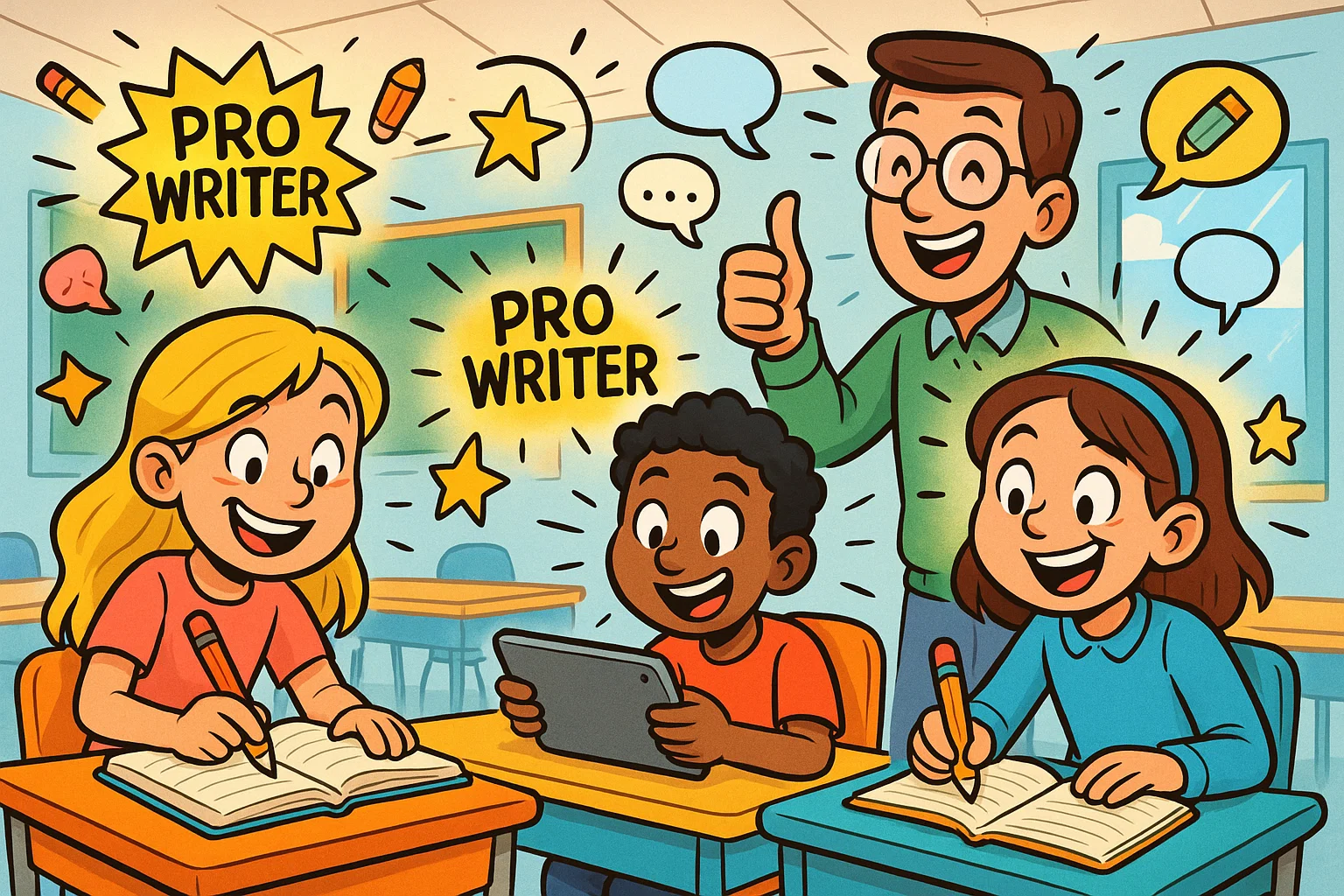
Learning to write is a foundational milestone in every child’s education, but the process can feel overwhelming for young learners. Children learn best when activities feel playful, manageable, and tailored to their developmental needs. By shifting the focus from rigid drills to engaging games, parents and educators can help kids develop essential literacy skills with less stress.
This guide shares 25 practical writing activities that help kids improve handwriting, develop creative composition skills, and build confidence through consistent practice.
Key Takeaways
- Integrate Skills Naturally: Effective writing activities combine fine motor skills, letter formation, and creative expression.
- Keep Practice Short: Daily practice sessions of 10 to 15 minutes can build legibility and stamina more effectively than long, occasional assignments.
- Support Reluctant Writers: Low-pressure activities like comic strips, secret messages, and shopping lists help kids feel less intimidated by a blank page.
- Set Up the Environment: A comfortable pencil grip, supportive posture, and age-appropriate tools can help reduce hand fatigue.
Best Writing Activities Mix Fun with Skill Practice
Children often improve their skills more quickly when writing activities combine creative expression with basic language mechanics. Research-based writing guidance suggests that regular practice can support reading development, especially when kids respond to stories, learn sentence structure, and build vocabulary through meaningful tasks.
When kids write about topics they enjoy, they are more likely to practice punctuation, sentence structure, and word choice in a meaningful context. Sentence-building games, character creation, and interactive storytelling can turn abstract grammar concepts into concrete, memorable practice.
Short Daily Practice Works Better Than Long Sessions
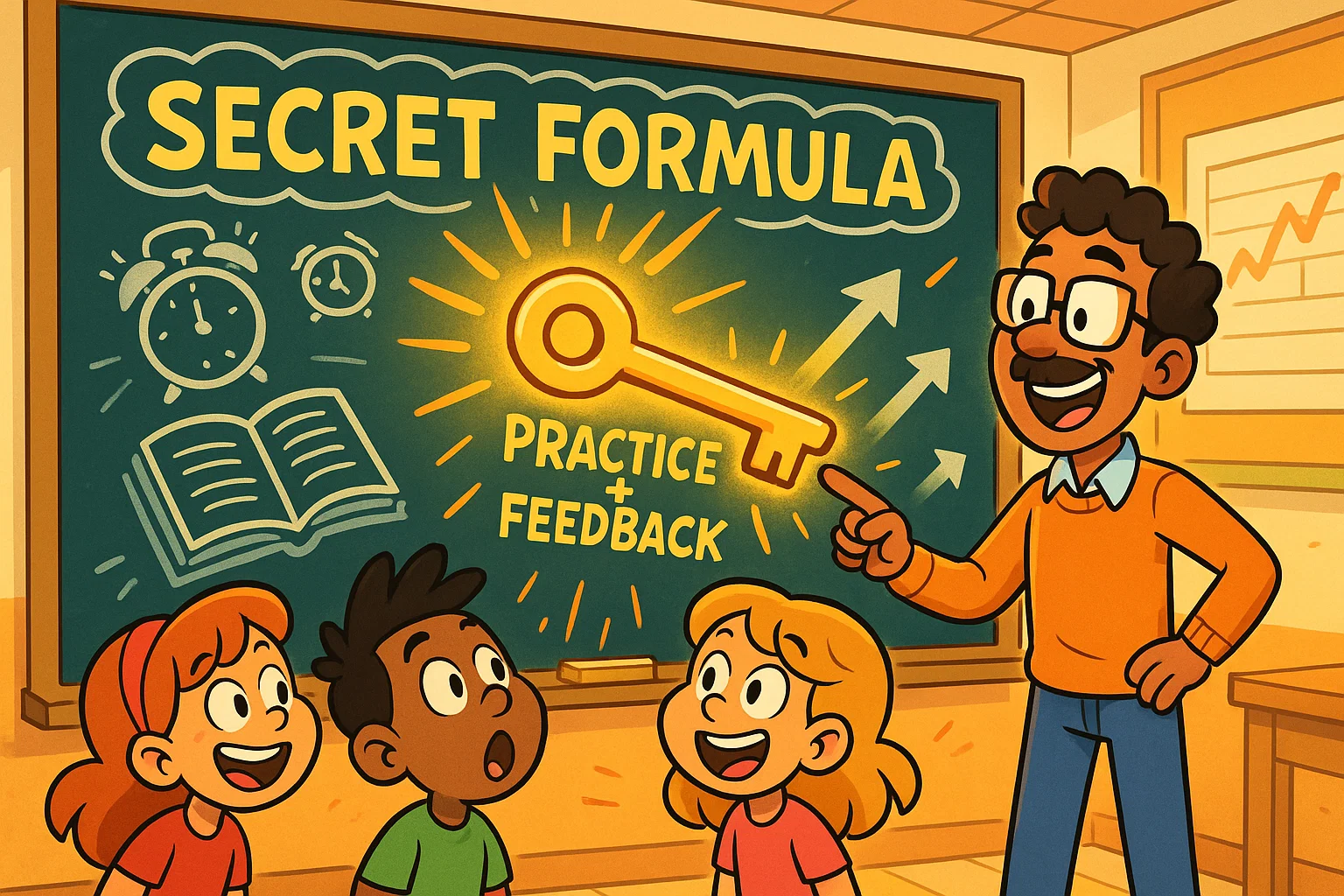
A brief daily writing routine of 10 to 15 minutes can help reduce cognitive overload and hand fatigue in developing learners. Short, consistent practice is often easier for kids to sustain than occasional long sessions and can help them build handwriting fluency over time.
A predictable schedule helps your child build confidence without associating practice with exhaustion. Keeping tasks bite-sized preserves motivation and helps kids remain willing to return to the page the next day.
Reluctant Writers Need Low-Pressure Activities
Reluctant writers often experience anxiety related to spelling mistakes, poor legibility, or lack of ideas. Visual-motor activities, drawing frames, and character-based prompts give kids an accessible way to start.
By letting a child trace, use speech bubbles, or create short jokes, you reduce the pressure of drafting long paragraphs. Shifting the focus from perfection to self-expression builds the confidence children need for future academic challenges.
Parents and Teachers Can Adapt Activities by Age
Every child develops at a different pace, so activities should be adapted to the child’s age, stamina, and skill level.
Preschoolers focus on pre-writing skills, fine motor tasks, and basic alphabet exploration through sensory play. Elementary students move on to letter formation, simple punctuation, and basic paragraph structure. Older kids and teens benefit from complex prompts, persuasive composition challenges, and editing techniques that refine their personal voice.
Why Writing Activities Matter for Kids
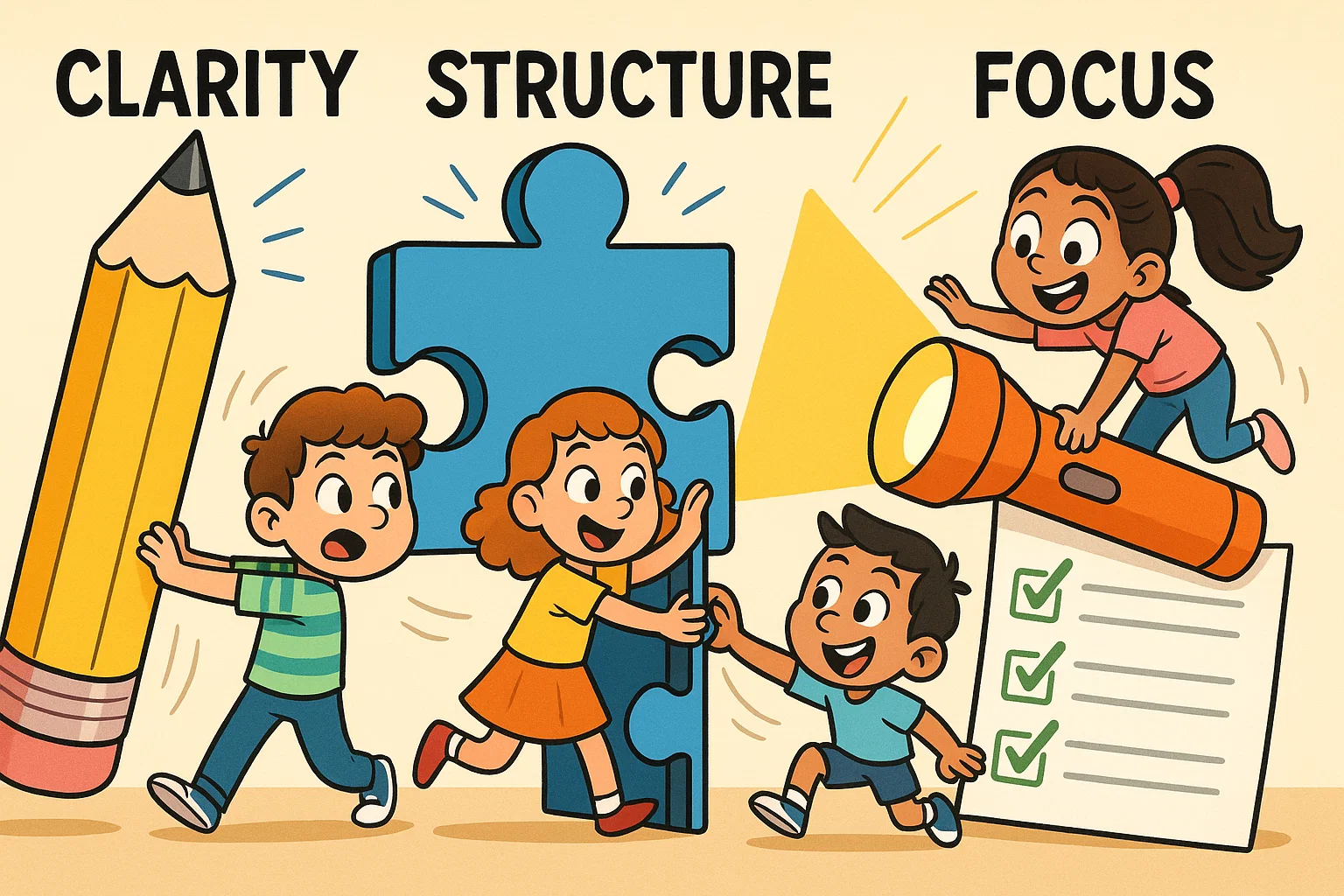
Structured writing activities help kids build the skills they need for school success. Written expression is not just a mechanical task; it is a complex process that combines fine motor control, memory, and language skills.
Writing Builds Communication Skills
Writing activities help children organize thoughts, express ideas, and share personal stories clearly. Expressive journaling can help kids reflect on experiences, name emotions, and organize their thoughts on paper.
When kids create letters, postcards, or journal entries, they learn to consider their audience, choose words carefully, and organize ideas clearly. This ability to organize ideas on paper can also support clearer communication in daily life.
Writing Supports Reading Growth
The processes of reading and written expression are deeply interconnected, forming a reciprocal relationship in early literacy development. Instruction in sentence building, spelling patterns, and text structure can reinforce decoding skills and support reading growth.
| Literacy Component | How Practice Strengthens It | How It Helps |
| Phonemic Awareness | Segmenting sounds to match letters | Supports spelling accuracy |
| Vocabulary | Actively selecting words for stories | Strengthens word retention |
| Comprehension | Structuring plots and narratives | Builds stronger text understanding |
Writing Builds Confidence
Visible improvement in handwriting, sentence length, and spelling gives kids a tangible sense of progress. When a child masters letter formation or completes a mini-book, their confidence can grow.
Celebrating small milestones encourages a positive mindset toward learning, transforming pen-and-paper practice from a tedious chore into a rewarding way to express individuality.
Writing Helps School Performance
Strong writing skills are important across subjects, from standardized tests to lab reports and history essays. Strong composition skills can support academic performance because students often need to explain ideas, summarize information, and answer questions clearly.
Early mastery of handwriting automaticity allows students to focus their mental energy on answering complex questions rather than struggling with the physical act of holding a pencil.
Before Starting Writing Activities
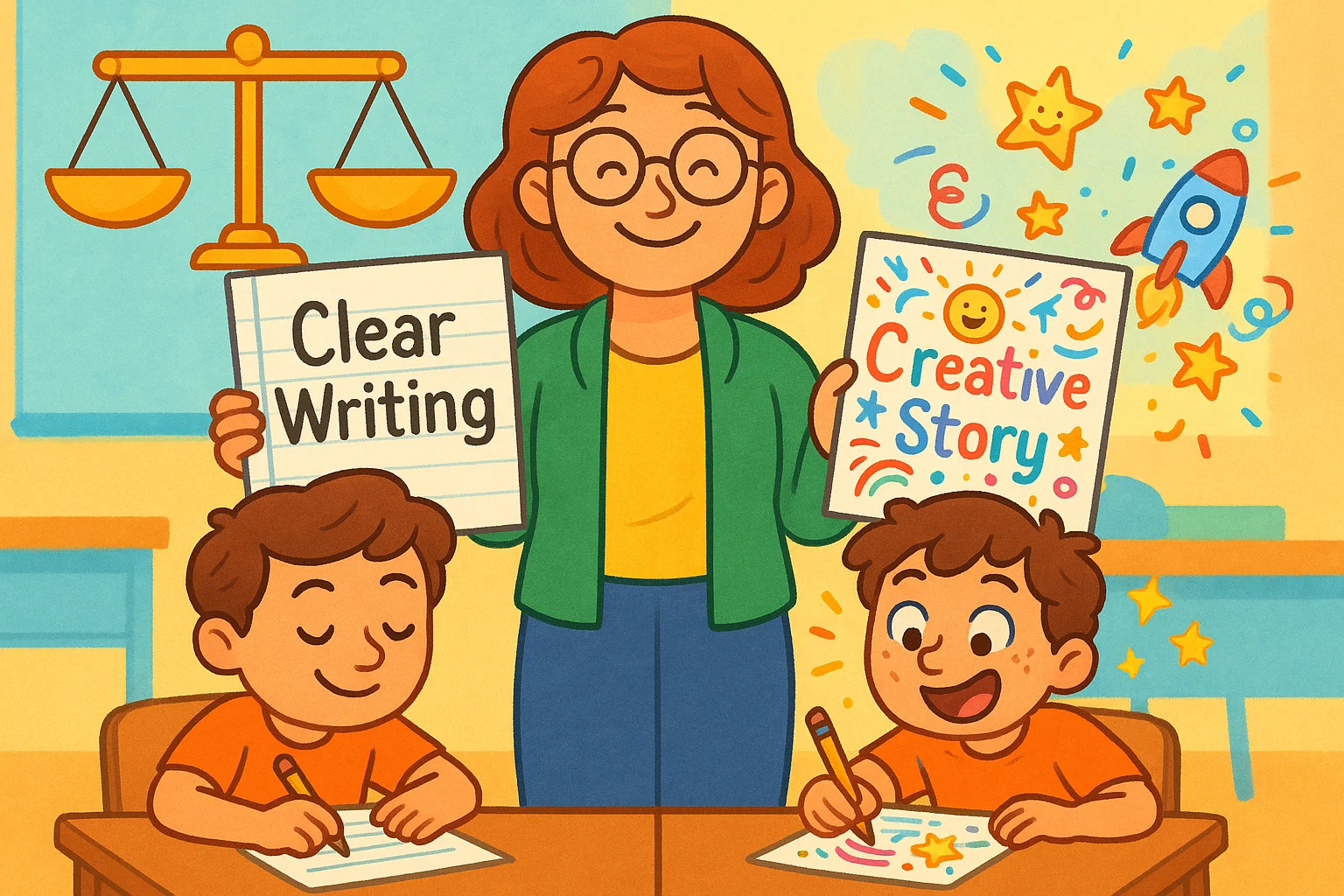
Preparing the workspace and checking the child’s posture can reduce discomfort and make practice easier. Addressing ergonomic factors before a child starts can reduce frustration and make messy handwriting less likely.
Writing Space Setup
A dedicated workspace minimizes distractions and promotes focus during writing practice. The area should have a flat, stable desk surface, a comfortable chair, and enough light to prevent shadows on the page.
Keep a small basket of essential tools – such as sharpened pencils, crayons, tracing sheets, and lined paper – within easy reach to avoid interruptions.
Posture for Writing Comfort
Proper physical alignment prevents muscle strain, enhances pencil control, and improves overall handwriting quality. Pediatric occupational therapists often recommend the “90-90-90” seating rule to support stability and comfort during seated tasks.
- Feet Supported: The child’s feet should rest flat on the floor or a footstool to stabilize the pelvis.
- Hips and Knees: Both the hips and knees should maintain a steady 90-degree angle.
- Elbows and Desk: Elbows should rest comfortably on the desktop at about a 90-degree angle, with the shoulders relaxed.
- Paper Angle: Position the paper at a slight tilt, angled to the left for right-handed children and to the right for left-handed children.
Grip and Pencil Control
A comfortable, functional pencil grip supports smoother letter formation and can reduce hand fatigue. Encourage your child to use a dynamic tripod grasp, with the pencil held between the thumb and index finger and resting on the middle finger.
If a child displays an immature digital pronate or cross-thumb grasp, introductory tools like thick triangular crayons or molded pencil grips can provide helpful sensory feedback. Watch for excessive hand pressure, as pressing too hard can reduce endurance.
Ergonomic Tools for Kids
Adaptive tools can reduce frustration for kids who struggle with visual-motor coordination or hand strength. Slant boards position paper at an angle that can promote wrist extension and improve the child’s line of sight.
Raised-line paper provides tactile boundaries that help children keep letters within the lines. Visual spacing tools, such as a simple popsicle stick placed between words, can prevent crowded text and improve legibility.
Short Warm-Up Routine
A brief, two-minute physical warm-up prepares the small muscles of the hand and wrist for the precise demands of handwriting practice. These quick fine-motor exercises can increase blood flow and flexibility before pencil work.
- Finger Extensions: Have the child stretch their fingers out wide like a star, then curl them tightly into a fist 5 times.
- Pinch Resistance: Ask the child to pinch a piece of therapy putty or playdough between the thumb and each finger.
- Air Tracing: Show your child how to draw large loops and lazy-eight shapes in the air using their dominant index finger.
- Palm Stretches: Press the palms together in a prayer position, gently pushing side to side to loosen the wrists.
25 Writing Activities for Kids

The following list offers varied, engaging activities that help children build foundational literacy and fine-motor skills at home or in the classroom.
1. Character Cards
- Target Age: 6–10 years
- Materials Needed: Index cards, markers, colored pencils
- Skills Developed: Descriptive vocabulary, character development, creative writing
Children create collectible character cards featuring an original hero, villain, or animal. On the front of the card, the child draws the character; on the back, they write details such as the character’s name, age, special powers, greatest fears, and main goals.
This compact, structured format lets children write specific details without facing an intimidating blank page.
2. Story Dice
- Target Age: 5–12 years
- Materials Needed: Wooden blocks or pre-printed story dice, writing paper
- Skills Developed: Narrative structure, plot generation, flexible thinking
Story dice feature distinct icons representing characters, settings, objects, and conflicts on each face. The child rolls three or four dice and weaves the images that land face up into a short, cohesive story.
This activity reduces the pressure of writer’s block by providing immediate visual prompts that jumpstart the imagination.
3. Daily Journal Prompts
- Target Age: 7–14 years
- Materials Needed: Bound notebook, gel pens
- Skills Developed: Self-reflection, emotional literacy, consistent writing routine
Establishing a daily journal routine helps children cultivate a reliable habit of written expression. Provide structured, engaging prompts such as “Describe your ultimate dream adventure” or “What are two things that made you laugh today?”
Setting a target of three to five sentences per entry keeps the task manageable while steadily expanding the child’s writing stamina over time.
4. Comic Strip Writing
- Target Age: 6–11 years
- Materials Needed: Multi-panel comic templates, fine-tip pens
- Skills Developed: Dialogue punctuation, sequencing, concise phrasing
Comic strip writing can be especially helpful for reluctant writers who enjoy visual storytelling. Children sketch simple action sequences across three to six panels, adding speech bubbles, narrative captions, and energetic action words.
This exercise teaches children to condense ideas into concise dialogue while practicing the basics of sequential storytelling.
5. Postcard Messages
- Target Age: 6–9 years
- Materials Needed: Blank cardstock, postage stamps, markers
- Skills Developed: Functional formatting, audience awareness, concise writing
Writing real or imaginary postcards teaches children how to summarize experiences for a specific recipient. The limited space on a postcard encourages the child to choose the most important or exciting details.
Addressing the postcard also serves as an authentic lesson in capitalization, layout, and mailing formats.
6. Secret Message Writing
- Target Age: 5–10 years
- Materials Needed: White crayon and watercolor paints, or lemon juice and Q-tips; paper
- Skills Developed: Fine motor control, letter formation, motivation
Make writing feel like a spy adventure by introducing invisible ink or simple substitution ciphers. Children write a hidden note using a white crayon on white paper, then reveal the message by brushing watercolor paint over the surface.
The novelty keeps children motivated to practice letter formation without feeling like they are completing a standard worksheet.
7. Shopping List Challenge
- Target Age: 4–7 years
- Materials Needed: Notepad, clipboard, grocery flyers
- Skills Developed: Functional writing, phonics-based spelling, categorized lists
Involve your child in real household tasks by making them the family shopping-list helper. Give children themed challenges, such as planning a pet care list, a birthday party list, or a backyard picnic menu.
This practical task teaches children that writing is an essential, functional tool for daily organization and planning.
8. Recipe Writing
- Target Age: 7–12 years
- Materials Needed: Kitchen access, recipe cards, measuring spoons
- Skills Developed: Chronological sequencing, imperative verbs, instructional clarity
Ask your child to write the steps for making a favorite snack, such as a peanut butter sandwich or a fruit smoothie. The child lists ingredients with accurate measurements and then writes clear, step-by-step instructions using action verbs.
This exercise improves chronological organization and helps children learn how to give clear directions.
9. Letter to Future Self
- Target Age: 8–15 years
- Materials Needed: Letter paper, envelope, sealing wax or sticker
- Skills Developed: Reflective writing, tense consistency, goal setting
Encourage your child to compose a formal letter addressed to themselves one, five, or ten years in the future. The text can describe their current favorite songs, closest friends, proudest achievements, and future career aspirations.
This personal writing activity encourages reflection and creates a meaningful snapshot of the child’s life at that moment.
10. Finish Story Prompt
- Target Age: 7–13 years
- Materials Needed: Story starter cards, lined paper
- Skills Developed: Plot resolution, context integration, structural pacing
Provide your child with a dramatic opening sentence or paragraph, such as: “As the old wooden key turned in the lock, the heavy stone wall began to slide open…” The child is then asked to compose the rest of the narrative and resolve the mystery.
This approach removes the initial pressure of coming up with an idea, allowing the writer to focus on developing and resolving the story.
11. Picture Prompt Writing
- Target Age: 5–12 years
- Materials Needed: Interesting photographs, magazine cutouts, or artwork
- Skills Developed: Observation, inference, and descriptive language
Select a strange, humorous, or beautiful image – such as an astronaut walking a dog on Mars – and ask your child to write a descriptive paragraph about it. Guide their writing by asking what happened just before the picture was taken and what might happen next.
This visual approach encourages sensory vocabulary and helps children build richer descriptions.
12. Word Bank Story
- Target Age: 6–10 years
- Materials Needed: Whiteboard, sticky notes
- Skills Developed: Vocabulary expansion, contextual application, syntactic flexibility
Write eight unrelated words on sticky notes, such as octopus, bicycle, umbrella, whispering, cheesy, quickly, mountain, and scientist. The child writes a cohesive short story that uses every word from the bank naturally.
This playful constraint stretches vocabulary boundaries and encourages creative problem-solving.
13. Sentence Expansion Game
- Target Age: 6–11 years
- Materials Needed: Sentence expansion template, colored pencils
- Skills Developed: Sentence complexity, grammar, adjective use
Transform short, repetitive sentences into vivid descriptions using a step-by-step expansion process. Start with a simple two-word sentence and ask the child to answer guiding questions that add detail.
| Step | Example |
| Start with a simple sentence | The dog ran. |
| Add an adjective | The fluffy dog ran. |
| Add an adverb | The fluffy dog ran quickly. |
| Add a specific location | The fluffy dog ran quickly through the muddy park. |
14. Dialogue Practice
- Target Age: 8–12 years
- Materials Needed: Notebook, highlighters
- Skills Developed: Quotation marks, dialogue tags, tone
Have your child script a fictional conversation between two distinct characters, such as a talking cat and a grumpy wizard. Teach the child how to use quotation marks, vary speaker tags beyond “said,” and show shifts in each character’s voice.
This activity helps children learn the nuances of narrative perspective and improves punctuation accuracy.
15. Opinion Writing Cards
- Target Age: 7–12 years
- Materials Needed: Prompt cards, timers
- Skills Developed: Persuasive writing, supporting reasons, logical structure
Create a set of opinion cards featuring engaging, low-stakes debates, such as “Should school lunches consist entirely of pizza?” or “Which superpower is better: flight or invisibility?”
The child chooses a card and writes a short paragraph stating their opinion, supporting it with at least two reasons or examples. This builds foundational essay-writing mechanics in a low-pressure format.
16. How-To Instructions
- Target Age: 6–11 years
- Materials Needed: Simple building materials, such as Lego bricks
- Skills Developed: Technical writing, procedural layout, analytical thinking
Ask your child to write clear instructions for a simple task, such as building a Lego tower or brushing their teeth. Once the text is complete, follow the instructions exactly as written to reveal any missing steps or unclear directions.
This lighthearted feedback method teaches children why precision matters in instructions.
17. Silly Sentence Builder
- Target Age: 5–8 years
- Materials Needed: Color-coded index cards: nouns, verbs, and adjectives
- Skills Developed: Parts of speech identification, syntax, handwriting practice
Create color-coded cards representing distinct parts of speech to help children visualize sentence mechanics. The child randomly selects one adjective, one noun, and one verb card, then arranges them to form silly sentences like “The purple refrigerator danced.”
The child then copies their favorite combination onto a primary lined worksheet to practice neat handwriting.
18. Acrostic Poems
- Target Age: 5–9 years
- Materials Needed: Decorative paper, markers
- Skills Developed: Letter alignment, vocabulary retrieval, poetic expression
Acrostic poetry provides an approachable framework for writing poems because it does not require rhyme. Children write a word – such as their name, a season, or an animal – vertically down the left side of the page.
Each letter of the vertical word becomes the starting point for a descriptive sentence or phrase related to the central theme.
19. Sensory Description Challenge
- Target Age: 7–14 years
- Materials Needed: Mystery paper bags containing textured items or fragrant foods
- Skills Developed: Imagery, sensory adjectives, metaphorical language
Place a mysterious object, such as a pinecone or a sliced kiwi, inside an opaque paper bag. Without looking, the child reaches into the bag and completes a sensory chart detailing how the object feels, smells, and sounds.
They then turn these sensory notes into a descriptive paragraph without naming the object, so a reader can guess what it is.
20. Story Map Planning
- Target Age: 8–13 years
- Materials Needed: Printed graphic organizer
- Skills Developed: Pre-writing organization, plot architecture, thematic cohesion
Before diving into a draft, introduce the concept of pre-writing organization using a visual story map. The graphic organizer includes sections for the main characters, setting, central problem, rising action, and resolution.
Using a story map helps children keep their narrative organized from beginning to end.
21. Journal with Drawings
- Target Age: 4–7 years
- Materials Needed: Sketchbook with primary lined bottom margins
- Skills Developed: Visual-motor integration, caption writing, symbolic expression
This activity works well for visual thinkers and young children who are just beginning to write. First, let the child draw an idea, memory, or imaginary scene with colored pencils.
Once the drawing is complete, show your child how to translate those visual ideas into text by adding descriptive captions or a short summary paragraph underneath the illustration.
22. Rewrite Ending
- Target Age: 7–12 years
- Materials Needed: A familiar storybook or fairy tale
- Skills Developed: Alternate plotting, character consistency, revision skills
Select a familiar story, such as Little Red Riding Hood or The Three Little Pigs, and challenge your child to change the ending or a key turning point. The child must determine how a change in a character’s choice shifts the entire narrative outcome, writing a fresh conclusion from that moment.
This exercise sharpens plot logic and shows children how a single choice can change an entire story.
23. Thank-You Notes
- Target Age: 5–11 years
- Materials Needed: Thank-you stationery, envelope, fine pens
- Skills Developed: Social literacy, gratitude expression, formal letter etiquette
Writing thank-you notes provides an authentic opportunity for children to practice real-world functional writing. Guide your child to name the gift or kind gesture, explain why they appreciate it, and share a brief personal update.
This activity cultivates gratitude while reinforcing audience awareness and proper paragraph layout.
24. News Reporter Activity
- Target Age: 8–13 years
- Materials Needed: Reporter notepad, microphone prop
- Skills Developed: News writing, interview skills, objective summarizing
Let your child act as a reporter covering a family event, a local soccer match, or a pet’s daily antics. The young reporter interviews participants and writes an objective news article that answers the core journalistic questions: who, what, where, when, why, and how.
This structured format builds strong expository writing skills.
25. Mini-Book Project
- Target Age: 6–12 years
- Materials Needed: Folded paper booklets, stapler, binding tape
- Skills Developed: Creative ownership, editing and revision, long-term project planning
The mini-book project gives children ownership of the writing process, from the first idea to the finished book. Over several short sessions, the child drafts a multi-page story, edits the text for punctuation errors, illustrates the pages, and designs a formal cover.
Having a physical book to display on the family bookshelf can build pride and make writing feel more meaningful.
How to Make Writing Practice Motivating
Keeping children interested in writing requires encouragement, flexible tasks, and some choice. Forcing a child through rigid, repetitive drills can create frustration and make practice feel like a chore.
Let Kids Choose Topics
Allowing children to select their own subject matter can increase intrinsic motivation and emotional investment in the task. When a child is free to focus on video games, superheroes, dinosaurs, or personal friends, the cognitive effort often feels less taxing.
Giving children some choice in topics can increase motivation and help them work more willingly.
Keep Sessions Short
To prevent physical exhaustion and psychological burnout, establish clear time limits for practice. A focused 10-minute writing session with good effort is usually more productive than a frustrating 45-minute power struggle.
End the activity while the child is still experiencing success. This preserves their confidence and keeps them willing to return to the desk tomorrow.
Use Rewards Carefully
Use extrinsic rewards carefully, focusing your praise on specific efforts and functional progress rather than abstract perfection. Instead of offering generic rewards for “neat handwriting,” celebrate concrete achievements like “I love how you left clear spaces between your words on this worksheet.”
Frame milestones as achievements to be celebrated together, ensuring the child does not perceive literacy tasks as a form of academic punishment.
Share Finished Work
Provide your child with a real, appreciative audience for their completed projects to reinforce the value of communication.
- Read Aloud: Encourage your child to read completed comic strips or short stories aloud during family dinners.
- Mail to Family: Send completed postcards and thank-you notes to grandparents or friends through the postal service.
- Refrigerator Display: Create a dedicated space on the refrigerator to showcase the child’s recent handwriting samples.
Common Writing Challenges and Simple Fixes
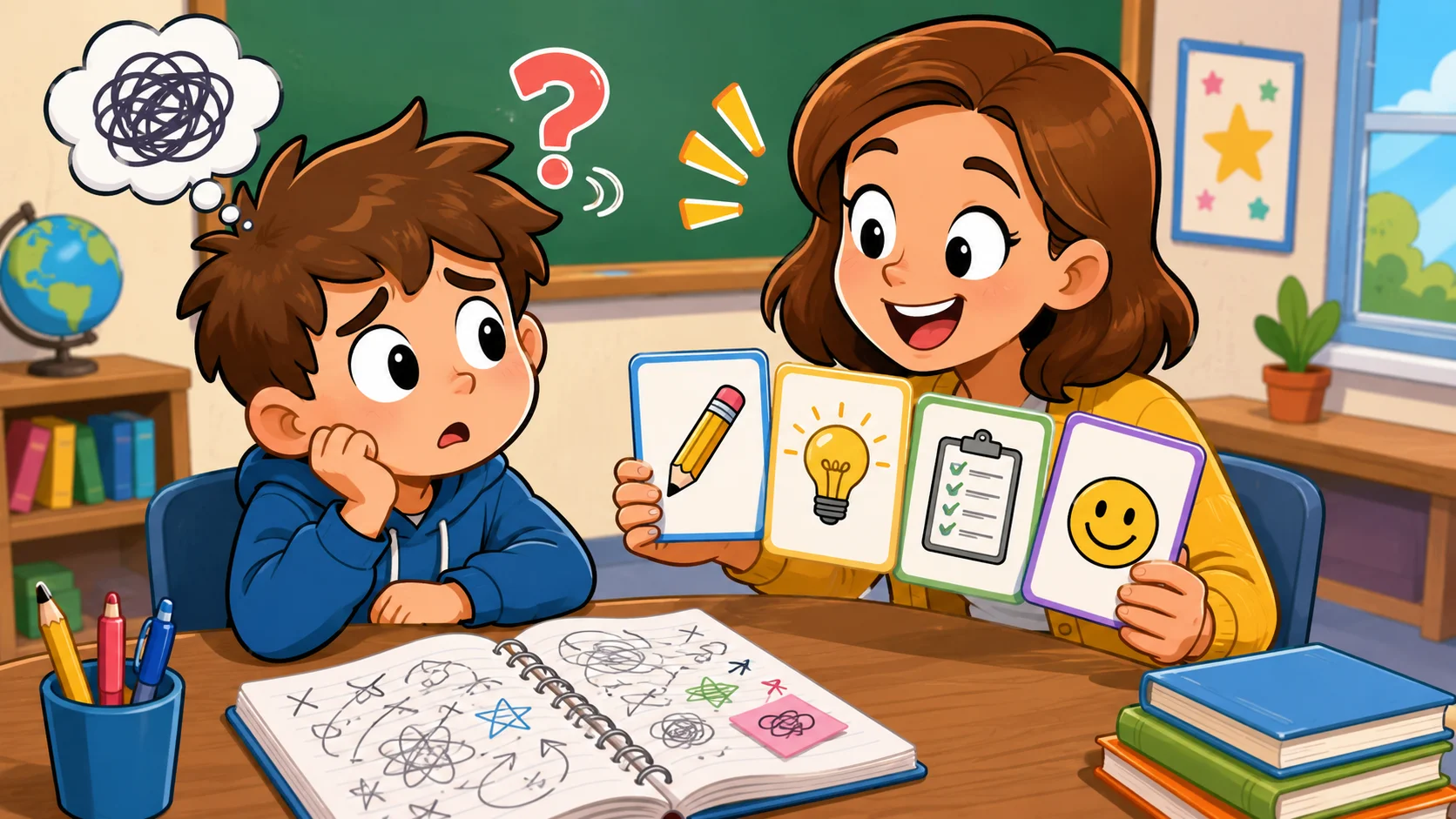
When children hit roadblocks during their literacy journey, targeted troubleshooting strategies can reduce frustration and help them get back on track.
Child Says “I Don’t Know What to Write”
A blank page can make it hard for young writers to get started. To bypass this initial roadblock, provide structured scaffolding such as story dice, colorful picture cards, or a pre-selected word bank.
A brief oral storytelling session beforehand allows the child to say their ideas aloud before attempting the physical task of translating them onto paper.
Child Writes Too Little
When a child consistently produces minimal text, use the sentence expansion method to prompt deeper elaboration. Ask specific sensory questions, such as “What color was the car?” or “How did the character feel when that happened?”
Encourage them to include at least one sight and one sound in the description, or challenge them to add just one more detailed sentence to their paragraph.
Child Makes Many Grammar Mistakes
Correcting every grammar error at once can undermine a child’s confidence and interrupt their creative flow. Use a phased editing approach where you focus on refining just one specific skill at a time.
| Phase | Focus |
| Phase 1: Capitalization Check | Make sure all sentences start with capital letters. |
| Phase 2: Punctuation Review | Check that every sentence ends with a period, question mark, or exclamation point. |
| Phase 3: Spelling Analysis | Address high-frequency sight words and common phonetic patterns. |
Child Has Messy Handwriting
Poor legibility is often linked to posture, weak fine-motor skills, or an inefficient pencil grip. Ensure their feet are fully supported and introduce visual spacing tools, such as a popsicle stick, to keep words clearly separated.
Raised-line paper or larger primary grids give the child clear tactile boundaries, making it easier to practice correct letter formation.
Child Gets Tired Quickly
Quick fatigue can point to a tense pencil grip, too much pressure on the page, or developing hand strength. Integrate a quick, two-minute fine-motor warm-up routine before sessions, and provide short breaks during the task.
If handwriting continues to cause significant physical strain, consider blending pencil practice with typing options or oral dictation to keep storytelling skills sharp.
When a Structured Writing Program Helps More Than Random Activities
While stand-alone writing games are useful for variety, some children benefit from a more systematic instructional approach. Recognizing when to transition to a structured curriculum can prevent long-term learning gaps.
Activities Give Practice
Individual writing activities and worksheets are useful for reinforcing skills, increasing motivation, and adding variety. They serve as helpful tools for maintaining engagement over summer breaks or providing quick homework extensions.
However, isolated activities often lack a cohesive framework, meaning they may not systematically address specific skill deficits or build long-term retention.
Program Gives Structure
A structured writing program delivers a carefully planned sequence of lessons that supports consistent progress, ongoing feedback, and measurable growth. Structured handwriting curricula, such as Handwriting Without Tears, are designed to build fine motor skills and letter formation through a clear sequence of practice.
A structured program helps children master foundational pencil control before moving on to complex sentence building and advanced multi-paragraph composition.
Best Fit for the Write Like A Pro Program
The Write Like A Pro Program may be a good fit for families who want a more guided, step-by-step approach to building writing confidence. Families can use the program’s daily routines, skill-tracking features, and guided lessons to make practice more structured and consistent.
It may be a useful option for families who want to build stamina and handwriting skills with less stress.
Activities Plus Program Approach
A balanced approach combines the structure of a writing program with the creativity of playful literacy activities. Use your core program three to four days a week to build skills such as grammar, punctuation, and letter formation.
Then dedicate one day a week to an engaging activity, such as comic strip creation or secret codes, so children can apply those skills in a fun format.
FAQs About Handwriting Practice
What are the best writing activities for kids?
The best writing activities for kids are short, practical, and fun to repeat. Good options include story dice, comic strips, character cards, secret messages, postcards, and simple journal prompts. These games and activities help children develop confidence because they combine handwriting, storytelling, and creativity in a low-pressure format.
How can I make writing fun for my child?
To make writing fun, connect practice to topics kids love, such as pets, superheroes, favorite games, family stories, or silly characters. Fun writing tasks can include comic strips, secret notes, recipe cards, or asking a child to write jokes. When the task feels playful and manageable, children can write more willingly and build a love of writing over time.
What are simple ways to help children practice writing at home?
Simple ways to help include short daily sessions, drawing before drafting, age-appropriate writing prompts, and playful tasks that connect handwriting with real life. Parents can ask children to write letters, make shopping lists, label drawings, or create short thank-you notes. To keep practice writing effective, focus on one small goal at a time, such as spacing, capitalization, or neat letter formation.
How do you teach kids to form letters correctly?
To teach kids to form letters correctly, start with large movements in the air, then move to tracing letters, and finally practice on paper. Ask the child to trace each letter slowly, say the stroke direction aloud, and form the letters the same way each time. Multisensory practice can also help. Children can form letters in sand, shaving cream, finger paint, or playdough before using a pencil.
How can I support my child’s writing journey at home?
You can support your child’s writing journey by keeping practice short, positive, and connected to real life. Simple tasks like writing shopping lists, thank-you notes, postcards, or story captions can make writing feel useful instead of stressful. The goal is to build confidence gradually while respecting your child’s learning pace.
What is the best way for a child to learn writing skills?
The best way for a child to learn writing skills is through repeated, age-appropriate practice that feels manageable. Young children may begin with drawing, tracing, and writing their name, while older children can work on sentences, stories, opinions, and short paragraphs. These steps help children develop their writing skills without overwhelming them.
How can I make teaching writing more enjoyable?
When teaching writing, try to make it fun by using topics your child already enjoys. Comic strips, secret messages, character cards, silly sentences, and picture prompts can turn practice into something fun and engaging. Choosing activities your child will love can reduce resistance and make writing feel more like play.

Take a short quiz to find out what your everyday choices say about your parenting style
When your child is curious about something new, what’s your instinct?
Take a short quiz to find out what your everyday choices say about your parenting style
“Can I download this app?” What happens next?
Take a short quiz to find out what your everyday choices say about your parenting style
When it comes to rules at home, which sounds most like you?
Take a short quiz to find out what your everyday choices say about your parenting style
If you could give your child one life skill today, what would you pick?
Take a short quiz to find out what your everyday choices say about your parenting style
Your child gets to choose what to watch. What would your ideal setup look like?
Take a short quiz to find out what your everyday choices say about your parenting style
Pick your parenting superpower ✨