Guide to Year 9 in the UK Education System

 Discover a Free Education Video App for Kids
Pastory uses AI to personalize educational video content based on your child’s interests and personality. Safe, engaging, and built for curious young minds. Sign up now to stay updated and enjoy early access with a free trial
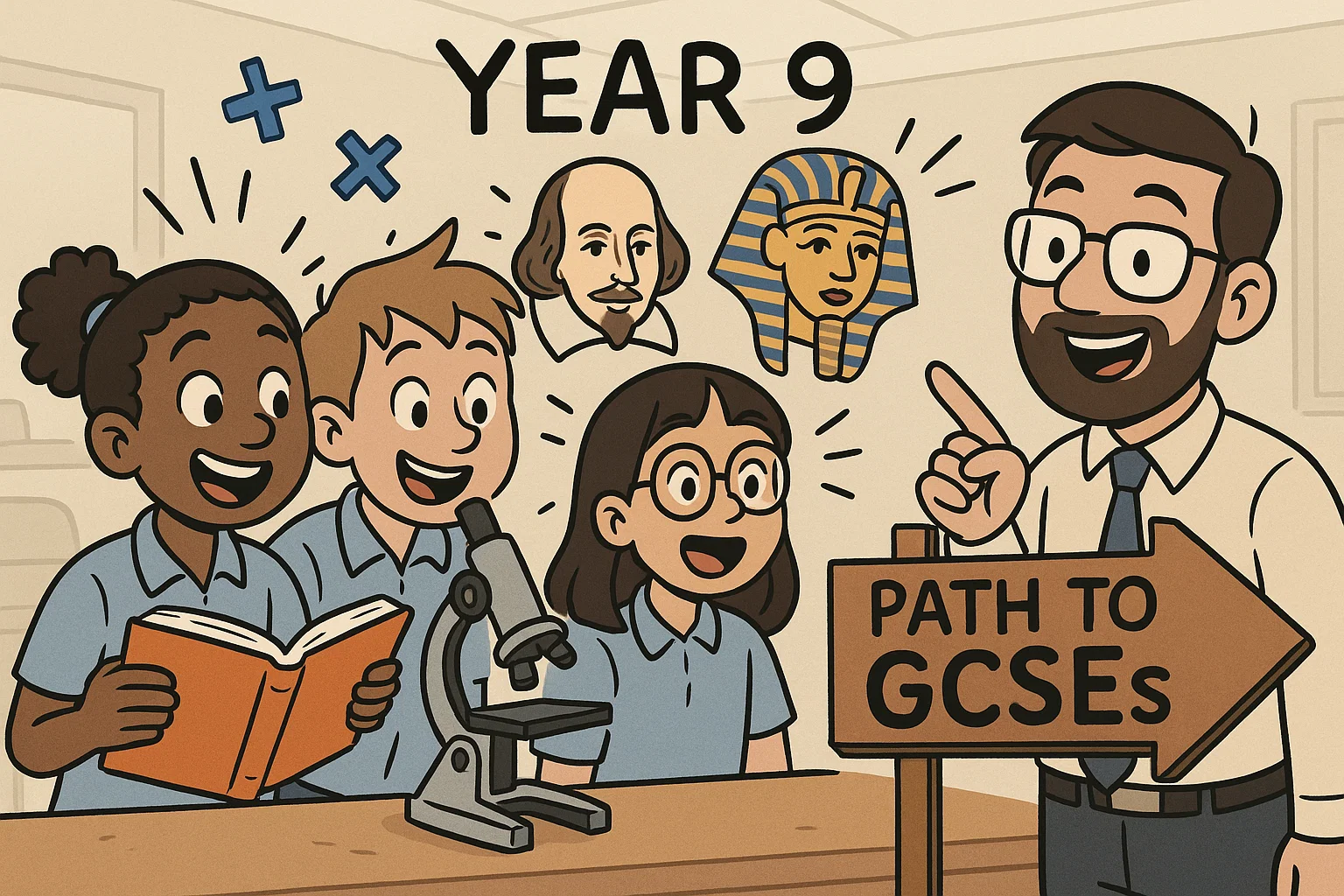
Year 9 is a pivotal point in primary and secondary education planning, although its exact status differs by nation within the UK educational system. In England, it is the final year of Key Stage 3 and the gateway to Key Stage 4 and GCSE options. For pupils typically aged 13 to 14 in England and Wales, this year bridges the broad lower-secondary curriculum and the more focused, exam-oriented environment of Years 10 and 11.
Whether you are navigating the UK education system as a UK-based parent or an international family considering a British school pathway, this guide for parents explains how Year 9 can help you plan GCSE choices, post-16 options, and long-term academic progression.
Key Takeaways
- Age profile: Year 9 usually covers pupils aged 13 to 14 in England and Wales.
- Curriculum framework: In England, Year 9 is the final year of Key Stage 3. Wales, Scotland, and Northern Ireland follow different structures.
- Strategic planning: This year is important because students choose GCSE options that shape the pathway through Years 10 and 11.
- Breadth of study: Pupils study core subjects alongside humanities, languages, creative, practical, and technology-based subjects.
- Regional variation: Scotland operates under a distinct structure, with S3 broadly comparable by age to Year 9 in England and Wales.
- Holistic support: Parents play a vital role in balancing academic challenge with pastoral support during this important developmental stage.
Year 9 Quick Facts
- Typical age: 13–14 years old in England and Wales.
- Stage: Final year of Key Stage 3 in England.
- Focus: Core academic consolidation and GCSE options planning.
- Mandatory status: Year 9 falls within compulsory school age and full-time education expectations across the UK, although school-leaving and post-16 participation rules vary by nation.
- Environment: Usually taught in secondary schools, senior schools, or independent schools.
Parent and Student Snapshot
For many families, Year 9 feels like the “calm before the storm.” Although GCSE exams at the end of Year 11 are still two years away, the workload begins to become more complex. Pupils are expected to demonstrate greater independence in maths and science, while also managing a broad set of subjects.
Socially, this is a period of significant cognitive and emotional growth. Peer influence, self-identity, and confidence often become central to a pupil’s school experience, so academic support and wellbeing support are both important.
Next Steps Summary
After Year 9, pupils in England move into Key Stage 4, which covers Years 10 and 11. This is when many students take their first major step into GCSE planning before starting two-year GCSE courses or equivalent qualifications.
Decisions made at this stage can affect access to sixth form, a college of further education, and, later, university courses or planning for future UK university placement, especially for international families. However, GCSE options should be seen as important pathway choices rather than decisions that permanently fix a pupil’s future.
What Is Grade 9 in UK Years? Year 9 Context
The term “Grade 9” often causes confusion for families more familiar with American or other international school systems. In school education in the UK, the terminology usually focuses on “Years” rather than “Grades.”
In England, “grade 9” also refers to the highest GCSE grade, which is entirely separate from a pupil’s school year.
Grade 9 Versus Year 9
In the United States and many international schools, “Grade 9” typically refers to the first year of high school, usually for pupils aged 14 to 15. By age, US Grade 9 is usually closer to Year 10 in England and Wales.
Year 9 in England and Wales is typically for pupils aged 13 to 14. In England, it is the third year of secondary education.
Year 9 in Secondary School
Within the secondary education stage in England, Year 9 sits between the foundational learning of Years 7 and 8 and the more exam-focused environment of Years 10 and 11. It is often described as a preparation year.
Schools use this time to ensure pupils have developed a secure foundation across the curriculum before they commit to more specialised GCSE study.
GCSE Grade 9 Confusion
A common point of confusion for international families is the GCSE numerical grading system. In England’s GCSE system, grade 9 is the highest grade. It is the highest grade on the 9–1 GCSE scale and is not directly equivalent to an old letter grade .
A pupil in Year 9 would not normally be expected to achieve GCSE grade 9 yet. They are usually still before the main GCSE course and assessment phase.
Year 9 Age Range in UK Schools
The UK educational system is often described as age-based, although placement rules and flexibility differ by nation and school type. In England and Wales, Year 9 pupils are typically aged 13 to 14, with cohort placement based on date of birth.
Typical Age for Year 9
In England, a pupil normally starts Year 9 aged 13 and turns 14 during that school year. This stage often coincides with early to mid-adolescence, when pupils begin to handle more abstract reasoning in subjects such as maths and science.
Maintaining pupils within their age-appropriate year group is common practice, as it supports social development, emotional wellbeing, and consistent progression through the curriculum.
Birthday Cut-Off Dates
In England and Wales, school-year cohorts normally run from 1 September to 31 August. A pupil starting Year 9 in England is normally in the cohort whose 14th birthday falls between 1 September and 31 August of that school year.
Pupils born in early September are usually among the oldest in the year group, while those born in late August are usually among the youngest. Schools often monitor relative age differences to ensure younger pupils receive suitable support where needed.
International Student Age Placement
For international families entering the UK school system, placement is usually based on age, previous schooling, academic record, and English-language proficiency. These factors help schools prepare students for the demands of the English curriculum.
Independent schools and some international schools may have additional flexibility. They may assess a pupil’s English proficiency and academic record to decide whether Year 9 is the best fit or whether another year group would offer stronger preparation.
How Year 9 Fits Into the UK Education System
The education system in the UK is a structured journey from primary school education through the secondary education stage and, for many pupils, into further and higher education. Year 9 acts as a bridge between the broad lower-secondary curriculum and the more specialised, elective nature of GCSE study.
UK School Years Explained
The system is commonly organised as follows in England and Wales:
- Primary school: Reception to Year 6, usually ages 4–11.
- Secondary school: Year 7 to Year 11, usually ages 11–16.
- Further education or sixth form: Years 12 and 13, usually ages 16–18.
- Higher education: University or other higher education routes, usually from age 18+.
Year 9 is the third year of the secondary school phase in England and Wales.
UK Education Levels
In England, children aged 5 to 16 are entitled to a free place at a state school, meaning many families benefit from free education. In this sense, education is free at the point of access in state-funded schools, while independent schools charge fees.
The journey begins with primary school education, which focuses heavily on literacy, numeracy, and broad foundational learning, and then follows primary education with a wider secondary curriculum. In England, Year 9 is the final Key Stage 3 year before pupils move into Key Stage 4 and usually begin GCSE or equivalent courses.
Year 9 Between Year 8 and Year 10
The move from primary school to secondary school usually happens at Year 7 in England and Wales. In some independent schools, this may be described as the transition from junior school to senior school.
By the time a pupil reaches Year 9, they have completed the first two years of secondary school: Years 7 and 8. This means students make the transition from broad lower-secondary learning towards more focused GCSE preparation.
Key Stages in UK Education
The British school system is often discussed through “Key Stages,” especially in England. These define expected standards and subjects taught at different ages. In England, maintained schools follow the national curriculum, which is organised into Key Stages. Wales now follows the Curriculum for Wales, which is no longer organised by Key Stages in the same way.
Key Stage 1 for Ages 5 to 7
Key Stage 1, covering Years 1 and 2 in England, focuses on the foundations of primary education. Pupils begin formal learning in reading, writing, and basic mathematics, setting the stage for later school education.
Key Stage 2 for Ages 7 to 11
Key Stage 2, covering Years 3 to 6 in England, covers the latter half of primary school. It concludes with national curriculum tests, often called SATs, which provide information about a pupil’s progress before secondary school.
Key Stage 3 for Ages 11 to 14
In England, Year 9 is the culmination of Key Stage 3. During this stage, pupils study a wide range of subjects and develop a broad foundation in areas such as English, maths, science, history, geography, languages, computing, the arts, and physical education.
Key Stage 4 for Ages 14 to 16
In England, Key Stage 4 comprises Years 10 and 11. This is the most exam-focused period of compulsory secondary education and usually culminates in GCSE exams or equivalent qualifications.
Year 9 is the stage when many pupils decide which optional subjects they will carry forward into this more specialised phase.
Key Stage 3: Bridge Between Primary Learning and GCSEs
Year 9 is widely regarded as a “hinge” year. In England, it is the final opportunity for pupils to engage with a broad curriculum before their subject choices narrow for GCSE study.
Role of Key Stage 3
Key Stage 3 is designed to give pupils a broad foundation across different disciplines. This ensures that even if a pupil does not pursue geography, art, music, or a language at GCSE, they still develop a baseline of cultural, scientific, creative, and analytical knowledge.
This stage helps build the skills pupils need before attending a UK university, sixth form, or college. These include critical thinking, basic research, independent study habits, and the ability to manage several subjects at once.
Year 9 as a GCSE Preparation Year
Many secondary schools begin introducing GCSE-style assessment criteria towards the end of Year 9. This helps prepare pupils for the increase in depth and independence they will experience in Year 10.
By practising exam techniques early, pupils can make the transition to GCSE work feel more manageable.
Skills Pupils Build Before GCSEs
Beyond subject knowledge, Year 9 focuses on academic habits and transferable skills:
- Time management: Balancing a broad range of subjects.
- Independent research: Moving beyond textbooks and using reliable sources.
- Literacy and numeracy: Strengthening reading, writing, mathematical, and scientific foundations.
- Revision techniques: Learning how to store, organise, and retrieve information effectively.
Typical Subjects in Year 9
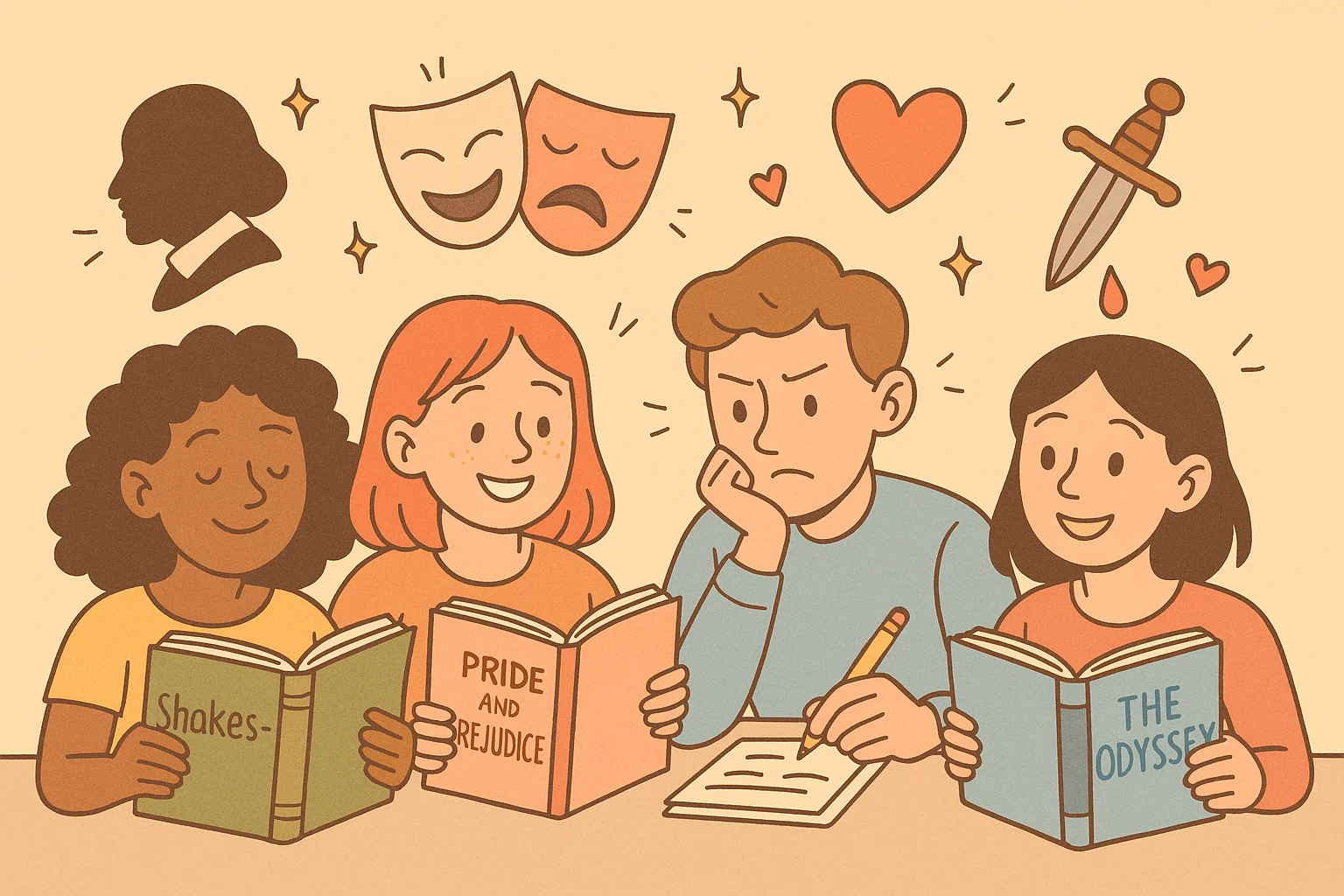
The Year 9 curriculum is broad and varied. In England, maintained schools follow the national curriculum, while academies and independent schools have more curriculum flexibility. Individual schools may organise subjects differently.
Core Subjects
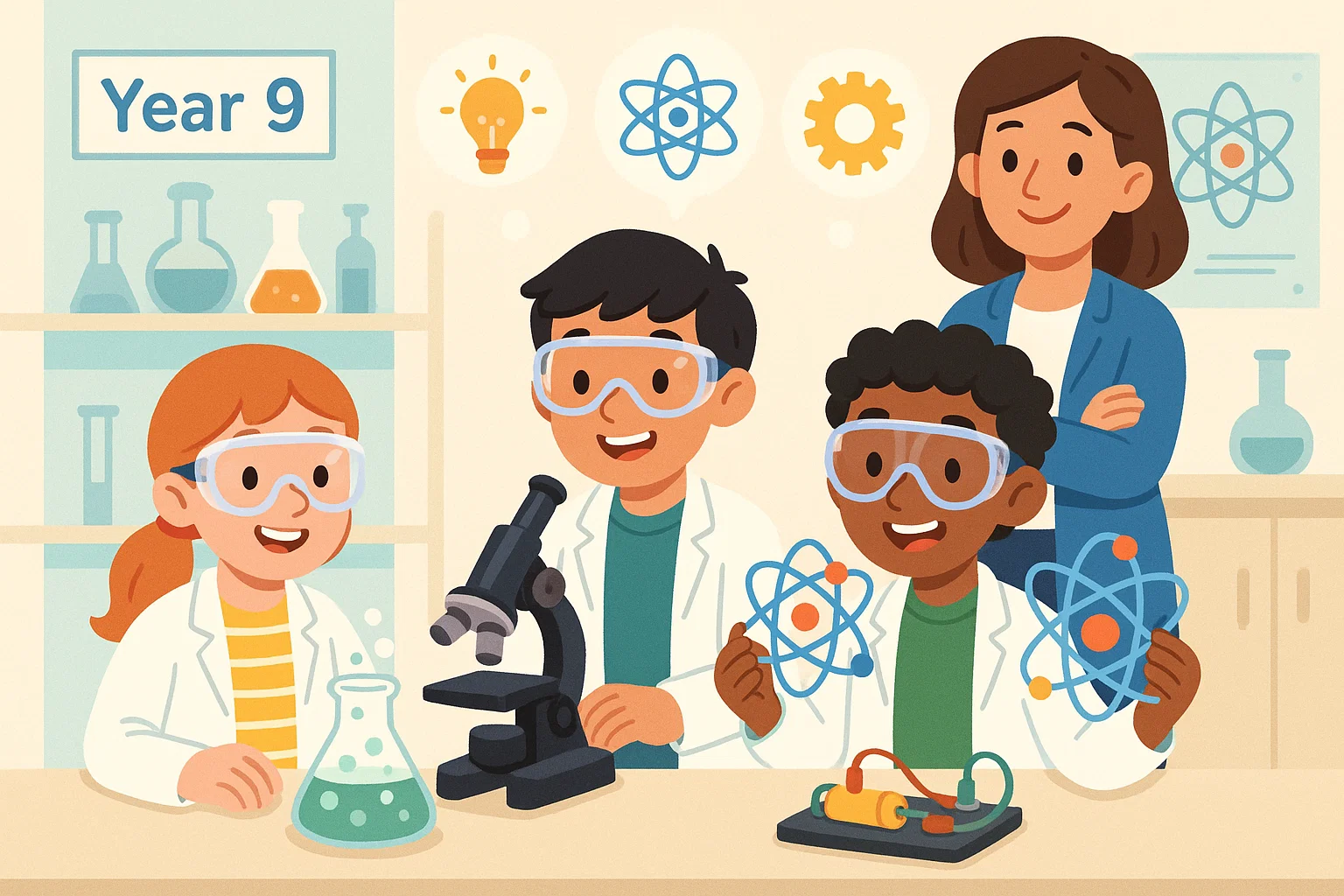
All pupils study core subjects such as English, maths, and science. Science may be taught as combined science or through separate biology, chemistry, and physics strands.
These subjects are compulsory because they are central to GCSE progression and are important for many post-16, employment, and university pathways.
Humanities and Languages
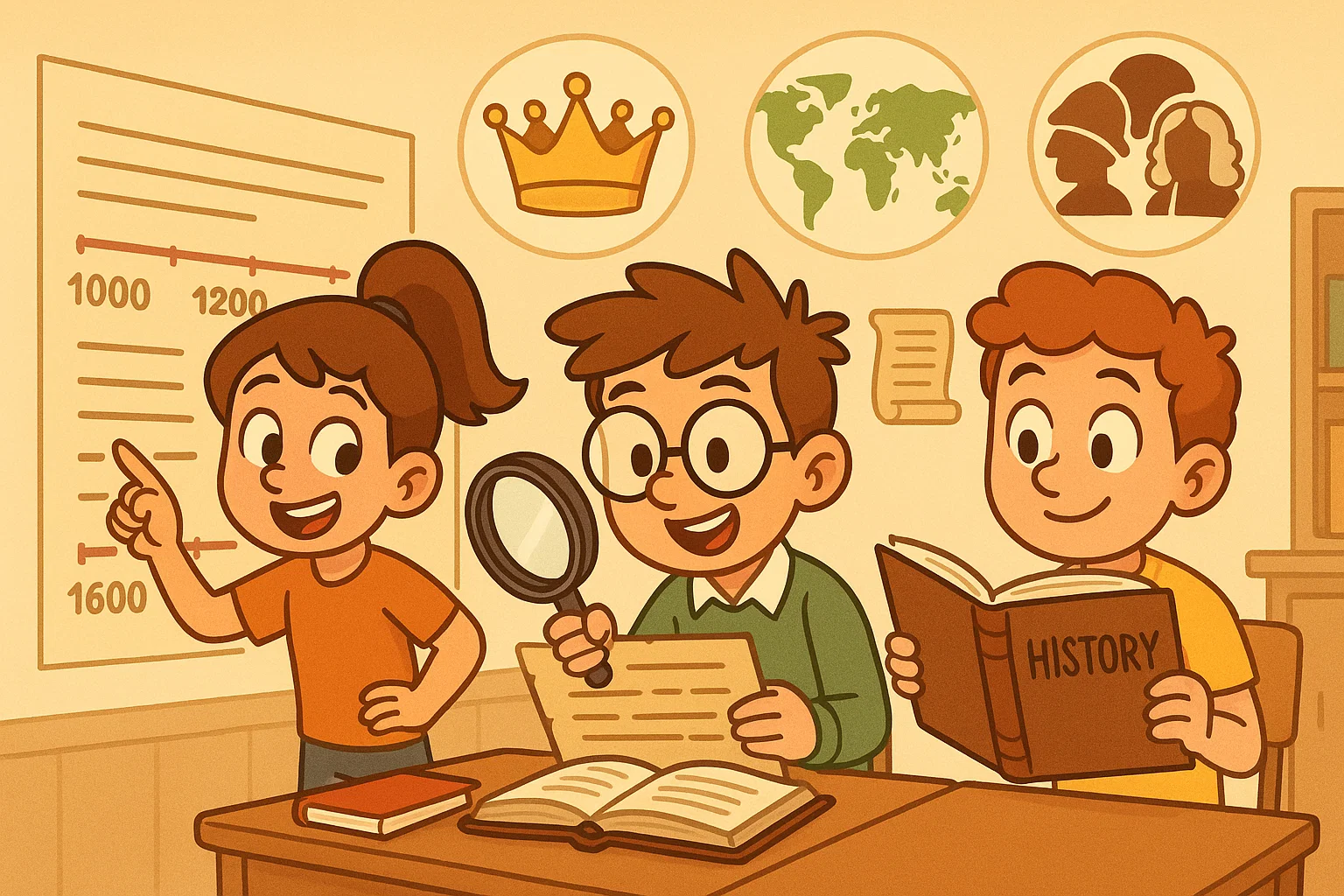
The curriculum usually includes history, geography, and religious education. In England, modern foreign languages are part of the Key Stage 3 national curriculum, although the languages offered vary by school.
These subjects help pupils build cultural awareness, analytical skills, and a broader understanding of the world.
Creative, Practical, and Technology Subjects
To provide a balanced education, Year 9 pupils commonly study subjects such as:
- Art and design
- Music
- Drama
- Design and technology
- Computing
- Physical education
These subjects help pupils develop creativity, collaboration, problem-solving, and practical skills.
PSHE, Careers, and Personal Development
PSHE is commonly taught, and schools must provide statutory relationships, sex, and health education, alongside religious education. This typically covers areas such as relationships and sex education, mental health, online safety, and personal development.
Year 9 is also a common point for careers guidance, helping pupils see how GCSE choices may connect with future study and work.
Option Subjects and GCSE Pathways
One of the most significant events in Year 9 is the GCSE options process. For many pupils, this is the first significant formal choice in their school curriculum, as students choose subjects that shape their GCSE pathway.
GCSE Options Process
Many schools hold options evenings, often in the spring term. Teachers provide information about different GCSE courses, assessment methods, and possible future pathways.
Parents and pupils then usually submit an options form, choosing a small number of elective subjects to study alongside core subjects.
Choosing Subjects Wisely
Choosing subjects requires a balance between interest, ability, and future plans. A pupil may love drama, but if they are considering medicine or another STEM pathway, they should keep their maths and science performance strong.
A practical approach is to consider both genuine interest and consistent attainment in school reports.
| Category | Typical Subjects | Importance |
| Compulsory | English, maths, science | Essential for most future pathways |
| Foundation | History, geography, modern foreign languages | Provides academic breadth |
| Creative | Art, music, drama, media | Develops creativity, confidence, and expression |
| Vocational or technical | BTEC Tech Awards or similar qualifications | Focuses on practical application, depending on the school |
Academic, Creative, and Vocational Routes
While most pupils follow the GCSE route, some may be offered vocational or technical qualifications, such as BTEC Tech Awards, depending on the school.
These routes can be valuable for pupils who prefer practical, coursework-based, or career-linked learning.
Assessments, Exams, and Progress in Year 9
Assessment in Year 9 is primarily internal. Unlike GCSE exams at the end of Year 11, which are set by awarding bodies, Year 9 tests are usually designed internally by schools.
Assessments in Year 9
Schools use both formative and summative assessments. Formative assessments may include quizzes, classwork, homework, and teacher feedback. Summative assessments may include end-of-topic tests or end-of-term exams.
These assessments help teachers review progress, identify gaps, and support pupils before they begin GCSE courses.
How Year 9 Exams Differ from GCSEs
The primary difference is the level of stakes. Year 9 exams do not result in a national certificate.
However, they can influence target-setting and teaching-group decisions. GCSE tier decisions are usually reviewed over time rather than fixed by a single Year 9 result.
Progress Tracking and Reports
Parents usually receive at least one formal written report each year, and many schools also provide interim progress updates.
Reports may include:
- Target grade: What the pupil is working towards by the end of Year 11.
- Current attainment: The pupil’s current level of performance.
- Attitude to learning: A measure of focus, participation, homework completion, and independence.
SATs, GCSEs, and Qualification Timeline
In England, national curriculum tests are taken at the end of primary school in Year 6. There are no national SATs in Year 9.
The next major national milestone for most pupils in England is the GCSE exam period at age 16.
National Curriculum and Year 9 Learning
The English national curriculum provides a framework for maintained schools in England. Other UK nations have their own curriculum arrangements.
Academies and independent schools do not have to follow the national curriculum, although many use it as a reference point.
National Curriculum Role
The curriculum helps ensure that pupils in maintained schools study a broad and balanced set of subjects. This is particularly useful for families who move between schools, as it can reduce gaps in learning.
Key Stage 3 Curriculum Coverage
In Year 9, Key Stage 3 work is usually at its most advanced. In English, pupils might move from modern novels to Shakespeare. In science, they may move from basic cell biology to more complex genetics, energy, forces, and chemical reactions.
The goal is to strengthen understanding before GCSE study begins.
Curriculum Differences by School Type
- Maintained schools: Follow the national curriculum in England.
- Academies: State-funded schools with more curriculum freedom than maintained schools, although they must teach a broad and balanced curriculum including English, maths, and science.
- Independent schools: Do not have to follow the national curriculum and may offer GCSEs, IGCSEs, or other international qualifications.
Year 9 Across England, Wales, Scotland, and Northern Ireland
Education is a devolved matter, meaning each nation in the UK manages its own system. This is especially important for families moving between nations.
England
England follows the standard Year 7 to Year 11 secondary structure, with GCSEs usually taken at the end of Year 11. In England, Year 9 is the final year of Key Stage 3.
Wales
Wales uses a similar year-group structure, but the Curriculum for Wales is being rolled out as a 3–16 learning continuum rather than a Key Stage-based curriculum.
GCSEs remain important, but qualifications in Wales are changing. The Welsh Baccalaureate is also changing: the aggregated qualification will no longer be available to learners starting Year 10 in 2025, while the Skills Challenge Certificate remains available as a standalone qualification for learners starting Year 10 in 2025 and 2026.
Scotland
Scotland does not use the “Year 9” label. Instead, pupils move from P7 to S1, then through S2 to S6.
S3 is broadly comparable by age to Year 9 in England and Wales. Scottish pupils follow Curriculum for Excellence. The broad general education continues to the end of S3, and pupils then move into the senior phase, where they may take National 4, National 5, and later Higher qualifications.
Northern Ireland
Northern Ireland follows a different year-numbering structure. Key Stage 3 covers Years 8 to 10, and Key Stage 4 covers Years 11 and 12.
This means Northern Ireland Year 9 is not the same stage as England Year 9. By age, England Year 9 is more closely comparable to Northern Ireland Year 10.
Types of Schools for Year 9 Pupils
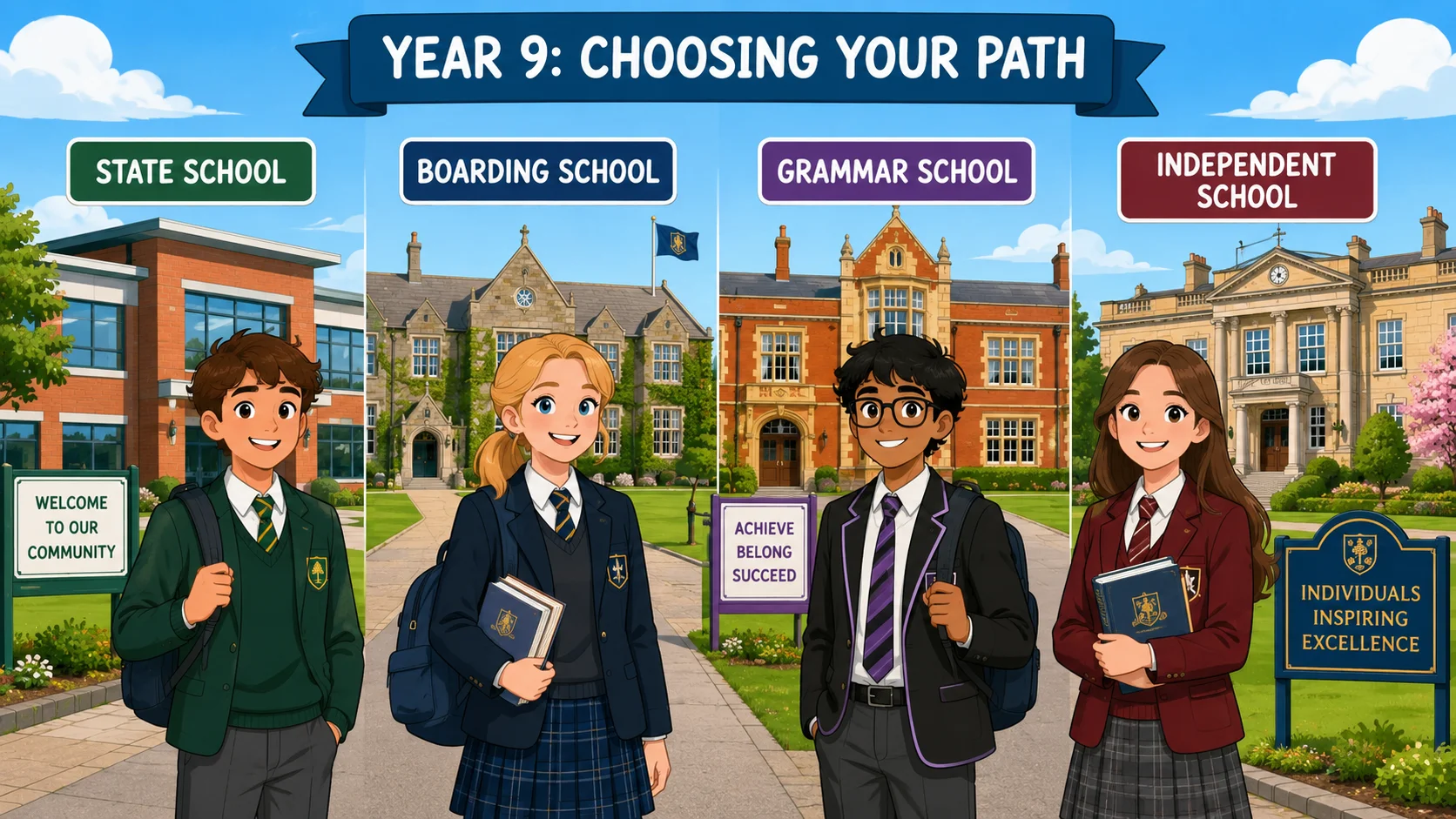
The British school system offers various environments for Year 9 pupils, each with different admissions criteria, teaching styles, and levels of flexibility.
State Schools, Academies, and Grammar Schools
Most children in the UK attend state-funded schools, many of which are comprehensive schools.
Grammar schools are a subset of state-funded education and select pupils based on academic ability, usually through the 11+ exam. Academies are also state-funded but have more independence over curriculum design, staffing, and school management.
Boarding Schools and State Boarding Schools
For international pupils, boarding schools can provide a full residential experience. There are also a small number of state boarding schools where education is state-funded, but parents pay for boarding.
Boarding may be suitable for families who want a structured school environment with academic, pastoral, and extracurricular support in one setting.
Independent Schools and Tutorial Colleges
Independent schools, often called private schools, may have smaller class sizes and more extensive extracurricular programmes.
Tutorial colleges offer highly personalised, small-group teaching and are often used by pupils who need to catch up, retake qualifications, or accelerate their progress. The tutorial system is often associated with Oxford and Cambridge traditions of close academic supervision, although modern tutorial colleges operate in a much broader school and exam-preparation context.
Transition from Year 9 to GCSE Years
The move into Years 10 and 11 is a significant step up. The two school years following Year 9 are usually more focused on GCSE preparation and subject specialisation.
Year 10 and Year 11 Overview
In Years 10 and 11, the number of subjects often drops from a broad Key Stage 3 timetable to around 8 to 10 GCSE or equivalent subjects.
This allows pupils to study chosen subjects in greater depth and spend more time developing exam technique, coursework skills where applicable, and subject-specific knowledge.
GCSE Programme
A typical GCSE programme involves studying around 8 to 10 subjects, although some pupils, particularly in selective or independent schools, may study between 9 and 12 subjects.
English language, English literature, and maths are usually compulsory. Most pupils also study science, either as combined science or separate biology, chemistry, and physics.
Intensive One-Year GCSE and IGCSE
Some independent schools and colleges offer intensive one-year GCSE or IGCSE courses. These courses are usually designed for older pupils or international students who need recognised qualifications before sixth form, college, or university applications.
They can be useful for pupils transferring from another education system or those who need a faster route into post-16 study.
Beyond GCSEs: Sixth Form, Further Education, and Higher Education
Year 9 is not the final decision point in a pupil’s academic life, but it is the start of a more deliberate pathway through GCSEs, post-16 study, and beyond.
Years 12 and 13: Sixth Form
After the end of Year 11, pupils may stay at school for sixth form or move to a sixth form college to study A levels or other post-16 qualifications.
A levels are a common route into UK universities, but vocational and technical routes can also lead to higher education.
Further Education and Vocational Courses
For pupils who prefer practical learning, further education colleges offer options such as T Levels, vocational qualifications, apprenticeships, and applied courses.
These routes can provide direct pathways into employment, higher apprenticeships, or higher education.
Higher Education and University
Many UK universities are internationally recognised, and the study habits formed in Year 9 can support long-term academic progress before attending a UK university.
For international families, early planning can also help pupils understand future entry routes, courses, and UK university courses, locations, and the campuses of UK universities they may later apply to. However, Year 9 should not be treated as a pressure point for university decisions. Instead, it should be used to build confidence, subject awareness, and strong learning habits.
Practical Tips for Year 9 Pupils
- Study planning: Use a planner to track homework and deadlines. Do not let assignments pile up.
- Balance: Continue with clubs, sports, music, drama, or other activities. They are important for wellbeing.
- Revision habits: Start using flashcards, summaries, and short review sessions before Year 11.
- Communication: If you do not understand a concept in maths or science, ask your teacher as soon as possible.
- Options thinking: Choose GCSE subjects based on interest, effort, attainment, and future flexibility.
Practical Tips for Parents
- Support choices: Talk to your child about GCSE options early, but avoid making decisions for them.
- Stay informed: Attend parents’ evenings and ask about current attainment, targets, and attitude to learning.
- Monitor wellbeing: Year 9 can be socially turbulent, so keep communication open about friendships, stress, and school life.
- Encourage balance: Academic progress matters, but sleep, exercise, hobbies, and confidence are also essential.
- Ask questions: If you are unsure about GCSE options, speak to subject teachers, tutors, or the school’s careers adviser.
Common Questions About Year 9
Is Year 9 the Same as Grade 9?
Not exactly. In England and Wales, Year 9 is usually for 13- to 14-year-olds. In the US, Grade 9 is often for 14- to 15-year-olds, which is usually closer to Year 10 by age in England and Wales.
In Northern Ireland, the comparable age group to England Year 9 is usually Year 10.
Do Pupils Take GCSEs in Year 9?
Usually no, although some pupils may take an individual GCSE early.
Most pupils choose their GCSE options in Year 9 and begin GCSE courses in Year 10.
Is Year 9 Part of Key Stage 3?
In England, yes. Year 9 is the final year of Key Stage 3.
In Wales, Scotland, and Northern Ireland, the structure is different, so families moving between nations should check the relevant curriculum and year-group equivalence.
Which Subjects Are Compulsory in Year 9?
In English maintained schools, Key Stage 3 compulsory subjects include English, maths, science, history, geography, modern foreign languages, design and technology, art and design, music, PE, citizenship, and computing.

Take a short quiz to find out what your everyday choices say about your parenting style
When your child is curious about something new, what’s your instinct?
Take a short quiz to find out what your everyday choices say about your parenting style
“Can I download this app?” What happens next?
Take a short quiz to find out what your everyday choices say about your parenting style
When it comes to rules at home, which sounds most like you?
Take a short quiz to find out what your everyday choices say about your parenting style
If you could give your child one life skill today, what would you pick?
Take a short quiz to find out what your everyday choices say about your parenting style
Your child gets to choose what to watch. What would your ideal setup look like?
Take a short quiz to find out what your everyday choices say about your parenting style
Pick your parenting superpower ✨