
How Does Technology Affect Children’s Social Development?

 Discover a Free Education Video App for Kids
Pastory uses AI to personalize educational video content based on your child’s interests and personality. Safe, engaging, and built for curious young minds. Sign up now to stay updated and enjoy early access with a free trial

Digital technologies play a complex role in the modern development of children. On one hand, they can support peer connection, collaborative learning, creativity, and long-distance relationships. On the other hand, excessive screen time, unsafe online contact, or exposure to age-inappropriate content may have a negative impact on children’s social skills, emotional regulation, sleep, and face-to-face communication.
The impact of technology on children’s social development is not the same for every child. It depends on age, temperament, family routines, content quality, total screen time, and the level of adult involvement. Different types of screen activities can affect children in different ways: a video call with a grandparent, a collaborative school project, and an hour of passive scrolling do not have the same developmental value. To promote healthy development, caregivers need to balance technology usage with offline play, sleep, movement, and real-world relationships. The goal is not to remove technology from childhood, but to ensure that kids use it in ways that support their development and behavior rather than undermine it.
Key Takeaways
- Age matters: Younger children need face-to-face interaction for language, emotional cues, and the development of social skills. Older children and teens often use digital media for identity, belonging, and peer connection.
- Quality matters more than quantity: The time children spend online matters, but content, context, and purpose matter just as much.
- Technology can support connection: Social media platforms, messaging apps, video calls, and online games can help kids maintain friendships and family bonds.
- Excessive use carries risks: The effects of excessive screen time may include reduced sleep, fewer offline interactions, increased conflict, and a negative impact on children’s emotional well-being.
- Parents play a central role: The relationship between screen time and child outcomes depends heavily on guidance, limits, co-use, and the parent and child relationship.
- Safety conversations are essential: Families should discuss cyberbullying, sextortion, privacy, gambling-like features, and risky online behavior before problems arise.
Positive Effects Snapshot
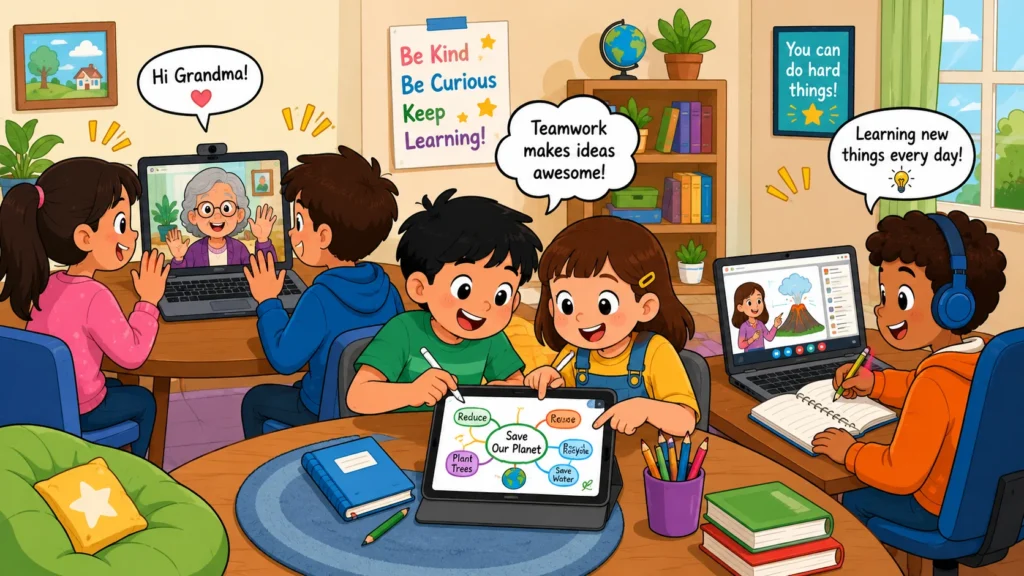
Digital technology can help children stay connected with family members and peers through video calls, messaging, online games, and shared digital activities. The role of technology in shaping collaborative learning can be especially valuable when children use digital tools to create, communicate, and solve problems together.
For shy, neurodivergent, or isolated children, online communities may provide a sense of belonging. When supervised and age-appropriate, technology usage can support skill development, self-expression, and cognitive development in children.
Negative Effects Snapshot
The negative impacts of technology usually appear when screen use becomes excessive, passive, unsupervised, or disruptive to sleep, movement, family life, and offline friendships. Increased screen time may reduce opportunities for face-to-face communication and free play. Passive scrolling, unsafe contact, social comparison, and cyberbullying can all have negative impacts on their development.
The association between screen time and developmental outcomes is complex. Screen time does not affect every child in the same way, but prolonged, poorly managed use may increase the risk of social, emotional, and behavioral challenges.
Parent Action Snapshot
Caregivers can reduce the risks of excessive screen use by creating a family media plan, protecting sleep for children, setting clear limits, and using technology together with younger children. Screen time for kids should be balanced with offline play, reading, family meals, physical activity, and in-person friendships.
Open, non-judgmental conversations help ensure that children feel safe asking for help when something upsetting, confusing, or dangerous happens online.
Introduction and Background
Digital devices are now part of everyday childhood. Children use tablets, smartphones, computers, smart toys, streaming platforms, messaging apps, educational tools, and social media platforms for learning, entertainment, communication, and self-expression.
Understanding the effects of digital technology requires more than counting minutes. The influence of screen time depends on what a child is doing, who they are doing it with, when they are using the device, and what the screen use is replacing. For example, a child using a tablet to create a story with a parent is having a very different experience from a child scrolling alone late at night.
Social and emotional development includes a child’s ability to form relationships, feel empathy, communicate clearly, resolve conflict, regulate emotions, and understand social cues. These abilities are now developed in both offline and digital spaces. The challenge for parents and educators is to help kids benefit from technology while reducing the potential negative impact of excessive or inappropriate use.
Why Social Development Matters in the Digital World
The development of social skills usually happens through play, conversation, observation, cooperation, disagreement, and repair. Children learn how to read facial expressions, take turns, listen, apologize, share, negotiate, and manage rejection through repeated real-life interactions.
Digital communication can support some of these skills, but it cannot fully replace face-to-face experience. Messages, emojis, voice notes, and video calls can help children communicate, but they often remove or reduce important non-verbal cues such as tone of voice, body posture, facial expression, and eye contact.
If the time kids spend on screens regularly replaces offline play and family interaction, it may limit the development of social confidence and emotional understanding.
How Digital Media Fits into Daily Childhood
Digital media appears in many parts of a child’s life:
- Education: Many schools use digital tools, learning platforms, interactive boards, and tablets to support lessons and collaboration.
- Entertainment: Streaming services, video platforms, and short-form content shape how children relax.
- Socialization: Online games, group chats, and social media platforms often function as modern social spaces.
- Communication: Messaging apps and video calls help children maintain relationships with family and friends.
- Safety and routine: Smartwatches, family tracking apps, and shared calendars can help with scheduling and security.
Technology and child development are now closely connected, which makes guidance, boundaries, and media literacy essential.
Difference Between Technology Use, Screen Time, and Social Media
These terms are often used interchangeably, but they mean different things.
- Technology use: A broad term that includes coding, digital art, school research, assistive devices, educational apps, gaming, communication, and creative projects.
- Screen time: The total screen time a child spends looking at phones, tablets, computers, TVs, or other digital devices.
- Social media use: The way children use social media platforms for posting, messaging, watching, commenting, comparing, and connecting with others.
- Use of screen-based media: This includes both active and passive activities, from video calls and learning games to scrolling and watching videos.
Because different types of screen activities have different effects, parents should look beyond minutes and ask what the screen is being used for.
What Research Can and Cannot Prove
Many studies show an association between screen time and child development outcomes, but association is not the same as causation. For example, increased screen time may be linked with language delays in younger kids, but this may happen because screen use replaces parent-child conversation rather than because the screen itself directly causes the delay.
The effect of digital media depends on context. A supportive educational app used with a caregiver may benefit development in children, while late-night passive scrolling may interfere with sleep and emotional regulation.
The most useful question is not simply “How much screen time is too much?” but “What is this screen time replacing, and how is it affecting the child’s daily life?”
Examples of Digital Technology Children Use
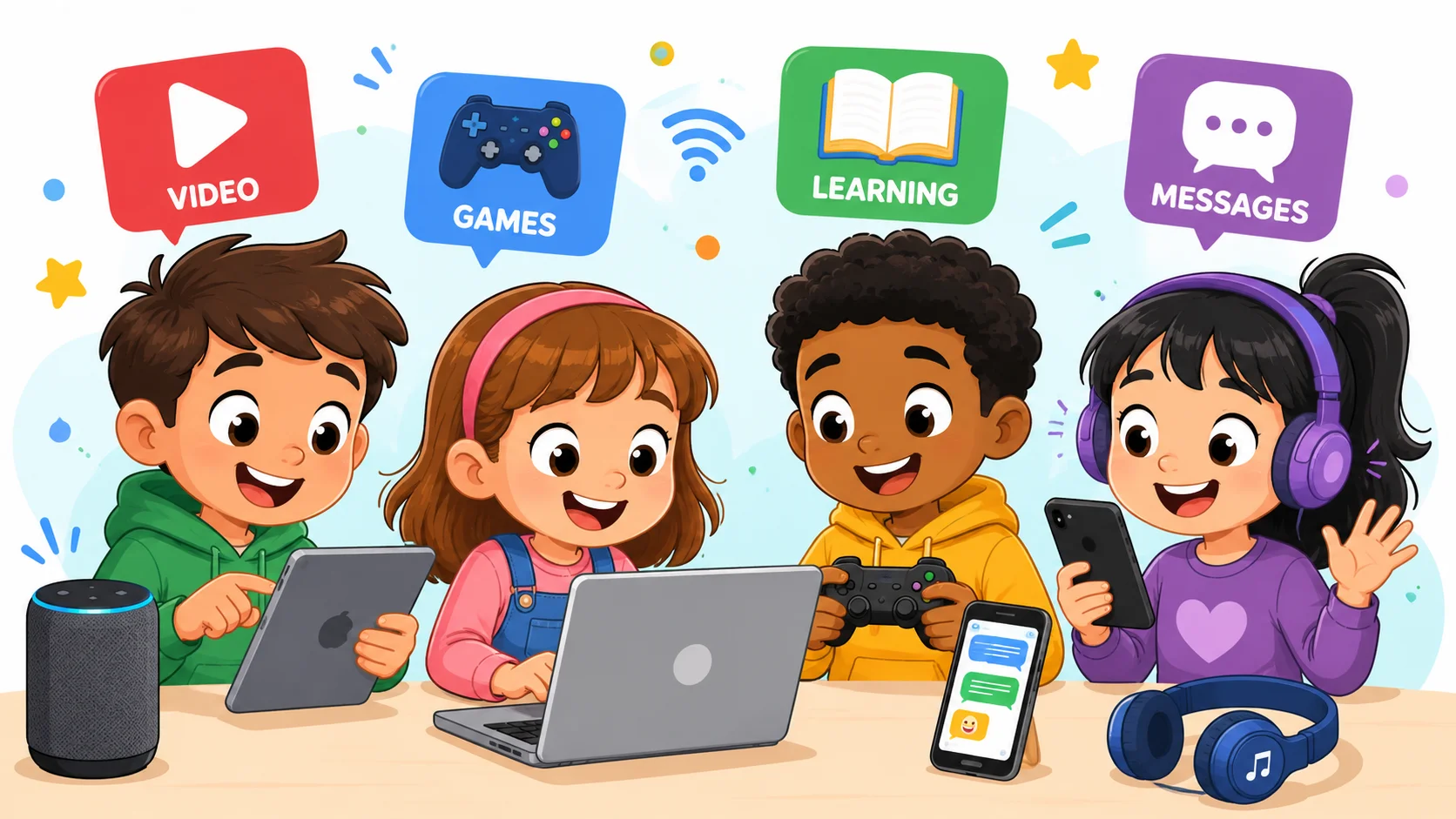
The technology landscape is diverse. Each tool may have different positive and negative impacts on children’s development.
Social Media and Messaging Apps
Children and teenagers use social media platforms such as Instagram, TikTok, Snapchat, YouTube, WhatsApp, and Discord to communicate, share content, follow trends, and express identity.
These platforms can help children feel connected, but they can also expose them to social comparison, peer pressure, exclusion, cyberbullying, and unrealistic standards. The time on social media may affect self-esteem, especially when children compare their real lives to carefully edited posts and images.
Children who use social media need guidance on privacy, kindness, digital footprints, and how to handle conflict or uncomfortable contact.
Games and Virtual Worlds
Online games and virtual worlds such as Minecraft, Roblox, and multiplayer gaming platforms can be important social spaces. Children may cooperate, build, plan, compete, and solve problems together.
Gaming can support communication and skill development when it involves teamwork, creativity, and shared goals. However, it can also expose kids to toxic language, exclusion, aggressive behavior, or contact with strangers.
The impact on child development depends on the game, the child’s age, the time spent, and whether gaming displaces sleep, schoolwork, movement, or offline relationships.
Educational Platforms and AI Tools
Educational technology and AI-supported learning tools can provide immediate feedback, personalized learning paths, and interactive challenges. These tools may support cognitive development in children by helping them practice academic skills at their own pace.
However, educational technology should not replace teachers, peers, or real discussion. The best use of technology in shaping learning happens when digital tools support active thinking, collaboration, and offline reflection.
Streaming, Video, and Short-Form Content
Streaming platforms and short-form video apps can entertain and educate, but passive viewing has different effects from active learning or communication.
Prolonged screen use is associated with concerns such as reduced sleep, less physical activity, attention difficulties, and fewer opportunities for face-to-face interaction. The impact of screen use is especially important when videos auto-play and children struggle to stop.
Parents should pay attention not only to total screen time but also to the type of content, emotional tone, and whether the child is watching alone or with an adult.
Devices, Wearables, and Smart Toys
Children may use tablets, smartphones, laptops, voice assistants, smartwatches, connected toys, and other Internet of Things devices. These tools can support learning, safety, communication, and play.
At the same time, they raise questions about privacy, location tracking, advertising, and data collection. The effects of technology use depend partly on how platforms are designed and how much control families have over settings, content, and communication.
Positive Effects of Technology on Children’s Social Development

Technology can support children’s social development when it is active, age-appropriate, creative, supervised, and balanced with offline life.
Online Connection with Friends and Family
Digital devices help children maintain relationships with people they cannot see in person. Video calls with grandparents, messaging with cousins, or online games with school friends can support social connection.
For children in separated families, children who move schools, or children with relatives overseas, digital tools can help maintain emotional bonds. These interactions are especially valuable when they involve real conversation, turn-taking, and shared attention.
Collaboration Through Games and School Projects
Technology can help kids collaborate in meaningful ways.
- Shared documents: Children learn how to divide tasks, edit together, and give feedback.
- Group presentations: Digital projects encourage planning, role negotiation, and public speaking.
- Multiplayer games: Team-based games can teach communication, strategy, leadership, and cooperation.
- Creative tools: Podcasts, videos, coding projects, and digital storytelling can support both creativity and social skill development.
This is one of the clearest positive effects of digital technology when the activity is structured and purposeful.
Support for Shy, Neurodivergent, or Isolated Children
For some children, online spaces can feel less intimidating than face-to-face interaction. Text-based communication may give children more time to process language and respond.
Neurodivergent children, children with social anxiety, or children with niche interests may find supportive communities online. These communities can reduce loneliness and support identity, confidence, and belonging.
However, these benefits depend on safety, moderation, privacy, and adult guidance.
Cultural Awareness and Empathy Through Global Communities
Technology can expose children to different cultures, languages, experiences, and perspectives. A child may learn about another country through a video call, a virtual classroom exchange, or an online project with students from another region.
When guided well, this can promote empathy and global awareness. It can also help children understand that people have different customs, beliefs, family structures, and ways of communicating.
Digital Creativity and Identity Exploration
Technology allows children to create rather than only consume. They can design games, edit videos, write blogs, make music, draw digitally, create animations, or build virtual worlds.
Creative technology usage can support confidence, independence, and self-expression. It can also help children experiment with identity in a controlled way, especially during adolescence.
Negative Effects of Screen Time on Children’s Social Development
The effects of excessive screen time are most concerning when digital media replaces sleep, movement, face-to-face conversation, free play, schoolwork, and family connection.
Reduced Face-to-Face Communication Practice
Children need repeated in-person interaction to learn non-verbal communication. They develop empathy, patience, listening skills, and conflict repair through everyday contact with parents, siblings, teachers, and peers.
Excessive screen usage may reduce these opportunities. If children mostly communicate through screens, they may miss subtle social cues such as hesitation, discomfort, sarcasm, body language, or emotional shifts.
This does not mean digital communication is harmful in itself. The problem appears when screen time has become a substitute for real-world social practice.
Social Comparison, Anxiety, and Loneliness
Social media platforms often show idealized versions of other people’s lives. Children may compare their appearance, popularity, clothes, holidays, friendships, and achievements with curated content.
| Factor | Digital Impact | Developmental Risk |
| Social comparison | Comparing real life with curated posts | Lower self-esteem and body dissatisfaction |
| Quantified approval | Tracking likes, shares, views, and comments | Anxiety about social status and worth |
| Digital exclusion | Seeing events or chats they were not included in | Loneliness, rejection, and fear of missing out |
| Constant availability | Feeling pressure to reply immediately | Stress, distraction, and reduced downtime |
This is one way social media can have a negative impact on children’s emotional well-being, especially during adolescence.
Cyberbullying, Sextortion, and Unsafe Contact
The risks of excessive screen time are not only about minutes. They are also about exposure. Children who spend more unsupervised time online may be more likely to encounter cyberbullying, unsafe contact, sexual pressure, scams, or coercive behavior.
Cyberbullying can follow a child home and continue outside school hours. Sextortion is another serious risk, especially for teens, and involves threats to share private or intimate images unless the victim sends more images, money, or personal information.
Children need to know that they can ask for help without being blamed.
Attention, Emotion Regulation, and Conflict
Rapid digital content can make slower offline activities feel less rewarding. Some kids become frustrated when devices are taken away, especially after long periods of high-stimulation games or videos.
The influence of screen time on emotional regulation varies by child, but families often notice more conflict around transitions, bedtime, homework, or stopping a game. Clear routines and predictable limits can reduce these struggles.
Passive Scrolling Versus Active Interaction
There is an important difference between active and passive technology use. A child who creates a video, designs a game, or joins a video call is using technology differently from a child who scrolls through an endless feed.
Passive use of screen-based media does little to build social skills. When it displaces real-life communication, it may contribute to negative impacts on their development.
Effects on Younger Children
For young children, the development of language, emotional regulation, and social understanding depends heavily on live interaction with caregivers.
Early Language and Non-Verbal Cue Learning
Language development in children is strongest when it happens through real conversation. Babies and young children learn from facial expressions, tone, repetition, shared attention, and responsive interaction.
Educational videos or apps may introduce words, but they cannot fully replace the parent and child interaction that supports the development of language. Children need to hear words used in real contexts, with emotion, gesture, and response.
Free Play and Early Socialization
Free play helps toddlers and preschoolers learn to share, take turns, pretend, negotiate, and solve small conflicts. These experiences are central to the development of social skills.
If increased screen time replaces free play, children may lose opportunities to practice early friendship skills. Physical play with blocks, dolls, puzzles, sand, water, or outdoor equipment offers social and sensory learning that digital tools cannot fully replicate.
Parent-Child Interaction
The relationship between parent and child is one of the most important influences on early social development. Technoference happens when devices interrupt this relationship during meals, play, bedtime, or daily routines.
If a parent is regularly distracted by a phone, a child may feel ignored or may act out to regain attention. Device-free moments help protect attachment, communication, and emotional security.
Sleep, Vision, Hearing, and Physical Health
Sleep for children is essential for mood, learning, growth, and social behavior. Screen use close to bedtime may interfere with sleep routines and make it harder for children to settle.
Sleep for children under 5 is especially important because early childhood is a period of rapid brain development. At this age, screen time should not replace active play, caregiver interaction, or adequate rest.
Other health considerations include:
- Vision: Prolonged near-screen use may contribute to eye strain and is associated with myopia risk.
- Hearing: Headphones at high volume may increase hearing risk.
- Movement: Time spent sitting with a device can replace climbing, running, jumping, and other motor activities.
Content Quality and Co-Viewing
Screen time for kids is safer and more beneficial when adults choose high-quality content and watch or play together with the child.
Parents can ask:
- “What do you think this character is feeling?”
- “What would you do next?”
- “Can we try this idea with your toys?”
- “Was that kind or unkind?”
- “What did you learn?”
This turns screen time into a shared social experience rather than a passive one.
How Screen Time Affects Older Children’s Social Development
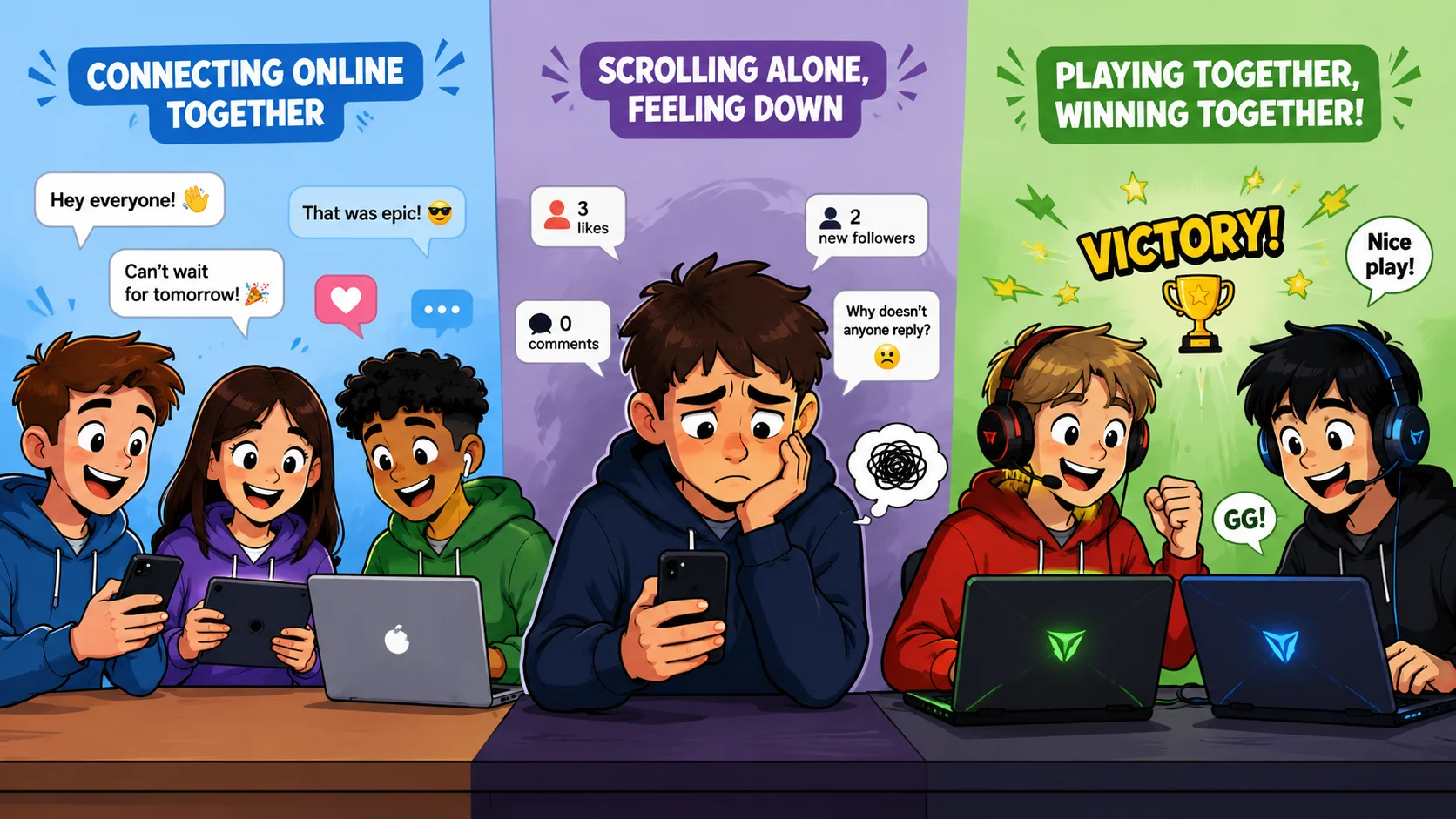
As children grow, technology becomes more connected with independence, identity, friendships, peer pressure, and social belonging.
Friendships, Peer Pressure, and Group Chats
For many school-aged children and tweens, group chats are a major social space. They can help children make plans, share jokes, collaborate on homework, and feel included.
However, they can also create pressure. Children may feel they must reply quickly, stay available, or follow group norms. The relationship between screen time and peer pressure becomes more important as children move toward adolescence.
Social Media Identity and Self-Esteem
Teenagers often use social media to explore identity, style, values, humor, and friendship groups. This can support self-expression, but it can also make self-esteem dependent on online feedback.
The time on social media may become harmful if teens constantly compare themselves with influencers, edited images, or peers who appear more attractive, successful, or popular.
Parents should talk openly about filters, algorithms, advertising, and the difference between online image and real life.
Gaming, Belonging, and Online Teamwork
Gaming can be a positive social outlet for older children and teenagers. Team-based games can help children practice planning, communication, leadership, and cooperation.
However, excessive screen usage through gaming may cause problems if it interferes with sleep, homework, family time, physical activity, or offline friendships. Families should focus on balance rather than banning games automatically.
Sports Betting, Gambling Features, and Teen Risk
Some digital games include features that resemble gambling, such as loot boxes, random rewards, paid upgrades, or limited-time offers. Teens may also see sports betting content through social media platforms, influencers, or advertisements.
These features can encourage impulsive spending and risky behavior. Families should discuss how platforms use design to keep users engaged and spending money.
Eating Disorders and Body Image Risk
Social media platforms can expose children and teens to appearance-focused content, diet culture, edited images, fitness pressure, and unrealistic body ideals.
This does not mean social media causes eating disorders on its own. However, the association between screen time, appearance-focused content, and body dissatisfaction is important, especially for vulnerable adolescents.
Caregivers should watch for changes in eating habits, mood, confidence, body image, or secrecy around online activity.
Sextortion and Online Safety Conversations
Teenagers need direct, calm conversations about sextortion, private images, and unsafe online contact. They should know that if someone threatens them, they will not be blamed for asking for help.
A useful message is:
“If anyone threatens you online or asks for private images, you can tell me immediately. You will not be in trouble. We will solve it together.”
Screen Time Effects on Family Dynamics
Technology affects not only the child but also the whole family system. Screen time has become a common area of disagreement in many households.
Technoference During Meals, Routines, and Play
Technoference occurs when phones, tablets, or other devices interrupt family interaction. This can happen during meals, bedtime routines, car rides, play, or conversations.
When notifications take priority over the people in the room, children may feel less valued. Protecting device-free time helps maintain emotional connection.
Parent Modeling and Shared Device Habits
Children learn from what adults do. If parents constantly check phones during conversation, children may see this as normal behavior.
Parents can promote healthy development by modeling balanced technology usage:
- Putting phones away during meals
- Avoiding scrolling during conversations
- Charging devices outside bedrooms
- Taking screen breaks
- Explaining why limits are important
Conflict Around Rules and Boundaries
Common family conflicts include:
- Transitions: Difficulty stopping a game or video
- Secretive use: Hiding devices or using them late at night
- Priorities: Ignoring homework, chores, meals, or sleep
- Spending: Buying in-game items without permission
- Content: Watching videos or joining chats that are not age-appropriate
Clear rules help manage screen time and promote healthier family routines.
Sharenting and Child Privacy
Sharenting means parents share photos, stories, or personal information about their children online. This can create a digital footprint before the child can consent.
Parents should avoid posting sensitive details such as school names, locations, medical information, emotional struggles, or embarrassing moments. As children grow older, asking permission before posting helps teach privacy and respect.
Family Connection Through Co-Use
Technology can also bring families together. Families can play games, watch documentaries, video-call relatives, create playlists, use a stargazing app, or make digital photo albums.
The key question is whether technology strengthens connection or replaces it.
How Digital Technology Impacts Cognitive and Social Development
The effects of technology use are not limited to social life. Digital media may also affect learning, attention, problem-solving, sleep, emotion regulation, and brain development.
Learning, Attention, and Problem-Solving
Interactive tools can support cognitive development in children. Educational games, simulations, coding platforms, and creative apps can help children practice memory, planning, logic, and problem-solving.
However, constant notifications and rapid switching between apps may fragment attention. Children also need practice with deep focus, boredom, patience, and sustained effort.
Brain Development and Overstimulation Concerns
Brain development is shaped by repeated experiences. Digital rewards such as likes, streaks, notifications, badges, and game levels can activate reward systems and encourage children to seek quick stimulation.
The effect of digital rewards varies from child to child. Still, families should be aware that highly stimulating apps may make slower activities, such as reading, homework, or conversation, feel less appealing.
Language Development and Social Cues
Social cues are the hidden language of human interaction.
- Tone: Does the person mean what they said?
- Facial expression: Are they joking, upset, bored, or uncomfortable?
- Body language: Are they open, tense, or withdrawn?
- Turn-taking: When should I speak or listen?
- Repair: How do I apologize or fix a misunderstanding?
The development of language and social understanding requires real-time feedback. Digital communication can support connection, but it should not replace live conversation.
Well-Being, Sleep, and Emotion Regulation
The relationship between screen time and sleep is one of the most important issues for families. Sleep for children supports mood, learning, memory, empathy, and impulse control.
A child who stays up late gaming, scrolling, or messaging may be more irritable, anxious, distracted, or emotionally reactive the next day. Protecting sleep is one of the most effective ways to reduce the negative impact of screen use.
Physical Health Links with Social Behavior
Physical activity gives children natural opportunities to practice teamwork, confidence, resilience, and social problem-solving. Sports, outdoor play, dance, cycling, climbing, and playground activities all support development and behavior.
When excessive screen time replaces movement, children may have fewer chances to build these social and physical skills.
How Technology Affects Different Pediatric Age Groups
The impact of screen time on kids changes with age, maturity, and developmental stage.
Toddlers and Preschool Children
Developmental focus: Attachment, language, sensory exploration, sleep, emotional regulation, and early social interaction.
Recommendation: Avoid passive screen use where possible. If screens are used, choose high-quality content and co-view with a caregiver. Prioritize sleep, movement, play, and conversation.
School-Age Children
Developmental focus: Friendship skills, empathy, rules, cooperation, self-control, and learning.
Recommendation: Introduce supervised educational tools, creative apps, and age-appropriate games. Establish family rules around total screen time, bedtime, content, and online safety.
Tweens
Developmental focus: Independence, peer belonging, privacy, identity, and emotional sensitivity.
Recommendation: Allow gradual access to messaging or social platforms only with strong privacy settings, regular check-ins, and conversations about cyberbullying, group chats, and online reputation.
Teens
Developmental focus: Identity, autonomy, romantic communication, peer status, values, and self-regulation.
Recommendation: Focus on digital ethics, privacy, sextortion, AI-generated content, gambling-like features, social pressure, and healthy boundaries. Teens need autonomy, but they still need guidance.
Children with Additional Support Needs
For children with ADHD, autism, physical disabilities, speech delays, or other additional support needs, technology can be highly valuable. Assistive tools may support communication, learning, independence, and social participation.
Technology should be used as a bridge to connection, not as a replacement for human relationships.
Digital Media, Data, and Platform Design
Digital platforms are not neutral. Many are designed to capture attention, increase total screen time, and keep users engaged for as long as possible.
What Data Platforms Collect from Children
Apps and platforms may collect:
- Usage patterns: When and how often a child uses an app
- Watch time: How long they stay with certain content
- Engagement: Likes, comments, shares, saves, and searches
- Interests: Topics or creators they return to
- Location data: Where the device is used, if location settings are enabled
This data can shape recommendations and influence what children see next.
Algorithms, Recommendations, and Time-on-Platform Design
Autoplay, infinite scroll, streaks, notifications, and personalized recommendations are designed to extend the time children spend on platforms.
These features may lead children into inappropriate content or make it harder for them to stop. This is one reason the impact of screen design matters as much as the child’s willpower.
Privacy, Consent, and Location Risks
Children need to learn digital consent. They should ask permission before posting someone else’s photo, avoid sharing personal information, and understand that online content can be copied or saved.
Caregivers should teach kids not to share:
- Home addresses
- School names
- Phone numbers
- Passwords
- Live locations
- Private images
- Family information
Ads, Influencers, and Commercial Pressure
Children are often vulnerable to influencer marketing and native advertising. They may not always understand when content is promotional.
Commercial pressure can affect friendships, confidence, and self-worth. Children may feel they need certain products, clothes, games, devices, or experiences to fit in.
Implications for Education
Schools play an important role in teaching children how to use technology responsibly, critically, and socially.
Classroom Social Skills and Digital Collaboration
Digital literacy is part of modern education. Children need to know how to research, communicate, create, fact-check, and collaborate online.
Technology can support classroom social skills when students use digital tools to work together, divide roles, present ideas, and solve problems. The best educational use of technology includes discussion, feedback, and reflection.
AI in Education and Smart Support
AI-supported tools can help explain concepts, provide practice, and support learners who need extra help. However, AI should support teachers and peer learning, not replace them.
For example, students might use AI to generate debate prompts and then discuss them face to face. This keeps technology connected to communication and social learning.
Digital Citizenship and Media Literacy
Digital citizenship teaches children how to behave responsibly online.
Key skills include:
- Fact-checking: Understanding misinformation and reliable sources
- Empathy: Remembering there is a real person behind every username
- Safety: Knowing when to block, report, save evidence, and tell an adult
- Privacy: Protecting personal information
- Accountability: Understanding that online actions have real consequences
Equity, Access, and Screen Balance
Some kids need better access to digital tools for learning, while others need more support reducing excessive screen usage. Schools must balance both needs.
A healthy school approach includes technology for learning and enough offline time for conversation, movement, play, creativity, and rest.
How to Mindfully Incorporate Technology into Education
Technology should support active learning rather than passive consumption.
Purpose-Driven Digital Lessons
Every classroom use of technology should have a clear goal. If the goal is history learning, an interactive virtual tour followed by discussion may be more useful than a passive video.
Teachers can ask:
- Is this activity active or passive?
- Does it support communication?
- Does it encourage problem-solving?
- Will students discuss or apply what they learned?
- Does it promote healthy development and learning?
Active Learning Rather Than Passive Screen Use
| Activity Type | Example | Developmental Benefit |
| Passive | Watching auto-playing videos | Limited benefit unless discussed or connected to learning |
| Active | Recording a podcast or making a digital story | Language, planning, creativity, and confidence |
| Collaborative | Creating a shared coding project | Teamwork, communication, problem-solving, and skill development |
| Reflective | Discussing a digital activity offline | Memory, meaning-making, and social understanding |
Group Work and Communication Goals
Digital projects should include clear communication goals. Students can practice listening, giving feedback, dividing tasks, resolving disagreements, and presenting ideas.
This helps connect technology usage with real-world social skills.
Offline Follow-Up After Digital Tasks
After digital activities, kids should be encouraged to debrief offline.
Useful questions include:
- What did you learn?
- What was difficult?
- How did your group work together?
- What would you do differently next time?
- How can this idea be used in real life?
Policies to Optimize Technology Use
Effective media guidance requires home rules, school policies, safety settings, and regular conversations.
Home Screen Time Rules
Family rules may include:
- No screens at the table
- Devices off at least one hour before bed
- Devices charged outside bedrooms
- Homework before entertainment screens
- Outdoor play before recreational screen time
- Clear limits for total screen time
- Regular reviews as children mature
These rules help reduce excessive screen time and promote healthier routines.
School Device Policies
Schools should clearly explain when devices are allowed and when they are not. Phone-free lunches, device-free playgrounds, and clear classroom rules may support better peer interaction.
Policies should be paired with digital citizenship education rather than punishment alone.
Platform Safety Settings
Parents should use:
- Privacy settings: Keep profiles private by default
- Screen time limits: Use app timers and downtime tools
- Content filters: Block mature or restricted content
- Spending controls: Limit in-app purchases
- Location controls: Turn off unnecessary tracking
- Reporting tools: Teach children how to block, report, and save evidence
Age-Appropriate App Selection
Parents should check whether an app fits the child’s age, maturity, and emotional readiness. App store ratings do not always reflect social risks, advertising pressure, or contact with strangers.
Before allowing an app, review:
- Chat features
- Privacy settings
- In-app purchases
- Moderation
- Advertising
- User-generated content
- Age restrictions
Revisiting Boundaries and Screen Time Rules
A rule that works for an 8-year-old may feel too restrictive for a 13-year-old. Boundaries should change as kids show maturity, responsibility, and trust.
Regular conversations help ensure that children understand why rules exist and how they support health, safety, and independence.
What Parents Can Do to Encourage Healthy Social Development
The goal is not to eliminate technology. The goal is to guide children toward balanced, safe, and meaningful use.
Create a Balanced Daily Routine
A healthy routine should include:
- Sleep: Consistent sleep for children of all ages
- Movement: Daily physical activity
- Social connection: Face-to-face time with family or friends
- Play: Free play, outdoor play, and creative activities
- Learning: Homework, reading, and focused tasks
- Screens: Digital media after key needs are protected
This approach helps reduce the negative impact of excessive screen use.
Co-Use Technology and Discuss Content
Instead of using a device only as a distraction tool, parents can use technology as a conversation starter.
Ask kids:
- “What do you like about this game?”
- “Was that character kind?”
- “What would you do in that situation?”
- “How did that video make you feel?”
- “Do you think that post is realistic?”
Co-use helps parents understand children’s digital worlds and build trust.
Teach Online Empathy and Conflict Repair
Children should understand that typed words can hurt. Online conflict can escalate quickly because tone and facial expressions are missing.
If a child has a conflict in a group chat, encourage them to pause, avoid revenge replies, and consider whether the conversation should happen in person or with adult help.
Protect Sleep, Play, and Physical Activity
Screen time can disrupt children’s sleep when devices are used too close to bedtime or kept in bedrooms overnight.
Helpful habits include:
- No devices in bedrooms overnight
- No screens during meals
- No screens during bedtime routines
- Outdoor activity before recreational screen use
- Calm evening routines
- Regular family activities without devices
These habits help manage screen time and promote healthier emotional regulation.
Talk About Sports Betting, Sextortion, and Risky Online Behavior
Difficult conversations are easier when they happen early and calmly.
Parents can say:
“Some games are designed to make people spend money in ways that feel like gambling. Have you seen anything like that?”
“If anyone asks for a private image or threatens you online, you will not be in trouble for telling me.”
“Some people online pretend to be someone else. What would you do if someone you did not know asked to chat privately?”
Watch for Signs That a Child Needs Support
Excessive screen usage may be a symptom of stress, loneliness, anxiety, bullying, or low self-esteem.
Watch for changes in:
- Sleep
- Mood
- Eating habits
- School performance
- Friendships
- Physical activity
- Secrecy around devices
- Loss of interest in offline hobbies
If screen use is causing serious conflict or distress, professional support may be needed.
Recommendations for Caregivers
Caregivers can help children become safe, thoughtful, and confident digital citizens.
Screen Time Plan by Age
- 0–2 years: Avoid screens except video calls with family or caregivers.
- 2–5 years: Keep screen time limited, high-quality, and co-viewed whenever possible.
- 6–12 years: Set negotiated limits based on sleep, schoolwork, content, and offline activity.
- 13+ years: Focus on privacy, self-regulation, digital ethics, AI awareness, sextortion, gambling-like features, and healthy boundaries.
Conversation Scripts for Difficult Topics
On cyberbullying:
“If anyone ever says something online that makes you feel bad, I want you to know it is not your fault, and you can always tell me.”
On privacy:
“Think of your digital footprint like a tattoo: it can be very hard to remove, so let’s be careful about what we put online.”
On sextortion:
“If someone threatens you online or asks for private images, you will not be in trouble for telling me. We will handle it together.”
On group chats:
“If a chat starts making you anxious or left out, we can talk about what is happening and decide what to do.”
On screen balance:
“Screens are part of life, but sleep, school, movement, and relationships come first.”
Family Media Agreement Checklist
- Where can devices be used?
- Which rooms are screen-free?
- When do devices go away at night?
- What is the limit for total screen time?
- Which apps are allowed?
- Who can kids chat with online?
- What information is private?
- What should a child do if something feels unsafe?
- What are the rules about posting photos?
- What are the consequences for breaking a rule?
- When will the agreement be reviewed?
When to Seek Professional Help
If a child shows signs of compulsive or problematic digital media use, or if their mental health is clearly suffering, caregivers should consult a pediatrician, child psychologist, school counselor, or another qualified professional.
Warning signs may include:
- Severe distress when screens are removed
- Persistent sleep disruption
- Withdrawal from family or friends
- Declining school performance
- Loss of interest in offline activities
- Secretive or risky online behavior
- Signs of anxiety, depression, self-harm, or eating difficulties
Early support can help identify whether technology is the cause, a coping mechanism, or a symptom of a deeper problem.
Final Thoughts
Technology is now part of childhood, and avoiding it completely is neither realistic nor necessary for most families. The key is balance. The positive and negative impacts of digital media depend on the child’s age, the type of content, the purpose of use, and the support provided by adults.
The effects of digital technology are most positive when kids use screens to connect, create, learn, and collaborate. The risks increase when screen use becomes excessive, passive, unsafe, or disruptive to sleep, movement, family life, and offline friendships.
Parents, caregivers, and educators can promote healthy development by guiding children’s technology usage, setting clear limits, protecting offline relationships, and keeping conversations open. With thoughtful support, technology can become a tool that strengthens children’s social development rather than a force that weakens it.FAQ
Does digital media use affect kids’ physical health?
Yes. Prolonged screen time is associated with sedentary behavior and may displace sleep, movement, outdoor play, and active social interaction. The associatioYes. Prolonged screen time is associated with sedentary behavior and may displace sleep, movement, outdoor play, and active social interaction. The association between screen time and sleep is especially important because poor sleep can affect mood, learning, and emotional regulation.n between screen time and sleep is especially important because poor sleep can affect mood, learning, and emotional regulation.
What are the effects of excessive screen time?
The effects of excessive screen time may include reduced sleep, less physical activity, more family conflict, attention difficulties, social comparison, and fewer opportunities for face-to-face interaction. The impact depends on the child’s age, content, context, and support from adults.
What is sharenting?
Sharenting is when parents share photos, stories, or personal details about their kids online. It can create privacy risks and may cause embarrassment or conflict as children grow older.
What is sextortion?
Sextortion is a form of online abuse in which someone threatens to share private or intimate images unless the victim sends more images, money, or personal information. It is a serious risk for teenagers and requires calm, immediate adult support.
What is technoference?
Technoference refers to interruptions in interpersonal interactions caused by digital devices. In families, frequent technoference can reduce the quality of conversation, play, routines, and emotional connection.
What data do platforms collect?
Platforms may collect data such as search history, watch time, location, likes, clicks, comments, and content preferences. This data can shape recommendations and increase the time kids spend on a platform.
Does social media cause eating disorders?
Social media is rarely the only cause of an eating disorder, but it can be a contributing factor for vulnerable children and adolescents. Time on social media that involves appearance-focused content, diet culture, or edited images may increase body dissatisfaction and emotional distress.
How can parents reduce the negative impact on children’s development?
Parents can reduce negative impact on children’s development by setting clear limits, protecting sleep, encouraging offline play, co-using technology, discussing online safety, and modeling balanced digital habits.

Take a short quiz to find out what your everyday choices say about your parenting style
When your child is curious about something new, what’s your instinct?
Take a short quiz to find out what your everyday choices say about your parenting style
“Can I download this app?” What happens next?
Take a short quiz to find out what your everyday choices say about your parenting style
When it comes to rules at home, which sounds most like you?
Take a short quiz to find out what your everyday choices say about your parenting style
If you could give your child one life skill today, what would you pick?
Take a short quiz to find out what your everyday choices say about your parenting style
Your child gets to choose what to watch. What would your ideal setup look like?
Take a short quiz to find out what your everyday choices say about your parenting style
Pick your parenting superpower ✨



