The Art of Positive Parenting in Military Families: 20 Practical Ways to Raise Resilient Kids

 Discover a Free Education Video App for Kids
Pastory uses AI to personalize educational video content based on your child’s interests and personality. Safe, engaging, and built for curious young minds. Sign up now to stay updated and enjoy early access with a free trial
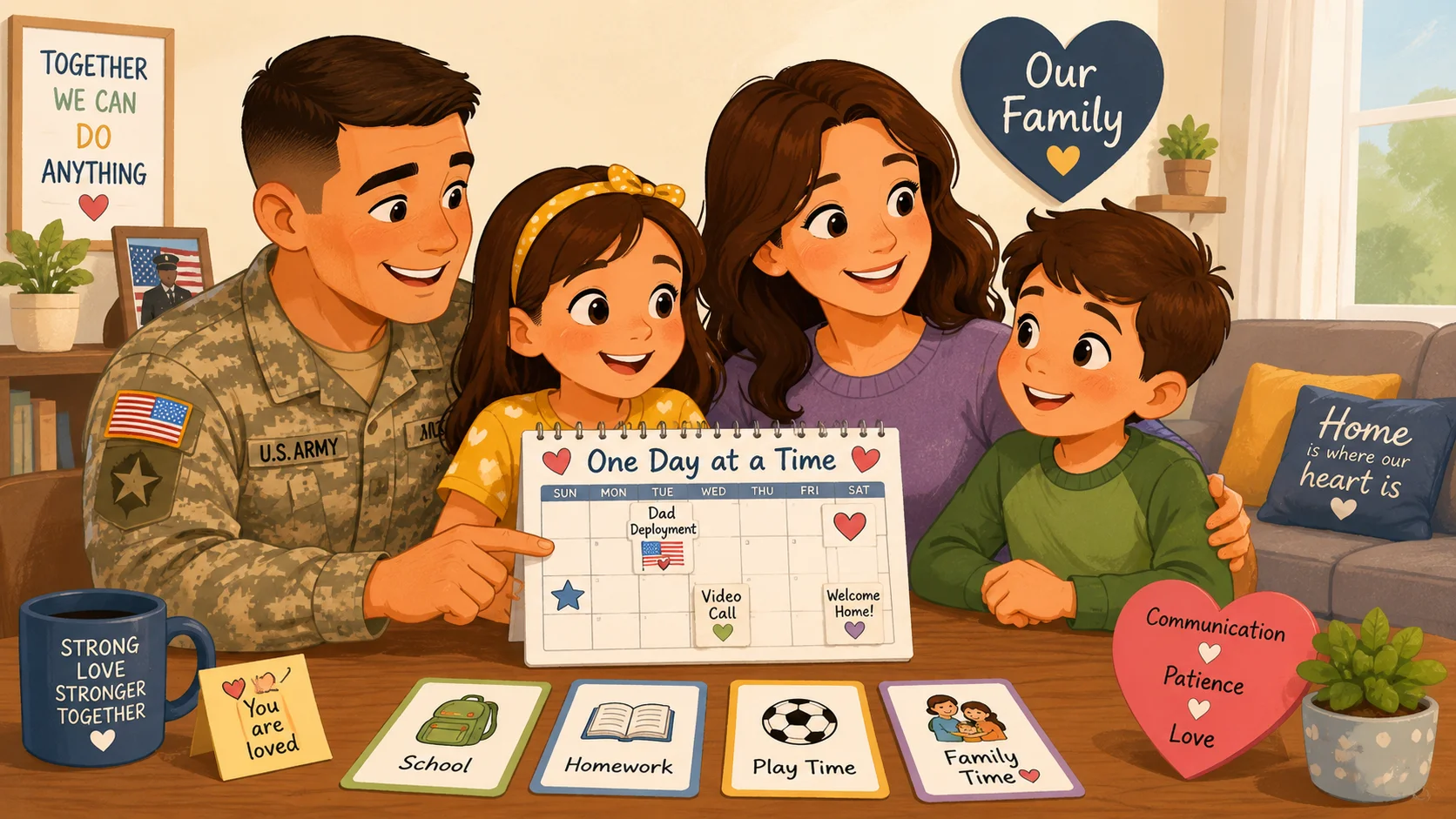
Military life often requires strength, flexibility, and dedication from the whole family. For military families, positive parenting is an evidence-informed approach that combines emotional warmth, consistent rules, predictable routines, and intentional reconnection during deployment and relocation cycles.
Rather than demanding perfection, this approach gives military-connected parents practical strategies to support children through separation, deployment, relocation, and reintegration. By using these practices consistently, families can create a more stable home environment that helps buffer children from the challenges of service life and supports long-term emotional health.
Key Takeaways
- Positive parenting helps military-connected children feel safer during deployment, relocation, and family transitions.
- Children generally do best with warmth and clear structure.
- Routines, repair after conflict, and consistent communication can reduce stress at home.
- Parenting programs can support healthier child adjustment.
- Military families benefit from early support, not just crisis support.
- The 20 practical strategies below can be used in everyday family life.
Core Message for Military Parents
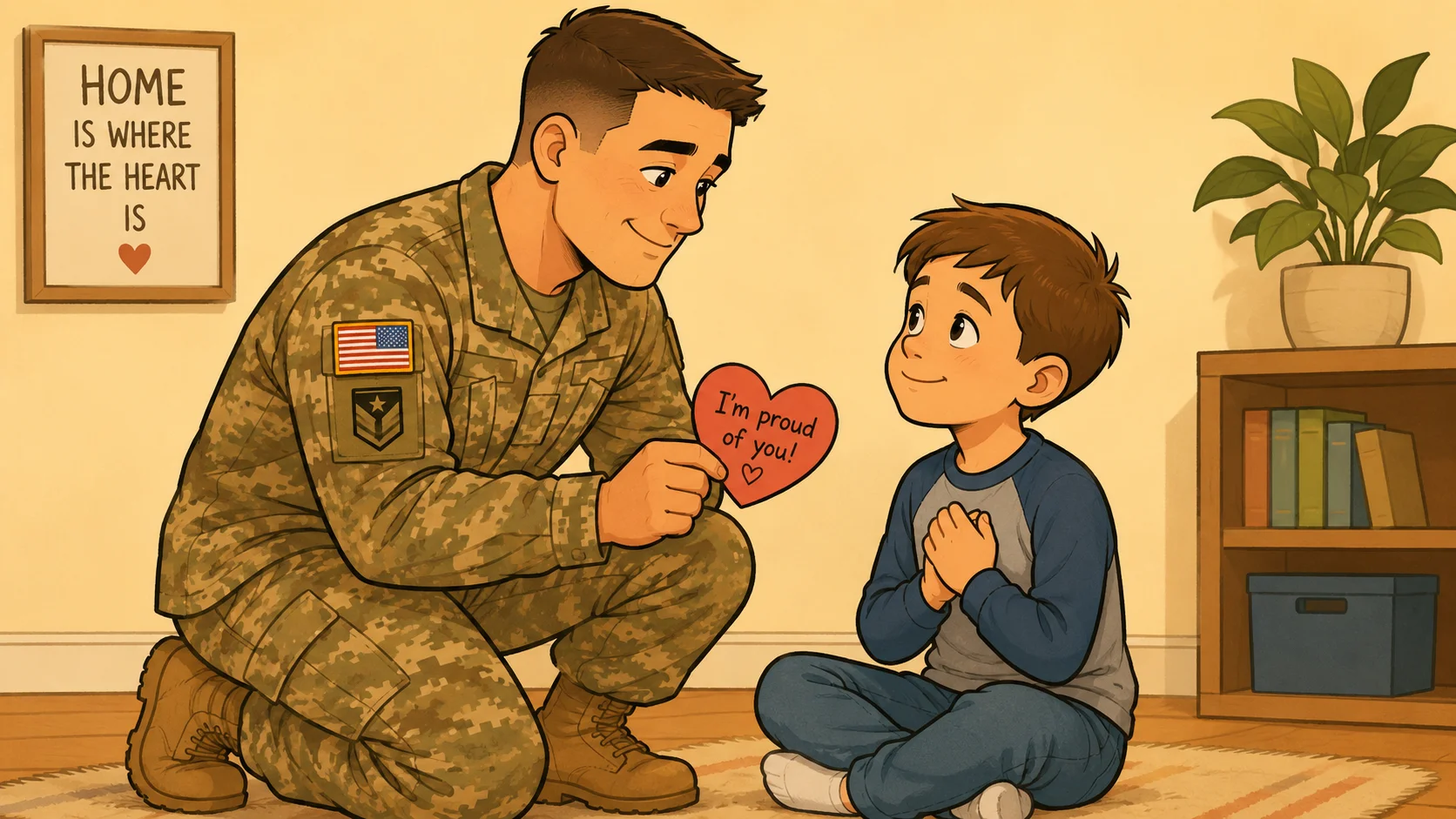
Military-connected parents and caregivers do not need to be perfect to raise healthy, well-adjusted children. The goal of positive parenting is to help parents remain reliable, emotionally available, and steady for children, even when military demands disrupt schedules or require relocation.
Main Skills Covered in This Article
This article covers six core skills for military-connected parenting:
- Using behavior-specific praise to reinforce positive choices.
- Using calm, predictable discipline strategies.
- Creating family rituals that make transitions feel more predictable.
- Preparing children in advance for deployment and reintegration.
- Helping children regulate intense emotions while maintaining clear boundaries.
- Repairing connection after family conflicts.
Best Fit for Readers
This resource is written for active-duty service members who are parents, military spouses, National Guard and Reserve families, veterans with children, and extended family caregivers supporting military-connected children.
Positive Parenting in Military Families
In a military context, positive parenting means combining clear behavioral limits with emotional responsiveness, warmth, and consistent support. This parenting style can be especially important because military life brings ongoing stressors that many civilian households do not face in the same way.
Families may face unpredictable operational demands, sudden training schedule changes, and extended deployments that disrupt household routines. These pressures can make everyday parenting more difficult, especially during periods of separation, relocation, or reintegration.
Military Family Stressors Shaping Parenting
The demands of military service can change the conditions in which parents care for children, adding both logistical and emotional stress.
Permanent Change of Station (PCS) moves often require military families to relocate for assignments that may last two to four years, disrupting peer relationships, school continuity, and local support networks. During deployment cycles, the parent or caregiver at home often manages periods of solo parenting while also coping with concern for the deployed service member.
Together, these factors can increase parenting stress, contribute to burnout, and make patience harder to sustain during daily caregiving. If unaddressed, they may also contribute to more child behavior problems.
Warmth Plus Structure
Child development research generally supports a balance of emotional warmth, clear expectations, and consistent structure.
Warmth without clear boundaries can leave children without predictable expectations, while rigid rules enforced without warmth may increase anxiety or emotional distance. Positive parenting aims to combine emotional safety with reliable leadership.
| Parenting Profile Dimension | Low Structure | High Structure |
| Low Warmth | Neglectful/Uninvolved: highest risk for poor adjustment | Authoritarian: may increase anxiety and externalizing behaviors |
| High Warmth | Permissive: may weaken the development of self-regulation | Authoritative/Positive: supports emotional resilience and security |
Child Adjustment Signals Worth Watching
Pediatric guidance on military-connected children notes that family stress may show up through physical, emotional, behavioral, and school-related changes. Parents should watch for lasting changes that differ from a child’s usual behavior or developmental baseline.
- Physical complaints: Recurrent stomachaches, headaches, or nausea without a clear medical cause.
- Behavioral regression: A sudden return to thumb-sucking, bedwetting, or intense separation anxiety in school-aged children.
- Sleep disturbances: Difficulty falling asleep, frequent night terrors, or an inability to sleep without a parent present.
- Academic changes: A sudden drop in grades, difficulty concentrating, or withdrawal from peers.
Strengthening Military Families Through Positive Parenting
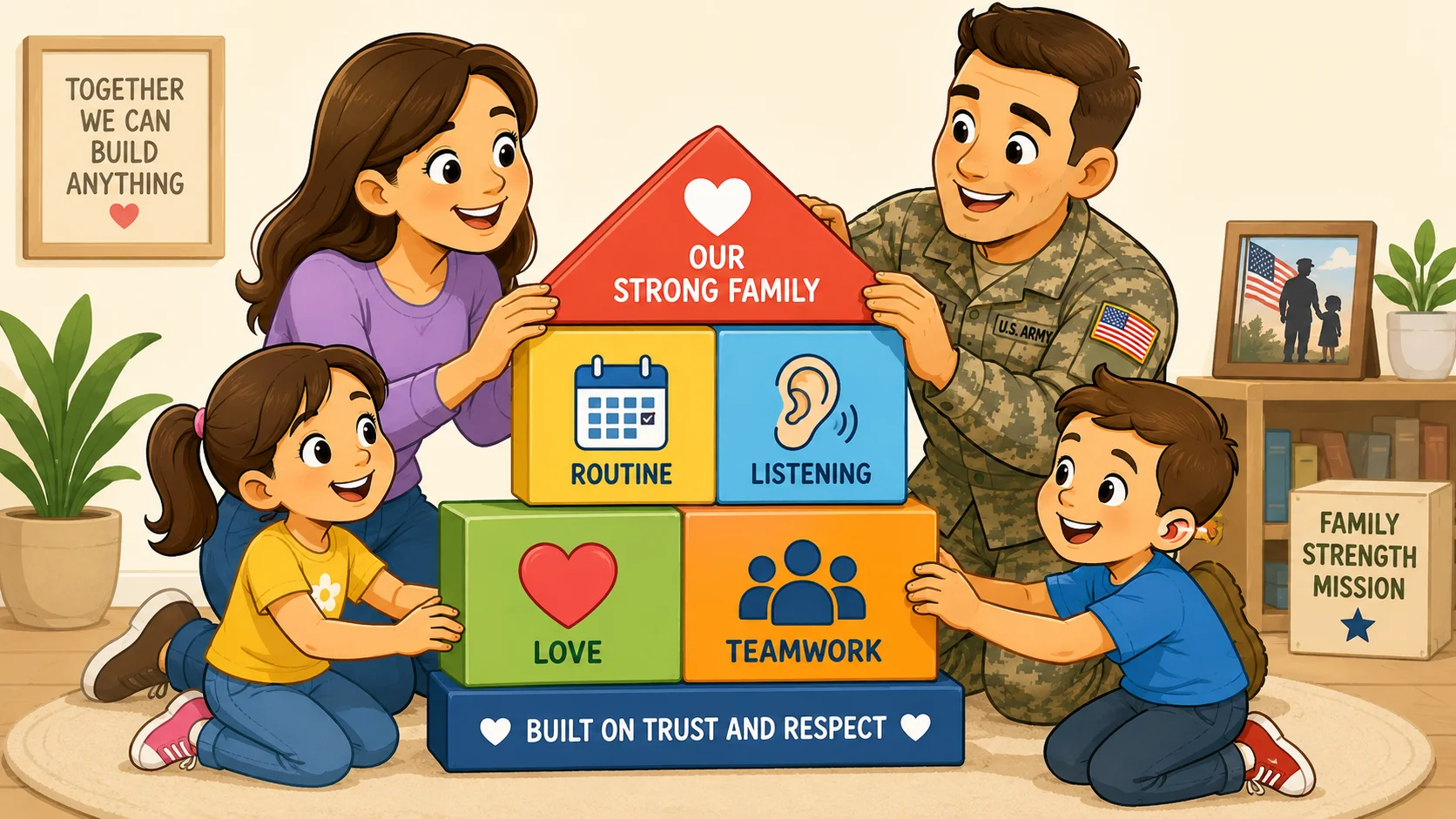
Implementing positive parenting practices strengthens the entire family system and reinforces the parent-child bond against external stressors. When parents apply these strategies consistently, they can help buffer children from the stress of repeated change.
Stable Routines During Deployment Cycles
Keeping daily routines steady during deployment gives children a predictable map of the day and can reduce uncertainty and stress. Families can try to maintain consistent bedtimes, meal schedules, and morning routines even when external schedules change.
Visual family calendars that show weekly responsibilities and upcoming events can help young children feel more prepared for change.
Warm Communication After Separation
Reintegration is an adjustment period in which the returning service member re-enters a family system that has adapted to their absence. To support a smoother transition, parents should avoid expecting instant emotional closeness and instead ask low-pressure, open-ended questions during everyday activities like driving, cooking, or walking.
Rather than expecting children to reconnect immediately, give them time to adjust to the returning parent’s presence and rebuild closeness at their own pace.
Shared Family Values and Rules
A shared family code can provide a sense of continuity no matter where the family is stationed. Parents can choose three to five core family values, such as respect, emotional safety, and shared responsibility.
These values can be translated into concrete actions and reinforced through simple reminders:
- “In this family, we use a calm tone of voice even when we are feeling frustrated.”
- “We help keep our home safe by taking care of our personal belongings.”
- “We listen before we respond.”
Parenting Profiles in Military Families
Every family adapts to military service differently, and parenting patterns may shift depending on stress levels and available support.
High Warmth and High Structure Profile
This balanced profile is the foundation of positive discipline. The parent acknowledges the child’s feelings while holding a firm boundary around safety and behavior.
For example, if a child refuses to complete chores during a deployment, the parent might say:
“I understand that you are tired and miss Dad, but our family rule is that chores come before screen time.”
This approach supports self-regulation, emotional awareness, and long-term cooperation.
High Stress and Low Consistency Profile
When operational demands increase, parents may fall into a cycle of inconsistent discipline driven by exhaustion.
On high-stress days, a parent might yell or use harsh, reactive consequences. On other days, out of guilt or fatigue, they may allow major rule violations without follow-through.
This inconsistency can confuse children, increase limit-testing, and add to parent stress.
Growth Profile After Parent Training
Parents can deliberately shift their habits by participating in structured parenting programs or community support groups. Research and clinical practice suggest that parenting skills improve through repeated practice of small, deliberate actions.
Over time, consistent use of positive strategies can help families move from reactive survival mode toward a more organized and supportive home environment.
How Families Respond to Parenting Programs
Research on interventions for military families shows that families respond differently depending on their circumstances, stressors, and support systems.
Why Families Respond Differently
The impact of a parenting intervention may depend on where the family is in the deployment cycle, the children’s ages, and any history of trauma exposure.
A family facing a first deployment may need different coping tools than a veteran family coping with service-related physical or psychological injuries. Recognizing this variation allows support organizations to offer targeted assistance rather than generic advice.
ADAPT-Inspired Skills for Military Parents
The After Deployment, Adaptive Parenting Tools (ADAPT) program emphasizes core parenting skills designed to strengthen family resilience:
- Emotion coaching: Helping children accurately label their feelings to reduce outward behavior problems.
- Effective monitoring: Staying aware of an adolescent’s peers, school life, and activities while still respecting healthy autonomy.
- Positive involvement: Creating regular, low-stress interaction time between parent and child to build emotional security.
Signs That Parenting Support Is Working
Families tracking their progress can look for clear behavioral indicators that positive parenting practices are taking root:
- A noticeable reduction in the frequency or intensity of tantrums.
- Less reliance on yelling or reactive consequences.
- A shorter recovery time after emotional outbursts.
- Greater openness, shown by the child choosing to share feelings more freely.
20 Ways to Strengthen Parenting Skills in a Military Home
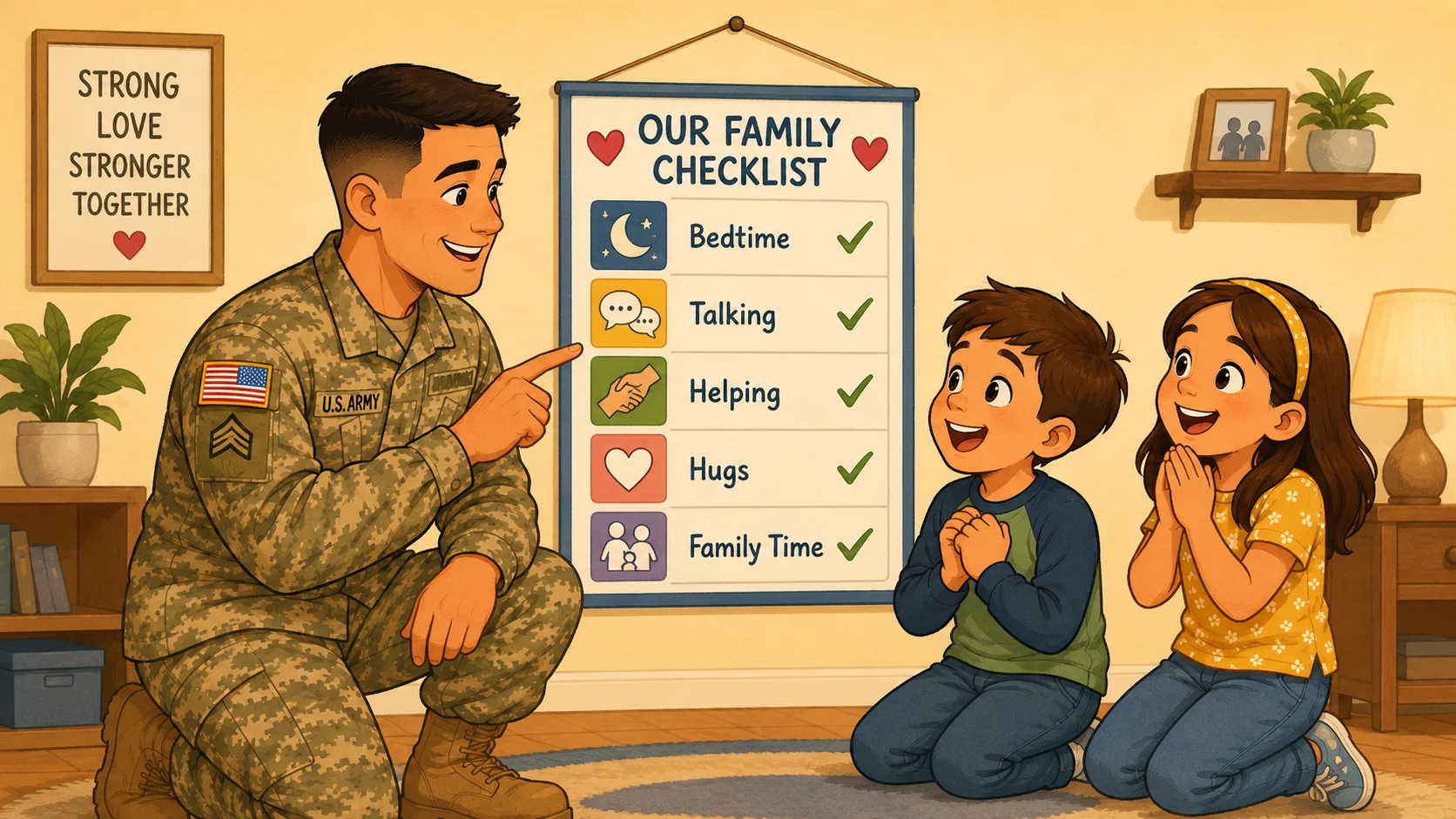
1. Build a Predictable Daily Rhythm
Establishing a clear daily rhythm can help military families manage uncertainty. A visual chart can show morning routines, homework blocks, chore times, and evening wind-down periods.
A simple daily rhythm might include:
| Time | Routine |
| 7:00 AM | Breakfast |
| 8:00 AM | School |
| 4:00 PM | Homework block |
| 6:30 PM | Family dinner |
| 8:00 PM | Bedtime routine |
2. Use Behavior-Specific Praise
Generic praise like “good job” does not tell children exactly which behaviors to repeat. Instead, use behavior-specific praise:
“Thank you for hanging up your coat and setting the dinner table the first time I asked.”
This kind of praise helps children understand what they did well and why it matters.
3. Give Choices Within Clear Limits
Offering limited choices gives children a healthy sense of autonomy and can reduce power struggles. Frame options clearly within established rules:
“It is time to complete your math homework. Do you want to do it at the kitchen island or at your bedroom desk?”
4. Practice Calm Discipline During Stress
When behavior problems come up, give instructions in a calm, even tone rather than raising your voice. Clear, calm commands prevent situations from escalating and help parents stay steady during high-stress moments.
5. Create a Deployment Countdown Ritual
Visual representations of time help young children cope with the abstract concept of a parent being away. Use a paper chain where the child removes one link per day, or use stickers on a calendar to show time passing.
The goal is not to make the wait feel easy, but to make it feel more understandable.
6. Keep Connection Strong During Distance
Maintain regular, predictable contact during separation when possible, rather than relying only on long, infrequent conversations.
Deployed parents can record themselves reading stories, send brief two-minute video messages, or mail postcards to stay present in daily life.
7. Prepare Kids for Homecoming Changes
Reintegration brings joy, but it also alters household dynamics. Hold a family discussion before homecoming to prepare children for the shift:
“Your parent is coming home soon. It may take a few weeks for everyone to adjust to our routines again, and we will work together as a family.”
8. Hold Short Family Meetings
Hold a brief 10-minute family meeting every Sunday afternoon to review the upcoming schedule. Use this time to align calendars, divide up chores, and let everyone share one positive highlight from the week.
Family meetings work best when they are short, predictable, and calm.
9. Protect One-on-One Time
Aim for 10–15 minutes of uninterrupted one-on-one time with each child on most days. During this time, put your phone away and let your child lead the play or conversation without lecturing or correcting.
Small, consistent moments of attention can strengthen connection more effectively than occasional grand gestures.
10. Validate Big Emotions Without Giving In
Acknowledge your child’s feelings while holding a firm boundary on behavior:
“I know you are angry that we had to move away from your friends, but it is never okay to slam the door or yell at me.”
Validation does not mean removing the boundary. It means showing your child that feelings are acceptable, while harmful behavior is not.
11. Use Repair After Conflict
If you lose your patience and yell, model healthy accountability by repairing the connection once you are calm:
“I’m sorry I raised my voice earlier. I was feeling overwhelmed, but it was not your fault. Next time, I will take a deep breath before speaking.”
Repair teaches children that conflict does not have to damage connection permanently.
12. Coordinate Parenting Across Caregivers
When military duties require extended family members or temporary caregivers to step in, give them a short written list of family rules, routines, and consequences.
Maintaining consistency across adults helps children feel secure and reduces the risk of behavioral regression.
13. Support School Transitions Early
To ease the challenges of a PCS move, send your child’s educational records, IEPs, 504 plans, or behavioral plans to the new school counselor as early as possible, ideally before arrival.
Planning ahead supports continuity of services and helps staff watch for adjustment struggles.
14. Keep Military Moves Kid-Friendly
During a move, give each child a dedicated travel box for their most valued possessions. Creating a simple, familiar ritual on the first night in the new home – such as ordering their favorite pizza – can help the new space feel safer and more welcoming.
15. Teach Problem-Solving Through Questions
Instead of immediately fixing every issue for your child, guide problem-solving by asking open-ended questions:
“What do you think is causing this problem, and what are two steps you could take to solve it?”
This helps children build confidence and flexible thinking.
16. Model Healthy Coping After Hard Days
Children often learn emotional regulation by watching their parents and caregivers. Talk through your own healthy coping strategies:
“I had a stressful afternoon at work, so I’m going to take a 10-minute walk outside to decompress before we start dinner.”
This shows children that stress can be handled without yelling, withdrawing, or blaming others.
17. Build a Community Support Network
Actively engage with local military organizations, military family support programs, neighborhood associations, and school programs.
Building a strong support network can reduce isolation and make practical help available before a crisis occurs.
18. Make Screen Time Serve Connection
Shift screen time from passive scrolling to active connection. Use video calls to play virtual board games with a deployed parent, explore educational apps together, or plan family movie nights.
The goal is not to eliminate screens entirely, but to use them more intentionally.
19. Track Behavior Patterns Without Blame
When recurring behavior problems appear, log the timing and context to identify possible triggers.
For example, if emotional outbursts tend to happen after a weekly phone call with a deployed parent, you can plan extra comfort and support around that time.
20. Ask for Help Before a Crisis
Seeking professional guidance is a sign of proactive family leadership. Connect with your pediatrician, a school counselor, or military family support resources when you notice stress building, rather than waiting until it becomes a crisis.
Possible Child Adjustment Benefits
Research and program-evaluation resources, including work connected to the Clearinghouse for Military Family Readiness at Penn State, suggest that positive parenting practices can improve parenting, family functioning, and child adjustment.
Behavior Signals at Home
When parents use positive parenting practices consistently, children may show better cooperation and self-regulation.
Clear boundaries can reduce defiance, attention-seeking behavior, and household power struggles. This structure gives children a safer, more predictable environment where they can build healthy social habits.
School and Peer Adjustment
Children supported with a balance of warmth and structure often navigate school transitions with greater confidence. They may build stronger peer relationships, show higher academic engagement, and adapt more easily to new classrooms after a PCS move.
Regular communication between parents and teachers can work as an early support system, helping address academic or social setbacks before they grow.
Emotional Resilience After Deployment
Emotional resilience develops through stable, supportive relationships; children do not build it in isolation.
Children who receive validating emotion coaching may cope more effectively with the stress of deployment cycles. When children feel secure in their relationships with parents and caregivers, they may be better protected against persistent anxiety, low mood, and behavior problems during stressful transitions.
Positive Parenting Intervention Plan
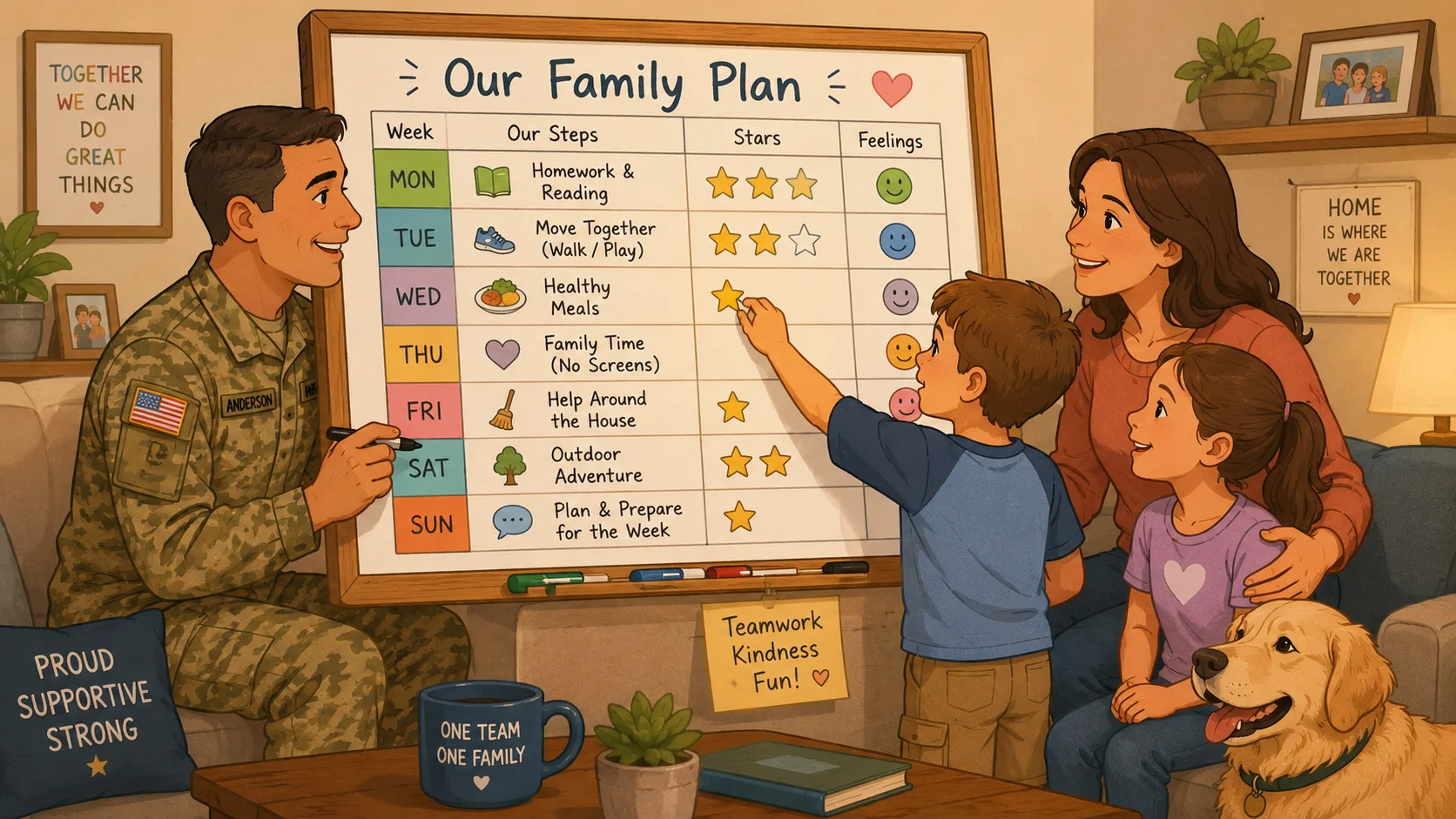
This practical step-by-step plan translates family research into a weekly routine for busy military households.
Family Roles and Participants
Every adult in the home – including the active-duty service member, the primary at-home caregiver, and any extended family caregivers – should agree to use consistent rules, expectations, and language.
Explain these expectations to children during a calm, clear family discussion.
Weekly Practice Procedure
To implement this routine without adding stress, focus on one skill at a time:
- Monday: Select one strategy from the 20-item list, such as Strategy 2: Behavior-Specific Praise.
- Tuesday–Saturday: Practice that chosen strategy at least three times each day.
- Sunday evening: Spend 5 minutes recording what worked well and what felt awkward, then select the next skill for the upcoming week.
Measures for Parenting Progress
Families can track progress by watching for specific, observable changes over 30 days:
- Count weekly outbursts at the start.
- Track daily praise.
- Notice recovery time after emotional outbursts.
- Watch for sleep changes.
- Review school or caregiver feedback when available.
Review What Works at Home
Review your progress at the end of each month. If a strategy did not bring the results you expected, look for factors such as timing, fatigue, or external stress.
Adjust the strategy to better fit your family’s daily rhythm rather than abandoning positive parenting altogether.
Discussion: What Military Parents Can Do Next
Adjusting your parenting style requires ongoing self-reflection and a willingness to adapt based on your family’s current emotional climate.
When Discipline Needs More Warmth
If your home environment feels tense, rigid, or filled with frequent arguments, your current approach may be leaning too heavily on rules without enough connection.
To restore balance, increase daily one-on-one time, deliberately look for opportunities to offer specific praise, and focus on validating your child’s emotions before enforcing consequences.
When Warmth Needs More Structure
If your household feels chaotic, disorganized, or unpredictable, you may be providing plenty of affection but lacking sufficient behavioral boundaries.
Bring more order to the home by setting three non-negotiable family rules, defining clear consequences, and holding those boundaries consistently.
When Professional Support Makes Sense
While positive parenting practices can help with many common behavioral challenges, some situations require specialized outside support.
Families should seek professional or urgent support if they notice any of the following red flags:
- Threats of self-harm, acts of self-harm, or suicidal thoughts.
- Uncontrolled or destructive aggression toward self, siblings, caregivers, animals, or property.
- Severe or persistent symptoms of depression, anxiety, or social withdrawal lasting more than three weeks.
- Any suspected child abuse, neglect, domestic violence, or unsafe conditions at home.
Limitations and Cautions
While positive parenting can be effective, families need to adapt these general ideas to their own circumstances.
Research Limits for Military Families
Many military family studies focus on active-duty personnel or families connected to larger, better-resourced installations.
As a result, National Guard and Reserve families, single parents, blended families, and families living far from major military bases may need additional effort and support to find local resources.
Family Differences Affecting Advice
No single parenting tool works exactly the same way for every child. Strategies must be customized to fit your child’s age, temperament, and developmental needs, as well as your family’s current stress level and access to support.
What works well for an outgoing school-aged child may need careful adaptation for an introverted teenager.
Safety Concerns Needing Immediate Help
If a family member is in immediate crisis, stop relying on self-help guidance and seek emergency assistance. Crisis and emergency services can provide immediate support when safety is at risk.
Caregiving Resource: For 24/7 support, parenting resources, and non-medical counseling options, call Military OneSource at 800-342-9647. If you are facing an immediate safety emergency or suspect a child is in danger, contact your local emergency services or the Family Advocacy Program right away.
Parenting Advice for Military Families by Child Age
Toddlers and Preschoolers
Young children often show stress through physical symptoms and behavioral changes. Focus on consistent physical routines, simple language, hands-on comfort, and visual calendars to make daily life feel predictable and secure.
School-Aged Children
Children in this age group are highly focused on school transitions and peer relationships. Help them build emotional vocabulary, talk openly about upcoming deployment timelines, give them meaningful family responsibilities, and stay in close contact with their teachers.
Teens
Adolescents need a healthy balance of privacy and family connection. Support their growing independence by involving them in family problem-solving, setting respectful boundaries for honest communication, watching for signs of mental health strain, and encouraging them to stay connected with supportive peers.
Conclusion
Positive parenting in military families is not about lowering standards or avoiding rules. Rather, it is an intentional, evidence-informed combination of emotional safety and reliable structure that helps protect children from the predictable stressors of military life.
Positive Parenting as Daily Practice
Real, lasting change comes from small, consistent daily actions rather than occasional grand gestures.
Speaking in a calm tone, offering specific praise, maintaining daily rituals, and repairing connections after arguments form the foundation of a stable home.
Resilient Kids Through Stable Connection
When children feel securely connected to their parents and know what to expect at home, they are better able to navigate the uncertainties of military life with confidence.
This stable foundation helps them recover from challenges and build resilience over time.
Next Step for Military-Connected Parents and Caregivers
Tonight’s action item: review the 20 strategies above, choose one tool that fits your current family dynamic, and practice it consistently over the next seven days.
If your household is navigating an intense transition, reach out to your local military and family support center to connect with parenting programs and support groups.
FAQ
What makes positive parenting for military families different?
Positive parenting for military families uses the same foundation as positive parenting in civilian homes: warmth, clear limits, consistent routines, and respectful communication. The difference is that military families often face unique challenges, including deployment, PCS moves, reintegration, changing schools, and long periods of uncertainty. A positive parenting style helps children feel more secure because it gives them both emotional connection and predictable structure. This can be especially important for military children who are growing up in a military environment where change is a regular part of family life.
How can military parenting help children manage deployment?
Military parenting during deployment should focus on preparation, connection, and emotional safety. Before deployment, help your child prepare by explaining what will change, what will stay the same, and how the family will stay connected. During deployment, children may need extra reassurance, predictable routines, and opportunities to talk about missing the deployed parent. Engaging in positive activities, such as drawing pictures, recording messages, reading together on video calls, or keeping a family journal, can help children express emotions without feeling pressured to talk before they are ready.
Are parenting groups useful for military families?
Yes. A parenting group can help families feel less isolated and give parents a place to share ideas for positive parenting, ask questions, and learn from others facing similar parenting challenges. Parent groups that support families can be especially helpful after a move, during deployment, or when a child is struggling with school or behavior. Strong families are not families that handle everything alone; they are families that know how to use support from families and communities around them.

Take a short quiz to find out what your everyday choices say about your parenting style
When your child is curious about something new, what’s your instinct?
Take a short quiz to find out what your everyday choices say about your parenting style
“Can I download this app?” What happens next?
Take a short quiz to find out what your everyday choices say about your parenting style
When it comes to rules at home, which sounds most like you?
Take a short quiz to find out what your everyday choices say about your parenting style
If you could give your child one life skill today, what would you pick?
Take a short quiz to find out what your everyday choices say about your parenting style
Your child gets to choose what to watch. What would your ideal setup look like?
Take a short quiz to find out what your everyday choices say about your parenting style
Pick your parenting superpower ✨