10 Calming Videos for Stress and Anxiety Relief: Relaxing Music, Breathing Techniques, and Sleep Support

 Discover a Free Education Video App for Kids
Pastory uses AI to personalize educational video content based on your child’s interests and personality. Safe, engaging, and built for curious young minds. Sign up now to stay updated and enjoy early access with a free trial
Digital media platforms can offer accessible tools for stress management and emotional regulation. This article features 10 YouTube videos that may help with stress, anxious thoughts, and sensory overload, explains how to choose the right format for different symptoms, and shows how to use these tools safely as part of a daily routine.
Digital media content, including calming videos and relaxation music, may support general stress management and promote a temporary sense of calm. However, these tools are not diagnostic resources and do not replace professional medical advice, psychotherapy, or clinical treatment for severe, frequent, or worsening anxiety symptoms or anxiety disorders.
Key Takeaways
Fastest Options for Anxiety Spikes
During a sudden anxiety spike, many people need a simple way to help their body settle. Short breathing videos, especially those using box breathing, the 4-7-8 breathing method, or brief guided grounding meditations, can provide visual and auditory pacing that may help slow breathing and settle the body. These tools are most useful when someone needs quick, structured support during a stressful moment.
Best Options for Racing Thoughts
Racing thoughts and repetitive mental loops often respond best to active redirection. Guided meditation, body scan, and progressive muscle relaxation videos can redirect attention away from mental loops by giving the mind a steady external focus. By following a narrator’s instructions or noticing specific body cues, the mind has less room to dwell on anxiety-provoking thoughts.
Best Options for Sleep or Evening Tension
To shift from hypervigilance toward rest, the nervous system often benefits from sustained, low-stimulation input. Extended nature soundscapes, steady rain sounds, soft ambient music, acoustic nature visuals, and long-form guided relaxation videos are useful for evening use. These formats usually avoid sudden audio shifts, which may help the brain wind down and prepare for sleep.
Safety Note Before Watching
Visual and auditory relaxation tools should be used with situational awareness. Stop watching a video if its pacing, breath holds, sounds, or visuals make symptoms worse or increase feelings of panic. Do not watch calming videos or use headphones while driving, cycling, or operating machinery. Seek urgent medical help for severe or unusual symptoms such as unexplained chest pain, fainting, acute shortness of breath, or thoughts of harming yourself.
Quick Pick Guide for Calming Videos for Anxiety
Best for Panic-Like Surge
Short breathing videos with clear timing cues may offer the fastest support during a panic-like surge. Visual pacing tools, such as an expanding circle or a counting bar, guide the user through structured patterns like box breathing or 4-7-8 breathing. These visual prompts can help people who find it difficult to count internally during intense stress.
Best for Restless Body
Anxiety can show up physically as restlessness, muscle tightness, or agitation. Progressive muscle relaxation (PMR), gentle somatic yoga, and structured physical relaxation videos address these physical symptoms directly. These methods guide users to tense and release muscle groups, which can help reduce built-up physical tension.
Best for Overthinking
Cognitive anxiety and overthinking are often easier to manage with guided meditation videos that use simple, direct narration and avoid complex visualization. Clear verbal cues give the mind a straightforward focal point, preventing the brain from generating new, stressful mental imagery.
Best for Sleep Prep
Preparing for sleep usually works best when cognitive demands are low. Nonverbal relaxation videos featuring continuous nature sounds, slow-tempo ambient music, steady rain, or gentle ocean waves may reduce cognitive load and make it easier to wind down before bed.
Best for Background Calm
When working, studying, or organizing a living space, ambient music videos without narration or slow-moving nature visuals can provide low-stimulation background calm. These streams do not require active attention and can help mask unpredictable environmental noise that might otherwise increase stress.
How Calming Videos for Anxiety May Help the Body Settle
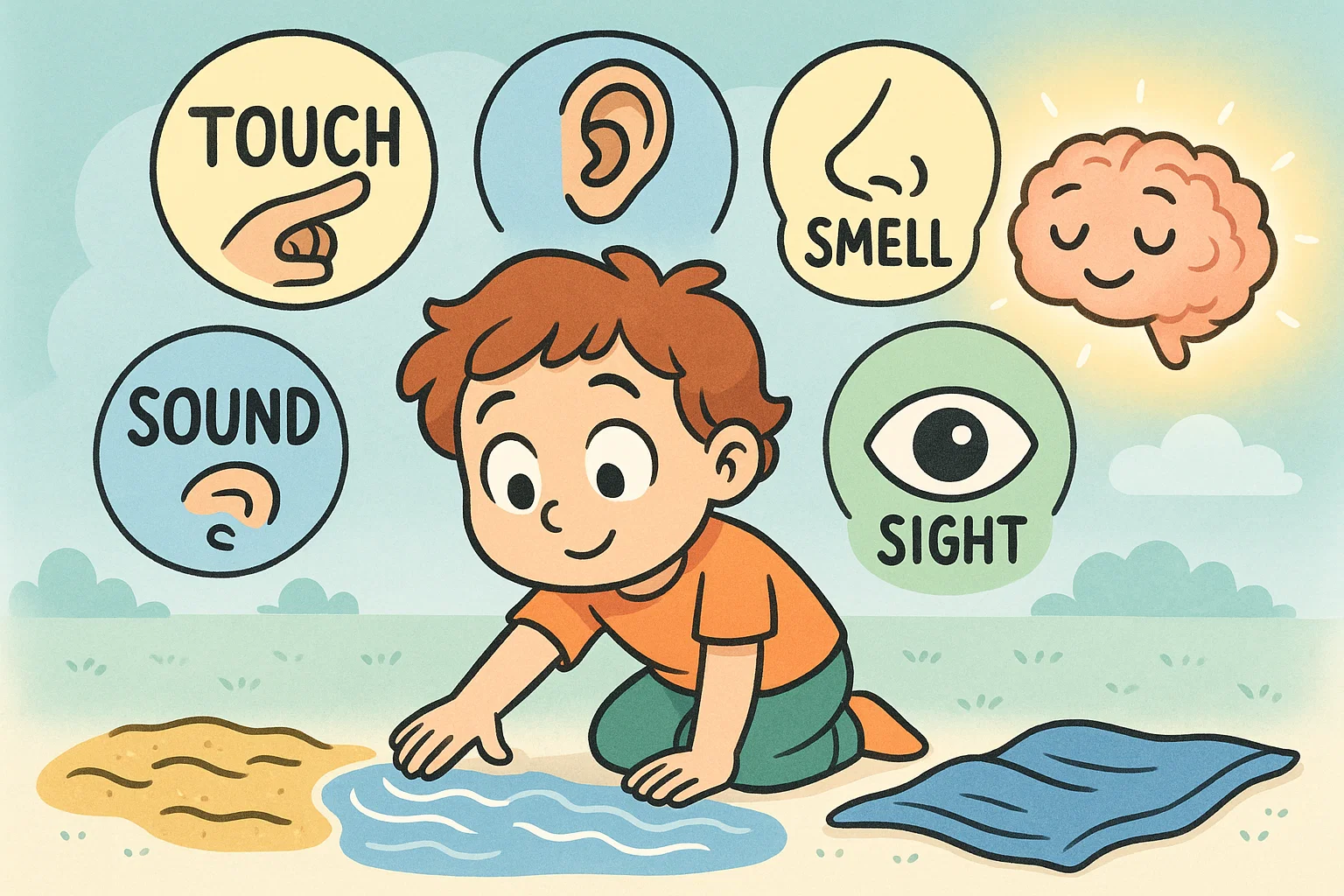
Breath Pacing
Guided breathing videos give users an external rhythm to follow. Research on breathing practices suggests that slow, purposeful breathing can support parasympathetic activity and reduce stress-related arousal. This shift may help slow breathing, relax muscles, and reduce some physical signs of the stress response.
Focus Shift
Anxiety often pulls attention toward internal stressors. Calming videos give the mind a simple, predictable external stimulus to follow, such as a narrator’s voice, a moving breath circle, a slow nature scene, or a repetitive sound pattern. This shifts cognitive load away from internal anxiety loops toward a neutral external object.
Sensory Soothing
Relaxation media often uses soft visual palettes, predictable sounds, slow narration, and low overall stimulation to help soothe an over-aroused nervous system. Autonomous Sensory Meridian Response (ASMR) videos use auditory triggers such as whispering or gentle tapping, which some people find deeply relaxing, though responses vary widely.
In-Moment Distraction
When more structured coping skills feel hard to use during high stress, calming videos can offer a low-effort distraction from spiraling thoughts. Soothing music or low-demand pleasant activities may provide a temporary mental pause, giving emotional intensity time to settle.
10 Calming Videos for Anxiety Worth Watching
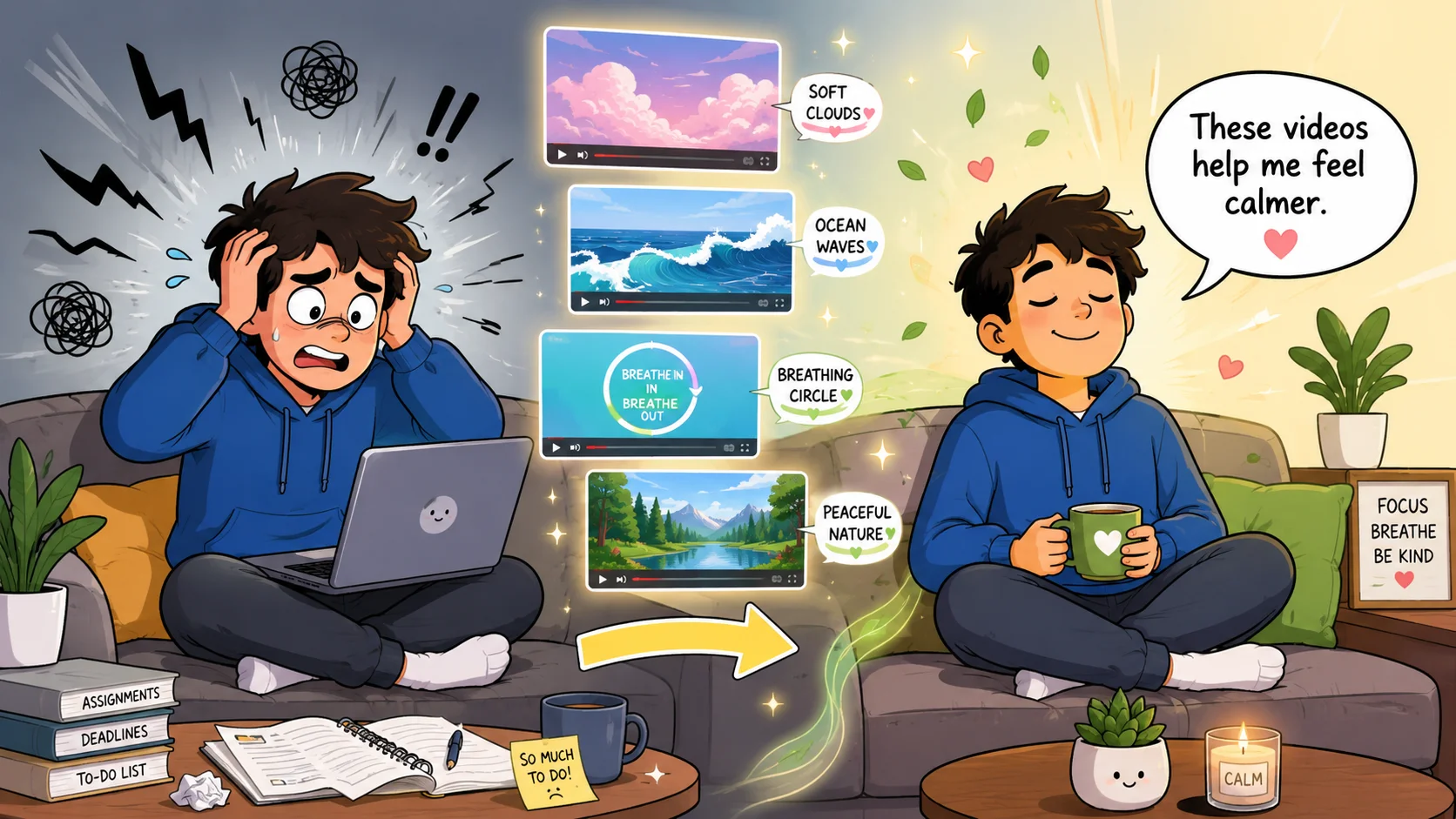
1. 10-Minute Meditation For Anxiety | Goodful
- Best for: Beginners experiencing midday stress or evening cognitive overload.
- Length: 10 minutes.
- What to Expect: A calmly paced guided meditation featuring a gentle narrative voice, minimalist visual design, and simple instructions focused on breath awareness and physical grounding.
- Why It May Help: This format provides clear structure for individuals who struggle to sit in silence. It directs attention to the immediate physical environment, reducing the cognitive space available for anxious thoughts.
- When to Skip: Skip this video if verbal instruction feels intrusive or if you prefer pure audio soundscapes without spoken guidance.
2. 10-Minute Meditation For Stress | Goodful
- Best for: Post-work decompression, evening relaxation, and a longer guided reset.
- Length: 10 minutes.
- What to Expect: A short guided meditation focused on stress relief, intentional breathing, and a gentle mental reset.
- Why It May Help: The short format can make the video easier to complete during a busy day while still offering a structured pause for breathing and stress relief.
- When to Skip: Skip this video during an acute, time-sensitive panic surge if you need a very brief 1–2-minute grounding or breathing cue.
3. How to cope with anxiety – a relaxation technique | NHS
- Best for: Individuals seeking practical, medically backed stress management techniques.
- Length: Approximately 4 minutes.
- What to Expect: Practical guidance from the National Health Service (NHS), focused on using relaxation techniques to manage anxious feelings.
- Why It May Help: The NHS source may feel reassuring for readers who prefer practical, health-oriented guidance. The short format also makes it easier to use during a stressful moment without committing to a long session.
- When to Skip: Skip if you are looking for long-form, abstract visual art or non-narrated musical soundscapes.
4. 15 Minute Deep Breathing Exercise | City of Hope
- Best for: Managing restlessness, physical tension, or pre-sleep stress.
- Length: 15 minutes.
- What to Expect: A dedicated breathing session focused on slower, steadier breathing and physical relaxation.
- Why It May Help: It may help counter shallow chest breathing by encouraging slower, more comfortable breathing patterns.
- When to Skip: Skip or modify this video if you have a respiratory condition, feel dizzy, or find continuous breathing exercises physically uncomfortable.
5. 4-7-8 Calm Breathing Exercise | 10 Minutes of Deep Relaxation | Anxiety Relief | Pranayama Exercise
- Best for: Quick calming support during high stress and evening wind-down.
- Length: 10 minutes.
- What to Expect: A visual and auditory guide that prompts the user to inhale for 4 seconds, hold for 7 seconds, and exhale for 8 seconds.
- Why It May Help: The longer exhale may support relaxation by encouraging a slower breathing rhythm.
- When to Skip: The breath-hold phase may feel uncomfortable for some people; if a 7-second hold causes distress, shorten the hold or switch to a gentler breathing pattern without breath retention.
6. Box Breathing Relaxation Technique: How to Calm Feelings of Stress or Anxiety
- Best for: High-stress preparation before public speaking, exams, interviews, or difficult work calls.
- Length: About 3–5 minutes.
- What to Expect: A structured visual guide that leads the user through four equal phases: inhale, hold, exhale, and hold, often for 4 seconds each.
- Why It May Help: This symmetrical counting pattern can require enough focus to interrupt intrusive thoughts and create a sense of steadiness.
- When to Skip: Avoid if holding your breath on empty lungs triggers feelings of constriction or claustrophobia.
7. Mindfulness in Motion: 4-7-8 breathing for anxiety | Ohio State Medical Center
- Best for: Users who prefer brief, structured guidance from an academic or medical-center source.
- Length: Under 5 minutes.
- What to Expect: Instructors demonstrate the basic mechanics of the 4-7-8 breathing method, including posture and alignment cues.
- Why It May Help: Clear instruction from an institutional source can reduce guesswork and help users feel more confident trying the technique.
- When to Skip: Skip if you prefer purely artistic visuals, cinematic nature footage, or deep musical tracks.
8. Daily Calm | 10 Minute Mindfulness Meditation | Be Present
- Best for: Establishing a consistent daily morning or evening mindfulness routine.
- Length: 10 minutes.
- What to Expect: A 10-minute mindfulness meditation with nature visuals and narration focused on staying present.
- Why It May Help: Regular 10-minute mindfulness sessions may help build a more proactive calming routine, rather than using videos only when anxiety spikes.
- When to Skip: Skip if you are experiencing severe sensory overstimulation and find any form of spoken dialogue difficult to process.
9. Soothing Relaxation: Relaxing Piano Music & Water Sounds for Sleep, Meditation, Spa & Yoga
- Best for: Background sound, deep study sessions, or long periods of low-stimulation relaxation.
- Length: Extended / multi-hour.
- What to Expect: Continuous relaxing piano music with water sounds, gentle pacing, and minimal sudden shifts.
- Why It May Help: Because the track has no spoken narration, it may be easier to use as background sound while resting, studying, or masking disruptive environmental noise.
- When to Skip: Do not use this video as a substitute for urgent medical or mental health support during a severe panic episode or crisis.
10. Progressive Muscle Relaxation: An Essential Anxiety Skill #27
- Best for: Individuals experiencing physical tension, such as a clenched jaw, tight shoulders, or tense hands.
- Length: Around 10–15 minutes.
- What to Expect: Verbal instructions that guide the user to tense specific muscle groups for several seconds before releasing them.
- Why It May Help: By deliberately tensing and releasing muscles, this practice can help users notice the difference between physical tension and relaxation.
- When to Skip: Skip or modify this practice if you have an injury, chronic pain, severe joint inflammation, or any condition that could be aggravated by deliberate muscle tensing.
Calming Video Types Compared
| Video Category | Primary Indication | Core Advantages | Possible Limitations |
| Guided Meditation | Racing thoughts, emotional overwhelm, evening decompression | Clear structure and guided support | Spoken voice or specific vocabulary may distract some users |
| Breathing Exercises | Acute anxiety spikes, shallow breathing, pre-event stress | Quick, structured support with a low time commitment | Structured breath retention can feel restrictive for some |
| Nature Soundscapes | Sleep preparation, background calm, long-duration study | Minimal cognitive demand, effective environmental noise masking | Lack of explicit instruction may not redirect active overthinking |
| ASMR Content | Sensory soothing, loneliness, or preference for close-up auditory triggers | Can feel deeply soothing for people who respond well to ASMR | Responses vary significantly and may feel irritating or distracting for some people |
| Progressive Muscle Relaxation | Chronic physical tension, somatic stress, jaw or shoulder stiffness | Direct physical feedback and a clear sense of tension release | Requires physical effort and comfortable physical space |
| Gentle Movement / Yoga | Restless energy, physical agitation, inability to sit still | Channels physical restlessness into safe, gentle movement | Requires adequate floor space and basic physical mobility |
How to Choose a Calming Video During an Anxiety Spike
Check Length Before Pressing Play
When choosing a video during an acute stress moment, check the duration first. Choose a short 1–5-minute video for quick support during an anxiety spike. Save 10–20-minute videos for evening wind-down sessions, and use multi-hour streams mainly for sleep background sound or extended workspace calm.
Match Video to Symptom
Tailor your media selection to your specific physical or mental state:
- Racing thoughts: Choose structured guided meditation to provide verbal direction.
- Mild chest tightness or a rapid heartbeat that you recognize as anxiety: Choose a dedicated breathing cue, such as box breathing.
- Somatic tension or muscle stiffness: Choose a progressive muscle relaxation (PMR) track.
- Bedtime worry or insomnia: Select neutral nature sounds or continuous rain audio.
Keep Volume Low
During anxiety, the nervous system may become more sensitive to sound. When launching a calming video, set your device volume to a low, baseline level. The audio should sit gently in the background rather than force your attention, which can help prevent additional sensory overload.
Avoid Over-Searching
Avoid scrolling endlessly through search results while anxious, because too many choices can worsen decision fatigue. Instead, create a small playlist called “Calm Now” or “Anxiety Reset” with 3–5 videos you already know feel safe and helpful.
Stop When Video Feels Wrong
Always trust your own body’s feedback over the video’s instructions. If a video’s pacing, a narrator’s tone, a sound frequency, or a breath-hold prompt begins to increase your distress or creates a sense of air hunger, immediately stop the video. Everyone’s nervous system responds differently, so stop using any tool that increases discomfort.
10-Minute Calm Routine Using Videos
[Minute 0–1: Settle Space] → [Minute 1–3: Breath Cue] → [Minute 3–8: Main Video] → [Minute 8–10: Return Slowly]
Minute 0–1: Settle Space
Sit comfortably with both feet flat on the floor to feel more grounded. Lower your device screen brightness, reduce the audio volume, and silence all non-essential incoming digital notifications.
Minute 1–3: Follow Breath Cue
Open your selected short breathing video or follow a simple breathing pattern on your own. Inhale slowly through your nose, let your abdomen expand comfortably, and exhale smoothly through your mouth.
Minute 3–8: Watch Main Video
Spend about 5 minutes with your chosen main video, whether it is a guided meditation, a muscle relaxation sequence, or a low-stimulation nature visual. Let your attention rest on these predictable external cues.
Minute 8–10: Return Slowly
Gently bring your attention back to the room around you. Stretch your hands and shoulders, take a sip of water, and write down one simple sentence about how your body feels now.
After the Session: Save What Worked
If the video helped you feel calmer or more settled, save it to your “Calm Now” playlist for quick access during future stressful moments.
When Calming Videos Are Not Enough
Signs You May Need More Support
While digital self-soothing tools can provide accessible everyday support, they cannot replace professional care. Consider speaking with a licensed mental health professional or medical provider if anxiety is persistent, disrupts daily activities, causes avoidance, interferes with sleep, or leads to recurrent panic attacks that affect work, school, or relationships.
When to Seek Urgent Help
Some physical or psychological symptoms require urgent care. Do not rely on relaxation media if you experience severe chest pain, unexpected fainting, severe shortness of breath, or thoughts of harming yourself. Contact local emergency services or a crisis hotline immediately in these situations.
How Videos Can Fit Into Professional Care
Digital media works best as a complementary tool alongside evidence-based clinical treatments. Calming videos can be used alongside a broader care plan that may include cognitive behavioral therapy (CBT), medication prescribed by a clinician, journaling, and coping strategies developed with a healthcare provider.
FAQ
Do Calming Videos for Anxiety Work?
Calming videos may help some people regulate attention, slow their breathing, and reduce stress in the moment. Their effectiveness depends on individual sensory preferences, current stress levels, and underlying health conditions. For some people, peaceful visuals, calming music, meditation music, or gentle breath cues can create a short pause that helps the body and mind feel more settled. However, calming videos are not a standalone treatment for anxiety disorders, depression, or any other mental illness. They work best as supportive self-soothing tools, especially when used alongside professional care when needed.
What Type of Video Calms Stress and Anxiety Fastest?
Short, structured breathing or grounding videos are often the best first choice for quick support during stress and anxiety. These videos usually provide clear visual cues, simple timing, and minimal distractions, which can help the mind stop jumping between anxious thoughts. For people who prefer sound-based support, soothing music, peaceful music, or stress relief music may also help create a calmer environment. These options are not always instant solutions, but they can make it easier to slow down, refocus, and feel a little more grounded.
Can YouTube Videos Help During a Panic Attack?
A calming video on YouTube can serve as a grounding tool for some people with mild to moderate panic symptoms by redirecting attention and pacing the breath. Short breathing videos, guided grounding exercises, or simple calming music may help create a sense of inner steadiness during an anxious moment. However, severe panic symptoms, intense physical distress, or symptoms that feel medically unsafe require professional assessment or urgent medical care. A video should never replace emergency support when symptoms feel severe or unusual.
Are Relaxing Music and Healing Music Good for Anxiety?
Relaxing music, healing music, peaceful music, and meditation music may help some people unwind, especially when the sound is slow, predictable, and free from sudden changes. These types of videos are often designed to help you unwind by creating a softer sensory environment. That said, “healing music” should be understood as a relaxation label, not a medical claim. Music may support emotional regulation and stress relief, but it does not cure anxiety, depression, or other mental health conditions.
Take a short quiz to find out what your everyday choices say about your parenting style
When your child is curious about something new, what’s your instinct?
Take a short quiz to find out what your everyday choices say about your parenting style
“Can I download this app?” What happens next?
Take a short quiz to find out what your everyday choices say about your parenting style
When it comes to rules at home, which sounds most like you?
Take a short quiz to find out what your everyday choices say about your parenting style
If you could give your child one life skill today, what would you pick?
Take a short quiz to find out what your everyday choices say about your parenting style
Your child gets to choose what to watch. What would your ideal setup look like?
Take a short quiz to find out what your everyday choices say about your parenting style
Pick your parenting superpower ✨