50+ Activities for Phonics in Kindergarten: Games, Skills & Ideas

 Discover a Free Education Video App for Kids
Pastory uses AI to personalize educational video content based on your child’s interests and personality. Safe, engaging, and built for curious young minds. Sign up now to stay updated and enjoy early access with a free trial
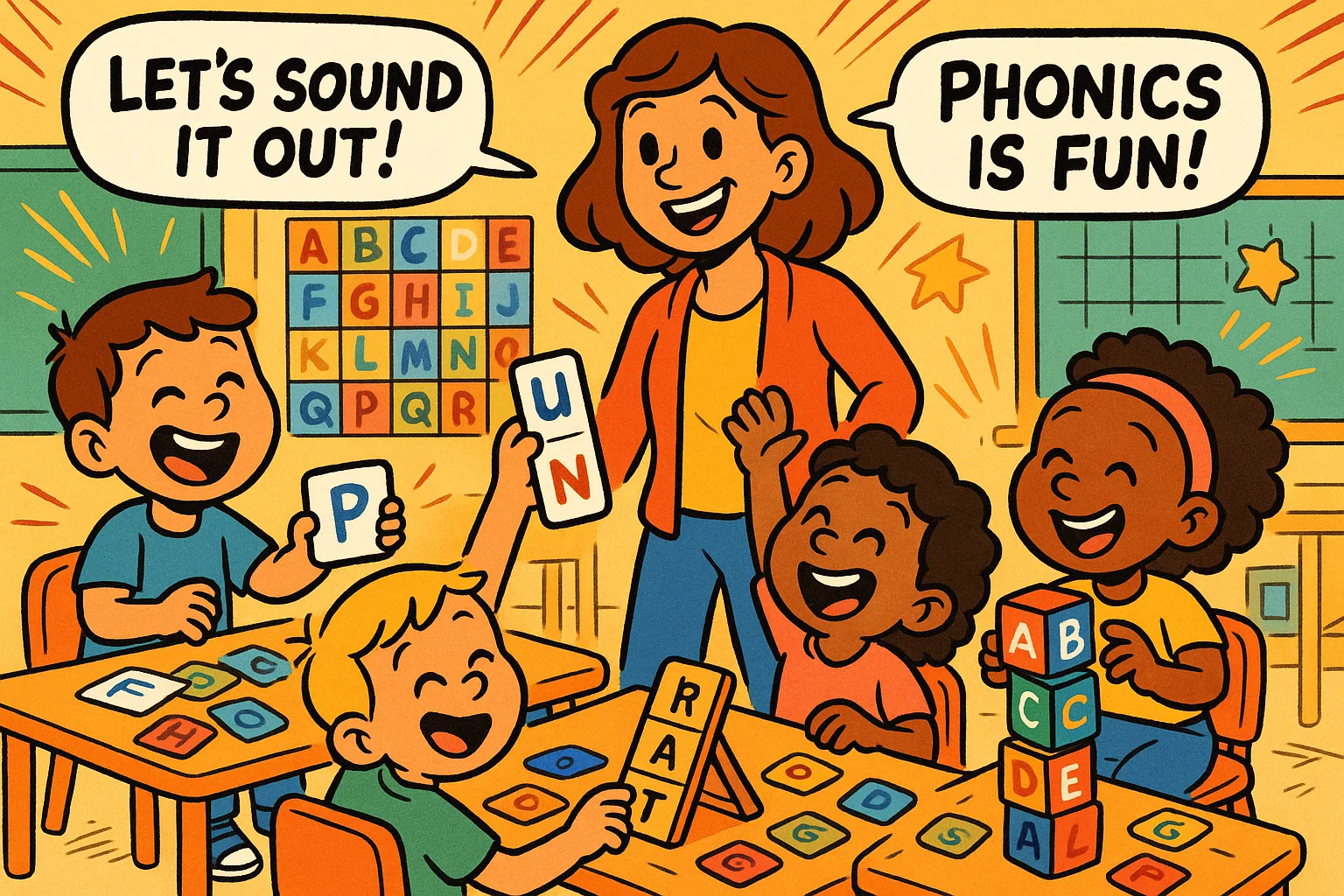
Finding the right activities for phonics in kindergarten makes a real difference in how quickly young children build reading confidence. This article brings together more than 50 structured, hands-on ideas covering alphabet recognition, letter-sound correspondence, CVC words, consonant blends, digraphs, short vowels, word families, syllables, and high-frequency words — organized by skill type, sensory approach, season, and reading level.
Whether you are a classroom teacher planning literacy centers or a parent supporting early reading at home, the activities here range from movement-based games and sensory play to printable practice and low-prep routines, giving you practical options for every learner.
Key Takeaways
- This article covers 50+ phonics activities for kindergarten organized by skill, sensory style, season, and reading level.
- Activities span core skills including alphabet sounds, CVC words, blends, digraphs, short vowels, word families, and syllables.
- Sensory and movement-based options such as sand tray writing, phonics hopscotch, and play dough letter smash keep practice engaging.
- Seasonal phonics activities are included for fall, winter, spring, and summer to keep content relevant year-round.
- A dedicated section on common phonics mistakes helps parents and teachers avoid the most frequent early reading pitfalls.
Key Skills Covered
Early literacy instruction focuses on helping children master specific sound, letter, and word-level skills. The core phonics skill sets addressed in these activities include:
- Letter-Sound Correspondence: Connecting a written letter or letter pattern (grapheme) with its corresponding speech sound (phoneme).
- Alphabet Recognition: Correctly identifying, naming, and matching uppercase and lowercase letter forms.
- Phonemic Awareness: Isolating, manipulating, blending, and segmenting individual sounds in spoken words entirely by ear.
- CVC Decoding and Blending: Blending individual letter sounds to read a complete short-vowel word, such as /c/ /a/ /t/ into cat.
- Segmenting: Breaking down a spoken word into its constituent phonemes for structured spelling development (encoding).
- Consonant Blends and Digraphs: Distinguishing adjacent consonant clusters, such as /st/ or /bl/, from single sounds formed by letter pairs, such as /sh/, /ch/, or /th/.
- Syllable Segmentation: Clapping, counting, and dividing longer spoken words into syllables to support multisyllabic decoding later.
Best Types of Activities
Instructional variety sustains engagement and accommodates diverse developmental needs. These curated interventions use seven specific formats:
- Hands-On Games: Using tangible manipulatives like magnetic letters, plastic blocks, and customized card decks to make learning hands-on.
- Movement-Based Practice: Integrating gross motor actions, such as jumping, stomping, and hunting, to engage kinesthetic pathways.
- Printable Worksheets: Providing structured visual layouts for focused tracing, sound-matching, and independent writing practice.
- Online Phonics Games: Using digital platforms that offer adaptive, gamified, and interactive phonics practice.
- Small-Group Centers: Implementing structured, rotating classroom stations for collaborative or teacher-led targeted instruction.
- Decodable Word Practice: Using controlled text sets that contain only previously taught phonics patterns to build reading confidence.
- Quick Home Activities: Creating simple, low-prep routines that busy parents can do with basic household items.
The Best Way to Use These Activities
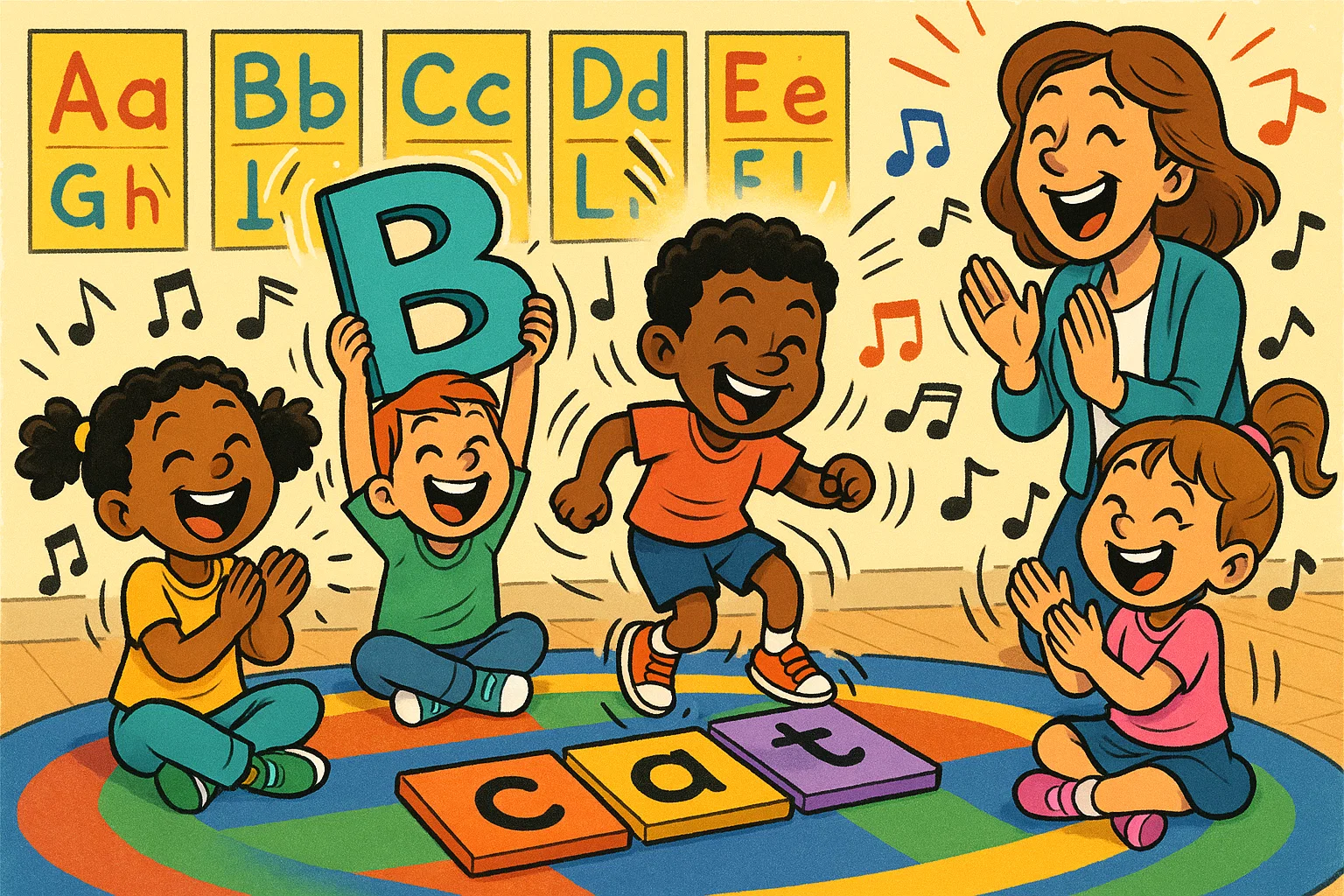
To support reading growth, phonics activities should match a child’s current skill level rather than their chronological age. Educators and parents should implement these activities for 10 to 15 minutes daily, so practice remains highly focused and brief enough to match developmental attention spans. Systematic repetition across multiple modalities – such as seeing, saying, tracing, and moving – helps strengthen the memory pathways needed for rapid word recognition. Additionally, introducing newly acquired skills alongside regular cumulative review helps prevent forgetting and supports long-term memory retention.
What Is Phonics?
Phonics is a method of instruction that teaches children the systematic relationship between the letters of written language (graphemes) and the individual sounds of spoken language (phonemes). Research aligned with the Science of Reading shows that explicitly teaching these connections supports accurate reading and spelling. Without clear instruction in the alphabetic code, many children struggle to build the automatic word-recognition skills needed for later comprehension.
Phonics Meaning for Kindergarten
In kindergarten, phonics instruction turns abstract visual shapes into predictable, meaningful sound patterns. Kindergarten students learn that printed symbols represent specific speech sounds, which can be blended in sequence to read unfamiliar words. The primary goal of phonics instruction at this stage is to make written text feel predictable, helping children see reading as a logical code rather than a guessing game.
Phonics Versus Phonemic Awareness
Phonemic awareness is the specific ability to focus on and manipulate individual sounds in spoken words, operating entirely as an auditory and oral exercise without any print components. In contrast, phonics requires the direct integration of visual text, forcing the learner to connect those auditory sounds directly to printed letter shapes. For example, asking a student to identify the first sound they hear in the spoken word “map” (/m/) builds phonemic awareness, whereas asking them to read the written letter “m” on a page requires a specific phonics skill.
Why Phonics Matters for Early Reading
Systematic phonics instruction gives young readers a reliable strategy for decoding unfamiliar words independently and reduces reliance on inefficient habits like guessing from pictures or context clues. Research shows that early systematic phonics instruction can improve children’s reading comprehension and spelling in later grades. By automating the mechanical decoding process early on, children conserve cognitive energy, allowing them to focus on understanding the deeper meaning of the text.
Teaching Kids to Read with Phonics
To teach phonics effectively, instructors should use explicit, direct instruction rather than relying on incidental or implicit exposure. Early reading progress accelerates when children are shown precisely how to isolate individual sounds, stretch continuous sounds where appropriate, and blend separate sound units into whole words. Playful reinforcement, combined with regular practice in real text, helps children apply these phonics skills to everyday reading.
How Phonics Helps Kids Learn to Read
The reading process begins when a child recognizes individual letters and quickly recalls their corresponding sounds. Once letter-sound automaticity is established, the learner systematically blends these isolated sounds from left to right, transitioning from /b/ /a/ /t/ to the fluid word “bat.” This foundational decoding step eventually builds automatic word recognition, allowing children to recognize familiar words quickly and accurately.
Foundational Reading Skills for Kindergarten
Developing readers must master a specific matrix of foundational competencies to achieve early literacy fluency. The following elements make up the core kindergarten reading curriculum:
- Print Awareness: Understanding page organization, left-to-right text directionality, and the structural differences between letters, words, and sentences.
- Letter Naming: Rapidly identifying and naming all 26 uppercase and lowercase letters of the alphabet on sight.
- Sound Matching: Accurately linking specific visual graphemes to their correct target phonemes without hesitation.
- Oral Blending: Merging separate spoken sounds into a single word when presented audibly by an instructor.
- Segmenting: Breaking down a whole spoken word into its individual component sounds for structured writing and spelling tasks.
- Decoding: Applying alphabetic rules to accurately pronounce phonetically regular words printed on a page.
- Spelling: Encoding spoken sounds into their correct visual letter sequences on paper.
- High-Frequency Word Practice: Mastering phonetically regular and irregular words that appear frequently in beginner texts.
Reading Readiness Signs
Before introducing formal phonics instruction, educators should evaluate specific developmental markers to ensure a child’s reading readiness. A child may be ready for formal phonics instruction when they can identify basic uppercase letters and show simple phonemic awareness, such as noticing when words rhyme. Additional indicators include the ability to isolate the starting sound of a spoken word and a natural curiosity about environmental print, such as signs, labels, and storybooks.
How to Teach Phonics Skills in Kindergarten
Instructing kindergarten students requires a careful balance of structured learning and engaging activities to prevent cognitive fatigue and frustration. Breaking down long-term reading goals into small, sequential milestones allows educators to introduce one phonics pattern at a time, ensuring mastery through repetition. By blending targeted instruction with sensory-rich activities like singing, reading, and writing, instructors keep early literacy lessons feeling positive, dynamic, and accessible.
Play
Using intentional phonics games allows young learners to practice complex decoding skills in a low-stress, interactive environment. Active tasks – such as swatting target letter cards with fly swatters, tossing beanbags onto floor mats, and racing to match letters – reframe repetitive drill work into an engaging game. This playful approach keeps children motivated, reduces performance anxiety, and builds accurate sound-symbol associations.
Sing
Incorporating rhythmic songs, chants, and alliterative sound rhymes helps children memorize abstract letter shapes, vowels, and complex word structures. Musical activities support auditory memory and help children remember how to produce challenging consonant blends and long vowel patterns. Regular practice with daily phonics songs helps foundational patterns stay clear and memorable for young learners.
Read
Providing students with short, highly controlled decodable books and simple word cards gives them immediate opportunities to apply their phonics skills to real text. Decodable books minimize unexpected vocabulary and irregular spelling patterns, helping children rely on decoding rather than guessing. This structured approach builds authentic confidence and reinforces independent word recognition.
Write
Connecting decoding (reading) with encoding (spelling) through physical writing activities helps solidify long-term letter retention. Activities like tracing letters in sensory trays, using mini whiteboards, and building words with letter tiles help connect abstract phonemes to physical motor movements. These structured writing exercises reinforce print directionality and help children understand how words are built from the ground up.
Science of Reading-Aligned Phonics Activities for Kindergarten
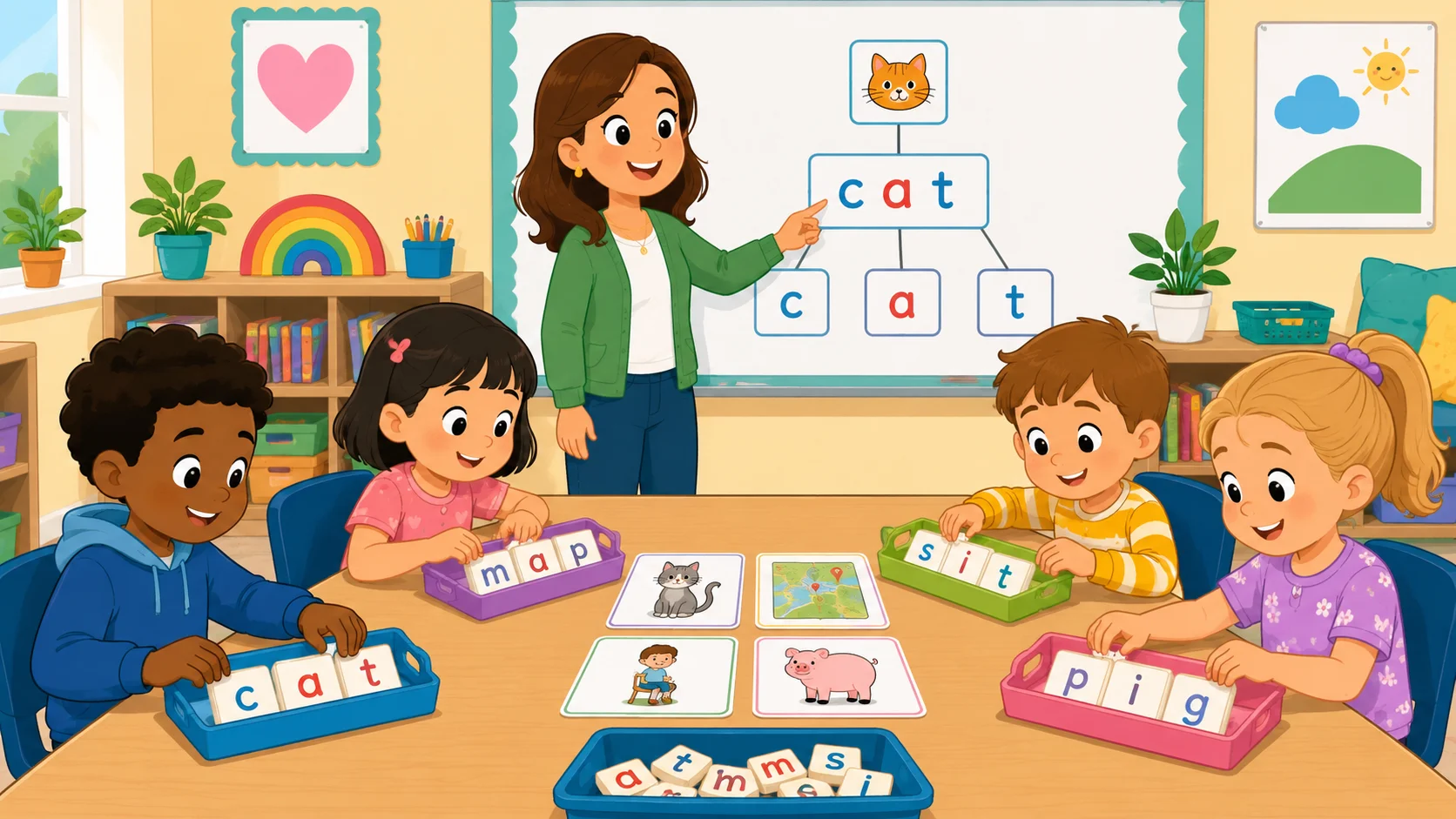
Modern reading research shows that successful literacy instruction relies on systematic, explicit methods rather than discovery-based approaches alone. Phonics programs aligned with the Science of Reading framework use clear, logical pathways where children hear isolated sounds, map them to letters, blend them into words, and write them out. This structured process builds strong neural connections, turning abstract symbols into readable, accessible language.
Letter-Sound Mapping
Letter-sound mapping helps children connect spoken sounds to their precise written letter patterns using physical markers like token chips, grids, or tiles. An educator says a word aloud, prompts the child to isolate each sound, and directs them to move a counter into a corresponding Elkonin sound box. This physical exercise builds strong phoneme-grapheme connections, helping children see exactly how spoken language translates onto paper.
Decoding and Encoding Practice
A comprehensive phonics lesson should integrate both decoding (reading print) and encoding (spelling sounds). While decoding teaches children to translate visual symbols into spoken language, encoding challenges them to break down spoken words into written letters. Alternating between these two complementary processes helps children master word structures, speeding up both reading fluency and spelling accuracy.
Cumulative Review
To retain new skills and prevent forgetting, kindergarten students need systematic, daily review of previously learned letters, sounds, CVC words, and digraphs. Rather than moving rapidly from one topic to the next, instructors should regularly fold old concepts into new lessons. This consistent review helps foundational skills become more automatic, allowing children to tackle new phonics patterns with confidence.
Classroom-Ready Phonics Practice for Kindergarten
Effective early literacy blocks need structured, dependable routines that work well for both teacher-led small groups and independent student stations. Organizing the classroom into predictable learning blocks ensures that students receive targeted support while practicing their skills independently. The following practical routines and center ideas help maximize instructional time while keeping young learners focused and on task.
Small-Group Phonics Routine
An effective teacher-led small-group phonics routine should be fast-paced, highly interactive, and completed within a focused 10- to 15-minute window. Instructors can use the following step-by-step process to support learning:
- Visual Drills: Quickly show previously learned letter cards and prompt students to say each corresponding sound.
- Auditory Drills: State a target sound aloud and have students write the corresponding letter on individual whiteboards.
- Blending Models: Place letter tiles together on a magnetic board and model how to blend the sounds smoothly from left to right.
- Manipulative Practice: Have students use physical letter tiles to build, change, and blend sounds to form new words.
- Connected Reading: Provide decodable text sheets containing the day’s target pattern, prompting students to read the sentences aloud.
- Dictation Writing: Say a few simple words aloud and guide students to segment, spell, and write them accurately.
Literacy Center Ideas
Independent literacy centers should feature simple, familiar activities so students can focus on phonics practice rather than figuring out complicated directions. A well-organized classroom rotation can include the following four distinct standalone centers:
- Clip Cards: Students look at a target picture on a card and place a clothespin over the correct starting letter or blend.
- Sorting Mats: Students group colorful picture cards into distinct columns based on their short vowel sounds or digraph patterns.
- Roll-and-Read Games: Students roll a standard die and read across the corresponding row of target phonics words on a laminated sheet.
- Write-the-Room Cards: Students walk around the room with a clipboard, find hidden picture cards, and write each word next to the matching number on their worksheet.
Quick Assessment Checks
Regular formative assessments help teachers track student progress and catch learning gaps early without the need for stressful testing. Instructors can use quick, one-minute checks to measure letter-sound fluency, blending accuracy for simple CVC words, and decoding performance on short sentences. Tracking these metrics weekly allows teachers to adjust small-group instruction and provide extra support right when it is needed.
Make Learning to Read Fun
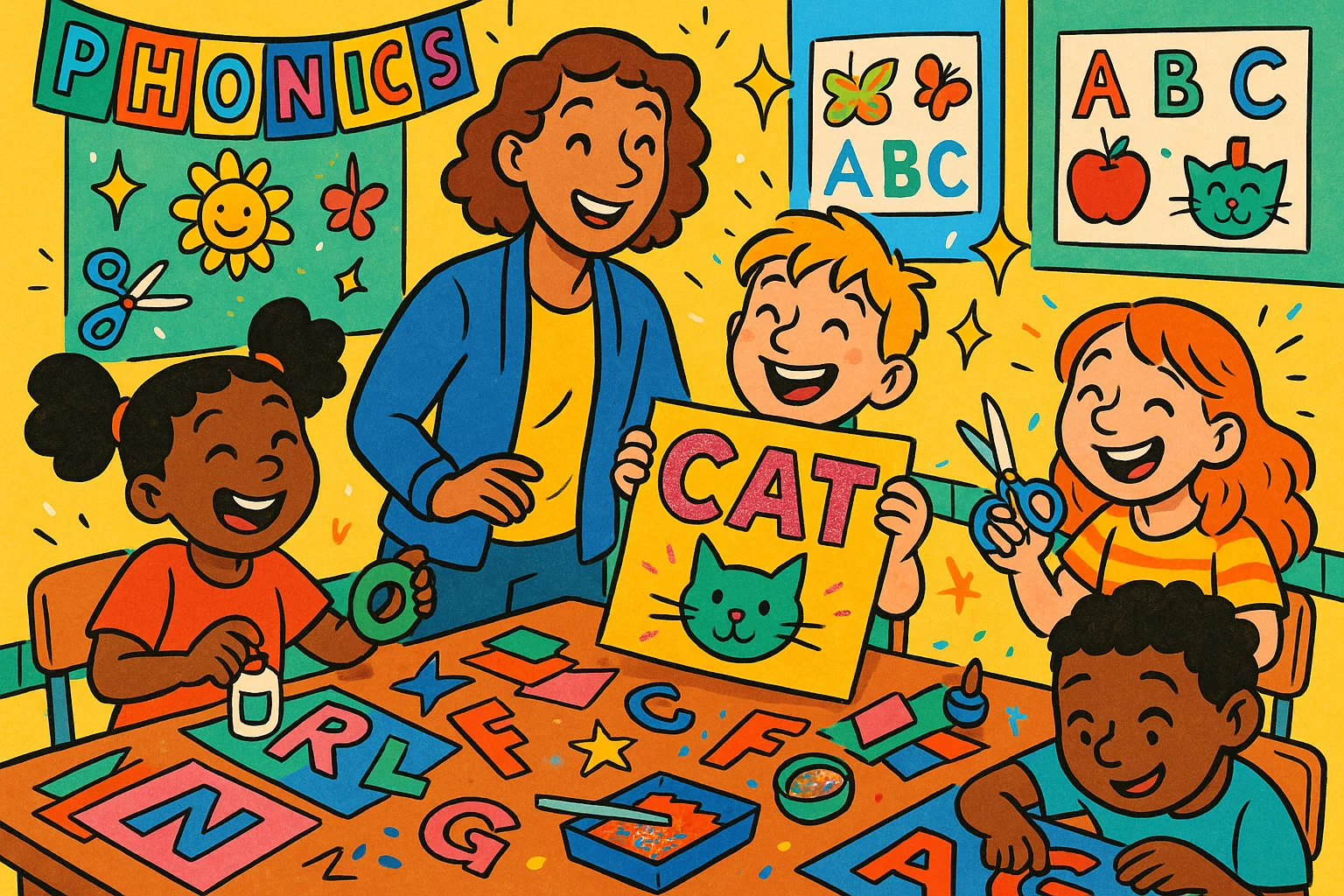
Kindergarten phonics instruction works best when it is active, hands-on, and responsive to a child’s natural need for movement. Incorporating movement and sensory materials turns repetitive decoding practice into an engaging experience that builds confidence. The following activities help keep energy high and learning productive in both classrooms and home environments.
Active Phonics Activities
Kinesthetic learning helps children process information by connecting language concepts with physical movement. Educators can set up simple reading hopscotch grids on the floor where children must read a word before jumping into its square. Other active ideas include phonics obstacle courses and indoor letter hunts, where kids find and read hidden cards to keep body and mind engaged.
Hands-On Phonics Activities
Tactile materials help children explore letter shapes and word structures through hands-on play. Working with materials like play dough, letter stamps, magnetic tiles, and sand trays lets children shape and feel letters as they practice their sounds. These hands-on activities build strong fine motor skills while reinforcing long-term letter recognition.
Low-Prep Phonics Games
Fun, effective phonics practice does not require hours of teacher preparation or expensive materials. Simple everyday items like sticky notes, dice, paper plates, and plastic cups can easily be turned into quick learning games. For instance, writing letters on sticky notes and placing them around a room creates an instant, high-energy sound hunt with almost no preparation.
Phonics Activities for Kindergarten
| Activity Name | Primary Target Skill | Required Materials | How to Use It |
| 1. Flip Pancake | Letter-Sound Recognition | Construction paper circles, spatula | Write letters on paper circles; children flip each paper “pancake” with a spatula and say the sound aloud. |
| 2. Play Dough Letters | Grapheme Formation | Non-toxic play dough, task mats | Children roll play dough “snakes” to form specific letters, saying each sound as they shape the letter. |
| 3. Word Roller | CVC Word Blending | Pocket dice, word-family guide | Roll dice labeled with consonants and vowels; blend the resulting combination aloud. |
| 4. Magazine Scavenger Hunt | Environmental Print Awareness | Old magazines, safety scissors | Children search pages for target letters or images starting with a specific sound, then paste them onto paper. |
| 5. Popsicle Stick Questions | Rapid Word Recognition | Wood craft sticks, markers | Write words on craft sticks; children draw a stick from a cup and read the word aloud. |
| 6. Letter Swat | High-Speed Identification | Fly swatters, tabletop letter cards | Spread letter cards on a table; children quickly swat the correct letter when its sound is called out. |
| 7. Word Walk | Gross Motor Decoding | Large printed floor cards | Place word cards along a path; children walk the line, reading each word as they step on it. |
| 8. Letter Pong | Initial Sound Practice | Plastic cups, ping-pong balls | Label cups with letters; children toss a ball into a cup and say a word that begins with that letter’s sound. |
| 9. Flip Top | Manipulative Word Building | Plastic bottle caps, alphabet stickers | Affix letter stickers to bottle caps; children arrange the caps to build and read simple words. |
| 10. Phonics Dice | CVC Word Building | Wooden blocks or dry-erase dice | Roll one block for initial consonants and another for word families; read the word formed. |
| 11. CVC Cups | CVC Decoding and Blending | Stacking plastic cups, fine markers | Write letters on the rims of stacked cups; children rotate the cups to create and decode new CVC words. |
| 12. Phonics I Spy | Initial Sound Isolation | Everyday household or classroom objects | The adult says, “I spy something that starts with /b/”; the child searches for and names the target object. |
Alphabet Phonics Activities
Early reading success begins with solid alphabet recognition, uppercase and lowercase letter matching, and initial sound awareness. Children must learn to quickly identify letter shapes and connect them to their spoken sounds before moving on to complex blending tasks. The following five activities provide structured, reliable ways to build strong foundational alphabet skills.
Alphabet Finder
Alphabet Finder is an interactive search game in which children look for specific letters around the room, on signs, or in books. Instructors give the child a target letter card, and the child searches for matching letters on classroom labels, posters, or cereal boxes. This practice helps children notice specific letter features and recognize environmental print in the world around them.
Lowercase and Uppercase Match
This matching activity helps children connect uppercase letters with their matching lowercase forms. Using materials like split puzzles, clothespin clip cards, or magnetic sets, children pair the two forms of the same letter. This exercise reinforces that two different letter forms can represent the same letter name and sound.
Beginning Sound Clip Cards
Beginning Sound Clip Cards combine fine motor practice with initial sound identification. Each printable card features a picture with three letter options around it. Children look at the image, say the word aloud to isolate its starting sound, and place a clothespin over the correct letter.
Letter Formation Task Cards
Letter Formation Task Cards give children a clear, visual guide for tracing, building, and writing letters step by step. These laminated cards feature numbered arrows that show the correct direction for every pencil stroke. As children trace the letter with a dry-erase marker, they say its sound aloud, connecting muscle memory with the spoken phoneme.
Find and Color Letter Sheets
Find and Color worksheets feature a target letter surrounded by a mix of other distracting letters. Children search the page to find the target letter, then color it in or mark it with a bingo dauber. This focused visual exercise helps children distinguish between easily confused letter shapes, such as b, d, p, and q.
Letter-Sound Correspondence Activities
Connecting printed letters with spoken sounds is a core skill needed for fluent decoding and spelling. Children should learn to see a letter and say its sound quickly, or hear a sound and write the corresponding letter with increasing confidence. The following structured activities help make these abstract connections practical and permanent.
Letter Labels
Letter Labels help children connect written letters to real objects throughout their daily environment. Teachers place large letter cards on common classroom items, such as the letter b on a box or the letter d on a door. Seeing these labels every day reminds children that written letters connect to the sounds in words for real objects around them.
Go Fish Phonics Game
This activity updates the classic card game to focus on letter-sound matching rather than simple numbers. Players ask for matches by sound rather than letter name, saying, “Do you have a card that makes the /g/ sound?” This playful twist keeps children focused on phonics rules while practicing communication skills with a partner.
Simon Says Phonics Game
This game adapts the traditional “Simon Says” format to focus on initial-sound isolation and listening skills. The leader gives sound-based commands, such as “Simon says touch something that starts with the /s/ sound.” Children must listen carefully to isolate the phoneme before moving, keeping them active and engaged.
Letter Swap
Letter Swap demonstrates how changing just one letter can alter the meaning of a word. Using a magnetic board, the instructor builds a word like “cat,” then swaps the first letter to create “mat” or “hat.” This simple visual shift shows children how small letter changes can change a word’s identity and meaning.
Beginning Sound Activities
Isolating the initial sound of a word is an important developmental bridge connecting simple phonemic awareness to formal phonics decoding. Before children can blend whole words, they need to clearly identify and separate the first sound they hear. The following activities offer focused ways to practice isolating initial sounds.
Beginning Sound Search and Trace
This activity combines visual search with letter tracing to reinforce starting sounds. Children look at a page of illustrations, find pictures that start with a target sound, and trace the matching letter next to them. Saying the word aloud while tracing the letter strengthens the connection between the spoken sound and its written form.
Feed-the-Letter Mats
Feed-the-Letter Mats turn initial-sound practice into an engaging sorting activity. Children look at small picture cards and “feed” them into themed boxes or mats shaped like animals or characters, matching them by starting sound. For example, a child might feed a picture of a fish to a cartoon fox mat labeled with the letter f.
Sound Sort
Sound Sort is a structured activity where children group pictures into columns based on their starting sounds. Using a pocket chart or tabletop mat, kids sort cards into columns labeled with specific target letters. Keeping the categories distinct helps children compare different sound details and reduces confusion between similar letters.
Letter Sound Hunt
The Letter Sound Hunt is an active game where children find real objects that begin with a specific target sound. Guided by a prompt like “Find three things that start with /m/,” children search the room for items like a marker, a mat, or a mug. This movement-based game shows children how phonics applies to the real objects all around them.
CVC Phonics Activities
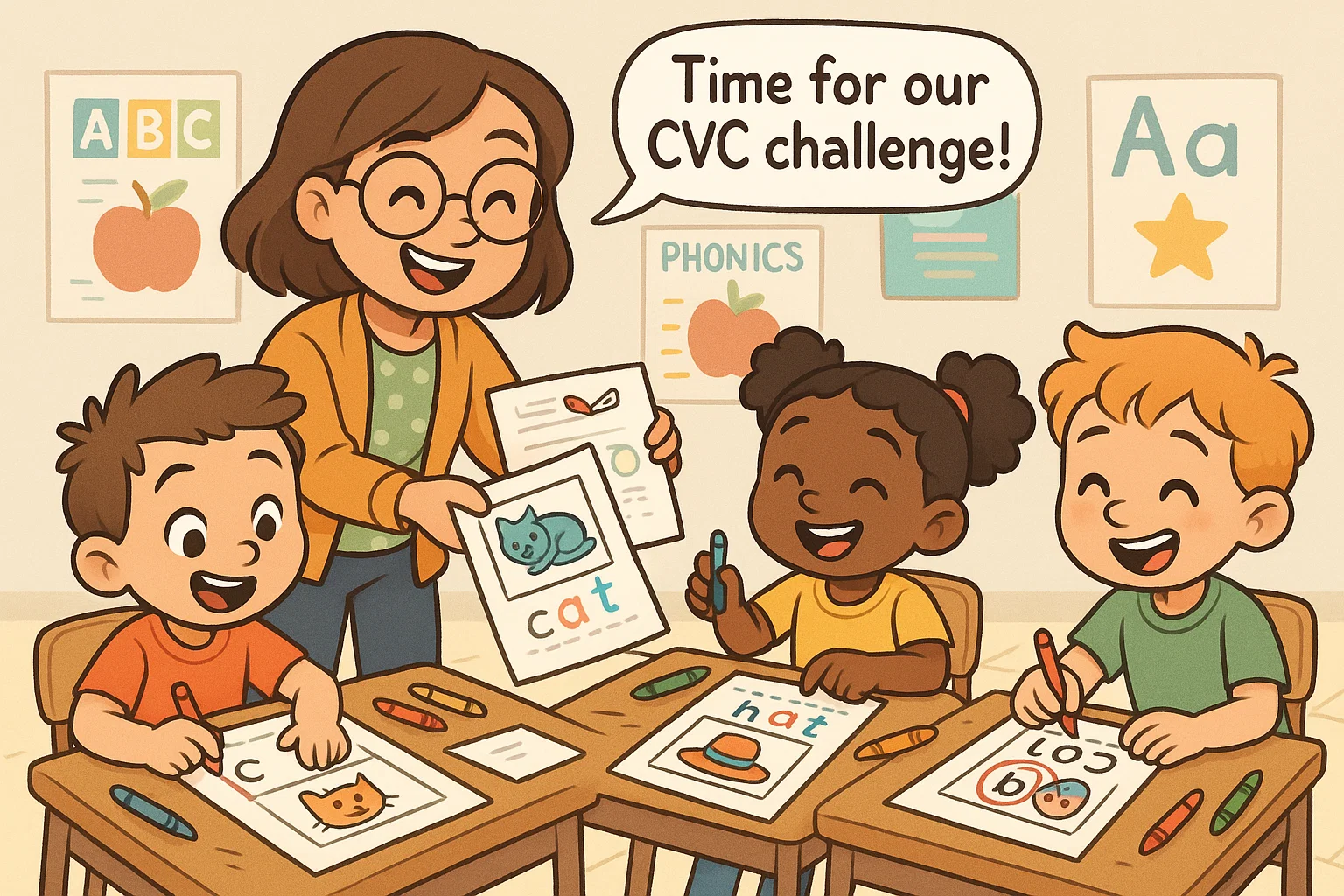
Consonant-Vowel-Consonant (CVC) words are central to early reading because they follow predictable, short vowel patterns. Words like “pig,” “sun,” and “net” allow children to practice blending sounds together without running into confusing spelling exceptions. The following activities provide reliable, hands-on ways to master early decoding.
CVC Letter Hunt
The CVC Letter Hunt challenges children to find missing letters to complete simple words. Instructors provide a card with a picture and an incomplete word, such as a picture of a dog labeled “d _ g.” The child searches a sensory bin for the missing letter tile and places it in the blank space to complete the word.
CVC Missing Sound Practice
This activity helps children focus on specific sound positions in short words. Using task cards or targeted worksheets, students look at an image and identify whether the beginning, middle, or ending sound is missing. Pinpointing these specific positions builds stronger spelling skills and helps children notice small details in words.
CVC Word Match-Up
This activity connects decoding with vocabulary meaning by matching printed words to their correct pictures. Children read a CVC card like “bug” and match it to an illustration of a bug. This simple exercise ensures that children are reading for meaning rather than just pronouncing sounds without understanding them.
CVC Word Unscramble
CVC Word Unscramble challenges children to arrange mixed-up letters into a real word. Given a picture and three scrambled letter tiles, such as t, a, and m for mat, the child must arrange them in the correct left-to-right order. This activity strengthens spatial awareness and teaches children how words are systematically built.
CVC Read, Write, Color
This activity combines reading, writing, and fine motor work into a single, balanced learning routine. On a structured worksheet, children read a target CVC word, write it out with a pencil, and color a matching illustration. Engaging multiple skills at once reinforces word structures and builds stronger long-term retention.
CVC Word Board Game
This board game turns decoding practice into an entertaining tabletop activity for pairs or small groups. Players roll a die, move along a path, and must correctly decode the CVC word in their square to stay on that space. This playful format keeps children motivated and turns routine reading practice into a fun social activity.
Short Vowel Phonics Activities
Short vowel sounds can be challenging for young learners because sounds like short /e/ and short /i/ can be very similar when spoken aloud. Kindergarten students need consistent, focused practice to tell these middle sounds apart and avoid decoding errors. The following activities provide clear, reliable ways to practice and master short vowels.
Vowels Up, Thumbs Up
This quick response game checks vowel recognition without needing any paper or pencils. The instructor reads a word aloud, and students respond with a specific physical action – like giving a thumbs-up or holding up a vowel card – when they hear the target sound. This rapid game lets teachers easily see who can distinguish short vowel sounds in real time.
Roll Vowel
Roll Vowel uses custom dice to build words around specific middle sounds. Children roll a die labeled with the vowels a, e, i, o, and u, then try to create a real CVC word using that vowel. This activity challenges children to think flexibly and helps them see how changing a single middle vowel creates an entirely new word.
Short Vowel Sort
This activity helps children contrast different middle sounds by sorting cards into distinct categories. Students look at picture or word cards and place them under the correct vowel header on a pocket chart. This comparative practice helps clear up confusion between similar vowel sounds, such as the difference between the vowels in “bat” and “bet.”
Long or Short
This activity helps children hear the difference between short vowel sounds, like the short a in hat, and long vowel sounds, like the long a in cake. Using a simple two-column chart, children sort cards based on the vowel length they hear. This practice sets a strong foundation for advanced reading rules later on.
Word Family Phonics Activities
Word families group words that share the same spelling pattern and rhyming ending, such as -at, -it, or -ug. Learning these patterns helps children decode faster because they can read letter chunks at once rather than sounding out every letter individually. The following activities help children find, build, and read word families efficiently.
Rhyming Poetry
Rhyming Poetry introduces word families through simple, rhythmic language and engaging text. Instructors share short poems and guide children to highlight words that share the same ending sound and spelling pattern. This practice connects phonics to real reading and helps children notice natural rhythms in language.
Word Family Cups
This hands-on activity uses rotating plastic cups to show how word families work. An instructor writes a word family ending like “-op” on an outer cup and several starting consonants on an inner cup. As children spin the inner cup, they create and read a series of new words, like top, hop, and mop.
Word Family Match
This matching game pairs illustrations with their correct word family groups. Children match picture cards for words like pin and fin to their corresponding “-in” family anchor card. This activity reinforces rhyming patterns visually and helps children see how words are related by structure.
Word Family Read and Write
This activity combines spelling lists with sentence practice to build reading confidence. Children write down a list of words from the same family, read them aloud, and then find them in short, simple sentences. This routine helps children move easily from writing single words to reading whole lines of text.
Blends Phonics Activities
Consonant blends feature two adjacent consonants that keep their individual sounds when pronounced together, such as the /st/ in stop or the /bl/ in blue. Kindergarten students need to practice blending these sounds smoothly without skipping either letter. The following activities offer structured ways to practice beginning and ending blends.
Beginning Blend Clip Cards
Beginning Blend Clip Cards help children isolate starting consonant clusters like cl, fr, and sp. Each card features a main picture and a few blend options along the edge. Children say the word, identify the starting cluster, and place a clothespin over the correct blend, building fine motor skills and sound awareness at the same time.
Ending Blend Missing Sounds
This activity focuses on final consonant clusters, such as -mp in jump or -nd in hand. Children work with task cards or worksheets to identify and fill in the missing closing sounds of a word. This practice helps children notice ending sounds carefully, which improves spelling and writing accuracy.
Blend Word Search and Trace
This activity combines visual scanning with writing to help children identify blend patterns. Children look through a simplified grid to find words with blends, trace them with a marker, and read them aloud. This exercise helps children recognize common consonant clusters quickly within a block of text.
Blend Word Sort
Blend Word Sort helps children compare and group words by their specific consonant clusters. Using a sorting mat, students organize word cards into columns for r-blends, s-blends, or l-blends. This comparative practice helps children see regular spelling patterns and improves word-recognition speed.
Blend Words Board Game
This board game turns blend decoding into an engaging, interactive activity for young readers. Players move their pieces along a colorful path, reading words with blends aloud as they land on each space. This playful format keeps children interested and turns routine decoding practice into a fun social game.
Digraph Phonics Activities
Unlike blends, consonant digraphs use two letters to represent a single sound, such as ch, sh, th, wh, and ck. Children need to learn to read these letter pairs as a single unit rather than sounding them out separately. The following activities help children recognize and decode common digraphs accurately.
Consonant Digraphs
Understanding digraphs requires explicit instruction to show children that certain letter pairs make just one sound. Instructors can use the following comparison table to show students the difference between blends and digraphs:
| Feature | Consonant Blends (e.g., fl, st, br) | Consonant Digraphs (e.g., sh, ch, th) |
| Letter Count | Two or three distinct letters | Two distinct letters |
| Phoneme Count | Two or three separate sounds heard | One sound produced |
| Auditory Example | “flag” retains both /f/ and /l/ | “ship” creates a single /sh/ sound |
| Grapheme Structure | Letters retain independent identities | Letters work together as one sound unit |
Digraph Clip Cards
Digraph Clip Cards give children a reliable way to practice identifying unique letter pairs like sh, ch, and th. Children look at a picture card, say the word aloud, identify the digraph sound, and clip a clothespin over the correct letter pair. This hands-on exercise helps children see digraphs as single, unified sounds.
Digraph Missing Sound Mats
This activity challenges children to complete words by choosing the correct missing digraph. Working with laminated mats, students write the missing letter pairs to complete words like “_ _ op” for chop or “ba _ _” for bath. This practice helps children identify digraphs at both the beginning and end of words.
Digraph Read, Write, Color
This balanced activity combines reading, spelling, and fine motor work to reinforce digraph patterns. On a structured worksheet, children read a target digraph word, write it out, and color a matching picture. This multi-step process helps children remember how digraphs are written and used in common words.
Beginning and Ending Digraph Sort
This sorting activity helps children recognize that digraphs can appear at either the start or the end of a word. Students sort word cards like “fish” and “shop” onto a mat based on whether the digraph appears at the beginning or end of the word. This practice trains children to scan whole words carefully from left to right.
Hard and Soft C and G Sounds
As kindergarten students progress, they encounter letters like c and g, which often make different sounds depending on the vowels that follow them. Learning the difference between hard sounds, as in cat and goat, and soft sounds, as in cent and gem, provides a helpful bridge to more advanced reading. The following activities help children sort and master these dual-sound letters.
Soft C and Hard C Sort
This activity helps children contrast the two distinct sounds made by the letter c. Using a two-column sorting mat, children place word cards under the “Hard C” header, like cup and corn, or the “Soft C” header, like city and cell. This exercise helps children learn that c usually makes a soft /s/ sound when followed by e, i, or y.
Soft G and Hard G Sort
Similar to the c sort, this activity helps children distinguish between the two sounds of the letter g. Children sort pictures or word cards into columns for the hard /g/ sound, like gum and gate, and the soft /j/ sound, like gem and giant. Sorting these words helps children recognize the visual patterns that often signal a sound change.
Picture Picker Sound Practice
Picture Picker is a quick game that sharpens a child’s ability to identify hard and soft c and g sounds. The instructor displays a mix of illustrations and asks children to pick out the items that include a specific hard or soft c or g sound. This activity keeps children engaged and builds fast, accurate sound identification skills.
Syllable Phonics Activities
Breaking words into syllables helps children hear the natural parts and rhythms within spoken language. Mastering syllable counting in kindergarten makes it easier for children to decode longer, multisyllabic words as they grow. The following activities provide active, hands-on ways to practice breaking down words.
Stomp and Clap
Stomp and Clap is an active, high-energy game that connects body movement to the natural rhythm of words. Children say a word aloud – such as their name, an animal, or a classroom object – and stomp or clap for each syllable they hear. This physical movement makes abstract word parts clear and easy to count.
Syllable Boxes
Syllable Boxes use a visual grid and counters to help children track syllables systematically. An instructor says a word like “apple,” and the child places a token into a box for each syllable they hear. This exercise helps children see how spoken words are built from smaller rhythmic units.
Human Syllable Bee
The Human Syllable Bee turns syllable counting into an active movement game for the whole classroom. When the teacher calls out a word, children take a step forward or jump for each syllable they hear. This game keeps children active while reinforcing their listening and segmenting skills.
Syllable Sort
Syllable Sort helps children compare and group words based on how many parts they contain. Using a large sorting chart, children place picture cards into columns labeled 1, 2, or 3 syllables. Grouping items like “cat” (1), “monkey” (2), and “banana” (3) helps children analyze word structures clearly.
High-Frequency Word Phonics Practice
High-frequency words appear often in early reading materials, and many follow regular, decodable spelling patterns. Teaching these words through phonics helps children notice regular sound patterns alongside any irregular parts. The following activities provide reliable, engaging ways to practice high-frequency words.
Word Bingo
Word Bingo turns high-frequency word practice into an entertaining group game. Each student receives a grid card featuring a mix of high-frequency words, and they place a token over each word as the teacher calls it out. This game encourages children to scan words carefully and rewards accurate word recognition.
Flash Card Race
The Flash Card Race is a fast-paced game designed to build quick, automatic word recognition. Children work through a small deck of familiar high-frequency words, trying to read each card accurately and confidently. This rapid practice helps move words from slow decoding into automatic recognition.
Word Hunt
Word Hunt encourages children to find target high-frequency words in real stories or poems. Armed with a highlighter or a finder card, children search through decodable books to spot and mark specific words. This exercise helps children recognize high-frequency words in continuous text rather than just on isolated flashcards.
Mystery Sentences
Mystery Sentences challenge children to decode short lines of text by combining known phonics patterns with high-frequency words. Instructors present simple, controlled sentences with missing words that children fill in using a word bank, sentence meaning, and decoding skills. This practice builds early reading comprehension and sentence-tracking skills.
Movement-Based Phonics Activities
Kindergarten students learn best when they can move their bodies rather than sitting still at a desk for long periods. Integrating physical action into daily reading lessons keeps energy high and helps children remember letter and sound patterns. The following five activities offer dynamic, movement-rich ways to reinforce phonics skills.
Reading Hopscotch
Reading Hopscotch brings a classic playground game into the classroom to practice decoding skills. Instructors draw a grid on the floor using chalk or tape and place word cards inside each square. Children must read the word correctly before hopping into that square, combining balance with reading practice.
Phonics Race
The Phonics Race turns word decoding into a fun, active relay game. Children line up and can only step forward or race to the finish line after correctly identifying a flashed letter sound or reading a CVC word. This game matches a child’s natural energy and keeps everyone motivated to practice.
Phonics Ball Toss
This game uses a soft ball to choose letters or words for quick reading practice. Children toss a beach ball labeled with letters or vowel teams to a partner, and whichever letter their right thumb lands on is the sound they must say aloud. This simple game keeps children alert and focused.
Phonics Obstacle Course
The Phonics Obstacle Course sets up a series of physical challenges linked with reading tasks. Children move through stations where they might crawl under a table, jump over a line, and then stop to decode three word cards before moving on. This active setup keeps learning fresh and engaging.
Balloon Volley
Balloon Volley challenges children to keep a balloon in the air while practicing sounds or rhymes. Every time a child taps the balloon, they must state a letter sound, call out a rhyming word, or blend a short sound sequence. This fast-paced game builds quick thinking and keeps auditory attention sharp.
Sensory Phonics Activities
Sensory-rich activities use touch and physical materials to help children understand and remember abstract letter shapes. Engaging multiple senses at once creates stronger pathways in the brain, which helps children recall sounds and letters more reliably. The following activities offer hands-on ways to practice phonics skills.
Play Dough Letter Smash
This activity combines word segmenting with fun sensory play. Children roll small play dough balls, place one under each letter on a CVC word card, and smash each ball as they say the sound aloud. This hands-on action makes the concept of separate spoken sounds clear and memorable.
Sand Tray Writing
Sand Tray Writing gives children a smooth, tactile surface to practice letter formation and spelling. Children trace letters, CVC words, or digraphs directly into shallow trays filled with colored sand, salt, or shaving cream. The tactile feedback reinforces letter strokes and helps build solid handwriting habits.
Letter Stamps
Letter Stamps allow children to build words using physical ink stamps on paper. Given a target picture card, children select the correct letter stamps, press them in sequence to spell the word, and then read the whole word aloud. This activity reinforces print directionality and helps children practice spelling step by step.
Phonics Locks and Keys
This matching activity uses labeled locks and keys to build strong sound-symbol connections. Children look at a lock labeled with a picture, letter, or target sound, search for the key with the matching letter or sound, and turn it to open the lock. This hands-on challenge rewards accurate matching with a satisfying mechanical finish.
Seasonal Phonics Activities
Connecting phonics lessons to changing seasons and holidays keeps classroom themes fresh, timely, and interesting. Seasonal activities give educators a natural way to repackage repetitive drill work into festive, engaging new formats. The following ideas show how to organize phonics practice around the four seasons.
Fall Phonics Activities
Fall provides engaging themes like pumpkins, autumn leaves, apples, and harvest symbols for early reading practice. Children can pick paper leaves out of a bucket to read CVC words or match uppercase-letter cards to lowercase turkey feathers. These festive autumn themes keep daily review feeling creative and new.
Winter Phonics Activities
Winter themes use snowmen, mittens, gingerbread figures, and polar bears to dress up routine phonics practice. For example, children can stack paper snowballs labeled with consonants and vowels to build words, or match mitten cards by their starting digraph sounds. These cozy themes make cold-weather learning interactive and engaging.
Spring Phonics Activities
Spring provides cheerful themes like blooming flowers, butterflies, raindrops, and garden objects to brighten literacy lessons. Children can match rhyming word family eggs into plastic baskets or sort colorful butterfly cards onto letter mats. These bright themes match the seasonal energy and keep children eager to learn.
Summer Phonics Activities
Summer themes bring sunshine, beach balls, ocean animals, and ice cream designs into late-year phonics practice. Students can use a toy fishing pole to catch magnetic fish labeled with blends, or build ice cream cones by matching word-family scoops. These warm-weather themes keep end-of-year review light, playful, and productive.
Phonics Activities by Skill Level
To support learning, instructors should match activities to a child’s current reading readiness rather than their age. Grouping activities by skill level helps children build confidence on a solid foundation before moving on to more complex patterns. The following guide helps navigate these developmental stages effectively.
Beginner Phonics Activities
Beginner learners should focus on mastering basic alphabet recognition, uppercase and lowercase letter matching, and simple initial-sound isolation. Activities at this stage should emphasize auditory games and hands-on letter exploration to build confidence. Instructors should make sure children can quickly link letters to their sounds before introducing multi-letter words.
Early Decoder Activities
Once children know their basic letter sounds, they are ready to move on to early-decoder activities centered on CVC words and short vowels. Practicing with word families and decodable word cards teaches children how to blend sounds smoothly from left to right. This steady practice builds early fluency and helps children read simple sentences independently.
Growing Reader Activities
Growing readers are ready to tackle more advanced spelling patterns like consonant blends, digraphs, multisyllabic words, and common high-frequency words. Activities should challenge children to read and write more complex text structures across continuous sentences. This advanced work expands their reading vocabulary and prepares them for fluent, independent storybook reading.
How to Choose the Best Phonics Activities for Kindergarten
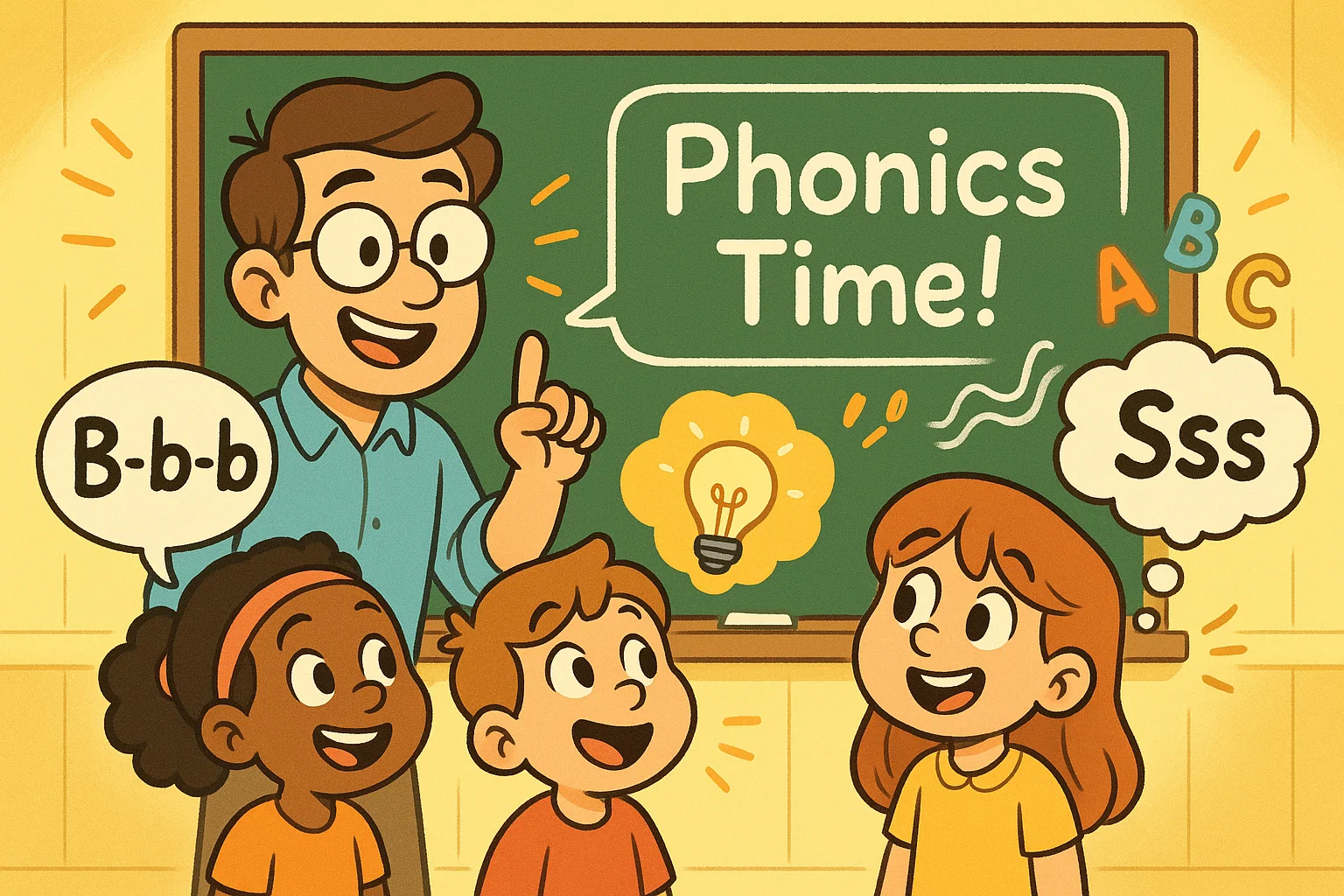
Selecting the right phonics activities requires a clear understanding of a child’s current reading skills, available practice time, and learning goals. Choosing activities that match a child’s specific needs keeps practice rewarding and avoids unnecessary frustration. The following three guidelines help parents and teachers choose the best tools for daily practice.
Match Activity to Skill
Always choose activities that line up precisely with the specific phonics pattern a child is learning that week. For example, if a child is still working on basic letter sounds, introducing complex consonant blends too early will cause confusion and frustration. Keeping activities tightly focused on current lessons helps children feel successful and build steady, reliable reading skills.
Keep Practice Short
Phonics lessons work best when they are brief, high-energy, and completed within a focused 10- to 15-minute window each day. Short, daily sessions match a young child’s natural attention span far better than long, exhausting weekly drills. Keeping practice quick and positive maintains high motivation and helps children retain what they learn.
Use Multisensory Practice
The most effective phonics activities engage multiple senses at once by combining seeing, saying, hearing, touching, and moving. For example, having a child say a sound aloud while tracing its letter shape in a sand tray builds a much stronger memory than a plain worksheet alone. Using multiple paths to the brain speeds up learning and keeps reading practice dynamic.
Common Phonics Mistakes to Avoid
Even well-meaning reading practice can fall flat if it uses outdated or inefficient habits that confuse young learners. Recognizing and avoiding these common instructional missteps saves valuable time and keeps children on a more effective path to reading success. The following three warnings help ensure your phonics practice stays effective and evidence-based.
Skipping Sound Practice
A common mistake is focusing entirely on letter names while skipping the vital practice of learning letter sounds. While knowing the alphabet song is helpful, children cannot decode the word “cat” by using the names /cee/ /ay/ /tee/. Instructors must make sure children practice the actual spoken sounds that letters make to build authentic reading skills.
Moving Too Quickly
Pushing a child into advanced reading rules before they have mastered basic letter sounds can create gaps in their learning foundation. Skipping ahead can lead to guesswork and frustration when children encounter unfamiliar text later on. Taking the time to build solid mastery of current skills helps create a strong, confident reader for the long run.
Relying Only on Random Worksheets
Relying entirely on passive, random worksheets without interactive, explicit teaching limits a child’s reading growth. While worksheets are helpful for quiet writing practice, they cannot replace oral sound blending, active games, and reading aloud. Balancing written work with lively, spoken practice creates a much richer and more effective learning environment.
Frequently Asked Questions
What Are the Best Fun Phonics Activities for Kindergarten?
The best fun phonics activities for kindergarten combine clear instruction with hands-on practice. Strong options include letter hunts, sound sorting games, CVC word building, phonics worksheets, movement-based tasks, and simple reading and phonics games. These games and activities help children practice important phonics concepts while staying active and engaged.
What Is the Best Way to Teach Phonics to Kindergarteners?
The best way to teach phonics is to move step by step from simple phonics sounds to more complex word patterns. Start with beginning phonics skills, such as letter recognition and initial sounds, then move into CVC words, short vowels, blends, digraphs, and high-frequency words. Short, explicit lessons paired with engaging phonics practice help children build essential early reading skills without feeling overwhelmed.
How Can Parents Practice Phonics Activities at Home?
Parents can use simple phonics activities at home with everyday objects, books, sticky notes, and picture cards. For example, you can ask your child to find a word that starts with /m/, sort toys by beginning sound, or build a CVC word with magnetic letters. These easy phonics routines take only a few minutes and help support phonics practice between classroom lessons.
Are Phonics Worksheets Enough for Learning Phonics?
Phonics worksheets can be useful, but they work best when paired with oral practice, movement, and hands-on games. Children need to hear phonics sounds, say them aloud, build words, write letters, and read decodable text. A balanced phonics toolkit should include worksheets and games, small-group practice, phonics centers, and quick activities to reinforce new phonics skills.
Take a short quiz to find out what your everyday choices say about your parenting style
When your child is curious about something new, what’s your instinct?
Take a short quiz to find out what your everyday choices say about your parenting style
“Can I download this app?” What happens next?
Take a short quiz to find out what your everyday choices say about your parenting style
When it comes to rules at home, which sounds most like you?
Take a short quiz to find out what your everyday choices say about your parenting style
If you could give your child one life skill today, what would you pick?
Take a short quiz to find out what your everyday choices say about your parenting style
Your child gets to choose what to watch. What would your ideal setup look like?
Take a short quiz to find out what your everyday choices say about your parenting style
Pick your parenting superpower ✨