
Parenting Tips for a 13-Year-Old Boy: 15 Practical Ways to Raise a Confident Teenage Boy

 Discover a Free Education Video App for Kids
Pastory uses AI to personalize educational video content based on your child’s interests and personality. Safe, engaging, and built for curious young minds. Sign up now to stay updated and enjoy early access with a free trial
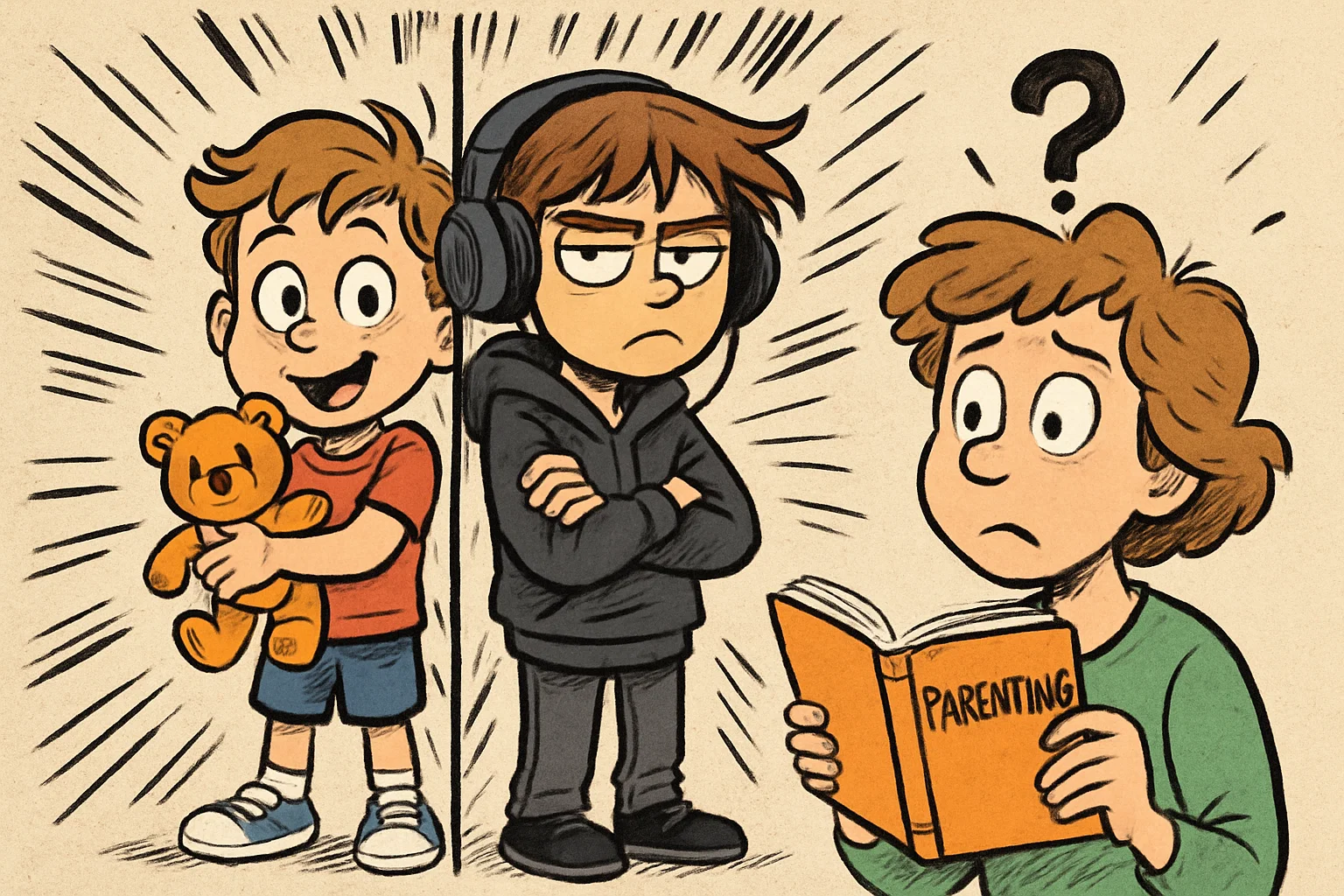
Raising a 13-year-old boy during the early teen years introduces significant shifts in family dynamics. Parents often face teenage attitude, abrupt mood shifts, screen time conflicts, risky choices, academic pressure, and a rapidly growing need for autonomy. This stage of adolescence marks a major transition as a boy begins moving from childhood toward young adulthood, a process that can feel both fast and turbulent.
Navigating the teenage years requires a practical parenting approach that balances warmth with firm structure. When a once-open child becomes more withdrawn and suddenly seems less willing to talk, parents need to adapt their approach. This practical guide offers realistic strategies to help parents and caregivers maintain emotional connection, set clear limits, and build lasting self-confidence in their sons.
Key Takeaways
- Balanced Autonomy: A 13-year-old boy needs a thoughtful mix of personal freedom and firm family structure to develop accountability.
- Effective Communication: Short, calm, and specific requests resolve conflicts more effectively than long lectures or constant nagging.
- Positive Discipline: Clear boundaries, predictable logical consequences, and relationship repair after disagreements preserve parental trust.
- Proactive Monitoring: Parents should stay aware of changes in mental health, peer groups, digital behavior, sleep, and stress levels.
- Professional Support: Seeking outside support from a school counselor or pediatrician is important when behavioral issues become persistent, unsafe, or difficult to manage at home.
Core Parent Actions
To maintain a strong parent-child relationship during this transition, parents should consistently prioritize emotional regulation and open communication. Staying calm and avoiding shame-based language helps a teenage boy feel safer discussing difficult topics.
Setting consistent household boundaries while also offering age-appropriate independence helps a young person practice decision-making skills. Parents should also stay aware of their son’s digital life, encourage healthy offline habits, and remain available for connection without forcing constant interaction.
Main Challenges at Age 13
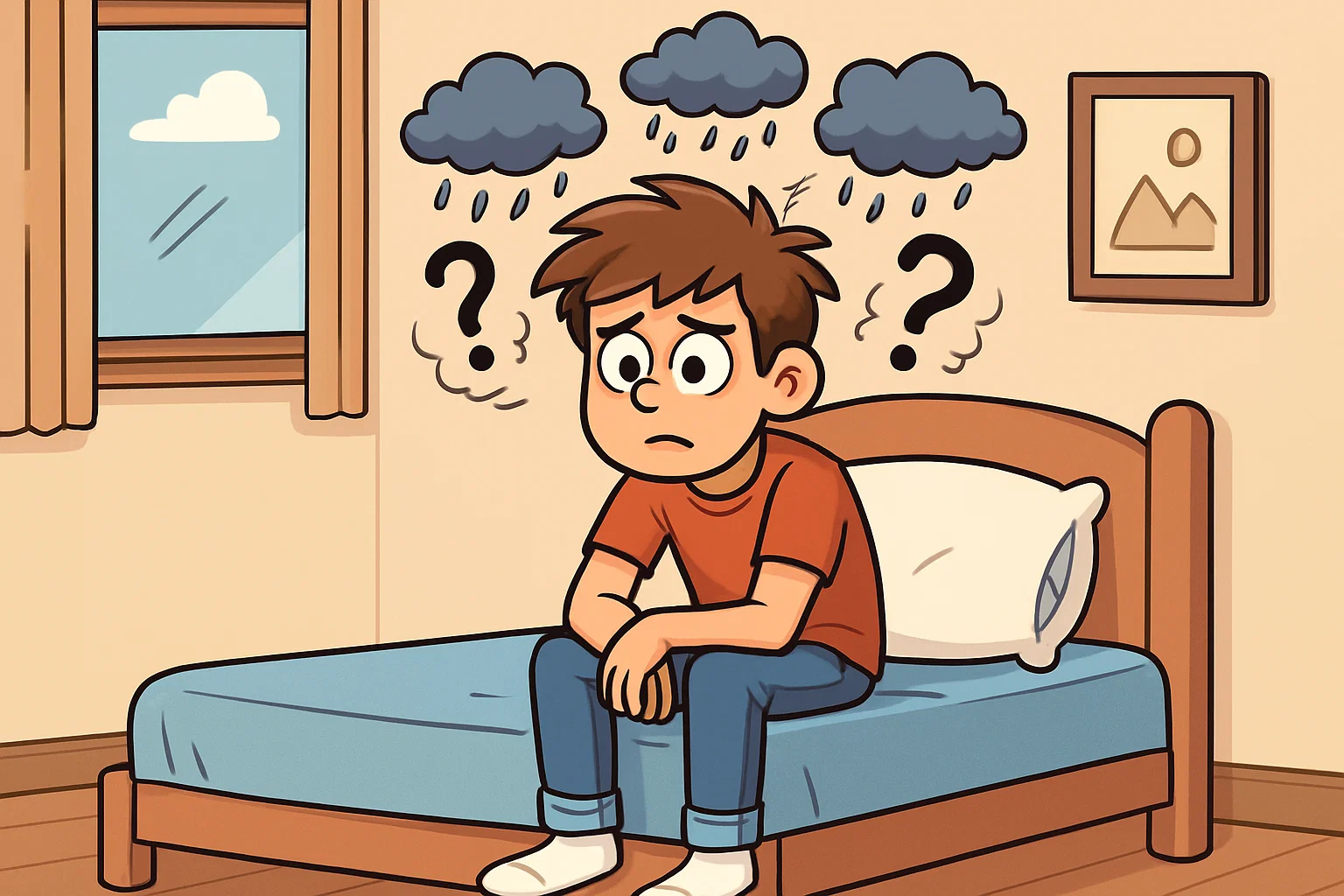
For many boys, puberty-related changes intensify around ages 12 or 13 and can affect behavior, emotional expression, and physical appearance. Parents frequently navigate sudden mood changes, verbal backtalk, intensifying peer pressure, and escalating battles over video games and phone use.
Identity shifts and a stronger desire for privacy may make a teen boy more withdrawn or more interested in spending time with friends than with family. Increased academic demands and changing social dynamics at school can add everyday stress.
When Extra Help Matters
While testing boundaries is a normal part of development, certain behavioral patterns may signal a need for professional support. Parents should seek outside support from a school counselor, pediatrician, child therapist, or trusted medical professional when their son’s behavior becomes persistently aggressive, unsafe, or destructive.
Severe social withdrawal, a sudden drop in school attendance, substance use, or any signs linked to self-harm require immediate attention. Professional support can give families evidence-based strategies for addressing serious emotional or psychological struggles.
1. Don’t Shame Him
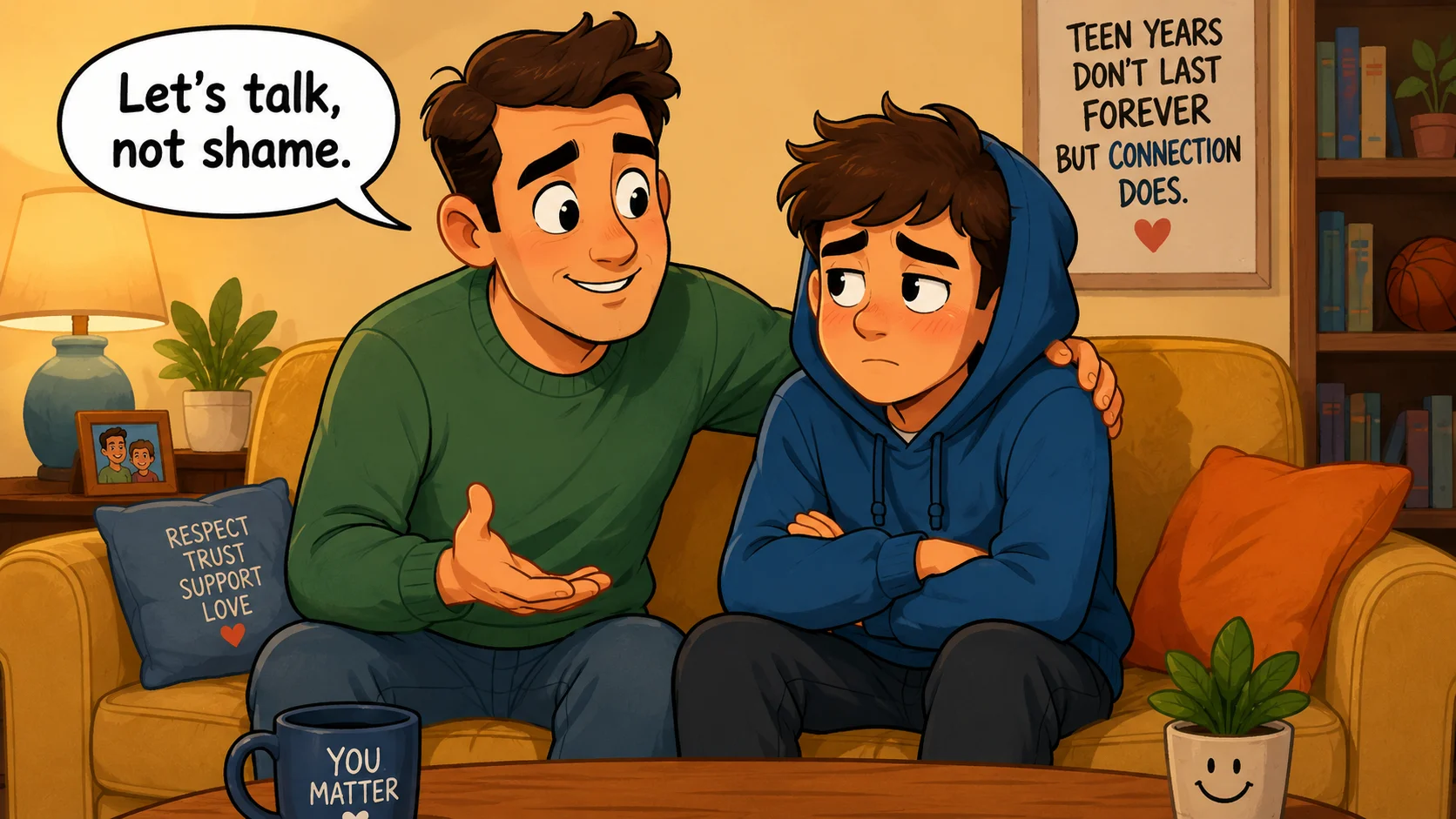
Shame is a destructive emotion that can damage a teenage boy’s emerging self-confidence and shut down open communication. When a parent uses shaming language, a young person may start to believe that something is wrong with who he is, rather than understanding that a specific choice was harmful or unwise.
Repeated shaming and harsh, humiliating communication can increase emotional distress and behavioral problems in adolescents. Parents should separate the young person’s character from his actions to preserve his sense of personal worth during correction.
Shame Versus Accountability
Accountability focuses on the specific action and the steps needed to repair the situation, whereas shame attacks the person’s character. For example, saying “You are lazy and irresponsible” induces shame, while saying “Leaving your chores unfinished affects the whole family, so let’s look at how to fix this” builds accountability.
Objective language helps a 13-year-old boy focus on problem-solving instead of becoming defensive. This approach teaches young men that mistakes are specific choices that can be corrected through conscious effort.
Private Correction Moments
Correcting a teenage boy in front of peers, siblings, or relatives can damage his sense of dignity and trigger resentment. Public embarrassment causes many teen boys to tune out the parent’s message and focus on the humiliation of the moment.
Choosing to address misbehavior in private settings makes it easier for the teen to listen to guidance. Protecting his dignity reinforces mutual respect and makes him more likely to listen.
Repair After Conflict
The process of relationship repair after a heated argument is essential for maintaining a strong parent-child relationship over time. If a parent loses control and uses a harsh tone or hurtful words, offering a sincere apology models emotional maturity and teaches valuable relationship skills.
Parents can use simple, direct repair phrases such as, “I am sorry that I raised my voice earlier. Let’s sit down and discuss this calmly now.” This shows a teenage boy how to handle disagreement responsibly and respectfully.
2. Reframe Teen Brain Development and Behavior
A 13-year-old boy is going through major brain and emotional development that can affect his everyday choices. Research suggests that the prefrontal cortex – a brain region involved in impulse control, planning, and risk evaluation – continues developing into early adulthood.
While ongoing brain development never excuses harmful behavior, understanding it helps parents view outbursts through a developmental lens. This perspective allows mothers and fathers to respond with structured patience rather than personal frustration.
Mood Swings and Impulse Control
Hormonal changes and still-developing self-regulation skills can contribute to sudden, intense emotional reactions. When a teenage boy has a sudden mood shift, intentional de-escalation is often a parent’s most effective tool.
Pausing before reacting, lowering your voice, and scheduling a later time to revisit the issue can prevent the conflict from expanding. Refusing to match a teen’s emotional intensity helps preserve parental authority and models effective emotional regulation.
Risk-Taking and Peer Pressure
During early adolescence, the brain’s reward system becomes highly sensitive to peer validation, making boys more likely to test boundaries when friends are around. Because peer approval can feel especially rewarding in early adolescence, teenage boys may sometimes prioritize immediate social rewards over long-term safety.
Parents can reduce these risks by proactively discussing safety boundaries, personal reputation, and decision-making strategies before challenging situations occur. Talking through hypothetical scenarios helps a teen boy plan exit strategies and navigate peer pressure more safely.
Confidence-Building Language
The words a parent uses in everyday interactions can strongly influence a 13-year-old boy’s self-talk and resilience. Replacing criticism with language that highlights effort, problem-solving, and capability encourages a growth mindset.
Phrases such as “I can see how hard you worked to figure out that problem” or “You made a thoughtful choice there” build authentic self-esteem. This style of communication reinforces the message that he is capable of navigating the challenges of growing up.
3. Keep Warmth and Affection Alive
Maintaining a warm emotional connection is vital, even when a 13-year-old boy pulls away or shows signs of embarrassment. While a young person may naturally seek more distance as he builds his own identity, he still needs parental reassurance and love.
Warm, supportive family relationships can help protect teens’ mental health and overall well-being. Finding age-appropriate ways to express affection helps a young person feel secure as he explores independence.
Affection That Fits the Teen Years
Expressions of parental affection should evolve to match a teenage boy’s changing comfort level. While public displays of love might make him uncomfortable, low-pressure affection in private settings can still be meaningful.
Quick shoulder taps, casual fist bumps, brief hugs, shared humor, and making his favorite food can show care without causing social embarrassment. These subtle actions communicate emotional support in a way that respects his changing personal boundaries.
Daily Warmth Without Smothering
Providing daily warmth does not mean forcing deep, lengthy conversations when a son clearly needs quiet space. Parents can establish simple, consistent daily rituals that offer regular connection points without feeling intrusive or demanding.
Brief check-ins during breakfast, a relaxed goodnight routine, or casual conversations while driving him to activities can be effective. Car rides can be especially useful because the lack of direct eye contact often makes teen boys feel safer opening up.
Praise Beyond Grades or Sports
Many teen boys feel intense pressure to perform and may start to believe that parental love is tied only to external achievements. To build a well-rounded identity, parents should intentionally praise internal character traits rather than focusing only on report cards or sports scores.
Notice and name moments of honesty, kindness, creative thinking, humor, or willingness to help others. This practice helps a young person feel valued for who he is, not just for what he achieves.
4. Replace Nagging With Clear Communication
Repeated nagging and lengthy lectures usually fail because they can turn into background noise that a teenage boy tunes out. When a teen feels bombarded by constant complaints, he may become defensive, withdraw, or push back.
Clear, concise, direct communication is often more effective for gaining cooperation around household expectations. Shifting from emotional lecturing to structured communication minimizes daily friction and clearly outlines what needs to be done.
Short Requests That Work
A 13-year-old boy is more likely to respond well to short, specific instructions than to vague demands or multi-step lectures. Clear expectations reduce confusion and make it easier for him to understand his responsibilities.
| Ineffective Communication | Effective Communication |
| “Your room is a total disaster area. You need to grow up and take care of your things.” | “Please place all dirty laundry into the basket by 7:00 PM tonight.” |
| “You spend way too much time playing games instead of focusing on school.” | “You have 30 minutes of gaming time after your homework is finished.” |
| “You never listen to me about your phone usage at night.” | “Please place your smartphone on the kitchen counter at 9:00 PM.” |
Timing for Hard Talks
Trying to discuss serious behavioral issues or family rules during a high-stress, door-slamming moment is usually counterproductive. When adrenaline is flowing, neither the parent nor the teen boy can process logic or engage in productive problem-solving.
Serious topics are best saved for moments when both parent and teen are calm enough to listen. Neutral settings, such as a walk, a shared chore, or a quiet drive, can make the conversation feel less threatening.
Listening Before Advice
When a teenage boy decides to share his thoughts, parents should prioritize active listening over the immediate desire to offer solutions. Interrupting his story to deliver a lecture or solve his problem can cause him to shut down and stop sharing.
Using reflective prompts such as “What happened from your perspective?” or “What do you think would help next time?” encourages self-reflection. This approach builds trust by showing him that his opinions are respected and that home is a safe space for open dialogue.
5. Make Your Home a Safe Place for Friends
Welcoming a teenage boy’s friends into the home gives parents a valuable window into his expanding social world. Observing how a son interacts with peers allows parents to better understand his social standing, values, and potential exposure to peer pressure.
Creating an environment where teens feel comfortable hanging out requires a balance of clear household rules and respectful distance. When a home feels genuinely welcoming, teen boys are less likely to seek out unsupervised, risky environments.
Welcoming Friends With Boundaries
Allowing a son to host friends is a useful strategy, provided that fundamental household rules are consistently maintained from the start. Parents should establish clear expectations regarding respectful language, treatment of property, and screen time boundaries within the house.
Keeping an open-door policy when groups gather in bedrooms provides a healthy level of transparency without constant parental intrusion. These reasonable guidelines help peers understand what behaviors are acceptable while visiting your home.
Food, Privacy, and Supervision
Making your home appealing to 13-year-old boys often comes down to simple, practical choices that respect their growing desire for independence. Keeping snacks and drinks available is one of the easiest ways to make your home inviting to teenagers.
Granting the group a reasonable amount of conversational privacy allows them to bond naturally without feeling constantly monitored by adults. Parents can maintain subtle supervision by occasionally walking through the area to offer food and staying nearby without hovering over the conversation.
Social Clues Parents Should Notice
While hosting friends, parents should observe the underlying social dynamics and any shifts in their son’s mood after friends leave. Pay attention to sudden mood drops, excessive secrecy, signs of social exclusion, or bullying within the friend group.
If a young person appears anxious, unusually quiet, or starts adopting aggressive language after interacting with specific peers, it may indicate social distress. Recognizing these subtle shifts early allows parents to step in with gentle guidance or supportive boundaries before bigger issues develop.
6. Share Stories of Good Men
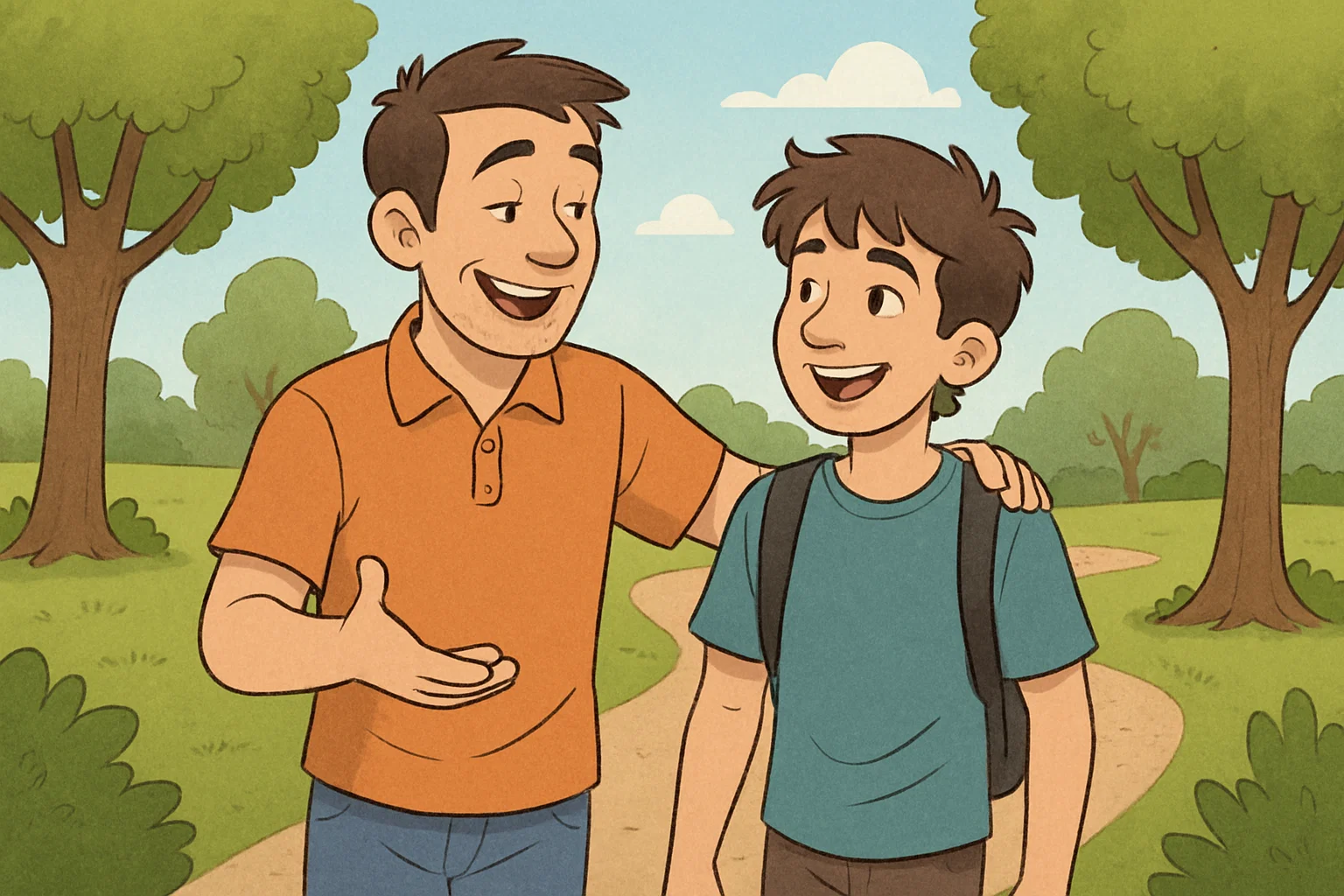
During early adolescence, boys are often looking for blueprints for how to define their own evolving version of masculinity. They often observe the adult men around them to learn how to handle stress, manage relationships, and express emotions.
Giving a teenage boy access to positive male role models can help him navigate the transition from childhood toward young adulthood. Whether the role model is a father, relative, coach, or teacher, seeing examples of healthy masculinity can teach boys that strength includes responsibility and respect.
Positive Male Role Models
Fathers, stepfathers, uncles, grandfathers, coaches, teachers, and community leaders can all play an influential role in a young person’s development. A positive male role model should demonstrate integrity, emotional honesty, healthy stress management, and respect for others through daily actions.
Having an involved, supportive male figure is associated with healthier development and may help reduce behavioral problems. These men can provide a real-world example of how a responsible adult shows up for his family and community.
Character Lessons From Real Life
Adult men can build deep trust with a 13-year-old boy by sharing personal stories about their own mistakes, growth, and challenges. Hearing about a time when a male role model faced peer pressure, made a poor choice, or worked through failure can help normalize the teen’s own struggles.
These transparent conversations should focus on lessons learned, work ethic, and the importance of doing the right thing under pressure. Showing vulnerability helps a teenage boy understand that emotional honesty is part of maturity.
Mentors, Books, Movies, and Sports
When a male role model is not directly available in the home, parents can use media, biographies, and historical figures to highlight core values. Discussing choices made by athletes, movie characters, historical leaders, or local community figures can create useful teaching moments.
Asking open-ended questions about a public figure’s actions allows a son to evaluate character traits without feeling like he is being preached at. This method helps young men analyze values like loyalty, courage, and accountability through real-world examples.
7. Love Him as He Is
Every teenage boy has a unique temperament, set of interests, and personality that parents should try to understand and accept. Attempting to force a 13-year-old boy into a predetermined mold – such as demanding he excel at sports when he prefers coding – creates emotional distance.
Validating his individuality helps him build a secure identity and reinforces that his family’s love is unconditional. Embracing his authentic self forms the foundation of lifelong self-worth and confidence.
Individuality, Identity, and Personality
Parents should take time to notice and celebrate who their son is actually becoming, rather than focusing on an idealized version of him. A 13-year-old boy may be introverted, emotionally sensitive, artistic, academically focused, or interested in nontraditional hobbies.
Supporting his choices in books, music, or digital projects shows him that his interests have value. Giving him the space to safely explore his unique passions encourages critical thinking and personal autonomy.
Acceptance Plus Standards
Accepting a teenage boy’s unique personality does not mean eliminating daily behavioral expectations or family boundaries. Parents can fully love and accept an introverted or creative son while still expecting him to demonstrate basic respect, honesty, and effort.
It is possible to say, “I completely accept your need for quiet time, but you are still required to speak respectfully and complete your chores.” Blending personal acceptance with consistent behavioral standards teaches young men how to balance individual freedom with social responsibility.
Comparison Traps to Avoid
Comparing a 13-year-old boy to siblings, cousins, classmates, or a parent’s younger self can damage his self-esteem. Statements like “Why can’t you be more focused like your older brother?” can breed resentment and cause a teen to withdraw.
Comparisons make a young person feel inadequate, which can trigger rebellious behavior or emotional detachment. Measuring a son’s growth against his own progress helps avoid these destructive comparison traps.
8. Set Clear Limits and Consequences
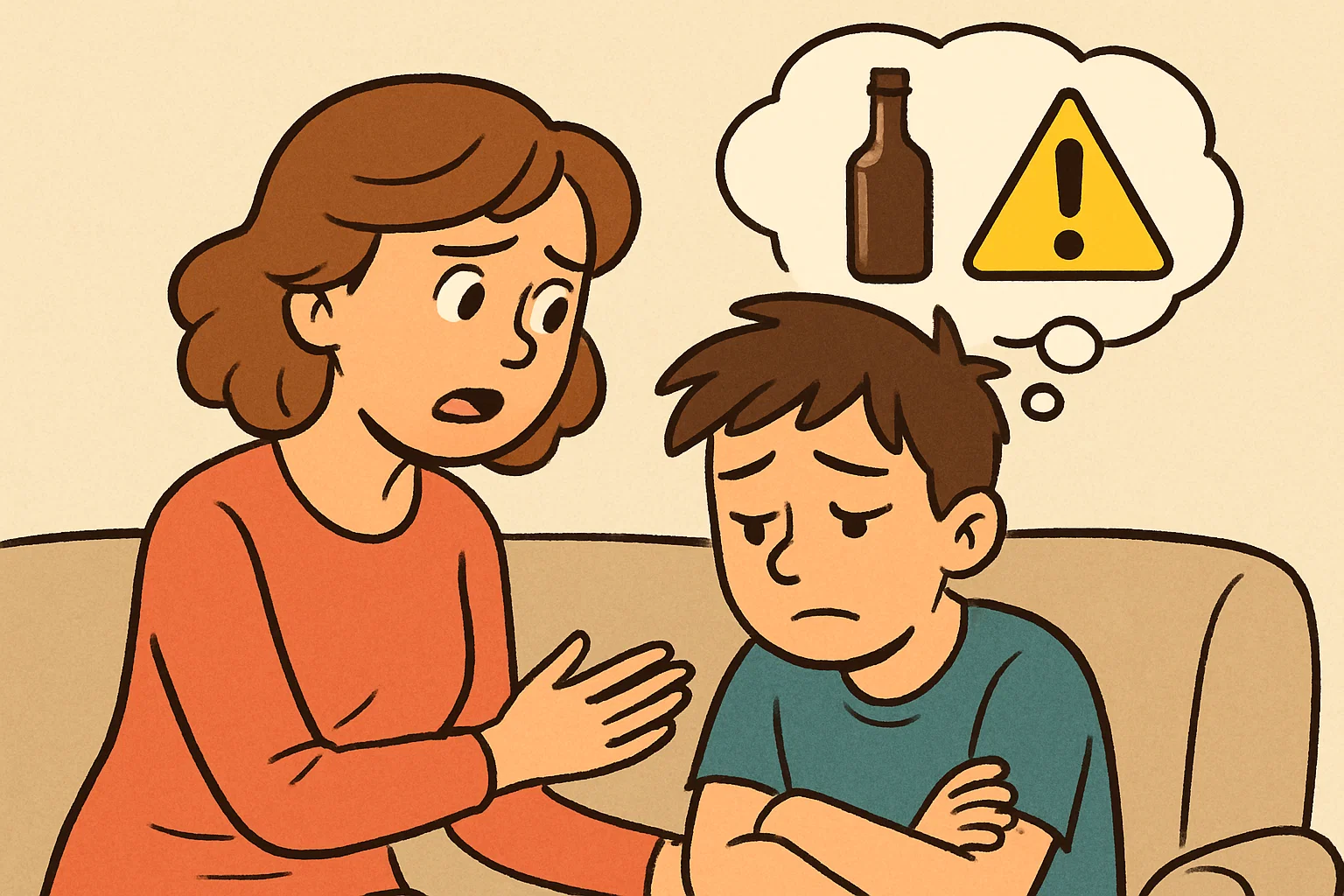
Clear behavioral boundaries and predictable logical consequences provide early adolescents with a sense of emotional safety and structural stability. While a 13-year-old boy may push boundaries as he tests his independence, he still relies on parental structure to stay safe.
A lack of consistent rules can increase anxiety and limit-testing as a teen tries to figure out where the boundaries are. Clear family rules protect his well-being and help him understand the results of his choices.
Family Rules for 13-Year-Old Boys
A structured household works best with clear expectations for the main parts of an adolescent’s daily routine.
- Academic: All homework must be completed before evening screen time is permitted.
- Digital: All personal smartphones and gaming devices must be placed at the family charging station by 9:00 PM.
- Domestic: Assigned chores, including cleaning his bedroom and washing dishes, must be finished before weekend hangouts.
- Social: Weekend curfew is 8:30 PM, and he must text his parents immediately about any change in location.
- Behavioral: Family communication must remain free of verbal insults, shouting, or physical aggression.
Consequences That Teach Responsibility
Effective consequences should be logically connected to the specific misbehavior, short in duration, and focused on teaching accountability. If a teen boy misuses his gaming privileges, a logical consequence is losing access to his console for a specific, realistic period, such as 48 hours.
Avoid extreme, long-term punishments or personal humiliation, as these tactics generate resentment rather than teaching responsibility. Once the consequence is over, the parent should offer a clear path to rebuild trust.
Consistency Between Parents and Caregivers
A lack of alignment between parents, stepparents, or co-parents about core family rules creates confusion and may encourage a teenager to test boundaries. Adults within the household should discuss rules privately and present a unified front to the young person.
If one caregiver consistently undermines another’s decisions, a 13-year-old may learn to play adults against each other, weakening overall authority. Consistent enforcement across all caregivers provides the stable environment necessary for healthy development.
9. Handle Attitude Without Power Struggles
The emergence of teenage attitude – including biting sarcasm, dramatic eye rolling, and general irritability – is a common feature of early adolescence. While these behaviors are often driven by hormonal shifts and brain development, parents still need clear boundaries around respectful communication.
Reacting to teenage attitude with an immediate emotional outburst can drag the parent into an exhausting power struggle that solves nothing. Learning how to address disrespect calmly allows parents to de-escalate tension while preserving authority.
Backtalk, Eye Rolling, and Sarcasm
Parents should learn to distinguish between minor teenage irritation and genuinely disrespectful or aggressive communication. Minor expressions of frustration, such as an exasperated sigh or an eye roll, are often best ignored to avoid turning every interaction into a battle.
However, verbal insults, shouting, or aggressive behavior require immediate, calm intervention from the adult. Drawing a clear line between harmless emotional venting and unacceptable verbal disrespect helps a 13-year-old boy learn to manage emotional expression more effectively.
Respectful Speech Boundaries
Establishing a clear, non-negotiable household rule regarding verbal boundaries protects the emotional safety of everyone living in the home. Parents should explicitly state that personal insults, threats, screaming, and slamming objects will never be tolerated during a disagreement.
When a son violates these boundaries, the parent should deliver a calm, firm reminder rather than engaging in a shouting match. Keeping your own tone neutral helps prevent the situation from escalating and reinforces the expectation of mutual respect.
De-Escalation Scripts
Using predictable, well-rehearsed scripts helps parents remain controlled and authoritative when a teenage boy begins escalating an argument.
- “I want to hear your perspective, but we will pause this conversation until your voice is calm.”
- “You can be upset about this rule, but you may not speak to me disrespectfully. Please try expressing that again.”
- “I care about what you think, but I am choosing to step away until we can both discuss this without yelling.”
10. Support Independence and Responsibility
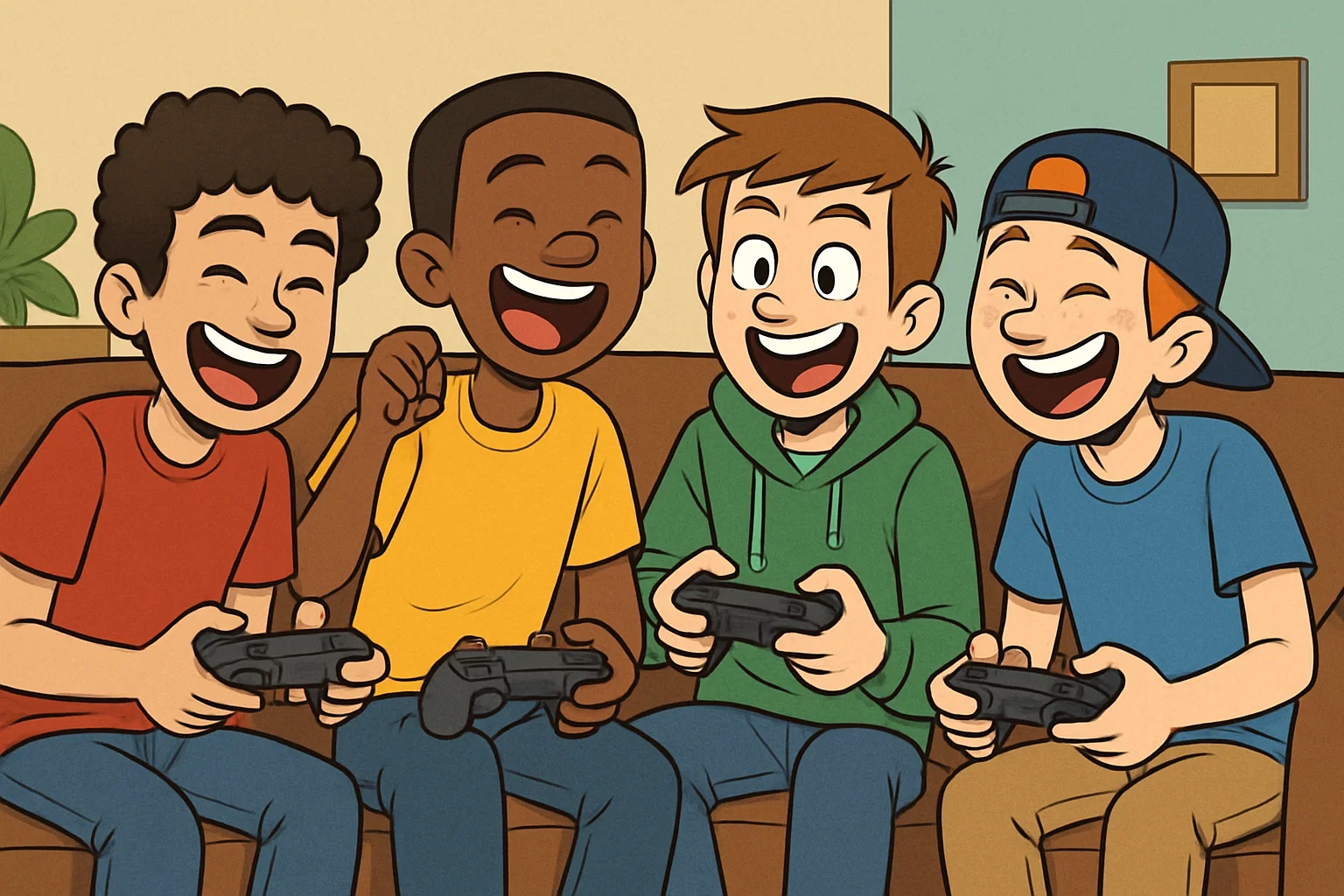
To grow into a confident, capable adult, a 13-year-old boy needs regular opportunities to practice responsibility and autonomy. Constantly micromanaging his daily routine or immediately rescuing him from minor failures prevents him from developing essential real-world coping skills.
Parents should intentionally step back and allow their son to manage his own commitments, chores, and everyday choices. Granting age-appropriate autonomy shows that you trust his capabilities, which can build confidence and maturity over time.
Chores, Routines, and Personal Ownership
A 13-year-old boy is capable of taking ownership of several major parts of his daily personal routine. Expecting him to set his morning alarm, pack his sports bag, clean his room, and do his weekly laundry builds self-reliance.
Assigning meaningful household chores, such as washing dishes or caring for a family pet, teaches him that a household requires shared effort to function. These habits reinforce the understanding that independence is tied to responsibility.
Money, Time, and Decision-Making Practice
Learning how to manage personal resources like time and money is a vital developmental milestone during the early teenage years. Providing a small, structured weekly allowance tied to specific budgeting expectations allows a teen boy to practice real financial decision-making.
Parents should also allow their son to map out his own homework schedule and choose his extracurricular activities when appropriate. Experiencing the natural constraints of time and money teaches him how to plan ahead and weigh choices carefully.
Mistakes as Learning Opportunities
When parents immediately step in to rescue a son from a forgotten homework assignment or missed deadline, they may take away an important learning moment. Experiencing the natural, real-world consequences of poor planning is often an effective teacher.
Instead of angry scolding, use a natural failure as an opportunity for supportive, low-pressure coaching. Asking questions like “What can you change about your evening routine to make sure this doesn’t happen next time?” builds critical thinking skills.
11. Guide Internet, Gaming, and Phone Use
Raising a teenage boy in today’s digital landscape requires proactive parental involvement, clear guardrails, and ongoing conversation. Unregulated digital media use can expose teens to cyberbullying, sleep disruption, and age-inappropriate content, including pornography.
High-quality educational content can support learning and creativity, while unrestricted algorithm-driven feeds may crowd out sleep, homework, exercise, and face-to-face relationships. Balanced screen boundaries help ensure that digital tools enhance a son’s life rather than disrupting his development.
Screen Time Limits
Establishing consistent, predictable boundaries around daily screen use helps prevent digital media from interfering with essential physical and academic needs. Parents can set firm rules that keep bedrooms screen-free during sleep hours to protect adolescent sleep.
- School Nights: For example, up to 1.5 hours of recreational screen time or gaming after homework is finished.
- Bedtime Routine: All digital devices must be turned off and placed in the family charging area by 9:00 PM.
- Family Meal Times: Smartphones, tablets, and gaming devices are not allowed at the dining table.
- Weekend Rules: For example, up to 3 hours of recreational screen use per day, provided chores, sleep, physical activity, and family responsibilities are protected.
Social Media Safety
If a 13-year-old boy uses social media platforms, parents should help him configure strict privacy settings to block stranger contact. Regular, low-pressure conversations about group-chat bullying, image sharing, and online exploitation are important.
Instead of launching a hostile interrogation, frame these check-ins as a collaborative effort to keep his digital spaces safe. Make sure he knows he can always approach you if he encounters something uncomfortable online without fear of automatically losing his phone privileges.
Online Privacy and Digital Footprint
A 13-year-old boy may not yet fully understand that digital choices can have real-world consequences. Parents should teach their sons that any post, comment, direct message, or image shared online can be saved and distributed.
Encouraging a “pause before posting” habit helps young men consider how their digital footprint might look to future employers, coaches, or school communities. Reinforce the concept that online spaces require the same level of integrity, respect, and kindness as real-world interactions.
12. Encourage Healthy Relationships and Safety
The early teenage years bring major changes to a young person’s social life, including shifting friend groups and early romantic crushes. Navigating these new social experiences requires open, nonjudgmental dialogue between parent and child about boundaries and peer influence.
Parents should provide clear guidance on how to build healthy relationships rooted in mutual respect, consent, and personal safety. A supportive, conversational approach helps a teen boy feel safer asking for advice when facing complex social pressures.
Friendships, Crushes, and Peer Influence
As a 13-year-old boy begins prioritizing peer relationships, he may experience intense social pressure to fit in or gain popularity. Parents can help their sons navigate changing social circles by engaging in low-pressure discussions about what makes a truly loyal friend.
Avoid mocking his early romantic crushes or overreacting to minor shifts in his social choices, as this can cause him to shut down. Encouraging him to maintain diverse friend groups gives him a broader social safety net during these transitional years.
Consent, Respect, and Emotional Boundaries
Teaching a teenage boy about consent and emotional boundaries is a foundational part of raising a respectful young man. Parents should have clear conversations explaining that consent means respecting another person’s body, personal space, and right to say “no.”
Modeling respectful, non-aggressive communication between adults within the home gives him a powerful real-world example to follow. Reinforcing the rule that another person’s boundaries must always be honored builds empathy and emotional intelligence.
Risky Behavior, Safety Rules, and Trust
Early adolescence can bring increased curiosity about risky behaviors such as vaping, alcohol, or dangerous online challenges. Parents should establish a safety rule: if he ever feels unsafe or finds himself in an uncomfortable situation, he can call for a ride home with no immediate questions asked.
Explain clearly that parental trust expands or contracts based on his honesty and the safety of his daily choices. This approach encourages open communication and provides a vital safety net when he faces challenging real-world decisions.
13. Protect Physical and Mental Health
The physical and emotional changes of puberty can place significant strain on a 13-year-old boy’s overall well-being and daily mental health. Maintaining consistent health routines – including adequate sleep, balanced nutrition, and regular exercise – can support adolescent mood and cognitive function.
Parents should learn to recognize the difference between normal teenage moodiness and clear indicators of developing anxiety or depression. Treating mental health as a normal component of wellness removes stigma and helps ensure that a young person receives timely support.
Sleep, Nutrition, and Exercise
Teenagers aged 13 to 18 should get 8 to 10 hours of sleep per 24 hours to support health and development. Not getting enough sleep can contribute to irritability, trouble focusing, and stronger emotional reactions in teen boys.
Parents can support physical well-being by providing nutrient-dense meals and encouraging daily physical movement through organized sports or outdoor recreation. Maintaining these basic health habits provides a solid physical foundation that helps regulate a teenage boy’s emotional highs and lows.
Stress, Anxiety, and Mood Changes
The combination of shifting academic expectations, complex social dynamics, and biological puberty can create significant stress for a 13-year-old boy. Parents should watch for signs of stress, which may include a sudden drop in grades, persistent irritability, unusual withdrawal, or frequent complaints of stomachaches.
When these signs appear, it is important to validate his feelings rather than minimize his struggles as simple drama. Providing a supportive environment allows a young person to learn how to manage stress constructively.
Warning Signs and Professional Support
Caregivers should recognize red flags that may point to deeper psychological struggles and a need for professional support.
- Self-Harm: Any comments about self-harm, hidden cuts, unexplained burns, or notes suggesting self-harm.
- Social Isolation: Complete, persistent withdrawal from lifelong friends, family activities, and favorite hobbies.
- Volatility: Extreme, unprovoked outbursts of physical aggression, property damage, or intense verbal rage.
- Mood Shifts: Prolonged periods of deep sadness, hopelessness, or intense daily anxiety.
- Substance Use: Any evidence of vaping, alcohol use, prescription misuse, or illicit substance use.
If these behaviors persist for several weeks, parents should contact a pediatrician, school counselor, or licensed child therapist. If there is any immediate risk of self-harm or violence, they should contact emergency services right away.
14. Encourage Academic and Personal Growth
Supporting a 13-year-old boy’s academic progress and personal hobbies helps him build a strong sense of competence and individual identity. However, focusing only on high grades can increase anxiety and cause a young person to shut down out of fear of failure.
Parents should focus their support on helping him build sustainable organization habits, consistent effort, and healthy goal-setting. Nurturing a growth mindset helps a teenage boy view setbacks as valuable feedback rather than a reflection of personal worth.
School Motivation Without Pressure
To encourage school motivation without adding unnecessary stress, parents should prioritize consistent study routines over final test scores. Help your son establish a quiet, distraction-free evening study area and check in regularly to review his calendar of upcoming assignments.
Maintain open communication with his teachers to catch emerging learning challenges early before they become overwhelming. Praising consistent study habits rather than demanding perfection helps him take ownership of his education.
Hobbies, Strengths, and Personal Goals
Engaging in rewarding hobbies outside the classroom gives teen boys another space to build self-confidence. Whether his interests involve competitive sports, music, coding, art, building, or local volunteering, these activities help shape a healthy identity.
Hobbies offer a productive outlet for stress relief and connect young men with peers who share similar positive interests. Supporting his personal goals in these areas shows him that his unique talents are valued by his family.
Growth Mindset for Setbacks
When a 13-year-old boy faces an academic disappointment or personal setback, parents can frame the experience as an opportunity for growth. Avoid using critical, labeling language like “You are bad at math,” which reinforces a fixed, defeated mindset.
Instead, use supportive language that focuses on strategy, such as, “This grade shows us that the current study plan didn’t work, so let’s adjust your approach for the next test.” This style of problem-solving teaches resilience and persistence in the face of life’s challenges.
15. Manage Parent Stress and Find Support
Parenting a 13-year-old boy through early adolescence can be emotionally draining and exhausting for caregivers. It is normal for parents and caregivers to experience frustration, fear, anxiety, or burnout during this phase.
To remain a calm, steady anchor for a developing teenager, parents need to manage their own stress levels and emotional health. Prioritizing self-care and accessing community resources helps parents deliver consistent, patient guidance.
Parent Feelings and Burnout
When a formerly affectionate child becomes distant or argumentative, parents often experience a sense of loss or personal rejection. It is important to remember that this pulling away is a normal part of healthy adolescent development, not a personal attack on your parenting.
Recognizing when you are reaching emotional burnout allows you to step back and recharge before addressing behavioral issues. Prioritizing your own sleep, exercise, and supportive adult friendships helps prevent reactions driven by exhaustion.
How to Stay Calm During Conflict
When a teenage boy pushes boundaries or uses provocative language, a parent’s self-control is tested. Responding with anger or matching his shouting can escalate the confrontation and damage the underlying relationship.
- Take an intentional pause immediately.
Before speaking, pause and take two slow breaths to help slow your reaction. - Lower your voice within a few seconds.
Consciously lower your volume; speaking more softly often reduces the intensity of the exchange. - State a boundary briefly.
Use a short, neutral script indicating that you are pausing the conversation until emotional control is restored. - Step away briefly for 1 to 5 minutes.
Physically remove yourself from the room if necessary so both people have space to cool down. - Revisit the issue later that day.
Return to the topic once both you and your son are calm enough to discuss it rationally.
School, Doctor, and Counselor Resources
Parents do not have to navigate the complex challenges of the teenage years in isolation. There are numerous professional resources available to provide guidance, behavioral strategies, and emotional support for families.
- School Counselors: Provide academic support, monitor peer conflicts, and offer helpful tips for managing school stress.
- Pediatricians: Evaluate underlying physical changes, address sleep challenges, and provide medical referrals for mental health support.
- Child Therapists: Deliver family therapy, cognitive behavioral strategies, and evidence-based mental health care.
- Parent Support Groups: Offer safe community settings to share practical advice and connect with peers facing similar challenges.
- Community Resource Centers: Provide parenting workshops, family counseling, and local youth development programs.
Frequently Asked Questions About Parenting a Teenage Boy
What Are the Best Tips for Parenting a 13-Year-Old Boy?
The best tips for parenting a 13-year-old boy focus on connection, structure, and patience. At this age, the brain is still developing, which means impulse control, emotional regulation, and long-term planning are still works in progress. Parents should set clear rules, keep consequences consistent, and make sure their son knows he can come to them without judgment. Teenage boys need guidance, but they also need room to practice independence, make age-appropriate choices, and learn from mistakes.
How Is Parenting Tweens Different From Parenting Teen Boys?
Parenting tweens and parenting teen boys overlap because ages 11 to 13 are a major transition period. Boys and girls may both become more private, more peer-focused, and more sensitive to criticism during these years, but every teen develops at a different pace. For some boys, behavior is going to change closer to 12; for others, the bigger changes appear around 13 or later. The key is to stay flexible, keep the lines of communication open, and adjust expectations as your child moves from late childhood into adolescence.
Why Does My Sweet Little Boy Suddenly Not Want to Talk?
It can be painful when the sweet little boy you once knew suddenly seems distant or doesn’t want to talk. This does not always mean something is wrong. Many teen boys often pull back as they try to understand their emotions, protect their privacy, and build a stronger sense of independence. Give him space, but do not disappear emotionally. Short check-ins, car conversations, shared meals, and calm goodnight routines can keep communication open without making him feel pressured. The goal is to help him feel safe enough to talk when he is ready.
How Can Parents Keep the Lines of Communication Open?
To keep the lines of communication open, parents should listen more than they lecture. When a teen shares something difficult, respond calmly first, even if the topic worries you. If he expects immediate anger, punishment, or criticism, he is less likely to come to you next time. A useful parent’s guide principle is simple: stay curious before becoming corrective. Ask questions like “What happened from your perspective?” or “What do you need from me right now?” This helps him feel heard while still giving parents room to guide his choices.
What Should Parents Do About Bad Behavior?
Bad behavior should be addressed calmly, clearly, and consistently. Parents should separate the behavior from the child’s identity. Instead of saying, “You are disrespectful,” say, “That comment was disrespectful, and we need to talk about how to handle this differently.” Consequences work best when they are connected to the behavior. If he refuses to clean his room, a natural rule might be: “Clean your room up first, then you can play video games.” This teaches responsibility without turning every conflict into a personal attack.
How Much Freedom Should Parents Give a 13-Year-Old Boy?
A 13-year-old boy needs enough freedom to practice responsibility, but not so much freedom that he feels unsupported or unsafe. Let him take the lead on manageable parts of daily life, such as organizing his homework schedule, packing his sports bag, choosing hobbies, or managing a small allowance. Freedom should grow as trust grows. If he communicates honestly, follows safety rules, and handles responsibilities well, parents can gradually expand his independence. If he breaks trust, limits should tighten temporarily while he rebuilds reliability.

Take a short quiz to find out what your everyday choices say about your parenting style
When your child is curious about something new, what’s your instinct?
Take a short quiz to find out what your everyday choices say about your parenting style
“Can I download this app?” What happens next?
Take a short quiz to find out what your everyday choices say about your parenting style
When it comes to rules at home, which sounds most like you?
Take a short quiz to find out what your everyday choices say about your parenting style
If you could give your child one life skill today, what would you pick?
Take a short quiz to find out what your everyday choices say about your parenting style
Your child gets to choose what to watch. What would your ideal setup look like?
Take a short quiz to find out what your everyday choices say about your parenting style
Pick your parenting superpower ✨



