10 Strategies for Teaching Kids Self-Control That Actually Work

 Discover a Free Education Video App for Kids
Pastory uses AI to personalize educational video content based on your child’s interests and personality. Safe, engaging, and built for curious young minds. Sign up now to stay updated and enjoy early access with a free trial
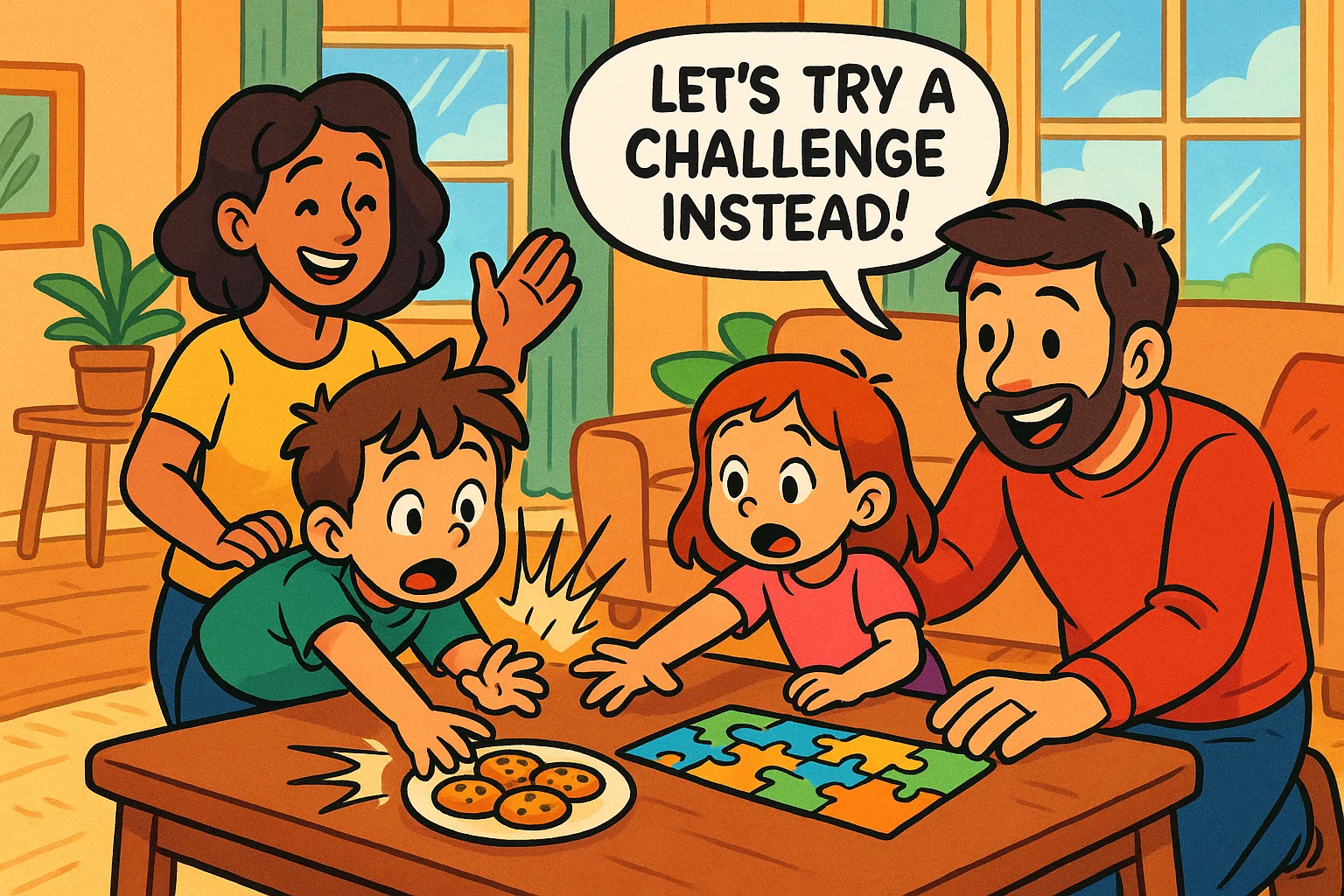
Teaching kids self-control is one of the most valuable skills a parent can support. Unlike punishment-based approaches, self-discipline is an internal skill that helps children manage their impulses, emotions, and behavior on their own. It develops gradually through consistent routines, clear expectations, and age-appropriate guidance.
This article covers 10 practical strategies for building self-control in children, along with positive discipline techniques, age-by-age guidance, and advice for handling common challenges at home.
Key Takeaways
- Teaching kids self-control works best through consistent routines, clear rules, and calm positive discipline rather than punishment.
- This article outlines 10 healthy strategies parents can use to build self-discipline in children of all ages.
- Discipline approaches should be adjusted by age, from infants and toddlers through grade-school kids and teens.
- Big emotions require specific tools, including naming feelings, breathing techniques, and returning to problems after a calm moment.
- Harsh punishment and inconsistent consequences are less effective than structured, positive guidance.
Self-Discipline Grows Through Practice
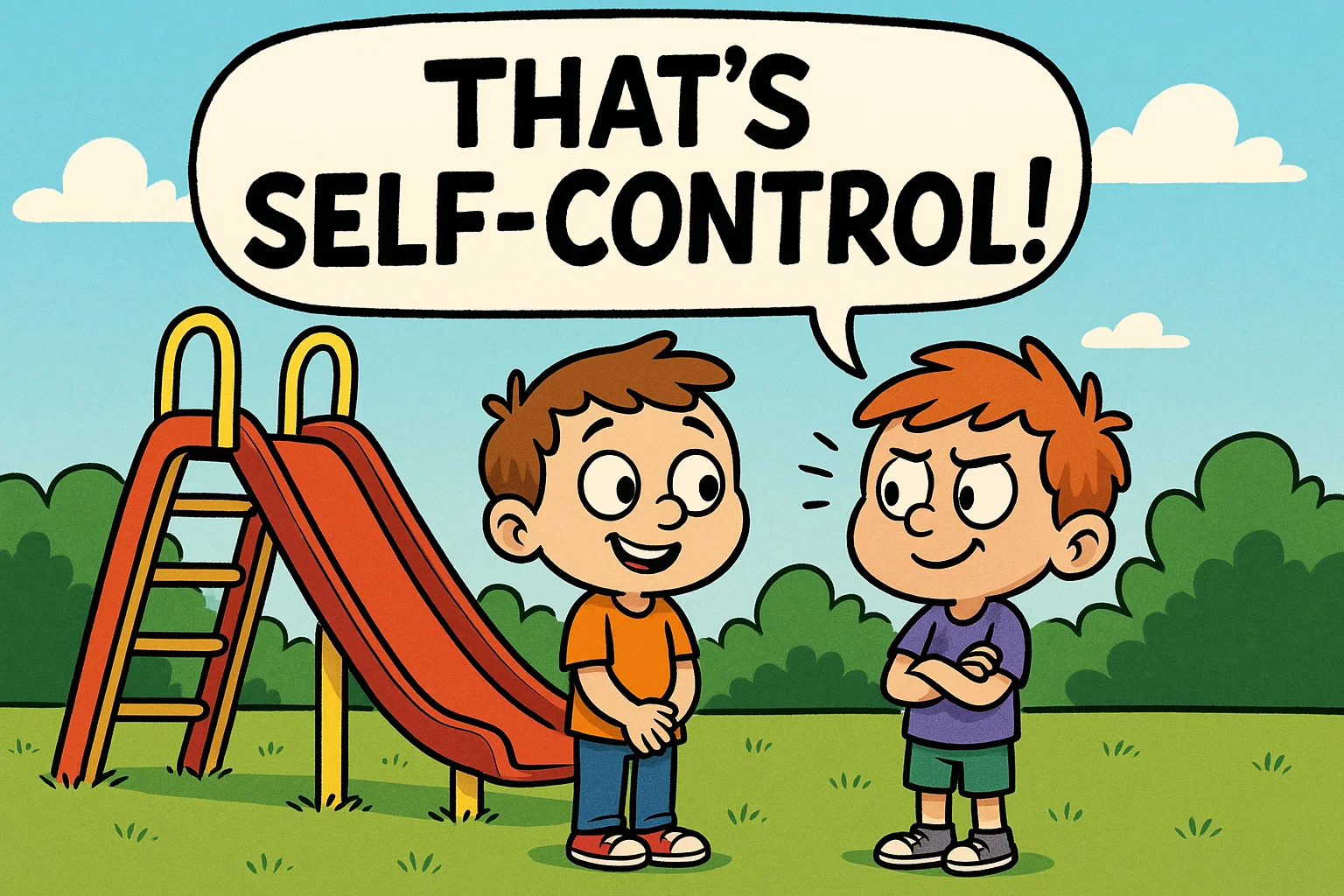
A child’s self-discipline works like a muscle that strengthens over time through repeated practice. Practicing small daily tasks, such as waiting for a snack or finishing a chore, supports the development of impulse control.
Developmental research links stronger childhood self-control with better long-term outcomes, including health, financial stability, and social adjustment.
Positive Discipline Works Better Than Harsh Punishment
Effective discipline focuses on teaching rather than punishment. While punishment may temporarily stop unwanted behavior through fear, positive parenting helps kids understand right from wrong.
Research suggests that kids raised with positive discipline strategies are more likely to internalize values and maintain positive behavior when adults are not present.
Age Matters When Teaching Discipline
Age-appropriate discipline techniques should align with a child’s cognitive development. Infants and toddlers usually respond best to immediate redirection, while school-age children can begin to understand the consequences of their actions.
Tailoring expectations to your child’s developmental stage prevents frustration and helps ensure they are supported emotionally and socially.
Parents Shape Behavior Through Modeling
A child’s self-discipline is often a reflection of the behavior they observe at home. When you practice keeping your cool during an outburst, you provide a blueprint for problem-solving.
Parents who model taking deep breaths during stressful moments provide a visible lesson in self-control that children can learn to emulate.
Why Teaching Kids Self-Discipline Skills Matters
Developing self-discipline gives children the tools to manage emotions, choices, and responsibilities more effectively. Longitudinal research suggests that kids with stronger self-control are more likely to experience better health, financial, and social outcomes in adulthood.
Over time, learning to set limits helps kids become more proactive and less reactive.
Stronger Emotional Control
Self-discipline helps children learn how to pause before reacting to a trigger. This internal “pause button” helps kids manage frustration and move through a tantrum without escalating the conflict.
Children with strong emotional control can identify their feelings and choose a calm response instead of reacting with aggression.
Better School Habits
At school, self-discipline can support better focus and task completion. Children who learn self-discipline are more likely to follow instructions, stay engaged during lessons, and persevere through challenging homework.
These habits create a foundation for academic achievement and lifelong learning.
Healthier Social Behavior
When disciplining children, focusing on self-regulation helps them interact more successfully with peers. A child with strong self-regulation can learn to wait their turn, respect others’ boundaries, and apologize after making a mistake.
These problem-solving skills are essential for building lasting friendships and resolving social conflicts peacefully.
More Confidence With Responsibility
When parents give kids small responsibilities, it fosters a sense of competence. Successfully managing a chore or daily routine shows kids that they are capable and trusted.
This confidence encourages them to develop self-discipline further as they take pride in their ability to contribute to the family.
Positive Discipline Techniques Parents Can Use
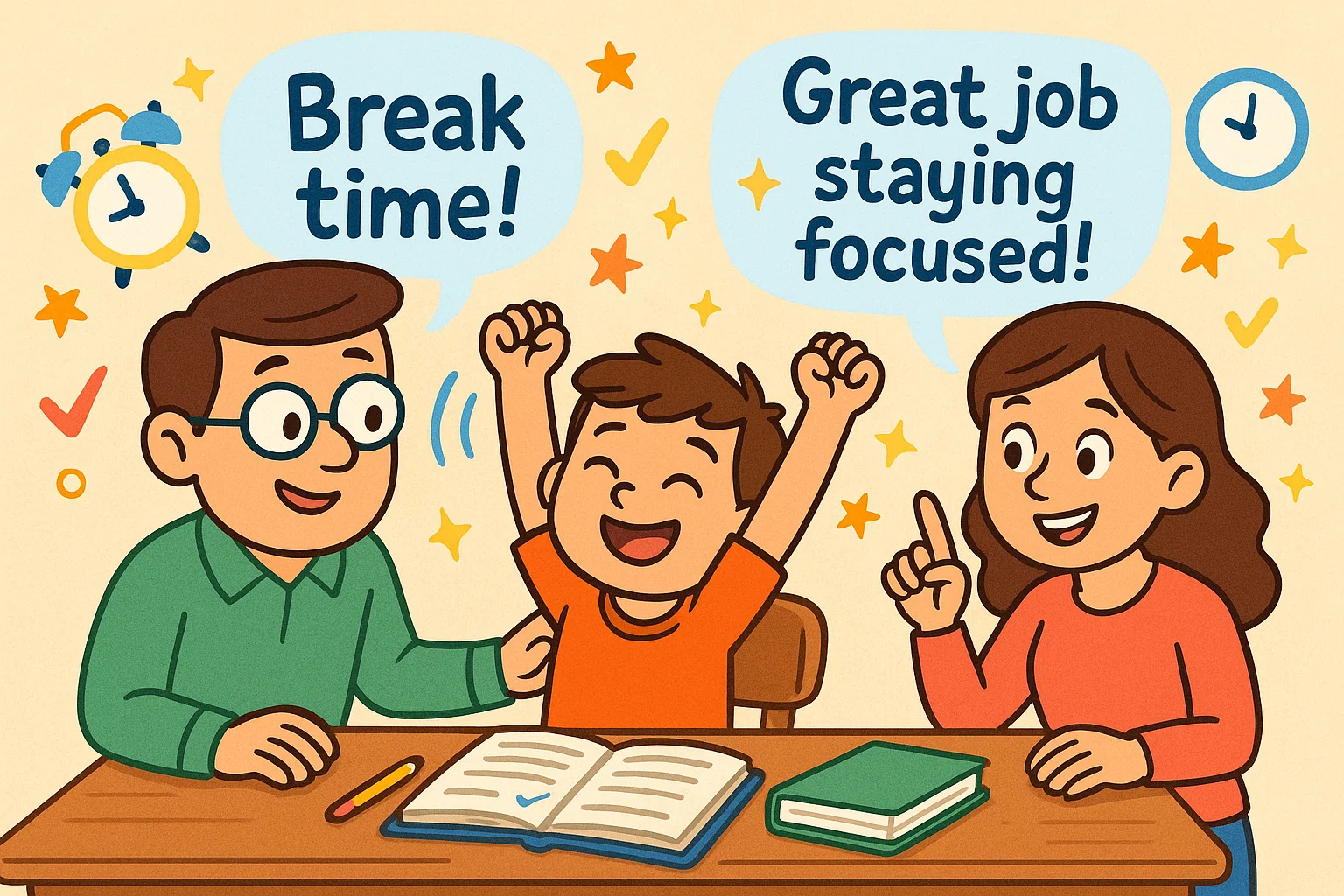
Positive discipline is an approach that prioritizes the relationship between the parent and child while maintaining firm limits. It shifts the focus from making a child suffer for a mistake to helping the child learn how to do better next time.
Clear Rules With a Calm Tone
Age-appropriate rules work best when they are stated in simple, direct language. When parents want a child to follow a directive, they should state the expectation clearly – for example, “Walking feet inside” instead of “Don’t run.”
A calm, neutral tone reduces the chance that the child will go into fight-or-flight mode and helps them process the instruction.
Praise for Specific Behavior
To encourage positive behavior, parents should use labeled praise. Instead of saying, “Good job,” try, “I noticed you used self-control when your brother took your toy.”
This specific feedback identifies the exact positive behavior parents want to see repeated, making it easier for the child to learn what is expected.
Redirection Before Conflict Escalates
Redirect a child’s attention when you see them struggling with boredom, frustration, or temptation. If a toddler is about to throw a block, guiding them toward a soft ball or a different activity can prevent unwanted behavior before it starts.
This proactive technique shows children that there are safer and more appropriate ways to express their energy.
Logical Consequences Instead of Random Punishment
A logical consequence should be directly related to the misbehavior. If a child draws on the wall, the consequence is helping clean it up.
This helps the child connect actions with outcomes in a way that makes sense, rather than experiencing a consequence that feels unrelated to the original incident.
Stages of Positive Discipline by Age
Effective parenting requires adjusting discipline techniques as kids grow. What works for an infant will not be effective for a teenager, because children’s cognitive abilities and self-discipline develop over time.
| Age Group | Primary Focus | Key Strategy |
| Infants 0–1 | Safety and trust | Redirection and routine |
| Toddlers 1–3 | Impulse control | Simple choices and distraction |
| Preschool 3–5 | Emotional naming | Waiting games and basic chores |
| Grade school 6–12 | Responsibility | Goal setting and natural consequences |
| Adolescents 13+ | Independence | Collaborative boundaries and accountability |
Infants
For infants, discipline is primarily about safety, connection, and meeting basic needs. Infants do not have the brain development for self-discipline.
Parents should focus on creating a safe environment and using gentle redirection when a baby reaches for something dangerous.
Toddlers
Toddlers are beginning to assert independence, which can sometimes lead to tantrums. At this stage, you can discipline your child by offering “this or that” choices that provide a sense of control.
Keeping routines predictable helps reduce the anxiety that can show up as tantrums or what adults may call bad behavior.
Preschool-Age Kids
Preschoolers are ready to learn self-discipline through social interactions. This is the prime time to teach waiting, sharing, and identifying emotions.
Encouraging a “time-in,” where a parent sits with the child while they calm down, can be more effective at this age than a traditional time-out.
Grade-School Kids
School-age children can handle more complex problem-solving skills. Use responsibility charts to help them build self-discipline around homework, hygiene, and daily routines.
At this stage, kids can begin to learn from mistakes by experiencing safe, natural consequences.
Adolescents and Teens
For teenagers, self-discipline often involves managing schedules, responsibilities, and digital habits. Parents can gradually shift from being a “manager” to being more of a “consultant.”
Set limits collaboratively and make sure teens understand how their choices affect school, family responsibilities, and social commitments.
10 Healthy Strategies to Teach Kids Self-Discipline
1. Provide a Consistent Routine
A predictable daily schedule helps children know what to expect and reduces the need for constant reminders.
When mornings, meals, and bedtimes follow a set pattern, kids perform tasks more automatically, which builds the foundation for self-discipline.
2. Give Choices When Possible
Give your child choices within clear limits to build their decision-making skills. Asking, “Do you want to wear the blue shirt or the red shirt?” empowers the child without overwhelming them.
This autonomy reduces power struggles and encourages positive behavior.
3. Set Clear Limits Before Problems Start
Pre-teaching is a powerful tool for preventing problems before they start. Before going into a store or starting a playdate, clearly state the expectations.
For example, “We’re going in to buy a gift for Grandma, and we’re not buying toys today.”
4. Use a Time-In or Calm Break for Self-Control
A “time-in” involves staying near the child while they calm down after an outburst.
This strategy focuses on emotional regulation and teaches the child to use tools such as deep breathing to regain self-control instead of feeling isolated.
5. Set Time Limits for Tasks and Screens
Timers can help children transition between activities. A timer provides a neutral visual or auditory boundary and takes some of the pressure off the parent.
Over time, this teaches kids to set limits on their own leisure activities.
6. Shape Behavior One Step at a Time
Break large goals into manageable pieces. If a parent wants a child to clean their room, they can start with a small, specific task, such as “Pick up all the red things.”
This method makes learning self-discipline feel achievable rather than daunting.
7. Stay Consistent With Rules and Consequences
Consistency is the backbone of effective discipline. If a rule changes based on the parent’s mood, the child becomes confused.
Predictable responses meet a child’s need for stability and help them connect actions with outcomes.
8. Explain the Reasons Behind Rules
Children are more likely to follow rules when they understand the reason behind them.
Explain that we hold hands in the parking lot to stay safe or eat vegetables to help our bodies grow strong. This helps kids internalize the value behind the behavior.
9. Be a Positive Role Model
Parents need to demonstrate the self-discipline they expect. If you want your child to avoid yelling, practice keeping your cool during stressful moments.
Their actions often teach right and wrong more powerfully than their words.
10. Use Positive Affirmations and Encouragement
Focus on the effort, not just the result. Saying, “I saw how hard you worked to stay calm when you lost the game,” reinforces the internal process of self-control.
Encouragement builds the intrinsic motivation kids need to develop self-discipline.
How to Teach Self-Control During Big Emotions
Name the Feeling Before Correcting the Behavior
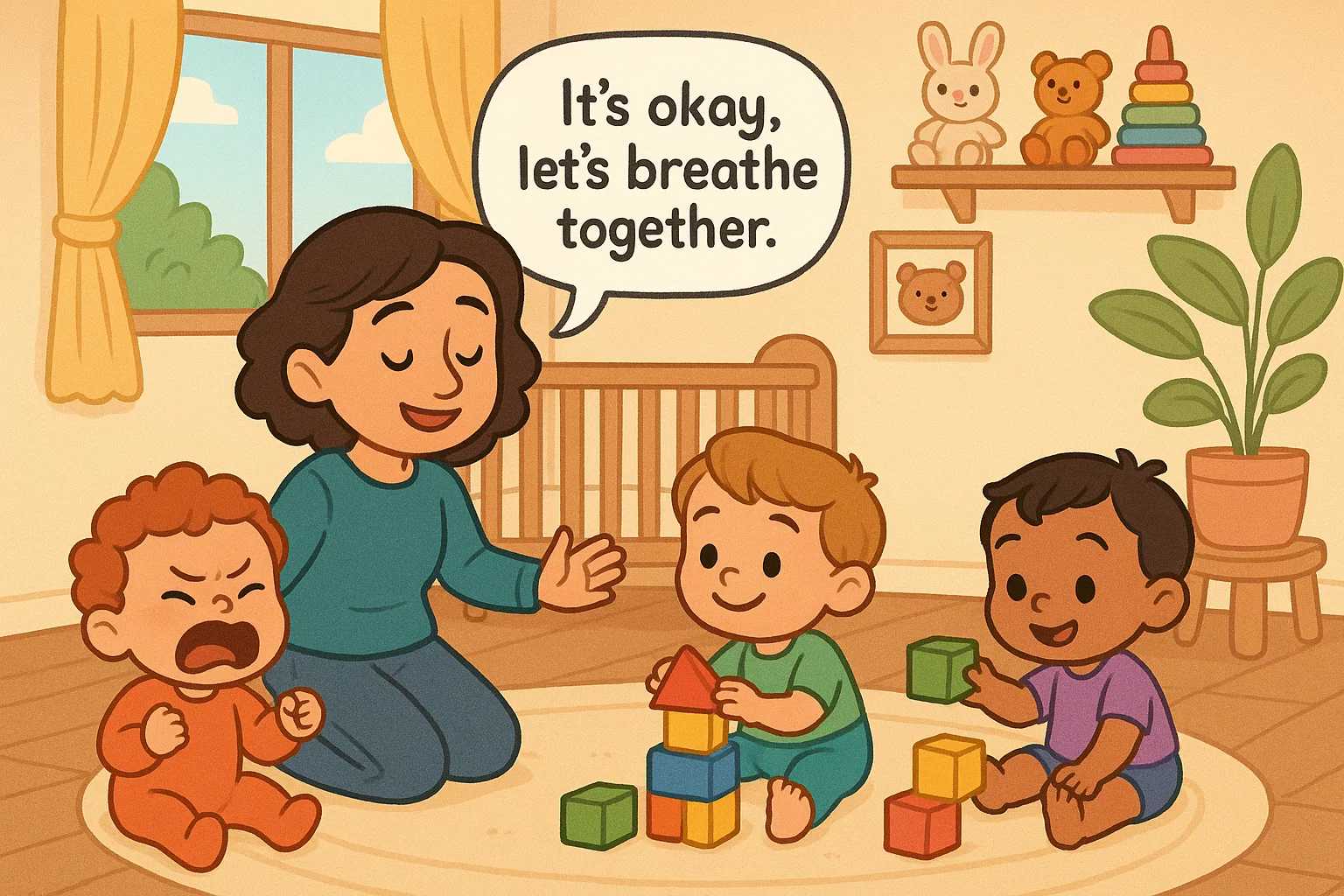
When a child is in the middle of a tantrum, they may not be able to think logically yet. Labeling the emotion – “I can see you’re feeling very frustrated” – helps the child feel understood and may make it easier for them to calm down.
Once the emotion is named, the child may feel more understood and begin to calm down.
Practice Breathing and Pause Skills
Teach kids to take deep breaths during calm moments so they can access the skill during a crisis.
Techniques like “smell the flower, blow out the candle” are age-appropriate ways to introduce body-based self-control.
Separate the Child From the Behavior
It is helpful to say, “I love you, but I do not like hitting.” This distinction ensures the child feels secure while understanding that the behavior is unacceptable.
Shaming a child hinders their ability to learn self-discipline.
Return to the Problem After a Calm Moment
Very little learning happens during an outburst. Wait until everyone is calm before discussing what happened and how to handle the situation differently next time.
This is when problem-solving skills are actually developed.
Learn From Mistakes, Including Parent Mistakes
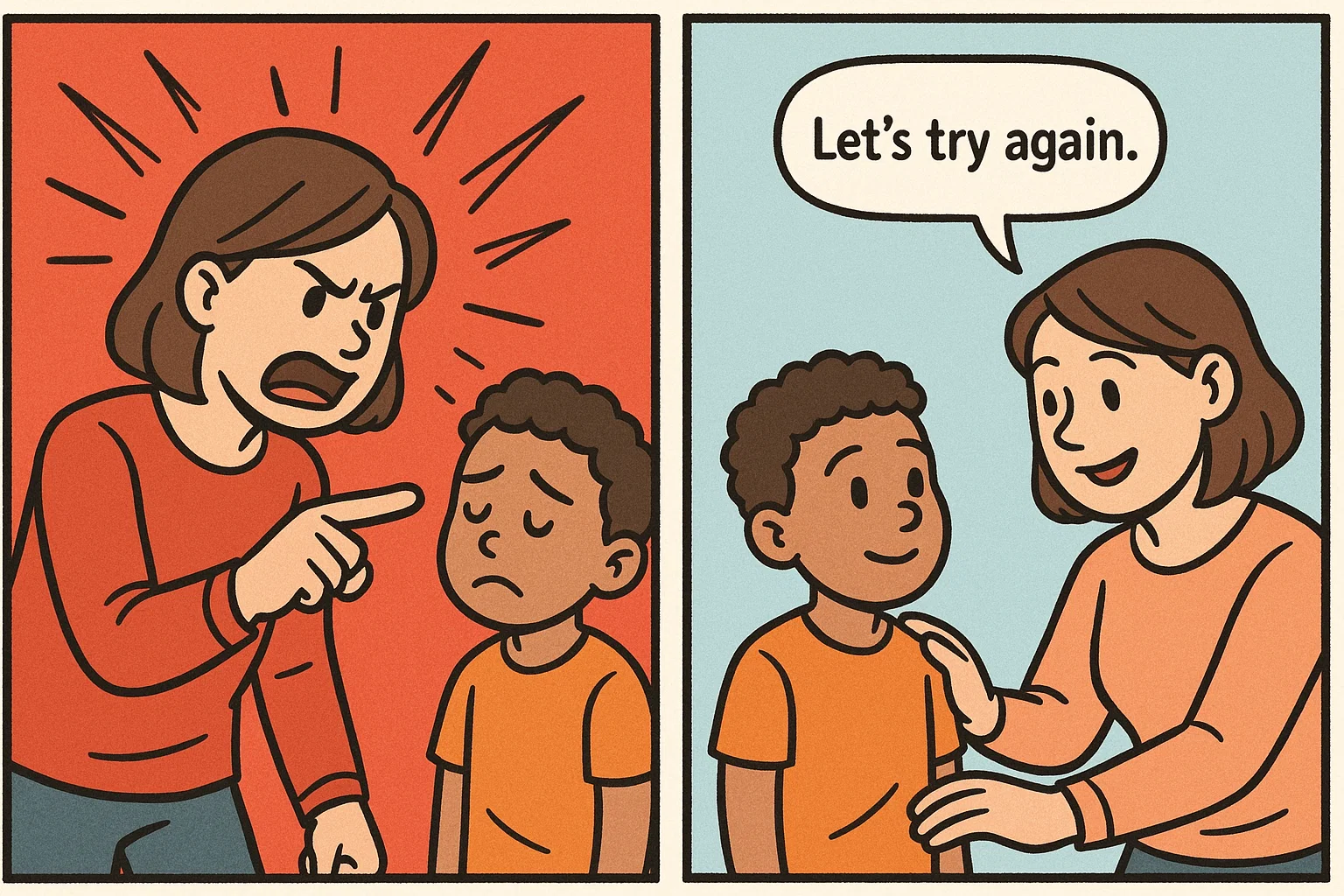
Help Kids Repair Harm
Self-discipline includes taking responsibility for one’s actions. If a child hurts a friend’s feelings, help them think of a way to make it right.
This repair process teaches accountability more effectively than simple punishment.
Talk Through a Better Next Choice
Ask reflective questions such as, “What could you do next time you feel that angry?”
This encourages the child to plan for future difficult situations and builds higher-level self-control.
Admit Parent Mistakes Calmly
When parents lose their temper, they should apologize. They can say, “I’m sorry I raised my voice. I was feeling frustrated, and I should have taken a break.”
This models accountability and shows that everyone is working on their self-discipline.
Focus on Progress Over Perfection
Celebrate small improvements in positive behavior. If a child usually has five outbursts a day and today has only three, acknowledge the progress.
Reducing shame helps kids stay motivated as they grow.
Discipline Strategies That Do Not Work Well
Why Spanking Fails to Teach Self-Discipline
Physical punishment can teach kids that force is an acceptable way to solve problems.
According to the American Academy of Pediatrics, spanking is linked to increased aggression and is ineffective in teaching responsibility and self-control.
Why Harsh Words Create Fear
Yelling or using insults can trigger a fear response, making it harder for a child to learn and solve problems.
Fear-based discipline may produce short-term compliance, but it can damage the parent-child bond and undermine long-term self-discipline.
Why Inconsistent Punishment Confuses Kids
If unwanted behavior is ignored one day and punished the next, the child may learn to test the limits.
Inconsistency makes it harder for children to understand the connection between actions and consequences.
What to Do Instead
Shift the focus to positive discipline strategies.
Use redirection, set clear limits, and maintain a supportive environment where the child’s needs for guidance and connection are met.
Self-Discipline Activities for Home
| Activity | Skill Developed | How to Implement |
| Routine chart | Responsibility | Use pictures for tasks such as brushing teeth and getting dressed. |
| Chore board | Decision-making | Let the child choose two tasks from a parent-approved list. |
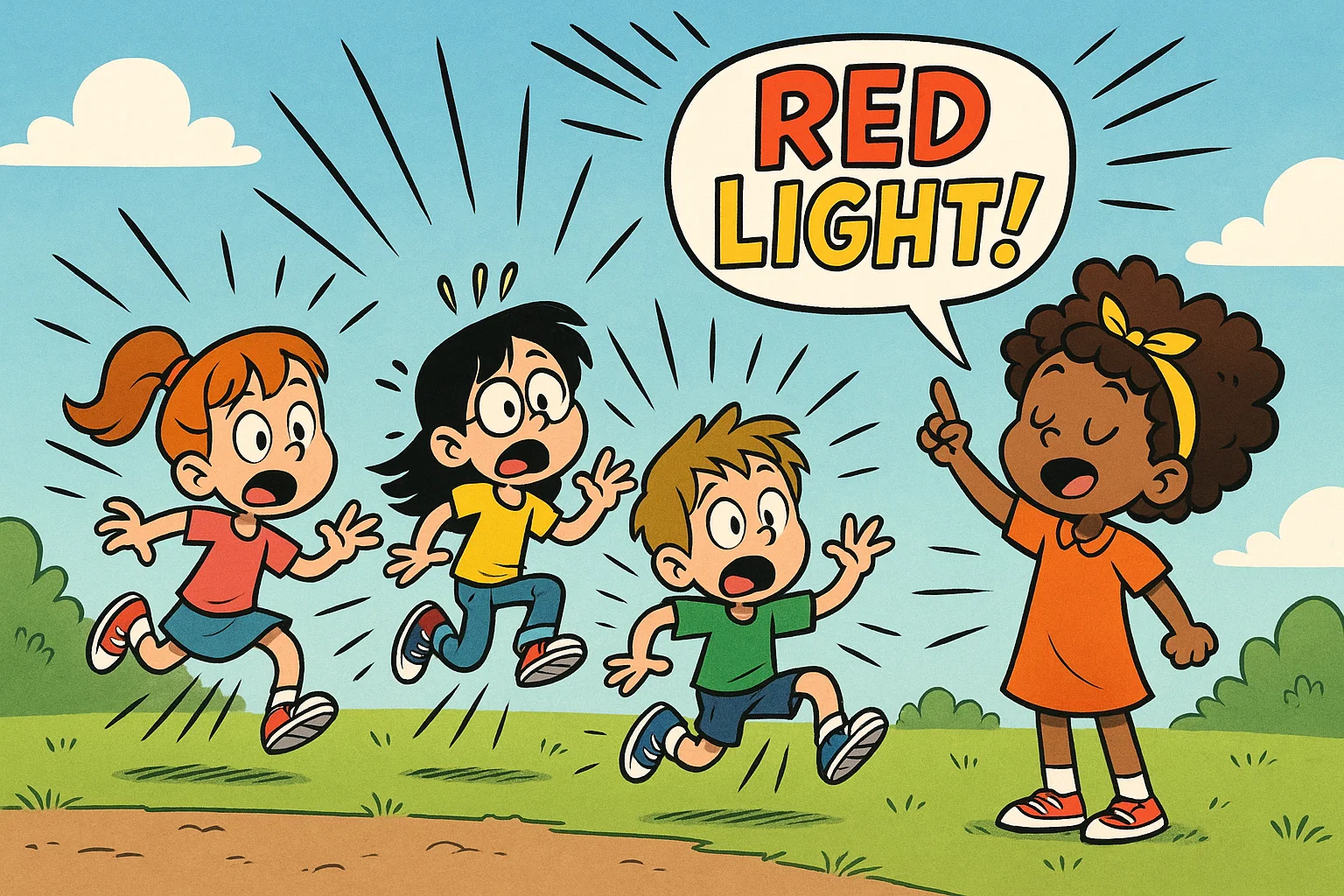
| Waiting games | Patience | Use games like “Red Light, Green Light” or “Simon Says.” |
| Goal tracker | Persistence | Use stickers to track the days they practice a new skill. |
Common Discipline Problems and Better Responses
When a Child Refuses to Listen
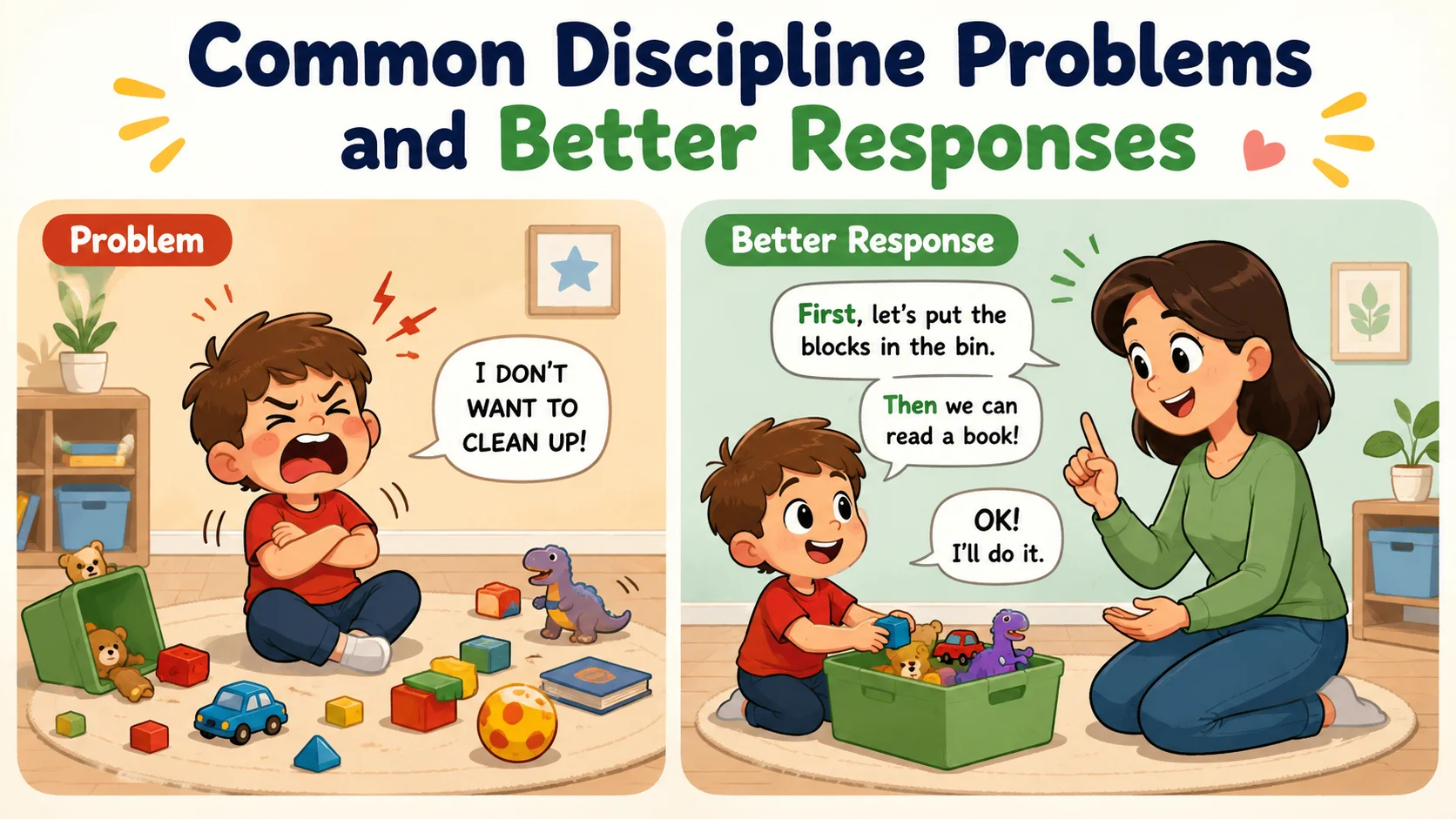
Make sure you have the child’s attention before speaking. Use fewer words and give a “when/then” statement: “When your shoes are on, then we can go to the park.” This simplifies the expectation and offers a clear next step.
When a Child Throws a Tantrum
Stay calm and stay nearby to ensure safety. Avoid trying to reason with the child in the middle of the outburst.
Once the tantrum subsides, offer comfort and then briefly discuss what happened.
When a Child Ignores Rules
First, check whether the rule is age-appropriate. If it is, calmly implement the pre-agreed logical consequence.
Avoid long lectures, which often cause kids to tune out.
When a Child Gives Up Quickly
Encourage a growth mindset. Praise the effort they have already made and offer to help with just one small part to get them moving again.
This builds the resilience needed for self-discipline.
Tips for Parents to Stay Consistent
Choose a Few Main Rules
Too many rules can be hard for a child to remember. Focus on the “big three”: safety, respect, and responsibility.
This makes effective discipline more manageable for both parent and child.
Use the Same Consequence Each Time
Predictability builds trust. When a child knows exactly what will happen after unwanted behavior, they feel more secure and are more likely to practice self-control.
Avoid Discipline During Parent Anger
If parents feel themselves losing patience, they can take a parent time-out. It is better to delay a consequence than to react in a way they will later regret.
Keeping their cool is essential for positive parenting.
Review Progress Weekly
Take five minutes once a week to talk about what went well.
Celebrating positive behavior as a family reinforces the value of self-discipline and keeps everyone on the same page.
When to Seek Extra Support
Frequent Aggression or Safety Concerns
If a child is consistently hurting themselves, others, or animals, seek professional help.
These behaviors may indicate underlying emotional, developmental, or social challenges that require specialized support.
Discipline Problems Across School and Home
When behavior issues persist in multiple settings, the child may benefit from a coordinated behavior plan.
A pediatrician can help determine whether developmental, sensory, or emotional factors may be involved.
Parent Stress or Burnout
Parenting can be demanding. If parents find it difficult to stay calm or consistent, speaking with a counselor can give them tools to manage their own stress and improve their discipline techniques.
FAQ
How Can Parents Teach Kids Self-Discipline?
You can teach your child self-discipline by establishing consistent routines, offering limited choices, setting clear limits, and modeling calm problem-solving. Focusing on teaching rather than punishment is key.
At What Age Should Self-Discipline Start?
The foundations of self-discipline can begin in infancy through predictable routines. More direct teaching of self-control often begins in the toddler years, around ages 1–3, as kids start to understand simple instructions and consequences.
What Is the Best Discipline Strategy for Children?
The most effective approach is positive discipline. It combines warmth, firm limits, and logical consequences that help kids learn from mistakes in a supportive environment.
How Can Parents Discipline Without Yelling?
To avoid yelling, parents should use short instructions, get down to the child’s eye level when appropriate, and take deep breaths to stay calm. Using agreed-upon consequences reduces the need for verbal escalation.
How Long Does Self-Discipline Take to Develop?
Self-discipline is a lifelong developmental process. While significant improvements often appear during the preschool and grade-school years, the prefrontal cortex – a brain region involved in planning, decision-making, and impulse control – continues maturing into the mid-to-late 20s.

Take a short quiz to find out what your everyday choices say about your parenting style
When your child is curious about something new, what’s your instinct?
Take a short quiz to find out what your everyday choices say about your parenting style
“Can I download this app?” What happens next?
Take a short quiz to find out what your everyday choices say about your parenting style
When it comes to rules at home, which sounds most like you?
Take a short quiz to find out what your everyday choices say about your parenting style
If you could give your child one life skill today, what would you pick?
Take a short quiz to find out what your everyday choices say about your parenting style
Your child gets to choose what to watch. What would your ideal setup look like?
Take a short quiz to find out what your everyday choices say about your parenting style
Pick your parenting superpower ✨