How to Calm Kids Before Exams: A Parent’s Guide

 Discover a Free Education Video App for Kids
Pastory uses AI to personalize educational video content based on your child’s interests and personality. Safe, engaging, and built for curious young minds. Sign up now to stay updated and enjoy early access with a free trial
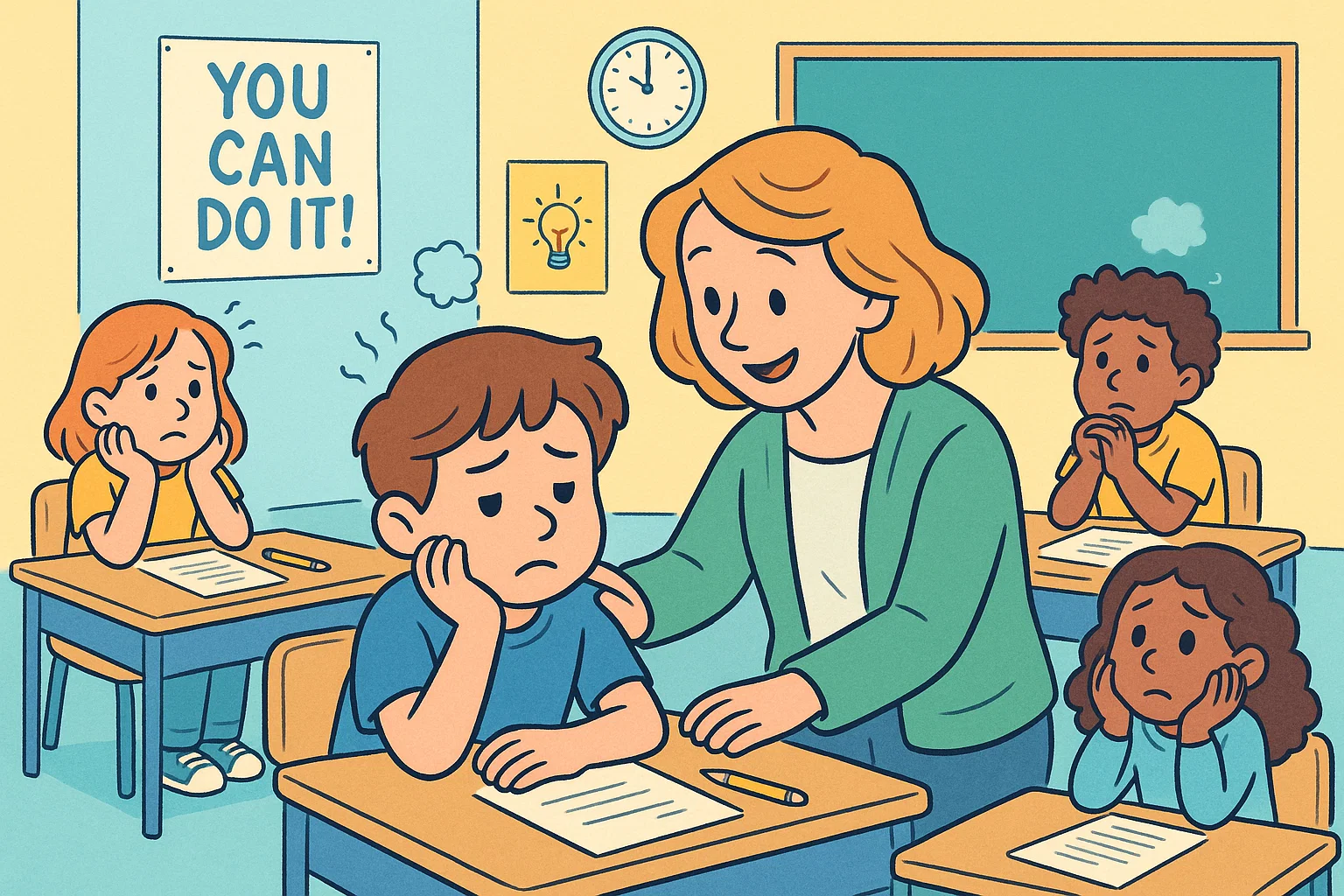
When exam season approaches, it is common for children and young people to feel more pressure and emotional strain. Getting through exam season can trigger stress and anxiety, disrupting a child’s focus, emotional balance, and overall wellbeing.
However, intentional support from parents can help children stay calmer, more focused, and emotionally secure. By establishing predictable routines, supporting good sleep, offering balanced meals, and using reassuring language, parents can help reduce exam stress. This guide offers practical, evidence-informed strategies to help kids manage the emotional and physical demands of exam days. The following sections outline practical ideas that will help you support your child through the key stages of exam preparation. You will find practical steps for the night before, calm morning routines, in-the-moment strategies for the exam hall, and signs that professional support may be needed.
Key Takeaways
- Parental Co-Regulation: A calm parental presence can act as an emotional anchor, helping kids feel safer and less anxious before school exams.
- Physiological Support: Good sleep, balanced nutrition, proper hydration, and light movement can support the body’s stress regulation.
- Strategic Revision Habits: Last-minute cramming can increase cognitive overload and panic, while short, structured revision sessions support memory consolidation.
- Effort-Focused Communication: Using reassuring, positive language that focuses on effort rather than final marks helps protect a child’s self-worth.
- In-the-Moment Coping Tools: Simple breathing exercises and sensory grounding techniques can help steady the nervous system before an exam.
- Early Intervention Awareness: Recognising persistent behavioural disruptions, chronic sleep issues, or school avoidance allows parents to seek timely external support.
Quick Parent Checklist
| Timing | Action Item | Purpose |
| Night Before | Pack the exam bag with all required, approved materials. | Reduces morning panic and decision fatigue. |
| Night Before | Confirm the exact travel route and departure time. | Prevents situational stress caused by transit delays. |
| Night Before | Set a screen-free wind-down period 60 minutes before bed. | Supports restorative sleep and memory consolidation. |
| Exam Morning | Serve a balanced breakfast rich in complex carbohydrates. | Helps maintain stable blood glucose and energy levels. |
| Exam Morning | Use affirming, effort-focused language during conversations. | Helps lower perceived exam pressure and stress. |
| Exam Morning | Guide the child through a brief, 60-second breathing exercise. | Helps activate the parasympathetic nervous system. |
Fast Calm Plan for Exam Day
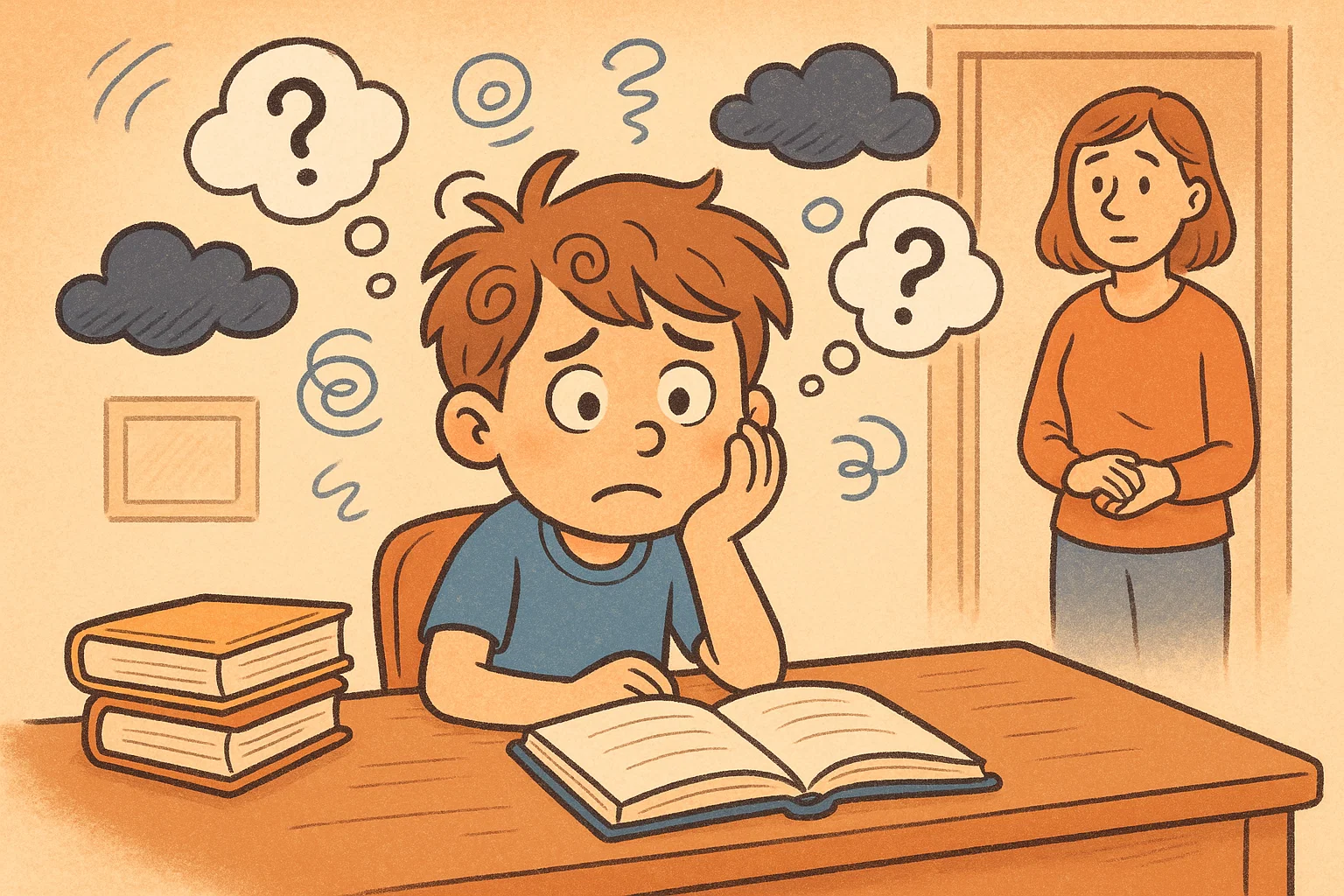
The Three-Step Reset Method gives children a quick, easy-to-remember sequence for managing anxiety before they enter the exam room. Children can use this method discreetly in the hallway or at their exam desk.
- Pause: The child stops moving, places both feet flat on the floor, and rests their hands gently on their lap to interrupt the panic loop.
- Breathe: The child takes three slow breaths, inhaling through the nose and exhaling for slightly longer through the mouth.
- Name: The child silently names one small task they can control, such as opening the test booklet or writing their name on the front page.
Main Mistakes Parents Should Avoid
- Social Comparison: Comparing a child’s academic performance with siblings, classmates, or peers can damage confidence and intensify performance anxiety.
- Catastrophising Outcomes: Predicting academic failure or linking a single test result to lifelong career success creates unnecessary pressure.
- Micro-Managing Revision: High-conflict arguments about exact study hours reduce a child’s sense of autonomy and increase emotional resistance.
- Obsessing Over Marks: Centring family discussions entirely around predicted grades or class rankings can make a child feel that their value depends only on performance.
- Late Introduction of Concepts: Trying to teach completely new academic topics the night before an exam causes cognitive clutter and can trigger performance panic.
Why Kids Feel Nervous Before Exams
Exam stress is a normal response to pressure, uncertainty, and a child’s still-developing ability to manage high-stakes situations. Because children are still developing executive-function skills, they may struggle to put high-stakes tests into perspective and may experience exams as much more threatening than they really are.
Understanding what drives this tension helps parents offer the right kind of emotional support.
Fear of Marks and Results
Children frequently connect their academic marks with their self-worth, assuming that a low test score means they are not intelligent or capable. When a child feels threatened, stress can make it harder to think clearly and solve problems.
Parents can reduce this fear by explicitly separating the child’s identity from their test scores. A grade is a measure of a specific performance on a specific day, not a reflection of a child’s human worth.
Pressure from School, Parents, and Peers
The modern educational environment can create a high-pressure atmosphere through constant conversations about benchmarks, targets, and future academic paths. When children face repeated, interrogation-style questions about preparation or grades, their stress levels can rise.
A supportive, non-judgemental approach means moving away from performance-focused questions and asking calm, low-pressure questions about how the child is feeling and what they need.
Unclear Exam Expectations
Much exam anxiety comes from fear of the unknown, especially around logistics, the room layout, and time limits. If a child does not know what the physical environment will look like or how the paper is structured, the situation can feel unpredictable and intimidating.
Parents can reduce this anxiety by demystifying the process: discussing the room layout, reviewing time limits, confirming permitted items, and practising basic test-taking steps beforehand.
Watch for Signs of Stress
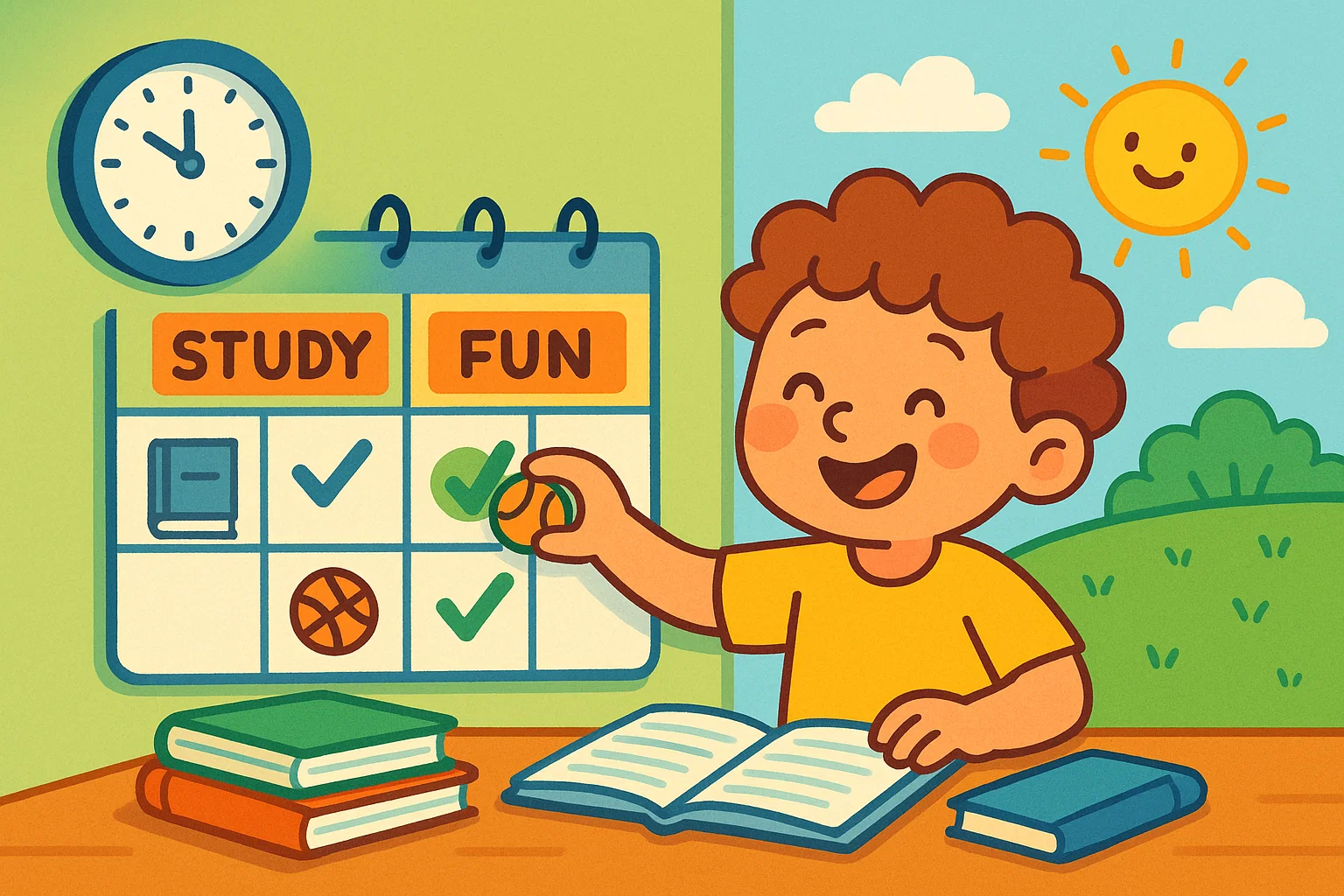
Children and young people do not always have the emotional vocabulary to explain when they feel overwhelmed by exam pressure. Instead, psychological strain often shows up as physical, emotional, or behavioural changes.
Recognising these signs early allows parents to offer support instead of misinterpreting them as laziness, defiance, or lack of motivation.
| Type of Sign | What Parents Might Notice |
| Physical signs | Headaches, stomach aches, nausea, appetite changes, tiredness, insomnia |
| Emotional signs | Irritability, sudden crying, panic, low confidence, withdrawal |
| Behavioural signs | Avoiding revision, overstudying, refusing breaks, burnout, school avoidance |
Physical Signs Before Exams
The nervous system responds to perceived academic threats by activating the “fight-or-flight” response, which can create physical symptoms. Parents should look out for recurring complaints such as tension headaches, stomach aches, nausea, physical tiredness, or sudden changes in appetite.
While butterflies in the stomach are a normal sign of excitement or mild nerves, recurring sleep problems or persistent vomiting need careful attention and a review of the child’s stress load.
Mood Changes Parents Might Notice
Exam stress can show up as sharp changes in a child’s usual mood and resilience. Parents may notice increased irritability, unprovoked anger, sudden crying, withdrawal from family life, or a sharp drop in self-confidence.
When these emotional shifts appear, the most helpful parental response is active, non-judgemental listening. Validating the underlying fear rather than criticising the outward emotional behaviour helps the child feel safe enough to share their worries.
Behaviour Changes During Revision
During the revision phase, noticeable behavioural changes can show whether a child is struggling to cope with their workload. Some kids avoid revision altogether, refusing to look at study materials, while others become perfectionistic, studying late into the night and refusing necessary rest breaks.
Both extremes suggest that the child’s coping system is under pressure. Parents can intervene supportively by helping the child pause, restructure their schedule, and gently return to a more balanced daily routine.
Set a Calm Tone at Home
Children often mirror the emotional tone of their parents and caregivers. If parents seem anxious, fixate on schedules, or show tension about upcoming exams, the child’s stress may rise too.
Creating a physically and emotionally stable home environment gives a child a secure foundation for navigating exam season.
Use a Calm Parental Voice
When a child is panicking or feeling overwhelmed by schoolwork, a parent’s tone of voice can either calm the situation or make it worse. Speaking slowly, lowering your voice, and using steady, reassuring phrases can help an anxious child feel safe.
Co-regulation script: If your child says, “I’m going to fail everything, I don’t know any of this!”, a stabilising response is:
“I hear that you are feeling completely overwhelmed right now, and that is okay. We do not need to figure out the whole exam right now. Let’s just take one deep breath together and focus on this single page.”
Flexible Home Routine During Exams
Maintaining a rigid household schedule with intense demands can add to the pressure a child already feels during heavy exam periods. Temporarily adjusting household expectations – such as reducing non-essential chores, pausing minor behavioural battles, and postponing non-urgent family commitments – frees up mental energy for the child.
This flexibility shows the child that the family is adapting to support them and protecting their emotional energy when they need it most.
Quiet Study and Rest Zones
The physical layout of the home environment directly influences a child’s ability to focus and rest during exam preparation. Parents can support their child by establishing a dedicated, organised study space and a separate area for relaxation.
Study zone optimisation:
- Keep the desk clear.
- Reduce household noise where possible.
- Place a water bottle or glass within reach.
- Set clear smartphone boundaries during study sessions.
Rest zone optimisation:
- Create a comfortable, low-stimulation corner.
- Use soft lighting and supportive pillows.
- Include non-academic items such as sketchbooks or fiction books.
- Help the child switch off from revision when it is time to rest.
Make a Simple Study Plan
A lack of structure can turn a manageable amount of schoolwork into an overwhelming mountain of stress. Left on their own, children may default to disorganised studying, which increases fatigue while reducing memory retention.
Parents can help their child design a simple, realistic study roadmap that builds confidence through consistent, bite-sized progress.
Break Study Material into Smaller Parts
Children usually process and retain information more easily when it is broken into small chunks rather than presented in long, unbroken blocks. Parents can help their child break large subjects into smaller topics, turning vague goals into clear, specific actions.
Tracking these small milestones visually on a simple calendar or progress chart allows the child to see evidence of their progress, which builds momentum and reduces fear of the unknown.
Use the 20-5-20 Break Rule
The 20-5-20 Revision Framework is a simple time-management technique that helps maintain focus while reducing cognitive fatigue. This cycle balances focused study intervals with brief, structured breaks.
- Focused revision interval: 20 minutes.
The child focuses on one specific micro-topic, such as reviewing one maths formula or reading three history flashcards, without digital distractions. - Active brain break: 5 minutes.
The child steps away from the study desk for a low-stimulation physical action, such as drinking water, stretching, or looking out of a window. Screens should be avoided during this break. - Active practice or recap: 20 minutes.
The child applies the information just reviewed by solving two practice questions, sketching a quick mind map from memory, or explaining the concept aloud to a parent.
Avoid Starting New Topics Too Late
Trying to learn completely new material the night before an exam is a common trigger for panic and self-doubt. When a child realises they do not understand a new topic under tight time pressure, it can undermine confidence even in topics they know well.
Parents should encourage their child to draw a firm line under new material late in the revision cycle. Instead, shift the focus to consolidating existing knowledge, reviewing key formulas, and practising known definitions.
A One-Hour Revision Plan
For final-stage preparation, a structured one-hour review session can create a sense of predictability and control.
| Duration | Specific Activity | Cognitive Purpose |
| 10 minutes | High-level review of key summary notes. | Activates core knowledge and helps the child recall the structure of the topic. |
| 20 minutes | Solving targeted practice questions. | Exercises active recall and application skills. |
| 10 minutes | Reviewing past mistakes and corrections. | Reinforces correct logic and prevents repeated errors. |
| 10 minutes | Quick flashcard self-quizzing. | Strengthens rapid retrieval of core facts and definitions. |
| 10 minutes | Mindful breathing and a physical reset. | Lowers physiological arousal before transitioning to rest. |
Support Last-Minute Revision Without Pressure
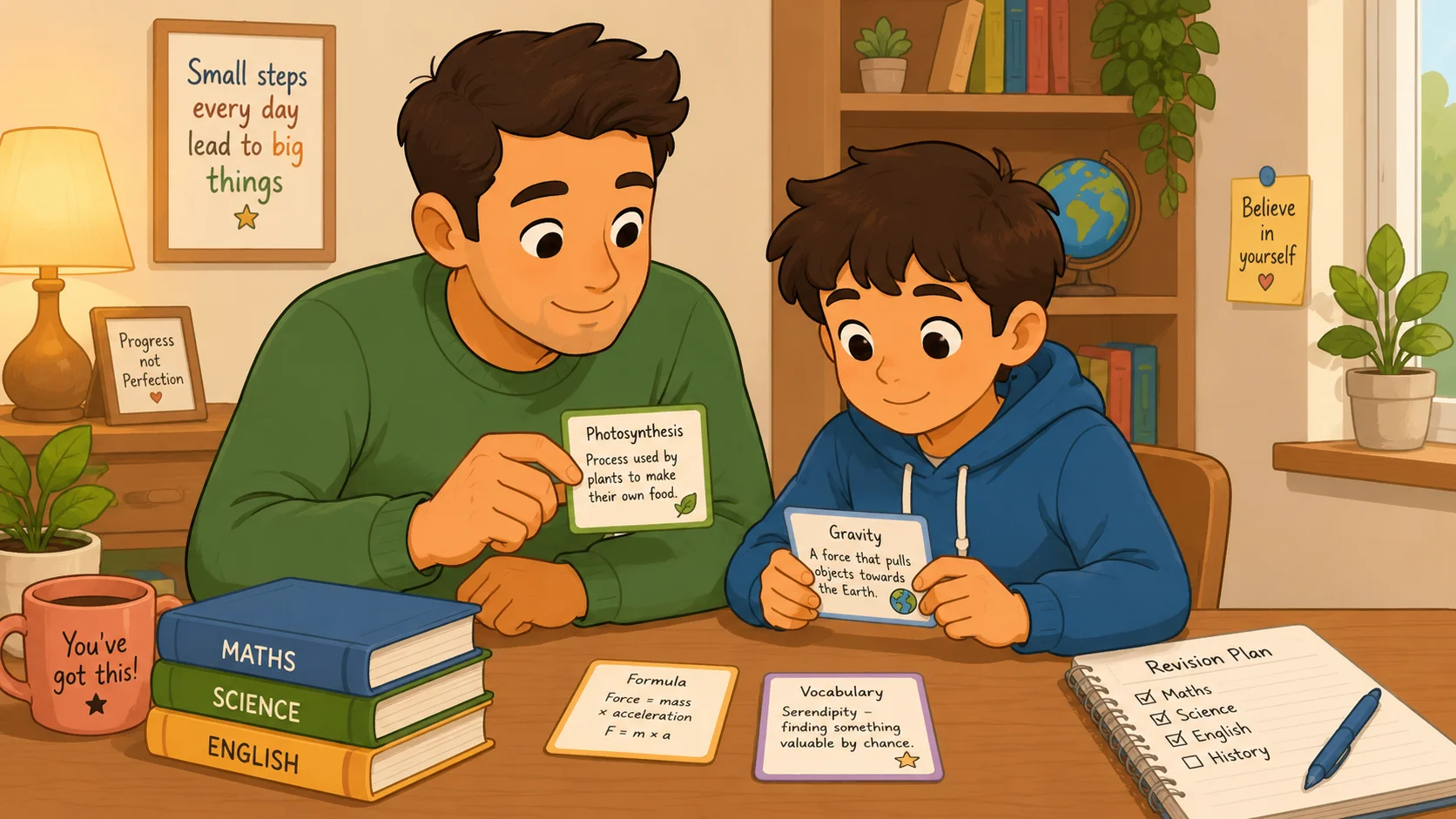
When the exam date is close, the main parenting goal should shift away from heavy information input and towards confidence, calm, and mental clarity. Last-minute support should centre on low-pressure retrieval practice that reassures the child about what they know, rather than highlighting gaps in their knowledge.
Use Small Notes Instead of Big Textbooks
Looking through large, dense textbooks late in the revision cycle can trigger panic and make a child feel as if they have forgotten everything. Parents can gently guide their child to put away heavy texts and use streamlined summary tools instead, such as flashcards, one-page mind maps, and concise formula lists.
These bite-sized visual summaries make information retrieval feel more manageable and reassure the child that the core concepts are organised and accessible.
Use Practice Questions Without Panic
Practice questions close to exam day should build confidence and refine exam pacing, not create another high-stakes test. When reviewing practice questions together, parents should praise the child’s problem-solving process, focus, and resilience rather than criticising mistakes.
If the child hits a roadblock or makes an error, treat it calmly as useful information rather than failure. Keep the atmosphere relaxed and solution-focused.
Use Study-Buddy Support
Parents and siblings can offer valuable support by acting as low-pressure study partners. The goal is to turn routine self-quizzing into an engaging, collaborative activity.
A helpful study-buddy approach includes:
- Asking short, clear questions.
- Giving the child time to recall the answer.
- Praising effort immediately.
- Treating mistakes as something to explore calmly.
- Keeping the tone light, conversational, and free of criticism.
By framing questions playfully and treating incorrect answers with casual reassurance, you help keep the child’s stress low while reinforcing memory retrieval pathways.
Pack Exam Essentials Together
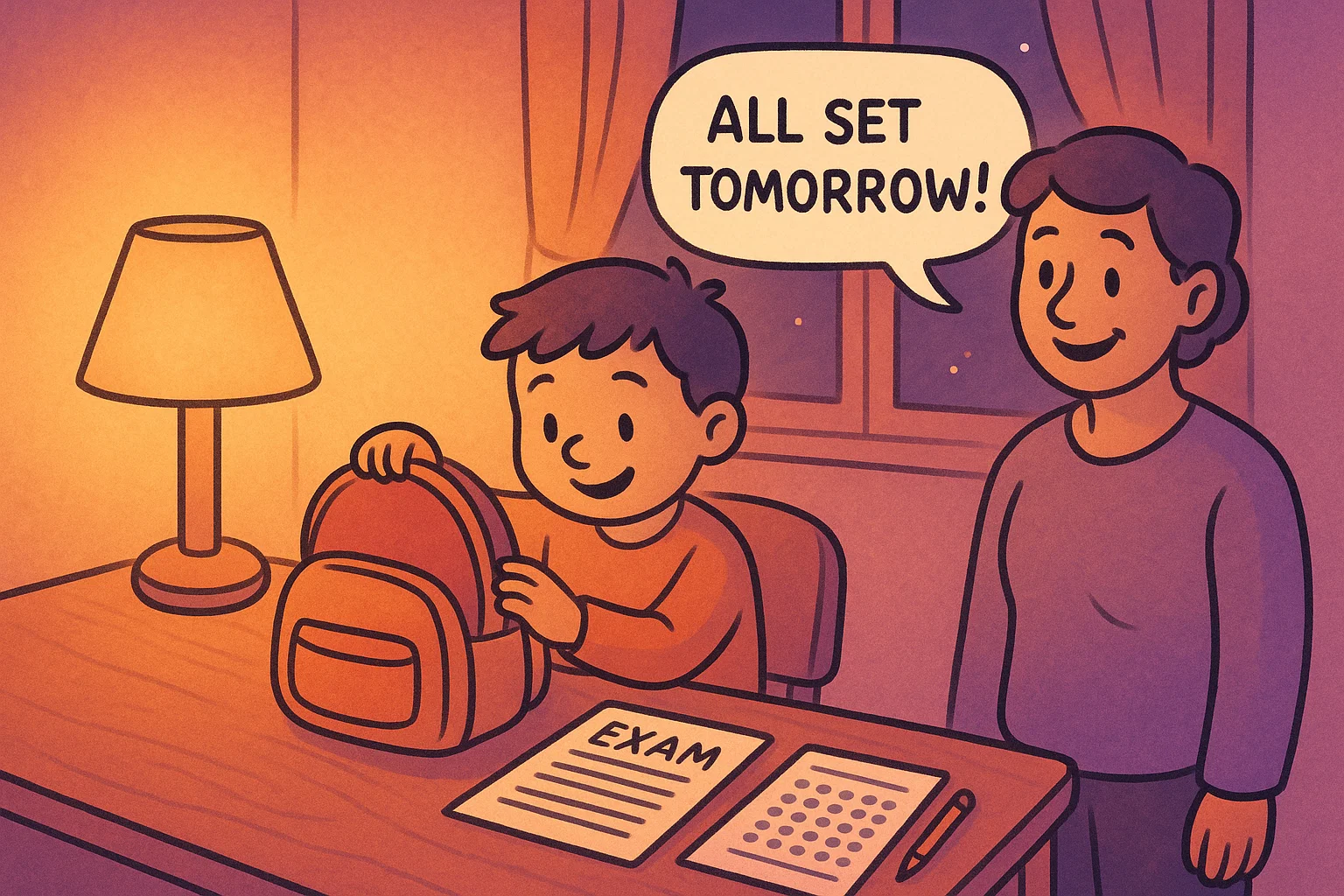
A chaotic exam morning, fuelled by frantic last-minute searches for misplaced items, can raise a child’s stress before they even set foot in school. Preparing all required materials together the evening before creates a smoother morning transition and gives the child a reassuring sense of control.
Exam Bag Checklist
- Primary Writing Tools: Three working black or blue ballpoint pens and two sharpened pencils.
- Stationery Accessories: One clean eraser, a sharpener, and a transparent plastic ruler.
- Approved Special Equipment: A school-approved scientific calculator with fresh batteries and geometry tools if permitted.
- Identification and Logistics: Valid student ID cards, an official exam timetable, and room assignments.
- Personal Comfort Items: A clear bottle of plain water, a pack of tissues, and any prescription glasses or medication the child needs.
A Night-Before Packing Routine
Packing the exam bag and preparing clothes should be treated as a calming routine that marks the end of the study day. Getting everything ready before bedtime prevents morning-rush arguments and avoids surprises, such as discovering that a calculator battery is dead or a uniform is not clean.
Once the bag is packed and shoes are set by the door, the child can rest knowing that the logistics are handled, allowing them to shift into a calmer state of mind before sleep.
Make a Travel and Timing Plan
Managing the morning schedule effectively means calculating the exact travel time to the exam centre and building in a sensible buffer for unexpected delays. Parents should aim to arrive early enough to avoid rushing, but not so early that the child spends too much time absorbing the nervous energy of other waiting students.
Keeping the morning timeline predictable and relaxed helps reduce stress and allows the child to arrive at the exam hall feeling more balanced and collected.
Food, Hydration, and Sleep Before Exam Day
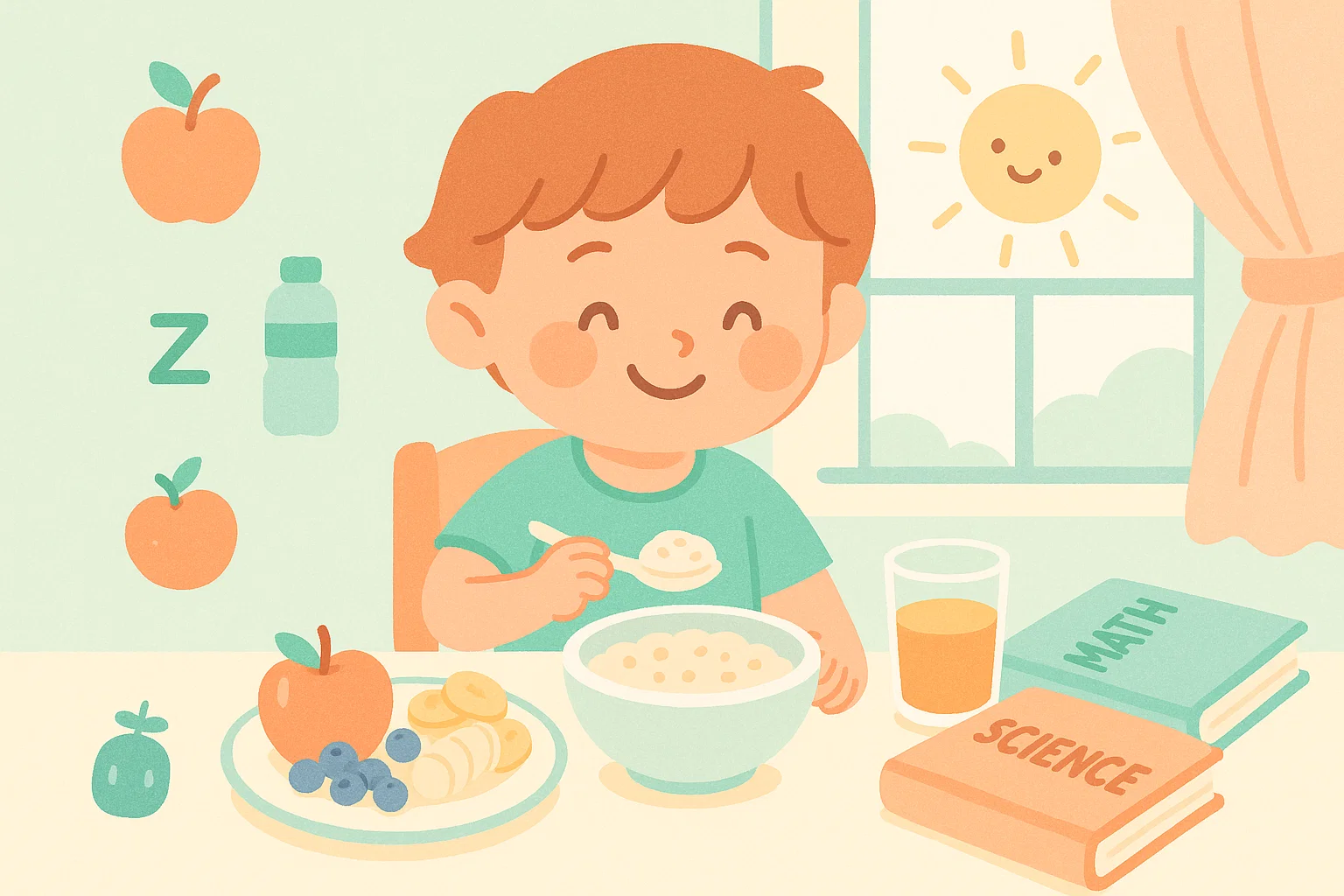
A child’s physical state directly affects their focus, memory retrieval, and emotional resilience under pressure. When physical needs such as nutrition, hydration, and sleep are compromised, the brain’s ability to handle stress can drop significantly.
Prioritising these foundational physical needs is one of the most effective ways a parent can support a child during exam season.
The Best Breakfast Before an Exam
The ideal exam-morning meal should provide steady, slow-release energy throughout the test. Meals with complex carbohydrates and protein – such as porridge with nuts, eggs on wholegrain toast, or Greek yoghurt with fresh fruit – help avoid rapid blood sugar fluctuations.
By contrast, very sugary foods such as pastries or sweet cereals can cause a quick energy spike followed by a mid-exam dip, leaving a child tired and less focused.
Stay Hydrated Without Overdoing It
Proper hydration is important for focus, mental processing, and clear thinking during a long exam. Even mild dehydration can make concentration harder and contribute to tension headaches.
Parents should encourage their child to drink water steadily throughout the morning, while avoiding excessive last-minute drinking right before the exam to prevent discomfort or distraction. Always ensure the child’s water bottle matches the specific transparency and labelling rules set by the school.
A Sleep Routine for the Night Before an Exam
When it comes to performing well in an exam, a full night of restorative sleep is more valuable than hours of late-night cramming. Sleep plays an important role in memory consolidation, helping move information from short-term storage into long-term memory.
To help your child wind down, establish a relaxing screen-free routine and turn off smartphones, tablets, and computers at least 60 minutes before bed. Replacing screen time with a warm bath, a light fiction book, or gentle stretching signals to the nervous system that it is safe to rest.
Encourage Relaxation Before an Exam
Many children feel that taking time to relax during exam periods is lazy or a waste of valuable study time. Parents can help by reframing relaxation as a productive tool that recharges the brain and supports mental focus.
Normalising regular rest breaks protects your child’s long-term wellbeing and reduces the risk of academic burnout.
Practise Slow Breathing
Controlled breathing exercises can help calm an overactive nervous system, slow a racing heart, and quiet a busy mind. A simple technique is the 4-6 Breathing Method:
- Inhale through the nose for 4 seconds.
- Exhale through the mouth for 6 seconds.
- Repeat 5 times.
Parents can practise this with their child the night before, during the morning journey, or outside the exam hall to help keep anxiety levels low.
Light Stretching and Movement
When a child experiences academic stress, it often shows up physically as muscle tension, especially in the neck, shoulders, and back. Encouraging your child to take short breaks for gentle movement – such as rolling their shoulders, stretching their arms, or taking a quick walk around the block – helps release built-up physical tension.
These brief bursts of movement improve blood circulation, deliver fresh oxygen to the brain, and provide a quick mental reset that makes returning to study more effective.
Relaxing Music or Quiet Time
For many children, low-stimulation activities create the right conditions for psychological recovery and stress relief. Listening to calming instrumental music, sketching, or simply sitting quietly without academic pressure can help the mind unwind.
The key is to guide children towards calming activities while steering them away from fast-paced video games or social media feeds, which can leave the brain overstimulated and restless before bed.
Talk About Exam Nerves Calmly
Open, supportive communication gives children a safe space to process worries rather than internalising their anxiety. Parents should open the door for these conversations gently, offering a listening ear without forcing the issue or making the child feel cornered.
Listen Without Judgement
When a child says, “I’m terrified I’m going to fail,” the most supportive response is to offer an empathetic, non-judgemental space rather than rushing into a lecture or dismissing their feelings.
Avoid phrases like “Don’t worry, you’ll be fine,” which can accidentally minimise real fears. Instead, validate the child’s experience by saying:
“I can see how much you care about this exam, and it makes complete sense that you’re feeling nervous right now. I’m here with you.”
Reassure Them About the Bigger Picture
Children often experience tunnel vision during exam season, feeling as though their entire future, intelligence, and personal worth depend on a single test score. Parents can provide perspective by gently reminding them of the bigger picture.
While exams are important milestones, they are tools for measuring current academic progress. Reassure your child that a single test score does not define their intelligence, character, or long-term potential.
Turn Worries into Actions
When a child gets stuck in a loop of vague, overwhelming worries, parents can help them break the cycle by turning anxious thoughts into small, manageable actions.
| Vague Worry | Concrete Action |
| “I know I’m going to completely forget all my science formulas tomorrow.” | “Let’s review just three core formula cards together right now, and then put the notes away.” |
| “I’m scared I won’t finish the paper.” | “Let’s practise one timed question and then plan how you will move on if you get stuck.” |
| “Everyone else knows more than I do.” | “Let’s focus on one topic you have already improved and review the next small step.” |
This shift helps the child move from feeling helpless to gaining a sense of practical control.
Encourage Positive Self-Talk
The internal dialogue a child uses during high-pressure moments has a strong impact on confidence, focus, and stress management. Parents can help shape this internal voice by using encouraging language that the child can internalise and repeat in the exam hall.
Positive Self-Talk Phrases for Kids
- “I am capable of tackling this paper one question at a time.”
- “If I run into a difficult question, I know how to pause, take a deep breath, and move forward.”
- “I can stay calm, keep my focus, and give this my best effort.”
- “Making a mistake on a tricky problem does not mean I am failing the whole test.”
Phrases Parents Can Use to Build Confidence
- “You have put in steady, dedicated preparation, and that effort matters.”
- “My pride in you is based on your hard work and determination, not on a final grade.”
- “Take the exam step by step; you have the tools to handle this.”
- “I am proud of how you keep going, even when the material gets tough.”
Kid-Friendly Calming Phrases
- “Breathe first, answer next.”
- “One question at a time, one page at a time.”
Avoid Pressure, Comparison, and Talk About Marks
Many well-meaning parents unintentionally increase exam anxiety by focusing conversations on performance metrics, rankings, and future expectations. Avoiding these communication mistakes creates a more supportive, low-pressure home environment that allows the child to focus on learning rather than worrying.
Avoid Comparing with Others
Comparing a child’s academic journey with that of a sibling, classmate, or friend is counterproductive. It fuels self-doubt, breeds resentment, and reinforces the painful idea that parental love and approval depend on outperforming others.
Every child develops, learns, and processes exam stress at their own pace. Parents should focus conversations on personal growth, celebrating individual improvements and milestones instead of using someone else as a benchmark.
Shift Focus from Results to Effort
To help children build a healthy, resilient mindset, parents should praise the process of learning rather than focusing only on the final grade. Notice and validate their dedication, consistent study habits, problem-solving skills, and resilience when tackling difficult topics.
When a child knows their family values hard work rather than only top grades, they can walk into the exam hall focused on doing their best, with less fear of disappointing their parents.
Do Not Discuss Marks with Others
Constantly talking about predicted grades, test scores, or class rankings with extended family, neighbours, or other parents creates an atmosphere of performance pressure. Children quickly pick up on these discussions and may feel that their privacy is being compromised or that they are being publicly judged.
Keeping test details confidential within the immediate support team shows your child that their academic journey is a private, safe space focused on growth, not public performance.
Encourage Gentle Exercise During Exams
Regular physical activity is a natural way to manage stress, clear the mind, and support cognitive performance during intense study blocks. Exercise can help reduce stress and support mood and focus.
Short Walks Between Study Blocks
A brief 10- to 15-minute walk outside in the fresh air is a simple, effective way to reset after an intense revision session. Stepping away from the desk and spending a few moments outside gives the brain a useful break and helps relieve mental fatigue.
This quick pause allows the mind to process what it has just learned, so your child returns to their studies feeling refreshed, alert, and ready to focus.
Gentle Movement for Younger Children
For younger students, long periods of sitting still can lead to physical restlessness and nervous energy. Parents can introduce fun, low-pressure movement breaks, such as gentle stretching, a quick five-minute dance break to their favourite song, skipping rope, or simple yoga poses.
These active breaks offer a playful way for children to release physical tension, shake off stress, and reset their mood before returning to work.
Avoid Exhausting Workouts Before an Exam
While regular physical activity is beneficial during exam season, it is best to avoid intense, high-impact workouts late in the evening before an exam. Pushing the body to exhaustion can increase adrenaline levels, making it harder for the child to wind down and sleep well.
During exam week, keep exercise focused on gentle, restorative movement that calms rather than overstimulates the body.
Fun Activities to Reduce Exam Stress
Lighthearted, creative activities can help younger children release bottled-up worries and lift their mood. These playful moments break up the monotony of studying and keep the home atmosphere positive, balanced, and supportive.
The Stress Balloon Game
The Stress Balloon Game is a gentle, hands-on activity that helps children visualise and release academic worries.
How to play:
- Ask the child to name one exam worry.
- Invite them to imagine blowing that worry into a balloon.
- Let them safely release or pop the balloon.
- Talk briefly about how the worry now feels smaller or easier to handle.
This simple game gives children a tangible, creative way to express hidden fears and experience emotional release.
The Happy Jar Activity
The Happy Jar Activity helps shift a child’s attention towards positive moments and personal strengths. Have your child write down small daily wins, kind words, or favourite family memories on slips of paper and place them in a dedicated jar.
On the morning of a challenging exam, reading through a few of these uplifting notes can provide a quick confidence boost and remind the child of their capabilities and support system.
Memory Flip Cards
You can turn routine memorisation into an interactive, low-pressure game by using double-sided question-and-answer cards. Keep the tone light, encouraging, and free of grades or criticism.
By treating correct answers as exciting game points and exploring mistakes with curiosity, you help your child build strong memory recall pathways while keeping stress low.
Calm Colouring Race
A Calm Colouring Race turns a traditional race on its head: the winner is not the person who finishes first, but the one who colours most carefully while maintaining slow, steady breathing.
This low-stakes activity shifts the child’s focus away from academic worries and towards a comforting, rhythmic task. It can work as a simple mindfulness tool that slows breathing and grounds attention in the present moment.
The Laugh-It-Out Challenge
When a child is caught in intense study stress, a quick Laugh-It-Out Challenge can help break the tension. Take a five-minute break for a rapid-fire joke round, a silly face contest, or a funny story.
A genuine burst of laughter can ease physical tension and help your child return to a more balanced, positive mindset.
Calm Nerves the Night Before an Exam
The final evening before a major test should be designed to promote emotional reassurance, physical relaxation, and restorative rest. A predictable, calming night-before routine reduces last-minute friction and helps your child go to bed feeling secure and prepared.
Stop Revision at a Set Time
Setting a clear cut-off time for studying the night before an exam helps prevent endless late-night cramming. Pushing through hours of late-night study usually brings little benefit, because a tired brain struggles to retain information and anxiety tends to rise.
Once the cut-off time arrives, have your child put away all books and flashcards. Shift the focus to relaxing activities that help the mind wind down for the night.
Prepare Everything the Night Before
Taking time to organise all logistics the evening before takes pressure off the next morning and allows for a smoother, more predictable start to the day.
Night-before preparation should include:
- Packing all approved materials.
- Laying out clothes and shoes.
- Confirming travel timings.
- Checking the exam timetable.
- Placing the packed bag somewhere easy to find.
Getting these simple tasks done the night before reduces the risk of early-morning panic and helps the child focus on staying calm and collected.
A Bedtime Wind-Down Routine
A relaxing wind-down routine helps a child ease into deep, restorative sleep before an exam day. Encourage a soothing transition with a warm shower, soft lighting, light reading, or quiet breathing exercises.
Avoid bringing up heavy or stressful topics right before bed. Instead, offer gentle words of love and reassurance to help the child drift off feeling safe, confident, and supported.
An Exam-Morning Routine
A calm, predictable morning routine gives children a steady foundation as they head out the door. By keeping the atmosphere quiet and organised, parents can prevent unnecessary stress spikes before the test begins.
A Calm Wake-Up Plan
Start the day by waking your child early enough to keep the morning relaxed and unhurried. Avoid loud, jarring alarms or rushed breakfast preparations, as a frantic environment can quickly trigger a stress response.
Use gentle prompts and steady routines to guide them through the morning while keeping their baseline energy calm and steady.
Breakfast and Bag Check
Before leaving the house, run through a quick, low-stress final check to ensure everything is in order. Confirm that your child has eaten a nutritious breakfast, had a few sips of water, and packed all necessary, pre-checked items.
This simple routine offers a final sense of reassurance, helping your child leave home with confidence that they have everything they need.
Final Words Before Your Child Leaves
The parting words a parent chooses as their child leaves home can have a powerful impact on their mindset as they walk into school. Use simple scripts that focus on effort, resilience, and unconditional support.
Encouraging sign-off:
“Take this test one question at a time. Focus on doing your best, and remember that I am proud of your hard work. I’ll be here waiting to pick you up when you’re done.”
Stay Calm in the Exam Hall
Once a child sits down at their exam desk, they no longer have their parents nearby for reassurance. Teaching them simple coping strategies beforehand helps them manage stressful moments on their own.
Read the Question Paper Slowly
Anxious students often rush ahead and start writing immediately, which can cause them to misread instructions or miss key details. Encourage your child to take a full minute to scan the paper calmly, read the directions slowly, and underline important keywords.
This brief, deliberate pause helps steady their focus, organise their thoughts, and prevent avoidable mistakes caused by rushing.
Attempt the Easy Questions First
When opening a test booklet, encountering a complex or unfamiliar question right away can trigger panic. A helpful strategy is to scan the paper for the easiest, most familiar questions first.
Securing these quick wins early builds confidence, settles nerves, and helps the child gain marks before moving on to tougher problems.
The Finger Breathing Trick
The Finger Breathing Trick is a simple relaxation tool children can use discreetly at their exam desks.
How to do it:
- Place one hand flat on the desk or lap.
- Use the index finger of the other hand to trace up the outside of one finger while inhaling.
- Trace down the inside of the finger while exhaling.
- Repeat for all five fingers.
This technique combines breathing with a calming physical sensation, making it a useful way to quiet a racing mind and return focus to the page.
The 5-4-3-2-1 Grounding Method
When a child’s mind begins to spiral with what-if thoughts during a test, the 5-4-3-2-1 Grounding Method can bring their attention back to the present moment.
Instruct your child to pause, steady their breathing, and silently identify:
- Five things they can see in the room.
- Four things they can feel, such as the chair beneath them or the pen in their hand.
- Three sounds they can hear in the background.
- Two things they can smell, if any, or simply the feeling of the air around them.
- One slow, deliberate breath to bring their focus back to the exam paper.
Reduce Stress Throughout Exam Season
Supporting a child through a longer exam period requires an approach that goes beyond preparing for one test. Parents should establish daily rhythms and family expectations that protect the child’s energy, focus, and mood over several weeks of testing.
Keep the Routine Predictable
A consistent and predictable home routine provides a sense of security when a child’s academic life feels demanding. Aim to keep family mealtimes, evening wind-down routines, and sleep hours as steady as possible.
When the home environment feels organised and stable, it balances out the unpredictable nature of the exam hall and helps your child stay grounded throughout the testing season.
Make Time for Small Rewards
Small, meaningful rewards show your child that their effort and dedication are valued, regardless of the final test score. Plan simple, relaxing activities after a week of hard work, such as a favourite family snack, a casual board game night, or a movie evening together.
These small rewards give your child a way to decompress, lift their mood, and maintain a more balanced outlook during long stretches of study.
Balance Revision and Rest
Allowing a child to study continuously without regular breaks can lead to mental fatigue and academic burnout. Remind your child that proper rest is not a waste of time; it is an essential part of learning that helps the brain process and store information.
Work together to ensure their daily schedule balances focused study blocks with time for rest, hobbies, and family connection.
After-Exam Reflection Routine
The moments immediately after an exam are important for emotional decompression. A supportive post-exam routine can help prevent children from getting stuck in an anxious loop of second-guessing their answers or worrying about how they performed.
The First Ten Minutes After an Exam
When you first greet your child after a test, offer a warm welcome along with a drink or light snack. Avoid immediate questions about grades, marks, or whether they answered everything.
Give them at least ten minutes to physically shake off the tension of the exam hall before discussing the paper. Avoiding questions like “How did it go?” right away prevents an instant return of stress and helps the child feel safe first.
What Went Well
Once your child is ready to talk, gently steer the conversation towards positive reflection by asking them to share at least one thing they handled well.
Encourage them to highlight a personal win, such as staying calm during a tricky question, managing their time effectively, or remembering a key formula. This focus reinforces a growth mindset and helps them notice their own resilience.
What to Adjust Next Time
Instead of dwelling on mistakes or missed marks with regret, reframe challenges as useful information for future preparation. Talk through practical adjustments that might make the next test smoother, such as improving exam pacing, adjusting bedtime, or spending more time on a specific topic.
Wrapping up the discussion with a clear, practical plan shifts their focus away from past worries and towards constructive next steps.
A Calm Plan Before Exam Results
The weeks spent waiting for official exam results can bring a lingering sense of anxiety for both children and parents. Establishing a healthy, supportive family plan during this waiting period keeps stress lower and helps everyone maintain perspective.
Limit Talk About Results
Avoid making predicted grades, future school placements, or potential test scores the main topic of daily family conversations. Constant speculation can create ongoing anxiety and make the child feel that their worth depends on the upcoming results.
Focus instead on normal routines, regular hobbies, and enjoyable family activities that keep everyone grounded in the present.
Plan Support for Any Outcome
Reassure your child early and often that your love, pride, and support do not depend on the numbers on a report card. Let them know that whatever the results are, you will face them together as a team.
That may mean celebrating a success or calmly working through a backup plan. Knowing they have an unconditional safety net gives children emotional security and reduces fear of disappointment.
Keep Perspective
Remind your child that exam results provide useful feedback on current academic progress, but they do not define who they are. Share stories of varied career paths, alternative routes to success, and opportunities for future growth.
Keeping a broad perspective helps children see that a single set of grades is only one step on a longer journey, with many opportunities to learn and grow.
A Parent’s Guide to High-Pressure Tests
High-stakes evaluations – such as selective school entrance exams, music performance assessments, advanced sports trials, or teen driving tests – bring pressures that go beyond standard classroom testing. While the specific skills being tested may change, the core strategies for supporting your child remain very similar.
| Child’s Age or Stage | Helpful Parental Support |
| Younger children | Clear structure, direct guidance, regular reassurance, tangible comfort measures |
| Teenagers | More autonomy, privacy, collaborative planning, practical help, and a listening ear |
The Same Calming Skills Work for Many Tests
Whether a child is sitting a competitive entrance exam, performing a violin solo, or taking a driving test, the core techniques for managing anxiety are similar. Deep breathing, positive self-talk, organised logistics, and good physical rest are useful tools for high-pressure performance.
Parents can help children see these connections, showing them that the same calming habits used for school tests can also support them in other challenging situations.
Adjust Support by Age
As children grow, the type of parental support they need during stressful times changes. Younger students often benefit from clear structure, regular reassurance, and comforting routines led directly by their parents.
Teenagers, by contrast, often need more personal space, privacy, and independence. They may prefer parents to step back into a supportive role that offers practical help with logistics and a listening ear when asked.
Give Your Child a Sense of Control
Performance anxiety can rise when a child feels overwhelmed or loses a sense of control because of over-involved parenting. To counter this, look for ways to give your child choices throughout the preparation process.
Let them decide the order of their study topics, choose their preferred relaxation activities, and select their favourite exam-morning meals. This sense of ownership builds confidence, lowers anxiety, and encourages personal responsibility.
Video or Visual Calm Guides
Clear visual guides can make abstract stress-relief concepts feel practical, concrete, and easy for a child to understand and follow.
A Short Breathing Demo
Consider finding or creating a brief 30- to 60-second animated breathing video to watch with your child during study breaks. Look for simple, calming visuals, such as a gently expanding shape or a rising tide, that illustrate a smooth four-second inhale followed by a six-second exhale.
Watching a visual guide makes it easier for children to follow along and master the rhythm of deep breathing, so they can use the technique independently on exam day.
A Printable Exam-Calm Checklist
Create a simple, single-page checklist that your child can pin above their study desk or keep in their backpack. Use clear, bulleted sections covering the evening bag check, morning nutrition choices, favourite positive phrases, and fast calm breathing steps.
Having these reminders laid out visually reduces decision fatigue during stressful moments and gives children a reliable guide they can return to whenever they need a reset.
A Visual Routine for Younger Children
For younger children, a colourful schedule using simple pictures or drawings is often more effective than a long list of written instructions. Use icons to map out the evening and morning routine, including packing the bag, eating breakfast, putting on shoes, and sharing a goodbye hug.
A visual map makes the routine feel predictable and secure, turning an anxious morning into a series of familiar steps.
When Parents Should Seek Help
While a normal amount of nervous anticipation is part of taking exams, some children experience stress that overwhelms their usual coping mechanisms. Parents should stay observant and recognise when a child’s anxiety has moved beyond typical exam nerves and may require professional guidance.
Stress That Disrupts Everyday Life
If a child experiences severe anxiety symptoms that disrupt everyday life, it is time to seek professional support. Watch for clear warning signs, such as recurring intense panic attacks, ongoing stomach pain or headaches, refusal to attend school, severe insomnia, or persistent crying.
When stress begins to affect health, emotional safety, or basic daily routines, reaching out for expert help is one of the best ways to support the child.
Talk to the School Early
If you notice your child struggling with intense exam stress at home, contact their school counsellor, teacher, form tutor, or academic tutor as early as possible.
Share what you are observing so the school team can coordinate support, offer classroom accommodations, or provide tailored learning adjustments where needed. Working together as a team ensures your child feels cared for both at home and at school.
Medical or Mental Health Support
If a child’s anxiety remains intense, lasts for weeks, or includes worrying signs such as withdrawal or thoughts of self-harm, contact a doctor, paediatrician, or qualified mental health professional right away. If there is any immediate risk of harm, seek urgent emergency support.
Professional support from a child psychologist, therapist, or other qualified specialist can give your child a safe space to learn more advanced coping skills. Taking this step helps protect the child’s emotional wellbeing during exam season and beyond.
FAQ
What Are the Top Tips to Help Kids Stay Calm Around Exam Time?
The best top tips to help kids around exam time are simple and consistent: keep routines predictable, make sure your child has somewhere comfortable to study, encourage regular breaks, and help them get a good night’s sleep. Use reassuring and positive language, and let your child know that failing is not the end of their future. This helps them keep things in perspective and feel supported rather than judged.
How Can I Help My Child Manage Stress and Anxiety During Exams?
You can help your child manage stress and anxiety during exams by staying calm yourself, keeping expectations realistic, and being flexible during exams when possible. Reduce pressure around chores, avoid constant questions about marks, and encourage your child to talk when they feel overwhelmed. Giving them space to share their worries and keep a sense of control can reduce stress and anxiety without making exams feel like the only thing that matters.
How Can I Help Them Revise Without Adding Pressure?
To help them revise without adding pressure, ask what kind of support they actually want. Let your child choose the order of topics, then help them revise with short practice questions, flashcards, or a simple revision timetable. Make sure your child takes breaks, eats properly, and has time away from books so revision feels manageable rather than endless.
What Should My Child Do the Night Before the Exam?
The night before the exam should be calm and predictable. Pack the exam bag, check the timetable, prepare clothes, and stop revision at a set time. A relaxing evening routine can help your child get into a calmer state before bed and improve their chances of a good night’s sleep. Avoid introducing new topics late at night, as this can increase stress and anxiety.

Take a short quiz to find out what your everyday choices say about your parenting style
When your child is curious about something new, what’s your instinct?
Take a short quiz to find out what your everyday choices say about your parenting style
“Can I download this app?” What happens next?
Take a short quiz to find out what your everyday choices say about your parenting style
When it comes to rules at home, which sounds most like you?
Take a short quiz to find out what your everyday choices say about your parenting style
If you could give your child one life skill today, what would you pick?
Take a short quiz to find out what your everyday choices say about your parenting style
Your child gets to choose what to watch. What would your ideal setup look like?
Take a short quiz to find out what your everyday choices say about your parenting style
Pick your parenting superpower ✨