25 Fun Ways to Build Eye Hand Coordination Skills at Any Age

 Discover a Free Education Video App for Kids
Pastory uses AI to personalize educational video content based on your child’s interests and personality. Safe, engaging, and built for curious young minds. Sign up now to stay updated and enjoy early access with a free trial
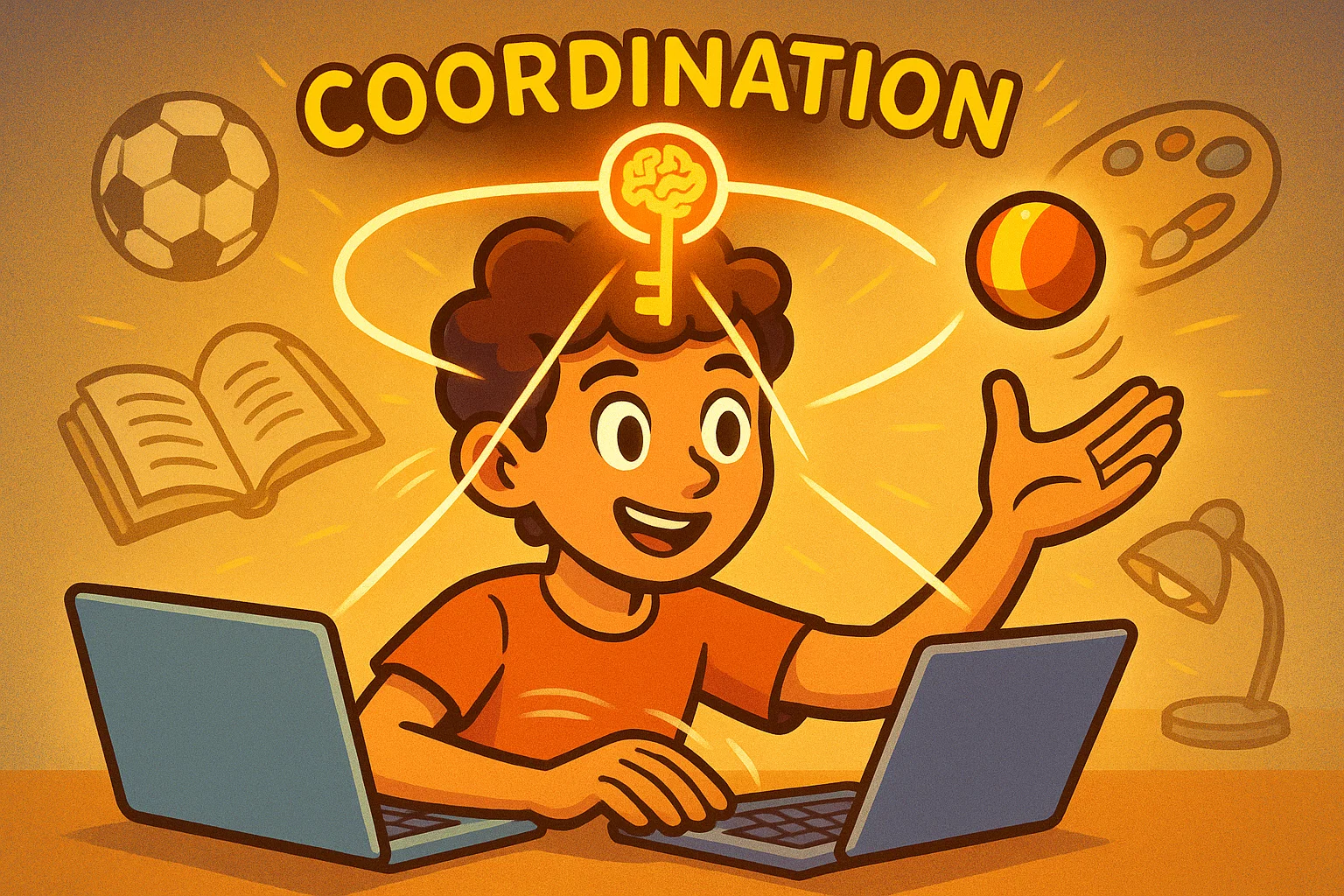
Eye hand coordination skills support nearly every physical task we do — from a toddler stacking blocks to a teen catching a ball to an adult typing at a keyboard. Strong visual-motor coordination helps children learn, play, and grow with confidence, and it can be improved at any age with the right activities and consistent practice.
This article covers 25 practical ways to develop eye hand coordination skills, organized by age group and skill level. You will also find guidance on recognizing signs of difficulty, adapting activities for different abilities, and supporting children with developmental delays.
Key Takeaways
- Eye hand coordination skills affect learning, sports, daily tasks, and independence across every age group.
- This article includes 25 activities ranging from ball games and puzzles to cooking tasks and outdoor obstacle courses.
- Activities are organized by age group, from toddlers through older adults, so you can find the right starting point.
- Signs of poor coordination include frequent dropping, messy writing, and slow reaction during games — all of which can improve with targeted practice.
- Activities can be adapted by changing object size, distance, speed, or surface to match any skill level.
Best Starting Points
To improve your child’s or your own skills immediately, begin with simple tasks like:
- Catching and throwing a soft ball.
- Bouncing a balloon to keep it off the floor.
- Completing age-appropriate puzzles.
- Threading or lacing exercises.
- Building blocks or LEGO sets.
- Target practice by throwing beanbags into a bucket.
Age-Based Practice
The best ways to develop these skills should match each person’s developmental stage. Preschoolers require large objects and low-pressure play to build gross motor skills. School-aged children should focus on precision, such as handwriting and playing sports. For adults, the focus shifts to maintaining reaction time, spatial judgment, and complex motor coordination through activities like tennis or advanced cooking tasks.
Vision and Motor Skills Link
Vision acts as the primary driver of physical action: the eyes track an object and send information to the brain, which then guides the hand. Visual tracking and depth perception are foundational to motor skills and coordination. Without accurate visual-motor integration, tasks that require the hands and eyes to work together become significantly more difficult.
Progress Tracking Tips
You can monitor coordination development by observing improvements in accuracy, reaction speed, and the fluidity of hand movements. A simple way to practice and track progress is to record the number of successful catches out of ten attempts. As motor control improves, you may notice a decrease in clumsiness and an increase in the ability to perform simple tasks like pouring water or using a keyboard with ease.
Hand Eye Coordination Meaning
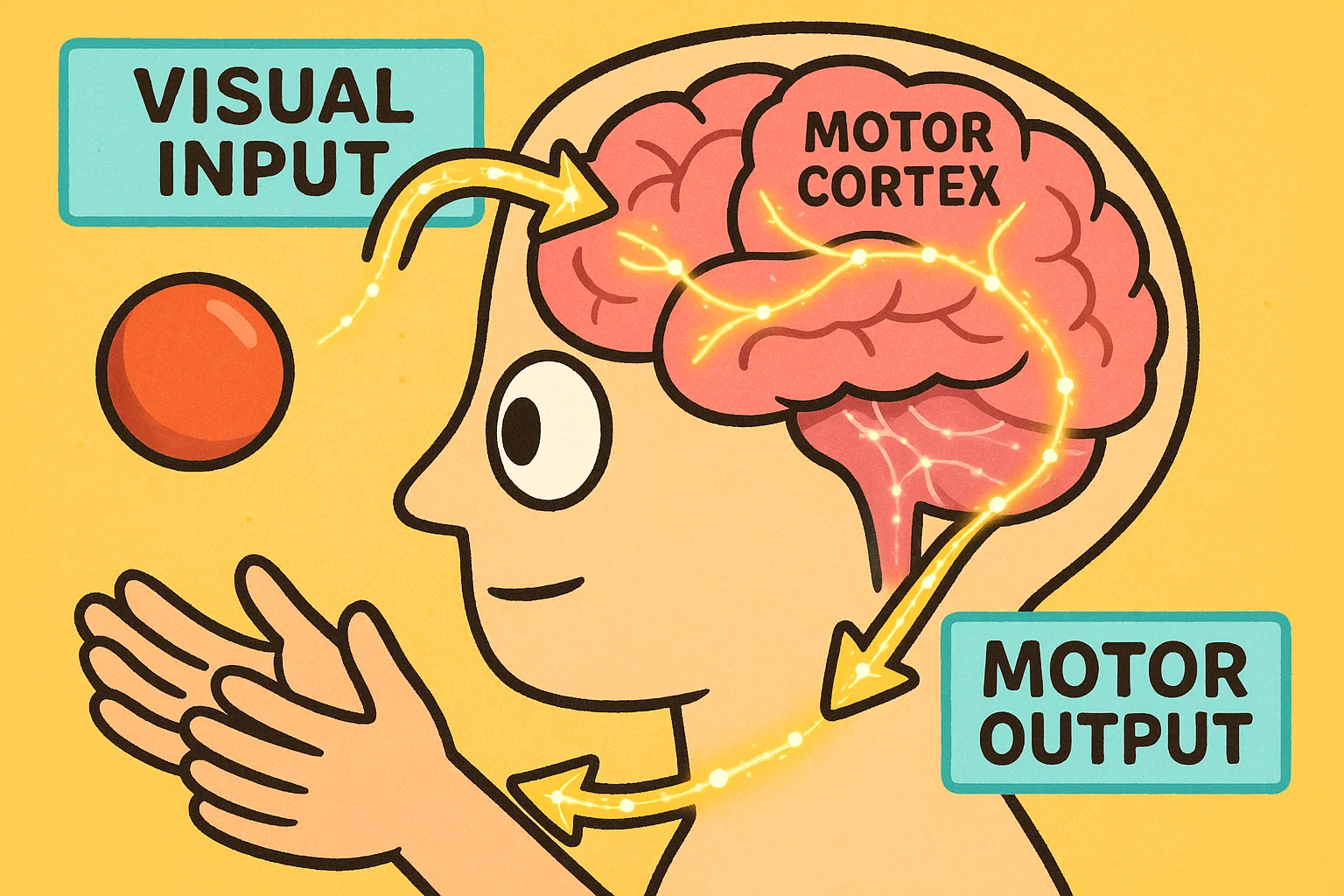
Hand-eye coordination is the ability to use visual information to control, guide, and direct the hands while completing a task. It is a complex developmental process in which the brain uses spatial information to guide a physical response. This visual-motor integration is vital for nearly every physical interaction we have with our environment.
Eye-Hand Coordination in Simple Words
In simpler terms, hand-eye coordination is the connection between what you see and how your hands respond. Examples include reaching out to catch a ball, using a pen for handwriting, or accurately pouring juice into a glass. It requires the brain to estimate an object’s distance and guide the hands toward it.
Daily Life Examples
We use hand-eye coordination constantly throughout the day without realizing it. Daily activities such as typing on a keyboard, buttoning a shirt, and driving a car rely heavily on this skill. In the kitchen, hand-eye coordination is used for chopping vegetables or flipping pancakes, while in the classroom, it is essential for school activities like using a ruler.
Fine Motor Skills Connection
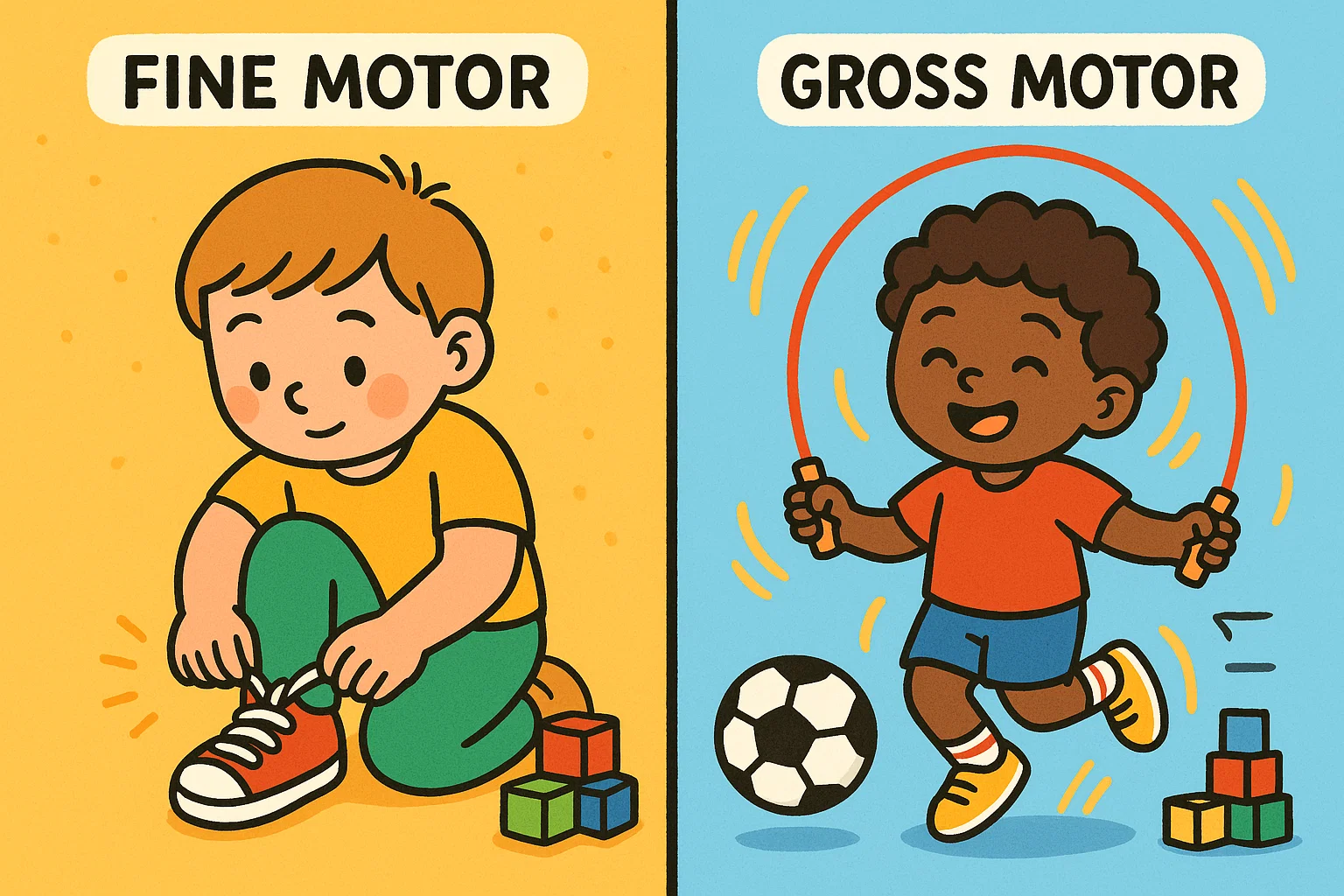
Fine motor skills involve the use of small muscles in the hands and wrists to perform precise movements. Developing fine motor skills is often a prerequisite for advanced hand-eye coordination because it supports precise control during tasks such as threading. Good hand strength and dexterity enable a child to guide the hand accurately based on visual information.
Gross Motor Skills Connection
Gross motor skills involve larger muscle groups used for movements like jumping, running, catching, and throwing. Gross and fine motor skills work together; for instance, many sports require gross motor control for body positioning and hand-eye coordination for the final strike or catch. Both gross and fine motor abilities are necessary for comprehensive motor development.
Why Hand-Eye Coordination Matters for Daily Life
Strong coordination skills are fundamental for independence and success in various life stages. From early childhood to adulthood, the ability to move accurately based on what we see improves safety and efficiency. Children with well-developed visual-motor skills may be better prepared for school tasks that involve writing, drawing, cutting, and using classroom tools.
Learning and School Skills
In an educational setting, hand-eye coordination skills are directly linked to literacy and numeracy. Handwriting requires the eyes to follow the tip of the pencil while the hand applies the correct pressure and direction. Activities like drawing, cutting with scissors, and using a computer are all school activities that depend on visual-motor integration.
Sports and Fitness Skills
Many athletic skills depend heavily on hand-eye coordination. Sports such as tennis, baseball, and basketball require athletes to track fast-moving objects and react quickly. Improving hand-eye coordination through sports can also enhance spatial awareness, helping participants navigate the field and avoid collisions.
Mobility and Independence
Maintaining motor skills and coordination is vital for long-term independence. For older adults, these skills help support the continued performance of daily activities like cooking, grooming, picking up objects, and moving safely through the environment. Hand-eye coordination ensures that we can interact with our surroundings safely and effectively.
Confidence and Play
For preschoolers and school-aged children, feeling competent during games can support social participation and self-esteem. When a child can catch a ball or build a complex tower, they feel a sense of mastery. Encourage your child to practice these skills to foster a positive attitude toward physical challenges and opportunities to explore and play.
Role of Vision in Hand-Eye Coordination
The “eye” in hand-eye coordination is just as important as the “hand.” Efficient visual tracking and depth perception allow the brain to create a map of the physical world. Without clear visual information, the motor system cannot accurately guide the hand to its target, leading to poor hand-eye coordination.
Visual Tracking
Visual tracking is the ability to follow a moving object with the eyes without moving the head excessively. This visual skill is essential for playing sports and reading, as it keeps the target in focus. Activities that require tracking, such as watching a bird in flight or following a ball through the air, can help improve hand-eye coordination.
Depth Perception
Depth perception allows us to determine how far away an object is and how fast it is moving toward us. This is critical for catching and throwing or simply reaching for a coffee mug. Poor depth perception may contribute to frequent stumbles or difficulty with fine motor activities.
Focus Switching
Focus switching is the ability to shift vision quickly between near and far objects, such as looking from a whiteboard to a notebook. This is a vital visual skill for school readiness and driving. It ensures that the brain is constantly updated with relevant spatial data to inform hand movements.
Eye Care Support
If a child or adult frequently misses targets, squints, or complains of headaches, it may indicate a need for eye care. Regular check-ups with an optometrist ensure that the “input” side of the hand-eye coordination equation is functioning correctly. Addressing vision issues early can help children develop their motor coordination more effectively.
Signs of Poor Hand-Eye Coordination
Identifying poor hand-eye coordination early allows for targeted practice and support that may reduce future difficulties. While children develop at different rates, certain persistent patterns may indicate a need for more focused hand-eye coordination activities.
Frequent Dropping or Spilling
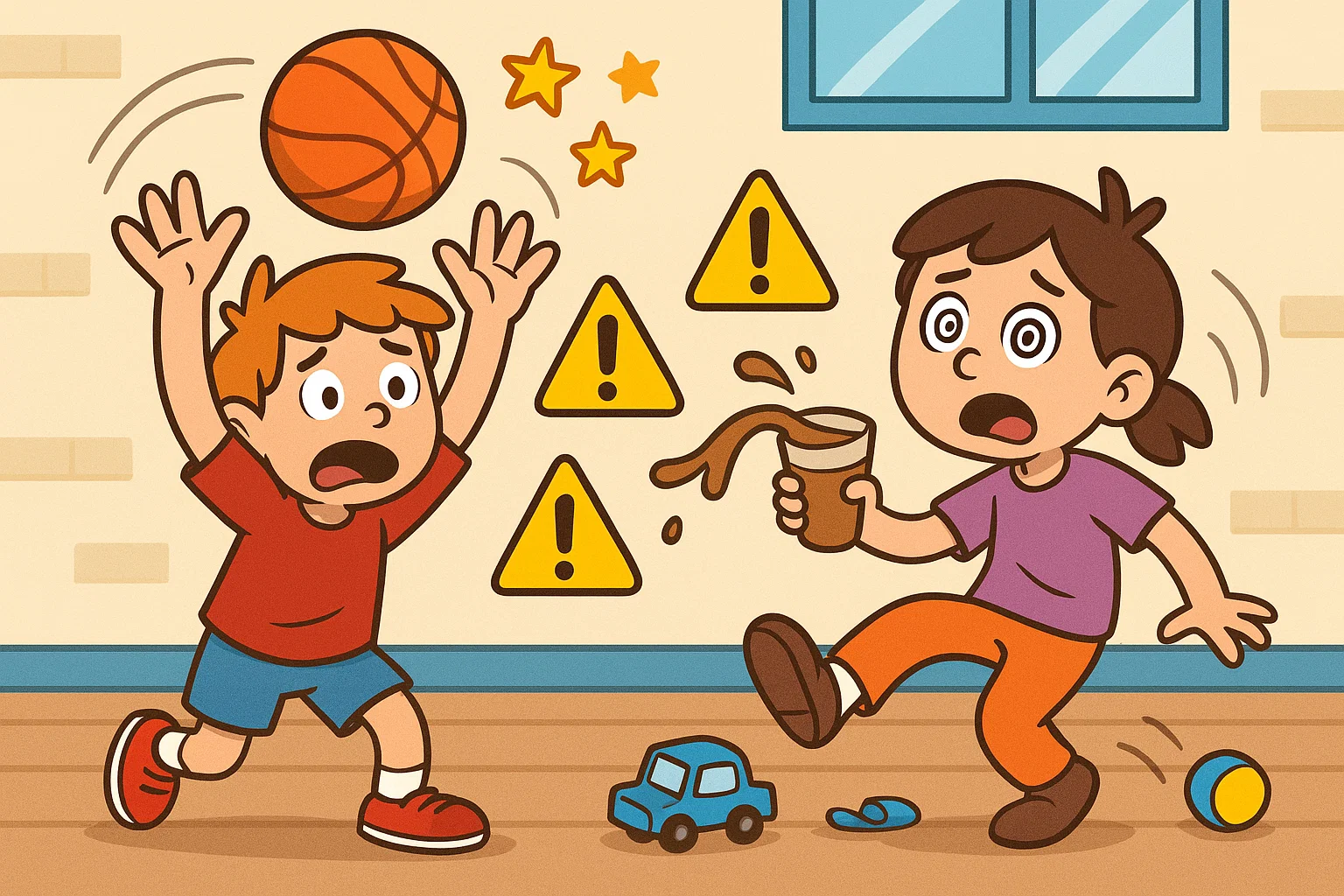
One of the most common signs of poor hand-eye coordination is difficulty maintaining a steady grip on objects. This might manifest as frequently dropping toys or spilling drinks during daily activities. It often suggests a disconnect between visual information and fine motor control.
Trouble Catching or Throwing
Difficulty with catching and throwing a ball by age five or six can be a sign of lagging visual-motor skills. This may involve mistiming a catch, such as closing the hands too early or too late, or struggling to aim a throw. Such challenges are often rooted in issues with spatial awareness and motor control.
Messy Writing or Cutting
In the classroom, poor hand-eye coordination may show up as illegible handwriting or difficulty staying on the lines during cutting activities. If a child struggles to guide the hand while using tools, it can lead to frustration with fine motor activities and academic tasks.
Slow Reaction During Games
A noticeable delay in reacting to stimuli during play or video games can indicate slower visual-motor skills. This “lag” between seeing an event and making a physical response can affect everything from dodging a ball to completing simple tasks such as clicking a mouse button.
Hand-Eye Coordination Assessment and Progress Tracking
Tracking progress in motor skills and coordination helps maintain motivation and ensures that simple exercises are effective. You do not need clinical equipment to perform basic hand-eye coordination checks at home; observation and simple metrics are often enough to track these skills.
Simple Home Checks
Parents can conduct simple home checks by observing how a child handles threading beads, performs lacing cards, or stacks building blocks. Note whether the child uses both hands and eyes together smoothly or if their movements seem jerky and uncoordinated. These observations provide a baseline for coordination development.
Accuracy Score
To quantify progress, use an accuracy score system. For example, ask the person to complete 10 wall-ball tosses and record how many they catch successfully. Repeat this weekly. A steady increase in successful repetitions is a clear sign that your child’s coordination skills – or your own – are improving.
Speed and Reaction Notes
In addition to accuracy, speed and reaction notes are valuable. Measure how long it takes to complete a specific fine motor skills task, such as a 20-piece puzzle or threading ten large beads. As motor coordination improves, the time required to complete these simple activities should decrease.
When Professional Help May Be Needed
While practice helps many people, some may need professional support. If there is a sudden decline in motor control, persistent pain, or a significant delay in age-appropriate motor milestones, consult a pediatrician or occupational therapist. They can provide a formal assessment and specialized ways to develop skills.
25 Ways to Develop Hand-Eye Coordination Skills
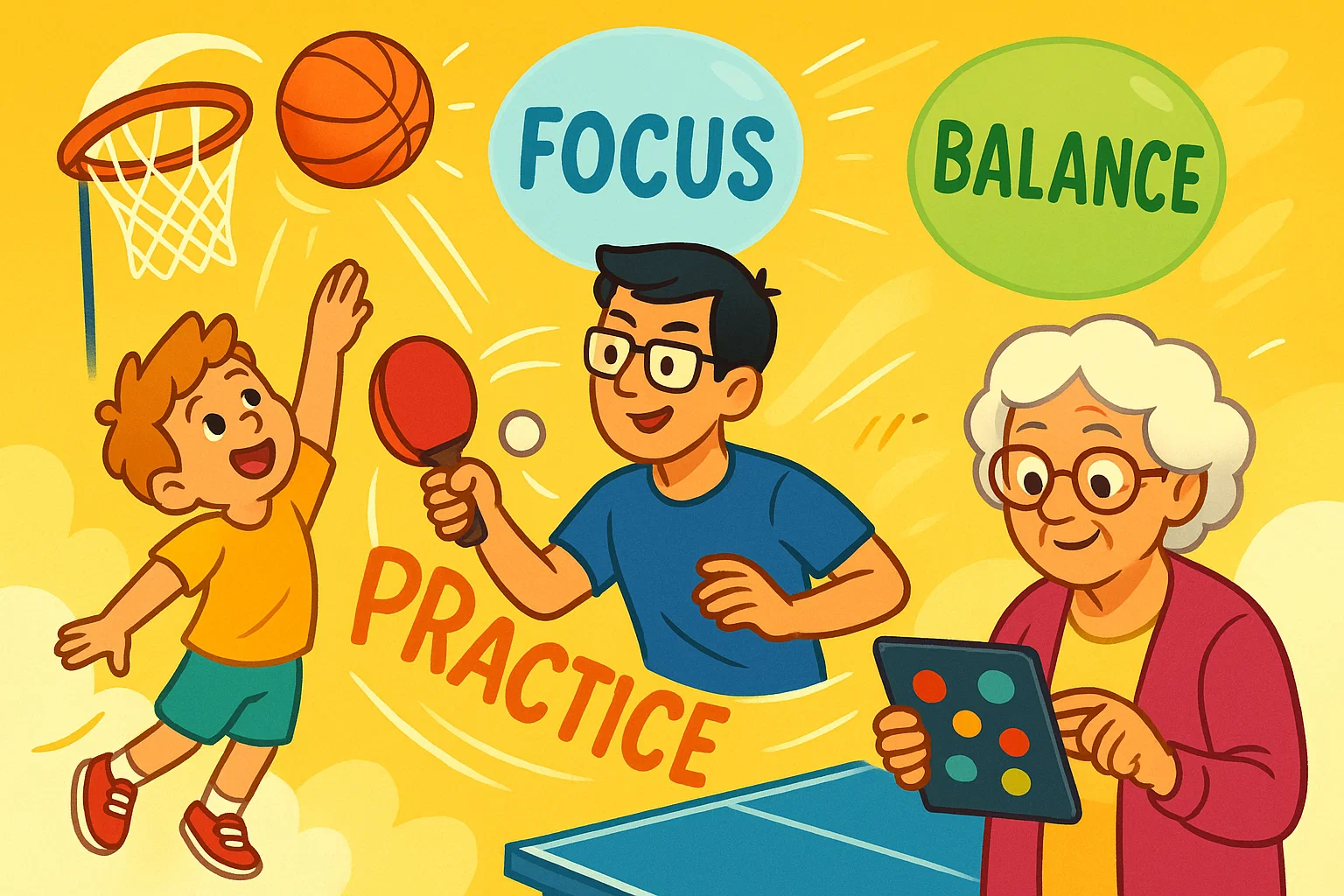
The following list provides fun ways and simple exercises to improve hand-eye coordination across all age groups.
1. Play Catch
The classic game of catch is one of the best hand-eye coordination activities. Start with a large, soft ball thrown at a short distance. As skills improve, move to smaller balls and increase the distance to challenge spatial awareness.
2. Ball Wall Toss
Throwing a ball against a wall and catching it on the rebound requires high levels of visual tracking. To increase difficulty, try catching with one hand or adding a clap between the throw and the catch to sharpen reaction time.
3. Balloon Bounce
Using a balloon is a safe way to help children build coordination because balloons move slowly. Encourage your child to keep the balloon in the air with their hands; as they improve, they can use a rolled-up newspaper or a lightweight racket.
4. Rolling Ball
For preschoolers, rolling a ball back and forth while sitting on the floor is an excellent entry-level coordination activity. It helps children use their hands and eyes together without the added challenge of catching a falling object.
5. Passing and Gentle Tossing
Practice passing objects of different weights and sizes, such as a beanbag or a toy, from hand to hand. This builds hand strength and helps the brain understand how much force is needed for different hand movements.
6. Object Relays
Create a relay in which participants carry a small object, such as a plastic egg or beanbag, on a spoon. This requires careful fine motor control and constant visual feedback to keep the object from falling.
7. Threading Beads
Threading beads is one of the most effective fine motor activities. It requires the eyes to guide the small movements of the fingers to align the string with the hole, helping improve hand-eye coordination.
8. Lacing Cards
Lacing cards involve weaving a string through pre-punched holes in a card. This activity supports school readiness by mimicking the movements needed for sewing and complex handwriting tasks.
9. Puzzles
Puzzles challenge the brain to recognize shapes and fit them into specific spatial locations. They range from simple wooden inserts for toddlers to complex 1,000-piece sets that require advanced visual information processing for adults.
10. Building Blocks
Whether using wooden blocks or LEGO, building blocks require precise hand coordination. Users must plan their structure and place pieces accurately, which develops both spatial awareness and fine motor skills.
11. Cutting Practice
Using safety scissors to cut along lines or shapes is a fundamental school activity. Cutting practice helps children learn to guide the hand along a visual path, enhancing their visual-motor skills.
12. Art and Craft Activities
Activities like drawing, coloring, and painting are excellent for motor development. They require children to stay within boundaries, which calls for fine motor control and visual integration.
13. Gardening Tasks
Gardening tasks like planting seeds, pulling weeds, or pouring water into small pots provide opportunities to explore and play while building motor coordination. These tasks require varying levels of pressure and precision.
14. Tilt-Board Ball Maze
A tilt-board ball maze is a tilted surface that lets a ball roll while the user catches, redirects, or guides it. This setup mimics the visual tracking required in many fast-paced sports and fitness activities.
15. Wobble Board Setup
Using a wobble board adds a balance component to coordination skills. Try catching a beanbag while standing on the board to integrate gross motor skills with hand-eye coordination.
16. Racquet Sports
Tennis, badminton, and table tennis are among the best ways to develop strong hand-eye coordination. They require the participant to track a projectile, move their body into position, and strike with precision.
17. Swimming Drills
Swimming drills, particularly those involving fetching rings from the bottom of the pool, require visual and motor coordination in a unique environment. This helps improve hand-eye coordination while building full-body strength.
18. Throwing at Targets
Setting up a target, such as a laundry basket or a hula hoop, and practicing target throws can improve aim. Varying the distance and size of the target helps fine-tune the brain’s spatial calculations.
19. Beanbag Games
Beanbag games are versatile; they can be balanced on the head to improve posture or tossed into buckets to improve accuracy. They are easier to catch than balls, making them ideal for those with poor hand-eye coordination.
20. Music and Movement
Playing instruments such as drums or piano often requires the hands, eyes, and ears to work together. Even simple music and movement activities, like clapping in time to a beat, can help children develop rhythm and coordination.
21. Video Games with Motion Control
When used in moderation, motion-controlled video games can help improve hand-eye coordination. They provide instant feedback and require fast visual tracking and reaction speed.
22. Typing and Cursor Games
Learning to type on a keyboard without looking at the keys is a form of high-level motor control. Online games that require clicking moving targets can also help improve cursor control and reaction speed.
23. Cooking Tasks
Cooking tasks such as whisking eggs, kneading dough, or decorating cookies are practical ways to practice fine motor skills. They provide a tangible – and often tasty – reward for successful hand-eye coordination.
24. Flip-and-Catch Drill
A flip-and-catch drill is a simple exercise in which you place a small object, such as a coin or card, on the back of your hand, flip it into the air, and catch it. This is a great hand coordination challenge for older children and adults.
25. Outdoor Obstacle Course
Building an outdoor obstacle course that includes crawling, throwing a ball through a hoop, and threading a string through a series of posts integrates gross and fine motor skills into one comprehensive activity.
Top Hand-Eye Coordination Activities by Age Group
| Age Group | Recommended Activities | Focus Area |
| Toddlers (1–3) | Rolling balls, stacking large blocks, finger painting | Basic motor development |
| Preschoolers (3–5) | Threading beads, safety scissors, balloon toss | Fine motor skills |
| School-Age Children (6–12) | Catching and throwing, puzzles, team sports | Precision and reaction time |
| Teens | Musical instruments, racquet sports, video games | Advanced motor coordination |
| Adults | Cooking, gardening, tennis, typing practice | Maintenance and speed |
| Older Adults | Tai Chi, soft ball toss, water aerobics | Safety and independence |
Activities for Toddlers Ages 1–3
At this stage, focus on simple activities that involve large objects. Rolling a soft ball to the child and encouraging them to stop it with their hands is a great start. Building blocks and large-scale art and craft activities like finger painting help them begin to guide the hand based on what they see.
Activities for Preschoolers Ages 3–5
Preschoolers are ready for more detailed fine motor activities. Threading beads and using lacing cards are excellent for developing the awareness and fine motor skills needed for school. Encourage your child to play with “Simon Says” to improve their ability to process verbal and visual instructions into physical movement.
Activities for School-Age Children Ages 6–12
This age group should focus on hand-eye coordination skills that translate to the playground and classroom. Playing sports like baseball or basketball improves gross motor development. For fine motor control, encourage detailed drawing and complex LEGO builds to prepare them for better handwriting.
Activities for Teens
Teenagers can handle high-speed challenges. Juggling, playing the guitar, or engaging in competitive racquet sports are effective ways to develop peak coordination skills. Activities that require quick thinking and fast movement can help develop the visual-motor skills used in driving.
Activities for Adults
Adults can maintain motor control through hobbies such as woodworking, needlework, or tennis. If adults are helping a child practice, joining in can benefit both the child and the adult by keeping reaction speed sharp. Everyday activities such as typing on a keyboard can also help maintain these skills.
Activities for Older Adults
For seniors, the goal is to maintain mobility and independence. Safe, low-impact activities like throwing a soft ball or water aerobics are ideal. These simple exercises help preserve spatial awareness and can be done while sitting to ensure safety and prevent falls.
Hand-Eye Coordination Games for Kids
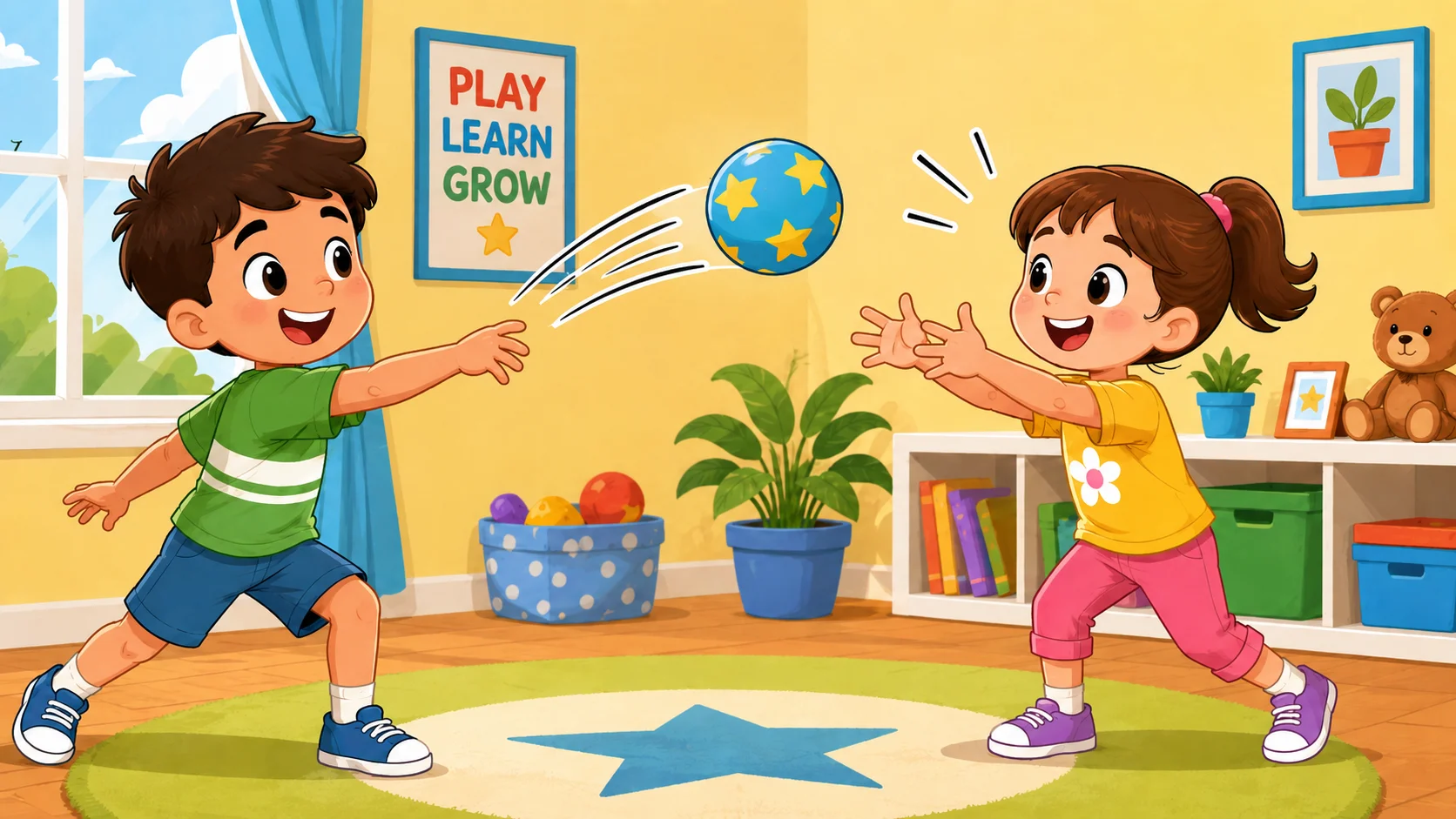
Games are one of the most effective ways to help children develop coordination because they keep children engaged and motivated. When a child is “just playing,” they are more likely to practice for longer periods without feeling fatigued.
Ball Games
Classic ball games such as “Monkey in the Middle” or “Wall Ball” are excellent for developing coordination. By varying the ball’s speed and the distance of the throw, you can easily improve hand-eye coordination in a fun, social environment.
Building Blocks and Puzzles
Building blocks and puzzles serve as quiet-time eye coordination activities. They teach children patience and how to use visual information to solve physical problems. These games can support spatial awareness and fine motor development.
Art and Craft Games
Incorporate art and craft activities like “connect the dots” or “color by number.” These require the child to guide the hand with extreme precision to achieve the desired result, effectively improving hand-eye coordination through creative expression.
Outdoor Play Ideas
Outdoor play offers a larger canvas for gross motor skills and coordination. Blowing bubbles and asking children to pop them with one finger is a simple visual-tracking game. “Hopscotch” and “Tag” also help in developing spatial judgment and motor coordination.
Music and Movement Games
“Simon Says” and “The Hokey Pokey” are classic examples of music and movement games that require children to listen, watch, and move simultaneously. These simple activities are staples in early childhood settings for building foundational motor development.
Hand-Eye Activities for Older Kids
As children grow, they need more complex eye-hand activities to keep their brains challenged. Moving beyond the basics helps them excel in school activities and competitive sports.
Toss and Catch Challenges
Upgrade basic catch by using a smaller ball, like a tennis ball, and incorporating reaction time challenges. For example, ask the child to turn around when they hear “now,” then gently toss a soft ball for them to track and catch. This sharpens visual and motor integration.
Ball Wall Toss Variations
Introduce variations like throwing with the left hand and catching with the right. Using a reaction ball, which has an irregular surface and bounces unpredictably, is an advanced way to improve hand-eye coordination and visual tracking.
Threading and Lacing Challenges
For older kids, threading can involve smaller beads or even basic sewing. Create a “race” to see how many beads can be threaded in 60 seconds. This adds a time-pressure element that forces the brain to process visual information faster.
Sports Skill Drills
Focus on specific drills like dribbling a basketball or hitting a ball with a bat. These sports drills require the hands, eyes, feet, and body to work together, providing a comprehensive coordination workout.
Hand-Eye Coordination Activities for Developmental Delay
If a child has a developmental delay, hand-eye coordination activities should be introduced patiently and kept simple at first. The goal is to provide a “just-right” challenge that builds confidence.
Gentle Ball Rolling
For those with poor hand-eye coordination, start with gentle ball rolling on a flat surface. This reduces the need to judge depth in three-dimensional space and allows the child to focus on controlled hand movements.
Large Object Games
Use larger, brighter objects that are easier to see and grasp. Large foam blocks or jumbo threading beads can help children who struggle with fine motor control. Visibility and ease of use are key to successful motor coordination.
Sensory-Friendly Practice
Some children may benefit from a sensory-friendly practice environment. Using items with different textures, like a Koosh ball or a weighted beanbag, can provide better tactile feedback to the brain, helping to guide the hand more effectively.
Parent or Therapist Guidance
When addressing significant delays, it is best to seek guidance from a pediatrician, occupational therapist, or other qualified professional. An occupational therapist can provide tailored ways to develop skills based on the specific needs of the child, ensuring that activities like drawing, catching, and throwing are therapeutic.
Adapting Activities for Skill Level
The key to successful coordination development is the ability to adapt. If an activity is too hard, the person may become frustrated; if it is too easy, they may become bored.
Change Object Size
A larger object is generally easier to track and catch. If a child is struggling to catch a ball, switch to a beach ball. As they improve hand-eye coordination, gradually decrease the size to a tennis ball or even a marble for fine motor activities.
Change Distance
Start with simple tasks, such as tossing a beanbag from only one foot away. As accuracy improves, increase the distance. This encourages the brain to continually adjust depth perception and spatial awareness.
Change Speed
Slow movements are better for learning the mechanics of motor control. Once the technique is mastered, increasing the speed of the hand-eye coordination activities will help develop faster reaction time and better visual tracking.
Change Surface or Position
Performing simple exercises while standing on one leg or sitting on an exercise ball increases the difficulty by involving more gross motor skills. This type of dual-task practice can support more robust motor development.
Add Balance Challenge
Incorporate a wobble board or balance beam into the routine. Practicing hand-eye coordination while maintaining balance is an advanced approach that mimics real-world scenarios like playing sports.
Overcoming Barriers to Outdoor Play
In the modern world, factors like screen time and limited space can hinder a child’s opportunities to explore and play. However, with a bit of creativity, you can still develop fine motor skills and gross motor skills in any environment.
Small Space Activity Ideas
If you have limited space, focus on fine motor activities. Threading beads, completing puzzles, and drawing can all be done at a small table. For gross motor skills, a “balloon bounce” or tossing a soft ball into a laundry basket works well indoors.
Bad Weather Alternatives
On rainy days, turn the hallway into a “laser maze” using yarn, or set up an indoor obstacle course with pillows and chairs. These simple activities keep children active and engaged in hand-eye coordination practice regardless of the weather.
Screen Time Balance
While some video games can help, they should not replace physical play. Encourage your child to balance screen time with regular real-world play, hands-on activities, and age-appropriate physical activity.
Safe Outdoor Setup
When playing outside, ensure the area is free of hazards. Use soft balls to prevent injury and mark clear boundaries for throwing at targets. A safe environment allows children to focus entirely on their coordination skills without fear of getting hurt.
Role of Parents and Educators
Parents and teachers play an important role in a child’s motor development. By providing the right tools and opportunities to explore and play, they can help children develop essential life skills.
Short Daily Practice
Consistency is more important than duration. Just 5 to 10 minutes of daily activities like catching and throwing can lead to significant improvements over time. Make it a part of the daily routine, like a “pre-dinner ball toss.”
Positive Feedback
Always offer positive feedback. Focus on the effort and the “almost-catches” rather than just the successes. This builds the child’s confidence and encourages them to continue to practice their hand-eye coordination skills.
Play-Based Learning
Whenever possible, use play-based learning. Children learn best when they are having fun. Instead of a drill session, turn coordination practice into a game with rewards or a fun storyline to keep children engaged.
Preschool and Classroom Ideas
Educators can incorporate hand-eye coordination activities into the curriculum. Stations with building blocks, lacing cards, and art and craft activities allow children to rotate through different types of visual-motor practice throughout the school day.
Common Problems and Related Conditions
Understanding the root of poor hand-eye coordination can help in choosing the right ways to practice. Sometimes, the issue is not the hands themselves but how the brain processes visual information.
Vision Difficulties
Conditions like amblyopia, often called lazy eye, or strabismus, often called crossed eyes, can severely impact hand-eye coordination. If a person has difficulty using both eyes together effectively, depth perception may be affected, making it harder to catch a ball consistently.
Motor Planning Difficulties
Developmental Coordination Disorder (DCD), sometimes called dyspraxia, affects motor coordination and motor planning. Individuals with DCD may know what they want to do but struggle to get their body to execute the hand movements in the correct sequence. Specialized hand-eye coordination activities can help mitigate these challenges.
Attention and Focus Challenges
Conditions such as ADHD can make it difficult for a child to sustain attention during coordination tasks. When a child’s attention wanders, they miss the visual information needed to guide the hand to the target.
Injury or Age-Related Changes
In adults, neurological injuries or age-related declines in muscle mass and vision can lead to poor hand-eye coordination. Regular practice and simple exercises can support coordination, balance, and motor control as we age.
How to Improve Hand-Eye Coordination Safely
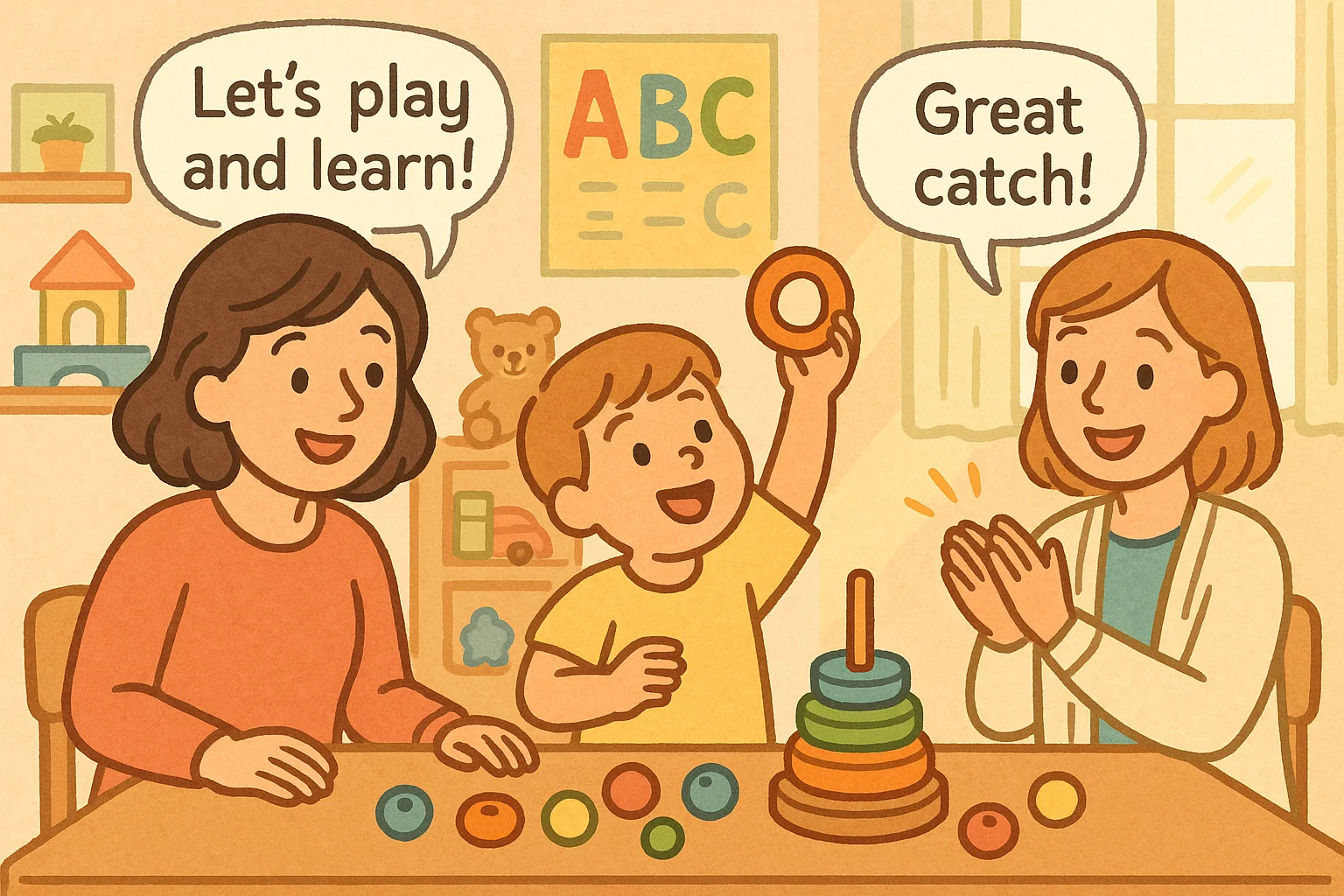
Safety should always be the priority when attempting to improve hand-eye coordination. Using the right equipment and following a gradual progression can help reduce the risk of injury and keep the experience positive.
Start Easy
Always start easy. If you or your child are struggling, go back to the most basic version of an activity. Successfully completing simple tasks like rolling a ball builds a foundation for more complex coordination skills.
Use Soft Equipment
To prevent injury and reduce the fear of being hit, use soft equipment. Foam balls, beanbags, and balloons are ideal for preschoolers and anyone working to improve hand-eye coordination at a beginner level.
Keep Sessions Short
Fatigue can lead to poor form and frustration. Keep sessions short – around 10 to 15 minutes – to ensure the participant remains focused. You can always do several short sessions throughout the day to increase total practice time.
Stop with Pain or Dizziness
If any activity causes pain, dizziness, or blurred vision, stop immediately. These can be signs of overexertion or underlying issues with eye care or the vestibular system. Consult a professional to make sure the activities are safe for your specific situation.
Conclusion
Hand-eye coordination is a vital skill that influences our ability to learn, play, and live independently. From early childhood through late adulthood, people can improve hand-eye coordination by engaging in regular, age-appropriate activities. By understanding the link between visual information and motor control and consistently using engaging ways to practice, anyone can sharpen their coordination skills.
Main Skill-Building Rule
The main rule for building coordination is simple: regular practice and gradual progression lead to the best results. Whether you are using building blocks with a toddler or playing tennis as an adult, the brain needs frequent, successful repetitions to build strong visual-motor pathways.
Best Activities to Start Today
To begin improving your child’s skills – or your own – try these five simple activities today:
- Play catch with a soft ball.
- Practice a ball wall toss.
- Keep a balloon in the air with balloon bounce.
- Spend 10 minutes on threading beads.
- Complete a medium-difficulty puzzle.
Next Step for Readers
Choose three activities from the list above and practice them for 10 minutes a day this week. Observe the improvements in accuracy and confidence, and gradually increase the challenge as the movements become more natural.
Frequently Asked Questions
Can Video Games Improve Hand-Eye Coordination?
Yes, certain video games can help. Some action and sports video games may support visual tracking, reaction speed, and hand-eye coordination, especially when balanced with physical play. However, they should be balanced with physical play to ensure well-rounded motor development.
What If a Child Struggles with Hand-Eye Coordination?
If a child struggles, start with very simple activities like rolling a large ball or using a balloon bounce. Focus on building their confidence first. If the difficulties persist and affect school activities or handwriting, it may be wise to consult an occupational therapist for a formal assessment of their motor skills and coordination.
How Can Parents Improve a Child’s Hand-Eye Coordination?
Parents can help improve these skills by providing a variety of opportunities to explore and play. Incorporate threading beads, building blocks, and ball games into daily life. Encouraging outdoor play and balancing screen time with fine motor activities are also highly effective strategies.
Should Adults Practice Hand-Eye Coordination?
Absolutely. Hand-eye coordination is a “use it or lose it” skill. For adults, maintaining these skills supports daily activities, driving safety, and age-related changes in motor control. Hobbies like playing sports, gardening, or even advanced cooking tasks are great ways for adults to practice.
How Often Should Practice Happen?
For the best results, practice should happen daily or at least several times a week. Short, 10-minute bursts are more effective than one long session per week. Consistent, short hand-eye coordination activities give the brain repeated opportunities to strengthen these skills.
Which Sports Are Best for Hand-Eye Coordination?
Racquet sports like tennis, badminton, and table tennis are among the best because they require constant visual tracking and fast reaction times. Other excellent choices include basketball, baseball, and swimming, especially drills involving fetching objects. Even target sports like archery or darts can help improve hand-eye coordination.
Take a short quiz to find out what your everyday choices say about your parenting style
When your child is curious about something new, what’s your instinct?
Take a short quiz to find out what your everyday choices say about your parenting style
“Can I download this app?” What happens next?
Take a short quiz to find out what your everyday choices say about your parenting style
When it comes to rules at home, which sounds most like you?
Take a short quiz to find out what your everyday choices say about your parenting style
If you could give your child one life skill today, what would you pick?
Take a short quiz to find out what your everyday choices say about your parenting style
Your child gets to choose what to watch. What would your ideal setup look like?
Take a short quiz to find out what your everyday choices say about your parenting style
Pick your parenting superpower ✨